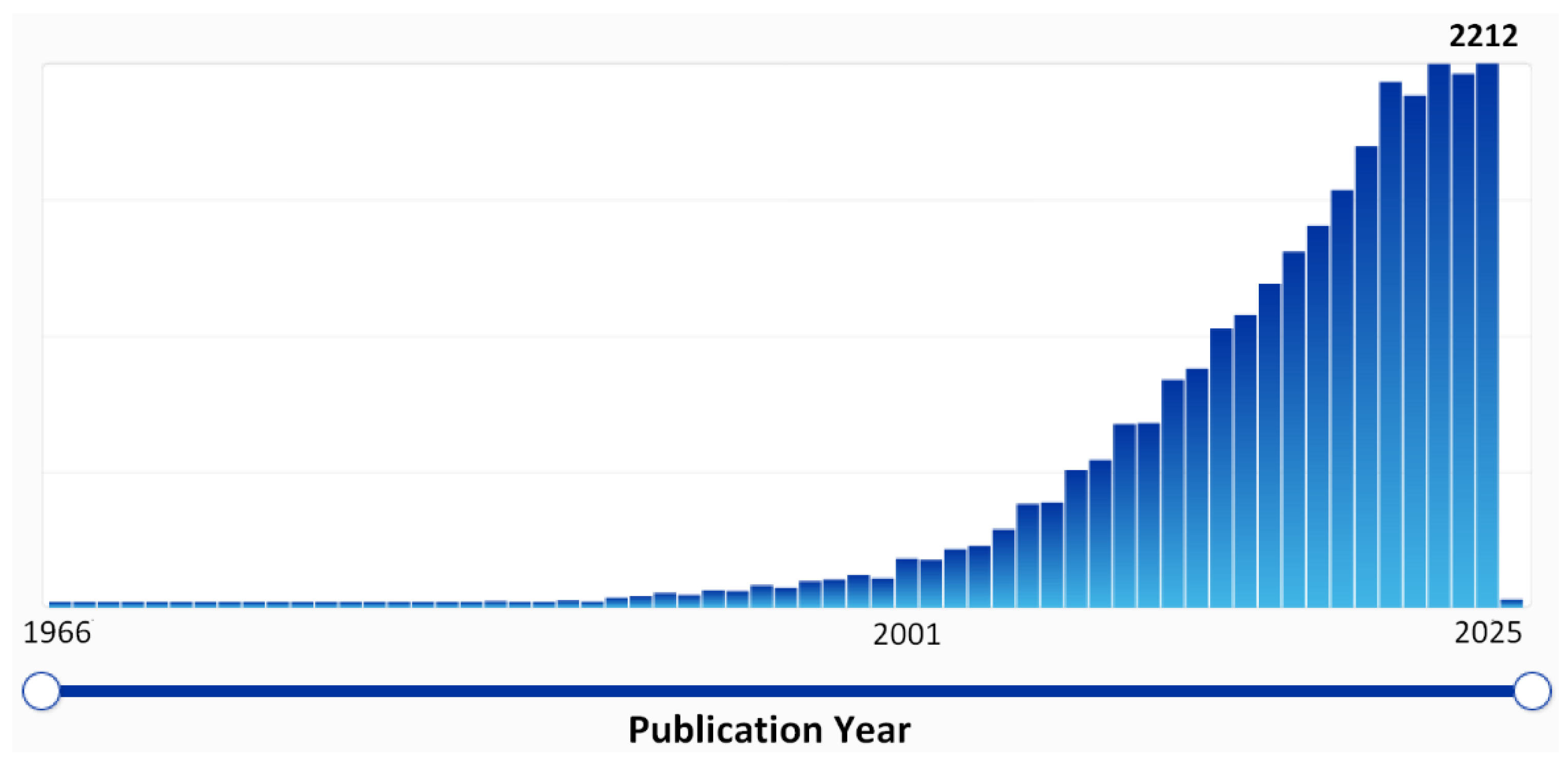
Special Issue “Polymeric Materials for Biomedical Applications, Drug and Gene Delivery”


Funding
Acknowledgments
Conflicts of Interest
References
- Ulery, B.D.; Nair, L.S.; Laurencin, C.T. Biomedical applications of biodegradable polymers. J. Polym. Sci. B Polym. Phys. 2011, 49, 832–864. [Google Scholar] [CrossRef] [PubMed]
- Tian, H.; Tang, Z.; Zhuang, X.; Chen, X.; Jing, X. Biodegradable synthetic polymers: Preparation, functionalization and biomedical application. Prog. Polym. Sci. 2012, 37, 237–280. [Google Scholar] [CrossRef]
- Pires, P.C.; Mascarenhas-Melo, F.; Pedrosa, K.; Lopes, D.; Lopes, J.; Macário-Soares, A.; Peixoto, D.; Giram, P.S.; Veiga, F.; Paiva-Santos, A.C. Polymer-based biomaterials for pharmaceutical and biomedical applications: A focus on topical drug administration. Eur. Polym. J. 2023, 187, 111868. [Google Scholar] [CrossRef]
- Kuperkar, K.; Atanase, L.I.; Bahadur, A.; Crivei, I.C.; Bahadur, P. Degradable Polymeric Bio(nano)materials and Their Biomedical Applications: A Comprehensive Overview and Recent Updates. Polymers 2024, 16, 206. [Google Scholar] [CrossRef]
- Nifant’ev, I.E.; Tavtorkin, A.N.; Shlyakhtin, A.V.; Ivchenko, P.V. Chemical features of the synthesis, degradation, molding and performance of poly(lactic-co-glycolic) acid (PLGA) and PLGA-based articles. Eur. Polym. J. 2024, 215, 113250. [Google Scholar] [CrossRef]
- CAS SciFinder. Available online: https://scifinder-n.cas.org/advancedSearch/ (accessed on 22 November 2025).
- Pronin, A.S.; Pozmogova, T.N.; Vorotnikov, Y.A.; Vavilov, G.D.; Ivanov, A.A.; Yanshole, V.V.; Tsygankova, A.R.; Gusel’nikova, T.Y.; Mironov, Y.V.; Shestopalov, M.A. PEGylation of Terminal Ligands as a Route to Decrease the Toxicity of Radiocontrast Re6-Clusters. Int. J. Mol. Sci. 2023, 24, 16569. [Google Scholar] [CrossRef]
- Krasilnikova, A.A.; Shestopalov, M.A.; Brylev, K.A.; Kirilova, I.A.; Khripko, O.P.; Zubareva, K.E.; Khripko, Y.I.; Podorognaya, V.T.; Shestopalova, L.V.; Fedorov, V.E.; et al. Prospects of Molybdenum and Rhenium Octahedral Cluster Complexes as X-ray Contrast Agents. J. Inorg. Biochem. 2015, 144, 13–17. [Google Scholar] [CrossRef]
- Krasilnikova, A.A.; Solovieva, A.O.; Trifonova, K.E.; Brylev, K.A.; Ivanov, A.A.; Kim, S.-J.; Shestopalov, M.A.; Fufaeva, M.S.; Shestopalov, A.M.; Mironov, Y.V.; et al. Cellular Internalization and Morphological Analysis after Intravenous Injection of a Highly Hydrophilic Octahedral Rhenium Cluster Complex—A New Promising X-ray Contrast Agent. Contrast Media Mol. Imaging 2016, 11, 459–466. [Google Scholar] [CrossRef]
- Krasilnikova, A.A.; Solovieva, A.O.; Ivanov, A.A.; Brylev, K.A.; Pozmogova, T.N.; Gulyaeva, M.A.; Kurskaya, O.G.; Alekseev, A.Y.; Shestopalov, A.M.; Shestopalova, L.V.; et al. A Comparative Study of Hydrophilic Phosphine Hexanuclear Rhenium Cluster Complexes’ Toxicity. Toxicol. Res. 2017, 6, 554–560. [Google Scholar] [CrossRef]
- Svezhentseva, E.V.; Ivanov, A.A.; Vorotnikov, Y.A.; Gyrylova, S.N.; Kurskaya, O.G.; Gulyaeva, M.A.; Alekseev, A.Y.; Mironov, Y.V.; Shestopalov, M.A.; Shestopalov, A.M. Materials Based on X-Ray Contrast Octahedral Metal Cluster Complexes and Hydrophilic Polymers. Mater. Today Proc. 2017, 4, 11430–11436. [Google Scholar] [CrossRef]
- Christoforou, I.; Kalatzis, A.; Siamidi, A.; Vlachou, M.; Pispas, S.; Pippa, N. The Ubiquitous Use of Polyethylene Glycol in Pharmaceutical Design and Development: Technological Aspects and Future Perspectives. Nanomaterials 2025, 15, 1762. [Google Scholar] [CrossRef] [PubMed]
- Chen, Y.; Su, Y.-C.; Roffler, S.R. Polyethylene glycol immunogenicity in nanomedicine. Nat. Rev. Bioeng. 2025, 3, 742–760. [Google Scholar] [CrossRef]
- Salikhov, S.I.; Musin, E.V.; Kim, A.L.; Oshchepkova, Y.I.; Tikhonenko, S.A. Polyelectrolyte Microcapsules: An Extended Release System for the Antiarrhythmic Complex of Allapinin with Glycyrrhizic Acid Salt. Int. J. Mol. Sci. 2024, 25, 2652. [Google Scholar] [CrossRef] [PubMed]
- Sun, W.; Saldaña, M.D.A.; Zhao, Y.; Wu, L.; Dong, T.; Jin, Y.; Zhang, J. Hydrophobic lappaconitine loaded into iota-carrageenan by one step self-assembly. Carbohydr. Polym. 2016, 137, 231–238. [Google Scholar] [CrossRef]
- Guo, T.; Zhang, Y.; Zhao, J.; Zhu, C.; Feng, N. Nanostructured lipid carriers for percutaneous administration of alkaloids isolated from Aconitum sinomontanum. J. Nanobiotechnol. 2015, 13, 47. [Google Scholar] [CrossRef]
- Xu, H.; Zhong, H.; Liu, M.; Xu, C.; Gao, Y. Lappaconitine-loaded microspheres for parenteral sustained release: Effects of formulation variables and in vitro characterization. Pharmazie 2011, 66, 654–661. [Google Scholar]
- Zhong, H.J.; Xu, H.L. Lappaconitine Sustained Release Microspheres for Injection and Preparation Method Thereof. China Patent CN101961318A, 2 February 2011. [Google Scholar]
- Xu, K.; Wei, Y. Lappaconitine Phospholipids Complex Nanoparticles: Preparation, Characterization and Pharmacokinetic Study. Nat. Prod. Res. Dev. 2018, 30, 870–874. [Google Scholar]
- Uzbekov, V.V.; Abdullaev, B.F.; Ziyavitdinov, Z.F.; Ishimov, U.Z.; Berdiev, N.S.; Oshchepkova, Y.I.; Salikhov, S.I. Composition Development and Experimental Study of the Liposomal form of an Antiarrhythmic Drug. Pharm. Chem. J. 2022, 56, 1064–1069. [Google Scholar] [CrossRef]
- Paisidis, P.; Kokotou, M.G.; Kotali, A.; Psomas, G.; Fylaktakidou, K.C. One-Pot, Multi-Component Green Microwave-Assisted Synthesis of Bridgehead Bicyclo[4.4.0]boron Heterocycles and DNA Affinity Studies. Int. J. Mol. Sci. 2024, 25, 9842. [Google Scholar] [CrossRef]
- Adib, M.; Sheikhi, E.; Bijanzadeh, H.R.; Zhu, L.-G. Microwave-assisted reaction between 2-aminobenzoic acids, 2-hydroxybenzaldehydes, and arylboronic acids: A one-pot three-component synthesis of bridgehead bicyclo[4.4.0]boron heterocycles. Tetrahedron 2012, 68, 3377–3383. [Google Scholar] [CrossRef]
- Guieu, S.; Esteves, C.I.C.; Rocha, J.; Silva, A.M.S. Multicomponent Synthesis of Luminescent Iminoboronates. Molecules 2020, 25, 6039. [Google Scholar] [CrossRef] [PubMed]
- Cáceres-Castillo, D.; Mirón-López, G.; García-López, M.C.; Chan-Navarro, R.; Quijano-Quiñones, R.F.; Briceño-Vargas, F.M.; Cauich-Kumul, R.; Morales-Rojas, H.; Herrera-España, A.D. Boronate derivatives of damnacanthal: Synthesis, characterization, optical properties and theoretical calculations. J. Mol. Struct. 2023, 1271, 134048. [Google Scholar] [CrossRef]
- Santos, F.M.F.; Rosa, J.N.; Candeias, N.R.; Carvalho, C.P.; Matos, A.I.; Ventura, A.E.; Florindo, H.F.; Silva, L.C.; Pischel, U.; Gois, P.M.P. A Three-Component Assembly Promoted by Boronic Acids Delivers a Modular Fluorophore Platform (BASHY Dyes). Chem. Eur. J. 2015, 22, 1631–1637. [Google Scholar] [CrossRef]
- Singhvi, M.S.; Zinjarde, S.S.; Gokhale, D.V. Polylactic acid: Synthesis and biomedical applications. J. Appl. Microbiol. 2019, 127, 1612–1626. [Google Scholar] [CrossRef]
- Cohen Tervaert, J.W.; Mohazab, N.; Redmond, D.; Eeden, C.; Osman, M. Breast implant illness: Scientific evidence of its existence. Expert Rev. Clin. Immunol. 2022, 18, 15–29. [Google Scholar] [CrossRef]
- Millar, N.L.; O’Donnell, C.; McInnes, I.B.; Brint, E. Wounds that heal and wounds that don’t—The role of the IL-33/ST2 pathway in tissue repair and tumorigenesis. Semin. Cell Dev. Biol. 2017, 61, 41–50. [Google Scholar] [CrossRef]
- Kargaltseva, N.M.; Kotcherovets, V.I.; Mironov, A.Y.; Borisova, O.Y.; Burbello, A.T. Inflammation markers and bloodstream infection. Clin. Lab. Diagn. 2019, 64, 435–442. [Google Scholar] [CrossRef]
- Chen, X.; Chen, J.; Chen, W.; Zhou, S.; Hei, Z.; Liu, Z.; Chen, C. Preoperative hs-CRP/HDL ratio is associated with increased risk for postoperative SIRS in elderly patients: A retrospective cohort study. Aging Clin. Exp. Res. 2023, 35, 2603–2611. [Google Scholar] [CrossRef]
- Eisenach, I.A.; Lapii, G.A.; Uzyumova, A.K.; Lushnikova, E.L.; Ovchinnikov, V.S.; Solovieva, A.O.; Naprimerov, V.A. Application of hs-CRP in Assessment of Tissue Inflammation Following Implantation of Biodegradable Polymer in Experiment. Int. J. Mol. Sci. 2024, 25, 11183. [Google Scholar] [CrossRef]
- Persson, M.; Lorite, G.S.; Kokkonen, H.E.; Cho, S.-W.; Lehenkari, P.P.; Skrifvars, M.; Tuukkanen, J. Effect of Bioactive Extruded PLA/HA Composite Films on Focal Adhesion Formation of Preosteoblastic Cells. Coll. Surf. B Biointerfaces 2014, 121, 409–416. [Google Scholar] [CrossRef] [PubMed]
- Targonska, S.; Dobrzynska-Mizera, M.; Wujczyk, M.; Rewak-Soroczynska, J.; Knitter, M.; Dopierala, K.; Andrzejewski, J.; Wiglusz, R.J. New Way to Obtain the Poly(L-Lactide-Co-D,L-Lactide) Blend Filled with Nanohydroxyapatite as Biomaterial for 3D-Printed Bone-Reconstruction Implants. Eur. Polym. J. 2022, 165, 110997. [Google Scholar] [CrossRef]
- Safitri, N.; Rauf, N.; Tahir, D. Enhancing Drug Loading and Release with Hydroxyapatite Nanoparticles for Efficient Drug Delivery: A Review Synthesis Methods, Surface Ion Effects, and Clinical Prospects. J. Drug Deliv. Sci. Technol. 2023, 90, 105092. [Google Scholar] [CrossRef]
- de Souza, I.D.; Cruz, M.A.E.; de Faria, A.N.; Zancanela, D.C.; Simão, A.M.S.; Ciancaglini, P.; Ramos, A.P. Formation of Carbonated Hydroxyapatite Films on Metallic Surfaces Using Dihexadecyl Phosphate-LB Film as Template. Coll. Surf. B Biointerfaces 2014, 118, 31–40. [Google Scholar] [CrossRef]
- Dopierała, K.; Krok, E.; Stachowska, E.; Nowak-Grzebyta, J.; Walczak, K.; Andrzejewski, J.; Prochaska, K. The Deposition of Hydroxyapatite Particles Within an Organic Matrix on the Surface of Poly(lactic acid). Int. J. Mol. Sci. 2024, 25, 11587. [Google Scholar] [CrossRef]
- Dopierała, K.; Knitter, M.; Dobrzyńska-Mizera, M.; Andrzejewski, J.; Bartkowska, A.; Prochaska, K. Surface Functionalization of Poly (Lactic Acid) via Deposition of Hydroxyapatite Monolayers for Biomedical Applications. Langmuir 2023, 39, 15610–15619. [Google Scholar] [CrossRef]
- Almasri, D.; Dahman, Y. Greener Synthesis of Eco-Friendly Biodegradable Mesoporous Bioactive Glasses with and Without Thermal Treatment and Its Effects on Drug Delivery and In Vitro Bioactivity. Int. J. Mol. Sci. 2025, 26, 6524. [Google Scholar] [CrossRef]
- Baino, F.; Fiume, E.; Miola, M.; Verné, E. Bioactive sol-gel glasses: Processing, properties, and applications. Int. J. Appl. Ceram. Technol. 2018, 15, 841–860. [Google Scholar] [CrossRef]
- Rahman, S.; Mendonca, A.; Alhalawani, A.; Polintan, D.; Clarkin, O.M.; Towler, M.R. The Effect of Calcination Rate on the Structure of Mesoporous Bioactive Glasses. J. Sol-Gel Sci. Technol. 2018, 89, 426–435. [Google Scholar] [CrossRef]
- Zain, S.K.M.; Sazali, E.S.; Mohd-Noor, F.; Yaacob, S.N.S. Effect of Calcination Temperature on Structure of Mesoporous Borosilicate Bioglass. J. Phys. Conf. Ser. 2021, 1892, 012030. [Google Scholar] [CrossRef]
- Erasmus, E.P.; Johnson, O.T.; Sigalas, I.; Massera, J. Effects of sintering temperature on crystallization and fabrication of porous bioactive glass scaffolds for bone regeneration. Sci. Rep. 2017, 7, 6046. [Google Scholar] [CrossRef]
- Alenezi, A. The Antibacterial Performance of Implant Coating Made of Vancomycin-Loaded Polymer Material: An In Vitro Study. Surfaces 2023, 6, 304–315. [Google Scholar] [CrossRef]
- Riviello, G.; Connor, B.; McBrearty, J.; Rodriguez, G.; Hu, X. Protein and Polysaccharide-Based Optical Materials for Biomedical Applications. Int. J. Mol. Sci. 2024, 25, 1861. [Google Scholar] [CrossRef]
- Pagliaro, M.; Ciriminna, R.; Morozova, S.M. Sustainable Optics? A Critical Insight into Biopolymer-Enabled Optics. Tetrahedron Green Chem. 2023, 1, 100005. [Google Scholar] [CrossRef]
- Gierej, A.; Geernaert, T.; Van Vlierberghe, S.; Dubruel, P.; Thienpont, H.; Berghmans, F. Challenges in the Fabrication of Biodegradable and Implantable Optical Fibers for Biomedical Applications. Materials 2021, 14, 1972. [Google Scholar] [CrossRef]
- Shabahang, S.; Kim, S.; Yun, S. Light-Guiding Biomaterials for Biomedical Applications. Adv. Funct. Mater. 2018, 28, 24. [Google Scholar] [CrossRef]
- Colusso, E.; Martucci, A. An Overview of Biopolymer-Based Nanocomposites for Optics and Electronics. J. Mater. Chem. C 2021, 9, 5578–5593. [Google Scholar] [CrossRef]

Disclaimer/Publisher’s Note: The statements, opinions and data contained in all publications are solely those of the individual author(s) and contributor(s) and not of MDPI and/or the editor(s). MDPI and/or the editor(s) disclaim responsibility for any injury to people or property resulting from any ideas, methods, instructions or products referred to in the content. |
© 2026 by the author. Licensee MDPI, Basel, Switzerland. This article is an open access article distributed under the terms and conditions of the Creative Commons Attribution (CC BY) license.
Share and Cite
Nifant’ev, I.E. Special Issue “Polymeric Materials for Biomedical Applications, Drug and Gene Delivery”. Int. J. Mol. Sci. 2026, 27, 2888. https://doi.org/10.3390/ijms27062888
Nifant’ev IE. Special Issue “Polymeric Materials for Biomedical Applications, Drug and Gene Delivery”. International Journal of Molecular Sciences. 2026; 27(6):2888. https://doi.org/10.3390/ijms27062888
Chicago/Turabian StyleNifant’ev, Ilya E. 2026. "Special Issue “Polymeric Materials for Biomedical Applications, Drug and Gene Delivery”" International Journal of Molecular Sciences 27, no. 6: 2888. https://doi.org/10.3390/ijms27062888
APA StyleNifant’ev, I. E. (2026). Special Issue “Polymeric Materials for Biomedical Applications, Drug and Gene Delivery”. International Journal of Molecular Sciences, 27(6), 2888. https://doi.org/10.3390/ijms27062888