TRPV4-Mast Cell Interactions in Neurogenic Inflammation and Chronic Diseases: A Narrative Review
 , ,
, , 
Abstract
1. Introduction
1.1. Overview of TRPV4
1.2. Overview of Mast Cells (MCs)
2. Mast Cells and TRPV4
3. TRPV4-Mediated Neuroimmune Crosstalk
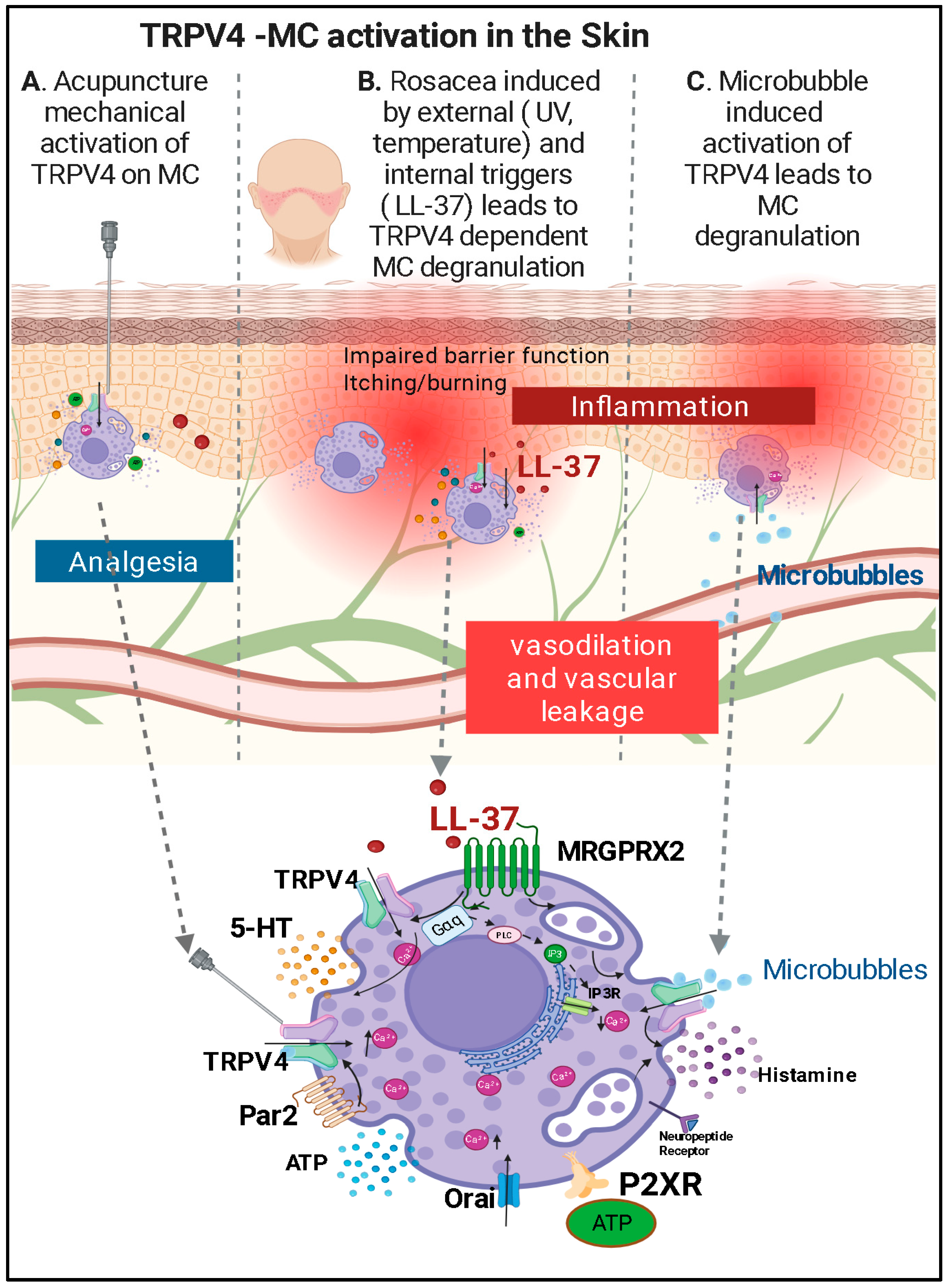
3.1. TRPV4 Channels, Purinergic Signaling, and MCs in Acupuncture Induced Analgesia
3.1.1. TRPV4 Channels and Mechanosensation in Acupuncture
3.1.2. MCs and Acupuncture
3.1.3. Integration of Mechanisms
3.2. TRPV4 and MC-Mediated Inflammation and Itch in Rosacea
3.3. TRPV4-MC Activation in Decompression Sickness
4. TRPV4 in Other Cell Types and Crosstalk with MCs in Chronic Diseases
4.1. TRPV4 and MC Interactions in Asthma
4.1.1. MCs in Asthma
4.1.2. TRPV4 in Asthma
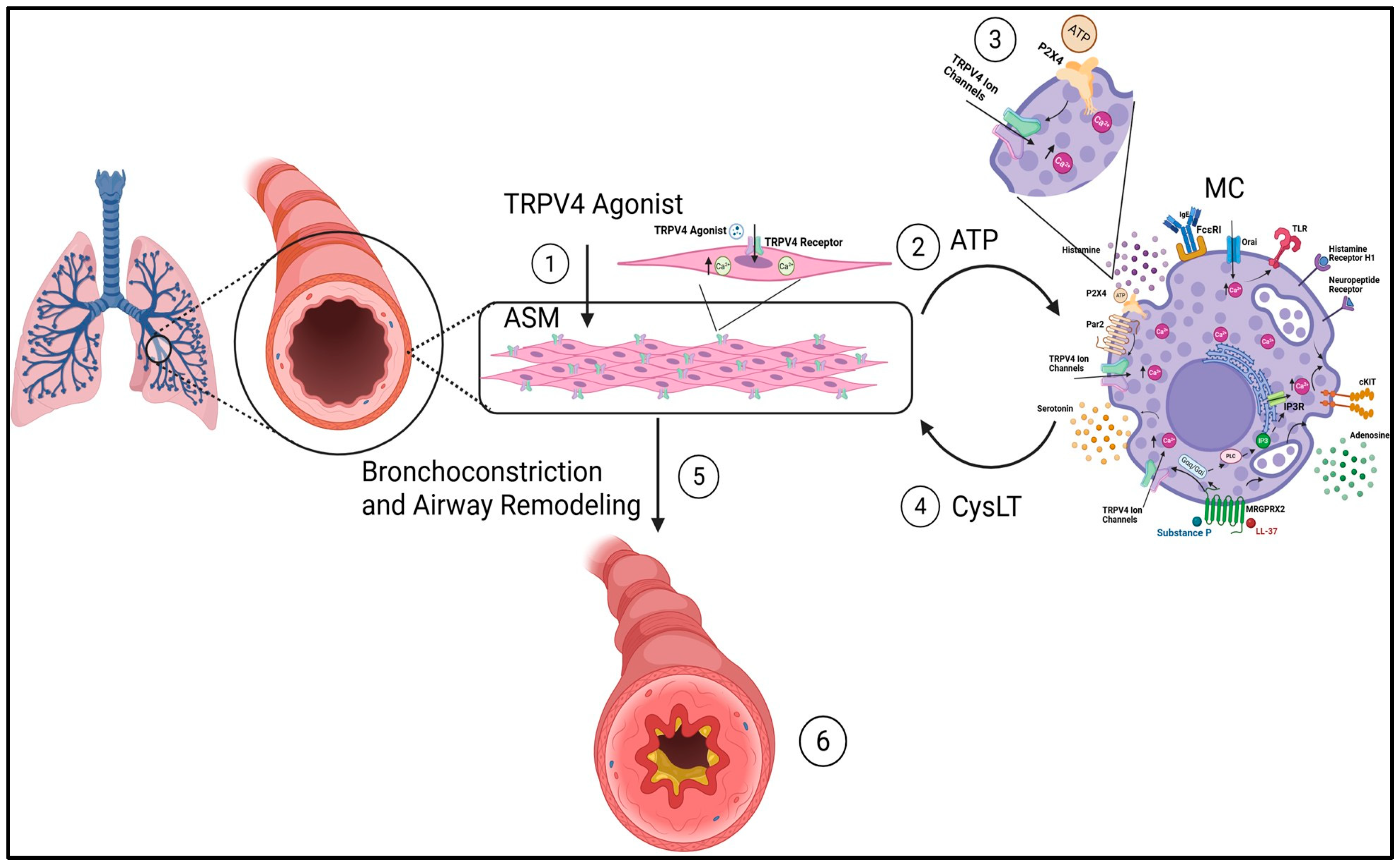
4.1.3. Interaction Between MCs and TRPV4 in Asthma
4.1.4. Therapeutic Implications
4.2. TRPV4-MC Signaling in Visceral Hypersensitivity
4.2.1. MCs Drive Neuro-Immune Crosstalk in IBS
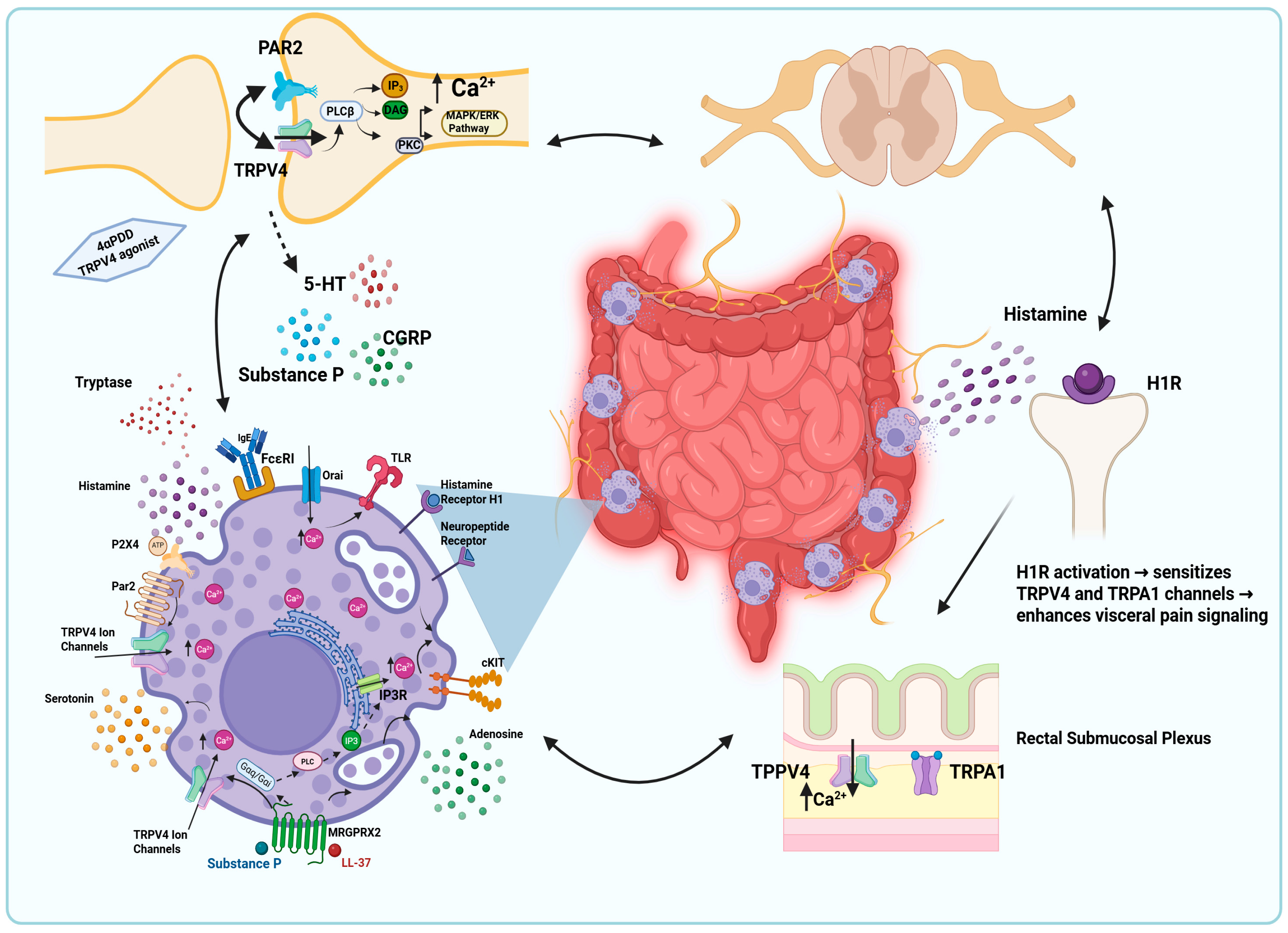
4.2.2. TRPV4 Activation and Mast Cell–Neuron Crosstalk in IBS Pathophysiology
4.2.3. Histamine-Dependent Sensitization of TRPV4 in IBS
4.2.4. Therapeutic Implications
4.3. TRPV4 and MC Crosstalk in Bladder Pain
Therapeutic Implications
4.4. Interplay Between TRPV4 and MCs in Osteoarthritis Pathogenesis
Osteoarthritis and MCs and TRPV4
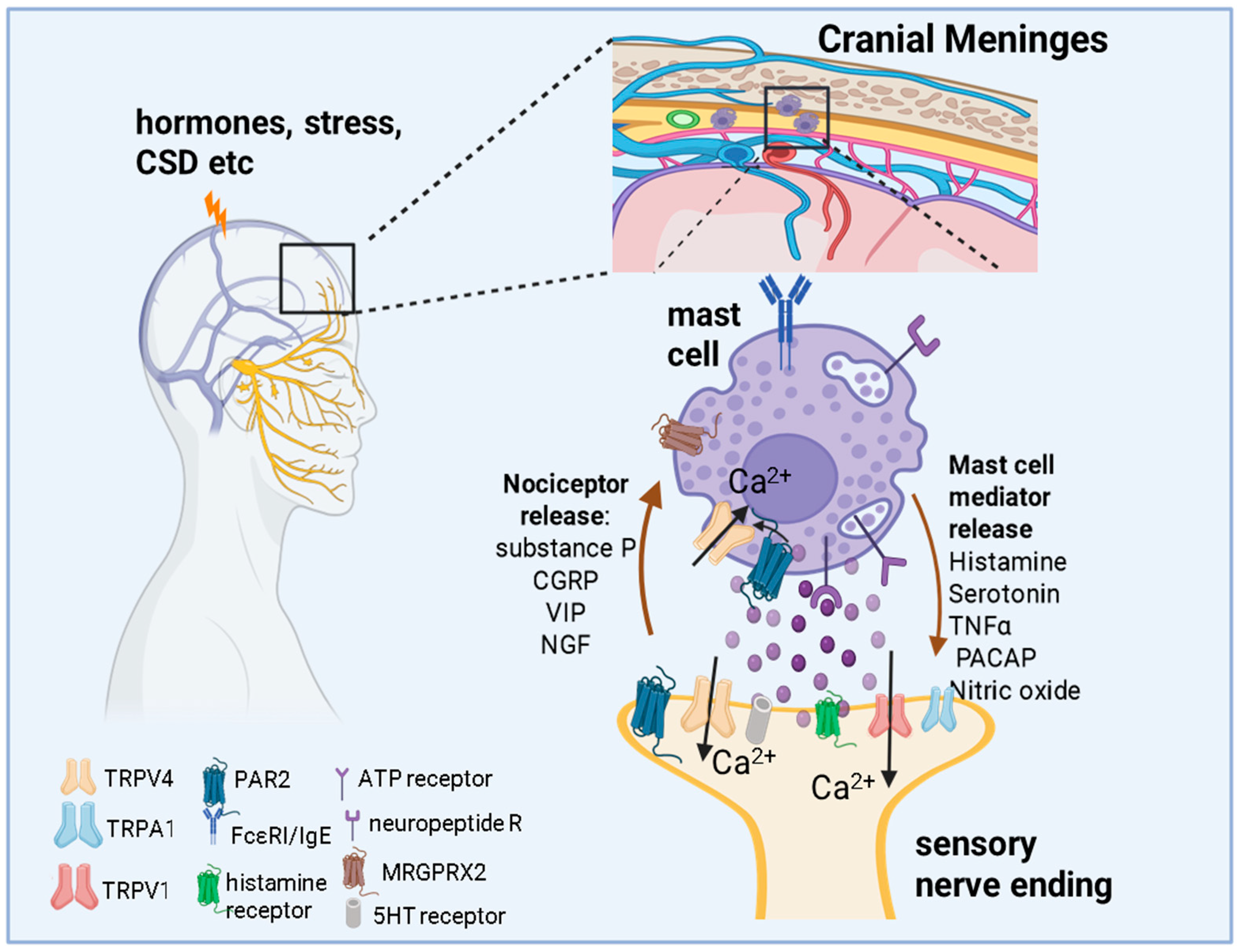
4.5. MCs and TRPV4 in Neurogenic Inflammation and Migraine Pain
5. Summary of Therapeutic Potential and Future Perspectives
6. Materials and Methods
6.1. Literature Search Strategy
6.2. Eligibility Criteria
6.3. Study Selection and Evidence Synthesis
6.4. Data Items Extracted
Author Contributions
Funding
Institutional Review Board Statement
Informed Consent Statement
Data Availability Statement
Conflicts of Interest
Abbreviations
| TRPV4 | Transient Receptor Potential Vanilloid 4 |
| TRP | Transient Receptor Potential |
| TRPC | Transient Receptor Potential Canonical |
| TRPM | Transient Receptor Potential Melastatin |
| TRPA | Transient Receptor Potential Ankyrin |
| TRPML | Transient Receptor Potential Mucolipin |
| TRPP | Transient Receptor Potential Polycystin |
| 4α-PDD | 4α-phorbol 12,13-didecanoate |
| MCs | Mast Cells |
| ARDs | Ankyrin Repeat Domains |
| ATP | Adenosine Triphosphate |
| CGRP | Calcitonin Gene-Related Peptide |
| DRG | Dorsal Root Ganglia |
| SCF | Stem Cell Factor |
| CRH | Corticotropin-Releasing Hormone |
| NT | Neurotensin |
| FcεRI | Fc epsilon receptor I—High-affinity IgE receptor |
| IgE | Immunoglobulin E |
| MrgprB2 | Mas-related G Protein–Coupled Receptor B2 (mouse) |
| MRGPRX2 | Mas-related G Protein–Coupled Receptor X2 (human) |
| LL-37 | Cathelicidin Antimicrobial Peptide |
| HC067047 | Selective TRPV4 Antagonist (compound) |
| VIP | Vasoactive Intestinal Peptide |
| PACAP | Pituitary Adenylate Cyclase-Activating Polypeptide |
| PACAP1-38 | Pituitary Adenylate Cyclase-Activating Polypeptide 1-38 |
| AD | Atopic Dermatitis |
| PN | Prurigo Nodularis |
| SP | Substance P |
| NGF | Nerve Growth Factor |
| BDNF | Brain-Derived Neurotrophic Factor |
| ASM | Airway Smooth Muscle |
| LTC4 | Leukotriene C4 |
| OVA | Ovalbumin |
| TMDCD | Tuo-Min-Ding-Chuan Decoction |
| P2X3 | Purinergic Receptor P2X, Ligand-Gated Ion Channel 3 |
| P2X4 | Purinergic Receptor P2X, Ligand-Gated Ion Channel 4 |
| COPD | Chronic Obstructive Pulmonary Disease |
| Aδ fibers | A-delta fibers (a type of sensory nerve fiber) |
| GSK1016790 | A Selective TRPV4 Agonist (compound) |
| AF-353 | Selective P2X3 Receptor Antagonist (compound) |
| [Ca2+]i | Intracellular Calcium Concentration |
| VH | Visceral Hypersensitivity |
| GI | Gastrointestinal |
| 5-HT | 5-Hydroxytryptamine (Serotonin) |
| TNBS | 2,4,6-Trinitrobenzene Sulfonic Acid |
| MPO | Myeloperoxidase |
| RMCP-2 | Rat MC Protease-2 |
| PKC | Protein Kinase C |
| PLCβ | Phospholipase C Beta |
| MAPKK | Mitogen-Activated Protein Kinase Kinase |
| PLA2 | Phospholipase A2 |
| siRNA | Small Interfering RNA |
| PAR2 | Protease-Activated Receptor 2 |
| PAR4 | Protease-Activated Receptor 4 |
| ACC | Anterior Cingulate Cortex |
| GABAergic | Gamma-Aminobutyric Acid-Producing (Neurons) |
| LPS | Lipopolysaccharide |
| OA | Osteoarthritis |
| EA | Electroacupuncture |
References
- Zhang, M.; Ma, Y.; Ye, X.; Zhang, N.; Pan, L.; Wang, B. TRP (transient receptor potential) ion channel family: Structures, biological functions and therapeutic interventions for diseases. Signal Transduct. Target. Ther. 2023, 8, 261. [Google Scholar] [CrossRef] [Scilit] [PubMed]
- Chung, M.-K.; Jung, S.J.; Oh, S.B. Role of TRP Channels in Pain Sensation. In Transient Receptor Potential Channels; Islam, M.S., Ed.; Springer: Dordrecht, The Netherlands, 2011; pp. 615–636. [Google Scholar]
- Li, H. TRP Channel Classification. Adv. Exp. Med. Biol. 2017, 976, 1–8. [Google Scholar] [CrossRef] [Scilit]
- Moore, C.; Gupta, R.; Jordt, S.-E.; Chen, Y.; Liedtke, W.B. Regulation of Pain and Itch by TRP Channels. Neurosci. Bull. 2017, 34, 120–142. [Google Scholar] [CrossRef] [Scilit]
- Liedtke, W.; Choe, Y.; Martí-Renom, M.A.; Bell, A.M.; Denis, C.S.; Sali, A.; Hudspeth, A.J.; Friedman, J.M.; Heller, S. Vanilloid receptor-related osmotically activated channel (VR-OAC), a candidate vertebrate osmoreceptor. Cell 2000, 103, 525–535. [Google Scholar] [CrossRef] [Scilit]
- Deng, Z.; Paknejad, N.; Maksaev, G.; Sala-Rabanal, M.; Nichols, C.G.; Hite, R.K.; Yuan, P. Cryo-EM and X-ray structures of TRPV4 reveal insight into ion permeation and gating mechanisms. Nat. Struct. Mol. Biol. 2018, 25, 252–260. [Google Scholar] [CrossRef] [Scilit] [PubMed]
- Nadezhdin, K.D.; Talyzina, I.A.; Parthasarathy, A.; Neuberger, A.; Zhang, D.X.; Sobolevsky, A.I. Structure of human TRPV4 in complex with GTPase RhoA. Nat. Commun. 2023, 14, 3733. [Google Scholar] [CrossRef] [Scilit]
- Takahashi, N.; Hamada-Nakahara, S.; Itoh, Y.; Takemura, K.; Shimada, A.; Ueda, Y.; Kitamata, M.; Matsuoka, R.; Hanawa-Suetsugu, K.; Senju, Y.; et al. TRPV4 channel activity is modulated by direct interaction of the ankyrin domain to PI(4,5)P2. Nat. Commun. 2014, 5, 4994. [Google Scholar] [CrossRef] [Scilit] [PubMed]
- Lei, L.; Cao, X.; Yang, F.; Shi, D.J.; Tang, Y.Q.; Zheng, J.; Wang, K. A TRPV4 channel C-terminal folding recognition domain critical for trafficking and function. J. Biol. Chem. 2013, 288, 10427–10439. [Google Scholar] [CrossRef] [Scilit]
- Moore, C.; Liedtke, W.B. Frontiers in Neuroscience Osmomechanical-Sensitive TRPV Channels in Mammals. In Neurobiology of TRP Channels; Emir, T.L.R., Ed.; CRC Press: Boca Raton, FL, USA; Taylor & Francis: Abingdon, UK, 2017. [Google Scholar]
- Watanabe, H.; Davis, J.B.; Smart, D.; Jerman, J.C.; Smith, G.D.; Hayes, P.; Vriens, J.; Cairns, W.; Wissenbach, U.; Prenen, J.; et al. Activation of TRPV4 channels (hVRL-2/mTRP12) by phorbol derivatives. J. Biol. Chem. 2002, 277, 13569–13577. [Google Scholar] [CrossRef] [Scilit]
- Jin, M.; Wu, Z.; Chen, L.; Jaimes, J.; Collins, D.; Walters, E.T.; O’Neil, R.G. Determinants of TRPV4 activity following selective activation by small molecule agonist GSK1016790A. PLoS ONE 2011, 6, e16713. [Google Scholar] [CrossRef] [Scilit]
- Levine, J.D.; Alessandri-Haber, N. TRP channels: Targets for the relief of pain. Biochim. Biophys. Acta 2007, 1772, 989–1003. [Google Scholar] [CrossRef] [Scilit]
- Moore, C. The role of TRPV4 channels in cutaneous epithelia. In Current Topics in Membranes; Academic Press: New York, NY, USA, 2022; Volume 89, pp. 139–154. [Google Scholar] [CrossRef] [Scilit]
- Canales Coutiño, B.; Mayor, R. Mechanosensitive ion channels in cell migration. Cells Dev. 2021, 166, 203683. [Google Scholar] [CrossRef] [Scilit] [PubMed]
- Mendoza, S.A.; Fang, J.; Gutterman, D.D.; Wilcox, D.A.; Bubolz, A.H.; Li, R.; Suzuki, M.; Zhang, D.X. TRPV4-mediated endothelial Ca2+ influx and vasodilation in response to shear stress. Am. J. Physiol. Heart Circ. Physiol. 2010, 298, H466–H476. [Google Scholar] [CrossRef] [Scilit] [PubMed]
- Hamanaka, K.; Jian, M.Y.; Townsley, M.I.; King, J.A.; Liedtke, W.; Weber, D.S.; Eyal, F.G.; Clapp, M.M.; Parker, J.C. TRPV4 channels augment macrophage activation and ventilator-induced lung injury. Am. J. Physiol. Lung Cell Mol. Physiol. 2010, 299, L353–L362. [Google Scholar] [CrossRef] [Scilit] [PubMed]
- Nilius, B.; Voets, T. The puzzle of TRPV4 channelopathies. EMBO Rep. 2013, 14, 152–163, Erratum in EMBO Rep. 2013, 14, 845. [Google Scholar] [CrossRef] [Scilit]
- Iannone, L.F.; De Logu, F.; Geppetti, P.; De Cesaris, F. The role of TRP ion channels in migraine and headache. Neurosci. Lett. 2022, 768, 136380. [Google Scholar] [CrossRef] [Scilit]
- Chen, Y.; Kanju, P.; Fang, Q.; Lee, S.H.; Parekh, P.K.; Lee, W.; Moore, C.; Brenner, D.; Gereau, R.W.; Wang, F.; et al. TRPV4 is necessary for trigeminal irritant pain and functions as a cellular formalin receptor. Pain 2014, 155, 2662–2672. [Google Scholar] [CrossRef] [Scilit]
- Chen, Y.; Williams, S.H.; McNulty, A.L.; Hong, J.H.; Lee, S.H.; Rothfusz, N.E.; Parekh, P.K.; Moore, C.; Gereau, R.W.; Taylor, A.B.; et al. Temporomandibular joint pain: A critical role for Trpv4 in the trigeminal ganglion. Pain 2013, 154, 1295–1304. [Google Scholar] [CrossRef] [Scilit]
- Krystel-Whittemore, M.; Dileepan, K.N.; Wood, J.G. Mast Cell: A Multi-Functional Master Cell. Front. Immunol. 2015, 6, 620. [Google Scholar] [CrossRef] [Scilit]
- Zierau, O.; Zenclussen, A.C.; Jensen, F. Role of female sex hormones, estradiol and progesterone, in mast cell behavior. Front. Immunol. 2012, 3, 169. [Google Scholar] [CrossRef] [Scilit] [PubMed]
- Gilfillan, A.M.; Beaven, M.A. Regulation of mast cell responses in health and disease. Crit. Rev. Immunol. 2011, 31, 475–529. [Google Scholar] [CrossRef] [Scilit] [PubMed]
- Beaven, M.A. Our perception of the mast cell from Paul Ehrlich to now. Eur. J. Immunol. 2009, 39, 11–25. [Google Scholar] [CrossRef] [Scilit] [PubMed]
- McNeil, B.D.; Pundir, P.; Meeker, S.; Han, L.; Undem, B.J.; Kulka, M.; Dong, X. Identification of a mast-cell-specific receptor crucial for pseudo-allergic drug reactions. Nature 2015, 519, 237–241. [Google Scholar] [CrossRef] [Scilit]
- Ma, H.T.; Peng, Z.; Hiragun, T.; Iwaki, S.; Gilfillan, A.M.; Beaven, M.A. Canonical transient receptor potential 5 channel in conjunction with Orai1 and STIM1 allows Sr2+ entry, optimal influx of Ca2+, and degranulation in a rat mast cell line. J. Immunol. 2008, 180, 2233–2239. [Google Scholar] [CrossRef] [Scilit] [PubMed]
- Gaudenzio, N.; Sibilano, R.; Marichal, T.; Starkl, P.; Reber, L.L.; Cenac, N.; McNeil, B.D.; Dong, X.; Hernandez, J.D.; Sagi-Eisenberg, R.; et al. Different activation signals induce distinct mast cell degranulation strategies. J. Clin. Investig. 2016, 126, 3981–3998. [Google Scholar] [CrossRef] [Scilit]
- Li, X.; Yang, H.; Han, Y.; Yin, S.; Shen, B.; Wu, Y.; Li, W.; Cao, Z. Tick peptides evoke itch by activating MrgprC11/MRGPRX1 to sensitize TRPV1 in pruriceptors. J. Allergy Clin. Immunol. 2021, 147, 2236–2248.e16. [Google Scholar] [CrossRef] [Scilit]
- Melicoff, E.; Sansores-Garcia, L.; Gomez, A.; Moreira, D.C.; Datta, P.; Thakur, P.; Petrova, Y.; Siddiqi, T.; Murthy, J.N.; Dickey, B.F.; et al. Synaptotagmin-2 controls regulated exocytosis but not other secretory responses of mast cells. J. Biol. Chem. 2009, 284, 19445–19451. [Google Scholar] [CrossRef] [Scilit]
- Galli, S.J.; Borregaard, N.; Wynn, T.A. Phenotypic and functional plasticity of cells of innate immunity: Macrophages, mast cells and neutrophils. Nat. Immunol. 2011, 12, 1035–1044. [Google Scholar] [CrossRef] [Scilit]
- Hendriksen, E.; van Bergeijk, D.; Oosting, R.S.; Redegeld, F.A. Mast cells in neuroinflammation and brain disorders. Neurosci. Biobehav. Rev. 2017, 79, 119–133, Erratum in Neurosci. Biobehav Rev. 2017, 83, 774. [Google Scholar] [CrossRef] [Scilit]
- Theoharides, T.C.; Valent, P.; Akin, C. Mast Cells, Mastocytosis, and Related Disorders. N. Engl. J. Med. 2015, 373, 163–172. [Google Scholar] [CrossRef] [Scilit]
- Bhuiyan, P.; Wang, Y.-W.; Sha, H.-H.; Dong, H.-Q.; Qian, Y.-N. Neuroimmune connections between corticotropin-releasing hormone and mast cells: Novel strategies for the treatment of neurodegenerative diseases. Neural Regen. Res. 2021, 16, 2184–2197. [Google Scholar] [CrossRef] [Scilit]
- Vincent, L.; Vang, D.; Nguyen, J.; Gupta, M.; Luk, K.; Ericson, M.E.; Simone, D.A.; Gupta, K. Mast cell activation contributes to sickle cell pathobiology and pain in mice. Blood 2013, 122, 1853–1862. [Google Scholar] [CrossRef] [Scilit] [PubMed]
- Ramachandran, R. Neurogenic inflammation and its role in migraine. Semin. Immunopathol. 2018, 40, 301–314. [Google Scholar] [CrossRef] [Scilit] [PubMed]
- Mascarenhas, N.L.; Wang, Z.; Chang, Y.-L.; Di Nardo, A. TRPV4 Mediates Mast Cell Activation in Cathelicidin-Induced Rosacea Inflammation. J. Investig. Dermatol. 2017, 137, 972–975. [Google Scholar] [CrossRef] [Scilit] [PubMed]
- Kim, K.S.; Shin, D.H.; Nam, J.H.; Park, K.S.; Zhang, Y.H.; Kim, W.K.; Kim, S.J. Functional Expression of TRPV4 Cation Channels in Human Mast Cell Line (HMC-1). Korean J. Physiol. Pharmacol. 2010, 14, 419–425. [Google Scholar] [CrossRef] [Scilit]
- Liu, J.; Qing, L.; He, Y.; Zhu, Q.; Xu, W.; Wu, J. The involvement of transient receptor potential channels in mast cell activation by microbubbles. J. Cell Mol. Med. 2023, 27, 3628–3636. [Google Scholar] [CrossRef] [Scilit]
- Solís-López, A.; Kriebs, U.; Marx, A.; Mannebach, S.; Liedtke, W.B.; Caterina, M.J.; Freichel, M.; Tsvilovskyy, V.V. Analysis of TRPV channel activation by stimulation of FCεRI and MRGPR receptors in mouse peritoneal mast cells. PLoS ONE 2017, 12, e0171366. [Google Scholar] [CrossRef] [Scilit]
- Chen, Y.; Liu, Y.; Song, Y.; Zhao, S.; Li, B.; Sun, J.; Liu, L. Therapeutic applications and potential mechanisms of acupuncture in migraine: A literature review and perspectives. Front. Neurosci. 2022, 16, 1022455. [Google Scholar] [CrossRef] [Scilit]
- Mochizuki, T.; Sokabe, T.; Araki, I.; Fujishita, K.; Shibasaki, K.; Uchida, K.; Naruse, K.; Koizumi, S.; Takeda, M.; Tominaga, M. The TRPV4 cation channel mediates stretch-evoked Ca2+ influx and ATP release in primary urothelial cell cultures. J. Biol. Chem. 2009, 284, 21257–21264. [Google Scholar] [CrossRef] [Scilit]
- Lin, J.G.; Hsieh, C.L.; Lin, Y.W. Analgesic Effect of Electroacupuncture in a Mouse Fibromyalgia Model: Roles of TRPV1, TRPV4, and pERK. PLoS ONE 2015, 10, e0128037. [Google Scholar] [CrossRef] [Scilit]
- Takano, T.; Chen, X.; Luo, F.; Fujita, T.; Ren, Z.; Goldman, N.; Zhao, Y.; Markman, J.D.; Nedergaard, M. Traditional acupuncture triggers a local increase in adenosine in human subjects. J. Pain 2012, 13, 1215–1223. [Google Scholar] [CrossRef] [Scilit] [PubMed]
- Huo, M.; Zhang, Q.; Si, Y.; Zhang, Y.; Chang, H.; Zhou, M.; Zhang, D.; Fang, Y. The role of purinergic signaling in acupuncture-mediated relief of neuropathic and inflammatory pain. Purinergic Signal 2024, 21, 873–891. [Google Scholar] [CrossRef] [Scilit]
- Zuo, W.M.; Li, Y.J.; Cui, K.Y.; Shen, D.; Zhang, D.; Zheng, Y.W.; Huang, M.; Wu, Y.; Shen, X.Y.; Wang, L.N.; et al. The real-time detection of acupuncture-induced extracellular ATP mobilization in acupoints and exploration of its role in acupuncture analgesia. Purinergic Signal 2023, 19, 69–85. [Google Scholar] [CrossRef] [Scilit]
- Wang, L.N.; Wang, X.Z.; Li, Y.J.; Li, B.R.; Huang, M.; Wang, X.Y.; Grygorczyk, R.; Ding, G.H.; Schwarz, W. Activation of Subcutaneous Mast Cells in Acupuncture Points Triggers Analgesia. Cells 2022, 11, 809. [Google Scholar] [CrossRef] [Scilit] [PubMed]
- van Zuuren, E.J.; Arents, B.W.M.; van der Linden, M.M.D.; Vermeulen, S.; Fedorowicz, Z.; Tan, J. Rosacea: New Concepts in Classification and Treatment. Am. J. Clin. Dermatol. 2021, 22, 457–465. [Google Scholar] [CrossRef] [Scilit] [PubMed]
- Buddenkotte, J.; Steinhoff, M. Recent advances in understanding and managing rosacea. F1000Research 2018, 7, 1885. [Google Scholar] [CrossRef] [Scilit]
- van Zuuren, E.J.; Fedorowicz, Z.; Tan, J.; van der Linden, M.M.D.; Arents, B.W.M.; Carter, B.; Charland, L. Interventions for rosacea based on the phenotype approach: An updated systematic review including GRADE assessments. Br. J. Dermatol. 2019, 181, 65–79. [Google Scholar] [CrossRef] [Scilit]
- Yang, F.; Wang, L.; Song, D.; Zhang, L.; Wang, X.; Du, D.; Jiang, X. Signaling pathways and targeted therapy for rosacea. Front. Immunol. 2024, 15, 1367994. [Google Scholar] [CrossRef] [Scilit]
- Muto, Y.; Wang, Z.; Vanderberghe, M.; Two, A.; Gallo, R.L.; Di Nardo, A. Mast cells are key mediators of cathelicidin-initiated skin inflammation in rosacea. J. Investig. Dermatol. 2014, 134, 2728–2736. [Google Scholar] [CrossRef] [Scilit]
- Sulk, M.; Seeliger, S.; Aubert, J.; Schwab, V.D.; Cevikbas, F.; Rivier, M.; Nowak, P.; Voegel, J.J.; Buddenkotte, J.; Steinhoff, M. Distribution and expression of non-neuronal transient receptor potential (TRPV) ion channels in rosacea. J. Investig. Dermatol. 2012, 132, 1253–1262. [Google Scholar] [CrossRef] [Scilit]
- Chen, Y.; Moore, C.D.; Zhang, J.Y.; Hall, R.P., III; MacLeod, A.S.; Liedtke, W. TRPV4 Moves toward Center-Fold in Rosacea Pathogenesis. J. Investig. Dermatol. 2017, 137, 801–804. [Google Scholar] [CrossRef] [Scilit] [PubMed]
- Zhou, X.; Su, Y.; Wu, S.; Wang, H.; Jiang, R.; Jiang, X. The temperature-sensitive receptors TRPV4 and TRPM8 have important roles in the pruritus of rosacea. J. Dermatol. Sci. 2022, 108, 68–76. [Google Scholar] [CrossRef] [Scilit]
- Zhang, Q.; Henry, G.; Chen, Y. Emerging Role of Transient Receptor Potential Vanilloid 4 (TRPV4) Ion Channel in Acute and Chronic Itch. Int. J. Mol. Sci. 2021, 22, 7591. [Google Scholar] [CrossRef] [Scilit]
- Chen, Y.; Wang, Z.-L.; Yeo, M.; Zhang, Q.-J.; López-Romero, A.E.; Ding, H.-P.; Zhang, X.; Zeng, Q.; Morales-Lázaro, S.L.; Moore, C.; et al. Epithelia-Sensory Neuron Cross Talk Underlies Cholestatic Itch Induced by Lysophosphatidylcholine. Gastroenterology 2021, 161, 301–317.e16. [Google Scholar] [CrossRef] [Scilit]
- Moore, C.; Cevikbas, F.; Pasolli, H.A.; Chen, Y.; Kong, W.; Kempkes, C.; Parekh, P.; Lee, S.H.; Kontchou, N.A.; Yeh, I.; et al. UVB radiation generates sunburn pain and affects skin by activating epidermal TRPV4 ion channels and triggering endothelin-1 signaling. Proc. Natl. Acad. Sci. USA 2013, 110, E3225–E3234, Erratum in Proc. Natl. Acad. Sci. USA 2013, 110, 15502. [Google Scholar] [CrossRef] [Scilit]
- Strauss, R.S. Skin Bends: A Cutaneous Manifestation of Decompression Sickness. J. Gen. Intern. Med. 2019, 34, 2290. [Google Scholar] [CrossRef] [Scilit]
- Oode, Y.; Yanagawa, Y.; Inoue, T.; Oomori, K.; Osaka, H.; Okamoto, K. Cutaneous manifestation of decompression sickness: Cutis marmorata. Intern. Med. 2013, 52, 2479. [Google Scholar] [CrossRef] [Scilit]
- García, E.; Mitchell, S.J. Bubbles in the skin microcirculation underlying cutis marmorata in decompression sickness: Preliminary observations. Diving Hyperb. Med. 2020, 50, 173–177. [Google Scholar] [CrossRef] [Scilit]
- Wu, M.L.; Xu, D.S.; Bai, W.Z.; Cui, J.J.; Shu, H.M.; He, W.; Wang, X.Y.; Shi, H.; Su, Y.S.; Hu, L.; et al. Local cutaneous nerve terminal and mast cell responses to manual acupuncture in acupoint LI4 area of the rats. J. Chem. Neuroanat. 2015, 68, 14–21. [Google Scholar] [CrossRef] [Scilit] [PubMed]
- Elieh Ali Komi, D.; Wöhrl, S.; Bielory, L. Mast Cell Biology at Molecular Level: A Comprehensive Review. Clin. Rev. Allergy Immunol. 2020, 58, 342–365. [Google Scholar] [CrossRef] [Scilit] [PubMed]
- Buttolph, T.B.; Dick, E.J., Jr.; Toner, C.B.; Broome, J.R.; Williams, R.; Kang, Y.H.; Wilt, N.L. Cutaneous lesions in swine after decompression: Histopathology and ultrastructure. Undersea Hyperb. Med. 1998, 25, 115–121. [Google Scholar] [PubMed]
- Lemanske, R.F., Jr.; Busse, W.W. 6. Asthma: Factors underlying inception, exacerbation, and disease progression. J. Allergy Clin. Immunol. 2003, 111, S502–S519. [Google Scholar] [CrossRef] [Scilit] [PubMed]
- Galli, S.J.; Tsai, M. IgE and mast cells in allergic disease. Nat. Med. 2012, 18, 693–704. [Google Scholar] [CrossRef] [Scilit]
- Brightling, C.E.; Bradding, P.; Symon, F.A.; Holgate, S.T.; Wardlaw, A.J.; Pavord, I.D. Mast-cell infiltration of airway smooth muscle in asthma. N. Engl. J. Med. 2002, 346, 1699–1705. [Google Scholar] [CrossRef] [Scilit] [PubMed]
- Chen, J.; Lai, X.; Song, Y.; Su, X. Neuroimmune recognition and regulation in the respiratory system. Eur. Respir. Rev. 2024, 33, 240008. [Google Scholar] [CrossRef] [Scilit]
- Penn, R.B. Mast cells in asthma: Here I am, stuck in the middle with you. Eur. Respir. J. 2020, 56, 2001337. [Google Scholar] [CrossRef] [Scilit]
- Begueret, H.; Berger, P.; Vernejoux, J.M.; Dubuisson, L.; Marthan, R.; Tunon-de-Lara, J.M. Inflammation of bronchial smooth muscle in allergic asthma. Thorax 2007, 62, 8–15. [Google Scholar] [CrossRef] [Scilit]
- Watanabe, H.; Vriens, J.; Suh, S.H.; Benham, C.D.; Droogmans, G.; Nilius, B. Heat-evoked activation of TRPV4 channels in a HEK293 cell expression system and in native mouse aorta endothelial cells. J. Biol. Chem. 2002, 277, 47044–47051. [Google Scholar] [CrossRef] [Scilit]
- Bonvini, S.J.; Birrell, M.A.; Dubuis, E.; Adcock, J.J.; Wortley, M.A.; Flajolet, P.; Bradding, P.; Belvisi, M.G. Novel airway smooth muscle-mast cell interactions and a role for the TRPV4-ATP axis in non-atopic asthma. Eur. Respir. J. 2020, 56, 1901458. [Google Scholar] [CrossRef] [Scilit]
- Bonvini, S.J.; Birrell, M.A.; Grace, M.S.; Maher, S.A.; Adcock, J.J.; Wortley, M.A.; Dubuis, E.; Ching, Y.M.; Ford, A.P.; Shala, F.; et al. Transient receptor potential cation channel, subfamily V, member 4 and airway sensory afferent activation: Role of adenosine triphosphate. J. Allergy Clin. Immunol. 2016, 138, 249–261.e12. [Google Scholar] [CrossRef] [Scilit]
- Li, W.; Wang, S.; Zhang, T.; Zhu, Y.; Yu, L.; Xu, X. Activation of Adenosine Triphosphate-Gated Purinergic 2 Receptor Channels by Transient Receptor Potential Vanilloid Subtype 4 in Cough Hypersensitivity. Biomolecules 2025, 15, 285. [Google Scholar] [CrossRef] [Scilit]
- Mažerik, J.; Gondáš, E.; Smieško, L.; Fraňová, S.; Šutovská, M. Effects of TRPV4 channel blocker on airway inflammation and airway defense reflexes in experimentally induced model of allergic asthma. Respir. Physiol. Neurobiol. 2023, 316, 104123. [Google Scholar] [CrossRef] [Scilit]
- Davidescu, L.; Ursol, G.; Korzh, O.; Deshmukh, V.; Kuryk, L.; Nortje, M.M.; Godlevska, O.; Devouassoux, G.; Khodosh, E.; Israel, E.; et al. Efficacy and Safety of Masitinib in Corticosteroid-Dependent Severe Asthma: A Randomized Placebo-Controlled Trial. J. Asthma Allergy 2022, 15, 737–747. [Google Scholar] [CrossRef] [Scilit]
- Qin, J.; Lv, M.; Jiang, Z.; Meng, X.; Wang, Y.; Cui, J.; Wang, J.; Wang, Q. Tuo-Min-Ding-Chuan Decoction Alleviate Ovalbumin-Induced Allergic Asthma by Inhibiting Mast Cell Degranulation and Down-Regulating the Differential Expression Proteins. Front. Pharmacol. 2021, 12, 725953. [Google Scholar] [CrossRef] [Scilit]
- Ng, Q.X.; Soh, A.Y.S.; Loke, W.; Lim, D.Y.; Yeo, W.S. The role of inflammation in irritable bowel syndrome (IBS). J. Inflamm. Res. 2018, 11, 345–349. [Google Scholar] [CrossRef] [Scilit]
- Cenac, N.; Altier, C.; Motta, J.P.; d’Aldebert, E.; Galeano, S.; Zamponi, G.W.; Vergnolle, N. Potentiation of TRPV4 signalling by histamine and serotonin: An important mechanism for visceral hypersensitivity. Gut 2010, 59, 481–488. [Google Scholar] [CrossRef] [Scilit] [PubMed]
- Holtmann, G.J.; Ford, A.C.; Talley, N.J. Pathophysiology of irritable bowel syndrome. Lancet Gastroenterol. Hepatol. 2016, 1, 133–146. [Google Scholar] [CrossRef] [Scilit] [PubMed]
- Lee, K.N.; Lee, O.Y. The Role of Mast Cells in Irritable Bowel Syndrome. Gastroenterol. Res. Pract. 2016, 2016, 2031480. [Google Scholar] [CrossRef] [Scilit]
- Lee, K.J.; Kim, Y.B.; Kim, J.H.; Kwon, H.C.; Kim, D.K.; Cho, S.W. The alteration of enterochromaffin cell, mast cell, and lamina propria T lymphocyte numbers in irritable bowel syndrome and its relationship with psychological factors. J. Gastroenterol. Hepatol. 2008, 23, 1689–1694. [Google Scholar] [CrossRef] [Scilit] [PubMed]
- Ohashi, K.; Sato, Y.; Iwata, H.; Kawai, M.; Kurebayashi, Y. Colonic mast cell infiltration in rats with TNBS-induced visceral hypersensitivity. J. Vet. Med. Sci. 2007, 69, 1223–1228. [Google Scholar] [CrossRef] [Scilit]
- Balemans, D.; Aguilera-Lizarraga, J.; Florens, M.V.; Jain, P.; Denadai-Souza, A.; Viola, M.F.; Alpizar, Y.A.; Van Der Merwe, S.; Vanden Berghe, P.; Talavera, K.; et al. Histamine-mediated potentiation of transient receptor potential (TRP) ankyrin 1 and TRP vanilloid 4 signaling in submucosal neurons in patients with irritable bowel syndrome. Am. J. Physiol. Gastrointest. Liver Physiol. 2019, 316, G338–G349. [Google Scholar] [CrossRef] [Scilit]
- Cenac, N.; Altier, C.; Chapman, K.; Liedtke, W.; Zamponi, G.; Vergnolle, N. Transient receptor potential vanilloid-4 has a major role in visceral hypersensitivity symptoms. Gastroenterology 2008, 135, 937–946.e2. [Google Scholar] [CrossRef] [Scilit]
- Barbara, G.; Stanghellini, V.; De Giorgio, R.; Cremon, C.; Cottrell, G.S.; Santini, D.; Pasquinelli, G.; Morselli-Labate, A.M.; Grady, E.F.; Bunnett, N.W.; et al. Activated mast cells in proximity to colonic nerves correlate with abdominal pain in irritable bowel syndrome. Gastroenterology 2004, 126, 693–702. [Google Scholar] [CrossRef] [Scilit]
- Brierley, S.M.; Page, A.J.; Hughes, P.A.; Adam, B.; Liebregts, T.; Cooper, N.J.; Holtmann, G.; Liedtke, W.; Blackshaw, L.A. Selective role for TRPV4 ion channels in visceral sensory pathways. Gastroenterology 2008, 134, 2059–2069. [Google Scholar] [CrossRef] [Scilit]
- Barbara, G.; Wang, B.; Stanghellini, V.; de Giorgio, R.; Cremon, C.; Di Nardo, G.; Trevisani, M.; Campi, B.; Geppetti, P.; Tonini, M.; et al. Mast cell-dependent excitation of visceral-nociceptive sensory neurons in irritable bowel syndrome. Gastroenterology 2007, 132, 26–37. [Google Scholar] [CrossRef] [Scilit]
- Sipe, W.E.; Brierley, S.M.; Martin, C.M.; Phillis, B.D.; Cruz, F.B.; Grady, E.F.; Liedtke, W.; Cohen, D.M.; Vanner, S.; Blackshaw, L.A.; et al. Transient receptor potential vanilloid 4 mediates protease activated receptor 2-induced sensitization of colonic afferent nerves and visceral hyperalgesia. Am. J. Physiol. Gastrointest. Liver Physiol. 2008, 294, G1288–G1298. [Google Scholar] [CrossRef] [Scilit] [PubMed]
- Augé, C.; Balz-Hara, D.; Steinhoff, M.; Vergnolle, N.; Cenac, N. Protease-activated receptor-4 (PAR 4): A role as inhibitor of visceral pain and hypersensitivity. Neurogastroenterol. Motil. Off. J. Eur. Gastrointest. Motil. Soc. 2009, 21, 1189-e107. [Google Scholar] [CrossRef] [Scilit]
- Guo, R.; Gao, S.; Feng, X.; Liu, H.; Ming, X.; Sun, J.; Luan, X.; Liu, Z.; Liu, W.; Guo, F. The GABAergic pathway from anterior cingulate cortex to lateral hypothalamus area regulates irritable bowel syndrome in mice and its underlying mechanism. J. Neurochem. 2024, 168, 2814–2831. [Google Scholar] [CrossRef] [Scilit] [PubMed]
- Beckers, A.B.; Weerts, Z.; Helyes, Z.; Masclee, A.A.M.; Keszthelyi, D. Review article: Transient receptor potential channels as possible therapeutic targets in irritable bowel syndrome. Aliment. Pharmacol. Ther. 2017, 46, 938–952. [Google Scholar] [CrossRef] [Scilit]
- Yoshizumi, M.; Tazawa, N.; Watanabe, C.; Mizoguchi, H. TRPV4 activation prevents lipopolysaccharide-induced painful bladder hypersensitivity in rats by regulating immune pathways. Front. Immunol. 2022, 13, 1080302. [Google Scholar] [CrossRef] [Scilit] [PubMed]
- Everaerts, W.; Nilius, B.; Owsianik, G. The vanilloid transient receptor potential channel TRPV4: From structure to disease. Prog. Biophys. Mol. Biol. 2010, 103, 2–17. [Google Scholar] [CrossRef] [Scilit] [PubMed]
- Aich, A.; Afrin, L.B.; Gupta, K. Mast Cell-Mediated Mechanisms of Nociception. Int. J. Mol. Sci. 2015, 16, 29069–29092. [Google Scholar] [CrossRef] [Scilit]
- Tang, C.; Liu, Q.; Zhang, Y.; Liu, G.; Shen, G. Identification of CIRBP and TRPV4 as Immune-Related Diagnostic Biomarkers in Osteoarthritis. Int. J. Gen. Med. 2021, 14, 10235–10245. [Google Scholar] [CrossRef] [Scilit] [PubMed]
- Abramoff, B.; Caldera, F.E. Osteoarthritis: Pathology, Diagnosis, and Treatment Options. Med. Clin. N. Am. 2020, 104, 293–311. [Google Scholar] [CrossRef] [Scilit]
- Loeser, R.F.; Goldring, S.R.; Scanzello, C.R.; Goldring, M.B. Osteoarthritis: A disease of the joint as an organ. Arthritis Rheum. 2012, 64, 1697–1707. [Google Scholar] [CrossRef] [Scilit] [PubMed]
- Lopes, D.M.; Denk, F.; McMahon, S.B. The Molecular Fingerprint of Dorsal Root and Trigeminal Ganglion Neurons. Front. Mol. Neurosci. 2017, 10, 304. [Google Scholar] [CrossRef] [Scilit]
- Xu, B.; Xing, R.; Huang, Z.; Yin, S.; Li, X.; Zhang, L.; Ding, L.; Wang, P. Excessive mechanical stress induces chondrocyte apoptosis through TRPV4 in an anterior cruciate ligament-transected rat osteoarthritis model. Life Sci. 2019, 228, 158–166. [Google Scholar] [CrossRef] [Scilit]
- Clark, A.L.; Votta, B.J.; Kumar, S.; Liedtke, W.; Guilak, F. Chondroprotective role of the osmotically sensitive ion channel transient receptor potential vanilloid 4: Age- and sex-dependent progression of osteoarthritis in Trpv4-deficient mice. Arthritis Rheum. 2010, 62, 2973–2983. [Google Scholar] [CrossRef] [Scilit]
- Driscoll, C.; Chanalaris, A.; Knights, C.; Ismail, H.; Sacitharan, P.K.; Gentry, C.; Bevan, S.; Vincent, T.L. Nociceptive Sensitizers Are Regulated in Damaged Joint Tissues, Including Articular Cartilage, When Osteoarthritic Mice Display Pain Behavior. Arthritis Rheumatol. 2016, 68, 857–867. [Google Scholar] [CrossRef] [Scilit]
- Loucks, A.; Maerz, T.; Hankenson, K.; Moeser, A.; Colbath, A. The multifaceted role of mast cells in joint inflammation and arthritis. Osteoarthr. Cartil. 2023, 31, 567–575. [Google Scholar] [CrossRef] [Scilit]
- Ragipoglu, D.; Dudeck, A.; Haffner-Luntzer, M.; Voss, M.; Kroner, J.; Ignatius, A.; Fischer, V. The Role of Mast Cells in Bone Metabolism and Bone Disorders. Front. Immunol. 2020, 11, 163. [Google Scholar] [CrossRef] [Scilit]
- Hao, G.; Han, S.; Xiao, Z.; Shen, J.; Zhao, Y.; Hao, Q. Synovial mast cells and osteoarthritis: Current understandings and future perspectives. Heliyon 2024, 10, e41003. [Google Scholar] [CrossRef] [Scilit]
- Noseda, R.; Burstein, R. Migraine pathophysiology: Anatomy of the trigeminovascular pathway and associated neurological symptoms, CSD, sensitization and modulation of pain. Pain 2013, 154, S44–S53. [Google Scholar] [CrossRef] [Scilit]
- Arieli, R. Nanobubbles Form at Active Hydrophobic Spots on the Luminal Aspect of Blood Vessels: Consequences for Decompression Illness in Diving and Possible Implications for Autoimmune Disease-An Overview. Front. Physiol. 2017, 8, 591. [Google Scholar] [CrossRef] [Scilit] [PubMed]
- Sbei, S.; Moncrief, T.; Limjunyawong, N.; Zeng, Y.; Green, D.P. PACAP activates MRGPRX2 on meningeal mast cells to drive migraine-like pain. Sci. Rep. 2023, 13, 13298, Erratum in Sci. Rep. 2023, 29, 12302. [Google Scholar] [CrossRef] [Scilit]
- Lennerz, J.K.; Rühle, V.; Ceppa, E.P.; Neuhuber, W.L.; Bunnett, N.W.; Grady, E.F.; Messlinger, K. Calcitonin receptor-like receptor (CLR), receptor activity-modifying protein 1 (RAMP1), and calcitonin gene-related peptide (CGRP) immunoreactivity in the rat trigeminovascular system: Differences between peripheral and central CGRP receptor distribution. J. Comp. Neurol. 2008, 507, 1277–1299. [Google Scholar] [CrossRef] [Scilit]
- Raddant, A.C.; Russo, A.F. Calcitonin gene-related peptide in migraine: Intersection of peripheral inflammation and central modulation. Expert. Rev. Mol. Med. 2011, 13, e36. [Google Scholar] [CrossRef] [Scilit]
- Wei, X.; Edelmayer, R.M.; Yan, J.; Dussor, G. Activation of TRPV4 on dural afferents produces headache-related behavior in a preclinical rat model. Cephalalgia 2011, 31, 1595–1600. [Google Scholar] [CrossRef] [Scilit] [PubMed]
- González-Ramírez, R.; Chen, Y.; Liedtke, W.B.; Morales-Lázaro, S.L. Frontiers in Neuroscience TRP Channels and Pain. In Neurobiology of TRP Channels; Emir, T.L.R., Ed.; CRC Press: Boca Raton, FL, USA; Taylor & Francis Group, LLC.: Abingdon, UK, 2017; pp. 125–147. [Google Scholar]
- Dux, M.; Santha, P.; Jancso, G. The role of chemosensitive afferent nerves and TRP ion channels in the pathomechanism of headaches. Pflug. Arch. 2012, 464, 239–248. [Google Scholar] [CrossRef] [Scilit]
- Traina, G. Mast Cells in Gut and Brain and Their Potential Role as an Emerging Therapeutic Target for Neural Diseases. Front. Cell Neurosci. 2019, 13, 345. [Google Scholar] [CrossRef] [Scilit] [PubMed]
- Zhang, X.C.; Levy, D. Modulation of meningeal nociceptors mechanosensitivity by peripheral proteinase-activated receptor-2: The role of mast cells. Cephalalgia 2008, 28, 276–284. [Google Scholar] [CrossRef] [Scilit] [PubMed]
- Kopruszinski, C.M.; Linley, J.E.; Thornton, P.; Walker, A.S.; Newton, P.; Podichetty, S.; Ruparel, R.H.; Moreira de Souza, L.H.; Navratilova, E.; Meno-Tetang, G.; et al. Efficacy of MEDI0618, a pH-dependent monoclonal antibody targeting PAR2, in preclinical models of migraine. Brain 2025, 148, 1345–1359. [Google Scholar] [CrossRef] [Scilit]
- Hassler, S.N.; Ahmad, F.B.; Burgos-Vega, C.C.; Boitano, S.; Vagner, J.; Price, T.J.; Dussor, G. Protease activated receptor 2 (PAR2) activation causes migraine-like pain behaviors in mice. Cephalalgia 2019, 39, 111–122. [Google Scholar] [CrossRef] [Scilit]
- Dib, M.; Massiou, H.; Weber, M.; Henry, P.; Garcia-Acosta, S.; Bousser, M.G. Efficacy of oral ketoprofen in acute migraine: A double-blind randomized clinical trial. Neurology 2002, 58, 1660–1665. [Google Scholar] [CrossRef] [Scilit]
- Goyal, N.; Skrdla, P.; Schroyer, R.; Kumar, S.; Fernando, D.; Oughton, A.; Norton, N.; Sprecher, D.L.; Cheriyan, J. Clinical Pharmacokinetics, Safety, and Tolerability of a Novel, First-in-Class TRPV4 Ion Channel Inhibitor, GSK2798745, in Healthy and Heart Failure Subjects. Am. J. Cardiovasc. Drugs 2019, 19, 335–342. [Google Scholar] [CrossRef] [Scilit]
- Feng, Y.; Zhou, C.; He, Y.; Wu, Y.; Pan, K.; Mo, L.; Cai, S.; Yuan, J. Shugan Decoction Ameliorated WAS-Induced Abnormal Colonic Motility in Rats by Inhibiting Colonic TRPV4-PGE(2) Signaling. Neurogastroenterol. Motil. 2025, 37, e70104. [Google Scholar] [CrossRef] [Scilit]
- Lu, Q.; Zemskov, E.A.; Sun, X.; Wang, H.; Yegambaram, M.; Wu, X.; Garcia-Flores, A.; Song, S.; Tang, H.; Kangath, A.; et al. Activation of the mechanosensitive Ca2+ channel TRPV4 induces endothelial barrier permeability via the disruption of mitochondrial bioenergetics. Redox Biol. 2021, 38, 101785. [Google Scholar] [CrossRef] [Scilit]
- Liu, L.; Guo, M.; Lv, X.; Wang, Z.; Yang, J.; Li, Y.; Yu, F.; Wen, X.; Feng, L.; Zhou, T. Role of Transient Receptor Potential Vanilloid 4 in Vascular Function. Front. Mol. Biosci. 2021, 8, 677661. [Google Scholar] [CrossRef] [Scilit] [PubMed]
- Qin, Z.; Xiang, L.; Zheng, S.; Zhao, Y.; Qin, Y.; Zhang, L.; Zhou, L. Vitexin inhibits pain and itch behavior via modulating TRPV4 activity in mice. Biomed. Pharmacother. 2023, 165, 115101. [Google Scholar] [CrossRef] [Scilit]
- Yan, J.; Ye, F.; Ju, Y.; Wang, D.; Chen, J.; Zhang, X.; Yin, Z.; Wang, C.; Yang, Y.; Zhu, C.; et al. Cimifugin relieves pruritus in psoriasis by inhibiting TRPV4. Cell Calcium 2021, 97, 102429. [Google Scholar] [CrossRef] [Scilit] [PubMed]
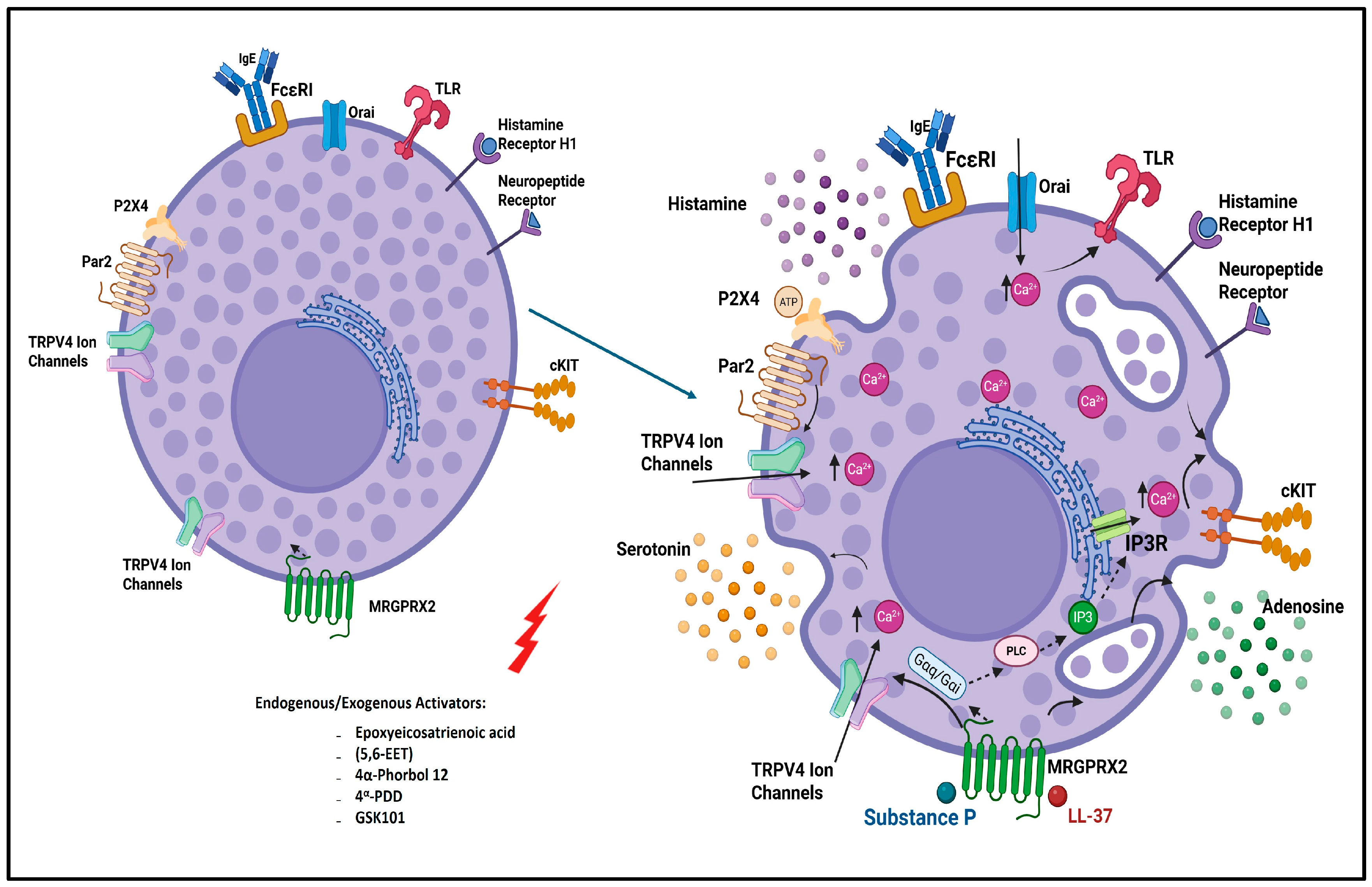


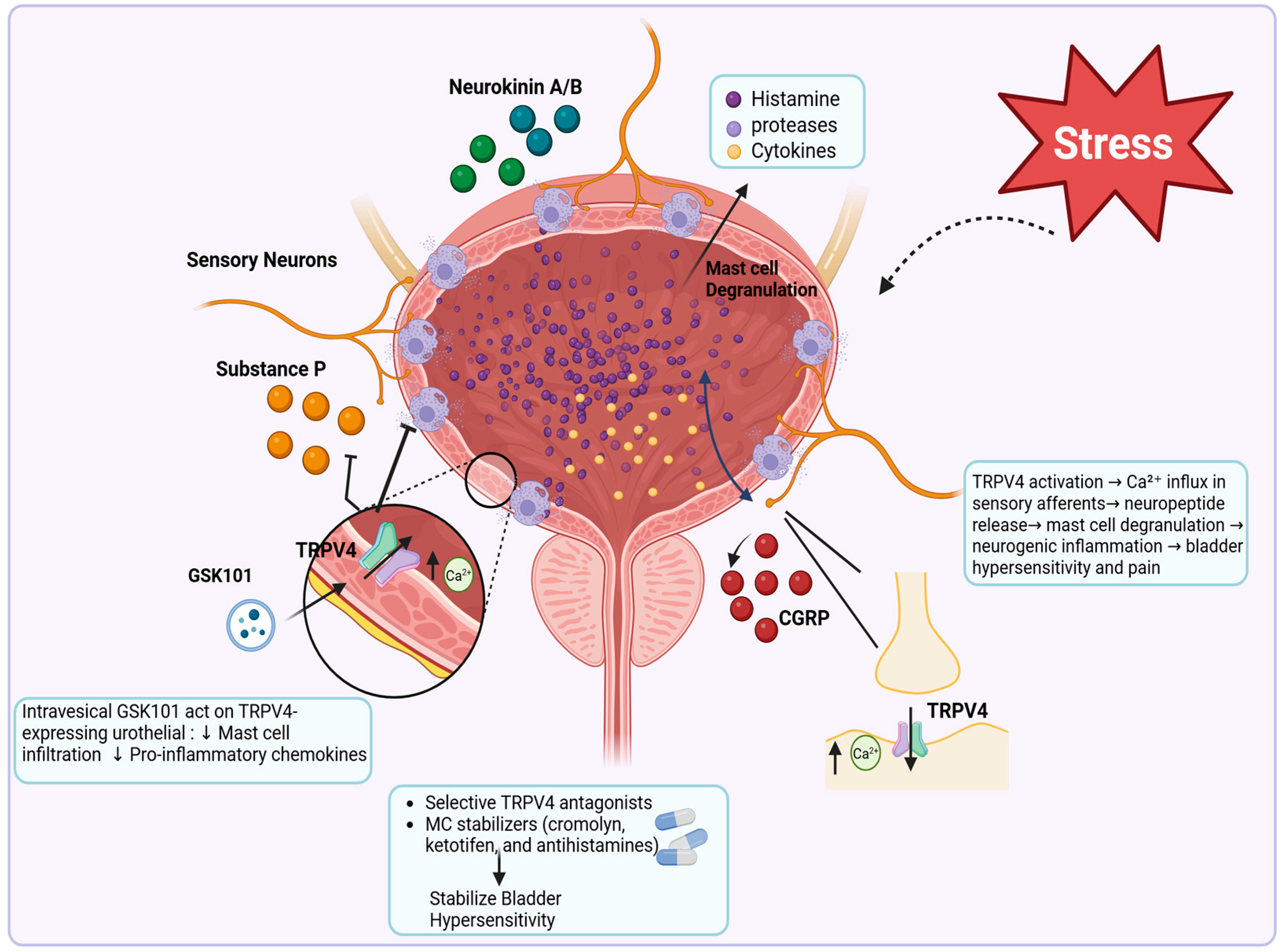
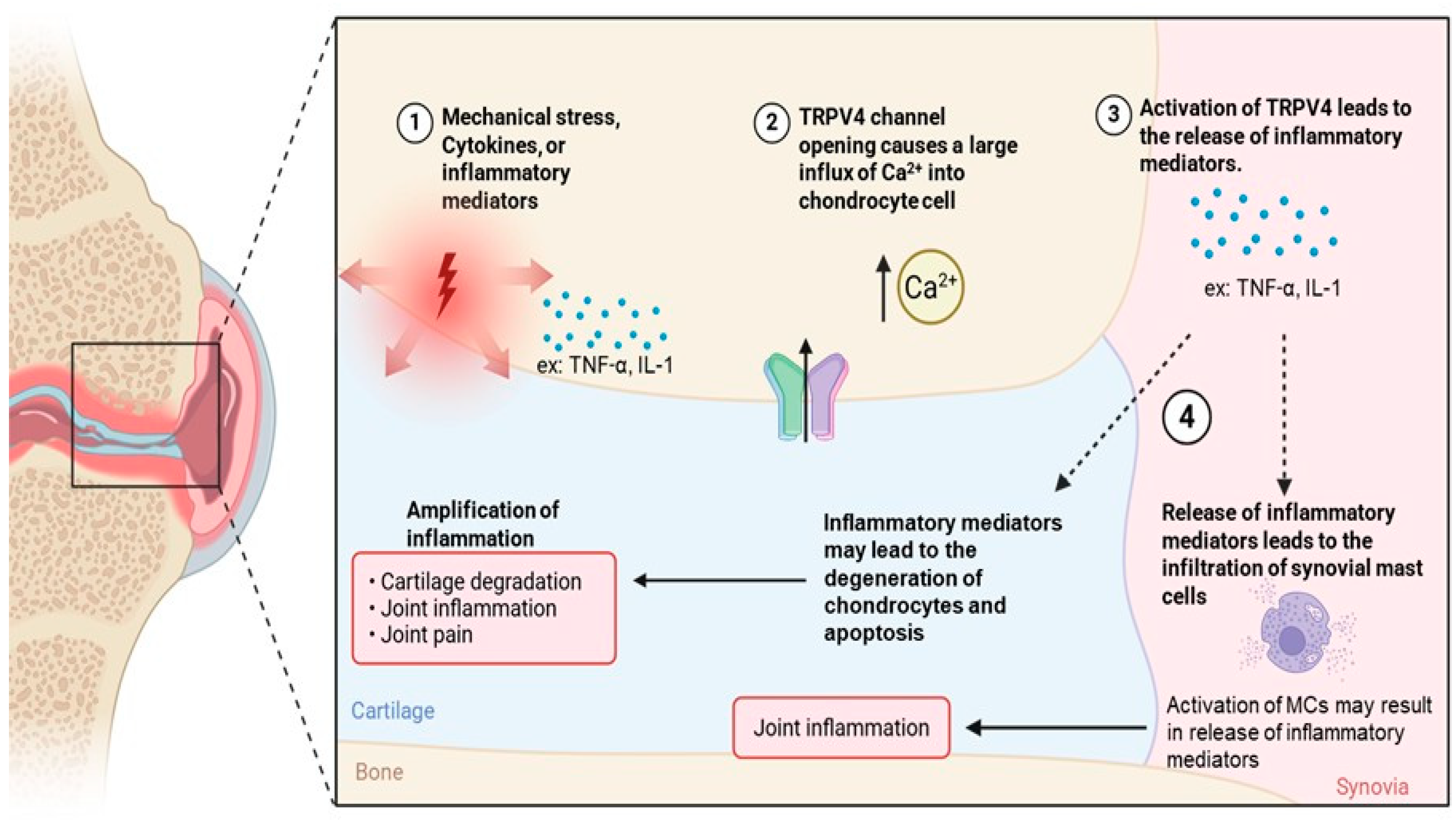


| Condition | Cellular Context | Evidence Type | Experimental Approach | MC- Specific | Key Mechanistic Conclusion | Ref. |
|---|---|---|---|---|---|---|
| Rosacea | MCs (human and mouse) | Genetic + Pharmacologic | TRPV4 siRNA; antagonist HC-067047; LL-37 stimulation; MC degranulation assays | Direct | TRPV4 expression is required for full MC degranulation downstream of MRGPRX2 signaling | [37,55] |
| Decompression Sickness | MCs (BMMCs) mouse | Pharmacologic | Mechanical microbubble stimulation; TRPV4 antagonists; Ca2+ imaging | Direct | Mechanical force induces TRPV4-dependent Ca2+ influx, driving MC degranulation | [39] |
| Acupuncture Analgesia | MCs in skin | Functional (non-genetic) | Needle stimulation at ST36; ATP measurements | Direct (functional) | Mechanical TRPV4 activation in MCs triggers ATP release and purinergic analgesic signaling | [46] |
| Asthma | Airway smooth muscle; sensory neurons; MCs | Mixed (pharmacologic + inferred MC contribution) | TRPV4 agonists/antagonists; PAR2 activation; guinea pig cough models | Partial/Indirect | TRPV4 drives ATP release and cough reflex via smooth muscle and sensory neurons; MC-derived leukotrienes implicated but MC-autonomous TRPV4 not genetically tested | [69,72,73,75] |
| Irritable Bowel Syndrome | Sensory neurons; colon; MC-derived mediators | Genetic (neuronal) + inferred MC modulation | Trpv4 knockout; siRNA; histamine sensitization; biopsy supernatants | Indirect | Neuronal TRPV4 is required for visceral hypersensitivity; MC mediators sensitize TRPV4 but MC-specific TRPV4 deletion not tested | [79,84,91] |
| Migraine | Meninges; trigeminal ganglion | Pharmacologic (cell type unresolved) | Dural TRPV4 agonist; antagonist RN1734 | Unresolved | TRPV4 activation produces headache-like behavior; neuronal vs. MC autonomy not definitively separated | [108,111] |
| Osteo arthritis | Chondrocytes; joint tissue | Genetic (non-MC) + correlative MC presence | Trpv4 knockout mice; histology | No direct MC testing | TRPV4 regulates chondrocyte Ca2+ signaling and joint degeneration; MC infiltration observed but causal TRPV4–MC axis not established | [96,101] |
| Bladder Pain | Urothelial cells; immune cells | Pharmacologic (tissue-level) | Intravesical TRPV4 agonist; LPS model | No direct MC testing | TRPV4 modulates inflammatory signaling and hypersensitivity; MC involvement inferred but not directly tested | [93,94] |
Disclaimer/Publisher’s Note: The statements, opinions and data contained in all publications are solely those of the individual author(s) and contributor(s) and not of MDPI and/or the editor(s). MDPI and/or the editor(s) disclaim responsibility for any injury to people or property resulting from any ideas, methods, instructions or products referred to in the content. |
© 2026 by the authors. Licensee MDPI, Basel, Switzerland. This article is an open access article distributed under the terms and conditions of the Creative Commons Attribution (CC BY) license.
Share and Cite
Fouani, M.; Kumari, S.; Charles, A.; Wickware, C.; Moore, A.A.; Cho, C.H.; Abraham, S.N.; Moore, C.D. TRPV4-Mast Cell Interactions in Neurogenic Inflammation and Chronic Diseases: A Narrative Review. Int. J. Mol. Sci. 2026, 27, 2865. https://doi.org/10.3390/ijms27062865
Fouani M, Kumari S, Charles A, Wickware C, Moore AA, Cho CH, Abraham SN, Moore CD. TRPV4-Mast Cell Interactions in Neurogenic Inflammation and Chronic Diseases: A Narrative Review. International Journal of Molecular Sciences. 2026; 27(6):2865. https://doi.org/10.3390/ijms27062865
Chicago/Turabian StyleFouani, Malak, Srishti Kumari, Anne Charles, Christopher Wickware, Ashley A. Moore, Calvin H. Cho, Soman N. Abraham, and Carlene D. Moore. 2026. "TRPV4-Mast Cell Interactions in Neurogenic Inflammation and Chronic Diseases: A Narrative Review" International Journal of Molecular Sciences 27, no. 6: 2865. https://doi.org/10.3390/ijms27062865
APA StyleFouani, M., Kumari, S., Charles, A., Wickware, C., Moore, A. A., Cho, C. H., Abraham, S. N., & Moore, C. D. (2026). TRPV4-Mast Cell Interactions in Neurogenic Inflammation and Chronic Diseases: A Narrative Review. International Journal of Molecular Sciences, 27(6), 2865. https://doi.org/10.3390/ijms27062865