Peptidomic Identification of Behaviour-Modulating Putative Neuropeptides in Schistosoma mansoni Miracidia

 , , , , and
Abstract
1. Introduction
2. Results
2.1. Putative Neuropeptide Precursors Identified in Miracidia
2.2. PPI Analysis Identified Interaction Between Putative Neuropeptides and Structural Proteins
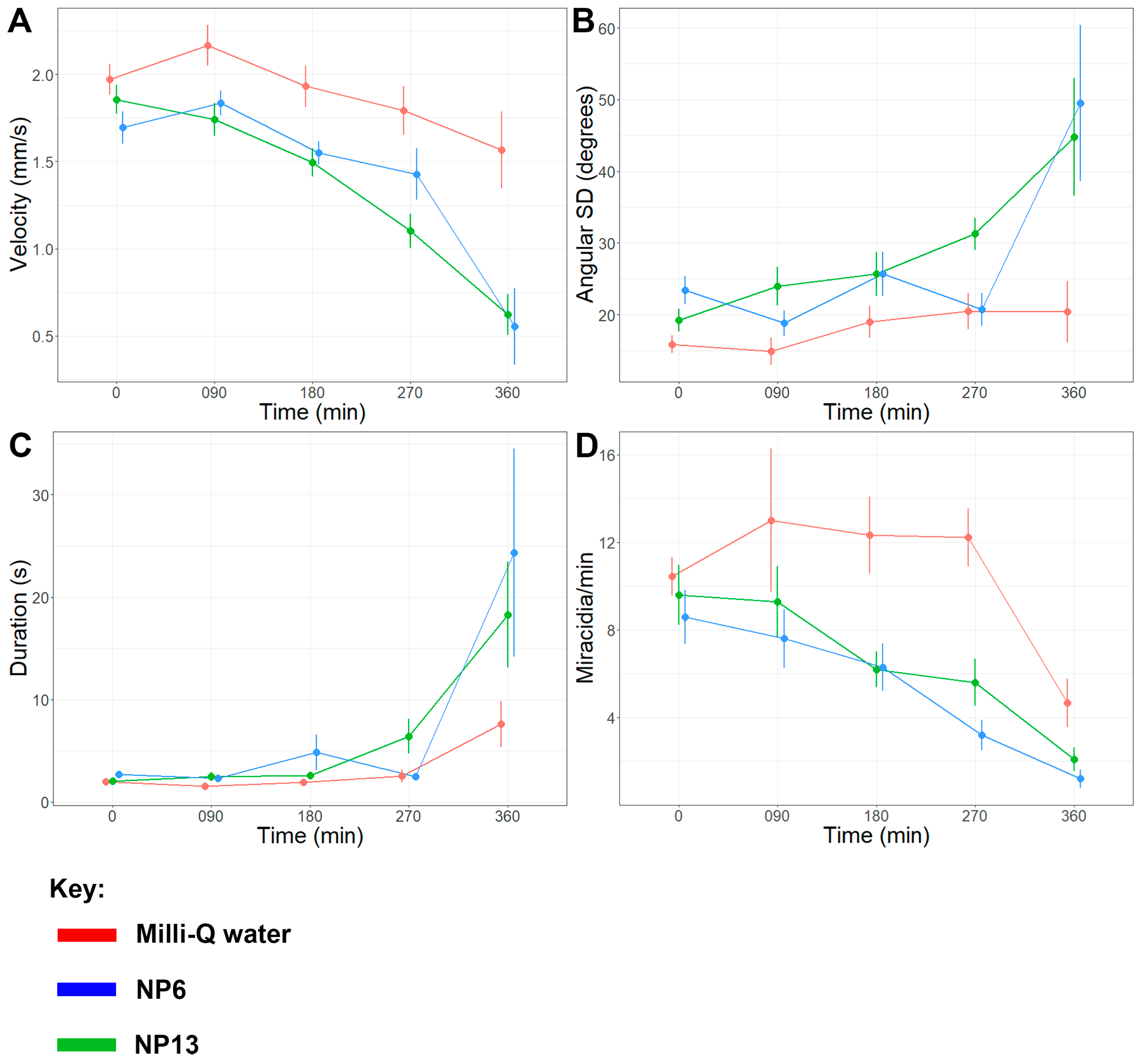
2.3. Analysis of Putative Neuropeptides on Schistosoma mansoni Miracidia Behaviour
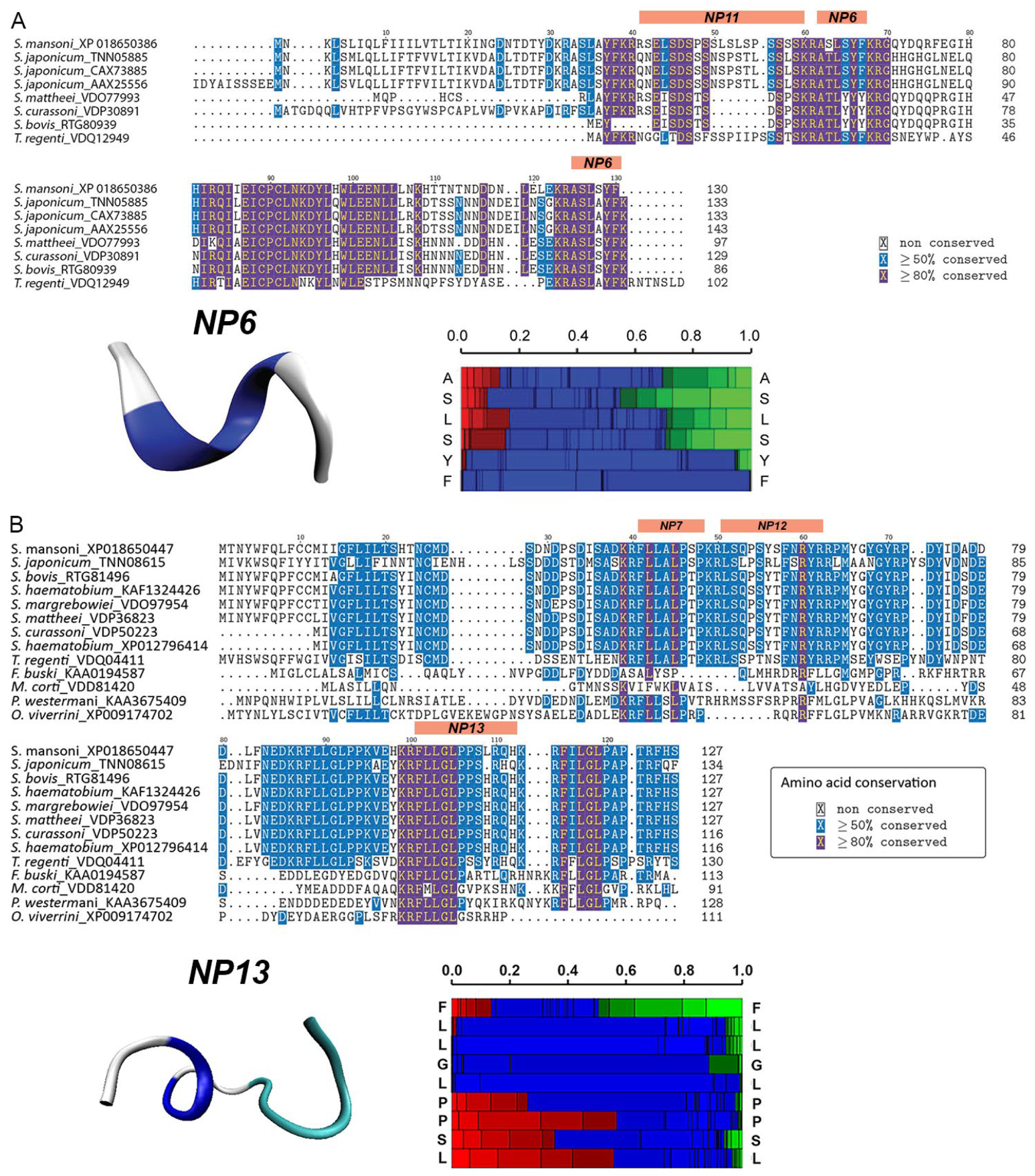
2.4. Structural Analysis of Bioactive Putative Neuropeptides That Modify Schistosoma mansoni Miracidia Behaviour
3. Discussion
4. Materials and Methods
4.1. Mouse and Parasite Maintenance Conditions and Ethics Guidelines
4.2. Schistosoma mansoni Miracidia Peptide Extraction Isolation
4.3. uHPLC Tandem QTOF MS/MS Analyses
4.4. Protein Identification
4.5. Prediction of Putative Neuropeptides, Gene Ontology, and KEGG Pathway Analysis
4.6. Protein–Protein Interaction (PPI) Network
4.7. Comparative Sequence Analysis of Putative Neuropeptides
4.8. Peptide Synthesis and Preparation
4.9. Schistosoma mansoni Miracidia Behavioural Bioassay
4.10. Long-Term Neuropeptide Exposure
4.11. Secondary Structure Analysis
Supplementary Materials
Author Contributions
Funding
Institutional Review Board Statement
Informed Consent Statement
Data Availability Statement
Acknowledgments
Conflicts of Interest
References
- Siddappa, N.B.; Hemashettar, G.; Shanmuganathan, V.; Semenya, A.A.; Sweeney, E.D.; Paul, K.S.; Lee, S.J.; Secor, W.E.; Ruprecht, R.M. Schistosoma mansoni enhances host susceptibility to mucosal but not intravenous challenge by R5 Clade C SHIV. PLoS Negl. Trop. Dis. 2011, 5, e1270. [Google Scholar] [CrossRef]
- Parkin, D.M.; Hämmerl, L.; Ferlay, J.; Kantelhardt, E.J. Cancer in Africa 2018: The role of infections. Int. J. Cancer 2020, 146, 2089–2103. [Google Scholar] [CrossRef]
- Butler, S.E.; Muok, E.M.; Montgomery, S.P.; Odhiambo, K.; Mwinzi, P.M.; Secor, W.E.; Karanja, D.M. Mechanism of anemia in Schistosoma mansoni-infected school children in Western Kenya. Am. J. Trop. Med. Hyg. 2012, 87, 862–867. [Google Scholar] [CrossRef]
- Verjee, M.A. Schistosomiasis: Still a Cause of Significant Morbidity and Mortality. Res. Rep. Trop. Med. 2019, 10, 153–163. [Google Scholar] [CrossRef] [PubMed]
- Abokwara, A.; Madubueze, C.E.J.J.o.M.; Sciences, F. The Role of Non-pharmacological Interventions on the Dynamics of Schistosomiasis. J. Math. Fundam. Sci. 2021, 53, 243–260. [Google Scholar] [CrossRef]
- Mogeni, P.; Vandormael, A.; Cuadros, D.; Appleton, C.; Tanser, F. Impact of community piped water coverage on re-infection with urogenital schistosomiasis in rural South Africa. eLife 2020, 9, e54012. [Google Scholar] [CrossRef]
- Phan, P.; Liang, D.; Zhao, M.; Wyeth, R.C.; Fogarty, C.; Duke, M.G.; McManus, D.P.; Wang, T.; Cummins, S.F. Analysis of rhodopsin G protein-coupled receptor orthologs reveals semiochemical peptides for parasite (Schistosoma mansoni) and host (Biomphalaria glabrata) interplay. Sci. Rep. 2022, 12, 8243. [Google Scholar] [CrossRef] [PubMed]
- Fogarty, C.E.; Suwansa-Ard, S.; Phan, P.; McManus, D.P.; Duke, M.G.; Wyeth, R.C.; Cummins, S.F.; Wang, T. Identification of Putative Neuropeptides That Alter the Behaviour of Schistosoma mansoni Cercariae. Biology 2022, 11, 1344. [Google Scholar] [CrossRef]
- Fogarty, C.E.; Phan, P.; Duke, M.G.; McManus, D.P.; Wyeth, R.C.; Cummins, S.F.; Wang, T. Identification of Schistosoma mansoni miracidia attractant candidates in infected Biomphalaria glabrata using behaviour-guided comparative proteomics. Front. Immunol. 2022, 13, 954282. [Google Scholar] [CrossRef]
- Fogarty, C.E.; Zhao, M.; McManus, D.P.; Duke, M.G.; Cummins, S.F.; Wang, T. Comparative study of excretory-secretory proteins released by Schistosoma mansoni-resistant, susceptible and naïve Biomphalaria glabrata. Parasites Vectors 2019, 12, 452, Correction in Parasites Vectors 2022, 15, 421. https://doi.org/10.1186/s13071-022-05439-9. [Google Scholar] [CrossRef]
- Wang, T.; Wyeth, R.C.; Liang, D.; Bose, U.; Ni, G.; McManus, D.P.; Cummins, S.F. A Biomphalaria glabrata peptide that stimulates significant behaviour modifications in aquatic free-living Schistosoma mansoni miracidia. PLoS Negl. Trop. Dis. 2019, 13, e0006948. [Google Scholar] [CrossRef] [PubMed]
- Wang, T.; Zhao, M.; Liang, D.; Bose, U.; Kaur, S.; McManus, D.P.; Cummins, S.F. Changes in the neuropeptide content of Biomphalaria ganglia nervous system following Schistosoma infection. Parasites Vectors 2017, 10, 275. [Google Scholar] [CrossRef] [PubMed]
- Phan, P.; Fogarty, C.E.; Eamens, A.L.; Duke, M.G.; McManus, D.P.; Wang, T.; Cummins, S.F. ARGONAUTE2 Localizes to Sites of Sporocysts in the Schistosome-Infected Snail, Biomphalaria glabrata. Genes 2024, 15, 1023. [Google Scholar] [CrossRef]
- McVeigh, P.; Atkinson, L.; Marks, N.J.; Mousley, A.; Dalzell, J.J.; Sluder, A.; Hammerland, L.; Maule, A.G. Parasite neuropeptide biology: Seeding rational drug target selection? Int. J. Parasitol. Drugs Drug Resist. 2012, 2, 76–91. [Google Scholar] [CrossRef]
- Lu, Z.; Spänig, S.; Weth, O.; Grevelding, C.G. Males, the Wrongly Neglected Partners of the Biologically Unprecedented Male-Female Interaction of Schistosomes. Front. Genet. 2019, 10, 796. [Google Scholar] [CrossRef]
- Koziol, U.; Koziol, M.; Preza, M.; Costábile, A.; Brehm, K.; Castillo, E. De novo discovery of neuropeptides in the genomes of parasitic flatworms using a novel comparative approach. Int. J. Parasitol. 2016, 46, 709–721. [Google Scholar] [CrossRef]
- Berriman, M.; Haas, B.J.; LoVerde, P.T.; Wilson, R.A.; Dillon, G.P.; Cerqueira, G.C.; Mashiyama, S.T.; Al-Lazikani, B.; Andrade, L.F.; Ashton, P.D.; et al. The genome of the blood fluke Schistosoma mansoni. Nature 2009, 460, 352–358. [Google Scholar] [CrossRef]
- McVeigh, P.; Mair, G.R.; Novozhilova, E.; Day, A.; Zamanian, M.; Marks, N.J.; Kimber, M.J.; Day, T.A.; Maule, A.G. Schistosome I/Lamides—A new family of bioactive helminth neuropeptides. Int. J. Parasitol. 2011, 41, 905–913. [Google Scholar] [CrossRef]
- Weth, O.; Haeberlein, S.; Haimann, M.; Zhang, Y.; Grevelding, C.G. Towards deorphanizing G protein-coupled receptors of Schistosoma mansoni using the MALAR yeast two-hybrid system. Parasitology 2020, 147, 865–872. [Google Scholar] [CrossRef]
- Humphries, J.E.; Kimber, M.J.; Barton, Y.W.; Hsu, W.; Marks, N.J.; Greer, B.; Harriott, P.; Maule, A.G.; Day, T.A. Structure and bioactivity of neuropeptide F from the human parasites Schistosoma mansoni and Schistosoma japonicum. J. Biol. Chem. 2004, 279, 39880–39885. [Google Scholar] [CrossRef] [PubMed]
- Collins, J.J., III; Hou, X.; Romanova, E.V.; Lambrus, B.G.; Miller, C.M.; Saberi, A.; Sweedler, J.V.; Newmark, P.A. Genome-wide analyses reveal a role for peptide hormones in planarian germline development. PLoS Biol. 2010, 8, e1000509, Correction in PLoS Biol. 2015, 13, e1002234. https://doi.org/10.1371/journal.pbio.1002234. [Google Scholar] [CrossRef] [PubMed]
- Mair, G.R.; Niciu, M.J.; Stewart, M.T.; Brennan, G.; Omar, H.; Halton, D.W.; Mains, R.; Eipper, B.A.; Maule, A.G.; Day, T.A. A functionally atypical amidating enzyme from the human parasite Schistosoma mansoni. FASEB J. 2004, 18, 114–121. [Google Scholar] [CrossRef] [PubMed]
- Ribeiro, P.; Patocka, N. Neurotransmitter transporters in schistosomes: Structure, function and prospects for drug discovery. Parasitol. Int. 2013, 62, 629–638. [Google Scholar] [CrossRef]
- Gao, J.; Yang, N.; Lewis, F.A.; Yau, P.; Collins, J.J., III; Sweedler, J.V.; Newmark, P.A. A rotifer-derived paralytic compound prevents transmission of schistosomiasis to a mammalian host. PLoS Biol. 2019, 17, e3000485. [Google Scholar] [CrossRef]
- Liang, D.; Zhao, M.; Wang, T.; McManus, D.P.; Cummins, S.F. GPCR and IR genes in Schistosoma mansoni miracidia. Parasites Vectors 2016, 9, 563. [Google Scholar] [CrossRef]
- You, J.; Pan, F.; Wang, S.; Wang, Y.; Hu, Y. FMRFamide-Like Peptide 22 Influences the Head Movement, Host Finding, and Infection of Heterodera glycines. Front. Plant Sci. 2021, 12, 673354. [Google Scholar] [CrossRef]
- Lu, Z.; Sessler, F.; Holroyd, N.; Hahnel, S.; Quack, T.; Berriman, M.; Grevelding, C.G. Schistosome sex matters: A deep view into gonad-specific and pairing-dependent transcriptomes reveals a complex gender interplay. Sci. Rep. 2016, 6, 31150. [Google Scholar] [CrossRef]
- Picard, M.A.; Boissier, J.; Roquis, D.; Grunau, C.; Allienne, J.F.; Duval, D.; Toulza, E.; Arancibia, N.; Caffrey, C.R.; Long, T.; et al. Sex-Biased Transcriptome of Schistosoma mansoni: Host-Parasite Interaction, Genetic Determinants and Epigenetic Regulators Are Associated with Sexual Differentiation. PLoS Negl. Trop. Dis. 2016, 10, e0004930. [Google Scholar] [CrossRef]
- Maule, A.G.; Mousley, A.; Marks, N.J.; Day, T.A.; Thompson, D.P.; Geary, T.G.; Halton, D.W. Neuropeptide signaling systems—Potential drug targets for parasite and pest control. Curr. Top. Med. Chem. 2002, 2, 733–758. [Google Scholar] [CrossRef] [PubMed]
- Martin, R.J.; Robertson, A.P. Control of nematode parasites with agents acting on neuro-musculature systems: Lessons for neuropeptide ligand discovery. Adv. Exp. Med. Biol. 2010, 692, 138–154. [Google Scholar] [CrossRef]
- Macháček, T.; Leontovyč, R.; Šmídová, B.; Majer, M.; Vondráček, O.; Vojtěchová, I.; Petrásek, T.; Horák, P. Mechanisms of the host immune response and helminth-induced pathology during Trichobilharzia regenti (Schistosomatidae) neuroinvasion in mice. PLoS Pathog. 2022, 18, e1010302. [Google Scholar] [CrossRef]
- Leontovyč, R.; Young, N.D.; Korhonen, P.K.; Hall, R.S.; Tan, P.; Mikeš, L.; Kašný, M.; Horák, P.; Gasser, R.B. Comparative Transcriptomic Exploration Reveals Unique Molecular Adaptations of Neuropathogenic Trichobilharzia to Invade and Parasitize Its Avian Definitive Host. PLoS Negl. Trop. Dis. 2016, 10, e0004406. [Google Scholar] [CrossRef]
- Elphick, M.R.; Mirabeau, O.; Larhammar, D. Evolution of neuropeptide signalling systems. J. Exp. Biol. 2018, 221, jeb151092, Correction in J. Exp. Biol. 2018, 221, jeb193342. https://doi.org/10.1242/jeb.193342. [Google Scholar] [CrossRef]
- Reinhardt, F.; Kaiser, A.; Prömel, S.; Stadler, P.F. Evolution of neuropeptide Y/RFamide-like receptors in nematodes. Heliyon 2024, 10, e34473. [Google Scholar] [CrossRef]
- Peterková, K.; Konečný, L.; Macháček, T.; Jedličková, L.; Winkelmann, F.; Sombetzki, M.; Dvořák, J. Winners vs. losers: Schistosoma mansoni intestinal and liver eggs exhibit striking differences in gene expression and immunogenicity. PLoS Pathog. 2024, 20, e1012268. [Google Scholar] [CrossRef] [PubMed]
- Willett, S.; Olson, S.A.; Horejsi, R.V.; Nelson, C.N.; Wheeler, N.J. Tissue-Specific Distribution of Eggs in The Definitive Host Drives Transcriptomic and Behavioral Differences in Schistosoma mansoni Miracidia. bioRxiv 2025. [Google Scholar] [CrossRef]
- Gang, S.S.; Castelletto, M.L.; Yang, E.; Ruiz, F.; Brown, T.M.; Bryant, A.S.; Grant, W.N.; Hallem, E.A. Chemosensory mechanisms of host seeking and infectivity in skin-penetrating nematodes. Proc. Natl. Acad. Sci. USA 2020, 117, 17913–17923. [Google Scholar] [CrossRef]
- Morris, R.; Wilson, L.; Sturrock, M.; Warnock, N.D.; Carrizo, D.; Cox, D.; Maule, A.G.; Dalzell, J.J. A neuropeptide modulates sensory perception in the entomopathogenic nematode Steinernema carpocapsae. PLoS Pathog. 2017, 13, e1006185. [Google Scholar] [CrossRef] [PubMed]
- Cockx, B.; Van Bael, S.; Boelen, R.; Vandewyer, E.; Yang, H.; Le, T.A.; Dalzell, J.J.; Beets, I.; Ludwig, C.; Lee, J.; et al. Mass Spectrometry-Driven Discovery of Neuropeptides Mediating Nictation Behavior of Nematodes. Mol. Cell. Proteom. 2023, 22, 100479. [Google Scholar] [CrossRef] [PubMed]
- Wang, T.; Zhao, M.; Rotgans, B.A.; Strong, A.; Liang, D.; Ni, G.; Limpanont, Y.; Ramasoota, P.; McManus, D.P.; Cummins, S.F. Proteomic Analysis of the Schistosoma mansoni Miracidium. PLoS ONE 2016, 11, e0147247. [Google Scholar] [CrossRef]
- Chieu, H.D.; Turner, L.; Smith, M.K.; Wang, T.; Nocillado, J.; Palma, P.; Suwansa-Ard, S.; Elizur, A.; Cummins, S.F. Aquaculture Breeding Enhancement: Maturation and Spawning in Sea Cucumbers Using a Recombinant Relaxin-Like Gonad-Stimulating Peptide. Front. Genet. 2019, 10, 77. [Google Scholar] [CrossRef] [PubMed]
- Chambers, M.C.; MacLean, B.; Burke, R.; Amodei, D.; Ruderman, D.L.; Neumann, S.; Gatto, L.; Fischer, B.; Pratt, B.; Egertson, J.; et al. A cross-platform toolkit for mass spectrometry and proteomics. Nat. Biotechnol. 2012, 30, 918–920. [Google Scholar] [CrossRef]
- Petersen, T.N.; Brunak, S.; Von Heijne, G.; Nielsen, H. SignalP 4.0: Discriminating signal peptides from transmembrane regions. Nat. Methods 2011, 8, 785–786. [Google Scholar] [CrossRef] [PubMed]
- Hiller, K.; Grote, A.; Scheer, M.; Munch, R.; Jahn, D. PrediSi: Prediction of signal peptides and their cleavage positions. Nucleic Acids Res. 2004, 32, W375–W379. [Google Scholar] [CrossRef] [PubMed]
- Krogh, A.; Larsson, B.; von Heijne, G.; Sonnhammer, E.L. Predicting transmembrane protein topology with a hidden Markov model: Application to complete genomes. J. Mol. Biol. 2001, 305, 567–580. [Google Scholar] [CrossRef]
- Southey, B.R.; Amare, A.; Zimmerman, T.A.; Rodriguez-Zas, S.L.; Sweedler, J.V. NeuroPred: A tool to predict cleavage sites in neuropeptide precursors and provide the masses of the resulting peptides. Nucleic Acids Res. 2006, 34, W267–W272. [Google Scholar] [CrossRef]
- Szklarczyk, D.; Franceschini, A.; Wyder, S.; Forslund, K.; Heller, D.; Huerta-Cepas, J.; Simonovic, M.; Roth, A.; Santos, A.; Tsafou, K.P.; et al. STRING v10: Protein-protein interaction networks, integrated over the tree of life. Nucleic Acids Res. 2015, 43, D447–D452. [Google Scholar] [CrossRef]
- Shannon, P.; Markiel, A.; Ozier, O.; Baliga, N.S.; Wang, J.T.; Ramage, D.; Amin, N.; Schwikowski, B.; Ideker, T. Cytoscape: A software environment for integrated models of biomolecular interaction networks. Genome Res. 2003, 13, 2498–2504. [Google Scholar] [CrossRef]
- Kumar, S.; Stecher, G.; Li, M.; Knyaz, C.; Tamura, K. MEGA X: Molecular Evolutionary Genetics Analysis across Computing Platforms. Mol. Biol. Evol. 2018, 35, 1547–1549. [Google Scholar] [CrossRef]
- Beitz, E. TEXshade: Shading and labeling of multiple sequence alignments using LATEX2 epsilon. Bioinformatics 2000, 16, 135–139. [Google Scholar] [CrossRef]
- Jones, D.T.; Taylor, W.R.; Thornton, J.M. The rapid generation of mutation data matrices from protein sequences. Comput. Appl. Biosci. 1992, 8, 275–282. [Google Scholar] [CrossRef]
- Schindelin, J.; Arganda-Carreras, I.; Frise, E.; Kaynig, V.; Longair, M.; Pietzsch, T.; Preibisch, S.; Rueden, C.; Saalfeld, S.; Schmid, B.; et al. Fiji: An open-source platform for biological-image analysis. Nat. Methods 2012, 9, 676–682. [Google Scholar] [CrossRef] [PubMed]
- Wyeth, R.C.; Braubach, O.R.; Fine, A.; Croll, R.P. Videograms: A method for repeatable unbiased quantitative behavioral analysis without scoring or tracking. Neuromethods 2011, 51, 15–33. [Google Scholar] [CrossRef]
- Tinevez, J.Y.; Perry, N.; Schindelin, J.; Hoopes, G.M.; Reynolds, G.D.; Laplantine, E.; Bednarek, S.Y.; Shorte, S.L.; Eliceiri, K.W. TrackMate: An open and extensible platform for single-particle tracking. Methods 2017, 115, 80–90. [Google Scholar] [CrossRef] [PubMed]
- Meijering, E.; Dzyubachyk, O.; Smal, I. Methods for cell and particle tracking. Methods Enzymol. 2012, 504, 183–200. [Google Scholar] [CrossRef]
- Kay, M.; Elkin, L.; Higgins, J.; Wobbrock, J. ARTool: Aligned Rank Transform for Nonparametric Factorial ANOVAs. Available online: https://github.com/mjskay/ARTool (accessed on 21 January 2021).
- Elkin, L.; Kay, M.; Higgins, J.; Wobbrock, J. An Aligned Rank Transform Procedure for Multifactor Contrast Tests. In Proceedings of the 34th Annual ACM Symposium on User Interface Software and Technology, Virtual, 10–14 October 2021. [Google Scholar]
- R Core Team. RStudio: Integrated Development Environment for R, version 4.1.0; Posit: Boston, MA, USA, 2021.
- Wickham, H.; Bryan, J. Readxl: Read Excel Files, version 1.3.1; RStudio: Boston, MA, USA, 2019.
- Wickham, H.; Averick, M.; Bryan, J.; Chang, W.; D’Agostino, L. Welcome to the {tidyverse}. J. Open Source Softw. 2019, 4, 1686. [Google Scholar] [CrossRef]
- Bache, S.M.; Wickham, H. Magrittr: A Forward-Pipe Operator for R, version 2.0.1; Posit: Boston, MA, USA, 2020.
- Wickham, H. Forcats: Tools for Working with Categorical Variables (Factors), version 0.5.1; Posit: Boston, MA, USA, 2021.
- Bates, D.; Machler, M.; Bolker, B.; Walker, S. Fitting Linear Mixed-Effects Models Using {lme4}, version 1.1-27.1. J. Stat. Softw. 2015, 67, 1–48. [Google Scholar] [CrossRef]
- Mazerolle, M.J. AICcmodavg: Model Selection and Multimodel Inference Based on (Q)AIC(c), version 2.3; CRAN: Vienna, Austria, 2020.
- Fox, J.; Weisberg, S. An {R} Companion to Applied Regression; Sage: Thousand Oaks, CA, USA, 2019. [Google Scholar]
- Hothorn, T.; Bretz, F.; Westfall, P. Simultaneous Inference in General Parametric Models. Biom. J. 2008, 50, 346–363. [Google Scholar] [CrossRef]
- Wickham, H. ggplot2: Elegant Graphics for Data Analysis; Springer: New York, NY, USA, 2016. [Google Scholar]
- Lemon, J. Plotrix: A package in the red light district of R. R-News 2006, 6, 8–12. [Google Scholar]
- Conway, J.R.; Lex, A.; Gehlenborg, N. UpSetR: An R package for the visualization of intersecting sets and their properties. Bioinformatics 2017, 33, 2938–2940. [Google Scholar] [CrossRef]
- Shen, Y.; Maupetit, J.; Derreumaux, P.; Tufféry, P. Improved PEP-FOLD Approach for Peptide and Miniprotein Structure Prediction. J. Chem. Theory Comput. 2014, 10, 4745–4758. [Google Scholar] [CrossRef] [PubMed]
- Humphrey, W.; Dalke, A.; Schulten, K. VMD: Visual molecular dynamics. J. Mol. Graph. 1996, 14, 33–38. [Google Scholar] [CrossRef] [PubMed]



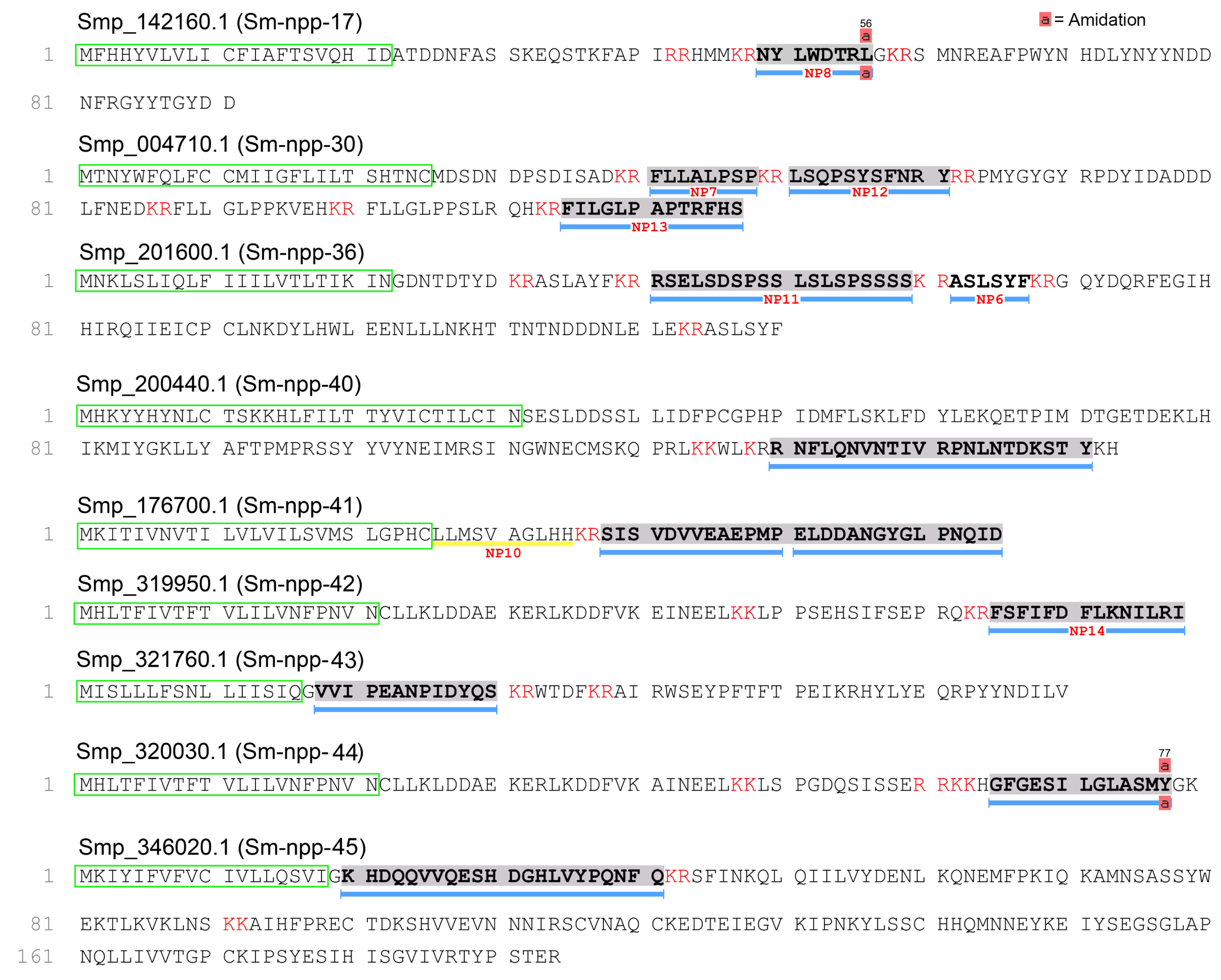
| ID | Sequence | Molecular Weight (Da) | Accession of Precursor |
|---|---|---|---|
| NP6 | ASLSYF-OH | 686.76 | Smp_201600.1 (Sm-npp-36) |
| NP7 | FLLALPSP-OH | 857.05 | Smp_004710.1 (Sm-npp-30) |
| NP8 | NYLWDTRL-NH2 | 1079.21 | Smp_142160.1 (Sm-npp-17) |
| NP10 | LLMSVAGLHH-OH | 1077.31 | Smp_176700.1 (Smp-npp-41) |
| NP11 | RSELSDSPSSLSLSPSSSS-OH | 1909.96 | Smp_201600.1 (Sm-npp-36) |
| NP12 | LSQPSYSFNRY-OH | 1361.46 | Smp_004710.1 (Sm-npp-30) |
| NP13 | FLLGLPPSLRQH-OH | 1377.64 | Smp_004710.1 (Sm-npp-30) |
| NP14 | FSFIFDFLKNILRI-OH | 1733.13 | Smp_319950.1 (Smp-npp-42) |
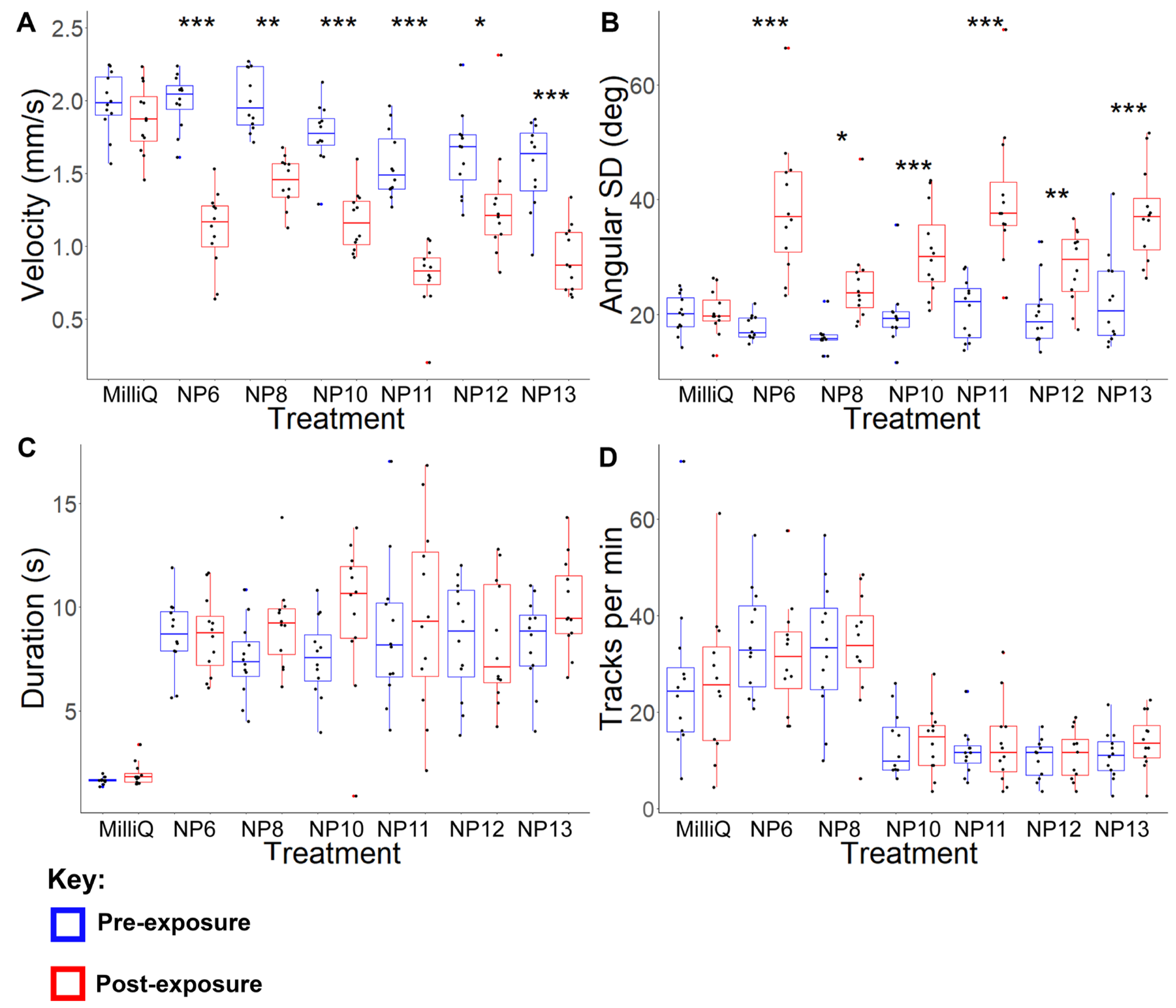
| Metrics | Effect | Statistic | df | p-Value | Interval | NP6 | NP8 | NP10 | NP11 | NP12 | NP13 |
|---|---|---|---|---|---|---|---|---|---|---|---|
| Mean velocity (mm/s) | Neuropeptide | 7.9375 | 6 | 0.0000 | |||||||
| Period | 27.6602 | 4 | 0.0000 | ||||||||
| Neuropeptide: Period | 1.9793 | 24 | 0.0061 | 0–90 | 0.0930 | 0.0893 | 0.7978 | 0.3427 | 0.0742 | 0.6206 | |
| 0–180 | 0.0648 | 0.3960 | 0.6466 | 0.2949 | 0.4507 | 0.4168 | |||||
| 0–270 | 0.0022 | 0.1586 | 0.2421 | 0.8308 | 0.6161 | 0.6389 | |||||
| 0–360 | 0.0006 | 0.3075 | 0.0896 | 0.0557 | 0.4483 | 0.0193 | |||||
| Average duration of presence (s) | Neuropeptide | 8.6891 | 6 | 0.0000 | |||||||
| Period | 16.5836 | 4 | 0.0000 | ||||||||
| Neuropeptide: Period | 3.5646 | 24 | 0.0000 | 0–90 | 0.5300 | 0.4477 | 0.2993 | 0.9553 | 0.1968 | 0.8618 | |
| 0–180 | 0.6772 | 0.8012 | 0.4670 | 0.4012 | 0.0484 | 0.3750 | |||||
| 0–270 | 0.0238 | 0.3357 | 0.9297 | 0.5779 | 0.0813 | 0.6506 | |||||
| 0–360 | 0.0009 | 0.3602 | 0.0932 | 0.7706 | 0.1102 | 0.0008 | |||||
| Angular SD (degrees) | Neuropeptide | 6.6137 | 6 | 0.0000 | |||||||
| Period | 8.4617 | 4 | 0.0000 | ||||||||
| Neuropeptide: Period | 1.8949 | 24 | 0.0096 | 0–90 | 0.2398 | 0.7700 | 0.6453 | 0.9596 | 0.8274 | 0.5170 | |
| 0–180 | 0.4498 | 0.6318 | 0.6987 | 0.8357 | 0.9529 | 0.8390 | |||||
| 0–270 | 0.0890 | 0.2018 | 0.0869 | 0.5957 | 0.9224 | 0.1928 | |||||
| 0–360 | 0.0071 | 0.1288 | 0.1269 | 0.1620 | 0.8070 | 0.0389 | |||||
| Tracks per min | Neuropeptide | 20.8075 | 6 | 0.0000 | |||||||
| Period | 41.6147 | 4 | 0.0000 | ||||||||
| Neuropeptide: Period | 2.7628 | 24 | 0.0000 | 0–90 | 0.3716 | 0.4263 | 0.8251 | 0.0053 | 0.2689 | 0.1405 | |
| 0–180 | 0.0276 | 0.0023 | 0.4204 | 0.0129 | 0.0183 | 0.0602 | |||||
| 0–270 | 0.0094 | 0.0504 | 0.4075 | 0.0000 | 0.0247 | 0.0010 | |||||
| 0–360 | 0.3366 | 0.3048 | 0.0252 | 0.3010 | 0.1725 | 0.3607 |
Disclaimer/Publisher’s Note: The statements, opinions and data contained in all publications are solely those of the individual author(s) and contributor(s) and not of MDPI and/or the editor(s). MDPI and/or the editor(s) disclaim responsibility for any injury to people or property resulting from any ideas, methods, instructions or products referred to in the content. |
© 2026 by the authors. Licensee MDPI, Basel, Switzerland. This article is an open access article distributed under the terms and conditions of the Creative Commons Attribution (CC BY) license.
Share and Cite
Fogarty, C.E.; Suwansa-ard, S.; Lang, T.; Phan, P.; Duke, M.G.; Wyeth, R.C.; Cummins, S.F.; Wang, T. Peptidomic Identification of Behaviour-Modulating Putative Neuropeptides in Schistosoma mansoni Miracidia. Int. J. Mol. Sci. 2026, 27, 2839. https://doi.org/10.3390/ijms27062839
Fogarty CE, Suwansa-ard S, Lang T, Phan P, Duke MG, Wyeth RC, Cummins SF, Wang T. Peptidomic Identification of Behaviour-Modulating Putative Neuropeptides in Schistosoma mansoni Miracidia. International Journal of Molecular Sciences. 2026; 27(6):2839. https://doi.org/10.3390/ijms27062839
Chicago/Turabian StyleFogarty, Conor E., Saowaros Suwansa-ard, Tomas Lang, Phong Phan, Mary G. Duke, Russell C. Wyeth, Scott F. Cummins, and Tianfang Wang. 2026. "Peptidomic Identification of Behaviour-Modulating Putative Neuropeptides in Schistosoma mansoni Miracidia" International Journal of Molecular Sciences 27, no. 6: 2839. https://doi.org/10.3390/ijms27062839
APA StyleFogarty, C. E., Suwansa-ard, S., Lang, T., Phan, P., Duke, M. G., Wyeth, R. C., Cummins, S. F., & Wang, T. (2026). Peptidomic Identification of Behaviour-Modulating Putative Neuropeptides in Schistosoma mansoni Miracidia. International Journal of Molecular Sciences, 27(6), 2839. https://doi.org/10.3390/ijms27062839