Temperature-Dependent Active-Site Rearrangements of PETaseSM14: Insights from Molecular Dynamics Simulations


Abstract
1. Introduction
2. Results
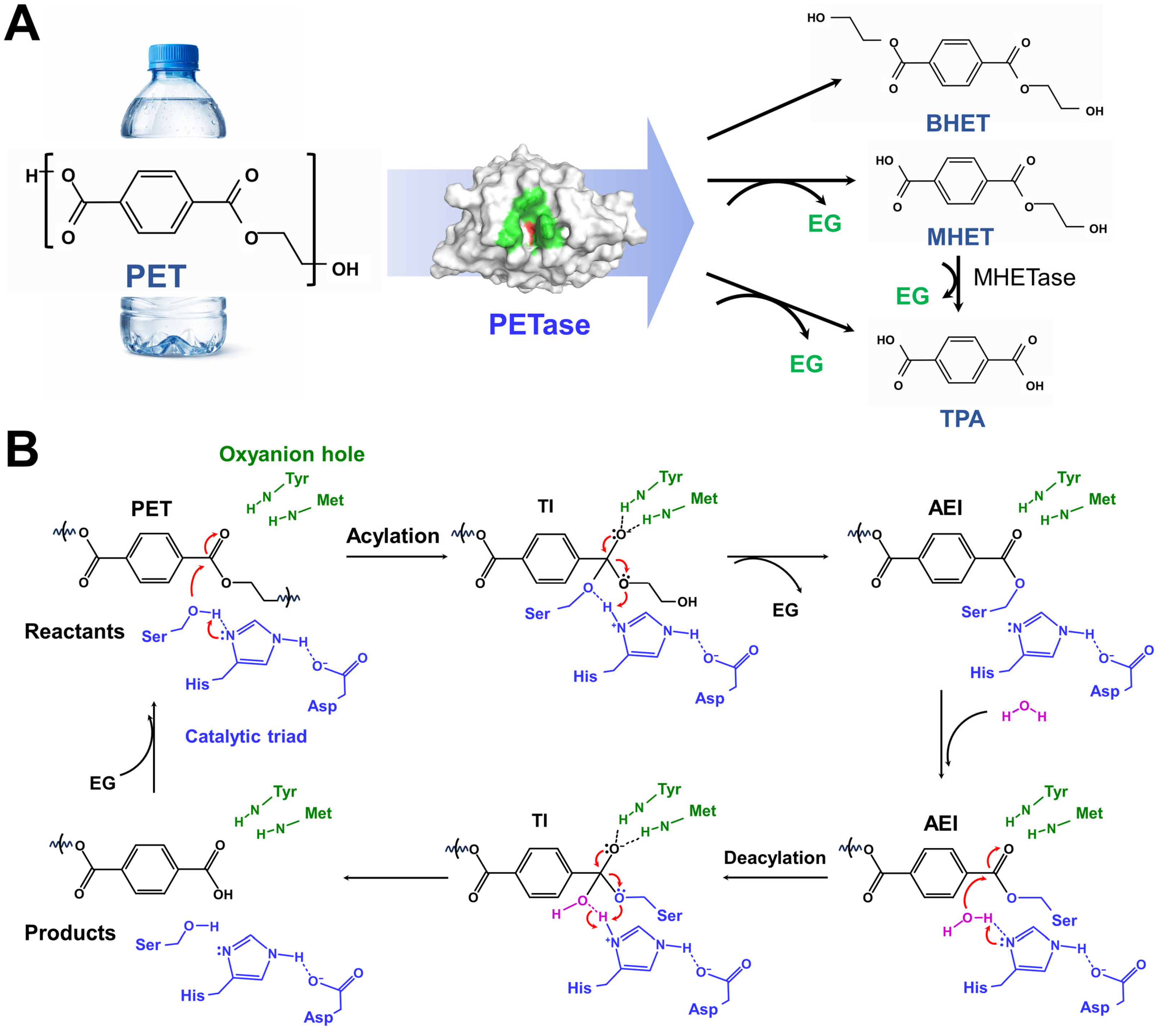
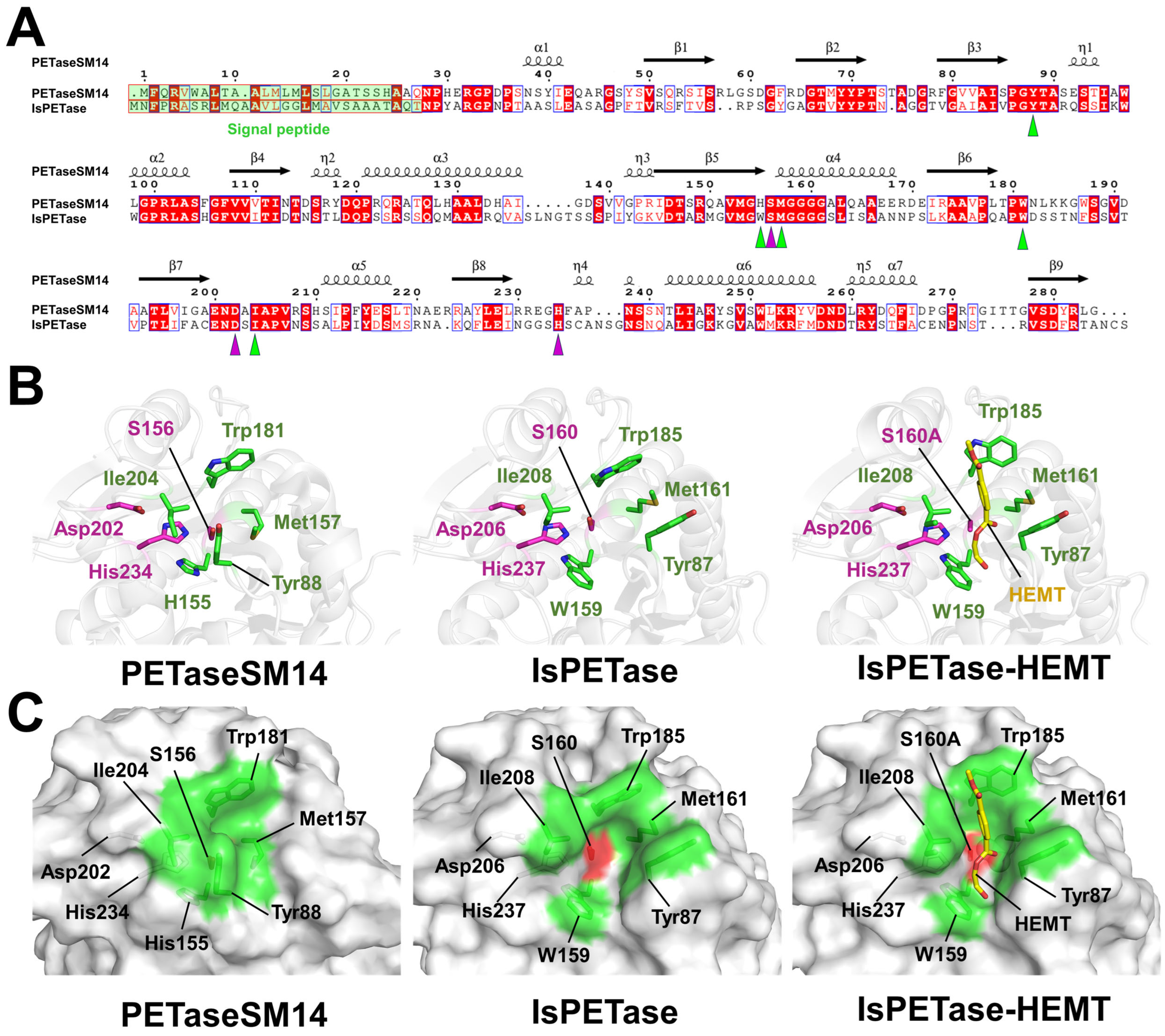
2.1. Revisiting the Structures of PETaseSM14 and IsPETase
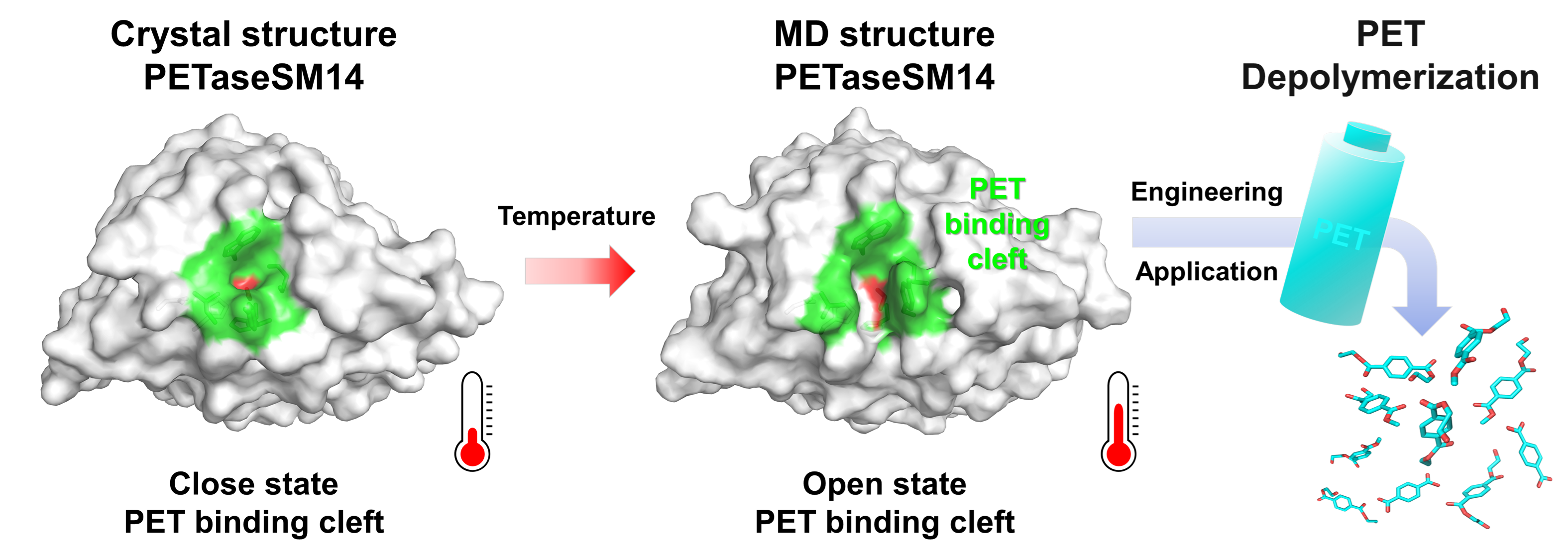
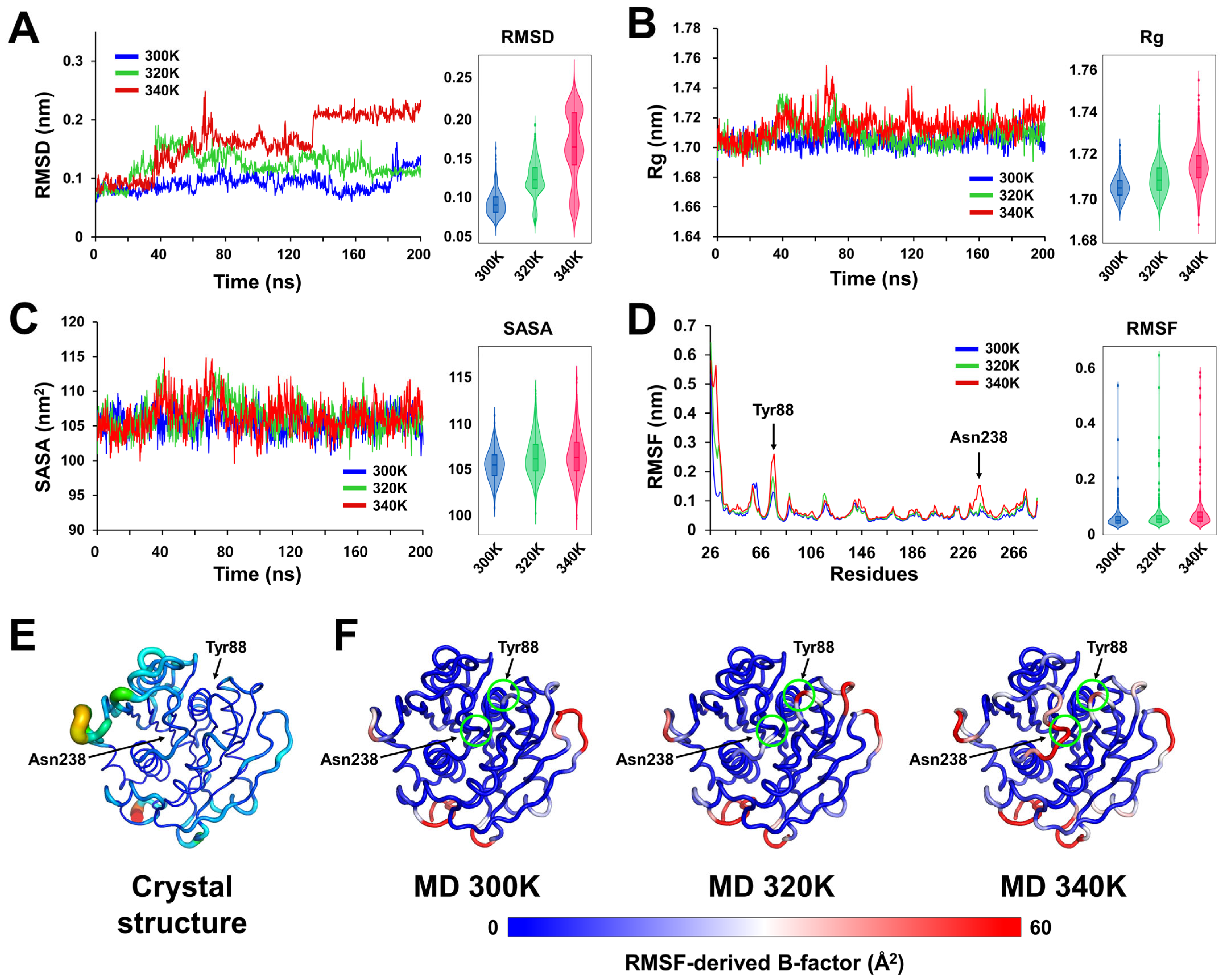
2.2. Temperature-Dependent Structural Change in PETaseSM14
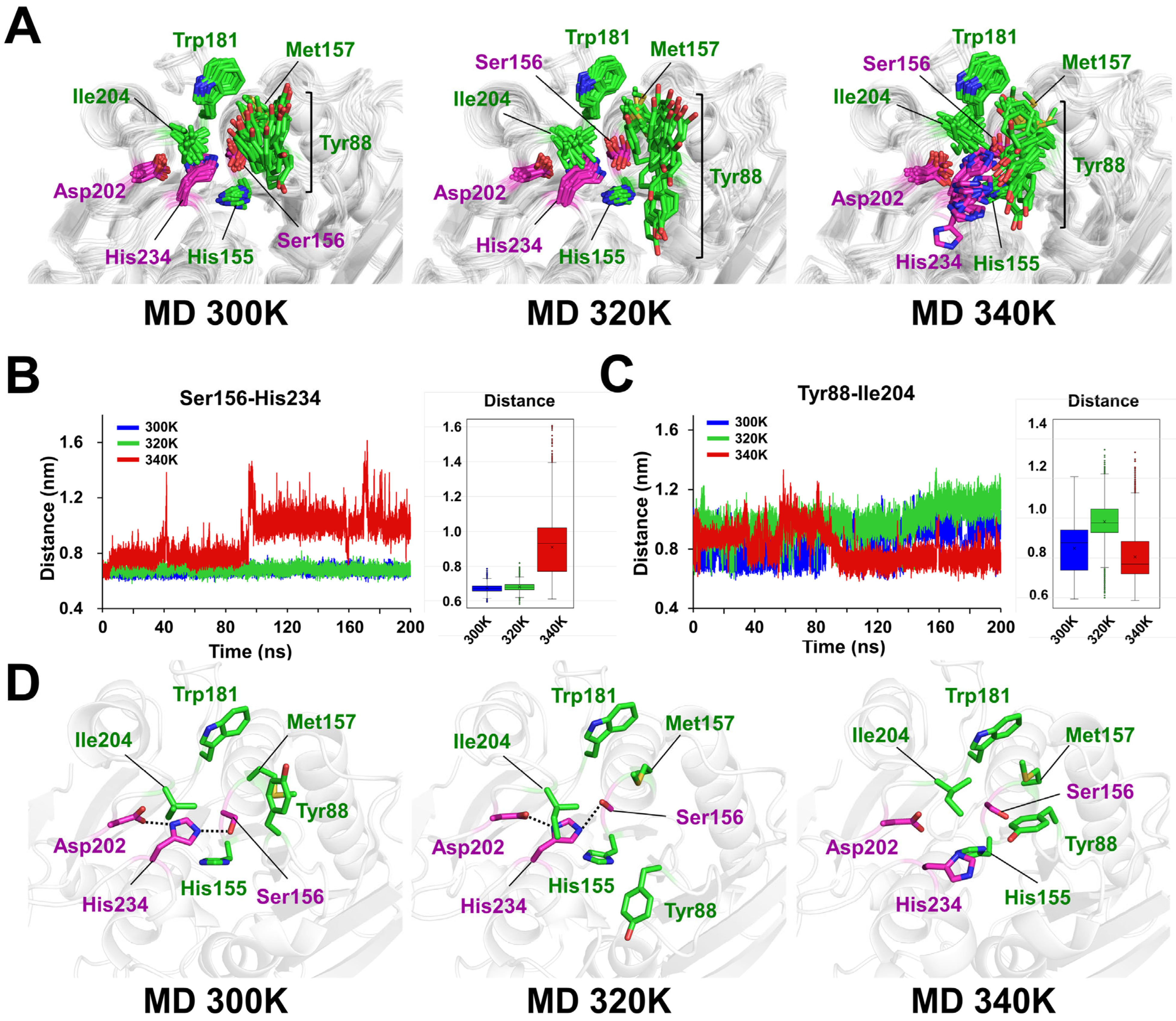
2.3. Temperature-Dependent Conformational Changes in the Active Site and Substrate-Binding Cleft
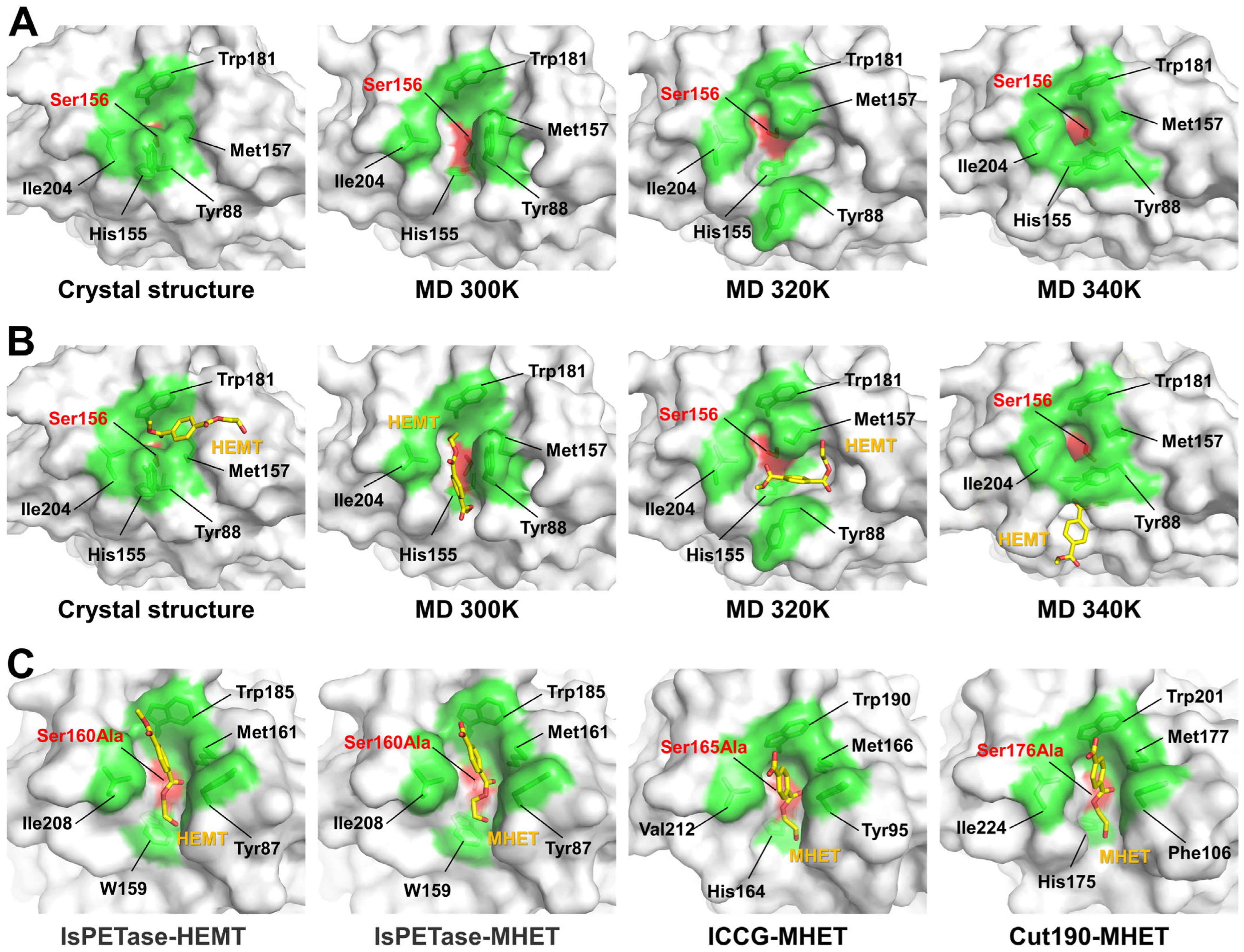
2.4. HEMT Docking of the Experimental and MD Structures of PETaseSM14
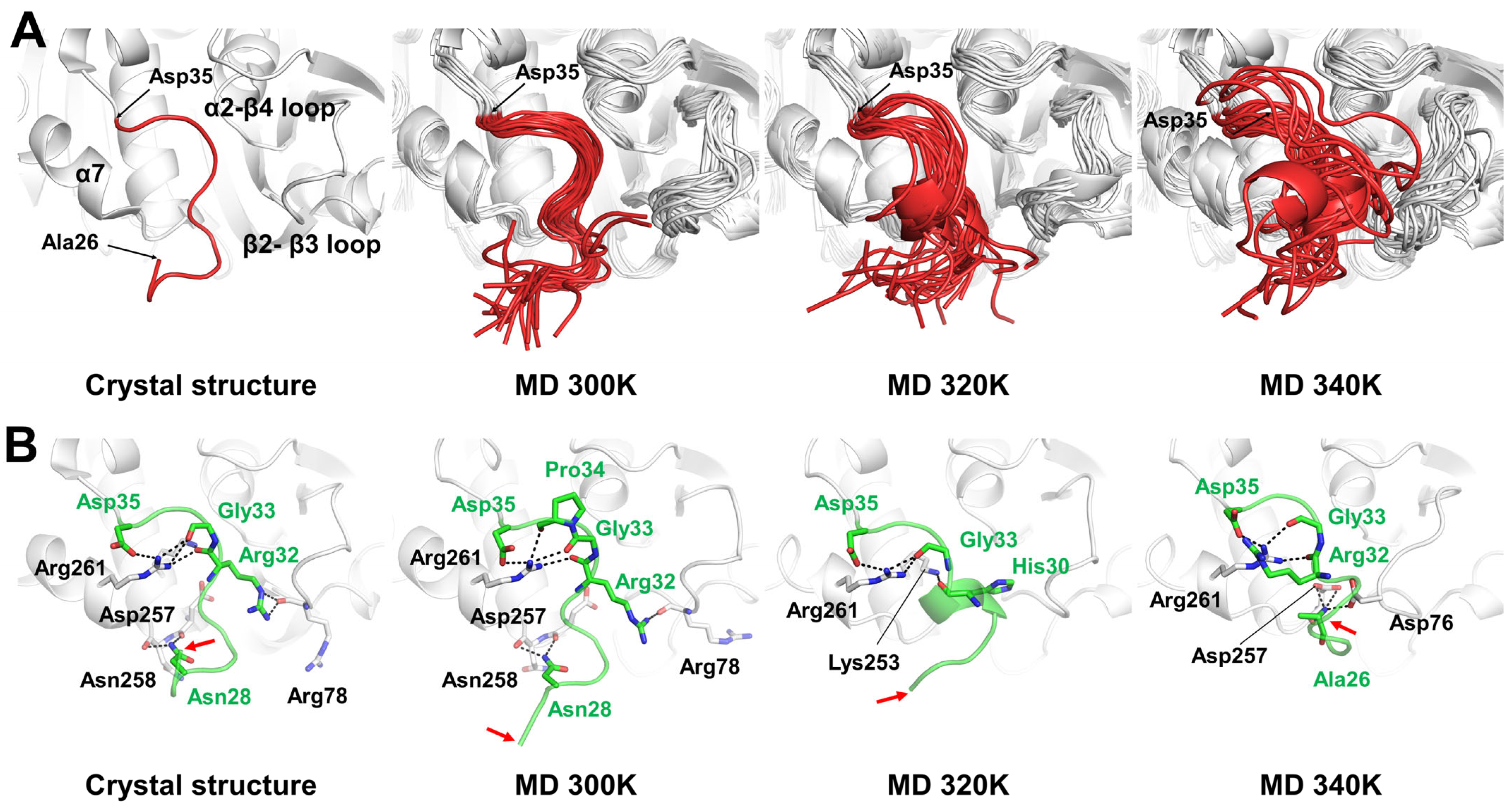
2.5. Temperature-Dependent Conformational Changes in the N-Terminal Region
3. Discussion
4. Materials and Methods
4.1. Molecular Dynamics Simulations
4.2. Trajectory Analysis
4.3. Bioinformatics
5. Conclusions
Supplementary Materials
Funding
Institutional Review Board Statement
Informed Consent Statement
Data Availability Statement
Acknowledgments
Conflicts of Interest
References
- Han, M.; Zhu, S.; Xia, C.; Yang, B. Photocatalytic Upcycling of Poly(Ethylene Terephthalate) Plastic to High-Value Chemicals. Appl. Catal. B Environ. 2022, 316, 121662. [Google Scholar] [CrossRef]
- Muringayil Joseph, T.; Azat, S.; Ahmadi, Z.; Moini Jazani, O.; Esmaeili, A.; Kianfar, E.; Haponiuk, J.; Thomas, S. Polyethylene Terephthalate (PET) Recycling: A Review. Case Stud. Chem. Environ. Eng. 2024, 9, 100673. [Google Scholar] [CrossRef]
- Guo, Z.; Wu, J.; Wang, J. Chemical Degradation and Recycling of Polyethylene Terephthalate (PET): A Review. RSC Sustain. 2025, 3, 2111–2133. [Google Scholar] [CrossRef]
- Damayanti, D.; Marpaung, D.S.S.; Kodarif, A.R.; Sanjaya, A.; Saputri, D.R.; Fahni, Y.; Rahmiyati, L.; Silvia, P.Z.; A’yuni, D.Q.; Imalia, C.L.; et al. Biocatalytic Recycling of Polyethylene Terephthalate: From Conventional to Innovative Routes for Transforming Plastic and Textile Waste into Renewable Resources. Resources 2025, 14, 176. [Google Scholar] [CrossRef]
- Soong, Y.-H.V.; Sobkowicz, M.J.; Xie, D. Recent Advances in Biological Recycling of Polyethylene Terephthalate (PET) Plastic Wastes. Bioengineering 2022, 9, 98. [Google Scholar] [CrossRef] [PubMed]
- Yoshida, S.; Hiraga, K.; Takehana, T.; Taniguchi, I.; Yamaji, H.; Maeda, Y.; Toyohara, K.; Miyamoto, K.; Kimura, Y.; Oda, K. A Bacterium That Degrades and Assimilates Poly(Ethylene Terephthalate). Science 2016, 351, 1196–1199. [Google Scholar] [CrossRef] [PubMed]
- Ermis, H. A Mini-Review on the Role of PETase in Polyethylene Terephthalate Degradation. Rev. Environ. Sci. Biotechnol. 2025, 24, 545–555. [Google Scholar] [CrossRef]
- Palm, G.J.; Reisky, L.; Böttcher, D.; Müller, H.; Michels, E.A.P.; Walczak, M.C.; Berndt, L.; Weiss, M.S.; Bornscheuer, U.T.; Weber, G. Structure of the Plastic-Degrading Ideonella sakaiensis MHETase Bound to a Substrate. Nat. Commun. 2019, 10, 1717. [Google Scholar] [CrossRef]
- Austin, H.P.; Allen, M.D.; Donohoe, B.S.; Rorrer, N.A.; Kearns, F.L.; Silveira, R.L.; Pollard, B.C.; Dominick, G.; Duman, R.; El Omari, K.; et al. Characterization and Engineering of a Plastic-Degrading Aromatic Polyesterase. Proc. Natl. Acad. Sci. USA 2018, 115. [Google Scholar] [CrossRef]
- Joo, S.; Cho, I.J.; Seo, H.; Son, H.F.; Sagong, H.-Y.; Shin, T.J.; Choi, S.Y.; Lee, S.Y.; Kim, K.-J. Structural Insight into Molecular Mechanism of Poly(Ethylene Terephthalate) Degradation. Nat. Commun. 2018, 9, 382. [Google Scholar] [CrossRef]
- Burgin, T.; Pollard, B.C.; Knott, B.C.; Mayes, H.B.; Crowley, M.F.; McGeehan, J.E.; Beckham, G.T.; Woodcock, H.L. The Reaction Mechanism of the Ideonella sakaiensis PETase Enzyme. Commun. Chem. 2024, 7, 65. [Google Scholar] [CrossRef] [PubMed]
- Jerves, C.; Neves, R.P.P.; Da Silva, S.L.; Ramos, M.J.; Fernandes, P.A. Rate-Enhancing PETase Mutations Determined through DFT/MM Molecular Dynamics Simulations. New J. Chem. 2024, 48, 45–54. [Google Scholar] [CrossRef]
- Zhang, J.; Wang, H.; Luo, Z.; Yang, Z.; Zhang, Z.; Wang, P.; Li, M.; Zhang, Y.; Feng, Y.; Lu, D.; et al. Computational Design of Highly Efficient Thermostable MHET Hydrolases and Dual Enzyme System for PET Recycling. Commun. Biol. 2023, 6, 1135. [Google Scholar] [CrossRef]
- Khairul Anuar, N.F.S.; Huyop, F.; Ur-Rehman, G.; Abdullah, F.; Normi, Y.M.; Sabullah, M.K.; Abdul Wahab, R. An Overview into Polyethylene Terephthalate (PET) Hydrolases and Efforts in Tailoring Enzymes for Improved Plastic Degradation. Int. J. Mol. Sci. 2022, 23, 12644. [Google Scholar] [CrossRef]
- Arnal, G.; Anglade, J.; Gavalda, S.; Tournier, V.; Chabot, N.; Bornscheuer, U.T.; Weber, G.; Marty, A. Assessment of Four Engineered PET Degrading Enzymes Considering Large-Scale Industrial Applications. ACS Catal. 2023, 13, 13156–13166. [Google Scholar] [CrossRef] [PubMed]
- Joho, Y.; Vongsouthi, V.; Gomez, C.; Larsen, J.S.; Ardevol, A.; Jackson, C.J. Improving Plastic Degrading Enzymes via Directed Evolution. Protein Eng. Des. Sel. 2024, 37, gzae009. [Google Scholar] [CrossRef]
- Son, H.F.; Cho, I.J.; Joo, S.; Seo, H.; Sagong, H.-Y.; Choi, S.Y.; Lee, S.Y.; Kim, K.-J. Rational Protein Engineering of Thermo-Stable PETase from Ideonella Sakaiensis for Highly Efficient PET Degradation. ACS Catal. 2019, 9, 3519–3526. [Google Scholar] [CrossRef]
- Brott, S.; Pfaff, L.; Schuricht, J.; Schwarz, J.; Böttcher, D.; Badenhorst, C.P.S.; Wei, R.; Bornscheuer, U.T. Engineering and Evaluation of Thermostable IsPETase Variants for PET Degradation. Eng. Life Sci. 2022, 22, 192–203. [Google Scholar] [CrossRef]
- Wei, R.; Von Haugwitz, G.; Pfaff, L.; Mican, J.; Badenhorst, C.P.S.; Liu, W.; Weber, G.; Austin, H.P.; Bednar, D.; Damborsky, J.; et al. Mechanism-Based Design of Efficient PET Hydrolases. ACS Catal. 2022, 12, 3382–3396. [Google Scholar] [CrossRef]
- Almeida, E.L.; Carrillo Rincón, A.F.; Jackson, S.A.; Dobson, A.D.W. In Silico Screening and Heterologous Expression of a Polyethylene Terephthalate Hydrolase (PETase)-Like Enzyme (SM14est) With Polycaprolactone (PCL)-Degrading Activity, From the Marine Sponge-Derived Strain Streptomyces sp. SM14. Front. Microbiol. 2019, 10, 2187. [Google Scholar] [CrossRef]
- Carr, C.M.; Keller, M.B.; Paul, B.; Schubert, S.W.; Clausen, K.S.R.; Jensen, K.; Clarke, D.J.; Westh, P.; Dobson, A.D.W. Purification and Biochemical Characterization of SM14est, a PET-Hydrolyzing Enzyme from the Marine Sponge-Derived Streptomyces sp. SM14. Front. Microbiol. 2023, 14, 1170880. [Google Scholar] [CrossRef]
- Carletti, A.; Bhattacharya, S.; Pedroni, S.; Berto, M.; Bonettini, R.; Castagna, R.; Parisini, E.; Di Rocco, G. Functional and Structural Characterization of PETase SM14 from Marine-Sponge Streptomyces sp. Active on Polyethylene Terephthalate. ACS Sustain. Chem. Eng. 2025, 13, 7460–7468. [Google Scholar] [CrossRef] [PubMed]
- Berselli, A.; Carletti, A.; Menziani, M.C.; Bhattacharya, S.; Castagna, R.; Parisini, E.; Di Rocco, G.; Muniz-Miranda, F. The Effect of Ionic Strength on PETase Enzymes: An Experimental and Computational Study. Protein Sci. 2026, 35, e70386. [Google Scholar] [CrossRef] [PubMed]
- Han, X.; Liu, W.; Huang, J.-W.; Ma, J.; Zheng, Y.; Ko, T.-P.; Xu, L.; Cheng, Y.-S.; Chen, C.-C.; Guo, R.-T. Structural Insight into Catalytic Mechanism of PET Hydrolase. Nat. Commun. 2017, 8, 2106. [Google Scholar] [CrossRef] [PubMed]
- McLeod, M.J.; Barwell, S.A.E.; Holyoak, T.; Thorne, R.E. A Structural Perspective on the Temperature Dependent Activity of Enzymes. Structure 2025, 33, 924–934.e2. [Google Scholar] [CrossRef]
- Daniel, R.M.; Danson, M.J.; Eisenthal, R.; Lee, C.K.; Peterson, M.E. The Effect of Temperature on Enzyme Activity: New Insights and Their Implications. Extremophiles 2008, 12, 51–59. [Google Scholar] [CrossRef]
- Arcus, V.L.; Mulholland, A.J. Temperature, Dynamics, and Enzyme-Catalyzed Reaction Rates. Annu. Rev. Biophys. 2020, 49, 163–180. [Google Scholar] [CrossRef]
- Han, Y.; Xing, S.; Ding, M.; Wang, Y.; Xiao, W.; Jiang, Y.; Yao, M. Synergistic Engineering PETase Reveals Loop-Region Mutations for Enhanced Catalytic Activity and Thermal Stability. Synth. Syst. Biotechnol. 2026, 11, 419–429. [Google Scholar] [CrossRef]
- Qu, Z.; Zhang, L.; Sun, Y. Molecular Insights into the Enhanced Activity and/or Thermostability of PET Hydrolase by D186 Mutations. Molecules 2024, 29, 1338. [Google Scholar] [CrossRef]
- Ding, K.; Levitskaya, Z.; Sana, B.; Pasula, R.R.; Kannan, S.; Adam, A.; Sundaravadanam, V.V.; Verma, C.; Lim, S.; Ghadessy, J.F. Modulation of PETase Active Site Flexibility and Activity on Morphologically Distinct Polyethylene Terephthalate Substrates by Surface Charge Engineering. Biochem. Eng. J. 2024, 209, 109420. [Google Scholar] [CrossRef]
- Alaraby, M.; Abass, D.; Velázquez, A.; Hernández, A.; Marcos, R. Occurrence, Analysis, and Toxicity of Polyethylene Terephthalate Microplastics: A Review. Environ. Chem. Lett. 2025, 23, 1025–1059. [Google Scholar] [CrossRef]
- Maurya, A.; Bhattacharya, A.; Khare, S.K. Enzymatic Remediation of Polyethylene Terephthalate (PET)–Based Polymers for Effective Management of Plastic Wastes: An Overview. Front. Bioeng. Biotechnol. 2020, 8, 602325. [Google Scholar] [CrossRef]
- Wei, R.; Westh, P.; Weber, G.; Blank, L.M.; Bornscheuer, U.T. Standardization Guidelines and Future Trends for PET Hydrolase Research. Nat. Commun. 2025, 16, 4684. [Google Scholar] [CrossRef]
- Gelpi, J.; Hospital, A.; Goñi, R.; Orozco, M. Molecular Dynamics Simulations: Advances and Applications. Adv. Appl. Bioinform. Chem. 2015, 37. [Google Scholar] [CrossRef]
- Dalby, A.R.; Shamsir, M.S. Molecular Dynamics Simulations of the Temperature Induced Unfolding of Crambin Follow the Arrhenius Equation. F1000Research 2015, 4, 589. [Google Scholar] [CrossRef] [PubMed]
- Steiner, R.A. Introduction to the Virtual Thematic Issue on Room-Temperature Biological Crystallography. Acta Crystallogr. D Struct. Biol. 2023, 79, 268–270. [Google Scholar] [CrossRef] [PubMed]
- Nam, K.H. Guide to Serial Synchrotron Crystallography. Curr. Res. Struct. Biol. 2024, 7, 100131. [Google Scholar] [CrossRef] [PubMed]
- Kim, I.J.; Kim, S.R.; Kim, K.H.; Bornscheuer, U.T.; Nam, K.H. Characterization and Structural Analysis of the Endo-1,4-β-Xylanase GH11 from the Hemicellulose-Degrading Thermoanaerobacterium saccharolyticum Useful for Lignocellulose Saccharification. Sci. Rep. 2023, 13, 17332. [Google Scholar] [CrossRef]
- Nam, K.H. Temperature-Dependent Structural Changes of the Active Site and Substrate-Binding Cleft in Hen Egg White Lysozyme. Crystals 2025, 15, 111. [Google Scholar] [CrossRef]
- Nam, K.H. Temperature-Dependent Structural Changes in Xylanase II from Trichoderma longibrachiatum. Carbohydr. Res. 2024, 541, 109173. [Google Scholar] [CrossRef]
- Hu, J.; Song, S.; Yu, M.; Yu, Y.; Ju, Z.; Wang, Y.; Cao, X. Molecular Dynamics Simulation of the Effect of Temperature on the Conformation of Ubiquitin Protein. J. Mol. Model. 2024, 30, 134. [Google Scholar] [CrossRef]
- Noby, N.; Auhim, H.S.; Winter, S.; Worthy, H.L.; Embaby, A.M.; Saeed, H.; Hussein, A.; Pudney, C.R.; Rizkallah, P.J.; Wells, S.A.; et al. Structure and In Silico Simulations of a Cold-Active Esterase Reveals Its Prime Cold-Adaptation Mechanism. Open Biol. 2021, 11, 210182. [Google Scholar] [CrossRef]
- Rath, S.L.; Tripathy, M.; Mandal, N. How Does Temperature Affect the Dynamics of SARS-CoV-2 M Proteins? Insights from Molecular Dynamics Simulations. J. Membr. Biol. 2022, 255, 341–356. [Google Scholar] [CrossRef]
- Baruah, I.; Borgohain, G. Temperature Dependent Molecular Dynamics Simulation Study to Understand the Stabilizing Effect of NADES on the Protein β-Lactoglobulin. J. Mol. Graph. Model. 2023, 125, 108582. [Google Scholar] [CrossRef]
- Benrezkallah, D. Molecular Dynamics Simulations at High Temperatures of the Aeropyrum Pernix L7Ae Thermostable Protein: Insight into the Unfolding Pathway. J. Mol. Graph. Model. 2024, 127, 108700. [Google Scholar] [CrossRef]
- Xie, Y.; An, J.; Yang, G.; Wu, G.; Zhang, Y.; Cui, L.; Feng, Y. Enhanced Enzyme Kinetic Stability by Increasing Rigidity within the Active Site. J. Biol. Chem. 2014, 289, 7994–8006. [Google Scholar] [CrossRef] [PubMed]
- Siddiqui, K.S.; Feller, G.; D’Amico, S.; Gerday, C.; Giaquinto, L.; Cavicchioli, R. The Active Site Is the Least Stable Structure in the Unfolding Pathway of a Multidomain Cold-Adapted α-Amylase. J. Bacteriol. 2005, 187, 6197–6205. [Google Scholar] [CrossRef] [PubMed]
- Nam, K.H.; Kim, S.; Kim, M.; Kim, J.H.; Yeo, Y.; Lee, C.; Jun, H.; Hwang, K.Y. Crystal Structure of Engineered β-glucosidase from a Soil Metagenome. Proteins 2008, 73, 788–793. [Google Scholar] [CrossRef] [PubMed]
- Xu, S.; Huo, C.; Chu, X. Unraveling the Interplay between Stability and Flexibility in the Design of Polyethylene Terephthalate (PET) Hydrolases. J. Chem. Inf. Model. 2024, 64, 7576–7589. [Google Scholar] [CrossRef]
- Richard, J.P. Protein Flexibility and Stiffness Enable Efficient Enzymatic Catalysis. J. Am. Chem. Soc. 2019, 141, 3320–3331. [Google Scholar] [CrossRef]
- Zarifi, N.; Asthana, P.; Doustmohammadi, H.; Klaus, C.; Sanchez, J.; Hunt, S.E.; Rakotoharisoa, R.V.; Osuna, S.; Fraser, J.S.; Chica, R.A. Distal Mutations Enhance Catalysis in Designed Enzymes by Facilitating Substrate Binding and Product Release. Nat. Commun. 2025, 16, 8662. [Google Scholar] [CrossRef]
- Jiménez-Osés, G.; Osuna, S.; Gao, X.; Sawaya, M.R.; Gilson, L.; Collier, S.J.; Huisman, G.W.; Yeates, T.O.; Tang, Y.; Houk, K.N. The Role of Distant Mutations and Allosteric Regulation on LovD Active Site Dynamics. Nat. Chem. Biol. 2014, 10, 431–436. [Google Scholar] [CrossRef]
- Karamitros, C.S.; Murray, K.; Winemiller, B.; Lamb, C.; Stone, E.M.; D’Arcy, S.; Johnson, K.A.; Georgiou, G. Leveraging Intrinsic Flexibility to Engineer Enhanced Enzyme Catalytic Activity. Proc. Natl. Acad. Sci. USA 2022, 119, e2118979119. [Google Scholar] [CrossRef]
- Berman, H.M. The Protein Data Bank. Nucleic Acids Res. 2000, 28, 235–242. [Google Scholar] [CrossRef]
- Abraham, M.J.; Murtola, T.; Schulz, R.; Páll, S.; Smith, J.C.; Hess, B.; Lindahl, E. GROMACS: High Performance Molecular Simulations through Multi-Level Parallelism from Laptops to Supercomputers. SoftwareX 2015, 1–2, 19–25. [Google Scholar] [CrossRef]
- Lindorff-Larsen, K.; Piana, S.; Palmo, K.; Maragakis, P.; Klepeis, J.L.; Dror, R.O.; Shaw, D.E. Improved Side-chain Torsion Potentials for the Amber ff99SB Protein Force Field. Proteins 2010, 78, 1950–1958. [Google Scholar] [CrossRef]
- Jorgensen, W.L.; Chandrasekhar, J.; Madura, J.D.; Impey, R.W.; Klein, M.L. Comparison of Simple Potential Functions for Simulating Liquid Water. J. Chem. Phys. 1983, 79, 926–935. [Google Scholar] [CrossRef]
- Gorelov, S.; Titov, A.; Tolicheva, O.; Konevega, A.; Shvetsov, A. DSSP in GROMACS: Tool for Defining Secondary Structures of Proteins in Trajectories. J. Chem. Inf. Model. 2024, 64, 3593–3598. [Google Scholar] [CrossRef]
- Sievers, F.; Wilm, A.; Dineen, D.; Gibson, T.J.; Karplus, K.; Li, W.; Lopez, R.; McWilliam, H.; Remmert, M.; Söding, J.; et al. Fast, Scalable Generation of High-quality Protein Multiple Sequence Alignments Using Clustal Omega. Mol. Syst. Biol. 2011, 7, 539. [Google Scholar] [CrossRef] [PubMed]
- Gouet, P.; Courcelle, E.; Stuart, D.I.; Métoz, F. ESPript: Analysis of Multiple Sequence Alignments in PostScript. Bioinformatics 1999, 15, 305–308. [Google Scholar] [CrossRef] [PubMed]
- Liu, Y.; Yang, X.; Gan, J.; Chen, S.; Xiao, Z.-X.; Cao, Y. CB-Dock2: Improved Protein–Ligand Blind Docking by Integrating Cavity Detection, Docking and Homologous Template Fitting. Nucleic Acids Res. 2022, 50, W159–W164. [Google Scholar] [CrossRef]


Disclaimer/Publisher’s Note: The statements, opinions and data contained in all publications are solely those of the individual author(s) and contributor(s) and not of MDPI and/or the editor(s). MDPI and/or the editor(s) disclaim responsibility for any injury to people or property resulting from any ideas, methods, instructions or products referred to in the content. |
© 2026 by the author. Licensee MDPI, Basel, Switzerland. This article is an open access article distributed under the terms and conditions of the Creative Commons Attribution (CC BY) license.
Share and Cite
Nam, K.H. Temperature-Dependent Active-Site Rearrangements of PETaseSM14: Insights from Molecular Dynamics Simulations. Int. J. Mol. Sci. 2026, 27, 2825. https://doi.org/10.3390/ijms27062825
Nam KH. Temperature-Dependent Active-Site Rearrangements of PETaseSM14: Insights from Molecular Dynamics Simulations. International Journal of Molecular Sciences. 2026; 27(6):2825. https://doi.org/10.3390/ijms27062825
Chicago/Turabian StyleNam, Ki Hyun. 2026. "Temperature-Dependent Active-Site Rearrangements of PETaseSM14: Insights from Molecular Dynamics Simulations" International Journal of Molecular Sciences 27, no. 6: 2825. https://doi.org/10.3390/ijms27062825
APA StyleNam, K. H. (2026). Temperature-Dependent Active-Site Rearrangements of PETaseSM14: Insights from Molecular Dynamics Simulations. International Journal of Molecular Sciences, 27(6), 2825. https://doi.org/10.3390/ijms27062825