Genetic Regulation of Monocyte MicroRNAs and Their Implication in Musculoskeletal Diseases: A Cross-Ancestry Expression Quantitative Trait Loci and Imputation Study

 , , , , ,
Abstract
1. Introduction
2. Results
2.1. Identification of Cis-miR-eQTLs Across Two Populations
2.2. Cis-Heritability of MiRNAs and Imputation Model Construction
2.3. Associations of Imputed MiRNAs with Musculoskeletal Diseases
2.4. Target Genes of Disease-Associated MiRNAs
2.5. Association Between Target Gene Expression and Musculoskeletal Diseases
2.6. Functional Enrichment of Target Genes
2.7. Disease-Gene-Drug Network
2.8. MiRNA-Target-Function Network
3. Discussion
4. Materials and Methods
4.1. Study Population
4.2. Genotyping and Quality Control
4.3. Small RNA-Seq Library Construction, Sequencing, and Primary Data Processing
4.4. Quality Control and Normalization of MiRNA Expression Data
- (a)
- Removal of lowly expressed miRNAs that are lowly expressed in the majority of samples (with corrected copy number counts < 1 in more than 80% of samples);
- (b)
- Exclusion of miRNAs located on sex chromosomes;
- (c)
- Log2-transformation of expression counts, followed by estimation of hidden confounders using the probabilistic estimation of expression residuals (PEER) method (45 factors for the CAU cohort, 30 for the AA cohort) [54]. The number of PEER factors was selected based on GTEx Consortium recommendations and validated by examining variance explained curves, which confirmed that the selected factors captured the majority of hidden confounding with minimal additional variance explained beyond these thresholds (Figure S1);
- (d)
- Regression of the log-transformed miRNA expression values against age, the estimated PEER factors, and the top 10 genetic principal components (PCs). The resulting residuals were subsequently rank-based inverse normal transformed (INT) to mitigate the influence of extreme values. Prediction models were trained using both the INT-residuals and the non-transformed residuals; however, all downstream association analyses were performed exclusively using the INT-based models to ensure compliance with the normality assumptions underlying linear regression and to maintain consistency with standard eQTL mapping practices. Consequently, in these INT-based models, the β coefficient for a genetic variant represents the expected change in the residualized miRNA expression, in standard deviation units, per copy of the effect allele.
4.5. Identification of Significant MiRNA-eQTLs
4.6. Mapping of Independent Cis-miRNA-eQTL Signals
4.7. Estimation of Cis-SNP Heritability and Training of Imputation Models
4.8. Association Between Predicted MiRNA Expression and Musculoskeletal Diseases
4.9. Identification of Target Genes for MiRNA
4.10. Association Between Target Genes and Musculoskeletal Diseases
4.11. Functional Enrichment of Target Genes
4.12. Identification of Therapeutic Drugs for MiRNA-Targeted Genes
5. Conclusions
Supplementary Materials
Author Contributions
Funding
Institutional Review Board Statement
Informed Consent Statement
Data Availability Statement
Conflicts of Interest
Abbreviations
| GWAS | Genome-wide association study |
| AA | African American |
| ALM | Appendicular lean mass |
| BH | Benjamini–Hochberg |
| BLUP | Best linear unbiased prediction |
| BMD | Bone mineral density |
| BMI | Body mass index |
| BP | Biological process |
| BSLMM | Bayesian sparse linear mixed model |
| CAU | Caucasian |
| CC | Cellular component |
| DGIdb | Drug-Gene Interaction Database |
| eBMD | BMD estimated from quantitative heel ultrasounds |
| ENET | Elastic net |
| eQTLs | expression quantitative trait loci |
| FDR | False discovery rate |
| FNK-BMD | BMD at femoral neck |
| GATK | Genome Analysis Toolkit |
| GO | Gene Ontology |
| h2 | Heritability |
| HIP-BMD | BMD at hip |
| LASSO | Least absolute shrinkage and selection operator |
| LD | Linkage disequilibrium |
| LOS | Louisiana Osteoporosis Study |
| MF | Molecular function |
| MiRNAs | MicroRNAs |
| PC | Principal component |
| PEER | Probabilistic estimation of expression residual |
| Pre-miRNA | MiRNA precursor |
| QKI | Quaking |
| RANKL | NF-κB ligand |
| REML | Restricted maximum likelihood |
| SNP | single nucleotide polymorphism |
| SPN-BMD | BMD at spine |
| TB-BMD | Total body BMD |
| TOP1 | Top single nucleotide polymorphism |
| TWAS | Transcriptome-wide association study |
| UKBB | UK Biobank |
| VIF | Variance inflation factor |
| VQSR | Variant quality score recalibration |
| WGS | Whole-genome sequencing |
| WTS | Whole-transcriptome sequencing |
References
- Buniello, A.; MacArthur, J.A.L.; Cerezo, M.; Harris, L.W.; Hayhurst, J.; Malangone, C.; McMahon, A.; Morales, J.; Mountjoy, E.; Sollis, E.; et al. The NHGRI-EBI GWAS Catalog of published genome-wide association studies, targeted arrays and summary statistics 2019. Nucleic Acids Res. 2019, 47, D1005–D1012. [Google Scholar] [CrossRef]
- Visscher, P.M.; Wray, N.R.; Zhang, Q.; Sklar, P.; McCarthy, M.I.; Brown, M.A.; Yang, J. 10 Years of GWAS Discovery: Biology, Function, and Translation. Am. J. Hum. Genet. 2017, 101, 5–22. [Google Scholar] [CrossRef] [PubMed]
- Zhang, F.; Lupski, J.R. Non-coding genetic variants in human disease. Hum. Mol. Genet. 2015, 24, R102–R110. [Google Scholar] [CrossRef]
- Arand, J.; Wossidlo, M.; Lepikhov, K.; Peat, J.R.; Reik, W.; Walter, J. Selective impairment of methylation maintenance is the major cause of DNA methylation reprogramming in the early embryo. Epigenetics Chromatin 2015, 8, 1. [Google Scholar] [CrossRef]
- Bartel, D.P. MicroRNAs: Genomics, biogenesis, mechanism, and function. Cell 2004, 116, 281–297. [Google Scholar] [CrossRef]
- Iwakawa, H.O.; Tomari, Y. Life of RISC: Formation, action, and degradation of RNA-induced silencing complex. Mol. Cell 2022, 82, 30–43. [Google Scholar] [CrossRef]
- Kabekkodu, S.P.; Shukla, V.; Varghese, V.K.; Souza, J.D.; Chakrabarty, S.; Satyamoorthy, K. Clustered miRNAs and their role in biological functions and diseases. Biol. Rev. Camb. Philos. Soc. 2018, 93, 1955–1986. [Google Scholar] [CrossRef]
- Rupaimoole, R.; Slack, F.J. MicroRNA therapeutics: Towards a new era for the management of cancer and other diseases. Nat. Rev. Drug Discov. 2017, 16, 203–222. [Google Scholar] [CrossRef]
- Juzwik, C.A.; Drake, S.S.; Zhang, Y.; Paradis-Isler, N.; Sylvester, A.; Amar-Zifkin, A.; Douglas, C.; Morquette, B.; Moore, C.S.; Fournier, A.E. microRNA dysregulation in neurodegenerative diseases: A systematic review. Prog. Neurobiol. 2019, 182, 101664. [Google Scholar] [CrossRef] [PubMed]
- Zhou, S.S.; Jin, J.P.; Wang, J.Q.; Zhang, Z.G.; Freedman, J.H.; Zheng, Y.; Cai, L. miRNAS in cardiovascular diseases: Potential biomarkers, therapeutic targets and challenges. Acta Pharmacol. Sin. 2018, 39, 1073–1084. [Google Scholar] [CrossRef] [PubMed]
- Beg, M.S.; Brenner, A.J.; Sachdev, J.; Borad, M.; Kang, Y.K.; Stoudemire, J.; Smith, S.; Bader, A.G.; Kim, S.; Hong, D.S. Phase I study of MRX34, a liposomal miR-34a mimic, administered twice weekly in patients with advanced solid tumors. Investig. New Drugs 2017, 35, 180–188. [Google Scholar] [CrossRef]
- Cline, M.J.; Lehrer, R.I.; Territo, M.C.; Golde, D.W. UCLA Conference. Monocytes and macrophages: Functions and diseases. Ann. Intern. Med. 1978, 88, 78–88. [Google Scholar] [CrossRef] [PubMed]
- Fan, S.; Cai, Y.; Wei, Y.; Yang, J.; Gao, J.; Yang, Y. Sarcopenic obesity and osteoporosis: Research progress and hot spots. Exp. Gerontol. 2024, 195, 112544. [Google Scholar] [CrossRef] [PubMed]
- Dukhinova, M.; Kokinos, E.; Kuchur, P.; Komissarov, A.; Shtro, A. Macrophage-derived cytokines in pneumonia: Linking cellular immunology and genetics. Cytokine Growth Factor Rev. 2021, 59, 46–61. [Google Scholar] [CrossRef]
- Boyle, W.J.; Simonet, W.S.; Lacey, D.L. Osteoclast differentiation and activation. Nature 2003, 423, 337–342. [Google Scholar] [CrossRef]
- Lavine, K.J.; Sierra, O.L. Skeletal muscle inflammation and atrophy in heart failure. Heart Fail. Rev. 2017, 22, 179–189. [Google Scholar] [CrossRef]
- Dowling, L.; Duseja, A.; Vilaca, T.; Walsh, J.S.; Goljanek-Whysall, K. MicroRNAs in obesity, sarcopenia, and commonalities for sarcopenic obesity: A systematic review. J. Cachexia Sarcopenia Muscle 2022, 13, 68–85. [Google Scholar] [CrossRef] [PubMed]
- Huan, T.; Rong, J.; Liu, C.; Zhang, X.; Tanriverdi, K.; Joehanes, R.; Chen, B.H.; Murabito, J.M.; Yao, C.; Courchesne, P.; et al. Genome-wide identification of microRNA expression quantitative trait loci. Nat. Commun. 2015, 6, 6601. [Google Scholar] [CrossRef]
- Bhattacharya, A.; Ziebarth, J.D.; Cui, Y. PolymiRTS Database 3.0: Linking polymorphisms in microRNAs and their target sites with human diseases and biological pathways. Nucleic Acids Res. 2014, 42, D86–D91. [Google Scholar] [CrossRef]
- Barberan-Soler, S.; Vo, J.M.; Hogans, R.E.; Dallas, A.; Johnston, B.H.; Kazakov, S.A. Decreasing miRNA sequencing bias using a single adapter and circularization approach. Genome Biol. 2018, 19, 105. [Google Scholar] [CrossRef]
- Chai, M.; Xiong, X.; Wang, H.; Xu, L. The methodological challenge in high-throughput profiling and quantifying microRNAs. Quant. Biol. 2022, 10, 321–332. [Google Scholar] [CrossRef]
- Bycroft, C.; Freeman, C.; Petkova, D.; Band, G.; Elliott, L.T.; Sharp, K.; Motyer, A.; Vukcevic, D.; Delaneau, O.; O’Connell, J.; et al. The UK Biobank resource with deep phenotyping and genomic data. Nature 2018, 562, 203–209. [Google Scholar] [CrossRef] [PubMed]
- Gusev, A.; Ko, A.; Shi, H.; Bhatia, G.; Chung, W.; Penninx, B.W.; Jansen, R.; de Geus, E.J.; Boomsma, D.I.; Wright, F.A.; et al. Integrative approaches for large-scale transcriptome-wide association studies. Nat. Genet. 2016, 48, 245–252. [Google Scholar] [CrossRef] [PubMed]
- Gamazon, E.R.; Wheeler, H.E.; Shah, K.P.; Mozaffari, S.V.; Aquino-Michaels, K.; Carroll, R.J.; Eyler, A.E.; Denny, J.C.; Consortium, G.T.; Nicolae, D.L.; et al. A gene-based association method for mapping traits using reference transcriptome data. Nat. Genet. 2015, 47, 1091–1098. [Google Scholar] [CrossRef] [PubMed]
- Greenbaum, J.; Su, K.J.; Zhang, X.; Liu, Y.; Liu, A.; Zhao, L.J.; Luo, Z.; Tian, Q.; Shen, H.; Deng, H.W. A multiethnic whole genome sequencing study to identify novel loci for bone mineral density. Hum. Mol. Genet. 2022, 31, 1067–1081. [Google Scholar] [CrossRef]
- McGeary, S.E.; Lin, K.S.; Shi, C.Y.; Pham, T.M.; Bisaria, N.; Kelley, G.M.; Bartel, D.P. The biochemical basis of microRNA targeting efficacy. Science 2019, 366, eaav1741. [Google Scholar] [CrossRef]
- Wong, N.; Wang, X. miRDB: An online resource for microRNA target prediction and functional annotations. Nucleic Acids Res. 2015, 43, D146–D152. [Google Scholar] [CrossRef]
- Cui, S.; Yu, S.; Huang, H.Y.; Lin, Y.C.; Huang, Y.; Zhang, B.; Xiao, J.; Zuo, H.; Wang, J.; Li, Z.; et al. miRTarBase 2025: Updates to the collection of experimentally validated microRNA-target interactions. Nucleic Acids Res. 2025, 53, D147–D156. [Google Scholar] [CrossRef]
- Du, T.; Yan, Z.; Zhu, S.; Chen, G.; Wang, L.; Ye, Z.; Wang, W.; Zhu, Q.; Lu, Z.; Cao, X. QKI deficiency leads to osteoporosis by promoting RANKL-induced osteoclastogenesis and disrupting bone metabolism. Cell Death Dis. 2020, 11, 330. [Google Scholar] [CrossRef]
- Solomon, P.; Kaurani, L.; Budde, M.; Guine, J.B.; Kruger, D.M.; Riquin, K.; Pena, T.; Burkhardt, S.; Fourgeux, C.; Adorjan, K.; et al. Integrative analysis of miRNA expression profiles reveals distinct and common molecular mechanisms underlying broad diagnostic groups of severe mental disorders. Mol. Psychiatry 2025, 30, 4364–4383. [Google Scholar] [CrossRef]
- Chen, X.; Liu, Y.; Xu, C.; Ba, L.; Liu, Z.; Li, X.; Huang, J.; Simpson, E.; Gao, H.; Cao, D.; et al. QKI is a critical pre-mRNA alternative splicing regulator of cardiac myofibrillogenesis and contractile function. Nat. Commun. 2021, 12, 89. [Google Scholar] [CrossRef] [PubMed]
- Gentile, G.M.; Blue, R.E.; Goda, G.A.; Guzman, B.B.; Szymanski, R.A.; Lee, E.Y.; Engels, N.M.; Hinkle, E.R.; Wiedner, H.J.; Bishop, A.N.; et al. Alternative splicing of the Snap23 microexon is regulated by MBNL, QKI, and RBFOX2 in a tissue-specific manner and is altered in striated muscle diseases. RNA Biol. 2025, 22, 1–20. [Google Scholar] [CrossRef]
- The Gene Ontology Consortium. The Gene Ontology Resource: 20 years and still GOing strong. Nucleic Acids Res. 2019, 47, D330–D338. [Google Scholar] [CrossRef]
- Nevius, E.; Pinho, F.; Dhodapkar, M.; Jin, H.; Nadrah, K.; Horowitz, M.C.; Kikuta, J.; Ishii, M.; Pereira, J.P. Oxysterols and EBI2 promote osteoclast precursor migration to bone surfaces and regulate bone mass homeostasis. J. Exp. Med. 2015, 212, 1931–1946. [Google Scholar] [CrossRef]
- Livshits, G.; Kalinkovich, A. Inflammaging as a common ground for the development and maintenance of sarcopenia, obesity, cardiomyopathy and dysbiosis. Ageing Res. Rev. 2019, 56, 100980. [Google Scholar] [CrossRef] [PubMed]
- Tuttle, C.S.L.; Thang, L.A.N.; Maier, A.B. Markers of inflammation and their association with muscle strength and mass: A systematic review and meta-analysis. Ageing Res. Rev. 2020, 64, 101185. [Google Scholar] [CrossRef] [PubMed]
- Cannon, M.; Stevenson, J.; Stahl, K.; Basu, R.; Coffman, A.; Kiwala, S.; McMichael, J.F.; Kuzma, K.; Morrissey, D.; Cotto, K.; et al. DGIdb 5.0: Rebuilding the drug-gene interaction database for precision medicine and drug discovery platforms. Nucleic Acids Res. 2024, 52, D1227–D1235. [Google Scholar] [CrossRef]
- Rossini, A.A.; Like, A.A.; Chick, W.L.; Appel, M.C.; Cahill, G.F., Jr. Studies of streptozotocin-induced insulitis and diabetes. Proc. Natl. Acad. Sci. USA 1977, 74, 2485–2489. [Google Scholar] [CrossRef]
- Brentjens, R.; Saltz, L. Islet cell tumors of the pancreas: The medical oncologist’s perspective. Surg. Clin. N. Am. 2001, 81, 527–542. [Google Scholar] [CrossRef] [PubMed]
- Shannon, P.; Markiel, A.; Ozier, O.; Baliga, N.S.; Wang, J.T.; Ramage, D.; Amin, N.; Schwikowski, B.; Ideker, T. Cytoscape: A software environment for integrated models of biomolecular interaction networks. Genome Res. 2003, 13, 2498–2504. [Google Scholar] [CrossRef]
- Lu, Z.; Wang, X.; Carr, M.; Kim, A.; Gazal, S.; Mohammadi, P.; Wu, L.; Pirruccello, J.; Kachuri, L.; Gusev, A.; et al. Improved multiancestry fine-mapping identifies cis-regulatory variants underlying molecular traits and disease risk. Nat. Genet. 2025, 57, 1881–1889. [Google Scholar] [CrossRef]
- Saitou, M.; Dahl, A.; Wang, Q.; Liu, X. Allele frequency impacts the cross-ancestry portability of gene expression prediction in lymphoblastoid cell lines. Am. J. Hum. Genet. 2024, 111, 2814–2825. [Google Scholar] [CrossRef]
- Campbell, M.C.; Tishkoff, S.A. African genetic diversity: Implications for human demographic history, modern human origins, and complex disease mapping. Annu. Rev. Genom. Hum. Genet. 2008, 9, 403–433. [Google Scholar] [CrossRef]
- Lewis, B.P.; Burge, C.B.; Bartel, D.P. Conserved seed pairing, often flanked by adenosines, indicates that thousands of human genes are microRNA targets. Cell 2005, 120, 15–20. [Google Scholar] [CrossRef] [PubMed]
- Daswani, B.; Khatkhatay, M.I. “Omics” Signatures in Peripheral Monocytes from Women with Low BMD Condition. J. Osteoporos. 2018, 2018, 8726456. [Google Scholar] [CrossRef]
- Zhang, Y.; Wu, Q.; Wang, Y.; Chen, Q.; Han, S.; Li, B.; Zhao, Q.; Wang, Q.; Wang, Y.; Gao, Y. Systemic Inflammation and Disruption of the Local Microenvironment Compromise Muscle Regeneration: Critical Pathogenesis of Autoimmune-Associated Sarcopenia. Interact. J. Med. Res. 2025, 14, e64456. [Google Scholar] [CrossRef] [PubMed]
- Kumar, G.; Khandibharad, S.; Singh, S. Targeting IL-6/STAT3 signaling to mitigate sarcopenia: Insights from immuno-metabolic crosstalk in NSCLC. Biochem. Biophys. Res. Commun. 2025, 786, 152727. [Google Scholar] [CrossRef] [PubMed]
- Rogeri, P.S.; Gasparini, S.O.; Martins, G.L.; Costa, L.K.F.; Araujo, C.C.; Lugaresi, R.; Kopfler, M.; Lancha, A.H., Jr. Crosstalk Between Skeletal Muscle and Immune System: Which Roles Do IL-6 and Glutamine Play? Front. Physiol. 2020, 11, 582258. [Google Scholar] [CrossRef]
- Ference, B.A.; Holmes, M.V.; Smith, G.D. Using Mendelian Randomization to Improve the Design of Randomized Trials. Cold Spring Harb. Perspect. Med. 2021, 11, a040980. [Google Scholar] [CrossRef]
- Reza, M.S.; Qiu, C.; Lin, X.; Su, K.J.; Liu, A.; Zhang, X.; Gong, Y.; Luo, Z.; Tian, Q.; Nwadiugwu, M.; et al. An Attention-Aware Multi-Task Learning Framework Identifies Candidate Targets for Drug Repurposing in Sarcopenia. J. Cachexia Sarcopenia Muscle 2025, 16, e13661. [Google Scholar] [CrossRef]
- Manichaikul, A.; Mychaleckyj, J.C.; Rich, S.S.; Daly, K.; Sale, M.; Chen, W.M. Robust relationship inference in genome-wide association studies. Bioinformatics 2010, 26, 2867–2873. [Google Scholar] [CrossRef] [PubMed]
- Kozomara, A.; Birgaoanu, M.; Griffiths-Jones, S. miRBase: From microRNA sequences to function. Nucleic Acids Res. 2019, 47, D155–D162. [Google Scholar] [CrossRef]
- Cer, R.Z.; Herrera-Galeano, J.E.; Anderson, J.J.; Bishop-Lilly, K.A.; Mokashi, V.P. miRNA Temporal Analyzer (mirnaTA): A bioinformatics tool for identifying differentially expressed microRNAs in temporal studies using normal quantile transformation. Gigascience 2014, 3, 20. [Google Scholar] [CrossRef] [PubMed]
- Stegle, O.; Parts, L.; Piipari, M.; Winn, J.; Durbin, R. Using probabilistic estimation of expression residuals (PEER) to obtain increased power and interpretability of gene expression analyses. Nat. Protoc. 2012, 7, 500–507. [Google Scholar] [CrossRef]
- Zhang, J.; Haider, S.; Baran, J.; Cros, A.; Guberman, J.M.; Hsu, J.; Liang, Y.; Yao, L.; Kasprzyk, A. BioMart: A data federation framework for large collaborative projects. Database 2011, 2011, bar038. [Google Scholar] [CrossRef]
- Delaneau, O.; Ongen, H.; Brown, A.A.; Fort, A.; Panousis, N.I.; Dermitzakis, E.T. A complete tool set for molecular QTL discovery and analysis. Nat. Commun. 2017, 8, 15452. [Google Scholar] [CrossRef]
- Yang, J.; Lee, S.H.; Goddard, M.E.; Visscher, P.M. GCTA: A tool for genome-wide complex trait analysis. Am. J. Hum. Genet. 2011, 88, 76–82. [Google Scholar] [CrossRef]
- Liu, S.; Zhong, H.; Zhu, J.; Wu, L. Identification of blood metabolites associated with risk of Alzheimer’s disease by integrating genomics and metabolomics data. Mol. Psychiatry 2024, 29, 1153–1162. [Google Scholar] [CrossRef]
- Liu, Y.; Meng, X.H.; Wu, C.; Su, K.J.; Liu, A.; Tian, Q.; Zhao, L.J.; Qiu, C.; Luo, Z.; Gonzalez-Ramirez, M.I.; et al. Variability in performance of genetic-enhanced DXA-BMD prediction models across diverse ethnic and geographic populations: A risk prediction study. PLoS Med. 2024, 21, e1004451. [Google Scholar] [CrossRef]
- Medina-Gomez, C.; Kemp, J.P.; Trajanoska, K.; Luan, J.; Chesi, A.; Ahluwalia, T.S.; Mook-Kanamori, D.O.; Ham, A.; Hartwig, F.P.; Evans, D.S.; et al. Life-Course Genome-wide Association Study Meta-analysis of Total Body BMD and Assessment of Age-Specific Effects. Am. J. Hum. Genet. 2018, 102, 88–102. [Google Scholar] [CrossRef] [PubMed]
- Morris, J.A.; Kemp, J.P.; Youlten, S.E.; Laurent, L.; Logan, J.G.; Chai, R.C.; Vulpescu, N.A.; Forgetta, V.; Kleinman, A.; Mohanty, S.T.; et al. An atlas of genetic influences on osteoporosis in humans and mice. Nat. Genet. 2019, 51, 258–266, Correction in Nat. Genet. 2019, 51, 920. [Google Scholar] [CrossRef]
- Pei, Y.F.; Liu, Y.Z.; Yang, X.L.; Zhang, H.; Feng, G.J.; Wei, X.T.; Zhang, L. The genetic architecture of appendicular lean mass characterized by association analysis in the UK Biobank study. Commun. Biol. 2020, 3, 608. [Google Scholar] [CrossRef]
- Chen, Y.; Chen, L.; Lun, A.T.L.; Baldoni, P.L.; Smyth, G.K. edgeR v4: Powerful differential analysis of sequencing data with expanded functionality and improved support for small counts and larger datasets. Nucleic Acids Res. 2025, 53, gkaf018. [Google Scholar] [CrossRef]
- Ritchie, M.E.; Phipson, B.; Wu, D.; Hu, Y.; Law, C.W.; Shi, W.; Smyth, G.K. limma powers differential expression analyses for RNA-sequencing and microarray studies. Nucleic Acids Res. 2015, 43, e47. [Google Scholar] [CrossRef]
- McCarthy, S.; Das, S.; Kretzschmar, W.; Delaneau, O.; Wood, A.R.; Teumer, A.; Kang, H.M.; Fuchsberger, C.; Danecek, P.; Sharp, K.; et al. A reference panel of 64,976 haplotypes for genotype imputation. Nat. Genet. 2016, 48, 1279–1283. [Google Scholar] [CrossRef]
- Sherman, B.T.; Hao, M.; Qiu, J.; Jiao, X.; Baseler, M.W.; Lane, H.C.; Imamichi, T.; Chang, W. DAVID: A web server for functional enrichment analysis and functional annotation of gene lists (2021 update). Nucleic Acids Res. 2022, 50, W216–W221. [Google Scholar] [CrossRef] [PubMed]
- Fujikawa, Y.; Sabokbar, A.; Neale, S.; Athanasou, N.A. Human Osteoclast Formation and Bone Resorption by Monocytes and Synovial Macrophages in Rheumatoid Arthritis. Ann. Rheum. Dis. 1996, 55, 816–822. [Google Scholar] [CrossRef]
- Lari, R.; Kitchener, P.D.; Hamilton, J.A. The Proliferative Human Monocyte Subpopulation Contains Osteoclast Precursors. Arthritis Res. Ther. 2009, 11, R23. [Google Scholar] [CrossRef]
- Chu, T.; Wang, Z.; Pe’er, D.; Danko, C.G. Cell Type and Gene Expression Deconvolution with BayesPrism Enables Bayesian Integrative Analysis across Bulk and Single-Cell RNA Sequencing in Oncology. Nat. Cancer 2022, 3, 505–517. [Google Scholar] [CrossRef] [PubMed]
- Hao, Y.; Stuart, T.; Kowalski, M.H.; Choudhary, S.; Hoffman, P.; Hartman, A.; Srivastava, A.; Molla, G.; Madad, S.; Fernandez-Granda, C.; et al. Dictionary Learning for Integrative, Multimodal and Scalable Single-Cell Analysis. Nat. Biotechnol. 2024, 42, 293–304. [Google Scholar] [CrossRef] [PubMed]
- Li, H.; Durbin, R. Fast and Accurate Short Read Alignment with Burrows-Wheeler Transform. Bioinformatics 2009, 25, 1754–1760. [Google Scholar] [CrossRef] [PubMed]
- McKenna, A.; Hanna, M.; Banks, E.; Sivachenko, A.; Cibulskis, K.; Kernytsky, A.; Garimella, K.; Altshuler, D.; Gabriel, S.; Daly, M.; et al. The Genome Analysis Toolkit: A MapReduce Framework for Analyzing next-Generation DNA Sequencing Data. Genome Res. 2010, 20, 1297–1303. [Google Scholar] [CrossRef] [PubMed]
- Van der Auwera, G.A.; Carneiro, M.O.; Hartl, C.; Poplin, R.; del Angel, G.; Levy-Moonshine, A.; Jordan, T.; Shakir, K.; Roazen, D.; Thibault, J.; et al. From FastQ Data to High-Confidence Variant Calls: The Genome Analysis Toolkit Best Practices Pipeline. Curr. Protoc. Bioinform. 2013, 43, 11.10.1–11.10.33. [Google Scholar] [CrossRef]



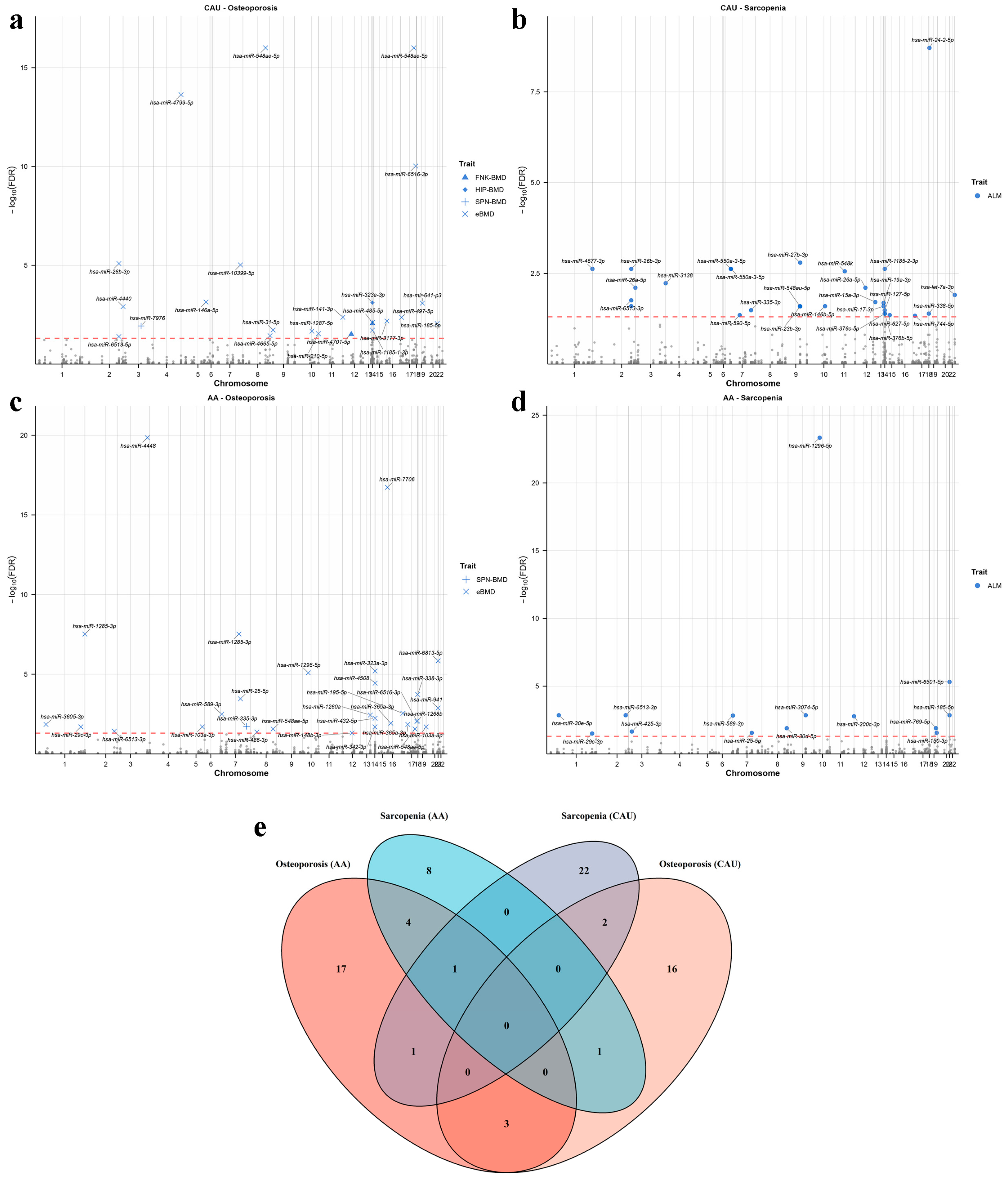
| PANEL | Analysis Method | Trait | Data Source | Sex | Count | Significant Mature miRNAs |
|---|---|---|---|---|---|---|
| CAU | Individual-level predicted miRNA | FNK-BMD | LOS | Female | 1 | hsa-miR-323a-3p |
| HIP-BMD | Female | 1 | hsa-miR-323a-3p | |||
| FNK-BMD | Male | 1 | hsa-miR-4701-5p | |||
| SPN-BMD | Male | 1 | hsa-miR-7976 | |||
| Summary-level GWAS statistics | eBMD | GEFOS | Mixed | 19 | hsa-miR-10399-5p, hsa-miR-1185-1-3p, hsa-miR-1287-5p, hsa-miR-141-3p, hsa-miR-146a-5p, hsa-miR-185-5p, hsa-miR-210-5p, hsa-miR-26b-3p, hsa-miR-31-5p, hsa-miR-3177-3p, hsa-miR-4440, hsa-miR-4665-5p, hsa-miR-4799-5p, hsa-miR-485-5p, hsa-miR-497-5p, hsa-miR-548ae-5p, hsa-mir-641-p3, hsa-miR-6513-5p, hsa-miR-6516-3p | |
| ALM | GWAScatlog | Mixed | 26 | hsa-let-7a-3p, hsa-miR-1185-2-3p, hsa-miR-127-5p, hsa-miR-146b-5p, hsa-miR-15a-3p, hsa-miR-17-3p, hsa-miR-19a-3p, hsa-miR-23b-3p, hsa-miR-24-2-5p, hsa-miR-26a-5p, hsa-miR-26b-3p, hsa-miR-27b-3p, hsa-miR-3138, hsa-miR-335-3p, hsa-miR-338-5p, hsa-miR-376b-5p, hsa-miR-376c-5p, hsa-miR-4677-3p, hsa-miR-548au-5p, hsa-miR-548k, hsa-miR-550a-3-5p, hsa-miR-590-5p, hsa-miR-627-5p, hsa-miR-6513-3p, hsa-miR-6513-5p, hsa-miR-744-5p | ||
| AA | Individual-level predicted miRNA | SPN-BMD | LOS | Male | 1 | hsa-miR-335-3p |
| Summary-level GWAS statistics | eBMD | GEFOS | Mixed | 25 | hsa-miR-103a-3p, hsa-miR-1260a, hsa-miR-1268b, hsa-miR-1285-3p, hsa-miR-1296-5p, hsa-miR-148b-3p, hsa-miR-195-5p, hsa-miR-25-5p, hsa-miR-29c-3p, hsa-miR-323a-3p, hsa-miR-338-3p, hsa-miR-342-3p, hsa-miR-3605-3p, hsa-miR-365a-3p, hsa-miR-432-5p, hsa-miR-4448, hsa-miR-4508, hsa-miR-486-3p, hsa-miR-548ae-5p, hsa-miR-589-3p, hsa-miR-6513-3p, hsa-miR-6516-3p, hsa-miR-6813-5p, hsa-miR-7706, hsa-miR-941 | |
| ALM | GWAScatlog | Mixed | 14 | hsa-miR-1296-5p, hsa-miR-150-3p, hsa-miR-185-5p, hsa-miR-200c-3p, hsa-miR-25-5p, hsa-miR-29c-3p, hsa-miR-3074-5p, hsa-miR-30d-5p, hsa-miR-30e-5p, hsa-miR-425-3p, hsa-miR-589-3p, hsa-miR-6501-5p, hsa-miR-6513-3p, hsa-miR-769-5p |
| Dataset | Model Training | Association Testing | ||||
|---|---|---|---|---|---|---|
| Race | CAU | AA | CAU | AA | ||
| Sex | Male | Male | Male | Female | Male | Female |
| Sample size | 281 | 170 | 1651 | 1836 | 1347 | 1058 |
| Age (year) | 35.54 (8.69) | 39.48 (7.53) | 42.48 (14.37) | 45.59 (15.99) | 44.66 (11.71) | 43.92 (14.19) |
| Height (cm) | 175.73 (7.05) | 175.68 (7.12) | 175.73 (6.92) | 163.15 (6.69) | 175.19 (7.25) | 163.52 (6.48) |
| Weight (kg) | 82.77 (15.64) | 83.38 (16.71) | 83.92 (16.46) | 69.83 (17.6) | 84.22 (19.88) | 84.03 (21.85) |
| BMI (kg/m2) | 26.82 (5.07) | 27.02 (5.2) | 27.15 (4.95) | 26.24 (6.49) | 27.38 (5.94) | 31.42 (7.94) |
| ALM (kg) | 27.74 (4.22) | 30.27 (4.63) | 27.7 (4.46) | 18.81 (3.6) | 29.61 (5.41) | 22.6 (4.86) |
| Grip strength (kg) | 39.96 (9.14) | 39.75 (10.26) | 41.33 (12.05) | 26.59 (8.17) | 40.86 (13.16) | 26.48 (9.54) |
| Regular Exercise (%) | 224 (79.72) | 114 (67.06) | 1240 (75.11) | 1401 (76.31) | 955 (70.9) | 638 (60.3) |
| Smoking (%) | 191 (67.97) | 135 (79.41) | 1079 (65.35) | 727 (39.6) | 994 (73.79) | 371 (35.07) |
| Alcohol drinking (%) | 203 (72.24) | 92 (54.12) | 1300 (78.74) | 1572 (85.62) | 862 (63.99) | 592 (55.95) |
| FNK-BMD (g/cm2) | 0.85 (0.13) | 0.94 (0.14) | 0.85 (0.2) | 0.78 (0.19) | 0.94 (0.23) | 0.88 (0.15) |
| HIP-BMD (g/cm2) | 0.98 (0.12) | 1.06 (0.13) | 1 (0.15) | 0.91 (0.19) | 1.07 (0.17) | 1.01 (0.16) |
| SPN-BMD (g/cm2) | 1.01 (0.14) | 1.07 (0.12) | 1.05 (0.15) | 1 (0.17) | 1.11 (0.17) | 1.08 (0.17) |
Disclaimer/Publisher’s Note: The statements, opinions and data contained in all publications are solely those of the individual author(s) and contributor(s) and not of MDPI and/or the editor(s). MDPI and/or the editor(s) disclaim responsibility for any injury to people or property resulting from any ideas, methods, instructions or products referred to in the content. |
© 2026 by the authors. Licensee MDPI, Basel, Switzerland. This article is an open access article distributed under the terms and conditions of the Creative Commons Attribution (CC BY) license.
Share and Cite
Liu, Y.; Su, K.-J.; Gong, Y.; Tian, B.; Liu, A.; Luo, Z.; Tian, Q.; Qiu, C.; Shen, H.; Xiao, H.-M.; et al. Genetic Regulation of Monocyte MicroRNAs and Their Implication in Musculoskeletal Diseases: A Cross-Ancestry Expression Quantitative Trait Loci and Imputation Study. Int. J. Mol. Sci. 2026, 27, 2818. https://doi.org/10.3390/ijms27062818
Liu Y, Su K-J, Gong Y, Tian B, Liu A, Luo Z, Tian Q, Qiu C, Shen H, Xiao H-M, et al. Genetic Regulation of Monocyte MicroRNAs and Their Implication in Musculoskeletal Diseases: A Cross-Ancestry Expression Quantitative Trait Loci and Imputation Study. International Journal of Molecular Sciences. 2026; 27(6):2818. https://doi.org/10.3390/ijms27062818
Chicago/Turabian StyleLiu, Yong, Kuan-Jui Su, Yun Gong, Bo Tian, Anqi Liu, Zhe Luo, Qing Tian, Chuan Qiu, Hui Shen, Hong-Mei Xiao, and et al. 2026. "Genetic Regulation of Monocyte MicroRNAs and Their Implication in Musculoskeletal Diseases: A Cross-Ancestry Expression Quantitative Trait Loci and Imputation Study" International Journal of Molecular Sciences 27, no. 6: 2818. https://doi.org/10.3390/ijms27062818
APA StyleLiu, Y., Su, K.-J., Gong, Y., Tian, B., Liu, A., Luo, Z., Tian, Q., Qiu, C., Shen, H., Xiao, H.-M., & Deng, H.-W. (2026). Genetic Regulation of Monocyte MicroRNAs and Their Implication in Musculoskeletal Diseases: A Cross-Ancestry Expression Quantitative Trait Loci and Imputation Study. International Journal of Molecular Sciences, 27(6), 2818. https://doi.org/10.3390/ijms27062818