Peripheral Blood Mononuclear Cell Oxygen Consumption and Systemic Bioenergetics in Glaucoma Management


Abstract
1. Introduction
2. Search Strategy
3. The Mitochondrial Theory of Glaucomatous Neurodegeneration
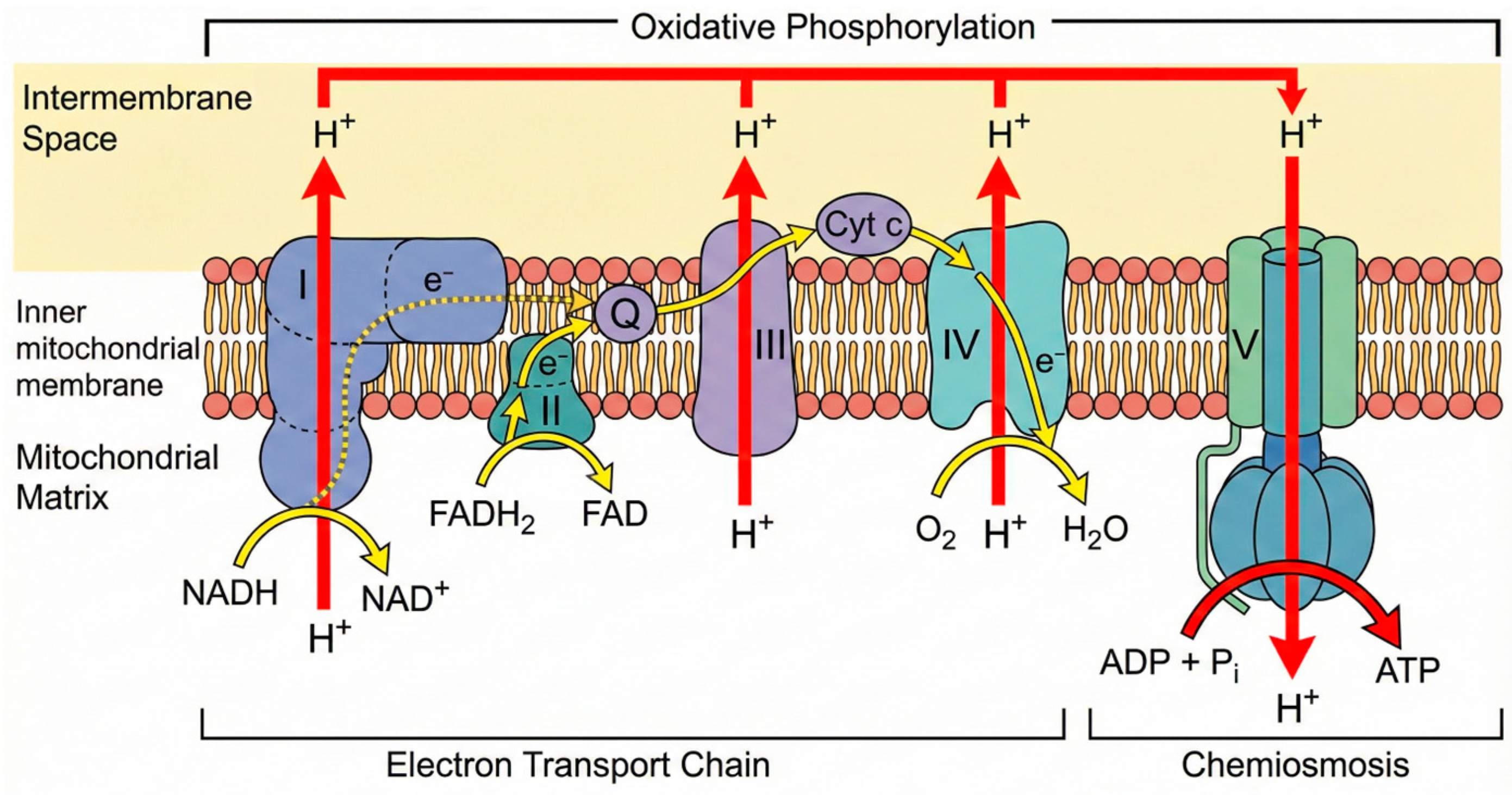
- Mitochondrial dysfunction: upstream structural and enzymatic defects, primarily reduced Complex I activity, mtDNA mutations, and reactive oxygen species (ROS) leakage [16].
- Metabolic insufficiency: the functional consequence, defined by diminished spare respiratory capacity (SRC) and restricted ATP scaling.
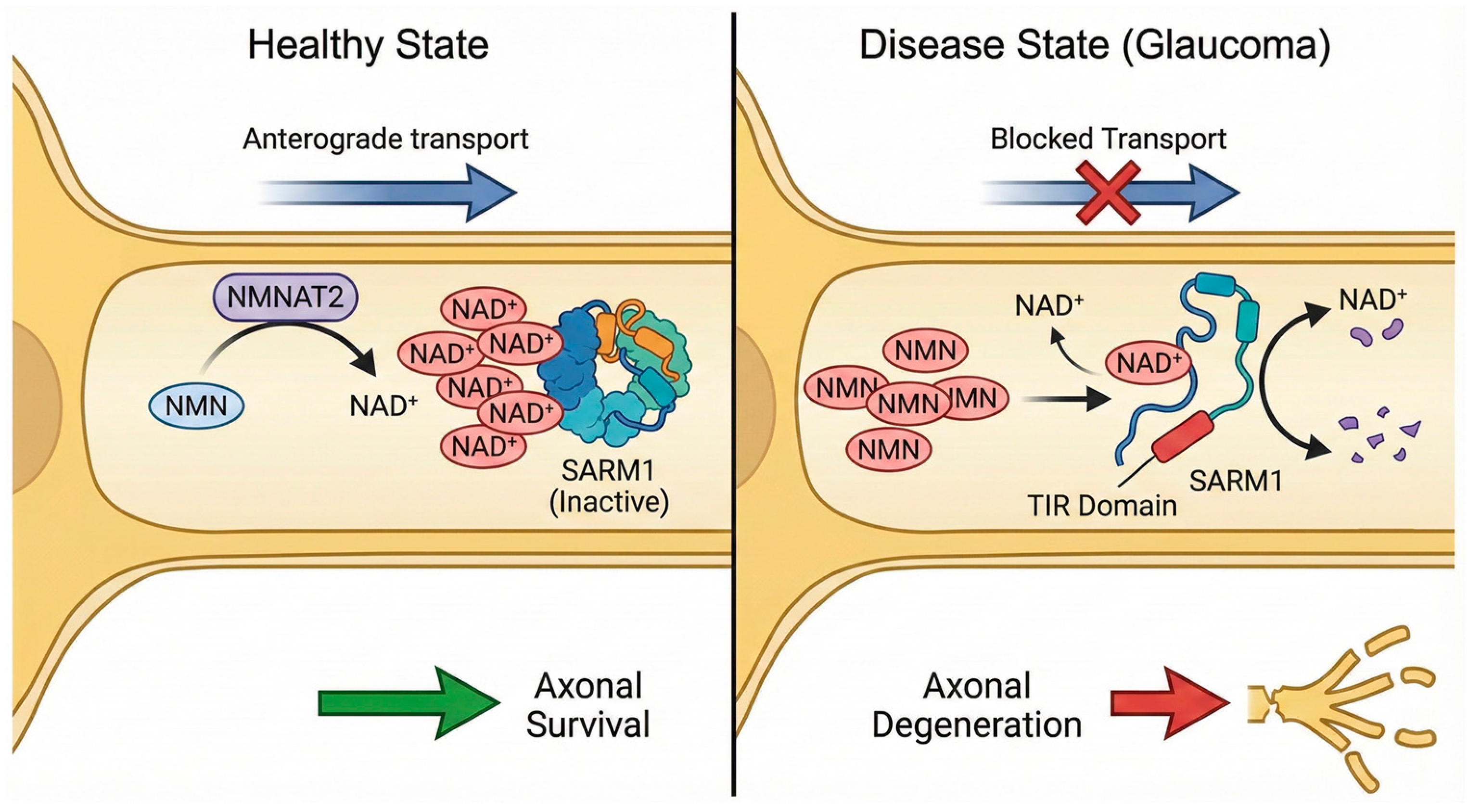
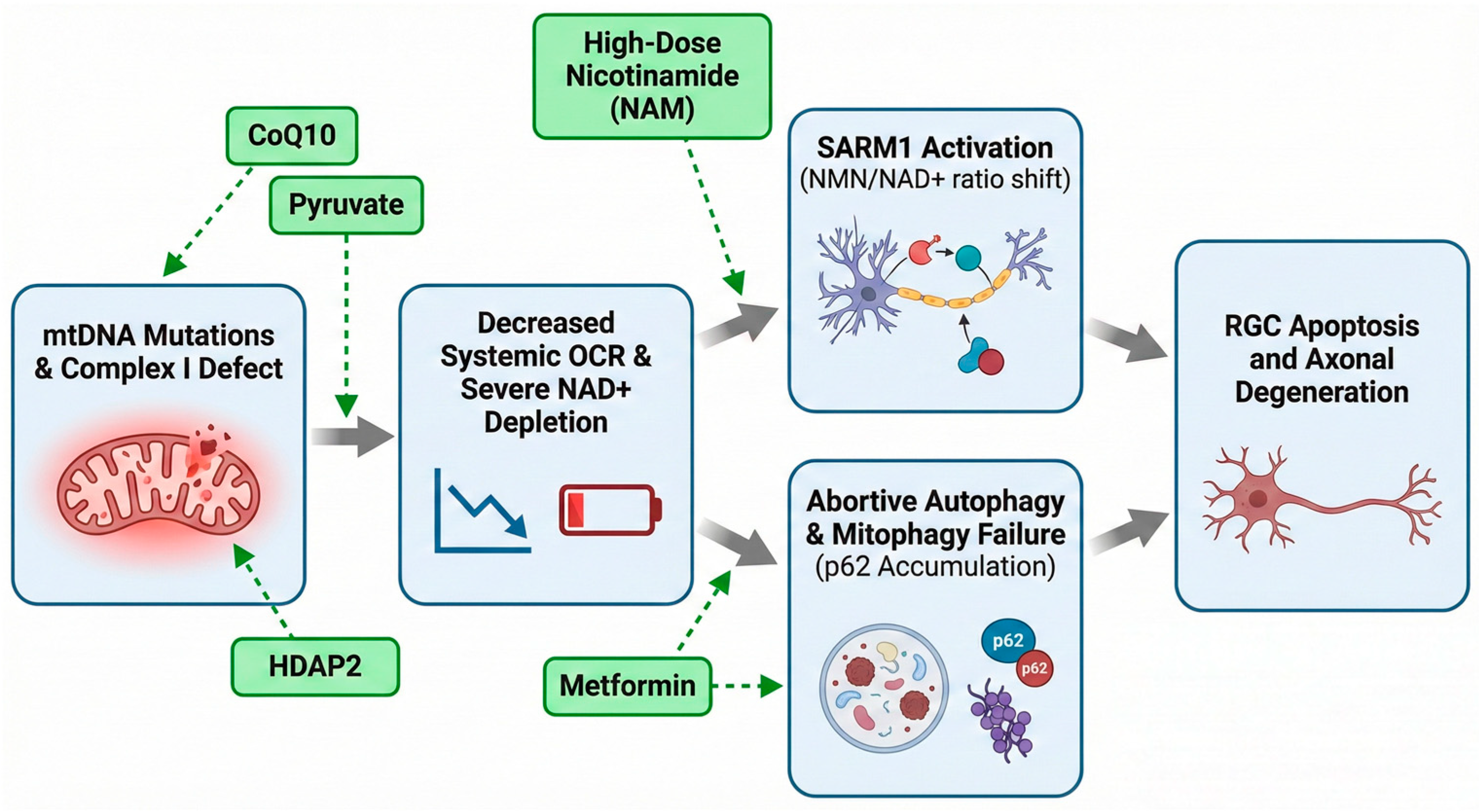
- Bioenergetic crisis: the late-stage pathological cascade characterized by profound NAD+ depletion, collapsed ATP pools, SARM1-mediated axonal degeneration, and abortive autophagy [17].
3.1. Ocular Tissue Vulnerability
3.1.1. Trabecular Meshwork (TM)
3.1.2. Lamina Cribrosa (LC) Cells
3.1.3. Selective Vulnerability of RGCs: The Bioenergetic Tipping Point
3.2. Mitochondrial Bioenergetics: Electron Transport Chain (ETC) and Complex I Defect
3.3. The NAD+ Depletion Axis and SARM1-Mediated Degeneration
3.4. Oxidative Stress and mtDNA Damage
4. Peripheral Blood Mononuclear Cells (PBMCs) as Systemic Bioenergetic Windows
4.1. PBMC Oxygen Consumption Rate (OCR) as a Biomarker
- Reduced Respiration: Patients with POAG exhibited significantly lower basal and maximal OCR relative to healthy age-matched individuals [9].
- Correlation with Progression: Lower PBMC OCR correlated with accelerated visual field loss and retinal nerve fiber layer (RNFL) thinning, independent of IOP. This correlation persisted even patients with well-managed IOP [9].
4.2. Systemic NAD+ Depletion
4.3. Proteomic Alterations: The Bioenergetic Blockade of Autophagy
4.4. Limitations of the Systemic Proxy: Tissue Decoupling and Confounders
- Tissue and Cell-Type Specificity: The retinal metabolic environment is characterized by the concurrent utilization of aerobic glycolysis, commonly referred to as the Warburg effect, and oxidative phosphorylation [57]. Furthermore, the ocular microenvironment exhibits significant metabolic heterogeneity. While circulating PBMCs reflect a shared basal vulnerability, they cannot capture the distinct localized demands or cross-talk of specific ocular populations. For example, RGCs requiring massive ATP for unmyelinated axonal conduction, TM cells requiring energy for contractile tone and extracellular matrix remodeling, or LC cells managing structural support.
- Systemic Confounders and Comorbidities: As immune cells, PBMCs are sensitive to systemic physiological changes. Baseline bioenergetics can be confounded by comorbidities prevalent in aging populations, such as diabetes mellitus and cardiovascular disease, which inherently disrupt mitochondrial function [58,59].
- Inflammatory States: Acute infections or chronic systemic autoimmune conditions can force a metabolic shift toward glycolysis to support immune activation, artificially depressing OCR and depleting NAD+ [62].
5. Metabolic Phenotypes in Glaucoma Subtypes
5.1. Normal Tension Glaucoma (NTG)
5.2. High Tension Glaucoma (HTG)
5.3. Exfoliation Glaucoma (XFG)
6. Diagnostic and Prognostic Indices
6.1. Metabolic Risk Score (MRS)
6.2. Flavoprotein Fluorescence (FPF)
7. Targeting Mitochondrial Resilience: Therapeutic Application
7.1. Nicotinamide (NAM)
7.2. The Nicotinamide in Glaucoma (NAMinG) Phase III Trial and Safety Profile in Elderly Populations
7.3. Pyruvate
7.4. HDAP2
7.5. Coenzyme Q10 (CoQ10) and Ubiquinol
7.6. Metformin
7.7. Precision Metabolic Therapy Across Glaucoma Subtypes and Trial Stratification
- NAM Trials: Enrich cohorts with patients exhibiting significantly reduced basal PBMC OCR and profound systemic NAD+ depletion.
- Pyruvate Trials: Target individuals identified via MRS profiling as lacking protective circulating pyruvate and citrate.
- Metformin/AMPK Trials: Prioritize patients with XFG or biomarkers of severe proteostatic failure to restore autophagic flux.
8. Limitations
- Multicenter validation of PBMC OCR assays and standardized NAD+ measurement platforms;
- Harmonization of in vivo imaging like FPF to establish universal clinical thresholds;
- Biomarker-guided trial designs, using MRS, OCR, or NAD+ levels to actively stratify cohorts and ensure targeted, precision neuroprotection.
9. Conclusions
Author Contributions
Funding
Institutional Review Board Statement
Informed Consent Statement
Data Availability Statement
Conflicts of Interest
References
- Causes of blindness and vision impairment in 2020 and trends over 30 years, and prevalence of avoidable blindness in relation to VISION 2020: The Right to Sight: An analysis for the Global Burden of Disease Study. Lancet Glob. Health 2021, 9, e144–e160. [CrossRef] [PubMed]
- Global estimates on the number of people blind or visually impaired by glaucoma: A meta-analysis from 2000 to 2020. Eye 2024, 38, 2036–2046. [CrossRef] [PubMed]
- Czerpak, C.A.; Kashaf, M.S.; Zimmerman, B.K.; Mirville, R.; Gasquet, N.C.; Quigley, H.A.; Nguyen, T.D. The Strain Response to Intraocular Pressure Increase in the Lamina Cribrosa of Control Subjects and Glaucoma Patients. Transl. Vis. Sci. Technol. 2024, 13, 7. [Google Scholar] [CrossRef]
- Montesano, G.; Rabiolo, A.; Ometto, G.; Crabb, D.P.; Garway-Heath, D.F. Relationship Between Intraocular Pressure and the True Rate of Functional and Structural Progression in the United Kingdom Glaucoma Treatment Study. Investig. Ophthalmol. Vis. Sci. 2025, 66, 32. [Google Scholar] [CrossRef]
- Mannaf, S.M.A.; Islam, M.S.; Islam, M.N.; Rahman, M.M.; Parvin, S.; Rahman, S.; Sarker, B.K. Population-based survey of the prevalence and types of glaucoma in Bangladesh. BMJ Open Ophthalmol. 2024, 9, e001609. [Google Scholar] [CrossRef] [PubMed]
- Iwase, A.; Suzuki, Y.; Araie, M.; Yamamoto, T.; Abe, H.; Shirato, S.; Kuwayama, Y.; Mishima, H.K.; Shimizu, H.; Tomita, G.; et al. The prevalence of primary open-angle glaucoma in Japanese: The Tajimi Study. Ophthalmology 2004, 111, 1641–1648. [Google Scholar] [CrossRef] [PubMed]
- Crawford Downs, J.; Roberts, M.D.; Sigal, I.A. Glaucomatous cupping of the lamina cribrosa: A review of the evidence for active progressive remodeling as a mechanism. Exp. Eye Res. 2011, 93, 133–140. [Google Scholar] [CrossRef] [PubMed]
- Ju, W.K.; Perkins, G.A.; Kim, K.Y.; Bastola, T.; Choi, W.Y.; Choi, S.H. Glaucomatous optic neuropathy: Mitochondrial dynamics, dysfunction and protection in retinal ganglion cells. Prog. Retin. Eye Res. 2023, 95, 101136. [Google Scholar] [CrossRef]
- Petriti, B.; Rabiolo, A.; Chau, K.Y.; Williams, P.A.; Montesano, G.; Lascaratos, G.; Garway-Heath, D.F. Peripheral blood mononuclear cell respiratory function is associated with progressive glaucomatous vision loss. Nat. Med. 2024, 30, 2362–2370. [Google Scholar] [CrossRef]
- Petriti, B.; Williams, P.A.; Lascaratos, G.; Chau, K.Y.; Garway-Heath, D.F. Neuroprotection in Glaucoma: NAD(+)/NADH Redox State as a Potential Biomarker and Therapeutic Target. Cells 2021, 10, 1402. [Google Scholar] [CrossRef]
- Vallbona-Garcia, A.; Hamers, I.H.J.; van Tienen, F.H.J.; Ochoteco-Asensio, J.; Berendschot, T.; de Coo, I.F.M.; Benedikter, B.J.; Webers, C.A.B.; Smeets, H.J.M.; Gorgels, T. Low mitochondrial DNA copy number in buffy coat DNA of primary open-angle glaucoma patients. Exp. Eye Res. 2023, 232, 109500. [Google Scholar] [CrossRef]
- Schmidt, M.; Giessl, A.; Laufs, T.; Hankeln, T.; Wolfrum, U.; Burmester, T. How does the eye breathe? Evidence for neuroglobin-mediated oxygen supply in the mammalian retina. J. Biol. Chem. 2003, 278, 1932–1935. [Google Scholar] [CrossRef] [PubMed]
- Solar Fernandez, V.; Marino, M.; Fiocchetti, M. Neuroglobin in Retinal Neurodegeneration: A Potential Target in Therapeutic Approaches. Cells 2021, 10, 3200. [Google Scholar] [CrossRef] [PubMed]
- Rajendram, R.; Rao, N.A. Neuroglobin in normal retina and retina from eyes with advanced glaucoma. Br. J. Ophthalmol. 2007, 91, 663–666. [Google Scholar] [CrossRef]
- Bucolo, C.; Drago, F. Effects of neurosteroids on ischemia-reperfusion injury in the rat retina: Role of sigma1 recognition sites. Eur. J. Pharmacol. 2004, 498, 111–114. [Google Scholar] [CrossRef]
- Choi, E.H.; Kim, M.H.; Park, S.J. Targeting Mitochondrial Dysfunction and Reactive Oxygen Species for Neurodegenerative Disease Treatment. Int. J. Mol. Sci. 2024, 25, 7952. [Google Scholar] [CrossRef]
- Figley, M.D.; Gu, W.; Nanson, J.D.; Shi, Y.; Sasaki, Y.; Cunnea, K.; Malde, A.K.; Jia, X.; Luo, Z.; Saikot, F.K.; et al. SARM1 is a metabolic sensor activated by an increased NMN/NAD(+) ratio to trigger axon degeneration. Neuron 2021, 109, 1118–1136.e11. [Google Scholar] [CrossRef]
- Chrysostomou, V.; Rezania, F.; Trounce, I.A.; Crowston, J.G. Oxidative stress and mitochondrial dysfunction in glaucoma. Curr. Opin. Pharmacol. 2013, 13, 12–15. [Google Scholar] [CrossRef]
- Barron, M.J.; Griffiths, P.; Turnbull, D.M.; Bates, D.; Nichols, P. The distributions of mitochondria and sodium channels reflect the specific energy requirements and conduction properties of the human optic nerve head. Br. J. Ophthalmol. 2004, 88, 286–290. [Google Scholar] [CrossRef]
- He, Y.; Leung, K.W.; Zhang, Y.H.; Duan, S.; Zhong, X.F.; Jiang, R.Z.; Peng, Z.; Tombran-Tink, J.; Ge, J. Mitochondrial complex I defect induces ROS release and degeneration in trabecular meshwork cells of POAG patients: Protection by antioxidants. Investig. Ophthalmol. Vis. Sci. 2008, 49, 1447–1458. [Google Scholar] [CrossRef] [PubMed]
- Izzotti, A.; Longobardi, M.; Cartiglia, C.; Saccà, S.C. Mitochondrial damage in the trabecular meshwork occurs only in primary open-angle glaucoma and in pseudoexfoliative glaucoma. PLoS ONE 2011, 6, e14567. [Google Scholar] [CrossRef]
- Izzotti, A.; Saccà, S.C.; Longobardi, M.; Cartiglia, C. Mitochondrial damage in the trabecular meshwork of patients with glaucoma. Arch. Ophthalmol. 2010, 128, 724–730. [Google Scholar] [CrossRef]
- Banerjee, D.; Banerjee, A.; Mookherjee, S.; Vishal, M.; Mukhopadhyay, A.; Sen, A.; Basu, A.; Ray, K. Mitochondrial genome analysis of primary open angle glaucoma patients. PLoS ONE 2013, 8, e70760. [Google Scholar] [CrossRef] [PubMed]
- Kamel, K.; Farrell, M.; O’Brien, C. Mitochondrial dysfunction in ocular disease: Focus on glaucoma. Mitochondrion 2017, 35, 44–53. [Google Scholar] [CrossRef] [PubMed]
- Kamel, K.; O’Brien, C.J.; Zhdanov, A.V.; Papkovsky, D.B.; Clark, A.F.; Stamer, W.D.; Irnaten, M. Reduced Oxidative Phosphorylation and Increased Glycolysis in Human Glaucoma Lamina Cribrosa Cells. Investig. Ophthalmol. Vis. Sci. 2020, 61, 4, Erratum in Investig. Ophthalmol. Vis. Sci. 2021, 62, 19. [Google Scholar] [CrossRef]
- Irnaten, M.; O’Brien, C.J. Calcium-Signalling in Human Glaucoma Lamina Cribrosa Myofibroblasts. Int. J. Mol. Sci. 2023, 24, 1287. [Google Scholar] [CrossRef]
- McElnea, E.M.; Quill, B.; Docherty, N.G.; Irnaten, M.; Siah, W.F.; Clark, A.F.; O’Brien, C.J.; Wallace, D.M. Oxidative stress, mitochondrial dysfunction and calcium overload in human lamina cribrosa cells from glaucoma donors. Mol. Vis. 2011, 17, 1182–1191. [Google Scholar]
- Irnaten, M.; Zhdanov, A.; Brennan, D.; Crotty, T.; Clark, A.; Papkovsky, D.; O’Brien, C. Activation of the NFAT-Calcium Signaling Pathway in Human Lamina Cribrosa Cells in Glaucoma. Investig. Ophthalmol. Vis. Sci. 2018, 59, 831–842. [Google Scholar] [CrossRef]
- Strat, A.N.; Patel, S.; Thanh, M.H.; Kirschner, A.; Ghosh, S.; Geiss, M.P.; Venkatesan, A.; Bernstein, A.M.; Viapiano, M.; Liu, Y.; et al. Compression injury regulates astrocyte morphology, metabolic function, and extracellular matrix modification in a 3D hydrogel. bioRxiv 2025. [Google Scholar] [CrossRef] [PubMed]
- Calkins, D.J. Adaptive responses to neurodegenerative stress in glaucoma. Prog. Retin. Eye Res. 2021, 84, 100953. [Google Scholar] [CrossRef]
- Yang, T.H.; Kang, E.Y.; Lin, P.H.; Yu, B.B.; Wang, J.H.; Chen, V.; Wang, N.K. Mitochondria in Retinal Ganglion Cells: Unraveling the Metabolic Nexus and Oxidative Stress. Int. J. Mol. Sci. 2024, 25, 8626. [Google Scholar] [CrossRef]
- Yu, D.Y.; Cringle, S.J.; Balaratnasingam, C.; Morgan, W.H.; Yu, P.K.; Su, E.N. Retinal ganglion cells: Energetics, compartmentation, axonal transport, cytoskeletons and vulnerability. Prog. Retin. Eye Res. 2013, 36, 217–246. [Google Scholar] [CrossRef] [PubMed]
- Williams, P.A.; Harder, J.M.; Foxworth, N.E.; Cochran, K.E.; Philip, V.M.; Porciatti, V.; Smithies, O.; John, S.W. Vitamin B(3) modulates mitochondrial vulnerability and prevents glaucoma in aged mice. Science 2017, 355, 756–760. [Google Scholar] [CrossRef] [PubMed]
- Lee, S.; Sheck, L.; Crowston, J.G.; Van Bergen, N.J.; O’Neill, E.C.; O’Hare, F.; Kong, Y.X.; Chrysostomou, V.; Vincent, A.L.; Trounce, I.A. Impaired complex-I-linked respiration and ATP synthesis in primary open-angle glaucoma patient lymphoblasts. Investig. Ophthalmol. Vis. Sci. 2012, 53, 2431–2437. [Google Scholar] [CrossRef] [PubMed]
- Sundaresan, P.; Simpson, D.A.; Sambare, C.; Duffy, S.; Lechner, J.; Dastane, A.; Dervan, E.W.; Vallabh, N.; Chelerkar, V.; Deshpande, M.; et al. Whole-mitochondrial genome sequencing in primary open-angle glaucoma using massively parallel sequencing identifies novel and known pathogenic variants. Genet. Med. 2015, 17, 279–284. [Google Scholar] [CrossRef]
- Abu-Amero, K.K.; Morales, J.; Bosley, T.M. Mitochondrial abnormalities in patients with primary open-angle glaucoma. Investig. Ophthalmol. Vis. Sci. 2006, 47, 2533–2541. [Google Scholar] [CrossRef]
- Vallbona-Garcia, A.; Lindsey, P.J.; Kamps, R.; Stassen, A.P.M.; Nguyen, N.; van Tienen, F.H.J.; Hamers, I.H.J.; Hardij, R.; van Gisbergen, M.W.; Benedikter, B.J.; et al. Mitochondrial DNA D-loop variants correlate with a primary open-angle glaucoma subgroup. Front. Ophthalmol. 2023, 3, 1309836. [Google Scholar] [CrossRef]
- Tribble, J.R.; Otmani, A.; Sun, S.; Ellis, S.A.; Cimaglia, G.; Vohra, R.; Jöe, M.; Lardner, E.; Venkataraman, A.P.; Domínguez-Vicent, A.; et al. Nicotinamide provides neuroprotection in glaucoma by protecting against mitochondrial and metabolic dysfunction. Redox Biol. 2021, 43, 101988. [Google Scholar] [CrossRef]
- Fang, F.; Zhuang, P.; Feng, X.; Liu, P.; Liu, D.; Huang, H.; Li, L.; Chen, W.; Liu, L.; Sun, Y.; et al. NMNAT2 is downregulated in glaucomatous RGCs, and RGC-specific gene therapy rescues neurodegeneration and visual function. Mol. Ther. 2022, 30, 1421–1431. [Google Scholar] [CrossRef] [PubMed]
- Gilley, J.; Coleman, M.P. Endogenous Nmnat2 is an essential survival factor for maintenance of healthy axons. PLoS Biol. 2010, 8, e1000300. [Google Scholar] [CrossRef]
- Summers, D.W.; Gibson, D.A.; DiAntonio, A.; Milbrandt, J. SARM1-specific motifs in the TIR domain enable NAD+ loss and regulate injury-induced SARM1 activation. Proc. Natl. Acad. Sci. USA 2016, 113, E6271–E6280. [Google Scholar] [CrossRef] [PubMed]
- Zeng, H.; Mayberry, J.E.; Wadkins, D.; Chen, N.; Summers, D.W.; Kuehn, M.H. Loss of Sarm1 reduces retinal ganglion cell loss in chronic glaucoma. Acta Neuropathol. Commun. 2024, 12, 23. [Google Scholar] [CrossRef] [PubMed]
- Tribble, J.R.; Jöe, M.; Varricchio, C.; Otmani, A.; Canovai, A.; Habchi, B.; Daskalakis, E.; Chaleckis, R.; Loreto, A.; Gilley, J.; et al. NMNAT2 is a druggable target to drive neuronal NAD production. Nat. Commun. 2024, 15, 6256, Erratum in Nat. Commun. 2024, 15, 8143. [Google Scholar] [CrossRef]
- Sorkhabi, R.; Ghorbanihaghjo, A.; Javadzadeh, A.; Rashtchizadeh, N.; Moharrery, M. Oxidative DNA damage and total antioxidant status in glaucoma patients. Mol. Vis. 2011, 17, 41–46. [Google Scholar]
- Yuki, K.; Tsubota, K. Increased urinary 8-hydroxy-2′-deoxyguanosine (8-OHdG)/creatinine level is associated with the progression of normal-tension glaucoma. Curr. Eye Res. 2013, 38, 983–988. [Google Scholar] [CrossRef]
- Stavropoulos, D.; Grewal, M.K.; Petriti, B.; Chau, K.Y.; Hammond, C.J.; Garway-Heath, D.F.; Lascaratos, G. The Role of Mitophagy in Glaucomatous Neurodegeneration. Cells 2023, 12, 1969. [Google Scholar] [CrossRef]
- Ansari, A.S.; Jarrar, Z.; Steves, C.; Utheim, T.P.; Hammond, C.J. Systemic mitochondrial function tests as a biomarker for susceptibility to glaucoma and neurodegeneration in an unselected ageing twin population. Investig. Ophthalmol. Vis. Sci. 2023, 64, 2905. [Google Scholar]
- Hofman, P.; Hoyng, P.; vanderWerf, F.; Vrensen, G.F.; Schlingemann, R.O. Lack of blood-brain barrier properties in microvessels of the prelaminar optic nerve head. Investig. Ophthalmol. Vis. Sci. 2001, 42, 895–901. [Google Scholar]
- Grieshaber, M.C.; Flammer, J. Does the blood-brain barrier play a role in Glaucoma? Surv. Ophthalmol. 2007, 52, S115–S121. [Google Scholar] [CrossRef]
- Giammaria, S.; Pandino, I.; Zingale, G.A.; Atzori, M.G.; Cavaterra, D.; Cecere, M.; Michelessi, M.; Roberti, G.; Tanga, L.; Carnevale, C.; et al. Profiling of the Peripheral Blood Mononuclear Cells Proteome by Shotgun Proteomics Identifies Alterations of Immune System Components, Proteolytic Balance, Autophagy, and Mitochondrial Metabolism in Glaucoma Subjects. ACS Omega 2025, 10, 14866–14883. [Google Scholar] [CrossRef] [PubMed]
- Chiu, T.H.; Hung, S.H.; Lan, C.H.; Yen, W.T.; Lu, D.W. Update on Nicotinamide and Its Application in the Management of Glaucoma. Int. J. Mol. Sci. 2025, 26, 10789. [Google Scholar] [CrossRef]
- Meul, T.; Berschneider, K.; Schmitt, S.; Mayr, C.H.; Mattner, L.F.; Schiller, H.B.; Yazgili, A.S.; Wang, X.; Lukas, C.; Schlesser, C.; et al. Mitochondrial Regulation of the 26S Proteasome. Cell Rep. 2020, 32, 108059. [Google Scholar] [CrossRef]
- Yagi, M.; Toshima, T.; Amamoto, R.; Do, Y.; Hirai, H.; Setoyama, D.; Kang, D.; Uchiumi, T. Mitochondrial translation deficiency impairs NAD(+)-mediated lysosomal acidification. EMBO J. 2021, 40, e105268. [Google Scholar] [CrossRef]
- Kataura, T.; Sedlackova, L.; Sun, C.; Kocak, G.; Wilson, N.; Banks, P.; Hayat, F.; Trushin, S.; Trushina, E.; Maddocks, O.D.K.; et al. Targeting the autophagy-NAD axis protects against cell death in Niemann-Pick type C1 disease models. Cell Death Dis. 2024, 15, 382. [Google Scholar] [CrossRef]
- Hirt, J.; Porter, K.; Dixon, A.; McKinnon, S.; Liton, P.B. Contribution of autophagy to ocular hypertension and neurodegeneration in the DBA/2J spontaneous glaucoma mouse model. Cell Death Discov. 2018, 4, 14, Erratum in Cell Death Discov. 2019, 5, 116. [Google Scholar] [CrossRef]
- Baudouin, C.; Kolko, M.; Melik-Parsadaniantz, S.; Messmer, E.M. Inflammation in Glaucoma: From the back to the front of the eye, and beyond. Prog. Retin. Eye Res. 2021, 83, 100916. [Google Scholar] [CrossRef]
- Grenell, A.; Wang, Y.; Yam, M.; Swarup, A.; Dilan, T.L.; Hauer, A.; Linton, J.D.; Philp, N.J.; Gregor, E.; Zhu, S.; et al. Loss of MPC1 reprograms retinal metabolism to impair visual function. Proc. Natl. Acad. Sci. USA 2019, 116, 3530–3535. [Google Scholar] [CrossRef] [PubMed]
- Tessema, B.; Riemer, J.; Sack, U.; König, B. Cellular Stress Assay in Peripheral Blood Mononuclear Cells: Factors Influencing Its Results. Int. J. Mol. Sci. 2022, 23, 13118. [Google Scholar] [CrossRef]
- Cacace, J.; Luna-Marco, C.; Hermo-Argibay, A.; Pesantes-Somogyi, C.; Hernández-López, O.A.; Pelechá-Salvador, M.; Bañuls, C.; Apostolova, N.; de Miguel-Rodríguez, L.; Morillas, C.; et al. Poor glycaemic control in type 2 diabetes compromises leukocyte oxygen consumption rate, OXPHOS complex content and neutrophil-endothelial interactions. Redox Biol. 2025, 81, 103516. [Google Scholar] [CrossRef] [PubMed]
- Durhuus, J.A.; Hansson, S.; Morville, T.; Kuhlman, A.B.; Dohlmann, T.L.; Larsen, S.; Helge, J.W.; Angleys, M.; Muniesa-Vargas, A.; Bundgaard, J.R.; et al. Simvastatin improves mitochondrial respiration in peripheral blood cells. Sci. Rep. 2020, 10, 17012. [Google Scholar] [CrossRef] [PubMed]
- Repas, J.; Peternel, L.; Sourij, H.; Pavlin, M. Low glucose availability potentiates the effects of metformin on model T cell activation and exhaustion markers in vitro. Front. Endocrinol. 2023, 14, 1216193. [Google Scholar] [CrossRef]
- Cabrera, M.; Eastman, B.; Ennerfelt, H.; Alsaadi, A.I.; Alexandrova, L.; Ay, Y.A.; Huang, J.; Wang, Q.; Blacher, E.; McReynolds, M.R.; et al. NAD(+) depletion drives age-related monocyte hyperinflammation after stroke and is reversed by nicotinamide riboside. J. Neuroinflamm. 2025, 23, 7. [Google Scholar] [CrossRef]
- Petriti, B.; Lascaratos, G.; Chau, D.; Peter, W.; Garway-Heath, D.F. Preliminary data show normal tension glaucoma patients have lower systemic nicotinamide adenine dinucleotide (NAD+) levels and mitochondrial function compared to controls. Investig. Ophthalmol. Vis. Sci. 2021, 62, 1765. [Google Scholar]
- Vallabh, N.A.; Armstrong, J.; Czanner, G.; McDonagh, B.; Choudhary, A.; Criddle, D.N.; Willoughby, C.E. Evidence of impaired mitochondrial cellular bioenergetics in ocular fibroblasts derived from glaucoma patients. Free Radic. Biol. Med. 2022, 189, 102–110. [Google Scholar] [CrossRef]
- Ronci, M.; Sharma, S.; Martin, S.; Craig, J.E.; Voelcker, N.H. MALDI MS imaging analysis of apolipoprotein E and lysyl oxidase-like 1 in human lens capsules affected by pseudoexfoliation syndrome. J. Proteom. 2013, 82, 27–34. [Google Scholar] [CrossRef] [PubMed]
- Sharma, S.; Chataway, T.; Burdon, K.P.; Jonavicius, L.; Klebe, S.; Hewitt, A.W.; Mills, R.A.; Craig, J.E. Identification of LOXL1 protein and Apolipoprotein E as components of surgically isolated pseudoexfoliation material by direct mass spectrometry. Exp. Eye Res. 2009, 89, 479–485. [Google Scholar] [CrossRef]
- Venkatesan, A.; Ridilla, M.; Castro, N.; Wolosin, J.M.; Henty-Ridilla, J.L.; Knox, B.E.; Ganapathy, P.S.; Brown, J.S.; DeVincentis, A.F., III; Sieminski, S.; et al. Mitochondrial and microtubule defects in Exfoliation Glaucoma. Free Radic. Biol. Med. 2025, 233, 226–239. [Google Scholar] [CrossRef]
- Venkatesan, A.; Bernstein, A.M. Protein misfolding and mitochondrial dysfunction in glaucoma. Front. Cell Dev. Biol. 2025, 13, 1595121. [Google Scholar] [CrossRef]
- Li, K.; Tolman, N.; Segrè, A.V.; Stuart, K.V.; Zeleznik, O.A.; Vallabh, N.A.; Hu, K.; Zebardast, N.; Hanyuda, A.; Raita, Y.; et al. Pyruvate and related energetic metabolites modulate resilience against high genetic risk for glaucoma. eLife 2025, 14, RP105576. [Google Scholar] [CrossRef]
- Craig, J.E.; Han, X.; Qassim, A.; Hassall, M.; Cooke Bailey, J.N.; Kinzy, T.G.; Khawaja, A.P.; An, J.; Marshall, H.; Gharahkhani, P.; et al. Multitrait analysis of glaucoma identifies new risk loci and enables polygenic prediction of disease susceptibility and progression. Nat. Genet. 2020, 52, 160–166. [Google Scholar] [CrossRef] [PubMed]
- Chance, B.; Schoener, B.; Oshino, R.; Itshak, F.; Nakase, Y. Oxidation-reduction ratio studies of mitochondria in freeze-trapped samples. NADH and flavoprotein fluorescence signals. J. Biol. Chem. 1979, 254, 4764–4771. [Google Scholar] [CrossRef]
- Kunz, W.S.; Kunz, W. Contribution of different enzymes to flavoprotein fluorescence of isolated rat liver mitochondria. Biochim. Biophys. Acta 1985, 841, 237–246. [Google Scholar] [CrossRef]
- Chen, A.X.; Conti, T.F.; Hom, G.L.; Greenlee, T.E.; Raimondi, R.; Briskin, I.N.; Rich, C.A.; Kampani, R.; Engel, R.; Sharma, S.; et al. Functional imaging of mitochondria in retinal diseases using flavoprotein fluorescence. Eye 2021, 35, 74–92. [Google Scholar] [CrossRef]
- Zhou, D.B.; Castanos, M.V.; Geyman, L.; Rich, C.A.; Tantraworasin, A.; Ritch, R.; Rosen, R.B. Mitochondrial Dysfunction in Primary Open-Angle Glaucoma Characterized by Flavoprotein Fluorescence at the Optic Nerve Head. Ophthalmol. Glaucoma 2022, 5, 413–420. [Google Scholar] [CrossRef] [PubMed]
- Caro, R.; Chen, A.; Mudumbai, R.; Duerr, E.; Chen, P.P.; Bojikian, K.D. In vivo imaging of mitochondrial function in normal, glaucoma suspect, and glaucoma eyes. PLoS ONE 2025, 20, e0317354. [Google Scholar] [CrossRef] [PubMed]
- Lascaratos, G.; Chau, K.Y.; Zhu, H.; Gkotsi, D.; King, R.; Gout, I.; Kamal, D.; Luthert, P.J.; Schapira, A.H.V.; Garway-Heath, D.F. Resistance to the most common optic neuropathy is associated with systemic mitochondrial efficiency. Neurobiol. Dis. 2015, 82, 78–85. [Google Scholar] [CrossRef]
- Croteau, D.L.; Fang, E.F.; Nilsen, H.; Bohr, V.A. NAD(+) in DNA repair and mitochondrial maintenance. Cell Cycle 2017, 16, 491–492. [Google Scholar] [CrossRef] [PubMed]
- De Moraes, C.G.; John, S.W.M.; Williams, P.A.; Blumberg, D.M.; Cioffi, G.A.; Liebmann, J.M. Nicotinamide and Pyruvate for Neuroenhancement in Open-Angle Glaucoma: A Phase 2 Randomized Clinical Trial. JAMA Ophthalmol. 2022, 140, 11–18. [Google Scholar] [CrossRef]
- Hui, F.; Tang, J.; Williams, P.A.; McGuinness, M.B.; Hadoux, X.; Casson, R.J.; Coote, M.; Trounce, I.A.; Martin, K.R.; van Wijngaarden, P.; et al. Improvement in inner retinal function in glaucoma with nicotinamide (vitamin B3) supplementation: A crossover randomized clinical trial. Clin. Exp. Ophthalmol. 2020, 48, 903–914. [Google Scholar] [CrossRef]
- National Library of Medicine. A Phase III, Double-masked, Randomised, Placebo-controlled Trial Investigating the Safety and Efficacy of Nicotinamide (NAM) to Slow Visual Field Loss in Adults with Open-Angle Glaucoma. 2022. Available online: https://clinicaltrials.gov/ct2/show/NCT05405868 (accessed on 28 December 2025).
- Winter, S.L.; Boyer, J.L. Hepatic toxicity from large doses of vitamin B3 (nicotinamide). N. Engl. J. Med. 1973, 289, 1180–1182. [Google Scholar] [CrossRef]
- Shukla, A.G.; Cioffi, G.A.; John, S.W.M.; Wang, Q.; Liebmann, J.M. American Glaucoma Society-American Academy of Ophthalmology Position Statement on Nicotinamide Use for Glaucoma Neuroprotection. Ophthalmol. Glaucoma 2025, 8, 112–116. [Google Scholar] [CrossRef]
- Paradies, G.; Paradies, V.; Ruggiero, F.M.; Petrosillo, G. Role of Cardiolipin in Mitochondrial Function and Dynamics in Health and Disease: Molecular and Pharmacological Aspects. Cells 2019, 8, 728. [Google Scholar] [CrossRef] [PubMed]
- MacNeil, M.A.; Mentor, W.; Birk, A. Mitochondrial-Targeted HDAP2 Preserves Retinal Ganglion Cells and Increases Pressure Tolerance in DBA/2J Mice. Investig. Ophthalmol. Vis. Sci. 2025, 66, 66. [Google Scholar] [CrossRef]
- Mandal, A.; Pal, D.; Agrahari, V.; Trinh, H.M.; Joseph, M.; Mitra, A.K. Ocular delivery of proteins and peptides: Challenges and novel formulation approaches. Adv. Drug Deliv. Rev. 2018, 126, 67–95. [Google Scholar] [CrossRef]
- Ju, W.K.; Shim, M.S.; Kim, K.Y.; Bu, J.H.; Park, T.L.; Ahn, S.; Weinreb, R.N. Ubiquinol promotes retinal ganglion cell survival and blocks the apoptotic pathway in ischemic retinal degeneration. Biochem. Biophys. Res. Commun. 2018, 503, 2639–2645. [Google Scholar] [CrossRef] [PubMed]
- Al-Megrin, W.A.; Soliman, D.; Kassab, R.B.; Metwally, D.M.; Ahmed, E.A.M.; El-Khadragy, M.F. Coenzyme Q10 Activates the Antioxidant Machinery and Inhibits the Inflammatory and Apoptotic Cascades Against Lead Acetate-Induced Renal Injury in Rats. Front. Physiol. 2020, 11, 64. [Google Scholar] [CrossRef]
- Dogan, M.; Mirza, G.E. Effects of topical coenzyme Q10 in conjunction with vitamin e on the pattern visual evoked potential, visual field, retinal ganglion cell layer and retinal nerve fibre layer thickness in patients with primary open-angle glaucoma. Photodiagn. Photodyn. Ther. 2025, 55, 104720. [Google Scholar] [CrossRef]
- Xu, L.; Zhang, X.; Zhao, Y.; Gang, X.; Zhou, T.; Han, J.; Cao, Y.; Qi, B.; Song, S.; Wang, X.; et al. Metformin protects trabecular meshwork against oxidative injury via activating integrin/ROCK signals. eLife 2023, 12, e81198. [Google Scholar] [CrossRef]
- Sidhu, S.; Radha Saseendrakumar, B.; Varkhedi, V.; Wu, J.H.; Parikh, A.; Nudleman, E.; Do, J.L.; Moghimi, S.; Weinreb, R.N.; Baxter, S.L. Association of metformin use with primary open-angle glaucoma using data from the National Institutes of Health All of Us Program. BMJ Open Ophthalmol. 2025, 10, e002027. [Google Scholar] [CrossRef]
- Toppila, M.; Ranta-Aho, S.; Kaarniranta, K.; Hytti, M.; Kauppinen, A. Metformin Alleviates Inflammation and Induces Mitophagy in Human Retinal Pigment Epithelium Cells Suffering from Mitochondrial Damage. Cells 2024, 13, 1433. [Google Scholar] [CrossRef] [PubMed]
- Satriano, A.; Martucci, A.; Adornetto, A.; Benfatto, E.; Tettamanti, G.; Bruno, D.; Corasaniti, M.T.; Bagetta, G.; Nucci, C.; Russo, R. Metformin protects retinal ganglion cells in a preclinical model of retinal ischemia/reperfusion injury and stabilizes visual field in diabetic patients with glaucoma. Cell Death Discov. 2025, 11, 546. [Google Scholar] [CrossRef] [PubMed]
- National Library of Medicine. Metformin as a Neuroprotective Therapy for Glaucoma—A Randomized Controlled Trial. 2022. Available online: https://clinicaltrials.gov/study/NCT05426044 (accessed on 28 December 2025).
- Venkatesan, A.; Castro, N.; Bernstein, A.M. Loxl1 protein aggregation and impaired mitochondrial bioenergetics in exfoliation glaucoma. Investig. Ophthalmol. Vis. Sci. 2023, 64, 1365. [Google Scholar]
- Hayat, B.; Padhy, B.; Mohanty, P.P.; Alone, D.P. Altered unfolded protein response and proteasome impairment in pseudoexfoliation pathogenesis. Exp. Eye Res. 2019, 181, 197–207. [Google Scholar] [CrossRef] [PubMed]



| Target | Manipulation Type | Experimental Model | Key Findings | Reference |
|---|---|---|---|---|
| SARM1 | Genetic Knockout | Chronic ocular hypertension (Mice) | Loss of SARM1 robustly protects against RGC 1 loss and reduces cell death significantly compared to wild-type controls, even in the presence of elevated IOP 2. | Zeng et al. [42] |
| NMNAT2 | Pharmacologic Activation | Preclinical neurodegeneration models | Small molecule activators specifically target NMNAT2 to drive neuronal NAD+ production, offering robust neuroprotection against axonal degeneration. | Tribble et al. [43] |
| Gene Therapy (Overexpression) | Glaucomatous RGC models | Counteracts the disease-state downregulation of NMNAT2; RGC-specific gene therapy rescues neurodegeneration and preserves visual function. | Fang et al. [39] |
| Methodology | Key Proteomic Findings | Implication in Pathogenesis | Study |
|---|---|---|---|
| Shotgun Proteomics (Human PBMC 1) | Upregulated: Beclin-1, Bcl2 2, NAD kinase | Abortive Autophagy: The upregulation of initiation markers (Beclin-1) is futile due to downstream defects in vesicle maturation (Atg9A), preventing organelle clearance. | Giammaria et al. [50] |
| Downregulated: Atg9A 3, PSMA3/4 4, Atlastin-2 | |||
| Immunofluorescence (DBA/2J Mice) | Upregulated: LC3-II 5, p62 | Lysosomal Exhaustion: A depletion of lysosomes (LAMP1) creates a bottleneck, stalling the flux and causing the pathological accumulation of p62 and debris. | Hirt et al. [55] |
| Downregulated: LAMP1 6 |
Disclaimer/Publisher’s Note: The statements, opinions and data contained in all publications are solely those of the individual author(s) and contributor(s) and not of MDPI and/or the editor(s). MDPI and/or the editor(s) disclaim responsibility for any injury to people or property resulting from any ideas, methods, instructions or products referred to in the content. |
© 2026 by the authors. Licensee MDPI, Basel, Switzerland. This article is an open access article distributed under the terms and conditions of the Creative Commons Attribution (CC BY) license.
Share and Cite
Hsiung, C.; Chiu, T.-H.; Yen, W.-T.; Lu, D.-W. Peripheral Blood Mononuclear Cell Oxygen Consumption and Systemic Bioenergetics in Glaucoma Management. Int. J. Mol. Sci. 2026, 27, 2704. https://doi.org/10.3390/ijms27062704
Hsiung C, Chiu T-H, Yen W-T, Lu D-W. Peripheral Blood Mononuclear Cell Oxygen Consumption and Systemic Bioenergetics in Glaucoma Management. International Journal of Molecular Sciences. 2026; 27(6):2704. https://doi.org/10.3390/ijms27062704
Chicago/Turabian StyleHsiung, Chun, Ta-Hung Chiu, Wei-Ting Yen, and Da-Wen Lu. 2026. "Peripheral Blood Mononuclear Cell Oxygen Consumption and Systemic Bioenergetics in Glaucoma Management" International Journal of Molecular Sciences 27, no. 6: 2704. https://doi.org/10.3390/ijms27062704
APA StyleHsiung, C., Chiu, T.-H., Yen, W.-T., & Lu, D.-W. (2026). Peripheral Blood Mononuclear Cell Oxygen Consumption and Systemic Bioenergetics in Glaucoma Management. International Journal of Molecular Sciences, 27(6), 2704. https://doi.org/10.3390/ijms27062704