Drug Repurposing of Verapamil for H1N1 Influenza Virus Infection: A Multi-Target Strategy Revealed by Network Pharmacology and Experimental Validation
 ,
,
Abstract
1. Introduction
2. Result
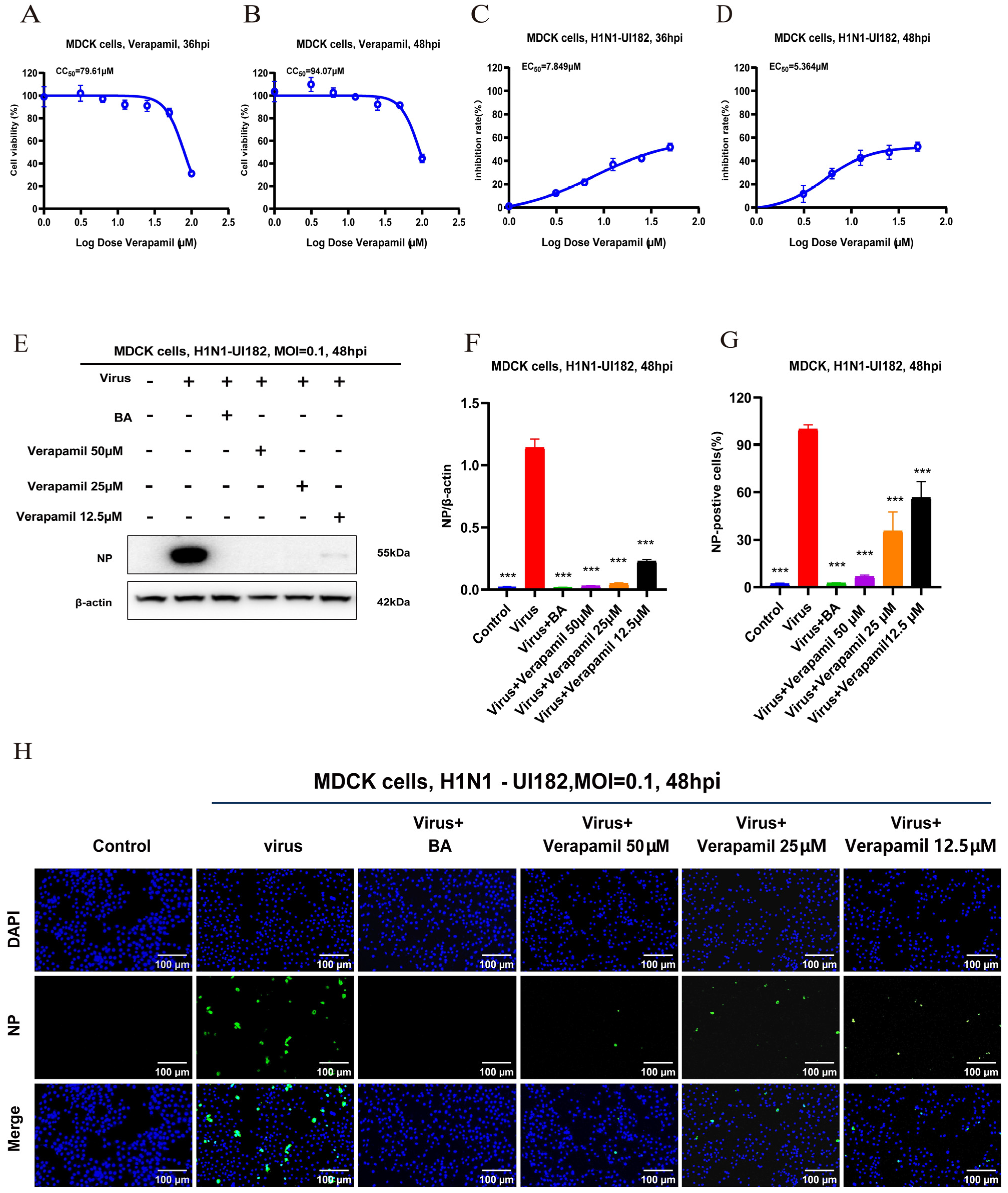
2.1. In Vitro Antiviral Activity of Verapamil
2.2. In Vivo Antiviral Activity of Verapamil
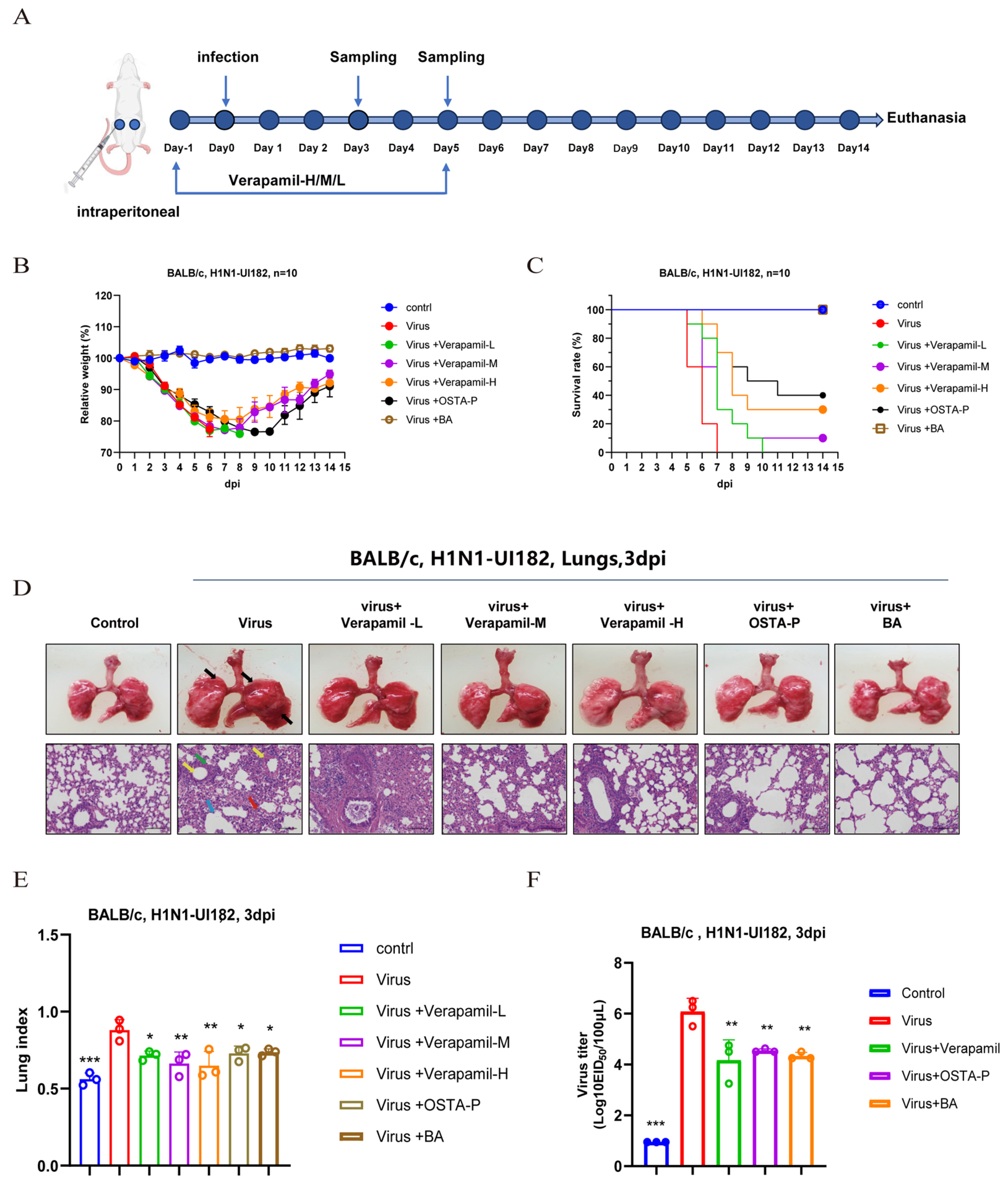
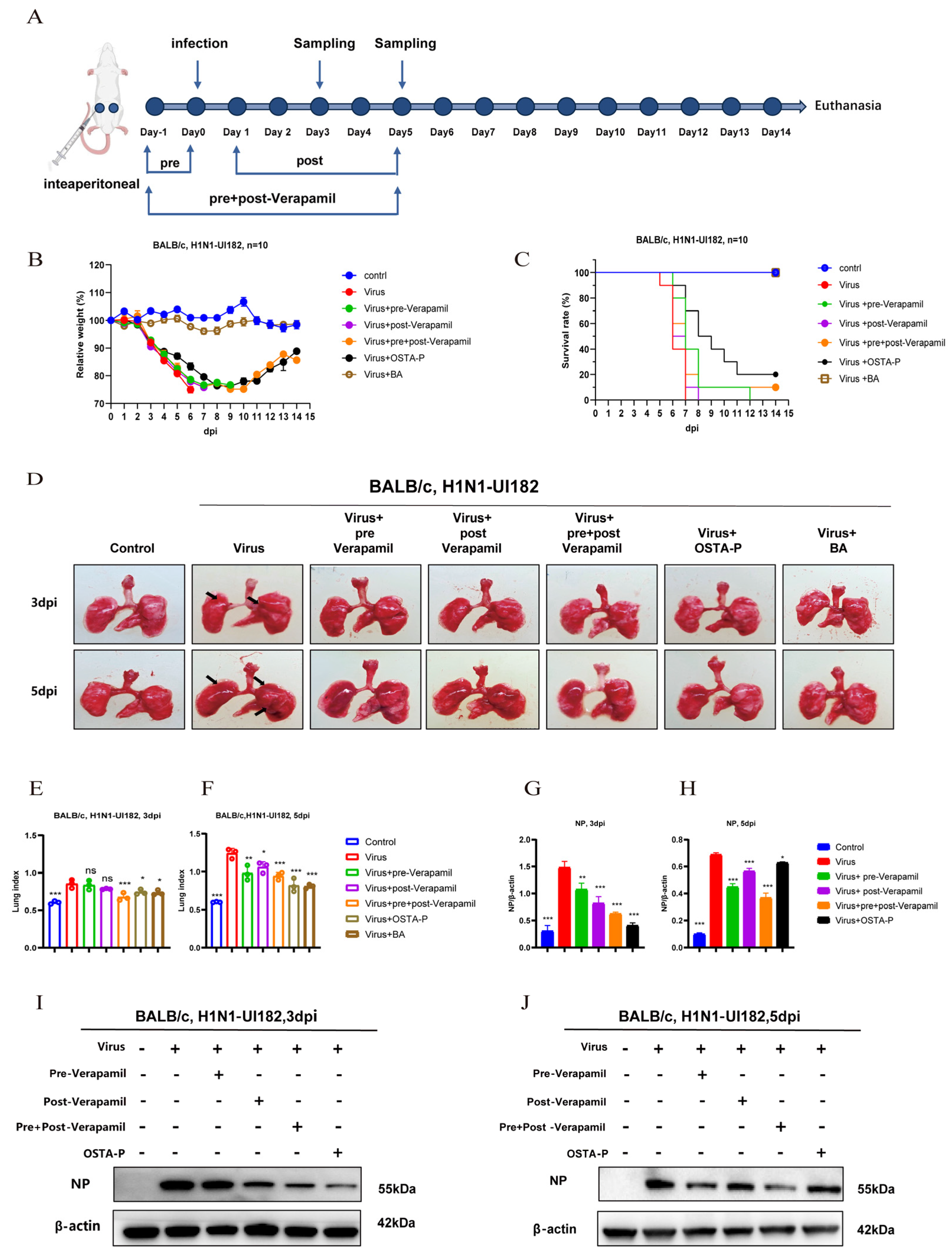
2.2.1. Protective Effect of Verapamil on Survival in Mice with Lethal H1N1 Infection
2.2.2. Verapamil Ameliorates Lung Injury in Mice with Lethal H1N1 Infection
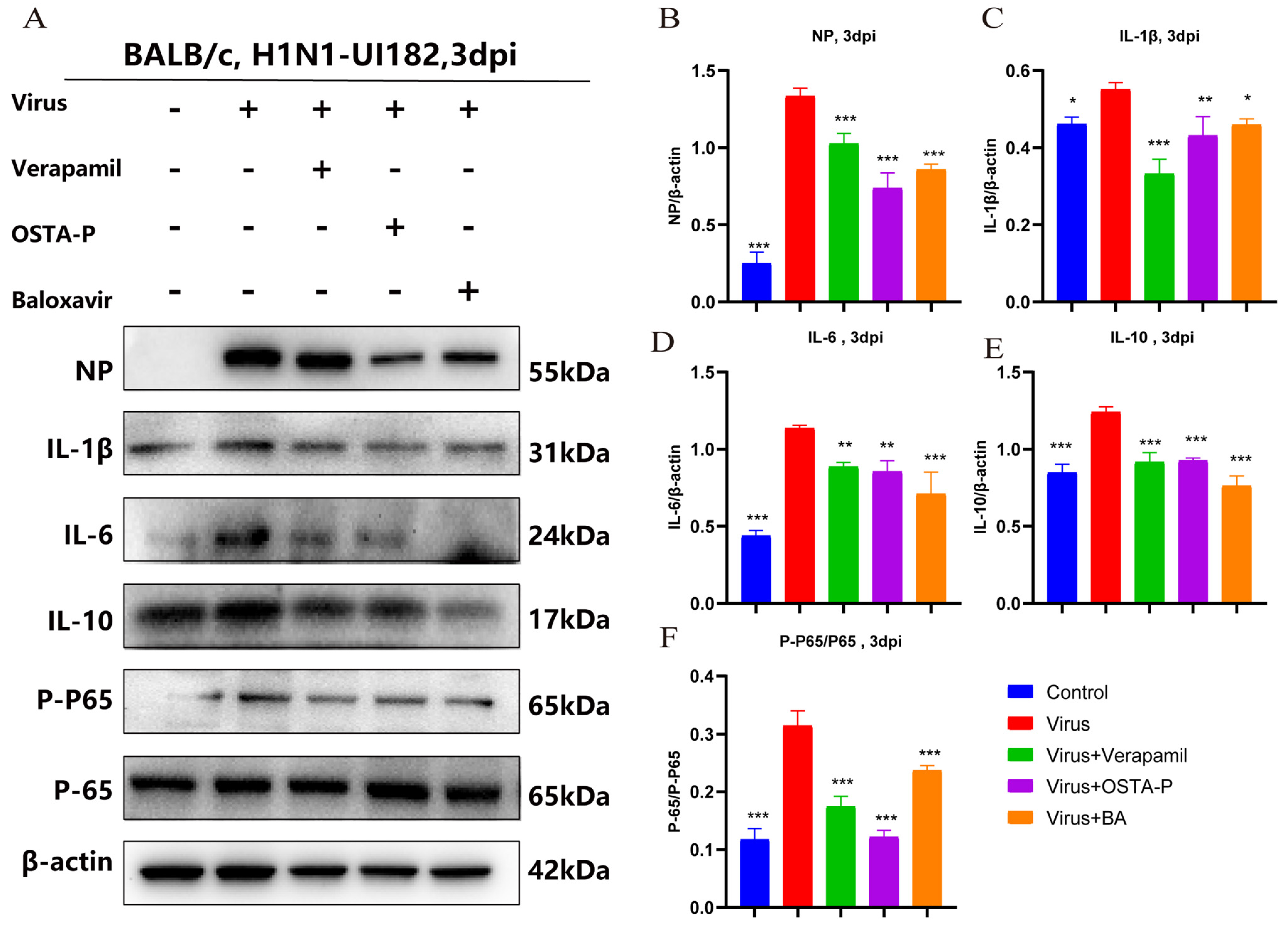
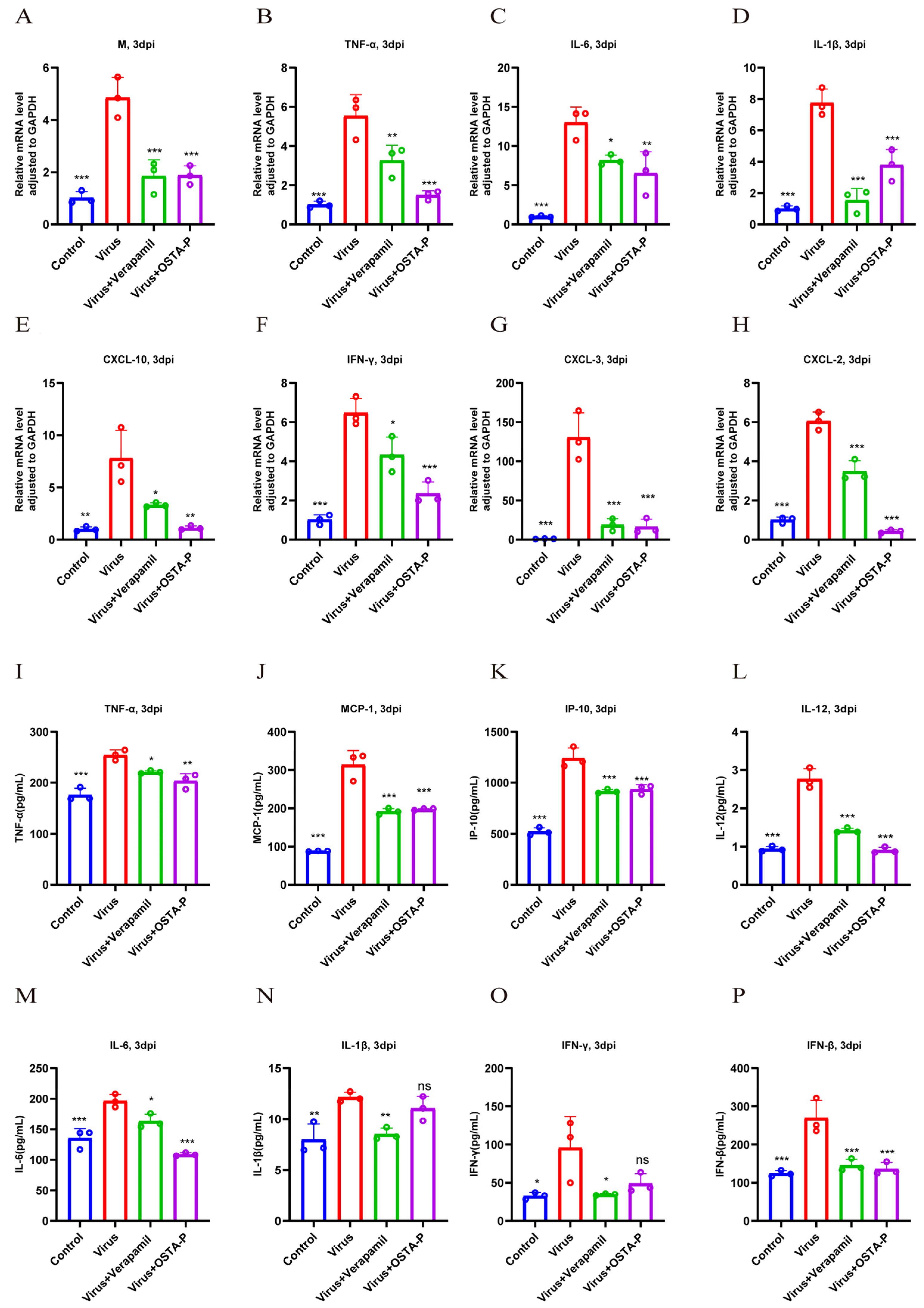
2.2.3. Molecular Mechanism Underlying the Anti-H1N1 Activity of Verapamil
2.3. Protective Effects of Different Administration Regimens of Verapamil in Mice with Lethal H1N1 Infection
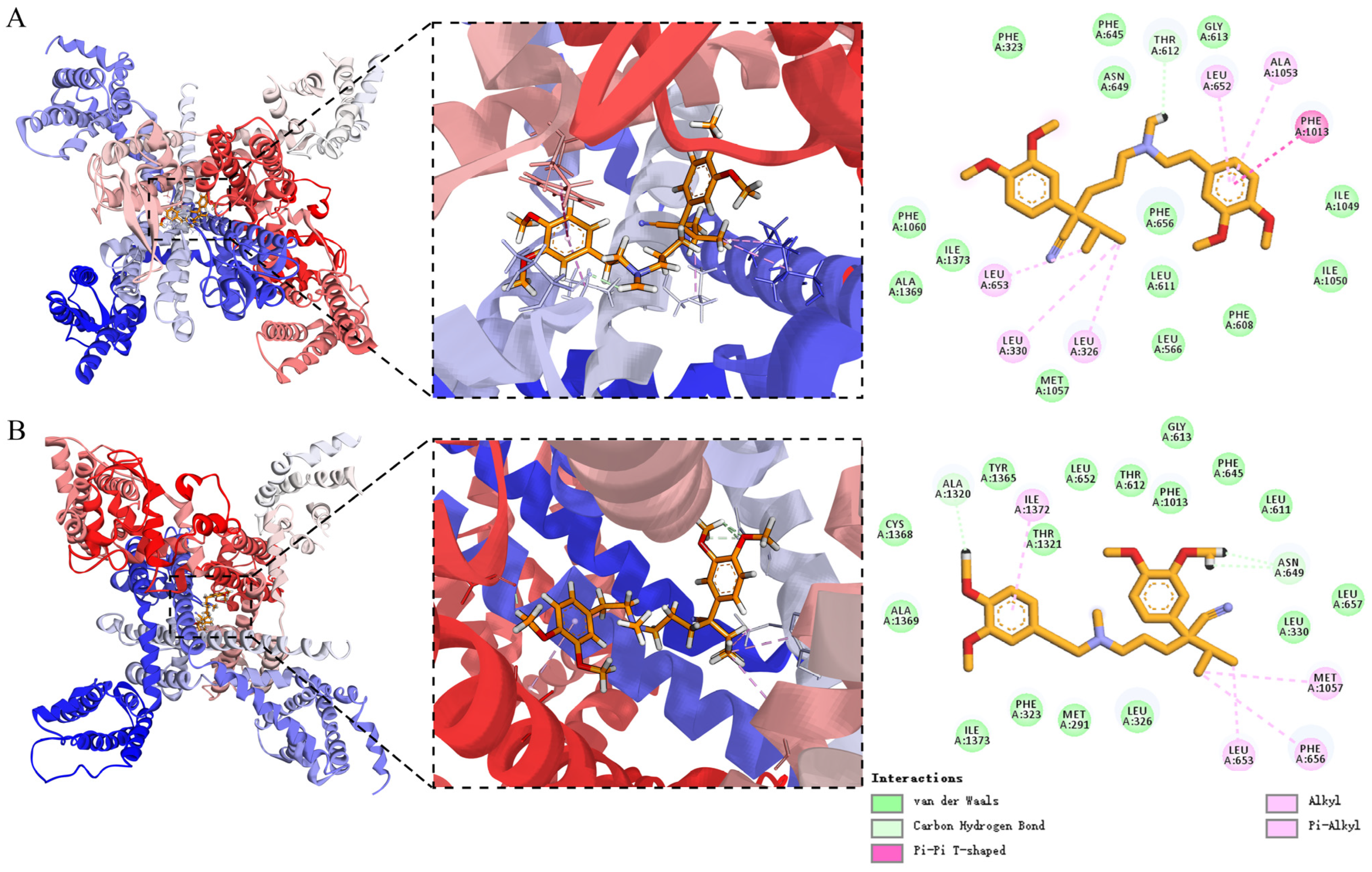
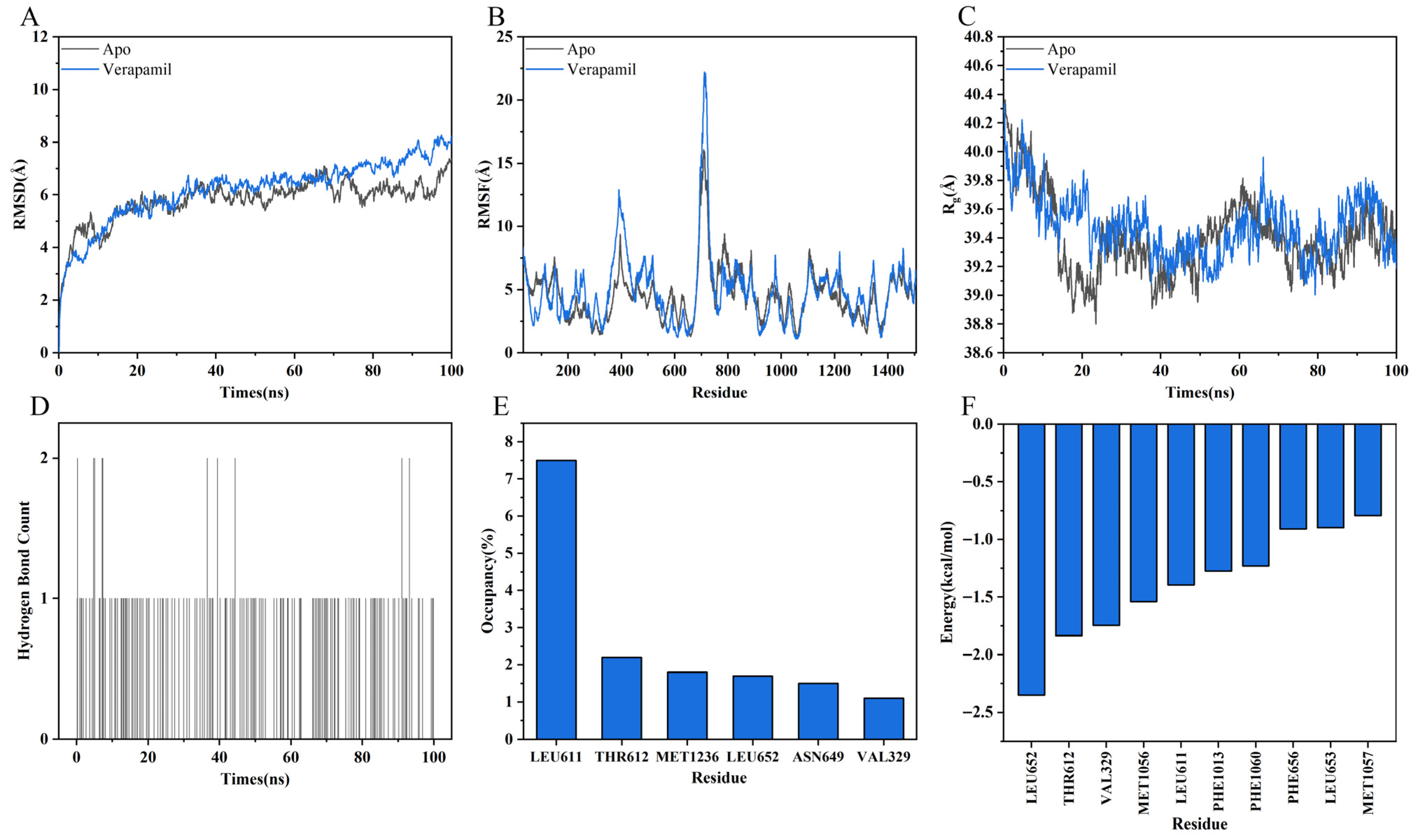
2.4. Interaction Analysis and Molecular Dynamics Simulation of Verapamil with the Receptor Protein
2.5. Network Pharmacological Exploration of the Mechanism of Verapamil in Treating Influenza A
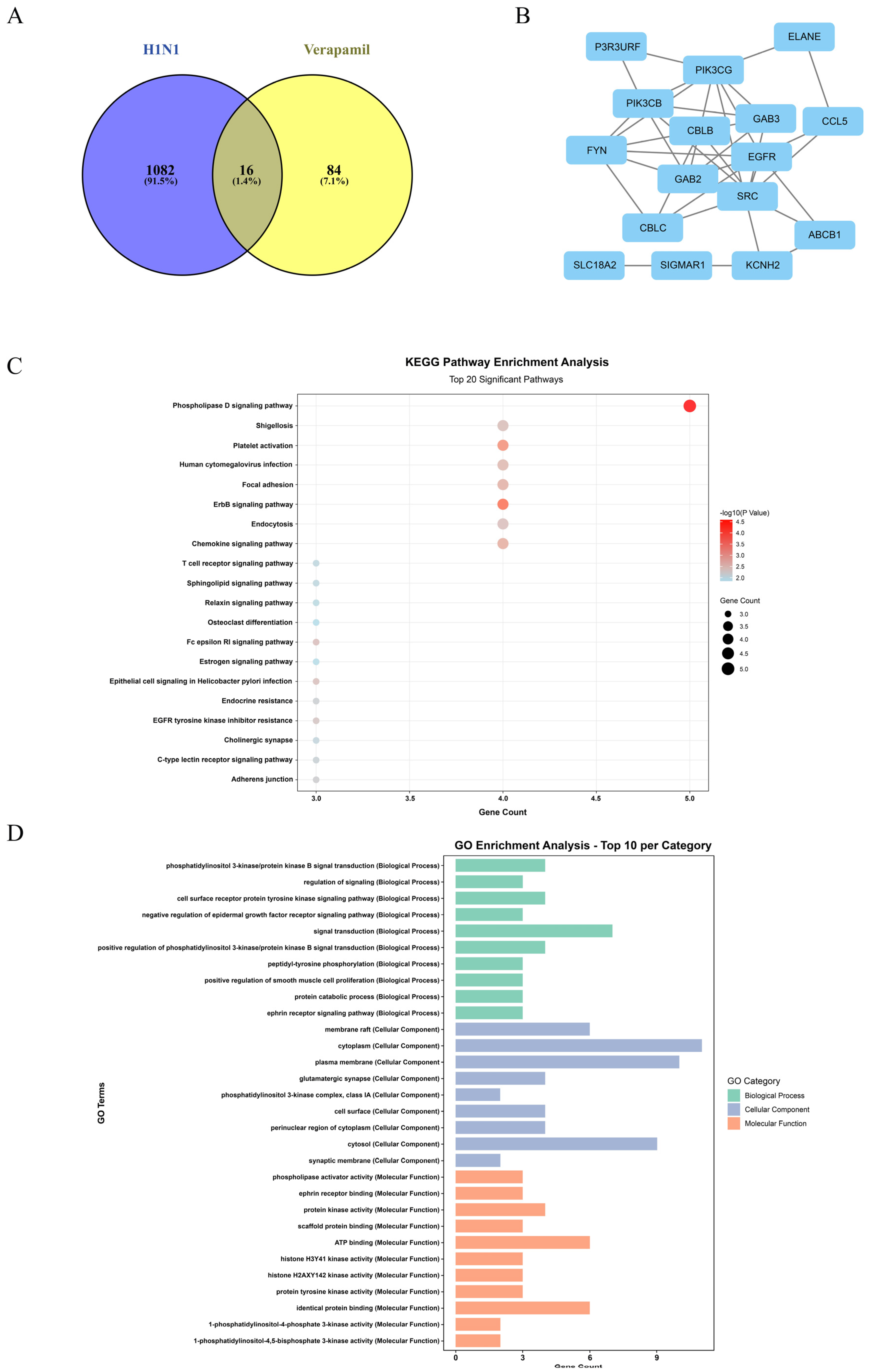
2.5.1. Identification of Common Targets Between Verapamil and Influenza A
2.5.2. Construction and Analysis of the Protein–Protein Interaction (PPI) Network
2.5.3. KEGG Pathway Enrichment Analysis
2.5.4. Gene Ontology (GO) Functional Enrichment Analysis
2.5.5. Integration of Network Pharmacology Predictions with Experimental Findings
3. Discussion
4. Materials and Methods
4.1. Cell Culture, Reagents, Virus, and Mice
4.2. Cytotoxicity Test and In Vitro Antiviral Activity Determination
4.3. Immunofluorescence Staining (IF)
4.4. In Vivo Experiments
4.4.1. In Vivo Inhibitory Effects of Verapamil on Virus
4.4.2. Protective Effects of Verapamil Administered at Different Time Points in Mice with Lethal H1N1 Infection
4.4.3. RNA Isolation and Quantitative RT-qPCR
4.4.4. ELASA
4.4.5. EID50 Detection
4.4.6. Pathological Analysis
4.4.7. Western Blot (WB)
4.5. Interaction Analysis and Molecular Dynamics Simulation
4.6. Network Pharmacology Analysis
4.7. In Vivo Experimental Design
4.8. Statistical Analysis
5. Conclusions
Supplementary Materials
Author Contributions
Funding
Institutional Review Board Statement
Informed Consent Statement
Data Availability Statement
Acknowledgments
Conflicts of Interest
Abbreviations
| OSTA-P | Oseltamivir phosphate |
| BA | Baloxavir |
| CC50 | Half maximal cytotoxic concentration |
| EC50 | Half maximal effective concentration |
| EID50 | 50% Egg Infectious Dose |
| H&E | Hematoxylin and Eosin |
| DPI | Days post-infection |
| IV | Influenza Virus |
| IAV | Influenza A Virus |
| IL-6 | Interleukin 6 |
| IL-10 | Interleukin 10 |
| IFN-β | Interferon β |
| IL-1β | Interleukin-1 β |
| TNF-α | Tumor necrosis factor-α |
| IFN-γ | Interferon-γ |
| IP-10 | Interferon-gamma-induced protein 10 kDa |
| CXCL3 | C-X-C motif chemokine ligand 3 |
| CXCL2 | C-X-C motif chemokine ligand 2 |
| MCP-1 | Monocyte chemoattractant protein-1 |
| NF-κB | Nuclear factor kappa B |
| MDCK | Madin–Darby Canine Kidney |
| CC | Cellular Component |
| MF | Molecular Function |
| M | Matrix protein |
| NP | Nucleoprotein |
| PA | Polymerase acidic |
| PFA | Paraformaldehyde |
| RBCs | Red Blood Cells |
| RT-qPCR | Real-Time quantitative fluorescent PCR |
| WB | Western Blot |
| DMSO | Dimethyl Sulfoxide |
| FBS | Fetal bovine serum |
| DMEM | Dulbecco modified Eagle culture Medium |
| CCK-8 | Cell Counting Kit -8 |
| BSA | Bovine Serum Albumin |
| BA | Balanced Accuracy |
| IF | Immunofluorescence staining |
References
- Liu, X.; Xu, F.; Ren, L.; Zhao, F.; Huang, Y.; Wei, L.; Wang, Y.; Wang, C.; Fan, Z.; Mei, S.; et al. MARCH8 inhibits influenza A virus infection by targeting viral M2 protein for ubiquitination-dependent degradation in lysosomes. Nat. Commun. 2021, 12, 4427. [Google Scholar] [CrossRef] [PubMed]
- Gaisina, I.; Li, P.; Du, R.; Cui, Q.; Dong, M.; Zhang, C.; Manicassamy, B.; Caffrey, M.; Moore, T.; Cooper, L.; et al. An orally active entry inhibitor of influenza A viruses protects mice and synergizes with oseltamivir and baloxavir marboxil. Sci. Adv. 2024, 10, eadk9004. [Google Scholar] [CrossRef] [PubMed]
- Fratty, I.S.; Reznik-Balter, S.; Nemet, I.; Atari, N.; Kliker, L.; Sherbany, H.; Keller, N.; Stein, M.; Mendelson, E.; Mandelboim, M. Outbreak of Influenza and Other Respiratory Viruses in Hospitalized Patients Alongside the SARS-CoV-2 Pandemic. Front. Microbiol. 2022, 13, 902476. [Google Scholar] [CrossRef] [PubMed]
- Fedson, D.S. Confronting the next influenza pandemic with anti-inflammatory and immunomodulatory agents: Why they are needed and how they might work. Influenza Other Respir. Viruses 2009, 3, 129–142. [Google Scholar] [CrossRef]
- Moss, R.B.; Davey, R.T.; Steigbigel, R.T.; Fang, F. Targeting pandemic influenza: A primer on influenza antivirals and drug resistance. J. Antimicrob. Chemother. 2010, 65, 1086–1093. [Google Scholar] [CrossRef]
- Cho, W.K.; Ma, J.Y. Anti-Viral Activity of Conessine Against Influenza A Virus. Int. J. Mol. Sci. 2025, 26, 7572. [Google Scholar] [CrossRef]
- Park, W.J.; Bae, G.S.; Han, Y.H. Antiviral Activity of Angelica Tenuissima Nakai against Influenza A Virus. Pathogens 2024, 13, 761. [Google Scholar] [CrossRef]
- Fujioka, Y.; Nishide, S.; Ose, T.; Suzuki, T.; Kato, I.; Fukuhara, H.; Fujioka, M.; Horiuchi, K.; Satoh, A.O.; Nepal, P.; et al. A Sialylated Voltage-Dependent Ca(2+) Channel Binds Hemagglutinin and Mediates Influenza A Virus Entry into Mammalian Cells. Cell Host Microbe 2018, 23, 809–818.e5. [Google Scholar] [CrossRef]
- Berridge, M.J.; Bootman, M.D.; Roderick, H.L. Calcium signalling: Dynamics, homeostasis and remodelling. Nat. Rev. Mol. Cell Biol. 2003, 4, 517–529. [Google Scholar] [CrossRef]
- Qu, Y.; Sun, Y.; Yang, Z.; Ding, C. Calcium Ions Signaling: Targets for Attack and Utilization by Viruses. Front. Microbiol. 2022, 13, 889374. [Google Scholar] [CrossRef]
- Chen, X.; Cao, R.; Zhong, W. Host Calcium Channels and Pumps in Viral Infections. Cells 2019, 9, 94. [Google Scholar] [CrossRef] [PubMed]
- Kwon, E.B.; Yang, H.J.; Kim, Y.S.; Li, W.; Choi, J.G. 8-O-(E-p-methoxycinnamoyl)harpagide Inhibits Influenza A Virus Infection by Suppressing Intracellular Calcium. Molecules 2021, 26, 1029. [Google Scholar] [CrossRef] [PubMed]
- Nishi, K.; Yoshimoto, S.; Nishi, S.; Nishi, T.; Nishi, R.; Tsunoda, T.; Morita, H.; Tanaka, H.; Hotta, O.; Yasumasu, S.; et al. Epipharyngeal Abrasive Therapy Down-regulates the Expression of Cav1.2: A Key Molecule in Influenza Virus Entry. In Vivo 2022, 36, 2357–2364. [Google Scholar] [CrossRef] [PubMed]
- Bao, M.N.; Zhang, L.J.; Tang, B.; Fu, D.D.; Li, J.; Du, L.; Hou, Y.N.; Zhang, Z.L.; Tang, H.W.; Pang, D.W. Influenza A Viruses Enter Host Cells via Extracellular Ca(2+) Influx-Involved Clathrin-Mediated Endocytosis. ACS Appl. Bio Mater. 2021, 4, 2044–2051. [Google Scholar] [CrossRef]
- Sulpiana; Amalia, R.; Atik, N. The Roles of Endocytosis and Autophagy at the Cellular Level During Influenza Virus Infection: A Mini-Review. Infect. Drug Resist. 2024, 17, 3199–3208. [Google Scholar] [CrossRef]
- Fujioka, Y.; Tsuda, M.; Nanbo, A.; Hattori, T.; Sasaki, J.; Sasaki, T.; Miyazaki, T.; Ohba, Y. A Ca(2+)-dependent signalling circuit regulates influenza A virus internalization and infection. Nat. Commun. 2013, 4, 2763. [Google Scholar] [CrossRef]
- Midtbo, K.A.; Hals, O.; Lauve, O. A new sustained-release formulation of verapamil in the treatment of hypertension. J. Clin. Hypertens. 1986, 2, 125s–132s. [Google Scholar]
- Tu, S.; Zhang, R.; Zheng, Q.; Wang, J.; Chen, Y.; Li, X.; He, J.; Zhou, Z.; Lu, Q. Effect of Verapamil on Blood Glucose in Type 1 and Type 2 Diabetes Mellitus: A Systematic Review and Meta-Analysis. Cardiovasc. Drugs Ther. 2025, 40, 347–359. [Google Scholar] [CrossRef]
- Vohra, J. Verapamil in cardiac arrhythmias: An overview. Clin. Exp. Pharmacol. Physiol. Suppl. 1982, 6, 129–134. [Google Scholar]
- Guerrero, J.R.; Martin, S.S. Verapamil: Full spectrum calcium channel blocking agent: An overview. Med. Res. Rev. 1984, 4, 87–109. [Google Scholar] [CrossRef]
- Nugent, K.M.; Shanley, J.D. Verapamil inhibits influenza A virus replication. Arch. Virol. 1984, 81, 163–170. [Google Scholar] [CrossRef] [PubMed]
- Li, J.; Yu, M.; Zheng, W.; Liu, W. Nucleocytoplasmic shuttling of influenza A virus proteins. Viruses 2015, 7, 2668–2682. [Google Scholar] [CrossRef] [PubMed]
- Kumar, N.; Xin, Z.T.; Liang, Y.; Ly, H.; Liang, Y. NF-kappaB signaling differentially regulates influenza virus RNA synthesis. J. Virol. 2008, 82, 9880–9889. [Google Scholar] [CrossRef] [PubMed]
- Flerlage, T.; Boyd, D.F.; Meliopoulos, V.; Thomas, P.G.; Schultz-Cherry, S. Influenza virus and SARS-CoV-2: Pathogenesis and host responses in the respiratory tract. Nat. Rev. Microbiol. 2021, 19, 425–441. [Google Scholar] [CrossRef]
- Moriyama, M.; Hugentobler, W.J.; Iwasaki, A. Seasonality of Respiratory Viral Infections. Annu. Rev. Virol. 2020, 7, 83–101. [Google Scholar] [CrossRef]
- Abdelrahman, Z.; Li, M.; Wang, X. Comparative Review of SARS-CoV-2, SARS-CoV, MERS-CoV, and Influenza A Respiratory Viruses. Front. Immunol. 2020, 11, 552909. [Google Scholar] [CrossRef]
- Chen, F.; Shen, H.; Liu, G.; Zhang, P.; Zhang, L.; Lin, S.; Gao, H.; Peng, H.; Qi, Y.-F.; Chen, Y.; et al. Verapamil inhibits respiratory syncytial virus infection by regulating Ca2+ influx. Life Sci. 2024, 352, 122877. [Google Scholar] [CrossRef]
- Saurav, S.; Tanwar, J.; Ahuja, K.; Motiani, R.K. Dysregulation of host cell calcium signaling during viral infections: Emerging paradigm with high clinical relevance. Mol. Asp. Med. 2021, 81, 101004. [Google Scholar] [CrossRef]
- Chaudhuri, R.; Arora, H.; Seth, P. Mitochondrial calcium signaling in the brain and its modulation by neurotropic viruses. Mitochondrion 2021, 59, 8–16. [Google Scholar] [CrossRef]
- Kretsinger, R.H.; Uversky, V.N.; Permyakov, E.A. Encyclopedia of Metalloproteins; Springer: New York, NY, USA, 2013. [Google Scholar]
- Tirunavalli, S.K.; Gourishetti, K.; Kotipalli, R.S.S.; Kuncha, M.; Kathirvel, M.; Kaur, R.; Jerald, M.K.; Sistla, R.; Andugulapati, S.B. Dehydrozingerone ameliorates Lipopolysaccharide induced acute respiratory distress syndrome by inhibiting cytokine storm, oxidative stress via modulating the MAPK/NF-κB pathway. Phytomedicine 2021, 92, 153729. [Google Scholar] [CrossRef]
- Tavares, L.P.; Teixeira, M.M.; Garcia, C.C. The inflammatory response triggered by Influenza virus: A two edged sword. Inflamm. Res. 2017, 66, 283–302. [Google Scholar] [CrossRef] [PubMed]
- Lawrence, T. The nuclear factor NF-kappaB pathway in inflammation. Cold Spring Harb. Perspect. Biol. 2009, 1, a001651. [Google Scholar] [CrossRef] [PubMed]
- Garcia, M.A.; Gallego, P.; Campagna, M.; González-Santamaría, J.; Martínez, G.; Marcos-Villar, L.; Vidal, A.; Esteban, M.; Rivas, C. Activation of NF-kB pathway by virus infection requires Rb expression. PLoS ONE 2009, 4, e6422. [Google Scholar] [CrossRef] [PubMed]
- Hariharan, A.; Hakeem, A.R.; Radhakrishnan, S.; Reddy, M.S.; Rela, M. The Role and Therapeutic Potential of NF-kappa-B Pathway in Severe COVID-19 Patients. Inflammopharmacology 2021, 29, 91–100. [Google Scholar] [CrossRef]
- Trott, O.; Olson, A.J. AutoDock Vina: Improving the speed and accuracy of docking with a new scoring function, efficient optimization, and multithreading. J. Comput. Chem. 2010, 31, 455–461. [Google Scholar] [CrossRef]
- Zhou, S.-Y.; Zhang, G.-M.; Wang, K.; Wang, Y.-C.; Wei, C.-X.; Zhai, W.-J.; Li, M.-X.; Sun, L. Dihydromyricetin ameliorates vascular dementia by promoting angiogenesis via the VEGFR2 pathway: Network pharmacology, molecular docking and experimental validation. Phytomedicine 2025, 149, 157593. [Google Scholar] [CrossRef]
- Liu, Y.; Ding, X.; Younas, A.; Sun, X.; Ni, X.; Wang, S.; Lv, J.; Li, Z.; Shao, C. Xiaoyao San’s dual efficacy in NAFLD and depression: Unraveling the mechanisms via network pharmacology and multi-omics. Phytomedicine 2025, 147, 157221. [Google Scholar] [CrossRef]
- Liu, Q.; Wang, J.; Li, B.; Jia, L.; Guo, Y.; Yang, W. Effect of influenza virus on chemokine pathways in mice lungs and intervention of Shufeng Xuanfei Jiedu formula. Zhonghua Wei Zhong Bing Ji Jiu Yi Xue 2021, 33, 405–409. [Google Scholar] [CrossRef]
- Leekha, A.; Saeedi, A.; Kumar, M.; Sefat, K.M.S.R.; Martinez-Paniagua, M.; Meng, H.; Fathi, M.; Kulkarni, R.; Reichel, K.; Biswas, S.; et al. An intranasal nanoparticle STING agonist protects against respiratory viruses in animal models. Nat. Commun. 2024, 15, 6053. [Google Scholar] [CrossRef]
- Li, H.; Shen, B.; Bi, Y.; Sun, Y.; Zhang, S.; Xue, K.; Wang, Q.; Qian, B.; Zhang, J.; Fan, L.; et al. Miquelianin inhibits IAV infection via the MAPK signaling pathway both in vitro and in vivo. Front. Immunol. 2025, 16, 1532336. [Google Scholar] [CrossRef]





| Gene Name | Primer Sequence (5′ to 3′) |
|---|---|
| GAPDH | F: 5′-ACATCAAGAAGGTGGTGAAGCA-3′ |
| R: 5′-CTTGACAAAGTGGTCGTTGAGG-3′ | |
| M | F: 5′-5CACACACGTCTCCGGGAGCAAAAGCAGGTAG-3′ |
| R5′-CACACACGTCTCCTATTAGTAGAAACAAGGTAGTTTTT-3′ | |
| IFN-γ | F: 5′-AGCCAAATCGTCTCCTTCTACTTC-3′ |
| R: 5′-TGCACCTTGTTGCTGCTGTT-3′ | |
| TNF-α | F: 5′-AGCCCTGGTATGAACCCATC-3′ |
| R: 5′-GGAATCGGCAAAGTCAAGGT-3′ | |
| IL-1β | F:5′-TCATCGTGGCAGTGGAAAAG-3′ |
| R: 5′-GGGAAGCAAGGGTCTCAGGT-3′ | |
| IL-6 | F: 5′-AGTTGCCTTCTTGGGACTGATG-3′ |
| R: 5′-GGGAGTGGTATCCTCTGTGAAGTCT-3′ | |
| CXCL-10 | F: 5′-CAGCAGTCCGCAGTATAAACAGT-3′ |
| R: 5′-GCCAAGTACCTAACGCTCACC-3′ | |
| CXCL-3 | F: 5′-GCTCAACATCATGAAGGTCTCC-3′ |
| R: 5′-TGCCGGTTTCTCTTAGTCAGG-3′ | |
| CXCL-2 | F: 5′-CTCAAGAACATCCAAAGTGTG-3′ |
| R: 5′-ATTCTTGAGTGTGGCTATGAC-3′ |
Disclaimer/Publisher’s Note: The statements, opinions and data contained in all publications are solely those of the individual author(s) and contributor(s) and not of MDPI and/or the editor(s). MDPI and/or the editor(s) disclaim responsibility for any injury to people or property resulting from any ideas, methods, instructions or products referred to in the content. |
© 2026 by the authors. Licensee MDPI, Basel, Switzerland. This article is an open access article distributed under the terms and conditions of the Creative Commons Attribution (CC BY) license.
Share and Cite
Cao, Y.; Wu, J.; Li, X.; Qiu, F.; Wang, S.; Qian, B.; Fan, L.; Wang, Y.; Xue, K.; Zhang, J.; et al. Drug Repurposing of Verapamil for H1N1 Influenza Virus Infection: A Multi-Target Strategy Revealed by Network Pharmacology and Experimental Validation. Int. J. Mol. Sci. 2026, 27, 2534. https://doi.org/10.3390/ijms27062534
Cao Y, Wu J, Li X, Qiu F, Wang S, Qian B, Fan L, Wang Y, Xue K, Zhang J, et al. Drug Repurposing of Verapamil for H1N1 Influenza Virus Infection: A Multi-Target Strategy Revealed by Network Pharmacology and Experimental Validation. International Journal of Molecular Sciences. 2026; 27(6):2534. https://doi.org/10.3390/ijms27062534
Chicago/Turabian StyleCao, Yan, Jiajing Wu, Xuena Li, Feifan Qiu, Shuo Wang, Bingshuo Qian, Lingjun Fan, Yueqi Wang, Kun Xue, Junkui Zhang, and et al. 2026. "Drug Repurposing of Verapamil for H1N1 Influenza Virus Infection: A Multi-Target Strategy Revealed by Network Pharmacology and Experimental Validation" International Journal of Molecular Sciences 27, no. 6: 2534. https://doi.org/10.3390/ijms27062534
APA StyleCao, Y., Wu, J., Li, X., Qiu, F., Wang, S., Qian, B., Fan, L., Wang, Y., Xue, K., Zhang, J., Shen, B., & Gao, Y. (2026). Drug Repurposing of Verapamil for H1N1 Influenza Virus Infection: A Multi-Target Strategy Revealed by Network Pharmacology and Experimental Validation. International Journal of Molecular Sciences, 27(6), 2534. https://doi.org/10.3390/ijms27062534