Age-Associated Metabolomic Changes in Human Spermatozoa

 ,
,  , ,
, ,
Abstract
1. Introduction
2. Results
2.1. Semen Analysis
2.2. Spermatozoa Metabolome
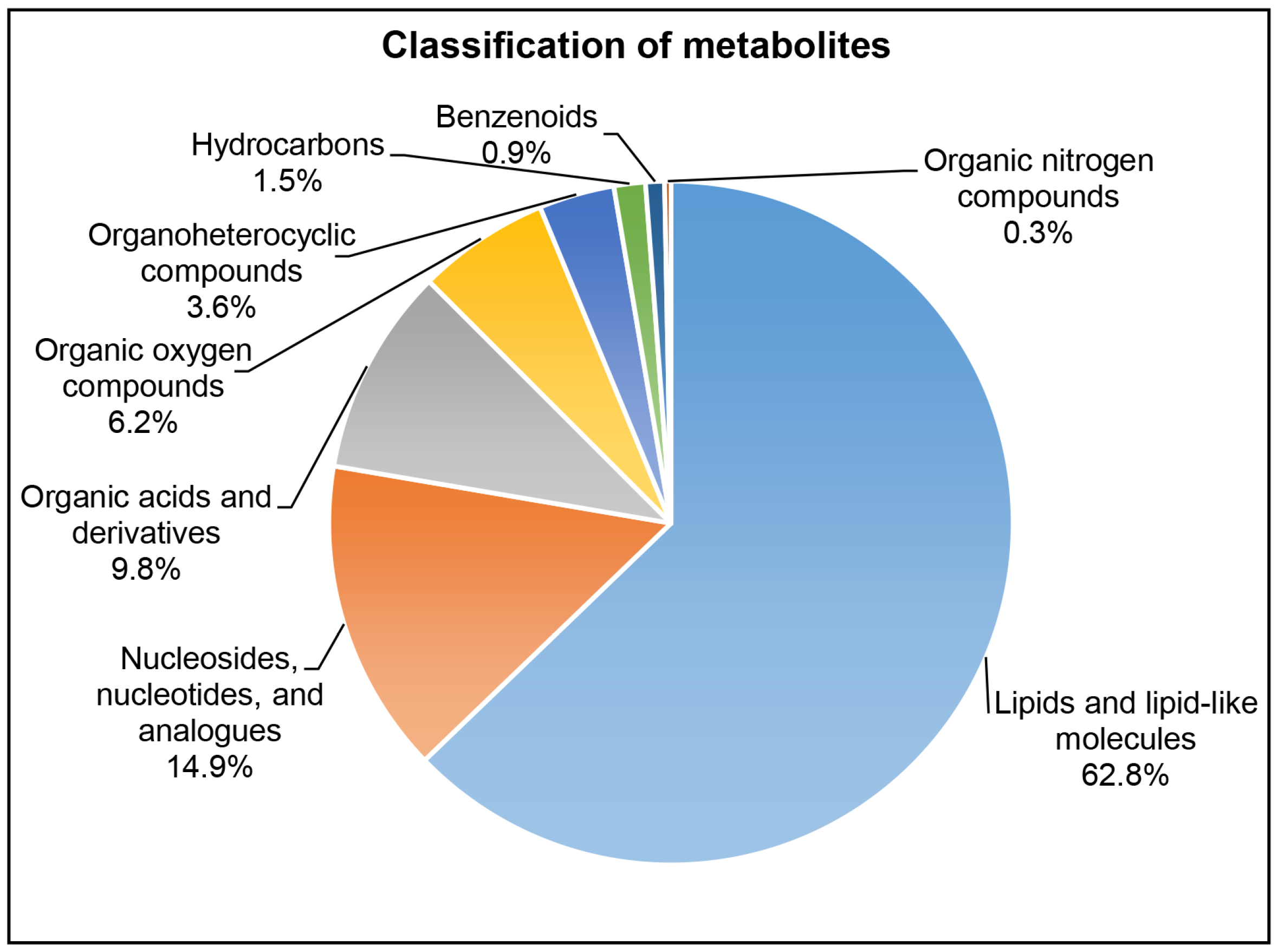
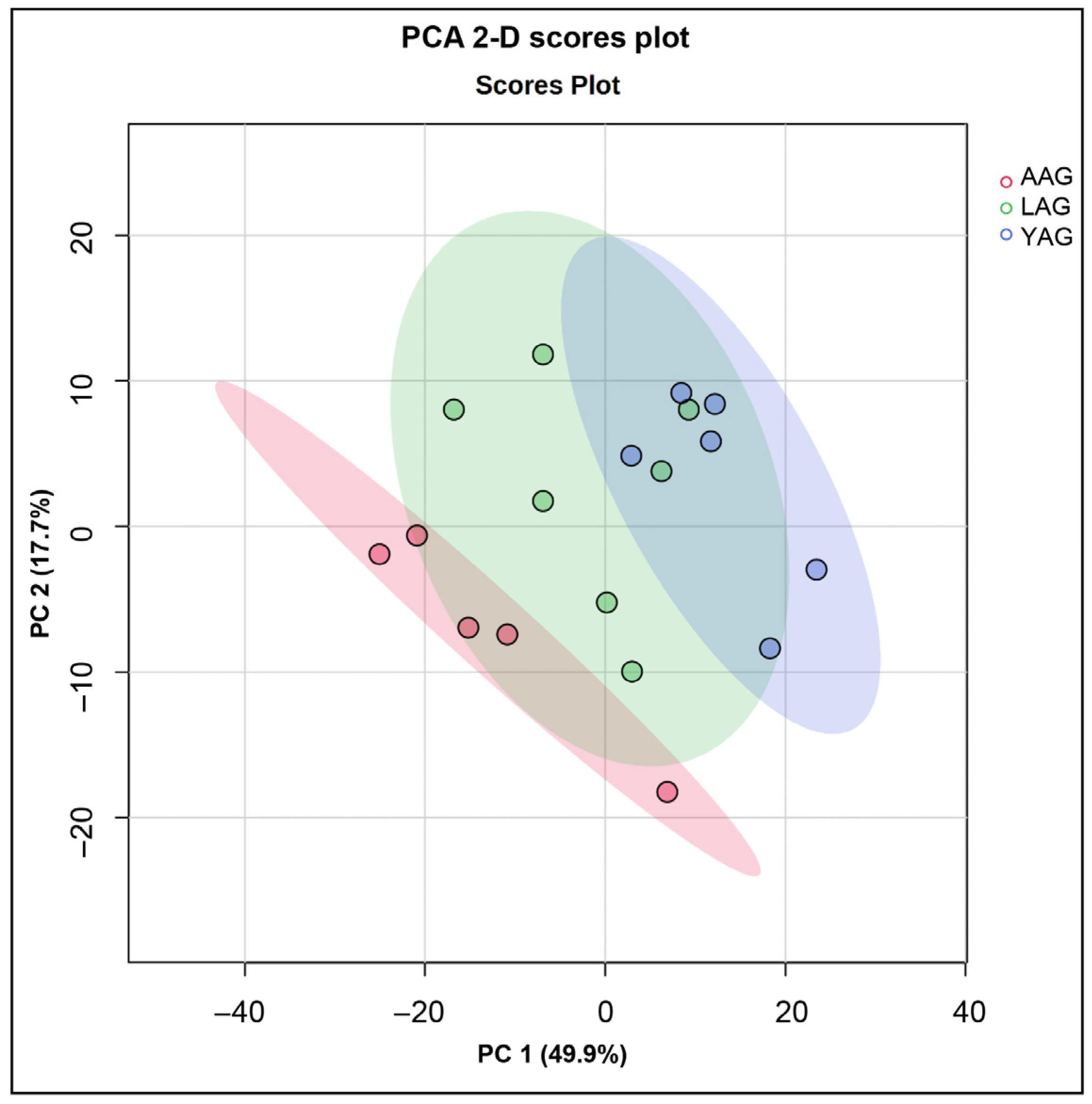
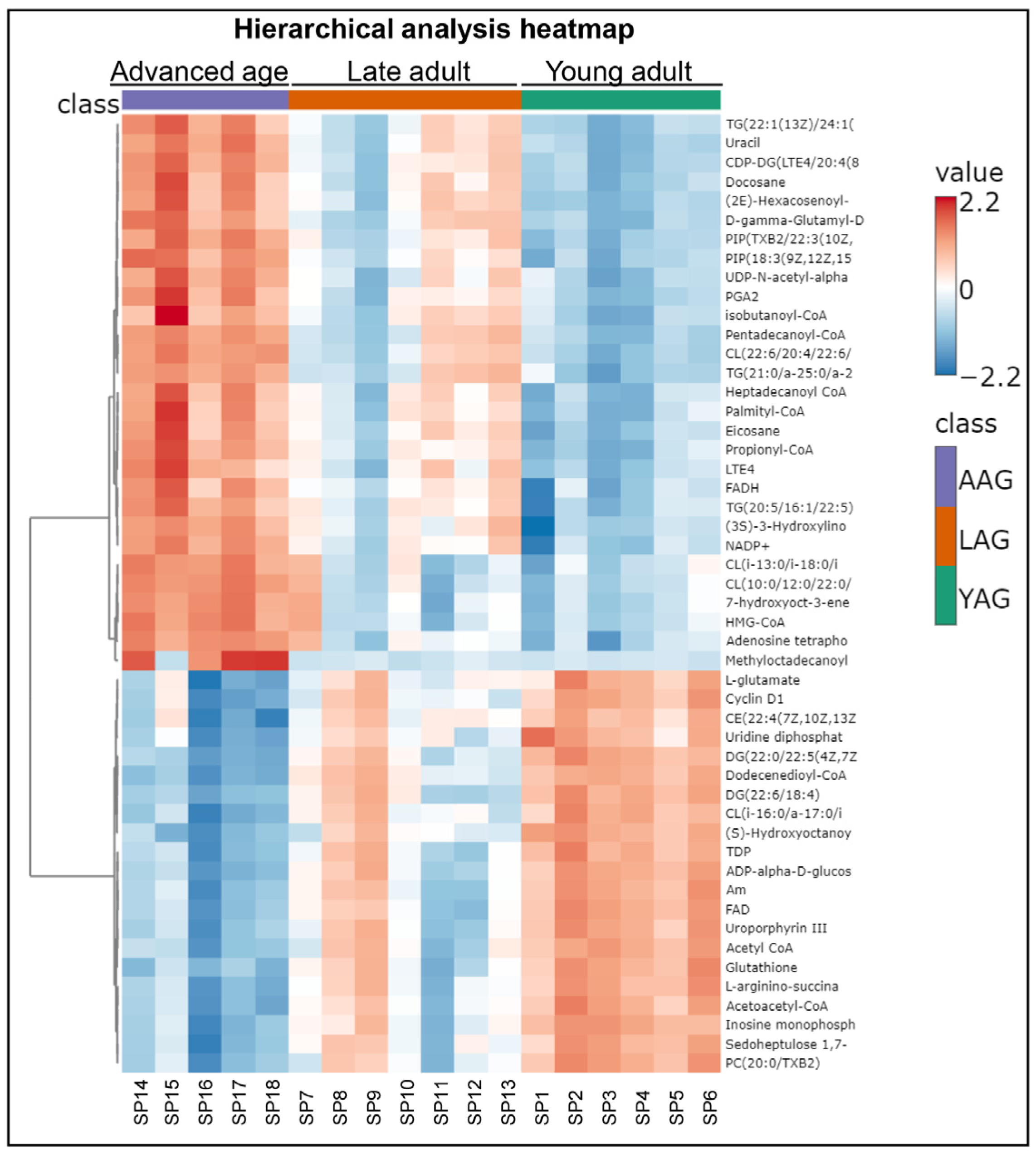
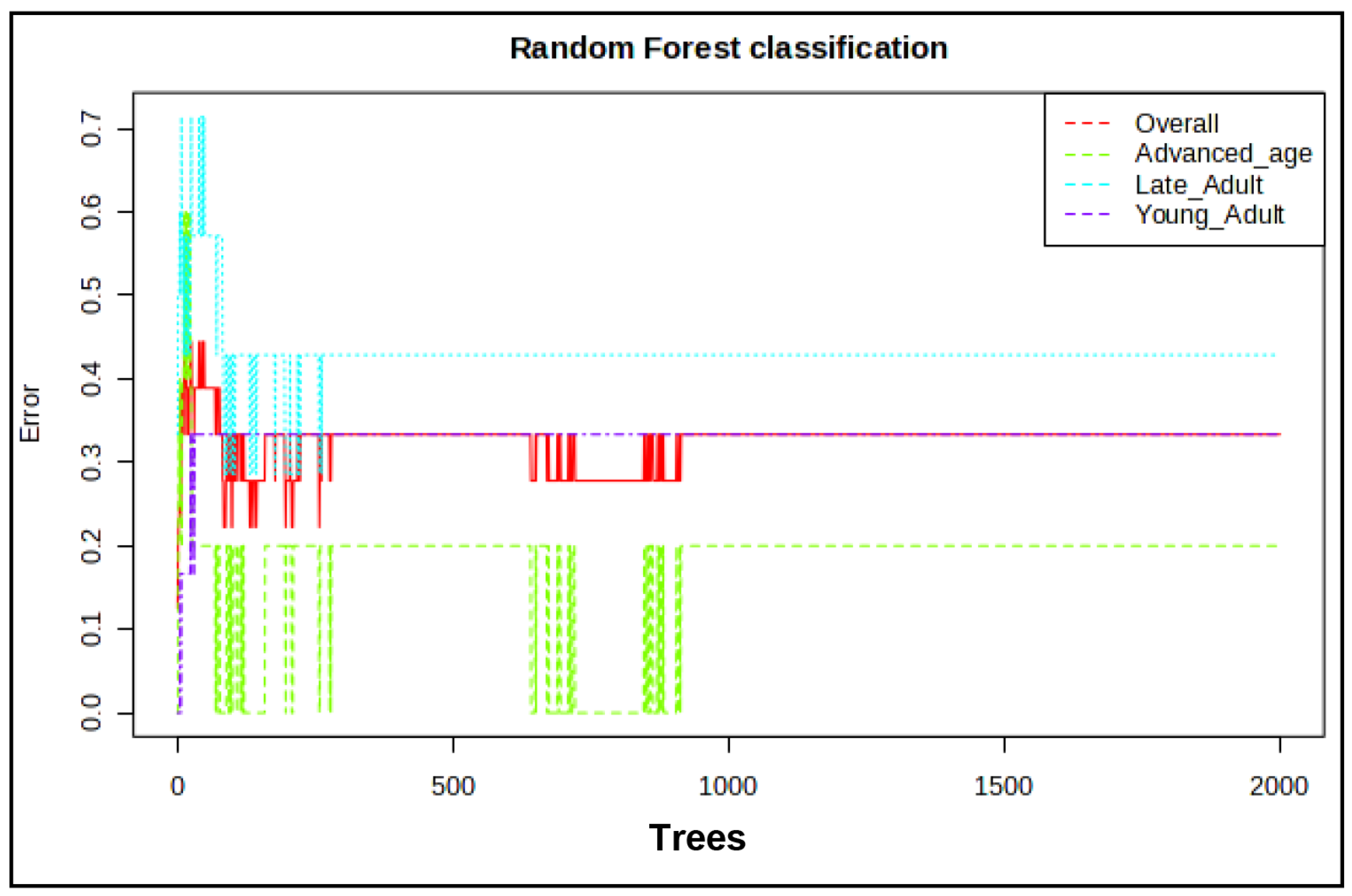
2.2.1. Overall Metabolomic Analysis in Three Age Groups
2.2.2. Pairwise Group Analysis
3. Discussion
4. Materials and Methods
4.1. Study Design and Sample Collection
4.2. Semen Analysis, Processing, and Sperm Purification
4.3. Metabolome Analysis
4.3.1. Metabolite Extraction
4.3.2. Mass Spectrometry-LC-MS/MS
4.3.3. Spectral Analysis, Statistical Analysis, and Functional Analysis
5. Conclusions
Supplementary Materials
Author Contributions
Funding
Institutional Review Board Statement
Informed Consent Statement
Data Availability Statement
Acknowledgments
Conflicts of Interest
References
- Martins da Silva, S.; Anderson, R.A. Reproductive axis aging and fertility in men. Rev. Endocr. Metab. Disord. 2022, 23, 1109–1121. [Google Scholar] [CrossRef] [PubMed]
- Zhang, C.; Yan, L.; Qiao, J. Effect of advanced parental age on pregnancy outcome and offspring health. J. Assist. Reprod. Genet. 2022, 39, 1969–1986. [Google Scholar] [CrossRef] [PubMed]
- Kaltsas, A.; Moustakli, E.; Zikopoulos, A.; Georgiou, I.; Dimitriadis, F.; Symeonidis, E.N.; Markou, E.; Michaelidis, T.M.; Tien, D.M.B.; Giannakis, I.; et al. Impact of advanced paternal age on fertility and risks of genetic disorders in offspring. Genes 2023, 14, 486. [Google Scholar] [CrossRef]
- Castellini, C.; Cordeschi, G.; Tienforti, D.; Barbonetti, A. Relationship between male aging and semen quality: A retrospective study on over 2500 men. Arch. Gynecol. Obstet. 2024, 309, 2843–2852. [Google Scholar] [CrossRef]
- Xiong, W.; Tang, X.; Han, L.; Ling, L. Paternal age and neonatal outcomes: A population-based cohort study. Hum. Reprod. Open 2025, 2025, hoaf006. [Google Scholar] [CrossRef]
- Balasch, J.; Gratacós, E. Delayed childbearing: Effects on fertility and the outcome of pregnancy. Curr. Opin. Obstet. Gynecol. 2012, 24, 187–193. [Google Scholar] [CrossRef]
- Schmidt, L.; Sobotka, T.; Bentzen, J.G.; Nyboe Andersen, A.; ESHRE Reproduction and Society Task Force. Demographic and medical consequences of the postponement of parenthood. Hum. Reprod. Update 2012, 18, 29–43. [Google Scholar] [CrossRef]
- Zabak, S.; Varma, A.; Bansod, S.; Pohane, M.R. Exploring the complex landscape of delayed childbearing: Factors, history, and long-term implications. Cureus 2023, 15, e46291. [Google Scholar] [CrossRef]
- Sharma, R.; Agarwal, A.; Rohra, V.K.; Assidi, M.; Abu-Elmagd, M.; Turki, R.F. Effects of increased paternal age on sperm quality, reproductive outcome and associated epigenetic risks to offspring. Reprod. Biol. Endocrinol. 2015, 13, 35. [Google Scholar] [CrossRef]
- Jimbo, M.; Kunisaki, J.; Ghaed, M.; Yu, V.; Flores, H.A.; Hotaling, J.M. Fertility in the aging male: A systematic review. Fertil. Steril. 2022, 118, 1022–1034. [Google Scholar] [CrossRef] [PubMed]
- Johnson, S.L.; Dunleavy, J.; Gemmell, N.J.; Nakagawa, S. Consistent age-dependent declines in human semen quality: A systematic review and meta-analysis. Ageing Res. Rev. 2015, 19, 22–33. [Google Scholar] [CrossRef]
- Verón, G.L.; Tissera, A.D.; Bello, R.; Beltramone, F.; Estofan, G.; Molina, R.I.; Vazquez-Levin, M.H. Impact of age, clinical conditions, and lifestyle on routine semen parameters and sperm kinematics. Fertil. Steril. 2018, 110, 68–75.e4. [Google Scholar] [CrossRef]
- Condorelli, R.A.; La Vignera, S.; Barbagallo, F.; Alamo, A.; Mongioì, L.M.; Cannarella, R.; Aversa, A.; Calogero, A.E. Bio-functional sperm parameters: Does age matter? Front. Endocrinol. 2020, 11, 558374. [Google Scholar] [CrossRef]
- Pennings, G.; Couture, V.; Ombelet, W. Social sperm freezing. Hum. Reprod. 2021, 36, 833–839. [Google Scholar] [CrossRef]
- Ketchem, J.M.; Bowman, E.J.; Isales, C.M. Male sex hormones, aging, and inflammation. Biogerontology 2023, 24, 1–25. [Google Scholar] [CrossRef] [PubMed]
- Kleshchev, M.; Osadchuk, L.; Osadchuk, A. Age-related changes in sperm morphology and analysis of multiple sperm defects. Front. Biosci. 2023, 15, 12. [Google Scholar] [CrossRef] [PubMed]
- Valizade, K.; Bayram, H.; Donmez Cakil, Y.; Selam, B.; Cincik, M. Age-related semen parameters and ICSI pregnancy outcomes of 8046 men in Turkey over a 9-year period. Aging Male 2024, 27, 2374724. [Google Scholar] [CrossRef]
- Schmid, T.E.; Grant, P.G.; Marchetti, F.; Weldon, R.H.; Eskenazi, B.; Wyrobek, A.J. Elemental composition of human semen is associated with motility and genomic sperm defects among older men. Hum. Reprod. 2013, 28, 274–282. [Google Scholar] [CrossRef]
- An, T.; Wang, Y.F.; Liu, J.X.; Pan, Y.Y.; Liu, Y.F.; He, Z.C.; Mo, F.F.; Li, J.; Kang, L.H.; Gu, Y.J.; et al. Comparative analysis of proteomes between diabetic and normal human sperm: Insights into the effects of diabetes on male reproduction based on the regulation of mitochondria-related proteins. Mol. Reprod. Dev. 2018, 85, 7–16. [Google Scholar] [CrossRef] [PubMed]
- Ameratunga, D.; Gebeh, A.; Amoako, A. Obesity and male infertility. Best Pract. Res. Clin. Obstet. Gynaecol. 2023, 90, 102393. [Google Scholar] [CrossRef]
- Rabijewski, M. Male-specific consequences of obesity—Functional hypogonadism and fertility disorders. Endokrynol. Pol. 2023, 74, 480–489. [Google Scholar] [CrossRef] [PubMed]
- Datta, A.K.; Campbell, S.; Diaz-Fernandez, R.; Nargund, G. Livebirth rates are influenced by an interaction between male and female partners’ age: Analysis of 59,951 fresh IVF/ICSI cycles with and without male infertility. Hum. Reprod. 2024, 39, 2491–2500. [Google Scholar] [CrossRef]
- Smith, K.R. Paternal age bioethics. J. Med. Ethics 2015, 41, 775–779. [Google Scholar] [CrossRef] [PubMed]
- Khandwala, Y.S.; Zhang, C.A.; Lu, Y.; Eisenberg, M.L. The age of fathers in the USA is rising: An analysis of 168,867,480 births from 1972 to 2015. Hum. Reprod. 2017, 32, 2110–2116. [Google Scholar] [CrossRef]
- Martin, J.A.; Hamilton, B.E.; Osterman, M.J.; Driscoll, A.K.; Mathews, T.J. Births: Final data for 2015. Natl. Vital Stat. Rep. 2017, 66, 1. [Google Scholar]
- Abusaaq, H.I. Population Aging in Saudi Arabia. SAMA Working Paper, Economic Research Department, Saudi Arabian Monetary Agency, Kingdom of Saudi Arabia. 2015. Available online: https://www.sama.gov.sa/en-US/EconomicResearch/WorkingPapers/population%20aging%20in%20saudi20arabia.pdf (accessed on 23 February 2026).
- Al-Khraif, R.; Salam, A.A.; Rashid, M.F.A. Family demographic transition in Saudi Arabia: Emerging issues and concerns. SAGE Open 2020, 10, 2158244020914556. [Google Scholar] [CrossRef]
- KSA. Saudi Arabia Population Statistics [Infographics] 2025. Available online: https://www.globalmediainsight.com/blog/saudi-arabia-population-statistics/ (accessed on 21 February 2025).
- Al-Turki, H.A. Prevalence of primary and secondary infertility from tertiary center in eastern Saudi Arabia. Middle East Fertil. Soc. J. 2015, 20, 237–240. [Google Scholar] [CrossRef]
- Beg, M.A.; Nieschlag, E.; Abdel-Meguid, T.A.; Alam, Q.; Abdelsalam, A.; Haque, A.; Mosli, H.A.; Bajouh, O.S.; Abuzenadah, A.M.; Al-Qahtani, M. Genetic investigations on causes of male infertility in Western Saudi Arabia. Andrologia 2019, 51, e13272. [Google Scholar] [CrossRef]
- Brandt, J.S.; Cruz Ithier, M.A.; Rosen, T.; Ashkinadze, E. Advanced paternal age, infertility, and reproductive risks: A review of the literature. Prenat. Diagn. 2019, 39, 81–87. [Google Scholar] [CrossRef] [PubMed]
- Chan, P.T.K.; Robaire, B. Advanced paternal age and future generations. Front. Endocrinol. 2022, 13, 897101. [Google Scholar] [CrossRef]
- Sartorius, G.A.; Nieschlag, E. Paternal age and reproduction. Hum. Reprod. Update 2010, 16, 65–79. [Google Scholar] [CrossRef]
- Gunes, S.; Hekim, G.N.; Arslan, M.A.; Asci, R. Effects of aging on the male reproductive system. J. Assist. Reprod. Genet. 2016, 33, 441–454. [Google Scholar] [CrossRef] [PubMed]
- Kidd, S.A.; Eskenazi, B.; Wyrobek, A.J. Effects of male age on semen quality and fertility: A review of the literature. Fertil. Steril. 2001, 75, 237–248. [Google Scholar] [CrossRef]
- Colasante, G.; Rubio, A.; Massimino, L.; Broccoli, V. Direct neuronal reprogramming reveals unknown functions for known transcription factors. Front. Neurosci. 2019, 13, 283. [Google Scholar] [CrossRef] [PubMed]
- Pino, V.; Sanz, A.; Valdés, N.; Crosby, J.; Mackenna, A. The effects of aging on semen parameters and sperm DNA fragmentation. JBRA Assist. Reprod. 2020, 24, 82–86. [Google Scholar] [CrossRef] [PubMed]
- Oliver, S.G.; Winson, M.K.; Kell, D.B.; Baganz, F. Systematic functional analysis of the yeast genome. Trends Biotechnol. 1998, 16, 373–378. [Google Scholar] [CrossRef]
- Tweeddale, H.; Notley-McRobb, L.; Ferenci, T. Effect of slow growth on metabolism of Escherichia coli, as revealed by global metabolite pool (“metabolome”) analysis. J. Bacteriol. 1998, 180, 5109–5116. [Google Scholar] [CrossRef]
- Deepinder, F.; Chowdary, H.T.; Agarwal, A. Role of metabolomic analysis of biomarkers in the management of male infertility. Expert Rev. Mol. Diagn. 2007, 7, 351–358. [Google Scholar] [CrossRef]
- Egea, R.R.; Puchalt, N.G.; Escrivá, M.M.; Varghese, A.C. OMICS: Current and future perspectives in reproductive medicine and technology. J. Hum. Reprod. Sci. 2014, 7, 73–92. [Google Scholar] [CrossRef]
- Panner Selvam, M.K.; Finelli, R.; Agarwal, A.; Henkel, R. Proteomics and metabolomics—Current and future perspectives in clinical andrology. Andrologia 2021, 53, e13711. [Google Scholar] [CrossRef]
- Blaurock, J.; Baumann, S.; Grunewald, S.; Schiller, J.; Engel, K.M. Metabolomics of human semen: A review of different analytical methods to unravel biomarkers for male fertility disorders. Int. J. Mol. Sci. 2022, 23, 9031. [Google Scholar] [CrossRef]
- Llavanera, M.; Bermudez, A.; Maynou, J.; Huetos, A.; Yeste, M. A systematic review identifying fertility biomarkers in semen: A clinical approach through omics to diagnose male infertility. Fertil. Steril. 2022, 118, 291–313. [Google Scholar] [CrossRef] [PubMed]
- Hou, Y.; Wang, J.; Pan, M.; Zhou, Y.; Wang, Y.; Chen, J.; Zhong, M.; Li, X.; Zhang, Q. Metabolomic signature of sperm in men with obesity-associated asthenozoospermia. J. Assist. Reprod. Genet. 2024, 41, 3161–3171. [Google Scholar] [CrossRef]
- Engel, K.M.; Baumann, S.; Rolle-Kampczyk, U.; Schiller, J.; von Bergen, M.; Grunewald, S. Metabolomic profiling reveals correlations between spermiogram parameters and the metabolites present in human spermatozoa and seminal plasma. PLoS ONE 2019, 14, e0211679. [Google Scholar] [CrossRef]
- Conquer, J.A.; Martin, J.B.; Tummon, I.; Watson, L.; Tekpetey, F. Fatty acid analysis of blood serum, seminal plasma, and spermatozoa of normozoospermic vs. asthenozoospermic males. Lipids 1999, 34, 793–799. [Google Scholar] [CrossRef]
- Tavilani, H.; Doosti, M.; Abdi, K.; Vaisiraygani, A.; Joshaghani, H.R. Decreased polyunsaturated and increased saturated fatty acid concentration in spermatozoa from asthenozoospermic males as compared with normozoospermic males. Andrologia 2006, 38, 173–178. [Google Scholar] [CrossRef]
- Khosrowbeygi, A.; Zarghami, N. Fatty acid composition of human spermatozoa and seminal plasma levels of oxidative stress biomarkers in subfertile males. Prostaglandins Leukot. Essent. Fat. Acids 2007, 77, 117–121. [Google Scholar] [CrossRef] [PubMed]
- Zhao, K.; Zhang, J.; Xu, Z.; Xu, Y.; Xu, A.; Chen, W.; Miao, C.; Liu, S.; Wang, Z.; Jia, R. Metabolomic profiling of human spermatozoa in idiopathic asthenozoospermia patients using gas chromatography-mass spectrometry. BioMed Res. Int. 2018, 2018, 8327506. [Google Scholar] [CrossRef] [PubMed]
- Chen, S.; Wang, M.; Li, L.; Wang, J.; Ma, X.; Zhang, H.; Cai, Y.; Kang, B.; Huang, J.; Li, B. High-coverage targeted lipidomics revealed dramatic lipid compositional changes in asthenozoospermic spermatozoa and inverse correlation of ganglioside GM3 with sperm motility. Reprod. Biol. Endocrinol. 2021, 19, 105. [Google Scholar] [CrossRef]
- Guerra-Carvalho, B.; Jarak, I.; Carvalho, R.A.; Pinto, S.; Correia, S.C.; Barros, A.; Alves, M.G.; Oliveira, P.F. Metabolomics of human seminal fluid reveals aging-related increase in the amino acid content. J. Biol. Regul. Homeost. Agents 2024, 38, 2945–2958. [Google Scholar]
- Di Nisio, A.; De Toni, L.; Sabovic, I.; Vignoli, A.; Tenori, L.; Dall’Acqua, S.; Sut, S.; La Vignera, S.; Condorelli, R.A.; Giacone, F.; et al. Lipidomic profile of human sperm membrane identifies a clustering of lipids associated with semen quality and function. Int. J. Mol. Sci. 2023, 25, 297. [Google Scholar] [CrossRef] [PubMed]
- Guo, Y.; Li, J.; Hao, F.; Yang, Y.; Yang, H.; Chang, Q.; Kong, P.; Liu, W.; Jiao, X.; Teng, X. A new perspective on semen quality of aged male: The characteristics of metabolomics and proteomics. Front. Endocrinol. 2023, 13, 1058250. [Google Scholar] [CrossRef]
- Beg, M.A.; Ismail, A.O.; Alaiya, A.; Khan, F.A.; Hamoda, T.A.A.; Sheikh, I.A.; Sharma, P.; Baothman, O.M.; Alkhzaim, A.H.; Shinwari, Z.; et al. Age-associated proteomic changes in human spermatozoa. Int. J. Mol. Sci. 2025, 26, 6099. [Google Scholar] [CrossRef] [PubMed]
- Paiva, C.; Amaral, A.; Rodriguez, M.; Canyellas, N.; Correig, X.; Ballescà, J.L.; Ramalho-Santos, J.; Oliva, R. Identification of endogenous metabolites in human sperm cells using proton nuclear magnetic resonance ((1) H-NMR) spectroscopy and gas chromatography-mass spectrometry (GC-MS). Andrology 2015, 3, 496–505. [Google Scholar] [CrossRef]
- Menezes, E.B.; Velho, A.L.C.; Santos, F.; Dinh, T.; Kaya, A.; Topper, E.; Moura, A.A.; Memili, E. Uncovering sperm metabolome to discover biomarkers for bull fertility. BMC Genom. 2019, 20, 714. [Google Scholar] [CrossRef]
- Li, Z.; Sun, J.; Li, K.; Qin, J.; Sun, Y.; Zeng, J.; El-Ashram, S.; Zhao, Y. Metabolomic analysis reveals spermatozoa and seminal plasma differences between Duroc and Liangguang Small-spotted pig. Front. Vet. Sci. 2023, 9, 1078928. [Google Scholar] [CrossRef] [PubMed]
- Brustolin, S.; Giugliani, R.; Félix, T.M. Genetics of homocysteine metabolism and associated disorders. Braz. J. Med. Biol. Res. 2010, 43, 1–7. [Google Scholar] [CrossRef]
- Ostrakhovitch, E.A.; Tabibzadeh, S. Homocysteine and age-associated disorders. Ageing Res. Rev. 2019, 49, 144–164. [Google Scholar] [CrossRef]
- Li, L.O.; Klett, E.L.; Coleman, R.A. Acyl-CoA synthesis, lipid metabolism and lipotoxicity. Biochim. Biophys. Acta 2010, 1801, 246–251. [Google Scholar] [CrossRef]
- Wongkittichote, P.; Ah Mew, N.; Chapman, K.A. Propionyl-CoA carboxylase—A review. Mol. Genet. Metab. 2017, 122, 145–152. [Google Scholar] [CrossRef]
- Leahy, T.; Gadella, B.M. New insights into the regulation of cholesterol efflux from the sperm membrane. Asian J. Androl. 2015, 17, 561–567. [Google Scholar] [CrossRef]
- Faergeman, N.J.; Knudsen, J. Role of long-chain fatty acyl-CoA esters in the regulation of metabolism and in cell signalling. Biochem. J. 1997, 323, 1–12. [Google Scholar] [CrossRef] [PubMed]
- Wishart, D.S.; Guo, A.; Oler, E.; Wang, F.; Anjum, A.; Peters, H.; Dizon, R.; Sayeeda, Z.; Tian, S.; Lee, B.L.; et al. HMDB 5.0: The Human Metabolome Database for 2022. Nucleic Acids Res. 2022, 50, D622–D631. [Google Scholar] [CrossRef] [PubMed]
- Miyazaki, M.; Kim, Y.C.; Gray-Keller, M.P.; Attie, A.D.; Ntambi, J.M. The biosynthesis of hepatic cholesterol esters and triglycerides is impaired in mice with a disruption of the gene for stearoyl-CoA desaturase 1. J. Biol. Chem. 2000, 275, 30132–30138. [Google Scholar] [CrossRef] [PubMed]
- Joshi, A.S.; Zhou, J.; Gohil, V.M.; Chen, S.; Greenberg, M.L. Cellular functions of cardiolipin in yeast. Biochim. Biophys. Acta 2009, 1793, 212–218. [Google Scholar] [CrossRef][Green Version]
- Panov, A.V.; Dikalov, S.I. Cardiolipin, perhydroxyl radicals, and lipid peroxidation in mitochondrial dysfunctions and aging. Oxid. Med. Cell. Longev. 2020, 2020, 1323028. [Google Scholar] [CrossRef]
- Alves-Bezerra, M.; Cohen, D.E. Triglyceride metabolism in the liver. Compr. Physiol. 2018, 8, 1–22. [Google Scholar] [CrossRef]
- Spitler, K.M.; Davies, B.S.J. Aging and plasma triglyceride metabolism. J. Lipid Res. 2020, 61, 1161–1167. [Google Scholar] [CrossRef]
- Belladelli, F.; Boeri, L.; Pozzi, E.; Fallara, G.; Corsini, C.; Candela, L.; Cazzaniga, W.; Cignoli, D.; Pagliardini, L.; D’Arma, A.; et al. Triglycerides/glucose index is associated with sperm parameters and sperm DNA fragmentation in primary infertile men: A cross-sectional study. Metabolites 2022, 12, 143. [Google Scholar] [CrossRef]
- Lopez, C.I.; Pelletán, L.E.; Suhaiman, L.; De Blas, G.A.; Vitale, N.; Mayorga, L.S.; Belmonte, S.A. Diacylglycerol stimulates acrosomal exocytosis by feeding into a PKC- and PLD1-dependent positive loop that continuously supplies phosphatidylinositol 4,5-bisphosphate. Biochim. Biophys. Acta 2012, 1821, 1186–1199. [Google Scholar] [CrossRef]
- Shan, S.; Xu, F.; Bleyer, M.; Becker, S.; Melbaum, T.; Wemheuer, W.; Hirschfeld, M.; Wacker, C.; Zhao, S.; Schütz, E.; et al. Association of α/β-Hydrolase D16B with bovine conception rate and sperm plasma membrane lipid composition. Int. J. Mol. Sci. 2020, 21, 627. [Google Scholar] [CrossRef] [PubMed]
- Hajeyah, A.A.; Griffiths, W.J.; Wang, Y.; Finch, A.J.; O’Donnell, V.B. The biosynthesis of enzymatically oxidized lipids. Front. Endocrinol. 2020, 11, 591819. [Google Scholar] [CrossRef] [PubMed]
- Whitlock, J.M.; Chernomordik, L.V. Flagging fusion: Phosphatidylserine signaling in cell-cell fusion. J. Biol. Chem. 2021, 296, 100411. [Google Scholar] [CrossRef] [PubMed]
- Rival, C.M.; Xu, W.; Shankman, L.S.; Morioka, S.; Arandjelovic, S.; Lee, C.S.; Wheeler, K.M.; Smith, R.P.; Haney, L.B.; Isakson, B.E.; et al. Phosphatidylserine on viable sperm and phagocytic machinery in oocytes regulate mammalian fertilization. Nat. Commun. 2019, 10, 4456. [Google Scholar] [CrossRef]
- Schmaltz, L.; Barakat, E.; Fleurot, R.; Uzbekov, R.; Reynaud, K.; Laffont, L.; Tsikis, G.; Mérour, I.; Mermillod, P.; Saint-Dizier, M. Phosphatidylserine on sperm head interact with Annexin A5 on oviduct luminal cilia to form a sperm reservoir in pigs. Eur. J. Cell Biol. 2025, 104, 151471. [Google Scholar] [CrossRef]
- Gulaya, N.M.; Margitich, V.M.; Govseeva, N.M.; Klimashevsky, V.M.; Gorpynchenko, I.I.; Boyko, M.I. Phospholipid composition of human sperm and seminal plasma in relation to sperm fertility. Arch. Androl. 2001, 46, 169–175. [Google Scholar] [CrossRef]
- Vance, D.E.; Vance, J.E. (Eds.) Biochemistry of Lipids, Lipoproteins and Membranes; Elsevier: New York, NY, USA, 1996. [Google Scholar]
- Poccia, D.; Larijani, B. Phosphatidylinositol metabolism and membrane fusion. Biochem. J. 2009, 418, 233–246. [Google Scholar] [CrossRef]
- Brill, J.A.; Yildirim, S.; Fabian, L. Phosphoinositide signaling in sperm development. Semin. Cell Dev. Biol. 2016, 59, 2–9. [Google Scholar] [CrossRef]
- Lucio, C.F.; Brito, M.M.; Angrimani, D.; Belaz, K.; Morais, D.; Zampieri, D.; Losano, J.; Assumpção, M.; Nichi, M.; Eberlin, M.N.; et al. Lipid composition of the canine sperm plasma membrane as markers of sperm motility. Reprod. Domest. Anim. 2017, 52, 208–213. [Google Scholar] [CrossRef]
- Cross, N.L. Phosphatidylcholine enhances the acrosomal responsiveness of human sperm. J. Androl. 1994, 15, 484–488. [Google Scholar] [CrossRef]
- Sugkraroek, P.; Kates, M.; Leader, A.; Tanphaichitr, N. Levels of cholesterol and phospholipids in freshly ejaculated sperm and Percoll-gradient-pelletted sperm from fertile and unexplained infertile men. Fertil. Steril. 1991, 55, 820–827. [Google Scholar] [CrossRef]
- Kim, B.H.; Ju, W.S.; Kim, J.S.; Kim, S.U.; Park, S.J.; Ward, S.M.; Lyu, J.H.; Choo, Y.K. Effects of gangliosides on spermatozoa, oocytes, and preimplantation embryos. Int. J. Mol. Sci. 2019, 21, 106. [Google Scholar] [CrossRef]
- Yu, L.; Yang, X.; Ma, B.; Ying, H.; Shang, X.; He, B.; Zhang, Q. Abnormal arachidonic acid metabolic network may reduce sperm motility via P38 MAPK. Open Biol. 2019, 9, 180091. [Google Scholar] [CrossRef]
- Clement, J.; Wong, M.; Poljak, A.; Sachdev, P.; Braidy, N. The plasma NAD+ metabolome is dysregulated in “normal” aging. Rejuvenation Res. 2019, 22, 121–130. [Google Scholar] [CrossRef] [PubMed]
- Aitken, R.J.; Fisher, H.M.; Fulton, N.; Gomez, E.; Knox, W.; Lewis, B.; Irvine, S. Reactive oxygen species generation by human spermatozoa is induced by exogenous NADPH and inhibited by the flavoprotein inhibitors diphenylene iodonium and quinacrine. Mol. Reprod. Dev. 1997, 47, 468–482. [Google Scholar] [CrossRef]
- Vishnyakova, P.; Nikonova, E.; Jumaniyazova, E.; Solovyev, I.; Kirillova, A.; Farmakovskaya, M.; Savitsky, A.; Shirshin, E.; Sukhikh, G.; Fatkhudinov, T. Fluorescence lifetime imaging microscopy as an instrument for human sperm assessment. Biochem. Biophys. Res. Commun. 2023, 645, 10–16. [Google Scholar] [CrossRef]
- Lovászi, M.; Németh, Z.H.; Gause, W.C.; Beesley, J.; Pacher, P.; Haskó, G. Inosine monophosphate and inosine differentially regulate endotoxemia and bacterial sepsis. FASEB J. 2021, 35, e21935. [Google Scholar] [CrossRef]
- Belén Herrero, M.; Chatterjee, S.; Lefièvre, L.; de Lamirande, E.; Gagnon, C. Nitric oxide interacts with the cAMP pathway to modulate capacitation of human spermatozoa. Free Radic. Biol. Med. 2000, 29, 522–536. [Google Scholar] [CrossRef] [PubMed]
- Carrey, E.A.; Dietz, C.; Glubb, D.M.; Loffler, M.; Lucocq, J.M.; Watson, P.F. Detection and location of the enzymes of de novo pyrimidine biosynthesis in mammalian spermatozoa. Reproduction 2002, 123, 757–768. [Google Scholar] [CrossRef][Green Version]
- Okun, E.; Dikshtein, Y.; Carmely, A.; Saida, H.; Frei, G.; Sela, B.A.; Varshavsky, L.; Ofir, A.; Levy, E.; Albeck, M.; et al. The organotellurium compound ammonium trichloro(dioxoethylene-o, o′) tellurate reacts with homocysteine to form homocystine and decreases homocysteine levels in hyperhomocysteinemic mice. FEBS J. 2007, 274, 3159–3170. [Google Scholar] [CrossRef]
- Aitken, R.J.; Flanagan, H.M.; Connaughton, H.; Whiting, S.; Hedges, A.; Baker, M.A. Involvement of homocysteine, homocysteine thiolactone, and paraoxonase type 1 (PON-1) in the etiology of defective human sperm function. Andrology 2016, 4, 345–360. [Google Scholar] [CrossRef]
- Gao, C.F.; Liu, M.; Bai, L.Y.; Lan, Y.X.; Sun, S.K.; Chen, D.J.; Wang, J.X.; Xie, X.P.; Sang, L. Effect of dietary L-carnitine supplementation on fresh semen characteristics and post-thaw sperm quality in male rabbits. Pak. Vet. J. 2025, 45, 1827–1836. [Google Scholar]
- Sohail, T.; Sun, Y.; Chen, F.; Sun, X.; Wei, Z.; Li, Y. Influence of lycopene on sperm quality, antioxidant capacity, mitochondrial potential, and oxidation status during 4 °C preservation of ram semen. Pak. Vet. J. 2025, 45, 1235–1243. [Google Scholar]
- Werge, M.P.; McCann, A.; Galsgaard, E.D.; Holst, D.; Bugge, A.; Albrechtsen, N.J.W.; Gluud, L.L. The role of the transsulfuration pathway in non-alcoholic fatty liver disease. J. Clin. Med. 2021, 10, 1081. [Google Scholar] [CrossRef]
- Menezo, Y.; Clement, P.; Clement, A.; Elder, K. Methylation: An ineluctable biochemical and physiological process essential to the transmission of life. Int. J. Mol. Sci. 2020, 21, 9311. [Google Scholar] [CrossRef]
- Moore, L.D.; Le, T.; Fan, G. DNA methylation and its basic function. Neuropsychopharmacology 2013, 38, 23–38. [Google Scholar] [CrossRef]
- Crha, I.; Kralikova, M.; Melounova, J.; Ventruba, P.; Zakova, J.; Beharka, R.; Husicka, R.; Pohanka, M.; Huser, M. Seminal plasma homocysteine, folate and cobalamin in men with obstructive and non-obstructive azoospermia. J. Assist. Reprod. Genet. 2010, 27, 533–538. [Google Scholar] [CrossRef] [PubMed]
- Bradshaw, H.B.; Walker, J.M. The expanding field of cannabimimetic and related lipid mediators. Br. J. Pharmacol. 2005, 144, 459–465. [Google Scholar] [CrossRef] [PubMed]
- Justin Margret, J.; Jain, S.K. L-Cysteine upregulates testosterone biosynthesis and blood-testis barrier genes in cultured human Leydig cells and THP-1 monocytes and increases testosterone secretion in human Leydig cells. Biomolecules 2024, 14, 1171. [Google Scholar] [CrossRef] [PubMed]
- Hayanti, S.Y.; Sholikin, M.M.; Jayanegara, A.; Ulum, M.F.; da Costa, M.A.; Fitriawaty, F.; Surya, S.; Hadiatry, M.C.; Asmarasari, S.A.; Handiwirawan, E.; et al. Effect of supplementing L-cysteine and its group analogs on frozen semen quality of bulls: A meta-analysis. Vet. World 2022, 15, 2517–2524. [Google Scholar] [CrossRef]
- Arslan, E.; Koyuncu, I.; Temız, E.; Arı, M.; Uyanıkoglu, H. Metabolomic analysis of seminal fluids in infertile individuals. Eur. Rev. Med. Pharmacol. Sci. 2023, 27, 11923–11931. [Google Scholar]
- Saraf, K.K.; Kumaresan, A.; Dasgupta, M.; Karthikkeyan, G.; Prasad, T.S.; Modi, P.K.; Ramesha, K.; Jeyakumar, S.; Manimaran, A. Metabolomic fingerprinting of bull spermatozoa for identification of fertility signature metabolites. Mol. Reprod. Dev. 2020, 87, 692–703. [Google Scholar] [CrossRef]
- Amrozi, A.; Hayanti, S.Y.; Sholikin, M.M.; Pardede, B.P.; Herdis, H.; Lase, J.A.; Surya, S.; Mahari, D.A.; Widyasanti, N.W.H.; Sitaresmi, P.I.; et al. Antioxidant glutathione supplementation in semen extenders and its effect on the quality of cryopreserved bull sperm: A meta-analysis. Pak. Vet. J. 2024, 44, 988–997. [Google Scholar]
- Brahmajosyula, M.; Morimoto, Y. Exogenous GSH supplementation to raw semen alters sperm kinematic parameters in infertile patients. Reprod. Sci. 2023, 30, 2853–2865. [Google Scholar] [CrossRef]
- Jarak, I.; Almeida, S.; Carvalho, R.A.; Sousa, M.; Barros, A.; Alves, M.G.; Oliveira, P.F. Senescence and declining reproductive potential: Insight into molecular mechanisms through testicular metabolomics. Biochim. Biophys. Acta Mol. Basis Dis. 2018, 1864, 3388–3396. [Google Scholar] [CrossRef] [PubMed]
- Beumer, T.L.; Roepers-Gajadien, H.L.; Gademan, I.S.; Kal, H.B.; de Rooij, D.G. Involvement of the D-type cyclins in germ cell proliferation and differentiation in the mouse. Biol. Reprod. 2000, 63, 1893–1898. [Google Scholar] [CrossRef] [PubMed]
- Li, C.H.; Chan, M.H.; Chang, Y.C. The role of fructose 1,6-bisphosphate-mediated glycolysis/gluconeogenesis genes in cancer prognosis. Aging 2022, 14, 3233–3258. [Google Scholar] [CrossRef]
- Cheng, M.L.; Lin, J.F.; Huang, C.Y.; Li, G.J.; Shih, L.M.; Chiu, D.T.; Ho, H.Y. Sedoheptulose-1,7-bisphosphate accumulation and metabolic anomalies in hepatoma cells exposed to oxidative stress. Oxid. Med. Cell. Longev. 2019, 2019, 5913635. [Google Scholar] [CrossRef] [PubMed]
- Visconti, P.E. Sperm bioenergetics in a nutshell. Biol. Reprod. 2012, 87, 72. [Google Scholar] [CrossRef]
- Soudais, C.; Schaus, R.; Bachelet, C.; Minet, N.; Mouasni, S.; Garcin, C.; Souza, C.L.; David, P.; Cousu, C.; Asnagli, H.; et al. Inactivation of cytidine triphosphate synthase 1 prevents fatal auto-immunity in mice. Nat. Commun. 2024, 15, 1982, Erratum in Nat. Commun. 2025, 16, 11284. [Google Scholar] [CrossRef]
- Lazzarino, G.; Listorti, I.; Muzii, L.; Amorini, A.M.; Longo, S.; Di Stasio, E.; Caruso, G.; D’Urso, S.; Puglia, I.; Pisani, G.; et al. Low-molecular weight compounds in human seminal plasma as potential biomarkers of male infertility. Hum. Reprod. 2018, 33, 1817–1828. [Google Scholar] [CrossRef]
- Hasegawa, S.; Noda, K.; Maeda, A.; Matsuoka, M.; Yamasaki, M.; Fukui, T. Acetoacetyl-CoA synthetase, a ketone body-utilizing enzyme, is controlled by SREBP-2 and affects serum cholesterol levels. Mol. Genet. Metab. 2012, 107, 553–560. [Google Scholar] [CrossRef]
- Gangolf, M.; Czerniecki, J.; Radermecker, M.; Detry, O.; Nisolle, M.; Jouan, C.; Martin, D.; Chantraine, F.; Lakaye, B.; Wins, P.; et al. Thiamine status in humans and content of phosphorylated thiamine derivatives in biopsies and cultured cells. PLoS ONE 2010, 5, e13616. [Google Scholar] [CrossRef]
- Alvarez, J.G.; Storey, B.T. Taurine, hypotaurine, epinephrine and albumin inhibit lipid peroxidation in rabbit spermatozoa and protect against loss of motility. Biol. Reprod. 1983, 29, 548–555. [Google Scholar] [CrossRef]
- Boatman, D.E.; Bavister, B.D.; Cruz, E. Addition of hypotaurine can reactivate immotile golden hamster spermatozoa. J. Androl. 1990, 11, 66–72. [Google Scholar] [CrossRef]
- Fraser, L.R. Both taurine and albumin support mouse sperm motility and fertilizing ability in vitro but there is no obligatory requirement for taurine. J. Reprod. Fertil. 1986, 77, 271–280. [Google Scholar] [CrossRef] [PubMed]
- Tanaka, H.; Takahashi, T.; Iguchi, N.; Kitamura, K.; Miyagawa, Y.; Tsujimura, A.; Matsumiya, K.; Okuyama, A.; Nishimune, Y. Ketone bodies could support the motility but not the acrosome reaction of mouse sperm. Int. J. Androl. 2004, 27, 172–177. [Google Scholar] [CrossRef] [PubMed]
- Furse, S.; Kusinski, L.C.; Ray, A.; Glenn-Sansum, C.; Williams, H.E.L.; Koulman, A.; Meek, C.L. Relative abundance of lipid metabolites in spermatozoa across three compartments. Int. J. Mol. Sci. 2022, 23, 11655. [Google Scholar] [CrossRef]
- Lisboa, F.P.; Mazzuchini, M.P.; Papa, F.O.; Dell’Aqua Junior, J.A. Sperm energy metabolism. Vet. Not. 2021, 27, 72–104. [Google Scholar]
- Meseguer, M.; Martinez-Conejero, A.; Muriel, L.; Pellicer, A.; Remohí, J.; Garrido, N. The human sperm glutathione system: A key role in male fertility and successful cryopreservation. Drug Metab. Lett. 2007, 1, 121–126. [Google Scholar] [CrossRef]
- Landry, D.J.; Forrest, J.D. How old are U.S. fathers? Fam. Plan. Perspect. 1995, 27, 159–165. [Google Scholar] [CrossRef]
- Ha, A.S.; Scott, M.; Zhang, C.A.; Li, S.; Langroudi, A.P.; Glover, F.; Basran, S.; Del Giudice, F.; Shaw, G.M.; Eisenberg, M.L. Sociodemographic trends and perinatal outcomes in fathers 50 years and older. JAMA Netw. Open 2024, 7, e2425269. [Google Scholar] [CrossRef]
- WHO. WHO Laboratory Manual for the Examination and Processing of Human Semen, 5th ed.; WHO Press: Geneva, Switzerland, 2010. [Google Scholar]
- Alzahrani, A.M.; Shait Mohammed, M.R.; Alghamdi, R.A.; Ahmad, A.; Zamzami, M.A.; Choudhry, H.; Khan, M.I. Urolithin A and B alter cellular metabolism and induce metabolites associated with apoptosis in leukemic cells. Int. J. Mol. Sci. 2021, 22, 5465. [Google Scholar] [CrossRef] [PubMed]
- Shait Mohammed, M.R.; Alghamdi, R.A.; Alzahrani, A.M.; Zamzami, M.A.; Choudhry, H.; Khan, M.I. Compound C, a broad kinase inhibitor alters metabolic fingerprinting of extracellular matrix detached cancer cells. Front. Oncol. 2021, 11, 612778. [Google Scholar] [CrossRef] [PubMed]
- Karnovsky, A.; Weymouth, T.; Hull, T.; Tarcea, V.G.; Scardoni, G.; Laudanna, C.; Sartor, M.A.; Stringer, K.A.; Jagadish, H.V.; Burant, C.; et al. Metscape 2 bioinformatics tool for the analysis and visualization of metabolomics and gene expression data. Bioinformatics 2012, 28, 373–380. [Google Scholar] [CrossRef] [PubMed]



| Endpoints | Young Adult Group (n = 6) | Late Adult Group (n = 7) | Advanced Age Group (n = 5) | p-Value |
|---|---|---|---|---|
| Age (years) | 27.8 ± 2.6 a | 34.3 ± 2.9 b | 47.2 ± 4.2 c | 0.001 * |
| BMI (kg/m2) | 28.68 ± 3.75 | 26.33 ± 2.88 | 25.90 ± 2.05 | 0.114 |
| Abstinence (days) | 4.2 ± 0.48 | 4.1 ± 2.0 | 3.6 ± 0.9 | 0.489 |
| Total volume (mL) | 3.33 ± 1.84 | 2.47 ± 0.80 | 5.10 ± 2.79 | 0.141 |
| Sperm concentration (×106/mL) | 55.3 ± 25.54 a | 85.4 ± 22.06 b | 78.0 ± 38.24 ab | 0.022 * |
| Total motility (%) | 63.17 ± 17.91 | 69.86 ± 9.06 | 67.40 ± 12.88 | 0.201 |
| Progression (%) | 39.83 ± 10.44 | 45.43 ± 13.79 | 48.40 ± 12.26 | 0.217 |
| Total sperm/ejaculate (×106) | 194.33 ±18.21 | 217 ± 11.36 | 337.90 ± 18.71 | 0.396 |
| Total motile sperm (×106) | 142.05 ± 19.21 | 153.44 ± 84.93 | 220.65 ± 115.68 | 0.443 |
| Normal morphology (%) | 4.5 ± 0.55 | 6.0 ± 3.61 | 5.4 ± 1.14 | 0.169 |
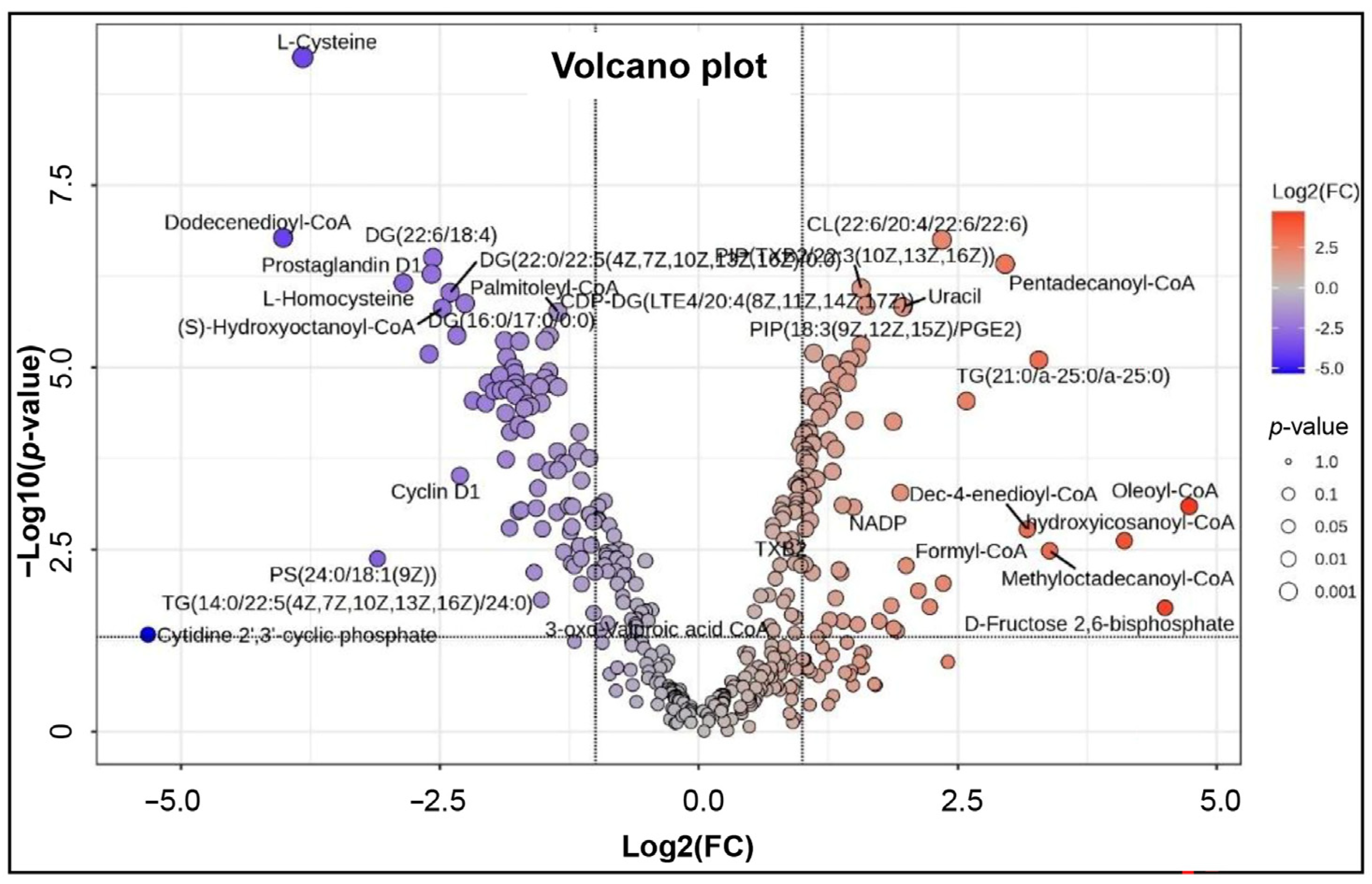
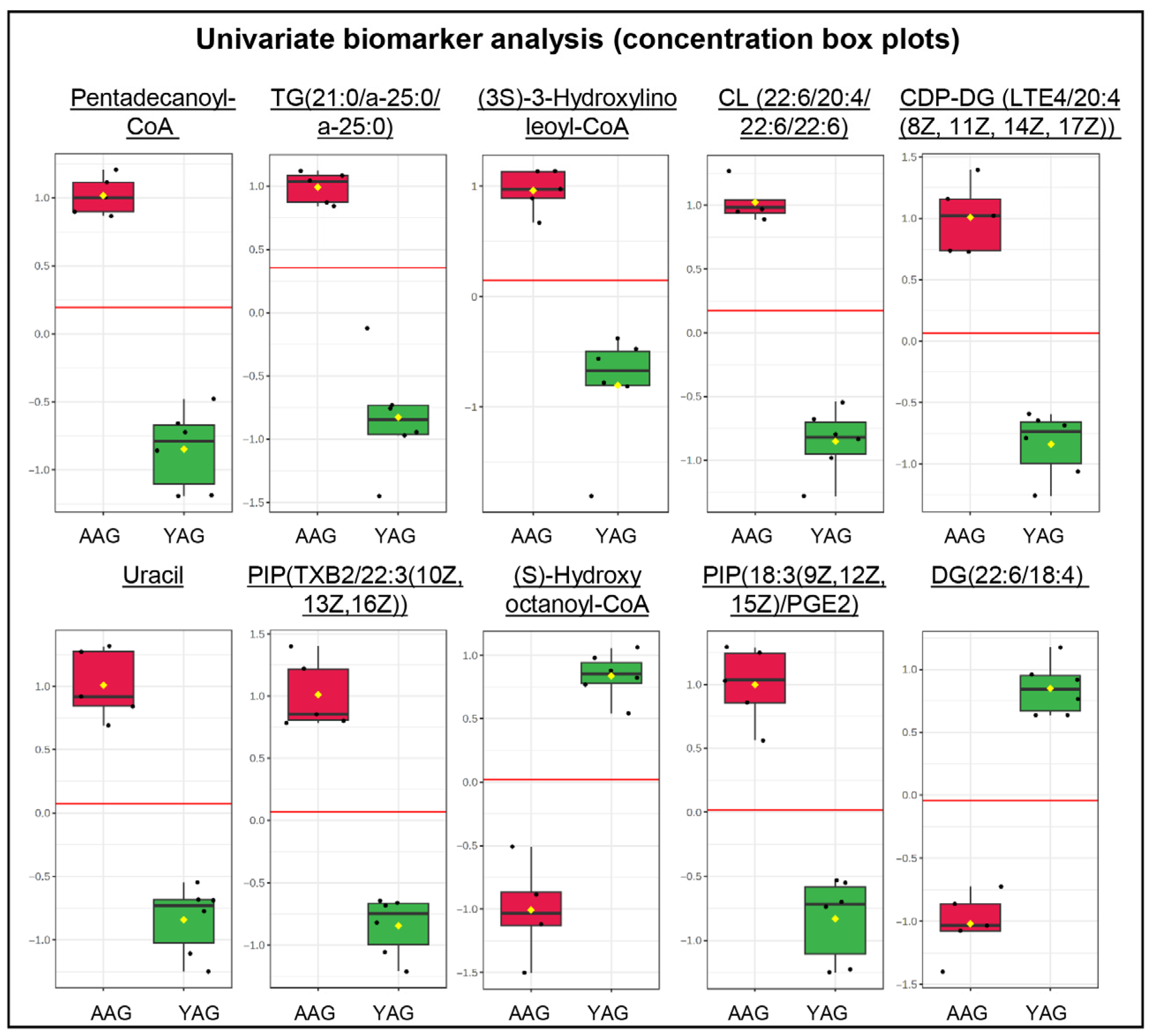
| S.No. | HMDB Nomenclature | LSI Nomenclature | AUC | p-Value | FC | Clusters |
|---|---|---|---|---|---|---|
| 1 | Pentadecanoyl-CoA | FA 15:0;CoA | 1.0 | 3.84 × 10⁻⁷ | 2.8509 | 5 |
| 2 | Triacylglycerols (TG)(21:0/a-25:0/a-25:0) | TG 21:0/a-25:0/a-25:0 | 1.0 | 7.92 × 10⁻⁶ | 3.1604 | 5 |
| 3 | (3S)-3-Hydroxylinoleoyl-CoA | FA 18:2(9Z,12Z);3OH(S);CoA | 1.0 | 5.57 × 10⁻⁵ | 1.7732 | 5 |
| 4 | Cardiolipin (CL)(22:6/20:4/22:6/22:6) | CL 22:6/20:4/22:6/22:6 | 1.0 | 1.78 × 10⁻⁷ | 2.227 | 5 |
| 5 | Cytidine diphosphate-diacylglycerol (CDP-DG)(LTE4/20:4(8Z,11Z,14Z,17Z)) | CDP-DG LTE4/20:4(8Z,11Z,14Z,17Z) | 1.0 | 1.42 × 10⁻⁶ | 1.5145 | 5 |
| 6 | Uracil | — | 1.0 | 1.49 × 10⁻⁶ | 1.8663 | 5 |
| 7 | Phosphatidylinositol phosphate (PIP)(TXB2/22:3(10Z,13Z,16Z)) | PIP TXB2/22:3(10Z,13Z,16Z) | 1.0 | 8.26 × 10⁻⁷ | 1.4625 | 5 |
| 8 | (S)-Hydroxyoctanoyl-CoA | FA 8:0;3OH(S);CoA | 1.0 | 1.55 × 10⁻⁶ | −2.5958 | 2 |
| 9 | Phosphatidylinositol phosphate (PIP)(18:3(9Z,12Z,15Z)/PGE2)) | PIP 18:3(9Z,12Z,15Z)/PGE2 | 1.0 | 4.96 × 10⁻⁶ | 1.4663 | 5 |
| 10 | Diacylglycerol (DG)(22:6/18:4) | DG 22:6/18:4 | 1.0 | 3.14 × 10⁻⁷ | −2.6539 | 2 |
| 11 | L-Homocysteine | — | 1.0 | 6.96 × 10⁻⁷ | −3.0394 | 2 |
| 12 | N-Myristoyl Serine | N-acyl (NA) 14:0/Serine | 1.0 | 3.11 × 10⁻⁵ | −2.1382 | 2 |
| 13 | Nicotinamide adenine dinucleotide phosphate (oxidized; NADP+) | — | 1.0 | 5.34 × 10⁻⁵ | 1.4011 | 5 |
| 14 | Prostaglandin D1 | FA 20:3(5Z,8Z,11Z);[8-12cy5;11OH;9oxo];15OH | 1.0 | 5.25 × 10⁻⁷ | −2.6838 | 2 |
| 15 | L-Cysteine | — | 1.0 | 5.58 × 10⁻¹⁰ | −3.9262 | 2 |
| 16 | D-gamma-Glutamyl-D-glutamic acid | — | 1.0 | 1.11 × 10⁻⁵ | 1.3433 | 5 |
| 17 | Triacylglycerols (TG)(22:1(13Z)/24:1(15Z)/24:1(15Z)) | TG 22:1(13Z)/24:1(15Z)/24:1(15Z) | 1.0 | 7.83 × 10⁻⁶ | 1.3619 | 5 |
| 18 | Disialoganglioside 3 (Ganglioside GD3) | NeuAc2Hex2Cer | 1.0 | 0.000427496 | 0.78761 | 5 |
| 19 | Phosphatidylcholine (PC)(20:0/TXB2) | PC 20:0/TXB2 | 1.0 | 2.27 × 10⁻⁵ | −1.7804 | 2 |
| 20 | Cardiolipin (CL)(i-16:0/a-17:0/i-17:0/20:0) | CL i-16:0/a-17:0/i-17:0/20:0 | 1.0 | 2.06 × 10⁻⁵ | −1.9732 | 2 |
| 21 | Triacylglycerols (TG)(14:0/20:3(5Z,8Z,11Z)/16:1(9Z)) | TG 14:0/20:3/16:1 | 1.0 | 2.87 × 10⁻⁵ | −2.2672 | 2 |
| 22 | Ethyl arachidonate | FA 20:4(5Z,8Z,11Z,14Z);Et | 1.0 | 1.87 × 10⁻⁵ | −1.6171 | 2 |
| 23 | Cytidine 2′,3′-cyclic phosphate | — | 1.0 | 0.046608806 | −5.6521 | 3 |
| 24 | Dodecenedioyl-CoA | FA 12:1;COOH;CoA | 1.0 | 1.67 × 10⁻⁷ | −4.0716 | 2 |
| 25 | Flavin adenine dinucleotide (FAD) | — | 1.0 | 1.01 × 10⁻⁵ | −1.8738 | 2 |
Disclaimer/Publisher’s Note: The statements, opinions and data contained in all publications are solely those of the individual author(s) and contributor(s) and not of MDPI and/or the editor(s). MDPI and/or the editor(s) disclaim responsibility for any injury to people or property resulting from any ideas, methods, instructions or products referred to in the content. |
© 2026 by the authors. Licensee MDPI, Basel, Switzerland. This article is an open access article distributed under the terms and conditions of the Creative Commons Attribution (CC BY) license.
Share and Cite
Beg, M.A.; Khan, M.S.; Sheikh, I.A.; Hamoda, T.A.-A.A.-M.; Khan, M.I.; Sharma, P.; Alkhzaim, A.H.; Abuzenada, K.B.; Mohammed, A.; Ahmad, A.; et al. Age-Associated Metabolomic Changes in Human Spermatozoa. Int. J. Mol. Sci. 2026, 27, 2386. https://doi.org/10.3390/ijms27052386
Beg MA, Khan MS, Sheikh IA, Hamoda TA-AA-M, Khan MI, Sharma P, Alkhzaim AH, Abuzenada KB, Mohammed A, Ahmad A, et al. Age-Associated Metabolomic Changes in Human Spermatozoa. International Journal of Molecular Sciences. 2026; 27(5):2386. https://doi.org/10.3390/ijms27052386
Chicago/Turabian StyleBeg, Mohd Amin, Md Shawkat Khan, Ishfaq Ahmad Sheikh, Taha Abo-Almagd Abdel-Meguid Hamoda, Mohammad Imran Khan, Priyanka Sharma, Ali Hasan Alkhzaim, Kenaz Basem Abuzenada, Arif Mohammed, Abrar Ahmad, and et al. 2026. "Age-Associated Metabolomic Changes in Human Spermatozoa" International Journal of Molecular Sciences 27, no. 5: 2386. https://doi.org/10.3390/ijms27052386
APA StyleBeg, M. A., Khan, M. S., Sheikh, I. A., Hamoda, T. A.-A. A.-M., Khan, M. I., Sharma, P., Alkhzaim, A. H., Abuzenada, K. B., Mohammed, A., Ahmad, A., Abuzenadah, A. M., & Memili, E. (2026). Age-Associated Metabolomic Changes in Human Spermatozoa. International Journal of Molecular Sciences, 27(5), 2386. https://doi.org/10.3390/ijms27052386