Extracellular Vesicles in Cancer Diagnosis and Therapy: Advances, Challenges, and Prospects for Clinical Translation

Abstract
1. Introduction

2. Separation and Detection of EVs
2.1. Disadvantages of Traditional Separation Methods
2.2. Emerging Separation Methods
2.2.1. Immune Affinity Enrichment
2.2.2. Separation Based on Physical Characteristics
2.2.3. Lipid-Mediated Separation
2.2.4. Thermophoretic Enrichment

3. Application of EVs in Cancer Diagnosis
3.1. Diagnostic Potential of EVs
3.2. Advantages of EVs in Liquid Biopsy

3.3. Clinical Applications of EVs in Cancer Diagnosis
3.4. Exercise and Nutritional Status as Confounders and Modulators of EV-Based Liquid Biopsy
3.5. Practical Framework for Multi-Marker Panel Selection and Standardization
4. Application of EVs in Cancer Therapy
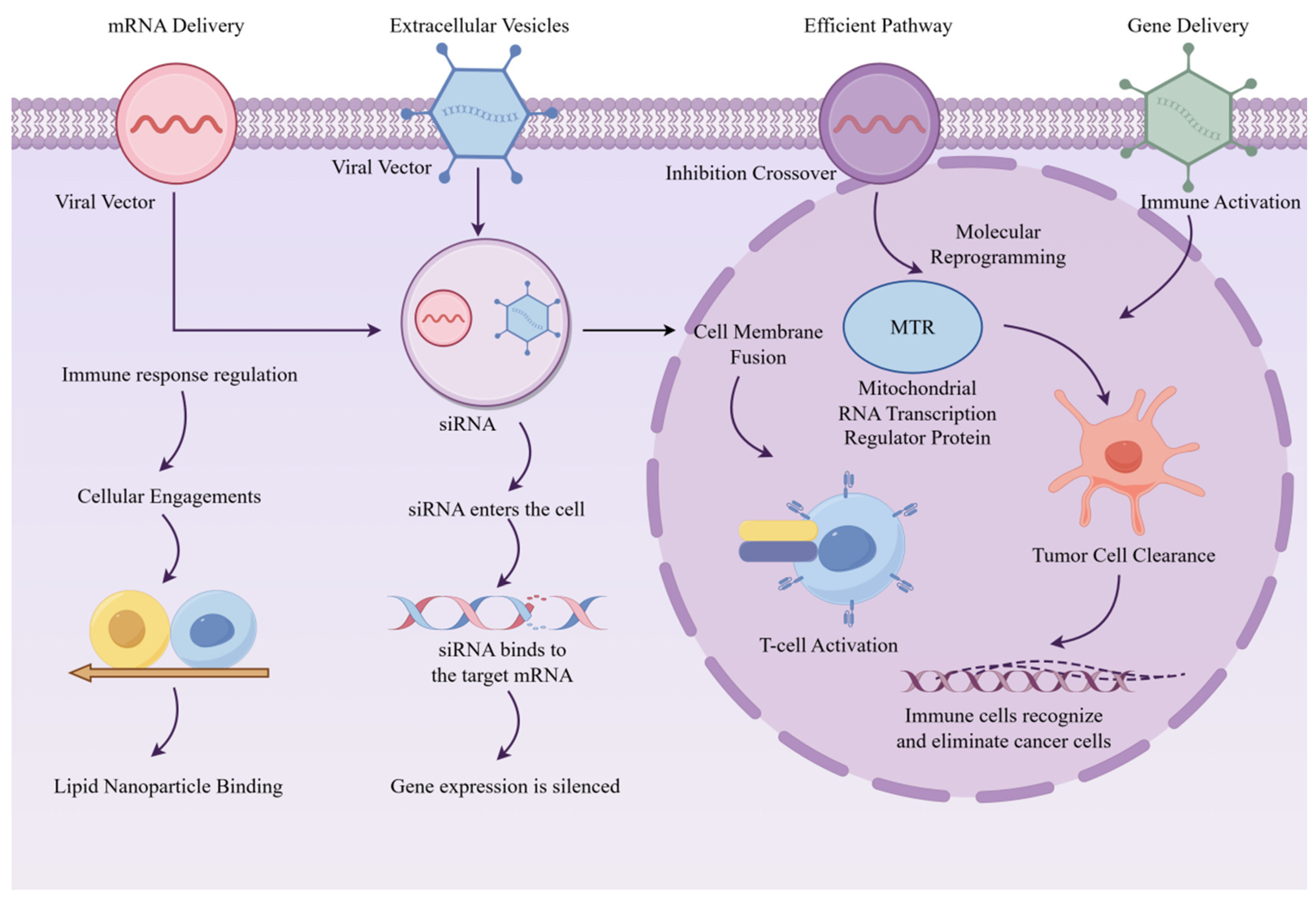
4.1. Application of Gene Delivery Technologies in the Treatment of Cancer and Genetic Diseases
4.2. Application of EVs as Drug Carriers in Chemotherapy and Small-Molecule Drug Delivery
4.3. Application of EVs in Cancer Immunotherapy
4.4. Application of RNA Delivery Mediated by EVs in Cancer Therapy
5. Translational Bottlenecks and Clinical Implementation Framework for EV-Based Cancer Therapies
5.1. Scalable Manufacturing and GMP-Compliant Production
5.2. Cargo Loading Efficiency and Functional Potency Assays
5.3. Biological Heterogeneity and QC Standardization
5.4. Biodistribution, Targeting Efficiency, and Safety Considerations
5.5. Regulatory Classification and Clinical Trial Design
5.6. Future Directions and Cross-Disciplinary Integration
6. Conclusions and Prospects
Author Contributions
Funding
Institutional Review Board Statement
Informed Consent Statement
Data Availability Statement
Conflicts of Interest
References
- Wu, Z.; Xia, F.; Lin, R. Global burden of cancer and associated risk factors in 204 countries and territories, 1980–2021: A systematic analysis for the GBD 2021. J. Hematol. Oncol. 2024, 17, 119. [Google Scholar] [CrossRef]
- Jiang, S.; Fagman, J.B.; Ma, Y.; Liu, J.; Vihav, C.; Engstrom, C.; Liu, B.; Chen, C. A comprehensive review of pancreatic cancer and its therapeutic challenges. Aging 2022, 14, 7635–7649. [Google Scholar] [CrossRef]
- Ma, L.; Guo, H.; Zhao, Y.; Liu, Z.; Wang, C.; Bu, J.; Sun, T.; Wei, J. Liquid biopsy in cancer: Current status, challenges and future prospects. Signal Transduct. Target. Ther. 2024, 9, 336. [Google Scholar] [CrossRef] [PubMed]
- Wu, J.; Dou, Q.; Mao, M.; Wan, X.; Wu, M.; Hu, T.Y.; Zhang, Y. Single Extracellular Vesicle Imaging via Rolling Circle Amplification–Expansion Microscopy. Nat. Commun. 2025, 16, 7498. [Google Scholar] [CrossRef] [PubMed]
- Hou, Y.; Li, W.; Yang, J.; Yu, H.; Wang, C.; Li, Y.; Lv, S.; Zhang, L. Is Pyroptosis a Brake or an Accelerator in the Fate of the Tumor? Cell Death Dis. 2025, 16, 568. [Google Scholar] [CrossRef] [PubMed]
- Aloi, N.; Drago, G.; Ruggieri, S.; Cibella, F.; Colombo, P.; Longo, V. Extracellular Vesicles and Immunity: At the Crossroads of Cell Communication. Int. J. Mol. Sci. 2024, 25, 1205. [Google Scholar] [CrossRef]
- Ahn, M.; Mun, J.-G.; Han, Y.; Seo, J.H. Cancer Cell-Derived Extracellular Vesicles: A Potential Target for Overcoming Tumor Immunotherapy Resistance and Immune Evasion Strategies. Front. Immunol. 2025, 16, 1601266. [Google Scholar] [CrossRef]
- Zhao, S.; Zhang, H.; Xu, Y.; Li, J.; Du, S.; Ning, Z. The Effect of Protein Intake on Athletic Performance: A Systematic Review and Meta-Analysis. Front. Nutr. 2024, 11, 1455728. [Google Scholar] [CrossRef]
- Ma, C.; Jiang, F.; Ma, Y.; Wang, J.; Li, H.; Zhang, J. Isolation and Detection Technologies of Extracellular Vesicles and Application on Cancer Diagnostic. Dose Response 2019, 17, 1559325819891004. [Google Scholar] [CrossRef]
- Di Ianni, E.; Obuchi, W.; Breyne, K.; Breakefield, X.O. Extracellular vesicles for the delivery of gene therapy. Nat. Rev. Bioeng. 2025, 3, 360–373. [Google Scholar] [CrossRef]
- Younis, M.A.; Tawfeek, H.M.; Abdellatif, A.A.H.; Abdel-Aleem, J.A.; Harashima, H. Clinical translation of nanomedicines: Challenges, opportunities, and keys. Adv. Drug Deliv. Rev. 2022, 181, 114083. [Google Scholar] [CrossRef] [PubMed]
- Bergstrom, E.N.; Alexandrov, L.B. Enhanced precision in immunotherapy. Nat. Cancer 2024, 5, 1136–1138. [Google Scholar] [CrossRef] [PubMed]
- Kim, T.; Hong, J.W.; Lee, L.P. Efficient methods of isolation and purification of extracellular vesicles. Nano Converg. 2025, 12, 45, Correction in Nano Converg. 2025, 12, 64. [Google Scholar] [CrossRef] [PubMed]
- Miya, F.; Nakato, D.; Suzuki, H.; Yamada, M.; Watanabe, D.; Takenouchi, T.; Kosaki, K. Augmenting cost-effectiveness in clinical diagnosis using extended whole-exome sequencing: SNVs, SVs, and beyond. J. Hum. Genet. 2026, 71, 13–21. [Google Scholar] [CrossRef]
- Li, B.; Wu, W.; Xu, W.; Qian, H.; Ji, C. Advances of extracellular vesicles isolation and detection frontier technology: From heterogeneity analysis to clinical application. J. Nanobiotechnol. 2025, 23, 678. [Google Scholar] [CrossRef]
- Jacobson, R.; Ha, S.; Tani, S.; Ghosh, S.; Jarajapu, Y.P.R.; Brand, R.E.; Kim, J.; Choi, Y. Differential Extracellular Vesicle Concentration and Their Biomarker Expression of Integrin αv/β5, EpCAM, and Glypican-1 in Pancreatic Cancer Models. Sci. Rep. 2024, 14, 14273. [Google Scholar] [CrossRef]
- Suresh, P.S.; Zhang, Q. Comprehensive Comparison of Methods for Isolation of Extracellular Vesicles from Human Plasma. J. Proteome Res. 2025, 24, 2956–2967. [Google Scholar] [CrossRef]
- Zhang, Y.; Qian, M.G.; Yang, X.; Dong, L. Two-Cycle Immunoaffinity Enrichment Strategy with Acid Treatment to Enhance Biotherapeutics Assay Sensitivity in Tissues. Anal. Chem. 2025, 97, 14899–14904. [Google Scholar] [CrossRef]
- Khanabdali, R.; Mandrekar, M.; Grygiel, R.; Vo, P.A.; Palma, C.; Nikseresht, S.; Barton, S.; Shojaee, M.; Bhuiyan, S.; Asari, K.; et al. High-Throughput Surface Epitope Immunoaffinity Isolation of Extracellular Vesicles and Downstream Analysis. Biol. Methods Protoc. 2024, 9, bpae032. [Google Scholar] [CrossRef]
- Meggiolaro, A.; Moccia, V.; Sammarco, A.; Brun, P.; Damanti, C.C.; Crestani, B.; Mussolin, L.; Pierno, M.; Mistura, G.; Zappulli, V.; et al. Droplet Microfluidic Platform for Extracellular Vesicle Isolation Based on Magnetic Bead Handling. Sens. Actuators B Chem. 2024, 409, 135583. [Google Scholar] [CrossRef]
- Wu, Y.; Wang, C.; Guo, Y.; Zhang, Y.; Zhang, X.; Wang, P.; Yue, W.; Zhu, X.; Liu, Z.; Zhang, Y.; et al. Small Extracellular Vesicle-Based One-Step High-Throughput Microfluidic Platform for Epithelial Ovarian Cancer Diagnosis. J. Nanobiotechnol. 2025, 23, 278. [Google Scholar] [CrossRef] [PubMed]
- Hettiarachchi, S.; Ouyang, L.; Cha, H.; Hansen, H.H.W.B.; An, H.; Nguyen, N.-T.; Zhang, J. Viscoelastic Microfluidics for Enhanced Separation Resolution of Submicron Particles and Extracellular Vesicles. Nanoscale 2024, 16, 3560–3570. [Google Scholar] [CrossRef] [PubMed]
- Gilboa, T.; Ter-Ovanesyan, D.; Babila, C.M.; Whiteman, S.; Morton, S.; Kalish, D.; Johnston, J.; Tesin, D.; Davies, M.; Tam, J.M.; et al. High-Throughput Extracellular Vesicle Isolation Using Plate-Based Size Exclusion Chromatography and Automation. J. Am. Chem. Soc. 2025, 147, 13258–13263. [Google Scholar] [CrossRef] [PubMed]
- Feng, H.; Gao, H.; Chen, J.; Zhao, R.; Huang, Y. Emerging Phospholipid-Targeted Affinity Materials for Extracellular Vesicle Isolation and Molecular Profiling. J. Chromatogr. A 2025, 1741, 465639. [Google Scholar] [CrossRef]
- Wang, L.; Gong, Z.; Wang, M.; Liang, Y.Z.; Zhao, J.; Xie, Q.; Wu, X.W.; Li, Q.Y.; Zhang, C.; Ma, L.Y.; et al. Rapid and Unbiased Enrichment of Extracellular Vesicles via a Meticulously Engineered Peptide. Bioact. Mater. 2025, 43, 292–304. [Google Scholar] [CrossRef]
- Kobayashi, H.; Shiba, T.; Yoshida, T.; Bolidong, D.; Kato, K.; Sato, Y.; Mochizuki, M.; Seto, T.; Kawashiri, S.; Hanayama, R. Precise Analysis of Single Small Extracellular Vesicles Using Flow Cytometry. Sci. Rep. 2024, 14, 7465. [Google Scholar] [CrossRef]
- Dong, J.; Liang, D.; Kabla, A.J.; Chen, X.; Yang, X. A Combination of Acoustophoresis and Thermophoresis for Enriching Nanoparticles. Phys. Fluids 2024, 36, 9. [Google Scholar] [CrossRef]
- Guo, Y.; Zhang, R.; You, H.; Fang, J. Effective Enrichment of Trace Exosomes for the Label-Free SERS Detection via Low-Cost Thermophoretic Profiling. Biosens. Bioelectron. 2024, 253, 116164. [Google Scholar] [CrossRef]
- Zhou, P.; Pan, Y.; Liu, B.; Pan, W.; Li, N.; Tang, B. Thermophoretic Aggregation Imaging of Tumor-Derived Exosomes by CRISPR-Cas13a-Based Nanoprobes. Anal. Chem. 2024, 96, 4791–4799. [Google Scholar] [CrossRef]
- Koch, L.F.; Best, T.; Wüstenhagen, E.; Adrian, K.; Rammo, O.; Saul, M.J. Novel Insights into the Isolation of Extracellular Vesicles by Anion Exchange Chromatography. Front. Bioeng. Biotechnol. 2023, 11, 1298892. [Google Scholar] [CrossRef]
- Asleh, K.; Dery, V.; Taylor, C.; Davey, M.; Djeungoue-Petga, M.A.; Ouellette, R.J. Extracellular Vesicle-Based Liquid Biopsy Biomarkers and Their Application in Precision Immuno-Oncology. Biomark. Res. 2023, 11, 99. [Google Scholar] [CrossRef]
- Zhang, G.; Huang, X.; Liu, S.; Xu, Y.; Wang, N.; Yang, C.; Zhu, Z. Demystifying EV Heterogeneity: Emerging Microfluidic Technologies for Isolation and Multiplexed Profiling of Extracellular Vesicles. Lab Chip 2025, 25, 1228–1255. [Google Scholar] [CrossRef]
- Ljungström, M.; Oltra, E. Methods for Extracellular Vesicle Isolation: Relevance for Encapsulated miRNAs in Disease Diagnosis and Treatment. Genes 2025, 16, 330. [Google Scholar] [CrossRef] [PubMed]
- Chen, Y.; Zhu, Q.; Cheng, L.; Wang, Y.; Li, M.; Yang, Q.; Hu, L.; Lou, D.; Li, J.; Dong, X.; et al. Exosome Detection via the Ultrafast-Isolation System: EXODUS. Nat. Methods 2021, 18, 212–218. [Google Scholar] [CrossRef] [PubMed]
- Wan, Y.; Maurer, M.; He, H.Z.; Xia, Y.Q.; Hao, S.J.; Zhang, W.L.; Yee, N.S.; Zheng, S.Y. Enrichment of Extracellular Vesicles with Lipid Nanoprobe Functionalized Nanostructured Silica. Lab Chip 2019, 19, 2346–2355. [Google Scholar] [CrossRef] [PubMed]
- Welsh, J.A.; Goberdhan, D.C.I.; O’Driscoll, L.; Buzas, E.I.; Blenkiron, C.; Bussolati, B.; Cai, H.; Di Vizio, D.; Driedonks, T.A.P.; Erdbrügger, U.; et al. Minimal Information for Studies of Extracellular Vesicles (MISEV2023): From Basic to Advanced Approaches. J. Extracell. Vesicles 2024, 13, e12404, Correction in J. Extracell. Vesicles 2024, 13, e12451. https://doi.org/10.1002/jev2.12451. [Google Scholar] [CrossRef]
- Ma, C.; Xu, Z.; Hao, K.; Fan, L.; Du, W.; Gao, Z.; Wang, C.; Zhang, Z.; Li, N.; Li, Q.; et al. Rapid Isolation Method for Extracellular Vesicles Based on Fe3O4@ZrO2. Front. Bioeng. Biotechnol. 2024, 12, 1399689. [Google Scholar] [CrossRef]
- Tong, Z.; Yang, D.; Shen, C.; Li, C.; Xu, X.; Li, Q.; Wu, Z.; Ma, H.; Chen, F.; Mao, H. Rapid Automated Extracellular Vesicle Isolation and miRNA Preparation on a Cost-Effective Digital Microfluidic Platform. Anal. Chim. Acta 2024, 1296, 342337. [Google Scholar] [CrossRef]
- Kollipara, P.S.; Li, X.; Li, J.; Chen, Z.; Ding, H.; Kim, Y.; Huang, S.; Qin, Z.; Zheng, Y. Hypothermal Opto-Thermophoretic Tweezers. Nat. Commun. 2023, 14, 5133. [Google Scholar] [CrossRef]
- Huang, M.; Xiang, Y.; Chen, Y.; Lu, H.; Zhang, H.; Liu, F.; Qin, X.; Qin, X.; Li, X.; Yang, F. Bottom-Up Signal Boosting with Fractal Nanostructuring and Primer Exchange Reaction for Ultrasensitive Detection of Cancerous Exosomes. ACS Sens. 2023, 8, 1308–1317. [Google Scholar] [CrossRef]
- Lee, Y.; Ni, J.; Beretov, J.; Wasinger, V.C.; Graham, P.; Li, Y. Recent Advances of Small Extracellular Vesicle Biomarkers in Breast Cancer Diagnosis and Prognosis. Mol. Cancer 2023, 22, 33. [Google Scholar] [CrossRef] [PubMed]
- Chen, W.; Li, H.; Su, W.; Qin, J. Microfluidic Device for On-Chip Isolation and Detection of Circulating Exosomes in Blood of Breast Cancer Patients. Biomicrofluidics 2019, 13, 054113. [Google Scholar] [CrossRef] [PubMed]
- Karimi, S.; Bahrami, A.; Mirian, M.; Karamali, F.; Hariri, A.; Shafieyan, A.; Nasr-Esfahani, M.H. Promising Label-Free Trapping, Isolation and Detection of Extracellular Vesicles, Using an Interdigitated Microelectrode Array Integrated in a Microfluidic Cell: Theoretical and Experimental Assessments. Appl. Phys. A 2025, 131, 530. [Google Scholar] [CrossRef]
- Marino, A.; Battaglini, M.; Lefevre, M.C.; Ceccarelli, M.C.; Ziaja, K.; Ciofani, G. Sensorization of Microfluidic Brain-on-a-Chip Devices: Towards a New Generation of Integrated Drug Screening Systems. TrAC Trends Anal. Chem. 2023, 168, 117319. [Google Scholar] [CrossRef]
- Lee, J.H.; Kim, J.A.; Kwon, M.H.; Kang, J.Y.; Rhee, W.J. In Situ Single Step Detection of Exosome MicroRNA Using Molecular Beacon. Biomaterials 2015, 54, 116–125. [Google Scholar] [CrossRef]
- Zhai, L.Y.; Li, M.X.; Pan, W.L.; Chen, Y.; Li, M.M.; Pang, J.X.; Zheng, L.; Chen, J.X.; Duan, W.J. In Situ Detection of Plasma Exosomal MicroRNA-1246 for Breast Cancer Diagnostics by a Au Nanoflare Probe. ACS Appl. Mater. Interfaces 2018, 10, 39478–39486. [Google Scholar] [CrossRef]
- Williams, T.; Salmanian, G.; Burns, M.; Maldonado, V.; Smith, E.; Porter, R.M.; Song, Y.H.; Samsonraj, R.M. Versatility of Mesenchymal Stem Cell-Derived Extracellular Vesicles in Tissue Repair and Regenerative Applications. Biochimie 2023, 207, 33–48. [Google Scholar] [CrossRef]
- Liu, C.; Zhao, J.; Tian, F.; Cai, L.; Zhang, W.; Feng, Q.; Chang, J.; Wan, F.; Yang, Y.; Dai, B.; et al. Low-Cost Thermophoretic Profiling of Extracellular-Vesicle Surface Proteins for the Early Detection and Classification of Cancers. Nat. Biomed. Eng. 2019, 3, 183–193. [Google Scholar] [CrossRef]
- Midia, M.; Odedra, D.; Shuster, A.; Midia, R.; Muir, J. Predictors of Bleeding Complications Following Percutaneous Image-Guided Liver Biopsy: A Scoping Review. Diagn. Interv. Radiol. 2019, 25, 71–80. [Google Scholar] [CrossRef]
- Sosenko, A.; Owens, R.G.; Yang, A.L.; Alzubaidi, A.; Guzzo, T.; Trabulsi, E.; Danella, J.; Diorio, G.; Reese, A.; Tomaszewski, J.; et al. Non-Infectious Complications Following Transrectal Prostate Needle Biopsy—Outcomes from Over 8000 Procedures. Prostate Int. 2022, 10, 158–161. [Google Scholar] [CrossRef]
- Kumar, M.A.; Baba, S.K.; Sadida, H.Q.; Marzooqi, S.A.; Jerobin, J.; Altemani, F.H.; Algehainy, N.; Alanazi, M.A.; Abou-Samra, A.-B.; Kumar, R.; et al. Extracellular Vesicles as Tools and Targets in Therapy for Diseases. Signal Transduct. Target. Ther. 2024, 9, 27. [Google Scholar] [CrossRef] [PubMed]
- Sun, D.S.; Chang, H.H. Extracellular Vesicles: Function, Resilience, Biomarker, Bioengineering, and Clinical Implications. Tzu Chi Med. J. 2024, 36, 251–259. [Google Scholar] [CrossRef] [PubMed]
- Meneghetti, P.; Gonçalves, M.O.; Marin, G.V.; Di Iorio, J.F.; Negreiros, N.G.S.; Torrecilhas, A.C. Extracellular Vesicles: Methods for Purification and Characterization. In Current Topics in Membranes; Torrecilhas, A.C., Ed.; Academic Press: Cambridge, MA, USA, 2024; Volume 94, pp. 33–48. [Google Scholar]
- Chang, W.H.; Cerione, R.A.; Antonyak, M.A. Extracellular Vesicles and Their Roles in Cancer Progression. In Methods in Molecular Biology; Humana: New York, NY, USA, 2021; Volume 2174, pp. 143–170. [Google Scholar]
- Fang, Y.; Tan, C.; Zheng, Z.; Yang, J.; Tang, J.; Guo, R.; Silli, E.K.; Chen, Z.; Chen, J.; Ge, R.; et al. The Function of MicroRNA Related to Cancer-Associated Fibroblasts in Pancreatic Ductal Adenocarcinoma. Biochem. Pharmacol. 2025, 236, 116849. [Google Scholar] [CrossRef] [PubMed]
- Zhou, Y.; Tao, L.; Qiu, J.; Xu, J.; Yang, X.; Zhang, Y.; Tian, X.; Guan, X.; Cen, X.; Zhao, Y. Tumor Biomarkers for Diagnosis, Prognosis and Targeted Therapy. Signal Transduct. Target. Ther. 2024, 9, 132. [Google Scholar] [CrossRef]
- Muskan, M.; Abeysinghe, P.; Cecchin, R.; Branscome, H.; Morris, K.V.; Kashanchi, F. Therapeutic Potential of RNA-Enriched Extracellular Vesicles: The Next Generation in RNA Delivery via Biogenic Nanoparticles. Mol. Ther. 2024, 32, 2939–2949. [Google Scholar] [CrossRef]
- Wang, H.; Zhang, Y.; Zhang, H.; Cao, H.; Mao, J.; Chen, X.; Wang, L.; Zhang, N.; Luo, P.; Xue, J.; et al. Liquid Biopsy for Human Cancer: Cancer Screening, Monitoring, and Treatment. MedComm 2024, 5, e564. [Google Scholar] [CrossRef]
- Stejskal, P.; Goodarzi, H.; Srovnal, J.; Hajdúch, M.; van ’t Veer, L.J.; Magbanua, M.J.M. Circulating Tumor Nucleic Acids: Biology, Release Mechanisms, and Clinical Relevance. Mol. Cancer 2023, 22, 15. [Google Scholar] [CrossRef]
- Li, J.; Li, Y.; Li, P.; Zhang, Y.; Du, L.; Wang, Y.; Zhang, C.; Wang, C. Exosome Detection via Surface-Enhanced Raman Spectroscopy for Cancer Diagnosis. Acta Biomater. 2022, 144, 1–14. [Google Scholar] [CrossRef]
- Larson, M.H.; Pan, W.; Kim, H.J.; Mauntz, R.E.; Stuart, S.M.; Pimentel, M.; Zhou, Y.; Knudsgaard, P.; Demas, V.; Aravanis, A.M.; et al. A Comprehensive Characterization of the Cell-Free Transcriptome Reveals Tissue- and Subtype-Specific Biomarkers for Cancer Detection. Nat. Commun. 2021, 12, 2357, Correction in Nat. Commun. 2022, 13, 2553. https://doi.org/10.1038/s41467-022-30329-0. [Google Scholar] [CrossRef]
- Roskams-Hieter, B.; Kim, H.J.; Anur, P.; Wagner, J.T.; Callahan, R.; Spiliotopoulos, E.; Kirschbaum, C.W.; Civitci, F.; Spellman, P.T.; Thompson, R.F.; et al. Plasma Cell-Free RNA Profiling Distinguishes Cancers from Pre-Malignant Conditions in Solid and Hematologic Malignancies. npj Precis. Oncol. 2022, 6, 28. [Google Scholar] [CrossRef]
- Luan, Y.; Zhong, G.; Li, S.; Wu, W.; Liu, X.; Zhu, D.; Feng, Y.; Zhang, Y.; Duan, C.; Mao, M. A Panel of Seven Protein Tumour Markers for Effective and Affordable Multi-Cancer Early Detection by Artificial Intelligence: A Large-Scale and Multicentre Case-Control Study. EClinicalMedicine 2023, 61, 102041. [Google Scholar] [CrossRef] [PubMed]
- Vellan, C.J.; Islam, T.; De Silva, S.; Mohd Taib, N.A.; Prasanna, G.; Jayapalan, J.J. Exploring Novel Protein-Based Biomarkers for Advancing Breast Cancer Diagnosis: A Review. Clin. Biochem. 2024, 129, 110776. [Google Scholar] [CrossRef] [PubMed]
- Song, G.; Wang, L.; Tang, J.; Li, H.; Pang, S.; Li, Y.; Liu, L.; Hu, J. Circulating Metabolites as Potential Biomarkers for the Early Detection and Prognosis Surveillance of Gastrointestinal Cancers. Metabolomics 2023, 19, 36. [Google Scholar] [CrossRef] [PubMed]
- Cao, Y.; Zhao, R.; Guo, K.; Ren, S.; Zhang, Y.; Lu, Z.; Tian, L.; Li, T.; Chen, X.; Wang, Z. Potential Metabolite Biomarkers for Early Detection of Stage-I Pancreatic Ductal Adenocarcinoma. Front. Oncol. 2021, 11, 744667. [Google Scholar] [CrossRef]
- Zhang, Y.; Ma, W.; Zhan, Y.; Mao, C.; Shao, X.; Xie, X.; Wei, X.; Lin, Y. Nucleic Acids and Analogs for Bone Regeneration. Bone Res. 2018, 6, 37. [Google Scholar] [CrossRef]
- Narang, P.; Shah, M.; Beljanski, V. Exosomal RNAs in Diagnosis and Therapies. Noncoding RNA Res. 2022, 7, 7–15. [Google Scholar] [CrossRef]
- Jain, A.; Mittal, S.; Tripathi, L.P.; Nussinov, R.; Ahmad, S. Host-Pathogen Protein-Nucleic Acid Interactions: A Comprehensive Review. Comput. Struct. Biotechnol. J. 2022, 20, 4415–4436. [Google Scholar] [CrossRef]
- Song, Z.; Mao, J.; Barrero, R.A.; Wang, P.; Zhang, F.; Wang, T. Development of a CD63 Aptamer for Efficient Cancer Immunochemistry and Immunoaffinity-Based Exosome Isolation. Molecules 2020, 25, 5585. [Google Scholar] [CrossRef]
- Prabhakar, C.N. Epidermal Growth Factor Receptor in Non-Small Cell Lung Cancer. Transl. Lung Cancer Res. 2015, 4, 110–118. [Google Scholar]
- Kuang, L.; Wu, L.; Li, Y. Extracellular Vesicles in Tumor Immunity: Mechanisms and Novel Insights. Mol. Cancer 2025, 24, 45. [Google Scholar] [CrossRef]
- Ragni, E. Extracellular Vesicles: Recent Advances and Perspectives. Front. Biosci. (Landmark Ed.) 2025, 30, 36405. [Google Scholar] [CrossRef] [PubMed]
- Llorente, A.; Brokāne, A.; Mlynska, A.; Puurand, M.; Sagini, K.; Folkmane, S.; Hjorth, M.; Martin-Gracia, B.; Romero, S.; Skorinkina, D.; et al. From Sweat to Hope: The Role of Exercise-Induced Extracellular Vesicles in Cancer Prevention and Treatment. J. Extracell. Vesicles 2024, 13, e12500. [Google Scholar] [CrossRef] [PubMed]
- Puurand, M.; Llorente, A.; Linē, A.; Kaambre, T. Exercise-Induced Extracellular Vesicles in Reprogramming Energy Metabolism in Cancer. Front. Oncol. 2025, 14, 1480074. [Google Scholar] [CrossRef] [PubMed]
- Lombardo, M.; Aiello, G.; Fratantonio, D.; Karav, S.; Baldelli, S. Functional Role of Extracellular Vesicles in Skeletal Muscle Physiology and Sarcopenia: The Importance of Physical Exercise and Nutrition. Nutrients 2024, 16, 3097. [Google Scholar] [CrossRef]
- Marquez-Paradas, E.; Paz, S.M.-d.L. Extracellular Vesicles in Obesity: Linking Postprandial Metabolism to Metabolic Dysfunction. Food Funct. 2025, 23, 8965–8976. [Google Scholar] [CrossRef]
- Woo, H.-K.; Kim, C.; Choi, Y.; Cho, Y.K.; Do, L.-N.; Kim, H.; Jung, D.-H.; Allen, M.; Jeon, J.; Chung, S.; et al. Automated Disc Device for Multiplexed Extracellular Vesicle Isolation and Labelling from Liquid Biopsies in Cancer Diagnostics. Nat. Biomed. Eng. 2026. [Google Scholar] [CrossRef]
- Lucien, F.; Gustafson, D. Standardized Reporting of Pre-Analytical Variables and Quality Control of Plasma and Serum to Enhance Rigor and Reproducibility in Liquid Biopsy Research. J. Liq. Biopsy 2024, 6, 100163. [Google Scholar] [CrossRef]
- Greening, D.W.; Xu, R.; Rai, A.; Suwakulsiri, W.; Chen, M.; Simpson, R.J. Clinical Relevance of Extracellular Vesicles in Cancer—Therapeutic and Diagnostic Potential. Nat. Rev. Clin. Oncol. 2025, 22, 924–952. [Google Scholar] [CrossRef]
- Gabaran, S.G.; Ghasemzadeh, N.; Rahnama, M.; Karatas, E.; Akbari, A.; Rezaie, J. Functionalized Exosomes for Targeted Therapy in Cancer and Regenerative Medicine: Genetic, Chemical, and Physical Modifications. Cell Commun. Signal. 2025, 23, 265. [Google Scholar] [CrossRef]
- Mao, L.; Qian, L.; Zhou, X.; Niu, K.; Li, Z.; Wang, S.; Xie, J.; Zhou, W.; Dang, X. Exosomes Displaying Native EGF Enhance Doxorubicin’s Therapeutic Efficacy and Reduce Cardiotoxicity. J. Nanobiotechnol. 2026, 24, 179. [Google Scholar] [CrossRef]
- Wang, Y.; Huo, Y.; Zhao, C.; Liu, H.; Shao, Y.; Zhu, C.; An, L.; Chen, X.; Chen, Z. Engineered Exosomes with Enhanced Stability and Delivery Efficiency for Glioblastoma Therapy. J. Control. Release 2024, 368, 170–183. [Google Scholar] [CrossRef] [PubMed]
- Kalluri, V.S.; Smaglo, B.G.; Mahadevan, K.K.; Kirtley, M.L.; McAndrews, K.M.; Mendt, M.; Yang, S.; Maldonado, A.S.; Sugimoto, H.; Salvatierra, M.E.; et al. Engineered Exosomes with Kras(G12D) Specific siRNA in Pancreatic Cancer: A Phase I Study with Immunological Correlates. Nat. Commun. 2025, 16, 8696. [Google Scholar] [CrossRef] [PubMed]
- Zhuo, Y.; Luo, Z.; Zhu, Z.; Wang, J.; Li, X.; Zhang, Z.; Guo, C.; Wang, B.; Nie, D.; Gan, Y.; et al. Direct Cytosolic Delivery of siRNA via Cell Membrane Fusion Using Cholesterol-Enriched Exosomes. Nat. Nanotechnol. 2024, 19, 1858–1868. [Google Scholar] [CrossRef] [PubMed]
- Hajivalili, M.; Hosseini, M.; Niknam, B.; Baghaei, K.; Mosaffa, N.; Pouyani, M.R.; Amani, D. Tumor-Derived Small Extracellular Vesicles Loaded with Functionally Active miR-34a Mimic Can Modify the Anti-Tumor Response in 4T1 Breast Cancer Animal Model. Cancer Cell Int. 2025, 25, 352. [Google Scholar] [CrossRef] [PubMed]
- Sun, W.Y.; Lee, D.S.; Park, J.H.; Kim, O.H.; Choi, H.J.; Kim, S.J. Utilizing miR-34a-Loaded HER2-Targeting Exosomes to Improve Breast Cancer Treatment: Insights from an Animal Model. J. Breast Cancer 2025, 28, 139–157. [Google Scholar] [CrossRef]
- Liu, M.; Hu, S.; Yan, N.; Popowski, K.D.; Cheng, K. Inhalable Extracellular Vesicle Delivery of IL-12 mRNA to Treat Lung Cancer and Promote Systemic Immunity. Nat. Nanotechnol. 2024, 19, 565–575. [Google Scholar] [CrossRef]
- Yu, X.; Ding, P.; Guo, M.; Tang, X.; Wang, Z.; Zhang, Y.; Zhou, L.; Lv, X.; Shi, H.; Huang, H.; et al. Extracellular Vesicle-Mediated Delivery of circp53 Suppresses the Progression of Multiple Cancers by Activating the CypD/TRAP/HSP90 Pathway. Exp. Mol. Med. 2025, 57, 1711–1726. [Google Scholar] [CrossRef]
- Batista, I.A.; Machado, J.C.; Melo, S.A. Advances in Exosomes Utilization for Clinical Applications in Cancer. Trends Cancer 2024, 10, 947–968. [Google Scholar] [CrossRef]
- Redkin, T.; Turubanova, V. Dendritic Cell-Derived Exosomes as Anti-Cancer Cell-Free Agents: New Insights into Enhancing Immunogenic Effects. Front. Immunol. 2025, 16, 1586892. [Google Scholar] [CrossRef]
- Aare, M.; Lazarte, J.M.S.; Muthu, M.; Rishi, A.K.; Singh, M. Genetically Bio-Engineered PD-L1 Targeted Exosomes for Immunotherapy of Resistant Triple Negative Breast Cancer. Drug Deliv. Transl. Res. 2026, 16, 693–710. [Google Scholar] [CrossRef]
- Wang, J.S.; Yassin, S.; Lin, A.Y. Utilization of Exosome-Based Therapies to Augment Anti-PD-1/PD-L1 Therapies. J. Immunother. Cancer 2025, 13, 4. [Google Scholar] [CrossRef]
- Lu, M.; Xing, H.; Zhao, X.; Huang, Y.; Zheng, A.; Liang, X.-J. Engineered Extracellular Vesicles as a Next-Generation Vaccine Platform. Matter 2024, 7, 4180–4205. [Google Scholar] [CrossRef]
- Zhao, G.; Wang, Y.; Xing, S.; Jiang, Y.; Ding, J.; Cai, Y.; Ma, P.; Miao, H.; Fang, Y.; Jiang, N.; et al. Exosome-Based Anticancer Vaccines: From Bench to Bedside. Cancer Lett. 2024, 595, 216989. [Google Scholar] [CrossRef] [PubMed]
- Aderinto, N.; Abraham, I.C.; Ukoaka, B.M.; Moradeyo, A.; Udam, N.G.; Aboje, J.E.; Oluwakorede, A.T.; Adejumo, F.A.; Ojapah, E.; Babalola, A.E.; et al. Emerging Role of Gene Therapy in Stroke Recovery. Brain Netw. Disord. 2025, 1, 167–176. [Google Scholar] [CrossRef]
- Chen, L.; Hong, W.; Ren, W.; Xu, T.; Qian, Z.; He, Z. Recent Progress in Targeted Delivery Vectors Based on Biomimetic Nanoparticles. Signal Transduct. Target. Ther. 2021, 6, 225. [Google Scholar] [CrossRef]
- Wang, C.; Pan, C.; Yong, H.; Wang, F.; Bo, T.; Zhao, Y.; Ma, B.; He, W.; Li, M. Emerging Non-Viral Vectors for Gene Delivery. J. Nanobiotechnol. 2023, 21, 272. [Google Scholar] [CrossRef]
- Du, S.; Guan, Y.; Xie, A.; Yan, Z.; Gao, S.; Li, W.; Rao, L.; Chen, X.; Chen, T. Extracellular Vesicles: A Rising Star for Therapeutics and Drug Delivery. J. Nanobiotechnol. 2023, 21, 231. [Google Scholar] [CrossRef]
- Huang, J.; Chen, H.; Li, N.; Liu, P.; Yang, J.; Zhao, Y. Emerging Technologies Towards Extracellular Vesicles Large-Scale Production. Bioact. Mater. 2025, 52, 338–365. [Google Scholar] [CrossRef]
- Meacham, J.M.; Durvasula, K.; Degertekin, F.L.; Fedorov, A.G. Physical Methods for Intracellular Delivery: Practical Aspects from Laboratory Use to Industrial-Scale Processing. J. Lab. Autom. 2014, 19, 1–18. [Google Scholar] [CrossRef]
- Hu, M.; Han, Y.; Zhang, X.; Tian, S.; Shang, Z.; Yuan, Z.; He, L. Extracellular Vesicles for Targeted Drug Delivery: Advances in Surface Modification Strategies and Therapeutic Applications. J. Transl. Med. 2025, 23, 1028. [Google Scholar] [CrossRef]
- Wang, Z.; Mo, H.; He, Z.; Chen, A.; Cheng, P. Extracellular Vesicles as an Emerging Drug Delivery System for Cancer Treatment: Current Strategies and Recent Advances. Biomed. Pharmacother. 2022, 153, 113480. [Google Scholar] [CrossRef] [PubMed]
- Du, X.; Chen, S.; Meng, T.; Liu, L.; Li, L.; Xiang, R.; Zhang, H.; Zhu, Y.; Zhang, X.; Lin, S.; et al. Extracellular Vesicles as Precision Therapeutic Vectors: Charting the Future of Cell-Targeted Therapies. Precis. Med. Eng. 2025, 2, 100031. [Google Scholar] [CrossRef]
- Shi, Y.; Yao, F.; Yin, Y.; Wu, C.; Xia, D.; Zhang, K.; Jin, Z.; Liu, X.; He, J.; Zhang, Z. Extracellular Vesicles Derived from Immune Cells: Role in Tumor Therapy. Int. Immunopharmacol. 2024, 133, 112150. [Google Scholar] [CrossRef]
- Spokeviciute, B.; Kholia, S.; Brizzi, M.F. Chimeric Antigen Receptor (CAR) T-Cell Therapy: Harnessing Extracellular Vesicles for Enhanced Efficacy. Pharmacol. Res. 2024, 208, 107352. [Google Scholar] [CrossRef] [PubMed]
- Coelho, M.O.; Quintas, S.T.; Sarmento, B.; De Wever, O.; Castro, F. Engineered Dendritic Cells-Derived Extracellular Vesicles for Cancer Immunotherapy. J. Control. Release 2025, 381, 113620. [Google Scholar] [CrossRef]
- Zou, Y.; Zhou, Y.; Li, G.; Dong, Y.; Hu, S. Clinical Applications of Extracellular Vesicles: Recent Advances and Emerging Trends. Front. Bioeng. Biotechnol. 2025, 13, 1671963. [Google Scholar] [CrossRef]
- Liu, J.; Nordin, J.Z.; McLachlan, A.J.; Chrzanowski, W. Extracellular Vesicles as the Next-Generation Modulators of Pharmacokinetics and Pharmacodynamics of Medications and Their Potential as Adjuvant Therapeutics. Clin. Transl. Med. 2024, 14, e70002. [Google Scholar] [CrossRef]
- Oshchepkova, A.; Zenkova, M.; Vlassov, V. Extracellular Vesicles for Therapeutic Nucleic Acid Delivery: Loading Strategies and Challenges. Int. J. Mol. Sci. 2023, 24, 7287. [Google Scholar] [CrossRef]
- Li, J.; Shen, Z.; Liu, Y.; Yan, Z.; Liu, Y.; Lin, X.; Tang, J.; Lv, R.; Geng, G.; Xiong, Z.Q.; et al. A High-Fidelity RNA-Targeting Cas13 Restores Paternal Ube3a Expression and Improves Motor Functions in Angelman Syndrome Mice. Mol. Ther. 2023, 31, 2286–2295. [Google Scholar] [CrossRef]
- Li, Q.; Xing, H.; Naeem, A.; Zhang, K.; Zheng, A.; Huang, Y.; Lu, M. Extracellular Vesicle-Based mRNA Therapeutics and Vaccines. Exploration 2025, 5, 20240109. [Google Scholar] [CrossRef]
- Atia, G.A.; Abdeen, A.; Taher, E.S.; Alghonemy, W.Y.; El Nashar, E.M.; Al-Zahrani, N.S.; Elmorsy, E.M.; Khanday, S.; Alshambky, A.; Taymour, N.; et al. From Plants to Patients: Advancing Cancer Therapy with Bioengineered Exosomes and AI-Driven Innovations. Phytother. Res. 2025, 39, 4566–4614. [Google Scholar] [CrossRef]
- Lener, T.; Gimona, M.; Aigner, L.; Börger, V.; Buzas, E.; Camussi, G.; Chaput, N.; Chatterjee, D.; Court, F.A.; Del Portillo, H.A.; et al. Applying Extracellular Vesicles Based Therapeutics in Clinical Trials—An ISEV Position Paper. J. Extracell. Vesicles 2015, 4, 30087. [Google Scholar] [CrossRef] [PubMed]
- Thakur, A.; Rai, D. Global Requirements for Manufacturing and Validation of Clinical Grade Extracellular Vesicles. J. Liq. Biopsy 2024, 6, 100278. [Google Scholar] [CrossRef] [PubMed]
- Xu, G.; Jin, J.; Fu, Z.; Wang, G.; Lei, X.; Xu, J.; Wang, J. Extracellular Vesicle-Based Drug Overview: Research Landscape, Quality Control and Nonclinical Evaluation Strategies. Signal Transduct. Target. Ther. 2025, 10, 255. [Google Scholar] [CrossRef] [PubMed]
- Silva, T.F.; Hutchins, E.; Zhao, W.; Ciani, Y.; Kim, M.; Ko, E.; Mariscal, J.; Qiu, Z.; Bedier, F.; Kittel, A.; et al. Extracellular Vesicle Heterogeneity Through the Lens of Multiomics. Cell Rep. Med. 2025, 6, 102161. [Google Scholar] [CrossRef]
- Zhang, Y.; Wang, C.; Shao, H. Nanoplasmonic Sensing of Heterogeneous Extracellular Vesicles: From Bulk to Single Vesicles. Small Methods 2025, 9, e2500097. [Google Scholar] [CrossRef]
- de Voogt, W.S.; Frunt, R.; Leandro, R.M.; Triesscheijn, C.S.; Monica, B.; Paspali, I.; Tielemans, M.; François, J.; Seinen, C.W.; de Jong, O.G.; et al. EV-Elute: A Universal Platform for the Enrichment of Functional Surface Marker-Defined Extracellular Vesicle Subpopulations. J. Extracell. Vesicles 2024, 13, e70017. [Google Scholar] [CrossRef]
- Saka, O.M.; Dora, D.D.; Kibar, G.; Tevlek, A. Expanding the Role of Exosomes in Drug, Biomolecule, and Nanoparticle Delivery. Life Sci. 2025, 368, 123499. [Google Scholar] [CrossRef]
- Geng, J.X.; Lu, Y.F.; Zhou, J.N.; Huang, B.; Qin, Y. Exosome Technology: A Novel and Effective Drug Delivery System in the Field of Cancer Therapy. World J. Gastrointest. Oncol. 2025, 17, 101857. [Google Scholar] [CrossRef]
- Yadav, K.; Sahu, K.K.; Sucheta; Minz, S.; Pradhan, M. Unlocking Exosome Therapeutics: The Critical Role of Pharmacokinetics in Clinical Applications. Tissue Cell 2025, 93, 102749. [Google Scholar] [CrossRef]
- Tandon, R.; Srivastava, N. Unravelling Exosome Paradigm: Therapeutic, Diagnostic and Theranostics Application and Regulatory Consideration. Life Sci. 2025, 366–367, 123472. [Google Scholar] [CrossRef]
- Sharma, A.; Yadav, A.; Nandy, A.; Ghatak, S. Insight into the Functional Dynamics and Challenges of Exosomes in Pharmaceutical Innovation and Precision Medicine. Pharmaceutics 2024, 16, 709. [Google Scholar] [CrossRef]
- Daga, K.R.; Larey, A.M.; Morfin, M.G.; Chen, K.; Bitarafan, S.; Carpenter, J.M.; Hynds, H.M.; Hines, K.M.; Wood, L.B.; Marklein, R.A. Microglia Morphological Response to Mesenchymal Stromal Cell Extracellular Vesicles Demonstrates EV Therapeutic Potential for Modulating Neuroinflammation. J. Biol. Eng. 2024, 18, 58. [Google Scholar] [CrossRef]
- Song, R.; Cen, J.; Cai, R.; Yao, C.; Shi, Q.; Zhang, Y.; Song, C.; Tan, J.; Hou, M.; Li, R.; et al. Holistic and Multivalent Engineering of In Vivo Nanomedicine Reactions for Enhanced Multistage Tumor Delivery. ACS Nano 2026, 20, 3048–3065. [Google Scholar] [CrossRef]
- Wu, J.; Jin, Z.; Fu, T.; Qian, Y.; Bian, X.; Zhang, X.; Zhang, J. Extracellular Vesicle-Based Drug Delivery Systems in Cancer Therapy. Int. J. Mol. Sci. 2025, 26, 4835. [Google Scholar] [CrossRef]



| Techniques | Principle | Time Required | Sample Types | Sample Volume | Purity | Ease of Use | Cost | Application Potential (Level) | Ref. |
|---|---|---|---|---|---|---|---|---|---|
| Immunoaffinity Enrichment | Enriches and separates target molecules via specific binding of antibodies to target molecules and using solid matrices | 1–3 h | Serum, plasma, urine, saliva, etc. | 1–10 mL | High (depends on antibody specificity) | Moderate | High | High (suitable for high-throughput screening and diagnostic applications) | [19,20,21] |
| Physical Feature-based separation | Separates target molecules based on physical characteristics (e.g., size, density, shape, or charge) | 1–4 h | Serum, plasma, cell culture supernatant, etc. | 5–20 mL | Moderate to High (depends on separation method) | Moderate | Medium | Medium (suitable for large-scale separation but with low efficiency) | [22,23] |
| Lipid Mediated-Separation | Separates target molecules by utilizing the affinity of lipids through the interaction between lipid molecules and target molecules | 2–6 h | Serum, plasma, cell culture supernatant, etc. | 5–20 mL | High (depends on lipid affinity) | Moderate | Medium to High | High (suitable for fine separation and exhibits high affinity for EVs) | [24,25,26] |
| Thermophoretic Enrichment | Separates particles of different sizes or densities by inducing thermophoretic effect via temperature gradient | 1–3 h | Serum, plasma, cell culture supernatant, etc. | 1–10 mL | High (depends on particle size and density) | Moderate | Medium to High | Medium (suitable for small-scale separation and requires further optimization) | [27,28,29] |
| Technology | Detection Methods | Sample Types | Sample Volume | Sensitivity (%) | Specificity (%) | Features & Advantages | Limitations | Turnaround Time (Cost/Proposed Cost) | Ref. |
|---|---|---|---|---|---|---|---|---|---|
| ctDNA analysis | PCR, Next-generation sequencing (NGS), Digital PCR | Serum, Plasma, Urine | 5–20 mL | 70–90% | 85–95% | High sensitivity, suitable for early cancer detection and monitoring of treatment response. | Complex sample processing, susceptible to background DNA contamination, high detection cost | 1–3 days (High cost, dependent on sequencing platform) | [60,61] |
| CTCs detection | Microfluidic Technology, Immunomagnetic Bead Separation, Flow Cytometry | Serum, Plasma | 5–20 mL | 60–85% | 85–95% | Enables real-time monitoring of cancer progression and evaluation of treatment efficacy | Low CTCs concentration, complex separation process, potential false negatives | 1–5 days (Medium to high cost, dependent on technology platform) | [62,63] |
| EVs detection | Ultracentrifugation, Immunoaffinity Enrichment, Transmission Electron Microscopy (TEM), Nanoparticle Tracking Analysis (NTA) | Serum, Plasma, Urine, Saliva | 1–20 mL | 70–90% | 80–95% | Non-invasive sampling, capable of detecting multiple biomarkers, with high specificity | Complex separation steps, limited purification efficiency, potential need for additional purification steps | 1–3 days (Medium to high cost, dependent on separation and detection methods) | [64,65] |
| Free RNA detection | PCR, RT-PCR, Next-generation Sequencing (NGS) | Serum, Plasma, Urine, Saliva | 1–10 mL | 70–85% | 80–95% | Capable of detecting free RNA biomarkers associated with early-stage cancer | Complex sample processing, susceptible to interference from other RNAs in plasma or serum | 1–3 days (Medium cost, dependent on the detection method used) | [66,67] |
| Protein markers | Immunoassays (ELISA, Western Blot), Mass Spectrometry, Immunohistochemistry (IHC), Flow Cytometry | Serum, Plasma, Urine, Saliva | 1–10 ml | 60–95% | 70–95% | Applicable for detecting specific cancer markers, with high clinical utility | Sensitivity may be limited by marker concentration, potential need for multiplex detection | 1–3 days (Medium to high cost, dependent on the method used) | [68,69] |
| Metabolite detection | Nuclear Magnetic Resonance (NMR), Gas Chromatography-Mass Spectrometry (GC-MS), Liquid Chromatography-Mass Spectrometry (LC-MS) | Serum, Plasma, Urine, Saliva | 1–5 mL | 70–90% | 80–95% | Enables broad metabolite detection, facilitating the discovery of potential biomarkers | Complex sample preparation, high instrument cost, difficult data analysis | 1–3 days (Medium to high cost, dependent on the detection platform used) | [70,71] |
| EV Therapeutic Modality | Functional Component | Loading/Engineering Strategy | Targeting Strategy | Cancer Type | Key Readouts | Limitations | Translational Status | Ref. |
|---|---|---|---|---|---|---|---|---|
| Small molecule-loaded EVs | Chemotherapeutic agents (e.g., doxorubicin) | Incubation, Electroporation, Sonication, Membrane permeabilization | Passive tumor accumulation (EPR effect); ligand-mediated active targeting | Breast cancer(4T1), Glioma, Ovarian cancer | Enhanced tumor accumulation; reduced systemic toxicity (e.g., cardiotoxicity); prolonged survival in murine models | Low loading efficiency; premature drug leakage; batch-to-batch variability; challenges in large-scale GMP production | Preclinical stage | [82,83] |
| siRNA-loaded EVs | Oncogene-targeting siRNAs (e.g., KRAS, PLK1) | Electroporation, Donor cell transfection, Lipid-assisted loading | Passive accumulation; peptide-engineered active targeting (e.g., RVG) | PDAC; glioblastoma | Efficient gene silencing; tumor growth suppression; minimal off-target toxicity | siRNA instability; off-target gene effects; loading variability; manufacturing scalability constraints | Early clinical stage (Phase I) | [84,85] |
| miRNA mimic-based EV therapy | Tumor suppressor miRNA mimics (e.g., miR-34a) | Donor cell overexpression, Electroporation | Passive tumor targeting; ligand-modified surface engineering | Hepatocellular carcinoma; breast cancer; colorectal cancer | Induction of apoptosis; inhibition of EMT and metastasis; tumor growth reduction | miRNA degradation; pleiotropic gene modulation; dose standardization challenges; limited in vivo persistence | Preclinical stage | [86,87] |
| mRNA-loaded EVs | Therapeutic mRNAs (e.g., p53, suicide genes, immunostimulatory mRNAs) | Donor cell genetic engineering; RNA-binding protein–mediated cargo enrichment | Surface-engineered peptide targeting; passive tumor accumulation | Melanoma, Lung cancer | Functional protein re-expression; tumor growth inhibition; immune activation | mRNA instability; variable translation efficiency; complexity in scalable production; regulatory uncertainty | Preclinical stage | [88,89] |
| Immune cell-derived EVs | MHC-peptide complexes, Co-stimulatory molecules, Tumor antigens | Antigen pulsing of dendritic cells; genetic modification | Immune cell-mediated targeting; T cell priming in lymphoid organs | Melanoma, NSCLC | CD8+ T cell activation; IFN-γ secretion; tumor regression in early-phase trials | Modest efficacy as monotherapy; DC heterogeneity; complex GMP manufacturing; scalability limitations | Phase I/II clinical trials | [90,91] |
| Immune checkpoint-modulating EVs | Surface PD-L1; engineered anti-PD-L1–displaying EVs | Donor cell genetic engineering; surface protein display systems | Modulation of tumor immune microenvironment | Melanoma, Breast cancer | T cell suppression or reactivation; modulation of tumor progression | Risk of systemic immune dysregulation; dual immunological effects; regulatory complexity; safety concerns | Preclinical stage | [92,93] |
| EV-based cancer vaccines | Tumor-associated antigens; neoantigens; immunoadjuvant molecules | Antigen overexpression; surface display engineering; adjuvant incorporation | APC targeting, Lymph node accumulation | Melanoma, Prostate cancer | Antigen-specific T cell responses; tumor rejection; induction of immune memory | Limited efficacy as monotherapy; need for combination therapy; manufacturing standardization challenges; personalization complexity | Early clinical stage | [94,95] |
Disclaimer/Publisher’s Note: The statements, opinions and data contained in all publications are solely those of the individual author(s) and contributor(s) and not of MDPI and/or the editor(s). MDPI and/or the editor(s) disclaim responsibility for any injury to people or property resulting from any ideas, methods, instructions or products referred to in the content. |
© 2026 by the authors. Licensee MDPI, Basel, Switzerland. This article is an open access article distributed under the terms and conditions of the Creative Commons Attribution (CC BY) license.
Share and Cite
Kong, L.; Zhao, G.; Wu, X.; Ma, S. Extracellular Vesicles in Cancer Diagnosis and Therapy: Advances, Challenges, and Prospects for Clinical Translation. Int. J. Mol. Sci. 2026, 27, 2280. https://doi.org/10.3390/ijms27052280
Kong L, Zhao G, Wu X, Ma S. Extracellular Vesicles in Cancer Diagnosis and Therapy: Advances, Challenges, and Prospects for Clinical Translation. International Journal of Molecular Sciences. 2026; 27(5):2280. https://doi.org/10.3390/ijms27052280
Chicago/Turabian StyleKong, Lingyu, Guangyu Zhao, Xinwei Wu, and Shuang Ma. 2026. "Extracellular Vesicles in Cancer Diagnosis and Therapy: Advances, Challenges, and Prospects for Clinical Translation" International Journal of Molecular Sciences 27, no. 5: 2280. https://doi.org/10.3390/ijms27052280
APA StyleKong, L., Zhao, G., Wu, X., & Ma, S. (2026). Extracellular Vesicles in Cancer Diagnosis and Therapy: Advances, Challenges, and Prospects for Clinical Translation. International Journal of Molecular Sciences, 27(5), 2280. https://doi.org/10.3390/ijms27052280