Icariin Against Neurodegeneration: A Focus in Cell Death Pathways

 , , , and
Abstract
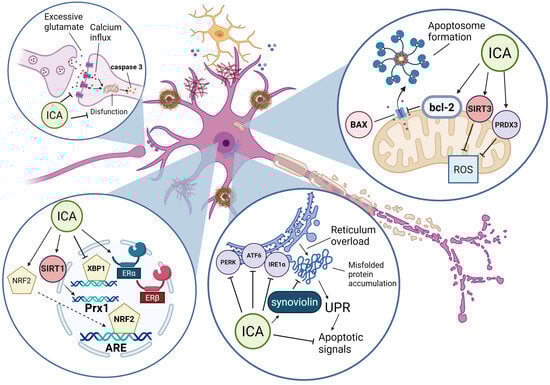
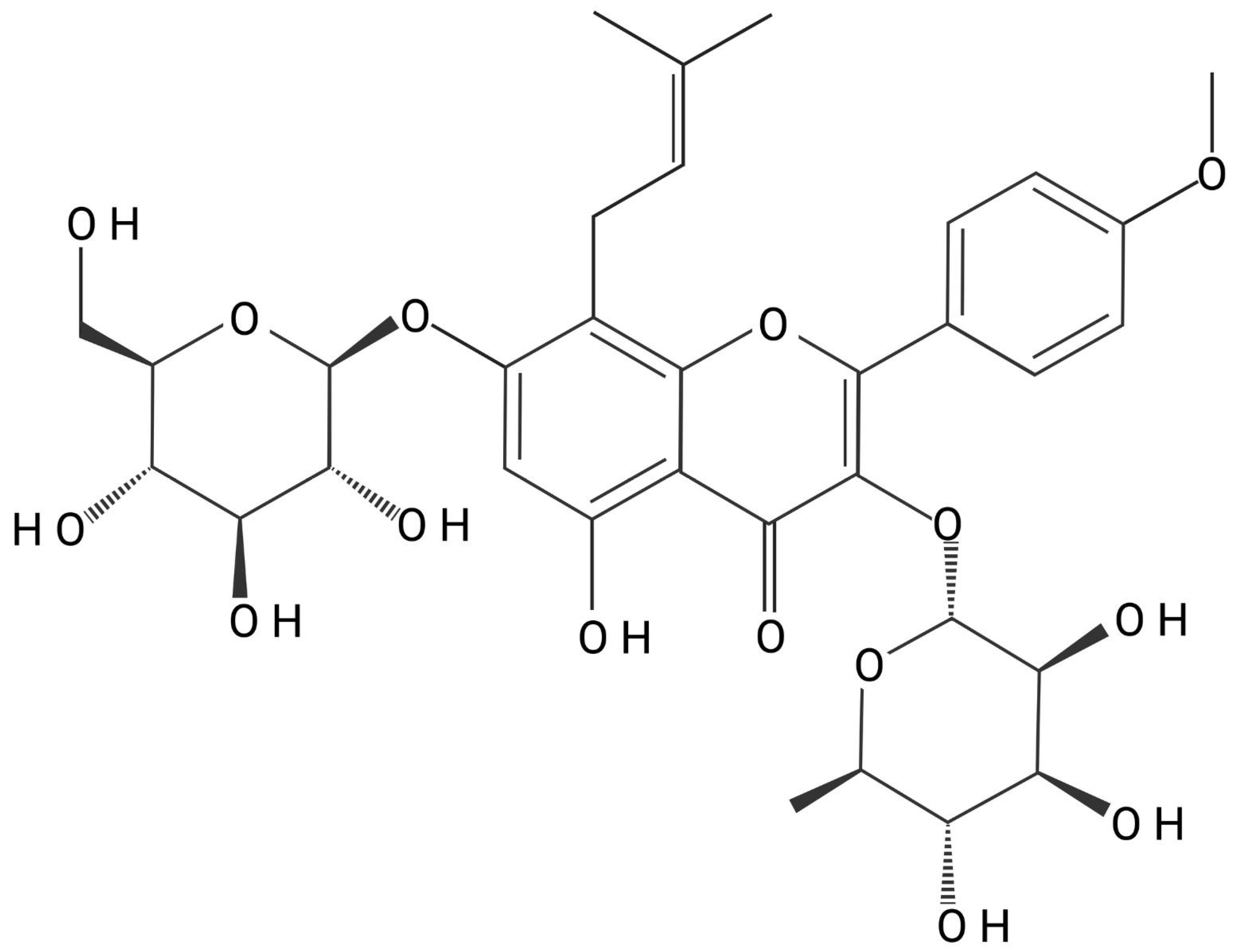
1. Introduction
Pharmacokinetics of Icariin
2. Anti-Inflammatory Actions of ICA
3. ICA as a Potent Antioxidant Agent
4. ICA as a Negative Regulator of Apoptosis
5. ICA and Autophagy
6. Excitotoxicity and ICA
7. ICA Regulates Endoplasmic Reticulum Stress Under Pathological Conditions
8. Role of ICA in Ferroptosis
9. Conclusions
Supplementary Materials
Author Contributions
Funding
Institutional Review Board Statement
Informed Consent Statement
Data Availability Statement
Acknowledgments
Conflicts of Interest
Abbreviations
| ICA | Icariin |
| SIRT3 | Sirtuin 3 |
| PRDX3 | Peroxiredoxin 3 |
| ROS | Reactive Oxygen Species |
| RNS | Reactive Nitrogen Species |
| BBB | Blood–brain barrier |
| PD | Parkinson’s Disease |
| AD | Alzheimer’s Disease |
| ER | Endoplasmic Reticulum |
| CNS | Central Nervous System |
| Nrf2 | Nuclear Factor Erythroid 2–Related Factor 2 |
| SIRT1 | Sirtuin 1 |
| Prx1 | Peroxiredoxin 1 |
| ARE | Antioxidant Response Element |
| ERα/ERβ | Estrogen Receptor Alpha/Beta |
| PERK | Protein Kinase RNA-like ER Kinase |
| GRP-78 | Glucose-Regulated Protein 78 |
| IRE1α | Inositol-Requiring Enzyme 1 Alpha |
| XBP1 | X-Box Binding Protein 1 |
| Bcl-2 | B-cell Lymphoma 2 |
| Bax | Bcl-2-Associated X Protein |
| PGC-1α | PGC-1 Alpha |
| C57BL/6 | C57 Black 6 |
| SJL/J | Swiss Jim Lambert/Jackson |
| TNF-α | Tumor Necrosis Factor Alpha |
| iNOS | Inducible Nitric Oxide Synthase |
| ERK1/2 | Extracellular Signal-Regulated Kinases |
| p38 | p38 MAPK |
| IL-6/IL-1β | Interleukin 6/1 Beta |
| HIF-1α | Hypoxia-Inducible Factor 1 Alpha |
| NMDA | N-Methyl-D-Aspartate Receptor |
| TRPV1 | Transient Receptor Potential Vanilloid 1 |
| GLUN2B | NMDA Receptor Subunit 2B |
| PNI | Peripheral Nerve Injury |
| NF-κB | Nuclear Factor Kappa B |
| p65 | RelA Subunit of NF-κB |
| COX-2 | Cyclooxygenase 2 |
| p-AKT | Phosphorylated Protein Kinase B |
| IGF-1R | Insulin-Like Growth Factor 1 Receptor |
| LPS | Lipopolysaccharide |
| TLR4 | Toll-Like Receptor 4 |
| APP/PS1 | Amyloid Precursor/Presenilin 1 |
| TGF-β1 | Transforming Growth Factor Beta 1 |
| cGAS-STING | cGAS-STING Pathway |
| CD206 | Cluster of Differentiation 206 |
| TBK1/IRF3 | TBK1/Interferon Reg. Factor 3 |
| NLRP3 | NOD-Like Receptor protein 3 |
| HMGB1 | High Mobility Group Box 1 |
| MCAO | Middle Cerebral Artery Occlusion |
| HPA Axis | Hypothalamic-Pituitary-Adrenal Axis |
| BV-2 | Brain Ventricular 2 |
| HO-1 | Heme Oxygenase 1 |
| ALS | Amyotrophic Lateral Sclerosis |
| 6-OHDA | 6-Hydroxydopamine |
| GSH/GSSG | Reduced/Oxidized Glutathione |
| MDA | Malondialdehyde |
| SOD | Superoxide Dismutase |
| GSH-PX | Glutathione Peroxidase |
| PC12 | Pheochromocytoma Cell Line 12 |
| CAT | Catalase |
| SN | Substantia Nigra |
| EX527 | Sirtinol II |
| SH-SY5Y | SH-SY5Y |
| BDNF | Brain-Derived Neurotrophic Factor |
| AMPA | AMPA Receptor |
| RAGE | Receptor for Advanced Glycation End Products |
| NQO1 | NAD(P)H Quinone Dehydrogenase 1 |
| CPZ | Cuprizone |
| MBP | Myelin Basic Protein |
| BMDM | Bone Marrow-Derived Macrophages |
| SCI | Spinal Cord Injury |
| mTOR | Mechanistic Target of Rapamycin |
| IAPS/XIAP | Inhibitors of Apoptosis Proteins |
| NFT | Neurofibrillary Tangles |
| JNK/MAPK | JNK/Mitogen-Activated Protein Kinase |
| GSK-3β | Glycogen Synthase Kinase 3 Beta |
| Aβ | Amyloid Beta Peptide |
| DG/CA3 | Dentate Gyrus/Cornu Ammonis 3 |
| TH | Tyrosine Hydroxylase |
| CUMS/CMS | Chronic Mild Stress |
| HIBD | Hypoxic-Ischemic Brain Damage |
| OGD/R | Oxygen-Glucose Deprivation |
| CMA | Chaperone-Mediated Autophagy |
| LC3 | Light Chain 3 |
| CREB | cAMP Response Element-Binding |
| UPR | Unfolded Protein Response |
| CHOP/ATF4 | CHOP/ATF4 |
| PUFA | Polyunsaturated Fatty Acids |
References
- Vujosevic, S.; Limoli, C.; Kozak, I. Hallmarks of Aging in Age-Related Macular Degeneration and Age-Related Neurological Disorders: Novel Insights into Common Mechanisms and Clinical Relevance. EYE 2025, 39, 845–859. [Google Scholar] [CrossRef]
- Wang, S.; Jiang, Y.; Yang, A.; Meng, F.; Zhang, J. The Expanding Burden of Neurodegenerative Diseases: An Unmet Medical and Social Need. Aging Dis. 2024, 16, 2937–2952. [Google Scholar] [CrossRef] [PubMed]
- Hacker, K. The Burden of Chronic Disease. Mayo Clin. Proc. Innov. Qual. Outcomes 2024, 8, 112–119. [Google Scholar] [CrossRef] [PubMed]
- Gorman, A.M. Neuronal Cell Death in Neurodegenerative Diseases: Recurring Themes around Protein Handling. J. Cell. Mol. Med. 2008, 12, 2263–2280. [Google Scholar] [CrossRef] [PubMed]
- Moujalled, D.; Strasser, A.; Liddell, J.R. Molecular Mechanisms of Cell Death in Neurological Diseases. Cell Death Differ. 2021, 28, 2029–2044. [Google Scholar] [CrossRef]
- Chi, H.; Chang, H.-Y.; Sang, T.-K. Neuronal Cell Death Mechanisms in Major Neurodegenerative Diseases. Int. J. Mol. Sci. 2018, 19, 3082. [Google Scholar] [CrossRef]
- Fricker, M.; Tolkovsky, A.M.; Borutaite, V.; Coleman, M.; Brown, G.C. Neuronal Cell Death. Physiol. Rev. 2018, 98, 813–880. [Google Scholar] [CrossRef]
- Karvandi, M.S.; Sheikhzadeh Hesari, F.; Aref, A.R.; Mahdavi, M. The Neuroprotective Effects of Targeting Key Factors of Neuronal Cell Death in Neurodegenerative Diseases: The Role of ER Stress, Oxidative Stress, and Neuroinflammation. Front. Cell. Neurosci. 2023, 17, 1105247. [Google Scholar] [CrossRef]
- van Dam, L.; Dansen, T.B. Cross-Talk between Redox Signalling and Protein Aggregation. Biochem. Soc. Trans. 2020, 48, 379–397. [Google Scholar] [CrossRef]
- Liu, N.; Liu, Y.; Wang, Y.; Feng, C.; Piao, M.; Liu, M. Oxidative Cell Death in the Central Nervous System: Mechanisms and Therapeutic Strategies. Front. Cell Dev. Biol. 2025, 13, 1562344. [Google Scholar] [CrossRef]
- Lei, L.; Yuan, J.; Dai, Z.; Xiang, S.; Tu, Q.; Cui, X.; Zhai, S.; Chen, X.; He, Z.; Fang, B.; et al. Targeting the Labile Iron Pool with Engineered DFO Nanosheets to Inhibit Ferroptosis for Parkinson’s Disease Therapy. Adv. Mater. 2024, 36, e2409329. [Google Scholar] [CrossRef] [PubMed]
- Shi, F.-D.; Yong, V.W. Neuroinflammation across Neurological Diseases. Science 2025, 388, eadx0043. [Google Scholar] [CrossRef]
- Zhang, W.; Xiao, D.; Mao, Q.; Xia, H. Role of Neuroinflammation in Neurodegeneration Development. Signal Transduct. Target. Ther. 2023, 8, 267. [Google Scholar] [CrossRef]
- Lindholm, D.; Wootz, H.; Korhonen, L. ER Stress and Neurodegenerative Diseases. Cell Death Differ. 2006, 13, 385–392. [Google Scholar] [CrossRef]
- Hasan, S.-A.-M.; James, A.W.; Fazili, F.M.; Tarabishi, S.; Sheikh, N.M.; Shah, Z.A. Endoplasmic Reticulum Stress in Neurodegenerative Diseases. J. Dement. Alzheimers Dis. 2024, 1, 87–97. [Google Scholar] [CrossRef]
- Palmer, J.E.; Wilson, N.; Son, S.M.; Obrocki, P.; Wrobel, L.; Rob, M.; Takla, M.; Korolchuk, V.I.; Rubinsztein, D.C. Autophagy, Aging, and Age-Related Neurodegeneration. Neuron 2025, 113, 29–48. [Google Scholar] [CrossRef]
- Menzies, F.M.; Fleming, A.; Caricasole, A.; Bento, C.F.; Andrews, S.P.; Ashkenazi, A.; Füllgrabe, J.; Jackson, A.; Jimenez Sanchez, M.; Karabiyik, C.; et al. Autophagy and Neurodegeneration: Pathogenic Mechanisms and Therapeutic Opportunities. Neuron 2017, 93, 1015–1034. [Google Scholar] [CrossRef]
- Samanta, S.; Chakraborty, S.; Bagchi, D. Pathogenesis of Neurodegenerative Diseases and the Protective Role of Natural Bioactive Components. J. Am. Nutr. Assoc. 2024, 43, 20–32. [Google Scholar] [CrossRef]
- Ma, H.; He, X.; Yang, Y.; Li, M.; Hao, D.; Jia, Z. The Genus Epimedium: An Ethnopharmacological and Phytochemical Review. J. Ethnopharmacol. 2011, 134, 519–541. [Google Scholar] [CrossRef]
- Li, C.; Li, Q.; Mei, Q.; Lu, T. Pharmacological Effects and Pharmacokinetic Properties of Icariin, the Major Bioactive Component in Herba Epimedii. Life Sci. 2015, 126, 57–68. [Google Scholar] [CrossRef] [PubMed]
- Ding, C. Determination of icarim in luohan jindan oral liquid by thin-layer chromatography. Zhongguo Zhong Yao Za Zhi 1990, 15, 604–606, 640. [Google Scholar] [PubMed]
- Bilia, A.R.; Ballerini, R.; Qu, L.; Wang, M. Traditional Chinese Herbal Medicine in European Union: State of Art, Challenges, and Future Perspectives Focusing on Italian Market. Chin. Herb. Med. 2025, 17, 3–18. [Google Scholar] [CrossRef]
- Wang, S.; Ma, J.; Zeng, Y.; Zhou, G.; Wang, Y.; Zhou, W.; Sun, X.; Wu, M. Icariin, an up-and-Coming Bioactive Compound against Neurological Diseases: Network Pharmacology-Based Study and Literature Review. Drug Des. Devel. Ther. 2021, 15, 3619–3641. [Google Scholar] [CrossRef]
- Li, S.; He, M.; He, Y.; Jin, T.; Chen, J.; Peng, J.; Hu, W.; He, F. Icariin Supplementation Alleviates Cognitive Impairment Induced by D-Galactose via Modulation of the Gut-Brain Axis. J. Agric. Food Chem. 2025, 73, 15138–15154. [Google Scholar] [CrossRef]
- Lu, D.-S.; Chen, C.; Zheng, Y.-X.; Li, D.-D.; Wang, G.-Q.; Liu, J.; Shi, J.; Zhang, F. Combination Treatment of Icariin and L-DOPA against 6-OHDA-Lesioned Dopamine Neurotoxicity. Front. Mol. Neurosci. 2018, 11, 155, Correction in Front. Mol. Neurosci. 2020, 13, 605722. https://doi.org/10.3389/fnmol.2020.605722.. [Google Scholar] [CrossRef]
- Zheng, X.X.; Li, Y.C.; Yang, K.L.; He, Z.X.; Wang, Z.L.; Wang, X.; Jing, H.L.; Cao, Y.J. Icariin Reduces Glu-Induced Excitatory Neurotoxicity via Antioxidative and Antiapoptotic Pathways in SH-SY5Y Cells. Phytother. Res. 2021, 35, 3377–3389. [Google Scholar] [CrossRef] [PubMed]
- Wang, M.; Yang, X.; Zhou, Q.; Guo, Y.; Chen, Y.; Song, L.; Yang, J.; Li, L.; Luo, L. Neuroprotective Mechanism of Icariin on Hypoxic Ischemic Brain Damage in Neonatal Mice. Oxid. Med. Cell. Longev. 2022, 2022, 1330928. [Google Scholar] [CrossRef]
- Li, L.R.; Sethi, G.; Zhang, X.; Liu, C.L.; Huang, Y.; Liu, Q.; Ren, B.X.; Tang, F.R. The Neuroprotective Effects of Icariin on Ageing, Various Neurological, Neuropsychiatric Disorders, and Brain Injury Induced by Radiation Exposure. Aging 2022, 14, 1562–1588. [Google Scholar] [CrossRef] [PubMed]
- Yan, F.; Liu, J.; Chen, M.-X.; Zhang, Y.; Wei, S.-J.; Jin, H.; Nie, J.; Fu, X.-L.; Shi, J.-S.; Zhou, S.-Y.; et al. Icariin Ameliorates Memory Deficits through Regulating Brain Insulin Signaling and Glucose Transporters in 3×Tg-AD Mice. Neural Regen. Res. 2023, 18, 183–188. [Google Scholar] [CrossRef]
- Xu, C.; Huang, X.; Tong, Y.; Feng, X.; Wang, Y.; Wang, C.; Jiang, Y. Icariin Modulates the sirtuin/NF-κB Pathway and Exerts Anti-aging Effects in Human Lung Fibroblasts. Mol. Med. Rep. 2020, 22, 3833–3839. [Google Scholar] [CrossRef]
- Zhu, H.-R.; Wang, Z.-Y.; Zhu, X.-L.; Wu, X.-X.; Li, E.-G.; Xu, Y. Icariin Protects against Brain Injury by Enhancing SIRT1-Dependent PGC-1alpha Expression in Experimental Stroke. Neuropharmacology 2010, 59, 70–76. [Google Scholar] [CrossRef]
- Ni, T.; Lin, N.; Huang, X.; Lu, W.; Sun, Z.; Zhang, J.; Lin, H.; Chi, J.; Guo, H. Icariin Ameliorates Diabetic Cardiomyopathy through Apelin/Sirt3 Signalling to Improve Mitochondrial Dysfunction. Front. Pharmacol. 2020, 11, 256. [Google Scholar] [CrossRef] [PubMed]
- Li, H.; Zhang, X.; Qi, X.; Zhu, X.; Cheng, L. Icariin Inhibits Endoplasmic Reticulum Stress-Induced Neuronal Apoptosis after Spinal Cord Injury through Modulating the PI3K/AKT Signaling Pathway. Int. J. Biol. Sci. 2019, 15, 277–286. [Google Scholar] [CrossRef] [PubMed]
- Dai, M.; Chen, B.; Wang, X.; Gao, C.; Yu, H. Icariin Enhance Mild Hypothermia-Induced Neuroprotection via Inhibiting the Activation of NF-κB in Experimental Ischemic Stroke. Metab. Brain Dis. 2021, 36, 1779–1790. [Google Scholar] [CrossRef]
- Chen, F.-J.; Liu, B.; Wu, Q.; Liu, J.; Xu, Y.-Y.; Zhou, S.-Y.; Shi, J.-S. Icariin Delays Brain Aging in Senescence-Accelerated Mouse Prone 8 (SAMP8) Model via Inhibiting Autophagy. J. Pharmacol. Exp. Ther. 2019, 369, 121–128. [Google Scholar] [CrossRef] [PubMed]
- Yang, Y.; Fu, Y.; Qin, Z.; Pei, H.; Zhai, L.; Guan, Q.; Wu, S.; Shen, H. Icariin Improves Cognitive Impairment by Inhibiting Ferroptosis of Nerve Cells. Aging 2023, 15, 11546–11553. [Google Scholar] [CrossRef]
- Rana, J.N.; Mumtaz, S. Prunin: An Emerging Anticancer Flavonoid. Int. J. Mol. Sci. 2025, 26, 2678. [Google Scholar] [CrossRef]
- Zhang, H.-W.; Hu, J.-J.; Fu, R.-Q.; Liu, X.; Zhang, Y.-H.; Li, J.; Liu, L.; Li, Y.-N.; Deng, Q.; Luo, Q.-S.; et al. Flavonoids Inhibit Cell Proliferation and Induce Apoptosis and Autophagy through Downregulation of PI3Kγ Mediated PI3K/AKT/mTOR/p70S6K/ULK Signaling Pathway in Human Breast Cancer Cells. Sci. Rep. 2018, 8, 11255. [Google Scholar] [CrossRef]
- Brusselmans, K.; Vrolix, R.; Verhoeven, G.; Swinnen, J.V. Induction of Cancer Cell Apoptosis by Flavonoids Is Associated with Their Ability to Inhibit Fatty Acid Synthase Activity. J. Biol. Chem. 2005, 280, 5636–5645. [Google Scholar] [CrossRef]
- Jomova, K.; Alomar, S.Y.; Valko, R.; Liska, J.; Nepovimova, E.; Kuca, K.; Valko, M. Flavonoids and Their Role in Oxidative Stress, Inflammation, and Human Diseases. Chem. Biol. Interact. 2025, 413, 111489. [Google Scholar] [CrossRef]
- Kruszka, J.; Martyński, J.; Szewczyk-Golec, K.; Woźniak, A.; Nuszkiewicz, J. The Role of Selected Flavonoids in Modulating Neuroinflammation in Alzheimer’s Disease: Mechanisms and Therapeutic Potential. Brain Sci. 2025, 15, 485. [Google Scholar] [CrossRef] [PubMed]
- Al-Khayri, J.M.; Sahana, G.R.; Nagella, P.; Joseph, B.V.; Alessa, F.M.; Al-Mssallem, M.Q. Flavonoids as Potential Anti-Inflammatory Molecules: A Review. Molecules 2022, 27, 2901. [Google Scholar] [CrossRef] [PubMed]
- Cotelle, N. Role of Flavonoids in Oxidative Stress. Curr. Top. Med. Chem. 2001, 1, 569–590. [Google Scholar] [CrossRef]
- Leonardo, C.C.; Doré, S. Dietary Flavonoids Are Neuroprotective through Nrf2-Coordinated Induction of Endogenous Cytoprotective Proteins. Nutr. Neurosci. 2011, 14, 226–236. [Google Scholar] [CrossRef]
- Habtemariam, S. The Nrf2/HO-1 Axis as Targets for Flavanones: Neuroprotection by Pinocembrin, Naringenin, and Eriodictyol. Oxid. Med. Cell. Longev. 2019, 2019, 4724920. [Google Scholar] [CrossRef]
- Fanaro, G.B.; Marques, M.R.; Calaza, K.d.C.; Brito, R.; Pessoni, A.M.; Mendonça, H.R.; Lemos, D.E.d.A.; de Brito Alves, J.L.; de Souza, E.L.; Cavalcanti Neto, M.P. New Insights on Dietary Polyphenols for the Management of Oxidative Stress and Neuroinflammation in Diabetic Retinopathy. Antioxidants 2023, 12, 1237. [Google Scholar] [CrossRef]
- Skibola, C.F.; Smith, M.T. Potential Health Impacts of Excessive Flavonoid Intake. Free Radic. Biol. Med. 2000, 29, 375–383. [Google Scholar] [CrossRef]
- Liu, F.-Y.; Ding, D.-N.; Wang, Y.-R.; Liu, S.-X.; Peng, C.; Shen, F.; Zhu, X.-Y.; Li, C.; Tang, L.-P.; Han, F.-J. Icariin as a Potential Anticancer Agent: A Review of Its Biological Effects on Various Cancers. Front. Pharmacol. 2023, 14, 1216363. [Google Scholar] [CrossRef]
- Chen, Y.; Wang, J.; Jia, X.; Tan, X.; Hu, M. Role of Intestinal Hydrolase in the Absorption of Prenylated Flavonoids Present in Yinyanghuo. Molecules 2011, 16, 1336–1348. [Google Scholar] [CrossRef]
- Xu, S.; Yu, J.; Zhan, J.; Yang, L.; Guo, L.; Xu, Y. Pharmacokinetics, Tissue Distribution, and Metabolism Study of Icariin in Rat. Biomed Res. Int. 2017, 2017, 4684962. [Google Scholar] [CrossRef] [PubMed]
- Cheng, S.; Qiu, F.; Wang, S.; He, J. HPLC Analysis and Pharmacokinetics of Icariin in Rats. J. Sep. Sci. 2007, 30, 1307–1312. [Google Scholar] [CrossRef]
- Jin, J.; Wang, H.; Hua, X.; Chen, D.; Huang, C.; Chen, Z. An Outline for the Pharmacological Effect of Icariin in the Nervous System. Eur. J. Pharmacol. 2019, 842, 20–32. [Google Scholar] [CrossRef]
- Liu, J.; Lou, Y.-J. Determination of Icariin and Metabolites in Rat Serum by Capillary Zone Electrophoresis: Rat Pharmacokinetic Studies after Administration of Icariin. J. Pharm. Biomed. Anal. 2004, 36, 365–370. [Google Scholar] [CrossRef] [PubMed]
- Zhang, Y.; Wang, Q.-S.; Cui, Y.-L.; Meng, F.-C.; Lin, K.-M. Changes in the Intestinal Absorption Mechanism of Icariin in the Nanocavities of Cyclodextrins. Int. J. Nanomed. 2012, 7, 4239–4249. [Google Scholar] [CrossRef]
- Zhou, J.; Chen, Y.; Wang, Y.; Gao, X.; Qu, D.; Liu, C. A Comparative Study on the Metabolism of Epimedium Koreanum Nakai-Prenylated Flavonoids in Rats by an Intestinal Enzyme (lactase Phlorizin Hydrolase) and Intestinal Flora. Molecules 2013, 19, 177–203. [Google Scholar] [CrossRef] [PubMed]
- Zhao, H.; Fan, M.; Fan, L.; Sun, J.; Guo, D. Liquid Chromatography-Tandem Mass Spectrometry Analysis of Metabolites in Rats after Administration of Prenylflavonoids from Epimediums. J. Chromatogr. B Analyt. Technol. Biomed. Life Sci. 2010, 878, 1113–1124. [Google Scholar] [CrossRef]
- Qian, Q.; Li, S.-L.; Sun, E.; Zhang, K.-R.; Tan, X.-B.; Wei, Y.-J.; Fan, H.-W.; Cui, L.; Jia, X.-B. Metabolite Profiles of Icariin in Rat Plasma by Ultra-Fast Liquid Chromatography Coupled to Triple-Quadrupole/time-of-Flight Mass Spectrometry. J. Pharm. Biomed. Anal. 2012, 66, 392–398. [Google Scholar] [CrossRef]
- Cheng, T.; Sheng, T.; Yi, Y.; Zhang, T.; Han, H. Metabolism Profiles of Icariin in Rats Using Ultra-High Performance Liquid Chromatography Coupled with Quadrupole Time-of-Flight Tandem Mass Spectrometry and in Vitro Enzymatic Study. J. Chromatogr. B Analyt. Technol. Biomed. Life Sci. 2016, 1033–1034, 353–360. [Google Scholar] [CrossRef]
- Cheng, T.; Zhang, Y.; Zhang, T.; Lu, L.; Ding, Y.; Zhao, Y. Comparative Pharmacokinetics Study of Icariin and Icariside II in Rats. Molecules 2015, 20, 21274–21286. [Google Scholar] [CrossRef]
- Yang, W.; Yu, X.-C.; Chen, X.-Y.; Zhang, L.; Lu, C.-T.; Zhao, Y.-Z. Pharmacokinetics and Tissue Distribution Profile of Icariin Propylene Glycol-Liposome Intraperitoneal Injection in Mice: Icariin Liposome Pharmacokinetics and Tissue Distribution. J. Pharm. Pharmacol. 2012, 64, 190–198. [Google Scholar] [CrossRef] [PubMed]
- Shi, M.; Kan, H.; Tang, Y.; Tian, L.; Guo, X.; Chen, W.; Geng, J.; Zong, Y.; Bi, Y.; He, Z. Icariin Ameliorates Cyclophosphamide-Induced Renal Encephalopathy by Modulating the NF-κB and Keap1-Nrf2 Signaling Pathways. Int. J. Mol. Sci. 2025, 26, 4838. [Google Scholar] [CrossRef]
- Wang, Y.; Yang, W.; Zuo, H.; Zeng, S.; Liu, X.; Cao, F.; Yang, H.; Gao, S.; Tian, M.; Gao, X.; et al. Icariin Interacts with IGFBP3 to Alleviate Diabetic Cataract through PI3K/AKT Signaling Pathway. iScience 2025, 28, 112796. [Google Scholar] [CrossRef] [PubMed]
- Liu, L.; Zhao, Z.; Lu, L.; Liu, J.; Sun, J.; Wu, X.; Dong, J. Icariin and Icaritin Ameliorated Hippocampus Neuroinflammation via Inhibiting HMGB1-Related pro-Inflammatory Signals in Lipopolysaccharide-Induced Inflammation Model in C57BL/6 J Mice. Int. Immunopharmacol. 2019, 68, 95–105. [Google Scholar] [CrossRef] [PubMed]
- Jia, G.; Zhang, Y.; Li, W.; Dai, H. Neuroprotective Role of Icariin in Experimental Spinal Cord Injury via Its Antioxidant, Anti-neuroinflammatory and Anti-apoptotic Properties. Mol. Med. Rep. 2019, 20, 3433–3439. [Google Scholar] [CrossRef]
- Zeng, R.; Wang, X.; Zhou, Q.; Fu, X.; Wu, Q.; Lu, Y.; Shi, J.; Klaunig, J.E.; Zhou, S. Icariin Protects Rotenone-Induced Neurotoxicity through Induction of SIRT3. Toxicol. Appl. Pharmacol. 2019, 379, 114639. [Google Scholar] [CrossRef] [PubMed]
- Wang, C.; Wang, X.; Xu, L.; Cheng, Y. Neuroprotective Activity of Icariin against Hypoxic-Ischemic Brain Injury in Neonatal Rats. Int. J. Pharmacol. 2019, 15, 829–836. [Google Scholar] [CrossRef]
- Wu, J.; Qu, J.-Q.; Zhou, Y.-J.; Zhou, Y.-J.; Li, Y.-Y.; Huang, N.-Q.; Deng, C.-M.; Luo, Y. Icariin Improves Cognitive Deficits by Reducing the Deposition of β-Amyloid Peptide and Inhibition of Neurons Apoptosis in SAMP8 Mice. Neuroreport 2020, 31, 663–671. [Google Scholar] [CrossRef] [PubMed]
- Zheng, J.; Du, M.; Ye, W.; Xie, J.; Zhang, P.; Huang, C.; Lin, H. Editorial: Molecular Mechanisms and Therapeutic Strategies in Inflammation. Front. Immunol. 2025, 16, 1626548. [Google Scholar] [CrossRef]
- Wei, Z.; Wang, M.; Hong, M.; Diao, S.; Liu, A.; Huang, Y.; Yu, Q.; Peng, Z. Icariin Exerts Estrogen-like Activity in Ameliorating EAE via Mediating Estrogen Receptor β, Modulating HPA Function and Glucocorticoid Receptor Expression. Am. J. Transl. Res. 2016, 8, 1910–1918. [Google Scholar]
- Cong, H.; Zhang, M.; Chang, H.; Du, L.; Zhang, X.; Yin, L. Icariin Ameliorates the Progression of Experimental Autoimmune Encephalomyelitis by down-Regulating the Major Inflammatory Signal Pathways in a Mouse Relapse-Remission Model of Multiple Sclerosis. Eur. J. Pharmacol. 2020, 885, 173523. [Google Scholar] [CrossRef]
- Wang, G.; Li, X.; Li, N.; Wang, X.; He, S.; Li, W.; Fan, W.; Li, R.; Liu, J.; Hou, S. Icariin Alleviates Uveitis by Targeting Peroxiredoxin 3 to Modulate Retinal Microglia M1/M2 Phenotypic Polarization. Redox Biol. 2022, 52, 102297. [Google Scholar] [CrossRef] [PubMed]
- Shen, R.; Deng, W.; Li, C.; Zeng, G. A Natural Flavonoid Glucoside Icariin Inhibits Th1 and Th17 Cell Differentiation and Ameliorates Experimental Autoimmune Encephalomyelitis. Int. Immunopharmacol. 2015, 24, 224–231. [Google Scholar] [CrossRef] [PubMed]
- Pokkula, S.; Thakur, S.R. Icariin Ameliorates Partial Sciatic Nerve Ligation Induced Neuropathic Pain in Rats: An Evidence of in Silico and in Vivo Studies. J. Pharm. Pharmacol. 2021, 73, 874–880. [Google Scholar] [CrossRef]
- Lin, Z.; Zhong, R.; Xu, Y.; Wu, Y.; Ru, C. Shell-Core Structured Nanofibers Mediate Staged Anti-Inflammatory and pro-Neurogenic Activities to Repair Peripheral Nerve. Mater. Res. Express 2024, 11, 085006. [Google Scholar] [CrossRef]
- Wang, L.; Peng, G.; Chen, L.; Guo, M.; Wang, B.; Zhang, Y.; Zhou, J.; Zhong, M.; Ye, J. Icariin Reduces Cognitive Dysfunction Induced by Surgical Trauma in Aged Rats by Inhibiting Hippocampal Neuroinflammation. Front. Behav. Neurosci. 2023, 17, 1162009. [Google Scholar] [CrossRef]
- Lu, F.; Li, L.; Zheng, B.; Wang, C.; Liu, Z.; Huang, X.; Song, L.; Ding, C.; Li, Y. Icariin Alleviates Cognitive Dysfunction by Reducing Neuroinflammation via the cGAS-STING Pathway. J. Ethnopharmacol. 2025, 350, 120010. [Google Scholar] [CrossRef] [PubMed]
- Zhang, Z.-Y.; Li, C.; Zug, C.; Schluesener, H.J. Icariin Ameliorates Neuropathological Changes, TGF-β1 Accumulation and Behavioral Deficits in a Mouse Model of Cerebral Amyloidosis. PLoS ONE 2014, 9, e104616. [Google Scholar] [CrossRef]
- Li, H.; Xiao, Q.; Zhu, L.; Kang, J.; Zhan, Q.; Peng, W. Targeting Ceramide-Induced Microglial Pyroptosis: Icariin Is a Promising Therapy for Alzheimer’s Disease. J. Pharm. Anal. 2025, 15, 101106. [Google Scholar] [CrossRef]
- Wang, J.; Liu, Y.; Wu, Y.; Yang, K.; Yang, K.; Yan, L.; Feng, L. Anti-Inflammatory Effects of Icariin in the Acute and Chronic Phases of the Mouse Pilocarpine Model of Epilepsy. Eur. J. Pharmacol. 2023, 960, 176141. [Google Scholar] [CrossRef]
- Zheng, J.; Liao, Y.; Xu, Y.; Mo, Z. Icariin Attenuates Ischaemic Stroke through Suppressing Inflammation Mediated by Endoplasmic Reticulum Stress Signalling Pathway in Rats. Clin. Exp. Pharmacol. Physiol. 2022, 49, 719–730. [Google Scholar] [CrossRef]
- Li, T.; Li, S.; Xiong, Y.; Li, X.; Ma, C.; Guan, Z.; Yang, L. Binary Nano-Inhalant Formulation of Icariin Enhances Cognitive Function in Vascular Dementia via BDNF/TrkB Signaling and Anti-Inflammatory Effects. Neurochem. Res. 2024, 49, 1720–1734. [Google Scholar] [CrossRef]
- Zheng, Y.; Zhu, G.; He, J.; Wang, G.; Li, D.; Zhang, F. Icariin Targets Nrf2 Signaling to Inhibit Microglia-Mediated Neuroinflammation. Int. Immunopharmacol. 2019, 73, 304–311, Correction in Int. Immunopharmacol. 2020, 88, 107004. https://doi.org/10.1016/j.intimp.2020.107004. [Google Scholar] [CrossRef]
- Zhang, B.; Wang, G.; He, J.; Yang, Q.; Li, D.; Li, J.; Zhang, F. Icariin Attenuates Neuroinflammation and Exerts Dopamine Neuroprotection via an Nrf2-Dependent Manner. J. Neuroinflammation 2019, 16, 92. [Google Scholar] [CrossRef]
- Li, H.; Zhang, X.; Zhu, X.; Qi, X.; Lin, K.; Cheng, L. The Effects of Icariin on Enhancing Motor Recovery through Attenuating pro-Inflammatory Factors and Oxidative Stress via Mitochondrial Apoptotic Pathway in the Mice Model of Spinal Cord Injury. Front. Physiol. 2018, 9, 1617. [Google Scholar] [CrossRef]
- Sharma, S.; Mehan, S.; Khan, Z.; Gupta, G.D.; Narula, A.S. Icariin Prevents Methylmercury-Induced Experimental Neurotoxicity: Evidence from Cerebrospinal Fluid, Blood Plasma, Brain Samples, and in-Silico Investigations. Heliyon 2024, 10, e24050. [Google Scholar] [CrossRef] [PubMed]
- Xu, N.; Huang, F.; Jian, C.; Qin, L.; Lu, F.; Wang, Y.; Zhang, Z.; Zhang, Q. Neuroprotective Effect of Salidroside against Central Nervous System Inflammation-Induced Cognitive Deficits: A Pivotal Role of Sirtuin 1-Dependent Nrf-2/HO-1/NF-κB Pathway: Salidroside Alleviates Cognitive Deficits. Phytother. Res. 2019, 33, 1438–1447. [Google Scholar] [CrossRef] [PubMed]
- Dong, J.; Zhang, X.; Wang, S.; Xu, C.; Gao, M.; Liu, S.; Li, X.; Cheng, N.; Han, Y.; Wang, X.; et al. Thymoquinone Prevents Dopaminergic Neurodegeneration by Attenuating Oxidative Stress via the Nrf2/ARE Pathway. Front. Pharmacol. 2020, 11, 615598. [Google Scholar] [CrossRef] [PubMed]
- Zhang, W.-D.; Li, N.; Du, Z.-R.; Zhang, M.; Chen, S.; Chen, W.-F. IGF-1 Receptor Is Involved in the Regulatory Effects of Icariin and Icaritin in Astrocytes under Basal Conditions and after an Inflammatory Challenge. Eur. J. Pharmacol. 2021, 906, 174269. [Google Scholar] [CrossRef]
- Liu, B.; Xu, C.; Wu, X.; Liu, F.; Du, Y.; Sun, J.; Tao, J.; Dong, J. Icariin Exerts an Antidepressant Effect in an Unpredictable Chronic Mild Stress Model of Depression in Rats and Is Associated with the Regulation of Hippocampal Neuroinflammation. Neuroscience 2015, 294, 193–205. [Google Scholar] [CrossRef]
- Xiong, D.; Deng, Y.; Huang, B.; Yin, C.; Liu, B.; Shi, J.; Gong, Q. Icariin Attenuates Cerebral Ischemia-Reperfusion Injury through Inhibition of Inflammatory Response Mediated by NF-κB, PPARα and PPARγ in Rats. Int. Immunopharmacol. 2016, 30, 157–162. [Google Scholar] [CrossRef]
- Mo, Z.-T.; Li, W.-N.; Zhai, Y.-R.; Gao, S.-Y. The Effects of Icariin on the Expression of HIF-1α, HSP-60 and HSP-70 in PC12 Cells Suffered from Oxygen-Glucose Deprivation-Induced Injury. Pharm. Biol. 2017, 55, 848–852. [Google Scholar] [CrossRef]
- Song, L.-J.; Han, Q.-X.; Ding, Z.-B.; Liu, K.; Zhang, X.-X.; Guo, M.-F.; Ma, D.; Wang, Q.; Xiao, B.-G.; Ma, C.-G. Icariin Ameliorates the Cuprizone-Induced Demyelination Associated with Antioxidation and Anti-Inflammation. Inflammopharmacology 2024, 32, 809–823. [Google Scholar] [CrossRef] [PubMed]
- Chen, S.; Zou, R.; Si, J.; Shi, Q.; Zhang, L.; Kang, L.; Ni, J.; Sha, D. Icariin Inhibits Apoptosis in OGD-Induced Neurons by Regulating M2 Pyruvate Kinase. IBRO Neurosci. Rep. 2024, 16, 535–541. [Google Scholar] [CrossRef]
- Sies, H.; Jones, D.P. Reactive Oxygen Species (ROS) as Pleiotropic Physiological Signalling Agents. Nat. Rev. Mol. Cell Biol. 2020, 21, 363–383. [Google Scholar] [CrossRef] [PubMed]
- Stewart, V.C.; Heales, S.J.R. Nitric Oxide-Induced Mitochondrial Dysfunction: Implications for Neurodegeneration. Free Radic. Biol. Med. 2003, 34, 287–303. [Google Scholar] [CrossRef]
- de Freitas Azevedo-Repossi, R.; Brito, R.; Cossenza, M.; Dos Santos-Rodrigues, A.; Ferreira, G.C.; Petrs-Silva, H.; Calaza, K.C.; Fragel-Madeira, L. Reactive Oxygen Species Regulation across Retinitis Pigmentosa Animal Models: A 25-Year Systematized Review. Mol. Neurobiol. 2025, 62, 16015–16044. [Google Scholar] [CrossRef]
- Sies, H. Oxidative Stress: A Concept in Redox Biology and Medicine. Redox Biol. 2015, 4, 180–183. [Google Scholar] [CrossRef]
- Tempone, M.H.; Borges-Martins, V.P.; César, F.; Alexandrino-Mattos, D.P.; de Figueiredo, C.S.; Raony, Í.; Dos Santos, A.A.; Duarte-Silva, A.T.; Dias, M.S.; Freitas, H.R.; et al. The Healthy and Diseased Retina Seen through Neuron-Glia Interactions. Int. J. Mol. Sci. 2024, 25, 1120. [Google Scholar] [CrossRef] [PubMed]
- Baird, L.; Yamamoto, M. The Molecular Mechanisms Regulating the KEAP1-NRF2 Pathway. Mol. Cell. Biol. 2020, 40, 1–23. [Google Scholar] [CrossRef] [PubMed]
- Joo, H.; Bae, J.; Lee, J.-S.; Bang, Y.; Lee, B.-J.; Park, J.-W.; Lee, K.; Cho, J.-H.; Bu, Y. Icariin Improves Functional Behavior in a Mouse Model of Traumatic Brain Injury and Promotes Synaptic Plasticity Markers. Planta Med. 2019, 85, 231–238. [Google Scholar] [CrossRef]
- Ning, K.; Gao, R. Icariin Protects Cerebral Neural Cells from Ischemia-reperfusion Injury in an in Vitro Model by Lowering ROS Production and Intracellular Calcium Concentration. Exp. Ther. Med. 2023, 25, 151. [Google Scholar] [CrossRef]
- Guo, Y.; Cai, Y.; Zhang, X. Icariin Ameliorates the Cognitive Function in an Epilepsy Neonatal Rat Model by Blocking the GluR2/ERK I/II Pathway. Folia Neuropathol. 2020, 58, 245–252. [Google Scholar] [CrossRef] [PubMed]
- Xu, R.-X.; Wu, Q.; Luo, Y.; Gong, Q.-H.; Yu, L.-M.; Huang, X.-N.; Sun, A.-S.; Shi, J.-S. Protective Effects of Icariin on Cognitive Deficits Induced by Chronic Cerebral Hypoperfusion in Rats. Clin. Exp. Pharmacol. Physiol. 2009, 36, 810–815. [Google Scholar] [CrossRef]
- Zheng, M.; Qu, L.; Lou, Y. Effects of Icariin Combined with Panax Notoginseng Saponins on Ischemia Reperfusion-Induced Cognitive Impairments Related with Oxidative Stress and CA1 of Hippocampal Neurons in Rat. Phytother. Res. 2008, 22, 597–604. [Google Scholar] [CrossRef]
- Nwachukwu, K.; Rhoads, E.; Meek, S.; Bardi, M. Back to Nature: Herbal Treatment, Environmental Enrichment, and Social Play Can Protect against Unpredictable Chronic Stress in Long-Evans Rats (Rattus norvegicus). Psychopharmacology 2021, 238, 2999–3012. [Google Scholar] [CrossRef]
- Zhu, L.; Li, D.; Chen, C.; Wang, G.; Shi, J.; Zhang, F. Activation of Nrf2 Signaling by Icariin Protects against 6-OHDA-Induced Neurotoxicity. Biotechnol. Appl. Biochem. 2019, 66, 465–471. [Google Scholar] [CrossRef] [PubMed]
- Li, W.-W.; Gao, X.-M.; Wang, X.-M.; Guo, H.; Zhang, B.-L. Icariin Inhibits Hydrogen Peroxide-Induced Toxicity through Inhibition of Phosphorylation of JNK/p38 MAPK and p53 Activity. Mutat. Res. 2011, 708, 1–10. [Google Scholar] [CrossRef] [PubMed]
- Zhang, L.; Huang, S.; Chen, Y.; Wang, Z.; Li, E.; Xu, Y. Icariin Inhibits Hydrogen Peroxide-Mediated Cytotoxicity by up-Regulating Sirtuin Type 1-Dependent Catalase and Peroxiredoxin. Basic Clin. Pharmacol. Toxicol. 2010, 107, 899–905. [Google Scholar] [CrossRef]
- Zhao, S.-Y.; Liao, L.-X.; Tu, P.-F.; Li, W.-W.; Zeng, K.-W. Icariin Inhibits AGE-Induced Injury in PC12 Cells by Directly Targeting Apoptosis Regulator Bax. Oxid. Med. Cell. Longev. 2019, 2019, 7940808. [Google Scholar] [CrossRef]
- Yuan, P.; Chen, W.; Wang, X.; Li, L.; Peng, Z.; Mu, S.; You, M.; Xu, H. RAGE: A Potential Target for Epimedium’s Anti-Neuroinflammation Role in Vascular Dementia-Insights from Network Pharmacology and Molecular Simulation. J. Biomol. Struct. Dyn. 2024, 42, 10856–10875. [Google Scholar] [CrossRef]
- He, X.-L.; Zhou, W.-Q.; Bi, M.-G.; Du, G.-H. Neuroprotective Effects of Icariin on Memory Impairment and Neurochemical Deficits in Senescence-Accelerated Mouse Prone 8 (SAMP8) Mice. Brain Res. 2010, 1334, 73–83. [Google Scholar] [CrossRef]
- Zhang, Y.; Huang, N.; Lu, H.; Huang, J.; Jin, H.; Shi, J.; Jin, F. Icariin Protects against Sodium Azide-Induced Neurotoxicity by Activating the PI3K/Akt/GSK-3β Signaling Pathway. PeerJ 2020, 8, e8955. [Google Scholar] [CrossRef]
- Wang, H.; Tang, Q.; Xue, Y.; Gao, X.; Zhang, Y. Discovery of Drug Lead Compounds for Anti-Alzheimer’s Disease on the Basis of Synaptic Plasticity. Heliyon 2023, 9, e18396. [Google Scholar] [CrossRef]
- Song, Y.-X.; Miao, J.-Y.; Qiang, M.; He, R.-Q.; Wang, X.-M.; Li, W.-W. Icariin Protects SH-SY5Y Cells from Formaldehyde-Induced Injury through Suppression of Tau Phosphorylation. Chin. J. Integr. Med. 2016, 22, 430–437. [Google Scholar] [CrossRef]
- Zhang, Y.; Kong, W.-N.; Chai, X.-Q. Compound of Icariin, Astragalus, and Puerarin Mitigates Iron Overload in the Cerebral Cortex of Alzheimer’s Disease Mice. Neural Regen. Res. 2018, 13, 731–736. [Google Scholar] [CrossRef]
- Sha, D.; Li, L.; Ye, L.; Liu, R.; Xu, Y. Icariin Inhibits Neurotoxicity of Beta-Amyloid by Upregulating Cocaine-Regulated and Amphetamine-Regulated Transcripts. Neuroreport 2009, 20, 1564–1567. [Google Scholar] [CrossRef] [PubMed]
- Zhou, N.; Tang, Y.; Keep, R.F.; Ma, X.; Xiang, J. Antioxidative Effects of Panax Notoginseng Saponins in Brain Cells. Phytomedicine 2014, 21, 1189–1195. [Google Scholar] [CrossRef] [PubMed]
- Lei, X.; Wen, D.; Huang, Z.; Li, X.; Tang, L.; Zhu, Y.; Guo, Z. Icariin Attenuates Oxidative Stress via SIRT1/PGC-1α Pathway in SAH Mice. Exp. Neurol. 2025, 390, 115303. [Google Scholar] [CrossRef]
- Rana, J.N.; Gul, K.; Mumtaz, S. Isorhamnetin: Reviewing Recent Developments in Anticancer Mechanisms and Nanoformulation-Driven Delivery. Int. J. Mol. Sci. 2025, 26, 7381. [Google Scholar] [CrossRef]
- Sethi, P.; Mehan, S.; Khan, Z.; Maurya, P.K.; Kumar, N.; Kumar, A.; Tiwari, A.; Sharma, T.; Das Gupta, G.; Narula, A.S.; et al. The SIRT-1/Nrf2/HO-1 Axis: Guardians of Neuronal Health in Neurological Disorders. Behav. Brain Res. 2025, 476, 115280. [Google Scholar] [CrossRef] [PubMed]
- Li, X.; Khan, I.; Xia, W.; Huang, G.; Liu, L.; Law, B.Y.K.; Yin, L.; Liao, W.; Leong, W.; Han, R.; et al. Icariin Enhances Youth-like Features by Attenuating the Declined Gut Microbiota in the Aged Mice. Pharmacol. Res. 2021, 168, 105587. [Google Scholar] [CrossRef]
- Vitale, I.; Pietrocola, F.; Guilbaud, E.; Aaronson, S.A.; Abrams, J.M.; Adam, D.; Agostini, M.; Agostinis, P.; Alnemri, E.S.; Altucci, L.; et al. Apoptotic Cell Death in Disease-Current Understanding of the NCCD 2023. Cell Death Differ. 2023, 30, 1097–1154. [Google Scholar] [CrossRef]
- Mustafa, M.; Ahmad, R.; Tantry, I.Q.; Ahmad, W.; Siddiqui, S.; Alam, M.; Abbas, K.; Moinuddin; Hassan, M.I.; Habib, S.; et al. Apoptosis: A Comprehensive Overview of Signaling Pathways, Morphological Changes, and Physiological Significance and Therapeutic Implications. Cells 2024, 13, 1838. [Google Scholar] [CrossRef]
- Marivin, A.; Berthelet, J.; Plenchette, S.; Dubrez, L. The Inhibitor of Apoptosis (IAPs) in Adaptive Response to Cellular Stress. Cells 2012, 1, 711–737. [Google Scholar] [CrossRef]
- Fan, C.; Yang, Y.; Liu, Y.; Jiang, S.; Di, S.; Hu, W.; Ma, Z.; Li, T.; Zhu, Y.; Xin, Z.; et al. Icariin Displays Anticancer Activity against Human Esophageal Cancer Cells via Regulating Endoplasmic Reticulum Stress-Mediated Apoptotic Signaling. Sci. Rep. 2016, 6, 21145. [Google Scholar] [CrossRef] [PubMed]
- D’Arcy, M.S. Cell Death: A Review of the Major Forms of Apoptosis, Necrosis and Autophagy. Cell Biol. Int. 2019, 43, 582–592. [Google Scholar] [CrossRef] [PubMed]
- Sharma, V.K.; Singh, T.G.; Singh, S.; Garg, N.; Dhiman, S. Apoptotic Pathways and Alzheimer’s Disease: Probing Therapeutic Potential. Neurochem. Res. 2021, 46, 3103–3122. [Google Scholar] [CrossRef]
- Zeng, K.-W.; Ko, H.; Yang, H.O.; Wang, X.-M. Icariin Attenuates β-Amyloid-Induced Neurotoxicity by Inhibition of Tau Protein Hyperphosphorylation in PC12 Cells. Neuropharmacology 2010, 59, 542–550. [Google Scholar] [CrossRef] [PubMed]
- Zhang, D.; Wang, Z.; Sheng, C.; Peng, W.; Hui, S.; Gong, W.; Chen, S. Icariin Prevents Amyloid Beta-Induced Apoptosis via the PI3K/Akt Pathway in PC-12 Cells. Evid. Based. Complement. Alternat. Med. 2015, 2015, 235265. [Google Scholar] [CrossRef]
- Li, F.; Zhang, Y.; Lu, X.; Shi, J.; Gong, Q. Icariin Improves the Cognitive Function of APP/PS1 Mice via Suppressing Endoplasmic Reticulum Stress. Life Sci. 2019, 234, 116739. [Google Scholar] [CrossRef]
- Li, F.; Dong, H.X.; Gong, Q.H.; Wu, Q.; Jin, F.; Shi, J.S. Icariin Decreases Both APP and Aβ Levels and Increases Neurogenesis in the Brain of Tg2576 Mice. Neuroscience 2015, 304, 29–35. [Google Scholar] [CrossRef]
- Sabry, H.A.; Zahra, M.M. Icariin Attenuates Dopaminergic Neural Loss in Haloperidol-Induced Parkinsonism in Rats via GSK-3β and Tyrosine Hydroxylase Regulation Mechanism. J. Chem. Neuroanat. 2024, 136, 102385. [Google Scholar] [CrossRef] [PubMed]
- Chen, W.-F.; Wu, L.; Du, Z.-R.; Chen, L.; Xu, A.-L.; Chen, X.-H.; Teng, J.-J.; Wong, M.-S. Neuroprotective Properties of Icariin in MPTP-Induced Mouse Model of Parkinson’s Disease: Involvement of PI3K/Akt and MEK/ERK Signaling Pathways. Phytomedicine 2017, 25, 93–99. [Google Scholar] [CrossRef]
- Liu, B.; Zhang, H.; Xu, C.; Yang, G.; Tao, J.; Huang, J.; Wu, J.; Duan, X.; Cao, Y.; Dong, J. Neuroprotective Effects of Icariin on Corticosterone-Induced Apoptosis in Primary Cultured Rat Hippocampal Neurons. Brain Res. 2011, 1375, 59–67. [Google Scholar] [CrossRef] [PubMed]
- Zhang, H.; Liu, B.; Wu, J.; Xu, C.; Tao, J.; Duan, X.; Cao, Y.; Dong, J. Icariin Inhibits Corticosterone-Induced Apoptosis in Hypothalamic Neurons via the PI3-K/Akt Signaling Pathway. Mol. Med. Rep. 2012, 6, 967–972. [Google Scholar] [CrossRef] [PubMed]
- Shindel, A.W.; Xin, Z.-C.; Lin, G.; Fandel, T.M.; Huang, Y.-C.; Banie, L.; Breyer, B.N.; Garcia, M.M.; Lin, C.-S.; Lue, T.F. Erectogenic and Neurotrophic Effects of Icariin, a Purified Extract of Horny Goat Weed (Epimedium Spp.) in Vitro and in Vivo. J. Sex. Med. 2010, 7, 1518–1528. [Google Scholar] [CrossRef]
- Pan, B.; Xu, L.; Weng, J.; Wang, Y.; Ji, H.; Han, B.; Zhu, X.; Liu, Y. Effects of Icariin on Alleviating Schizophrenia-like Symptoms by Regulating the miR-144-3p/ATP1B2/mTOR Signalling Pathway. Neurosci. Lett. 2022, 791, 136918. [Google Scholar] [CrossRef]
- Mo, Z.-T.; Liao, Y.-L.; Zheng, J.; Li, W.-N. Icariin Protects Neurons from Endoplasmic Reticulum Stress-Induced Apoptosis after OGD/R Injury via Suppressing IRE1α-XBP1 Signaling Pathway. Life Sci. 2020, 255, 117847. [Google Scholar] [CrossRef]
- Wang, M.; Rong, Y.; Luo, L. Neuroprotective Effects of Icariin in Neonatal Hypoxia-Ischemic Brain Damage via Its Anti-Apoptotic Property. Childs. Nerv. Syst. 2021, 37, 39–46. [Google Scholar] [CrossRef]
- Wu, C.-T.; Chen, M.-C.; Liu, S.-H.; Yang, T.-H.; Long, L.-H.; Guan, S.-S.; Chen, C.-M. Bioactive Flavonoids Icaritin and Icariin Protect against Cerebral Ischemia-Reperfusion-Associated Apoptosis and Extracellular Matrix Accumulation in an Ischemic Stroke Mouse Model. Biomedicines 2021, 9, 1719. [Google Scholar] [CrossRef]
- Mo, Z.-T.; Li, W.-N.; Zhai, Y.-R.; Gong, Q.-H. Icariin Attenuates OGD/R-Induced Autophagy via Bcl-2-Dependent Cross Talk between Apoptosis and Autophagy in PC12 Cells. Evid. Based. Complement. Alternat. Med. 2016, 2016, 4343084. [Google Scholar] [CrossRef]
- Yao, X.; Jing, X.; Guo, J.; Sun, K.; Deng, Y.; Zhang, Y.; Guo, F.; Ye, Y. Icariin Protects Bone Marrow Mesenchymal Stem Cells against Iron Overload Induced Dysfunction through Mitochondrial Fusion and Fission, PI3K/AKT/mTOR and MAPK Pathways. Front. Pharmacol. 2019, 10, 163. [Google Scholar] [CrossRef]
- Sadeghi, A.; Hami, J.; Razavi, S.; Esfandiary, E.; Hejazi, Z. The Effect of Diabetes Mellitus on Apoptosis in Hippocampus: Cellular and Molecular Aspects. Int. J. Prev. Med. 2016, 7, 57. [Google Scholar] [CrossRef]
- Bridge, P.M.; Ball, D.J.; Mackinnon, S.E.; Nakao, Y.; Brandt, K.; Hunter, D.A.; Hertl, C. Nerve Crush Injuries--a Model for Axonotmesis. Exp. Neurol. 1994, 127, 284–290. [Google Scholar] [CrossRef] [PubMed]
- Hannan, J.L.; Matsui, H.; Sopko, N.A.; Liu, X.; Weyne, E.; Albersen, M.; Watson, J.W.; Hoke, A.; Burnett, A.L.; Bivalacqua, T.J. Caspase-3 Dependent Nitrergic Neuronal Apoptosis Following Cavernous Nerve Injury Is Mediated via RhoA and ROCK Activation in Major Pelvic Ganglion. Sci. Rep. 2016, 6, 29416. [Google Scholar] [CrossRef] [PubMed]
- Song, G.; Hu, P.; Song, J.; Liu, J.; Ruan, Y. Molecular Pathogenesis and Treatment of Cavernous Nerve Injury-Induced Erectile Dysfunction: A Narrative Review. Front. Physiol. 2022, 13, 1029650. [Google Scholar] [CrossRef]
- Wang, H.; Dong, Z.; Liu, J.; Zhu, Z.; Najafi, M. Mechanisms of Cancer-Killing by Quercetin; A Review on Cell Death Mechanisms. Anticancer Agents Med. Chem. 2023, 23, 999–1012. [Google Scholar] [CrossRef] [PubMed]
- Mansuri, M.L.; Parihar, P.; Solanki, I.; Parihar, M.S. Flavonoids in Modulation of Cell Survival Signalling Pathways. Genes Nutr. 2014, 9, 400. [Google Scholar] [CrossRef]
- Yamamoto, H.; Matsui, T. Molecular Mechanisms of Macroautophagy, Microautophagy, and Chaperone-Mediated Autophagy. J. Nippon Med. Sch. 2024, 91, 2–9. [Google Scholar] [CrossRef]
- Liu, S.; Yao, S.; Yang, H.; Liu, S.; Wang, Y. Autophagy: Regulator of Cell Death. Cell Death Dis. 2023, 14, 648. [Google Scholar] [CrossRef]
- Kirchner, P.; Bourdenx, M.; Madrigal-Matute, J.; Tiano, S.; Diaz, A.; Bartholdy, B.A.; Will, B.; Cuervo, A.M. Proteome-Wide Analysis of Chaperone-Mediated Autophagy Targeting Motifs. PLoS Biol. 2019, 17, e3000301, Correction in PLoS Biol. 2022, 20, e3001550. https://doi.org/10.1371/journal.pbio.3001550. [Google Scholar] [CrossRef]
- Zapatería, B.; Arias, E. Aging, Cancer, and Autophagy: Connections and Therapeutic Perspectives. Front. Mol. Biosci. 2024, 11, 1516789. [Google Scholar] [CrossRef]
- Eisenberg-Lerner, A.; Bialik, S.; Simon, H.-U.; Kimchi, A. Life and Death Partners: Apoptosis, Autophagy and the Cross-Talk between Them. Cell Death Differ. 2009, 16, 966–975. [Google Scholar] [CrossRef]
- Cecarini, V.; Bonfili, L.; Gogoi, O.; Lawrence, S.; Venanzi, F.M.; Azevedo, V.; Mancha-Agresti, P.; Drumond, M.M.; Rossi, G.; Berardi, S.; et al. Neuroprotective Effects of p62(SQSTM1)-Engineered Lactic Acid Bacteria in Alzheimer’s Disease: A Pre-Clinical Study. Aging 2020, 12, 15995–16020. [Google Scholar] [CrossRef]
- Wang, N.; Wang, H.; Pan, Q.; Kang, J.; Liang, Z.; Zhang, R. The Combination of β-Asarone and Icariin Inhibits Amyloid-β and Reverses Cognitive Deficits by Promoting Mitophagy in Models of Alzheimer’s Disease. Oxid. Med. Cell. Longev. 2021, 2021, 7158444. [Google Scholar] [CrossRef]
- Zhao, H.; Zhang, S.; Gong, Z.; Chen, T.; Guo, H.; Yang, M.; Wang, L.; Zhou, X.; Xie, J.; Li, H.; et al. Icariin Mitigates Depressive-like Behavior in Rats by Regulating Mitochondrial Function. J. Ethnopharmacol. 2025, 350, 120036. [Google Scholar] [CrossRef] [PubMed]
- Jiang, X.; Chen, L.-L.; Lan, Z.; Xiong, F.; Xu, X.; Yin, Y.-Y.; Li, P.; Wang, P. Icariin Ameliorates Amyloid Pathologies by Maintaining Homeostasis of Autophagic Systems in Aβ1-42-Injected Rats. Neurochem. Res. 2019, 44, 2708–2722. [Google Scholar] [CrossRef] [PubMed]
- Filomeni, G.; De Zio, D.; Cecconi, F. Oxidative Stress and Autophagy: The Clash between Damage and Metabolic Needs. Cell Death Differ. 2015, 22, 377–388. [Google Scholar] [CrossRef] [PubMed]
- Levonen, A.-L.; Hill, B.G.; Kansanen, E.; Zhang, J.; Darley-Usmar, V.M. Redox Regulation of Antioxidants, Autophagy, and the Response to Stress: Implications for Electrophile Therapeutics. Free Radic. Biol. Med. 2014, 71, 196–207. [Google Scholar] [CrossRef]
- Gao, Q. Oxidative Stress and Autophagy. Adv. Exp. Med. Biol. 2019, 1206, 179–198. [Google Scholar] [CrossRef]
- Tasca, C.I.; Dal-Cim, T.; Cimarosti, H. In Vitro Oxygen-Glucose Deprivation to Study Ischemic Cell Death. Methods Mol. Biol. 2015, 1254, 197–210. [Google Scholar] [CrossRef] [PubMed]
- He, Y.; Mo, Z.; Xue, Z.; Fang, Y. Establish a Flow Cytometric Method for Quantitative Detection of Beclin-1 Expression. Cytotechnology 2013, 65, 481–489. [Google Scholar] [CrossRef][Green Version]
- Zong, N.; Li, F.; Deng, Y.; Shi, J.; Jin, F.; Gong, Q. Icariin, a Major Constituent from Epimedium Brevicornum, Attenuates Ibotenic Acid-Induced Excitotoxicity in Rat Hippocampus. Behav. Brain Res. 2016, 313, 111–119. [Google Scholar] [CrossRef]
- Zahra, M.M.; Ali, E.H.A.; Sabry, H.A. Icariin Is a Potential Neurodegenerative Candidate against Ammonia–glutamate Excitotoxicity–oxidative Stress Pathway. J. Basic Appl. Zool. 2024, 85. [Google Scholar] [CrossRef]
- Wu, C.; Yang, G.; Pan, Y.; Wang, L.; Tu, P.; Zheng, S.; Guo, Y.; Ma, Y. Icariin Promotes the Repair of PC12 Cells by Inhibiting Endoplasmic Reticulum Stress. BMC Complement. Med. Ther. 2021, 21, 69. [Google Scholar] [CrossRef]
- Liu, J.; Liu, L.; Sun, J.; Luo, Q.; Yan, C.; Zhang, H.; Liu, F.; Wei, Y.; Dong, J. Icariin Protects Hippocampal Neurons from Endoplasmic Reticulum Stress and NF-κB Mediated Apoptosis in Fetal Rat Hippocampal Neurons and Asthma Rats. Front. Pharmacol. 2019, 10, 1660. [Google Scholar] [CrossRef] [PubMed]
- Chen, Y.-C.; Zheng, Q.; Lu, H.; Zhuang, Y.-X.; Gong, T.-T.; Ma, L.-F.; Zhan, Z.-J. Neuroprotective Flavonoids from Epimedium Brevicornu by Inhibition of Ferroptosis. Phytochem. Lett. 2023, 55, 80–87. [Google Scholar] [CrossRef]
- Xiao, J.; Luo, C.; Li, A.; Cai, F.; Wang, Y.; Pan, X.; Xu, L.; Wang, Z.; Xing, Z.; Yu, L.; et al. Icariin Inhibits Chondrocyte Ferroptosis and Alleviates Osteoarthritis by Enhancing the SLC7A11/GPX4 Signaling. Int. Immunopharmacol. 2024, 133, 112010. [Google Scholar] [CrossRef]
- Luo, H.; Zhang, R. Icariin Enhances Cell Survival in Lipopolysaccharide-Induced Synoviocytes by Suppressing Ferroptosis via the Xc−/GPX4 Axis. Exp. Ther. Med. 2021, 21, 72. [Google Scholar] [CrossRef]
- Kwon, Y.; Kim, J.W.; Jeoung, J.A.; Kim, M.-S.; Kang, C. Autophagy Is pro-Senescence When Seen in Close-Up, but Anti-Senescence in Long-Shot. Mol. Cells 2017, 40, 607–612. [Google Scholar] [CrossRef]
- Azman, K.F.; Zakaria, R. D-Galactose-Induced Accelerated Aging Model: An Overview. Biogerontology 2019, 20, 763–782. [Google Scholar] [CrossRef] [PubMed]
- Hu, S.-S.; Wang, T.-Y.; Ni, L.; Hu, F.-X.; Yue, B.-W.; Zheng, Y.; Wang, T.-L.; Kumar, A.; Wang, Y.-Y.; Wang, J.-E.; et al. Icariin Ameliorates D-Galactose-Induced Cell Injury in Neuron-like PC12 Cells by Inhibiting MPTP Opening. Curr. Med. Sci. 2024, 44, 748–758. [Google Scholar] [CrossRef] [PubMed]
- Wu, B.; Xiao, Q.; Zhu, L.; Tang, H.; Peng, W. Icariin Targets p53 to Protect against Ceramide-Induced Neuronal Senescence: Implication in Alzheimer’s Disease. Free Radic. Biol. Med. 2024, 224, 204–219. [Google Scholar] [CrossRef]
- Wu, W.-L.; Gong, X.-X.; Qin, Z.-H.; Wang, Y. Molecular Mechanisms of Excitotoxicity and Their Relevance to the Pathogenesis of Neurodegenerative Diseases-an Update. Acta Pharmacol. Sin. 2025. [Google Scholar] [CrossRef] [PubMed]
- Braakman, I.; Bulleid, N.J. Protein Folding and Modification in the Mammalian Endoplasmic Reticulum. Annu. Rev. Biochem. 2011, 80, 71–99. [Google Scholar] [CrossRef]
- Oakes, S.A.; Papa, F.R. The Role of Endoplasmic Reticulum Stress in Human Pathology. Annu. Rev. Pathol. 2015, 10, 173–194. [Google Scholar] [CrossRef]
- Victor, P.; Sarada, D.; Ramkumar, K.M. Crosstalk between Endoplasmic Reticulum Stress and Oxidative Stress: Focus on Protein Disulfide Isomerase and Endoplasmic Reticulum Oxidase 1. Eur. J. Pharmacol. 2021, 892, 173749. [Google Scholar] [CrossRef]
- Zhai, T.; Wang, B.; Shi, C.; Zhang, C.; Shen, J.; Feng, X.; Gao, F.; Yang, Y.; Jia, K.; Zhao, L. The Interplay between Endoplasmic Reticulum Stress and Ferroptosis in Neurological Diseases. Neurochem. Res. 2025, 50, 99. [Google Scholar] [CrossRef]
- Lu, Y.; Zhou, J.; Wang, H.; Gao, H.; Ning, E.; Shao, Z.; Hao, Y.; Yang, X. Endoplasmic Reticulum Stress-Mediated Apoptosis and Autophagy in Osteoarthritis: From Molecular Mechanisms to Therapeutic Applications. Cell Stress Chaperones 2024, 29, 805–830. [Google Scholar] [CrossRef]
- Berndt, C.; Alborzinia, H.; Amen, V.S.; Ayton, S.; Barayeu, U.; Bartelt, A.; Bayir, H.; Bebber, C.M.; Birsoy, K.; Böttcher, J.P.; et al. Ferroptosis in Health and Disease. Redox Biol. 2024, 75, 103211. [Google Scholar] [CrossRef]
- Dixon, S.J.; Olzmann, J.A. The Cell Biology of Ferroptosis. Nat. Rev. Mol. Cell Biol. 2024, 25, 424–442. [Google Scholar] [CrossRef]
- Zhang, F.; Tao, Y.; Zhang, Z.; Guo, X.; An, P.; Shen, Y.; Wu, Q.; Yu, Y.; Wang, F. Metalloreductase Steap3 Coordinates the Regulation of Iron Homeostasis and Inflammatory Responses. Haematologica 2012, 97, 1826–1835. [Google Scholar] [CrossRef]
- Tang, D.; Chen, X.; Kang, R.; Kroemer, G. Ferroptosis: Molecular Mechanisms and Health Implications. Cell Res. 2021, 31, 107–125. [Google Scholar] [CrossRef] [PubMed]
- Chen, X.; Yu, C.; Kang, R.; Kroemer, G.; Tang, D. Cellular Degradation Systems in Ferroptosis. Cell Death Differ. 2021, 28, 1135–1148. [Google Scholar] [CrossRef] [PubMed]
- Yang, W.S.; SriRamaratnam, R.; Welsch, M.E.; Shimada, K.; Skouta, R.; Viswanathan, V.S.; Cheah, J.H.; Clemons, P.A.; Shamji, A.F.; Clish, C.B.; et al. Regulation of Ferroptotic Cancer Cell Death by GPX4. Cell 2014, 156, 317–331. [Google Scholar] [CrossRef]
- Sato, H.; Tamba, M.; Kuriyama-Matsumura, K.; Okuno, S.; Bannai, S. Molecular Cloning and Expression of Human xCT, the Light Chain of Amino Acid Transport System Xc−. Antioxid. Redox Signal. 2000, 2, 665–671. [Google Scholar] [CrossRef]
- Costa, I.; Barbosa, D.J.; Benfeito, S.; Silva, V.; Chavarria, D.; Borges, F.; Remião, F.; Silva, R. Molecular Mechanisms of Ferroptosis and Their Involvement in Brain Diseases. Pharmacol. Ther. 2023, 244, 108373. [Google Scholar] [CrossRef]
- Dixon, S.J.; Lemberg, K.M.; Lamprecht, M.R.; Skouta, R.; Zaitsev, E.M.; Gleason, C.E.; Patel, D.N.; Bauer, A.J.; Cantley, A.M.; Yang, W.S.; et al. Ferroptosis: An Iron-Dependent Form of Nonapoptotic Cell Death. Cell 2012, 149, 1060–1072. [Google Scholar] [CrossRef] [PubMed]
- Tian, Y.; Lu, J.; Hao, X.; Li, H.; Zhang, G.; Liu, X.; Li, X.; Zhao, C.; Kuang, W.; Chen, D.; et al. FTH1 Inhibits Ferroptosis through Ferritinophagy in the 6-OHDA Model of Parkinson’s Disease. Neurotherapeutics 2020, 17, 1796–1812. [Google Scholar] [CrossRef] [PubMed]
- Venkatesh, D.; O’Brien, N.A.; Zandkarimi, F.; Tong, D.R.; Stokes, M.E.; Dunn, D.E.; Kengmana, E.S.; Aron, A.T.; Klein, A.M.; Csuka, J.M.; et al. MDM2 and MDMX Promote Ferroptosis by PPARα-Mediated Lipid Remodeling. Genes Dev. 2020, 34, 526–543. [Google Scholar] [CrossRef]
- Yan, C.-Y.; Gu, X.-Y.; Tan, S.-Y.; Mei, A.-Y.; Mao, J.-H.; Dai, Y.; Niu, J.; Li, W.-X.; Kurihara, H.; Li, Y.-F.; et al. Lipid Peroxidation Inhibition by Icaritin and Its Glycosides as a Strategy to Combat Iron Overload-Induced Osteoporosis in Zebrafish. Food Res. Int. 2025, 203, 115900. [Google Scholar] [CrossRef] [PubMed]
- Fu, B.; Yu, S.; Chen, S.; Hu, B. Icariin against Osteoporosis: A Review of Advances in Molecular Mechanisms to Biomedical Applications. Front. Pharmacol. 2025, 16, 1688847. [Google Scholar] [CrossRef] [PubMed]
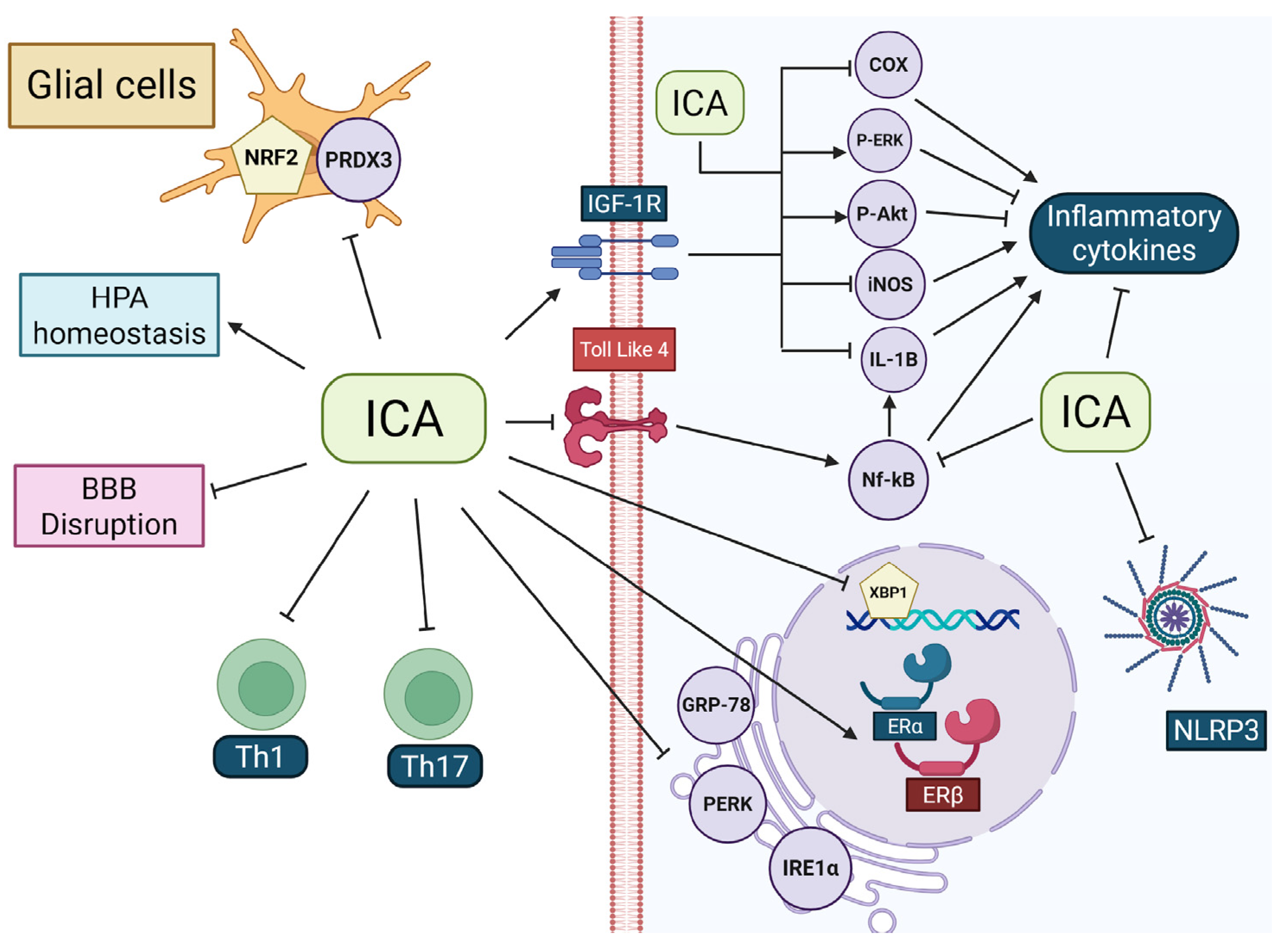



| Disease Model | Animal Model /Cell | Dose/ Concentration | Administration, Time of Exposure | Observed Effect | Ref. |
|---|---|---|---|---|---|
| AD | APP/PS1-21 transgenic mice (C57BL/6J) | 100 mg/kg | Gavage; daily for 10 days | Reduced neuroinflammatory reaction; decreased TGF-β1 immunoreactivity in cortex/hippocampus and Iba-1 levels. | [77] |
| MS (EAE) | C57BL/6 mice | 25 mg/kg | Oral; daily from day 5 to 15 | Inhibited Th1 and Th17 cell differentiation; suppressed inflammatory infiltration in the CNS. | [72] |
| Ischemic Stroke | Sprague Dawley Rats (MCAO) | 10 and 30 mg/kg | Gavage; twice/day for 3 days | Decreased pro-inflammatory cytokines IL-1β and TGF-β1 in the cortex; blocked NF-κB activation via up-regulation of PPARα/γ. | [90] |
| MS (EAE) | C57BL/6 (female) | 50, 150, 300 mg/kg | Gavage; daily for 6 days | Modulated HPA function and up-regulated GR (Glucocorticoid Receptor) and ERβ; noted increase in IL-17 (serology) despite symptom amelioration. | [69] |
| Ischemia (OGD) | PC12 cells | 10−7–10−5 mol/L | Co-treatment; 2 h | Reduced HIF-1α, HSP-60, and HSP-70 expression (inflammatory/stress markers). | [91] |
| SCI | C57BL mice | 20 and 50 μmol/kg | Oral; daily for up to 42 days | Attenuated IL-1β, TNF-α, and iNOS levels at 24 h and 3 days post-injury in the spinal cord homogenate; reduced edema. | [84] |
| Neuroinflammation (LPS) | C57BL/6J mice | 20 mg/kg | Gavage; daily for 4 weeks | Decreased protein and gene expression of HMGB1, TNF-α, IL-1β, and RAGE in the hippocampus and serum; suppressed HMGB1-RAGE. | [63] |
| PD | WT and Nrf2 KO Mice | 60 mg/kg | Intragastric; daily for 10 days | Decreased TNF-α and iNOS in the substantia nigra and in glial culture; attenuated glia-mediated neuroinflammation via Nrf2 pathway. | [83] |
| Neuroinflammation (LPS) | BV2 Microglia | 0.1 μM | Pre-treatment 30 min | Decreased NO, IL-1β, and IL-18 in glial culture; inhibited microglia-mediated inflammation via Nrf2 activation. | [82] |
| SCI | Sprague Dawley Rats | 30 μmol/kg | Oral; 1 h post-SCI then daily (7 days) | Reduced biochemical inflammatory index cytokines; reduced ROS and MDA. | [64] |
| MS (Relapse-Remit) | SJL/J mice (PLP induced) | 12.5 and 25 mg/kg | Gavage; daily for 26 days | Decreased TNF-α, IL-6, iNOS, TGF-β, and NF-κB in the brain and spinal cord; reduced microglia activation. | [70] |
| Neuronal Inflammation | Primary Astrocytes (LPS) | 10 μM | Pre-treatment 30 min | Inhibited TNF-α, IL-1β, COX-2, and iNOS via IGF-1 receptor signaling in astrocyte primary culture. | [88] |
| Neuropathic Pain | Wistar Rats (PSNL) | 50 and 100 mg/kg | Gavage; daily for 21 days | Decreased TNF-α and IL-6; inhibited NR2B and TRPV1 receptors in spinal cord. | [73] |
| Ischemic Stroke | Sprague Dawley Rats | 60 mg/kg | Intragastric; daily for 28 days | Reduced IL-6, TNF-α, and NF-κB in the brain; increased PPARα/γ (enhanced hypothermia protection). | [34] |
| Uveitis (EAU) | C57BL/6J/HMC3 cells | 10 mg/kg (vivo)/0.01–20 μM (vitro) | Intragastric (7 days)/24 h (vitro) | Shifted microglia from pro-inflammatory to resolutive phenotype; decreased TNF-α, COX-2, iNOS; increased IL-10, CD206 in HMC3cell line. | [71] |
| Ischemic Stroke | Sprague Dawley Rats | 10, 20, 40 mg/kg | Gavage; daily for 4 days | Decreased IL-1β in the brain; reduced microglial activation and ER stress-mediated inflammation. | [80] |
| Epilepsy | Mice (Pilocarpine model) | 20 mg/kg | i.p.; daily for 7 days | Promoted microglial polarization of microglia from pro-inflammatory to resolutive. | [79] |
| POCD | Aged Sprague Dawley Rats | 60 mg/kg | Gavage; daily for 7 days | Reduced TNF-α, IL-1β, IL-6 in the brain (CA1, CA3 and DG); inhibited TLR4/NF-κB signaling. | [75] |
| Vascular Dementia | Sprague Dawley Rats | 20 mg/kg (Oral)/0.6 mg/kg (Nano) | Daily for 28 days | Reduced IL-1β, IL-6, and TNF-α in the Hippocampus. | [81] |
| MS (Cuprizone) | C57BL/6 Mice/BV-2 | 50 mg/kg (vivo)/15 μg/mL (vitro) | i.p. (14 days)/2 h pre (vitro) | Shifted microglia from pro-inflammatory to resolutive; reduced TNF-α, IL-1β via TLR4/NF-κB; increased IL-10 in microglial culture. | [92] |
| Ischemic Stroke | N2a cells (OGD) | 10 μM | During OGD | Reduced TNF-α, IL-6, and IL-1β in N2a cell line. | [93] |
| ALS | Wistar Rats (Methylmercury) | 15 and 30 mg/kg | Gavage; daily for 21 days | Mitigated neuroinflammation; reduced TDP-43 accumulation. | [85] |
| Disease Model | Animal Model /Cell | Dose/ Concentration | Administration, Time of Exposure | Observed Effect | Ref. |
|---|---|---|---|---|---|
| H2O2 toxicity | PC12 cells; H2O2 | 0.1–10 µM | Culture medium; 30 min pre + 1 h exposure | Reduced GSH depletion and DNA oxidation; inhibited JNK/p38 MAPK. | [107] |
| AD | SH-SY5Y neuroblastoma; Formaldehyde | 1–10 µmol/L | Direct application; 4 h | Reduced Tau phosphorylation via GSK-3β inhibition. | [114] |
| AD | SAMP8 Mice | 75 or 150 mg/kg | Orally; 15 days before collection | Stimulated SOD/GSH-Px; decreased MDA and NO. | [111] |
| AD | APP/PS1 Mice | 120 mg/kg | Intragastric; 3 months | Reduced brain iron levels and pro-inflammatory cytokines. | [38] |
| SCI | Sprague Dawley Rats; induced injury | 30 µmol/kg | Oral; 1 h post-SCI, daily for 7 days | Reduced ROS/MDA; augmented SOD/GSH; improved locomotion. | [64] |
| Diabetic Encephalopathy | PC12 cells; Diabetic Serum | 5/10/20 µM | Culture medium; 48 h | Bound to Bax to inhibit mitochondrial migration; reduced ROS. | [109] |
| Excitotoxicity | SH-SY5Y cells; Glu | 10−6–10−4 M | Culture medium; 24 h | Inhibited P47phox, iNOS, and p-JNK; anti-apoptotic. | [26] |
| ALS | Wistar Rats; MeHg+ | 15–30 mg/kg | Orally; Days 21–42 | Modulated SIRT-1, Nrf-2, and HO-1; reduced TDP-43. | [85] |
| PD | PC12 cells; 6-OHDA | 0.005–0.05 µM | Culture medium; 24 h pre + 24 h exposure | Activated Nrf2 signaling; decreased Bax/Bcl-2 ratio. | [106] |
| H2O2 toxicity | Primary neurons (mouse); H2O2 | 0.6–9.6 µM | Culture medium; Co-treatment; 1 h | Upregulated SIRT1-dependent CAT and Prx1. | [108] |
| PD (Rotenone) | PC12 cells/SD Rats | 2–4 µM (Cell)/15–30 mg/kg (Animal) | Oral/Pre; 5 weeks (Animal) | Upregulated SIRT3/PGC-1α; restored DA neurons loss. | [82] |
| PD | WT and Nrf2 KO Mice; 6-OHDA | 60 mg/kg (Animal)/0.1 µM (Cell) | Oral (10 days)/Culture (7 days) | Activated Nrf2 signaling; effects lost in Nrf2 KO. | [83] |
| MS | C57BL/6 Mice; CPZ Model | 50 mg/kg (Animal)/15 µg/mL (Cell) | i.p. (14 days)/2 h pre (Cell) | Scavenged ROS; promoted remyelination via Nrf2/HO-1. | [92] |
| Vascular Dementia | In silico model | N/A | Molecular Docking/Dynamics | Targeted RAGE; effective docking with JUN, MAPK14, and IL-6. | [108] |
| AD | PC12 cells; NaN3 toxicity | 0.01–1 µM | Culture medium; 2 h pretreatment + 24 h NaN3 | Activated PI3K/Akt/GSK-3β; preserved MMP. | [112] |
| AD | Primary neurons | 40–320 µg/mL | Culture medium; 24 h post-exposure | Upregulated CART via MAPK/ERK pathway. | [116] |
| AD | In silico model; Aβ42 toxicity | N/A | CDOCKER Molecular Docking | Capacity to bind BDNF and GRIA1. | [75] |
| Ischemia (Stroke) | Sprague Dawley Rats | 10–30 mg/kg | Gavage; twice daily for 3 days | Increased PPARα/γ; inhibited NF-κB. | [90] |
| Ischemia | Primary neurons (rat); I/R | 5–15 µM | 8–24 h after reperfusion | Lowered ROS; maintained cellular Ca2+ homeostasis. | [101] |
| Ischemia | Sprague Dawley Rats; induced Stroke | 5 mg/kg | Orally; 7 days pre + 14 days post | Reduced CA1 hippocampal apoptosis. | [104] |
| Epilepsy | Long-Evans Rats | 75 mg/kg | i.p.; 1 h before insult | Modulated GluR2/ERK; reduced MDA; increased SOD. | [102] |
| SCI | C57BL Mice; induced injury | 20–50 µmol/kg | Oral; daily (up to 42 days) | Restored GSH/SOD; downregulated Bax/Caspase-3. | [84] |
| Aging | C57BL/6J Mice | 100 mg/kg | Gavage; 15 consecutive days | Activated Akt/Nrf2 and Sirtuins; restored youth-like GM. | [121] |
| PD | BV2 microglia; 6-OHDA | 0.1 μM | Culture medium; 30 min pretreatment | Reduced oxidative stress markers, including nitric oxide (NO); enhanced nuclear translocation of Nrf2, leading to increased expression of antioxidant enzymes, HO-1 and NQO1; Nrf2 silencing reversed ICA effects. | [82] |
| PD | Primary neuron cultures; 6-OHDA | 0.1 μM | Culture medium; 30 min pretreatment | Enhanced nuclear translocation of Nrf2, leading to increased expression of antioxidant enzymes HO-1 and NQO1. | [82] |
| Disease Model | Animal Model /Cell | Dose/ Concentration | Administration, Time of Exposure | Observed Effect | Ref. |
|---|---|---|---|---|---|
| AD | PC 12 cells induced by Aβ25–35 | 5–10 µM | 30 min pretreatment/6 h treatment | Decreased Aβ25–35-induced cytotoxicity and apoptosis rate; inhibiting tau protein hyperphosphorylation at Ser396, Ser404 and Thr205 sites | [128] |
| AD | PC 12 cells induced by Aβ25–35 | 2.5–20 µM | 1 h pretreatment | Decreased Aβ25–35-induced apoptosis | [129] |
| AD | PC 12 cells induced by sodium azide (NaN3) | 0.01–1 µM | 2 h pretreatment | Reduced NaN3-induced cell damage; reduced the leakage rate of LDH; increased the MMP; decrease in glucose concentration, indicating increased glucose consumption; Tau phosphorylation at the Ser396/404 and Thr217 sites significantly decreased | [112] |
| AD | APP/PS1 mice | 60 mg/kg | Orally administered with ICA daily for 3 months | Reduced neuronal apoptosis by suppressing the ER stress signaling pathway; improved behavioral performance | [130] |
| AD | APP/PS1/Tau triple-transgenic mice | 60 mg/kg | Intragastrically administered daily for 5 months | Memory deficits improved; neuronal and synaptic damage mitigated; reduced amyloid-β accumulation and tau hyperphosphorylation; deficits of proteins in the insulin signaling pathway and their phosphorylation levels were significantly reversed | [29] |
| AD | Tg2576 mice | 60 mg/kg | Orally administered daily for 3 months | Decreased the levels of Aβ and APP; enhanced neurogenesis; improved memory function | [131] |
| AD | SAMP8 mice | 60 mg/kg | Intragastric administration for 22 days | Reverse learning and memory impairment; reduce the expression of cytotoxic Aβ1-42; increased the expression of anti-apoptotic protein Bcl-2; decreased the expression of pro-apoptotic protein Bax | [67] |
| AD | SH-SY5Y (Formaldehyde) | 1–10 µM | 4 h exposure | Attenuated apoptotic nuclear disintegration and cell death | [114] |
| PD | PC12 cells induced by 6-OHDA and Sprague Dawley rats | 0.1 µM/20 mg/kg | 24 h pretreatment/injection in the brain | ameliorated the development of LID/lowered AIM scores attenuated neuroinflammation | [25] |
| PD | Wistar rats induced by Haloperidol | 100 mg/kg | Oral administration 30 min after the administration of Haloperidol daily | Decreasing the neurotoxicity via lowering lipid peroxidation NO, GSK-3β Contents; increasing antioxidant biomarkers, TH, and recovering monoamines contents | [132] |
| PD | C57BL/6 mice induced by MPTP | 50–200 mg/kg | 3 days pretreatment by intragastric administration | Ameliorate the decreased striatum DA content; decreased loss of TH-IR neurons; reversed changes of Bcl-2, Bax and caspase 3 protein expressions | [133] |
| PD | PC12 cells (6-OHDA induced) | 0.005–0.05 µM | 24 h pre + 24 h exposure | Inhibited apoptosis via marked decreases in Bax/Bcl-2 ratio, cytochrome c release, and Caspase-3 cleavage | [106] |
| DE | PC12 cells induced by AGEs | 10–20 µM | 48 h cotreatment | Inhibit Bax dimer formation and migration to mitochondria; inhibit apoptosis and oxidative stress | [109] |
| Corticosterone-induced cytotoxicity | Primary hippocampal neuronal cultures from Sprague Dawley rats | 1–10 µM | 2 h pretreatment | Reduced TUNEL-positive cell numbers; improved mitochondrial membrane potential; inhibition of caspase-3 activation | [134] |
| Depression | Sprague Dawley Rats less than 24 h old, Corticosterone-induced cell damage | 0.1 and 1 µM | orally 2 h pretreatment with 1 µM corticosterone | Lowered Caspase 3 activation, ROS production, increased expression of p-AKT, and SOD activity | [135] |
| Cavernous nerve crush injury | 12-week-old Sprague Dawley Rats, submitted to nerve crush injury. | 1, 5 and 10 mg/kg | orally daily supplement or single dose 2 h prior to sacrifice. | Decreased nerve fiber loss, nNOS production, calponin and lowered expression of eNOS. | [136] |
| Neuropathic Pain | Wistar Rats | 10, 50, 100 mg/kg | Orally daily for 21 days after surgery | Decreased expression of TNF-α, IL-6, Bax and increased expression of Bcl-2 | [73] |
| Epilepsy | Long-Evans Rats | 75 mg/kg | Injection 1 h before induction of hypoxia | Lowered stages of seizure by ameliorating changes in MDA, SOD, Bax/bcl-2 ratio, and Caspase-3. Ameliorating ERK II and GluR2 expression | [102] |
| Schizophrenia | Sprague Dawley Rats | 50 mg/kg | Orally 3 times per day for 2 weeks | Regulates the effects of mTOR, ATP1B2 and miR-144-3p pathway | [137] |
| Hypoxic-ischemic brain damage | C57BL/6 neonatal mice | 10 mg/kg | Intraperitoneally 20 min before hypoxia-ischemia | Promoted autophagy in hypoxic–ischemic brain-damaged mice, increasing Beclin1 and IC3-II, reducing p62 activation | [27] |
| Ischemic Stroke | Mouse neuroblastoma N2a cells | 1, 5, 10, 20, 40, and 80 µM | 15 min, during oxygen-glucose deprivation | Ameliorates the Bax/Bcl2 ratio, reduced caspase-3, TNF-α, IL-1β, IL-6 and PKM2 | [93] |
| Ischemic Stroke | Sprague Dawley microglia and Primary cortical neurons | 0.25, 0.5 and 1 mg/mL | 1 h of pretreatment and 2 h of treatment | Inhibited apoptosis induced by OGD/R through IRE1/XBP1 signaling pathway | [138] |
| Neonatal hypoxic–ischemic brain damage | C57Bl/6J P7 mouse pups using Rice Vannucci method | 10 mg/kg | intraperitoneally 20 min before ischemia | Reduced brain cerebral infarct volume and improved neurobehavioral recovery following hypoxic ischemic injury by reducing expression of cleaved caspase 3 and increasing p-Akt | [139] |
| Middle cerebral artery occlusion (MCAO | Cerebral Ischemia–Reperfusion (I/R) Injury in ICR mice | 60 mg/kg | Intraperitoneally injection and 1 h of pretreatment | Ameliorated body weight loss, neurological injury, infarct volume, and pathological change in acute ischemic stroke mice, and protected against neuronal cell apoptotic death, oxidative and nitrosative stress, lipid peroxidation, and extracellular matrix (ECM) accumulation in the brains | [140] |
| MCAO | Ischemia-Reperfusion in middle cerebral artery and OGD-induced MCAO in primary cortical neuron culture | In vivo: 50, 100 and 200 mg/kg In vitro: 80 µM | In vivo: After day 1, 3, 7 of MCAO In vitro: After OGD treatment | Reduced infarct size, upregulating SIR1 and PCG-1α expression | [31] |
| MCAO | Sprague Dawley Rats with ischemia–reperfusion in middle cerebral artery | 60 mg/kg | Daily for 28 days after MCAO surgery | Increased therapeutic hypothermia effect time in 20min, enhancing the inhibitory effect of mild hypothermia, lowering the expression of TNF-α, IL-6, p-JAK2, p-STAT3, C-caspase 3, regulating Bax/Bcl ratio and increasing PPARα, PPARγ, Nf-κβ and nuclear Nrf2 | [34] |
| Hypoxic ischemic brain damage | neonatal SD rats, with hypoxia induced by hypoxia chamber | 100 and 200 mg/kg | Daily for 7 days before hypoxia-ischemia One dose post HI induction | Lowered the expression of NF-κB, p65, IL-1β, TNFα, caspase-3 and 9 | [66] |
| OGD/R | PC12 cells | 10 µM | 1 h before hypoxia | Increased cell viability, regulating Bax/Bcl-2 ratio, and lowering C-caspase 3, GAPDH and LC3-I and II expression | [141] |
| OGD/R | PC12 cells | 0.1, 1 and 10 µM/L | 1 h before hypoxia | Lowered HIF-1α, neuron-specific enolase, HSP-60 and HSP-70, increasing cell viability | [91] |
| Excitotoxicity | SH-SY5Y cells (Glutamate induced) | 1–100 µM | 24 h exposure | Anti-Apoptotic Signaling: Attenuated glutamate-induced apoptosis by inhibiting the JNK/p38 MAPK pathway; reduced Bax/Bcl-2 ratio and Cleaved Caspase-3/9 | [26] |
| Ischemia (I/R) | Primary Cortical Neurons | 5–15 µM | 8–24 h post-reperfusion | Prevented apoptosis driven by intracellular Ca2+ overload; reduced ROS-dependent apoptotic signaling | [101] |
| SCI | C57BL Mice (Traumatic) | 20, 50 µmol/kg | Oral; daily (42 days) | Downregulated ER stress apoptotic markers (CHOP, Caspase-12) and mitochondrial markers (Bax, Cyt C); reduced TUNEL+ neurons | [84] |
| Iron overload apoptosis | Bone marrow mesenchymal cell | 10, 50 and 100 µmol | 24 and 48 h | Reduced cleaved caspase-3, and apoptosis-related proteins while regulating Bax/Bcl-2 ratio; Regulates mitochondrial stability, reducing cytosolic cytochrome c | [142] |
| Disease Model | Cell Death Mechanisms | Animal Model /Cell | Dose/ Concentration | Administration, Time of Exposure | Observed Effect | Ref. |
|---|---|---|---|---|---|---|
| ALS | Excitotoxicity by MeHg+ | Wistar Rats | 15 and 30 mg/kg | Orally, daily for 11 days | Mitigated behavioral, biochemical, neurochemical, and gross morphological changes characteristic of an ALS-like phenotype, inhibited SIRT-1, HO-1 and TDP-43; promoted Nrf-2 migration to the nucleus | [85] |
| Excitotoxicity by Ibotenic Acid | Excitotoxicity by ibotenic acid | Sprague Dawley rats | 20 and 40 mg/kg | Orally, twice a day for 20 days | Inhibited the phosphorylation of Erk, JNK, p38; regulated the bcl-2/bax ratio, inhibiting apoptosis | [163] |
| Excitotoxicity by glutamate | Excitotoxicity by glutamate | SH-SY5Y cells | 10−6, 10−5 10−4 M | 24 h after treatment with glutamate | Increased p46 and iNOS; lowered p-JINK, Bax/Bcl and p-P38/P38 ratio and active caspase 3 and 9 | [26] |
| Ischemic stroke | Endoplasmic Reticulum Stress | Sprague Dawley | 10, 20, 40 mg/kg | 4 days/once a day/Not specified | Inhibited microglial activation; attenuated neuronal damage; suppressed inflammatory signaling pathways mediated by ERS. Decreased IL-1B, reticulum stress, IRE1-alpha, p-ERK. | [80] |
| Ischemic stroke | Endoplasmic Reticulum Stress | Microglia and cortical neurons isolated from neonatal Sprague Dawley rats | 0.25 mg/L 0.5 mg/L 1 mg/L | 1 h pretreatment + 2 h co-treatment during OGD | Inhibited the IRE1α-XBP1 pathway; reduced C-caspase-3 levels; inhibited apoptosis. Inhibited apoptosis by inhibiting IRE1α-XBP1, reducing C-caspase-3 levels | [138] |
| Spinal cord injury | Endoplasmic Reticulum Stress | Mice C57BL/6 and spinal cord cell culture | 50 um/kg | Once per day | Reduced ER by upregulating PI3k/AKT. Reduced ATF6, IRE1, GRP78, XBP1 and elF | [33] |
| ER stress | Endoplasmic Reticulum Stress | APP/PS1 transgenic mice | 60 mg/kg body weight | Orally (gavage), 3 months (chronic treatment in 9-month-old mice). | Improved spatial memory, recognition memory; favored non-amyloidogenic APP processing; reduced downstream pro-apoptotic signals (TRB3, GADD34, ERO1α mRNA); reduced apoptosis; lowered caspase activation; restored Bax/Bcl-2 balance; preserved neuronal density; reduced Aβ burden and downregulated APP/BACE1 (β-secretase) while upregulating ADAM10 (α-secretase); suppressed GRP78 and PERK/eIF2α pathway | [130] |
| AD | Ferroptosis | APP/PS1 mice | 5 and 10 mg/mL | Intragastrically administered daily for 5 weeks | Improved the neurobehavioral, memory, motor abilities; ameliorated neural damage | [36] |
| Hepatic encephalopathy (HE) | ammonia-glutamate excitotoxicity | Wistar rats | 100 mg/kg | Orally administered for 14 days | Recovered of hepatic enzyme activities; improved locomotor and memory functions; reduced malondialdehyde, calcium, nitric oxide contents; downregulated lactate dehydrogenase activities | [164] |
| ER stress | Endoplasmic reticulum stress | PC12 cells | 0.1 μmol/L | 24 h, 48 h, 72 h | Relieved ERS; reduced apoptosis; down-regulated CHOP and Grp78 expression | [165] |
| ER stress | Endoplasmic reticulum stress | Primary hippocampal neurons of Sprague Dawley | 10, 20, and 50 nM | 2 h Pretreatment | Promoted BiP and IFN- γ expression; suppressed IRE-1α, XBP-1, NF-κβ, Il-1β and IL-6 and TNF-α; increased cell viability | [166] |
| Ferroptosis | RSL3-induced ferroptosis | HT22 cells | 10 μmol | 24 h after incubation with RSL3 | Failed in preventing death by ferroptosis | [167] |
| Esophageal cancer | Primary esophageal epithelial cell | EC109, TE1 and HET-1A | 20 40 or 80 μmol | 12, 24 or 36 h in incubation | Inhibited ESCCs growth by activating ERS signaling; increased ROS; activated caspase 3/9 | [125] |
| ER stress | Tunicamycin induced ER stress | PC12 cells | 2.5, 5 and 10 μmol | 24 h | Increased synoviolin expression; reduced ER stress-induced cell death | [20] |
| OA | Chondrocyte ferroptosis | Male Sprague Dawley rats and Human SW1353 chondrocytes | 40 μmol and 80 mg/kg/d | 24 h for in vitro/28 days for in vivo | Countered the IL-1β-induced upregulation of MMPs and ADAMTS-5; restored collagen II and SOX9 expression; reduced intracellular ROS, lipid ROS, MDA; alleviated Era-induced ferroptosis; reduced articular cartilage damage in OA rats | [168] |
| AD | Ferroptosis | APP/PS1 mice | 5 mg/kg and 10 mg/kg | Intragastrically administered daily | Improve the neurobehavioral, memory and motor abilities of AD mice; lower ferroptosis level; enhanced oxidative stress resistance | [36] |
| Rheumatoid arthritis | Ferroptosis | Lipopolysaccharide (LPS)-induced synoviocytes | 2, 5, 10 µmol | 24 h pretreatment | Attenuated iron content; Increased activity of GPX4, MDA, Nrf2m, SLC3a2l and SLC7A11 | [169] |
Disclaimer/Publisher’s Note: The statements, opinions and data contained in all publications are solely those of the individual author(s) and contributor(s) and not of MDPI and/or the editor(s). MDPI and/or the editor(s) disclaim responsibility for any injury to people or property resulting from any ideas, methods, instructions or products referred to in the content. |
© 2026 by the authors. Licensee MDPI, Basel, Switzerland. This article is an open access article distributed under the terms and conditions of the Creative Commons Attribution (CC BY) license.
Share and Cite
Rodrigues-Soares, V.; da Cruz, H.R.; dos Santos, G.F.; Restier, J.G.; Castilho, P.; dos Santos, N.G.F.; Avgerino dos Santos, E.; Souza Monteiro de Araújo, D.; Calaza, K.d.C.; Brito, R. Icariin Against Neurodegeneration: A Focus in Cell Death Pathways. Int. J. Mol. Sci. 2026, 27, 2247. https://doi.org/10.3390/ijms27052247
Rodrigues-Soares V, da Cruz HR, dos Santos GF, Restier JG, Castilho P, dos Santos NGF, Avgerino dos Santos E, Souza Monteiro de Araújo D, Calaza KdC, Brito R. Icariin Against Neurodegeneration: A Focus in Cell Death Pathways. International Journal of Molecular Sciences. 2026; 27(5):2247. https://doi.org/10.3390/ijms27052247
Chicago/Turabian StyleRodrigues-Soares, Vinícius, Heitor Roque da Cruz, Gabriel Ferreira dos Santos, João Gabriel Restier, Pedro Castilho, Natan Giovanni Ferreira dos Santos, Elias Avgerino dos Santos, Daniel Souza Monteiro de Araújo, Karin da Costa Calaza, and Rafael Brito. 2026. "Icariin Against Neurodegeneration: A Focus in Cell Death Pathways" International Journal of Molecular Sciences 27, no. 5: 2247. https://doi.org/10.3390/ijms27052247
APA StyleRodrigues-Soares, V., da Cruz, H. R., dos Santos, G. F., Restier, J. G., Castilho, P., dos Santos, N. G. F., Avgerino dos Santos, E., Souza Monteiro de Araújo, D., Calaza, K. d. C., & Brito, R. (2026). Icariin Against Neurodegeneration: A Focus in Cell Death Pathways. International Journal of Molecular Sciences, 27(5), 2247. https://doi.org/10.3390/ijms27052247