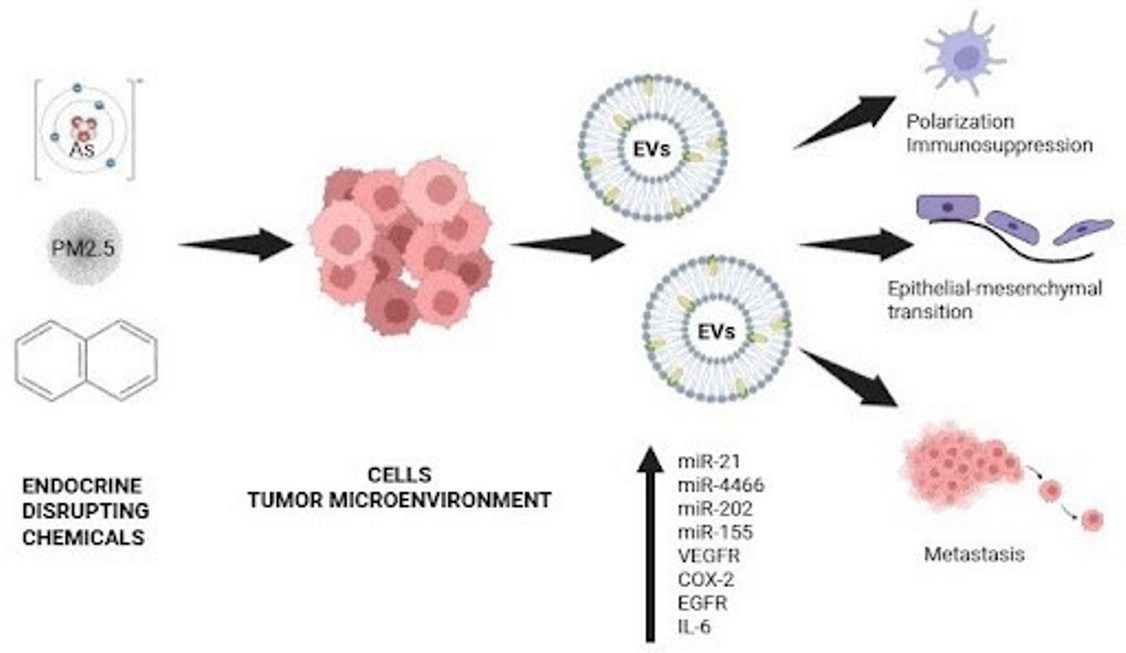
Extracellular Vesicles and Endocrine Disruption: How Environmental Pollutants Modulate the Loading and Release of Extracellular Vesicles for Cancer Promotion and Progression
 , , , and
Abstract
1. Introduction
2. Extracellular Vesicles: The Messengers of Health and Disease
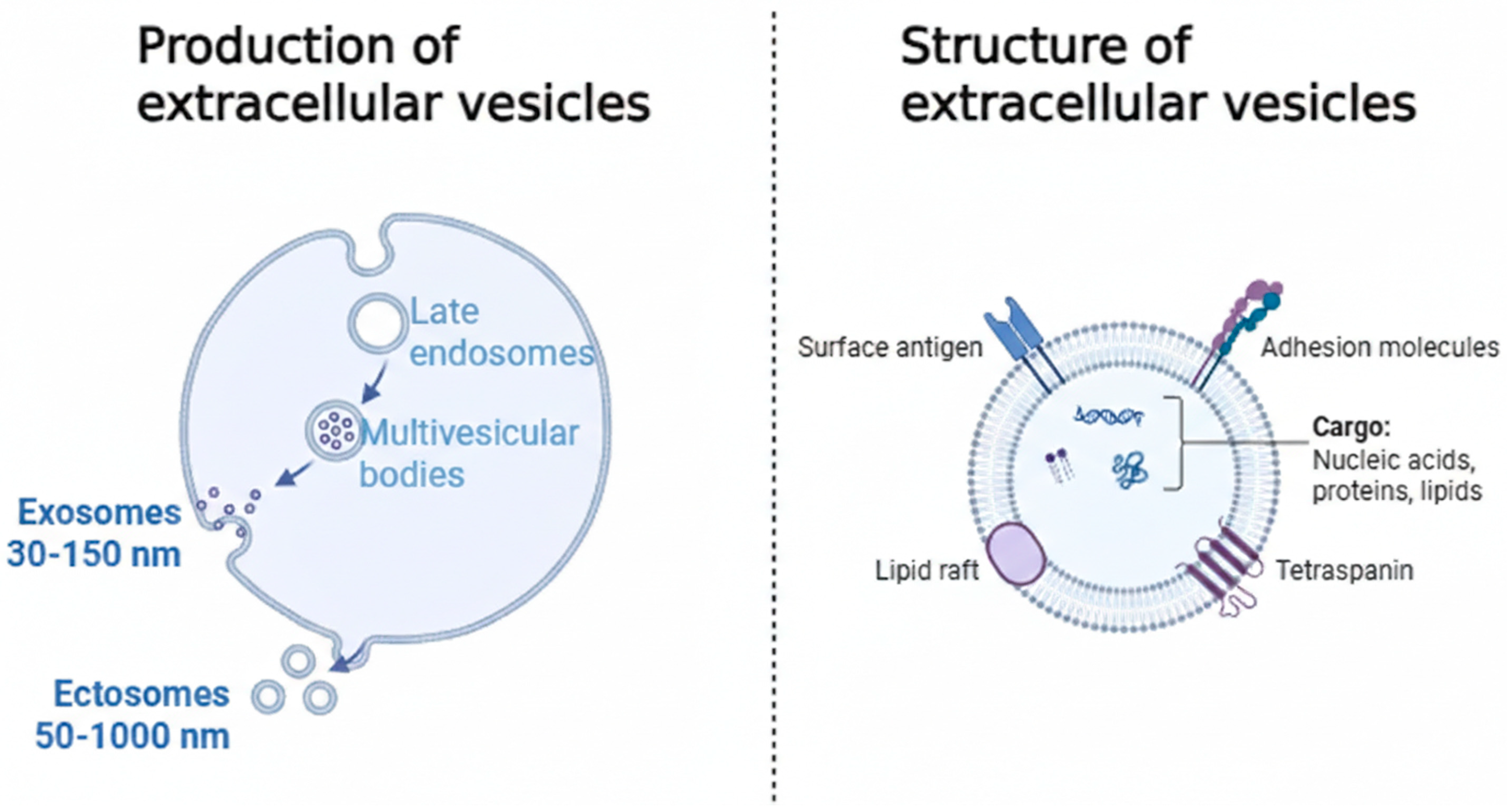
2.1. Biogenesis and Heterogeneity: A Spectrum of Vesicles
2.2. The Molecular Cargo: A Representative Part of the Parent Cell
- Proteins: EVs contain a wide variety of proteins, including transmembrane proteins integral to EV structure and function (e.g., tetraspanins such as CD9, CD63 or CD81), cytosolic proteins involved in biogenesis (e.g., Alix, TSG101 or flotillins), and cell-type-specific proteins that can serve as biomarkers [5].
- Nucleic Acids: EVs are potent carriers of genetic content, mainly microRNAs (miRNAs), which can post-transcriptionally regulate gene expression in recipient cells. Messenger RNAs (mRNAs), long non-coding RNAs (lncRNAs), and even fragments of DNA have also been identified within EVs, suggesting multiple avenues for genetic reprogramming [4].
- Lipids: EVs are high in cholesterol, phosphatidylcholine, phosphatidylserine, sphingomyelin, and ceramide. These lipids have been reported to perform various functions in the biogenesis as well as the uptake and mechanisms of action of EVs in receptor cells [14]. Bioactive lipids can also be part of the cargo, acting as signaling molecules themselves [15].
2.3. Mechanisms of Intercellular Transfer and Recipient Cell Reprogramming
3. Endocrine Disrupting Chemicals as Contributors of Carcinogenesis
- Hormone receptor interaction: Many EDCs act by directly binding to nuclear hormone receptors, such as the estrogen receptor (ER) and androgen receptor (AR) among others, and to membrane hormone receptor, such as G protein-coupled estrogen receptor (GPER) [20]. EDCs can function as agonists, mimicking the effect of the endogenous hormones, or as antagonists, preventing the hormone from binding to its receptor and exerting its effect [21].
- Alteration of hormone levels: EDCs can also disrupt the endocrine system by interfering with the production or metabolism of endogenous hormones [18].
- Epigenetic modifications: A growing body of evidence indicates that EDCs can induce lasting changes in gene expression without altering the DNA sequence itself. These epigenetic modifications, such as DNA methylation and histone modification, could be heritable and are thought to be involved in the developmental origins of adult diseases, including cancer [22].
- Activation of aryl hydrocarbon receptor (AhR): Many EDCs activate or are agonists of AhR, a transcription factor involved in inflammation, proliferation, tumor progression, and chemoresistance [23]. The exposure to AhR agonists stimulates signaling pathways that promote breast cancer development and may contribute to tumor progression [23]. AhR agonists induce different biological mechanisms of action, such as alteration of the cell cycle, proliferation, epigenetic changes, epithelial-to-mesenchymal transition, angiogenic processes, metastasis, chemoresistance, and stem cell renewal [23]. In addition to being involved in the development and progression of breast cancer due to exposure to EDCs, AhR is also involved in other types of cancer, such as prostate [24], colorectal [25], lung [26], skin [27], ovarian [28] and gastric [29]. On the other hand, it is interesting to highlight that in some cell types AhR interacts with other hormone receptors (ERα, GPER and AR) to trigger different carcinogenic characteristics that lead to tumor development [30,31,32,33]. However, it has also been observed that some AhR ligands may exert antiproliferative and antitumor effects [34].
3.1. A Focus on Probable Environmental Carcinogens
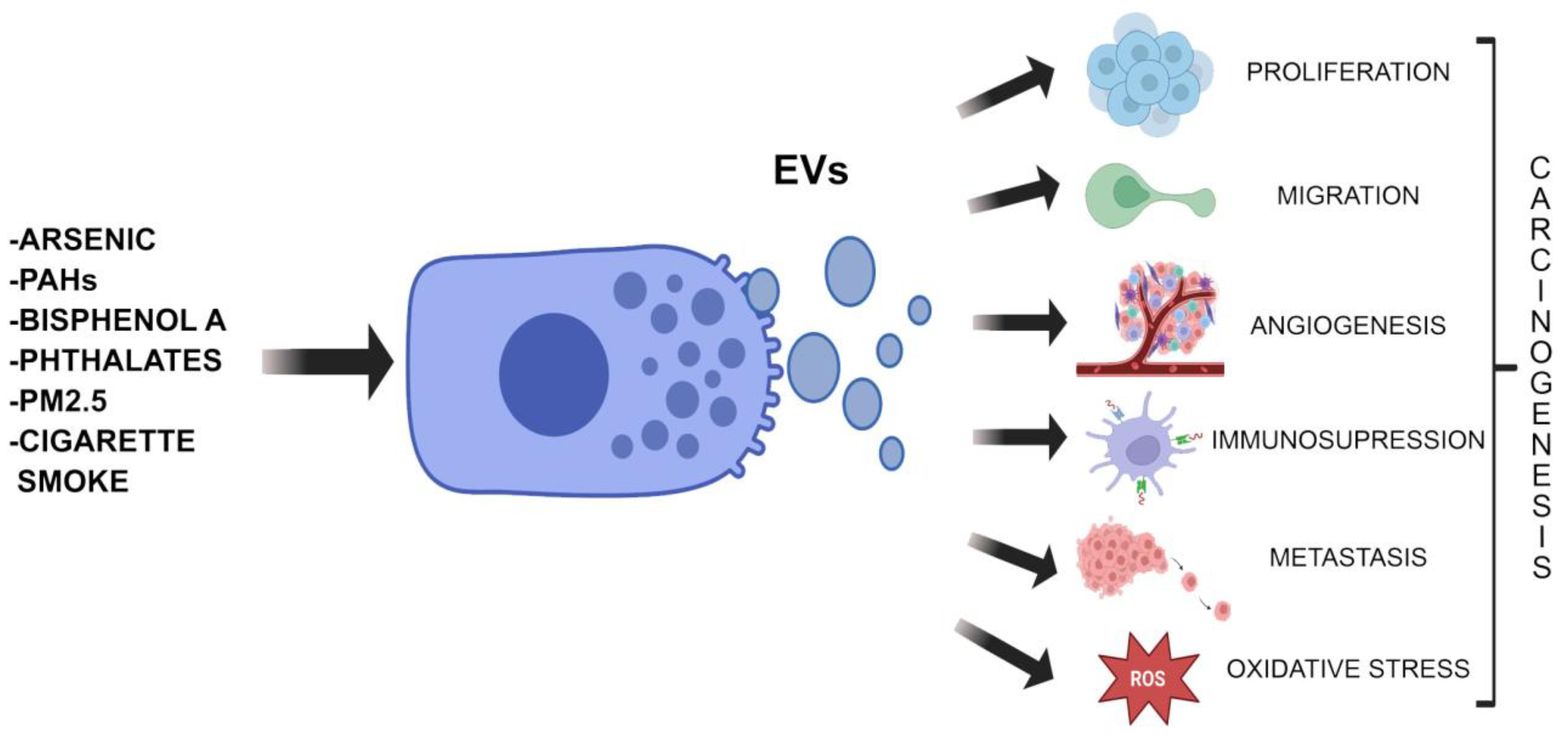
- Arsenic (As): Exposure to certain heavy metals, at high concentrations or lower concentrations during prolonged periods, may cause a variety of adverse effects in humans and other living organisms [35]. Heavy metals are also persistent compounds due to their bioaccumulation, becoming potentially hazardous pollutants [35]. Arsenic (As), for example, is a metalloid classified in Group 1 (carcinogenic to humans) by the International Agency for Research on Cancer (IARC) [36]. Chronic exposure to As affects millions of people worldwide and is linked to cancers of the liver, lung, skin and bladder [37,38]. Potential sources of As include the consumption and use of contaminated water, the ingestion of contaminated food, smoking, and various occupations (mining) and industrial processes. Some of these sources of exposure appear to be unavoidable, such as the consumption of contaminated groundwater in regions such as Central and South America, India, Bangladesh, and China, where As is found naturally as a geological source [39]. The most common inorganic forms of arsenic are trivalent arsenite (As3+) and pentavalent arsenate (As5+).
- Polycyclic aromatic hydrocarbons (PAHs): These are a large group of persistent organic compounds formed during the incomplete combustion of organic materials (e.g., tobacco, grilled food, petrol, gas, wood, rubbish, etc.). Human exposure to PAHs occurs through complex mixtures of different compounds that, once inside the body, are metabolized through cytochrome P450 family 1, subfamily A, member 1 (CYP1A1),1B1 and EH, CYP-peroxidase and aldo-keto reductase (AKR) pathways, leading to the generation of active carcinogenic compounds (diol-epoxides, radical cations and o-quinones) [40]. Some PAHs, such as benzo(a)pyrene (BaP), are potent carcinogens that exert their effects mainly through AhR activation [15,16]. Chronic exposure to PAHs has also been associated with respiratory diseases, cardiovascular problems and suppression of the immune system [41].
- Bisphenols: Bisphenols are non-persistent organic compounds present mainly in plastic materials. The main route of exposure is through oral ingestion, via contaminated food and materials in contact with food and beverages [42]. The best-known compound in this group is bisphenol A (BPA), a synthetic estrogen whose exposure has been associated with hormone-dependent cancers, such as breast and prostate cancer [12,43]. There is no consensus, however, on whether BPA exposure is carcinogenic to humans; nevertheless, there is extensive experimental evidence from in vitro and in vivo studies, as well as from epidemiological studies, supporting its possible impact on tumor development [44]. The European Union has recently banned the use of BPA in food contact items due to its proven harmful effects on the immune, reproductive and endocrine systems [45]. The widespread use of plastic polymers (polycarbonate) and epoxy resin-based materials (dental) has been linked to an increase in the internal dose of BPA in the population [46].
- Phthalates: Human exposure to these non-persistent organic pollutants is a growing concern worldwide, as they are found in many consumer products (plastics, cosmetics, packaging, etc.). All individuals are exposed to phthalates. Exposure occurs through different routes, including ingestion, inhalation, and dermal contact, with exposure during critical stages of development (e.g., pregnancy) being of particular concern [47]. Some phthalates are suspected of acting as endocrine disruptors, with links to reproductive toxicity and, potentially, urothelial and prostate cancer [48]. Thus, some studies show that human exposure to different phthalates can stimulate pathways leading to carcinogenesis [47,49], with mechanisms of action mediated by the binding of phthalates to AhR [50]. In fact, some phthalates, such as dibutyl phthalate (DBP) and di(2-ethylhexyl) phthalate (DEHP), have AhR agonist activity [51]. European Union regulations (2022) prohibit and regulate phthalates in food packaging [52].
- Particulate matter 2.5 (PM2.5): Particles suspended in polluted air, with an aerodynamic diameter of less than 2.5 μm, originate from combustion sources such as industrial activities, traffic, and the burning of coal and biomass [53]. PM2.5 typically consists of aggregates of smaller carbon particles with mixtures of persistent and non-persistent organic compounds attached to their surface, such as PAHs [54]. Outdoor PM and diesel exhaust particles are classified as Group 1 human carcinogens by the IARC [55]. Several epidemiological studies have observed that living near busy roads (and therefore with higher PM levels) increase the risk of lung cancer [56,57].
- Cigarette smoke: Tobacco use is the leading lifestyle-related risk factor, contributing to the global burden of cancer-related mortality and accounting for approximately 85% of all lung cancer cases [58]. Cigarette smoking is also linked to other types of cancer, such as leukemia, pancreatic cancer, bladder cancer, oral cavity cancer, pharyngeal cancer, laryngeal cancer, esophageal cancer, stomach cancer, liver cancer, kidney cancer, cervical cancer, and ovarian cancer [59]. Cigarette smoke contains more than 4500 different persistent and non-persistent chemical compounds, of which approximately 60 have been classified as carcinogens [60]. Smoking habit also affects the endocrine system [61]. Epidemiological studies show that over 80% of smokers worldwide live currently in low- and middle-income countries [59].
3.2. How EDCs Modulate the Secretion and the Content of EVs
3.2.1. Arsenic
Modulation of Inflammatory and Proliferative Pathways by Exosomal Onco-miRs
Induction of Changes Towards the Epithelial–Mesenchymal Transition via EVs Enriched with Proinflammatory and Oncogenic Factors
3.2.2. Polycyclic Aromatic Hydrocarbons (PAHs)
Triggering Oxidative Stress Cascades Through Pro-Oxidant EVs
Remodeling of the Tissue Microenvironment to Favor Tumor Colonization and Metastasis
3.2.3. Bisphenol A (BPA):
BPA Drives Oral Squamous Cell Carcinoma (OSCC) Progression
Dysregulating EV Secretion in Breast Cancer
3.2.4. Phthalates
Modulating the PTEN/PI3K/Akt Tumor Suppressor Pathway
3.2.5. Particulate Matter 2.5 (PM2.5)
EVs of Human Bronchial Epithelial Cells Treated with PM2.5 Induce Migration and Invasion in Lung Tumor Cells and Pulmonary Metastases in Mice
Chronic PM2.5 Exposure Induces Atypical Hyperplasia and Alters EV miRNA Profiles Associated with Tumorigenesis
3.2.6. Cigarette Smoke
Altered EV-miRNAs Expression in Early Stages of Lung Cancer

| EDC Class | Biological Source | Key Signaling Pathway Altered | Key EV Cargo/Secretion Change | Downstream Effect on Recipient Cell | Reference |
|---|---|---|---|---|---|
| Arsenic | Human liver epithelial cells | NF-κB | ↑ miR-155 | Pro-inflammatory phenotype (↑ IL-6, IL-8) | [37] |
| Human bronchial epithelial cells | IL-6/STAT3 | ↑ miR-21 | Proliferation (via PTEN suppression) | [38] | |
| Prostate epithelial cells | “Not evaluated” | KRAS, NRAS, VEGF, EGFR, COX-2, IL-6, TGF-β, TNF-α, BCL-2 | ↑ MMP activity ↑ Epithelial–mesenchymal transition | [64] | |
| PAHs | Rat hepatocytes | AhR (BaP, DBA)/CAR (PYR) | ↑ Ferritin (iron) & NADPH oxidase | Oxidative stress Lipid peroxidation | [15,16] |
| Hepatocellular carcinoma cells | circ_0011496 EVs inhibit miR-486-5p that induces ↑ TWF1 + MMP9 in lung | ↑ circ_0011496 | Lung fibroblasts → CAF ↑ Inflammation ↑ Angiogenesis ↑ Pre-metastatic niche in lung | [66] | |
| BPA | Oral squamous carcinoma cells | GABBR1/MEK/ERK | “Not evaluated” | Macrophage polarization, ↑ Proliferation, migration, invasion, tumor progression | [67] |
| Human breast cancer cells (MCF-7) | miR-26b/Rab31 | ↑ exosome secretion rate | ↑ Proliferation, migration | [13,68] | |
| Phthalates | Human urine samples | Associated with target pathways | ↑ miR-202 & miR-543 in urine | PTEN/PI3K/Akt pathway dysregulation | [48] |
| PM2.5 | Human bronchial epithelial (HBE) cells |
| “Not evaluated” |
| [69,71] |
| Normal bronchial epithelial cells | “Not evaluated” | ↑ miR-196b-5p |
| [70] | |
| A549 Lung adenocarcinoma cells | “Not evaluated” | ↑ miR-100-5p, miR-125b-5p; ↓ miR-29b-2-5p, miR-193b-5p, miR-320c | EMT induction (↓ E-cadherin, ↑ Vimentin); ↑ migration, invasion | [71] | |
| In vivo model in mice | “Not evaluated” | Atypical hyperplasia of bronchial epithelium, macrophage infiltration. EMT induction (↓ E-cadherin, ↑ Vimentin) | |||
| Cigarette smoke | Human bronchial epithelial cells | STAT3 signaling | ↑ miR-21 | Angiogenesis (↑ VEGF) | [75] |
| “Not evaluated” |
| Pro-carcinogenic cellular reprogramming and induction of preneoplastic status | [78,79] |
3.3. Functional Consequences: How EDC-Modified EVs Generate Preneoplastic Characteristics
3.3.1. Sustaining Proliferative Signaling and Evading Growth Suppressors
3.3.2. Inducing Chronic Inflammation and Oxidative Stress
3.3.3. Promotion of Angiogenesis and an Immunosuppressive TME
3.3.4. Activating Migration, Invasion, and Metastasis
3.4. Clinical and Toxicological Implications
4. Summary
5. Future Directions
5.1. Validation in Large-Scale Human Cohorts:
5.2. EVs as Dynamic Exposome Trackers
5.3. Deciphering Cargo Sorting Mechanisms
5.4. Translating Therapeutic Strategies to the Clinic
Author Contributions
Funding
Institutional Review Board Statement
Informed Consent Statement
Data Availability Statement
Acknowledgments
Conflicts of Interest
Abbreviations
| AhR | Aryl Hydrocarbon Receptor |
| AKR | Aldo-keto reductase |
| AR | Androgen Receptor |
| BaP | Benzo(a)pyrene |
| BPA | Bisphenol A |
| CAF | Cancer-Associated Fibroblasts |
| CAR | Constitutive Androstane Receptor |
| CDH1 | Cadherin-1 |
| CYP1A1 | Cytochrome P450 family 1, subfamily A, member 1 |
| DBP | Dibutyl phthalate |
| DEHP | Di(2-ethylhexyl) phthalate |
| ECM | Extracellular matrix |
| EDCs | Endocrine Disrupting Chemicals |
| EGFR | Epidermal growth factor receptor |
| EMT | Epithelial–mesenchymal transition |
| ER | Estrogen Receptor |
| ESCRT | Endosomal Sorting Complexes Required for Transport |
| EVs | Extracellular Vesicles |
| GABBR | Gamma-aminobutyric acid type B receptor subunit 1 |
| GPER | G protein-coupled membrane estrogen receptor |
| HBE | Human Bronchial Epithelial cells |
| HCC | Hepatocellular carcinoma |
| IARC | International Agency for Research on Cancer |
| IJMS | International Journal of Molecular Sciences |
| ILV | Intraluminal vesicles |
| ISEV | International Society for Extracellular Vesicles |
| JNK | c-Jun N-terminal Kinase |
| lncRNAs | Long non-coding RNAs |
| miRNAs | microRNAs |
| MMP | Matrix Metalloproteinase |
| mRNAs | Messenger RNAs |
| MVB | Multivesicular body |
| NADPH oxidase | Nicotinamide adenine dinucleotide phosphate oxidase |
| ncRNAs | Non-coding RNAs |
| NF-κB | Nuclear factor kappa B |
| NNK | 4-(methylnitrosamino)-1-(3-pyridyl)-1-butanone |
| OSCC | Oral Squamous Cell Carcinoma |
| PAHs | Polycyclic aromatic hydrocarbons |
| PD-L1 | Programmed Death-Ligand 1 |
| PI3K | Phosphoinositide 3-kinase |
| PIWI | P-element Induced Wimpy testis |
| PM2.5 | Particulate matter 2.5 |
| PR | Progesterone Receptor |
| PTEN | Phosphatase and tensin homolog |
| ROS | Reactive oxygen species |
| STAT3 | Signal Transducer and Activator of Transcription 3 |
| TME | Tumor Microenvironment |
| TWF1 | Twinfilin-1 |
| VEGF | Vascular endothelial growth factor |
| ZEB1 | Zinc finger E-box-binding homeobox 1 |
References
- Sung, H.; Ferlay, J.; Siegel, R.L.; Laversanne, M.; Soerjomataram, I.; Jemal, A.; Bray, F. Global Cancer Statistics 2020: GLOBOCAN Estimates of Incidence and Mortality Worldwide for 36 Cancers in 185 Countries. CA Cancer J. Clin. 2021, 71, 209–249. [Google Scholar] [CrossRef]
- Vermeulen, R.; Schymanski, E.L.; Barabási, A.L.; Miller, G.W. The exposome and health: Where chemistry meets biology. Science 2020, 367, 392–396. [Google Scholar] [CrossRef]
- Wild, C.P. Complementing the genome with an “exposome”: The outstanding challenge of environmental exposure measurement in molecular epidemiology. Cancer Epidemiol. Biomark. Prev. 2005, 14, 1847–1850. [Google Scholar] [CrossRef]
- Kalluri, R.; McAndrews, K.M. The role of extracellular vesicles in cancer. Cell 2023, 186, 1610–1626. [Google Scholar] [CrossRef]
- Salomon, C.; Das, S.; Erdbrügger, U.; Kalluri, R.; Kiang Lim, S.; Olefsky, J.M.; Rice, G.E.; Sahoo, S.; Andy Tao, W.; Vader, P.; et al. Extracellular Vesicles and Their Emerging Roles as Cellular Messengers in Endocrinology: An Endocrine Society Scientific Statement. Endocr. Rev. 2022, 43, 441–468. [Google Scholar] [CrossRef] [PubMed]
- Kalluri, R.; LeBleu, V.S. The biology, function, and biomedical applications of exosomes. Science 2020, 367, eaau6977. [Google Scholar] [CrossRef]
- Greening, D.W.; Xu, R.; Rai, A.; Suwakulsiri, W.; Chen, M.; Simpson, R.J. Clinical relevance of extracellular vesicles in cancer—Therapeutic and diagnostic potential. Nat. Rev. Clin. Oncol. 2025, 22, 924–952. [Google Scholar] [CrossRef] [PubMed]
- Soto, A.M.; Sonnenschein, C. Environmental causes of cancer: Endocrine disruptors as carcinogens. Nat. Rev. Endocrinol. 2010, 6, 363–370. [Google Scholar] [CrossRef]
- Hanahan, D. Hallmarks of Cancer: New Dimensions. Cancer Discov. 2022, 12, 31–46. [Google Scholar] [CrossRef]
- Welsh, J.A.; Goberdhan, D.C.I.; O’Driscoll, L.; Buzas, E.I.; Blenkiron, C.; Bussolati, B.; Cai, H.; Di Vizio, D.; Driedonks, T.A.P.; Erdbrügger, U.; et al. Minimal information for studies of extracellular vesicles (MISEV2023): From basic to advanced approaches. J. Extracell. Vesicles 2024, 13, e12404. Correction in J. Extracell. Vesicles 2024, 13, e12451. https://doi.org/10.1002/jev2.12451. [CrossRef] [PubMed]
- Théry, C.; Witwer, K.W.; Aikawa, E.; Alcaraz, M.J.; Anderson, J.D.; Andriantsitohaina, R.; Antoniou, A.; Arab, T.; Archer, F.; Atkin-Smith, G.K.; et al. Minimal information for studies of extracellular vesicles 2018 (MISEV2018): A position statement of the International Society for Extracellular Vesicles and update of the MISEV2014 guidelines. J. Extracell. Vesicles 2018, 7, 1535750. [Google Scholar] [CrossRef]
- Chen, Y.; Hu, Z.; Tang, M.; Huang, F.; Xiong, Y.; Ouyang, D.; He, J.; He, S.; Xian, H.; Hu, D. Lysosome-related exosome secretion mediated by miR-26b/Rab31 pathway was associated with the proliferation and migration of MCF-7 cells treated with bisphenol A. Ecotoxicol. Environ. Saf. 2023, 252, 114563. [Google Scholar] [CrossRef]
- Cocucci, E.; Meldolesi, J. Ectosomes and exosomes: Shedding the confusion between extracellular vesicles. Trends Cell Biol. 2015, 25, 364–372. [Google Scholar] [CrossRef] [PubMed]
- Donoso-Quezada, J.; Ayala-Mar, S.; Gonzalez-Valdez, J. The role of lipids in exosome biology and intercellular communication: Function, analytics and applications. Traffic 2021, 22, 204–220. [Google Scholar] [CrossRef] [PubMed]
- van Meteren, N.; Lagadic-Gossmann, D.; Chevanne, M.; Gallais, I.; Gobart, D.; Burel, A.; Bucher, S.; Grova, N.; Fromenty, B.; Appenzeller, B.M.R.; et al. Polycyclic Aromatic Hydrocarbons can trigger hepatocyte release of extracellular vesicles by various mechanisms of action depending on their affinity for the Aryl Hydrocarbon Receptor. Toxicol. Sci. 2019, 171, 443–462. [Google Scholar] [CrossRef]
- van Meteren, N.; Lagadic-Gossmann, D.; Podechard, N.; Gobart, D.; Gallais, I.; Chevanne, M.; Collin, A.; Burel, A.; Dupont, A.; Rault, L.; et al. Extracellular vesicles released by polycyclic aromatic hydrocarbons-treated hepatocytes trigger oxidative stress in recipient hepatocytes by delivering iron. Free Radic. Biol. Med. 2020, 160, 246–262. [Google Scholar] [CrossRef]
- Majood, M.; Rawat, S.; Mohanty, S. Delineating the role of extracellular vesicles in cancer metastasis: A comprehensive review. Front. Immunol. 2022, 13, 966661. [Google Scholar] [CrossRef] [PubMed]
- La Merrill, M.A.; Vandenberg, L.N.; Smith, M.T.; Goodson, W.; Browne, P.; Patisaul, H.B.; Guyton, K.Z.; Kortenkamp, A.; Cogliano, V.J.; Woodruff, T.J.; et al. Consensus on the key characteristics of endocrine-disrupting chemicals as a basis for hazard identification. Nat. Rev. Endocrinol. 2020, 16, 45–57. [Google Scholar] [CrossRef]
- Vineis, P.; Robinson, O.; Chadeau-Hyam, M.; Dehghan, A.; Mudway, I.; Dagnino, S. What is new in the exposome? Environ. Int. 2020, 143, 105887. [Google Scholar] [CrossRef]
- Molina, L.; Figueroa, C.D.; Ehrenfeld, P. Bisphenols and Their Interaction with GPER-1: The Invisible Enemy Behind Breast Cancer and Its Societal Impact. In Bisphenols New Environmental, Pathophysiological and Social Perspectives; Rafael, M.-G.-T., Ed.; IntechOpen: London, UK, 2023. [Google Scholar] [CrossRef]
- Murata, M.; Kang, J.H. Bisphenol A (BPA) and cell signaling pathways. Biotechnol. Adv. 2018, 36, 311–327. [Google Scholar] [CrossRef]
- Anway, M.D.; Cupp, A.S.; Uzumcu, M.; Skinner, M.K. Epigenetic transgenerational actions of endocrine disruptors and male fertility. Science 2005, 308, 1466–1469. [Google Scholar] [CrossRef]
- Miret, N.V.; Pontillo, C.A.; Buján, S.; Chiappini, F.A.; Randi, A.S. Mechanisms of breast cancer progression induced by environment-polluting aryl hydrocarbon receptor agonists. Biochem. Pharmacol. 2023, 216, 115773. [Google Scholar] [CrossRef]
- Bidgoli, S.A.; Jabari, N.; Zavarhei, M.D. Prostate-specific antigen levels in relation to background factors: Are there links to endocrine disrupting chemicals and AhR expression? Asian Pac. J. Cancer Prev. 2014, 15, 6121–6125. [Google Scholar] [CrossRef] [PubMed]
- Zhang, T.; Ning, W.W.; Zhang, J.; Xu, F.J.; Wang, X.Q.; Li, Z.B.; Xie, M. Nonylphenol regulates TL1A through the AhR/HDAC2/HNF4α pathway in endothelial cells to promote the angiogenesis of colorectal cancer. Toxicol. Appl. Pharmacol. 2022, 436, 115854. [Google Scholar] [CrossRef]
- Holme, J.A.; Vondráček, J.; Machala, M.; Lagadic-Gossmann, D.; Vogel, C.F.A.; Le Ferrec, E.; Sparfel, L.; Øvrevik, J. Lung cancer associated with combustion particles and fine particulate matter (PM2.5)—The roles of polycyclic aromatic hydrocarbons (PAHs) and the aryl hydrocarbon receptor (AhR). Biochem. Pharmacol. 2023, 216, 115801. [Google Scholar] [CrossRef] [PubMed]
- Vogeley, C.; Esser, C.; Tüting, T.; Krutmann, J.; Haarmann-Stemmann, T. Role of the Aryl Hydrocarbon Receptor in Environmentally Induced Skin Aging and Skin Carcinogenesis. Int. J. Mol. Sci. 2019, 20, 6005. [Google Scholar] [CrossRef]
- Therachiyil, L.; Krishnankutty, R.; Ahmad, F.; Mateo, J.M.; Uddin, S.; Korashy, H.M. Aryl Hydrocarbon Receptor Promotes Cell Growth, Stemness Like Characteristics, and Metastasis in Human Ovarian Cancer via Activation of PI3K/Akt, β-Catenin, and Epithelial to Mesenchymal Transition Pathways. Int. J. Mol. Sci. 2022, 23, 6395. [Google Scholar] [CrossRef]
- Perrot-Applanat, M.; Pimpie, C.; Vacher, S.; Pocard, M.; Baud, V. High Expression of AhR and Environmental Pollution as AhR-Linked Ligands Impact on Oncogenic Signaling Pathways in Western Patients with Gastric Cancer—A Pilot Study. Biomedicines 2024, 12, 1905. [Google Scholar] [CrossRef]
- Donini, C.F.; El Helou, M.; Wierinckx, A.; Győrffy, B.; Aires, S.; Escande, A.; Croze, S.; Clezardin, P.; Lachuer, J.; Diab-Assaf, M.; et al. Long-Term Exposure of Early-Transformed Human Mammary Cells to Low Doses of Benzo[a]pyrene and/or Bisphenol A Enhances Their Cancerous Phenotype via an AhR/GPR30 Interplay. Front. Oncol. 2020, 10, 712. [Google Scholar] [CrossRef]
- García, M.M.; Peña, D.; Alvarez, L.; Cocca, C.; Pontillo, C.; Bergoc, R.; Kleiman de Pisarev, D.; Randi, A.S. Hexachlorobenzene induces cell proliferation and IGF-I signaling pathway in an estrogen receptor alpha-dependent manner in MCF-7 breast cancer cell line. Toxicol. Lett. 2010, 192, 195–205. [Google Scholar] [CrossRef] [PubMed]
- Göttel, M.; Le Corre, L.; Dumont, C.; Schrenk, D.; Chagnon, M.C. Estrogen receptor and aryl hydrocarbon receptor cross-talk in a transfected hepatoma cell line (HepG2) exposed to 2,3,7,8-tetrachlorodibenzo-p-dioxin. Toxicol. Rep. 2014, 1, 1029–1036. [Google Scholar] [CrossRef]
- Ghotbaddini, M.; Cisse, K.; Carey, A.; Powell, J.B. Simultaneous inhibition of aryl hydrocarbon receptor (AhR) and Src abolishes androgen receptor signaling. PLoS ONE 2017, 12, e0179844. [Google Scholar] [CrossRef]
- Narasimhan, S.; Stanford Zulick, E.; Novikov, O.; Parks, A.J.; Schlezinger, J.J.; Wang, Z.; Laroche, F.; Feng, H.; Mulas, F.; Monti, S.; et al. Towards Resolving the Pro- and Anti-Tumor Effects of the Aryl Hydrocarbon Receptor. Int. J. Mol. Sci. 2018, 19, 1388. [Google Scholar] [CrossRef]
- Sevak, P.; Pushkar, B. Arsenic pollution cycle, toxicity and sustainable remediation technologies: A comprehensive review and bibliometric analysis. J. Environ. Manag. 2024, 349, 119504. [Google Scholar] [CrossRef] [PubMed]
- IARC Working Group on the Evaluation of Carcinogenic Risks to Humans. Arsenic, Metals, Fibres and Dusts; IARC Working Group on the Evaluation of Carcinogenic Risks to Humans: Lyon, France, 2012; Volume 100C, pp. 11–465. Available online: https://publications.iarc.who.int/Book-And-Report-Series/Iarc-Monographs-On-The-Identification-Of-Carcinogenic-Hazards-To-Humans/Arsenic-Metals-Fibres-And-Dusts-2012 (accessed on 1 January 2012).
- Chen, C.; Luo, F.; Liu, X.; Lu, L.; Xu, H.; Yang, Q.; Xue, J.; Shi, L.; Li, J.; Zhang, A.; et al. NF-kB-regulated exosomal miR-155 promotes the inflammation associated with arsenite carcinogenesis. Cancer Lett. 2017, 388, 21–33. [Google Scholar] [CrossRef] [PubMed]
- Xu, Y.; Luo, F.; Liu, Y.; Shi, L.; Lu, X.; Xu, W.; Liu, Q. Exosomal miR-21 derived from arsenite-transformed human bronchial epithelial cells promotes cell proliferation associated with arsenite carcinogenesis. Arch. Toxicol. 2014, 88, 1071–1082. [Google Scholar] [CrossRef] [PubMed]
- Ganie, S.Y.; Javaid, D.; Hajam, Y.A.; Reshi, M.S. Arsenic toxicity: Sources, pathophysiology and mechanism. Toxicol. Res. 2023, 13, tfad111. [Google Scholar] [CrossRef]
- Moorthy, B.; Chu, C.; Carlin, D.J. Polycyclic aromatic hydrocarbons: From metabolism to lung cancer. Toxicol. Sci. 2015, 145, 5–15. [Google Scholar] [CrossRef]
- Montano, L.; Baldini, G.M.; Piscopo, M.; Liguori, G.; Lombardi, R.; Ricciardi, M.; Esposito, G.; Pinto, G.; Fontanarosa, C.; Spinelli, M.; et al. Polycyclic Aromatic Hydrocarbons (PAHs) in the Environment: Occupational Exposure, Health Risks and Fertility Implications. Toxics 2025, 13, 151. [Google Scholar] [CrossRef]
- Akarca-Dizakar, S.Ö.; Erdoğan, D.; Peker, T.; Coşkun Akçay, N.; Türkoğlu, I.; Eşmekaya, M.A.; Ömeroğlu, S. Effects of co-administered melatonin, fructose and bisphenol A (BPA) on rat epididymis and sperm characteristics. Biotech. Histochem. 2020, 95, 18–26. [Google Scholar] [CrossRef]
- Sendra, M.; Štampar, M.; Fras, K.; Novoa, B.; Figueras, A.; Žegura, B. Adverse (geno)toxic effects of bisphenol A and its analogues in hepatic 3D cell model. Environ. Int. 2023, 171, 107721. [Google Scholar] [CrossRef]
- Khan, N.G.; Correia, J.; Adiga, D.; Rai, P.S.; Dsouza, H.S.; Chakrabarty, S.; Kabekkodu, S.P. A comprehensive review on the carcinogenic potential of bisphenol A: Clues and evidence. Environ. Sci. Pollut. Res. Int. 2021, 28, 19643–19663. [Google Scholar] [CrossRef]
- European Commission. Commission adopts ban of Bisphenol A in food contact materials. In European Commission Food Safety News; European Commission: Brussels, Belgium, 2024; Available online: https://food.ec.europa.eu/food-safety-news-0/commission-adopts-ban-bisphenol-food-contact-materials-2024-12-19_en (accessed on 1 January 2012).
- Salamanca-Fernández, E.; Rodríguez-Barranco, M.; Amiano, P.; Delfrade, J.; Chirlaque, M.D.; Colorado, S.; Guevara, M.; Jimenez, A.; Arrebola, J.P.; Vela, F.; et al. Bisphenol-A exposure and risk of breast and prostate cancer in the Spanish European Prospective Investigation into Cancer and Nutrition study. Environ. Health A Glob. Access Sci. Source 2021, 20, 88. [Google Scholar] [CrossRef] [PubMed]
- Tiburcio, D.; Parsell, M.; Shapiro, H.; Adolphe, S.; Naranjo, O.; George, S.; Toborek, M. Endocrine disruption to metastasis: How phthalates promote breast carcinogenesis. Ecotoxicol. Environ. Saf. 2025, 303, 118874. [Google Scholar] [CrossRef]
- Cocci, P.; Bondi, D.; Santangelo, C.; Pietrangelo, T.; Verratti, V.; Cichelli, A.; Caprioli, G.; Nzekoue, F.K.; Nguefang, M.L.K.; Sagratini, G.; et al. Extracellular vesicles in environmental toxicological studies: Association between urinary concentrations of phthalate metabolites and exosomal miRNA expression profiles. Int. J. Mol. Sci. 2024, 25, 4876. [Google Scholar] [CrossRef]
- Yang, J.; Luo, M.; Wang, H.; Huang, J. Phthalates unleashed: Decoding ovarian carcinogenesis through multi-omics networks, single-cell insights, and molecular docking. J. Ovarian Res. 2025, 18, 131. [Google Scholar] [CrossRef] [PubMed]
- Akbariani, M.; Omidi, M.; Shahabi, Z.; Haghi-Aminjan, H.; Shadboorestan, A. The AhR pathway regulation in phthalates-induced cancer promotion, progression and metastasis: A scoping review. Cancer Cell Int. 2025, 25, 27. [Google Scholar] [CrossRef] [PubMed]
- Krüger, T.; Long, M.; Bonefeld-Jørgensen, E.C. Plastic components affect the activation of the aryl hydrocarbon and the androgen receptor. Toxicology 2008, 246, 112–123. [Google Scholar] [CrossRef]
- European Commission Commission Regulation (EU) 2022/1616 of 15 September 2022 on recycled plastic materials articles intended to come into contact with foods repealing Regulation (EC) No 282/2008. Off. J. Eur. Union 2022, 243, 3–46. Available online: https://eur-lex.europa.eu/legal-content/EN/TXT/?uri=CELEX:32022R1616 (accessed on 1 January 2012).
- Health Effects Institute. A special report on global exposure to air pollution and its health impacts. In State of Global Air 2020; Health Effects Institute: Boston, MA, USA, 2020. [Google Scholar]
- DeMarini, D.M.; Linak, W.P. Mutagenicity and carcinogenicity of combustion emissions are impacted more by combustor technology than by fuel composition: A brief review. Environ. Mol. Mutagen. 2022, 63, 135–150. [Google Scholar] [CrossRef]
- IARC Working Group on the Evaluation of Carcinogenic Risks to Humans. Outdoor Air Pollution; IARC Working Group on the Evaluation of Carcinogenic Risks to Humans: Lyon, France, 2016; Volume 109, pp. 9–444. [Google Scholar] [PubMed] [PubMed Central]
- Shao, Y.; Wang, Y.; Yu, H.; Zhang, Y.; Xiang, F.; Yang, Y.; Yang, Y.; Li, L.; Dong, S.; Yang, D.; et al. Geographical variation in lung cancer risk associated with road traffics in Jiading District, Shanghai. Sci. Total Environ. 2019, 652, 729–735. [Google Scholar] [CrossRef] [PubMed]
- Cakmak, S.; Hebbern, C.; Vanos, J.; Crouse, D.L.; Tjepkema, M. Exposure to traffic and mortality risk in the 1991-2011 Canadian Census Health and Environment Cohort (CanCHEC). Environ. Int. 2019, 124, 16–24. [Google Scholar] [CrossRef]
- Alkoussa, S.; Hulo, S.; Courcot, D.; Billet, S.; Martin, P.J. Extracellular vesicles as actors in the air pollution related cardiopulmonary diseases. Crit. Rev. Toxicol. 2020, 50, 402–423. [Google Scholar] [CrossRef]
- Hecht, S.S.; Hatsukami, D.K. Smokeless tobacco and cigarette smoking: Chemical mechanisms and cancer prevention. Nat. Rev. Cancer 2022, 22, 143–155. [Google Scholar] [CrossRef]
- Aguayo, F.; Muñoz, J.P.; Perez-Dominguez, F.; Carrillo-Beltrán, D.; Oliva, C.; Calaf, G.M.; Blanco, R.; Núñez-Acurio, D. High-Risk Human Papillomavirus and Tobacco Smoke Interactions in Epithelial Carcinogenesis. Cancers 2020, 12, 2201. [Google Scholar] [CrossRef]
- Tweed, J.O.; Hsia, S.H.; Lutfy, K.; Friedman, T.C. The endocrine effects of nicotine and cigarette smoke. Trends Endocrinol. Metab. 2012, 23, 334–342. [Google Scholar] [CrossRef]
- Kundu, J.K.; Surh, Y.J. Inflammation: Gearing the journey to cancer. Mutat. Res. 2008, 659, 15–30. [Google Scholar] [CrossRef]
- Barcellos-Hoff, M.H.; Lyden, D.; Wang, T.C. The evolution of the cancer niche during multistage carcinogenesis. Nat. Rev. Cancer 2013, 13, 511–518. [Google Scholar] [CrossRef]
- Benbrahim-Tallaa, L.; Waalkes, M.P. Inorganic arsenic and human prostate cancer. Environ. Health Perspect. 2008, 116, 158–164. [Google Scholar] [CrossRef]
- Ngalame, N.N.O.; Luz, A.L.; Makia, N.; Tokar, E.J. Arsenic Alters Exosome Quantity and Cargo to Mediate Stem Cell Recruitment Into a Cancer Stem Cell-Like Phenotype. Toxicol. Sci. 2018, 165, 40–49. [Google Scholar] [CrossRef]
- Mu, W.; Gu, P.; Li, H.; Zhou, J.; Jian, Y.; Jia, W.; Ge, Y. Exposure of benzo[a]pyrene induces HCC exosome-circular RNA to activate lung fibroblasts and trigger organotropic metastasis. Cancer Commun. 2024, 44, 718–738. [Google Scholar] [CrossRef] [PubMed]
- He, Q.; Ma, A.; Yang, Z.; Pang, X.; Li, C.; Diao, J.; Liu, Y.; Liu, Q.; Zhang, Q.; Dong, Z.; et al. Bisphenol A promotes OSCC progression via GABBR1-mediated MAPK signaling and macrophage polarization: A network toxicology based study. Ecotoxicol. Environ. Saf. 2025, 303, 118835. [Google Scholar] [CrossRef] [PubMed]
- Wei, D.; Zhan, W.; Gao, Y.; Huang, L.; Gong, R.; Wang, W.; Zhang, R.; Wu, Y.; Gao, S.; Kang, T. RAB31 marks and controls an ESCRT-independent exosome pathway. Cell Res. 2021, 31, 157–177. [Google Scholar] [CrossRef]
- Yu, H.Y.; Guo, H.Q.; Feng, Y.; Cheng, W.; Wang, Y. Exosomes from PM 2.5-treated Human Bronchial Epithelial Cells Increase Lung Cancer Metastatic Potential. Biomed. Environ. Sci. 2022, 35, 473–484. [Google Scholar] [CrossRef]
- Yu, S.L.; Koo, H.; Kang, Y.; Jeon, H.J.; Kang, M.; Choi, D.H.; Lee, S.Y.; Son, J.W.; Lee, D.C. Exosomal miR-196b secreted from bronchial epithelial cells chronically exposed to low-dose PM2.5 promotes invasiveness of adjacent and lung cancer cells. Toxicol. Lett. 2024, 399, 9–18. [Google Scholar] [CrossRef]
- Wang, Y.; Zhong, Y.; Sun, K.; Fan, Y.; Liao, J.; Wang, G. Identification of exosome miRNAs in bronchial epithelial cells after PM2.5 chronic exposure. Ecotoxicol. Environ. Saf. 2021, 215, 112127. [Google Scholar] [CrossRef]
- Wang, Y.; Zhang, J.; Li, J.; Gui, R.; Nie, X.; Huang, R. CircRNA_014511 affects the radiosensitivity of bone marrow mesenchymal stem cells by binding to miR-29b-2-5p. Bosn. J. Basic Med Sci. 2019, 19, 155–163. [Google Scholar] [CrossRef] [PubMed] [PubMed Central]
- Choi, K.H.; Shin, C.H.; Lee, W.J.; Ji, H.; Kim, H.H. Dual-strand tumor suppressor miR-193b-3p and -5p inhibit malignant phenotypes of lung cancer by suppressing their common targets. Biosci. Rep. 2019, 39, BSR20190634. [Google Scholar] [CrossRef]
- Saxena, A.; Walters, M.S.; Shieh, J.H.; Shen, L.B.; Gomi, K.; Downey, R.J.; Crystal, R.G.; Moore, M.A.S. Extracellular vesicles from human airway basal cells respond to cigarette smoke extract and affect vascular endothelial cells. Sci. Rep. 2021, 11, 6104. [Google Scholar] [CrossRef]
- Liu, Y.; Luo, F.; Wang, B.; Li, H.; Xu, Y.; Liu, X.; Shi, L.; Lu, X.; Xu, W.; Lu, L.; et al. STAT3-regulated exosomal miR-21 promotes angiogenesis and is involved in neoplastic processes of transformed human bronchial epithelial cells. Cancer Lett. 2016, 370, 125–135. [Google Scholar] [CrossRef]
- Xu, H.; Ling, M.; Xue, J.; Dai, X.; Sun, Q.; Chen, C.; Liu, Y.; Zhou, L.; Liu, J.; Luo, F.; et al. Exosomal microRNA-21 derived from bronchial epithelial cells is involved in aberrant epithelium-fibroblast cross-talk in COPD induced by cigarette smoking. Theranostics 2018, 8, 5419–5433. [Google Scholar] [CrossRef]
- Wu, J.; Yang, T.; Li, X.; Yang, Q.; Liu, R.; Huang, J.; Li, Y.; Yang, C.; Jiang, Y. Alteration of serum miR-206 and miR-133b is associated with lung carcinogenesis induced by 4-(methylnitrosamino)-1-(3-pyridyl)-1-butanone. Toxicol. Appl. Pharmacol. 2013, 267, 238–246. [Google Scholar] [CrossRef]
- Corsello, T.; Kudlicki, A.S.; Garofalo, R.P.; Casola, A. Cigarette Smoke Condensate Exposure Changes RNA Content of Extracellular Vesicles Released from Small Airway Epithelial Cells. Cells 2019, 8, 1652. [Google Scholar] [CrossRef]
- Heliot, A.; Landkocz, Y.; Roy Saint-Georges, F.; Gosset, P.; Billet, S.; Shirali, P.; Courcot, D.; Martin, P.J. Smoker extracellular vesicles influence status of human bronchial epithelial cells. Int. J. Hyg. Environ. Health 2017, 220, 445–454. [Google Scholar] [CrossRef]
- Yang, J.; Li, Y.; Jiang, S.; Tian, Y.; Zhang, M.; Guo, S.; Wu, P.; Li, J.; Xu, L.; Li, W.; et al. Engineered brain-targeting exosome for reprogramming immunosuppressive microenvironment of glioblastoma. Exploration 2024, 5, 20240039. Correction in Exploration 2025, 5, 270002. https://doi.org/10.1002/EXP.70002. [CrossRef]
- Grivennikov, S.I.; Greten, F.R.; Karin, M. Immunity, inflammation, and cancer. Cell 2010, 140, 883–899. [Google Scholar] [CrossRef]
- Teleanu, R.I.; Chircov, C.; Grumezescu, A.M.; Teleanu, D.M. Tumor Angiogenesis and Anti-Angiogenic Strategies for Cancer Treatment. J. Clin. Med. 2020, 9, 84. [Google Scholar] [CrossRef]
- Pathak, A.; Pal, A.K.; Roy, S.; Nandave, M.; Jain, K. Role of Angiogenesis and Its Biomarkers in Development of Targeted Tumor Therapies. Stem Cells Int. 2024, 2024, 9077926. [Google Scholar] [CrossRef]
- Lugano, R.; Ramachandran, M.; Dimberg, A. Tumor angiogenesis: Causes, consequences, challenges and opportunities. Cell Mol. Life Sci. 2020, 77, 1745–1770. [Google Scholar] [CrossRef]
- Olejarz, W.; Kubiak-Tomaszewska, G.; Chrzanowska, A.; Lorenc, T. Exosomes in angiogenesis and anti-angiogenic therapy in cancers. Int. J. Mol. Sci. 2020, 21, 5840. [Google Scholar] [CrossRef]
- Wang, S.E. Extracellular vesicles and metastasis. Cold Spring Harb. Perspect. Med. 2020, 10, a037275. [Google Scholar] [CrossRef]
- Chen, G.; Huang, A.C.; Zhang, W.; Zhang, G.; Wu, M.; Xu, W.; Yu, Z.; Yang, J.; Wang, B.; Sun, H.; et al. Exosomal PD-L1 contributes to immunosuppression and is associated with anti-PD-1 response. Nature 2018, 560, 382–386. [Google Scholar] [CrossRef]
- Kalluri, R.; Weinberg, R.A. The basics of epithelial-mesenchymal transition. J. Clin. Investig. 2009, 119, 1420–1428. [Google Scholar] [CrossRef]
- Rahman, M.A.; Barger, J.F.; Lovat, F.; Gao, M.; Otterson, G.A.; Nana-Sinkam, P. Lung cancer exosomes as drivers of epithelial mesenchymal transition. Oncotarget 2016, 7, 54852–54866. [Google Scholar] [CrossRef]
- Peinado, H.; Alečković, M.; Lavotshkin, S.; Matei, I.; Costa-Silva, B.; Moreno-Bueno, G.; Hergueta-Redondo, M.; Williams, C.; García-Santos, G.; Ghajar, C.; et al. Melanoma exosomes educate bone marrow progenitor cells toward a pro-metastatic phenotype through MET. Nat. Med. 2012, 18, 883–891. Correction in Nat Med. 2016, 22, 1502. https://doi.org/10.1038/nm1216-1502b. [CrossRef]
- Hoshino, A.; Costa-Silva, B.; Shen, T.L.; Rodrigues, G.; Hashimoto, A.; Tesic Mark, M.; Molina, H.; Kohsaka, S.; Di Giannatale, A.; Ceder, S.; et al. Tumour exosome integrins determine organotropic metastasis. Nature 2015, 527, 329–335. [Google Scholar] [CrossRef]


Disclaimer/Publisher’s Note: The statements, opinions and data contained in all publications are solely those of the individual author(s) and contributor(s) and not of MDPI and/or the editor(s). MDPI and/or the editor(s) disclaim responsibility for any injury to people or property resulting from any ideas, methods, instructions or products referred to in the content. |
© 2026 by the authors. Licensee MDPI, Basel, Switzerland. This article is an open access article distributed under the terms and conditions of the Creative Commons Attribution (CC BY) license.
Share and Cite
Buján, S.; Esquivel-Ruiz, S.; Olivas-Martínez, A.; Miret, N.V.; Fernández, M.F.; Randi, A. Extracellular Vesicles and Endocrine Disruption: How Environmental Pollutants Modulate the Loading and Release of Extracellular Vesicles for Cancer Promotion and Progression. Int. J. Mol. Sci. 2026, 27, 2100. https://doi.org/10.3390/ijms27052100
Buján S, Esquivel-Ruiz S, Olivas-Martínez A, Miret NV, Fernández MF, Randi A. Extracellular Vesicles and Endocrine Disruption: How Environmental Pollutants Modulate the Loading and Release of Extracellular Vesicles for Cancer Promotion and Progression. International Journal of Molecular Sciences. 2026; 27(5):2100. https://doi.org/10.3390/ijms27052100
Chicago/Turabian StyleBuján, Sol, Sergio Esquivel-Ruiz, Alicia Olivas-Martínez, Noelia V. Miret, Mariana F. Fernández, and Andrea Randi. 2026. "Extracellular Vesicles and Endocrine Disruption: How Environmental Pollutants Modulate the Loading and Release of Extracellular Vesicles for Cancer Promotion and Progression" International Journal of Molecular Sciences 27, no. 5: 2100. https://doi.org/10.3390/ijms27052100
APA StyleBuján, S., Esquivel-Ruiz, S., Olivas-Martínez, A., Miret, N. V., Fernández, M. F., & Randi, A. (2026). Extracellular Vesicles and Endocrine Disruption: How Environmental Pollutants Modulate the Loading and Release of Extracellular Vesicles for Cancer Promotion and Progression. International Journal of Molecular Sciences, 27(5), 2100. https://doi.org/10.3390/ijms27052100