Acetate Metabolism in Thyroid Cancer Progression
 , , ,
, , ,  ,
,  ,
,  and
and 
Abstract
1. Introduction
2. Results
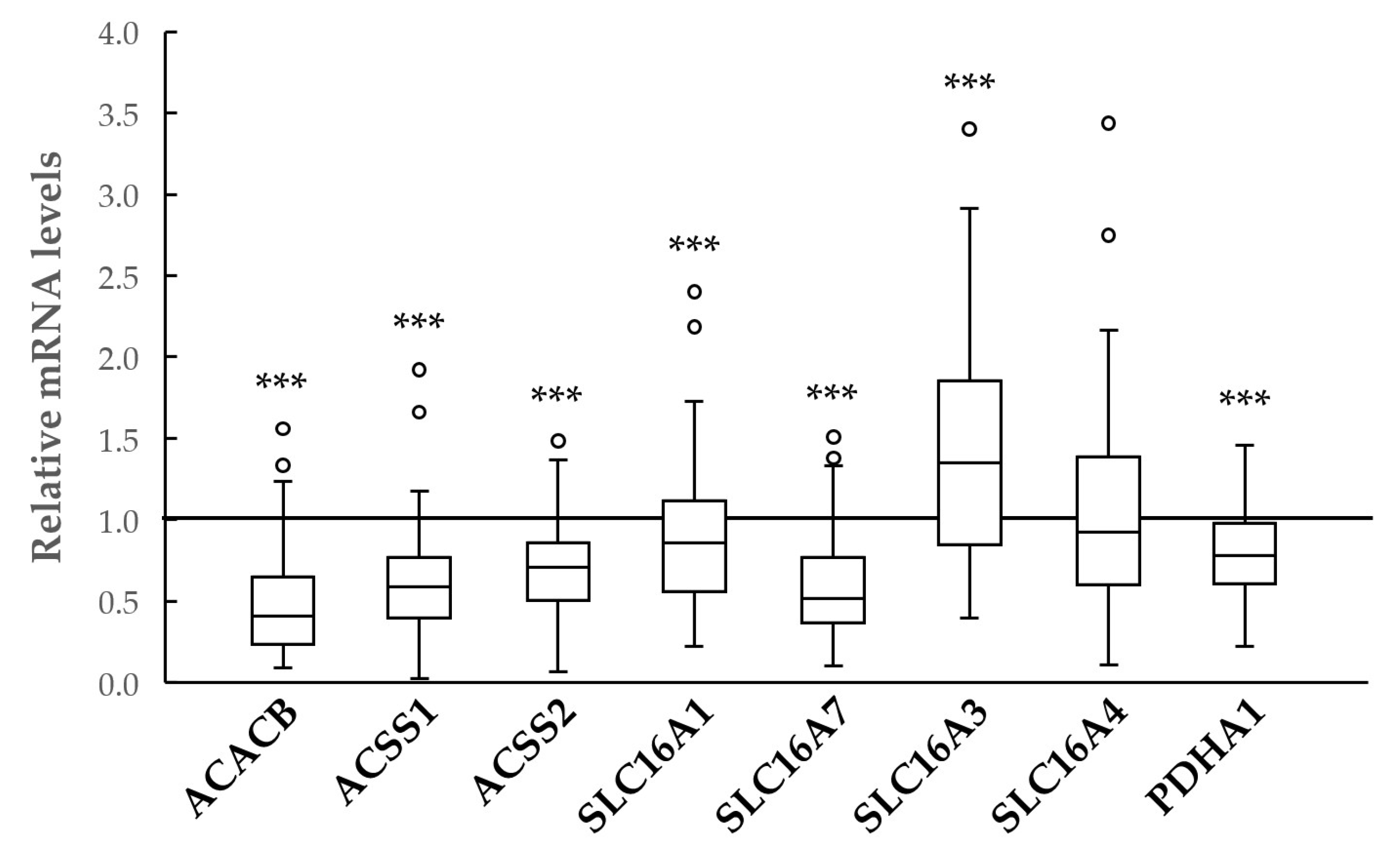
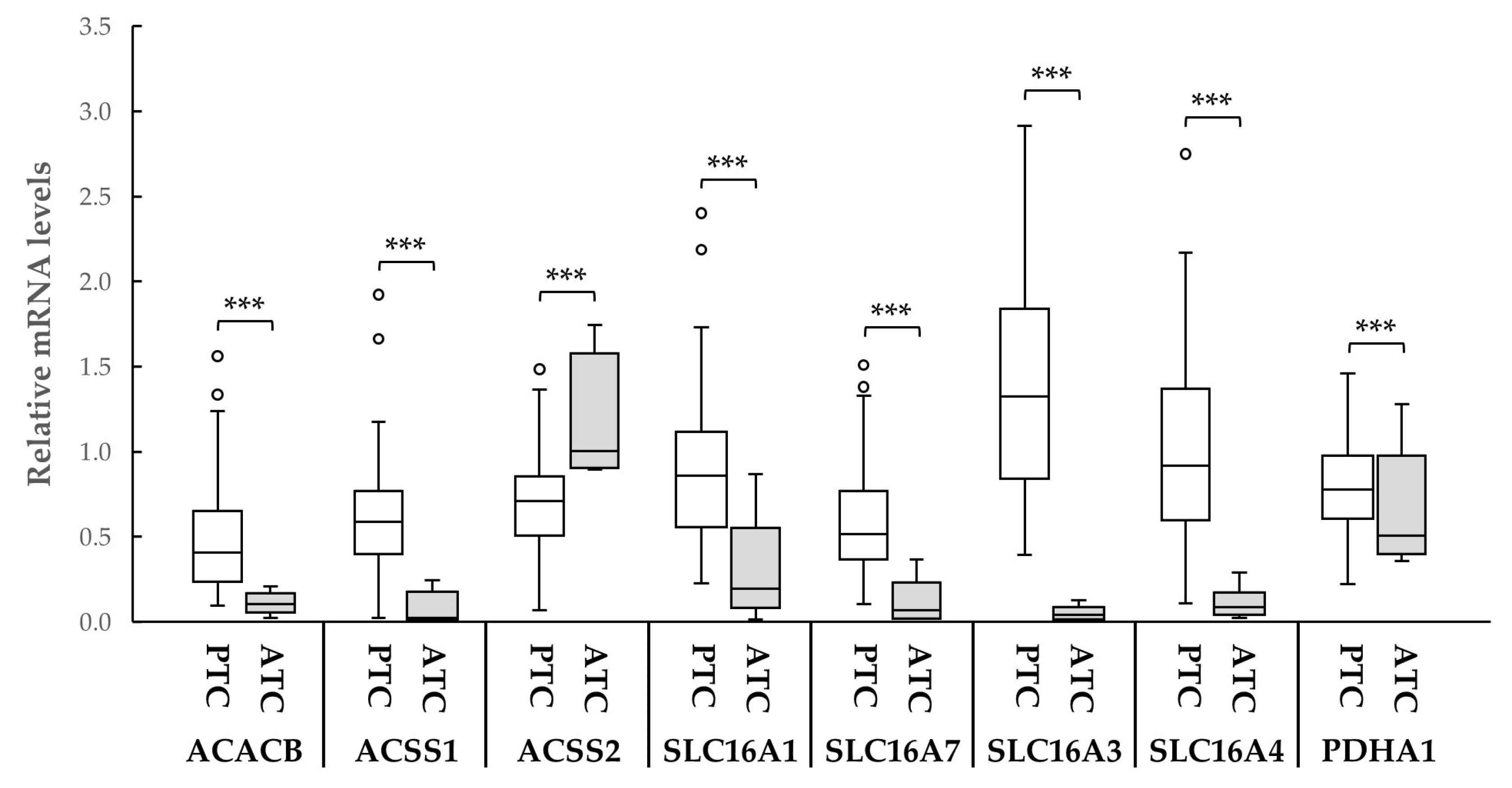
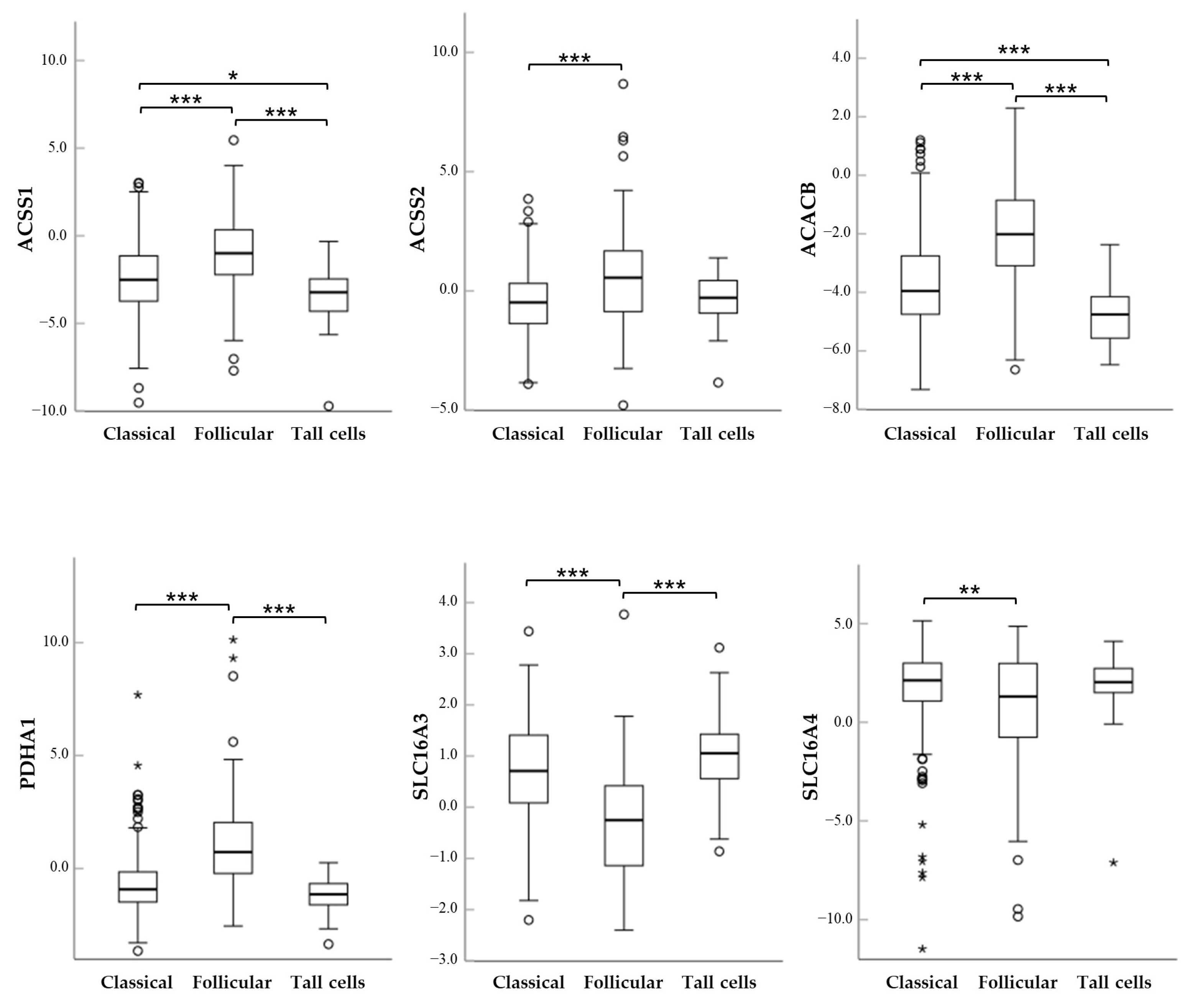
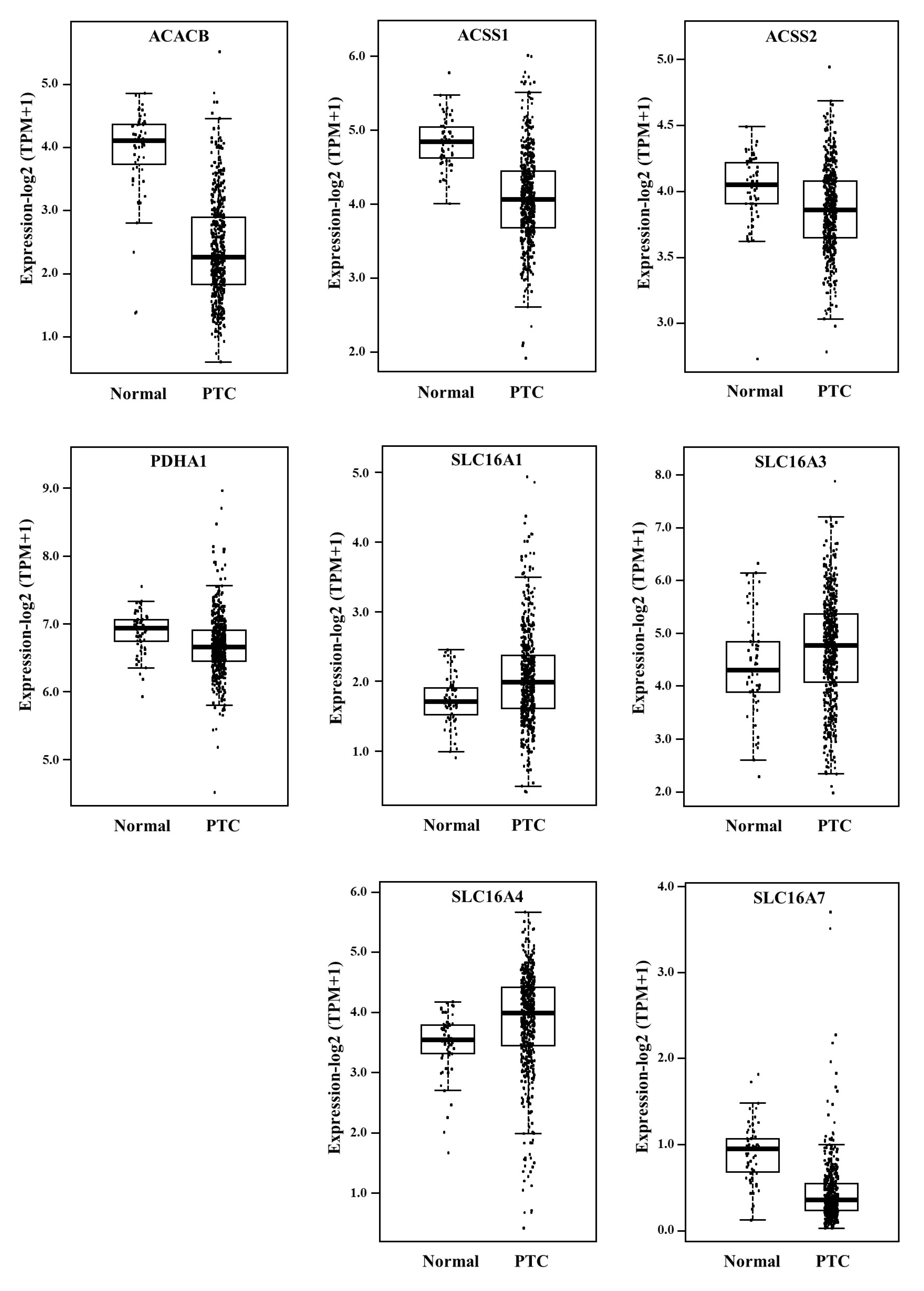
Expression Levels of Genes Involved in Acetate Metabolism
3. Discussion
4. Methods
4.1. TCGA Data
4.2. Patients and Tissue Samples
4.3. Extraction and Analysis of mRNA
4.4. Statistical Analysis
Author Contributions
Funding
Institutional Review Board Statement
Informed Consent Statement
Data Availability Statement
Conflicts of Interest
References
- Siegel, R.L.; Miller, K.D.; Jemal, A. Cancer statistics, 2019. CA Cancer J. Clin. 2019, 69, 7–34. [Google Scholar] [CrossRef]
- Nikiforov, Y.E. Diagnostic Pathology and Molecular Genetics of the Thyroid; Lippincott Williams & Wilkins: Philadelphia, PA, USA, 2009. [Google Scholar]
- Ringel, M.D.; Sosa, J.A.; Baloch, Z.; Bischoff, L.; Bloom, G.; Brent, G.A.; Brock, P.L.; Chou, R.; Flavell, R.R.; Goldner, W.; et al. 2025 American Thyroid Association management guidelines for adult patients with differentiated thyroid cancer. Thyroid 2025, 35, 841–985. [Google Scholar] [CrossRef]
- Ibrahimpasic, T.; Ghossein, R.; Shah, J.P.; Ganly, I. Poorly differentiated carcinoma of the thyroid gland: Current status and future prospects. Thyroid 2019, 29, 311–321. [Google Scholar] [CrossRef]
- Bible, K.C.; Kebebew, E.; Brierley, J.; Brito, J.P.; Cabanillas, M.E.; Clark, T.J., Jr.; Di Cristofano, A.; Foote, R.; Giordano, T.; Kasperbauer, J.; et al. 2021 American Thyroid Association guidelines for management of patients with anaplastic thyroid cancer. Thyroid 2021, 31, 337–386. [Google Scholar] [CrossRef]
- Bai, Y.; Kakudo, K.; Jung, C.K. Updates in the Pathologic Classification of Thyroid Neoplasms: A Review of the World Health Organization Classification. Endocrinol. Metab. 2020, 35, 696–715. [Google Scholar] [CrossRef]
- Cancer Genome Atlas Research Network. Integrated genomic characterization of papillary thyroid carcinoma. Cell 2014, 159, 676–690. [Google Scholar] [CrossRef]
- Ulisse, S.; Baldini, E.; Lauro, A.; Pironi, D.; Tripodi, D.; Lori, E.; Ferent, I.C.; Amabile, M.I.; Catania, A.; Di Matteo, F.M.; et al. Papillary thyroid cancer prognosis: An evolving field. Cancers 2021, 13, 5567. [Google Scholar] [CrossRef] [PubMed]
- Falvo, L.; D’Ercole, C.; Sorrenti, S.; D’Andrea, V.; Catania, A.; Berni, A.; Grilli, P.; De Antoni, E. Papillary microcarcinoma of the thyroid gland: Analysis of prognostic factors including histological subtype. Eur. J. Surg. Suppl. 2003, 588, 28–32. [Google Scholar]
- Prete, A.; Matrone, A.; Gambale, C.; Torregrossa, L.; Minaldi, E.; Romei, C.; Ciampi, R.; Molinaro, E.; Elisei, R. Poorly differentiated and anaplastic thyroid cancer: Insights into genomics, microenvironment and new drugs. Cancers 2021, 13, 3200. [Google Scholar] [CrossRef]
- Keutegen, X.M.; Sadowski, S.M.; Kebebew, E. Management of anaplastic thyroid cancer. Gland. Surg. 2015, 4, 44–51. [Google Scholar] [CrossRef]
- Niu, N.; Ye, J.; Hu, Z.; Zhang, J.; Wang, Y. Regulative roles of metabolic plasticity caused by mitochondrial oxidative phosphorylation and glycolysis on the initiation and progression of tumorigenesis. Int. J. Mol. Sci. 2023, 24, 7076. [Google Scholar] [CrossRef] [PubMed]
- Hsu, P.P.; Sabatini, D.M. Cancer cell metabolism: Warburg and beyond. Cell 2008, 134, 703–707. [Google Scholar] [CrossRef]
- Ward, P.S.; Thompson, C.B. Metabolic reprogramming: A cancer hallmark even Warburg did not anticipate. Cancer Cell 2012, 21, 297–308. [Google Scholar] [CrossRef]
- Ju, S.H.; Song, M.; Lim, J.Y.; Kang, Y.E.; Yi, H.S.; Shong, M. Metabolic reprogramming in thyroid cancer. Endocrinol. Metab. 2024, 39, 425–444. [Google Scholar] [CrossRef]
- Strickaert, A.; Corbet, C.; Spinette, S.A.; Craciun, L.; Dom, G.; Andry, G.; Larsimont, D.; Wattiez, R.; Dumont, J.E.; Feron, O.; et al. Reprogramming of energy metabolism: Increased expression and roles of pyruvate carboxylase in papillary thyroid cancer. Thyroid 2019, 29, 845–857. [Google Scholar] [CrossRef]
- Bao, L.; Xu, T.; Lu, X.; Huang, P.; Pan, Z.; Ge, M. Metabolic reprogramming of thyroid cancer cells and crosstalk in their microenvironment. Front. Oncol. 2021, 11, 773028. [Google Scholar] [CrossRef]
- Warburg, O.; Wind, F.; Negelein, E. The metabolism of tumor in the body. J. Gen. Physiol. 1927, 8, 519–530. [Google Scholar] [CrossRef]
- Fan, S.; Guo, J.; Nie, H.; Xiong, H.; Xia, Y. Aberrant energy metabolism in tumors and potential therapeutic targets. Genes Chromosomes Cancer 2024, 63, e70008. [Google Scholar] [CrossRef]
- Schug, Z.T.; Vande Voorde, J.; Gottlieb, E. The metabolic fate of acetate in cancer. Nat. Rev. Cancer 2016, 16, 708–717. [Google Scholar] [CrossRef] [PubMed]
- Payen, V.L.; Mina, E.; Van Hée, V.F.; Porporato, P.E.; Sonveaux, P. Monocarboxylate transporters in cancer. Mol. Metab. 2020, 33, 48–66. [Google Scholar] [CrossRef] [PubMed]
- Wang, Y.; Yu, W.; Li, S.; Guo, D.; He, J.; Wang, Y. Acetyl-CoA Carboxylases and Diseases. Front. Oncol. 2022, 12, 836058. [Google Scholar] [CrossRef]
- Kim, J.W.; Tchernyshyov, I.; Semenza, G.L.; Dang, C.V. HIF-1-mediated expression of pyruvate dehydrogenase kinase: A metabolic switch required for cellular adaptation to hypoxia. Cell Metab. 2006, 3, 177–185. [Google Scholar] [CrossRef] [PubMed]
- Semenza, G.L. HIF-1: Upstream and downstream of cancer metabolism. Curr. Opin. Genet. Dev. 2010, 20, 51. [Google Scholar] [CrossRef]
- Hatzivassiliou, G.; Zhao, F.; Bauer, D.E.; Andreadis, C.; Shaw, A.N.; Dhanak, D.; Hingorani, S.R.; Tuveson, D.A.; Thompson, C.B. ATP citrate lyase inhibition can suppress tumor cell growth. Cancer Cell 2005, 8, 311–321. [Google Scholar] [CrossRef]
- Zaidi, N.; Royaux, I.; Swinnen, J.V.; Smans, K. ATP citrate lyase knockdown induces growth arrest and apoptosis through different cell- and environment-dependent mechanisms. Mol. Cancer Ther. 2012, 11, 1925–1935. [Google Scholar] [CrossRef]
- Schug, Z.T.; Peck, B.; Jones, D.T.; Zhang, Q.; Grosskurth, S.; Alam, I.S.; Goodwin, L.M.; Smethurst, E.; Mason, S.; Blyth, K.; et al. Acetyl-CoA synthetase 2 promotes acetate utilization and maintains cancer cell growth under metabolic stress. Cancer Cell 2015, 27, 57–71. [Google Scholar] [CrossRef] [PubMed]
- Miller, K.D.; Pniewski, K.; Perry, C.E.; Papp, S.B.; Shaffer, J.D.; Velasco-Silva, J.N.; Casciano, J.C.; Aramburu, T.M.; Srikanth, Y.V.V.; Cassel, J.; et al. Targeting ACSS2 with a Transition-State Mimetic Inhibits Triple-Negative Breast Cancer Growth. Cancer Res. 2021, 81, 1252–1264. [Google Scholar] [CrossRef] [PubMed]
- Zhao, W.; Ouyang, C.; Zhang, L.; Wang, J.; Zhang, J.; Zhang, Y.; Huang, C.; Xiao, Q.; Jiang, B.; Lin, F.; et al. The proto-oncogene tyrosine kinase c-SRC facilitates glioblastoma progression by remodeling fatty acid synthesis. Nat. Commun. 2024, 15, 7455. [Google Scholar] [CrossRef]
- Mroweh, O.; Karam, L.; Hammoud, R.; Al Achcar, J.; Sobh, R.; Nasser, S.M.; Garcia, J.A.; Kobeissy, P.H. ACSS2 promotes proliferation and invasiveness of SKOV-3 and PA-1 ovarian cancer cell lines under hypoxia. J. Ovarian Res. 2025, 18, 232. [Google Scholar] [CrossRef]
- Bacigalupa, Z.A.; Arner, E.N.; Vlach, L.M.; Wolf, M.M.; Brown, W.A.; Krystofiak, E.S.; Ye, X.; Hongo, R.A.; Landis, M.; Amason, E.K.; et al. HIF-2α expression and metabolic signaling require ACSS2 in clear cell renal cell carcinoma. J. Clin. Investig. 2024, 134, e164249. [Google Scholar] [CrossRef]
- Menendez, J.A.; Lupu, R. Fatty acid synthase (FASN) as a therapeutic target in breast cancer. Expert Opin. Ther. Targets 2017, 21, 1001–1016. [Google Scholar] [CrossRef]
- Kong, F.; Ma, L.; Wang, X.; You, H.; Zheng, K.; Tang, R. Regulation of epithelial-mesenchymal transition by protein lysine acetylation. Cell Commun. Signal. 2022, 20, 57. [Google Scholar] [CrossRef]
- Jeon, J.Y.; Lee, M.; Whang, S.H.; Kim, J.-W.; Cho, A.; Yun, M. Regulation of Acetate Utilization by Monocarboxylate Transporter 1 (MCT1) in Hepatocellular Carcinoma (HCC). Oncol. Res. 2018, 26, 71–81. [Google Scholar] [CrossRef]
- Ferro, S.; Azevedo-Silva, J.; Casal, M.; Côrte-Real, M.; Baltazar, F.; Preto, A. Characterization of acetate transport in colorectal cancer cells and potential therapeutic implications. Oncotarget 2016, 7, 70639–70653. [Google Scholar] [CrossRef]
- Moschen, I.; Bröer, A.; Galić, S.; Lang, F.; Bröer, S. Significance of short chain fatty acid transport by members of the monocarboxylate transporter family (MCT). Neurochem. Res. 2012, 37, 2562–2568. [Google Scholar] [CrossRef]
- Koundouros, N.; Poulogiannis, G. Reprogramming of fatty acid metabolism in cancer. Br. J. Cancer 2020, 122, 4–22. [Google Scholar] [CrossRef] [PubMed]
- Yang, Y.; Zhao, P.; Chen, H.; Tu, Y.; Zhou, Y.; Liu, X.; Sreang, L.; Zhou, Z.; Tu, J. Novel strategies against hepatocellular carcinoma through lipid metabolism. Oncol. Res. 2025, 33, 3247–3268. [Google Scholar] [CrossRef]
- Deng, Z.H.; He, L.J.; Wei, S.; Li, C.S.; Chen, Y.; Ai, X.Y.; Chaotham, C.; Jiranusornkul, S.; Zhang, P.C.; Luo, Z.; et al. Unveiling plumbagin as a novel metabolic modulator to suppress ACC1-mediated de novo lipogenesis in non-small cell lung cancer. Phytomedicine 2025, 148, 157438. [Google Scholar] [CrossRef]
- He, H.; Zhang, Z.; Chen, L.; Gao, F.; Wu, Y.; Yi, L.; Shao, F.; Gao, Y.; He, J. Integrated single-cell and bulk RNA sequencing analysis reveals ACACA as a potential prognostic and immunotherapeutic biomarker across cancers. Front. Immunol. 2025, 15, 1599223. [Google Scholar] [CrossRef] [PubMed]
- Anderson, R.; Pladna, K.M.; Schramm, N.J.; Wheeler, F.B.; Kridel, S.; Pardee, T.S. Pyruvate dehydrogenase inhibition leads to decreased glycolysis, increased reliance on gluconeogenesis and alternative sources of acetyl-coa in acute myeloid leukemia. Cancers 2023, 15, 484. [Google Scholar] [CrossRef] [PubMed]
- Xu, Z.; Wang, X.; Cheng, H.; Li, J.; Zhang, X.; Wang, X. The role of MCT1 in tumor progression and targeted therapy: A comprehensive review. Front. Immunol. 2025, 16, 1610466. [Google Scholar] [CrossRef] [PubMed]
- Amir, M.; Bakht, D.; Bokhari, S.F.H.; Yousaf, R.; Iqbal, A.; Nazir, H.; Waleed, M.; Naqvi, M.Z.; Tahir, M.; Dost, W. Lipid metabolism-related genes in gastric cancer: Exploring oncogenic pathways. World J. Gastrointest. Oncol. 2025, 17, 106842. [Google Scholar] [CrossRef]
- Chu, J.; Jiang, J.; Lu, X.; He, G.; Zhang, D. CircPCNXL2 promotes papillary thyroid carcinoma progression by regulating fatty acid metabolism induced by anabolic enzyme ACC1. Cancer Lett. 2024, 598, 217069. [Google Scholar] [CrossRef] [PubMed]
- Sawant Dessai, A.; Kalhotra, P.; Novickis, A.T.; Dasgupta, S. Regulation of tumor metabolism by post-translational modifications on metabolic enzymes. Cancer Gene Ther. 2023, 30, 548–558. [Google Scholar] [CrossRef] [PubMed]
- Corbet, C.; Pinto, A.; Martherus, R.; Santiago de Jesus, J.P.; Polet, F.; Feron, O. Acidosis drives the reprogramming of fatty acid metabolism in cancer cells through changes in mitochondrial and histone acetylation. Cell Metab. 2016, 24, 311–323. [Google Scholar] [CrossRef]
- Duan, S.-L.; Wu, M.; Zhang, Z.-J.; Chang, S. The potential role of reprogrammed glucose metabolism: An emerging actionable codependent target in thyroid cancer. J. Transl. Med. 2023, 21, 735. [Google Scholar] [CrossRef]
- Liu, Y.; Chen, T.Y.; Yang, Z.Y.; Fang, W.; Wu, Q.; Zhang, C. Identification of hub genes in papillary thyroid carcinoma: Robust rank aggregation and weighted gene co-expression network analysis. J. Transl. Med. 2020, 18, 170. [Google Scholar] [CrossRef]
- Valvo, V.; Iesato, A.; Kavanagh, T.R.; Priolo, C.; Zsengeller, Z.; Pontecorvi, A.; Stillman, I.E.; Burke, S.D.; Liu, X.; Nucera, C. Fine-tuning lipid metabolism by targeting mitochondria-associated Acetyl-CoA-carboxylase 2 in BRAFV600E papillary thyroid carcinoma. Thyroid 2021, 31, 1335–1358. [Google Scholar] [CrossRef]
- Ling, R.; Chen, G.; Tang, X.; Liu, N.; Zhou, Y.; Chen, D. Acetyl-CoA synthetase 2 (ACSS2): A review with a focus on metabolism and tumor development. Discov. Oncol. 2022, 13, 58. [Google Scholar] [CrossRef]
- Johnson, J.M.; Lai, S.Y.; Cotzia, P.; Cognetti, D.; Luginbuhl, A.; Pribitkin, E.A.; Zhan, T.; Mollaee, M.; Domingo-Vidal, M.; Chen, Y.; et al. Mitochondrial metabolism as a treatment target in anaplastic thyroid cancer. Semin. Oncol. 2015, 42, 915–922. [Google Scholar] [CrossRef]
- Li, Q.; Xu, B.; Tang, Y.; Li, Y.; Ying, H. Effect of monocarboxylate transporter-1 on the biological behavior of iodine-refractory thyroid carcinoma. Transl. Cancer Res. 2021, 10, 4914–4928. [Google Scholar] [CrossRef]
- Chandrashekar, D.S.; Bashel, B.; Balasubramanya, S.A.H.; Creighton, C.J.; Ponce-Rodriguez, I.; Chakravarthi, B.V.S.K.; Varambally, S.B. UALCAN: A portal for facilitating tumor subgroup gene expression and survival analyses. Neoplasia 2017, 19, 649–658. [Google Scholar] [CrossRef]
- Gao, J.; Aksoy, B.A.; Dogrusoz, U.; Dresdner, G.; Gross, B.; Sumer, S.O.; Sun, Y.; Jacobsen, A.; Sinha, R.; Larsson, E.; et al. Integrative analysis of complex cancer genomics and clinical profiles using the cBioPortal. Sci. Signal. 2013, 6, pl1. [Google Scholar] [CrossRef]
- Baldini, E.; Sorrenti, S.; Di Gioia, C.; De Vito, C.; Antonelli, A.; Gnessi, L.; Carbotta, G.; D’Armiento, E.; Miccoli, P.; De Antoni, E.; et al. Cervical lymph node metastases from thyroid cancer: Does thyroglobulin and calcitonin measurement in fine needle aspirates improve the diagnostic value of cytology? BMC Clin. Pathol. 2013, 13, 7. [Google Scholar] [CrossRef] [PubMed]
- Baldini, E.; Arlot-Bonnemains, Y.; Sorrenti, S.; Mian, C.; Pelizzo, M.R.; De Antoni, E.; Palermo, S.; Morrone, S.; Barollo, S.; Nesca, A.; et al. Aurora kinases are expressed in medullary thyroid carcinoma (MTC) and their inhibition suppresses in vitro growth and tumorigenicity of the MTC derived cell line TT. BMC Cancer 2011, 11, 411. [Google Scholar] [CrossRef] [PubMed]
- Untergasser, A.; Ruijter, J.M.; Benes, V.; van den Hoff, M.J.B. Web-based LinRegPCR: Application for the visualization and analysis of (RT)-qPCR amplification and melting data. BMC Bioinform. 2021, 22, 398. [Google Scholar] [CrossRef] [PubMed]



| Tau-b Kendall Correlation Coefficient | ||||||||
|---|---|---|---|---|---|---|---|---|
| ACSS1 | ACSS2 | ACACB | SLC16A1 | SLC16A7 | SLC16A3 | SLC16A4 | PDHA1 | |
| ACSS1 | 1.000 | 0.313 p < 0.001 | 0.412 p < 0.01 | −0.121 p < 0.001 | −0.081 p < 0.01 | −0.274 p < 0.01 | −0.148 p < 0.01 | 0.372 p < 0.001 |
| ACSS2 | 1.000 | 0.334 p < 0.001 | 0.030 p > 0.05 | 0.133 p > 0.05 | −0.155 p < 0.001 | −0.070 p < 0.05 | 0.334 p < 0.001 | |
| ACACB | 1.000 | −0.027 p > 0.05 | 0.155 p < 0.001 | 0.333 p < 0.001 | −0.111 p < 0.001 | 0.294 p < 0.001 | ||
| SLC16A1 | 1.000 | 0.194 p < 0.001 | 0.112 p < 0.001 | −0.101 p < 0.01 | −0.090 p < 0.01 | |||
| SLC16A7 | 1.000 | 0.000 p > 0.05 | 0.032 p > 0.05 | −0.162 p < 0.001 | ||||
| SLC16A3 | 1.000 | −0.085 p < 0.01 | −0.274 p < 0.001 | |||||
| SLC16A4 | 1.000 | −0.127 p < 0.001 | ||||||
| PDHA1 | 1.000 | |||||||
| ACACB | p-Value | ACSS1 | p-Value | ACSS2 | p-Value | SLC16A1 | p-Value | SLC16A3 | p-Value | SLC16A4 | p-Value | SLC16A7 | p-Value | PDHA1 | p-Value | |
|---|---|---|---|---|---|---|---|---|---|---|---|---|---|---|---|---|
| Gender Male (n = 123) Female (n = 328) | −3.804 −3.586 | 0.727 | −2.388 −2.158 | 0.073 | −0.224 −0.383 | 0.592 | 1.035 1.110 | 0.764 | 0.659 0.501 | 0.051 | 1.938 2.039 | 0.952 | −1.539 −1.478 | 0.867 | −0.637 −0.729 | 0.786 |
| Age (yr) * | 0.085 | <0.01 | 0.107 | <0.001 | 0.153 | <0.001 | −0.007 | 0.889 | −0.027 | 0.403 | −0.128 | <0.001 | 0.008 | 0.797 | 0.061 | 0.054 |
| Histological variants Classical (n = 310) Follicular (n = 98) Tall cell (n = 34) | −3.944 −2.011 −4.754 | <0.001 | −2.538 −0.990 −3.222 | <0.001 | −0.481 0.553 −0.285 | <0.001 | 1.067 0.799 1.459 | 0.441 | 0.716 −0.252 1.055 | <0.001 | 2.136 1.308 2.041 | <0.01 | −1.504 −1.405 −1.717 | 0.866 | −0.920 0.736 −1.131 | <0.001 |
| BRAF-like (n = 266) RAS-like (n = 116) | −4.208 −1.300 | <0.001 | −3.804 −0.531 | <0.001 | −0.663 0.565 | <0.001 | 1.146 0.673 | <0.05 | 0.796 −0.390 | <0.001 | 2.188 1.500 | <0.01 | −1.436 −1.196 | 0.227 | −1.055 0.736 | <0.001 |
| Differentiation score * | 0.576 | <0.001 | 0.377 | <0.001 | 0.139 | <0.001 | −0.185 | <0.001 | −0.277 | <0.001 | −0.43 | 0.205 | 0.072 | <0.05 | 0.314 | <0.001 |
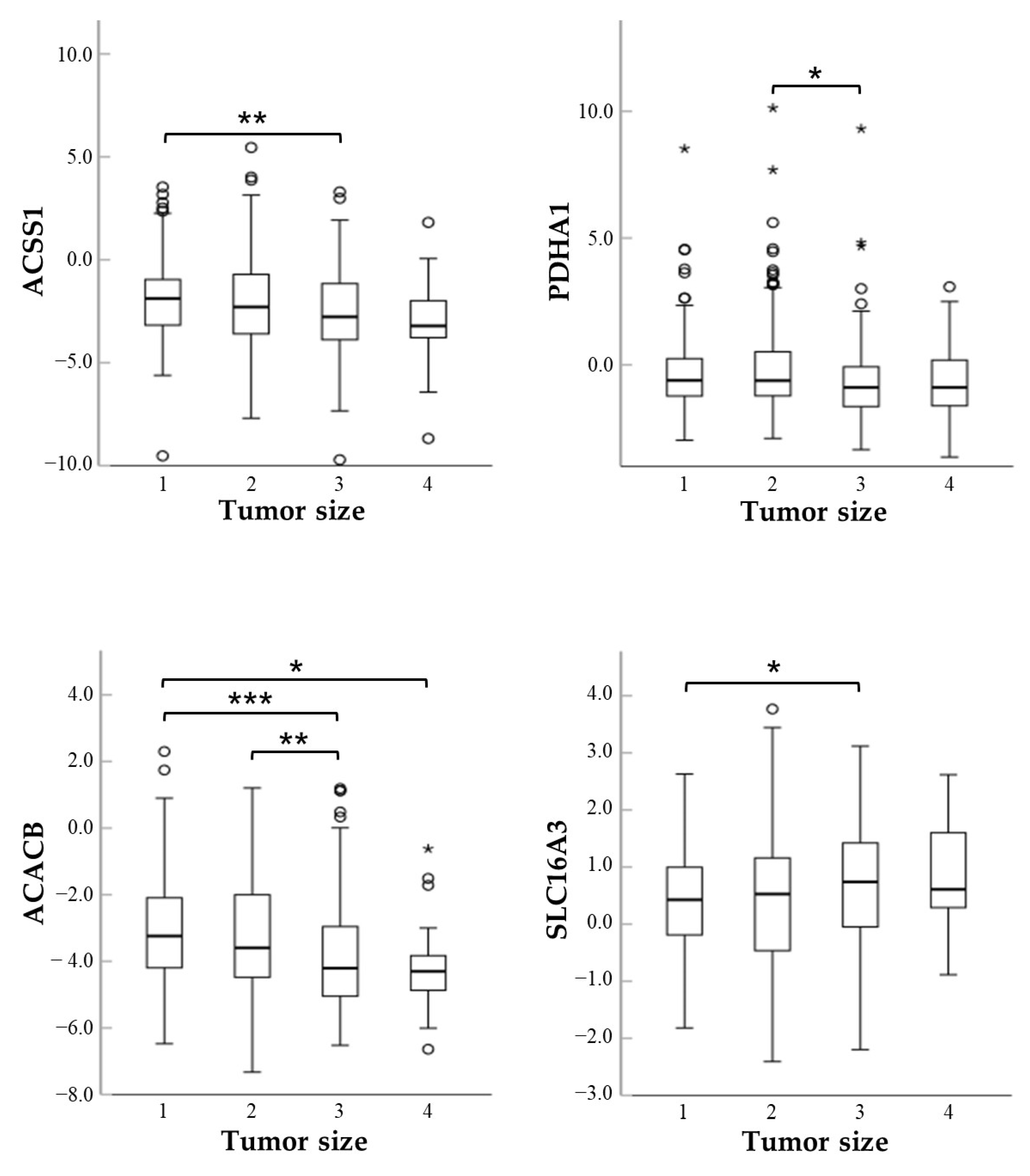
| pT T1 (n = 130) T2 (n = 152) T3 (n = 149) T4 (n = 18) | −3.237 −3.592 −4.204 −4.298 | <0.001 | −1.875 −2.290 −2.771 −3.205 | <0.01 | −0.304 −0.232 −0.441 −0.387 | 0.858 | 0.823 0.933 1.364 2.751 | 0.05 | 0.429 0.529 0.742 0.609 | <0.05 | 2.105 2.030 1.962 1.947 | 0.610 | −1.239 −1.239 −1.674 −1.592 | 0.235 | −0.607 −0.616 −0.893 −0.889 | <0.05 |
| pN N0 (n = 207) N1 (n = 199) | −3.105 −4.269 | <0.001 | −1.790 −3.035 | <0.001 | −0.156 −0.671 | <0.001 | 0.894 1.227 | 0.181 | 0.385 0.807 | <0.001 | 1.874 2.121 | <0.05 | −1.454 −1.525 | 0.850 | −0.496 −0.957 | <0.001 |
| TNM Stage I (n = 366) II (n = 67) III (n = 13) IV (n = 4) | −3.688 −3.953 −4.095 −4.023 | 0.206 | −2.203 −2.771 −2.633 −2.037 | 0.743 | −0.330 −0.336 −0.259 −0.457 | 0.774 | 0.898 1.534 2.751 −0.176 | 0.209 | 0.548 0.669 0.449 0.265 | 0.814 | 2.092 1.497 1.962 0.871 | 0.072 | −1.466 −1.590 −1.530 −0.997 | 0.690 | −0.638 −0.934 −0.637 −0.617 | 0.069 |
| Recurrence No (n = 381) Yes (n = 27) | −3.776 −4.143 | 0.090 | −2.295 −3.110 | 0.079 | −0.417 −0.121 | 0.552 | 0.960 1.256 | 0.576 | 0.586 0.749 | 0.096 | 2.005 2.235 | 0.438 | −1.610 −1.574 | 0.301 | −0.635 −1.061 | <0.05 |
| Gene | Primers | Exon | Size (bp) |
|---|---|---|---|
| ACACB | For 5′-AAGCACGACTCTGTCCTCAA-3′ Rev 5′-GCTGGCTCAGGTATATCACACA-3′ | 52 53 | 88 |
| ACSS1 | For 5′-CGATTTGTGGACGCCTACTT-3′ Rev 5′-CCCTGTGATCTGGTAATAGCC-3′ | 10 11 | 96 |
| ACSS2 | For 5′-TGCCACACCCATGAAACCC-3′ Rev 5′-CAGCTTCACCTTCCAACTCTTC-3′ | 13 14 | 98 |
| PDHA1 | For 5′-TCAAGGACAGGATGGTGAACAG-3′ Rev 5′-TCTTCCAAAGGTGGCTCAGG-3′ | 11 12 | 130 |
| SLC16A3 | For 5′-ATGGTGGCTGCGTCCTTTTG-3′ Rev 5′-AGGGCTGGAAGTTGAGTGC-3′ | 2 3 | 94 |
| SLC16A4 | For 5′-TTAGCCACCACATTTCCACTAC-3′ Rev 5′-AGCCATCCCAGCAAAGAAAC-3′ | 7 8 | 159 |
| SLC16A7 | For 5′-TGCCGTCGGACTTGTCAC-3′ Rev 5′-CCACACGCTTGCTGCTAC-3′ | 5 6 | 142 |
| GAPDH | For 5′- ATCATCAGCAATGCCTCCTG-3′ Rev 5′- GGCCATCCACAGTCTTCTG-3′ | 6–7 8 | 136 |
Disclaimer/Publisher’s Note: The statements, opinions and data contained in all publications are solely those of the individual author(s) and contributor(s) and not of MDPI and/or the editor(s). MDPI and/or the editor(s) disclaim responsibility for any injury to people or property resulting from any ideas, methods, instructions or products referred to in the content. |
© 2026 by the authors. Licensee MDPI, Basel, Switzerland. This article is an open access article distributed under the terms and conditions of the Creative Commons Attribution (CC BY) license.
Share and Cite
Baldini, E.; Cardarelli, S.; Lori, E.; Fallahi, P.; Virili, C.; Centanni, M.; D’Andrea, V.; Antonelli, A.; Sorrenti, S.; Ulisse, S. Acetate Metabolism in Thyroid Cancer Progression. Int. J. Mol. Sci. 2026, 27, 2013. https://doi.org/10.3390/ijms27042013
Baldini E, Cardarelli S, Lori E, Fallahi P, Virili C, Centanni M, D’Andrea V, Antonelli A, Sorrenti S, Ulisse S. Acetate Metabolism in Thyroid Cancer Progression. International Journal of Molecular Sciences. 2026; 27(4):2013. https://doi.org/10.3390/ijms27042013
Chicago/Turabian StyleBaldini, Enke, Silvia Cardarelli, Eleonora Lori, Poupak Fallahi, Camilla Virili, Marco Centanni, Vito D’Andrea, Alessandro Antonelli, Salvatore Sorrenti, and Salvatore Ulisse. 2026. "Acetate Metabolism in Thyroid Cancer Progression" International Journal of Molecular Sciences 27, no. 4: 2013. https://doi.org/10.3390/ijms27042013
APA StyleBaldini, E., Cardarelli, S., Lori, E., Fallahi, P., Virili, C., Centanni, M., D’Andrea, V., Antonelli, A., Sorrenti, S., & Ulisse, S. (2026). Acetate Metabolism in Thyroid Cancer Progression. International Journal of Molecular Sciences, 27(4), 2013. https://doi.org/10.3390/ijms27042013