Independent and Combined Effects of Obesity and Cardiovascular Diseases on the Risk of Cognitive Impairment and Dementia: A Systematic Review and Meta-Analysis of Prospective Cohort Studies Involving 8,276,914 Participants



Abstract
1. Introduction
2. Materials and Methods
2.1. Search Strategy and Data Sources
2.2. Eligibility Criteria and Selection of Studies
2.3. Data Extraction
2.4. Assessment of Risk of Bias
2.5. Assessment of the Certainty of Evidence
2.6. Statistical Analysis
3. Results
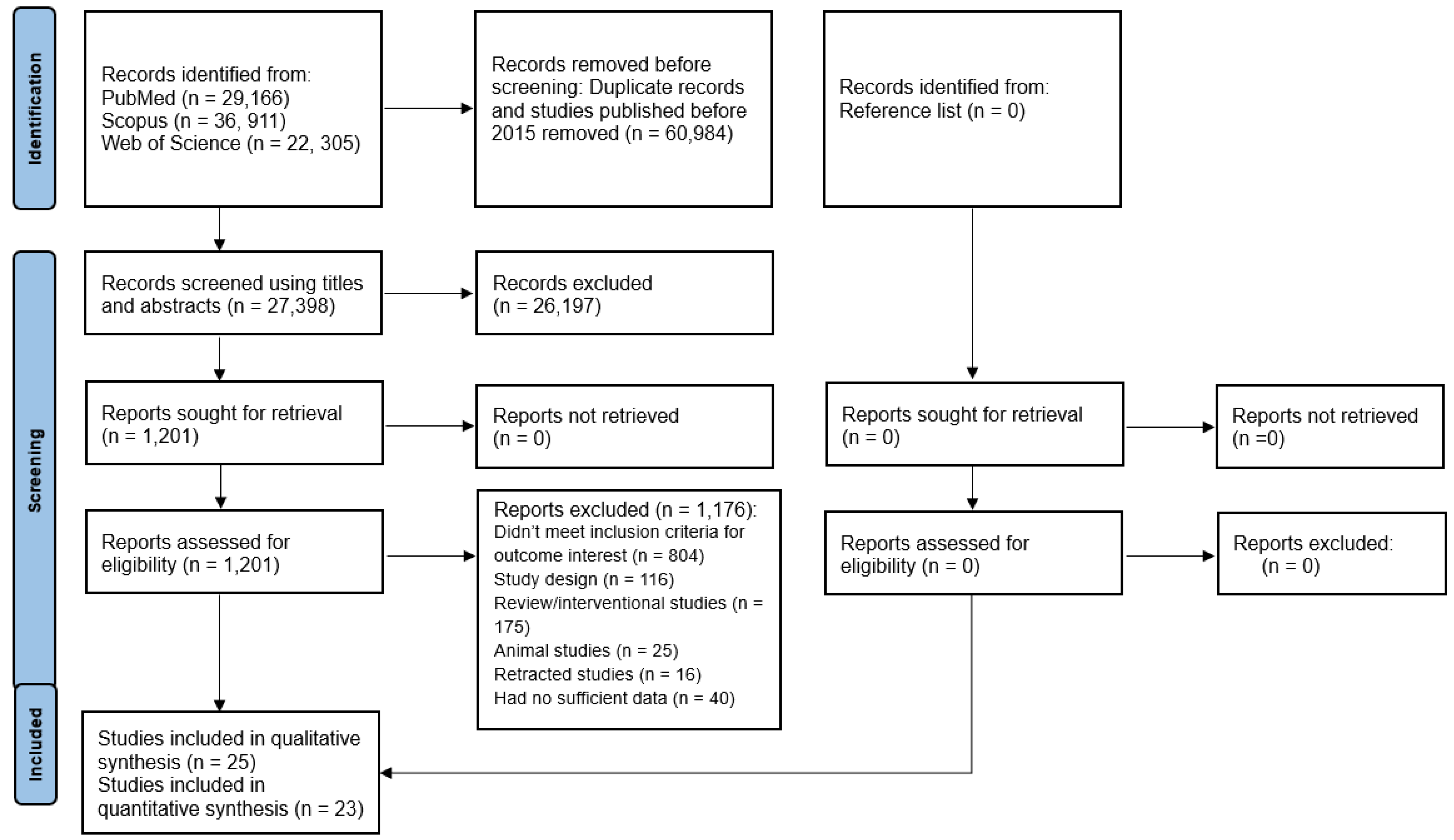
3.1. Literature Search
3.2. Characteristics of Included Studies
3.3. Quantitative Synthesis
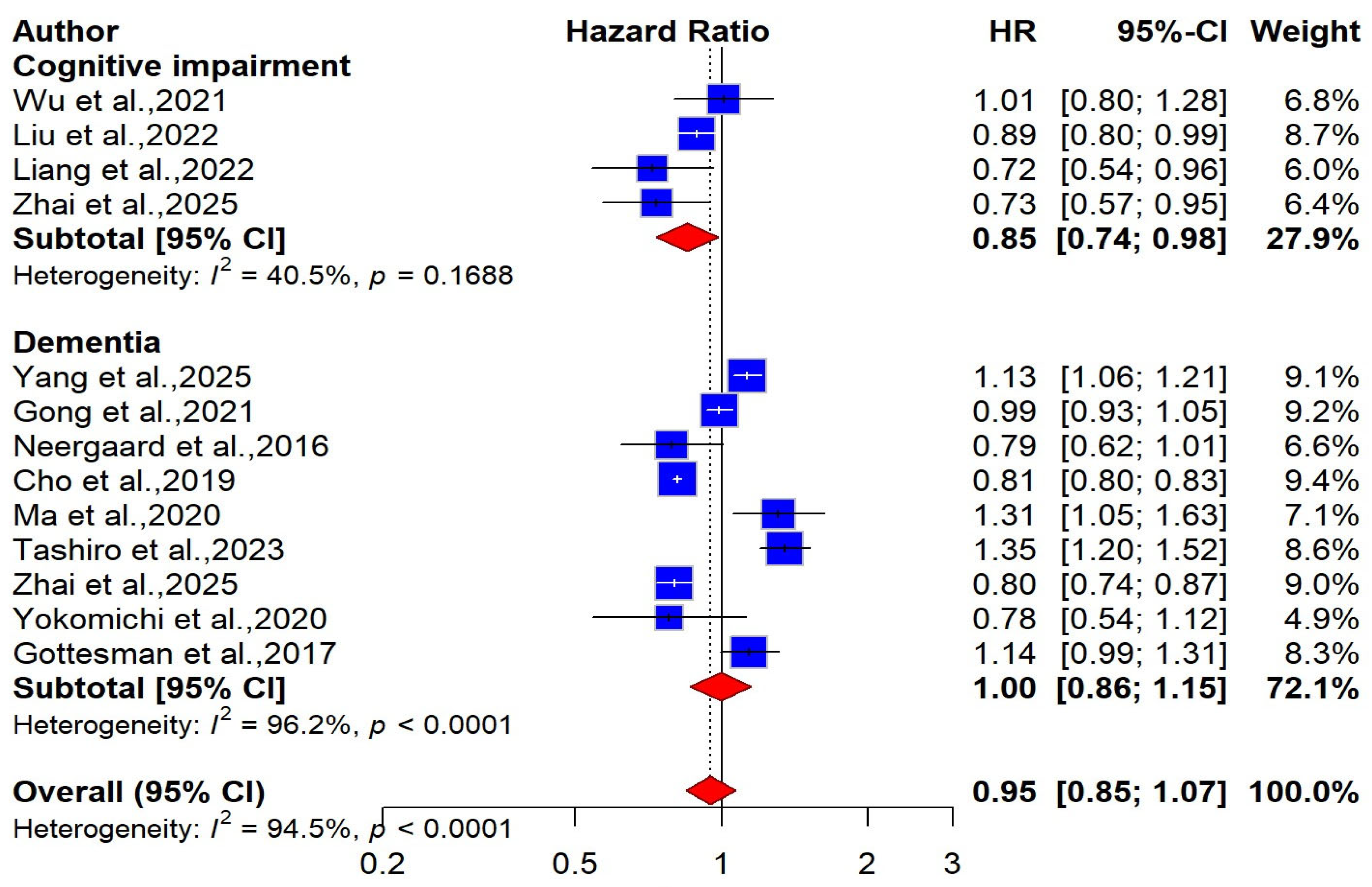
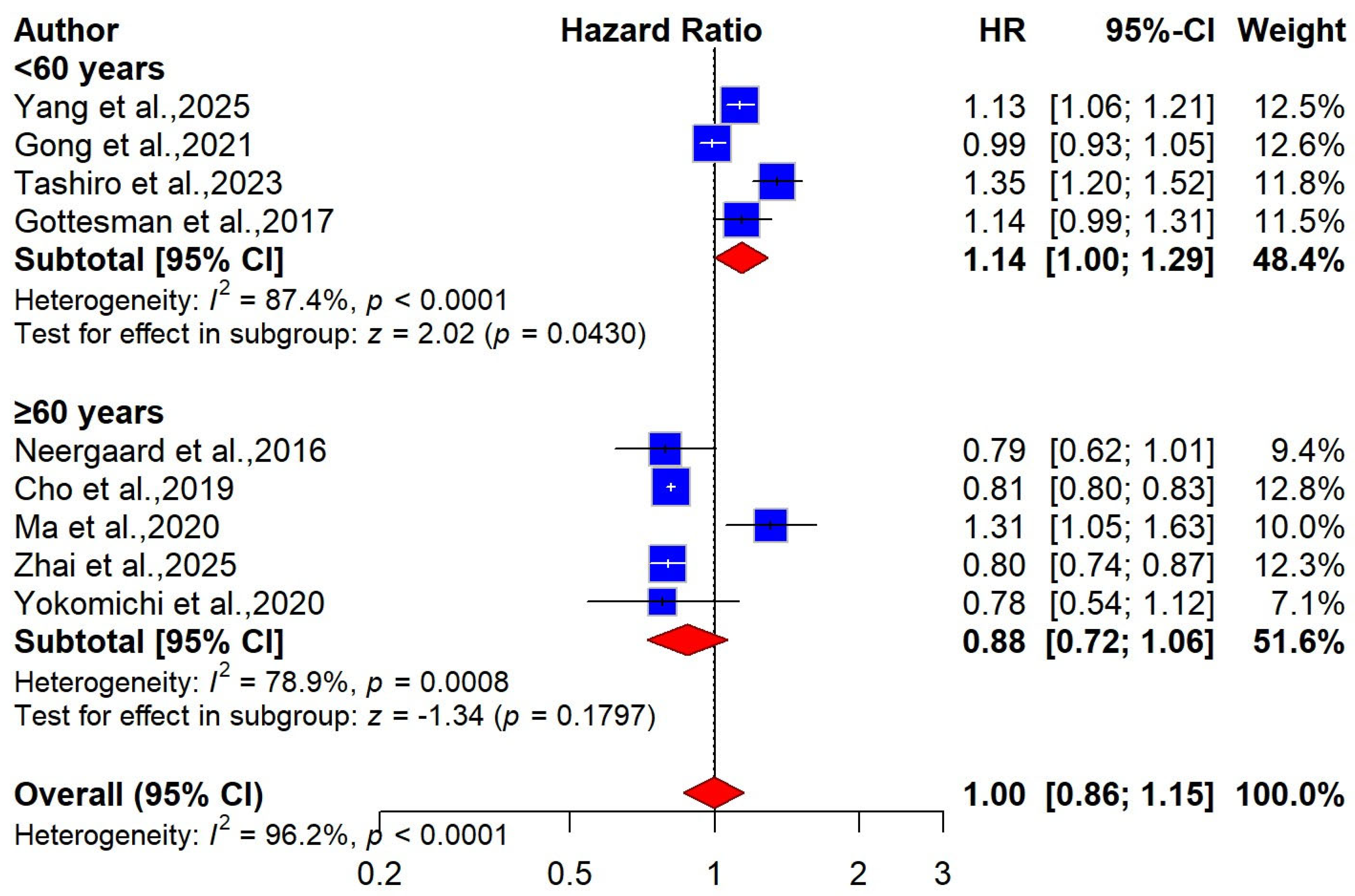
3.3.1. Association Between BMI-Defined Obesity and Risk of Cognitive Impairment and Dementia
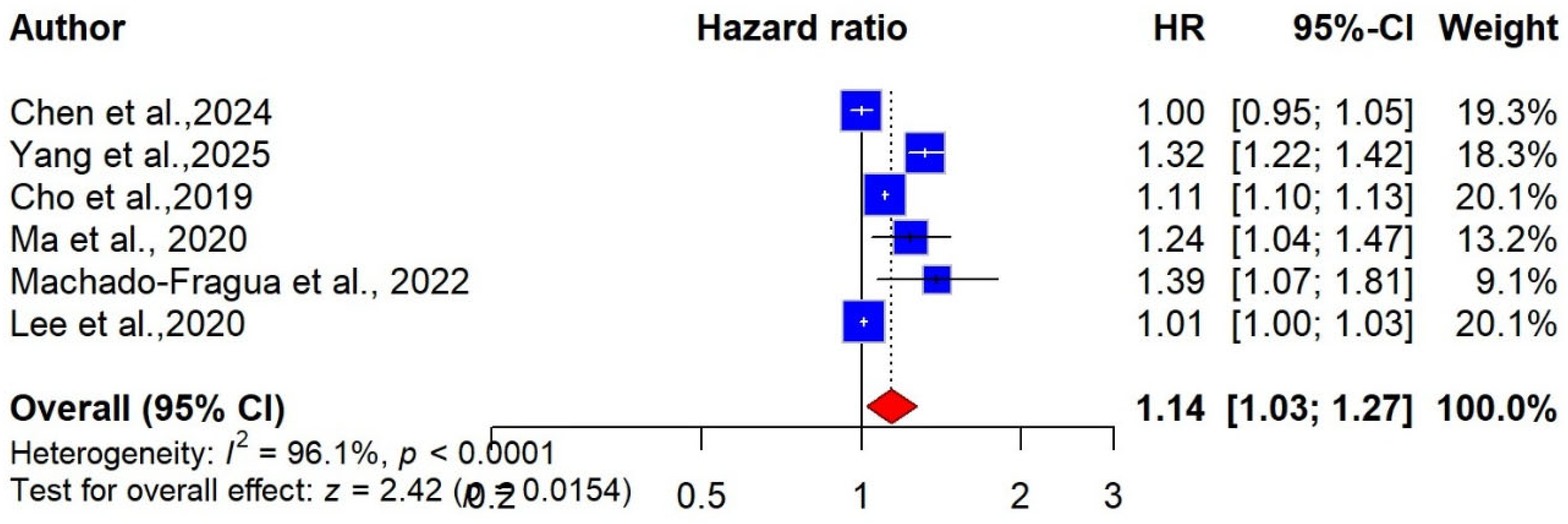
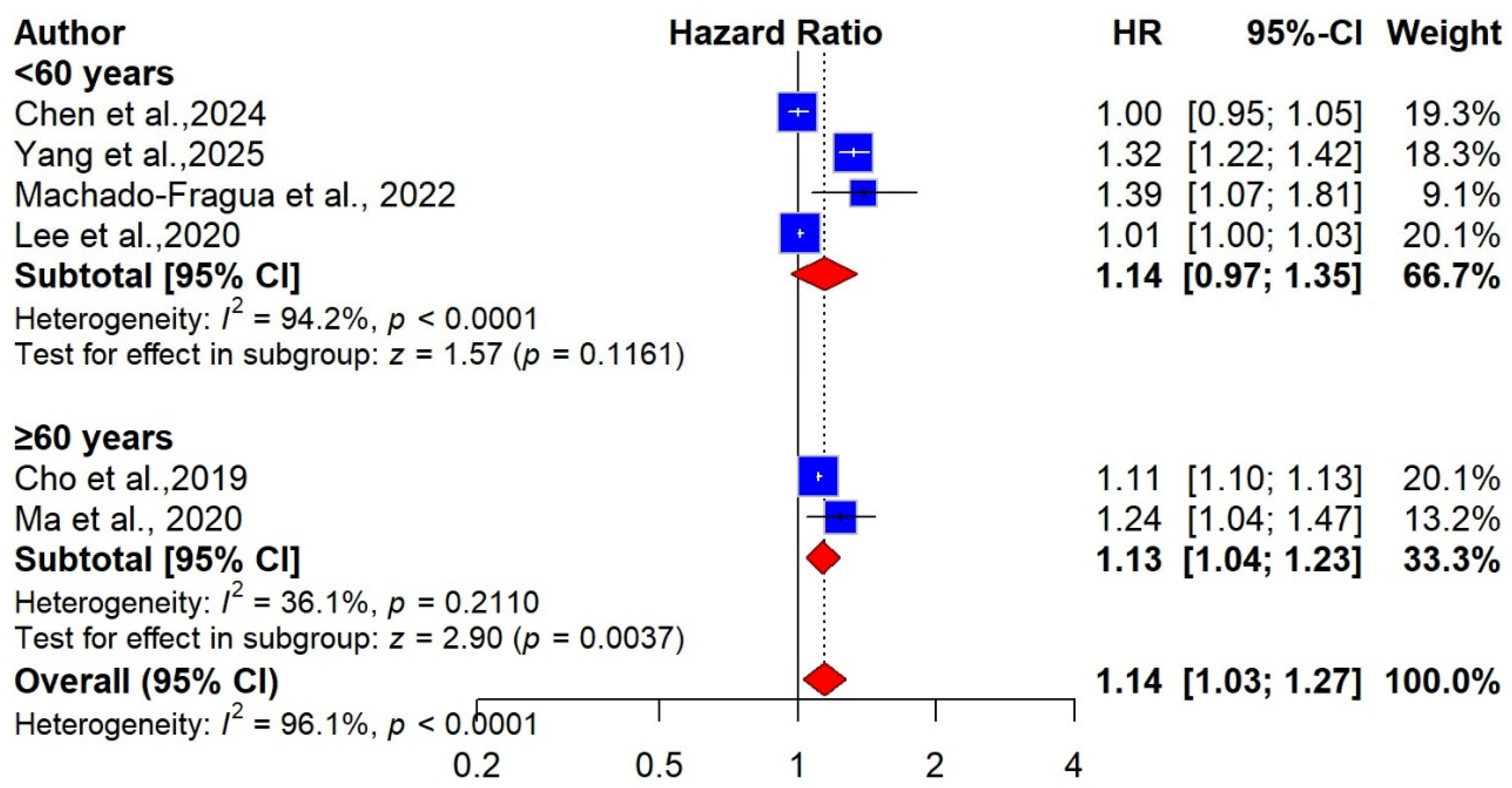
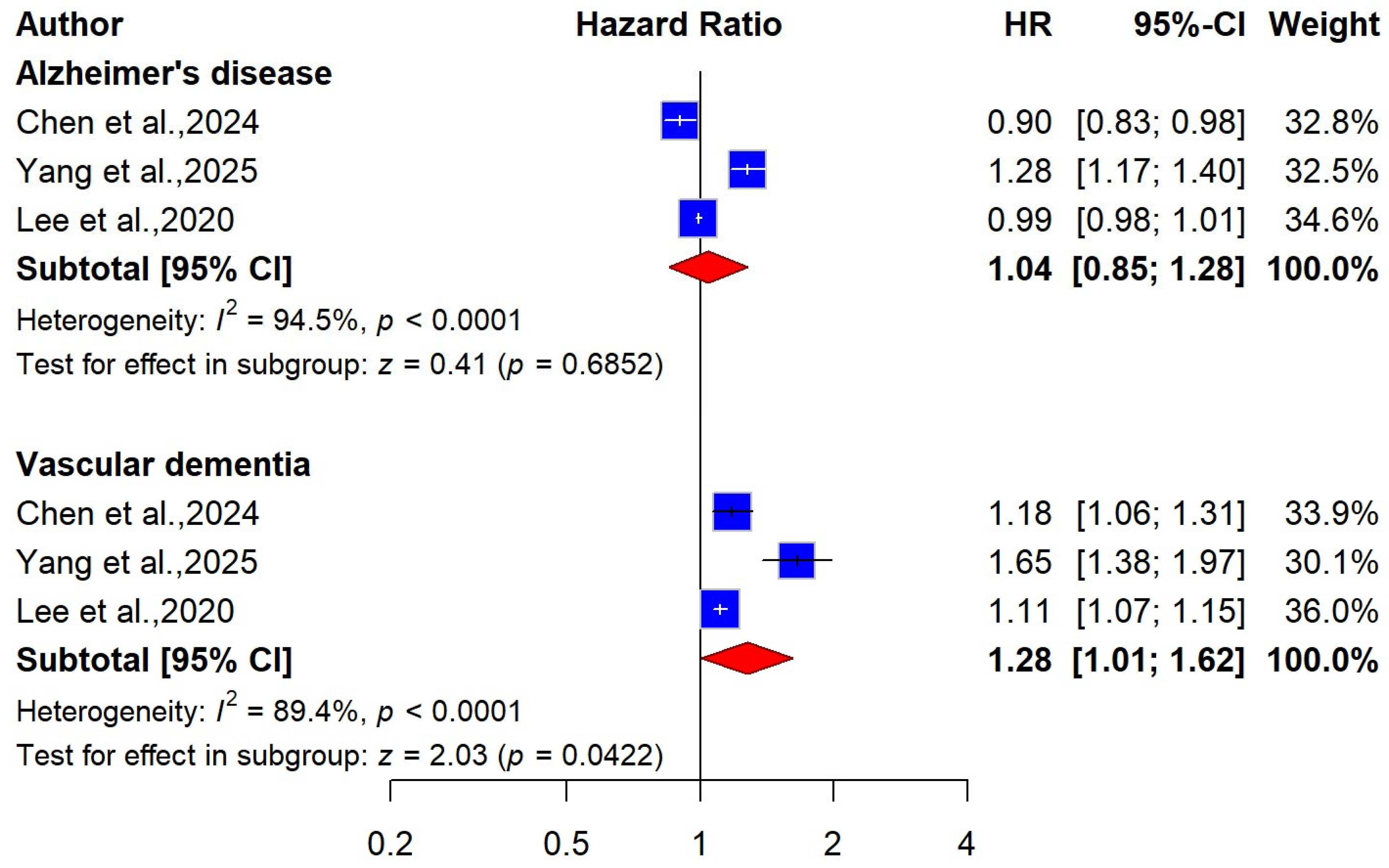
3.3.2. Association Between Central Obesity and Risk of Cognitive Impairment and Dementia
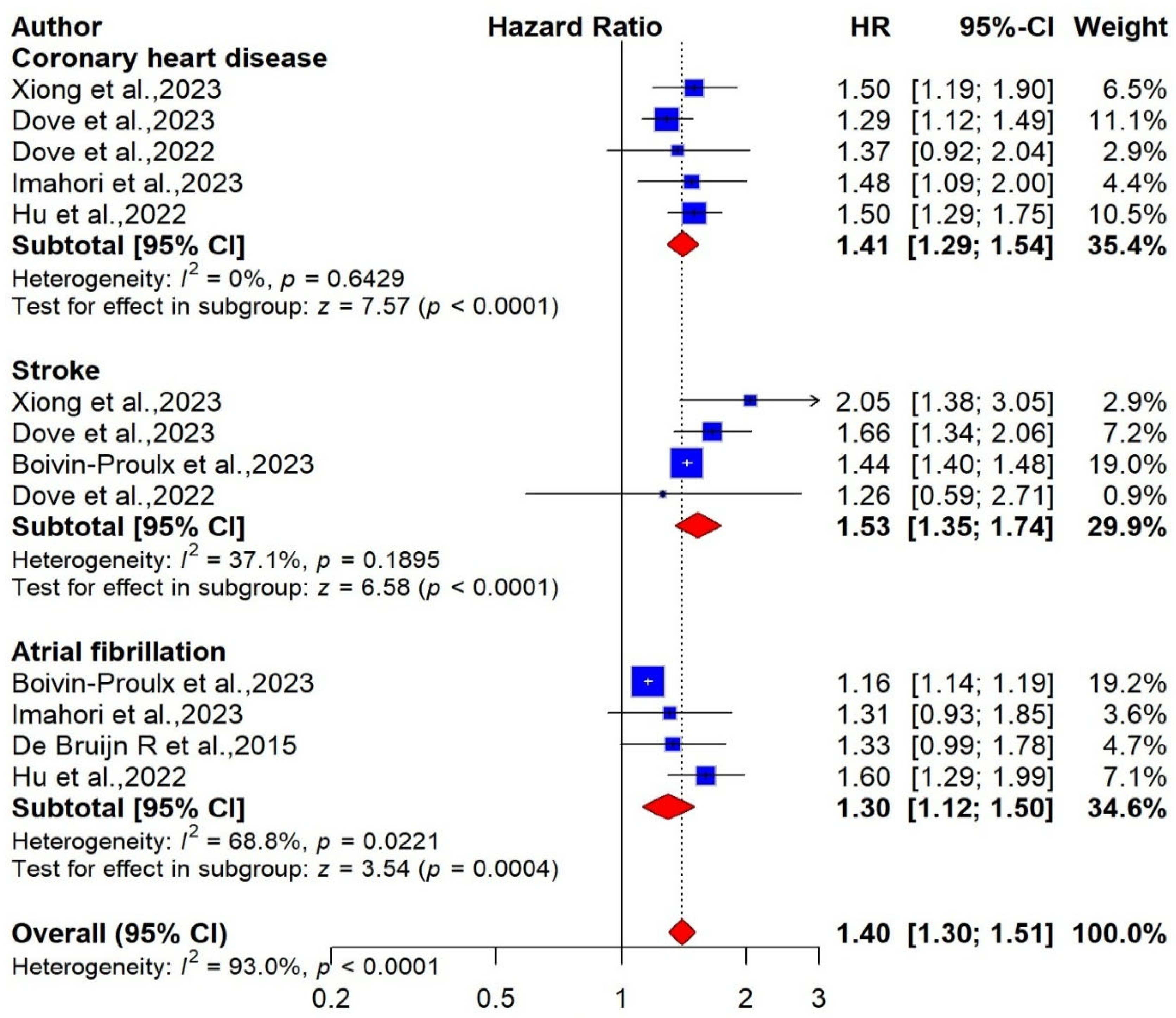
3.3.3. Association Between CVDs and Risk of Cognitive Impairment and Dementia
Coronary Heart Disease
Stroke
Atrial Fibrillation
3.4. Combined Effects of Obesity and CVDs on the Risk of Dementia
3.5. Quality Assessment
3.6. Certainty of Evidence
4. Discussion
4.1. Main Findings
4.2. Mechanisms
5. Limitations of the Study
6. Conclusions
Supplementary Materials
Author Contributions
Funding
Institutional Review Board Statement
Informed Consent Statement
Data Availability Statement
Conflicts of Interest
References
- Centers for Disease Control and Prevention. Cognitive Impairment: A Call for Action, Now; Services, H., Ed.; CDC: Atlanta, GA, USA, 2011.
- Deary, I.J.; Corley, J.; Gow, A.J.; Harris, S.E.; Houlihan, L.M.; Marioni, R.E.; Penke, L.; Rafnsson, S.B.; Starr, J.M. Age-associated cognitive decline. Br. Med. Bull. 2009, 92, 135–152. [Google Scholar] [CrossRef]
- Chertkow, H. Diagnosis and treatment of dementia: Introduction. Introducing a series based on the Third Canadian Consensus Conference on the Diagnosis and Treatment of Dementia. CMAJ 2008, 178, 316–321. [Google Scholar] [CrossRef]
- Hu, C.; Yu, D.; Sun, X.; Zhang, M.; Wang, L.; Qin, H. The prevalence and progression of mild cognitive impairment among clinic and community populations: A systematic review and meta-analysis. Int. Psychogeriatr. 2017, 29, 1595–1608. [Google Scholar] [CrossRef] [PubMed]
- Petersen, R.C.; Lopez, O.; Armstrong, M.J.; Getchius, T.S.D.; Ganguli, M.; Gloss, D.; Gronseth, G.S.; Marson, D.; Pringsheim, T.; Day, G.S.; et al. Practice guideline update summary: Mild cognitive impairment. Neurology 2018, 90, 126–135. [Google Scholar] [CrossRef]
- Petersen, R.C. Mild Cognitive Impairment. Contin. (Minneap. Minn.) 2016, 22, 404–418. [Google Scholar] [CrossRef]
- Qiu, Y.; Li, G.; Wang, X.; Zheng, L.; Wang, C.; Wang, C.; Chen, L. Prevalence of cognitive frailty among community-dwelling older adults: A systematic review and meta-analysis. Int. J. Nurs. Stud. 2022, 125, 104112. [Google Scholar] [CrossRef]
- Prince, M.; Wimo, A.; Guerchet, M.; Ali, G.C.; Wu, Y.T.; Prina, M. World Alzheimer Report 2015. The Global Impact of Dementia. An Analysis of Prevalence, Incidence, Cost and Trends. Available online: www.alz.co.uk/worldreport2015corrections (accessed on 20 December 2025).
- World Health Organization. Dementia [Internet]. 2019. Available online: https://www.who.int/news-room/fact-sheets/detail/dementia#:%7E:text=Key%20facts,nearly%2010%20million%20new%20cases (accessed on 22 September 2025).
- Khate, K.; Chaudhary, V.; Longkumer, I.; Saraswathy, K.N.; Devi, N.K. Gender-specific association of blood lipids and reproductive trajectory with cognitive impairment: A community based cross-sectional study from India. Front. Psychol. 2023, 14, 1107152. [Google Scholar] [CrossRef] [PubMed]
- Kaur, G.; Gaur, R.; Yadav, S.; Saraswathy, K.N. Association of vitamin B12 mediated hyperhomocysteinemia and methylenetetrafolate reductase (C677T) gene polymorphism with cognitive impairment: A population based study from North India. Psychiatry Res. 2018, 270, 123–125. [Google Scholar] [CrossRef]
- Ungvari, Z.; Toth, P.; Tarantini, S.; Prodan, C.I.; Sorond, F.; Merkely, B.; Csiszar, A. Hypertension-induced cognitive impairment: From pathophysiology to public health. Nat. Rev. Nephrol. 2021, 17, 639–654. [Google Scholar] [CrossRef]
- Fitzpatrick, A.L.; Kuller, L.H.; Lopez, O.L.; Diehr, P.; O’Meara, E.S.; Longstreth, W.T., Jr.; Luchsinger, J.A. Midlife and Late-Life Obesity and the Risk of Dementia. Arch. Neurol. 2009, 66, 336–342. [Google Scholar] [CrossRef] [PubMed]
- Marzona, I.; O’Donnell, M.; Teo, K.; Gao, P.; Anderson, C.; Bosch, J.; Yusuf, S. Increased risk of cognitive and functional decline in patients with atrial fibrillation: Results of the ONTARGET and TRANSCEND studies. Can. Med. Assoc. J. 2012, 184, E329–E336. [Google Scholar] [CrossRef]
- Knecht, S.; Oelschlager, C.; Duning, T.; Lohmann, H.; Albers, J.; Stehling, C.; Heindel, W.; Breithardt, G.; Berger, K.; Ringelstein, E.B.; et al. Atrial fibrillation in stroke-free patients is associated with memory impairment and hippocampal atrophy. Eur. Heart J. 2008, 29, 2125–2132. [Google Scholar] [CrossRef]
- Elias, M.F.; Sullivan, L.M.; Elias, P.K.; Vasan, R.S.; D’Agostino, R.B.; Sr Seshadri, S.; Au, R.; Wolf, P.A.; Benjamin, E.J. Atrial Fibrillation Is Associated With Lower Cognitive Performance in the Framingham Offspring Men. J. Stroke Cerebrovasc. Dis. 2006, 15, 214–222. [Google Scholar] [CrossRef]
- Liang, J.; Li, C.; Gao, D.; Ma, Q.; Wang, Y.; Pan, Y.; Zhang, W.; Xie, W.; Zheng, F. Association Between Onset Age of Coronary Heart Disease and Incident Dementia: A Prospective Cohort Study. J. Am. Heart Assoc. 2023, 12, e031407. [Google Scholar] [CrossRef] [PubMed]
- Shore, S.; Li, H.; Zhang, M.; Whitney, R.; Gross, A.L.; Bhatt, A.S.; Nallamothu, B.K.; Giordani, B.; Briceño, E.M.; Sussman, J.B.; et al. Trajectory of Cognitive Function After Incident Heart Failure. Circ. Heart Fail. 2025, 18, e011837. [Google Scholar] [CrossRef]
- Kuźma, E.; Lourida, I.; Moore, S.F.; Levine, D.A.; Ukoumunne, O.C.; Llewellyn, D.J. Stroke and dementia risk: A systematic review and meta-analysis. Alzheimers Dement. 2018, 14, 1416–1426. [Google Scholar] [CrossRef]
- Gondim, A.S.; Coelho Filho, J.M.; Cavalcanti, A.A.; Roriz Filho, J.S.; Nogueira, C.B.; Peixoto Junior, A.A.; Lima, J.W.O. Prevalence of functional cognitive impairment and associated factors in Brazilian community-dwelling older adults. Dement. Neuropsychol. 2017, 11, 32–39. [Google Scholar] [CrossRef] [PubMed]
- Mahon, S.; Parmar, P.; Barker-Collo, S.; Krishnamurthi, R.; Jones, K.; Theadom, A.; Feigin, V. Determinants, Prevalence, and Trajectory of Long-Term Post-Stroke Cognitive Impairment: Results from a 4-Year Follow-Up of the ARCOS-IV Study. Neuroepidemiology 2017, 49, 129–134. [Google Scholar] [CrossRef] [PubMed]
- Liang, X.; Huang, Y.; Han, X. Associations between coronary heart disease and risk of cognitive impairment: A meta-analysis. Brain Behav. 2021, 11, e02108. [Google Scholar] [CrossRef]
- Yang, Z.; Edwards, D.; Burgess, S.; Brayne, C.; Mant, J. Association of Prior Atherosclerotic Cardiovascular Disease with Dementia After Stroke: A Retrospective Cohort Study. J. Alzheimer’s Dis. 2020, 77, 1157–1167. [Google Scholar] [CrossRef]
- Xing, Y.-L.; Chen, M.A.; Sun, Y.; Neradilek, M.B.; Wu, X.T.; Zhang, D.; Huang, W.; Cui, Y.; Yang, Q.Q.; Li, H.W.; et al. Atherosclerosis, its risk factors, and cognitive impairment in older adults. J. Geriatr. Cardiol. 2020, 17, 434–440. [Google Scholar]
- Qu, Y.; Hu, H.-Y.; Ou, Y.-N.; Shen, X.N.; Xu, W.; Wang, Z.T.; Dong, Q.; Tan, L.; Yu, J.T. Association of body mass index with risk of cognitive impairment and dementia: A systematic review and meta-analysis of prospective studies. Neurosci. Biobehav. Rev. 2020, 115, 189–198. [Google Scholar] [CrossRef] [PubMed]
- Cho, G.J.; Hwang, S.Y.; Lee, K.; Choi, K.M.; Hyun Baik, S.; Kim, T.; Han, S.W.; Yoo, H.J. Association Between Waist Circumference and Dementia in Older Persons: A Nationwide Population-Based Study. Obesity 2019, 27, 1883–1891. [Google Scholar] [CrossRef]
- Tang, X.; Zhao, W.; Lu, M.; Zhang, X.; Zhang, P.; Xin, Z.; Sun, R.; Tian, W.; Cardoso, M.A.; Yang, J.; et al. Relationship between Central Obesity and the incidence of Cognitive Impairment and Dementia from Cohort Studies Involving 5,060,687 Participants. Neurosci. Biobehav. Rev. 2021, 130, 301–313. [Google Scholar] [CrossRef]
- West, N.A.; Haan, M.N. Body Adiposity in Late Life and Risk of Dementia or Cognitive Impairment in a Longitudinal Community-Based Study. J. Gerontol. A Biol. Sci. Med. Sci. 2009, 64A, 103–109. [Google Scholar] [CrossRef]
- Power, B.D.; Alfonso, H.; Flicker, L.; Hankey, G.J.; Yeap, B.B.; Almeida, O.P. Body Adiposity in Later Life and the Incidence of Dementia: The Health in Men Study. PLoS ONE 2011, 6, e17902. [Google Scholar] [CrossRef]
- Lyall, D.M.; Celis-Morales, C.A.; Anderson, J.; Gill, J.M.; Mackay, D.F.; McIntosh, A.M.; Smith, D.J.; Deary, I.J.; Sattar, N.; Pell, J.P. Associations between single and multiple cardiometabolic diseases and cognitive abilities in 474 129 UK Biobank participants. Eur. Heart J. 2017, 38, 577–583. [Google Scholar] [CrossRef] [PubMed]
- Dove, A.; Guo, J.; Marseglia, A.; Fastbom, J.; Vetrano, D.L.; Fratiglioni, L.; Pedersen, N.L.; Xu, W. Cardiometabolic multimorbidity and incident dementia: The Swedish twin registry. Eur. Heart J. 2023, 44, 573–582. [Google Scholar] [CrossRef]
- Dove, A.; Marseglia, A.; Shang, Y.; Grande, G.; Vetrano, D.L.; Laukka, E.J.; Fratiglioni, L.; Xu, W. Cardiometabolic multimorbidity accelerates cognitive decline and dementia progression. Alzheimer’s Dement. 2023, 19, 821–830. [Google Scholar] [CrossRef]
- Tai, X.Y.; Veldsman, M.; Lyall, D.M.; Littlejohns, T.J.; Langa, K.M.; Husain, M.; Ranson, J.; Llewellyn, D.J. Cardiometabolic multimorbidity, genetic risk, and dementia: A prospective cohort study. Lancet Healthy Longev. 2022, 3, e428–e436. [Google Scholar] [CrossRef] [PubMed]
- Jin, Y.; Liang, J.; Hong, C.; Liang, R.; Luo, Y. Cardiometabolic multimorbidity, lifestyle behaviours, and cognitive function: A multicohort study. Lancet Healthy Longev. 2023, 4, e265–e273. [Google Scholar] [CrossRef]
- Zhou, Y.; You, Y.; Zhang, Y.; Zhang, Y.; Yuan, C.; Xu, X. Multimorbidity and risk of dementia: A systematic review and meta-analysis of longitudinal cohort studies. J. Prev. Alzheimers Dis. 2025, 12, 100164. [Google Scholar] [CrossRef]
- Shamseer, L.; Moher, D.; Clarke, M.; Ghersi, D.; Liberati, A.; Petticrew, M.; Shekelle, P.; Stewart, L.A.; PRISMA-P Group. Preferred reporting items for systematic review and meta-analysis protocols (prisma-p) 2015: Elaboration and explanation. BMJ 2015, 349, g7647, Erratum in BMJ 2016, 354, i4086. https://doi.org/10.1136/bmj.i4086. [Google Scholar] [CrossRef]
- Wells, G.A.; Shea, B.; O’Connell, D.; Peterson, J.; Welch, V.; Losos, P.T.M. The Newcastle-Ottawa Scale (NOS) for Assessing the Quality of Nonrandomised Studies in Meta-Analyses. Available online: https://www.ohri.ca//programs/clinical_epidemiology/oxford.asp (accessed on 18 June 2022).
- Schünemann, H.J.; Cuello, C.; Akl, E.A.; Mustafa, R.A.; Meerpohl, J.J.; Thayer, K.; Morgan, R.L.; Gartlehner, G.; Kunz, R.; Katikireddi, S.V.; et al. GRADE guidelines: 18. How ROBINS-I and other tools to assess risk of bias in nonrandomized studies should be used to rate the certainty of a body of evidence. J. Clin. Epidemiol. 2019, 111, 105–114. [Google Scholar] [CrossRef]
- Team, R.C. R: A Language and Environment for Statistical Computing; R Foundation for Statistical Computing: Vienna, Austria, 2020; Available online: http://www.R-project.org/ (accessed on 20 December 2025).
- Schwarzer, G. meta: An R package for meta-analysis. R. News 2007, 7, 40–45. [Google Scholar]
- DerSimonian, R.; Laird, N. Meta-analysis in clinical trials. Control Clin. Trials 1986, 7, 177–188. [Google Scholar] [CrossRef] [PubMed]
- Higgins, J.P.T.; Green, S. (Eds.) Cochrane Handbook for Systematic Reviews of Interventions Version 5.1.0 [Updated March 2011]; Wiley: Hoboken, NJ, USA, 2008. [Google Scholar]
- Hamling, J.; Lee, P.; Weitkunat, R.; Ambühl, M. Facilitating meta-analyses by deriving relative effect and precision estimates for alternative comparisons from a set of estimates presented by exposure level or disease category. Stat. Med. 2008, 27, 954–970. [Google Scholar] [CrossRef]
- Bagnardi, V. Flexible Meta-Regression Functions for Modeling Aggregate Dose-Response Data, with an Application to Alcohol and Mortality. Am. J. Epidemiol. 2004, 159, 1077–1086. [Google Scholar] [CrossRef]
- Greenland, S.; Longnecker, M.P. Methods for Trend Estimation from Summarized Dose-Response Data, with Applications to Meta-Analysis. Am. J. Epidemiol. 1992, 135, 1301–1309. [Google Scholar] [CrossRef] [PubMed]
- Iwagami, M.; Ishimaru, M.; Takeuchi, Y.; Shinozaki, T. Methodological Tutorial Series for Epidemiological Studies: When and How to Split the Follow-up Time in the Analysis of Epidemiological or Clinical Studies With Follow-ups. J. Epidemiol. 2025, 35, 161–169. [Google Scholar] [CrossRef] [PubMed]
- Albanese, E.; Launer, L.J.; Egger, M.; Prince, M.J.; Giannakopoulos, P.; Wolters, F.J.; Egan, K. Body mass index in midlife and dementia: Systematic review and meta-regression analysis of 589,649 men and women followed in longitudinal studies. Alzheimer’s Dement. Diagn. Assess. Dis. Monit. 2017, 8, 165–178. [Google Scholar] [CrossRef]
- Egger, M.; Smith, G.D.; Schneider, M.; Minder, C. Bias in meta-analysis detected by a simple, graphical test. BMJ 1997, 315, 629–634. [Google Scholar] [CrossRef]
- Sutton, A.J.; Abrams, K.R.; Jones, D.R.; Sutton, A.J.; Abrams, K.R.; Jones, D.R.; Sheldon, T.A.; Song, F. Methods for Meta-Analysis in Medical Research; Wiley: Chichester, UK, 2000. [Google Scholar]
- Wu, S.; Lv, X.; Shen, J.; Chen, H.; Ma, Y.; Jin, X.; Yang, J.; Cao, Y.; Zong, G.; Wang, H.; et al. Association between body mass index, its change and cognitive impairment among Chinese older adults: A community-based, 9-year prospective cohort study. Eur. J. Epidemiol. 2021, 36, 1043–1054. [Google Scholar] [CrossRef]
- Liu, H.; Wang, Z.; Zou, L.; Gu, S.; Zhang, M.; Hukportie, D.N.; Zheng, J.; Zhou, R.; Yuan, Z.; Wu, K.; et al. Favourable Lifestyle Protects Cognitive Function in Older Adults With High Genetic Risk of Obesity: A Prospective Cohort Study. Front. Mol. Neurosci. 2022, 15, 808209. [Google Scholar] [CrossRef]
- Liang, F.; Fu, J.; Turner-McGrievy, G.; Wang, Y.; Qiu, N.; Ding, K.; Zeng, J.; Moore, J.B.; Li, R. Association of Body Mass Index and Plant-Based Diet with Cognitive Impairment among Older Chinese Adults: A Prospective, Nationwide Cohort Study. Nutrients 2022, 14, 3132. [Google Scholar] [CrossRef]
- Yang, Y.S.; Han, K.; Cheon, D.Y.; Lee, M. Abdominal obesity and the risk of young-onset dementia in women: A nationwide cohort study. Alzheimers Res. Ther. 2025, 17, 86, Erratum in Alzheimers Res. Ther. 2025, 17, 113. [Google Scholar] [CrossRef] [PubMed]
- Gong, J.; Harris, K.; Peters, S.A.E.; Woodward, M. Sex differences in the association between major cardiovascular risk factors in midlife and dementia: A cohort study using data from the UK Biobank. BMC Med. 2021, 19, 110. [Google Scholar] [CrossRef] [PubMed]
- Neergaard, J.S.; Dragsbæk, K.; Hansen, H.B.; Henriksen, K.; Christiansen, C.; Karsdal, M.A. Late-Life Risk Factors for All-Cause Dementia and Differential Dementia Diagnoses in Women. Medicine 2016, 95, e3112. [Google Scholar] [CrossRef]
- Ma, Y.; Ajnakina, O.; Steptoe, A.; Cadar, D. Higher risk of dementia in English older individuals who are overweight or obese. Int. J. Epidemiol. 2020, 49, 1353–1365. [Google Scholar] [CrossRef]
- Tashiro, M.; Yasuda, N.; Inoue, M.; Yamagishi, K.; Tsugane, S.; Sawada, N. Body mass index, weight change in midlife, and dementia incidence: The Japan Public Health Center-based Prospective Study. Alzheimer’s Dement. Diagn. Assess. Dis. Monit. 2023, 15, e12507. [Google Scholar] [CrossRef] [PubMed]
- Zhai, W.; Zhang, G.; Wei, C.; Zhao, M.; Sun, L. The obesity paradox in cognitive decline: Impact of BMI dynamics and APOE genotypes across various cognitive status. Diabetes Obes. Metab. 2025, 27, 3967–3983. [Google Scholar] [CrossRef] [PubMed]
- Yokomichi, H.; Kondo, K.; Nagamine, Y.; Yamagata, Z.; Kondo, N. Dementia risk by combinations of metabolic diseases and body mass index: Japan Gerontological Evaluation Study Cohort Study. J. Diabetes Investig. 2020, 11, 206–215. [Google Scholar] [CrossRef]
- Gottesman, R.F.; Albert, M.S.; Alonso, A.; Coker, L.H.; Coresh, J.; Davis, S.M.; Deal, J.A.; McKhann, G.M.; Mosley, T.H.; Sharrett, A.R.; et al. Associations Between Midlife Vascular Risk Factors and 25-Year Incident Dementia in the Atherosclerosis Risk in Communities (ARIC) Cohort. JAMA Neurol. 2017, 74, 1246. [Google Scholar] [CrossRef] [PubMed]
- Chen, T.S.; Mi, N.-N.; Lao, H.Y.; Wang, C.Y.; Lo, W.L.A.; Mao, Y.R.; Tang, Y.; Pei, Z.; Yuan, J.Q.; Huang, D.F. Investigating the nexus of metabolic syndrome, serum uric acid, and dementia risk: A prospective cohort study. BMC Med. 2024, 22, 115. [Google Scholar] [CrossRef]
- Ng, T.P.; Feng, L.; Nyunt, M.S.Z.; Feng, L.; Gao, Q.; Lim, M.L.; Collinson, S.L.; Chong, M.S.; Lim, W.S.; Lee, T.S.; et al. Metabolic Syndrome and the Risk of Mild Cognitive Impairment and Progression to Dementia. JAMA Neurol. 2016, 73, 456. [Google Scholar] [CrossRef] [PubMed]
- Machado-Fragua, M.D.; Fayosse, A.; Yerramalla, M.S.; van Sloten, T.T.; Tabak, A.G.; Kivimaki, M.; Sabia, S.; Singh-Manoux, A. Association of Metabolic Syndrome With Incident Dementia: Role of Number and Age at Measurement of Components in a 28-Year Follow-up of the Whitehall II Cohort Study. Diabetes Care 2022, 45, 2127–2135. [Google Scholar] [CrossRef]
- Lee, J.E.; Shin, D.W.; Han, K.; Kim, D.; Yoo, J.E.; Lee, J.; Kim, S.; Son, K.Y.; Cho, B.; Kim, M.J. Changes in Metabolic Syndrome Status and Risk of Dementia. J. Clin. Med. 2020, 9, 122. [Google Scholar] [CrossRef]
- Xiong, S.; Hou, N.; Tang, F.; Li, J.; Deng, H. Association of cardiometabolic multimorbidity and adherence to a healthy lifestyle with incident dementia: A large prospective cohort study. Diabetol. Metab. Syndr. 2023, 15, 208. [Google Scholar] [CrossRef]
- Dong, C.; Zhou, C.; Fu, C.; Hao, W.; Ozaki, A.; Shrestha, N.; Virani, S.S.; Mishra, S.R.; Zhu, D. Sex differences in the association between cardiovascular diseases and dementia subtypes: A prospective analysis of 464,616 UK Biobank participants. Biol. Sex. Differ. 2022, 13, 21. [Google Scholar] [CrossRef]
- Boivin-Proulx, L.-A.; Brouillette, J.; Dorais, M.; Perreault, S. Association between cardiovascular diseases and dementia among various age groups: A population-based cohort study in older adults. Sci. Rep. 2023, 13, 14881. [Google Scholar] [CrossRef]
- Wu, X.; Fan, L.; Ke, S.; He, Y.; Zhang, K.; Yang, S. Longitudinal Associations of Stroke With Cognitive Impairment Among Older Adults in the United States: A Population-Based Study. Front. Public Health 2021, 9, 637042, Erratum in Front. Public Health 2021, 9, 760605. https://doi.org/10.3389/fpubh.2021.760605. [Google Scholar] [CrossRef]
- de Bruijn, R.F.A.G.; Heeringa, J.; Wolters, F.J.; Franco, O.H.; Stricker, B.H.; Hofman, A.; Koudstaal, P.J.; Ikram, M.A. Association Between Atrial Fibrillation and Dementia in the General Population. JAMA Neurol. 2015, 72, 1288. [Google Scholar] [CrossRef]
- Imahori, Y.; Vetrano, D.L.; Ljungman, P.; Laukka, E.J.; Wu, J.; Grande, G.; Rizzuto, D.; Fratiglioni, L.; Qiu, C. Association of ischemic heart disease with long-term risk of cognitive decline and dementia: A cohort study. Alzheimer’s Dement. 2023, 19, 5541–5549. [Google Scholar] [CrossRef]
- Hu, H.-Y.; Zhang, Y.-R.; Aerqin, Q.; Ou, Y.N.; Wang, Z.T.; Cheng, W.; Feng, J.F.; Tan, L.; Yu, J.T. Association between multimorbidity status and incident dementia: A prospective cohort study of 245,483 participants. Transl. Psychiatry 2022, 12, 505. [Google Scholar] [CrossRef]
- Chen, J.; Zhang, J.; Wang, H.; Zhu, H.; Fu, J.; Li, C.; Zhang, Q.; Xia, X.; Ma, H.; Liu, J.; et al. Obesity paradox in cognitive function: A longitudinal study of BMI and cognitive impairment in older adult Chinese population. Front. Aging Neurosci. 2025, 17, 1543501. [Google Scholar] [CrossRef]
- Rodríguez-Fernández, J.M.; Danies, E.; Martínez-Ortega, J.; Chen, W.C. Cognitive Decline, Body Mass Index, and Waist Circumference in Community-Dwelling Elderly Participants. J. Geriatr. Psychiatry Neurol. 2017, 30, 67–76. [Google Scholar] [CrossRef]
- Milani, S.A.; Lopez, D.S.; Downer, B.; Samper-Ternent, R.; Wong, R. Effects of diabetes and obesity on cognitive impairment and mortality in older mexicans. Arch. Gerontol. Geriatr. 2022, 99, 104581, Erratum in Arch. Gerontol. Geriatr. 2022, 100, 104621. https://doi.org/10.1016/j.archger.2022.104621. [Google Scholar] [CrossRef]
- Beydoun, M.A.; Beydoun, H.A.; Wang, Y. Obesity and central obesity as risk factors for incident dementia and its subtypes: A systematic review and meta-analysis. Obes. Rev. 2008, 9, 204–218, Erratum in Obes Rev. 2008, 9, 267. [Google Scholar] [CrossRef] [PubMed]
- Filler, J.; Georgakis, M.K.; Dichgans, M. Risk factors for cognitive impairment and dementia after stroke: A systematic review and meta-analysis. Lancet Healthy Longev. 2024, 5, e31–e44. [Google Scholar] [CrossRef] [PubMed]
- Wolters, F.J.; Segufa, R.A.; Darweesh, S.K.L.; Bos, D.; Ikram, M.A.; Sabayan, B.; Hofman, A.; Sedaghat, S. Coronary heart disease, heart failure, and the risk of dementia: A systematic review and meta-analysis. Alzheimer’s Dement. 2018, 14, 1493–1504. [Google Scholar] [CrossRef] [PubMed]
- Sun, W.; Zhuo, S.; Wu, H.; Cai, X. Association between Coronary Heart Disease, Heart Failure, and Risk of Alzheimer’s Disease: A Systematic Review and Meta-Analysis. Ann. Indian. Acad. Neurol. 2023, 26, 958–965. [Google Scholar] [CrossRef] [PubMed]
- Hainsworth, A.H.; Oommen, A.T.; Bridges, L.R. Endothelial Cells and Human Cerebral Small Vessel Disease. Brain Pathol. 2015, 25, 44–50. [Google Scholar] [CrossRef]
- Kim, S.; Kim, Y.; Park, S.M. Body Mass Index and Decline of Cognitive Function. PLoS ONE 2016, 11, E0148908. [Google Scholar] [CrossRef]
- Snijder, M.B.; Dekker, J.M.; Visser, M.; Bouter, L.M.; Stehouwer, C.D.; Yudkin, J.S.; Heine, R.J.; Nijpels, G.; Seidell, J.C.; Hoorn study. Trunk Fat and Leg Fat Have Independent and Opposite Associations With Fasting and Postload Glucose Levels. Diabetes Care 2004, 27, 372–377. [Google Scholar] [CrossRef]
- Dauncey, M.J. New insights into nutrition and cognitive neuroscience. Proc. Nutr. Soc. 2009, 68, 408–415. [Google Scholar] [CrossRef]
- Luchsinger, J.; Mayeux, R. Adiposity and Alzheimers Disease. Curr. Alzheimer Res. 2007, 4, 127–134. [Google Scholar] [CrossRef] [PubMed]
- Costache, A.D.; Ignat, B.E.; Grosu, C.; Mastaleru, A.; Abdulan, I.; Oancea, A.; Roca, M.; Leon, M.M.; Badescu, M.C.; Luca, S.; et al. Inflammatory Pathways in Overweight and Obese Persons as a Potential Mechanism for Cognitive Impairment and Earlier Onset Alzeihmer’s Dementia in the General Population: A Narrative Review. Biomedicines 2023, 11, 3233. [Google Scholar] [CrossRef] [PubMed]
- Wong Zhang, D.E.; Tran, V.; Vinh, A.; Dinh, Q.N.; Drummond, G.R.; Sobey, C.G.; Jelinic, M.; De Silva, T.M. Pathophysiological Links Between Obesity and Dementia. Neuromol. Med. 2023, 25, 451–456. [Google Scholar] [CrossRef]
- Qiu, C.; Winblad, B.; Fratiglioni, L. The age-dependent relation of blood pressure to cognitive function and dementia. Lancet Neurol. 2005, 4, 487–499. [Google Scholar] [CrossRef]
- Debette, S.; Markus, H.S. The clinical importance of white matter hyperintensities on brain magnetic resonance imaging: Systematic review and meta-analysis. BMJ 2010, 341, c3666. [Google Scholar] [CrossRef]
- Whitmer, R.A.; Gustafson, D.R.; Barrett-Connor, E.; Haan, M.N.; Gunderson, E.P.; Yaffe, K. Central obesity and increased risk of dementia more than three decades later. Neurology 2008, 71, 1057–1064. [Google Scholar] [CrossRef] [PubMed]
- Zhang, J.; Huang, X.; Ling, Y.; Xie, X.; Zeng, X.; Lyu, J.; Huang, L. Associations of cardiometabolic multimorbidity with all-cause dementia, alzheimer’s disease, and vascular dementia: A cohort study in the UK biobank. BMC Public Health 2025, 25, 2397. [Google Scholar] [CrossRef] [PubMed]
- de la Torre, J.C. Cerebral Hemodynamics and Vascular Risk Factors: Setting the Stage for Alzheimer’s Disease. J. Alzheimer’s Dis. 2012, 32, 553–567. [Google Scholar] [CrossRef]
- Brain, J.; Greene, L.; Tang, E.Y.H.; Louise, J.; Salter, A.; Beach, S.; Turnbull, D.; Siervo, M.; Stephan, B.C.M.; Tully, P.J. Cardiovascular disease, associated risk factors, and risk of dementia: An umbrella review of meta-analyses. Front. Epidemiol. 2023, 3, 1095236. [Google Scholar] [CrossRef]
- Kuneš, J.; Hojná, S.; Mráziková, L.; Montezano, A.; Touyz, R.M.; Maletínská, L. Obesity, Cardiovascular and Neurodegenerative Diseases: Potential Common Mechanisms. Physiol. Res. 2023, 72, S73–S90. [Google Scholar] [CrossRef] [PubMed]




| First Author | Publication Year | Country | Study Design | Sample | Mean (SD) Age at Baseline | Sex (% Men) | Exposure and Ascertainment | Outcome and Ascertainment | Follow-Up (Years) | Outcome (N) | Covariates |
|---|---|---|---|---|---|---|---|---|---|---|---|
| Wu [50] | 2021 | China | Prospective cohort | 12,027 | 81.23 (10.72) | 47.48 | BMI-defined obesity (≥28 kg/m2, Chinese guideline). Anthropometrics were measured by trained medical staff using standardized protocols. | Cognitive impairment. It was measured using the Chinese MMSE in home interviews; the scale is validated and reliable. | 5.9 (2.8) | 3086 | Age, sex, type of residence, marital status, education, living arrangement, smoking status, drinking status, regular exercise, vegetables, and fruit intake |
| Liu [51] | 2022 | USA | Prospective cohort | 10,798 | 58.3 (8.7) | 41.2 | BMI-defined obesity (≥30 kg/m2, WHO guideline). BMI calculated from self-reported height and weight. | Cognitive impairment was assessed using the Telephone Interview for Cognitive Status (TICS), a validated cognitive screening tool. | 12 (6–16) | 3297 | Smoking, drinking, physical activity, baseline age, sex, education, marital status, PRS, and family wealth per capita |
| Liang [52] | 2022 | China | Prospective cohort | 4792 | 80.70 (9.58) | 50.61 | BMI-defined obesity (≥28 kg/m2, Chinese guideline). Weight and height were measured by trained assessors using standardized procedures. | Cognitive impairment was assessed using the Chinese MMSE to evaluate cognitive function. | 5 | 1077 | Sex, age, residence, education, occupation, smoking status, alcohol consumption, regular exercise, financial independence, and health conditions. |
| Yang [53] | 2025 | South Korea | Prospective cohort | 964,536 | 49.3 (6.0) | Women | BMI-defined obesity (≥25 kg/m2, Asia-Pacific WHO guideline) and abdominal obesity (WC ≥ 85 cm, Korean Society for the Study of Obesity guideline). Weight, height, and waist circumference were measured by trained examiners during health check-ups. | ACD, AD, and VaD were diagnosed using ICD-10 codes plus ≥2 prescriptions for anti-dementia medications. Subtypes: AD (ICD10: F00/G30) and VaD (F01). | 8.2 (8–8.5) | ACD = 4495 AD = 3038 VaD = 823 | age, smoking status, alcohol consumption, regular exercise, low household income, diabetes mellitus, hypertension, dyslipidaemia, depression, atrial fibrillation, stroke |
| Gong [54] | 2021 | UK | Prospective cohort | 502,226 | 56.7 (8.2) | 45.6 | BMI-defined obesity (≥30 kg/m2, WHO guideline). BMI calculated from weight measured with a Tanita BC-418 MA body composition analyzer and standing height in meters. | All-cause dementia (ACD) diagnosed using ICD-10 codes (A81.0, F00, F01, F02, F03, F05, G30, G31.0, G31.1, G31.8, I67.3). Subtypes: AD (F00, G30) and VaD (F01, I67.3). | 11.8 | ACD = 4068 | Age, SBP, diabetes, socioeconomic status, total Cholesterol, smoking status, lipid-lowering drugs, and antihypertensive drugs |
| Neergaard [55] | 2016 | Denmark | Prospective cohort | 5512 | 70.7 (6.5) | Women | BMI-defined obesity (≥30 kg/m2, WHO guideline). Weight and height were measured. | ACD, AD, and VaD were diagnosed using ICD-10 codes (F02–F03 and R54). Subtypes: AD (F00, G30—G32) and VaD (F01). | 11.9 (3.9) | ACD = 592 AD = 250 VaD = 43 | Age, education, smoking, alcohol, physical activity, vascular, and neural disorders. |
| Cho [26] | 2019 | South Korea | Prospective cohort | 872,082 | 70.2 (4.5) | 45.6 | BMI-defined obesity (≥25 kg/m2, Asian populations guideline) and abdominal obesity (WC ≥ 85 cm for women and ≥90 cm for men). Weight, height, and waist circumference were measured. | Dementia diagnosed using ICD-10 codes (F00, F01, F03, G30, and G318). | 6.47 | 114,024 | age; alcohol consumption; smoking and exercise status; systolic BP; FBS; HDL-C; LDL-C; AST; ALT; economic status; history of diabetes, hypertension, CVD, and CCI. Additionally, WC was adjusted for BMI, and BMI was adjusted for WC. |
| Ma [56] | 2020 | UK | Longitudinal study | 6582 | 62.6 (9.0) | 46.0 | BMI-defined obesity (≥30 kg/m2, WHO guideline) and abdominal obesity (WC > 88 cm for women and >102 cm for men, NHLBI clinical guideline). Anthropometric measurements were taken by trained staff. | Dementia. Physicians diagnosed dementia in participants personally involved in the study, and secondly, dementia was diagnosed using a short-form informant questionnaire on cognitive decline. | 11.4 (3.3) | 453 | age, sex, APOE E4, education, marital status, smoking status, physical activity, hypertension, and diabetes. |
| Tashiro [57] | 2023 | Japan | Prospective cohort | 37,414 | 56.5 (7.8) | 46.9 | BMI-defined obesity (≥27 kg/m2, JPHC-based BMI categorization). BMI was calculated based on the self-reported weight and height of the participants. | Dementia was assessed using long-term care insurance (LTCI) certifications. | 9.7 | 3019 | Age, public health center area, smoking, alcohol drinking habits, hypertension, ischemic heart diseases, diabetes, cancer, and gastrointestinal ulcer. |
| Zhai [58] | 2025 | USA | Longitudinal study | 23,255 | 72 (65–78) | 43.4 | BMI-defined obesity (≥30 kg/m2, WHO guideline). Weight and height were measured. | Cognitive impairment and dementia were assessed with MMSE, MoCA, digit span forward trials, verbal fluency, the Trail Making Test, WAIS-R Digit Symbol, the Boston Naming Test, NPI, and CDR. | 4.07 | CI = 1051 DM = 5968 | age, gender, race, primary language, marital status, living situation, level of independence, handedness, smoking history, drinking history, APOE gene types, cancer, diabetes, heart disease, hypertension, hypercholesterolemia, vitamin B12 deficiency, and sleep disorders. |
| Yokomichi [59] | 2020 | Japan | Prospective cohort | 3696 | 73.4 (5.8) | 42.8 | BMI-defined obesity (≥25 kg/m2, Asian populations guideline). Anthropometric measurements were taken by medical staff. | Dementia was assessed using long-term care insurance (LTCI) certifications. | 5.8 (1.3) | 338 | Age, history of stroke, educational background, income, number of family members, marital status, and frequency of meeting friends. |
| Gottesman [60] | 2017 | USA | Prospective cohort | 15,407 | 54.2 (5.8) | 45 | BMI-defined obesity (≥30 kg/m2, WHO guideline). The weight and height of the participants were taken by trained staff using standardized protocols. | Dementia was assessed using cognitive testing, neuropsychological evaluations, informant interviews, and telephone assessments, as well as hospital or death records. | 23 | 1516 | Age, sex, race, educational attainment, APOE ε4 genotype, diabetes, blood pressure status, and Hypercholesterolemia. |
| Chen [61] | 2024 | UK | Prospective cohort | 466,788 | 56.8 (8.1) | 46.4 | WC-defined obesity (WC ≥ 94 cm for men and ≥80 cm for women, IDF European guideline). Waist circumference was measured by trained staff using standardized protocols. | Dementia was diagnosed using ICD-10 codes (F00–03). | 12.7 | 6845 | age, gender, UK Biobank assessment center, race, index of multiple deprivation, smoking status, alcohol consumption, physical activity, portions of fruit, vegetable intake, regular medications, mineral supplements, non-steroidal anti-inflammatory drugs, aspirin, and a history of Alzheimer’s disease/dementia |
| Ng [62] | 2016 | Singapore | Longitudinal cohort | 1519 | 64.9 (6.8) | 35.2 | WC-defined obesity (WC ≥ 90 cm for men and ≥80 cm for women, IDF Asian populations guideline). Waist circumference was measured by trained staff using standardized protocols. | Cognitive impairment was assessed using the Informant Questionnaire on Cognitive Decline in the Elderly, the MMSE, and neurocognitive tests. | 3.8 | 141 | sex, age, education, APOE-ε4 genotype, smoking, and scores for physical, social, and productive activities. |
| Machado-Fragua [63] | 2022 | UK | Prospective cohort | 7265 | 55.1 (2.9) | 69.5 | WC-defined obesity (WC ≥ 102 cm for men and ≥88 cm for women, WHO guideline). Waist circumference was measured. | Dementia was diagnosed using ICD-10 codes (F00–F03, F05.1, G30, and G31). | 19.6 (5.9) | 393 | sex, education, ethnicity, birth cohort, smoking, alcohol consumption, consumption of fruits and vegetables, and physical activity. |
| Lee [64] | 2020 | South Korea | Prospective cohort | 4,106,590 | 55.8 (10.1) | 54.5 | WC-defined obesity (WC ≥ 85 cm for women and ≥90 cm for men, Korean Society for the Study of Obesity guideline). Anthropometric measurements were taken by trained staff using standardized protocols. | Dementia was defined as having ≥2 prescriptions for anti-dementia medications together with an ICD-10 code for AD (F00 or G30), for VaD (F01), and other dementia (F02, F03, G23.1 or G31). | 4.9 | ~77,953 | age, sex, smoking, alcohol, regular exercise, stroke, depression, and CKD |
| Xiong [65] | 2023 | UK | Prospective cohort | 171,538 | 64.1 (2.8) | 48.5 | CVDs (CHD and stroke) were assessed at baseline using self-reported diagnoses, hospital inpatient records, and ICD-10 codes (CHD: I20–I25; stroke: I60–I64). | Dementia was ascertained using hospital admission records, death registry data, and ICD-9 and 10 codes. | 12.3 (11.5–13.0) | 4479 | Age, sex, ethnicity, education, socioeconomic status, deprivation, depression, APOE ε4, cognition, lifestyle category |
| Dong [66] | 2022 | UK | Prospective cohort | 464,616 | 56.6 (8.1) | 46 | CVDs (CHD, stroke, and HF) were ascertained from hospital medical records along with ICD-9 and ICD-10 codes. BMI-defined obesity (≥30 kg/m2, WHO guideline) | Dementia was assessed using ICD-9 and 10 codes. ICD codes (F00, F01, F02, F03, G30, G31·0, G31·8) and ICD-9 code (290·1). | 11.2 (1.5) | 5527 | age, race/ethnicity, educational years, income level, physical activity level, leisure activities, body mass index (BMI), smoking status, diabetes status, hypertension status, and APOE |
| Boivin-Proulx [67] | 2023 | Canada | Prospective cohort | 320,630 | 74.1 (6.5) | 42.3 | CVDs (HF, stroke, and AF) were ascertained using ICD-9 and ICD-10 codes. | Dementia was diagnosed using ICD-9 codes (46.1, 331.0, 331.1, 331.5, 290, 294), ICD-10 codes (G30, F00–F03), and prescriptions for anti-dementia medications. | 4 (2–5) | 30,626 | age, sex, all cardiovascular risk factors or diseases, including major bleeding, systemic embolism, peripheral artery disease, and chronic kidney disease. |
| Dove [32] | 2022 | Sweden | Longitudinal study | 1873 | 72.4 (10.0) | 38.1 | CVDs (stroke and CHD) were assessed using clinical examinations, medical history, and medical records. | Cognitive impairment was assessed using a battery of neuropsychological tests, perceptual Speed, verbal fluency, and semantic memory. | 11.2 | 539 | Baseline age, sex, education, body mass index (BMI), physical activity, hypertension, alcohol consumption, and APOE ԑ4 carrier status. |
| Dove [31] | 2023 | Sweden | Prospective cohort | 17,913 | 70.1 (7.5) | 45 | CVDs (stroke and CHD) were assessed using ICD-7, 8, 9, 10 codes. | ACD, AD, and VaD were diagnosed based on records from the NPR and using ICD-8, 9, and 10 codes. | 15.4 | ACD = 3020 AD = 1050 VaD = 638 | age, sex, education level, marital status, BMI, hypertension, smoking status, alcohol consumption, physical activity level, and depression. |
| Wu [68] | 2021 | USA | Prospective cohort | 5290 | 75.3 (7.4) | 43.4 | Stroke was assessed through self-reports by participants if they had been diagnosed with stroke by physicians. | Cognitive impairment was determined using three neurocognitive tests, including memory, orientation, and executive functioning. | 8 | 1458 | age, sex, race/ethnicity, educational level, Medicare–Medicaid eligibility, proxy respondent, depression, anxiety, smoking status, comorbidities, and BMI |
| De Bruijn [69] | 2015 | Netherlands | Prospective cohort | 6514 | ≥55 * | 44 | AF was diagnosed using ECGs, and the results were confirmed by physicians. | Dementia was assessed using MMSE and the Geriatric Mental State Schedule organic level. | 12.5 | DM = 994 AD = 787 | Age, sex, diabetes mellitus, smoking, total cholesterol and high-density lipoprotein cholesterol levels, lipid-lowering medication, systolic and diastolic blood pressure, blood pressure–lowering medication, body mass index, educational level, ever use of oral anticoagulant medication, coronary heart disease, heart failure, and apolipoprotein E ε4 carrier status. |
| Imahori [70] | 2023 | Sweden | Prospective cohort | 2568 | 72.3 (9.9) | 38.1 | IHD and AF were diagnosed by clinical examination of physicians, NPR using ICD-10 codes. | Dementia was diagnosed using DSM-IV criteria. | 11.4 (7.1–11.7) | 379 | age, sex, and education, smoking, alcohol consumption, physical activity, body mass index, total cholesterol, hypertension, diabetes, apolipoprotein E (APOE) genotype, cerebrovascular diseases, chronic obstructive pulmonary disease, and C-reactive protein. |
| Hu [71] | 2022 | UK | Prospective cohort | 245,483 | 62.32 (4) | 46.8 | CVDs (AF and IHD) were assessed using ICD-10 codes. | ACD, AD, and VaD were diagnosed according to the ICD-9 and 10 codes. | 9.26 (7.15–10.78) | ACD = 5123 AD = 2228 VaD = 1234 | age, sex, education, BMI, physical activity, smoking, and APOE4 status |
Disclaimer/Publisher’s Note: The statements, opinions and data contained in all publications are solely those of the individual author(s) and contributor(s) and not of MDPI and/or the editor(s). MDPI and/or the editor(s) disclaim responsibility for any injury to people or property resulting from any ideas, methods, instructions or products referred to in the content. |
© 2026 by the authors. Licensee MDPI, Basel, Switzerland. This article is an open access article distributed under the terms and conditions of the Creative Commons Attribution (CC BY) license.
Share and Cite
Sagaro, G.G.; Tayebati, S.K. Independent and Combined Effects of Obesity and Cardiovascular Diseases on the Risk of Cognitive Impairment and Dementia: A Systematic Review and Meta-Analysis of Prospective Cohort Studies Involving 8,276,914 Participants. Int. J. Mol. Sci. 2026, 27, 1892. https://doi.org/10.3390/ijms27041892
Sagaro GG, Tayebati SK. Independent and Combined Effects of Obesity and Cardiovascular Diseases on the Risk of Cognitive Impairment and Dementia: A Systematic Review and Meta-Analysis of Prospective Cohort Studies Involving 8,276,914 Participants. International Journal of Molecular Sciences. 2026; 27(4):1892. https://doi.org/10.3390/ijms27041892
Chicago/Turabian StyleSagaro, Getu Gamo, and Seyed Khosrow Tayebati. 2026. "Independent and Combined Effects of Obesity and Cardiovascular Diseases on the Risk of Cognitive Impairment and Dementia: A Systematic Review and Meta-Analysis of Prospective Cohort Studies Involving 8,276,914 Participants" International Journal of Molecular Sciences 27, no. 4: 1892. https://doi.org/10.3390/ijms27041892
APA StyleSagaro, G. G., & Tayebati, S. K. (2026). Independent and Combined Effects of Obesity and Cardiovascular Diseases on the Risk of Cognitive Impairment and Dementia: A Systematic Review and Meta-Analysis of Prospective Cohort Studies Involving 8,276,914 Participants. International Journal of Molecular Sciences, 27(4), 1892. https://doi.org/10.3390/ijms27041892