Heavy Metal Ion Removal: A Global Review of Wastewater Treatment Technologies

 , ,
, , 
 and
and
Abstract
1. Introduction
- (i)
- There is a clear knowledge gap regarding the performance of treatment methods on real wastewaters, with most current studies relying on synthetic solutions with few contaminants.
- (ii)
- Current technologies (adsorption, membrane filtration, electrochemical processes) face major challenges, such as the formation of large volumes of toxic sludge, membrane fouling, and high operating costs.
- (iii)
- Research needs to progress from simple disposal to the recovery of economically valuable metals (e.g., copper, gold, silver, rare metals), supporting the circular economy.
2. Physical, Chemical, and Biological Methods for Metal Ion Removal from Wastewater
2.1. Chemical Precipitation and Coagulation-Flocculation
- Although they are inexpensive methods for large volumes of water, the transformation of pollution from liquid to solid (sludge) remains the greatest environmental challenge of these technologies, which is a critical drawback. This sludge requires special treatment and storage, being itself a hazardous waste.
- The large volume of toxic sludge generated turns a water pollution problem into a hazardous waste management problem. The costs of storage in compliant landfills can quickly negate the initial savings of the treatment process.
- Certain metals become soluble again if the pH is not maintained within an extremely strict range, which makes the process unstable in fluctuating industrial streams.
- These methods (especially chemical precipitation and coagulation) become ineffective when heavy metal ions are in low residual concentrations (traces), often unable to reach the very strict limits imposed by environmental discharge regulations.
2.2. Adsorption Used for Metal Ions Removal from Wastewater
2.2.1. Adsorption Mechanisms
2.2.2. Metal Ion Removal from Wastewater by Adsorption Used Carbon-Based Adsorbents
2.2.3. Metal Ion Removal from Wastewater by Adsorption Using Materials with Inorganic or Polymeric Support Structures
- Adsorbent regeneration is difficult to realize; desorption agents can destroy functional groups, reducing adsorption capacity in subsequent cycles.
- Although nanoadsorbents have a huge specific surface area, they tend to agglomerate quickly due to Van der Waals forces, losing their reactivity.
- The sensitivity of the method to environmental conditions (pH and temperature) is a major drawback because at too low pH, hydrogen ions occupy the active sites, repelling heavy metals. This requires constant monitoring and adjustment of the pH, which adds technological complexity.
- For some materials, the process of reaching equilibrium can take hours.
- In real wastewater, the presence of several ions leads to competition for active sites, with the mechanism being often disturbed by background ions.
2.3. Membrane Filtration Used for Metal Ions Removal from Wastewater
- Performance degradation: Fouling, caused by the accumulation of metal ions, microorganisms, and organic matter on the membrane surface, leads to a significant decrease in permeate flux and an increase in operating pressure, requiring frequent chemical cleaning, reducing efficiency over time, and shortening the life of the equipment.
- Require rigorous water pretreatment to prevent damage to the filter surfaces.
- Generate a toxic concentrate that requires subsequent, specialized management.
- Although operating costs may be lower than some traditional methods, the high initial investment for membranes and the high operational costs for cleaning and replacement are significant barriers.
- Material limitations: Polymer membranes, which are flexible and cost-effective, are vulnerable to chemical degradation and fouling, while robust ceramic membranes are more expensive.
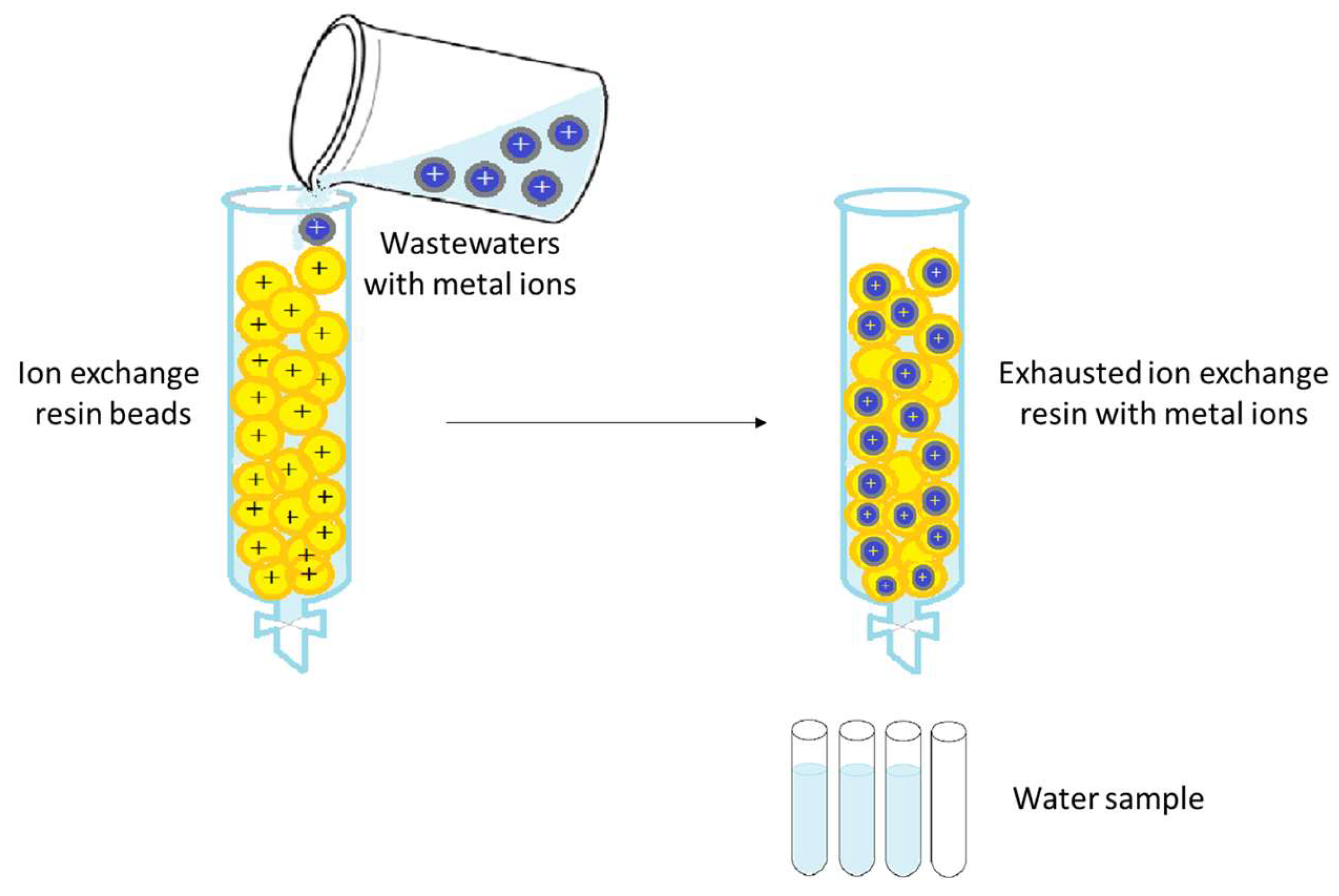
2.4. Ion Exchange Used for Metal Ion Removal from Wastewater
- Ion exchange resins are highly susceptible to fouling by suspended solids, iron, manganese, organic matter, and oils. This requires extensive and expensive pretreatment to prevent blocking of the active exchange sites.
- Although effective at high concentrations, the efficiency of the resins decreases in complex industrial wastewater containing high levels of non-toxic ions (e.g., Ca2+, Na+), which compete with the metals to be removed for the active sites.
- The resins become saturated and then must be regenerated using chemicals, thus producing a small volume of highly concentrated hazardous liquid waste.
- Requires high operating costs for industrial-scale processes (specialized resins, regular consumption of regeneration chemicals, resin replacement costs).
- If the resin is not regenerated properly, the metal-loaded resin or regeneration waste can lead to secondary environmental pollution.
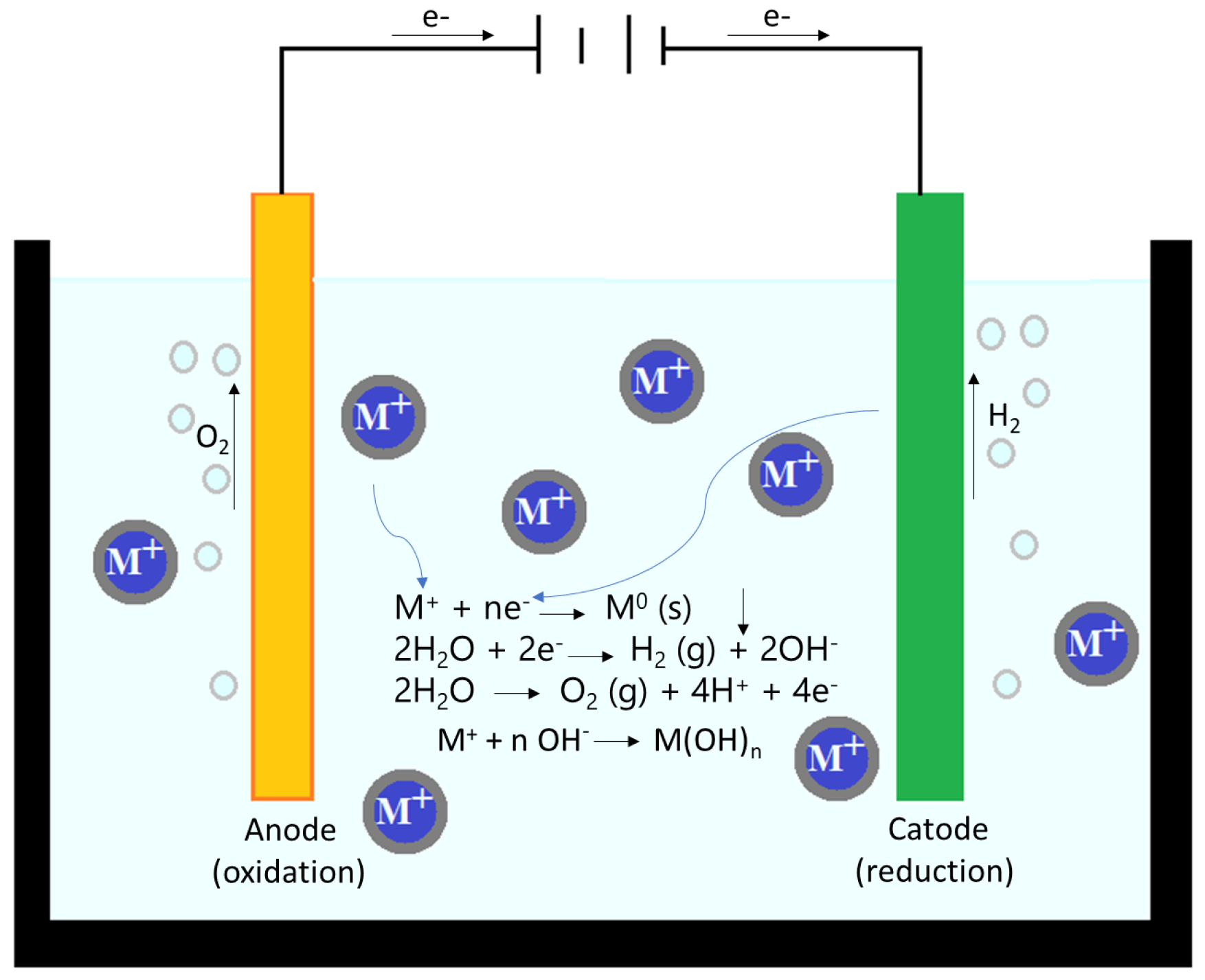
2.5. Electrochemical Treatment Techniques Used for Metal Ions Removal from Wastewater
- For treating large volumes of low-conductivity wastewater, electrochemical techniques are less economically competitive than conventional biological or chemical methods.
- During the process, oxide layers or scale deposits (passivation) form on the surface of the electrodes, which electrically insulate the electrode. This leads to a drastic decrease in efficiency and requires frequent chemical cleaning or polarity reversal.
- Many processes require electrodes made of expensive or special materials (such as titanium coated with metal oxides or doped diamond).
- Even in the case of electrocoagulation, the iron or aluminum anodes wear out quickly and must be replaced periodically, generating maintenance costs.
- Electrochemical processes are often faster but require an initial investment and much higher energy costs, which makes them more suitable for highly concentrated industrial effluents.
- Treatment efficiency depends on pH, salinity, and water composition, which can vary significantly in real industrial effluents, requiring pretreatment or complex, multi-stage treatment systems.
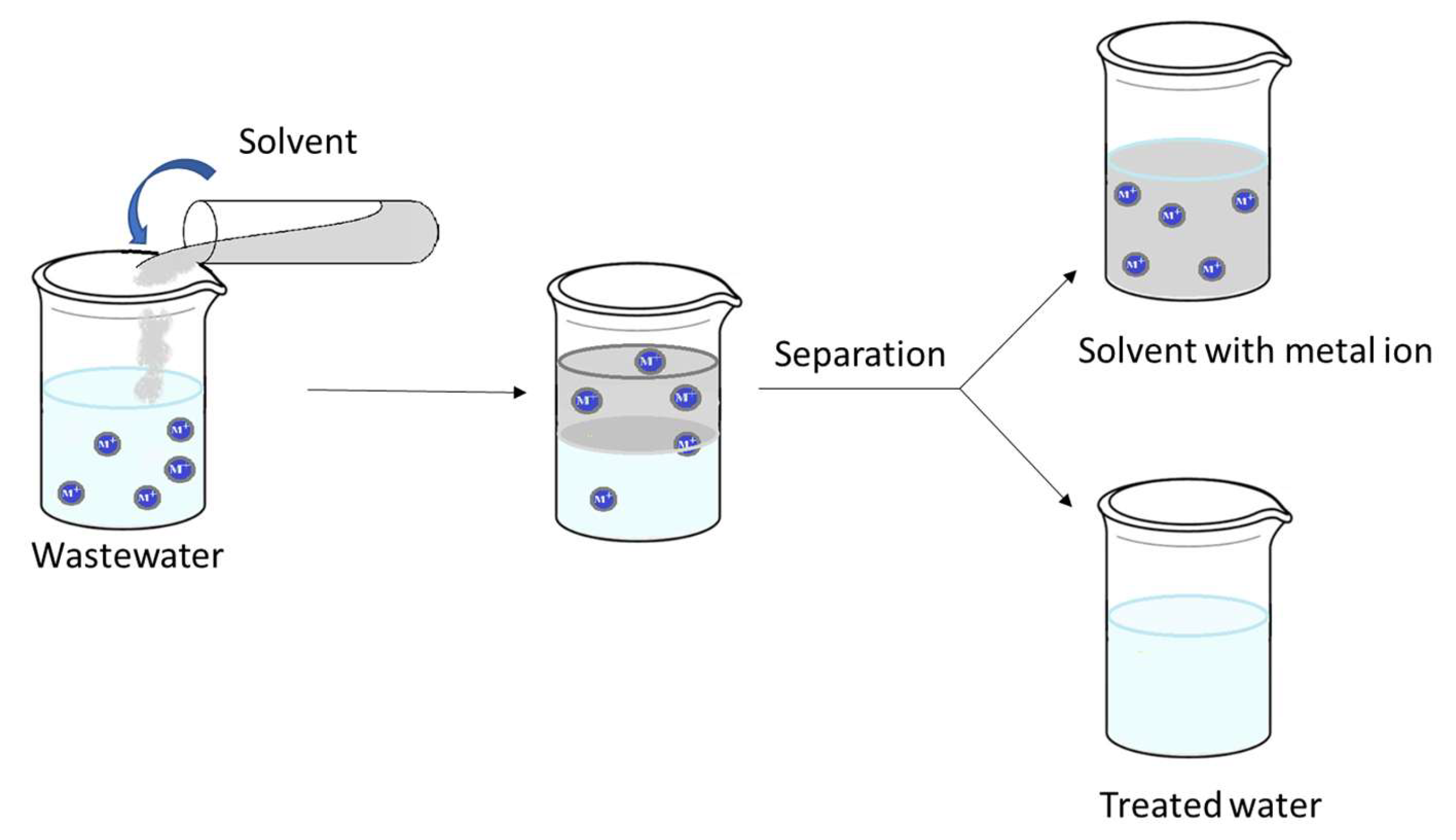
2.6. Solvent Extraction Used for Metal Ions Removal from Wastewater
- Although effective, many solvents are derived from petroleum and are toxic, flammable, and volatile, posing serious risks to human health and local ecosystems.
- The synthesis of environmentally friendly solvents (i.e., ionic liquids or eutectic solvents) is often hampered by the complexity of the synthesis itself or the high cost.
- Complex wastewater streams containing multiple metal ions can significantly reduce the selectivity of the extractant, making it difficult to purify a single target metal without a pretreatment step.
- Formation of a third phase: this is an undesirable phenomenon in which the organic phase splits into two components: a light phase, rich in diluent, and a viscous “heavy” phase (third phase), rich in extractant and metal complex. It can cause massive plant downtime.
- It is difficult to automate due to the fluid dynamics of the two-phase mixing.
- It requires constant high-energy agitation to maintain extraction efficiency.
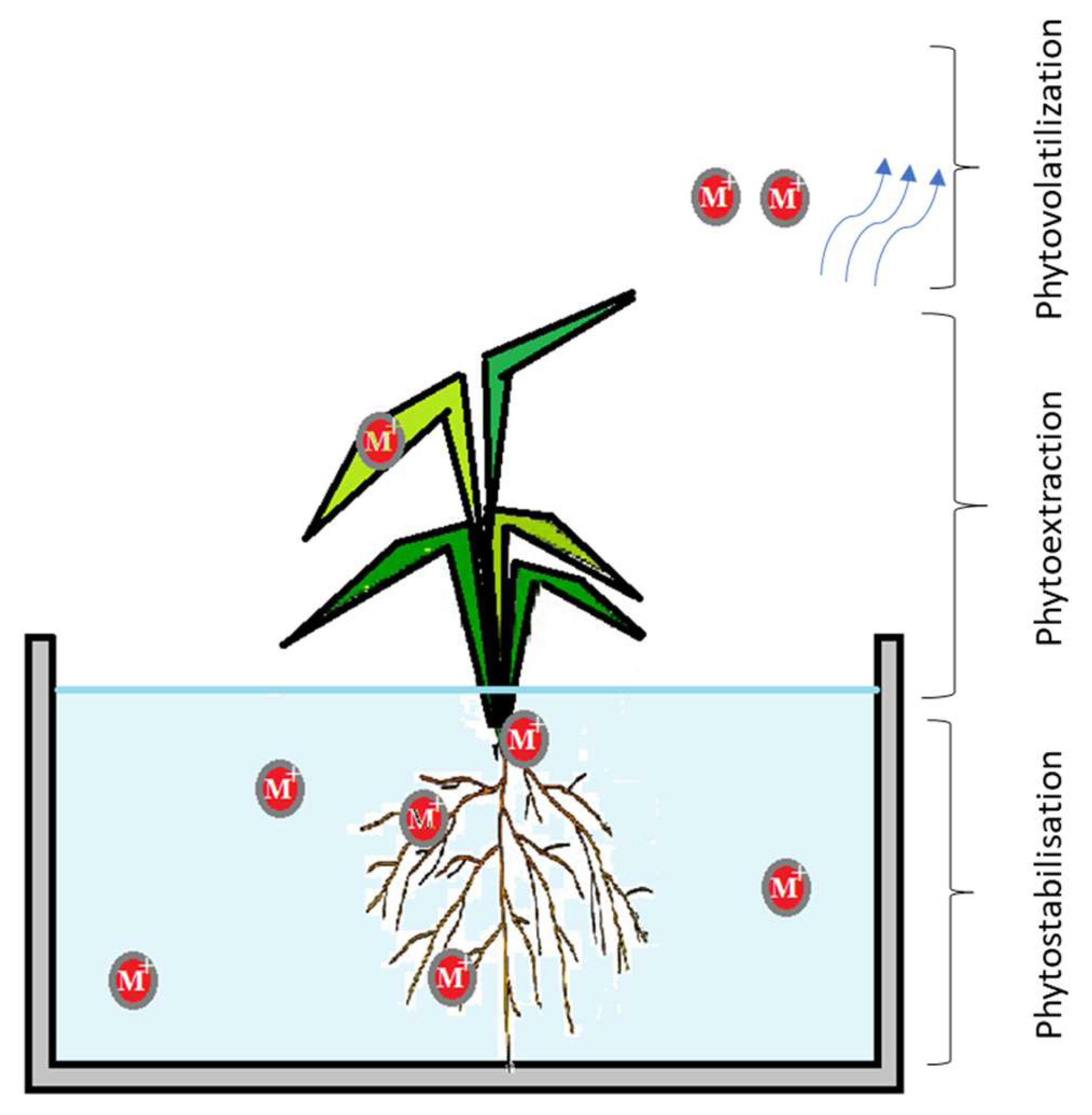
2.7. Biological Methods Used for Metallic Ion Removal from Wastewater
- Although extremely efficient on a laboratory scale, limited progress has been made in implementing these methods on a large industrial scale.
- The biggest drawback is the need for a very large volume reactor (bioreactor), as biological methods involve slow metal ion absorption processes compared to advanced chemical methods.
- Many promising studies are limited to synthetic solutions with a single metal, as complex industrial effluents are difficult to manage.
- The efficiency of biological methods depends largely on parameters such as pH, temperature, and nutrient availability, which are extremely difficult to maintain constant in industrial environments.
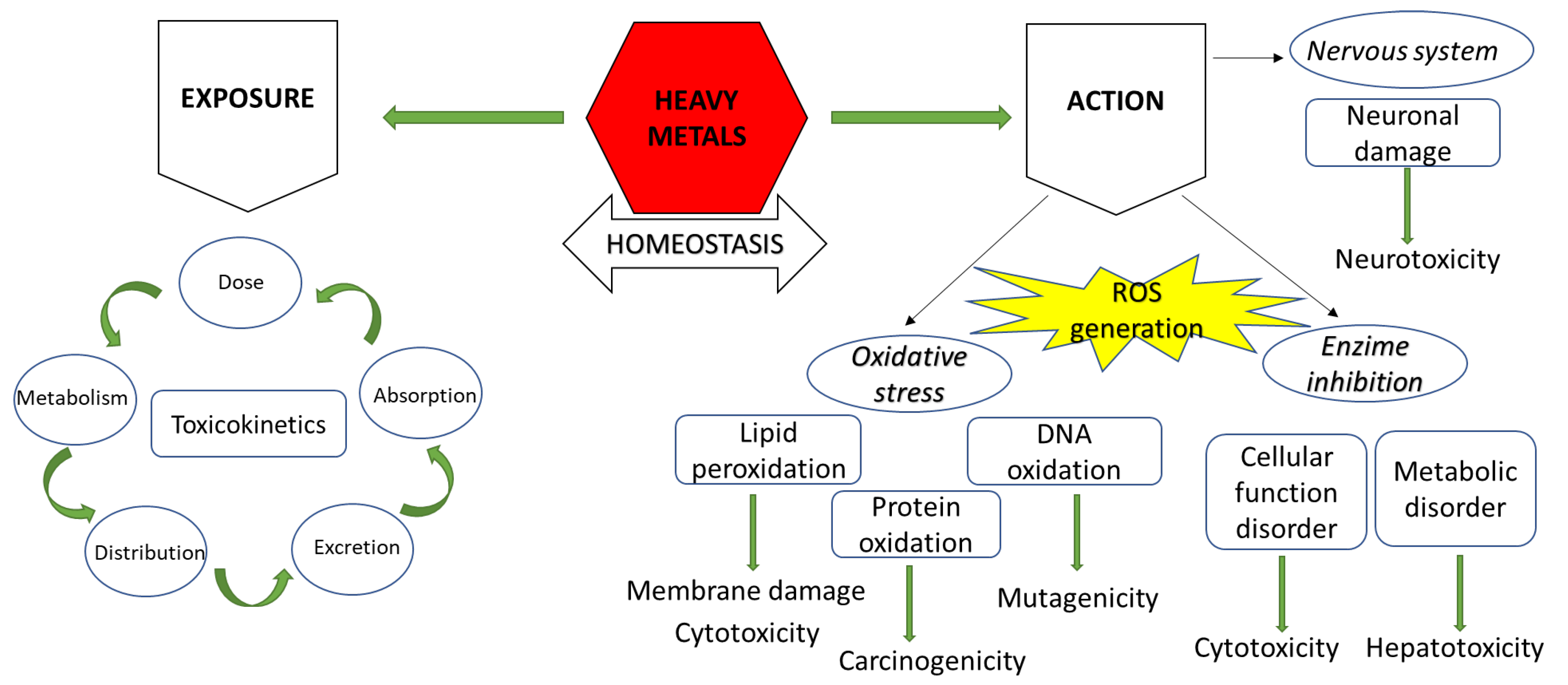
- Often high concentrations of metals can be toxic to microorganisms themselves, disrupting their metabolic processes and reducing the efficiency of the treatment. Homeostasis is essential in the case of metal ions such as Cu, Zn, and Fe, which are part of enzymatic cofactors or have metabolic roles.
3. Evaluation of Metal Ions Removal by Different Physico–Chemical and Biological Treatments
4. Conclusions
Author Contributions
Funding
Institutional Review Board Statement
Informed Consent Statement
Data Availability Statement
Acknowledgments
Conflicts of Interest
References
- European Parliament. Water Framework Directive. 2024. Available online: https://environment.ec.europa.eu/topics/water/water-framework-directive_en (accessed on 22 December 2024).
- European Parliament. Report from the Commission to the Council and the European Parliament—Report of the Commission on the implementation of Directive 96/61/EC Concerning Integrated Pollution Prevention and Control. 2024. Available online: https://eur-lex.europa.eu/legal-content/EN/TXT/?uri=CELEX:52005DC0540 (accessed on 22 December 2024).
- European Commission. Water. 2024. Available online: https://environment.ec.europa.eu/topics/water_en (accessed on 22 December 2024).
- Balasubramanian, R.; Perumal, S.V.; Vijayaraghavan, K. Equilibrium isotherm studies for the multicomponent adsorption of lead, zinc, and cadmium onto Indonesian Peat. Ind. Eng. Chem. Res. 2009, 48, 2093–2099. [Google Scholar] [CrossRef]
- Gupta, V.K.; Ali, I. Removal of lead and chromium from wastewater using bagasse fly ash--a sugar industry waste. J. Colloid Interface Sci. 2004, 271, 321–328. [Google Scholar] [CrossRef] [PubMed]
- Ahmaruzzaman, M. Industrial wastes as low-cost potential adsorbents for the treatment of wastewater laden with heavy metals. Adv. Colloid Interface Sci. 2011, 166, 36–59. [Google Scholar] [CrossRef] [PubMed]
- Arora, N.K.; Chauhan, R. Heavy metal toxicity and sustainable interventions for their decontamination. Environ. Sustain. 2021, 4, 1–3. [Google Scholar] [CrossRef]
- Ahmad, A.; Siddique, J.A.; Laskar, M.A.; Kumar, R.; Mohd-Setapar, S.H.; Khatoon, A.; Shiekh, R.A. New generation Amberlite XAD resin for the removal of metal ions: A review. J. Environ. Sci. 2015, 31, 104–123. [Google Scholar] [CrossRef]
- Halim, M.; Conte, P.; Piccolo, A. Potential availability of heavy metals to phytoextraction from contaminated soils induced by exogenous humic substances. Chemosphere 2003, 52, 265–275. [Google Scholar] [CrossRef]
- Vardhan, K.H.; Kumar, P.S.; Panda, R.C. A review on heavy metal pollution, toxicity and remedial measures: Current trends and future perspectives. J. Mol. Liq. 2019, 290, 111197. [Google Scholar] [CrossRef]
- Singh, V.; Ahmed, G.; Vedika, S.; Kumar, P.; Chaturvedi, S.K.; Rai, S.N.; Vamanu, E.; Kumar, A. Toxic heavy metal ions contamination in water and their sustainable reduction by eco-friendly methods: Isotherms, thermodynamics and kinetics study. Sci. Rep. 2024, 14, 7595. [Google Scholar] [CrossRef]
- Madjar, R.M.; Vasile Scăețeanu, G. An overview of heavy metal contamination in water from agriculture: Origins, monitoring, risks, and control measures. Sustainability 2025, 17, 7368. [Google Scholar] [CrossRef]
- Akoto, R.; Anning, A.K. Heavy metal enrichment and potential ecological risks from different solid mine wastes at a mine site in Ghana. Environ. Adv. 2021, 3, 100028. [Google Scholar] [CrossRef]
- Wang, J.; Wen, J.; Zheng, X.; Chen, H.; Lai, W.; Li, J.; Jia, A.; Tao, X.; Lu, G. Transformation and toxicity of heavy metals in mine waste soils amended with organic fertilizers. J. Environ. Chem. Eng. 2025, 13, 118227. [Google Scholar] [CrossRef]
- Jagaba, A.H.; Lawal, I.M.; Birniwa, A.H.; Affam, A.C.; Usman, A.K.; Soja, U.B.; Saleh, D.; Hussaini, A.; Noor, A.; Yaro, N.S.A. Sources of water contamination by heavy metals. In Membrane Technologies for Heavy Metal Removal from Water; CRC Press: Boca Raton, FL, USA, 2024; pp. 3–27. [Google Scholar]
- Fu, Z.; Xi, S. The effects of heavy metals on human metabolism. Toxicol. Mech. Methods 2020, 30, 167–176. [Google Scholar] [CrossRef] [PubMed]
- Dazıroğlu, M.; Tek, N. Water Consumption: Effect on Energy Expenditure and Body Weight Management. Curr. Obes. Rep. 2023, 12, 99–107. [Google Scholar] [CrossRef] [PubMed]
- Afzal, I.; Begum, S.; Iram, S.; Shabbir, R.; Shahat, A.A.; Javed, T. Comparative analysis of heavy metals toxicity in drinking water of selected industrial zones in Gujranwala, Pakistan. Sci. Rep. 2024, 14, 30639. [Google Scholar] [CrossRef]
- Zhang, P.; Yang, M.; Lan, J.; Huang, Y.; Zhang, J.; Huang, S.; Yang, Y.; Ru, J. Water quality degradation due to heavy metal contamination: Health impacts and eco-friendly approaches for heavy metal remediation. Toxics 2023, 11, 828. [Google Scholar] [CrossRef]
- Sharma, A.; Grewal, A.S.; Sharma, D.; Srivastav, A.L. Heavy metal contamination in water: Consequences on human health and environment. In Metals in Water; Elsevier: Amsterdam, The Netherlands, 2023; pp. 39–52. [Google Scholar]
- Ohiagu, F.O.; Chikezie, P.C.; Ahaneku, C.C.; Chikezie, C.M. Human exposure to heavy metals: Toxicity mechanisms and health implications. Mater. Sci. Eng. Int. J. 2022, 6, 78–87. [Google Scholar] [CrossRef]
- Witkowska, D.; Słowik, J.; Chilicka, K. Heavy metals and human health: Possible exposure pathways and the competition for protein binding sites. Molecules 2021, 26, 6060. [Google Scholar] [CrossRef]
- Amadi, C.N.; Offor, S.J.; Frazzoli, C.; Orisakwe, O.E. Natural antidotes and management of metal toxicity. Environ. Sci. Pollut. Res. 2019, 26, 18032–18052. [Google Scholar] [CrossRef]
- Hussein, E.B.; Rasheed, F.A.; Mohammed, A.S.; Kayani, K.F. Emerging nanotechnology approaches for sustainable water treatment and heavy metals removal: A comprehensive review. RSC Adv. 2025, 15, 41061–41107. [Google Scholar] [CrossRef]
- Joshi, A.A.; Chaudhari, K.; Ragupathy, G. Recent trends in heavy metal removal technologies from water: Mechanisms and advancements. Environ. Sci. Water Res. Technol. 2026, 12, 421–456. [Google Scholar] [CrossRef]
- Qasem, N.A.A.; Mohammed, R.H.; Lawal, D.U. Removal of heavy metal ions from wastewater: A comprehensive and critical review. NPJ Clean Water 2021, 4, 36, Correction in NPJ Clean Water 2021, 4, 52. https://doi.org/10.1038/s41545-021-00144-z. [Google Scholar] [CrossRef]
- Gupta, U.C.; Gupta, S.C. Heavy metal toxicity in humans and its preventive and control measures. Curr. Nutr. Food Sci. 2011, 7, 221–231. [Google Scholar] [CrossRef]
- World Health Organization. Guidelines for Drinking-Water Quality, 4th Edition, Incorporating the 1st Addendum. 2024. Available online: https://www.who.int/publications/i/item/9789241549950 (accessed on 30 November 2024).
- Rafique, S.; Gillani, S.; Nazir, R. Lead and cadmium toxic effects on human health: A review. J. Nutr. Food Sci. 2021, 11, 459. [Google Scholar]
- Genchi, G.; Sinicropi, M.S.; Lauria, G.; Carocci, A.; Catalano, A. The effects of cadmium toxicity. Int. J. Environ. Res. Public Health 2020, 17, 3782. [Google Scholar] [CrossRef] [PubMed]
- Bernhoft, R.A. Cadmium Toxicity and Treatment. Sci. World J. 2013, 2013, 394652. [Google Scholar] [CrossRef]
- Balali-Mood, M.; Naseri, K.; Tahergorabi, Z.; Khazdair, M.R.; Sadeghi, M. Toxic mechanisms of five heavy metals: Mercury, lead, chromium, cadmium, and arsenic. Front. Pharmacol. 2021, 12, 643972. [Google Scholar] [CrossRef]
- Royal Society of Chemistry. Cadmium. 2024. Available online: https://www.rsc.org/periodic-table/element/48 (accessed on 30 November 2024).
- Royal Society of Chemistry. Mercury. 2024. Available online: https://www.rsc.org/periodic-table/element/80/Mercury (accessed on 30 November 2024).
- Guzzi, G.; Ronchi, A.; Pigatto, P. Toxic effects of mercury in humans and mammals. Chemosphere 2021, 263, 127990. [Google Scholar] [CrossRef]
- Yang, L.; Zhang, Y.; Wang, F.; Luo, Z.; Guo, S.; Strähle, U. Toxicity of mercury: Molecular evidence. Chemosphere 2020, 245, 125586. [Google Scholar] [CrossRef]
- Royal Society of Chemistry. Lead. 2024. Available online: https://www.rsc.org/periodic-table/element/82/lead (accessed on 30 November 2024).
- Martínez-Castillo, M.; García-Montalvo, E.A.; Arellano-Mendoza, M.G.; Sánchez-Peña, L.d.C.; Soria Jasso, L.E.; Izquierdo-Vega, J.A.; Valenzuela, O.L.; Hernández-Zavala, A. Arsenic exposure and non-carcinogenic health effects. Hum. Exp. Toxicol. 2021, 40, S826–S850. [Google Scholar] [CrossRef]
- Royal Society of Chemistry. Arsenic. 2024. Available online: https://www.rsc.org/periodic-table/element/33 (accessed on 30 November 2024).
- Royal Society of Chemistry. Nickel. 2024. Available online: https://www.rsc.org/periodic-table/element/28/Nickel (accessed on 30 November 2024).
- Genchi, G.; Carocci, A.; Lauria, G.; Sinicropi, M.S.; Catalano, A. Nickel: Human health and environmental toxicology. Int. J. Environ. Res. Public Health 2020, 17, 679. [Google Scholar] [CrossRef]
- Das, K.K.; Reddy, R.C.; Bagoji, I.B.; Das, S.; Bagali, S.; Mullur, L.; Khodnapur, J.P.; Biradar, M.S. Primary concept of nickel toxicity—An overview. J. Basic Clin. Physiol. Pharmacol. 2018, 30, 141–152. [Google Scholar] [CrossRef] [PubMed]
- Hossini, H.; Shafie, B.; Niri, A.D.; Nazari, M.; Esfahlan, A.J.; Ahmadpour, M.; Nazmara, Z.; Ahmadimanesh, M.; Makhdoumi, P.; Mirzaei, N.; et al. A comprehensive review on human health effects of chromium: Insights on induced toxicity. Environ. Sci. Pollut. Res. 2022, 29, 70686–70705. [Google Scholar] [CrossRef] [PubMed]
- Sun, H.; Brocato, J.; Costa, M. Oral chromium exposure and toxicity. Curr. Environ. Health Rep. 2015, 2, 295–303. [Google Scholar] [CrossRef] [PubMed]
- Royal Society of Chemistry. Chromium. 2024. Available online: https://www.rsc.org/periodic-table/element/24/chromium (accessed on 30 November 2024).
- Tumolo, M.; Ancona, V.; De Paola, D.; Losacco, D.; Campanale, C.; Massarelli, C.; Uricchio, V.F. Chromium pollution in European water, sources, health risk, and remediation strategies: An overview. Int. J. Environ. Res. Public Health 2020, 17, 5438. [Google Scholar] [CrossRef]
- Kalita, J.; Kumar, V.; Misra, U.K.; Bora, H.K. Memory and learning dysfunction following copper toxicity: Biochemical and immunohistochemical basis. Mol. Neurobiol. 2018, 55, 3800–3811. [Google Scholar] [CrossRef]
- Royal Society of Chemistry. Copper. 2024. Available online: https://www.rsc.org/periodic-table/element/29/Copper (accessed on 30 November 2024).
- Royal Society of Chemistry. Zinc. 2024. Available online: https://www.rsc.org/periodic-table/element/30/Zinc (accessed on 30 November 2024).
- Li, X.F.; Wang, P.F.; Feng, C.L.; Liu, D.Q.; Chen, J.K.; Wu, F.C. Acute toxicity and hazardous concentrations of zinc to native freshwater organisms under different pH values in China. Bull. Environ. Contam. Toxicol. 2019, 103, 120–126. [Google Scholar] [CrossRef]
- Hussain, S.; Khan, M.; Sheikh, T.; Mumtaz, M.Z.; Ali Chohan, T.; Shamim, S.; Liu, Y. Zinc essentiality, toxicity, and its bacterial bioremediation: A comprehensive insight. Front. Microbiol. 2022, 13, 900740, Correction in Front. Microbiol. 2023, 13, 1133733. https://doi.org/10.3389/fmicb.2022.1133733. [Google Scholar] [CrossRef]
- Sharma, M.; Kant, R.; Sharma, A.; Sharma, A. Exploring the impact of heavy metals toxicity in the aquatic ecosystem. Int. J. Energy Water Resour. 2025, 9, 267–280. [Google Scholar] [CrossRef]
- Dermont, G.; Bergeron, M.; Mercier, G.; Richer-Laflèchem, M. Metal-contaminated soils: Remediation practices and treatment technologies. Pract. Period. Hazard. Toxic Radioact. Waste Manag. 2008, 12, 188–209. [Google Scholar] [CrossRef]
- Gunatilake, S.K. Methods of removing heavy metals from industrial wastewater. J. Multidiscip. Eng. Sci. Stud. 2015, 1, 12–18. [Google Scholar]
- Zareh, M.M.; Metwally, N.; Abdel-Tawwab, M. Review of Methods of Removal of Heavy Metals from Wastewater. Bull. Fac. Sci. Zagazig Univ. 2024, 2024, 51–58. [Google Scholar] [CrossRef]
- Wilson, I.D.; Adlard, E.R.; Cooke, M.; Poole, C.F. Encyclopedia of Separation Science; Elsevier: Amsterdam, The Netherlands, 2000. [Google Scholar]
- Ifeanyi Michael Smarte, A.; Jeremiah, A.; Stephen Okiemute, A.; Sammy Lewis, K. Available Technologies for Wastewater Treatment. In Wastewater Treatment; Muharrem, I., Olcay Kaplan, I., Eds.; IntechOpen: Rijeka, Croatia, 2022; pp. 1–278. [Google Scholar]
- Smith, L. Contaminants and remedial options at selected metal-contaminated sites. In Battelle, Columbus; United States Environmental Protection Agency: Washington, DC, USA, 1995. [Google Scholar]
- Williford, C.; Bricka, R. Physical separation of metal-contaminated soils. In Environmental Restoration of Metals-Contaminated Soils; CRC Press LLC: Boca Raton, FL, USA, 2000; pp. 121–165. [Google Scholar]
- Benalia, M.C.; Youcef, L.; Bouaziz, M.G.; Achour, S.; Menasra, H. Removal of Heavy Metals from Industrial Wastewater by Chemical Precipitation: Mechanisms and Sludge Characterization. Arab. J. Sci. Eng. 2022, 47, 5587–5599. [Google Scholar] [CrossRef]
- Wang, L.; Chen, C.; Jamro, I.A.; Li, P.R.R.D.; Baloch, H. Accelerated co-precipitation of lead, zinc and copper by carbon dioxide bubbling in alkaline Municipal solid waste incinerator (MSWI) fly ash wash water. RSC Adv. 2016, 6, 20173–20186. [Google Scholar] [CrossRef]
- Chen, Q.; Yao, Y.; Li, X.; Lu, J.; Zhou, J.; Huang, Z. Comparison of heavy metal removals from aqueous solutions by chemical precipitation and characteristics of precipitates. J. Water Process Eng. 2018, 26, 289–300. [Google Scholar] [CrossRef]
- Rodrigues, R.; Ignatiadis, I. AlIII-and FeIII-based layered double hydroxides: A review of their characterization techniques and formation mechanisms by co-precipitation with the variable pH method. Crit. Rev. Solid State Mater. Sci. 2025, 50, 568–599. [Google Scholar] [CrossRef]
- Fu, F.; Wang, Q. Removal of heavy metal ions from wastewaters: A review. J. Environ. Manag. 2011, 92, 407–418. [Google Scholar] [CrossRef]
- Lejwoda, P.; Świnder, H.; Thomas, M. Evaluation of the stability of heavy metal-containing sediments obtained in the wastewater treatment processes with the use of various precipitating agents. Environ. Monit. Assess. 2023, 195, 442. [Google Scholar] [CrossRef]
- Li, T.; Lin, X.; Na, J.; Chen, T.; Zhang, H.; Wang, Z.; Cao, L.; Hong, L.; Shao, Z.; Lin, W.-F. Accelerating hydrogen evolution rate and preventing metal hydroxide deposition in seawater electrolysis via addition of chelating agent EDTA-Na4. J. Energy Chem. 2026, 114, 686–698. [Google Scholar] [CrossRef]
- Yatim, S.R.M.; Zainuddin, N.; Mokhtar, N.S.; Syahjidan, H.N.; Kamsuri, S.N.H. Competitiveness in removing copper, zinc and chromium trivalent in plating industrial effluent by using hydroxide precipitation versus sulphide precipitation. IOP Conf. Ser. Mater. Sci. Eng. 2021, 1053, 012084. [Google Scholar] [CrossRef]
- Kumar, M.; Nandi, M.; Pakshirajan, K. Recent advances in heavy metal recovery from wastewater by biogenic sulfide precipitation. J. Environ. Manag. 2021, 278, 111555. [Google Scholar] [CrossRef]
- Dhokpande, S.R.; Deshmukh, S.M.; Khandekar, A.; Sankhe, A. A review outlook on methods for removal of heavy metal ions from wastewater. Sep. Purif. Technol. 2024, 350, 127868. [Google Scholar] [CrossRef]
- Wang, H.; Gong, W.-z.; Liu, R.; Liu, H.; Qu, J. Treatment of high arsenic content wastewater by a combined physical-chemical process. Colloids Surf. A Physicochem. Eng. Asp. 2011, 379, 116–120. [Google Scholar] [CrossRef]
- Muntean, C.; Negrea, A.; Ciopec, M.; Lupa, L.; Negrea, P.; Rosu, D. Studies regarding the arsenic removal from water. Politeh. Univ. 2009, (54), 18–20. [Google Scholar]
- Li, Y.; Zeng, X.; Liu, Y.; Yan, S.; Hu, Z.; Ni, Y. Study on the treatment of copper-electroplating wastewater by chemical trapping and flocculation. Sep. Purif. Technol. 2003, 31, 91–95. [Google Scholar] [CrossRef]
- Kurniawan, T.A.; Chan, G.Y.S.; Lo, W.-H.; Babel, S. Physico–chemical treatment techniques for wastewater laden with heavy metals. Chem. Eng. J. 2006, 118, 83–98. [Google Scholar] [CrossRef]
- Ko, Y.G. Hybrid method integrating adsorption and chemical precipitation of heavy metal ions on polymeric fiber surfaces for highly efficient water purification. Chemosphere 2024, 363, 142909. [Google Scholar] [CrossRef]
- Wang, L.K.; Wang, M.-H.S.; Shammas, N.K.; Hahn, H.H. Physicochemical treatment consisting of chemical coagulation, precipitation, sedimentation, and flotation. In Integrated Natural Resources Research; Springer: Berlin/Heidelberg, Germany, 2021; pp. 265–397. [Google Scholar]
- Liu, Y.; Wang, H.; Cui, Y.; Chen, N. Removal of copper ions from wastewater: A review. Int. J. Environ. Res. Public Health 2023, 20, 3885. [Google Scholar] [CrossRef]
- Chang, L.; Cao, Y.; Fan, G.; Li, C.; Peng, W. A review of the applications of ion floatation: Wastewater treatment, mineral beneficiation and hydrometallurgy. RSC Adv. 2019, 9, 20226–20239. [Google Scholar] [CrossRef]
- Deliyanni, E.A.; Kyzas, G.Z.; Matis, K.A. Various flotation techniques for metal ions removal. J. Mol. Liq. 2017, 225, 260–264. [Google Scholar] [CrossRef]
- Arslan, F.; Bulut, G. Ion flotation and its applications on concentration, recovery, and removal of metal ions from solutions. Physicochem. Probl. Miner. Process. 2022, 58, 152061. [Google Scholar] [CrossRef]
- Wan Nafi, A.; Taseidifar, M. Removal of hazardous ions from aqueous solutions: Current methods, with a focus on green ion flotation. J. Environ. Manag. 2022, 319, 115666. [Google Scholar] [CrossRef] [PubMed]
- Kyzas, G.Z.; Matis, K.A. Flotation in water and wastewater treatment. Processes 2018, 6, 116. [Google Scholar] [CrossRef]
- Khoshdast, H.; Hassanzadeh, A.; Kowalczuk, P.B.; Farrokhpay, S. Characterization techniques of flotation frothers-a review. Miner. Process. Extr. Metall. Rev. 2023, 44, 77–101. [Google Scholar] [CrossRef]
- Swart, B.; Chew, Y.J.; Wenk, J. Simultaneous monitoring of flow patterns, and bubble, and plastics micro-particle characteristics in Dissolved Air Flotation (DAF). Chem. Eng. Res. Des. 2023, 197, 148–158. [Google Scholar] [CrossRef]
- Rubio, J.; Tessele, F. Removal of heavy metal ions by adsorptive particulate flotation. Miner. Eng. 1997, 10, 671–679. [Google Scholar] [CrossRef]
- Corpuz, A.G.; Pal, P.; Banat, F.; Haija, M.A. Enhanced removal of mixed metal ions from aqueous solutions using flotation by colloidal gas aphrons stabilized with sodium alginate. Sep. Purif. Technol. 2018, 202, 103–110. [Google Scholar] [CrossRef]
- Taseidifar, M.; Makavipour, F.; Pashley, R.M.; Rahman, A.M. Removal of heavy metal ions from water using ion flotation. Environ. Technol. Innov. 2017, 8, 182–190. [Google Scholar] [CrossRef]
- Polat, H.; Erdogan, D. Heavy metal removal from waste waters by ion flotation. J. Hazard. Mater. 2007, 148, 267–273. [Google Scholar] [CrossRef]
- Saleem, H.; Pal, P.; Haija, M.A.; Banat, F. Regeneration and reuse of bio-surfactant to produce colloidal gas aphrons for heavy metal ions removal using single and multistage cascade flotation. J. Clean. Prod. 2019, 217, 493–502. [Google Scholar] [CrossRef]
- Zamboulis, D.; Pataroudi, S.; Zouboulis, A.; Matis, K. The application of sorptive flotation for the removal of metal ions. Desalination 2004, 162, 159–168. [Google Scholar] [CrossRef]
- Jia, K.; Yi, Y.; Ma, W.; Cao, Y.; Li, G.; Liu, S.; Wang, T.; An, N. Ion flotation of heavy metal ions by using biodegradable biosurfactant as collector: Application and removal mechanism. Miner. Eng. 2022, 176, 107338. [Google Scholar] [CrossRef]
- Pooja, G.; Kumar, P.S.; Prasannamedha, G.; Varjani, S.; Vo, D.-V.N. Sustainable approach on removal of toxic metals from electroplating industrial wastewater using dissolved air flotation. J. Environ. Manag. 2021, 295, 113147. [Google Scholar] [CrossRef] [PubMed]
- Yang, K.; Wang, G.; Chen, X.; Wang, X.; Liu, F. Treatment of wastewater containing Cu2+ using a novel macromolecular heavy metal chelating flocculant xanthated chitosan. Colloids Surf. A Physicochem. Eng. Asp. 2018, 558, 384–391. [Google Scholar] [CrossRef]
- Tahraoui, H.; Toumi, S.; Boudoukhani, M.; Touzout, N.; Sid, A.N.; Amrane, A.; Belhadj, A.-E.; Hadjadj, M.; Laichi, Y.; Aboumustapha, M.; et al. Evaluating the effectiveness of coagulation–flocculation treatment using aluminum sulfate on a polluted surface water source: A year-long study. Water 2024, 16, 400. [Google Scholar] [CrossRef]
- Babel, S.; Kurniawan, T. Cr(VI) removal from synthetic wastewater using coconut shell charcoal and commercial activated carbon modified with oxidizing agents and/or chitosan. Chemosphere 2004, 54, 951–967. [Google Scholar] [CrossRef]
- Chakraborty, R.; Asthana, A.; Singh, A.K.; Jain, B.; Susan, A.B.H. Adsorption of heavy metal ions by various low-cost adsorbents: A review. Int. J. Environ. Anal. Chem. 2022, 102, 342–379. [Google Scholar] [CrossRef]
- Ighalo, J.O.; Omoarukhe, F.O.; Ojukwu, V.E.; Iwuozor, K.O.; Igwegbe, C.A. Cost of adsorbent preparation and usage in wastewater treatment: A review. Clean. Chem. Eng. 2022, 3, 100042. [Google Scholar] [CrossRef]
- Deshpande, K. Adsorptive removal of metal ions from water using functionalized biomaterials. Recent Pat. Biotechnol. 2017, 11, 155–170. [Google Scholar] [CrossRef]
- Motitswe, M.G.; Badmus, K.O.; Khotseng, L. Development of adsorptive materials for selective removal of toxic metals in wastewater: A review. Catalysts 2022, 12, 1057. [Google Scholar] [CrossRef]
- Sheraz, N.; Shah, A.; Haleem, A.; Iftikhar, F.J. Comprehensive assessment of carbon-, biomaterial-and inorganic-based adsorbents for the removal of the most hazardous heavy metal ions from wastewater. RSC Adv. 2024, 14, 11284–11310. [Google Scholar] [CrossRef]
- Satyam, S.; Patra, S. Innovations and challenges in adsorption-based wastewater remediation: A comprehensive review. Heliyon 2024, 10, e29573. [Google Scholar] [CrossRef] [PubMed]
- Aljamali, N.M.; Khdur, R.; Alfatlawi, I.O. Physical and chemical adsorption and its applications. Int. J. Thermodyn. Chem. Kinet. 2021, 7, 1–8. [Google Scholar]
- Li, H.; Dong, X.; da Silva, E.B.; de Oliveira, L.M.; Chen, Y.; Ma, L.Q. Mechanisms of metal sorption by biochars: Biochar characteristics and modifications. Chemosphere 2017, 178, 466–478. [Google Scholar] [CrossRef] [PubMed]
- Yang, X.; Wan, Y.; Zheng, Y.; He, F.; Yu, Z.; Huang, J.; Wang, H.; Ok, Y.S.; Jiang, Y.; Gao, B. Surface functional groups of carbon-based adsorbents and their roles in the removal of heavy metals from aqueous solutions: A critical review. Chem. Eng. J. 2019, 366, 608–621. [Google Scholar] [CrossRef]
- Wang, H.; Yuan, Y.; Tan, W.; Zhang, J.; Gong, X.; Li, Y.; Hui, K.; Chen, H.; Xi, B. New insight into the functional group mechanism and structure-activity relationship of the complexation between DOM and Cr(III) in landfill leachate. J. Hazard. Mater. 2024, 466, 133210. [Google Scholar] [CrossRef]
- Rahman, M.L.; Shamrih, S.A.; Azlyzan, N.A.; Sarjadi, M.S.; Arsad, S.E.; Sarkar, S.M.; Kumar, S. Removal of heavy metal ions from wastewater using modified cornstalk cellulose-derived poly(amidoxime) ligand. Carbohydr. Polym. Technol. Appl. 2025, 9, 100633. [Google Scholar] [CrossRef]
- Yudaev, P.; Chistyakov, E. Chelating extractants for metals. Metals 2022, 12, 1275. [Google Scholar] [CrossRef]
- Gulcin, İ.; Alwasel, S.H. Metal ions, metal chelators and metal chelating assay as antioxidant method. Processes 2022, 10, 132. [Google Scholar] [CrossRef]
- Hao, Y.; Ma, H.; Wang, Q.; Zhu, C.; He, A. Complexation behaviour and removal of organic-Cr (III) complexes from the environment: A review. Ecotoxicol. Environ. Saf. 2022, 240, 113676. [Google Scholar] [CrossRef]
- Yin, C.; Zhang, Y.; Tao, Y.; Zhu, X. Competitive adsorption behavior and adsorption mechanism of limestone and activated carbon in polymetallic acid mine water treatment. Sci. Rep. 2024, 14, 23561. [Google Scholar] [CrossRef]
- Kołodyńska, D.; Krukowska, J.; Thomas, P. Comparison of sorption and desorption studies of heavy metal ions from biochar and commercial active carbon. Chem. Eng. J. 2017, 307, 353–363. [Google Scholar] [CrossRef]
- Chai, W.S.; Cheun, J.Y.; Kumar, P.S.; Mubashir, M.; Majeed, Z.; Banat, F.; Ho, S.-H.; Show, P.L. A review on conventional and novel materials towards heavy metal adsorption in wastewater treatment application. J. Clean. Prod. 2021, 296, 126589. [Google Scholar] [CrossRef]
- Zhang, J.; Yu, S.; Wang, J.; Zhao, Z.-P.; Cai, W. Advanced water treatment process by simultaneous coupling granular activated carbon (GAC) and powdered carbon with ultrafiltration: Role of GAC particle shape and powdered carbon type. Water Res. 2023, 231, 119606. [Google Scholar] [CrossRef] [PubMed]
- Kebede, M.M.; Masud, M.A.A.; Ortbal, S.; Shin, W.S.; Mekonnen, M.M.; Clement, T.P.; Terry, L.G. Adsorptive removal of PFAS from aqueous solutions using GAC, PAC and ball-milled colloidal cctivated carbon: Characterizing efficiency, kinetics, and mechanisms. ACS ES&T Water 2025, 5, 6554–6566. [Google Scholar]
- Bielski, A.; Ożóg, J. Adsorption on powdered activated carbon (PAC) dosed into an anthracite-sand filter in water treatment—Model and criterion equations. Appl. Sci. 2024, 14, 4727. [Google Scholar] [CrossRef]
- Liang, J.; Xie, T.; Liu, Y.; Wu, Q.; Bai, Y.; Liu, B. Granular activated carbon (GAC) fixed bed adsorption combined with ultrafiltration for shale gas wastewater internal reuse. Environ. Res. 2022, 212, 113486. [Google Scholar] [CrossRef]
- Bernard, E.; Jimoh, A.; Odigure, J. Heavy metals removal from industrial wastewater by activated carbon prepared from coconut shell. Res. J. Chem. Sci. 2013, 3, 3–9. [Google Scholar]
- Feng, Y.; Liu, P.; Wang, Y.; Finfrock, Y.Z.; Xie, X.; Su, C.; Liu, N.; Yang, Y.; Xu, Y. Distribution and speciation of iron in Fe-modified biochars and its application in removal of As(V), As(III), Cr(VI), and Hg(II): An X-ray absorption study. J. Hazard. Mater. 2020, 384, 121342. [Google Scholar] [CrossRef]
- Ugwu, E.I.; Agunwamba, J.C. A review on the applicability of activated carbon derived from plant biomass in adsorption of chromium, copper, and zinc from industrial wastewater. Environ. Monit. Assess. 2020, 192, 240. [Google Scholar] [CrossRef]
- Thotagamuge, R.; Kooh, M.R.R.; Mahadi, A.H.; Lim, C.M.; Abu, M.; Jan, A.; Hanipah, A.H.A.; Khiong, Y.Y.; Shofry, A. Copper modified activated bamboo charcoal to enhance adsorption of heavy metals from industrial wastewater. Environ. Nanotechnol. Monit. Manag. 2021, 16, 100562. [Google Scholar] [CrossRef]
- Sahu, D.; Pervez, S.; Karbhal, I.; Tamrakar, A.; Mishra, A.; Verma, S.R.; Deb, M.K.; Ghosh, K.K.; Pervez, Y.F.; Shrivas, K.; et al. Applications of different adsorbent materials for the removal of organic and inorganic contaminants from water and wastewater—A review. Desalin. Water Treat. 2024, 317, 100253. [Google Scholar] [CrossRef]
- Afshar, M.; Mofatteh, S. Biochar for a sustainable future: Environmentally friendly production and diverse applications. Results Eng. 2024, 23, 102433. [Google Scholar] [CrossRef]
- Biswal, B.K.; Balasubramanian, R. Use of biomass-derived biochar as a sustainable material for carbon sequestration in soil: Recent advancements and future perspectives. NPJ Mater. Sustain. 2025, 3, 26. [Google Scholar] [CrossRef]
- Cortina, J.L.; Warshawsky, A. Ion Exchange and Solvent Extraction: A Series of Advances, 1st ed.; Marinsky, J.A., Marcus, Y., Eds.; CRC Press: Boca Raton, FL, USA, 1995; Volume 12. [Google Scholar]
- Tamang, A.M.; Singh, N.; Chandraker, S.K.; Ghosh, M.K. Solvent impregnated resin a potential alternative material for separation dyes, metal and phenolic compounds: A review. Curr. Res. Green Sustain. Chem. 2022, 5, 100232. [Google Scholar] [CrossRef]
- Saha, B.; Gill, R.J.; Bailey, D.G.; Kabay, N.; Arda, M. Sorption of Cr(VI) from aqueous solution by Amberlite XAD-7 resin impregnated with Aliquat 336. React. Funct. Polym. 2004, 60, 223–244. [Google Scholar] [CrossRef]
- Benamor, M.; Bouariche, Z.; Belaid, T.; Draa, M. Kinetic studies on cadmium ions by Amberlite XAD7 impregnated resins containing di(2-ethylhexyl) phosphoric acid as extractant. Sep. Purif. Technol. 2008, 59, 74–84. [Google Scholar] [CrossRef]
- Rahman, I.; Begum, Z.A.; Sawai, H.; Ogino, M.; Furusho, Y.; Mizutani, S.; Hasegawa, H. Chelant-assisted depollution of metal-contaminated Fe-coated sands and subsequent recovery of the chemicals using solid-phase extraction systems. Water Air Soil Pollut. 2015, 226, 37. [Google Scholar] [CrossRef]
- Liu, J.; Zhang, X.; Lu, X.; Li, Q.; Xue, Z.; Zhang, Q.; Wu, G.; Xia, W. Review on extraction and separation of valuable metal ions from aqueous solution by crown ether. Chin. J. Chem. Eng. 2025, 85, 217–227. [Google Scholar] [CrossRef]
- Ciopec, M.; Grad, O.; Negrea, A.; Duteanu, N.; Negrea, P.; Paul, C.; Ianăși, C.; Mosoarca, G.; Vancea, C. A new perspective on adsorbent materials based impregnated MgSiO(3) with crown rthers for palladium recovery. Int. J. Mol. Sci. 2021, 22, 10718. [Google Scholar] [CrossRef]
- Gabor, A.; Davidescu, C.M.; Popa, A.; Negrea, A.; Ciopec, M.; Motoc, M.; Lupa, L.; Buzatu, A.R.; Negrea, P. Equilibrium studies for crown ether impregnated solid support used in the removal process of Nd (III), La (III), Sr (II), Tl (I), Eu (III). Rev. Chim. 2016, 67, 580–583. [Google Scholar]
- Tang, Y.; Bao, S.; Zhang, Y.; Liang, L. Effect of support properties on preparation process and adsorption performances of solvent impregnated resins. React. Funct. Polym. 2017, 113, 50–57. [Google Scholar] [CrossRef]
- Juang, R.-S. Preparation, properties and sorption behavior of impregnated resins containing acidic organophosphorus extractants. Proc. Natl. Sci. Counc. Repub. China Part A Phys. Sci. Eng. 1999, 23, 353–364. [Google Scholar]
- Lupa, L.; Negrea, A.; Ciopec, M.; Negrea, P. Cs+ removal from aqueous solutions through adsorption onto Florisil® impregnated with trihexyl(tetradecyl)phosphonium chloride. Molecules 2013, 18, 12845–12856. [Google Scholar] [CrossRef] [PubMed]
- Negrea, A.; Lupa, L.; Ciopec, M.; Negrea, P. Silica impregnated with Cyphos IL-101 for Cs+ adsorption. Environ. Eng. Manag. J. 2014, 13, 2005–2013. [Google Scholar] [CrossRef]
- Davidescu, C.M.; Gabor, A.; Negrea, A.; Ciopec, M.; Negrea, P.; Motoc, M. Novel adsorbent used for cesium removal from aqueous solutions. Rev. Chim. 2017, 68, 470–473. [Google Scholar] [CrossRef]
- Putz, A.-M.; Ivankov, O.I.; Kuklin, A.I.; Ryukhtin, V.; Ianăşi, C.; Ciopec, M.; Negrea, A.; Trif, L.; Horváth, Z.E.; Almásy, L. Ordered mesoporous silica prepared in different solvent conditions: Application for Cu(II) and Pb(II) adsorption. Gels 2022, 8, 443. [Google Scholar] [CrossRef]
- Gabor, A.E.; Davidescu, C.M.; Negrea, A.; Ciopec, M.; Butnariu, M.; Ianasi, C.; Muntean, C.; Negrea, P. Lanthanum separation from aqueous solutions using magnesium silicate functionalized with tetrabutylammonium dihydrogen phosphate. J. Chem. Eng. Data 2016, 61, 535–542. [Google Scholar] [CrossRef]
- Vancea, C.; Mihailescu, M.; Negrea, A.; Mosoarca, G.; Ciopec, M.; Duteanu, N.; Negrea, P.; Minzatu, V. Batch and fixed-bed column studies on palladium recovery from acidic solution by modified MgSiO(3). Int. J. Environ. Res. Public Health 2020, 17, 9500. [Google Scholar] [CrossRef]
- Buriac, O.; Ciopec, M.; Duţeanu, N.; Negrea, A.; Negrea, P.; Grozav, I. Platinum (IV) recovery from waste solutions by adsorption onto Dibenzo-30-crown-10 Ether Immobilized on Amberlite XAD7 resin-factorial design analysis. Molecules 2020, 25, 3692. [Google Scholar] [CrossRef]
- Ciopec, M.; Davidescu, C.M.; Negrea, A.; Muntean, C.; Popa, A.; Negrea, P.; Lupa, L. Equilibrium and kinetic studies of the adsorption of Cr(III) ions onto Amberlite XAD-8 Impregnated with Di-(2-ethylhexyl) phosphoric acid (DEHPA). Adsorpt. Sci. Technol. 2011, 29, 989–1005. [Google Scholar] [CrossRef]
- Ciopec, M.; Davidescu, C.M.; Negrea, A.; Grozav, I.; Lupa, L.; Muntean, C.; Negrea, P.; Popa, A. Statististical optimization of chromium ions adsorption on dehpa-impregnated Amberlite XAD7. Environ. Eng. Manag. J. 2012, 11, 525–531. [Google Scholar] [CrossRef]
- Ciopec, M.; Davidescu, C.M.; Negrea, A.; Lupa, L.; Popa, A.; Muntean, C.; Ardelean, R.; Ilia, G. Synthesis, characterization, and adsorption behavior of aminophosphinic grafted on poly(styrene-Co-divinylbenzene) for divalent metal ions in aqueous solutions. Polym. Eng. Sci. 2013, 53, 1117–1124. [Google Scholar] [CrossRef]
- Davidescu, C.-M.; Ciopec, M.; Negrea, A.; Popa, A.; Lupa, L.; Dragan, E.-S.; Ardelean, R.; Ilia, G.; Iliescu, S. Synthesis, characterization, and Ni (II) ion sorption properties of poly (styrene-co-divinylbenzene) functionalized with aminophosphonic acid groups. Polym. Bull. 2013, 70, 277–291. [Google Scholar] [CrossRef]
- Gabor, A.; Davidescu, C.M.; Negrea, A.; Ciopec, M.; Lupa, L. Behaviour of silica and Florisil as solid supports in the removal process of As(v) from aqueous solutions. J. Anal. Methods Chem. 2015, 2015, 562780. [Google Scholar] [CrossRef]
- Kumar, A.; Chang, D.W. Active polymers decorated with major acid groups for water treatment: Potentials and challenges. Polymers 2024, 17, 29. [Google Scholar] [CrossRef]
- Essakhraoui, M.; Boukhair, A.; Bentiss, F.; Mazouz, H.; Beniazza, R.; Haneklaus, N. Advances in heavy metal extraction using organophosphorus compounds: A comprehensive review. Metals 2025, 15, 524. [Google Scholar] [CrossRef]
- Negrea, A.; Ciopec, M.; Lupa, L.; Davidescu, C.-M.; Popa, A.; Negrea, P.; Motoc, M. Adsorption of arsenate anions from aqueous medium by using Fe(III) Loaded XAD7-DEHPA impregnated resin. Rev. Chim. 2011, 62, 1008–1011. [Google Scholar]
- Ciopec, M.; Negrea, A.; Lupa, L.; Davidescu, C.M.; Negrea, P. Studies regarding as(V) adsorption from underground water by Fe-XAD8-DEHPA impregnated resin. equilibrium sorption and fixed-bed column tests. Molecules 2014, 19, 16082–16101. [Google Scholar] [CrossRef]
- Ciopec, M.; Davidescu, C.-M.; Negrea, A.; Lupa, L.; Negrea, P.; Popa, A.; Muntean, C. Use of D2EHPA-impregnated XAD7 resin for the removal of Cd(II) and Zn(II) from aqueous solutions. Environ. Eng. Manag. J. 2011, 10, 1597–1608. [Google Scholar] [CrossRef]
- Negrea, A.; Ciopec, M.; Davidescu, C.M.; Muntean, C.; Negrea, P.; Lupa, L. Kinetic, equilibrium and thermodynamic studies of cesium removal from aqueous solutions using Amberjet UP1400 and Amberlite IR120 resins. Environ. Eng. Manag. J. 2013, 12, 991–998. [Google Scholar] [CrossRef]
- Gabor, A.; Davidescu, C.M.; Negrea, A.; Ciopec, M.; Muntean, C.; Duteanu, N.; Negrea, P. Sorption properties of Amberlite XAD 7 functionalized with sodium β-glycerophosphate. Pure Appl. Chem. 2016, 88, 1143–1154. [Google Scholar] [CrossRef]
- Ciopec, M.; Gabor, A.; Davidescu, C.M.; Negrea, A.; Negrea, P.; Duteanu, N. Eu(III) removal by tetrabutylammonium di-hydrogen phosphate (TBAH2P) functionalized polymers. Arab. J. Chem. 2018, 13, 3534–3545. [Google Scholar] [CrossRef]
- Grad, O.; Ciopec, M.; Negrea, A.; Duțeanu, N.; Vlase, G.; Negrea, P.; Dumitrescu, C.; Vlase, T.; Vodă, R. Precious metals recovery from aqueous solutions using a new adsorbent material. Sci. Rep. 2021, 11, 2016. [Google Scholar] [CrossRef] [PubMed]
- Mihăilescu, M.; Negrea, A.; Ciopec, M.; Davidescu, C.M.; Negrea, P.; Duţeanu, N.; Rusu, G. Gold (III) adsorption from dilute waste solutions onto Amberlite XAD7 resin modified with L-glutamic acid. Sci. Rep. 2019, 9, 8757. [Google Scholar] [CrossRef] [PubMed]
- Chauhan, A.; Islam, A.; Javed, H.; Kumar, S. Facile fabrication of Amberlite XAD-16 with dipicolylamine for remediation of industrial wastewater containing lead and copper: Isotherm, kinetics, thermodynamics and selectivity studies. Microchem. J. 2019, 146, 606–613. [Google Scholar] [CrossRef]
- Chaudhary, H.; Dinakaran, J.; Notup, T.; Vikram, K.; Rao, K.S. Comparison of adsorption performance of biochar derived from urban biowaste materials forremoval of heavy metals. Environ. Manag. 2024, 73, 408–424. [Google Scholar] [CrossRef]
- Fajal, S.; Dutta, S.; Ghosh, S.K. Porous organic polymers (POPs) for environmental remediation. Mater. Horiz. 2023, 10, 4083–4138. [Google Scholar] [CrossRef]
- Belkhouche, N.-E.; Didi, M. Extraction of Bi(III) from nitrate medium by D2EHPA impregnated onto Amberlite XAD-1180. Hydrometallurgy 2010, 103, 60–67. [Google Scholar] [CrossRef]
- Chausali, N.; Saxena, J.; Prasad, R. Nanobiochar and biochar based nanocomposites: Advances and applications. J. Agric. Food Res. 2021, 5, 100191. [Google Scholar] [CrossRef]
- Singh, P.; Pathy, A.; Sharma, S.; Dhanorkar, M.; Naeth, M.A.; Chang, S.X. Expanding the frontiers of nanobiochar and biochar nanocomposites as versatile biomaterials for sustainable development. Biochar 2026, 8, 15. [Google Scholar] [CrossRef]
- Hsini, A.; Naciri, Y.; Laabd, M.; Bouziani, A.; Navío, J.A.; Puga, F.; Boukherroub, R.; Lakhmiri, R.; Albourine, A. Development of a novel PANI@WO3 hybrid composite and its application as a promising adsorbent for Cr(VI) ions removal. J. Environ. Chem. Eng. 2021, 9, 105885. [Google Scholar] [CrossRef]
- Awual, M.R. Novel conjugated hybrid material for efficient lead(II) capturing from contaminated wastewater. Mater. Sci. Eng. C 2019, 101, 686–695. [Google Scholar] [CrossRef] [PubMed]
- Fan, C.; Li, K.; Li, J.; Ying, D.; Wang, Y.; Jia, J. Comparative and competitive adsorption of Pb(II) and Cu(II) using tetraethylenepentamine modified chitosan/CoFe2O4 particles. J. Hazard. Mater. 2017, 326, 211–220. [Google Scholar] [CrossRef] [PubMed]
- Ma, Y.; Liu, W.-J.; Zhang, N.; Li, Y.-S.; Jiang, H.; Sheng, G.-P. Polyethylenimine modified biochar adsorbent for hexavalent chromium removal from the aqueous solution. Bioresour. Technol. 2014, 169, 403–408. [Google Scholar] [CrossRef]
- Salman, M.S.; Hasan, M.N.; Hasan, M.M.; Kubra, K.T.; Sheikh, M.C.; Rehan, A.I.; Waliullah, R.M.; Rasee, A.I.; Awual, M.E.; Hossain, M.S.; et al. Improving copper(II) ion detection and adsorption from wastewater by the ligand-functionalized composite adsorbent. J. Mol. Struct. 2023, 1282, 135259. [Google Scholar] [CrossRef]
- Ahsan, A.; Imteaz, M. 14—Nanofiltration Membrane Technology Providing Quality Drinking Water. In Nanotechnology in Water and Wastewater Treatment; Ahsan, A., Ismail, A.F., Eds.; Elsevier: Amsterdam, The Netherlands, 2019; pp. 291–295. [Google Scholar]
- Azmi, L.S. Membrane filtration technologies for sustainable industrial wastewater treatment: A review of heavy metal removal. Desalination Water Treat. 2025, 323, 101321. [Google Scholar] [CrossRef]
- Staszak, K.; Wieszczycka, K. Recovery of metals from wastewater—State-of-the-art solutions with the support of membrane technology. Membranes 2023, 13, 114. [Google Scholar] [CrossRef]
- Kim, K.; Hallinan, D.T., Jr. Charged polymer membrane processing and its impact on membrane separation. Front. Membr. Sci. Technol. 2025, 4, 1688243. [Google Scholar] [CrossRef]
- Wu, L.; Luo, T.; Yang, X.; Zhao, H.; Wang, X.; Zhang, Z. Impact of the Donnan electrolytes on selectivity of cation exchange membranes evaluated via the ionic membrane conductivity. Sep. Purif. Technol. 2023, 316, 123816. [Google Scholar] [CrossRef]
- Madaeni, S.S.; Samieirad, S. COD removal from industrial wastewater plants using reverse osmosis membrane. Membr. Water Treat. 2010, 1, 273–282. [Google Scholar] [CrossRef]
- Haaz, E.; Fozer, D.; Nagy, T.; Valentinyi, N.; Andre, A.; Matyasi, J.; Balla, J.; Mizsey, P.; Toth, A.J. Vacuum evaporation and reverse osmosis treatment of process wastewaters containing surfactant material: COD reduction and water reuse. Clean Technol. Environ. Policy 2019, 21, 861–870. [Google Scholar] [CrossRef]
- Garcia, N.; Moreno, J.; Cartmell, E.; Rodriguez-Roda, I.; Judd, S. The application of microfiltration-reverse osmosis/nanofiltration to trace organics removal for municipal wastewater reuse. Environ. Technol. 2013, 34, 3183–3189. [Google Scholar] [CrossRef] [PubMed]
- Samaei, S.M.; Gato-Trinidad, S.; Altaee, A. Performance evaluation of reverse osmosis process in the post-treatment of mining wastewaters: Case study of Costerfield mining operations, Victoria, Australia. J. Water Process Eng. 2020, 34, 110–116. [Google Scholar] [CrossRef]
- Mohan, D.; Pittman, C.U. Arsenic removal from water/wastewater using adsorbents—A critical review. J. Hazard. Mater. 2007, 142, 1–53. [Google Scholar] [CrossRef]
- Kundu, S.; Gupta, A.K. As(III) removal from aqueous medium in fixed bed using iron oxide-coated cement (IOCC): Experimental and modeling studies. Chem. Eng. J. 2007, 129, 123–131. [Google Scholar] [CrossRef]
- Jat Baloch, M.Y.; Su, C.; Talpur, S.A.; Iqbal, J.; Bajwa, K. Arsenic removal from groundwater using iron pyrite: Influences factors and removal mechanism. J. Earth Sci. 2023, 34, 857–867. [Google Scholar] [CrossRef]
- Bieber, S. 7—Water Treatment Equipment for In-Center Hemodialysis. In Handbook of Dialysis Therapy, 6th ed.; Nissenson, A.R., Fine, R.N., Mehrotra, R., Zaritsky, J., Eds.; Elsevier: New Delhi, India, 2023; pp. 80–92. [Google Scholar]
- Arahman, N.; Rosnelly, C.M.; Aulia, M.P.; Haikal, R.D.; Yusni; Ambarita, A.C.; Gunawan, P.; Koyuncu, I.; Matsuyama, H.; Kato, N.; et al. Exploring the effect of CNTs and pluronic on characteristics and stability of polyethersulfone (PES) and polyvinylidene fluoride (PVDF) membranes. Case Stud. Chem. Environ. Eng. 2024, 10, 100777. [Google Scholar] [CrossRef]
- Zeng, H.; Wang, L.; Zhang, D.; Wang, C. Efficient capture and detoxification of mercury dichloride from wastewater by a PVDF/PEI adsorption membrane. Chem. Eng. J. 2023, 468, 143621. [Google Scholar] [CrossRef]
- Mane, P.V.; Rego, R.M.; Yap, P.L.; Losic, D.; Kurkuri, M.D. Unveiling cutting-edge advances in high surface area porous materials for the efficient removal of toxic metal ions from water. Prog. Mater. Sci. 2024, 146, 101314. [Google Scholar] [CrossRef]
- Hao, S.; Jia, Z.; Wen, J.; Li, S.; Peng, W.; Huang, R.; Xu, X. Progress in adsorptive membranes for separation—A review. Sep. Purif. Technol. 2021, 255, 117772. [Google Scholar] [CrossRef]
- Mulungulungu, G.A.; Mao, T.; Han, K. Efficient removal of high-concentration copper ions from wastewater via 2D g-C3N4 photocatalytic membrane filtration. Colloids Surf. A Physicochem. Eng. Asp. 2021, 623, 126714. [Google Scholar] [CrossRef]
- Worou, C.N.; Chen, Z.-L.; Bacharou, T. Arsenic removal from water by nanofiltration membrane: Potentials and limitations. Water Pract. Technol. 2021, 16, 291–319. [Google Scholar] [CrossRef]
- Abdullah, N.; Yusof, N.; Lau, W.J.; Jaafar, J.; Ismail, A.F. Recent trends of heavy metal removal from water/wastewater by membrane technologies. J. Ind. Eng. Chem. 2019, 76, 17–38. [Google Scholar] [CrossRef]
- Castro, K.; Abejón, R. Removal of heavy metals from wastewaters and other aqueous streams by pressure-driven membrane technologies: An outlook on reverse osmosis, nanofiltration, ultrafiltration and microfiltration potential from a bibliometric analysis. Membranes 2024, 14, 180. [Google Scholar] [CrossRef]
- Omran, R.R.; Ebrahim, S.E. Experimental study and mathematical modeling for the removal of lead and cadmium ions from wastewater by reverse osmosis and nanofiltration membranes. Int. J. Multiphys. 2024, 18, 1272–1290. [Google Scholar]
- López-Jiménez, J.M.; Alvizuri-Tintaya, P.A.; Chávez-Lizárraga, G.A.; Lo-Iacono-Ferreira, V.G.; Torregrosa-López, J.I.; Lora-García, J. Lead removal by reverse osmosis: Seeking sustainability in the operation of advanced technologies: A preliminary study. Sustainability 2025, 17, 7270. [Google Scholar] [CrossRef]
- Chauhan, M.S.; Rahul, A.K.; Shekhar, S.; Kumar, S. Removal of heavy metal from wastewater using ion exchange with membrane filtration from Swarnamukhi river in Tirupati. Mater. Today Proc. 2023, 78, 1–6. [Google Scholar] [CrossRef]
- Silva, R.A.; Hawboldt, K.; Zhang, Y. Application of resins with functional groups in the separation of metal ions/species–a review. Mineral Processing and Extractive Metallurgy Review 2018, 39, 395–413. [Google Scholar] [CrossRef]
- Álvarez-Ayuso, E.; García-Sánchez, A.; Querol, X. Purification of metal electroplating waste waters using zeolites. Water Res. 2003, 37, 4855–4862. [Google Scholar] [CrossRef]
- Rengaraj, S.; Yeon, K.-H.; Moon, S.-H. Removal of chromium from water and wastewater by ion exchange resins. J. Hazard. Mater. 2001, 87, 273–287. [Google Scholar] [CrossRef]
- Rengaraj, S.; Joo, C.K.; Kim, Y.; Yi, J. Kinetics of removal of chromium from water and electronic process wastewater by ion exchange resins: 1200H, 1500H and IRN97H. J. Hazard. Mater. 2003, 102, 257–275. [Google Scholar] [CrossRef] [PubMed]
- Pal, P.; Banat, F. Comparison of heavy metal ions removal from industrial lean amine solvent using ion exchange resins and sand coated with chitosan. J. Nat. Gas Sci. Eng. 2014, 18, 227–236. [Google Scholar] [CrossRef]
- Alguacil, F.J. The removal of toxic metals from liquid effluents by ion exchange resins. Part IX: Lead(II)/H+/Amberlite IR-120. Rev. De Met. 2019, 55, e138. [Google Scholar] [CrossRef]
- Alguacil, F.J. The removal of toxic metals from liquid effluents by ion exchange resins. Part XIII: Zinc(II)/H+/Lewatit OC-1026. Rev. Metal. 2020, 56, e172. [Google Scholar] [CrossRef]
- Moosavirad, S.M.; Sarikhani, R.; Shahsavani, E.; Mohammadi, S.Z. Removal of some heavy metals from inorganic industrial wastewaters by ion exchange method. J. Water Chem. Technol. 2015, 37, 191–199, Erratum in J. Water Chem. Technol. 2015, 37, 264. https://doi.org/10.3103/S1063455X15050100. [Google Scholar] [CrossRef]
- Costa, J.M. Considerations on electrochemical technologies for water purification and wastewater treatment. Int. J. Environ. Res. Public Health 2023, 20, 6140. [Google Scholar] [CrossRef]
- Ren, Y.; Zheng, W.; Duan, X.; Goswami, N.; Liu, Y. Recent advances in electrochemical removal and recovery of phosphorus from water: A review. Environ. Funct. Mater. 2022, 1, 10–20. [Google Scholar] [CrossRef]
- Du, J.; Waite, T.D.; Biesheuvel, P.M.; Tang, W. Recent advances and prospects in electrochemical coupling technologies for metal recovery from water. J. Hazard. Mater. 2023, 442, 130023. [Google Scholar] [CrossRef]
- Siwal, S.S.; Kaur, H.; Deng, R.; Zhang, Q. A review on electrochemical techniques for metal recovery from waste resources. Curr. Opin. Green Sustain. Chem. 2023, 39, 100722. [Google Scholar] [CrossRef]
- Chaplin, B.P. The prospect of electrochemical technologies advancing worldwide water treatment. Acc. Chem. Res. 2019, 52, 596–604. [Google Scholar] [CrossRef]
- Kongsricharoern, N.; Polprasert, C. Electrochemical precipitation of chromium (Cr6+) from an electroplating wastewater. Water Sci. Technol. 1995, 31, 109–117. [Google Scholar] [CrossRef]
- Subbaiah, T.; Mallick, S.; Mishra, K.; Sanjay, K.; Das, R. Electrochemical precipitation of nickel hydroxide. J. Power Sources 2002, 112, 562–569. [Google Scholar] [CrossRef]
- Peng, H.; Guo, J. Removal of chromium from wastewater by membrane filtration, chemical precipitation, ion exchange, adsorption electrocoagulation, electrochemical reduction, electrodialysis, electrodeionization, photocatalysis and nanotechnology: A review. Environ. Chem. Lett. 2020, 18, 2055–2068. [Google Scholar] [CrossRef]
- Sanjuán, I.; Benavente, D.; Expósito, E.; Montiel, V. Electrochemical water softening: Influence of water composition on the precipitation behaviour. Sep. Purif. Technol. 2019, 211, 857–865. [Google Scholar] [CrossRef]
- Al-Qodah, Z.; Al-Shannag, M. Heavy metal ions removal from wastewater using electrocoagulation processes: A comprehensive review. Sep. Sci. Technol. 2017, 52, 2649–2676. [Google Scholar] [CrossRef]
- Barrera-Díaz, C.E.; Balderas-Hernández, P.; Bilyeu, B. Chapter 3—Electrocoagulation: Fundamentals and prospectives. In Electrochemical Water and Wastewater Treatment; Martínez-Huitle, C.A., Rodrigo, M.A., Scialdone, O., Eds.; Butterworth-Heinemann Elsevier: Amsterdam, The Netherlands, 2018; pp. 61–76. [Google Scholar]
- Ebba, M.; Asaithambi, P.; Alemayehu, E. Development of electrocoagulation process for wastewater treatment: Optimization by response surface methodology. Heliyon 2022, 8, e09383. [Google Scholar] [CrossRef]
- Sillanpää, M.; Shestakova, M. Electrochemical Water Treatment Methods: Fundamentals, Methods and Full Scale Applications; Butterworth-Heinemann Elsevier: Amsterdam, The Netherlands, 2017. [Google Scholar]
- Islam, S.M.D.-U. Electrocoagulation (EC) technology for wastewater treatment and pollutants removal. Sustain. Water Resour. Manag. 2019, 5, 359–380. [Google Scholar] [CrossRef]
- Etafo, N.O.; Adekanmi, D.G.; Awobifa, O.S.; Torres, J.R.P.; Herrera, L.A.I.; Awobifa, O.A. Clean and green: The multifaceted solution of the electrocoagulation technology in emerging contaminants in wastewater. Discov. Civ. Eng. 2025, 2, 103. [Google Scholar] [CrossRef]
- Issaka, E. From complex molecules to harmless byproducts: Electrocoagulation process for water contaminants degradation. Desalin. Water Treat. 2024, 319, 100532. [Google Scholar] [CrossRef]
- Lu, J.; Zhang, P.; Li, J. Electrocoagulation technology for water purification: An update review on reactor design and some newly concerned pollutants removal. J. Environ. Manag. 2021, 296, 113259. [Google Scholar] [CrossRef]
- Van der Bruggen, B.; Vandecasteele, C. Distillation vs. membrane filtration: Overview of process evolutions in seawater desalination. Desalination 2002, 143, 207–218. [Google Scholar] [CrossRef]
- Gurreri, L.; Tamburini, A.; Cipollina, A.; Micale, G. Electrodialysis applications in wastewater treatment for environmental protection and resources recovery: A systematic review on progress and perspectives. Membranes 2020, 10, 146. [Google Scholar] [CrossRef] [PubMed]
- Cerrillo-Gonzalez, M.d.M.; Villen-Guzman, M.; Rodriguez-Maroto, J.M.; Paz-Garcia, J.M. Metal recovery from wastewater using electrodialysis separation. Metals 2024, 14, 38. [Google Scholar] [CrossRef]
- Ma, H.; Jiang, C.; Zhu, X.; Zheng, X.; Zhou, W.; Wang, L.; Zhao, M.; Feng, L.; Xu, X.; Kong, C.; et al. Interaction and selective treatment of lead-zinc flotation wastewater for wastewater recycling using ectrocatalytic internal micro-electrolysis. J. Clean. Prod. 2024, 468, 142908. [Google Scholar] [CrossRef]
- Pan, Q.; Zhao, P.; Gao, L.; Liu, H.; Hu, H.; Dong, L. In-depth study on the effects of impurity ions in saline wastewater electrolysis. Molecules 2023, 28, 4576. [Google Scholar] [CrossRef]
- Sakib, S.N. Electrochemical waste water treatment. Waste Technol. 2023, 10, 1–6. [Google Scholar]
- Janssen, L.J.J.; Koene, L. The role of electrochemistry and electrochemical technology in environmental protection. Chem. Eng. J. 2002, 85, 137–146. [Google Scholar] [CrossRef]
- Shim, H.Y.; Lee, K.S.; Lee, D.S.; Jeon, D.S.; Park, M.S.; Shin, J.S.; Lee, Y.K.; Goo, J.W.; Kim, S.B.; Chung, D.Y. Application of electrocoagulation and electrolysis on the precipitation of heavy metals and particulate solids in washwater from the soil washing. J. Agric. Chem. Environ. 2014, 3, 130–138. [Google Scholar] [CrossRef]
- Chen, J.P.; Chang, S.Y.; Hung, Y.T. Physicochemical treatment processes for water reuse. In Handbook of Environmental Engineering; Wang, L.K., Hung, Y.-T., Shammas, N.K., Eds.; Physicochemical Treatment Processes; The Humana Press Inc.: Totowa, NJ, USA, 2004; Volume 3, pp. 359–378. [Google Scholar]
- Shen, X.; Xiao, F.; Zhao, H.; Chen, Y.; Fang, C.; Xiao, R.; Chu, W.; Zhao, G. In situ-formed PdFe nanoalloy and carbon defects in cathode for synergic reduction–oxidation of chlorinated pollutants in electro-Fenton process. Environ. Sci. Technol. 2020, 54, 4564–4572. [Google Scholar] [CrossRef]
- Sari, T.K.; Takahashi, F.; Jin, J.; Zein, R.; Munaf, E. Electrochemical determination of chromium(VI) in river water with gold nanoparticles-graphene nanocomposites modified electrodes. Anal. Sci. 2018, 34, 155–160. [Google Scholar] [CrossRef]
- Nemati, M.; Hosseini, S.M.; Shabanian, M. Novel electrodialysis cation exchange membrane prepared by 2-acrylamido-2-methylpropane sulfonic acid; heavy metal ions removal. J. Hazard. Mater. 2017, 337, 90–104. [Google Scholar] [CrossRef] [PubMed]
- dos Santos, C.S.L.; Miranda Reis, M.H.; Cardoso, V.L.; de Resende, M.M. Electrodialysis for removal of chromium (VI) from effluent: Analysis of concentrated solution saturation. J. Environ. Chem. Eng. 2019, 7, 103380. [Google Scholar] [CrossRef]
- Al-Shannag, M.; Al-Qodah, Z.; Bani-Melhem, K.; Qtaishat, M.R.; Alkasrawi, M. Heavy metal ions removal from metal plating wastewater using electrocoagulation: Kinetic study and process performance. Chem. Eng. J. 2015, 260, 749–756. [Google Scholar] [CrossRef]
- Jin, W.; Zhang, Y. Sustainable electrochemical extraction of metal resources from waste streams: From removal to recovery. ACS Sustain. Chem. Eng. 2020, 8, 4693–4707. [Google Scholar] [CrossRef]
- Sun, Q.; Wang, W.; Yang, L.; Huang, S.; Xu, Z.; Ji, Z.; Li, Y.; Hu, Y. Separation and recovery of heavy metals from concentrated smelting wastewater by synergistic solvent extraction using a mixture of 2-hydroxy-5-nonylacetophenone oxime and bis(2,4,4-trimethylpentyl) -phosphinic acid. Solvent Extr. Ion Exch. 2018, 36, 175–190. [Google Scholar] [CrossRef]
- Wang, Y.; Song, Y.; Li, Y.; Li, J.; Bao, J.; Zhang, X.; Li, B. Study on the extraction and separation of precious metals from wastewater using a hydrophobic deep eutectic solvent. J. Environ. Chem. Eng. 2023, 11, 111102. [Google Scholar] [CrossRef]
- Kul, M.; Oskay, K.O. Separation and recovery of valuable metals from real mix electroplating wastewater by solvent extraction. Hydrometallurgy 2015, 155, 153–160. [Google Scholar] [CrossRef]
- Cheshmekhezr, S.; Rothee, S.R.; Nazaripour, M.; Rahman, A.; Heidari, H.; Masrura, S.U.; Khan, E. Exploring ionic liquids and deep eutectic solvents for emerging contaminant removal from water and wastewater. NPJ Mater. Sustain. 2024, 2, 38. [Google Scholar] [CrossRef]
- McDonald, C.W.; Bajwa, R.S. Removal of toxic metal ions from metal-finishing wastewater by solvent extraction. Sep. Sci. 1977, 12, 435–445. [Google Scholar] [CrossRef]
- Ying, Z.; Ren, X.; Li, J.; Wu, G.; Wei, Q. Recovery of chromium(VI) in wastewater using solvent extraction with amide. Hydrometallurgy 2020, 196, 105440. [Google Scholar] [CrossRef]
- Qian, J.; Li, Y.-h.; Luo, D.; Su, F.; Liu, S.-n.; Wang, J.-x.; Li, W.-q. How hydrophobic deep eutectic solvents as liquid-liquid extractants remove Pb2+ from wastewater: Material properties, extraction behavior, and molecular-level mechanism simulation? Environ. Res. 2025, 286, 122969. [Google Scholar] [CrossRef] [PubMed]
- Majidi, E.; Bakhshi, H. Hydrophobic deep eutectic solvents characterization and performance for efficient removal of heavy metals from aqueous media. J. Water Process Eng. 2024, 57, 104680. [Google Scholar] [CrossRef]
- Milevskii, N.A.; Zinov’eva, I.V.; Zakhodyaeva, Y.A.; Voshkin, A.A. Separation of Li(I), Co(II), Ni(II), Mn(II), and Fe(III) from hydrochloric acid solution using a menthol-based hydrophobic deep eutectic solvent. Hydrometallurgy 2022, 207, 105777. [Google Scholar] [CrossRef]
- Jacob, J.M.; Karthik, C.; Saratale, R.G.; Kumar, S.S.; Prabakar, D.; Kadirvelu, K.; Pugazhendhi, A. Biological approaches to tackle heavy metal pollution: A survey of literature. J. Environ. Manag. 2018, 217, 56–70. [Google Scholar] [CrossRef]
- Babel, S.; Kurniawan, T.A. Low-cost adsorbents for heavy metals uptake from contaminated water: A review. J. Hazard. Mater. 2003, 97, 219–243. [Google Scholar] [CrossRef]
- Fei, Y.; Hu, Y.H. Recent progress in removal of heavy metals from wastewater: A comprehensive review. Chemosphere 2023, 335, 139077. [Google Scholar] [CrossRef]
- Bansode, R.R.; Losso, J.N.; Marshall, W.E.; Rao, R.M.; Portier, R.J. Adsorption of metal ions by pecan shell-based granular activated carbons. Bioresour. Technol. 2003, 89, 115–119. [Google Scholar] [CrossRef]
- Crini, G. Recent developments in polysaccharide-based materials used as adsorbents in wastewater treatment. Prog. Polym. Sci. 2005, 30, 38–70. [Google Scholar] [CrossRef]
- Hejna, M.; Moscatelli, A.; Stroppa, N.; Onelli, E.; Pilu, S.; Baldi, A.; Rossi, L. Bioaccumulation of heavy metals from wastewater through a Typha latifolia and Thelypteris palustris phytoremediation system. Chemosphere 2020, 241, 125018. [Google Scholar] [CrossRef]
- Medhi, H.; Chowdhury, P.R.; Baruah, P.D.; Bhattacharyya, K.G. Kinetics of aqueous Cu (II) biosorption onto Thevetia peruviana leaf powder. ACS Omega 2020, 5, 13489–13502. [Google Scholar] [CrossRef]
- Tan, L.; Cui, H.; Xiao, Y.; Xu, H.; Xu, M.; Wu, H.; Dong, H.; Qiu, G.; Liu, X.; Xie, J. Enhancement of platinum biosorption by surface-displaying EC20 on Escherichia coli. Ecotoxicol. Environ. Saf. 2019, 169, 103–111. [Google Scholar] [CrossRef]
- Aranda-García, E.; Cristiani-Urbina, E. Hexavalent chromium removal and total chromium biosorption from aqueous solution by Quercus crassipes acorn shell in a continuous up-flow fixed-bed column: Influencing parameters, kinetics, and mechanism. PLoS ONE 2020, 15, e0227953. [Google Scholar] [CrossRef]
- El-Amier, Y.A.; Elsayed, A.; El-Esawi, M.A.; Noureldeen, A.; Darwish, H.; Fakhry, H. Optimizing the biosorption behavior of Ludwigia stolonifera in the removal of lead and chromium metal ions from synthetic wastewater. Sustainability 2021, 13, 6390. [Google Scholar] [CrossRef]



| Metal Ion (Mn+) | Use | Toxic Effect | Anthropogenic Sources | Natural Sources | WHO Limit (µg/L) [28] |
|---|---|---|---|---|---|
| Cadmium (Cd2+) | Batteries made of nickel-cadmium, parts for nuclear reactors, laptops, computers, mobile phones, and televisions | Bronchial and pulmonary adenocarcinomas [29], cancers (lung, breast, kidney, prostate, pancreas, nasopharynx) [30], increased bone resorption and a low bone mineral density in children [31] renal and lung disturbances [32] | Iron and steel production, incineration, waste batteries, wastewater treatment sludge from the paint industry, and zinc smelting | Greenockite (cadmium sulfide) mineral, Coal burning, volcanic activities [33] | 3 |
| Mercury (Hg+, Hg2+) | Batteries, fluorescent lights, thermometers, barometers, felt manufacturing, catalysts, and color paints [34] | Illnesses of the nervous system, heart, immune system, genes, development, metabolism, and endocrinology [26,32,35,36] | Thermal power plants, used batteries [34] | Geological deposits of mercury (cinnabar ore), volcanoes, its volatilization from the oceans [34] | 6 |
| Lead (Pb2+) | Batteries for automobiles, paint and ink pigments, ammunition, diving belts, lead crystal glass, and stained glass for architecture | Anemia, cardiovascular and renal disorders, neurological, cognitive, and biological disorders, endocrine and neuropsychiatric disorders [21,29,32,37] mental and physical disorders in children [29] | Batteries, coal-fired power plants, paints, smelting operations [37] | Mineral—galena, volcanic eruptions, forest fires [37] | 10 |
| Arsenic (As3+, As5+) | Rat poisoning, electronics in the glass and woodworking industries | High blood pressure, rhythm abnormalities, atherosclerosis and consequent atherothrombotic events [21], fatty liver disease, cirrhosis and fibrosis, non-cirrhotic intrahepatic portal hypertension, hepatitis, and neoplastic proliferations of the bladder, kidney, lung, liver, or skin [38,39] | Smelting operations, thermal energy, fuel combustion [26] | Earth’s crust, realgar ore, arsenopyrite, deep sea, geothermal processes, volcanoes [39] | 10 |
| Nickel (Ni2+) | Manufacture of batteries, catalysts, pigments, alloys, catalyst for hydrogenating vegetable oils [40] | Carcinogenic (lung, nasal cancer), lung fibrosis, allergies, [21,41] | Smelters, power and thermal plants, non-ferrous and ferrous metal processing, galvanization, and the nickel-cadmium battery industry [41,42] | Pentlandite minerals (iron/nickel sulfides), forest fires, volcanic eruptions, wind [40] | 70 |
| Chromium (Cr3+, Cr6+) | Glass pigments, textile production, leather tanning, galvanizing, stainless steel, and different alloys | Chronic exposure to chromium change the cellular epigenetic profile, Cr(VI) being carcinogenic [21] burns and sores (particularly in the stomach and small intestine), anemia, skin rash, allergic reactions, and problems with the reproductive system [43,44] | Combustion gases, mine waters, chromium salt production, tannin manufacturing for the leather sector, and dye production [44,45] | Soils, volcanic, especially like chromite ore (FeCr2O4) [46] | 50 (for total chromium) |
| Copper (Cu2+) | Electrical wiring, furnaces, copper alloys and coins, algicide for water purification, agricultural poison, inks blue pigment | Stomach discomfort, learning and memory problems, and irritations of the nasal, oral, and ocular mucosa [47] | Mining, galvanizing, metallurgy [48] | Different ores: chalcopyrite and bornite vegetable anaerobic decomposition, woods fire | 2000 |
| Zinc (Zn2+) | Alloys (brass), solders, wood protection, paints batteries [49] | Interact with enzymes and nucleic acids; when it occurs in excess, it can lead to respiratory disorders, acute gastrointestinal disorders, epigastric pain, and disruptions in the balance of many biological systems [50] | Metallurgy, fertilizers, galvanic coatings | Minerals: blende (zinc sulfide) and calamine (zinc silicate), volcanic ash, forest fires, and dust [51] | 3000 |
| Metal Ion (M+) | Precipitating Agent | Removal Method | Removal Conditions | Efficiency (%) | References |
|---|---|---|---|---|---|
| Cu2+ | Ca(OH)2 | Chemical precipitation | pH = 8.73 Ci = 18 mg/L | 99.9 | [60] |
| NaOH | Chemical precipitation | pH = 9.15 Ci = 18 mg/L | 99.9 | ||
| Na2CO3 | Chemical precipitation | pH = 8.85 Ci = 18 mg/L | 99.9 | ||
| Zn2+ | Ca(OH)2 | Chemical precipitation | pH = 8.73 Ci = 10 mg/L | 99.1 | |
| NaOH | Chemical precipitation | pH = 9.15 Ci = 10 mg/L | 99.7 | ||
| Na2CO3 | Chemical precipitation | pH = 8.85 Ci = 10 mg/L | 99.2 | ||
| Cu2+ | Ca(OH)2 | Chemical precipitation | pH = 11.3 Ci = 100 mg/L | 99.9 | [62] |
| Na2S | Chemical precipitation | pH = 10.4 Ci = 100 mg/L | 99.8 | ||
| Na2CO3 | Chemical precipitation | pH = 9.3 Ci = 100 mg/L | 99.8 | ||
| Pb2+ | Ca(OH)2 | Chemical precipitation | pH = 6–8 Ci = 64 mg/L | 76.1 | |
| Na2S | Chemical precipitation | pH = 6–8 Ci = 64 mg/L | 99.7 | ||
| Na2CO3 | Chemical precipitation | pH = 6–8 Ci = 64 mg/L | 97.7 | ||
| Zn2+ | Ca(OH)2 | Chemical precipitation | pH = 10.4 Ci = 100 mg/L | 99.6 | |
| Na2S | Chemical precipitation | pH = 9.3 Ci = 100 mg/L | 99.8 | ||
| Na2CO3 | Chemical precipitation | pH = 10.4 Ci = 100 mg/L | 99.9 | ||
| As5+ | Polyaluminum chloride | Chemical coagulation | pH = 8 Ci = 423 mg/L | 99.8 | [70] |
| As5+ | FeSO4∙7H2O | Chemical coagulation—precipitation | pH = 9 Ci = 100 mg/L | 93.2 | [71] |
| FeCl3∙6H2O | pH = 9 Ci = 100 mg/L | 75.0 | |||
| Al2(SO4)3∙18H2O | pH = 9 Ci = 100 mg/L | 37 | |||
| Cu2+ | Poly-ferric sulfates | Coagulation-flocculation | pH = 10–11.5 Ci = 20 mg/L | 99.6 | [72] |
| Cu2+ | Polyacrylamide | Coagulation-flocculation | pH = 10–11.5 Ci = 20 mg/L | 95.0 | [73] |
| Metal Ion (M+) | Flotation Agent | Removal Conditions | Efficiency (%) | References |
|---|---|---|---|---|
| Cu2+ | Fe(OH)3 | pH = 7.5 Ci = 4 mg/L | 98.3 | [84] |
| Ni2+ | pH = 7.5 Ci = 4 mg/L | 98.6 | ||
| Zn2+ | pH = 7.5 Ci = 4 mg/L | 98.6 | ||
| Pb2+ | Sodium alginate | pH = 5.35 Ci = 83 mg/L | 99.0 | [85] |
| Cu2+ | pH = 8 Ci = 5 mg/L | 92.0 | ||
| As5+ | Octanoyl-cysteine | pH = 8 Ci = 5 mg/L | 99.5 | [86] |
| Hg2+ | pH = 8 Ci = 5 mg/L | 99.9 | ||
| Pb2+ | pH = 8 Ci = 5 mg/L | 99.4 | ||
| Cd2+ | pH = 8 Ci = 5 mg/L | 99.2 | ||
| Cr6+ | pH = 8 Ci = 10 mg/L | 99.7 | ||
| Cu2+ | Sodium dodecyl sulfate (SDS) | pH = 10 Ci = 10 mg/L | 74.0 | [87] |
| Cu2+ | Hexadecyltrimethyl ammonium bromide (HTAB) | pH = 10 Ci = 10 mg/L | 90.0 | |
| Pb2+ | Bio-surfactants-colloidal gas | pH = 10 Ci = 100 mg/L | 90.7 | [88] |
| Cu2+ | pH = 10 Ci = 30 mg/L | 88.2 | ||
| Zn2+ | Sodium dodecyl sulfate (SDS) | pH = 4.5 Ci = 50 mg/L | 99.0 | [89] |
| Cu2+ | pH = 4.5 Ci = 50 mg/L | 97.0 | ||
| Cr6+ | pH = 4.5 Ci = 50 mg/L | 80.0 | ||
| Cu2+ | Sodium N-lauroylsarcosinate (LS) | pH = 4.5 Ci = 25.6 mg/L | 96.3 | [90] |
| Pb2+ | pH = 4.5 Ci = 82.8 mg/L | 99.8 | ||
| Cr3+ | pH = 4.5 Ci = 20.8 mg/L | 94.4 | ||
| Cd2+ | Sodium dodecyl sulfate (SDS) | pH = 8 Ci = 63 mg/L | 98.2 | [91] |
| Pb2+ | pH = 8 Ci = 134 mg/L | 99.9 | ||
| Cu2+ | pH = 8 Ci = 46 mg/L | 97.5 | ||
| Cr3+ | pH = 8 Ci = 87 mg/L | 96.9 | ||
| Ni2+ | pH = 8 Ci = 183 mg/L | 94.4 |
| Metal Ion (Mn+) | Carbon-Based Adsorbents | Removal Conditions | Efficiency (%) | References |
|---|---|---|---|---|
| Biochar | ||||
| Pb2+ | Biochar in acidic solution | pH = 5.5–6 Ci = 200 mg/L | 88.7 | [110] |
| Cd2+ | pH = 5.5–6 Ci = 200 mg/L | 96.8 | ||
| Zn2+ | pH = 5.5–6 Ci = 200 mg/L | 96.2 | ||
| Cu2+ | pH = 5.5–6 Ci = 200 mg/L | 93.3 | ||
| Co2+ | pH = 5.5–6 Ci = 200 mg/L | 95.9 | ||
| Activated carbon | ||||
| Pb2+ | Commercial activated carbon | pH = 5.5–6 Ci = 200 mg/L | 54.6 | [110] |
| Cd2+ | pH = 5.5 Ci = 200 mg/L | 68.0 | ||
| Zn2+ | pH = 5.5 Ci = 200 mg/L | 63.0 | ||
| Cu2+ | pH = 5.5 Ci = 200 mg/L | 80.5 | ||
| Co2+ | pH = 5.5 Ci = 200 mg/L | 36.7 | ||
| Cu2+ | ZnCl2-activated carbon | pH = 6 Ci = 43.5 mg/L | 78.1 | [116] |
| Fe2+ | pH = 6 Ci = 16.6 mg/L | 84.1 | ||
| Zn2+ | pH = 6 Ci = 17.4 mg/L | 34.7 | ||
| Pb2+ | pH = 6 Ci = 0.005 mg/L | 100 | ||
| Charcoal | ||||
| As5+ | Unmodified charcoal | pH = 8.3 Ci = 5 mg/L | 42.0 | [117] |
| As3+ | pH = 8.3 Ci = 5 mg/L | 62.5 | ||
| Cr6+ | pH = 8.3 Ci = 50 mg/L | 19.6 | ||
| Hg2+ | pH = 8.3 Ci = 5 mg/L | 97.0 | ||
| As5+ | FeCl3-modified charcoal | pH = 8.3 Ci = 5 mg/L | 99.9 | |
| As3+ | pH = 8.3 Ci = 5 mg/L | 99.9 | ||
| Cr6+ | pH = 8.3 Ci = 50 mg/L | 99.9 | ||
| Hg2+ | pH = 8.3 Ci = 5 mg/L | 99.9 | ||
| Metal Ion (Mn+) | Adsorbent | Removal Conditions | Adsorption Capacity, (mg Mn+/g Adsorbent) | References |
|---|---|---|---|---|
| Cs+ | MgSiO3-Cyphos IL-101 | pH = 8 Ci = 50 mg/L | 3.08 | [133] |
| Cs+ | SiO2-Cyphos IL-101 | pH = 8 Ci = 50 mg/L | 1.48 | [134] |
| Cs+ | MgSiO3-tioureea | pH = 8 Ci = 50 mg/L | 2.10 | [135] |
| Cu2+ | Silica MCM-41 | pH = 5 Ci = 10 mg/L | 9.70 | [136] |
| Pb2+ | pH = 5 Ci = 10 mg/L | 18.8 | ||
| La3+ | MgSiO3-TBAH2P | pH = 6 Ci = 200 mg/L | 9.05 | [137] |
| Pd2+ | MgSiO3-LCys | pH = 3 Ci = 40 mg/L | 9.23 | [138] |
| Pd2+ | MgSiO3-DB30C10 | pH = 3 Ci = 200 mg/L | 21.6 | [129] |
| Pt4+ | pH = 3 Ci = 140 mg/L | 30.0 | [139] |
| Metal Ion (Mn+) | Adsorbent | Removal Conditions | Adsorption Capacity, (mg Mn+/g Adsorbent) | References |
|---|---|---|---|---|
| As5+ | XAD-7-DEHPA-Fe dry method impregnated | pH = 6–8 Ci = 100 mg/L | 0.176 | [147] |
| As5+ | XAD-8-DEHPA-Fe | pH = 6–8 Ci = 100 mg/L | 0.0226 | [148] |
| Zn2+ | XAD-7-DEHPA | pH = 1–8 Ci = 40 mg/L | 5.00 | [149] |
| Cd2+ | pH = 1–8 Ci = 40 mg/L | 4.50 | ||
| Cs+ | Amberjet UP1400 | pH = 8 Ci = 100 mg/L | 6.36 | [150] |
| Amberlite IR120 | pH = 8 Ci = 100 mg/L | 8.67 | ||
| La3+ | XAD7-Na-β-gli-P | pH = 6 Ci = 300 mg/L | 31.7 | [151] |
| Nd3+ | pH = 6 Ci = 300 mg/L | 64.7 | ||
| Eu3+ | XAD7-TBAH2P | pH = 6 Ci = 50 mg/L | 74.2 | [152] |
| Pt4+ | XAD7-DB30C10 | pH = 6 Ci = 50 mg/L | 12.3 | [139] |
| Pt4+ | XAD7-DB18C6 | pH = 3 Ci = 175 mg/L | 6.73 | [153] |
| Pd2+ | pH = 3 Ci = 175 mg/L | 6.40 | ||
| Ru3+ | pH = 3 Ci = 175 mg/L | 10.7 | ||
| Au3+ | XAD7-AcLG | pH = 3 Ci = 100 mg/L | 14.2 | [154] |
| Pb2+ | XAD-16-dipicolylamine | pH = 5.6 Ci = 1500 mg/L | 167 | [155] |
| Cu2+ | pH = 5.6 Ci = 300 mg/L | 36.6 | ||
| Cu2+ | Biochar derived from brinjal stem | pH = 5.6 Ci = 30 mg/L | 246.31 | [156] |
| Pb2+ | pH = 5.6 Ci = 30 mg/L | 183.15 | ||
| Cr6+ | pH = 5.6 Ci = 30 mg/L | 71.89 | ||
| Cd2+ | Biochar derived from citrus peel | pH = 5.6 Ci = 30 mg/L | 15.46 |
| Metal Ion (Mn+) | Adsorbent | Removal Conditions | Adsorption Capacity, (mg Mn+/g Adsorbent) | References |
|---|---|---|---|---|
| Cr6+ | Composite of tungsten trioxide (WO3) with polyaniline (PANI) | pH = 2 Ci = 100 mg/L | 549.37 | [161] |
| Pb2+ | Silica conjugate adsorbent (CJA) | pH = 5.5 Ci = 10 mg/L | 175.16 | [162] |
| Pb2+ single component solution | Tetraethylenepentamine (TEPA) modified chitosan/CoFe2O4 | pH = 5 Ci = 800 mg/L | 228.31 | [163] |
| Cu2+ single component solution | pH = 5 Ci = 1600 mg/L | 168.06 | ||
| Cr6+ | Polyethylenimine modified biochar | pH = 2–7 Ci = 100 mg/L | 435.7 | [164] |
| Cu2+ | Silica—4-tert-Octyl-4-((phenyl)diazenyl)phenol (TPDP) | pH = 4 Ci = 5 mg/L | 184.73 | [165] |
| Metal Ion (Mn+) | Filtration System Types (Operation Condition) | Removal Conditions | Efficiency (%) | References |
|---|---|---|---|---|
| Cu2+ | UF—hybrid matrix membranes | pH = 2 Ci = 10,000 mg/L | 92 | [76] |
| Hg2+ | Poly(vinylidene fluoride) (PVDF) | pH = 1.5 Ci = 400 mg/L | 97 | [180] |
| Cu2+ | MF—graphitic carbon nitride membrane | pH = 5.6 Ci = 2500 mg/L | 98 | [183] |
| As5+ | NF | pH = 8 Ci = 100 mg/L | 99.8 | [184] |
| Pb2+ | UF, different types of membrane | pH = 5–6 Ci = 200 mg/L | 90–99 | [185] |
| Pb2+ | NF, different type of membrane | pH = 5–6 Ci = 200 mg/L | 80–99 | [186] |
| Pb2+ | RO | pH = 4–7 Ci = 500 mg/L | 98.54 | [187] |
| Cd2 | pH = 4–7 Ci = 500 mg/L | 97.97 | ||
| Pb2+ | RO | pH = 4–7 Ci = 500 mg/L | 99.75 | [188] |
| Metal Ion (M+) | Ion Exchange Resin Types | Removal Conditions | Efficiency (%) | References |
|---|---|---|---|---|
| Cu2+ | Natural zeolites (Clinoptilolites) | pH = 6 Ci = 100 mg/L | 90 | [191] |
| Synthetic zeolites | pH = 6 Ci = 200 mg/L | 100 | ||
| Cd2+ | Natural zeolites (Clinoptilolites) | pH = 6.9 Ci = 100 mg/L | 90 | |
| Synthetic zeolites | pH = 6.6 Ci = 200 mg/L | 100 | ||
| Zn2+ | Natural zeolites (Clinoptilolites) | pH = 6.7 Ci = 100 mg/L | 90 | |
| Synthetic zeolites | pH = 6.8 Ci = 200 mg/L | 100 | ||
| Cr6+ | Amberlite INR 77 | pH = 2–8 Ci = 100 mg/L | 98 | [192] |
| SKN1 resin | pH = 2–8 Ci = 100 mg/L | 98 | ||
| Cr3+ | Amberjet 1200H | pH = 2–6 Ci = 10 mg/L | 100 | [193] |
| Amberjet 1500H | pH = 2–6 Ci = 10 mg/L | 100 | ||
| Amberjet IRN97H | pH = 2–6 Ci = 10 mg/L | 100 | ||
| Cr3+ | ZGC351 resin coated with chitosan | pH = 2–6 Ci = 480 mg/L | 31 | [194] |
| Cd2+ | pH = 2–6 Ci = 48 mg/L | 52 | ||
| Pb2+ | pH = 2–6 Ci = 1000 mg/L | 31 | ||
| Sr2+ | pH = 2–6 Ci = 27 mg/L | 52 | ||
| Pb2+ | Amberlite IR 120 | pH = 2–6 Ci = 100 mg/L | 99 | [195] |
| Zn2+ | Lewatit OC-1026 | pH = 1–4 Ci = 100 mg/L | 99 | [196] |
| Ni2+ | Dowex 50WX8 | pH = 4–6 Ci = 100 mg/L | 83.3 | [197] |
| Cd2+ | pH = 4–6 Ci = 100 mg/L | 95.1 | ||
| Pb2+ | pH = 4–6 Ci = 100 mg/L | 96 | ||
| Zn2+ | pH = 4–6 Ci = 100 mg/L | 100 | ||
| Cu2+ | pH = 4–6 Ci = 100 mg/L | 82.3 |
| Metal Ion (Mn+) | Electrochemical Process | Removal Conditions | Efficiency (%) | References |
|---|---|---|---|---|
| Cr6+ | Electrochemical reduction | pH = 4–6 Ci = 500 mg/L | 100 | [225] |
| Pb2+ | Electrodialysis | pH = 5 Ci = 10 mg/L | 99.9 | [226] |
| Ni2+ | pH = 5 Ci = 10 mg/L | 96.9 | ||
| Cr6+ | Electrodialysis | pH = 2.2–8.5 Ci = 100 mg/L | 99.0 | [227] |
| Cr3+ | Electrocoagulation | pH = 9.5 Ci = 100 mg/L | 100 | [228] |
| Cu2+ | pH = 9.5 Ci = 30 mg/L | 99.0 | ||
| Ni2+ | pH = 9.5 Ci = 60 mg/L | 98.0 | ||
| Zn2+ | pH = 9.5 Ci = 20 mg/L | 99.0 | ||
| Cu2+ | Electrodeionization | pH = 4–6 Ci = 500 mg/L | 93.2 | [229] |
| Cr6+ | pH = 4–6 Ci = 50 mg/L | 99.0 | ||
| Cr3+ | pH = 4–6 Ci = 50 mg/L | 99.0 | ||
| Cu2+ | Bioelectrochemical | pH = 4–6 Ci = 1000 mg/L | 99.9 | |
| Cr3+ | Photoelectrochemical | pH = 4–6 Ci = 10 mg/L | 100 | |
| Cu2+ | pH = 4–6 Ci = 12 mg/L | 100 | ||
| Pb2+ | pH = 4–6 Ci = 40 mg/L | 101 |
| Metal Ion (Mn+) | Solvent Extraction | Removal Conditions | Efficiency (%) | References |
|---|---|---|---|---|
| Cu2+ | 2-hydroxy-5-nonylacetophenone oxime (Mextral 84H) bis(2,4,4-trimethylpentyl)-phosphinic acid (Cyanex 272) | pH = 4–6 Ci = 10 mg/L | 100 | [230] |
| Ni2+ | pH = 4–6 Ci = 10 mg/L | 100 | ||
| Zn2+ | pH = 4–6 Ci = 10 mg/L | 98.0 | ||
| Cd2+ | pH = 4–6 Ci = 10 mg/L | 98.0 | ||
| Ir4+ | HDES single-stage extraction in oleic acid oscillation time 20 min | pH = 3 Ci = 20 mg/L | 97.57 | [231] |
| Ru3+ | pH = 3 Ci = 20 mg/L | 94.26 | ||
| Pt4+ | pH = 3 Ci = 20 mg/L | 99.55 | ||
| Rh3+ | pH = 3 Ci = 20 mg/L | 15.1 | ||
| Cu2+ | pH = 3 Ci = 20 mg/L | 100 | ||
| Fe3+ | pH = 3 Ci = 20 mg/L | 99.8 | ||
| Zn2+ | 10% Aliquat 336 | pH = 1.45 Ci = 10 mg/L | 99.9 | [232] |
| Cu2+ | 5 vol.% LIX 984N-C | pH = 1.2 Ci = 10 mg/L | 100 | |
| Fe3+ | 10% DEHPA | pH = 5.25 Ci = 10 mg/L | 100 | |
| Cr3+ | Alamine 336-xylene (Simultaneous Extraction) | pH = 4–5 Ci = 60 mg/L | 90.6 | [234] |
| Cd2+ | pH = 4–5 Ci = 8 mg/L | 99.4 | ||
| Zn2+ | pH = 4–5 Ci = 14 mg/L | 98.7 | ||
| Cr3+ | Alamine 336-xylene (Selective Extraction) | pH = 4–5 Ci = 60 mg/L | 89.8 | |
| Cd2+ | pH = 4–5 Ci = 8 mg/L | 98.9 | ||
| Zn2+ | pH = 4–5 Ci = 14 mg/L | 89.0 | ||
| Cr6+ | Amides | pH = 4–5 Ci = 50 mg/L | 95.4 | [235] |
| Pb2+ | HDES (thymol and decanoic acid) | pH = 4–5 Ci = 50 mg/L | 98.91 | [236] |
| Cu2+ | HDES (dodecanoic acid and octanoic acid molar ratio 1:3) | pH = 5–7 Ci = 20 mg/L | 85.61 | [237] |
| Co2+ | pH = 5–7 Ci = 20 mg/L | 96.19 | ||
| Ni2+ | pH = 5–7 Ci = 20 mg/L | 76.54 | ||
| Fe3+ | HDES (Aliquat 336:L-menthol, molar ratio 3:7) | pH = 3–5 Ci = 560 mg/L | 99 | [238] |
| Mn2+ | pH = 3–5 Ci = 550 mg/L | 99 | ||
| Co2+ | pH = 3–5 Ci = 600 mg/L | 99 |
| Metal Ion (Mn+) | Biological Species | Removal Conditions | Bioaccumulation (mg/kg d.w.) | References |
|---|---|---|---|---|
| Zn2+ | Typha latifolia After 45 days of treatment | pH = 7 Ci = 44 mg/L | 271 | [244] |
| Cu2+ | pH = 7 Ci = 8.63 mg/L | 47.0 | ||
| Zn2+ | Thelypteris palustris After 45 days of treatment | pH = 7 Ci = 44/L | 409 | |
| Cu2+ | pH = 7 Ci = 8.63 mg/L | 105 | ||
| Cu2+ | Thevetia peruviana | pH = 5 Ci = 50 mg/L | 187.51 | [245] |
| Pt2+ | Escherichia coli | pH = 2–5 Ci = 450 mg/L | 239.92 | [246] |
| Cr6+ | Quercus crassipes corn shell | pH = 1–2 Ci = 400 mg/L | 110.35 | [247] |
| Pb2+ | Ludwigia stolonifera | pH = 2–10 Ci = 100 mg/L | 2440 | [248] |
| Cr6+ | pH = 2–10 Ci = 100 mg/L | 7001 |
| Treatment Processes | Advantage | Disadvantage |
|---|---|---|
| Precipitation, coagulation-flocculation, sedimentation or flotation processes |
|
|
| Adsorption processes |
|
|
| Filtration membranes |
|
|
| Ion exchange processes |
|
|
| Electrochemical processes |
|
|
| Solvent extraction processes |
|
|
| Biological processes |
|
|
Disclaimer/Publisher’s Note: The statements, opinions and data contained in all publications are solely those of the individual author(s) and contributor(s) and not of MDPI and/or the editor(s). MDPI and/or the editor(s) disclaim responsibility for any injury to people or property resulting from any ideas, methods, instructions or products referred to in the content. |
© 2026 by the authors. Licensee MDPI, Basel, Switzerland. This article is an open access article distributed under the terms and conditions of the Creative Commons Attribution (CC BY) license.
Share and Cite
Nemeș, N.S.; Negrea, A.; Ciopec, M.; Negrea, P.; Duţeanu, N.; Duda-Seiman, D.M. Heavy Metal Ion Removal: A Global Review of Wastewater Treatment Technologies. Int. J. Mol. Sci. 2026, 27, 1741. https://doi.org/10.3390/ijms27041741
Nemeș NS, Negrea A, Ciopec M, Negrea P, Duţeanu N, Duda-Seiman DM. Heavy Metal Ion Removal: A Global Review of Wastewater Treatment Technologies. International Journal of Molecular Sciences. 2026; 27(4):1741. https://doi.org/10.3390/ijms27041741
Chicago/Turabian StyleNemeș, Nicoleta Sorina, Adina Negrea, Mihaela Ciopec, Petru Negrea, Narcis Duţeanu, and Daniel Marius Duda-Seiman. 2026. "Heavy Metal Ion Removal: A Global Review of Wastewater Treatment Technologies" International Journal of Molecular Sciences 27, no. 4: 1741. https://doi.org/10.3390/ijms27041741
APA StyleNemeș, N. S., Negrea, A., Ciopec, M., Negrea, P., Duţeanu, N., & Duda-Seiman, D. M. (2026). Heavy Metal Ion Removal: A Global Review of Wastewater Treatment Technologies. International Journal of Molecular Sciences, 27(4), 1741. https://doi.org/10.3390/ijms27041741