Nrf2-Activating Natural Compounds in Neurodegenerative Diseases: Targeting Oxidative Stress and Protein Aggregation
 ,
,
Abstract
1. Introduction
2. Oxidative Stress and Protein Aggregation in NDs: General Aspects
2.1. Alzheimer’s Disease
2.2. Parkinson’s Disease
2.3. Huntington’s Disease
2.4. Amyotrophic Lateral Sclerosis
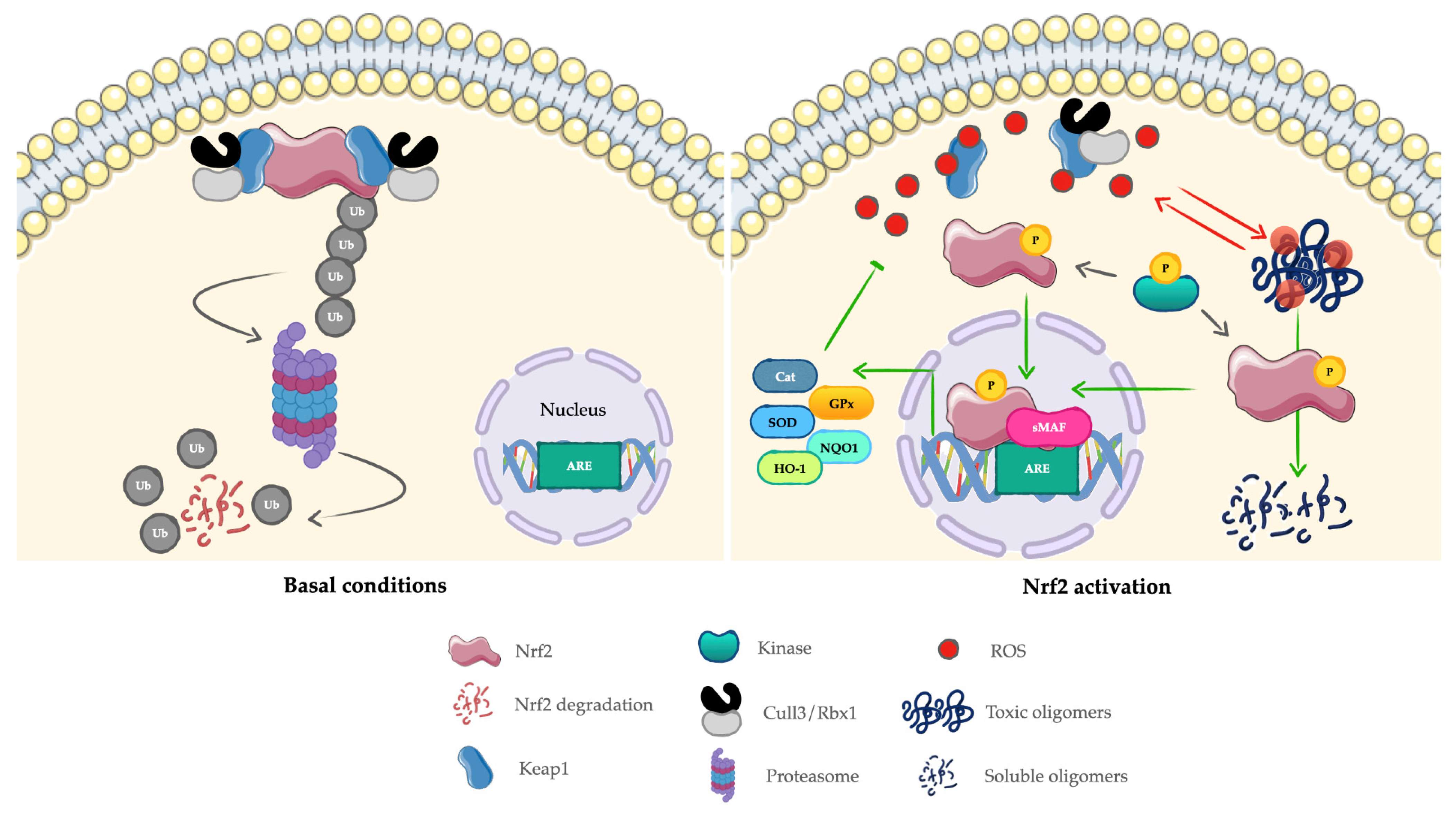
3. Nrf2 Pathway Activation: An Overview
3.1. Involvement of Nrf2 in NDs
3.1.1. Nrf2 in AD
3.1.2. Nrf2 in PD
3.1.3. Nrf2 in HD
3.1.4. Nrf2 in ALS
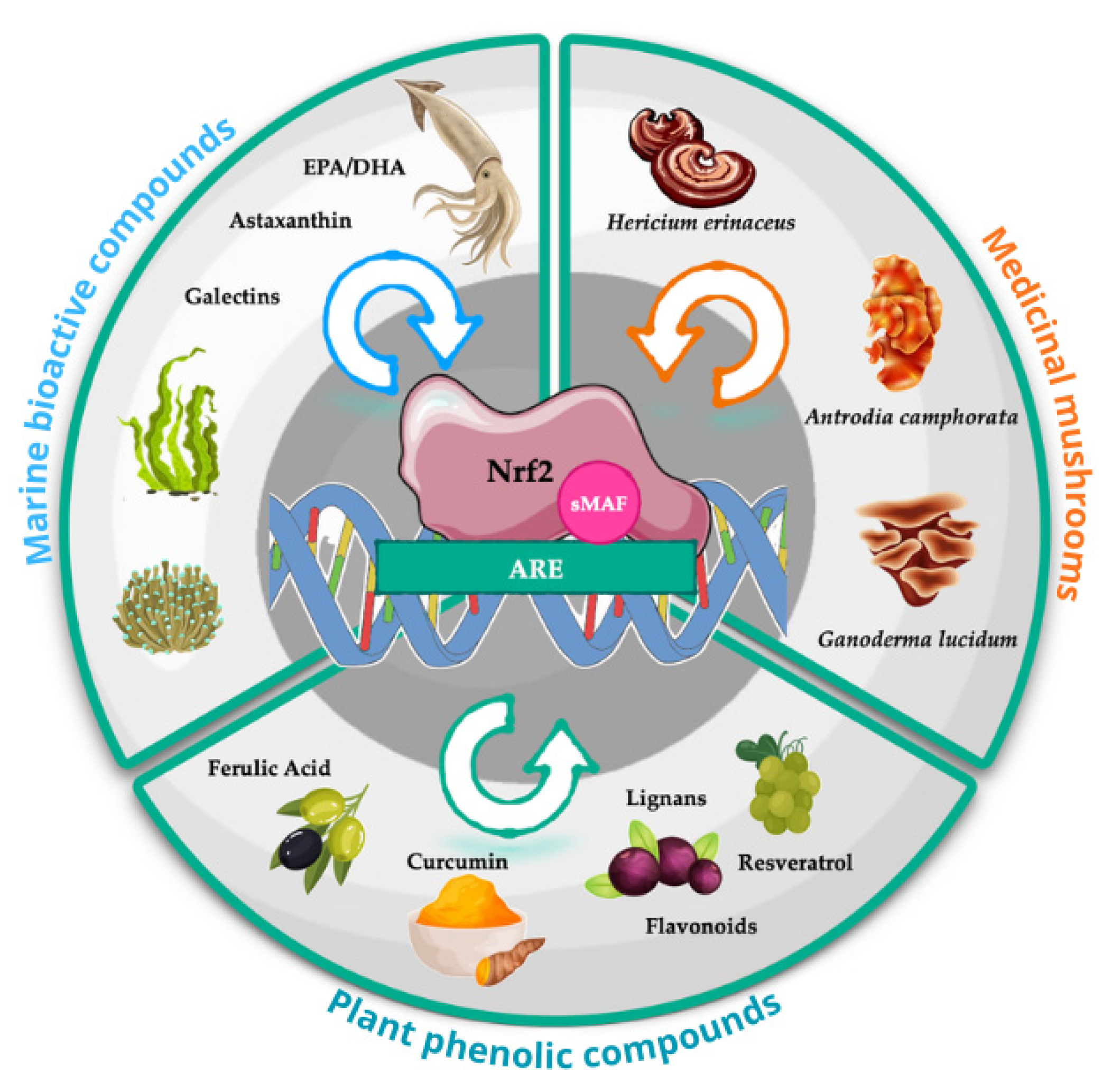
4. Plant-Derived Compounds
4.1. Quercetin
4.2. Baicalein and Baicalin
4.3. Isoflavones
4.4. Phenolic Acids
4.5. Resveratrol and Grape-Derived Polyphenols
4.6. Curcumin
Clinical Trials
4.7. Emerging Compounds Targeting Nrf2
5. Edible Fungi Able to Induce Nrf2
5.1. Antrodia camphorata
5.2. Ganoderma lucidum
5.3. Hericium erinaceus
6. Compounds of Marine Derivation
7. Strategies to Enhance Bioavailability and BBB Penetration of Natural Compounds
8. Conclusions
Author Contributions
Funding
Institutional Review Board Statement
Informed Consent Statement
Data Availability Statement
Conflicts of Interest
Abbreviations
| 3-NP | 3-Nitropropionic acid |
| 4-HNE | 4-hydroxynonenal |
| 8-oxodG | 8-oxo-7,8-diidro-2′-deossiguanosina |
| AD | Alzheimer diseases |
| ADAS | Alzheimer’s disease assessment scale |
| ALS | Amyotrophic lateral sclerosis |
| ALSFRS-R | ALS Functional Rating Scale-Revised |
| APP/PS | amyloid precursor protein/presenilin |
| AREs | antioxidant response elements |
| Aβ | Amyloid-β |
| BBB | Blood–brain barrier |
| BDNF | Brain-Derived Neurotrophic Facto |
| C9ORF72 | chromosome 9 open reading frame 72 |
| CAPE | Caffeic acid phenethyl ester |
| CDR | Component Resolved Diagnostics |
| CNS | Central nervous system |
| DHA | Docosahexaenoic acid |
| EPA | Eicosapentaenoic acid |
| ERK | Extracellular signal-regulated kinase |
| FA | Ferulic acid |
| FUS | fused in sarcoma |
| GA | gallic acid |
| GDNF | Glial Cell Line-Derived Neurotrophic Factor |
| GPx | glutathione peroxidase |
| GR | Glutathione reductase |
| GSH | reduced glutathione |
| GSK-3β | Glycogen synthase kinase 3 beta |
| GSPEs | Grape seed polyphenolic extracts |
| GST | Glutathione S transferase |
| HACE1 | HECT domain and ankyrin repeat-containing E3 ubiquitin protein ligase 1 |
| H2O2 | Hydrogen peroxide |
| HD | Huntington disease |
| HE-ETH | Ethanolic basidiocarp extracts |
| HO-1 | Heme-oxygenase 1 |
| HSF1 | Heat shock factor 1 |
| HSP | Heat shock protein |
| IADL | Instrumental activities of daily living |
| IL | Interleukin |
| Keap1 | Kelch-like ECH-associated protein 1 |
| LC3 | Microtubule-associated protein 1 light chain 3 |
| LPS | Lipopolysaccharide |
| MAPK | Mitogen-activated protein kinase |
| MCI | mild cognitive impairment |
| MDA | Malondialdehyde |
| mHTT | Mutated huntingtin |
| MMSE | Mini Mental State Examination |
| MPP+/MPTP | 1-methyl-4-phenylpyridinium/1-methyl-4-phenyl-1,2,3,6-tetrahydropyridine |
| NDP52 | Nuclear dot protein |
| NDs | Neurodegenerative diseases |
| NF-κB | nuclear factor-kappa B |
| NPI | Neuropsychiatric Inventory |
| NQO1 | NAD(P)H: quinone oxidoreductase 1 |
| Nrf2/Nfe2l2 | Nuclear factor erythroid 2–related factor 2 |
| PD | Parkinson disease |
| PI3K/Akt | Phosphatidylinositol 3-kinase/protein kinase B |
| PLGA | Poly (lactic-co-glycolic acid) |
| p-tau | Phosphorylated tau |
| ROS | Reactive oxygen species |
| Rbx1 | Ring-Box 1 |
| SLN | Solid lipid nanoparticles |
| SOD | Superoxide dismutase |
| SPs | Senile plaques |
| SQSTM1 | Sequestosome 1 |
| TAC | Total antioxidant capacity |
| TBAR | Thiobarbituric acid reactive substances |
| tBHQ | Tert-butylhydroquinone |
| TDP-43 | TAR DNA-binding protein 43 |
| TNF-α | Tumor necrosis factor-alpha |
| TREM2 | Triggering receptor expressed on myeloid cells 2 |
| UPS | Ubiquitin-proteasome system |
| α-syn | α-synuclein |
| β-secretase | BACE1 |
| ω-3 PUFAs | ω-3 polyunsaturated fatty acids |
References
- Dugger, B.N.; Dickson, D.W. Pathology of Neurodegenerative Diseases. Cold Spring Harb. Perspect. Biol. 2017, 9, a028035. [Google Scholar] [CrossRef]
- Armstrong, R. What Causes Neurodegenerative Disease? Folia Neuropathol. 2020, 58, 93–112. [Google Scholar] [CrossRef] [PubMed]
- Chi, H.; Chang, H.-Y.; Sang, T.-K. Neuronal Cell Death Mechanisms in Major Neurodegenerative Diseases. Int. J. Mol. Sci. 2018, 19, 3082. [Google Scholar] [CrossRef] [PubMed]
- Golpich, M.; Amini, E.; Mohamed, Z.; Azman Ali, R.; Mohamed Ibrahim, N.; Ahmadiani, A. Mitochondrial Dysfunction and Biogenesis in Neurodegenerative Diseases: Pathogenesis and Treatment. CNS Neurosci. Ther. 2017, 23, 5–22. [Google Scholar] [CrossRef] [PubMed]
- Soni, P.; Paswan, S.; Paul, B.D.; Thomas, B. Intersection of H2S and Nrf2 Signaling: Therapeutic Opportunities for Neurodegenerative Diseases. Neurotherapeutics 2025, 22, e00627. [Google Scholar] [CrossRef] [PubMed]
- Juan, C.A.; Pérez de la Lastra, J.M.; Plou, F.J.; Pérez-Lebeña, E. The Chemistry of Reactive Oxygen Species (ROS) Revisited: Outlining Their Role in Biological Macromolecules (DNA, Lipids and Proteins) and Induced Pathologies. Int. J. Mol. Sci. 2021, 22, 4642. [Google Scholar] [CrossRef] [PubMed]
- Singh, A.; Kukreti, R.; Saso, L.; Kukreti, S. Oxidative Stress: A Key Modulator in Neurodegenerative Diseases. Molecules 2019, 24, 1583. [Google Scholar] [CrossRef]
- Lévy, E.; El Banna, N.; Baïlle, D.; Heneman-Masurel, A.; Truchet, S.; Rezaei, H.; Huang, M.-E.; Béringue, V.; Martin, D.; Vernis, L. Causative Links between Protein Aggregation and Oxidative Stress: A Review. Int. J. Mol. Sci. 2019, 20, 3896. [Google Scholar] [CrossRef]
- Dhapola, R.; Beura, S.K.; Sharma, P.; Singh, S.K.; HariKrishnaReddy, D. Oxidative Stress in Alzheimer’s Disease: Current Knowledge of Signaling Pathways and Therapeutics. Mol. Biol. Rep. 2024, 51, 48. [Google Scholar] [CrossRef] [PubMed]
- Brian, J.; Tabner, B.S.P.; Stuart Turnbull, B.S.P.; Omar, M.A.; El-Agnaf, B.S.P.; David Allsop, B.S.P. Production of Reactive Oxygen Species from Aggregating Proteins Implicated in Alzheimers Disease, Parkinsons Disease and Other Neurodegenerative Diseases. Curr. Top. Med. Chem. 2001, 1, 507–517. [Google Scholar] [CrossRef]
- Chang, Y.-T.; Chang, W.-N.; Tsai, N.-W.; Huang, C.-C.; Kung, C.-T.; Su, Y.-J.; Lin, W.-C.; Cheng, B.-C.; Su, C.-M.; Chiang, Y.-F.; et al. The Roles of Biomarkers of Oxidative Stress and Antioxidant in Alzheimer’s Disease: A Systematic Review. BioMed Res. Int. 2014, 2014, 182303. [Google Scholar] [CrossRef]
- Niedzielska, E.; Smaga, I.; Gawlik, M.; Moniczewski, A.; Stankowicz, P.; Pera, J.; Filip, M. Oxidative Stress in Neurodegenerative Diseases. Mol. Neurobiol. 2016, 53, 4094–4125. [Google Scholar] [CrossRef]
- Vergallo, A.; Giampietri, L.; Baldacci, F.; Volpi, L.; Chico, L.; Pagni, C.; Giorgi, F.S.; Ceravolo, R.; Tognoni, G.; Siciliano, G.; et al. Oxidative Stress Assessment in Alzheimer’s Disease: A Clinic Setting Study. Am. J. Alzheimer’s Dis. Other Dement. 2018, 33, 35–41. [Google Scholar] [CrossRef]
- Dehay, B.; Bourdenx, M.; Gorry, P.; Przedborski, S.; Vila, M.; Hunot, S.; Singleton, A.; Olanow, C.W.; Merchant, K.M.; Bezard, E.; et al. Targeting α-Synuclein for Treatment of Parkinson’s Disease: Mechanistic and Therapeutic Considerations. Lancet Neurol. 2015, 14, 855–866. [Google Scholar] [CrossRef] [PubMed]
- Baillet, A.; Chanteperdrix, V.; Trocmé, C.; Casez, P.; Garrel, C.; Besson, G. The Role of Oxidative Stress in Amyotrophic Lateral Sclerosis and Parkinson’s Disease. Neurochem. Res. 2010, 35, 1530–1537. [Google Scholar] [CrossRef]
- Gahtani, R.M.; Shoaib, S.; Hani, U.; Jayachithra, R.; Alomary, M.N.; Chauhan, W.; Jahan, R.; Tufail, S.; Ansari, M.A. Combating Parkinson’s Disease with Plant-Derived Polyphenols: Targeting Oxidative Stress and Neuroinflammation. Neurochem. Int. 2024, 178, 105798. [Google Scholar] [CrossRef] [PubMed]
- Mahoney-Sánchez, L.; Bouchaoui, H.; Ayton, S.; Devos, D.; Duce, J.A.; Devedjian, J.-C. Ferroptosis and Its Potential Role in the Physiopathology of Parkinson’s Disease. Prog. Neurobiol. 2021, 196, 101890. [Google Scholar] [CrossRef]
- Zeevalk, G.D.; Bernard, L.P.; Song, C.; Gluck, M.; Ehrhart, J. Mitochondrial Inhibition and Oxidative Stress: Reciprocating Players in Neurodegeneration. Antioxid. Redox Signal. 2005, 7, 1117–1139. [Google Scholar] [CrossRef] [PubMed]
- Zhao, T.; Hong, Y.; Li, X.-J.; Li, S.-H. Subcellular Clearance and Accumulation of Huntington Disease Protein: A Mini-Review. Front. Mol. Neurosci. 2016, 9, 27. [Google Scholar] [CrossRef]
- Fox, J.H.; Connor, T.; Stiles, M.; Kama, J.; Lu, Z.; Dorsey, K.; Lieberman, G.; Sapp, E.; Cherny, R.A.; Banks, M.; et al. Cysteine Oxidation within N-Terminal Mutant Huntingtin Promotes Oligomerization and Delays Clearance of Soluble Protein. J. Biol. Chem. 2011, 286, 18320–18330. [Google Scholar] [CrossRef]
- Kumar, A.; Ratan, R.R. Oxidative Stress and Huntington’s Disease: The Good, The Bad, and The Ugly. J. Huntington’s Dis. 2016, 5, 217–237. [Google Scholar] [CrossRef]
- Prasad, K.N.; Bondy, S.C. Inhibition of Early Biochemical Defects in Prodromal Huntington’s Disease by Simultaneous Activation of Nrf2 and Elevation of Multiple Micronutrients. Curr. Aging Sci. 2016, 9, 61–70. [Google Scholar] [CrossRef]
- Tucci, P.; Lattanzi, R.; Severini, C.; Saso, L. Nrf2 Pathway in Huntington’s Disease (HD): What Is Its Role? Int. J. Mol. Sci. 2022, 23, 15272. [Google Scholar] [CrossRef] [PubMed]
- Jiménez-Jiménez, F.J.; Alonso-Navarro, H.; García-Martín, E.; Cárcamo-Fonfría, A.; Caballero-Muñoz, M.D.M.; Agúndez, J.A.G. Oxidative Stress in Huntington’s Disease. Biomolecules 2025, 15, 527. [Google Scholar] [CrossRef] [PubMed]
- Lin, M.T.; Beal, M.F. Mitochondrial Dysfunction and Oxidative Stress in Neurodegenerative Diseases. Nature 2006, 443, 787–795. [Google Scholar] [CrossRef] [PubMed]
- Feldman, E.L.; Goutman, S.A.; Petri, S.; Mazzini, L.; Savelieff, M.G.; Shaw, P.J.; Sobue, G. Amyotrophic Lateral Sclerosis. Lancet 2022, 400, 1363–1380. [Google Scholar] [CrossRef]
- Perni, M.; Mannini, B. Targeting Protein Aggregation in ALS. Biomolecules 2024, 14, 1324. [Google Scholar] [CrossRef]
- Brown, R.H.; Al-Chalabi, A. Amyotrophic Lateral Sclerosis. N. Engl. J. Med. 2017, 377, 162–172. [Google Scholar] [CrossRef]
- Hayes, L.R.; Kalab, P. Emerging Therapies and Novel Targets for TDP-43 Proteinopathy in ALS/FTD. Neurotherapeutics 2022, 19, 1061–1084. [Google Scholar] [CrossRef]
- Casiraghi, V.; Sorce, M.N.; Santangelo, S.; Invernizzi, S.; Bossolasco, P.; Lattuada, C.; Battaglia, C.; Venturin, M.; Silani, V.; Colombrita, C.; et al. Modeling of TDP-43 Proteinopathy by Chronic Oxidative Stress Identifies Rapamycin as Beneficial in ALS Patient-Derived 2D and 3D iPSC Models. Exp. Neurol. 2025, 383, 115057. [Google Scholar] [CrossRef]
- Mitsumoto, H.; Santella, R.M.; Liu, X.; Bogdanov, M.; Zipprich, J.; Wu, H.-C.; Mahata, J.; Kilty, M.; Bednarz, K.; Bell, D.; et al. Oxidative Stress Biomarkers in Sporadic ALS. Amyotroph. Lateral Scler. 2008, 9, 177–183. [Google Scholar] [CrossRef]
- Chico, L.; Ienco, E.C.; Bisordi, C.; Lo Gerfo, A.; Petrozzi, L.; Petrucci, A.; Mancuso, M.; Siciliano, G. Amyotrophic Lateral Sclerosis and Oxidative Stress: A Double-Blind Therapeutic Trial After Curcumin Supplementation. CNS Neurol. Disord.-Drug Targets-CNS Neurol. Disord. 2018, 17, 767–779. [Google Scholar] [CrossRef]
- Cohen, T.J.; Hwang, A.W.; Unger, T.; Trojanowski, J.Q.; Lee, V.M.Y. Redox Signalling Directly Regulates TDP-43 via Cysteine Oxidation and Disulphide Cross-Linking: Oxidative Stress Regulates TDP-43. EMBO J. 2012, 31, 1241–1252. [Google Scholar] [CrossRef] [PubMed]
- Zuo, X.; Zhou, J.; Li, Y.; Wu, K.; Chen, Z.; Luo, Z.; Zhang, X.; Liang, Y.; Esteban, M.A.; Zhou, Y.; et al. TDP-43 Aggregation Induced by Oxidative Stress Causes Global Mitochondrial Imbalance in ALS. Nat. Struct. Mol. Biol. 2021, 28, 132–142. [Google Scholar] [CrossRef]
- Ma, Q. Role of Nrf2 in Oxidative Stress and Toxicity. Annu. Rev. Pharmacol. Toxicol. 2013, 53, 401–426. [Google Scholar] [CrossRef] [PubMed]
- Buendia, I.; Michalska, P.; Navarro, E.; Gameiro, I.; Egea, J.; León, R. Nrf2–ARE Pathway: An Emerging Target against Oxidative Stress and Neuroinflammation in Neurodegenerative Diseases. Pharmacol. Ther. 2016, 157, 84–104. [Google Scholar] [CrossRef] [PubMed]
- Robledinos-Antón, N.; Fernández-Ginés, R.; Manda, G.; Cuadrado, A. Activators and Inhibitors of NRF2: A Review of Their Potential for Clinical Development. Oxid. Med. Cell. Longev. 2019, 2019, 9372182. [Google Scholar] [CrossRef]
- Sihvola, V.; Levonen, A.-L. Keap1 as the Redox Sensor of the Antioxidant Response. Arch. Biochem. Biophys. 2017, 617, 94–100. [Google Scholar] [CrossRef]
- Kaspar, J.W.; Jaiswal, A.K. An Autoregulatory Loop between Nrf2 and Cul3-Rbx1 Controls Their Cellular Abundance. J. Biol. Chem. 2010, 285, 21349–21358. [Google Scholar] [CrossRef]
- Pajares, M.; Cuadrado, A.; Rojo, A.I. Modulation of Proteostasis by Transcription Factor NRF2 and Impact in Neurodegenerative Diseases. Redox Biol. 2017, 11, 543–553. [Google Scholar] [CrossRef]
- Buttari, B.; Tramutola, A.; Rojo, A.I.; Chondrogianni, N.; Saha, S.; Berry, A.; Giona, L.; Miranda, J.P.; Profumo, E.; Davinelli, S.; et al. Proteostasis Decline and Redox Imbalance in Age-Related Diseases: The Therapeutic Potential of NRF2. Biomolecules 2025, 15, 113. [Google Scholar] [CrossRef]
- Turpaev, K.T. Keap1-Nrf2 Signaling Pathway: Mechanisms of Regulation and Role in Protection of Cells against Toxicity Caused by Xenobiotics and Electrophiles. Biochemistry 2013, 78, 111–126. [Google Scholar] [CrossRef] [PubMed]
- Ramsey, C.P.; Glass, C.A.; Montgomery, M.B.; Lindl, K.A.; Ritson, G.P.; Chia, L.A.; Hamilton, R.L.; Chu, C.T.; Jordan-Sciutto, K.L. Expression of Nrf2 in Neurodegenerative Diseases. J. Neuropathol. Exp. Neurol. 2007, 66, 75–85. [Google Scholar] [CrossRef]
- von Otter, M.; Landgren, S.; Nilsson, S.; Zetterberg, M.; Celojevic, D.; Bergström, P.; Minthon, L.; Bogdanovic, N.; Andreasen, N.; Gustafson, D.R.; et al. Nrf2-Encoding NFE2L2 Haplotypes Influence Disease Progression but Not Risk in Alzheimer’s Disease and Age-Related Cataract. Mech. Ageing Dev. 2010, 131, 105–110. [Google Scholar] [CrossRef]
- Osama, A.; Zhang, J.; Yao, J.; Yao, X.; Fang, J. Nrf2: A Dark Horse in Alzheimer’s Disease Treatment. Ageing Res. Rev. 2020, 64, 101206. [Google Scholar] [CrossRef]
- Bahn, G.; Park, J.-S.; Yun, U.J.; Lee, Y.J.; Choi, Y.; Park, J.S.; Baek, S.H.; Choi, B.Y.; Cho, Y.S.; Kim, H.K.; et al. NRF2/ARE Pathway Negatively Regulates BACE1 Expression and Ameliorates Cognitive Deficits in Mouse Alzheimer’s Models. Proc. Natl. Acad. Sci. USA 2019, 116, 12516–12523. [Google Scholar] [CrossRef]
- Jo, C.; Gundemir, S.; Pritchard, S.; Jin, Y.N.; Rahman, I.; Johnson, G.V.W. Nrf2 Reduces Levels of Phosphorylated Tau Protein by Inducing Autophagy Adaptor Protein NDP52. Nat. Commun. 2014, 5, 3496. [Google Scholar] [CrossRef]
- Liu, X.; Wang, Y.; Yu, X.; Li, D.; Li, G. Mitochondria-Mediated Damage to Dopaminergic Neurons in Parkinson’s Disease (Review). Int. J. Mol. Med. 2017, 41, 615–623. [Google Scholar] [CrossRef] [PubMed]
- Villavicencio Tejo, F.; Quintanilla, R.A. Contribution of the Nrf2 Pathway on Oxidative Damage and Mitochondrial Failure in Parkinson and Alzheimer’s Disease. Antioxidants 2021, 10, 1069. [Google Scholar] [CrossRef] [PubMed]
- Murata, H.; Takamatsu, H.; Liu, S.; Kataoka, K.; Huh, N.; Sakaguchi, M. NRF2 Regulates PINK1 Expression under Oxidative Stress Conditions. PLoS ONE 2015, 10, e0142438. [Google Scholar] [CrossRef]
- Kaur, T.; Sidana, P.; Kaur, N.; Choubey, V.; Kaasik, A. Unraveling Neuroprotection in Parkinson’s Disease: Nrf2-Keap1 Pathway’s Vital Role amidst Pathogenic Pathways. Inflammopharmacology 2024, 32, 2801–2820. [Google Scholar] [CrossRef]
- Baxter, P.S.; Márkus, N.M.; Dando, O.; He, X.; Al-Mubarak, B.R.; Qiu, J.; Hardingham, G.E. Targeted De-Repression of Neuronal Nrf2 Inhibits α-Synuclein Accumulation. Cell Death Dis. 2021, 12, 218. [Google Scholar] [CrossRef] [PubMed]
- von Otter, M.; Landgren, S.; Nilsson, S.; Celojevic, D.; Bergström, P.; Håkansson, A.; Nissbrandt, H.; Drozdzik, M.; Bialecka, M.; Kurzawski, M.; et al. Association of Nrf2-Encoding NFE2L2 Haplotypes with Parkinson’s Disease. BMC Med. Genet. 2010, 11, 36. [Google Scholar] [CrossRef] [PubMed]
- Brandes, M.S.; Gray, N.E. NRF2 as a Therapeutic Target in Neurodegenerative Diseases. ASN Neuro 2020, 12, 1759091419899782. [Google Scholar] [CrossRef] [PubMed]
- van Roon-Mom, W.M.C.; Pepers, B.A.; ’t Hoen, P.A.C.; Verwijmeren, C.A.C.M.; den Dunnen, J.T.; Dorsman, J.C.; van Ommen, G.B. Mutant Huntingtin Activates Nrf2-Responsive Genes and Impairs Dopamine Synthesis in a PC12 Model of Huntington’s Disease. BMC Mol. Biol. 2008, 9, 84. [Google Scholar] [CrossRef]
- Lim, J.L.; Wilhelmus, M.M.M.; De Vries, H.E.; Drukarch, B.; Hoozemans, J.J.M.; Van Horssen, J. Antioxidative Defense Mechanisms Controlled by Nrf2: State-of-the-Art and Clinical Perspectives in Neurodegenerative Diseases. Arch. Toxicol. 2014, 88, 1773–1786. [Google Scholar] [CrossRef]
- Calkins, M.J.; Jakel, R.J.; Johnson, D.A.; Chan, K.; Kan, Y.W.; Johnson, J.A. Protection from Mitochondrial Complex II Inhibition In Vitro and In Vivo by Nrf2-Mediated Transcription. Proc. Natl. Acad. Sci. USA 2005, 102, 244–249. [Google Scholar] [CrossRef]
- Rotblat, B.; Southwell, A.L.; Ehrnhoefer, D.E.; Skotte, N.H.; Metzler, M.; Franciosi, S.; Leprivier, G.; Somasekharan, S.P.; Barokas, A.; Deng, Y.; et al. HACE1 Reduces Oxidative Stress and Mutant Huntingtin Toxicity by Promoting the NRF2 Response. Proc. Natl. Acad. Sci. USA 2014, 111, 3032–3037. [Google Scholar] [CrossRef]
- Bergström, P.; von Otter, M.; Nilsson, S.; Nilsson, A.-C.; Nilsson, M.; Andersen, P.M.; Hammarsten, O.; Zetterberg, H. Association of NFE2L2 and KEAP1 Haplotypes with Amyotrophic Lateral Sclerosis. Amyotroph. Lateral Scler. Front. Degener. 2014, 15, 130–137. [Google Scholar] [CrossRef]
- Fecto, F. SQSTM1 Mutations in Familial and Sporadic Amyotrophic Lateral Sclerosis. Arch. Neurol. 2011, 68, 1440. [Google Scholar] [CrossRef]
- Jiménez-Villegas, J.; Ferraiuolo, L.; Mead, R.J.; Shaw, P.J.; Cuadrado, A.; Rojo, A.I. NRF2 as a Therapeutic Opportunity to Impact in the Molecular Roadmap of ALS. Free Radic. Biol. Med. 2021, 173, 125–141. [Google Scholar] [CrossRef]
- Lastres-Becker, I.; de Lago, E.; Martínez, A.; Fernández-Ruiz, J. New Statement about NRF2 in Amyotrophic Lateral Sclerosis and Frontotemporal Dementia. Biomolecules 2022, 12, 1200. [Google Scholar] [CrossRef]
- Sharbafshaaer, M.; Pepe, R.; Notariale, R.; Canale, F.; Tedeschi, G.; Tessitore, A.; Bergamo, P.; Trojsi, F. Beyond Antioxidants: The Emerging Role of Nrf2 Activation in Amyotrophic Lateral Sclerosis (ALS). Int. J. Mol. Sci. 2025, 26, 9872. [Google Scholar] [CrossRef]
- Acevedo-Fani, A.; Dave, A.; Singh, H. Nature-Assembled Structures for Delivery of Bioactive Compounds and Their Potential in Functional Foods. Front. Chem. 2020, 8, 564021. [Google Scholar] [CrossRef]
- Jazvinšćak Jembrek, M.; Vuković, L.; Puhović, J.; Erhardt, J.; Oršolić, N. Neuroprotective Effect of Quercetin Against Hydrogen Peroxide-Induced Oxidative Injury in P19 Neurons. J. Mol. Neurosci. 2012, 47, 286–299. [Google Scholar] [CrossRef]
- Ji, L.-L.; Sheng, Y.-C.; Zheng, Z.-Y.; Shi, L.; Wang, Z.-T. The Involvement of P62–Keap1–Nrf2 Antioxidative Signaling Pathway and JNK in the Protection of Natural Flavonoid Quercetin against Hepatotoxicity. Free Radic. Biol. Med. 2015, 85, 12–23. [Google Scholar] [CrossRef]
- Suganthy, N.; Devi, K.P.; Nabavi, S.F.; Braidy, N.; Nabavi, S.M. Bioactive Effects of Quercetin in the Central Nervous System: Focusing on the Mechanisms of Actions. Biomed. Pharmacother. 2016, 84, 892–908. [Google Scholar] [CrossRef] [PubMed]
- Lin, Z.-H.; Liu, Y.; Xue, N.-J.; Zheng, R.; Yan, Y.-Q.; Wang, Z.-X.; Li, Y.-L.; Ying, C.-Z.; Song, Z.; Tian, J.; et al. Quercetin Protects against MPP+/MPTP-Induced Dopaminergic Neuron Death in Parkinson’s Disease by Inhibiting Ferroptosis. Oxid. Med. Cell. Longev. 2022, 2022, 7769355. [Google Scholar] [CrossRef] [PubMed]
- Henríquez, G.; Gomez, A.; Guerrero, E.; Narayan, M. Potential Role of Natural Polyphenols against Protein Aggregation Toxicity: In Vitro, In Vivo, and Clinical Studies. ACS Chem. Neurosci. 2020, 11, 2915–2934. [Google Scholar] [CrossRef]
- Yu, X.; Li, Y.; Mu, X. Effect of Quercetin on PC12 Alzheimer’s Disease Cell Model Induced by Aβ25–35 and Its Mechanism Based on Sirtuin1/Nrf2/HO-1 Pathway. BioMed Res. Int. 2020, 2020, 8210578. [Google Scholar] [CrossRef] [PubMed]
- Bayazid, A.B.; Lim, B.O. Quercetin Is An Active Agent in Berries against Neurodegenerative Diseases Progression through Modulation of Nrf2/HO1. Nutrients 2022, 14, 5132. [Google Scholar] [CrossRef]
- Chiang, N.-N.; Lin, T.-H.; Teng, Y.-S.; Sun, Y.-C.; Chang, K.-H.; Lin, C.-Y.; Hsieh-Li, H.M.; Su, M.-T.; Chen, C.-M.; Lee-Chen, G.-J. Flavones 7,8-DHF, Quercetin, and Apigenin Against Tau Toxicity via Activation of TRKB Signaling in ΔK280 TauRD-DsRed SH-SY5Y Cells. Front. Aging Neurosci. 2021, 13, 758895. [Google Scholar] [CrossRef]
- Nishihira, J.; Nishimura, M.; Kurimoto, M.; Kagami-Katsuyama, H.; Hattori, H.; Nakagawa, T.; Muro, T.; Kobori, M. The Effect of 24-Week Continuous Intake of Quercetin-Rich Onion on Age-Related Cognitive Decline in Healthy Elderly People: A Randomized, Double-Blind, Placebo-Controlled, Parallel-Group Comparative Clinical Trial. J. Clin. Biochem. Nutr. 2021, 69, 203–215. [Google Scholar] [CrossRef] [PubMed]
- Nakamura, Y.; Watanabe, H.; Tanaka, A.; Nishihira, J.; Murayama, N. Effect of Quercetin Glycosides on Cognitive Functions and Cerebral Blood Flow: A Randomized, Double-Blind, and Placebo-Controlled Study. Eur. Rev. Med. Pharmacol. Sci. 2022, 26, 8700–8712. [Google Scholar] [CrossRef]
- Sharma, S.; Tomar, V.R.; Deep, S. Mechanism of the Interaction of Toxic SOD1 Fibrils with Two Potent Polyphenols: Curcumin and Quercetin. Phys. Chem. Chem. Phys. 2023, 25, 23081–23091. [Google Scholar] [CrossRef] [PubMed]
- Bhatia, N.K.; Modi, P.; Sharma, S.; Deep, S. Quercetin and Baicalein Act as Potent Antiamyloidogenic and Fibril Destabilizing Agents for SOD1 Fibrils. ACS Chem. Neurosci. 2020, 11, 1129–1138. [Google Scholar] [CrossRef]
- Chakraborty, J.; Singh, R.; Dutta, D.; Naskar, A.; Rajamma, U.; Mohanakumar, K.P. Quercetin Improves Behavioral Deficiencies, Restores Astrocytes and Microglia, and Reduces Serotonin Metabolism in 3-Nitropropionic Acid-Induced Rat Model of Huntington’s Disease. CNS Neurosci. Ther. 2013, 20, 10–19. [Google Scholar] [CrossRef]
- Kuwar, O.K.; Kalia, N. Anti-Inflammatory and Antioxidant Effects of Baicalein: Targeting Nrf2, and NFĸB in Neurodegenerative Disease. Inflammopharmacology 2025, 33, 1303–1310. [Google Scholar] [CrossRef]
- Song, J.-X.; Choi, M.Y.-M.; Wong, K.C.-K.; Chung, W.W.-Y.; Sze, S.C.-W.; Ng, T.-B.; Zhang, K.Y.-B. Baicalein Antagonizes Rotenone-Induced Apoptosis in Dopaminergic SH-SY5Y Cells Related to Parkinsonism. Chin. Med. 2012, 7, 1. [Google Scholar] [CrossRef] [PubMed]
- Zhu, M.; Rajamani, S.; Kaylor, J.; Han, S.; Zhou, F.; Fink, A.L. The Flavonoid Baicalein Inhibits Fibrillation of α-Synuclein and Disaggregates Existing Fibrils. J. Biol. Chem. 2004, 279, 26846–26857. [Google Scholar] [CrossRef]
- Yu, L.; Wu, A.-G.; Wong, V.K.-W.; Qu, L.-Q.; Zhang, N.; Qin, D.-L.; Zeng, W.; Tang, B.; Wang, H.-M.; Wang, Q.; et al. The New Application of UHPLC-DAD-TOF/MS in Identification of Inhibitors on β-Amyloid Fibrillation from Scutellaria baicalensis. Front. Pharmacol. 2019, 10, 194. [Google Scholar] [CrossRef]
- Yin, F.; Liu, J.; Ji, X.; Wang, Y.; Zidichouski, J.; Zhang, J. Baicalin Prevents the Production of Hydrogen Peroxide and Oxidative Stress Induced by Aβ Aggregation in SH-SY5Y Cells. Neurosci. Lett. 2011, 492, 76–79. [Google Scholar] [CrossRef]
- Heo, H.J.; Kim, D.-O.; Choi, S.J.; Shin, D.H.; Lee, C.Y. Potent Inhibitory Effect of Flavonoids in Scutellaria Baicalensis on Amyloid β Protein-Induced Neurotoxicity. J. Agric. Food Chem. 2004, 52, 4128–4132. [Google Scholar] [CrossRef]
- Ding, H.; Wang, H.; Zhao, Y.; Sun, D.; Zhai, X. Protective Effects of Baicalin on Aβ1–42-Induced Learning and Memory Deficit, Oxidative Stress, and Apoptosis in Rat. Cell Mol. Neurobiol. 2015, 35, 623–632. [Google Scholar] [CrossRef]
- Wang, X.; Yu, J.-Y.; Sun, Y.; Wang, H.; Shan, H.; Wang, S. Baicalin Protects LPS-Induced Blood-Brain Barrier Damage and Activates Nrf2-Mediated Antioxidant Stress Pathway. Int. Immunopharmacol. 2021, 96, 107725. [Google Scholar] [CrossRef] [PubMed]
- Purushothaman, B.; Sumathi, T. 5,6,7 Trihydroxy Flavone Armoured Neurodegeneration Caused by Quinolinic Acid Induced Huntington’s like Disease in Rat Striatum—Reinstating the Level of Brain Neurotrophins with Special Reference to Cognitive-Socio Behaviour, Biochemical and Histopathological Aspects. Neurosci. Res. 2022, 174, 25–35. [Google Scholar] [CrossRef]
- Lu, Y.; An, Y.; Lv, C.; Ma, W.; Xi, Y.; Xiao, R. Dietary Soybean Isoflavones in Alzheimer’s Disease Prevention. Asia Pac. J. Clin. Nutr. 2018, 27, 946–954. [Google Scholar] [CrossRef]
- Uddin, M.S.; Kabir, M.T. Emerging Signal Regulating Potential of Genistein Against Alzheimer’s Disease: A Promising Molecule of Interest. Front. Cell Dev. Biol. 2019, 7, 197. [Google Scholar] [CrossRef]
- Hirohata, M.; Ono, K.; Takasaki, J.; Takahashi, R.; Ikeda, T.; Morinaga, A.; Yamada, M. Anti-Amyloidogenic Effects of Soybean Isoflavones in Vitro: Fluorescence Spectroscopy Demonstrating Direct Binding to Aβ Monomers, Oligomers and Fibrils. Biochim. Biophys. Acta (BBA)-Mol. Basis Dis. 2012, 1822, 1316–1324. [Google Scholar] [CrossRef] [PubMed]
- Sarkaki, A.; Amani, R.; Badavi, M.; Moghaddam, A.Z.; Aligholi, H.; Safahani, M.; Haghighizadeh, M.H. Pre-Treatment Effect of Different Doses of Soy Isoflavones on Spatial Learning and Memory in an Ovariectomized Animal Model of Alzheimer’s Disease. Pak. J. Biol. Sci. 2008, 11, 1114–1119. [Google Scholar] [CrossRef] [PubMed]
- Dong, N.; Yang, Z. Glycitein Exerts Neuroprotective Effects in Rotenone-Triggered Oxidative Stress and Apoptotic Cell Death in the Cellular Model of Parkinson’s Disease. Acta Biochim. Pol. 2022, 69, 447–452. [Google Scholar] [CrossRef] [PubMed]
- de Rus Jacquet, A.; Ambaw, A.; Tambe, M.A.; Ma, S.Y.; Timmers, M.; Grace, M.H.; Wu, Q.L.; Simon, J.E.; McCabe, G.P.; Lila, M.A.; et al. Neuroprotective Mechanisms of Red Clover and Soy Isoflavones in Parkinson’s Disease Models. Food Funct. 2021, 12, 11987–12007. [Google Scholar] [CrossRef] [PubMed]
- Zhao, Z.; Fu, J.; Li, S.; Li, Z. Neuroprotective Effects of Genistein in a SOD1-G93A Transgenic Mouse Model of Amyotrophic Lateral Sclerosis. J. Neuroimmune Pharmacol. 2019, 14, 688–696. [Google Scholar] [CrossRef] [PubMed]
- Gleason, C.E.; Fischer, B.L.; Dowling, N.M.; Setchell, K.D.R.; Atwood, C.S.; Carlsson, C.M.; Asthana, S. Cognitive Effects of Soy Isoflavones in Patients with Alzheimer’s Disease. J. Alzheimer’s Dis. 2015, 47, 1009–1019. [Google Scholar] [CrossRef]
- Jomova, K.; Alomar, S.Y.; Valko, R.; Liska, J.; Nepovimova, E.; Kuca, K.; Valko, M. Flavonoids and Their Role in Oxidative Stress, Inflammation, and Human Diseases. Chem. Biol. Interact. 2025, 413, 111489. [Google Scholar] [CrossRef]
- Thapliyal, S.; Singh, T.; Handu, S.; Bisht, M.; Kumari, P.; Arya, P.; Srivastava, P.; Gandham, R. A Review on Potential Footprints of Ferulic Acid for Treatment of Neurological Disorders. Neurochem. Res. 2021, 46, 1043–1057. [Google Scholar] [CrossRef]
- Sgarbossa, A.; Giacomazza, D.; di Carlo, M. Ferulic Acid: A Hope for Alzheimer’s Disease Therapy from Plants. Nutrients 2015, 7, 5764–5782. [Google Scholar] [CrossRef]
- Singh, Y.P.; Rai, H.; Singh, G.; Singh, G.K.; Mishra, S.; Kumar, S.; Srikrishna, S.; Modi, G. A Review on Ferulic Acid and Analogs Based Scaffolds for the Management of Alzheimer’s Disease. Eur. J. Med. Chem. 2021, 215, 113278. [Google Scholar] [CrossRef]
- Li, X.; Zhang, J.; Rong, H.; Zhang, X.; Dong, M. Ferulic Acid Ameliorates MPP+/MPTP-Induced Oxidative Stress via ERK1/2-Dependent Nrf2 Activation: Translational Implications for Parkinson Disease Treatment. Mol. Neurobiol. 2020, 57, 2981–2995. [Google Scholar] [CrossRef]
- Long, T.; Wu, Q.; Wei, J.; Tang, Y.; He, Y.-N.; He, C.-L.; Chen, X.; Yu, L.; Yu, C.-L.; Law, B.Y.-K.; et al. Ferulic Acid Exerts Neuroprotective Effects via Autophagy Induction in C. Elegans and Cellular Models of Parkinson’s Disease. Oxid. Med. Cell Longev. 2022, 2022, 3723567. [Google Scholar] [CrossRef]
- Taram, F.; Winter, A.N.; Linseman, D.A. Neuroprotection Comparison of Chlorogenic Acid and Its Metabolites against Mechanistically Distinct Cell Death-Inducing Agents in Cultured Cerebellar Granule Neurons. Brain Res. 2016, 1648, 69–80. [Google Scholar] [CrossRef]
- Fontanilla, C.V.; Wei, X.; Zhao, L.; Johnstone, B.; Pascuzzi, R.M.; Farlow, M.R.; Du, Y. Caffeic Acid Phenethyl Ester Extends Survival of a Mouse Model of Amyotrophic Lateral Sclerosis. Neuroscience 2012, 205, 185–193. [Google Scholar] [CrossRef]
- Bak, J.; Kim, H.J.; Kim, S.Y.; Choi, Y.-S. Neuroprotective Effect of Caffeic Acid Phenethyl Ester in 3-Nitropropionic Acid-Induced Striatal Neurotoxicity. Korean J. Physiol. Pharmacol. 2016, 20, 279–286. [Google Scholar] [CrossRef]
- Kim, H.; Kim, W.; Yum, S.; Hong, S.; Oh, J.-E.; Lee, J.-W.; Kwak, M.-K.; Park, E.J.; Na, D.H.; Jung, Y. Caffeic Acid Phenethyl Ester Activation of Nrf2 Pathway Is Enhanced under Oxidative State: Structural Analysis and Potential as a Pathologically Targeted Therapeutic Agent in Treatment of Colonic Inflammation. Free Radic. Biol. Med. 2013, 65, 552–562. [Google Scholar] [CrossRef]
- Rasheed, M.S.U.; Tripathi, M.K.; Patel, D.K.; Singh, M.P. Resveratrol Regulates Nrf2-Mediated Expression of Antioxidant and Xenobiotic Metabolizing Enzymes in Pesticides-Induced Parkinsonism. Protein Pept. Lett. 2020, 27, 1038–1045. [Google Scholar] [CrossRef]
- Li, H.; Shen, Y.; Xiao, H.; Sun, W. Resveratrol Attenuates Rotenone-Induced Inflammation and Oxidative Stress via STAT1 and Nrf2/Keap1/SLC7A11 Pathway in a Microglia Cell Line. Pathol. Res. Pract. 2021, 225, 153576. [Google Scholar] [CrossRef] [PubMed]
- Liu, Q.; Zhu, D.; Jiang, P.; Tang, X.; Lang, Q.; Yu, Q.; Zhang, S.; Che, Y.; Feng, X. Resveratrol Synergizes with Low Doses of L-DOPA to Improve MPTP-Induced Parkinson Disease in Mice. Behav. Brain Res. 2019, 367, 10–18. [Google Scholar] [CrossRef] [PubMed]
- Zheng, C.-Q.; Fan, H.-X.; Li, X.-X.; Li, J.-J.; Sheng, S.; Zhang, F. Resveratrol Alleviates Levodopa-Induced Dyskinesia in Rats. Front. Immunol. 2021, 12, 683577. [Google Scholar] [CrossRef] [PubMed]
- Feng, Y.; Wang, X.; Yang, S.; Wang, Y.; Zhang, X.; Du, X.; Sun, X.; Zhao, M.; Huang, L.; Liu, R. Resveratrol Inhibits Beta-Amyloid Oligomeric Cytotoxicity but Does Not Prevent Oligomer Formation. Neurotoxicology 2009, 30, 986–995. [Google Scholar] [CrossRef]
- Wang, J.; Ho, L.; Zhao, W.; Ono, K.; Rosensweig, C.; Chen, L.; Humala, N.; Teplow, D.B.; Pasinetti, G.M. Grape-Derived Polyphenolics Prevent Aβ Oligomerization and Attenuate Cognitive Deterioration in a Mouse Model of Alzheimer’s Disease. J. Neurosci. 2008, 28, 6388–6392. [Google Scholar] [CrossRef]
- Huang, T.-C.; Lu, K.-T.; Wo, Y.-Y.P.; Wu, Y.-J.; Yang, Y.-L. Resveratrol Protects Rats from Aβ-Induced Neurotoxicity by the Reduction of iNOS Expression and Lipid Peroxidation. PLoS ONE 2011, 6, e29102. [Google Scholar] [CrossRef] [PubMed]
- Turner, R.S.; Thomas, R.G.; Craft, S.; van Dyck, C.H.; Mintzer, J.; Reynolds, B.A.; Brewer, J.B.; Rissman, R.A.; Raman, R.; Aisen, P.S.; et al. A Randomized, Double-Blind, Placebo-Controlled Trial of Resveratrol for Alzheimer Disease. Neurology 2015, 85, 1383–1391. [Google Scholar] [CrossRef]
- Liu, X.; Baxley, S.; Hebron, M.; Turner, R.S.; Moussa, C. Resveratrol Attenuates CSF Markers of Neurodegeneration and Neuroinflammation in Individuals with Alzheimer’s Disease. Int. J. Mol. Sci. 2025, 26, 5044. [Google Scholar] [CrossRef]
- Lee, J.; Torosyan, N.; Silverman, D.H. Examining the Impact of Grape Consumption on Brain Metabolism and Cognitive Function in Patients with Mild Decline in Cognition: A Double-Blinded Placebo Controlled Pilot Study. Exp. Gerontol. 2017, 87, 121–128. [Google Scholar] [CrossRef]
- Naia, L.; Rosenstock, T.R.; Oliveira, A.M.; Oliveira-Sousa, S.I.; Caldeira, G.L.; Carmo, C.; Laço, M.N.; Hayden, M.R.; Oliveira, C.R.; Rego, A.C. Comparative Mitochondrial-Based Protective Effects of Resveratrol and Nicotinamide in Huntington’s Disease Models. Mol. Neurobiol. 2017, 54, 5385–5399. [Google Scholar] [CrossRef]
- Ho, D.J.; Calingasan, N.Y.; Wille, E.; Dumont, M.; Beal, M.F. Resveratrol Protects against Peripheral Deficits in a Mouse Model of Huntington’s Disease. Exp. Neurol. 2010, 225, 74–84. [Google Scholar] [CrossRef] [PubMed]
- Mancuso, R.; del Valle, J.; Modol, L.; Martinez, A.; Granado-Serrano, A.B.; Ramirez-Núñez, O.; Pallás, M.; Portero-Otin, M.; Osta, R.; Navarro, X. Resveratrol Improves Motoneuron Function and Extends Survival in SOD1(G93A) ALS Mice. Neurotherapeutics 2014, 11, 419–432. [Google Scholar] [CrossRef]
- Markert, C.D.; Kim, E.; Gifondorwa, D.J.; Childers, M.K.; Milligan, C.E. A Single-Dose Resveratrol Treatment in a Mouse Model of Amyotrophic Lateral Sclerosis. J. Med. Food 2010, 13, 1081–1085. [Google Scholar] [CrossRef]
- Nagy, J.A.; Semple, C.; Lo, P.; Rutkove, S.B. Assessing the Therapeutic Impact of Resveratrol in ALS SOD1-G93A Mice with Electrical Impedance Myography. Front. Neurol. 2022, 13, 1059743. [Google Scholar] [CrossRef] [PubMed]
- Yáñez, M.; Galán, L.; Matías-Guiu, J.; Vela, A.; Guerrero, A.; García, A.G. CSF from Amyotrophic Lateral Sclerosis Patients Produces Glutamate Independent Death of Rat Motor Brain Cortical Neurons: Protection by Resveratrol but Not Riluzole. Brain Res. 2011, 1423, 77–86. [Google Scholar] [CrossRef]
- Limanaqi, F.; Biagioni, F.; Mastroiacovo, F.; Polzella, M.; Lazzeri, G.; Fornai, F. Merging the Multi-Target Effects of Phytochemicals in Neurodegeneration: From Oxidative Stress to Protein Aggregation and Inflammation. Antioxidants 2020, 9, 1022. [Google Scholar] [CrossRef]
- Shin, J.W.; Chun, K.-S.; Kim, D.-H.; Kim, S.-J.; Kim, S.H.; Cho, N.-C.; Na, H.-K.; Surh, Y.-J. Curcumin Induces Stabilization of Nrf2 Protein through Keap1 Cysteine Modification. Biochem. Pharmacol. 2020, 173, 113820. [Google Scholar] [CrossRef]
- Lin, X.; Bai, D.; Wei, Z.; Zhang, Y.; Huang, Y.; Deng, H.; Huang, X. Curcumin Attenuates Oxidative Stress in RAW264.7 Cells by Increasing the Activity of Antioxidant Enzymes and Activating the Nrf2-Keap1 Pathway. PLoS ONE 2019, 14, e0216711. [Google Scholar] [CrossRef] [PubMed]
- Scapagnini, G.; Colombrita, C.; Amadio, M.; D’Agata, V.; Arcelli, E.; Sapienza, M.; Quattrone, A.; Calabrese, V. Curcumin Activates Defensive Genes and Protects Neurons Against Oxidative Stress. Antioxid. Redox Signal. 2006, 8, 395–403. [Google Scholar] [CrossRef] [PubMed]
- Sun, Z.-Z.; Li, X.-Y.; Wang, S.; Shen, L.; Ji, H.-F. Bidirectional Interactions between Curcumin and Gut Microbiota in Transgenic Mice with Alzheimer’s Disease. Appl. Microbiol. Biotechnol. 2020, 104, 3507–3515. [Google Scholar] [CrossRef]
- Pluta, R.; Furmaga-Jabłońska, W.; Januszewski, S.; Czuczwar, S.J. Post-Ischemic Brain Neurodegeneration in the Form of Alzheimer’s Disease Proteinopathy: Possible Therapeutic Role of Curcumin. Nutrients 2022, 14, 248. [Google Scholar] [CrossRef]
- Khatri, D.K.; Juvekar, A.R. Neuroprotective Effect of Curcumin as Evinced by Abrogation of Rotenone-Induced Motor Deficits, Oxidative and Mitochondrial Dysfunctions in Mouse Model of Parkinson’s Disease. Pharmacol. Biochem. Behav. 2016, 150–151, 39–47. [Google Scholar] [CrossRef]
- Cui, Q.; Li, X.; Zhu, H. Curcumin Ameliorates Dopaminergic Neuronal Oxidative Damage via Activation of the Akt/Nrf2 Pathway. Mol. Med. Rep. 2016, 13, 1381–1388. [Google Scholar] [CrossRef] [PubMed]
- Abrahams, S.; Miller, H.C.; Lombard, C.; van der Westhuizen, F.H.; Bardien, S. Curcumin Pre-Treatment May Protect against Mitochondrial Damage in LRRK2-Mutant Parkinson’s Disease and Healthy Control Fibroblasts. Biochem. Biophys. Rep. 2021, 27, 101035. [Google Scholar] [CrossRef]
- Guo, X.; Qiao, X.; Li, X.; Zhou, W.; Liu, C.; Yu, F.; Chen, Q.; Pan, M.; Niu, X.; Wang, X.; et al. Lactoferrin-Modified Organic-Inorganic Hybrid Mesoporous Silica for Co-Delivery of Levodopa and Curcumin in the Synergistic Treatment of Parkinson’s Disease. Phytomedicine 2025, 140, 156547. [Google Scholar] [CrossRef]
- Rathore, A.S.; Singh, S.S.; Birla, H.; Zahra, W.; Keshri, P.K.; Dilnashin, H.; Singh, R.; Singh, S.; Singh, S.P. Curcumin Modulates P62-Keap1-Nrf2-Mediated Autophagy in Rotenone-Induced Parkinson’s Disease Mouse Models. ACS Chem. Neurosci. 2023, 14, 1412–1423. [Google Scholar] [CrossRef]
- Hickey, M.A.; Zhu, C.; Medvedeva, V.; Lerner, R.P.; Patassini, S.; Franich, N.R.; Maiti, P.; Frautschy, S.A.; Zeitlin, S.; Levine, M.S.; et al. Improvement of Neuropathology and Transcriptional Deficits in CAG 140 Knock-in Mice Supports a Beneficial Effect of Dietary Curcumin in Huntington’s Disease. Mol. Neurodegener. 2012, 7, 12. [Google Scholar] [CrossRef] [PubMed]
- Jain, G.; Trombetta-Lima, M.; Matlahov, I.; Ribas, H.T.; Chen, T.; Parlato, R.; Portale, G.; Dolga, A.M.; van der Wel, P.C.A. Inhibitor-Based Modulation of Huntingtin Aggregation Mechanisms Mitigates Fibril-Induced Cellular Stress. Nat. Commun. 2025, 16, 3588. [Google Scholar] [CrossRef] [PubMed]
- Duan, W.; Guo, Y.; Xiao, J.; Chen, X.; Li, Z.; Han, H.; Li, C. Neuroprotection by Monocarbonyl Dimethoxycurcumin C: Ameliorating the Toxicity of Mutant TDP-43 via HO-1. Mol. Neurobiol. 2014, 49, 368–379. [Google Scholar] [CrossRef]
- Bhatia, N.K.; Srivastava, A.; Katyal, N.; Jain, N.; Khan, M.A.I.; Kundu, B.; Deep, S. Curcumin Binds to the Pre-Fibrillar Aggregates of Cu/Zn Superoxide Dismutase (SOD1) and Alters Its Amyloidogenic Pathway Resulting in Reduced Cytotoxicity. Biochim. Biophys. Acta (BBA)-Proteins Proteom. 2015, 1854, 426–436. [Google Scholar] [CrossRef]
- Shi, W.-P.; Lin, W.-J.; Ge, W.-Y.; Chen, L.-L.; Zhang, T.-D.; Guo, W.-H.; Liu, J.-L.; Yin, D.-C. Curcumin Inhibits Liquid-Liquid Phase Separation of Fused in Sarcoma and Attenuates the Sequestration of Pyruvate Kinase to Restore Cellular Metabolism. Food Funct. 2023, 14, 4621–4631. [Google Scholar] [CrossRef]
- Askarizadeh, A.; Barreto, G.E.; Henney, N.C.; Majeed, M.; Sahebkar, A. Neuroprotection by Curcumin: A Review on Brain Delivery Strategies. Int. J. Pharm. 2020, 585, 119476. [Google Scholar] [CrossRef] [PubMed]
- Baum, L.; Lam, C.W.K.; Cheung, S.K.-K.; Kwok, T.; Lui, V.; Tsoh, J.; Lam, L.; Leung, V.; Hui, E.; Ng, C.; et al. Six-Month Randomized, Placebo-Controlled, Double-Blind, Pilot Clinical Trial of Curcumin in Patients with Alzheimer Disease. J. Clin. Psychopharmacol. 2008, 28, 110–113. [Google Scholar] [CrossRef]
- Ahmadi, M.; Agah, E.; Nafissi, S.; Jaafari, M.R.; Harirchian, M.H.; Sarraf, P.; Faghihi-Kashani, S.; Hosseini, S.J.; Ghoreishi, A.; Aghamollaii, V.; et al. Safety and Efficacy of Nanocurcumin as Add-On Therapy to Riluzole in Patients with Amyotrophic Lateral Sclerosis: A Pilot Randomized Clinical Trial. Neurotherapeutics 2018, 15, 430–438. [Google Scholar] [CrossRef]
- Chico, L.; Bianchi, F.; Govoni, A.; Schirinzi, E.; Simoncini, C.; Fontanelli, L.; Piazza, S.; Orsucci, D.; Petrucci, A.; Pellegrinetti, A.; et al. A Double-Blind, Placebo-Controlled, Clinical Trial After Curcumin Supplementation in Amyotrophic Lateral Sclerosis. Available online: https://symposium.mndassociation.org/wp-content/uploads/2020/11/Theme-09-Clinical-Trials-and-Trial-Design.pdf (accessed on 2 February 2026).
- Zhang, X.; Cui, J.; Sun, J.; Wang, F.; Fan, B.; Lu, C. Research on the Protective Effects and Mechanisms of Gallic Acid Against Cognitive Impairment Induced by Chronic Sleep Deprivation. Nutrients 2025, 17, 3204. [Google Scholar] [CrossRef] [PubMed]
- Liu, Z.; Cai, H.; Wang, T.; Aleem, H.B.; Liu, R.; Chen, H. Gallic Acid Protect against Spinal Cord Ischemia-Reperfusion Injury in Rat via Activation of Nrf2/HO-1 Signaling. Regen. Ther. 2025, 29, 419–426. [Google Scholar] [CrossRef]
- Bai, Q.; Wang, Z.; Piao, Y.; Zhou, X.; Piao, Q.; Jiang, J.; Liu, H.; Piao, H.; Li, L.; Song, Y.; et al. Sesamin Alleviates Asthma Airway Inflammation by Regulating Mitophagy and Mitochondrial Apoptosis. J. Agric. Food Chem. 2022, 70, 4921–4933. [Google Scholar] [CrossRef] [PubMed]
- Cuadrado, A.; Kügler, S.; Lastres-Becker, I. Pharmacological Targeting of GSK-3 and NRF2 Provides Neuroprotection in a Preclinical Model of Tauopathy. Redox Biol. 2018, 14, 522–534. [Google Scholar] [CrossRef]
- Tao, W.; Hu, Y.; Chen, Z.; Dai, Y.; Hu, Y.; Qi, M. Magnolol Attenuates Depressive-like Behaviors by Polarizing Microglia towards the M2 Phenotype through the Regulation of Nrf2/HO-1/NLRP3 Signaling Pathway. Phytomedicine 2021, 91, 153692. [Google Scholar] [CrossRef] [PubMed]
- Oh, J.M.; Shin, W.-H.; Kim, E.; Kwon, Y.-J.; Kim, H. Potent BACE1 Inhibitory and Neuroprotective Activities of Three Lignans, Styraxlignolide A, Masutakeside I, and Egonol, Isolated from Styrax Japonica. Fitoterapia 2025, 186, 106789. [Google Scholar] [CrossRef]
- Cordaro, M.; Modafferi, S.; D’Amico, R.; Fusco, R.; Genovese, T.; Peritore, A.F.; Gugliandolo, E.; Crupi, R.; Interdonato, L.; Di Paola, D.; et al. Natural Compounds Such as Hericium erinaceus and Coriolus versicolor Modulate Neuroinflammation, Oxidative Stress and Lipoxin A4 Expression in Rotenone-Induced Parkinson’s Disease in Mice. Biomedicines 2022, 10, 2505. [Google Scholar] [CrossRef]
- Yadav, S.K.; Ir, R.; Jeewon, R.; Doble, M.; Hyde, K.D.; Kaliappan, I.; Jeyaraman, R.; Reddi, R.N.; Krishnan, J.; Li, M.; et al. A Mechanistic Review on Medicinal Mushrooms-Derived Bioactive Compounds: Potential Mycotherapy Candidates for Alleviating Neurological Disorders. Planta Med. 2020, 86, 1161–1175. [Google Scholar] [CrossRef] [PubMed]
- Chang, W.-H.; Chen, M.C.; Cheng, I.H. Antroquinonol Lowers Brain Amyloid-β Levels and Improves Spatial Learning and Memory in a Transgenic Mouse Model of Alzheimer’s Disease. Sci. Rep. 2015, 5, 15067. [Google Scholar] [CrossRef]
- Zou, X.-G.; Xu, M.-T.; Dong, X.-L.; Ying, Y.-M.; Guan, R.-F.; Wu, W.-C.; Yang, K.; Sun, P.-L. Solid-State-Cultured Mycelium of Antrodia Camphorata Exerts Potential Neuroprotective Activities against 6-Hydroxydopamine-Induced Toxicity in PC12 Cells. J. Food Biochem. 2022, 46, e14208. [Google Scholar] [CrossRef]
- Han, C.; Shen, H.; Yang, Y.; Sheng, Y.; Wang, J.; Li, W.; Zhou, X.; Guo, L.; Zhai, L.; Guan, Q. Antrodia Camphorata Polysaccharide Resists 6-OHDA-induced Dopaminergic Neuronal Damage by Inhibiting ROS-NLRP3 Activation. Brain Behav. 2020, 10, e01824, Correction in Brain Behav. 2024, 14, e3392. [Google Scholar] [CrossRef]
- Lanza, M.; Cucinotta, L.; Casili, G.; Filippone, A.; Basilotta, R.; Capra, A.P.; Campolo, M.; Paterniti, I.; Cuzzocrea, S.; Esposito, E. The Transcription Factor Nrf2 Mediates the Effects of Antrodia Camphorata Extract on Neuropathological Changes in a Mouse Model of Parkinson’s Disease. Int. J. Mol. Sci. 2023, 24, 9250. [Google Scholar] [CrossRef] [PubMed]
- Yu, N.; Huang, Y.; Jiang, Y.; Zou, L.; Liu, X.; Liu, S.; Chen, F.; Luo, J.; Zhu, Y. Ganoderma Lucidum Triterpenoids (GLTs) Reduce Neuronal Apoptosis via Inhibition of ROCK Signal Pathway in APP/PS1 Transgenic Alzheimer’s Disease Mice. Oxid. Med. Cell. Longev. 2020, 2020, 9894037. [Google Scholar] [CrossRef]
- Chen, L.-W.; Horng, L.-Y.; Wu, C.-L.; Sung, H.-C.; Wu, R.-T. Activating Mitochondrial Regulator PGC-1α Expression by Astrocytic NGF Is a Therapeutic Strategy for Huntington’s Disease. Neuropharmacology 2012, 63, 719–732. [Google Scholar] [CrossRef]
- Lee, Y.-H.; Kim, J.-H.; Song, C.-H.; Jang, K.-J.; Kim, C.-H.; Kang, J.-S.; Choi, Y.-H.; Yoon, H.-M. Ethanol Extract of Ganoderma Lucidum Augments Cellular Anti-Oxidant Defense through Activation of Nrf2/HO-1. J. Pharmacopunct. 2016, 19, 59–69. [Google Scholar] [CrossRef]
- Abulizi, A.; Ran, J.; Ye, Y.; An, Y.; Zhang, Y.; Huang, Z.; Lin, S.; Zhou, H.; Lin, D.; Wang, L.; et al. Ganoderic Acid Improves 5-Fluorouracil-Induced Cognitive Dysfunction in Mice. Food Funct. 2021, 12, 12325–12337. [Google Scholar] [CrossRef]
- Xu, Y.; Yuan, H.; Luo, Y.; Zhao, Y.-J.; Xiao, J.-H. Ganoderic Acid D Protects Human Amniotic Mesenchymal Stem Cells against Oxidative Stress-Induced Senescence through the PERK/NRF2 Signaling Pathway. Oxid. Med. Cell Longev. 2020, 2020, 8291413. [Google Scholar] [CrossRef]
- Li, I.-C.; Lee, L.-Y.; Tzeng, T.-T.; Chen, W.-P.; Chen, Y.-P.; Shiao, Y.-J.; Chen, C.-C. Neurohealth Properties of Hericium erinaceus Mycelia Enriched with Erinacines. Behav. Neurol. 2018, 2018, 5802634. [Google Scholar] [CrossRef] [PubMed]
- Kushairi, N.; Phan, C.W.; Sabaratnam, V.; David, P.; Naidu, M. Lion’s Mane Mushroom, Hericium erinaceus (Bull.: Fr.) Pers. Suppresses H2O2-Induced Oxidative Damage and LPS-Induced Inflammation in HT22 Hippocampal Neurons and BV2 Microglia. Antioxidants 2019, 8, 261. [Google Scholar] [CrossRef]
- Wang, L.-Y.; Huang, C.-S.; Chen, Y.-H.; Chen, C.-C.; Chen, C.-C.; Chuang, C.-H. Anti-Inflammatory Effect of Erinacine C on NO Production Through Down-Regulation of NF-κB and Activation of Nrf2-Mediated HO-1 in BV2 Microglial Cells Treated with LPS. Molecules 2019, 24, 3317. [Google Scholar] [CrossRef]
- Hsu, C.-L.; Wen, Y.-T.; Hsu, T.-C.; Chen, C.-C.; Lee, L.-Y.; Chen, W.-P.; Tsai, R.-K. Neuroprotective Effects of Erinacine A on an Experimental Model of Traumatic Optic Neuropathy. Int. J. Mol. Sci. 2023, 24, 1504. [Google Scholar] [CrossRef] [PubMed]
- Tsai-Teng, T.; Chin-Chu, C.; Li-Ya, L.; Wan-Ping, C.; Chung-Kuang, L.; Chien-Chang, S.; Chi-Ying, H.F.; Chien-Chih, C.; Shiao, Y.-J. Erinacine A-Enriched Hericium erinaceus Mycelium Ameliorates Alzheimer’s Disease-Related Pathologies in APPswe/PS1dE9 Transgenic Mice. J. Biomed. Sci. 2016, 23, 49. [Google Scholar] [CrossRef]
- Mori, K.; Inatomi, S.; Ouchi, K.; Azumi, Y.; Tuchida, T. Improving Effects of the Mushroom Yamabushitake (Hericium erinaceus) on Mild Cognitive Impairment: A Double-Blind Placebo-Controlled Clinical Trial. Phytother. Res. 2009, 23, 367–372. [Google Scholar] [CrossRef]
- Saitsu, Y.; Nishide, A.; Kikushima, K.; Shimizu, K.; Ohnuki, K. Improvement of Cognitive Functions by Oral Intake of Hericium erinaceus. Biomed. Res. 2019, 40, 125–131. [Google Scholar] [CrossRef] [PubMed]
- Li, I.-C.; Chang, H.-H.; Lin, C.-H.; Chen, W.-P.; Lu, T.-H.; Lee, L.-Y.; Chen, Y.-W.; Chen, Y.-P.; Chen, C.-C.; Lin, D.P.-C. Prevention of Early Alzheimer’s Disease by Erinacine A-Enriched Hericium erinaceus Mycelia Pilot Double-Blind Placebo-Controlled Study. Front. Aging Neurosci. 2020, 12, 155. [Google Scholar] [CrossRef]
- Ferreira, I.; Rauter, A.P.; Bandarra, N.M. Marine Sources of DHA-Rich Phospholipids with Anti-Alzheimer Effect. Mar. Drugs 2022, 20, 662. [Google Scholar] [CrossRef]
- Hosseini, S.F.; Rezaei, M.; McClements, D.J. Bioactive Functional Ingredients from Aquatic Origin: A Review of Recent Progress in Marine-Derived Nutraceuticals. Crit. Rev. Food Sci. Nutr. 2022, 62, 1242–1269. [Google Scholar] [CrossRef] [PubMed]
- Gong, H.; Luo, Z.; Chen, W.; Feng, Z.-P.; Wang, G.-L.; Sun, H.-S. Marine Compound Xyloketal B as a Potential Drug Development Target for Neuroprotection. Mar. Drugs 2018, 16, 516. [Google Scholar] [CrossRef]
- Ahmmed, M.K.; Bhowmik, S.; Giteru, S.G.; Zilani, M.N.H.; Adadi, P.; Islam, S.S.; Kanwugu, O.N.; Haq, M.; Ahmmed, F.; Ng, C.C.W.; et al. An Update of Lectins from Marine Organisms: Characterization, Extraction Methodology, and Potential Biofunctional Applications. Mar. Drugs 2022, 20, 430. [Google Scholar] [CrossRef] [PubMed]
- Kobayakawa, Y.; Sakumi, K.; Kajitani, K.; Kadoya, T.; Horie, H.; Kira, J.; Nakabeppu, Y. Galectin-1 Deficiency Improves Axonal Swelling of Motor Neurones in SOD1 G93A Transgenic Mice: Galectin-1 Is Associated with Axonal Degeneration in SOD1 G93A Mice. Neuropathol. Appl. Neurobiol. 2015, 41, 227–244. [Google Scholar] [CrossRef]
- Liu, H.-B.; Li, Q.-Y.; Zhang, X.-D.; Shi, Y.; Li, J.-Y. The Neuroprotective Effects of Galectin-1 on Parkinson’s Disease via Regulation of Nrf2 Expression. Eur. Rev. Med. Pharmacol. Sci. 2022, 26, 623–636. [Google Scholar] [CrossRef]
- Kosztelnik, M.; Kurucz, A.; Papp, D.; Jones, E.; Sigmond, T.; Barna, J.; Traka, M.H.; Lorincz, T.; Szarka, A.; Banhegyi, G.; et al. Suppression of AMPK/Aak-2 by NRF2/SKN-1 down-Regulates Autophagy during Prolonged Oxidative Stress. FASEB J. 2019, 33, 2372–2387. [Google Scholar] [CrossRef]
- Ramírez Hernández, E.; Sánchez-Maldonado, C.; Mayoral Chávez, M.A.; Hernández-Zimbrón, L.F.; Patricio Martínez, A.; Zenteno, E.; Limón Pérez de León, I.D. The Therapeutic Potential of Galectin-1 and Galectin-3 in the Treatment of Neurodegenerative Diseases. Expert. Rev. Neurother. 2020, 20, 439–448. [Google Scholar] [CrossRef] [PubMed]
- Wang, H.; Khor, T.O.; Saw, C.L.L.; Lin, W.; Wu, T.; Huang, Y.; Kong, A.-N.T. Role of Nrf2 in Suppressing LPS-Induced Inflammation in Mouse Peritoneal Macrophages by Polyunsaturated Fatty Acids Docosahexaenoic Acid and Eicosapentaenoic Acid. Mol. Pharm. 2010, 7, 2185–2193. [Google Scholar] [CrossRef] [PubMed]
- Davinelli, S.; Medoro, A.; Intrieri, M.; Saso, L.; Scapagnini, G.; Kang, J.X. Targeting NRF2-KEAP1 Axis by Omega-3 Fatty Acids and Their Derivatives: Emerging Opportunities against Aging and Diseases. Free Radic. Biol. Med. 2022, 193, 736–750. [Google Scholar] [CrossRef] [PubMed]
- Freund-Levi, Y.; Vedin, I.; Hjorth, E.; Basun, H.; Faxén Irving, G.; Schultzberg, M.; Eriksdotter, M.; Palmblad, J.; Vessby, B.; Wahlund, L.-O.; et al. Effects of Supplementation with Omega-3 Fatty Acids on Oxidative Stress and Inflammation in Patients with Alzheimer’s Disease: The OmegAD Study. J. Alzheimer’s Dis. 2014, 42, 823–831. [Google Scholar] [CrossRef]
- Scheinman, S.B.; Sugasini, D.; Zayed, M.; Yalagala, P.C.R.; Marottoli, F.M.; Subbaiah, P.V.; Tai, L.M. LPC-DHA/EPA-Enriched Diets Increase Brain DHA and Modulate Behavior in Mice That Express Human APOE4. Front. Neurosci. 2021, 15, 690410. [Google Scholar] [CrossRef]
- Li, P.; Song, C. Potential Treatment of Parkinson’s Disease with Omega-3 Polyunsaturated Fatty Acids. Nutr. Neurosci. 2022, 25, 180–191. [Google Scholar] [CrossRef]
- Kohandel, Z.; Farkhondeh, T.; Aschner, M.; Samarghandian, S. Nrf2 a Molecular Therapeutic Target for Astaxanthin. Biomed. Pharmacother. 2021, 137, 111374. [Google Scholar] [CrossRef]
- Shi, H.; Zhao, Y. Astaxanthin Inhibits Apoptosis in a Cell Model of Tauopathy by Attenuating Endoplasmic Reticulum Stress and Unfolded Protein Response. Eur. J. Pharmacol. 2024, 983, 176962. [Google Scholar] [CrossRef]
- Luo, L.; Huang, F.; Zhong, S.; Ding, R.; Su, J.; Li, X. Astaxanthin Attenuates Ferroptosis via Keap1-Nrf2/HO-1 Signaling Pathways in LPS-Induced Acute Lung Injury. Life Sci. 2022, 311, 121091. [Google Scholar] [CrossRef]
- Balendra, V.; Singh, S.K. Therapeutic Potential of Astaxanthin and Superoxide Dismutase in Alzheimer’s Disease. Open Biol. 2021, 11, 210013. [Google Scholar] [CrossRef]
- Martano, S.; De Matteis, V.; Cascione, M.; Rinaldi, R. Inorganic Nanomaterials versus Polymer-Based Nanoparticles for Overcoming Neurodegeneration. Nanomaterials 2022, 12, 2337. [Google Scholar] [CrossRef]
- Barros, C.A.; Vieira, T.C.R.G. Lactoferrin as a Candidate Multifunctional Therapeutic in Synucleinopathies. Brain Sci. 2025, 15, 380. [Google Scholar] [CrossRef]
- Salehi, B.; Calina, D.; Docea, A.; Koirala, N.; Aryal, S.; Lombardo, D.; Pasqua, L.; Taheri, Y.; Marina Salgado Castillo, C.; Martorell, M.; et al. Curcumin’s Nanomedicine Formulations for Therapeutic Application in Neurological Diseases. J. Clin. Med. 2020, 9, 430. [Google Scholar] [CrossRef]
- Marin, E.; Briceño, M.I.; Torres, A.; Caballero-George, C. New Curcumin-Loaded Chitosan Nanocapsules: In Vivo Evaluation. Planta Med. 2017, 83, 877–883. [Google Scholar] [CrossRef] [PubMed]
- Martinez, B.; Peplow, P.V. Amelioration of Behavioral and Neural Deficits in Animal Models of Neurodegenerative Disease by Nanoformulations of Curcumin and Quercetin. Neural Regen. Res. 2025. [Google Scholar] [CrossRef]
- Chinraj, V.; Raman, S. Neuroprotection by Resveratrol: A Review on Brain Delivery Strategies for Alzheimer’s and Parkinson’s Disease. J. Appl. Pharm. Sci. 2022, 12, 1–17. [Google Scholar] [CrossRef]
- Shamsher, E.; Khan, R.S.; Davis, B.M.; Dine, K.; Luong, V.; Somavarapu, S.; Cordeiro, M.F.; Shindler, K.S. Nanoparticles Enhance Solubility and Neuroprotective Effects of Resveratrol in Demyelinating Disease. Neurotherapeutics 2023, 20, 1138–1153. [Google Scholar] [CrossRef] [PubMed]
- Otaegui, L.; Urgin, T.; Zaiter, T.; Zussy, C.; Vitalis, M.; Pellequer, Y.; Acar, N.; Vigor, C.; Galano, J.-M.; Durand, T.; et al. Nose-to-Brain Delivery of DHA-Loaded Nanoemulsions: A Promising Approach against Alzheimer’s Disease. Int. J. Pharm. 2025, 670, 125125. [Google Scholar] [CrossRef] [PubMed]
- Mishra, A.K.; Ahuja, D. Targeted Delivery of Omega-3 Fatty Acids Using Cyclodextrin-Based Nanosponges: Therapeutic Potential in Neurodegenerative Diseases. Int. J. Pharm. Res. Appl. 2025, 10, 575–589. [Google Scholar] [CrossRef]



| Nrf2 Contribution | Mechanism/Targets | Functional Outcome/Examples |
|---|---|---|
| Direct (transcriptional control) | Upregulation of autophagy-related genes (p62/SQSTM1, LC3) | Facilitates clearance of misfolded and aggregation-prone proteins (e.g., α-syn, Aβ, tau); enhances proteostasis and proper protein folding/degradation |
| Indirect (cellular environment modulation) | Reduction in ROS levels | Maintains proteome stability; prevents protein misfolding; preserves autophagic flux |
| Anti-inflammatory signaling | Reduces protein aggregation indirectly by limiting inflammation-mediated damage | |
| Activation of chaperone response (HSF1, HSPs) | Supports protein folding and stress response | |
| Maintenance of autophagy/proteasome efficiency | Preserves protein clearance capacity | |
| Modulation of cellular signaling pathways (AMPK, PI3K/Akt, SIRT1, others) | Promotes an environment favorable for protein clearance |
| Phenolic Compounds | Phytochemicals (Examples) | Mechanism of Nrf2 Activation | Nrf2 Involvement in Neuroprotection | Proteostasis/Protein Misfolding |
|---|---|---|---|---|
| Phenolic acids | Gallic acid | Indirect 1 | ↓ ROS-induced neuronal damage; ↑ antioxidant and cytoprotective enzymes; ↓ proinflammatory cytokines | ↓ protein oxidation (Nrf2-mediated) |
| Ferulic acid, caffeic acid | Mixed 2 | Contributes to redox homeostasis and cytoprotective responses | Destabilizes Aβ fibrils; prevents new aggregate formation; ↓ protein oxidation (Nrf2-mediated) | |
| Flavonoids | Quercetin | Indirect 3 (or mixed 2) | ↓ oxidative stress-induced neuronal damage; ↑ antioxidant defenses | Covalent binding to Aβ and α-syn; ↑ molecular chaperon expression (partially Nrf2-mediated); ↓ protein oxidation (Nrf2-mediated) |
| Baicalin | Indirect 3 | ↓ neuroinflammation; ↑ antioxidant and cytoprotective enzymes | Interacts with protein fibrils; ↓ protein oxidation (Nrf2-mediated) | |
| Genistein, daidzein, glycitein | Indirect 4 | ↑ antioxidant and cytoprotective enzymes; ↓ lipid and protein oxidation | Binds Aβ monomers, oligomers, and fibrils; activates autophagic pathways; indirect effects via redox control (Nrf2-mediated) | |
| Non-flavonoids (polyphenolic) | Resveratrol | Indirect 5 | ↓ ROS, neuroinflammation, and mitochondrial dysfunction; ↑ phase II enzymes | ↑ autophagic clearance; ↓ protein oxidation (partially Nrf2-mediated) |
| Lignans (e.g., styraxlignolide A, egonol) | Indirect 4 | ↑ antioxidant defenses; ↓ neuroinflammation | Prevent Aβ42 aggregation; ↓ protein oxidation (partially Nrf2-mediated) | |
| Diarylheptanoids (phenolic) | Curcumin | Direct 6; minor indirect 3 | ↓ inflammation, oxidative stress, and aggregation-prone environments; restores autophagy via p62-Keap1-Nrf2 pathway; ↑ phase II detoxification and antioxidant enzymes | ↓ GSK3β; modulates Aβ aggregation (enriches soluble oligomers/prefibrillar species with reduced neurotoxicity); enhances clearance of misfolded α-syn via LC3-II upregulation (partially Nrf2-dependent) |
| Natural Compound | Population | Treatment (Duration and Dose) | Main Outcomes vs. Placebo |
|---|---|---|---|
| Quercetin | Older adults (N = 70), 60–79 years | 24 weeks, 50 mg/day | Prevention of cognitive decline; improvement in depressive symptoms and motivation |
| Quercetin glycoside | Older adults (N = 80), 60–75 years | 40 weeks, 100 mg/day | Reduced Aβ accumulation; improved reaction time and cerebral blood flow parameters; no significant cognitive improvement |
| Soy isoflavones | AD (N = 59), >60 years | 6 months, 100 mg/day | No improvement in cognitive performance (verbal/visuospatial memory, language, executive and visuomotor functions) |
| Resveratrol | Mild-to-moderate AD (N = 119), mean age: 71.4 years | 52 weeks, 500–2000 mg/day 1 | Stabilization of CSF and plasma Aβ40, Aβ42, total tau and p-tau |
| Mild-to-moderate AD (N = 56) | 56 weeks, 500–2000 mg/day 1 | Reduced CSF TREM2, MMP-9 and cathepsin D; no changes in MMSE, CDR, ADAS-Cog or NPI | |
| HD (N = 102), ≥18 years | 12 months, 80 mg/day | No data available | |
| Grape-derived polyphenols | MCI (N = 10), 72.2 ± 4.7 years | 6 months, 72 g/day | Stable brain metabolism without measurable cognitive gains; metabolic activity in specific cortical regions correlated with better attention and working memory |
| Resveratrol + Curcumin 2 | ALS (N = 60), ≥18 years | 2 months, 75 mg/day (Resveratrol) + 100 mg/day (Curcumin) | No data available |
| Curcumin + Ginko biloba | AD (N = 30), ≥50 years | 1 or 4 g/day (Curcumin) + 120 mg/day (Ginkgo extract) | No improvement in MMSE or Aβ levels; increased plasma vitamin E |
| Curcumin nanocurcumin | ALS (N = 54), 18–85 years | 12 months, 80 mg/day (add-on to riluzole) | Improved survival probability; no effect on ALSFRS-R or muscle strength |
| Curcumin (multi-compound formulation) 3 | ALS (N = 42), 62.41 ± 11.05 years | 6 months, 600 mg/day (add-on to riluzole) | Modest attenuation of ALSFRS-R decline; improved aerobic metabolism and oxidative stress markers |
| ALS (N = 22), 64.1 ± 12.9 years | 6 months, 1500 mg/day (add-on to riluzole) | Reduced protein oxidation and IL-6; stabilization of TNF-α; increased antioxidant capacity | |
| Hericium erinaceus | MCI (N = 30), 50–80 years | 16 weeks, 720 mg/day | Improved HDS-R scores; effects reversed after 4-week washout |
| MCI (N = 31), >50 years | 12 weeks, 3.2 g/day | Improved MMSE scores | |
| Hericium erinaceus enriched with Erinacine A | Mild AD (N = 49), >70 years | 49 weeks, three times daily, 350 mg/capsule (H. erinaceus) + 5 mg/g (erinacine A) | Improved MMSE and IADL; stabilization of calcium, albumin, ApoE and Aβ1–40 |
| DHA/EPA | Moderate AD (N = 50) | 6 months, 430 mg DHA + 150 mg EPA/day | Immunomodulatory effects without significant changes in oxidative stress markers |
| ω-3 PUFAs (flaxseed oil) + vitamin E | PD patients (N = 40) | 12 weeks, 1000 mg/day (ω-3 PUFAs) + 400 IU/day vitamin E | Significant improvement in UPDRS; increased TAC and GSH |
Disclaimer/Publisher’s Note: The statements, opinions and data contained in all publications are solely those of the individual author(s) and contributor(s) and not of MDPI and/or the editor(s). MDPI and/or the editor(s) disclaim responsibility for any injury to people or property resulting from any ideas, methods, instructions or products referred to in the content. |
© 2026 by the authors. Licensee MDPI, Basel, Switzerland. This article is an open access article distributed under the terms and conditions of the Creative Commons Attribution (CC BY) license.
Share and Cite
Chico, L.; Schirinzi, E.; Balestrini, L.; Polzella, M.; Siciliano, G. Nrf2-Activating Natural Compounds in Neurodegenerative Diseases: Targeting Oxidative Stress and Protein Aggregation. Int. J. Mol. Sci. 2026, 27, 1592. https://doi.org/10.3390/ijms27031592
Chico L, Schirinzi E, Balestrini L, Polzella M, Siciliano G. Nrf2-Activating Natural Compounds in Neurodegenerative Diseases: Targeting Oxidative Stress and Protein Aggregation. International Journal of Molecular Sciences. 2026; 27(3):1592. https://doi.org/10.3390/ijms27031592
Chicago/Turabian StyleChico, Lucia, Erika Schirinzi, Linda Balestrini, Maico Polzella, and Gabriele Siciliano. 2026. "Nrf2-Activating Natural Compounds in Neurodegenerative Diseases: Targeting Oxidative Stress and Protein Aggregation" International Journal of Molecular Sciences 27, no. 3: 1592. https://doi.org/10.3390/ijms27031592
APA StyleChico, L., Schirinzi, E., Balestrini, L., Polzella, M., & Siciliano, G. (2026). Nrf2-Activating Natural Compounds in Neurodegenerative Diseases: Targeting Oxidative Stress and Protein Aggregation. International Journal of Molecular Sciences, 27(3), 1592. https://doi.org/10.3390/ijms27031592