Immunomodulatory Effects of Flavonoids in Colitis-Associated Colorectal Cancer


Abstract
1. Introduction
2. Chemical Structure of Flavonoids
3. Colitis, Progression to Colorectal Cancer and Immune Evasion
4. Mechanisms of Action of Flavonoids
4.1. Modulation of the Microbiota by Flavonoids

| Condition | Microbial Changes (Key Taxa) | Function | Ref. |
|---|---|---|---|
| Healthy gut microbiota | Roseburia hominis, Dorea formicigenerans, and Ruminococcus obeum | Symbiotic and anti-inflammatory species. | [23,25] |
|
Colon
inflammation (Ulcerative colitis) | ↑ Bifidobacterium breve and Clostridium symbiosum. | Inflammatory dysbiosis. | |
| ↑ Hydrogen sulfide (H2S), Ammonia (NH3) | Genotoxic and proinflammatory. | ||
|
(Crohn’s
disease) | ↑ Ruminococcus gnavus, Escherichia coli, Clostridium clostridioforme | Inflammatory dysbiosis | |
|
Colorectal
adenoma | ↑ Fusobacterium nucleatum, Bacteroides fragilis (ETBF), Solobacterium moorei, Escherichia coli, Lachnoclostridium spp., Peptostreptococcus anaerobius, E. faecalis, Parvimonas micra | Tumor-promoting bacteria enriched in adenomas. | [26,27,28] |
|
Colorectal
cancer | ↑ Morganella morganii, Clostridium butyricum, (ETBF), S. thermophilus, S. gallolyticus, S. salivarius, L. gallinarum, S. moorei, P. stomatis, P. asaccharolytica, P. intermedia, Carnobacterium maltaromaticum, pks + E. coli | Strong immunosuppressive/ procarcinogenic signals. | [29,30,31,32,33,34,35] |
| ↑ B. fragilis (enterotoxogenic) | Disrupts intestinal barrier, activates Th17, STAT3, NF-κB, suppresses exosomal miR-149-3p, promotes Th17 differentiation. | [33,36,37] | |
| ↑ P. micra | Stimulates Th17 cell responses, proinflammatory cytokines | [38] | |
| ↑ F. nucleatum, P. anaerobius, E. faecalis | Activate TLR2/4 signaling via MYD88, trigger NF-κB, promote cytokines, tumor progression and metastasis. | [39,40,41] | |
| ↑ F. nucleatum | Local enrichment in intratumoral microbiome, in metastatic lesions. | [20,21] | |
| ↑ P. anaerobius | Promote MDSC infiltration by inducing CXCL1 (intratumoral). | [40,42] | |
| ↑ Klebsiella pneumoniae | Regulate tumor cytokines, attract M2 Mφs, suppress T-cell functions (intratumoral). | [43] |
4.2. Flavonoids Regulate the Expression of Tight Junction Proteins in the Gut Epithelial Barrier
| Flavonoid | Model | Dose | Immunomodulatory Effects | Ref. |
|---|---|---|---|---|
| Acacetin | RAW264.7 cells | 45 μmol/L 24 h | ↓ TNF-α, IL-1β, IL-6, IL-23, IFN-γ, IL-12, IL-8, IL-17, IL-18 and IL-33, ↓ iNOS, ↓ COX-2 and PGE2 | [45] |
| C57BL/6 mouse model of dextran sulfate sodium (DSS)-induced colitis | 50 mg/kg by oral gavage (p.o.) from day 1 to day 9 | |||
| Anthocyanins | Caco-2, HT-29, HCT-116 cells | 200 μmol/L, 400 μg/mL, 154.3 μg/mL for 48 h | ↓ MIP-1, ↓ MAPK (p38, ERK1/2, JNK), ↓ COX-2 and PGE2. Useful in the treatment of cancer | [46,47,48] |
| Apigenin | C57BL/6 mouse model of DSS-induced colitis | 25 and 50 mg/kg p.o. for 3 days | ↑ Beneficial bacteria, ↑ ZO-1, occludin and claudin-1, ↓ TNF-α, IL-1β, IL-6, IL-23, IFN-γ, IL-12, IL-8, IL-17, IL-18 and IL-33, ↑ IL-10 and TGF, ↓ MAPK (p38, ERK1/2, JNK), ↓ MPO, ↓ iNOS, ↓ COX-2 and PGE2 | [49,50,51] |
| Caco-2 cells C57BL/6 mouse model of oxazolone-induced colitis | 50 μM 1, 12 and 24 h 0.8 mg/day from day 0 to day 35 | |||
| Baicalein | BALBc mouse model of DSS-induced colitis | 40 mg/kg p.o. daily for 10 days beginning with the start of DSS exposure | ↓ STAT3 and/or STAT6 | [52] |
| Baicalin | Sprague–Dawley (SD) rat model of 2,4,6-trinitrobenzenesulfonic acid (TNBS)-induced colitis, HT-29 cells | 100 mg/kg p.o. once a day for 14 days, 316 µg/mL for 24 h | ↓ TNF-α, IL-1β, IL-6, IL-23, IFN-γ, IL-12, IL-8, IL-17, IL-18 and IL-33, ↓ NF-κB, ↓ MIP-3, ↑ Tregs, ↓ MDA, ↑ GPx and CAT. Useful in the treatment of cancer | [53,54,55,56,57] |
| Peripheral blood mononuclear cells from patients with UC | 40 μmol/L for 24 h | |||
| SD rat model of TNBS-induced colitis, RAW264.7 cells | 5 mg/mL p.o. per day, 5.0 × 10⁻⁵ μM + 1 μg/mL LPS for 48 h | |||
| SD rat model of TNBS-induced colitis | Intragastrically (i.g.) 1% (w/v) once every 2 days for 14 days | |||
| SD rat model of TNBS-induced colitis | i.g. 90 mg/kg daily through the model | |||
| Chrysin | BALBc mouse model of DSS-induced colitis | 10 mg/kg p.o. for 7 days, beginning with the start of DSS exposure. | ↓ TNF-α, IL-1β, IL-6, IL-23, IFN-γ, IL-12, IL-8, IL-17, IL-18 and IL-33, ↓ MIP-1, ↓ MPO | [58] |
| Daidzein | Mesenteric lymph node cells from DSS-induced C57BL/6 mouse model of DSS-induced colitis | 100 mg/kg daily from day −7 to 6 of DSS model | ↓ TNF-α, IL-1β, IL-6, IL-23, IFN-γ, IL-12, IL-8, IL-17, IL-18 and IL-33, ↓ NF-κB, ↓ TLR4, ↑ IL-10 and TGF, ↓ MPO, useful in the treatment of cancer | [59,60] |
| BALBc mouse model of DSS-induced colitis, RAW 264.7 cells | 10 mg/kg p.o. for seven days, 200 μM/mL for 24 h | |||
| EGCG | Caco-2 cells | 5 μM for 6 h | ↑ Beneficial bacteria, ↑ ZO-1, occludin and claudin-1, ↓ TNF-α, IL-1β, IL-6, IL-23, IFN-γ, IL-12, IL-8, IL-17, IL-18 and IL-33, ↓ NF-κB, ↓ TLR4, ↓ MIP-3, ↓ MIP-1, ↑ Tregs, ↑ IL-10 and TGF, ↓ STAT3 and/or STAT6, ↓ MPO, useful in the treatment of cancer | [61,62,63,64,65,66,67] |
| HT29 and T84 cells | 25 μM for 24 h | |||
| C57BL/6 mouse model of DSS-induced colitis | 100 mg/kg p.o. through DSS model | |||
| Epicatechin | C57BL/6 mouse model of DSS-induced colitis, Caco-2 cells | 300 mg/kg p.o. from the beginning to the end of the model, 5 μM incubated for 6 h | ↑ ZO-1, occludin and claudin-1, ↓ TNF-α, IL-1β, IL-6, IL-23, IFN-γ, IL-12, IL-8, IL-17, IL-18 and IL-33, ↓ NF-κB, ↓ TLR4, ↓ MIP-3, ↓ MIP-1, ↑ Tregs, ↑ IL-10 and TGF, ↓ STAT3 and/or STAT6, ↓ MPO, ↓ GSH and SOD, ↑ GPx and CAT. Useful in the treatment of cancer | [62,68] |
| BALBc mouse model of DSS-induced colitis | 100 mg/kg/day p.o. on day 8 of the experiment | |||
| C57BL/6 mouse model of DSS-induced colitis | 50 mg/kg from day 5 to day 12 | |||
| Specific-pathogen-free SD rat model of TNBS-induced colitis | 50 mg/kg/d i.p. for 10 consecutive days after model establishment | |||
| C57BL/6 model of TNBS-induced colitis | 10 mg/kg i.p. twice a day after the induction of colitis | |||
| Eriocitrin | C57BL/6J mouse model of DSS-induced colitis | 30 mg/kg/d p.o. followed by DSS administration | ↓ TNF-α, IL-1β, IL-6, IL-23, IFN-γ, IL-12, IL-8, IL-17, IL-18 and IL-33, ↓ MPO | [69] |
| Fisetin | BALBc mouse model of DSS-induced colitis, BALBc peritoneal Mφs | 10 mg/kg p.o. once a day from one day before of DSS administration and followed until the 8th day, 50 μM for 24 h | ↓ TNF-α, IL-1β, IL-6, IL-23, IFN-γ, IL-12, IL-8, IL-17, IL-18 and IL-33, ↓ NF-κB, ↓ MAPK (p38, ERK1/2, JNK), ↓ MPO, ↓ iNOS, ↓ GSH and SOD, ↓ MDA, ↓ COX-2 and PGE2. Useful in the treatment of cancer | [70] |
| Galangin | Swiss albino mouse model of DSS-induced colitis | 40 mg/kg/d p.o. from day 8 to day 28 | ↓ TNF-α, IL-1β, IL-6, IL-23, IFN-γ, IL-12, IL-8, IL-17, IL-18 and IL-33, ↓ NF-κB, ↓ TLR4, ↑ IL-10 and TGF, ↓ MPO, ↓ iNOS, ↓ GSH and SOD, ↓ COX-2 and PGE2. Useful in the treatment of cancer | [71,72,73,74] |
| RAW 264.7 cells | Pretreated with 0.78 μg/mL for 1 h | |||
| BALBc mouse model of DSS-induced colitis | 40 mg/kg p.o. from day 0 to 12 | |||
| ICR mouse model of DSS-induced colitis | 15 mg/kg p.o. from 1 week prior to the DSS challenge, up to the end of study | |||
| Genistein | Wister rat model of acetic acid (AA)-induced colitis | 100 mg/kg/d equivalent to a human dose of 16.13 mg/kg | ↑ Beneficial bacteria, ↑ ZO-1, occludin and claudin-1, ↓ TNF-α, IL-1β, IL-6, IL-23, IFN-γ, IL-12, IL-8, IL-17, IL-18 and IL-33, ↓ MIP-1, ↓ STAT3 and/or STAT6, ↓ MPO, ↓ iNOS, ↓ COX-2 and PGE2. Useful in the treatment of cancer | [75,76,77,78,79] |
| C57BL/6 mouse model of DSS-induced colitis | 10 mg/kg/d p.o. till day 14th | |||
| C57BL/6 mouse model of DSS-induced colitis, THP-1 cells and U937 cells | 45 mg/kg from day 1 to day 10, 20 μM for 4 h | |||
| Wistar rat model of TNBS-induced colitis | 100 mg/kg p.o. 24 h after TNBS administration for 14 days | |||
| C57BL/6 mouse model of DSS-induced colitis | 40 mg/kg/d i.g. for 10 days | |||
| Hesperetin | C57BL/6 mouse model of DSS-induced colitis, Caco-2 cells | 40 mg/kg/d p.o. from day 0 to day 13, 40 µg/mL for 48 h | ↑ ZO-1, occludin and claudin-1, ↓ TNF-α, IL-1β, IL-6, IL-23, IFN-γ, IL-12, IL-8, IL-17, IL-18 and IL-33, ↓ MIP-1, ↑ Tregs, ↑ IL-10 and TGF, ↓ MPO, ↓ GSH and SOD, ↓ MDA | [76,80,81,82,83] |
| C57BL/6 mouse model of DSS-induced colitis, Caco-2 and RAW264.7 cells | 20 mg/kg/d i.p., 100 μM for 24 h | |||
| Wistar rat model of DSS-induced colitis | 50 mg/kg/d p.o. for 14 days | |||
| BALB/c mouse model of DSS-induced colitis | 80 mg/kg/d p.o. at the same time as DSS | |||
| Kaempferol | C57BL/6J mouse model of DSS-induced colitis | 0.3% diets for 3 weeks after the start of DSS exposure | ↑ Beneficial bacteria, ↓ TNF-α, IL-1β, IL-6, IL-23, IFN-γ, IL-12, IL-8, IL-17, IL-18 and IL-33, ↓ MPO, ↓ iNOS, ↓ COX-2 and PGE2 | [61,84] |
| Linarin | C57BL/6J mouse model of DSS-induced colitis | 50 mg/kg/d p.o. beginning with the start of DSS exposure | ↑ Beneficial bacteria, ↓ TNF-α, IL-1β, IL-6, IL-23, IFN-γ, IL-12, IL-8, IL-17, IL-18 and IL-33, ↓ MPO | [85] |
| Luteolin | Caco-2 cells | 150 μM for 24 h | ↑ Beneficial bacteria, ↓ TNF-α, IL-1β, IL-6, IL-23, IFN-γ, IL-12, IL-8, IL-17, IL-18 and IL-33, ↓ NF-κB, ↓ MAPK (p38, ERK1/2, JNK), ↓ STAT3 and/or STAT6, ↓ MPO, ↓ iNOS, ↓ GSH and SOD, ↓ MDA, ↓ COX-2 and PGE2. Useful in the treatment of cancer | [73,86,87,88,89,90] |
| C57BL/6CrSlc mouse model of DSS-induced colitis, Caco-2, L929, and RAW 264.7 | 50 mg/kg/d p.o. starting 7 days before DSS treatment and continuing until sacrifice, 100 μM after 6 h | |||
| C57BL/6 mouse model of DSS-induced colitis | 100 mg/kg/d p.o. after DSS administration from days 3–7 | |||
| C57BL/6 mouse model of DSS-induced colitis | 50 mg/kg/d p.o. 7 days prior to DSS exposure and were then maintained until sacrifice | |||
| SPF grade C57BL 6 mouse model of DSS-induced colitis | 20 mg/kg i.p. after DSS administration | |||
| Myricetin | C57BL/6 mouse model of DSS-induced colitis | 80 mg/kg p.o. at the same time as DSS | ↓ TNF-α, IL-1β, IL-6, IL-23, IFN-γ, IL-12, IL-8, IL-17, IL-18 and IL-33, ↓ NF-κB, ↑ Tregs, ↑ IL-10 and TGF, ↓ MPO, ↓ GSH and SOD, ↓ MDA, ↑ GPx and CAT | [91,92,93] |
| pathogen-free BALB/c mouse model of DSS-induced colitis | 200 mg/kg/d p.o. beginning on the day on which oral DSS water was given | |||
| CD1 mouse model of DSS-induced colitis | 10 mg/kg/d p.o.; the treatment started 1 h before administration of DSS and followed until the seventh day | |||
| Myricitrin | CD1 mouse model of DSS-induced colitis | 10 mg/kg/d p.o. for 7 days beginning with the start of DSS exposure | ↓ TNF-α, IL-1β, IL-6, IL-23, IFN-γ, IL-12, IL-8, IL-17, IL-18 and IL-33, ↓ MAPK (p38, ERK1/2, JNK), ↓ NF-κB, ↓ COX-2 and PGE2. Useful in the treatment of cancer | [93] |
| Naringenin | RAW264.7 cells and HT-29 cells, C57BL/6 mouse model of DSS-induced colitis | 25 µmol/L for 2 h, 50 mg/kg p.o. prior to DSS treatment and continued till the end of DSS treatment | ↑ Beneficial bacteria, ↑ ZO-1, occludin and claudin-1, ↓ TNF-α, IL-1β, IL-6, IL-23, IFN-γ, IL-12, IL-8, IL-17, IL-18 and IL-33, ↓ NF-κB, ↓ TLR4, ↓ MIP-1, ↓ iNOS, ↓ GSH and SOD, ↑ GPx and CAT, ↓ COX-2 and PGE2. Useful in the treatment of cancer | [94,95,96,97,98] |
| BALB/c mouse model of DSS-induced colitis | Diet containing 0.3% (w/w) during the recovery period (11 days) | |||
| Wistar rat model of AA-induced colitis | 100 mg/kg/d p.o. for 7 consecutive days pre colitis induction | |||
| BALB/c mouse model of DSS-induced colitis | diet containing 0.3% (wt:wt) till the end of DSS treatment | |||
| Naringin | C57BL/6 mouse model of DSS-induced colitis | 100 mg/kg p.o. the same days as DSS treatment | ↑ Beneficial bacteria, ↑ ZO-1, occludin and claudin-1, ↓ NF-κB, ↓ MAPK (p38, ERK1/2, JNK), ↓ MPO, ↓ iNOS, ↓ GSH and SOD, ↓ MDA, ↓ COX-2 and PGE2. Useful in the treatment of cancer | [99,100,101] |
| Wistar rat model of AA-induced colitis | 80 mg/kg p.o. for 12 days | |||
| C57BL/6 mouse model of AA-induced colitis, RAW264.7 cells and rat intestinal IEC-6 epithelial cells | 40 mg/kg/d p.o. for seven successive days, 1 day after colitis induction, 20 μM in vitro for 12 h | |||
| Pinocembrin | RAW264.7 and Caco-2 cells, C57BL/6 mouse model of DSS-induced colitis | 150 μM for 24 h, 100 mg/kg/d p.o. 2 days prior to DSS treatment and continued to the end of the DSS treatment | ↑ ZO-1, occludin and claudin-1, ↓ TNF-α, IL-1β, IL-6, IL-23, IFN-γ, IL-12, IL-8, IL-17, IL-18 and IL-33, ↓ NF-κB, ↓ TLR4, ↓ iNOS, ↓ COX-2 and PGE2. Useful in the treatment of cancer | [102,103] |
| SD rat model of DSS-induced colitis | 50 mg/kg p.o. for 7 days, prior to the DSS treatment and treated until the last day of the experiment | |||
| Quercetin | Fischer rat model of DSS/azoximetane (AOM)-induced CAC | 25 mg/kg injected 3 days a week during the 18 weeks of the experiment | ↑ Beneficial bacteria, ↑ ZO-1, occludin and claudin-1, ↓ TNF-α, IL-1β, IL-6, IL-23, IFN-γ, IL-12, IL-8, IL-17, IL-18 and IL-33, ↓ NF-κB, ↓ TLR4, ↑ Tregs, ↑ IL-10 and TGF, ↓ MAPK (p38, ERK1/2, JNK), ↓ STAT3 and/or STAT6, ↓ MPO, ↓ iNOS, ↓ GSH and SOD, ↑ GPx and CAT, ↓ COX-2 and PGE2. Useful in the treatment of cancer | [104,105,106,107,108,109,110] |
| C57BL/6 mouse model of DSS-induced colitis and Ahr−/− mouse model | 50 mg/kg p.o. from days 1–10 and 18–22 | |||
| RAW264.7 cell | 10 μM for 24 h | |||
| Swiss rat model of AA-induced colitis | 100 mg/kg p.o.; the animals were treated 2 h before and 10 h after colitis induction, and they were euthanized at the 18th hour | |||
| Rat intestinal microvascular endothelial cells | 80 μM for 12 h | |||
| Wistar rat model of TNBS-induced colitis, Caco-2 cells, | 25 mg/kg/d, p.o. for 11 days, 493 μM for 2 h | |||
| C57BL/6 mouse model of DSS-induced colitis | Mice chow pellets supplemented with 100, 500, 1000, and 1500 ppm quercetin. After one week, mice quercetin with 3% (m/v) DSS added for 6 days | |||
| Rutin | BALBc mouse model of DSS-induced colitis | 50 mg/kg/d for 48 days beginning with the start of DSS exposure, | ↑ ZO-1, occludin and claudin-1, ↓ TNF-α, IL-1β, IL-6, IL-23, IFN-γ, IL-12, IL-8, IL-17, IL-18 and IL-33, ↓ NF-κB, ↓ MAPK (p38, ERK1/2, JNK), ↓ MPO, ↓ iNOS | [111,112] |
| pathogen-free ICR mouse model of DSS-induced colitis, peritoneal Mφs | 6 mg/kg/d, p.o. for 2 weeks 1-week DSS exposure, 200 μM for 30 min | |||
| Tangeretin | C57BL/6 mouse model of TNBS-induced colitis | 20 mg/kg/d p.o. for 3 days after treatment with TNBS | ↑ ZO-1, occludin and claudin-1, ↓ TNF-α, IL-1β, IL-6, IL-23, IFN-γ, IL-12, IL-8, IL-17, IL-18 and IL-33, ↓ NF-κB, ↑ Tregs, ↑ IL-10 and TGF, ↓ MAPK (p38, ERK1/2, JNK), ↓ MPO. Useful in the treatment of cancer | [50,113,114] |
4.3. Negative Regulation of Proinflammatory Cytokines and Chemokines by Flavonoids
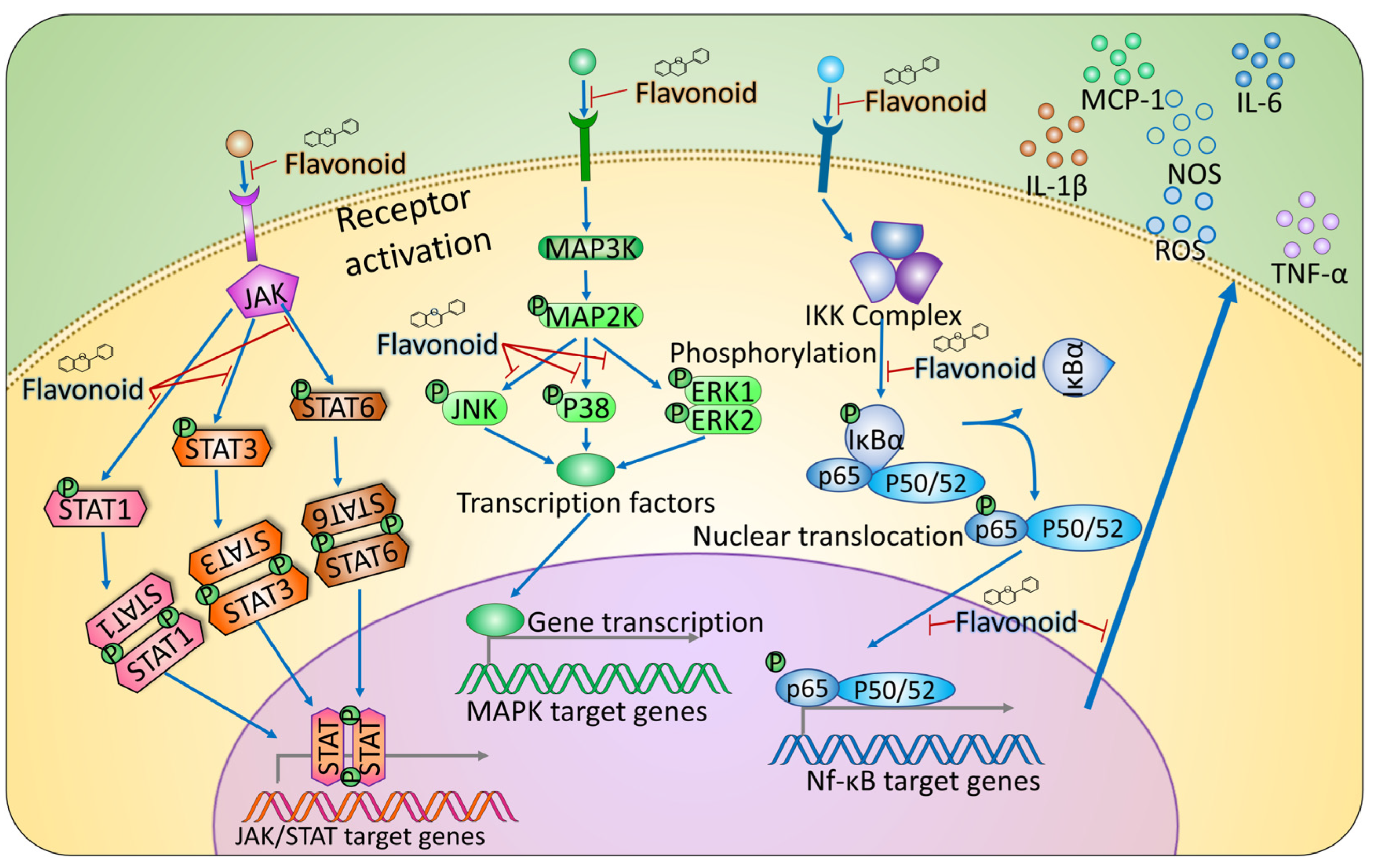
4.3.1. Flavonoid Inhibition of the NF-κB Signaling Pathway
4.3.2. Flavonoids Inhibit the Mitogen-Activated Protein Kinase (MAPK) Pathway
4.3.3. Flavonoids Inhibit the Signal Transducer and Activator of Transcription (STAT) Activation
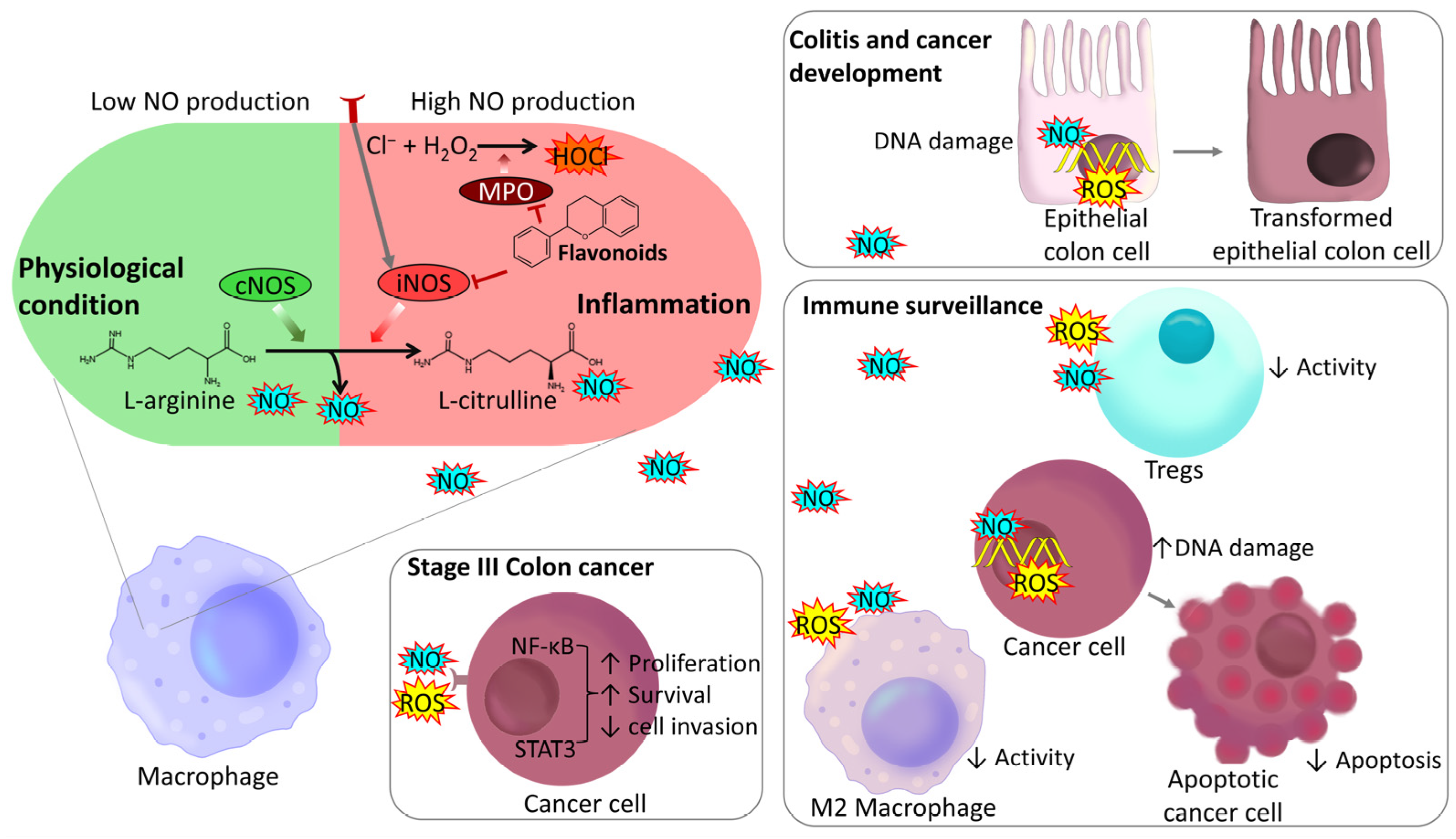
4.4. Flavonoid Protection Against Oxidative Stress
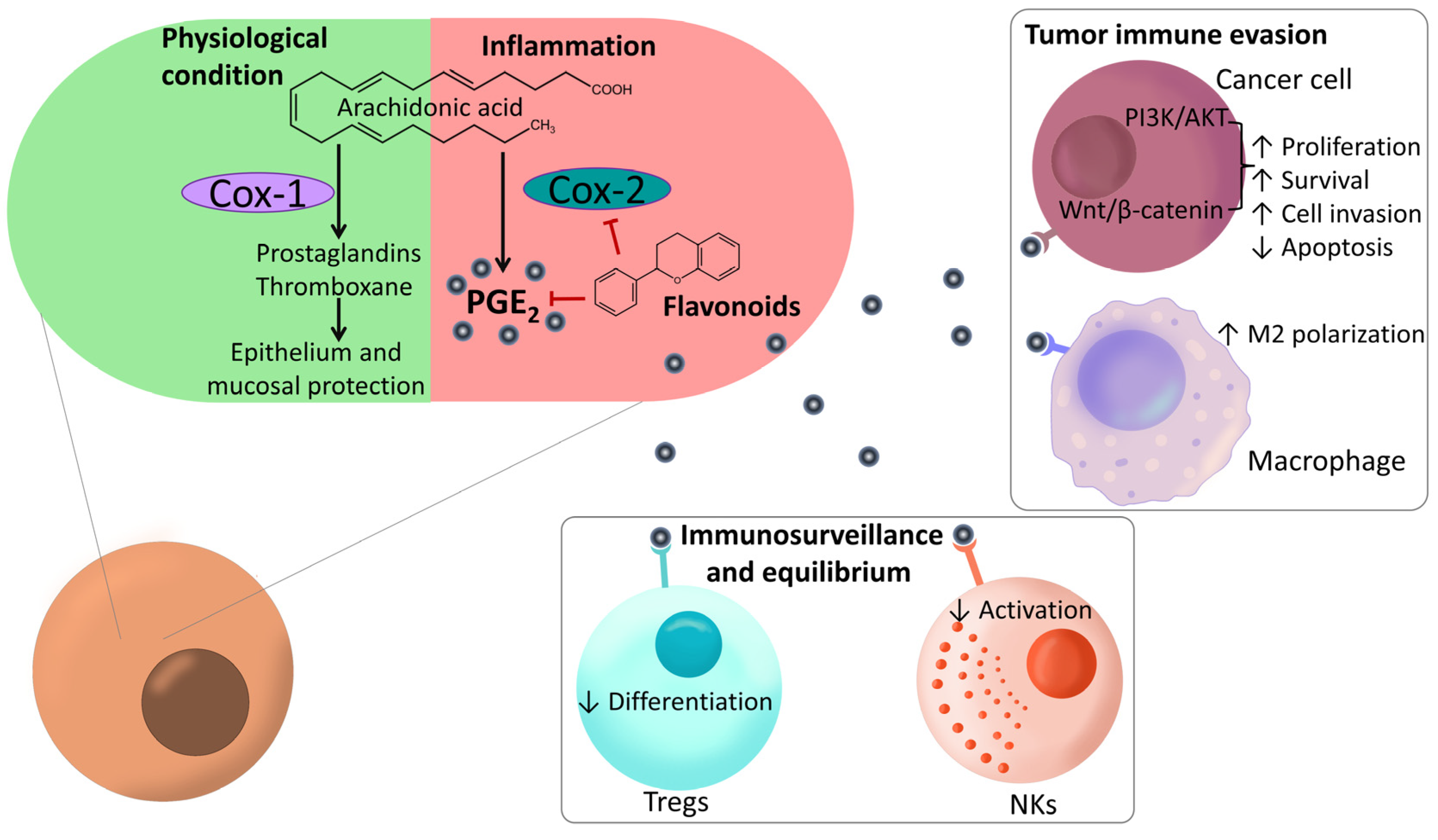
4.5. Flavonoids Negatively Regulate Eicosanoids
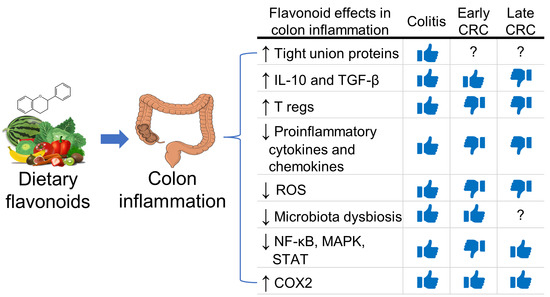
5. Discussion
6. Conclusions and Future Directions
Author Contributions
Funding
Data Availability Statement
Acknowledgments
Conflicts of Interest
Abbreviations
| AKT | Protein Kinase B |
| Ahr | Aryl hydrocarbon receptor |
| BCl2 | B-cell lymphoma 2 |
| CRC | colorectal cancer |
| CAC | colitis-associated cancer |
| CAT | Catalase |
| CDK | cyclin-dependent kinase |
| CLR | C-type lectin receptor |
| COX | cyclooxygenase |
| CXCL | chemokine ligand with CXC motif |
| DCs | dendritic cells |
| EGCG | epigallocatechin gallate |
| EP | E-prostanoid receptor |
| ERK | extracellular signal-regulated kinase |
| GPx | glutathione peroxidase |
| GSH | γ-glutamylcysteinyl glycine |
| HClO2 | chlorous acid |
| HIF-1 | hypoxia-inducible factor 1 |
| IBD | inflammatory bowel disease |
| IL | interleukin |
| INF | interferon |
| iNOS | inducible nitric oxide synthase |
| JAK | janus kinase |
| JNK | Jun N-terminal kinase |
| KC | keratinocytes |
| LOX | lipoxygenase |
| MAPK | mitogen-activated protein kinase |
| Mφs | macrophages |
| MDA | malondialdehyde |
| MDSCs | myeloid-derived suppressor cells |
| MIP | inflammatory protein of Mφ |
| MPO | myeloperoxidase |
| NF-κB | nuclear factor kappa B |
| NKs | natural killer cells |
| Nrf2 | nuclear factor erythroid 2-related factor 2 |
| NO | nitric oxide |
| PGE2 | prostaglandin E2 |
| PI3K | phosphoinositide 3-kinase |
| PD-L1 | programmed cell death 1 ligand 1 |
| ROS | reactive oxygen species |
| SOD | superoxide dismutase |
| STAT | signal transducer activation and activator of transcription |
| TAMs | Mφ associated with tumors |
| TGF | transforming growth factor |
| Th1 | T helper 1 cells |
| Th2 | T helper 2 cells |
| Th17 | T helper 17 cells |
| TLR | Toll-like receptor |
| TNF | tumor necrosis factor |
| Tregs | regulatory T cells |
| UC | ulcerative colitis |
| ZO-1 | Zonula occludens-1 |
References
- Fantini, M.C.; Guadagni, I. From inflammation to colitis-associated colorectal cancer in inflammatory bowel disease: Pathogenesis and impact of current therapies. Dig. Liver Dis. 2021, 53, 558–565. [Google Scholar] [CrossRef] [Scilit] [PubMed]
- Gros, B.; Kaplan, G.G. Ulcerative Colitis in Adults: A Review. JAMA 2023, 330, 951–965. [Google Scholar] [CrossRef] [Scilit]
- Vezza, T.; Rodriguez-Nogales, A.; Algieri, F.; Utrilla, M.P.; Rodriguez-Cabezas, M.E.; Galvez, J. Flavonoids in Inflammatory Bowel Disease: A Review. Nutrients 2016, 8, 211. [Google Scholar] [CrossRef] [Scilit] [PubMed]
- Marzocchella, L.; Fantini, M.; Benvenuto, M.; Masuelli, L.; Tresoldi, I.; Modesti, A.; Bei, R. Dietary flavonoids: Molecular mechanisms of action as anti-inflammatory agents. Recent. Pat. Inflamm. Allergy Drug Discov. 2011, 5, 200–220. [Google Scholar] [CrossRef] [Scilit]
- Gil-Cardoso, K.; Ginés, I.; Pinent, M.; Ardévol, A.; Blay, M.; Terra, X. Effects of flavonoids on intestinal inflammation, barrier integrity and changes in gut microbiota during diet-induced obesity. Nutr. Res. Rev. 2016, 29, 234–248. [Google Scholar] [CrossRef] [Scilit]
- Catalán, M.; Ferreira, J.; Carrasco-Pozo, C. The Microbiota-Derived Metabolite of Quercetin, 3,4-Dihydroxyphenylacetic Acid Prevents Malignant Transformation and Mitochondrial Dysfunction Induced by Hemin in Colon Cancer and Normal Colon Epithelia Cell Lines. Molecules 2020, 25, 4138. [Google Scholar] [CrossRef] [Scilit]
- Weng, C.J.; Yen, G.C. Flavonoids, a ubiquitous dietary phenolic subclass, exert extensive in vitro anti-invasive and in vivo anti-metastatic activities. Cancer Metastasis Rev. 2012, 31, 323–351. [Google Scholar] [CrossRef] [Scilit]
- Shen, N.; Wang, T.; Gan, Q.; Liu, S.; Wang, L.; Jin, B. Plant flavonoids: Classification, distribution, biosynthesis, and antioxidant activity. Food Chem. 2022, 383, 132531. [Google Scholar] [CrossRef] [Scilit]
- Shah, S.C.; Itzkowitz, S.H. Colorectal Cancer in Inflammatory Bowel Disease: Mechanisms and Management. Gastroenterology 2022, 162, 715–730.e3. [Google Scholar] [CrossRef] [Scilit]
- Fernandez-Munoz, K.V.; Sanchez-Barrera, C.A.; Meraz-Rios, M.; Reyes, J.L.; Perez-Yepez, E.A.; Ortiz-Melo, M.T.; Terrazas, L.I.; Mendoza-Rodriguez, M.G. Natural Alternatives in the Treatment of Colorectal Cancer: A Mechanisms Perspective. Biomolecules 2025, 15, 326. [Google Scholar] [CrossRef] [Scilit]
- Zhou, R.W.; Harpaz, N.; Itzkowitz, S.H.; Parsons, R.E. Molecular mechanisms in colitis-associated colorectal cancer. Oncogenesis 2023, 12, 48. [Google Scholar] [CrossRef] [Scilit] [PubMed]
- Terabe, M.; Park, J.M.; Berzofsky, J.A. Role of IL-13 in regulation of anti-tumor immunity and tumor growth. Cancer Immunol. Immunother. 2004, 53, 79–85. [Google Scholar] [CrossRef] [Scilit] [PubMed]
- Pena-Romero, A.C.; Orenes-Pinero, E. Dual Effect of Immune Cells within Tumour Microenvironment: Pro- and Anti-Tumour Effects and Their Triggers. Cancers 2022, 14, 1681. [Google Scholar] [CrossRef] [Scilit]
- Wang, J.; Li, D.; Cang, H.; Guo, B. Crosstalk between cancer and immune cells: Role of tumor-associated macrophages in the tumor microenvironment. Cancer Med. 2019, 8, 4709–4721. [Google Scholar] [CrossRef] [Scilit]
- Evans, C.; Dalgleish, A.G.; Kumar, D. Review article: Immune suppression and colorectal cancer. Aliment. Pharmacol. Ther. 2006, 24, 1163–1177. [Google Scholar] [CrossRef] [Scilit]
- Glassner, K.L.; Abraham, B.P.; Quigley, E.M.M. The microbiome and inflammatory bowel disease. J. Allergy Clin. Immunol. 2020, 145, 16–27. [Google Scholar] [CrossRef] [Scilit]
- Flemer, B.; Lynch, D.; Brown, J.; Jeffery, I.; Ryan, F.; Claesson, M.; O’Riordain, M.; Shanahan, F.; O’Toole, P. Tumour-associated and non-tumour-associated microbiota in colorectal cancer. Gut 2017, 66, 633–643. [Google Scholar] [CrossRef] [Scilit]
- Liu, W.; Zhang, X.; Xu, H.; Li, S.; Lau, H.C.-H.; Chen, Q.; Zhang, B.; Zhao, L.; Chen, H.; Sung, J.J.-Y.; et al. Microbial Community Heterogeneity Within Colorectal Neoplasia and its Correlation With Colorectal Carcinogenesis. Gastroenterology 2021, 160, 2395–2408. [Google Scholar] [CrossRef] [Scilit]
- Okuda, S.; Shimada, Y.; Tajima, Y.; Yuza, K.; Hirose, Y.; Ichikawa, H.; Nagahashi, M.; Sakata, J.; Ling, Y.; Miura, N.; et al. Profiling of host genetic alterations and intra-tumor microbiomes in colorectal cancer. Comput. Struct. Biotechnol. J. 2021, 19, 3330–3338. [Google Scholar] [CrossRef] [Scilit]
- Yamamoto, S.; Kinugasa, H.; Hirai, M.; Terasawa, H.; Yasutomi, E.; Oka, S.; Ohmori, M.; Yamasaki, Y.; Inokuchi, T.; Harada, K.; et al. Heterogeneous distribution of Fusobacterium nucleatum in the progression of colorectal cancer. J. Gastroenterol. Hepatol. 2021, 36, 1869–1876. [Google Scholar] [CrossRef] [Scilit] [PubMed]
- Bullman, S.; Pedamallu, C.; Sicinska, E.; Clancy, T.; Zhang, X.; Cai, D.; Neuberg, D.; Huang, K.; Guevara, F.; Nelson, T.; et al. Analysis of Fusobacterium persistence and antibiotic response in colorectal cancer. Science 2017, 358, 1443–1448. [Google Scholar] [CrossRef] [Scilit]
- Cardona, F.; Andrés-Lacueva, C.; Tulipani, S.; Tinahones, F.J.; Queipo-Ortuño, M.I. Benefits of polyphenols on gut microbiota and implications in human health. J. Nutr. Biochem. 2013, 24, 1415–1422. [Google Scholar] [CrossRef] [Scilit] [PubMed]
- Louis, P.; Hold, G.; Flint, H. The gut microbiota, bacterial metabolites and colorectal cancer. Nat. Rev. Microbiol. 2014, 12, 66–1672. [Google Scholar] [CrossRef] [Scilit]
- Wang, L.; Li, M.; Gu, Y.; Shi, J.; Yan, J.; Wang, X.; Li, B.; Wang, B.; Zhong, W.; Cao, H. Dietary flavonoids-microbiota crosstalk in intestinal inflammation and carcinogenesis. J. Nutr. Biochem. 2024, 125, 109494. [Google Scholar] [CrossRef] [Scilit] [PubMed]
- Franzosa, E.A.; Sirota-Madi, A.; Avila-Pacheco, J.; Fornelos, N.; Haiser, H.J.; Reinker, S.; Vatanen, T.; Hall, A.B.; Mallick, H.; McIver, L.J.; et al. Gut microbiome structure and metabolic activity in inflammatory bowel disease. Nat. Microbiol. 2019, 4, 293–305, Correction in Nat. Microbiol. 2019, 4, 898. https://doi.org/10.1038/s41564-019-0442-5. [Google Scholar] [CrossRef] [Scilit]
- Yachida, S.; Mizutani, S.; Shiroma, H.; Shiba, S.; Nakajima, T.; Sakamoto, T.; Watanabe, H.; Masuda, K.; Nishimoto, Y.; Kubo, M.; et al. Metagenomic and metabolomic analyses reveal distinct stage-specific phenotypes of the gut microbiota in colorectal cancer. Nat. Med. 2019, 25, 968–976. [Google Scholar] [CrossRef] [Scilit]
- Liang, J.; Li, T.; Nakatsu, G.; Chen, Y.; Yau, T.; Chu, E.; Wong, S.; Szeto, C.; Ng, S.; Chan, F.; et al. A novel faecal Lachnoclostridium marker for the non-invasive diagnosis of colorectal adenoma and cancer. Gut 2020, 69, 1248–1257. [Google Scholar] [CrossRef] [Scilit]
- Ruiz, P.; Shkoda, A.; Kim, S.; Sartor, R.; Haller, D. IL-10 gene-deficient mice lack TGF-beta/Smad signaling and fail to inhibit proinflammatory gene expression in intestinal epithelial cells after the colonization with colitogenic Enterococcus faecalis. J. Immunol. 2005, 174, 2990–2999. [Google Scholar] [CrossRef] [Scilit]
- Thomas, A.M.; Manghi, P.; Asnicar, F.; Pasolli, E.; Armanini, F.; Zolfo, M.; Beghini, F.; Manara, S.; Karcher, N.; Pozzi, C.; et al. Metagenomic analysis of colorectal cancer datasets identifies cross-cohort microbial diagnostic signatures and a link with choline degradation. Nat. Med. 2019, 25, 667–678, Correction in Nat. Med. 2019, 25, 1948. https://doi.org/10.1038/s41591-019-0663-4. [Google Scholar] [CrossRef] [Scilit] [PubMed]
- Wirbel, J.; Pyl, P.T.; Kartal, E.; Zych, K.; Kashani, A.; Milanese, A.; Fleck, J.S.; Voigt, A.Y.; Palleja, A.; Ponnudurai, R.; et al. Meta-analysis of fecal metagenomes reveals global microbial signatures that are specific for colorectal cancer. Nat. Med. 2019, 25, 679–689. [Google Scholar] [CrossRef] [Scilit]
- Cao, Y.; Oh, J.; Xue, M.; Huh, W.J.; Wang, J.; Gonzalez-Hernandez, J.A.; Rice, T.A.; Martin, A.L.; Song, D.; Crawford, J.M.; et al. Commensal microbiota from patients with inflammatory bowel disease produce genotoxic metabolites. Science 2022, 378, abm3233. [Google Scholar] [CrossRef] [Scilit]
- Han, Z.Q.; Wen, L.N. Microbiota geography in the colorectal carcinoma microenvironment: A spatiotemporal atlas of colonic mucosal microbial niche reconstruction. World J. Gastroenterol. 2025, 31, 106057. [Google Scholar] [CrossRef] [Scilit]
- Wu, S.; Rhee, K.; Albesiano, E.; Rabizadeh, S.; Wu, X.; Yen, H.; Huso, D.; Brancati, F.; Wick, E.; McAllister, F.; et al. A human colonic commensal promotes colon tumorigenesis via activation of T helper type 17 T cell responses. Nat. Med. 2009, 15, 1016–1022. [Google Scholar] [CrossRef] [Scilit]
- Boleij, A.; Tjalsma, H. The itinerary of Streptococcus gallolyticus infection in patients with colonic malignant disease. Lancet Infect. Dis. 2013, 13, 719–724. [Google Scholar] [CrossRef] [Scilit] [PubMed]
- Arthur, J.C.; Perez-Chanona, E.; Mühlbauer, M.; Tomkovich, S.; Uronis, J.M.; Fan, T.-J.; Campbell, B.J.; Abujamel, T.; Dogan, B.; Rogers, A.B.; et al. Intestinal Inflammation Targets Cancer-Inducing Activity of the Microbiota. Science 2012, 338, 120–123. [Google Scholar] [CrossRef] [Scilit] [PubMed]
- Chung, L.; Orberg, E.T.; Geis, A.; Chan, J.; Fu, K.; Shields, C.D.; Dejea, C.; Fathi, P.; Chen, J.; Finard, B.; et al. Bacteroides fragilis Toxin Coordinates a Pro-carcinogenic Inflammatory Cascade via Targeting of Colonic Epithelial Cells. Cell Host Microbe 2018, 23, 203–214. [Google Scholar] [CrossRef] [Scilit] [PubMed]
- Cao, Y.; Wang, Z.; Yan, Y.; Ji, L.; He, J.; Xuan, B.; Shen, C.; Ma, Y.; Jiang, S.; Ma, D.; et al. Enterotoxigenic Bacteroidesfragilis Promotes Intestinal Inflammation and Malignancy by Inhibiting Exosome-Packaged miR-149-3p. Gastroenterology 2021, 161, 1552–1566.e12. [Google Scholar] [CrossRef] [Scilit]
- Zhao, L.; Zhang, X.; Zhou, Y.; Fu, K.; Lau, H.C.-H.; Chun, T.W.-Y.; Cheung, A.H.-K.; Coker, O.O.; Wei, H.; Wu, W.K.-K.; et al. Parvimonas micra promotes colorectal tumorigenesis and is associated with prognosis of colorectal cancer patients. Oncogene 2022, 41, 4200–4210. [Google Scholar] [CrossRef] [Scilit]
- Kostic, A.; Chun, E.; Robertson, L.; Glickman, J.; Gallini, C.; Michaud, M.; Clancy, T.; Chung, D.; Lochhead, P.; Hold, G.; et al. Fusobacterium nucleatum potentiates intestinal tumorigenesis and modulates the tumor-immune microenvironment. Cell Host Microbe 2013, 14, 207–215. [Google Scholar] [CrossRef] [Scilit]
- Long, X.; Wong, C.C.; Tong, L.; Chu, E.S.H.; Ho Szeto, C.; Go, M.Y.Y.; Coker, O.O.; Chan, A.W.H.; Chan, F.K.L.; Sung, J.J.Y.; et al. Peptostreptococcus anaerobius promotes colorectal carcinogenesis and modulates tumour immunity. Nat. Microbiol. 2019, 4, 2319–2330. [Google Scholar] [CrossRef] [Scilit]
- Zou, J.; Shankar, N. Roles of TLR/MyD88/MAPK/NF-κB Signaling Pathways in the Regulation of Phagocytosis and Proinflammatory Cytokine Expression in Response to E. faecalis Infection. PLoS ONE 2015, 10, e0136947. [Google Scholar] [CrossRef] [Scilit] [PubMed]
- Zhang, Q.; Ma, C.; Duan, Y.; Heinrich, B.; Rosato, U.; Diggs, L.; Ma, L.; Roy, S.; Fu, Q.; Brown, Z.; et al. Gut Microbiome Directs Hepatocytes to Recruit MDSCs and Promote Cholangiocarcinoma. Cancer Discov. 2021, 11, 1248–1267. [Google Scholar] [CrossRef] [Scilit]
- Chiang, M.; Hsiao, P.; Liu, Y.; Tang, H.; Chiou, C.; Lu, M.; Lai, Y. Two ST11 Klebsiella pneumoniae strains exacerbate colorectal tumorigenesis in a colitis-associated mouse model. Gut Microbes 2021, 13, 1980348. [Google Scholar] [CrossRef] [Scilit]
- Poritz, L.S.; Harris, L.R., 3rd; Kelly, A.A.; Koltun, W.A. Increase in the tight junction protein claudin-1 in intestinal inflammation. Dig. Dis. Sci. 2011, 56, 2802–2809. [Google Scholar] [CrossRef] [Scilit] [PubMed]
- Ren, J.; Yue, B.; Wang, H.; Zhang, B.; Luo, X.; Yu, Z.; Zhang, J.; Ren, Y.; Mani, S.; Wang, Z.; et al. Acacetin Ameliorates Experimental Colitis in Mice via Inhibiting Macrophage Inflammatory Response and Regulating the Composition of Gut Microbiota. Front. Physiol. 2020, 11, 577237. [Google Scholar] [CrossRef] [Scilit]
- Shi, N.; Chen, X.; Chen, T.; Shi, N.; Chen, X.; Chen, T. Anthocyanins in Colorectal Cancer Prevention Review. Antioxidants 2021, 10, 1600. [Google Scholar] [CrossRef] [Scilit]
- Yun, J.W.; Lee, W.S.; Kim, M.J.; Lu, J.N.; Kang, M.H.; Kim, H.G.; Kim, D.C.; Choi, E.J.; Choi, J.Y.; Kim, H.G.; et al. Characterization of a profile of the anthocyanins isolated from Vitis coignetiae Pulliat and their anti-invasive activity on HT-29 human colon cancer cells. Food Chem. Toxicol. 2010, 48, 903–909. [Google Scholar] [CrossRef] [Scilit]
- Sood, R.; Choi, H.-K.; Lee, H.-J. Potential anti-cancer properties of malvidin and its glycosides: Evidence from in vitro and in vivo studies. J. Funct. Foods 2024, 116, 106191. [Google Scholar] [CrossRef] [Scilit]
- Wang, H.; Huang, X.; Xia, S.; Chen, C.; Chen, X.; Zhang, Y.; Farag, M.A.; Xiao, J.; Nie, S. Celery soluble dietary fiber antagonizes flavonoids ameliorative effect on dextran-sodium-sulfate-induced colitis in mice. J. Adv. Res. 2023, 52, 73–88. [Google Scholar] [CrossRef] [Scilit] [PubMed]
- Hu, Y.; Guan, X.; He, Z.; Xie, Y.; Niu, Z.; Zhang, W.; Wang, A.; Zhang, J.; Si, C.; Li, F.; et al. Apigenin-7-O-glucoside alleviates DSS-induced colitis by improving intestinal barrier function and modulating gut microbiota. J. Funct. Foods 2023, 104, 105499. [Google Scholar] [CrossRef] [Scilit]
- Li, M.; Weigmann, B. Effect of a Flavonoid Combination of Apigenin and Epigallocatechin-3-Gallate on Alleviating Intestinal Inflammation in Experimental Colitis Models. Int. J. Mol. Sci. 2023, 24, 16031. [Google Scholar] [CrossRef] [Scilit]
- Yao, J.; Liu, T.; Chen, R.J.; Liang, J.; Li, J.; Wang, C.G. Sphingosine-1-phosphate signal transducer and activator of transcription 3 signaling pathway contributes to baicalein-mediated inhibition of dextran sulfate sodium-induced experimental colitis in mice. Chin. Med. J. 2020, 133, 292–300. [Google Scholar] [CrossRef] [Scilit]
- Zhu, L.; Shen, H.; Gu, P.Q.; Liu, Y.J.; Zhang, L.; Cheng, J.F. Baicalin alleviates TNBS-induced colitis by inhibiting PI3K/AKT pathway activation. Exp. Ther. Med. 2020, 20, 581–590. [Google Scholar] [CrossRef] [Scilit] [PubMed]
- Yu, F.Y.; Huang, S.G.; Zhang, H.Y.; Ye, H.; Chi, H.G.; Zou, Y.; Lv, R.X.; Zheng, X.B. Effects of baicalin in CD4 + CD29 + T cell subsets of ulcerative colitis patients. World J. Gastroenterol. 2014, 20, 15299–15309. [Google Scholar] [CrossRef] [Scilit] [PubMed]
- Cui, L.; Feng, L.; Zhang, Z.H.; Jia, X.B. The anti-inflammation effect of baicalin on experimental colitis through inhibiting TLR4/NF-kappaB pathway activation. Int. Immunopharmacol. 2014, 23, 294–303. [Google Scholar] [CrossRef] [Scilit]
- Zhu, L.; Xu, L.Z.; Zhao, S.; Shen, Z.F.; Shen, H.; Zhan, L.B. Protective effect of baicalin on the regulation of Treg/Th17 balance, gut microbiota and short-chain fatty acids in rats with ulcerative colitis. Appl. Microbiol. Biotechnol. 2020, 104, 5449–5460. [Google Scholar] [CrossRef] [Scilit]
- Shen, J.; Cheng, J.; Zhu, S.; Zhao, J.; Ye, Q.; Xu, Y.; Dong, H.; Zheng, X. Regulating effect of baicalin on IKK/IKB/NF-kB signaling pathway and apoptosis-related proteins in rats with ulcerative colitis. Int. Immunopharmacol. 2019, 73, 193–200. [Google Scholar] [CrossRef] [Scilit] [PubMed]
- Shin, E.K.; Kwon, H.S.; Kim, Y.H.; Shin, H.K.; Kim, J.K. Chrysin, a natural flavone, improves murine inflammatory bowel diseases. Biochem. Biophys. Res. Commun. 2009, 381, 502–507. [Google Scholar] [CrossRef] [Scilit]
- Shen, J.; Li, N.; Zhang, X. Daidzein Ameliorates Dextran Sulfate Sodium-Induced Experimental Colitis in Mice by Regulating NF-kappaB Signaling. J. Environ. Pathol. Toxicol. Oncol. 2019, 38, 29–39. [Google Scholar] [CrossRef] [Scilit]
- Morimoto, M.; Watanabe, T.; Yamori, M.; Takebe, M.; Wakatsuki, Y. Isoflavones regulate innate immunity and inhibit experimental colitis. J. Gastroenterol. Hepatol. 2009, 24, 1123–1129. [Google Scholar] [CrossRef] [Scilit]
- Ge, J.; Li, M.; Yao, J.; Guo, J.; Li, X.; Li, G.; Han, X.; Li, Z.; Liu, M.; Zhao, J. The potential of EGCG in modulating the oral-gut axis microbiota for treating inflammatory bowel disease. Phytomedicine 2024, 130, 155643. [Google Scholar] [CrossRef] [Scilit]
- Contreras, T.C.; Ricciardi, E.; Cremonini, E.; Oteiza, P.I. (-)-Epicatechin in the prevention of tumor necrosis alpha-induced loss of Caco-2 cell barrier integrity. Arch. Biochem. Biophys. 2015, 573, 84–91. [Google Scholar] [CrossRef] [Scilit] [PubMed]
- Porath, D.; Riegger, C.; Drewe, J.; Schwager, J. Epigallocatechin-3-gallate impairs chemokine production in human colon epithelial cell lines. J. Pharmacol. Exp. Ther. 2005, 315, 1172–1180. [Google Scholar] [CrossRef] [Scilit] [PubMed]
- Xu, Z.; Wei, C.; Zhang, R.U.; Yao, J.; Zhang, D.; Wang, L. Epigallocatechin-3-gallate-induced inhibition of interleukin-6 release and adjustment of the regulatory T/T helper 17 cell balance in the treatment of colitis in mice. Exp. Ther. Med. 2015, 10, 2231–2238. [Google Scholar] [CrossRef] [Scilit] [PubMed]
- Du, Y.; Ding, H.; Vanarsa, K.; Soomro, S.; Baig, S.; Hicks, J.; Mohan, C. Low dose Epigallocatechin Gallate Alleviates Experimental Colitis by Subduing Inflammatory Cells and Cytokines, and Improving Intestinal Permeability. Nutrients 2019, 11, 1743. [Google Scholar] [CrossRef] [Scilit]
- Bing, X.; Xuelei, L.; Wanwei, D.; Linlang, L.; Keyan, C. EGCG Maintains Th1/Th2 Balance and Mitigates Ulcerative Colitis Induced by Dextran Sulfate Sodium through TLR4/MyD88/NF-kappaB Signaling Pathway in Rats. Can. J. Gastroenterol. Hepatol. 2017, 2017, 3057268. [Google Scholar] [CrossRef] [Scilit]
- Abboud, P.A.; Hake, P.W.; Burroughs, T.J.; Odoms, K.; O’Connor, M.; Mangeshkar, P.; Wong, H.R.; Zingarelli, B. Therapeutic effect of epigallocatechin-3-gallate in a mouse model of colitis. Eur. J. Pharmacol. 2008, 579, 411–417. [Google Scholar] [CrossRef] [Scilit]
- Zhang, H.; Deng, A.; Zhang, Z.; Yu, Z.; Liu, Y.; Peng, S.; Wu, L.; Qin, H.; Wang, W. The protective effect of epicatechin on experimental ulcerative colitis in mice is mediated by increasing antioxidation and by the inhibition of NF-kappaB pathway. Pharmacol. Rep. 2016, 68, 514–520. [Google Scholar] [CrossRef] [Scilit]
- Guo, G.; Shi, W.; Shi, F.; Gong, W.; Li, F.; Zhou, G.; She, J. Anti-inflammatory effects of eriocitrin against the dextran sulfate sodium-induced experimental colitis in murine model. J. Biochem. Mol. Toxicol. 2019, 33, e22400. [Google Scholar] [CrossRef] [Scilit]
- Sahu, B.D.; Kumar, J.M.; Sistla, R. Fisetin, a dietary flavonoid, ameliorates experimental colitis in mice: Relevance of NF-kappaB signaling. J. Nutr. Biochem. 2016, 28, 171–182. [Google Scholar] [CrossRef] [Scilit]
- Gerges, S.H.; Tolba, M.F.; Elsherbiny, D.A.; El-Demerdash, E. The natural flavonoid galangin ameliorates dextran sulphate sodium-induced ulcerative colitis in mice: Effect on Toll-like receptor 4, inflammation and oxidative stress. Basic Clin. Pharmacol. Toxicol. 2020, 127, 10–20. [Google Scholar] [CrossRef] [Scilit]
- Sangaraju, R.; Nalban, N.; Alavala, S.; Rajendran, V.; Jerald, M.K.; Sistla, R. Protective effect of galangin against dextran sulfate sodium (DSS)-induced ulcerative colitis in Balb/c mice. Inflamm. Res. 2019, 68, 691–704. [Google Scholar] [CrossRef] [Scilit] [PubMed]
- Franza, L.; Carusi, V.; Nucera, E.; Pandolfi, F. Luteolin, inflammation and cancer: Special emphasis on gut microbiota. Biofactors 2021, 47, 181–189. [Google Scholar] [CrossRef] [Scilit] [PubMed]
- Xuan, H.; Ou, A.; Hao, S.; Shi, J.; Jin, X. Galangin Protects against Symptoms of Dextran Sodium Sulfate-induced Acute Colitis by Activating Autophagy and Modulating the Gut Microbiota. Nutrients 2020, 12, 347. [Google Scholar] [CrossRef] [Scilit] [PubMed]
- Jia, Q.; Fang, S.; Yang, R.; Ling, Y.; Mehmood, S.; Ni, H.; Gao, Q. Genistein alleviates dextran sulfate sodium-induced colitis in mice through modulation of intestinal microbiota and macrophage polarization. Eur. J. Nutr. 2024, 63, 1877–1888. [Google Scholar] [CrossRef] [Scilit]
- Elhefnawy, E.A.; Zaki, H.F.; El Maraghy, N.N.; Ahmed, K.A.; Abd El-Haleim, E.A. Genistein and/or sulfasalazine ameliorate acetic acid-induced ulcerative colitis in rats via modulating INF-gamma/JAK1/STAT1/IRF-1, TLR-4/NF-kappaB/IL-6, and JAK2/STAT3/COX-2 crosstalk. Biochem. Pharmacol. 2023, 214, 115673. [Google Scholar] [CrossRef] [Scilit]
- Abron, J.D.; Singh, N.P.; Price, R.L.; Nagarkatti, M.; Nagarkatti, P.S.; Singh, U.P. Genistein induces macrophage polarization and systemic cytokine to ameliorate experimental colitis. PLoS ONE 2018, 13, e0199631. [Google Scholar] [CrossRef] [Scilit] [PubMed]
- Chen, Y.; Le, T.H.; Du, Q.; Zhao, Z.; Liu, Y.; Zou, J.; Hua, W.; Liu, C.; Zhu, Y. Genistein protects against DSS-induced colitis by inhibiting NLRP3 inflammasome via TGR5-cAMP signaling. Int. Immunopharmacol. 2019, 71, 144–154, Erratum in Int. Immunopharmacol. 2024, 142, 113057. https://doi.org/10.1016/j.intimp.2024.113057. [Google Scholar] [CrossRef] [Scilit]
- Seibel, J.; Molzberger, A.F.; Hertrampf, T.; Laudenbach-Leschowski, U.; Diel, P. Oral treatment with genistein reduces the expression of molecular and biochemical markers of inflammation in a rat model of chronic TNBS-induced colitis. Eur. J. Nutr. 2009, 48, 213–220. [Google Scholar] [CrossRef] [Scilit]
- Guo, K.; Ren, J.; Gu, G.; Wang, G.; Gong, W.; Wu, X.; Ren, H.; Hong, Z.; Li, J. Hesperidin Protects Against Intestinal Inflammation by Restoring Intestinal Barrier Function and Up-Regulating Treg Cells. Mol. Nutr. Food Res. 2020, 64, e1970058. [Google Scholar] [CrossRef] [Scilit]
- Zhang, J.; Lei, H.; Hu, X.; Dong, W. Hesperetin ameliorates DSS-induced colitis by maintaining the epithelial barrier via blocking RIPK3/MLKL necroptosis signaling. Eur. J. Pharmacol. 2020, 873, 172992. [Google Scholar] [CrossRef] [Scilit] [PubMed]
- Shafik, N.M.; Gaber, R.A.; Mohamed, D.A.; Ebeid, A.M. Hesperidin modulates dextran sulfate sodium-induced ulcerative colitis in rats: Targeting sphingosine kinase-1- sphingosine 1 phosphate signaling pathway, mitochondrial biogenesis, inflammation, and apoptosis. J. Biochem. Mol. Toxicol. 2019, 33, e22312. [Google Scholar] [CrossRef] [Scilit] [PubMed]
- Xu, L.; Yang, Z.L.; Li, P.; Zhou, Y.Q. Modulating effect of Hesperidin on experimental murine colitis induced by dextran sulfate sodium. Phytomedicine 2009, 16, 989–995. [Google Scholar] [CrossRef] [Scilit] [PubMed]
- Park, M.Y.; Ji, G.E.; Sung, M.K. Dietary kaempferol suppresses inflammation of dextran sulfate sodium-induced colitis in mice. Dig. Dis. Sci. 2012, 57, 355–363. [Google Scholar] [CrossRef] [Scilit]
- Jin, C.; Liu, J.; Jin, R.; Yao, Y.; He, S.; Lei, M.; Peng, X. Linarin ameliorates dextran sulfate sodium-induced colitis in C57BL/6J mice via the improvement of intestinal barrier, suppression of inflammatory responses and modulation of gut microbiota. Food Funct. 2022, 13, 10574–10586. [Google Scholar] [CrossRef] [Scilit]
- Li, B.L.; Zhao, D.Y.; Du, P.L.; Wang, X.T.; Yang, Q.; Cai, Y.R. Luteolin alleviates ulcerative colitis through SHP-1/STAT3 pathway. Inflamm. Res. 2021, 70, 705–717. [Google Scholar] [CrossRef] [Scilit]
- Nishitani, Y.; Yamamoto, K.; Yoshida, M.; Azuma, T.; Kanazawa, K.; Hashimoto, T.; Mizuno, M. Intestinal anti-inflammatory activity of luteolin: Role of the aglycone in NF-kappaB inactivation in macrophages co-cultured with intestinal epithelial cells. Biofactors 2013, 39, 522–533. [Google Scholar] [CrossRef] [Scilit]
- Vukelic, I.; Detel, D.; Baticic, L.; Potocnjak, I.; Domitrovic, R. Luteolin ameliorates experimental colitis in mice through ERK-mediated suppression of inflammation, apoptosis and autophagy. Food Chem. Toxicol. 2020, 145, 111680. [Google Scholar] [CrossRef] [Scilit]
- Li, Y.; Shen, L.; Luo, H. Luteolin ameliorates dextran sulfate sodium-induced colitis in mice possibly through activation of the Nrf2 signaling pathway. Int. Immunopharmacol. 2016, 40, 24–31. [Google Scholar] [CrossRef] [Scilit]
- Zuo, T.; Yue, Y.; Wang, X.; Li, H.; Yan, S. Luteolin Relieved DSS-Induced Colitis in Mice via HMGB1-TLR-NF-kappaB Signaling Pathway. Inflammation 2021, 44, 570–579. [Google Scholar] [CrossRef] [Scilit]
- Qu, X.; Li, Q.; Song, Y.; Xue, A.; Liu, Y.; Qi, D.; Dong, H. Potential of myricetin to restore the immune balance in dextran sulfate sodium-induced acute murine ulcerative colitis. J. Pharm. Pharmacol. 2020, 72, 92–100. [Google Scholar] [CrossRef] [Scilit]
- Zhao, J.; Hong, T.; Dong, M.; Meng, Y.; Mu, J. Protective effect of myricetin in dextran sulphate sodium-induced murine ulcerative colitis. Mol. Med. Rep. 2013, 7, 565–570. [Google Scholar] [CrossRef] [Scilit]
- Schwanke, R.C.; Marcon, R.; Meotti, F.C.; Bento, A.F.; Dutra, R.C.; Pizzollatti, M.G.; Calixto, J.B. Oral administration of the flavonoid myricitrin prevents dextran sulfate sodium-induced experimental colitis in mice through modulation of PI3K/Akt signaling pathway. Mol. Nutr. Food Res. 2013, 57, 1938–1949. [Google Scholar] [CrossRef] [Scilit]
- Zamanian, M.Y.; Golmohammadi, M.; Abdullaev, B.; García, M.O.; Alazbjee, A.A.A.; Kumar, A.; Mohaamed, S.S.; Hussien, B.M.; Khalaj, F.; Hodaei, S.M.; et al. A narrative review on therapeutic potential of naringenin in colorectal cancer: Focusing on molecular and biochemical processes. Cell Biochem. Funct. 2024, 42, e4011. [Google Scholar] [CrossRef] [Scilit] [PubMed]
- Dou, W.; Zhang, J.; Sun, A.; Zhang, E.; Ding, L.; Mukherjee, S.; Wei, X.; Chou, G.; Wang, Z.T.; Mani, S. Protective effect of naringenin against experimental colitis via suppression of Toll-like receptor 4/NF-kappaB signalling. Br. J. Nutr. 2013, 110, 599–608. [Google Scholar] [CrossRef] [Scilit]
- Chaen, Y.; Yamamoto, Y.; Suzuki, T. Naringenin promotes recovery from colonic damage through suppression of epithelial tumor necrosis factor-alpha production and induction of M2-type macrophages in colitic mice. Nutr. Res. 2019, 64, 82–92. [Google Scholar] [CrossRef] [Scilit]
- Al-Rejaie, S.S.; Abuohashish, H.M.; Al-Enazi, M.M.; Al-Assaf, A.H.; Parmar, M.Y.; Ahmed, M.M. Protective effect of naringenin on acetic acid-induced ulcerative colitis in rats. World J. Gastroenterol. 2013, 19, 5633–5644. [Google Scholar] [CrossRef] [Scilit] [PubMed]
- Azuma, T.; Shigeshiro, M.; Kodama, M.; Tanabe, S.; Suzuki, T. Supplemental naringenin prevents intestinal barrier defects and inflammation in colitic mice. J. Nutr. 2013, 143, 827–834. [Google Scholar] [CrossRef] [Scilit]
- Cao, R.; Wu, X.; Guo, H.; Pan, X.; Huang, R.; Wang, G.; Liu, J. Naringin Exhibited Therapeutic Effects against DSS-Induced Mice Ulcerative Colitis in Intestinal Barrier-Dependent Manner. Molecules 2021, 26, 6604. [Google Scholar] [CrossRef] [Scilit] [PubMed]
- Kumar, V.S.; Rajmane, A.R.; Adil, M.; Kandhare, A.D.; Ghosh, P.; Bodhankar, S.L. Naringin ameliorates acetic acid induced colitis through modulation of endogenous oxido-nitrosative balance and DNA damage in rats. J. Biomed. Res. 2014, 28, 132–145. [Google Scholar] [CrossRef] [Scilit]
- Dong, J.; Chen, Y.; Yang, F.; Zhang, W.; Wei, K.; Xiong, Y.; Wang, L.; Zhou, Z.; Li, C.; Wang, J.; et al. Naringin Exerts Therapeutic Effects on Mice Colitis: A Study Based on Transcriptomics Combined With Functional Experiments. Front. Pharmacol. 2021, 12, 729414. [Google Scholar] [CrossRef] [Scilit] [PubMed]
- Yue, B.; Ren, J.; Yu, Z.; Luo, X.; Ren, Y.; Zhang, J.; Mani, S.; Wang, Z.; Dou, W. Pinocembrin alleviates ulcerative colitis in mice via regulating gut microbiota, suppressing TLR4/MD2/NF-kappaB pathway and promoting intestinal barrier. Biosci. Rep. 2020, 40, BSR20200986. [Google Scholar] [CrossRef] [Scilit] [PubMed]
- Hu, L.; Wu, C.; Zhang, Z.; Liu, M.; Maruthi Prasad, E.; Chen, Y.; Wang, K. Pinocembrin Protects Against Dextran Sulfate Sodium-Induced Rats Colitis by Ameliorating Inflammation, Improving Barrier Function and Modulating Gut Microbiota. Front. Physiol. 2019, 10, 908. [Google Scholar] [CrossRef] [Scilit]
- Pérez-Valero, Á.; Magadán-Corpas, P.; Ye, S.; Serna-Diestro, J.; Sordon, S.; Huszcza, E.; Popłoński, J.; Villar, C.J.; Lombó, F. Antitumor Effect and Gut Microbiota Modulation by Quercetin, Luteolin, and Xanthohumol in a Rat Model for Colorectal Cancer Prevention. Nutrients 2024, 16, 1161. [Google Scholar] [CrossRef] [Scilit]
- Riemschneider, S.; Hoffmann, M.; Slanina, U.; Weber, K.; Hauschildt, S.; Lehmann, J. Indol-3-Carbinol and Quercetin Ameliorate Chronic DSS-Induced Colitis in C57BL/6 Mice by AhR-Mediated Anti-Inflammatory Mechanisms. Int. J. Environ. Res. Public Health 2021, 18, 2262. [Google Scholar] [CrossRef] [Scilit]
- Liu, S.H.; Lu, T.H.; Su, C.C.; Lay, I.S.; Lin, H.Y.; Fang, K.M.; Ho, T.J.; Chen, K.L.; Su, Y.C.; Chiang, W.C.; et al. Lotus leaf (Nelumbo nucifera) and its active constituents prevent inflammatory responses in macrophages via JNK/NF-kappaB signaling pathway. Am. J. Chin. Med. 2014, 42, 869–889. [Google Scholar] [CrossRef] [Scilit]
- Guazelli, C.F.; Fattori, V.; Colombo, B.B.; Georgetti, S.R.; Vicentini, F.T.; Casagrande, R.; Baracat, M.M.; Verri, W.A., Jr. Quercetin-loaded microcapsules ameliorate experimental colitis in mice by anti-inflammatory and antioxidant mechanisms. J. Nat. Prod. 2013, 76, 200–208. [Google Scholar] [CrossRef] [Scilit]
- Bian, Y.; Liu, P.; Zhong, J.; Hu, Y.; Zhuang, S.; Fan, K.; Liu, Z. Quercetin Attenuates Adhesion Molecule Expression in Intestinal Microvascular Endothelial Cells by Modulating Multiple Pathways. Dig. Dis. Sci. 2018, 63, 3297–3304. [Google Scholar] [CrossRef] [Scilit]
- Dodda, D.; Chhajed, R.; Mishra, J.; Padhy, M. Targeting oxidative stress attenuates trinitrobenzene sulphonic acid induced inflammatory bowel disease like symptoms in rats: Role of quercetin. Indian J. Pharmacol. 2014, 46, 286–291. [Google Scholar] [CrossRef] [Scilit]
- Dong, Y.; Hou, Q.; Lei, J.; Wolf, P.G.; Ayansola, H.; Zhang, B. Quercetin Alleviates Intestinal Oxidative Damage Induced by H2O2 via Modulation of GSH: In Vitro Screening and In Vivo Evaluation in a Colitis Model of Mice. ACS Omega 2020, 5, 8334–8346. [Google Scholar] [CrossRef] [Scilit] [PubMed]
- Sharma, A.; Tirpude, N.V.; Kumari, M.; Padwad, Y. Rutin prevents inflammation-associated colon damage via inhibiting the p38/MAPKAPK2 and PI3K/Akt/GSK3beta/NF-kappaB signalling axes and enhancing splenic Tregs in DSS-induced murine chronic colitis. Food Funct. 2021, 12, 8492–8506. [Google Scholar] [CrossRef] [Scilit]
- Kwon, K.; Murakami, A.; Tanaka, T.; Ohigashi, H. Dietary rutin, but not its aglycone quercetin, ameliorates dextran sulfate sodium-induced experimental colitis in mice: Attenuation of pro-inflammatory gene expression. Biochem. Pharmacol. 2005, 69, 395–406. [Google Scholar] [CrossRef] [Scilit]
- Eun, S.H.; Woo, J.T.; Kim, D.H. Tangeretin Inhibits IL-12 Expression and NF-kappaB Activation in Dendritic Cells and Attenuates Colitis in Mice. Planta Med. 2017, 83, 527–533. [Google Scholar]
- Chen, B.; Yang, X.; Zhan, M.; Chen, Y.; Xu, J.; Xiao, J.; Xiao, H.; Song, M. Dietary tangeretin improved antibiotic-associated diarrhea in mice by enhancing the intestinal barrier function, regulating the gut microbiota, and metabolic homeostasis. Food Funct. 2023, 14, 10731–10746. [Google Scholar] [CrossRef] [Scilit]
- Lu, Y.; Li, X.; Liu, S.; Zhang, Y.; Zhang, D. Toll-like Receptors and Inflammatory Bowel Disease. Front. Immunol. 2018, 9, 72. [Google Scholar] [CrossRef] [Scilit] [PubMed]
- Bardelčíková, A.; Šoltys, J.; Mojžiš, J. Oxidative Stress, Inflammation and Colorectal Cancer: An Overview. Antioxidants 2023, 12, 901. [Google Scholar] [CrossRef] [Scilit]
- Sanchez-Munoz, F.; Dominguez-Lopez, A.; Yamamoto-Furusho, J.K. Role of cytokines in inflammatory bowel disease. World J. Gastroenterol. 2008, 14, 4280–4288. [Google Scholar] [CrossRef] [Scilit]
- Nakase, H.; Sato, N.; Mizuno, N.; Ikawa, Y. The influence of cytokines on the complex pathology of ulcerative colitis. Autoimmun. Rev. 2022, 21, 103017. [Google Scholar] [CrossRef] [Scilit] [PubMed]
- Sun, L.; Kees, T.; Almeida, A.; Liu, B.; He, X.; Ng, D.; Han, X.; Spector, D.; McNeish, I.; Gimotty, P.; et al. Activating a collaborative innate-adaptive immune response to control metastasis. Cancer Cell 2021, 39, 1361–1374. [Google Scholar] [CrossRef] [Scilit]
- Hasibuan, P.A.Z.; Simanjuntak, Y.; Hey-Hawkins, E.; Lubis, M.F.; Rohani, A.S.; Park, M.N.; Kim, B.; Syahputra, R.A. Unlocking the potential of flavonoids: Natural solutions in the fight against colon cancer. Biomed. Pharmacother. 2024, 176, 116827. [Google Scholar] [CrossRef] [Scilit] [PubMed]
- Xu, T.; Liu, Y.; Han, F.; Xie, H.Q.; Yang, G.; Wang, R.; Xu, L. Ligand- and tissue-specific differences in the activation of the aryl hydrocarbon receptor by flavonoids: A focus on baicalein and scutellarein. Food Chem. Toxicol. 2025, 205, 115713. [Google Scholar] [CrossRef] [Scilit]
- Griffith, B.D.; Frankel, T.L. The Aryl Hydrocarbon Receptor: Impact on the Tumor Immune Microenvironment and Modulation as a Potential Therapy. Cancers 2024, 16, 472. [Google Scholar] [CrossRef] [Scilit]
- Olguin, J.E.; Medina-Andrade, I.; Molina, E.; Vazquez, A.; Pacheco-Fernandez, T.; Saavedra, R.; Perez-Plasencia, C.; Chirino, Y.I.; Vaca-Paniagua, F.; Arias-Romero, L.E.; et al. Early and Partial Reduction in CD4+ Foxp3+ Regulatory T Cells during Colitis-Associated Colon Cancer Induces CD4+ and CD8+ T Cell Activation Inhibiting Tumorigenesis. J. Cancer 2018, 9, 239–249. [Google Scholar] [CrossRef] [Scilit] [PubMed]
- Drabsch, Y.; ten Dijke, P. TGF-beta signalling and its role in cancer progression and metastasis. Cancer Metastasis Rev. 2012, 31, 553–568. [Google Scholar] [CrossRef] [Scilit] [PubMed]
- Zinatizadeh, M.R.; Schock, B.; Chalbatani, G.M.; Zarandi, P.K.; Jalali, S.A.; Miri, S.R. The Nuclear Factor Kappa B (NF-kB) signaling in cancer development and immune diseases. Genes Dis. 2021, 8, 287–297. [Google Scholar] [CrossRef] [Scilit]
- Karin, M. Nuclear factor-κB in cancer development and progression. Nature 2006, 441, 431–436. [Google Scholar] [CrossRef] [Scilit]
- Zhang, T.; Ma, C.; Zhang, Z.; Zhang, H.; Hu, H. NF-kappaB signaling in inflammation and cancer. MedComm (2020) 2021, 2, 618–653. [Google Scholar] [CrossRef] [Scilit]
- Aggarwal, D.; Chaudhary, M.; Mandotra, S.K.; Tuli, H.S.; Chauhan, R.; Joshi, N.C.; Kaur, D.; Dufosse, L.; Chauhan, A. Anti-inflammatory potential of quercetin: From chemistry and mechanistic insight to nanoformulations. Curr. Res. Pharmacol. Drug Discov. 2025, 8, 100217. [Google Scholar] [CrossRef] [Scilit] [PubMed]
- Alharbi, H.O.A.; Alshebremi, M.; Babiker, A.Y.; Rahmani, A.H. The Role of Quercetin, a Flavonoid in the Management of Pathogenesis Through Regulation of Oxidative Stress, Inflammation, and Biological Activities. Biomolecules 2025, 15, 151. [Google Scholar] [CrossRef] [Scilit]
- Kee, B.L. Transcriptional control of natural killer cell antitumor activity. Trends Immunol. 2025, 46, 779–790. [Google Scholar] [CrossRef] [Scilit]
- Qi, M.; Elion, E.A. MAP kinase pathways. J. Cell Sci. 2005, 118, 3569–3572. [Google Scholar] [CrossRef] [Scilit] [PubMed]
- Shahgoli, V.K.; Noorolyai, S.; Ahmadpour Youshanlui, M.; Saeidi, H.; Nasiri, H.; Mansoori, B.; Holmskov, U.; Baradaran, B. Inflammatory bowel disease, colitis, and cancer: Unmasking the chronic inflammation link. Int. J. Colorectal. Dis. 2024, 39, 173. [Google Scholar] [CrossRef] [Scilit] [PubMed]
- Edlund, S.; Bu, S.; Schuster, N.; Aspenström, P.; Heuchel, R.; Heldin, N.; Dijke, P.t.; Heldin, C.; Landström, M. Transforming growth factor-beta1 (TGF-beta)-induced apoptosis of prostate cancer cells involves Smad7-dependent activation of p38 by TGF-beta-activated kinase 1 and mitogen-activated protein kinase kinase 3. Mol. Biol. Cell 2003, 14, 529–544. [Google Scholar] [CrossRef] [Scilit]
- Grossi, V.; Peserico, A.; Tezil, T.; Simone, C. p38α MAPK pathway: A key factor in colorectal cancer therapy and chemoresistance. World J. Gastroenterol. 2014, 20, 9744–9758. [Google Scholar] [CrossRef] [Scilit]
- Wesoly, J.; Szweykowska-Kulinska, Z.; Bluyssen, H.A. STAT activation and differential complex formation dictate selectivity of interferon responses. Acta Biochim. Pol. 2007, 54, 27–38. [Google Scholar] [CrossRef] [Scilit] [PubMed]
- Awasthi, N.; Liongue, C.; Ward, A.C.; Awasthi, N.; Liongue, C.; Ward, A.C. STAT proteins: A kaleidoscope of canonical and non-canonical functions in immunity and cancer. J. Hematol. Oncol. 2021, 14, 198. [Google Scholar] [CrossRef] [Scilit]
- León-Cabrera, S.; Vázquez-Sandoval, A.; Molina-Guzman, E.; Delgado-Ramirez, Y.; Delgado-Buenrostro, N.; Callejas, B.; Chirino, Y.; Pérez-Plasencia, C.; Rodríguez-Sosa, M.; Olguín, J.; et al. Deficiency in STAT1 Signaling Predisposes Gut Inflammation and Prompts Colorectal Cancer Development. Cancers 2018, 10, 341. [Google Scholar] [CrossRef] [Scilit]
- Grivennikov, S. Inflammation and colorectal cancer: Colitis-associated neoplasia. Semin. Immunopathol. 2013, 35, 229–244. [Google Scholar] [CrossRef] [Scilit]
- Waldner, M.; Neurath, M. Master regulator of intestinal disease: IL-6 in chronic inflammation and cancer development. Semin. Immunol. 2014, 26, 75–79. [Google Scholar] [CrossRef] [Scilit]
- Zhu, M.; Li, S.; Cao, X.; Rashid, K.; Liu, T. The STAT family: Key transcription factors mediating crosstalk between cancer stem cells and tumor immune microenvironment. Semin. Cancer Biol. 2023, 88, 18–31. [Google Scholar] [CrossRef] [Scilit]
- Schmitt, M.J.; Philippidou, D.; Reinsbach, S.E.; Margue, C.; Wienecke-Baldacchino, A.; Nashan, D.; Behrmann, I.; Kreis, S. Interferon-γ-induced activation of Signal Transducer and Activator of Transcription 1 (STAT1) up-regulates the tumor suppressing microRNA-29 family in melanoma cells. Cell Commun. Signal. 2012, 10, 41. [Google Scholar] [CrossRef] [Scilit]
- Kumar, A.; Commane, M.; Flickinger, T.W.; Horvath, C.M.; Stark, G.R. Defective TNF-α-Induced Apoptosis in STAT1-Null Cells Due to Low Constitutive Levels of Caspases. Science 1997, 278, 1630–1632. [Google Scholar] [CrossRef] [Scilit]
- Baier, A.; Szyszka, R. Compounds from Natural Sources as Protein Kinase Inhibitors. Biomolecules 2020, 10, 1546. [Google Scholar] [CrossRef] [Scilit]
- Andrabi, S.M.; Sharma, N.S.; Karan, A.; Shahriar, S.M.S.; Cordon, B.; Ma, B.; Xie, J. Nitric Oxide: Physiological Functions, Delivery, and Biomedical Applications. Adv. Sci. 2023, 10, e2303259. [Google Scholar] [CrossRef] [Scilit] [PubMed]
- Trachootham, D.; Alexandre, J.; Huang, P.; Trachootham, D.; Alexandre, J.; Huang, P. Targeting cancer cells by ROS-mediated mechanisms: A radical therapeutic approach? Nat. Rev. Drug Discov. 2009, 8, 579–591. [Google Scholar] [CrossRef] [Scilit]
- Achitei, D.; Ciobica, A.; Balan, G.; Gologan, E.; Stanciu, C.; Stefanescu, G. Different profile of peripheral antioxidant enzymes and lipid peroxidation in active and non-active inflammatory bowel disease patients. Dig. Dis. Sci. 2013, 58, 1244–1249. [Google Scholar] [CrossRef] [Scilit]
- Lingappan, K. NF-kappaB in Oxidative Stress. Curr. Opin. Toxicol. 2018, 7, 81–86. [Google Scholar] [CrossRef] [Scilit] [PubMed]
- Wu, W.-S. The signaling mechanism of ROS in tumor progression. Cancer Metastasis Rev. 2006, 25, 695–705. [Google Scholar] [CrossRef] [Scilit]
- Yadav, S.; Zajac, E.; Singhal, S.S.; Awasthi, S.; Yadav, S.; Zajac, E.; Singhal, S.S.; Awasthi, S. Linking stress-signaling, glutathione metabolism, signaling pathways and xenobiotic transporters. Cancer Metastasis Rev. 2007, 26, 59–69. [Google Scholar] [CrossRef] [Scilit]
- Townsend, D.M.; Tew, K.D.; Townsend, D.M.; Tew, K.D. The role of glutathione-S-transferase in anti-cancer drug resistance. Oncogene 2003, 22, 7369–7375. [Google Scholar] [CrossRef] [Scilit] [PubMed]
- Piechota-Polanczyk, A.; Fichna, J. Review article: The role of oxidative stress in pathogenesis and treatment of inflammatory bowel diseases. Naunyn. Schmiedebergs Arch. Pharmacol. 2014, 387, 605–620. [Google Scholar] [CrossRef] [Scilit]
- Wang, D.; DuBois, R. Role of prostanoids in gastrointestinal cancer. J. Clin. Investig. 2018, 128, 2732–2742. [Google Scholar] [CrossRef] [Scilit] [PubMed]
- Dempke, W.; Rie, C.; Grothey, A.; Schmoll, H.J. Cyclooxygenase-2: A novel target for cancer chemotherapy? J. Cancer Res. Clin. Oncol. 2001, 127, 411–417. [Google Scholar] [CrossRef] [Scilit]
- Greenhough, A.; Smartt, H.; Moore, A.; Roberts, H.; Williams, A.; Paraskeva, C.; Kaidi, A. The COX-2/PGE2 pathway: Key roles in the hallmarks of cancer and adaptation to the tumour microenvironment. Carcinogenesis 2009, 30, 377–386. [Google Scholar] [CrossRef] [Scilit] [PubMed]
- Jin, K.; Qian, C.; Lin, J.; Liu, B. Cyclooxygenase-2-Prostaglandin E2 pathway: A key player in tumor-associated immune cells. Front. Oncol. 2023, 13, 1099811. [Google Scholar] [CrossRef] [Scilit]
- International Agency for Research on Cancer. Cancer Over Time. Available online: https://gco.iarc.fr/overtime/en (accessed on 1 February 2025).
- Andrade-Meza, A.; Arias-Romero, L.E.; Armas-Lopez, L.; Avila-Moreno, F.; Chirino, Y.I.; Delgado-Buenrostro, N.L.; Garcia-Castillo, V.; Gutierrez-Cirlos, E.B.; Juarez-Avelar, I.; Leon-Cabrera, S.; et al. Mexican Colorectal Cancer Research Consortium (MEX-CCRC): Etiology, Diagnosis/Prognosis, and Innovative Therapies. Int. J. Mol. Sci. 2023, 24, 2115. [Google Scholar] [CrossRef] [Scilit] [PubMed]
- Hoensch, H.; Groh, B.; Edler, L.; Kirch, W. Prospective cohort comparison of flavonoid treatment in patients with resected colorectal cancer to prevent recurrence. World J. Gastroenterol. 2008, 14, 2187–2193. [Google Scholar] [CrossRef] [Scilit]
- Chang, H.; Lei, L.; Zhou, Y.; Ye, F.; Zhao, G. Dietary Flavonoids and the Risk of Colorectal Cancer: An Updated Meta-Analysis of Epidemiological Studies. Nutrients 2018, 10, 950. [Google Scholar] [CrossRef] [Scilit]
- Zamora-Ros, R.; Barupal, D.K.; Rothwell, J.A.; Jenab, M.; Fedirko, V.; Romieu, I.; Aleksandrova, K.; Overvad, K.; Kyro, C.; Tjonneland, A.; et al. Dietary flavonoid intake and colorectal cancer risk in the European prospective investigation into cancer and nutrition (EPIC) cohort. Int. J. Cancer 2017, 140, 1836–1844. [Google Scholar] [CrossRef] [Scilit]
- Cassidy, A.; Minihane, A.M. The role of metabolism (and the microbiome) in defining the clinical efficacy of dietary flavonoids. Am. J. Clin. Nutr. 2017, 105, 10–22. [Google Scholar] [CrossRef] [Scilit]
- Bohn, T. Dietary factors affecting polyphenol bioavailability. Nutr. Rev. 2014, 72, 429–452. [Google Scholar] [CrossRef] [Scilit]
- Pandey, P.; Lakhanpal, S.; Mahmood, D.; Kang, H.N.; Kim, B.; Kang, S.; Choi, J.; Choi, M.; Pandey, S.; Bhat, M.; et al. An updated review summarizing the anticancer potential of flavonoids via targeting NF-kB pathway. Front. Pharmacol. 2024, 15, 1513422. [Google Scholar] [CrossRef] [Scilit] [PubMed]
- Yan, C.; Wang, G. Advances in research on flavonoids in tumor immunotherapy (Review). Mol. Med. Rep. 2025, 31, 150. [Google Scholar] [CrossRef] [Scilit] [PubMed]


| Compound Class | Key Structural Features | Chemical Structure |
|---|---|---|
| Anthocyanins | Glycosides derived from polyhydroxy and polymethoxy substituents within the flavylium core |  |
| Flavonols | Specific substitutions on rings A and B, hydroxyl groups at positions 5 and 7 on ring A linked to a three-carbon chain |  |
| Flavones | 4H-chromen-4-one backbone with a phenyl group at position 2; commonly 7-O-glucosides |  |
| Flavanones | Fully saturated C ring, lacking a double bond between C2 and C3 positions |  |
| Isoflavones | 3-phenylchromen-4-one structure, structural isomers of flavones, phenyl group at position 4 |  |
| Flavan-3-ols | Hydroxyl group at position 3 on the C ring, absence of a double bond between positions 2 and 3 |  |
Disclaimer/Publisher’s Note: The statements, opinions and data contained in all publications are solely those of the individual author(s) and contributor(s) and not of MDPI and/or the editor(s). MDPI and/or the editor(s) disclaim responsibility for any injury to people or property resulting from any ideas, methods, instructions or products referred to in the content. |
© 2026 by the authors. Licensee MDPI, Basel, Switzerland. This article is an open access article distributed under the terms and conditions of the Creative Commons Attribution (CC BY) license.
Share and Cite
Navia, S.H.; Vega, L.; Rodríguez, T.; Rodríguez-Sosa, M. Immunomodulatory Effects of Flavonoids in Colitis-Associated Colorectal Cancer. Int. J. Mol. Sci. 2026, 27, 1883. https://doi.org/10.3390/ijms27041883
Navia SH, Vega L, Rodríguez T, Rodríguez-Sosa M. Immunomodulatory Effects of Flavonoids in Colitis-Associated Colorectal Cancer. International Journal of Molecular Sciences. 2026; 27(4):1883. https://doi.org/10.3390/ijms27041883
Chicago/Turabian StyleNavia, Sonia H., Libia Vega, Tonathiu Rodríguez, and Miriam Rodríguez-Sosa. 2026. "Immunomodulatory Effects of Flavonoids in Colitis-Associated Colorectal Cancer" International Journal of Molecular Sciences 27, no. 4: 1883. https://doi.org/10.3390/ijms27041883
APA StyleNavia, S. H., Vega, L., Rodríguez, T., & Rodríguez-Sosa, M. (2026). Immunomodulatory Effects of Flavonoids in Colitis-Associated Colorectal Cancer. International Journal of Molecular Sciences, 27(4), 1883. https://doi.org/10.3390/ijms27041883