



Characteristics of T-Cells Expressing IL-37 and Its Receptors in Inflammatory Bowel Disease

 , , , , ,
  , , , and
Abstract
1. Introduction
2. Results
2.1. IL-37 and Its Receptors Are Differentially Expressed Among Peripheral Blood T-Cell Subsets in IBD
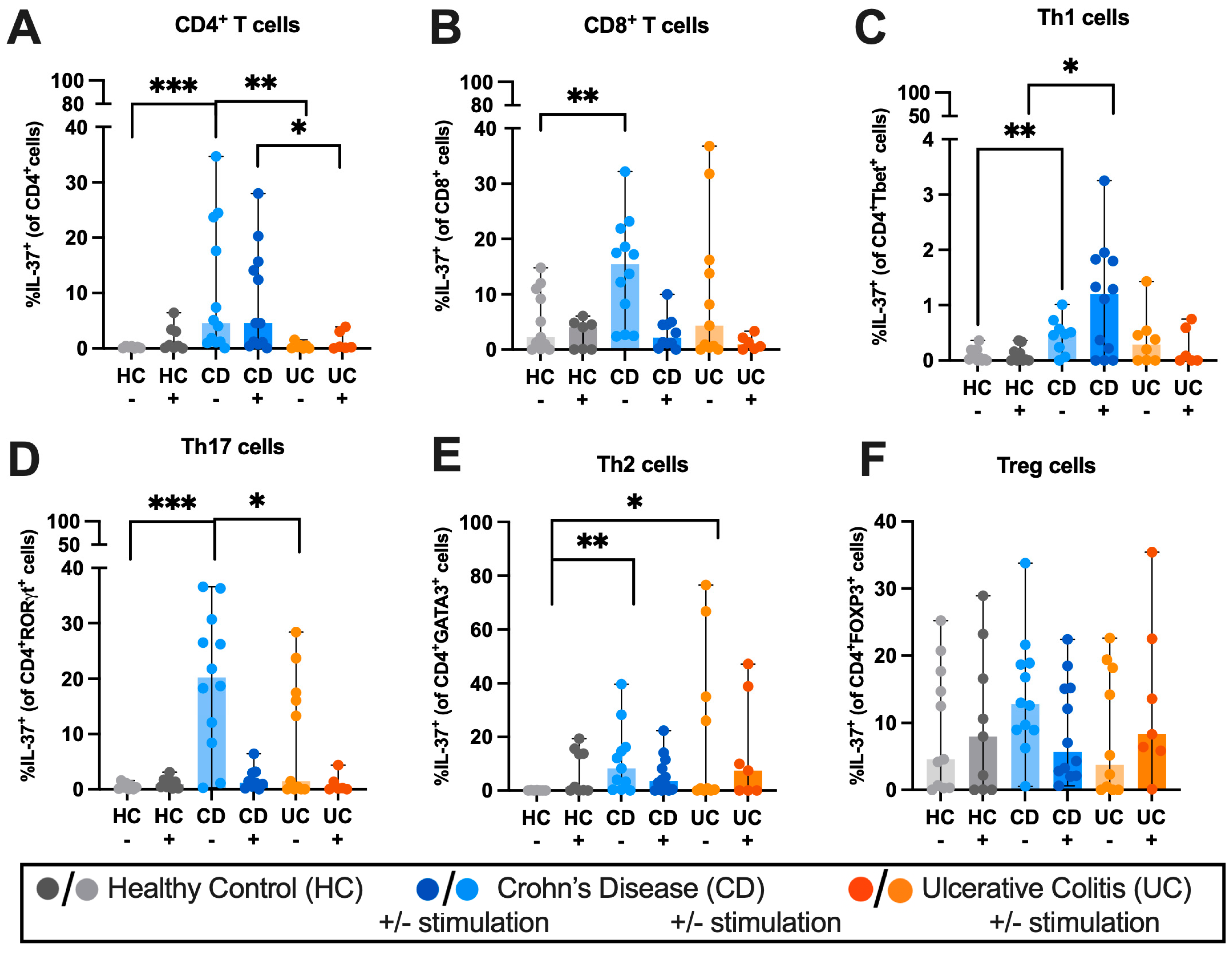
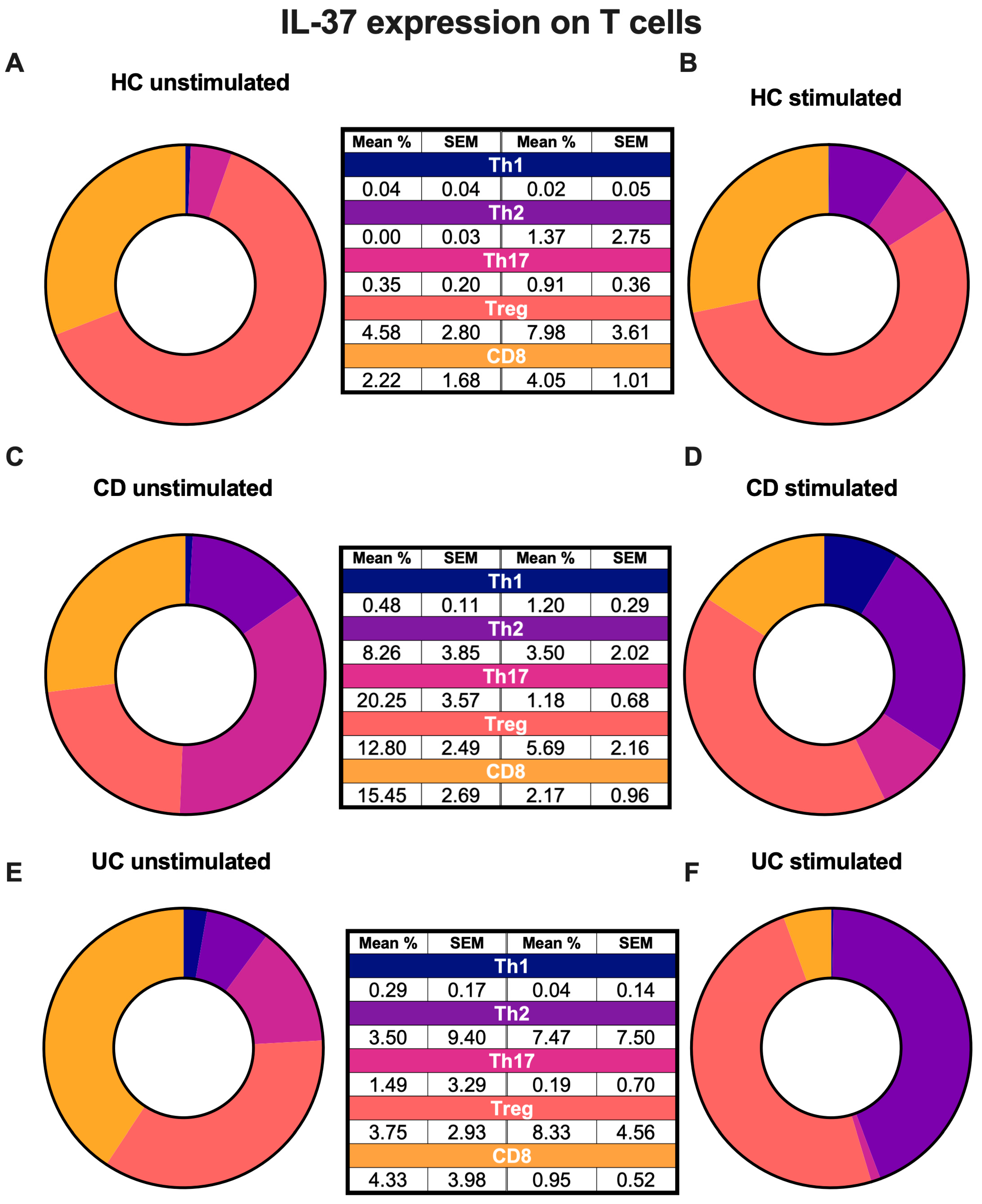
2.1.1. IL-37
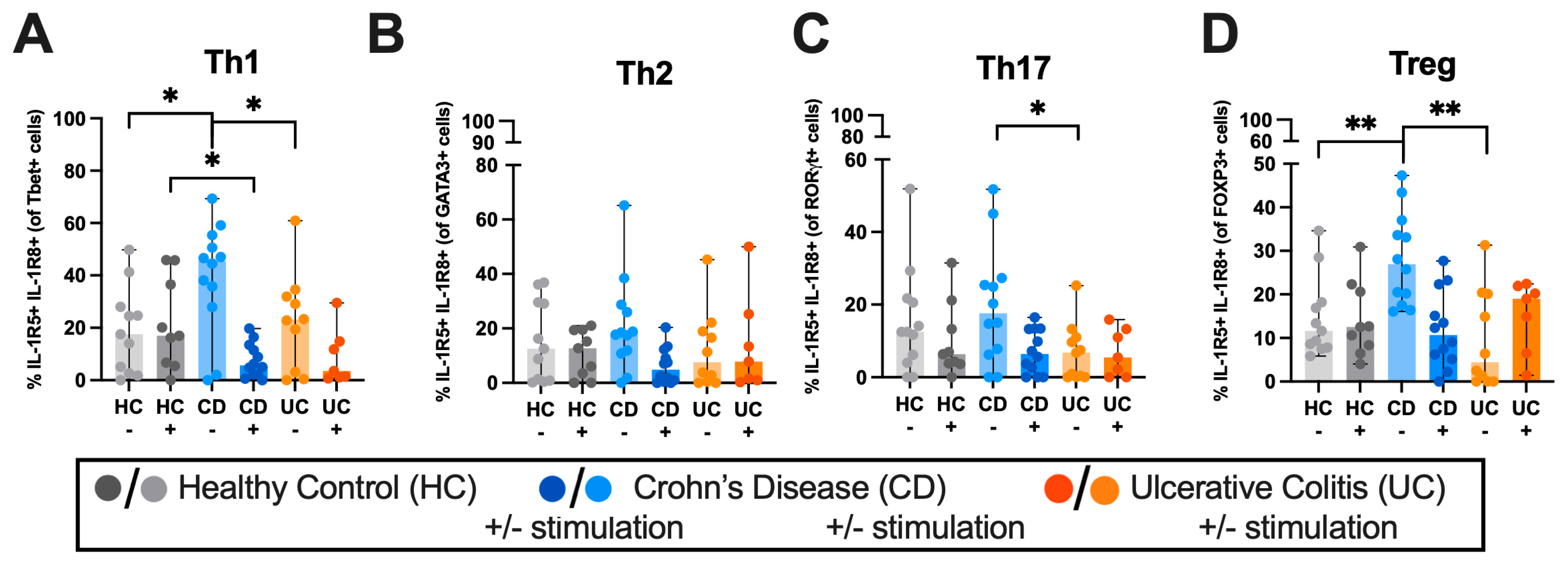
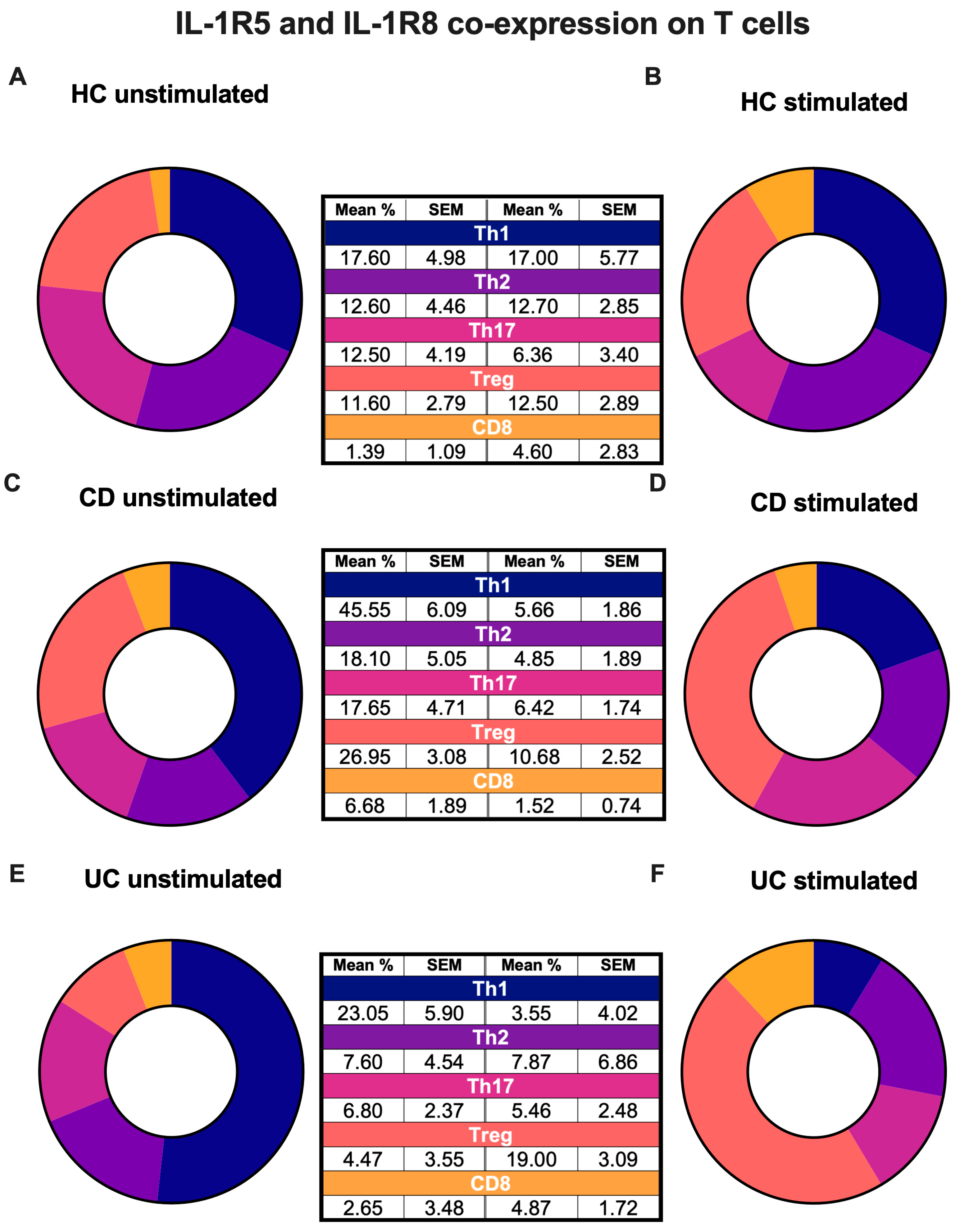
2.1.2. IL-1R5 and IL-1R8
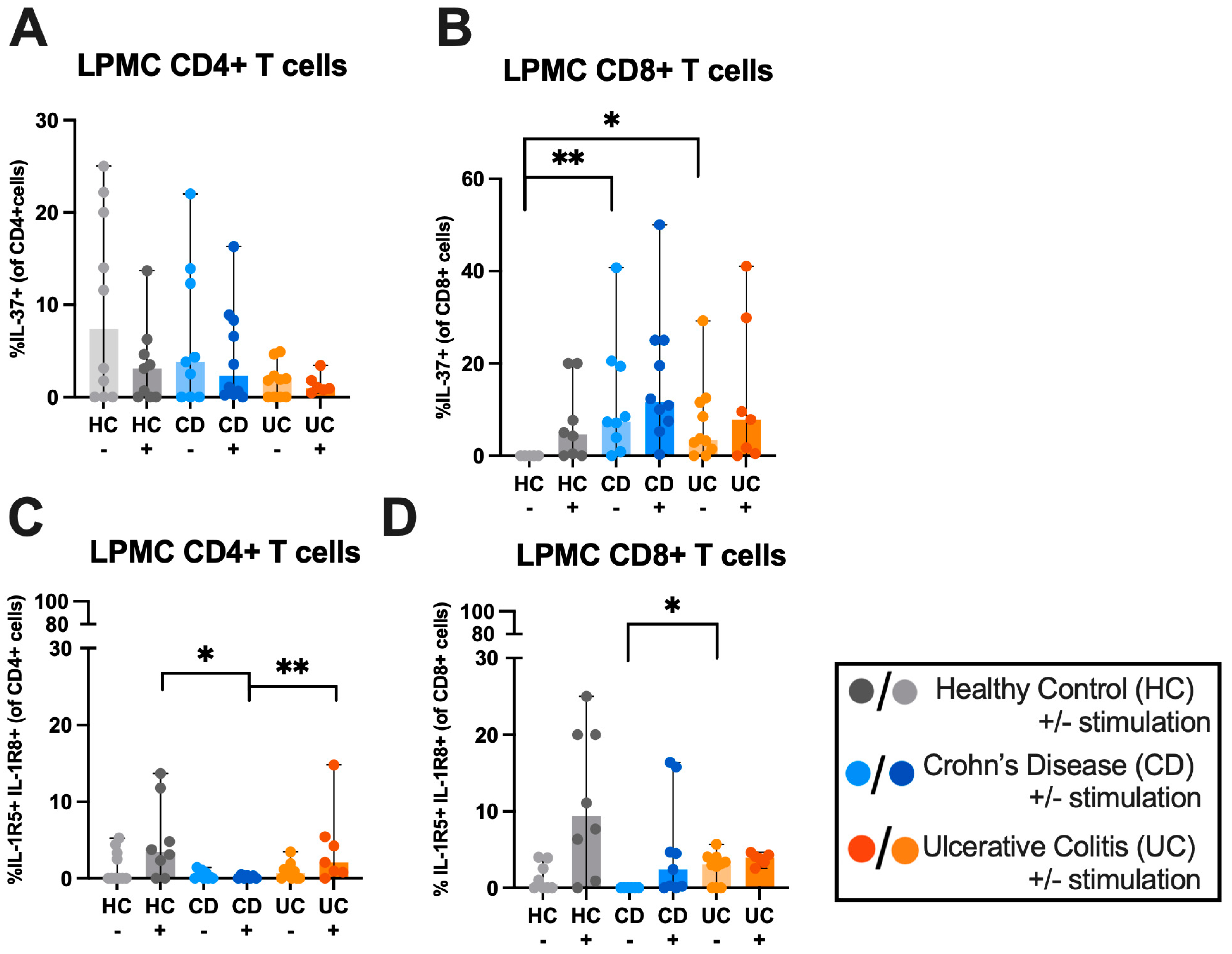
2.2. LPMC-Derived IL-37 Is Elevated in IBD CD8+ T-Cells, While Its Receptors Are Decreased in IBD CD4+ T-Cells
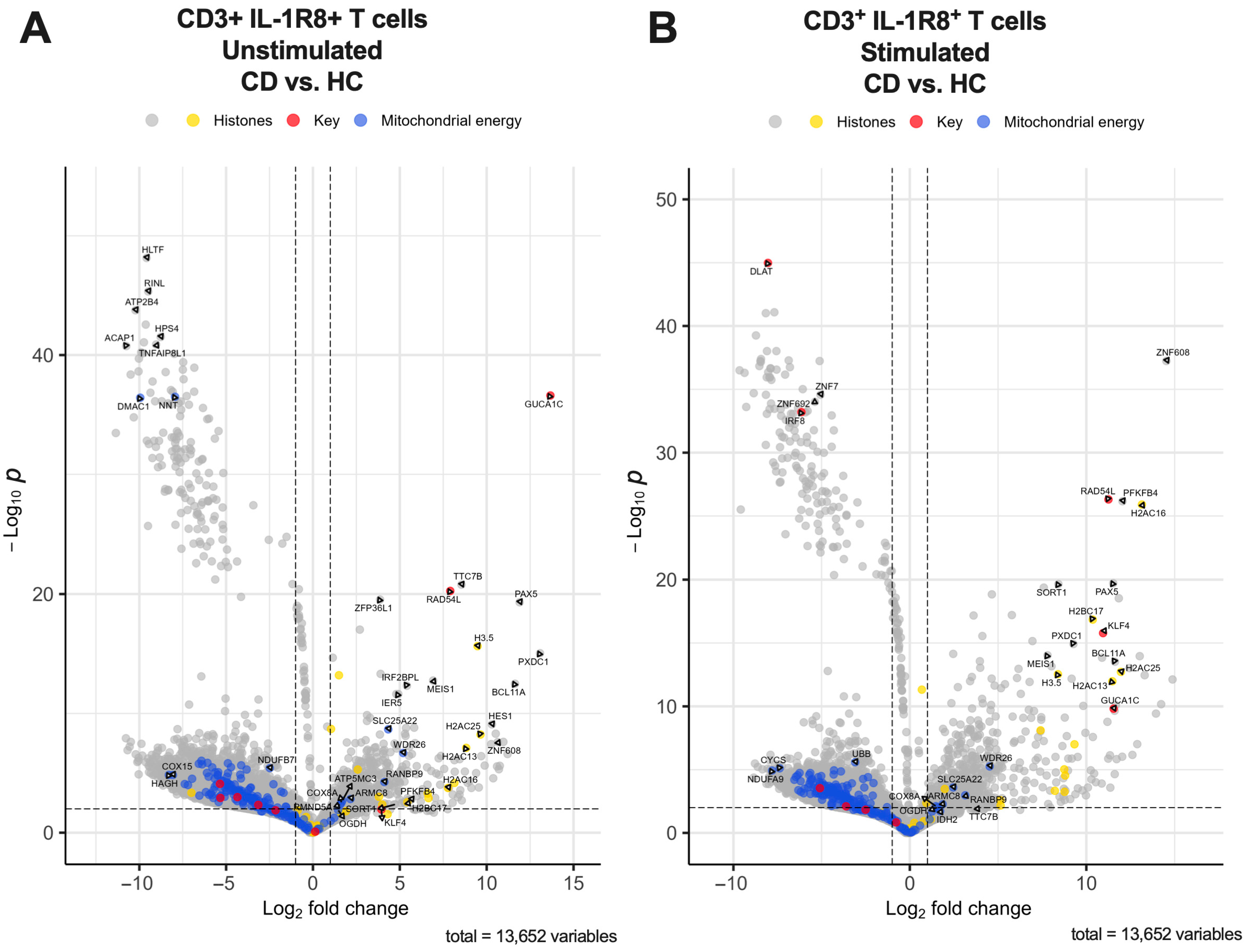
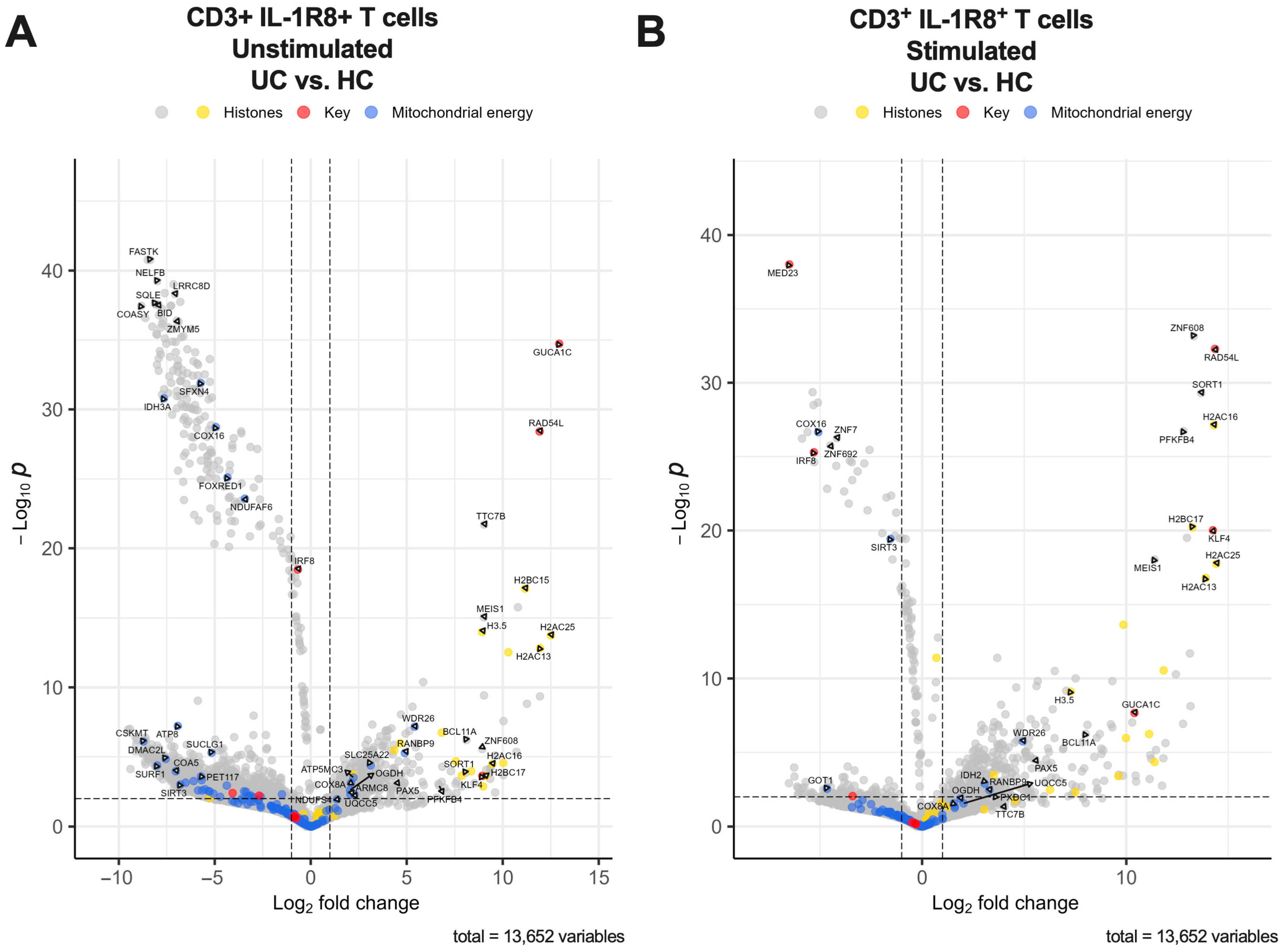
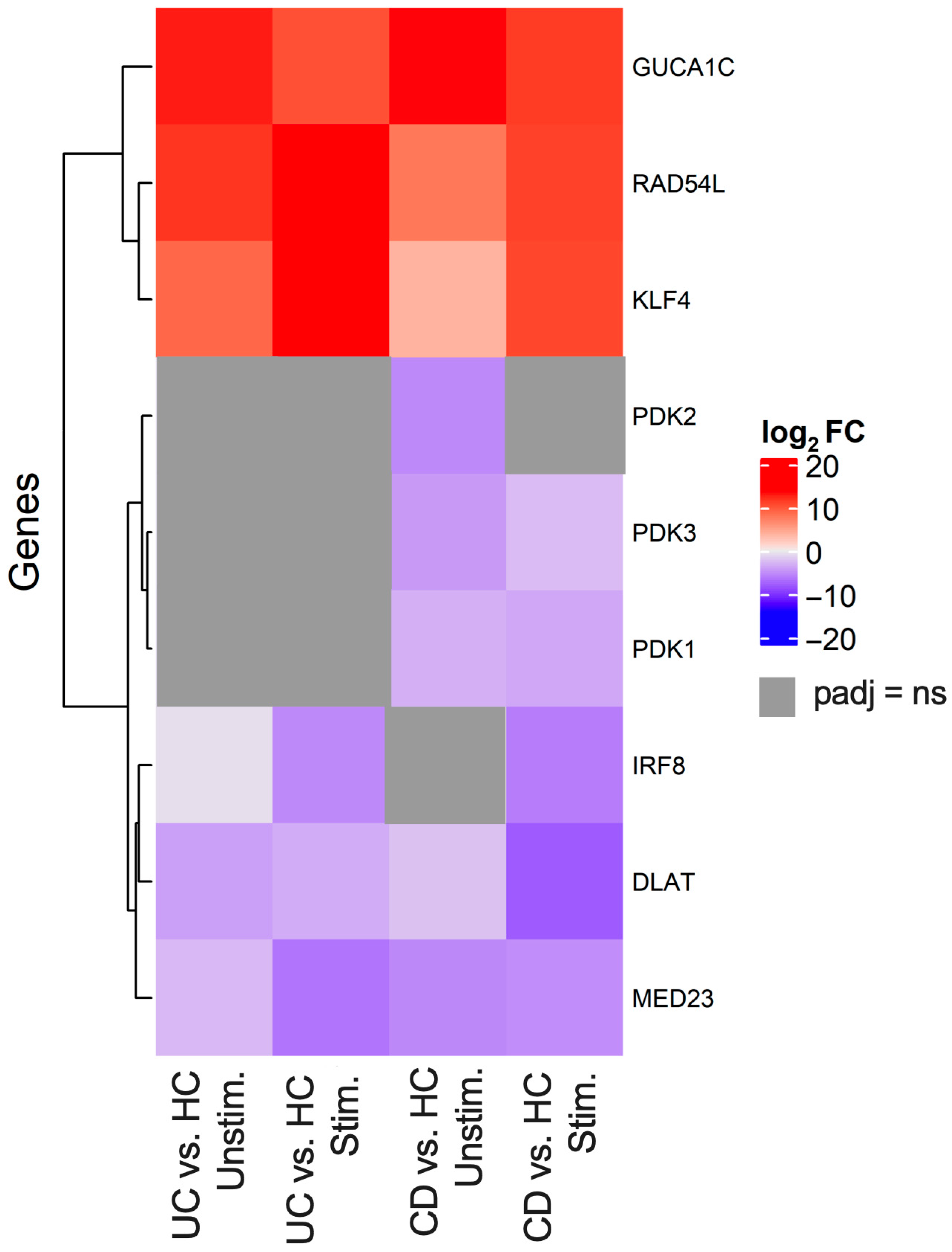
2.3. RNA Sequencing Reveals Transcription Signatures Unique to IBD
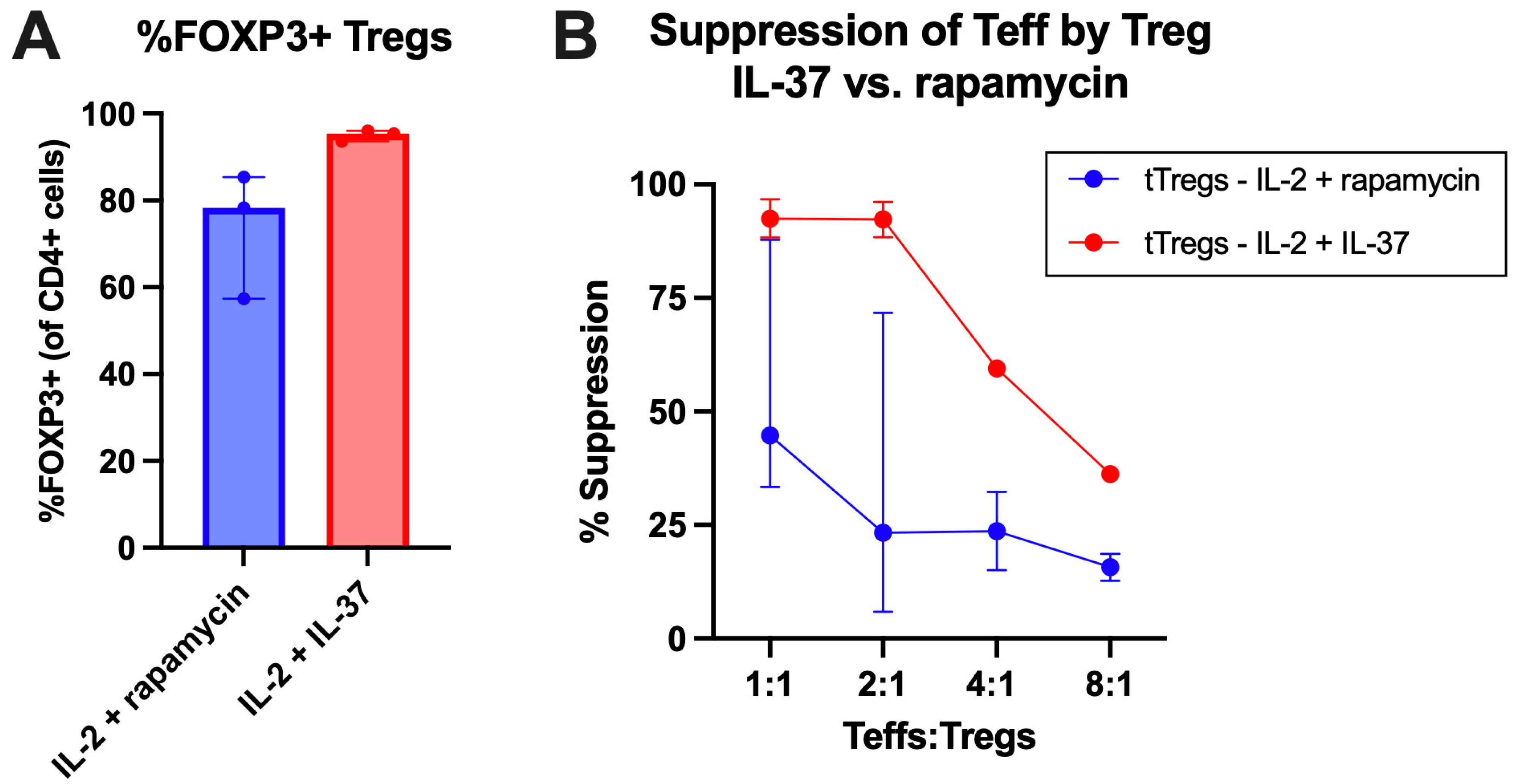
2.4. IL-37 Supplementation May Be Beneficial for Tregs in IBD
3. Discussion
3.1. IL-37 Is Differentially Expressed Among PBMC T-Cell Subsets in IBD
3.2. The IL-37 Receptor, IL-1R5 and IL-1R8, Are Differentially Expressed in PBMC-Derived T-Cells in IBD
3.3. LPMC-Derived IL-37 Is Elevated in IBD CD8+ T-Cells, While Its Receptor Is Decreased in IBD CD4+ T-Cells
3.4. IL-1R8+ T-Cell Gene Signature Reveals Hallmarks of IBD
3.5. IL-37 Supplementation May Be Beneficial for Tregs in IBD
3.6. The Context-Specific Effects of IL-37 in IBD
4. Methods
4.1. Informed Consent Statement
4.2. Patient Sample Collection
4.3. Peripheral Blood Mononuclear Cell Isolation
4.4. Lamina Propria Mononuclear Cell Isolation
4.5. Stimulation of PBMCs and LPMCs
4.6. Flow Cytometry for Immunophenotyping
4.7. Sample Preparation for RNAseq
4.8. RNAseq Analysis
4.9. In Vitro Treg Cell Culture
4.10. Suppression Assay Co-Culture
4.11. Statistical Analysis
5. Conclusions and Future Directions
Supplementary Materials
Author Contributions
Funding
Institutional Review Board Statement
Informed Consent Statement
Data Availability Statement
Acknowledgments
Conflicts of Interest
References
- Ng, S.C.; Shi, H.Y.; Hamidi, N.; Underwood, F.E.; Tang, W.; Benchimol, E.I.; Panaccione, R.; Ghosh, S.; Wu, J.C.Y.; Chan, F.K.L.; et al. Worldwide incidence and prevalence of inflammatory bowel disease in the 21st century: A systematic review of population-based studies. Lancet 2017, 390, 2769–2778, Erratum in Lancet 2020, 396, e56. [Google Scholar] [CrossRef] [PubMed]
- Vieujean, S.; Jairath, V.; Peyrin-Biroulet, L.; Dubinsky, M.; Iacucci, M.; Magro, F.; Danese, S. Understanding the therapeutic toolkit for inflammatory bowel disease. Nat. Rev. Gastroenterol. Hepatol. 2025, 22, 371–394, Correction in Nat. Rev. Gastroenterol. Hepatol. 2025, 22, 455. [Google Scholar] [CrossRef]
- Chang, J.T. Pathophysiology of Inflammatory Bowel Diseases. N. Engl. J. Med. 2020, 383, 2652–2664. [Google Scholar] [CrossRef]
- Schultsz, C.; Van Den Berg, F.M.; Ten Kate, F.W.; Tytgat, G.N.; Dankert, J. The intestinal mucus layer from patients with inflammatory bowel disease harbors high numbers of bacteria compared with controls. Gastroenterology 1999, 117, 1089–1097. [Google Scholar] [CrossRef]
- Prorok-Hamon, M.; Friswell, M.K.; Alswied, A.; Roberts, C.L.; Song, F.; Flanagan, P.K.; Knight, P.; Codling, C.; Marchesi, J.R.; Winstanley, C.; et al. Colonic mucosa-associated diffusely adherent afaC+ Escherichia coli expressing lpfA and pks are increased in inflammatory bowel disease and colon cancer. Gut 2014, 63, 761–770. [Google Scholar] [CrossRef] [PubMed]
- Takaishi, H.; Matsuki, T.; Nakazawa, A.; Takada, T.; Kado, S.; Asahara, T.; Kamada, N.; Sakuraba, A.; Yajima, T.; Higuchi, H.; et al. Imbalance in intestinal microflora constitution could be involved in the pathogenesis of inflammatory bowel disease. Int. J. Med. Microbiol. 2008, 298, 463–472. [Google Scholar] [CrossRef]
- Parronchi, P.; Romagnani, P.; Annunziato, F.; Sampognaro, S.; Becchio, A.; Giannarini, L.; Maggi, E.; Pupilli, C.; Tonelli, F.; Romagnani, S. Type 1 T-helper cell predominance and interleukin-12 expression in the gut of patients with Crohn’s disease. Am. J. Pathol. 1997, 150, 823–832. [Google Scholar] [PubMed]
- Niessner, M.; Volk, B.A. Altered Th1/Th2 cytokine profiles in the intestinal mucosa of patients with inflammatory bowel disease as assessed by quantitative reversed transcribed polymerase chain reaction (RT-PCR). Clin. Exp. Immunol. 1995, 101, 428–435. [Google Scholar] [CrossRef]
- Schmidt, C.; Giese, T.; Ludwig, B.; Mueller-Molaian, I.; Marth, T.; Zeuzem, S.; Meuer, S.C.; Stallmach, A. Expression of interleukin-12-related cytokine transcripts in inflammatory bowel disease: Elevated interleukin-23p19 and interleukin-27p28 in Crohn’s disease but not in ulcerative colitis. Inflamm. Bowel Dis. 2005, 11, 16–23. [Google Scholar] [CrossRef]
- Fuss, I.J.; Heller, F.; Boirivant, M.; Leon, F.; Yoshida, M.; Fichtner-Feigl, S.; Yang, Z.; Exley, M.; Kitani, A.; Blumberg, R.S.; et al. Nonclassical CD1d-restricted NK T cells that produce IL-13 characterize an atypical Th2 response in ulcerative colitis. J. Clin. Invest. 2004, 113, 1490–1497. [Google Scholar] [CrossRef] [PubMed]
- Wang, Y.; Liu, X.P.; Zhao, Z.B.; Chen, J.H.; Yu, C.G. Expression of CD4+ forkhead box P3 (FOXP3)+ regulatory T cells in inflammatory bowel disease. J. Dig. Dis. 2011, 12, 286–294. [Google Scholar] [CrossRef]
- Maul, J.; Loddenkemper, C.; Mundt, P.; Berg, E.; Giese, T.; Stallmach, A.; Zeitz, M.; Duchmann, R. Peripheral and intestinal regulatory CD4+ CD25(high) T cells in inflammatory bowel disease. Gastroenterology 2005, 128, 1868–1878. [Google Scholar] [CrossRef] [PubMed]
- Hori, S.; Nomura, T.; Sakaguchi, S. Control of regulatory T cell development by the transcription factor Foxp3. Science 2003, 299, 1057–1061. [Google Scholar] [CrossRef]
- Fontenot, J.D.; Gavin, M.A.; Rudensky, A.Y. Foxp3 programs the development and function of CD4(+)CD25(+) regulatory T cells. Nat. Immunol. 2003, 4, 330–336. [Google Scholar] [CrossRef]
- Vignali, D.A.; Collison, L.W.; Workman, C.J. How regulatory T cells work. Nat. Rev. Immunol. 2008, 8, 523–532. [Google Scholar] [CrossRef]
- Hadis, U.; Wahl, B.; Schulz, O.; Hardtke-Wolenski, M.; Schippers, A.; Wagner, N.; Muller, W.; Sparwasser, T.; Forster, R.; Pabst, O. Intestinal tolerance requires gut homing and expansion of FoxP3+ regulatory T cells in the lamina propria. Immunity 2011, 34, 237–246. [Google Scholar] [CrossRef]
- Hovhannisyan, Z.; Treatman, J.; Littman, D.R.; Mayer, L. Characterization of interleukin-17-producing regulatory T cells in inflamed intestinal mucosa from patients with inflammatory bowel diseases. Gastroenterology 2011, 140, 957–965. [Google Scholar] [CrossRef]
- Takahashi, M.; Nakamura, K.; Honda, K.; Kitamura, Y.; Mizutani, T.; Araki, Y.; Kabemura, T.; Chijiiwa, Y.; Harada, N.; Nawata, H. An inverse correlation of human peripheral blood regulatory T cell frequency with the disease activity of ulcerative colitis. Dig. Dis. Sci. 2006, 51, 677–686. [Google Scholar] [CrossRef] [PubMed]
- Eastaff-Leung, N.; Mabarrack, N.; Barbour, A.; Cummins, A.; Barry, S. Foxp3+ regulatory T cells, Th17 effector cells, and cytokine environment in inflammatory bowel disease. J. Clin. Immunol. 2010, 30, 80–89. [Google Scholar] [CrossRef] [PubMed]
- Li, J.; Ueno, A.; Iacucci, M.; Fort Gasia, M.; Jijon, H.B.; Panaccione, R.; Kaplan, G.G.; Beck, P.L.; Luider, J.; Barkema, H.W.; et al. Crossover Subsets of CD4(+) T Lymphocytes in the Intestinal Lamina Propria of Patients with Crohn’s Disease and Ulcerative Colitis. Dig. Dis. Sci. 2017, 62, 2357–2368. [Google Scholar] [CrossRef]
- Lord, J.D.; Shows, D.M.; Chen, J.; Thirlby, R.C. Human Blood and Mucosal Regulatory T Cells Express Activation Markers and Inhibitory Receptors in Inflammatory Bowel Disease. PLoS ONE 2015, 10, e0136485. [Google Scholar] [CrossRef]
- Veltkamp, C.; Anstaett, M.; Wahl, K.; Moller, S.; Gangl, S.; Bachmann, O.; Hardtke-Wolenski, M.; Langer, F.; Stremmel, W.; Manns, M.P.; et al. Apoptosis of regulatory T lymphocytes is increased in chronic inflammatory bowel disease and reversed by anti-TNFalpha treatment. Gut 2011, 60, 1345–1353. [Google Scholar] [CrossRef] [PubMed]
- Goldberg, R.; Scotta, C.; Cooper, D.; Nissim-Eliraz, E.; Nir, E.; Tasker, S.; Irving, P.M.; Sanderson, J.; Lavender, P.; Ibrahim, F.; et al. Correction of Defective T-Regulatory Cells From Patients With Crohn’s Disease by Ex Vivo Ligation of Retinoic Acid Receptor-alpha. Gastroenterology 2019, 156, 1775–1787. [Google Scholar] [CrossRef] [PubMed]
- Fantini, M.C.; Rizzo, A.; Fina, D.; Caruso, R.; Sarra, M.; Stolfi, C.; Becker, C.; Macdonald, T.T.; Pallone, F.; Neurath, M.F.; et al. Smad7 controls resistance of colitogenic T cells to regulatory T cell-mediated suppression. Gastroenterology 2009, 136, 1308–1316.e3. [Google Scholar] [CrossRef] [PubMed]
- Boraschi, D.; Lucchesi, D.; Hainzl, S.; Leitner, M.; Maier, E.; Mangelberger, D.; Oostingh, G.J.; Pfaller, T.; Pixner, C.; Posselt, G.; et al. IL-37: A new anti-inflammatory cytokine of the IL-1 family. Eur. Cytokine Netw. 2011, 22, 127–147. [Google Scholar] [CrossRef]
- Luo, Y.; Cai, X.; Liu, S.; Wang, S.; Nold-Petry, C.A.; Nold, M.F.; Bufler, P.; Norris, D.; Dinarello, C.A.; Fujita, M. Suppression of antigen-specific adaptive immunity by IL-37 via induction of tolerogenic dendritic cells. Proc. Natl. Acad. Sci. USA 2014, 111, 15178–15183. [Google Scholar] [CrossRef] [PubMed]
- Allaire, J.M.; Poon, A.; Crowley, S.M.; Han, X.; Sharafian, Z.; Moore, N.; Stahl, M.; Bressler, B.; Lavoie, P.M.; Jacobson, K.; et al. Interleukin-37 regulates innate immune signaling in human and mouse colonic organoids. Sci. Rep. 2021, 11, 8206. [Google Scholar] [CrossRef]
- Teufel, L.U.; Matzaraki, V.; Folkman, L.; Ter Horst, R.; Moorlag, S.; Mulders-Manders, C.M.; Netea, M.G.; Krausgruber, T.; Joosten, L.A.B.; Arts, R.J.W. Insights into the multifaceted role of interleukin-37 on human immune cell regulation. Clin. Immunol. 2024, 268, 110368. [Google Scholar] [CrossRef] [PubMed]
- Sullivan, G.P.; Davidovich, P.; Munoz-Wolf, N.; Ward, R.W.; Hernandez Santana, Y.E.; Clancy, D.M.; Gorman, A.; Najda, Z.; Turk, B.; Walsh, P.T.; et al. Myeloid cell-derived proteases produce a proinflammatory form of IL-37 that signals via IL-36 receptor engagement. Sci. Immunol. 2022, 7, eade5728. [Google Scholar] [CrossRef]
- Sharma, S.; Kulk, N.; Nold, M.F.; Graf, R.; Kim, S.H.; Reinhardt, D.; Dinarello, C.A.; Bufler, P. The IL-1 family member 7b translocates to the nucleus and down-regulates proinflammatory cytokines. J. Immunol. 2008, 180, 5477–5482. [Google Scholar] [CrossRef]
- Nold, M.F.; Nold-Petry, C.A.; Zepp, J.A.; Palmer, B.E.; Bufler, P.; Dinarello, C.A. IL-37 is a fundamental inhibitor of innate immunity. Nat. Immunol. 2010, 11, 1014–1022. [Google Scholar] [CrossRef]
- Bulau, A.M.; Nold, M.F.; Li, S.; Nold-Petry, C.A.; Fink, M.; Mansell, A.; Schwerd, T.; Hong, J.; Rubartelli, A.; Dinarello, C.A.; et al. Role of caspase-1 in nuclear translocation of IL-37, release of the cytokine, and IL-37 inhibition of innate immune responses. Proc. Natl. Acad. Sci. USA 2014, 111, 2650–2655. [Google Scholar] [CrossRef] [PubMed]
- Rudloff, I.; Cho, S.X.; Lao, J.C.; Ngo, D.; McKenzie, M.; Nold-Petry, C.A.; Nold, M.F. Monocytes and dendritic cells are the primary sources of interleukin 37 in human immune cells. J. Leukoc. Biol. 2017, 101, 901–911. [Google Scholar] [CrossRef] [PubMed]
- Nold-Petry, C.A.; Lo, C.Y.; Rudloff, I.; Elgass, K.D.; Li, S.; Gantier, M.P.; Lotz-Havla, A.S.; Gersting, S.W.; Cho, S.X.; Lao, J.C.; et al. IL-37 requires the receptors IL-18Ralpha and IL-1R8 (SIGIRR) to carry out its multifaceted anti-inflammatory program upon innate signal transduction. Nat. Immunol. 2015, 16, 354–365. [Google Scholar] [CrossRef]
- Shuai, X.; Wei-min, L.; Tong, Y.L.; Dong, N.; Sheng, Z.Y.; Yao, Y.M. Expression of IL-37 contributes to the immunosuppressive property of human CD4+CD25+ regulatory T cells. Sci. Rep. 2015, 5, 14478. [Google Scholar] [CrossRef]
- Osborne, D.G.; Domenico, J.; Fujita, M. Expression of IL-37 Induces a Regulatory T-Cell-like Phenotype and Function in Jurkat Cells. Cells 2022, 11, 2565. [Google Scholar] [CrossRef]
- Wang, Z.; Zeng, F.L.; Hu, Y.W.; Wang, X.Y.; Zhao, F.L.; Zhou, P.; Hu, J.; Xiao, Y.Y.; Hu, Z.L.; Guo, M.F.; et al. Interleukin-37 promotes colitis-associated carcinogenesis via SIGIRR-mediated cytotoxic T cells dysfunction. Signal Transduct. Target Ther. 2022, 7, 19. [Google Scholar] [CrossRef]
- McNamee, E.N.; Masterson, J.C.; Jedlicka, P.; McManus, M.; Grenz, A.; Collins, C.B.; Nold, M.F.; Nold-Petry, C.; Bufler, P.; Dinarello, C.A.; et al. Interleukin 37 expression protects mice from colitis. Proc. Natl. Acad. Sci. USA 2011, 108, 16711–16716. [Google Scholar] [CrossRef] [PubMed]
- Cho, S.X.; Rudloff, I.; Lao, J.C.; Pang, M.A.; Goldberg, R.; Bui, C.B.; McLean, C.A.; Stock, M.; Klassert, T.E.; Slevogt, H.; et al. Characterization of the pathoimmunology of necrotizing enterocolitis reveals novel therapeutic opportunities. Nat. Commun. 2020, 11, 5794. [Google Scholar] [CrossRef]
- Chen, Z.; Wang, S.; Li, L.; Huang, Z.; Ma, K. Anti-Inflammatory Effect of IL-37-Producing T-Cell Population in DSS-Induced Chronic Inflammatory Bowel Disease in Mice. Int. J. Mol. Sci. 2018, 19, 3884. [Google Scholar] [CrossRef]
- Cong, J.; Wu, D.; Dai, H.; Ma, Y.; Liao, C.; Li, L.; Ye, L.; Huang, Z. Interleukin-37 exacerbates experimental colitis in an intestinal microbiome-dependent fashion. Theranostics 2022, 12, 5204–5219. [Google Scholar] [CrossRef]
- Li, Y.; Wang, Y.; Liu, Y.; Wang, Y.; Zuo, X.; Li, Y.; Lu, X. The possible role of the novel cytokines il-35 and il-37 in inflammatory bowel disease. Mediat. Inflamm. 2014, 2014, 136329. [Google Scholar] [CrossRef]
- Imaeda, H.; Takahashi, K.; Fujimoto, T.; Kasumi, E.; Ban, H.; Bamba, S.; Sonoda, H.; Shimizu, T.; Fujiyama, Y.; Andoh, A. Epithelial expression of interleukin-37b in inflammatory bowel disease. Clin. Exp. Immunol. 2013, 172, 410–416. [Google Scholar] [CrossRef]
- Wang, W.Q.; Dong, K.; Zhou, L.; Jiao, G.H.; Zhu, C.Z.; Li, W.W.; Yu, G.; Wu, W.T.; Chen, S.; Sun, Z.N.; et al. IL-37b gene transfer enhances the therapeutic efficacy of mesenchumal stromal cells in DSS-induced colitis mice. Acta Pharmacol. Sin. 2015, 36, 1377–1387. [Google Scholar] [CrossRef]
- Krohn, L.; Azabdaftari, A.; Heuberger, J.; Hudert, C.; Zilbauer, M.; Breiderhoff, T.; Bufler, P. Modulation of intestinal IL-37 expression and its impact on the epithelial innate immune response and barrier integrity. Front. Immunol. 2023, 14, 1261666. [Google Scholar] [CrossRef] [PubMed]
- Strauss, L.; Whiteside, T.L.; Knights, A.; Bergmann, C.; Knuth, A.; Zippelius, A. Selective survival of naturally occurring human CD4+CD25+Foxp3+ regulatory T cells cultured with rapamycin. J. Immunol. 2007, 178, 320–329. [Google Scholar] [CrossRef]
- Neurath, M.F. Cytokines in inflammatory bowel disease. Nat. Rev. Immunol. 2014, 14, 329–342. [Google Scholar] [CrossRef]
- Rudloff, I.; Godsell, J.; Nold-Petry, C.A.; Harris, J.; Hoi, A.; Morand, E.F.; Nold, M.F. Brief Report: Interleukin-38 Exerts Antiinflammatory Functions and Is Associated With Disease Activity in Systemic Lupus Erythematosus. Arthritis Rheumatol. 2015, 67, 3219–3225. [Google Scholar] [CrossRef] [PubMed]
- Bulek, K.; Swaidani, S.; Qin, J.; Lu, Y.; Gulen, M.F.; Herjan, T.; Min, B.; Kastelein, R.A.; Aronica, M.; Kosz-Vnenchak, M.; et al. The essential role of single Ig IL-1 receptor-related molecule/Toll IL-1R8 in regulation of Th2 immune response. J. Immunol. 2009, 182, 2601–2609. [Google Scholar] [CrossRef]
- Nold-Petry, C.A.; Nold, M.F. Rationale for IL-37 as a novel therapeutic agent in inflammation. Expert Rev. Clin. Immunol. 2022, 18, 1203–1206. [Google Scholar] [CrossRef]
- Fonseca-Camarillo, G.; Furuzawa-Carballeda, J.; Yamamoto-Furusho, J.K. Interleukin 35 (IL-35) and IL-37: Intestinal and peripheral expression by T and B regulatory cells in patients with Inflammatory Bowel Disease. Cytokine 2015, 75, 389–402. [Google Scholar] [CrossRef]
- Seidelin, J.B.; Bjerrum, J.T.; Coskun, M.; Widjaya, B.; Vainer, B.; Nielsen, O.H. IL-33 is upregulated in colonocytes of ulcerative colitis. Immunol. Lett. 2010, 128, 80–85. [Google Scholar] [CrossRef]
- Ueno-Shuto, K.; Kato, K.; Tasaki, Y.; Sato, M.; Sato, K.; Uchida, Y.; Sakai, H.; Ono, T.; Suico, M.A.; Mitsutake, K.; et al. Lipopolysaccharide decreases single immunoglobulin interleukin-1 receptor-related molecule (SIGIRR) expression by suppressing specificity protein 1 (Sp1) via the Toll-like receptor 4 (TLR4)-p38 pathway in monocytes and neutrophils. J. Biol. Chem. 2014, 289, 18097–18109. [Google Scholar] [CrossRef]
- Li, L.; Wei, J.; Suber, T.L.; Ye, Q.; Miao, J.; Li, S.; Taleb, S.J.; Tran, K.C.; Tamaskar, A.S.; Zhao, J.; et al. IL-37-induced activation of glycogen synthase kinase 3beta promotes IL-1R8/Sigirr phosphorylation, internalization, and degradation in lung epithelial cells. J. Cell Physiol. 2021, 236, 5676–5685. [Google Scholar] [CrossRef]
- Seo, H.H.; Lee, C.Y.; Lee, J.; Lim, S.; Choi, E.; Park, J.C.; Lee, S.; Hwang, K.C. The role of nuclear factor of activated T cells during phorbol myristate acetate-induced cardiac differentiation of mesenchymal stem cells. Stem. Cell Res. Ther. 2016, 7, 90. [Google Scholar] [CrossRef]
- Gulen, M.F.; Kang, Z.; Bulek, K.; Youzhong, W.; Kim, T.W.; Chen, Y.; Altuntas, C.Z.; Sass Bak-Jensen, K.; McGeachy, M.J.; Do, J.S.; et al. The receptor SIGIRR suppresses Th17 cell proliferation via inhibition of the interleukin-1 receptor pathway and mTOR kinase activation. Immunity 2010, 32, 54–66. [Google Scholar] [CrossRef]
- Sorkin, A.; Duex, J.E. Quantitative analysis of endocytosis and turnover of epidermal growth factor (EGF) and EGF receptor. Curr. Protoc. Cell Biol. 2010, 15, 15.14.1–15.14.20. [Google Scholar] [CrossRef]
- Li, L.; Wei, J.; Li, S.; Jacko, A.M.; Weathington, N.M.; Mallampalli, R.K.; Zhao, J.; Zhao, Y. The deubiquitinase USP13 stabilizes the anti-inflammatory receptor IL-1R8/Sigirr to suppress lung inflammation. EBioMedicine 2019, 45, 553–562. [Google Scholar] [CrossRef]
- Huangfu, W.C.; Fuchs, S.Y. Ubiquitination-dependent regulation of signaling receptors in cancer. Genes Cancer 2010, 1, 725–734. [Google Scholar] [CrossRef]
- Rajagopal, S.; Shenoy, S.K. GPCR desensitization: Acute and prolonged phases. Cell Signal. 2018, 41, 9–16. [Google Scholar] [CrossRef]
- Monaco, G.; Lee, B.; Xu, W.; Mustafah, S.; Hwang, Y.Y.; Carre, C.; Burdin, N.; Visan, L.; Ceccarelli, M.; Poidinger, M.; et al. RNA-Seq Signatures Normalized by mRNA Abundance Allow Absolute Deconvolution of Human Immune Cell Types. Cell Rep. 2019, 26, 1627–1640 e1627. [Google Scholar] [CrossRef]
- Fortino, V.; Wisgrill, L.; Werner, P.; Suomela, S.; Linder, N.; Jalonen, E.; Suomalainen, A.; Marwah, V.; Kero, M.; Pesonen, M.; et al. Machine-learning-driven biomarker discovery for the discrimination between allergic and irritant contact dermatitis. Proc. Natl. Acad. Sci. USA 2020, 117, 33474–33485. [Google Scholar] [CrossRef] [PubMed]
- Nah, J.; Seong, R.H. Kruppel-like factor 4 regulates the cytolytic effector function of exhausted CD8 T cells. Sci. Adv. 2022, 8, eadc9346. [Google Scholar] [CrossRef]
- Zhou, L.; Zhu, L.; Wu, X.; Hu, S.; Zhang, S.; Ning, M.; Yu, J.; Chen, M. Decreased TMIGD1 aggravates colitis and intestinal barrier dysfunction via the BANF1-NF-kappaB pathway in Crohn’s disease. BMC Med. 2023, 21, 287. [Google Scholar] [CrossRef]
- Vieujean, S.; Caron, B.; Haghnejad, V.; Jouzeau, J.Y.; Netter, P.; Heba, A.C.; Ndiaye, N.C.; Moulin, D.; Barreto, G.; Danese, S.; et al. Impact of the Exposome on the Epigenome in Inflammatory Bowel Disease Patients and Animal Models. Int. J. Mol. Sci. 2022, 23, 7611. [Google Scholar] [CrossRef]
- Sun, Y.; Zhu, X.; Chen, X.; Liu, H.; Xu, Y.; Chu, Y.; Wang, G.; Liu, X. The mediator subunit Med23 contributes to controlling T-cell activation and prevents autoimmunity. Nat. Commun. 2014, 5, 5225. [Google Scholar] [CrossRef]
- Levi, B.Z.; Hashmueli, S.; Gleit-Kielmanowicz, M.; Azriel, A.; Meraro, D. ICSBP/IRF-8 transactivation: A tale of protein-protein interaction. J. Interferon. Cytokine Res. 2002, 22, 153–160. [Google Scholar] [CrossRef]
- Donnelly, R.P.; Finlay, D.K. Glucose, glycolysis and lymphocyte responses. Mol. Immunol. 2015, 68, 513–519. [Google Scholar] [CrossRef]
- Lee, H.; Jeon, J.H.; Lee, Y.J.; Kim, M.J.; Kwon, W.H.; Chanda, D.; Thoudam, T.; Pagire, H.S.; Pagire, S.H.; Ahn, J.H.; et al. Inhibition of Pyruvate Dehydrogenase Kinase 4 in CD4(+) T Cells Ameliorates Intestinal Inflammation. Cell Mol. Gastroenterol. Hepatol. 2023, 15, 439–461. [Google Scholar] [CrossRef]
- Chen, Y.; Li, X.; Sun, R.; Ji, J.; Yang, F.; Tian, W.; Ji, W.; Huang, Q. A broad cuproptosis landscape in inflammatory bowel disease. Front. Immunol. 2022, 13, 1031539. [Google Scholar] [CrossRef]
- Yang, C.; Wang, W.; Li, S.; Qiao, Z.; Ma, X.; Yang, M.; Zhang, J.; Cao, L.; Yao, S.; Yang, Z.; et al. Identification of cuproptosis hub genes contributing to the immune microenvironment in ulcerative colitis using bioinformatic analysis and experimental verification. Front. Immunol. 2023, 14, 1113385. [Google Scholar] [CrossRef]
- Brenna, O.; Bruland, T.; Furnes, M.W.; Granlund, A.; Drozdov, I.; Emgard, J.; Bronstad, G.; Kidd, M.; Sandvik, A.K.; Gustafsson, B.I. The guanylate cyclase-C signaling pathway is down-regulated in inflammatory bowel disease. Scand. J. Gastroenterol. 2015, 50, 1241–1252. [Google Scholar] [CrossRef]
- Camilleri, M. Guanylate cyclase C agonists: Emerging gastrointestinal therapies and actions. Gastroenterology 2015, 148, 483–487. [Google Scholar] [CrossRef]
- Desreumaux, P.; Foussat, A.; Allez, M.; Beaugerie, L.; Hebuterne, X.; Bouhnik, Y.; Nachury, M.; Brun, V.; Bastian, H.; Belmonte, N.; et al. Safety and Efficacy of Antigen-Specific Regulatory T-Cell Therapy for Patients With Refractory Crohn’s Disease. Gastroenterology 2012, 143, 1207–1217.e2. [Google Scholar] [CrossRef]
- Ellisdon, A.M.; Nold-Petry, C.A.; D’Andrea, L.; Cho, S.X.; Lao, J.C.; Rudloff, I.; Ngo, D.; Lo, C.Y.; Soares da Costa, T.P.; Perugini, M.A.; et al. Homodimerization attenuates the anti-inflammatory activity of interleukin-37. Sci. Immunol. 2017, 2, eaaj1548. [Google Scholar] [CrossRef]
- Tresoldi, E.; Dell’Albani, I.; Stabilini, A.; Jofra, T.; Valle, A.; Gagliani, N.; Bondanza, A.; Roncarolo, M.G.; Battaglia, M. Stability of human rapamycin-expanded CD4+CD25+ T regulatory cells. Haematologica 2011, 96, 1357–1365. [Google Scholar] [CrossRef]
- Xu, Y.; Ou, J.; Zhang, C.; Chen, J.; Chen, J.; Li, A.; Huang, B.; Zhao, X. Rapamycin promotes the intestinal barrier repair in ulcerative colitis via the mTOR/PBLD/AMOT signaling pathway. Biochim. Biophys. Acta Mol. Basis Dis. 2024, 1870, 167287. [Google Scholar] [CrossRef] [PubMed]
- Irving, P.M.; Seah, D.; Centritto, A.; Clough, J.; Canavan, J.; Goldberg, R.; Prevost, A.T.; Vasconcelos, J.C.; Lyne, M.; Palmer Joyce, J.; et al. P999 First in human treatment of Crohn’s disease with autologous ex-vivo expanded polyclonal, gut-targeted regulatory T cells: Initial results of the TRIBUTE feasibility study. J. Crohn’s Colitis 2024, 18, i1812. [Google Scholar] [CrossRef]
- Galaxy, C. The Galaxy platform for accessible, reproducible, and collaborative data analyses: 2024 update. Nucleic Acids Res. 2024, 52, W83–W94. [Google Scholar] [CrossRef] [PubMed]
- Andrews, S. FastQC A Quality Control tool for High Throughput Sequence Data; Babraham Bioinformatics: Cambridge, UK, 2010. [Google Scholar]
- Ewels, P.; Magnusson, M.; Lundin, S.; Kaller, M. MultiQC: Summarize analysis results for multiple tools and samples in a single report. Bioinformatics 2016, 32, 3047–3048. [Google Scholar] [CrossRef]
- Martin, M. Cutadapt removes adapter sequences from high-throughput sequencing reads. EMBnet J. 2011, 17, 3. [Google Scholar] [CrossRef]
- Kim, D.; Langmead, B.; Salzberg, S.L. HISAT: A fast spliced aligner with low memory requirements. Nat. Methods 2015, 12, 357–360. [Google Scholar] [CrossRef]
- Liao, Y.; Smyth, G.K.; Shi, W. featureCounts: An efficient general purpose program for assigning sequence reads to genomic features. Bioinformatics 2014, 30, 923–930. [Google Scholar] [CrossRef] [PubMed]
- The R Core Team. R: A Language and Environment for Statistical Computing; R Foundation for Statistical Computing: Vienna, Austria, 2024. [Google Scholar]
- Love, M.I.; Huber, W.; Anders, S. Moderated estimation of fold change and dispersion for RNA-seq data with DESeq2. Genome Biol. 2014, 15, 550. [Google Scholar] [CrossRef] [PubMed]
- Blighe, K.; Rana, S.; Lewis, M. EnhancedVolcano: Publication-Ready Volcano Plots with Enhanced Colouring and Labeling. 2018. Available online: https://bioconductor.org/packages/EnhancedVolcano (accessed on 30 April 2025). [CrossRef]

| Characteristic | Value |
|---|---|
| HC | 18 |
| Age (years), median (range) | 50 (23–75) |
| Female sex, n (%) | 11 (61%) |
| Biopsies obtained, n (%) | 10 (55%) |
| Blood obtained, n (%) | 18 (100%) |
| CD Patients | 15 |
| Age (years), median (range) | 27 (19–62) |
| Female sex, n (%) | 6 (40%) |
| Medical therapy, n (%) | |
| Biologics: | |
| Infliximab | 4 (26%) |
| Adalimumab | 4 (26%) |
| Ustekinumab | 3 (20%) |
| 5-aminosalicylic acid Corticosteroids | 2 (13%) 1 (6.7%) |
| Other immunomodulators | 3 (20%) |
| No therapy | 2 (13%) |
| Biopsies obtained, n (%) | 10 (67%) |
| Evidence of mucosal inflammation, n (%) Blood obtained, n (%) | 3 (30%) 15 (100%) |
| UC Patients | 14 |
| Age (years), median (range) | 38 (21–58) |
| Female sex, n (%) | 7 (50%) |
| Medical therapy, n (%) | |
| Biologics: | |
| Infliximab | 3 (21%) |
| Vedolizumab | 2 (14%) |
| 5-aminosalicylic acid | 9 (64%) |
| Other immunomodulators Unreported | 5 (35%) 1 (7.1%) |
| Biopsies obtained, n (%) | 10 (71%) |
| Evidence of mucosal inflammation, n (%) Blood obtained, n (%) | 5 (50%) 14 (100%) |
| Specificity | Clone | Fluorochrome | Source | Catalogue Number |
|---|---|---|---|---|
| All panels | ||||
| Live/Dead Surface Antibodies: | N/A | Fixable Viability Stain 780 | BD | 565388 |
| CD4 | SK3 (Leu3a) | BUV395 | BD | 563550 |
| CD8 | SK1 | Alexa Fluor 700 | BioLegend | 344724 |
| IL-1R5 (IL-18Rα) | 70625 | Alexa Fluor 488 | R&D | FAB840G |
| IL-1R8 (SIGIRR) | A-4 | Qdot 655 with SiteClick Antibody Labelling Kit #S10453 (Invitrogen) | Santa Cruz | sc-271864 |
| IL-37 | 37D12 | PE | eBioscience | 12-7379-42 |
| Panel 1 (Th1): Intracellular | ||||
| T-bet | eBio4B10 (4B10) | ef660 | eBioscience | 50-5825-82 |
| Panel 2 (Th2): Intracellular | ||||
| GATA3 | TWAJ | ef660 | eBioscience | 50-9966-42 |
| Panel 3 (Th17): Intracellular | ||||
| RORγt | AFKJS-9 | APC | eBioscience | 17-6988-82 |
| Panel 4 (Tregs): Intracellular | ||||
| FOXP3 | PCH101 | APC | eBioscience | 17-4776-42 |
Disclaimer/Publisher’s Note: The statements, opinions and data contained in all publications are solely those of the individual author(s) and contributor(s) and not of MDPI and/or the editor(s). MDPI and/or the editor(s) disclaim responsibility for any injury to people or property resulting from any ideas, methods, instructions or products referred to in the content. |
© 2026 by the authors. Licensee MDPI, Basel, Switzerland. This article is an open access article distributed under the terms and conditions of the Creative Commons Attribution (CC BY) license.
Share and Cite
Zorkau, I.; Eggenhuizen, P.J.; Lee, M.; Cho, S.X.; James, K.R.; Ellisdon, A.M.; Whisstock, J.C.; Ooi, J.D.; Nold, M.F.; Nold-Petry, C.A.; et al. Characteristics of T-Cells Expressing IL-37 and Its Receptors in Inflammatory Bowel Disease. Int. J. Mol. Sci. 2026, 27, 1540. https://doi.org/10.3390/ijms27031540
Zorkau I, Eggenhuizen PJ, Lee M, Cho SX, James KR, Ellisdon AM, Whisstock JC, Ooi JD, Nold MF, Nold-Petry CA, et al. Characteristics of T-Cells Expressing IL-37 and Its Receptors in Inflammatory Bowel Disease. International Journal of Molecular Sciences. 2026; 27(3):1540. https://doi.org/10.3390/ijms27031540
Chicago/Turabian StyleZorkau, Indiana, Peter J. Eggenhuizen, Marie Lee, Steven X. Cho, Kylie R. James, Andrew M. Ellisdon, James C. Whisstock, Joshua D. Ooi, Marcel F. Nold, Claudia A. Nold-Petry, and et al. 2026. "Characteristics of T-Cells Expressing IL-37 and Its Receptors in Inflammatory Bowel Disease" International Journal of Molecular Sciences 27, no. 3: 1540. https://doi.org/10.3390/ijms27031540
APA StyleZorkau, I., Eggenhuizen, P. J., Lee, M., Cho, S. X., James, K. R., Ellisdon, A. M., Whisstock, J. C., Ooi, J. D., Nold, M. F., Nold-Petry, C. A., & Goldberg, R. (2026). Characteristics of T-Cells Expressing IL-37 and Its Receptors in Inflammatory Bowel Disease. International Journal of Molecular Sciences, 27(3), 1540. https://doi.org/10.3390/ijms27031540

