Article

Zika NS2B Protein: In Vitro Formation of Large Multimeric Networks

School of Biological Sciences, Nanyang Technological University, 60 Nanyang Drive, Singapore 637551, Singapore
*
Author to whom correspondence should be addressed.
Int. J. Mol. Sci. 2026, 27(3), 1504; https://doi.org/10.3390/ijms27031504
Submission received: 16 January 2026 / Revised: 29 January 2026 / Accepted: 31 January 2026 / Published: 3 February 2026
(This article belongs to the Section Molecular Biophysics)

Abstract

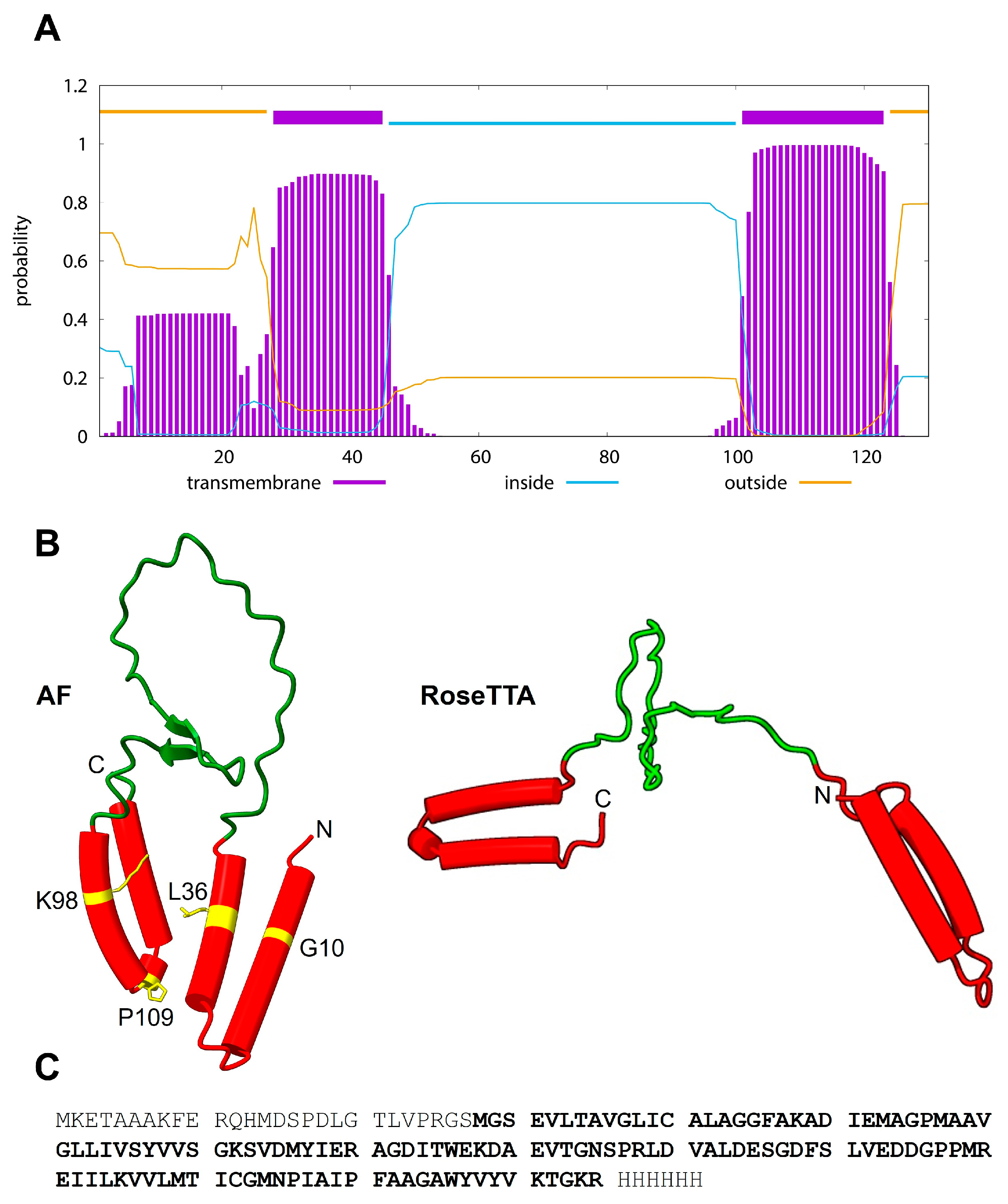
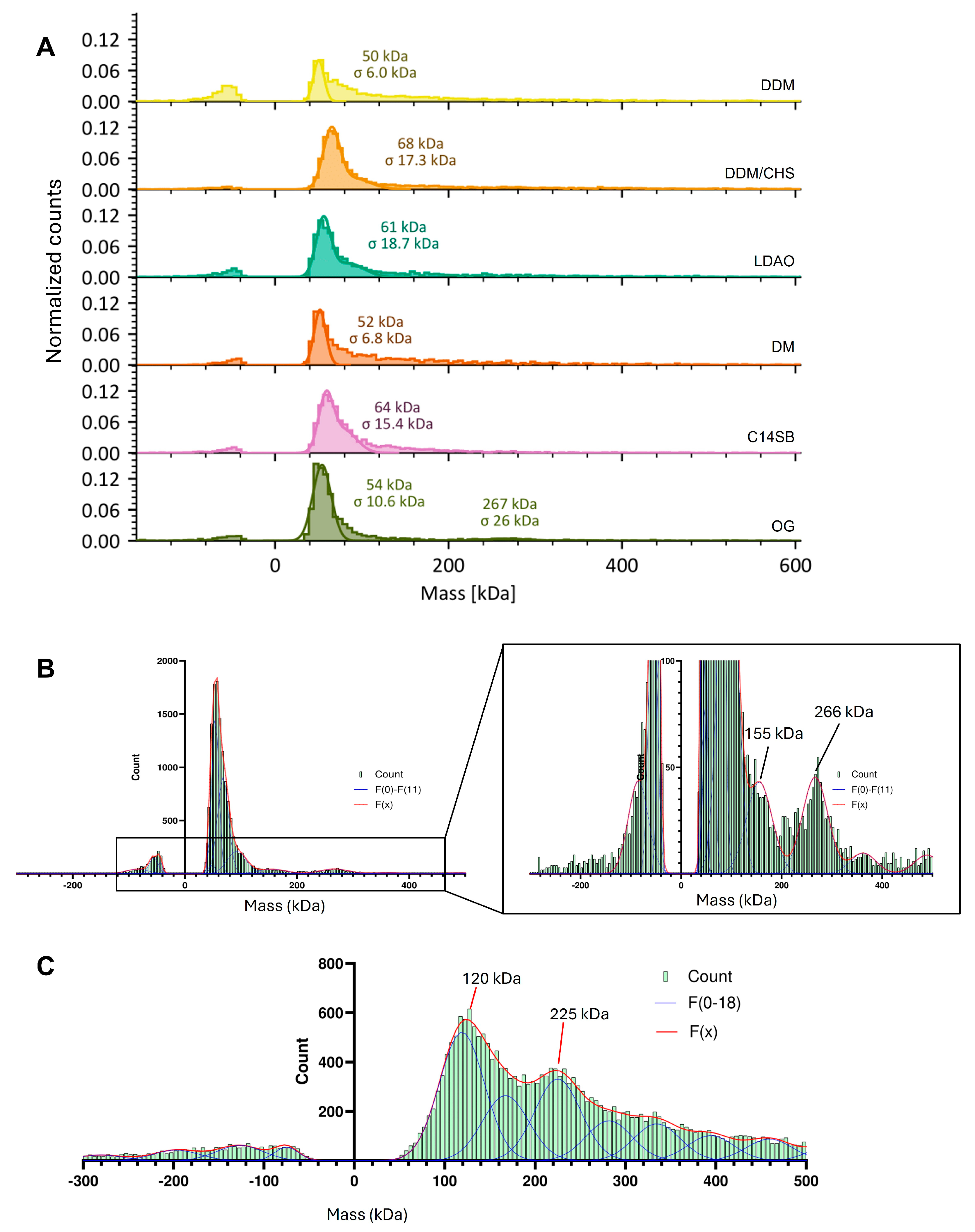
Flaviviruses are responsible for significant morbidity and mortality worldwide. Despite intensive research, the structure and oligomerization properties of non-structural (NS) proteins, like NS2 or NS4, are still uncertain because of their high hydrophobicity. Solution NMR has shown that NS2B protein has two hydrophobic domains, organized as two short α-helical hairpins that contribute to both viral RNA replication and particle formation. These are separated by a hydrophilic loop that is a cofactor of protease NS3. However, the oligomerization behavior of NS2B has not been explored in detail. Herein, we have expressed Zika virus NS2B protein (ZIKV NS2B) and characterized its oligomerization in both detergent and lipids using crosslinking in liposomes, and mass photometry and analytical ultracentrifugation in detergent. We show that, in contrast to the small oligomers proposed earlier, ZIKV NS2B protein has a very complex oligomerization behavior, forming from dimers to very large multimers (>10) in both detergent and lipids. Although AlphaFold (AF) provided a model for monomeric NS2B that is consistent with available experimental data, no oligomeric model was predicted with confidence. We suggest that the role of the two short α-helical hairpins in membrane destabilization and reshaping host ER during viral infection may be aided or triggered by multimerization. Finally, although our results report a high tendency of NS2B to oligomerize, in the context of the infected cell, a biologically relevant multimeric complex may necessitate other viral proteins like NS4A or NS4B and/or host proteins.
Keywords: Flaviviridae family; Zika virus; multimerization; flavivirus; non-structural 2B protein; membrane proteins Flaviviridae family; Zika virus; multimerization; flavivirus; non-structural 2B protein; membrane proteins