Bifunctional Metformin–Phenolic Hybrids with Improved Anticancer and Antioxidant Properties: Evaluation on Glioma Cells

 , ,
, ,  ,
,  , , , and
Abstract
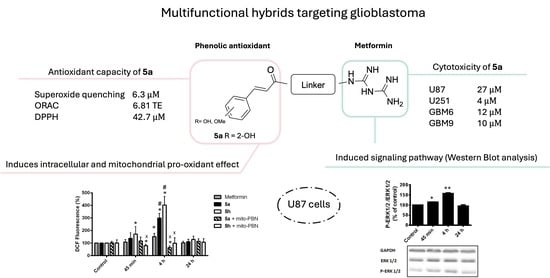
1. Introduction
2. Results and Discussion
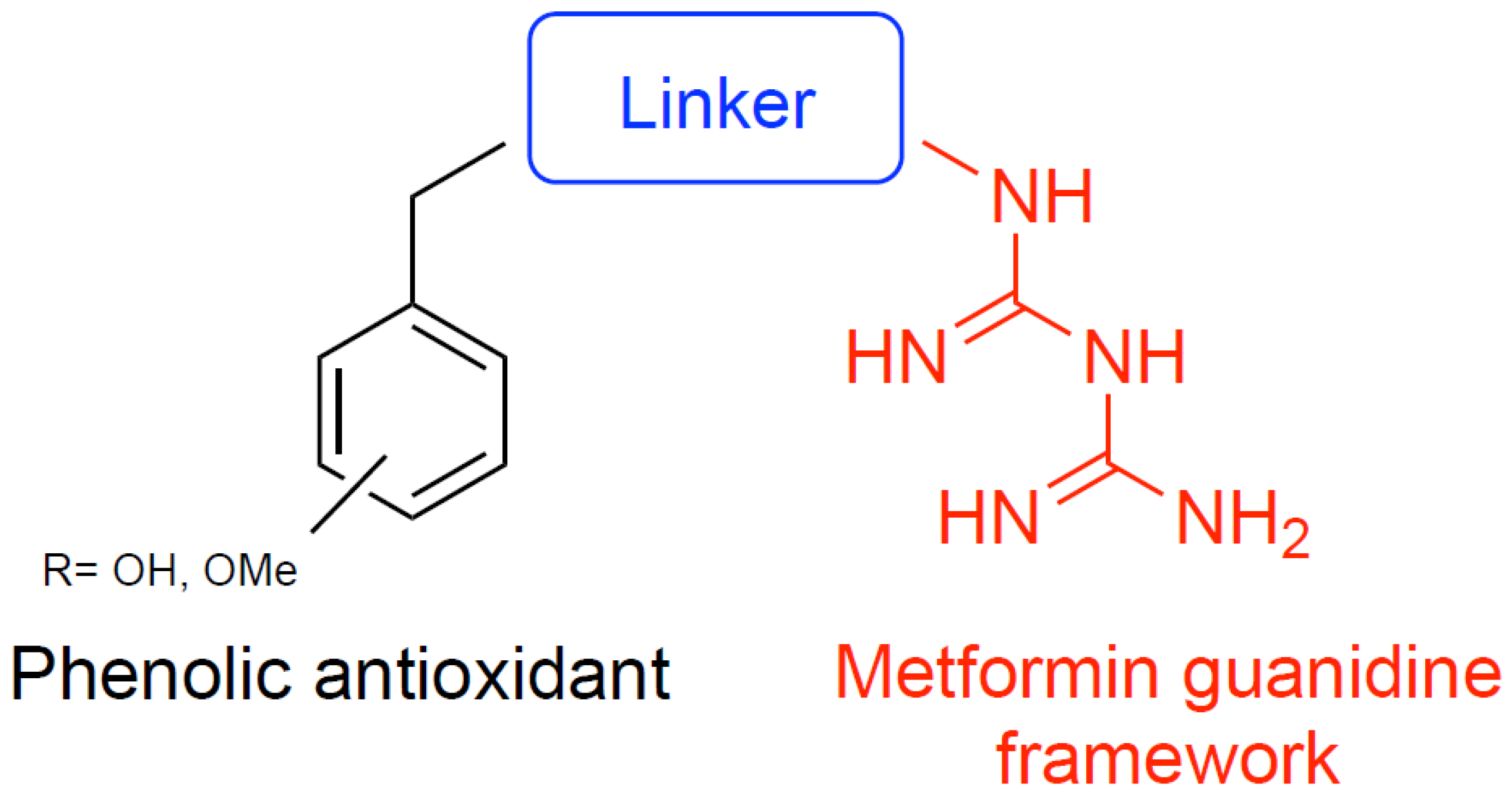
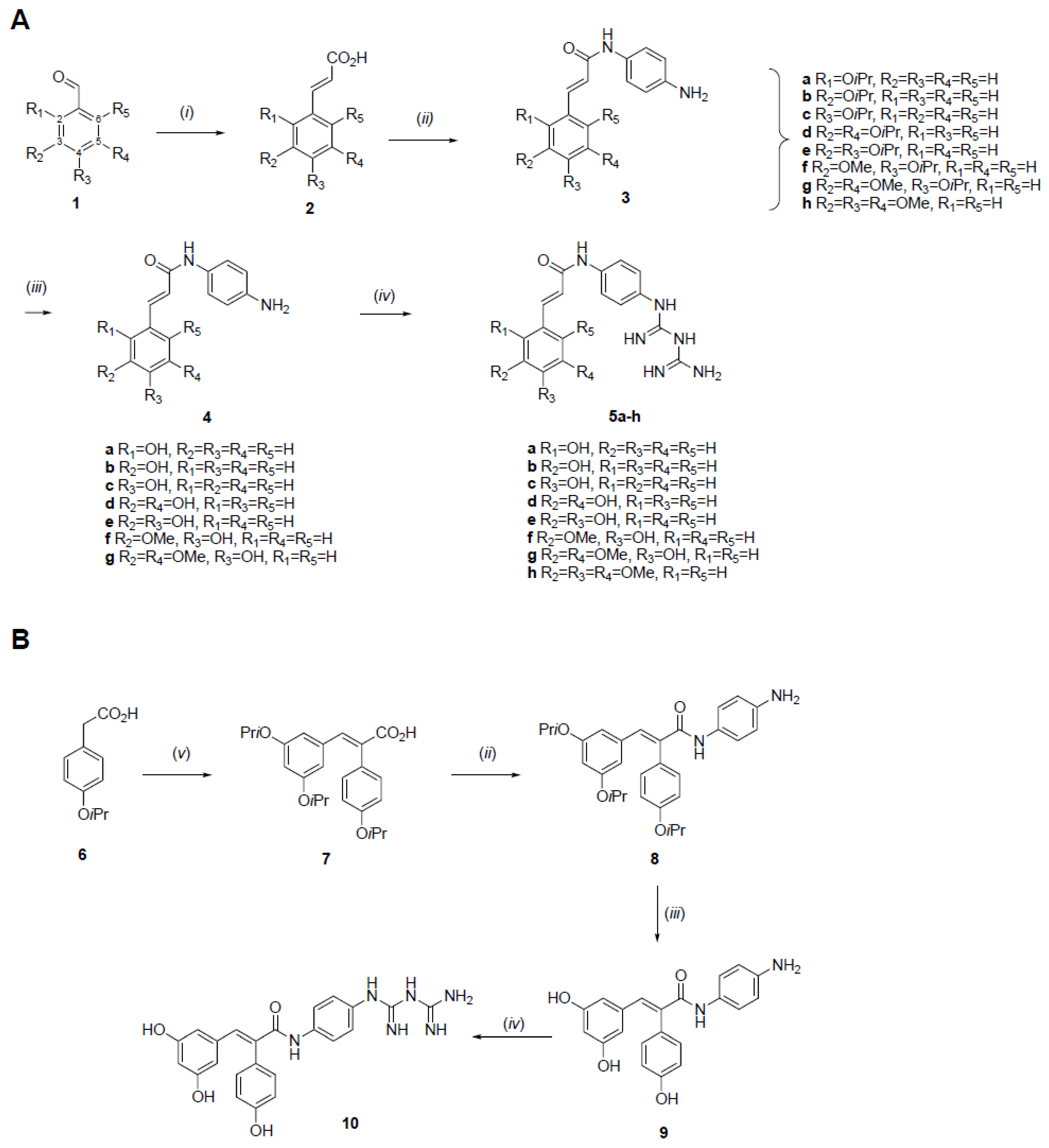
2.1. Chemistry
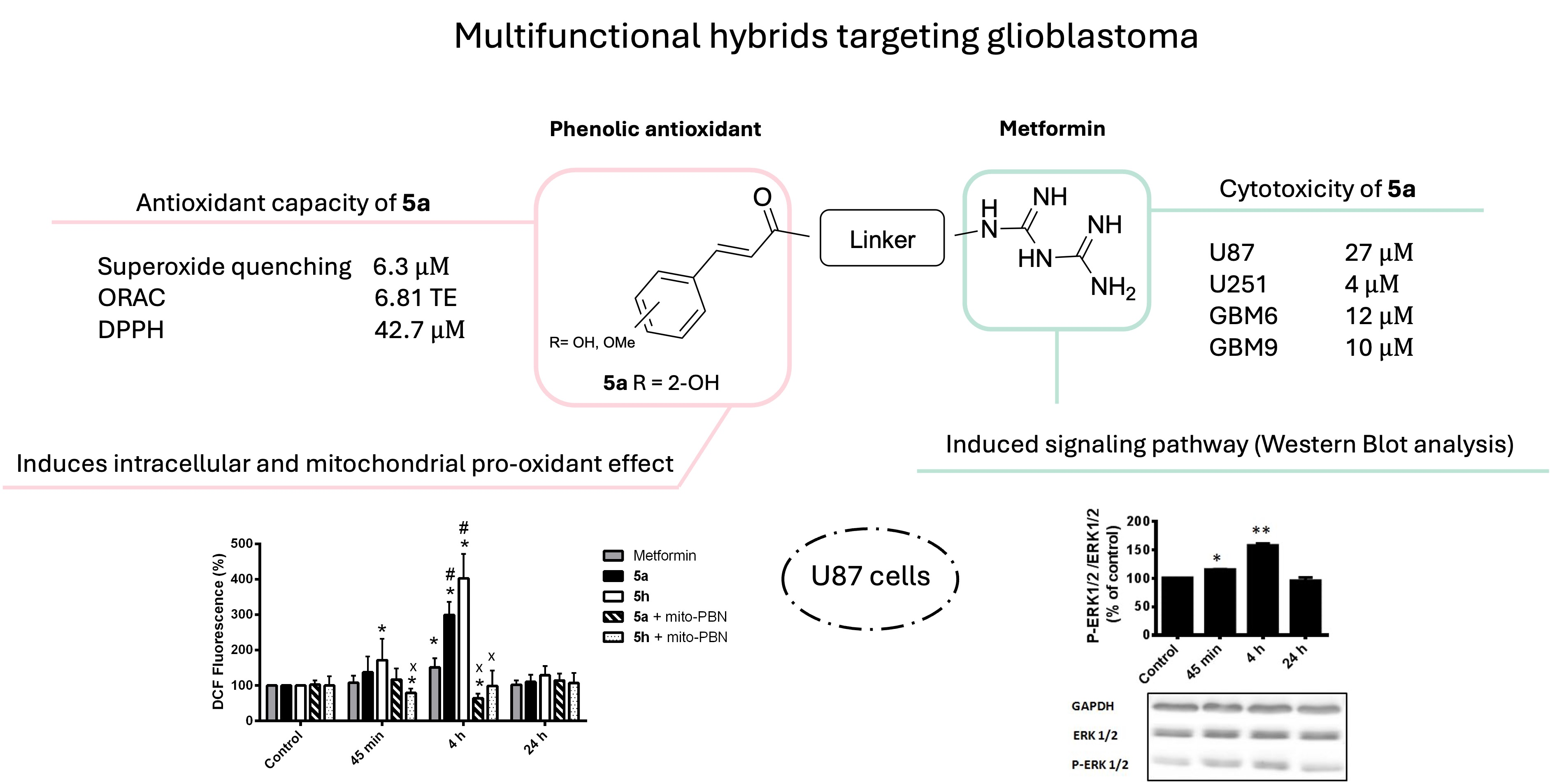
2.2. Cytotoxicity Studies
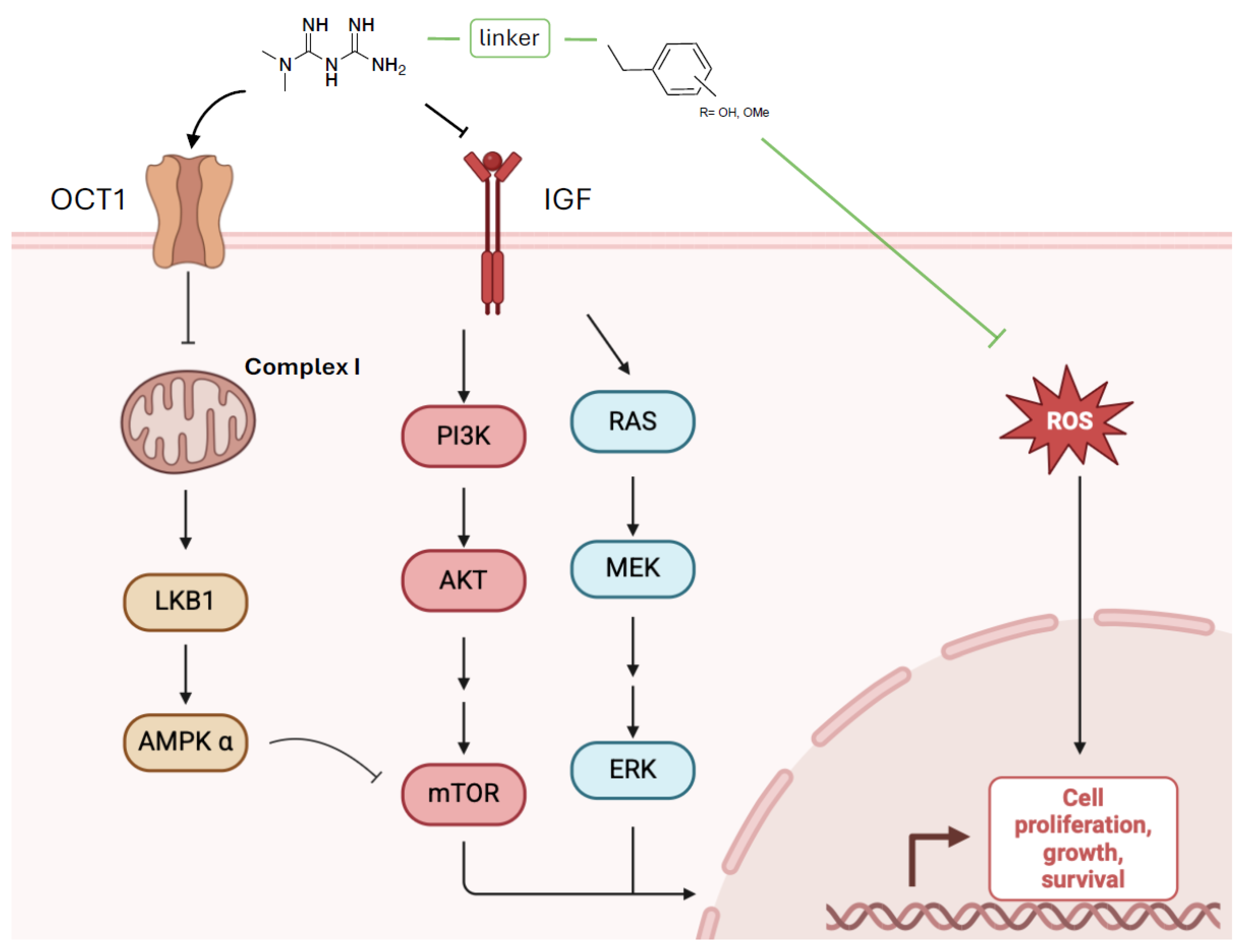
2.3. Signaling Pathway Study
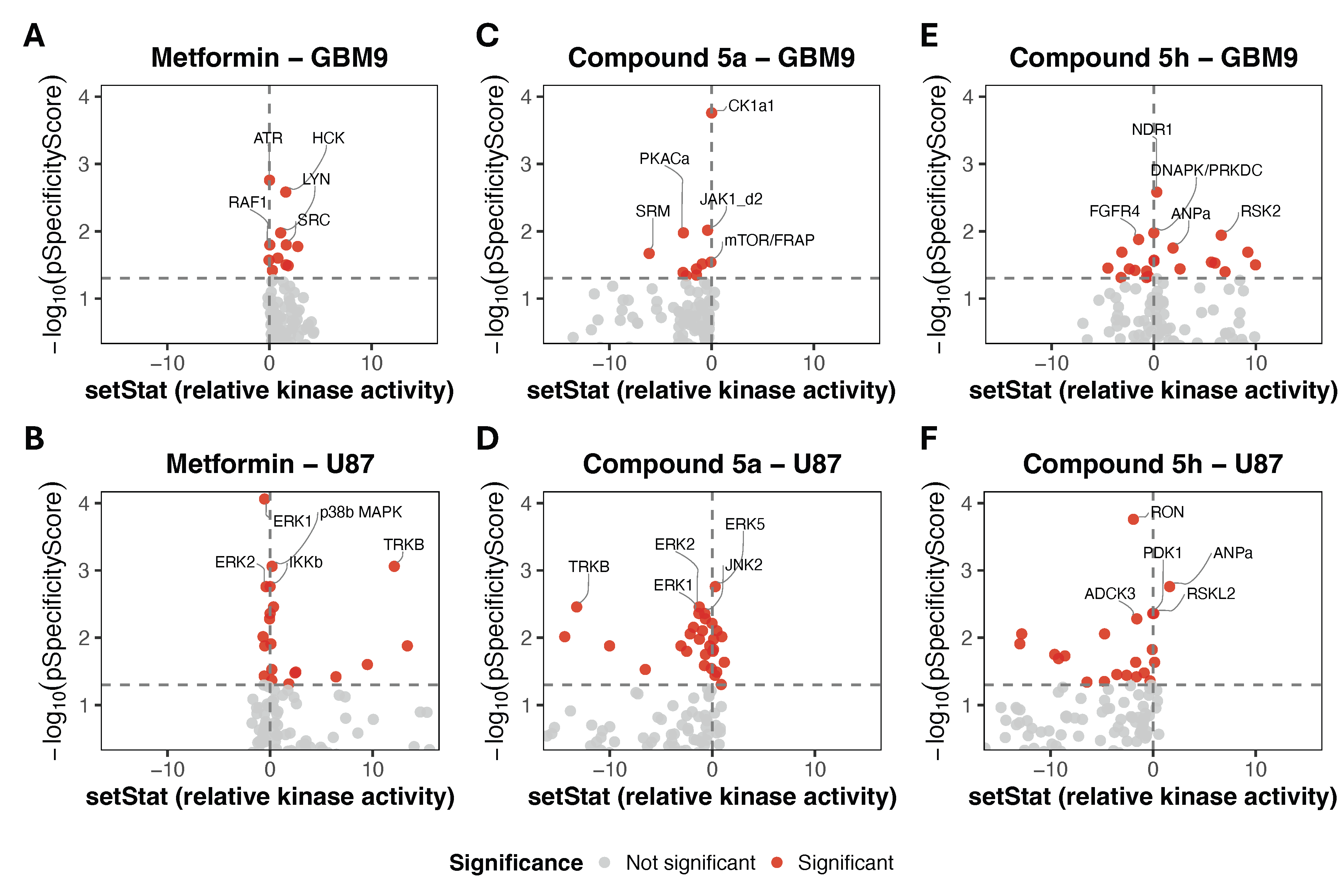
2.3.1. Kinase Activity Assay
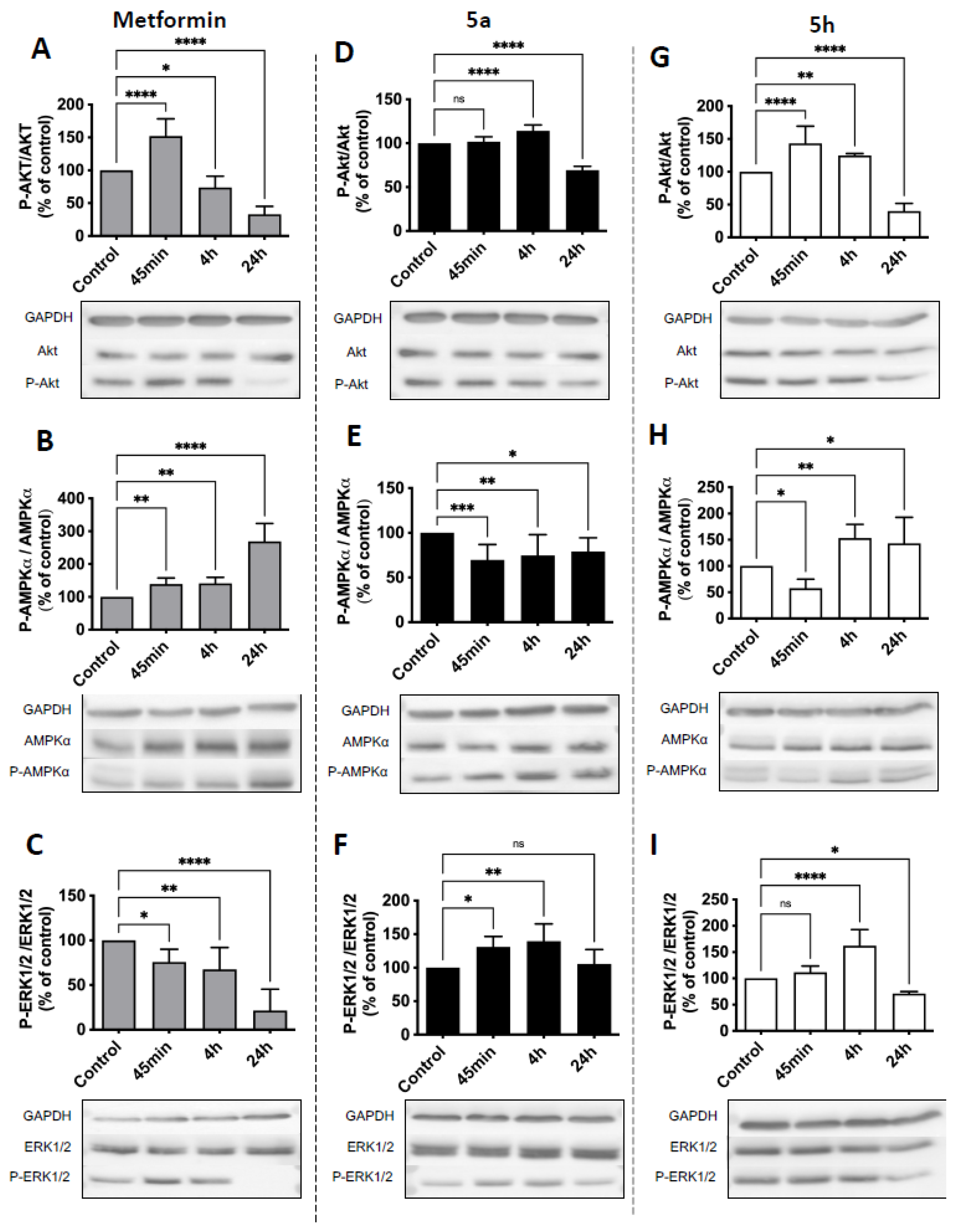
2.3.2. Western Blot Analysis
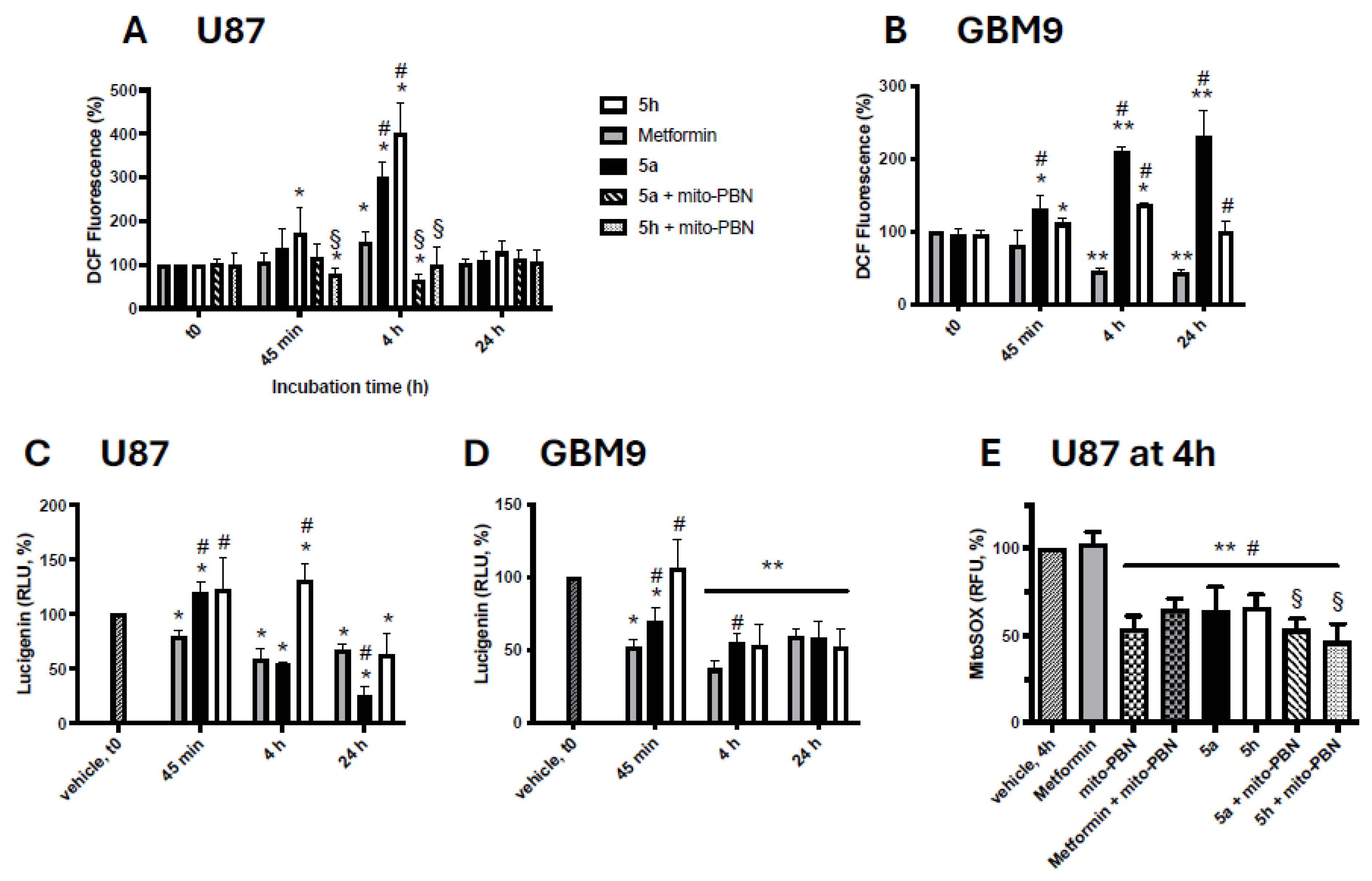
2.4. Regulation of Redox State in U87 and GBM9 Cells
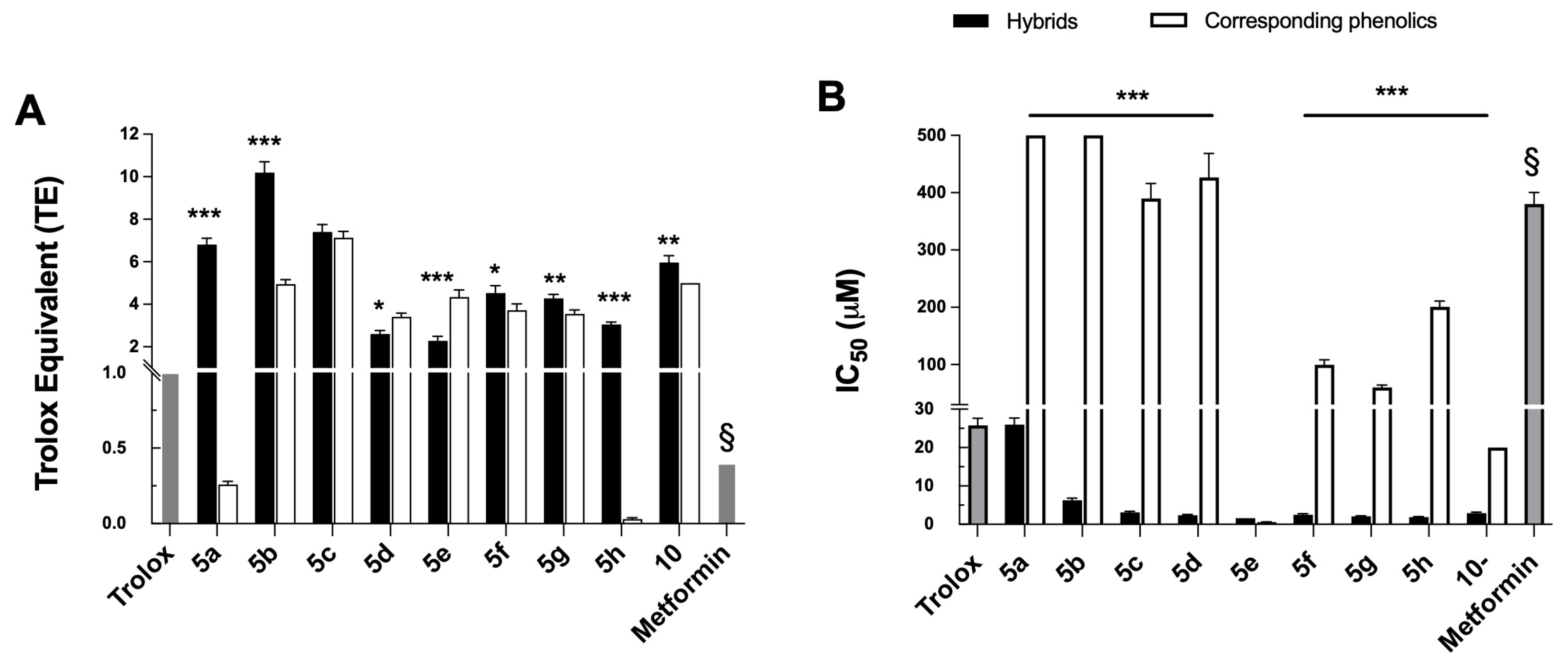
2.5. Antioxidant Capacities
2.5.1. DPPH Reducing Capacity of Hybrids
2.5.2. ORAC Assay
2.5.3. Superoxide Quenching Activity
3. Materials and Methods
3.1. Chemistry
3.1.1. General Procedure for the Synthesis of 3a–h
3.1.2. General Procedure for the Synthesis of 4a–g
3.1.3. General Procedure for the Synthesis of 5a–h
3.1.4. (E)-N-(4-Aminophenyl)-3-(3,5-diisopropoxyphenyl)-2-(4-isoproproxyphenyl) acrylamide (8)
3.1.5. (E)-N-(4-Aminophenyl)-3-(3,5-dihydroxyphenyl)-2-(4-hydroxyphenyl)acrylamide (9)
3.1.6. (E)-N-(4-(3-Carbamimidoylguanidino)phenyl)-3-(3,5-dihydroxyphenyl)-2-(4-hydrophenyl)acrylamide (10)
3.2. Biology
3.2.1. Chemicals and Antibodies
3.2.2. Culture Conditions
3.2.3. Cytotoxicity Assays
3.2.4. Preparation of Cell Extracts
3.2.5. Western Blot Analysis
3.2.6. Kinase Activity Assay
3.2.7. Measurement of Extracellular Redox State Variation
3.2.8. Measurement of Intracellular Redox State Variation
3.2.9. Measurement of Mitochondrial ROS Production
3.3. Antioxidant Capacity Assays
3.3.1. Chemicals
3.3.2. DPPH Assay
3.3.3. ORAC Assay
3.3.4. Superoxide Quenching
3.4. Analysis
3.4.1. Statistical Analysis
3.4.2. PamGene Data Analysis
4. Conclusions
Supplementary Materials
Author Contributions
Funding
Institutional Review Board Statement
Informed Consent Statement
Data Availability Statement
Acknowledgments
Conflicts of Interest
References
- Ahir, B.K.; Engelhard, H.H.; Lakka, S.S. Tumor Development and Angiogenesis in Adult Brain Tumor: Glioblastoma. Mol. Neurobiol. 2020, 57, 2461–2478. [Google Scholar] [CrossRef] [Scilit] [PubMed]
- Galbraith, K.; Snuderl, M. Molecular Pathology of Gliomas. Surg. Pathol. Clin. 2021, 14, 379–386. [Google Scholar] [CrossRef] [Scilit]
- Sathe, S.; Li, Q.; Jung, J.; Wu, J. Targeting the Mitochondria in High-Grade Gliomas. Cancers 2025, 17, 3062. [Google Scholar] [CrossRef] [Scilit] [PubMed]
- Brisudova, P.; Stojanovic, D.; Novak, J.; Nahacka, Z.; Oliveira, G.L.; Vanatko, O.; Dvorakova, S.; Endaya, B.; Truksa, J.; Kubiskova, M.; et al. Functional mitochondrial respiration is essential for glioblastoma tumour growth. Oncogene 2025, 44, 2588–2603, Erratum in Oncogene 2025, 44, 2675. https://doi.org/10.1038/s41388-025-03429-6. [Google Scholar] [CrossRef] [Scilit]
- Tong, S.; Xia, M.; Xu, Y.; Sun, Q.; Ye, L.; Yuan, F.; Wang, Y.; Cai, J.; Ye, Z.; Tian, D. Identification and validation of a novel prognostic signature based on mitochondria and oxidative stress related genes for glioblastoma. J. Transl. Med. 2023, 21, 136. [Google Scholar] [CrossRef] [Scilit]
- Li, Y.; Qin, C.; Jiang, L.; Su, J.; Li, Z.; Liu, Q.; Yao, Y. MitCOM-based prognostic model identifies GLUD1 as a key suppressor of glioblastoma growth and invasion through regulation of mitochondrial structure and metabolism. Cancer Cell Int. 2025, 25, 222. [Google Scholar] [CrossRef] [Scilit]
- Wu, L.; Zhu, J.; Prokop, L.J.; Murad, M.H. Pharmacologic therapy of diabetes and overall cancer risk and mortality: A meta-analysis of 265 studies. Sci. Rep. 2015, 5, 10147. [Google Scholar] [CrossRef] [Scilit]
- Thakkar, B.; Aronis, K.N.; Vamvini, M.T.; Shields, K.; Mantzoros, C.S. Metformin and sulfonylureas in relation to cancer risk in type II diabetes patients: A meta-analysis using primary data of published studies. Metabolism 2013, 62, 922–934. [Google Scholar] [CrossRef] [Scilit]
- Hajimohammadebrahim-Ketabforoush, M.; Zali, A.; Shahmohammadi, M.; Hamidieh, A.A. Metformin and its potential influence on cell fate decision between apoptosis and senescence in cancer, with a special emphasis on glioblastoma. Front. Oncol. 2024, 14, 1455492. [Google Scholar] [CrossRef] [Scilit]
- Shah, S.; Mansour, H.M.; Aguilar, T.M.; Lucke-Wold, B. Advances in Anti-Cancer Drug Development: Metformin as Anti-Angiogenic Supplemental Treatment for Glioblastoma. Int. J. Mol. Sci. 2024, 25, 5694. [Google Scholar] [CrossRef] [Scilit] [PubMed]
- Morales, D.R.; Morris, A.D. Metformin in cancer treatment and prevention. Annu. Rev. Med. 2015, 66, 17–29. [Google Scholar] [CrossRef] [Scilit] [PubMed]
- Li, M.; Li, X.; Zhang, H.; Lu, Y. Molecular mechanisms of metformin for diabetes and cancer treatment. Front. Physiol. 2018, 9, 1039. [Google Scholar] [CrossRef] [Scilit]
- Higurashi, T.; Hosono, K.; Takahashi, H.; Komiya, Y.; Umezawa, S.; Sakai, E.; Uchiyama, T.; Taniguchi, L.; Hata, Y.; Uchiyama, S.; et al. Metformin for chemoprevention of metachronous colorectal adenoma or polyps in post-polypectomy patients without diabetes: A multicentre double-blind, placebo-controlled, randomised phase 3 trial. Lancet Oncol. 2016, 17, 475–483. [Google Scholar] [CrossRef] [Scilit]
- Hadad, S.M.; Coates, P.; Jordan, L.B.; Dowling, R.J.O.; Chang, M.C.; Done, S.J.; Purdie, C.A.; Goodwin, P.J.; Stambolic, V.; Moulder-Thompson, S.; et al. Evidence for biological effects of metformin in operable breast cancer: Biomarker analysis in a pre-operative window of opportunity randomized trial. Breast Cancer Res. Treat. 2015, 150, 149–155. [Google Scholar] [CrossRef] [Scilit]
- Zhu, L.; Yang, K.; Yin, D.; Zhou, Y. Metformin as anticancer agent and adjuvant in cancer combination therapy: Current progress and future prospect. Transl. Oncol. 2024, 44, 101945. [Google Scholar] [CrossRef] [Scilit]
- Cassien, M.; Petrocchi, C.; Thétiot-Laurent, S.; Robin, M.; Ricquebourg, E.; Kandouli, C.; Asteian, A.; Rockenbauer, A.; Mercier, A.; Culcasi, M.; et al. On the vasoprotective mechanisms underlying novel β-phosphorylated nitrones: Focus on free radical characterization, scavenging and NO-donation in a biological model of oxidative stress. Eur. J. Med. Chem. 2016, 119, 197–217. [Google Scholar] [CrossRef] [Scilit]
- Rocha, L.D.; Monteiro, M.C.; Teodoro, A.J. Anticancer Properties of Hydroxycinnamic Acids—A Review. Cancer Clin. Oncol. 2012, 1, 109–121. [Google Scholar] [CrossRef] [Scilit]
- Hedna, R.; DiMaio, A.; Robin, M.; Allegro, D.; Tatoni, M.; Peyrot, V.; Barbier, P.; Kovacic, H.; Breuzard, G. 2-Aminothiazole-Flavonoid Hybrid Derivatives Binding to Tau Protein and Responsible for Antitumor Activity in Glioblastoma. Int. J. Mol. Sci. 2023, 4, 15050. [Google Scholar] [CrossRef] [Scilit] [PubMed]
- Tyszka-Czochara, M.; Konieczny, P.; Marcin, M. Caffeic acid expands anti-tumor effect of metformin in human metastatic cervical carcinoma HTB-34 cells: Implications of AMPK activation and impairment of fatty acids de novo biosynthesis. Int. J. Mol. Sci. 2017, 18, 462. [Google Scholar] [CrossRef] [Scilit] [PubMed]
- Baur, J.A.; Sinclair, D.A. Therapeutic potential of resveratrol: The in vivo evidence. Nat. Rev. Drug Discov. 2006, 5, 493–506. [Google Scholar] [CrossRef] [Scilit]
- Solladié, G.; Pasturel-Jacopé, Y.; Maignan, J. A re-investigation of resveratrol synthesis by Perkins reaction. Application to the synthesis of aryl cinnamic acids. Tetrahedron 2003, 59, 3315–3321. [Google Scholar] [CrossRef] [Scilit]
- Pasturel-Jacopé, Y.; Solladié, G.; Maignan, J. Method for Preparing α-(phenyl)cinnamic Acids and/or Derivatives Thereof and Their Use in Cosmetic Composition WO2003024911A1, 27 March 2003.
- Bouzaiene, N.N.; Jaziri, S.K.; Kovacic, H.; Chekir-Ghedira, L.; Ghedira, K.; Luis, L. The effect of caffeic, coumaric and ferulic acids on proliferation, superoxide production, adhesion, and migration of human tumor cells in vitro. Eur. J. Pharmacol. 2015, 766, 99–105. [Google Scholar] [CrossRef] [Scilit]
- Stupp, R.; Mason, W.P.; Van den Bent, M.J.; Weller, M.; Fisher, B.; Taphoorn, M.J.; Belanger, K.; Brandes, A.A.; Marosi, C.; Bogdahn, U.; et al. Radiotherapy plus concomitant and adjuvant temozolomide for glioblastoma. N. Engl. J. Med. 2005, 352, 987–996. [Google Scholar] [CrossRef] [Scilit]
- Śliwka, L.; Wiktorska, K.; Suchocki, P.; Milczarek, M.; Mielczarek, S.; Lubelska, K.; Cierpiał, T.; Łyżwa, P.; Kiełbasiński, P.; Jaromin, A.; et al. The Comparison of MTT and CVS Assays for the Assessment of Anticancer Agent Interactions. PLoS ONE 2016, 11, e0155772. [Google Scholar] [CrossRef] [Scilit] [PubMed] [PubMed Central]
- Banerjee, B.; Sharma, T.; Banerjee, S.; Banerjee, S.; Mondal, A. Synthesis and Anticancer Activity of Metformin-Phenolic Acid Conjugates. Chem. Biodivers. 2025, 22, e202403199. [Google Scholar] [CrossRef] [Scilit]
- Serafim, T.L.; Carvalho, F.S.; Marques, M.P.M.; Calheiros, R.; Silva, T.; Garrido, J.; Milhazes, N.; Borges, F.; Roleira, F.; Silva, E.T.; et al. Lipophilic caffeic and ferulic acid derivatives presenting cytotoxicity against human breast cancer cells. Chem. Res. Toxicol. 2011, 24, 763–774. [Google Scholar] [CrossRef] [Scilit]
- Fiuza, S.M.; Gomes, C.; Teixeira, L.J.; Girão da Cruz, M.T.; Cordeiro, M.N.D.S.; Milhazes, N.; Borges, F.; Marques, M.P.M. Phenolic acid derivatives with potential anticancer properties a structure–activity relationship study. Part 1: Methyl, propyl and octyl esters of caffeic and gallic acids. Bioorg. Med. Chem. 2004, 12, 3581–3589. [Google Scholar] [CrossRef] [Scilit] [PubMed]
- Fatehi, R.; Rashedinia, M.; Akbarizadeh, A.R.; Zamani, M.; Firouzabadi, N. Metformin enhances anti-cancer properties of resveratrol in MCF-7 breast cancer cells via induction of apoptosis, autophagy and alteration in cell cycle distribution. Biochem. Biophys. Res. Commun. 2023, 644, 130–139. [Google Scholar] [CrossRef] [Scilit]
- Sesen, J.; Dahan, P.; Scotland, S.J.; Saland, E.; Dang, V.T.; Lemarié, A.; Tyler, B.M.; Brem, H.; Toulas, C.; Cohen-Jonathan Moyal, E.; et al. Metformin Inhibits Growth of Human Glioblastoma Cells and Enhances Therapeutic Response. PLoS ONE 2015, 10, e0123721. [Google Scholar] [CrossRef] [Scilit]
- Dowling, R.J.; Niraula, S.; Chang, M.C.; Done, S.J.; Ennis, M.; McCready, D.R.; Leong, W.L.; Escallon, J.M.; Reedijk, M.; Goodwin, P.J.; et al. Changes in insulin receptor signaling underlie neoadjuvant metformin administration in breast cancer: A prospective window of opportunity neoadjuvant study. Breast Cancer Res. 2015, 17, 32. [Google Scholar] [CrossRef] [Scilit] [PubMed]
- Basheer, H.A.; Salman, N.M.; Abdullah, R.M.; Elsalem, L.; Afarinkia, K. Metformin and glioma: Targeting metabolic dysregulation for enhanced therapeutic outcomes. Transl. Oncol. 2025, 53, 102323. [Google Scholar] [CrossRef] [Scilit]
- Shen, Y.; Thng, D.K.H.; Wong, A.L.A.; Toh, T.B. Mechanistic insights and the clinical prospects of targeted therapies for glioblastoma: A comprehensive review. Exp. Hematol. Oncol. 2024, 13, 40. [Google Scholar] [CrossRef] [Scilit] [PubMed]
- Li, X.; Shan, Y.; Wang, S.; Wang, J.; Heng, X. Triptolide induces apoptosis of glioma cells by inhibiting NF-κB activation during oxidative stress. Sci. Rep. 2024, 14, 29740. [Google Scholar] [CrossRef] [Scilit] [PubMed]
- Tapia, M.; Hernando, C.; Martínez, M.T.; Burgués, O.; Tebar-Sánchez, C.; Lameirinhas, A.; Ágreda-Roca, A.; Torres-Ruiz, S.; Garrido-Cano, I.; Lluch, A.; et al. Clinical Impact of New Treatment Strategies for HER2-Positive Metastatic Breast Cancer Patients with Resistance to Classical Anti-HER Therapies. Cancers 2023, 15, 4522. [Google Scholar] [CrossRef] [Scilit]
- Lee, J.; Jeong, B.H.; Kamaraj, E.; Kim, D.; Kim, H.; Park, S.; Park, H.J. Light-enhanced molecular polarity enabling multispectral color-cognitive memristor for neuromorphic visual system. Nat. Commun. 2023, 14, 5775. [Google Scholar] [CrossRef] [Scilit]
- Liu, Y.; Lu, S.; Wu, L.L.; Yang, L.; Yang, L.; Wang, J. The diversified role of mitochondria in ferroptosis in cancer. Cell Death Dis. 2023, 14, 519. [Google Scholar] [CrossRef] [Scilit]
- Fuloria, S.; Subramaniyan, V.; Karupiah, U.; Sathasivam, K.; Meenakshi, D.U.; Wu, Y.Y.; Sekar, M.; Chitranshi, N.; Malviya, R.; Sudhakar, K.; et al. Comprehensive Review of Methodology to Detect Reactive Oxygen Species (ROS) in Mammalian Species and Establish Its Relationship with Antioxidants and Cancer. Antioxidants 2021, 10, 128. [Google Scholar] [CrossRef] [Scilit] [PubMed]
- Feng, S.-W.; Chang, P.-C.; Chen, H.-Y.; Hueng, D.-Y.; Li, Y.-F.; Huang, S.-M. Exploring the Mechanism of Adjuvant Treatment of Glioblastoma Using Temozolomide and Metformin. Int. J. Mol. Sci. 2022, 23, 8171. [Google Scholar] [CrossRef] [Scilit]
- Jamali, F.; Lan, K.; Daniel, P.; Petrecca, K.; Sabri, S.; Abdulkarim, B. Synergistic Dual Targeting of Thioredoxin and Glutathione Systems Irrespective of p53 in Glioblastoma Stem Cells. Antioxidants 2024, 13, 1201. [Google Scholar] [CrossRef] [Scilit]
- Cai, S.; Xiong, Q.; Zhao, L.; Ji, Y.; Luo, Z.; Ma, Z. β-Elemene Triggers ROS-dependent Apoptosis in Glioblastoma Cells Through Suppressing STAT3 Signaling Pathway. Pathol. Oncol. Res. 2021, 27, 594299. [Google Scholar] [CrossRef] [Scilit]
- Szanto, I. NADPH Oxidase 4 (NOX4) in Cancer: Linking Redox Signals to Oncogenic Metabolic Adaptation. Int. J. Mol. Sci. 2022, 23, 2702. [Google Scholar] [CrossRef] [Scilit] [PubMed]
- Kauffman, M.E.; Kauffman, M.K.; Traore, K.; Zhu, H.; Trush, M.A.; Jia, Z.; Li, Y.R. MitoSOX-Based Flow Cytometry for Detecting Mitochondrial ROS. React Oxyg Species (Apex) 2016, 2, 361–370. [Google Scholar] [CrossRef] [Scilit]
- Günther, M.; Dabare, S.; Fuchs, J.; Gunesch, S.; Hofmann, J.; Decker, M.; Culmsee, C. Flavonoid–Phenolic Acid Hybrids Are Potent Inhibitors of Ferroptosis via Attenuation of Mitochondrial Impairment. Antioxidants 2024, 13, 44. [Google Scholar] [CrossRef] [Scilit] [PubMed]
- Culcasi, M.; Benameur, L.; Mercier, A.; Lucchesia, C.; Rahmouni, H.; Asteian, A.; Casano, G.; Botta, A.; Kovacic, H.; Pietri, S. EPR spin trapping evaluation of ROS production in human fibroblasts exposed to cerium oxide nanoparticles: Evidence for NADPH oxidase and mitochondrial stimulation. Chem.-Biol. Interact. 2012, 199, 161–176. [Google Scholar] [CrossRef] [Scilit]
- Linga, Z.; Pan, J.; Zhang, Z.; Chen, G.; Genge, J.; Lin, Q.; Zhang, T.; Cao, S.; Chen, C.; Lin, J.; et al. Small-molecule Molephantin induces apoptosis and mitophagy flux blockage through ROS production in glioblastoma. Cancer Lett. 2024, 592, 216927. [Google Scholar] [CrossRef] [Scilit]
- Perillo, B.; Di Donato, M.; Pezone, A.; Di Zazzo, E.; Giovannelli, P.; Galasso, G.; Castoria, G.; Migliaccio, A. ROS in cancer therapy: The bright side of the moon. Exp. Mol. Med. 2020, 52, 192–203. [Google Scholar] [CrossRef] [Scilit] [PubMed]
- Cassien, M.; Mercier, A.; Thétiot-Laurent, S.; Culcasi, M.; Ricquebourg, E.; Asteian, A.; Herbette, G.; Bianchini, J.-P.; Raharivelomanana, P.; Pietri, S. Improving the Antioxidant Properties of Calophyllum inophyllum Seed Oil from French Polynesia: Development and Biological Applications of Resinous Ethanol-Soluble Extracts. Antioxidants 2021, 10, 199. [Google Scholar] [CrossRef] [Scilit]
- Kandouli, C.; Cassien, M.; Mercier, A.; Delehedde, C.; Ricquebourg, E.; Stocker, P.; Mekaouche, M.; Leulmi, Z.; Mechakra, A.; Thétiot-Laurent, S.; et al. Antidiabetic, antioxidant and anti-inflammatory properties of water and n-butanol soluble extracts from Saharian Anvillea radiata in high-fat-diet fed mice. J. Ethnopharmacol. 2017, 207, 251–267. [Google Scholar] [CrossRef] [Scilit]
- Bolaños-Cardet, J.; Pepió-Tárrega, B.; Saiz-Poseu, J.; López-Moral, A.; Ullah, F.; Yuste, V.J.; Ruiz-Molina, D.; Suárez-García, S. The Redox Properties of Polyphenols and Their Role in ROS Generation for Biomedical Applications. Angew. Chem. Int. Ed. 2025, 138, e13698. [Google Scholar] [CrossRef] [Scilit]
- Cortez, N.; Villegas, C.; Burgos, V.; Cabrera-Pardo, J.R.; Ortiz, L.; González-Chavarría, I.; Nchiozem-Ngnitedem, V.-A.; Paz, C. Adjuvant Properties of Caffeic Acid in Cancer Treatment. Int. J. Mol. Sci. 2024, 25, 7631. [Google Scholar] [CrossRef] [Scilit]
- Lee, H.J.; Seo, J.W.; Lee, B.H.; Chung, K.H.; Chi, D.Y. Syntheses and radical scavenging activities of resveratrol derivatives. Bioorg. Med. Chem. 2004, 14, 463–466. [Google Scholar] [CrossRef] [Scilit]
- Sakurai, Y.; Yamaguchi, S.; Yamashita, T.; Lu, Y.; Kuwabara, K.; Yamaguchi, T.; Miyake, Y.; Kanaori, K.; Watanabe, S.; Tajima, K. Mechanisms Associated with Superoxide Radical Scavenging Reactions Involving Phenolic Compounds Deduced Based on the Correlation between Oxidation Peak Potentials and Second-Order Rate Constants Determined Using Flow-Injection Spin-Trapping EPR Methods. J. Agric. Food Chem. 2024, 72, 16018–16031. [Google Scholar] [CrossRef] [Scilit]
- Wróbel, A.; Baradyn, M.; Ratkiewicz, A.; Drozdowska, D. Synthesis, Biological Activity, and Molecular Dynamics Study of Novel Series of a Trimethoprim Analogs as Multi-Targeted Compounds: Dihydrofolate Reductase (DHFR) Inhibitors and DNA-Binding Agents. Int. J. Mol. Sci. 2021, 22, 3685. [Google Scholar] [CrossRef] [Scilit]
- Chou, T.C.; Talalay, P. Quantitative analysis of dose-effect relationships: The combined effects of multiple drugs or enzyme inhibitors. Adv. Enzym. Regul. 1984, 22, 27–55. [Google Scholar] [CrossRef] [Scilit]
- Chocry, M.; Leloup, L.; Kovacic, H. Reversion of resistance to oxaliplatin by inhibition of p38 MAPK in colorectal cancer cell lines: Involvement of the calpain/Nox1 pathway. Oncotarget 2017, 8, 103710–103730, Erratum in Oncotarget 2018, 9, 26978–26979. https://doi.org/10.18632/oncotarget.25605. [Google Scholar] [CrossRef] [Scilit] [PubMed]
- Citi, V.; Barresi, E.; Piragine, E.; Spezzini, J.; Testai, L.; Da Settimo, F.; Martelli, A.; Taliani, S.; Calderone, V. Anti-Proliferative Properties of the Novel Hybrid Drug Met-ITC, Composed of the Native Drug Metformin with the Addition of an Isothiocyanate H2S Donor Moiety, in Different Cancer Cell Lines. Int. J. Mol. Sci. 2023, 24, 16131. [Google Scholar] [CrossRef] [Scilit] [PubMed]
- Rouen, M.; Chaumont, P.; Barozzino-Consiglio, G.; Maddaluno, J.; Harrison-Marchand, A. Chiral Lithium Amido Zincates for Enantioselective 1,2-Additions: Auto-assembling Reagents Involving a Fully Recyclable Ligand. Chem. Eur. J. 2018, 24, 9238–9242, Erratum in Chemistry 2018, 24, 11512. https://doi.org/10.1002/chem.201803454. [Google Scholar] [CrossRef] [Scilit] [PubMed]
- Garcia-Diaz, M.; Sanchez-Garcia, D.; Soriano, J.; Sagrista, L.; Mora, M.; Villanueva, A.; Stockert, J.; Canete, M.; Nonell, S. Temocene: The porphycene analogue of temoporfin. Med. Chem. Commun. 2011, 2, 616–619. [Google Scholar] [CrossRef] [Scilit]
- Amslinger, S.; Lindner, S. Limno-CP: A Natural Product-inspired 5-Aryl-3(2H)-furanone as Scaffold for a Library of α-α-α-Modified Enones. Synthesis 2011, 16, 2671–2683. [Google Scholar] [CrossRef] [Scilit]
- Fei, Z.; McDonald, F. Stereo- and Regioselective Glycosylations to the Bis-C-arylglycoside of Kidamycin. Org. Lett. 2007, 9, 3547–3550. [Google Scholar] [CrossRef] [Scilit]
- Hasse, K.; Willis, A.C.; Banwell, M.G. Modular Total Syntheses of Lamellarin G Trimethyl Ether and Lamellarin S. Eur. J. Org. Chem. 2011, 2011, 88–99. [Google Scholar] [CrossRef] [Scilit]
- Geske, L.; Baier, J.; Boulos, J.C.; Efferth, T.; Opatz, T. Xylochemical Synthesis and Biological Evaluation of the Orchidaceous Natural Products Isoarundinin I, Bleochrin F, Blestanol K and Pleionol. J. Nat. Prod. 2023, 86, 131–137. [Google Scholar] [CrossRef] [Scilit] [PubMed]
- Davidson, S.J.; Barker, D. Total Synthesis of Ovafolinins A and B: Unique Poly-cyclic Benzoxepin Lignans through a Cascade Cyclization. Angew. Chem. Int. Ed. 2017, 56, 9483–9486. [Google Scholar] [CrossRef] [Scilit] [PubMed]
- Lebedev, A.V.; Lebedeva, A.B.; Sheludyakov, V.D.; Kovaleva, E.A.; Ustinova, O.L.; Kozhevnikov, I.B. Competitive formation of β-amino acids, propenoic, and ylidenemalonic acids by the Rodionov reaction from malonic acid, aldehydes, and ammonium acetate in alcoholic medium. Russ. J. Gen. Chem. 2005, 75, 1113–1124. [Google Scholar] [CrossRef] [Scilit]
- Hiroshi, H.; Masayuki, I.; Hiroshi, K.; Yasuo, Y.; Yoshikatsu, N.; Teruji, K.; Yukihiko, F. Inhibitors of Blood Vessel Development JP 10259129, 29 September 1998.
- Blicke, F.F.; Godt, H.C., Jr. Local anesthetics. IV. The synthesis of local anesthetic 3,4-dihydroisoquinolines. J. Am. Chem. Soc. 1954, 76, 3656–3662. [Google Scholar] [CrossRef] [Scilit]
- Rao, V.R.; Muthenna, P.; Shankaraiah, G.; Akileshwari, C.; Babu, K.H.; Suresh, G.; Babu, K.S.; Chandra Kumar, R.S.; Prasad, K.R.; Yadav, P.A.; et al. Synthesis and biological evaluation of new piplartine analogues as potent aldose reductase inhibitors (ARIs). Eur. J. Med. Chem. 2012, 57, 344–361. [Google Scholar] [CrossRef] [Scilit] [PubMed]



| Compound | MTT IC50 (µM) b | ||||
|---|---|---|---|---|---|
| U87 | U251 | GBM6 | GBM9 | HDFs | |
| 5a | 27.3 ± 0.5 | 4.8 ± 1.1 | 11.8 ± 2.2 | 9.7 ± 2.5 | >500 |
| 5b | 68.3 ± 9.6 | 8.8 ± 1.1 | 34.7 ± 7.6 | 216.7 ± 35.3 | 322.3 ± 39.7 |
| 5c | 127.4 ± 13.0 | 97.7 ± 10.4 | 122.7 ± 7.0 | 285.3 ± 14.7 | 375.0 ± 13.0 |
| 5d | >500 c | 62.0 ± 3.6 | nd d | nd | >500 |
| 5e | >500 | nd | nd | nd | >500 |
| 5f | 239.4 ± 27.2 | 258.0 ± 38.6 | nd | nd | >500 |
| 5g | >500 | nd | nd | nd | >500 |
| 5h | 46.3 ± 2.3 | 55.3 ± 1.1 | 40.3 ± 0.6 | 18.7 ± 4.0 | 199.0 ± 6.6 |
| 10 | >500 | nd | nd | nd | >500 |
| Metformin | 6300 ± 1280 | 4100 ± 300 | 16,067 ± 116 | 11,000 ± 1400 | 40,800 ± 4087 |
| Temozolomide | 200 ± 9.6 | nd | nd | nd | >500 |
| Caffeic acid | >500 | nd | nd | nd | nd |
| Ferulic acid | >500 | nd | nd | nd | nd |
| Sinapic acid | >500 | nd | nd | nd | nd |
| Salicylic acid | >500 | nd | nd | nd | nd |
| Gallic acid | >500 | nd | nd | nd | nd |
| Compound | DPPH 3 min EC50 b (µM) | DPPH 30 min EC50 (µM) |
|---|---|---|
| Hybrid molecules | ||
| 5a | 122.5 ± 12.6 | 42.7 ± 2.8 |
| 5b | 119.0 ± 1.7 | 47.7 ± 4.0 |
| 5c | 115.7 ± 6.7 | 47.6 ± 4.1 |
| 5d | >200 | >200 |
| 5e | 147.7 ± 0.6 | 99.7 ± 4.9 |
| 5f | 120.7 ± 1.2 | 71.0 ± 5.3 |
| 5g | 54.0 ± 3.6 | 36.0 ± 1.7 |
| 5h | 195.0 ±10.0 | 67.4 ± 6.7 |
| 10 | >200 | 129.0 ± 9.6 |
| Standard antioxidants | ||
| Salicylic acid | >200 | >200 |
| 3-hydroxybenzoic acid | >200 | >200 |
| 4-hydroxybenzoic acid | >200 | >200 |
| 3,4-dihydroxybenzoic acid | >200 | >200 |
| Caffeic acid | 39.0 ± 1.0 | 29.7 ± 2.1 |
| Ferrulic acid | >200 | 122.3 ± 10.8 |
| Sinapic acid | 57.7 ± 3.8 | 47.3 ± 2.5 |
| 3,4,5-trimethoxybenzoic acid | >200 | >200 |
| Resveratrol | 118.1 ± 1.5 | 89.0 ± 4.3 |
| Metformin | >500 | >500 |
| Trolox | 35.0 ± 2.0 | 31.5 ± 0.7 |
Disclaimer/Publisher’s Note: The statements, opinions and data contained in all publications are solely those of the individual author(s) and contributor(s) and not of MDPI and/or the editor(s). MDPI and/or the editor(s) disclaim responsibility for any injury to people or property resulting from any ideas, methods, instructions or products referred to in the content. |
© 2026 by the authors. Licensee MDPI, Basel, Switzerland. This article is an open access article distributed under the terms and conditions of the Creative Commons Attribution (CC BY) license.
Share and Cite
Delehedde, C.; Chocry, M.; Nguyen, C.; Asteian, A.; Robin, M.; Leloup, L.; Cassien, M.; Mercier, A.; Culcasi, M.; Kovacic, H.; et al. Bifunctional Metformin–Phenolic Hybrids with Improved Anticancer and Antioxidant Properties: Evaluation on Glioma Cells. Int. J. Mol. Sci. 2026, 27, 1259. https://doi.org/10.3390/ijms27031259
Delehedde C, Chocry M, Nguyen C, Asteian A, Robin M, Leloup L, Cassien M, Mercier A, Culcasi M, Kovacic H, et al. Bifunctional Metformin–Phenolic Hybrids with Improved Anticancer and Antioxidant Properties: Evaluation on Glioma Cells. International Journal of Molecular Sciences. 2026; 27(3):1259. https://doi.org/10.3390/ijms27031259
Chicago/Turabian StyleDelehedde, Caroline, Mathieu Chocry, Camille Nguyen, Alice Asteian, Maxime Robin, Ludovic Leloup, Mathieu Cassien, Anne Mercier, Marcel Culcasi, Hervé Kovacic, and et al. 2026. "Bifunctional Metformin–Phenolic Hybrids with Improved Anticancer and Antioxidant Properties: Evaluation on Glioma Cells" International Journal of Molecular Sciences 27, no. 3: 1259. https://doi.org/10.3390/ijms27031259
APA StyleDelehedde, C., Chocry, M., Nguyen, C., Asteian, A., Robin, M., Leloup, L., Cassien, M., Mercier, A., Culcasi, M., Kovacic, H., & Pietri, S. (2026). Bifunctional Metformin–Phenolic Hybrids with Improved Anticancer and Antioxidant Properties: Evaluation on Glioma Cells. International Journal of Molecular Sciences, 27(3), 1259. https://doi.org/10.3390/ijms27031259