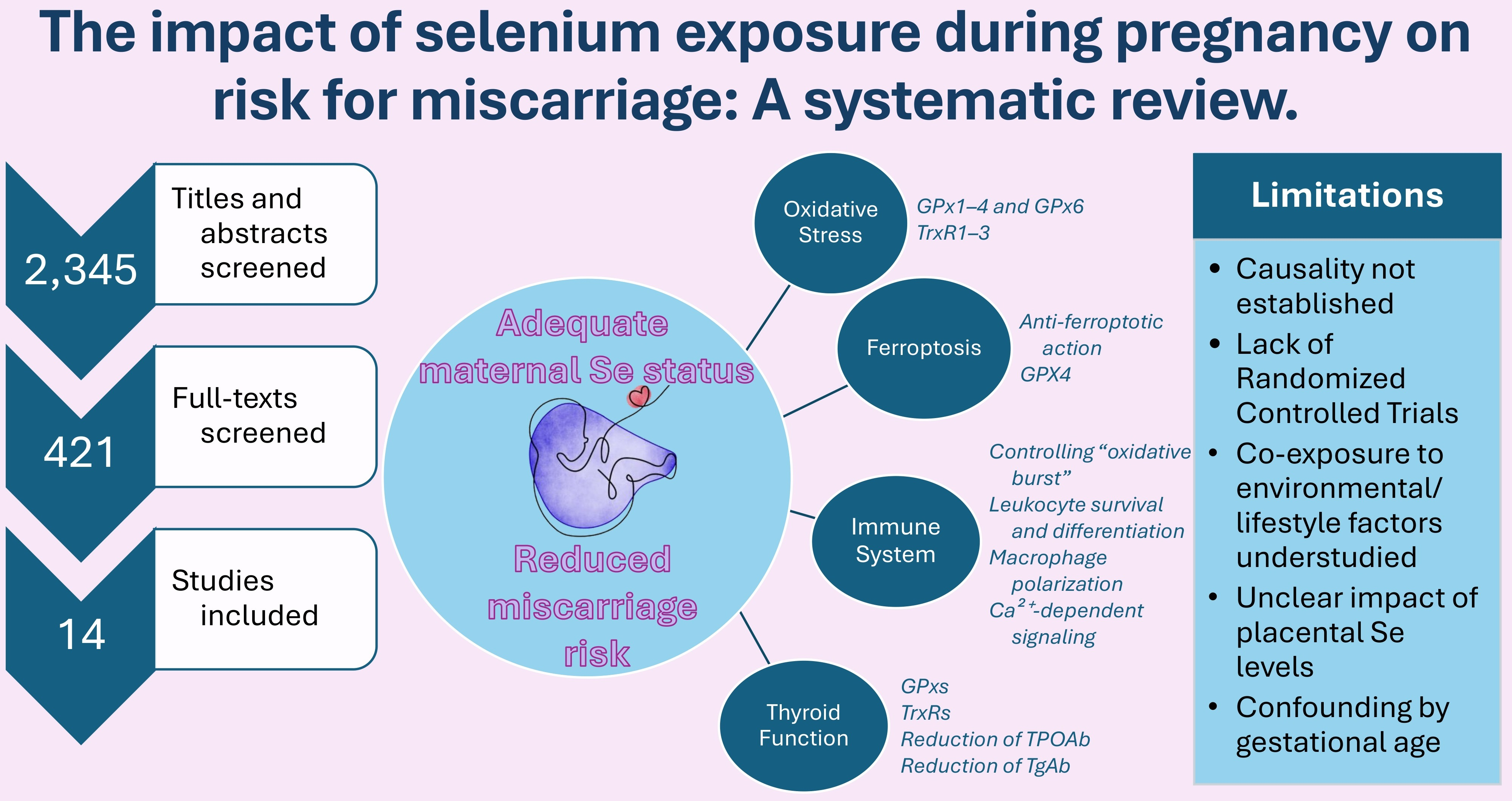
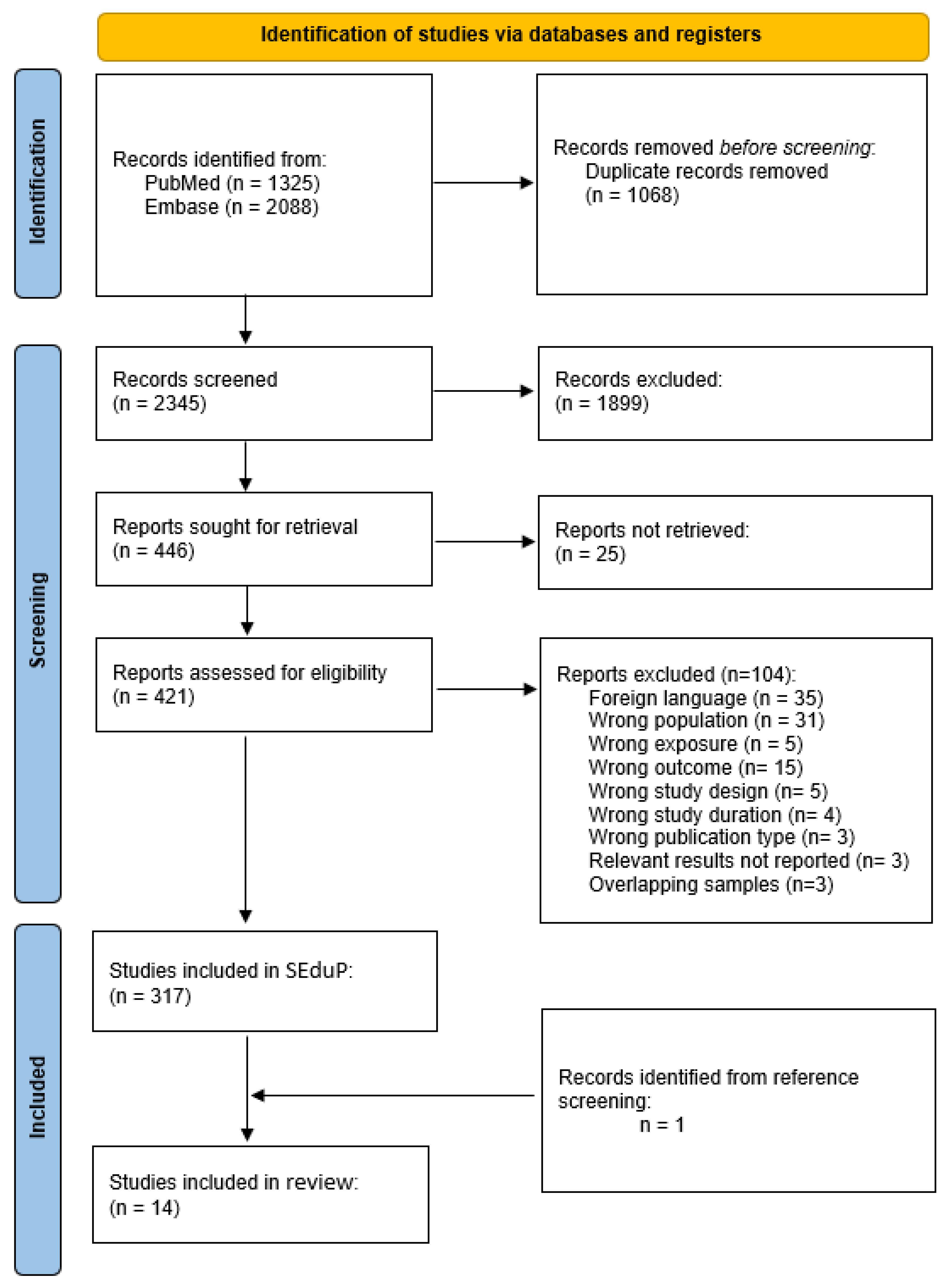
The Impact of Selenium Exposure During Pregnancy on Risk for Miscarriage: A Systematic Review
 , , ,
, , ,  ,
, 
Abstract

1. Introduction
2. Materials and Methods
3. Results

| Study | Study Design (Sample Size) | Timing of Exposure Assessment | Main Findings | Major Limitations |
|---|---|---|---|---|
| Vinceti et al. 2000 [18] | Cohort study (n = 1128) | Throughout pregnancy | No significant association between exposure to the inorganic Se in tap water and risk of miscarriage. | Low statistical power (only 23 exposed pregnancies). Even in the exposed pregnancies, Se levels in tap water were below the WHO limit of 10 μg/L. |
| Jie O. et al. 2019 [19] | Case-control study (n = 195) | During each visit to the hospital (exact gestational stage not specified) | No significant association between Se levels in maternal blood and urine and risk of miscarriage. | Potential confounding by gravity and parity status. |
| Baser et al. 2020 [20] | Case-control study (n = 90) | At miscarriage or delivery (Cases: 12–20 weeks Controls: full-term) | Higher Se levels in placenta were associated with higher risk of miscarriage at 2nd trimester. | Reverse causality cannot be excluded. Potential confounding by gestational age. Low statistical power (30 miscarriage cases). |
| Abdulah et al. 2013 [21] | Case-control study (n = 71) | Between 8 and 20 weeks of gestation | Lower Se levels in maternal blood were associated with higher risk of miscarriage. | Low statistical power (25 miscarriage cases). |
| Zachara et al. 2001 [22] | Case-control study (n = 76) | 3–23 weeks of pregnancy | No significant association between Se levels in maternal blood and plasma and risk of miscarriage. | Reverse causality cannot be excluded. Low statistical power (40 miscarriage cases). |
| Barrington et al. 1996 [23] | Case-control study (n = 80) | During 1st trimester checkup | Lower Se levels in maternal serum were associated with higher risk of miscarriage. | Reverse causality cannot be excluded. Low statistical power (40 miscarriage cases). |
| Koçak et al. 1999 [24] | Case-control study (n = 40) | During 1st trimester checkup | Lower Se levels in maternal serum were associated with higher risk of recurrent miscarriage at 1st trimester. | Low statistical power (20 miscarriage cases). |
| Ghneim et al. 2016 [25] | Case-control study (n = 50) | At miscarriage or delivery (Cases: 12.6 ± 3.4 weeks) | Lower Se levels in maternal blood, plasma, and placenta were associated with higher risk of recurrent miscarriage at 1st trimester. | Reverse causality cannot be excluded. Potential confounding by gestational age. Low statistical power (25 miscarriage cases). |
| Omeljaniuk et al. 2015 [26] | Case-control study (n = 118) | At miscarriage or delivery and 1st trimester. (Cases: 8.9 weeks) | Higher Se levels in maternal serum and placenta were associated with higher risk of miscarriage. | Reverse causality cannot be excluded. Potential confounding by gestational age and BMI. |
| Hu Y. et al. 2023 [27] | Case-control study (n = 200) | On the 14th day after embryo transfer | Lower Se levels in maternal serum were associated with higher risk of miscarriage after IVF. | - |
| Mishra et al. 2003 [28] | Case-control study (n = 97) | Not specified | No significant association between Se levels in maternal blood and plasma and risk of miscarriage. | Reverse causality cannot be excluded. Potential confounding by gestational age cannot be assessed. Low statistical power (52 miscarriage cases). |
| Al-Sheikh et al. 2019 [29] | Case-control study (n = 56) | At miscarriage or delivery (Cases: 12.6 ± 2.8 weeks) | Lower Se levels in maternal plasma and placenta were associated with higher risk of recurrent abortion. | Reverse causality cannot be excluded. Potential confounding by gestational age. Low statistical power (28 miscarriage cases). |
| Güvenç et al. 2002 [30] | Case-control study (n = 48) | At miscarriage or delivery | Lower Se levels in maternal serum and hair were associated with higher risk of miscarriage. | Reverse causality cannot be excluded. Potential confounding by gestational age. Low statistical power (16 miscarriage cases). |
| Desai et al. 2006 [31] | Case-control study (n = 60) | Cases: 12.8 weeks (at miscarriage) Controls: 13.2 weeks | Lower Se levels in maternal red cells were associated with higher risk of miscarriage. Higher Se levels in maternal plasma were associated with higher risk of miscarriage. | Reverse causality cannot be excluded. Low statistical power (30 miscarriage cases). |
4. Discussion
4.1. Miscarriage: Pathophysiological Mechanisms Relevant to Selenium
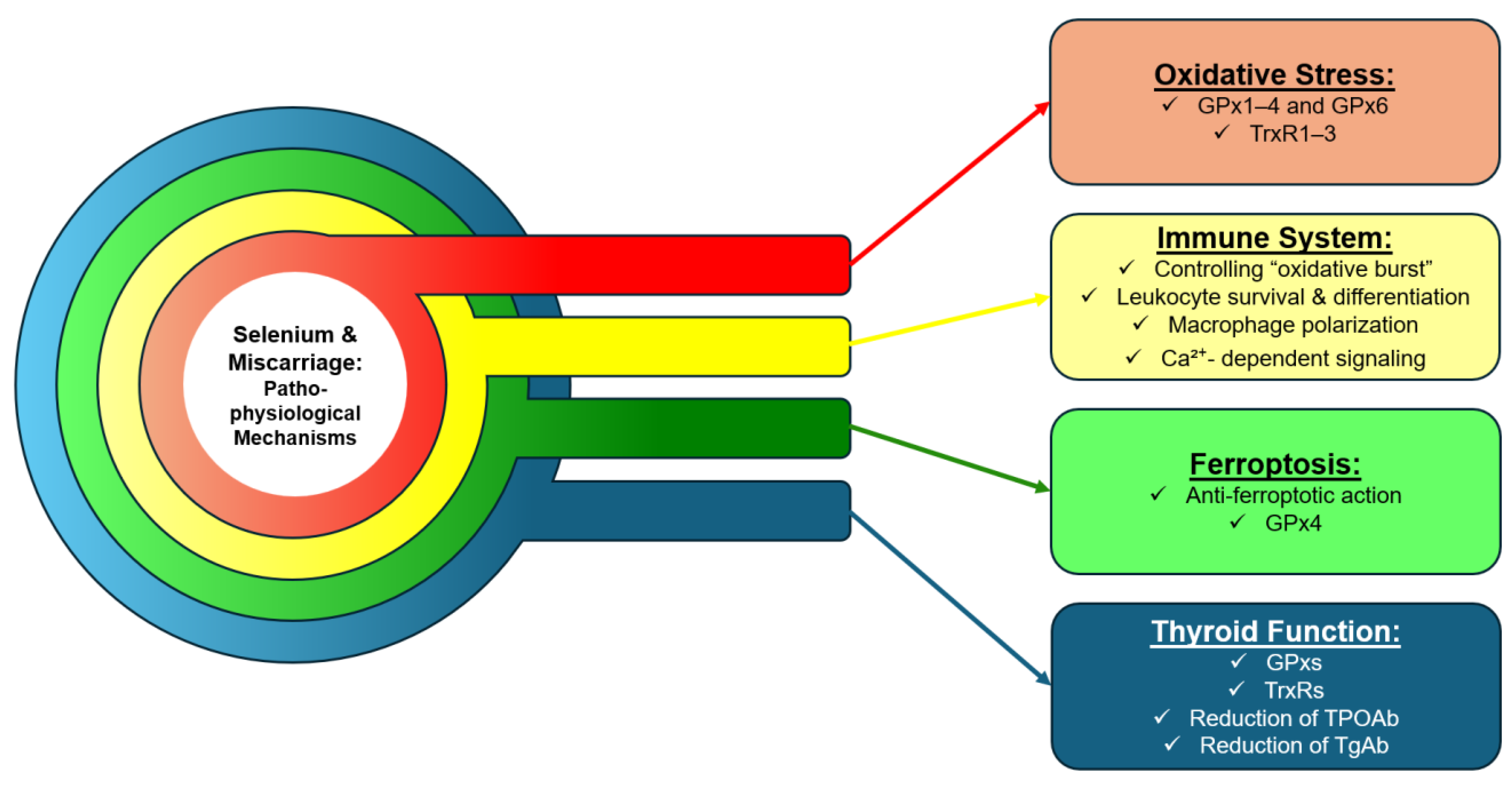
4.2. Selenium and Regulation of Oxidative Stress, Immune System, Ferroptosis, and Thyroid Hormones
4.3. Supportive Data Emerging from Animal Model Studies
4.4. Dynamic Changes of Selenium Concentration During Gestation
4.5. Strengths and Limitations of the Study
4.6. Implications for Future Research
5. Conclusions
Supplementary Materials
Author Contributions
Funding
Institutional Review Board Statement
Informed Consent Statement
Data Availability Statement
Conflicts of Interest
References
- Schomburg, L. Sex-Specific Differences in Biological Effects and Metabolism of Selenium. In Selenium: Its Molecular Biology and Role in Human Health; Hatfield, D.L., Schweizer, U., Tsuji, P.A., Gladyshev, V.N., Eds.; Springer International Publishing: Cham, Switzerland, 2016; pp. 377–388. [Google Scholar]
- Rayman, M.P. Selenium and Human Health. Lancet 2012, 379, 1256–1268. [Google Scholar] [CrossRef] [PubMed]
- Koller, L.D.; Exon, J.H. The Two Faces of Selenium-Deficiency and Toxicity—Are Similar in Animals and Man. Can. J. Vet. Res. 1986, 50, 297–306. [Google Scholar]
- Alexander, J.; Olsen, A.-K. Selenium—a Scoping Review for Nordic Nutrition Recommendations 2023. Food Nutr. Res. 2023, 67, 10320. [Google Scholar] [CrossRef] [PubMed]
- Thomson, C.D. Assessment of Requirements for Selenium and Adequacy of Selenium Status: A Review. Eur. J. Clin. Nutr. 2004, 58, 391–402. [Google Scholar] [CrossRef] [PubMed]
- Al-Gubory, K.H.; Fowler, P.A.; Garrel, C. The Roles of Cellular Reactive Oxygen Species, Oxidative Stress and Antioxidants in Pregnancy Outcomes. Int. J. Biochem. Cell Biol. 2010, 42, 1634–1650. [Google Scholar] [CrossRef]
- Geng, H.; Ma, L.; Wu, L.; Yao, C.; Wang, C.; Gan, X.; Li, Y.; Chen, F. Research on the Function of GPX4 in Tumor-Targeted Treatment Based on Its Molecular Structure and Features. Front. Oncol. 2025, 15, 1594234. [Google Scholar] [CrossRef]
- American College of Obstetricians and Gynecologists’ Committee on Practice Bulletins—Gynecology. ACOG Practice Bulletin No. 200: Early Pregnancy Loss. Obstet. Gynecol. 2018, 132, e197–e207. [Google Scholar] [CrossRef]
- Hendriks, E.; MacNaughton, H.; MacKenzie, M.C. First Trimester Bleeding: Evaluation and Management. Am. Fam. Physician 2019, 99, 166–174. [Google Scholar]
- Kolte, A.M.; Bernardi, L.A.; Christiansen, O.B.; Quenby, S.; Farquharson, R.G.; Goddijn, M.; Stephenson, M.D. ESHRE Special Interest Group. Early Pregnancy Terminology for Pregnancy Loss Prior to Viability: A Consensus Statement from the ESHRE Early Pregnancy Special Interest Group. Hum. Reprod. 2015, 30, 495–498. [Google Scholar] [CrossRef]
- Neill, S. Management of Early Pregnancy Loss. JAMA 2023, 329, 1399–1400. [Google Scholar] [CrossRef]
- Jackson, T.; Watkins, E. Early Pregnancy Loss. JAAPA 2021, 34, 22–27. [Google Scholar] [CrossRef]
- Deshmukh, H.; Way, S.S. Immunological Basis for Recurrent Fetal Loss and Pregnancy Complications. Annu. Rev. Pathol. 2019, 14, 185–210. [Google Scholar] [CrossRef]
- Frazier, T.; Hogue, C.J.R.; Bonney, E.A.; Yount, K.M.; Pearce, B.D. Weathering the Storm; a Review of Pre-Pregnancy Stress and Risk of Spontaneous Abortion. Psychoneuroendocrinology 2018, 92, 142–154. [Google Scholar] [CrossRef]
- Clark, J.M.; Sanders, S.; Carter, M.; Honeyman, D.; Cleo, G.; Auld, Y.; Booth, D.; Condron, P.; Dalais, C.; Bateup, S.; et al. Improving the Translation of Search Strategies Using the Polyglot Search Translator: A Randomized Controlled Trial. J. Med. Libr. Assoc. 2020, 108, 195–207. [Google Scholar] [CrossRef]
- Clark, J.; Glasziou, P.; Del Mar, C.; Bannach-Brown, A.; Stehlik, P.; Scott, A.M. A Full Systematic Review Was Completed in 2 Weeks Using Automation Tools: A Case Study. J. Clin. Epidemiol. 2020, 121, 81–90. [Google Scholar] [CrossRef]
- Ouzzani, M.; Hammady, H.; Fedorowicz, Z.; Elmagarmid, A. Rayyan-a Web and Mobile App for Systematic Reviews. Syst. Rev. 2016, 5, 210. [Google Scholar] [CrossRef] [PubMed]
- Vinceti, M.; Cann, C.I.; Calzolari, E.; Vivoli, R.; Garavelli, L.; Bergomi, M. Reproductive Outcomes in a Population Exposed Long-Term to Inorganic Selenium via Drinking Water. Sci. Total Environ. 2000, 250, 1–7. [Google Scholar] [CrossRef]
- Jie, O.; Peng, P.; Qiu, L.; Teng, L.; Li, C.; Han, J.; Liu, X. Biomarkers of Metal Toxicity in Embryos in the General Population. J. Clin. Lab. Anal. 2019, 33, e22974. [Google Scholar] [CrossRef] [PubMed]
- Baser, E.; Kırmızı, D.A.; Turksoy, V.A.; Onat, T.; Çaltekin, M.D.; Kara, M.; Yalvac, E.S. Environmental Exposures in the Etiology of Abortion: Placental Toxic and Trace Element Levels. Z. Geburtshilfe Neonatol. 2020, 224, 339–347, Erratum in Z. Geburtshilfe Neonatol. 2020, 224, e1. https://doi.org/10.1055/a-1263-1698. [Google Scholar] [PubMed]
- Abdulah, R.; Noerjasin, H.; Septiani, L.; Mutakin; Defi, I.R.; Suradji, E.W.; Puspitasari, I.M.; Barliana, M.I.; Yamazaki, C.; Nakazawa, M.; et al. Reduced Serum Selenium Concentration in Miscarriage Incidence of Indonesian Subjects. Biol. Trace Elem. Res. 2013, 154, 1–6, Erratum in Biol. Trace Elem. Res. 2019, 190, 282. https://doi.org/10.1007/s12011-013-9701-0. [Google Scholar] [CrossRef]
- Zachara, B.A.; Dobrzyński, W.; Trafikowska, U.; Szymański, W. Blood Selenium and Glutathione Peroxidases in Miscarriage. BJOG 2001, 108, 244–247. [Google Scholar] [CrossRef]
- Barrington, J.W.; Lindsay, P.; James, D.; Smith, S.; Roberts, A. Selenium Deficiency and Miscarriage: A Possible Link? Br. J. Obstet. Gynaecol. 1996, 103, 130–132. [Google Scholar] [CrossRef]
- Koçak, I.; Aksoy, E.; Ustün, C. Recurrent Spontaneous Abortion and Selenium Deficiency. Int. J. Gynaecol. Obstet. 1999, 65, 79–80. [Google Scholar] [CrossRef]
- Ghneim, H.K.; Alshebly, M.M. Biochemical Markers of Oxidative Stress in Saudi Women with Recurrent Miscarriage. J. Korean Med. Sci. 2016, 31, 98–105. [Google Scholar] [CrossRef]
- Omeljaniuk, W.J.; Socha, K.; Borawska, M.H.; Charkiewicz, A.E.; Laudański, T.; Kulikowski, M.; Kobylec, E. Antioxidant Status in Women Who Have Had a Miscarriage. Adv. Med. Sci. 2015, 60, 329–334. [Google Scholar] [CrossRef] [PubMed]
- Hu, Y.; Zhang, D.; Zhang, Q.; Yin, T.; Jiang, T.; He, S.; Li, M.; Yue, X.; Luo, G.; Tao, F.; et al. Serum Cu, Zn and IL-1β Levels May Predict Fetal Miscarriage Risk After IVF Cycles: A Nested Case-Control Study. Biol. Trace Elem. Res. 2023, 201, 5561–5574. [Google Scholar] [CrossRef] [PubMed]
- Mishra, P.K.; Chaudhuri, J. Blood Glutathione Peroxidase and Selenium in Abortion. Indian. J. Clin. Biochem. 2003, 18, 96–98. [Google Scholar] [CrossRef] [PubMed][Green Version]
- Al-Sheikh, Y.A.; Ghneim, H.K.; Alharbi, A.F.; Alshebly, M.M.; Aljaser, F.S.; Aboul-Soud, M.A.M. Molecular and Biochemical Investigations of Key Antioxidant/Oxidant Molecules in Saudi Patients with Recurrent Miscarriage. Exp. Ther. Med. 2019, 18, 4450–4460. [Google Scholar] [CrossRef]
- Güvenç, M.; Güven, H.; Karataş, F.; Aygün, A.D.; Bektaş, S. Low Levels of Selenium in Miscarriage. J. Trace Elem. Exp. Med. 2002, 15, 97–101. [Google Scholar] [CrossRef]
- Desai, P.; Patel, P.; Rathod, S.P.; Mahajan, S. Selenium Levels and Glutathione Peroxidase Activity in Spontaneous Inevitable Abortion. J. Obstet. Gynecol. India 2006, 56, 311–314. [Google Scholar]
- Guidelines for Drinking-Water Quality, 4th Edition, Incorporating the 1st Addendum. Available online: https://www.who.int/publications/i/item/9789241549950 (accessed on 15 November 2025).
- Alijotas-Reig, J.; Garrido-Gimenez, C. Current Concepts and New Trends in the Diagnosis and Management of Recurrent Miscarriage. Obstet. Gynecol. Surv. 2013, 68, 445. [Google Scholar] [CrossRef]
- Zhang, X.; Gao, J.; Yang, L.; Feng, X.; Yuan, X. Oxidative Stress and Its Role in Recurrent Pregnancy Loss: Mechanisms and Implications. J. Mol. Histol. 2024, 56, 55. [Google Scholar] [CrossRef] [PubMed]
- Moustakli, E.; Potiris, A.; Zikopoulos, A.; Drakaki, E.; Arkoulis, I.; Skentou, C.; Tsakiridis, I.; Dagklis, T.; Drakakis, P.; Stavros, S. Immunological Factors in Recurrent Pregnancy Loss: Mechanisms, Controversies, and Emerging Therapies. Biology 2025, 14, 877. [Google Scholar] [CrossRef] [PubMed]
- Khodaei, M.M.; Noori, Z.; Zare, F.; Meshkin, A. Ferroptosis and Recurrent Miscarriage: A Critical Review of Pathophysiology and Emerging Therapeutic Targets. Front. Cell Dev. Biol. 2025, 13, 1559300. [Google Scholar] [CrossRef]
- Quan, X.; Lan, Y.; Yang, X. Thyroid Autoimmunity and Future Pregnancy Outcome in Women of Recurrent Pregnancy Loss: A Meta-Analysis. J. Assist. Reprod. Genet. 2023, 40, 2523–2537. [Google Scholar] [CrossRef]
- Guillin, O.M.; Vindry, C.; Ohlmann, T.; Chavatte, L. Selenium, Selenoproteins and Viral Infection. Nutrients 2019, 11, 2101. [Google Scholar] [CrossRef] [PubMed]
- Zhang, Y.; Roh, Y.J.; Han, S.-J.; Park, I.; Lee, H.M.; Ok, Y.S.; Lee, B.C.; Lee, S.-R. Role of Selenoproteins in Redox Regulation of Signaling and the Antioxidant System: A Review. Antioxidants 2020, 9, 383. [Google Scholar] [CrossRef]
- Li, Z.; Dong, Y.; Chen, S.; Jia, X.; Jiang, X.; Che, L.; Lin, Y.; Li, J.; Feng, B.; Fang, Z.; et al. Organic Selenium Increased Gilts Antioxidant Capacity, Immune Function, and Changed Intestinal Microbiota. Front. Microbiol. 2021, 12, 723190. [Google Scholar] [CrossRef]
- Huang, Z.; Rose, A.H.; Hoffmann, P.R. The Role of Selenium in Inflammation and Immunity: From Molecular Mechanisms to Therapeutic Opportunities. Antioxid. Redox Signal. 2012, 16, 705–743. [Google Scholar] [CrossRef]
- Niu, R.; Yang, Q.; Dong, Y.; Hou, Y.; Liu, G. Selenium Metabolism and Regulation of Immune Cells in Immune-Associated Diseases. J. Cell Physiol. 2022, 237, 3449–3464. [Google Scholar] [CrossRef]
- Ghaniem, S.; Nassef, E.; Zaineldin, A.I.; Bakr, A.; Hegazi, S. A Comparison of the Beneficial Effects of Inorganic, Organic, and Elemental Nano-Selenium on Nile Tilapia: Growth, Immunity, Oxidative Status, Gut Morphology, and Immune Gene Expression. Biol. Trace Elem. Res. 2022, 200, 5226–5241. [Google Scholar] [CrossRef]
- Ursini, F.; Maiorino, M.; Valente, M.; Ferri, L.; Gregolin, C. Purification from Pig Liver of a Protein Which Protects Liposomes and Biomembranes from Peroxidative Degradation and Exhibits Glutathione Peroxidase Activity on Phosphatidylcholine Hydroperoxides. Biochim. Et Biophys. Acta (BBA) Lipids Lipid Metab. 1982, 710, 197–211. [Google Scholar] [CrossRef]
- Dixon, S.J.; Lemberg, K.M.; Lamprecht, M.R.; Skouta, R.; Zaitsev, E.M.; Gleason, C.E.; Patel, D.N.; Bauer, A.J.; Cantley, A.M.; Yang, W.S.; et al. Ferroptosis: An Iron-Dependent Form of Nonapoptotic Cell Death. Cell 2012, 149, 1060–1072. [Google Scholar] [CrossRef]
- Matsushita, M.; Freigang, S.; Schneider, C.; Conrad, M.; Bornkamm, G.W.; Kopf, M. T Cell Lipid Peroxidation Induces Ferroptosis and Prevents Immunity to Infection. J. Exp. Med. 2015, 212, 555–568. [Google Scholar] [CrossRef] [PubMed]
- Bano, I.; Hassan, M.F.; Kieliszek, M. A Comprehensive Review of Selenium as a Key Regulator in Thyroid Health. Biol. Trace Elem. Res. 2025, 203, 6466–6480. [Google Scholar] [CrossRef]
- Toulis, K.A.; Anastasilakis, A.D.; Tzellos, T.G.; Goulis, D.G.; Kouvelas, D. Selenium Supplementation in the Treatment of Hashimoto’s Thyroiditis: A Systematic Review and a Meta-Analysis. Thyroid 2010, 20, 1163–1173. [Google Scholar] [CrossRef] [PubMed]
- Cyna, W.; Wojciechowska, A.; Szybiak-Skora, W.; Lacka, K. The Impact of Environmental Factors on the Development of Autoimmune Thyroiditis-Review. Biomedicines 2024, 12, 1788. [Google Scholar] [CrossRef]
- Huwiler, V.V.; Maissen-Abgottspon, S.; Stanga, Z.; Mühlebach, S.; Trepp, R.; Bally, L.; Bano, A. Selenium Supplementation in Patients with Hashimoto Thyroiditis: A Systematic Review and Meta-Analysis of Randomized Clinical Trials. Thyroid 2024, 34, 295–313. [Google Scholar] [CrossRef] [PubMed]
- Barchielli, G.; Capperucci, A.; Tanini, D. The Role of Selenium in Pathologies: An Updated Review. Antioxidants 2022, 11, 251. [Google Scholar] [CrossRef]
- Hoffman, D.J.; Heinz, G.H. Embryotoxic and Teratogenic Effects of Selenium in the Diet of Mallards. J. Toxicol. Environ. Health 1988, 24, 477–490. [Google Scholar] [CrossRef]
- Danielsson, B.R.; Danielson, M.; Khayat, A.; Wide, M. Comparative Embryotoxicity of Selenite and Selenate: Uptake in Murine Embryonal and Fetal Tissues and Effects on Blastocysts and Embryonic Cells In Vitro. Toxicology 1990, 63, 123–136. [Google Scholar] [CrossRef]
- Ferm, V.H.; Hanlon, D.P.; Willhite, C.C.; Choy, W.N.; Book, S.A. Embryotoxicity and Dose-Response Relationships of Selenium in Hamsters. Reprod. Toxicol. 1990, 4, 183–190. [Google Scholar] [CrossRef]
- DeYoung, D.J.; Bantle, J.A.; Fort, D.J. Assessment of the Developmental Toxicity of Ascorbic Acid, Sodium Selenate, Coumarin, Serotonin, and 13-Cis Retinoic Acid Using FETAX. Drug Chem. Toxicol. 1991, 14, 127–141. [Google Scholar] [CrossRef]
- Willhite, C.C. Selenium Teratogenesis. Species-Dependent Response and Influence on Reproduction. Ann. N. Y. Acad. Sci. 1993, 678, 169–177. [Google Scholar] [CrossRef]
- Usami, M.; Ohno, Y. Teratogenic Effects of Selenium Compounds on Cultured Postimplantation Rat Embryos. Teratog. Carcinog. Mutagen. 1996, 16, 27–36. [Google Scholar] [CrossRef]
- Lee, M.; Chan, K.K.-S.; Sairenji, E.; Niikuni, T. Effect of Sodium Selenite on Methylmercury-Induced Cleft Palate in the Mouse. Environ. Res. 1979, 19, 39–48. [Google Scholar] [CrossRef] [PubMed]
- Hau, J.; Basse, A.; Wolstrup, C. A Murine Model for the Assessment of Placental and Fetal Development in Teratogenicity Studies. Lab. Anim. 1987, 21, 26–30. [Google Scholar] [CrossRef] [PubMed]
- Nobunaga, T.; Satoh, H.; Suzuki, T. Effects of Sodium Selenite on Methylmercury Embryotoxicity and Teratogenicity in Mice. Toxicol. Appl. Pharmacol. 1979, 47, 79–88. [Google Scholar] [CrossRef] [PubMed]
- Weekley, C.M.; Harris, H.H. Which Form Is That? The Importance of Selenium Speciation and Metabolism in the Prevention and Treatment of Disease. Chem. Soc. Rev. 2013, 42, 8870–8894. [Google Scholar] [CrossRef]
- Vipond, J.E. Effects of a Single Oral Dose of a Commercial Selenium Cobalt and Vitamin Preparation on Ewe Fertility. Vet. Rec. 1984, 114, 519–521. [Google Scholar] [CrossRef]
- Muñoz, C.; Carson, A.F.; McCoy, M.A.; Dawson, L.E.R.; Irwin, D.; Gordon, A.W.; Kilpatrick, D.J. Effect of Supplementation with Barium Selenate on the Fertility, Prolificacy and Lambing Performance of Hill Sheep. Vet. Rec. 2009, 164, 265–271. [Google Scholar] [CrossRef]
- Naziroğlu, M.; Çay, M.; Karataş, F.; Çimtay, İ.; Aksakal, M. Plasma Levels of Some Vitamins and Elements inAborted Ewes in Elazığ Region. Turk. J. Vet. Anim. Sci. 1998, 22, 171–174. [Google Scholar]
- van Niekerk, F.E.; Cloete, S.W.; Heine, E.W.; van der Merwe, G.D.; Wellington, A.; du Plessis, S.S.; Bekker, D. The Effect of Selenium Supplementation during the Early Post-Mating Period on Embryonic Survival in Sheep. J. S. Afr. Vet. Assoc. 1996, 67, 209–213. [Google Scholar] [PubMed]
- Hadrup, N.; Ravn-Haren, G. Absorption, Distribution, Metabolism and Excretion (ADME) of Oral Selenium from Organic and Inorganic Sources: A Review. J. Trace Elem. Med. Biol. 2021, 67, 126801. [Google Scholar] [CrossRef]
- Burk, R.F.; Hill, K.E. Regulation of Selenium Metabolism and Transport. Annu. Rev. Nutr. 2015, 35, 109–134. [Google Scholar] [CrossRef]
- Cheung, K.L.; Lafayette, R.A. Renal Physiology of Pregnancy. Adv. Chronic Kidney Dis. 2013, 20, 209–214. [Google Scholar] [CrossRef]
- Lopes van Balen, V.A.; van Gansewinkel, T.A.G.; de Haas, S.; Spaan, J.J.; Ghossein-Doha, C.; van Kuijk, S.M.J.; van Drongelen, J.; Cornelis, T.; Spaanderman, M.E.A. Maternal Kidney Function during Pregnancy: Systematic Review and Meta-Analysis. Ultrasound Obstet. Gynecol. 2019, 54, 297–307. [Google Scholar] [CrossRef] [PubMed]
- Hansen, J.M. Oxidative Stress as a Mechanism of Teratogenesis. Birth Defects Res. Part C Embryo Today 2006, 78, 293–307. [Google Scholar] [CrossRef] [PubMed]
- Mariath, A.B.; Bergamaschi, D.P.; Rondó, P.H.C.; Tanaka, A.C.D.; Hinnig, P.d.F.; Abbade, J.F.; Diniz, S.G. The Possible Role of Selenium Status in Adverse Pregnancy Outcomes. Br. J. Nutr. 2011, 105, 1418–1428. [Google Scholar] [CrossRef]
- Pieczyńska, J.; Płaczkowska, S.; Sozański, R.; Orywal, K.; Mroczko, B.; Grajeta, H. Is Maternal Dietary Selenium Intake Related to Antioxidant Status and the Occurrence of Pregnancy Complications? J. Trace Elem. Med. Biol. 2019, 54, 110–117. [Google Scholar] [CrossRef]
- Pieczyńska, J.; Grajeta, H. The Role of Selenium in Human Conception and Pregnancy. J. Trace Elem. Med. Biol. 2015, 29, 31–38. [Google Scholar] [CrossRef] [PubMed]
- Yin, S.; Wang, C.; Wei, J.; Wang, D.; Jin, L.; Liu, J.; Wang, L.; Li, Z.; Ren, A.; Yin, C. Essential Trace Elements in Placental Tissue and Risk for Fetal Neural Tube Defects. Environ. Int. 2020, 139, 105688. [Google Scholar] [CrossRef] [PubMed]
- Shimonovich, M.; Pearce, A.; Thomson, H.; Keyes, K.; Katikireddi, S.V. Assessing Causality in Epidemiology: Revisiting Bradford Hill to Incorporate Developments in Causal Thinking. Eur. J. Epidemiol. 2021, 36, 873–887. [Google Scholar] [CrossRef]
- Falagas, M.E.; Pitsouni, E.I.; Malietzis, G.A.; Pappas, G.; Kouranos, V.D.; Arencibia-Jorge, R.; Karageorgopoulos, D.E.; Reagan-Shaw, S.; Nihal, M.; Ahmad, N.; et al. Comparison of PubMed, Scopus, Web of Science, and Google Scholar: Strengths and Weaknesses. FASEB J. 2008, 22, 338–342. [Google Scholar] [CrossRef] [PubMed]


| (“pregnancy”[MeSH Terms] OR “pregnan*”[Title/Abstract] OR “gestation”[Title/Abstract] OR “prenatal”[Title/Abstract] OR “intrauterine”[Title/Abstract] OR “in utero”[Title/Abstract] OR “perinatal”[Title/Abstract] OR “postnatal”[Title/Abstract]) |
| AND |
| (“selenium” [MeSH Terms] OR “selenium” [tiab]) |
| NOT |
| (“animals”[MeSH Terms] NOT “humans”[MeSH Terms]) |
| Study | Study Design (Sample Size) | Timing of Exposure Assessment | Main Findings | Major Limitations |
|---|---|---|---|---|
| Zachara et al. 2001 [22] | Case-control study (n = 76) | 3–23 weeks of pregnancy | Lower GPx activity in maternal red cells and plasma was associated with higher risk of miscarriage. | Reverse causality cannot be excluded. Low statistical power (40 miscarriage cases). |
| Omeljaniuk et al. 2015 [26] | Case-control study (n = 118) | At miscarriage or delivery and 1st trimester. (Cases: 8.9 weeks) | Higher GPx activity in maternal serum was associated with higher risk of miscarriage. | Reverse causality cannot be excluded. Potential confounding by gestational age and BMI. |
| Mishra et al. 2003 [28] | Case-control study (n = 97) | Not specified | Lower GPx activity in maternal red cells and plasma was associated with higher risk of miscarriage. | Reverse causality cannot be excluded. Potential confounding by gestational age cannot be assessed. Low statistical power (52 miscarriage cases). |
| Al-Sheikh et al. 2019 [29] | Case-control study (n = 56) | At miscarriage or delivery (Cases: 12.6 ± 2.8 weeks) | Lower GPx activity in maternal plasma and placenta was associated with higher risk of recurrent miscarriage. | Reverse causality cannot be excluded. Potential confounding by gestational age. Low statistical power (28 miscarriage cases). |
| Desai et al. 2006 [31] | Case-control study (n = 60) | Cases: 12.8 weeks (at miscarriage) Controls: 13.2 weeks | Lower GPx activity in maternal red cells and plasma was associated with higher risk of miscarriage. | Reverse causality cannot be excluded. Low statistical power (30 miscarriage cases). |
| Abdulah et al. 2013 [21] | Case-control study (n = 71) | Between 8 and 20 weeks of gestation | No significant association between GPx activity in maternal serum and the risk of miscarriage. | Low statistical power (25 miscarriage cases). |
| Ghneim et al. 2016 [25] | Case-control study (n = 50) | At miscarriage or delivery (Cases: 12.6 ± 3.4 weeks) | Lower GPx activity in maternal plasma, blood, and placenta was associated with higher risk of recurrent miscarriage. | Reverse causality cannot be excluded. Potential confounding by gestational age. Low statistical power (25 miscarriage cases). |
Disclaimer/Publisher’s Note: The statements, opinions and data contained in all publications are solely those of the individual author(s) and contributor(s) and not of MDPI and/or the editor(s). MDPI and/or the editor(s) disclaim responsibility for any injury to people or property resulting from any ideas, methods, instructions or products referred to in the content. |
© 2026 by the authors. Licensee MDPI, Basel, Switzerland. This article is an open access article distributed under the terms and conditions of the Creative Commons Attribution (CC BY) license.
Share and Cite
Kyriakou, S.-I.; Tsarna, E.; Stachika, N.; Dalla, C.; Potiris, A.; Stavros, S.; Christopoulos, P. The Impact of Selenium Exposure During Pregnancy on Risk for Miscarriage: A Systematic Review. Int. J. Mol. Sci. 2026, 27, 968. https://doi.org/10.3390/ijms27020968
Kyriakou S-I, Tsarna E, Stachika N, Dalla C, Potiris A, Stavros S, Christopoulos P. The Impact of Selenium Exposure During Pregnancy on Risk for Miscarriage: A Systematic Review. International Journal of Molecular Sciences. 2026; 27(2):968. https://doi.org/10.3390/ijms27020968
Chicago/Turabian StyleKyriakou, Stavroula-Ioanna, Ermioni Tsarna, Nikolina Stachika, Christina Dalla, Anastasios Potiris, Sofoklis Stavros, and Panagiotis Christopoulos. 2026. "The Impact of Selenium Exposure During Pregnancy on Risk for Miscarriage: A Systematic Review" International Journal of Molecular Sciences 27, no. 2: 968. https://doi.org/10.3390/ijms27020968
APA StyleKyriakou, S.-I., Tsarna, E., Stachika, N., Dalla, C., Potiris, A., Stavros, S., & Christopoulos, P. (2026). The Impact of Selenium Exposure During Pregnancy on Risk for Miscarriage: A Systematic Review. International Journal of Molecular Sciences, 27(2), 968. https://doi.org/10.3390/ijms27020968