
Recent Advances in Research on Iron Metabolism, Ferritin, and Hepcidin
Abstract
1. Introduction
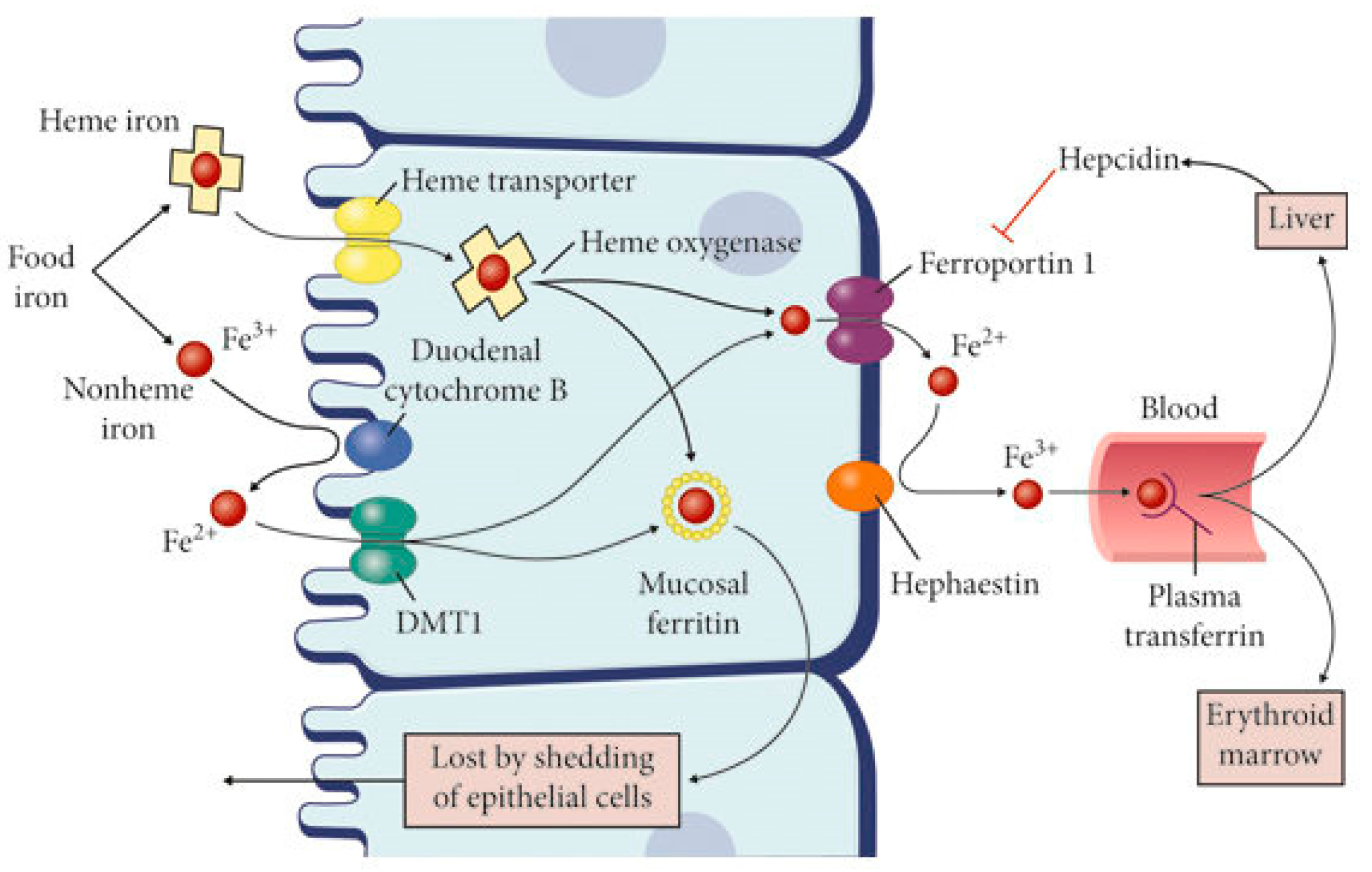
2. Iron Cycle: From Absorption to Body Distribution

3. Discussion
3.1. Ferritin
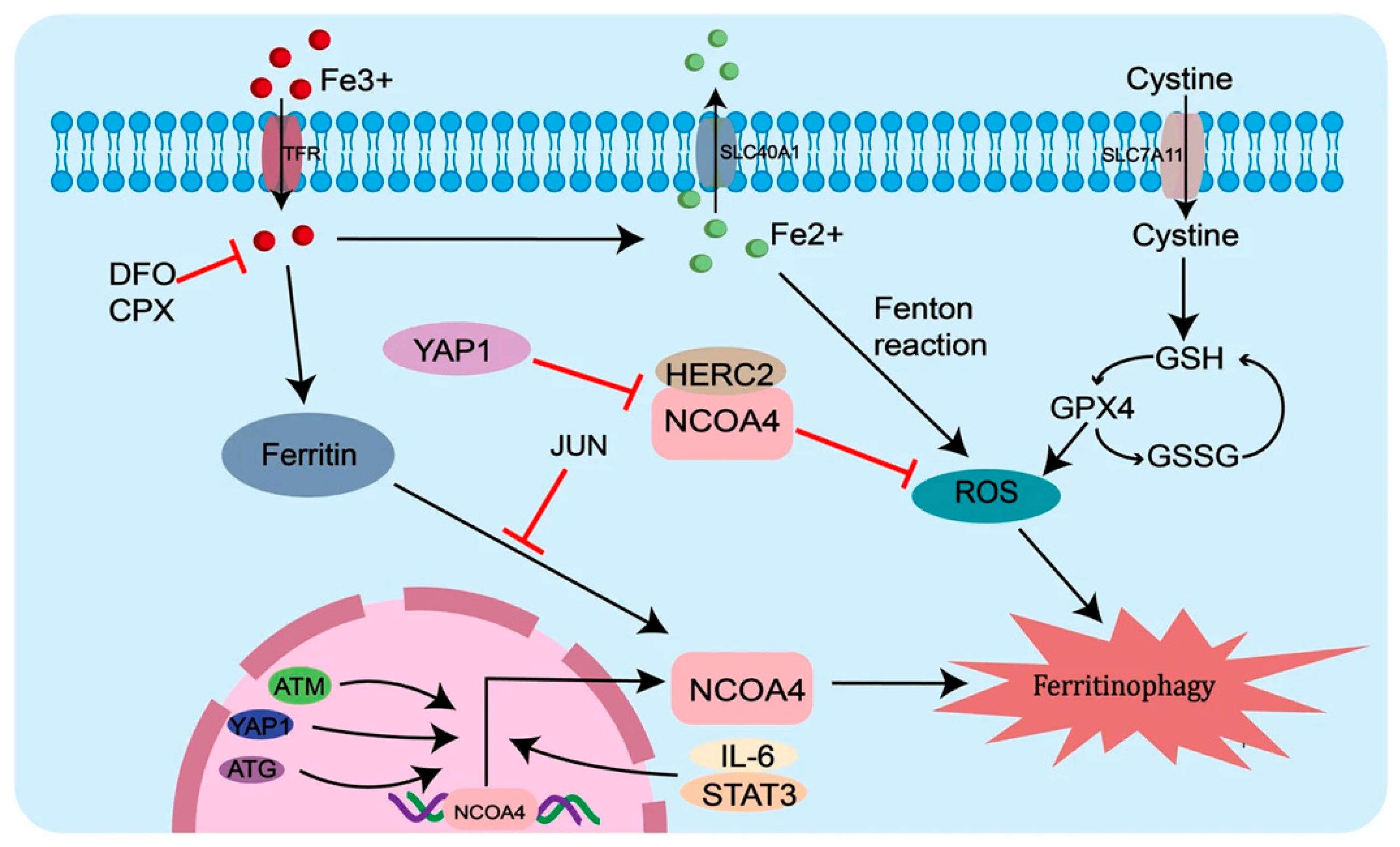
3.2. Ferritinophagy
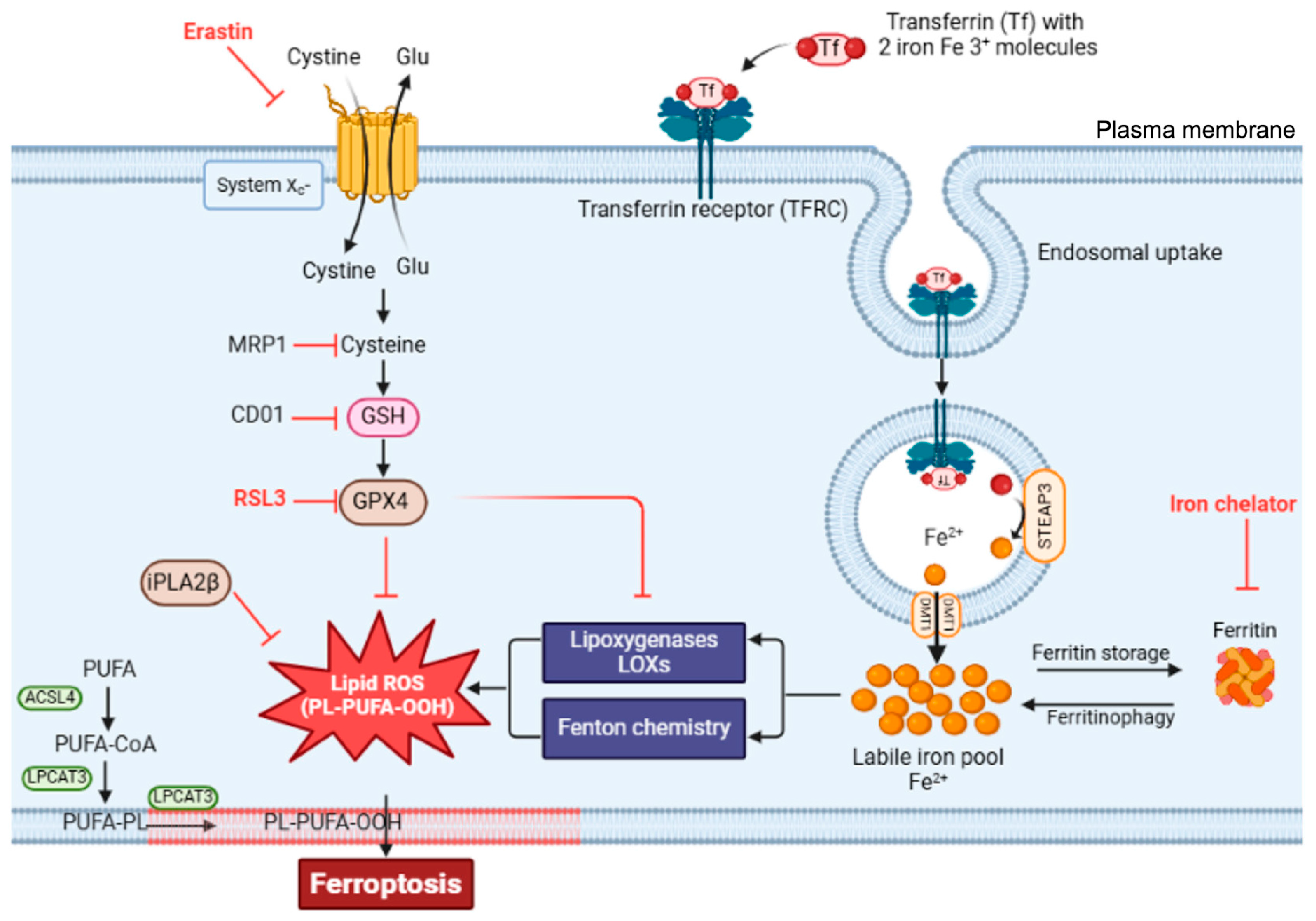
3.3. Ferroptosis
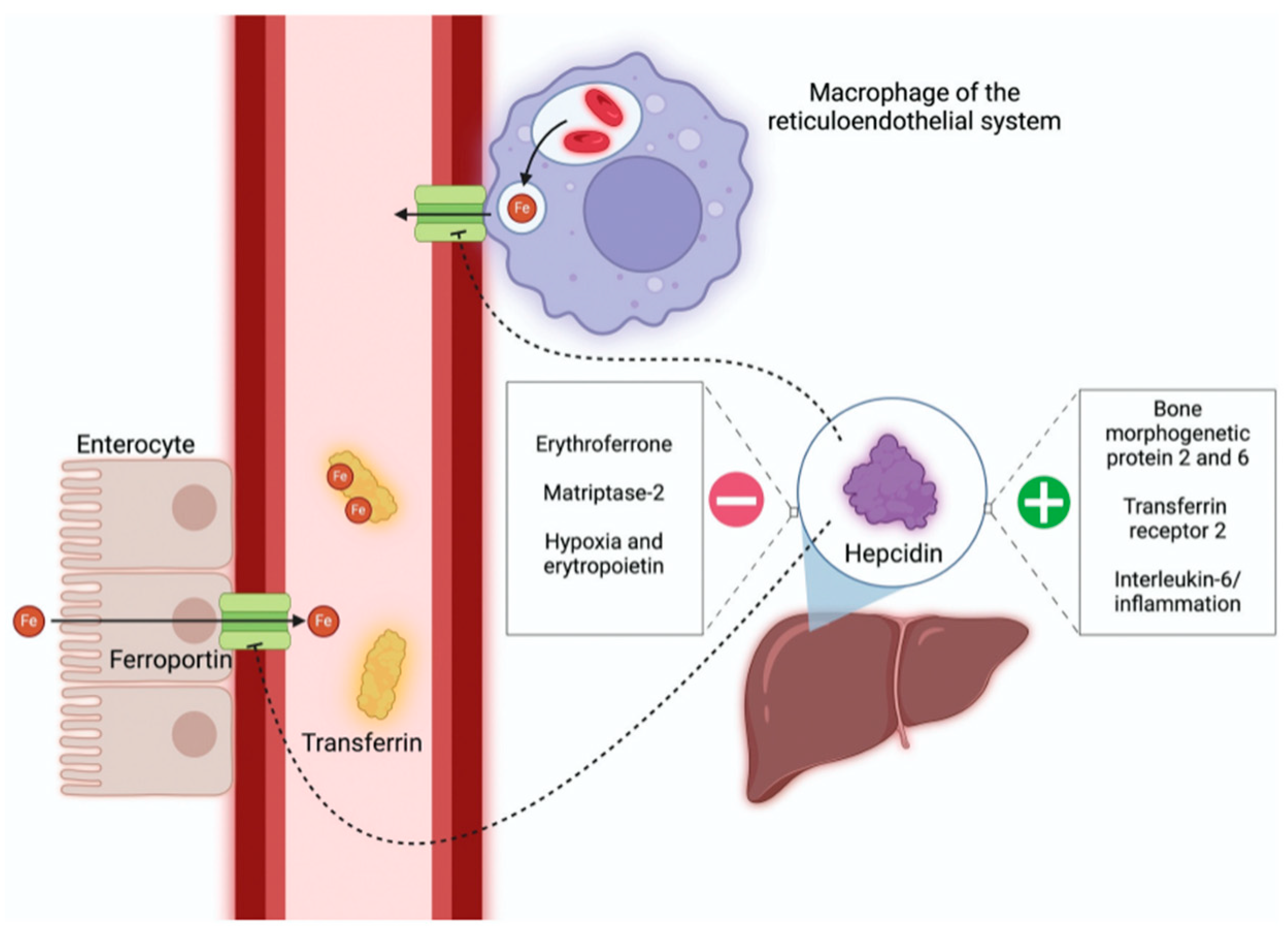
3.4. Hepcidin-/Ferroportin Axis
3.5. Iron Deficiency
3.6. Iron Overload
3.7. Other Iron Loading-Related Conditions
4. Current Treatment Strategies for Iron Overload
4.1. Phlebotomy
4.2. Hepcidin Agonists
4.3. Iron and Sepsis
4.4. Assessment of Iron Status
5. Conclusions
Funding
Data Availability Statement
Acknowledgments
Conflicts of Interest
References
- Sukhbaatar, N.; Weichhart, T. Iron Regulation: Macrophages in Control. Pharmaceuticals 2018, 11, 137. [Google Scholar] [CrossRef]
- Enko, D. Physiology of Iron Metabolism. Clin. Lab. 2025, 71, 383. [Google Scholar] [CrossRef]
- Milman, N.T. A Review of Nutrients and Compounds, Which Promote or Inhibit Intestinal Iron Absorption: Making a Platform for Dietary Measures That Can Reduce Iron Uptake in Patients with Genetic Haemochromatosis. J. Nutr. Metab. 2020, 2020, 7373498. [Google Scholar] [CrossRef]
- Ponka, P.; Sheftel, A.D.; English, A.M.; Scott Bohle, D.; Garcia-Santos, D. Do Mammalian Cells Really Need to Export and Import Heme? Trends Biochem. Sci. 2017, 42, 395–406. [Google Scholar] [CrossRef]
- Cronin, S.J.F.; Woolf, C.J.; Weiss, G.; Penninger, J.M. The Role of Iron Regulation in Immunometabolism and Immune-Related Disease. Front. Mol. Biosci. 2019, 6, 116. [Google Scholar] [CrossRef] [PubMed]
- Ginzburg, Y.Z. Hepcidin-ferroportin axis in health and disease. Vitam. Horm. 2019, 110, 17–45. [Google Scholar] [PubMed]
- Feng, H.; Schorpp, K.; Jin, J.; Yozwiak, C.E.; Hoffstrom, B.G.; Decker, A.M.; Rajbhandari, P.; Stokes, M.E.; Bender, H.G.; Csuka, J.M.; et al. Transferrin Receptor Is a Specific Ferroptosis Marker. Cell Rep. 2020, 30, 3411–3423.e7. [Google Scholar] [CrossRef]
- Hagen, W.R. Maximum iron loading of ferritin: Half a century of sustained citation distortion. Metallomics 2022, 14, mfac063. [Google Scholar] [CrossRef]
- Moreira, A.C.; Silva, T.; Mesquita, G.; Gomes, A.C.; Bento, C.M.; Neves, J.V.; Rodrigues, D.F.; Rodrigues, P.N.; Almeida, A.A.; Santambrogio, P.; et al. H-Ferritin Produced by Myeloid Cells Is Released to the Circulation and Plays a Major Role in Liver Iron Distribution during Infection. Int. J. Mol. Sci. 2021, 23, 269. [Google Scholar] [CrossRef] [PubMed]
- Pantopoulos, K. Iron metabolism and the IRE/IRP regulatory system: An update. Ann. N. Y. Acad. Sci. 2004, 1012, 1–13. [Google Scholar] [CrossRef]
- Maksour, S.; Ooi, L.; Dottori, M. More than a Corepressor: The Role of CoREST Proteins in Neurodevelopment. eNeuro 2020, 7, ENEURO.0337-19.2020. [Google Scholar]
- Zhu, Z.H.; Xu, X.T.; Shen, C.J.; Yuan, J.T.; Lou, S.Y.; Ma, X.L.; Chen, X.; Yang, B.; Zhao, H.J. A novel sesquiterpene lactone fraction from Eupatorium chinense L. suppresses hepatocellular carcinoma growth by triggering ferritinophagy and mitochondrial damage. Phytomedicine 2023, 112, 154671. [Google Scholar] [CrossRef]
- Muhoberac, B.B.; Vidal, R. Iron, Ferritin, Hereditary Ferritinopathy, and Neurodegeneration. Front. Neurosci. 2019, 13, 1195. [Google Scholar] [CrossRef]
- Jin, Y.; Qiu, J.; Lu, X.; Li, G. C-MYC Inhibited Ferroptosis and Promoted Immune Evasion in Ovarian Cancer Cells through NCOA4 Mediated Ferritin Autophagy. Cells 2022, 11, 4127. [Google Scholar] [CrossRef]
- Sun, K.; Hou, L.; Guo, Z.; Wang, G.; Guo, J.; Xu, J.; Zhang, X.; Guo, F. JNK-JUN-NCOA4 axis contributes to chondrocyte ferroptosis and aggravates osteoarthritis via ferritinophagy. Free. Radic. Biol. Med. 2023, 200, 87–101, Corrigendum in Free. Radic. Biol. Med. 2026, 242, 685–686. [Google Scholar] [CrossRef]
- Rey, M.Q.D.; Mancias, J.D. NCOA4-mediated ferritinophagy: A potential link to neurodegeneration. Front. Neurosci. 2019, 13, 238. [Google Scholar] [CrossRef]
- Ito, J.; Omiya, S.; Rusu, M.C.; Ueda, H.; Murakawa, T.; Tanada, Y.; Abe, H.; Nakahara, K.; Asahi, M.; Taneike, M.; et al. Iron derived from autophagymediated ferritin degradation induces cardiomyocyte death and heart failure in mice. eLife 2021, 10, e62174. [Google Scholar] [CrossRef] [PubMed]
- Wang, J.; Wu, N.; Peng, M.; Oyang, L.; Jiang, X.; Peng, Q.; Zhou, Y.; He, Z.; Liao, Q. Ferritinophagy: Research advance and clinical significance in cancers. Cell Death Discov. 2023, 9, 463. [Google Scholar] [CrossRef] [PubMed]
- Soh, J.; Lim, Z.X.; Lim, E.H.; Kennedy, B.K.; Goh, J. Ironing out exercise on immuno-oncological outcomes. J. Immunother. Cancer 2022, 10, e002976. [Google Scholar] [CrossRef]
- Abdukarimov, N.; Kokabi, K.; Kunz, J. Ferroptosis and Iron Homeostasis: Molecular Mechanisms and Neurodegenerative Disease Implications. Antioxidants 2025, 14, 527. [Google Scholar] [CrossRef]
- Li, C.; Dong, X.; Du, W.; Shi, X.; Chen, K.; Zhang, W.; Gao, M. LKB1-AMPK axis negatively regulates ferroptosis by inhibiting fatty acid synthesis. Signal Transduct. Target. Ther. 2020, 5, 187. [Google Scholar] [CrossRef]
- Wang, L.; Klionsky, D.J.; Shen, H.M. The emerging mechanisms and functions of microautophagy. Nat. Rev. Mol. Cell Biol. 2023, 24, 186–203. [Google Scholar] [CrossRef]
- Sandnes, M.; Reikvam, H. Hepcidin as a therapeutic target in iron overload. Expert Opin. Ther. Targets 2024, 28, 1039–1046. [Google Scholar] [CrossRef]
- Fillebeen, C.; Charlebois, E.; Wagner, J.; Katsarou, A.; Mui, J.; Vali, H.; Garcia-Santos, D.; Ponka, P.; Presley, J.; Pantopoulos, K. Transferrin receptor 1 controls systemic iron homeostasis by fine-tuning hepcidin expression to hepatocellular iron load. Blood 2019, 133, 344–355. [Google Scholar] [CrossRef]
- Radhakrishnan, K.; Kim, Y.-H.; Jung, Y.S.; Kim, J.; Kim, D.-K.; Cho, S.J.; Lee, I.-K.; Dooley, S.; Lee, C.-H.; Choi, H.-S. Orphan nuclear receptor ERRgamma is a novel transcriptional regulator of IL-6 mediated hepatic BMP6 gene expression in mice. Int. J. Mol. Sci. 2020, 21, 7148. [Google Scholar] [CrossRef]
- Pantopoulos, K. Inherited Disorders of Iron Overload. Front. Nutr. 2018, 5, 103. [Google Scholar] [CrossRef]
- El Gendy, F.M.; El-Hawy, M.A.; Shehata, A.M.F.; Osheba, H.E. Erythroferrone and iron status parameters levels in pediatric patients with iron deficiency anemia. Eur. J. Haematol. 2018, 100, 356–360. [Google Scholar] [CrossRef]
- Kautz, L.; Jung, G.; Valore, E.V.; Rivella, S.; Nemeth, E.; Ganz, T. Identification of erythroferrone as an erythroid regulator of iron metabolism. Nat. Genet. 2014, 46, 478–684, Correction in Nat. Genet. 2020, 52, 463. [Google Scholar] [CrossRef]
- Sangkhae, V.; Fisher, A.L.; Chua, K.J.; Ruchala, P.; Ganz, T.; Nemeth, E. Maternal hepcidin determines embryo iron homeostasis in mice. Blood 2020, 136, 2206–2216. [Google Scholar] [CrossRef]
- Xu, L.H.; Zhang, Y.; Wang, Y.; Hu, D.; Xu, J.H. Hepcidin and erythroferrone levels in child-bearing women with iron deficiency anemia. Zhongguo Shi Yan Xue Ye Xue Za Zhi 2021, 29, 213–216. [Google Scholar]
- Semercioğlu, E.A.; Solgun, H.A.; Kılıç, Y. The Relationship of Iron Metabolism and Hepcidin in Childhood. Cerrahpaşa Med. J. 2020, 44, 145–152. [Google Scholar] [CrossRef]
- Cappellini, M.D.; Comin-Colet, J.; de Francisco, A.; Dignass, A.; Doehner, W.; Lam, C.S.; Macdougall, I.C.; Rogler, G.; Camaschella, C.; Kadir, R.; et al. Iron deficiency across chronic inflammatory conditions: International expert opinion on definition, diagnosis, and management. Am. J. Hematol. 2017, 92, 1068–1078. [Google Scholar] [CrossRef]
- Herrera-deGuise, C.; Casellas, F.; Robles, V.; Navarro, E.; Borruel, N. Iron Deficiency in the Absence of Anemia Impairs the Perception of Health-Related Quality of Life of Patients with Inflammatory Bowel Disease. Inflamm. Bowel. Dis. 2016, 22, 1450–1455. [Google Scholar] [CrossRef]
- Sandhu, K.; Flintoff, K.; Chatfield, M.D.; Dixon, J.L.; Ramm, L.E.; Ramm, G.A.; Powell, L.W.; Subramaniam, V.N.; Wallace, D.F. Phenotypic analysis of hemochromatosis subtypes reveals variations in severity of iron overload and clinical disease. Blood 2018, 132, 101–110. [Google Scholar] [CrossRef]
- Gao, H.; Jin, Z.; Bandyopadhyay, G.; Wang, G.; Zhang, D.; Rocha, K.C.E.; Liu, X.; Zhao, H.; Kisseleva, T.; Brenner, D.A.; et al. Aberrant iron distribution via hepatocyte-stellate cell axis drives liver lipogenesis and fibrosis. Cell Metab. 2022, 34, 1201–1213.e5. [Google Scholar] [CrossRef]
- Ikeda, Y.; Watanabe, H.; Shiuchi, T.; Hamano, H.; Horinouchi, Y.; Imanishi, M.; Goda, M.; Zamami, Y.; Takechi, K.; Izawa-Ishizawa, Y.; et al. Deletion of H-ferritin in macrophages alleviates obesity and diabetes induced by high-fat diet in mice. Diabetologia 2020, 63, 1588–1602. [Google Scholar] [CrossRef]
- Altamura, S.; Müdder, K.; Schlotterer, A.; Fleming, T.; Heidenreich, E.; Qiu, R.; Hammes, H.-P.; Nawroth, P.; Muckenthaler, M.U. Iron aggravates hepatic insulin resistance in the absence of inflammation in a novel db/db mouse model with iron overload. Mol. Metab. 2021, 51, 101235. [Google Scholar] [CrossRef]
- Segrestin, B.; Moreno-Navarrete, J.M.; Seyssel, K.; Alligier, M.; Meugnier, E.; Nazare, J.-A.; Vidal, H.; Fernandez-Real, J.M.; Laville, M. Adipose tissue expansion by overfeeding healthy men alters iron gene expression. J. Clin. Endocrinol. Metab. 2019, 104, 688–696. [Google Scholar] [CrossRef] [PubMed]
- Contributors and Hemochromatosis International Taskforce; Adams, P.; Altes, A.; Brissot, P.; Butzeck, B.; Cabantchik, I.; Cançado, R.; Distante, S.; Evans, P.; Evans, R.; et al. Therapeutic recommendations in HFE hemochromatosis for p. Cys282Tyr (C282Y/C282Y) homozygous genotype. Hepatol. Int. 2018, 12, 83–86. [Google Scholar] [CrossRef] [PubMed]
- Prabhu, A.; Cargill, T.; Roberts, N.; Ryan, J.D. Systematic review of the clinical outcomes of iron reduction in hereditary hemochromatosis. Hepatology 2020, 72, 1469–1482. [Google Scholar] [CrossRef] [PubMed]
- Kowdley, K.V.; Brown, K.E.; Ahn, J.; Sundaram, V. ACG Clinical Guideline: Hereditary Hemochromatosis. Am. J. Gastroenterol. 2019, 114, 1202–1218, Correction in Am. J. Gastroenterol. 2019, 114, 1927.. [Google Scholar]
- Entezari, S.; Haghi, S.M.; Norouzkhani, N.; Sahebnazar, B.; Vosoughian, F.; Akbarzadeh, D.; Islampanah, M.; Naghsh, N.; Abbasalizadeh, M.; Deravi, N. Iron Chelators in Treatment of Iron Overload. J. Toxicol. 2022, 2022, 4911205. [Google Scholar] [CrossRef]
- Kowdley, K.V.; Modi, N.B.; Peltekian, K.; Vierling, J.M.; Ferris, C.; Valone, F.H.; Gupta, S. Rusfertide for the treatment of iron overload in life-related haemochromatosis: An open label, multicenter, proof-of-concept phase 2 trial. Lancet Gastroenterol. Hepatol. 2023, 8, 1118–1128. [Google Scholar]
- Ginzburg, Y.; Kirubamoorthy, K.; Salleh, S.; Lee, S.-E.; Lee, J.H.; Selvaratnam, V.; Gupta, S.K.; Valone, F.; Khanna, S.; Modi, N.B.; et al. Rusfertide (PTG-300) induction therapy rapidly achieves hematocrit control in polycythemia vera patients without the need for therapeutic phlebotomy. Blood 2021, 138, 390. [Google Scholar] [CrossRef]
- Altamura, S.; Schaeper, U.; Dames, S.; Löffler, K.; Eisermann, M.; Frauendorf, C.; Müdder, K.; Neves, J.; Muckenthaler, M.U. SLN124, a GalNAc-siRNA conjugate targeting TMPRSS6, efficiently prevents iron overload in hereditary haemochromatosis type 1. Hemasphere 2019, 3, e301. [Google Scholar] [CrossRef] [PubMed]
- Liu, Q.; Wu, J.; Zhang, X.; Wu, X.; Zhao, Y.; Ren, J. Iron homeostasis and disorders revisited in the sepsis. Free Radic. Biol. Med. 2021, 165, 1–13. [Google Scholar] [CrossRef]
- Zhang, X.; Holbein, B.; Zhou, J.; Lehmann, C. Iron Metabolism in the Recovery Phase of Critical Illness with a Focus on Sepsis. Int. J. Mol. Sci. 2024, 25, 7004. [Google Scholar] [CrossRef] [PubMed]
- Ayodele, S.; Kumar, P.; van Eyk, A.; Choonara, Y.E. Advances in immunomodulatory strategies for host-directed therapies in combating tuberculosis. Biomed. Pharmacother. 2023, 162, 114588. [Google Scholar] [CrossRef]
- Hoang, K.V.; Woolard, K.; Yang, C.; Melander, C.; Gunn, J.S. Identification of a Host-Targeted Compound to Control Typhoid Fever. Microbiol. Spectr. 2022, 10, e00619-22. [Google Scholar] [CrossRef]
- Oliveira, G.S.; Costa, R.P.; Gomes, P.; Gomes, M.S.; Silva, T.; Teixeira, C. Antimicrobial Peptides as Potential Anti-Tubercular Leads: A Concise Review. Pharmaceuticals 2021, 14, 323. [Google Scholar] [CrossRef]
- Mori, M.; Stelitano, G.; Griego, A.; Chiarelli, L.R.; Cazzaniga, G.; Gelain, A.; Pini, E.; Camera, M.; Canzano, P.; Fumagalli, A.; et al. Synthesis and Assessment of the In Vitro and Ex Vivo Activity of Salicylate Synthase (Mbti) Inhibitors as New Candidates for the Treatment of Mycobacterial Infections. Pharmaceuticals 2022, 15, 992. [Google Scholar] [CrossRef]
- World Health Organization. TSAT, calculated serum iron/total iron binding capacity × 100) and serum ferritin. Serum levels of ferritin reflect hepatic and body iron stores. The serum or plasma ferritin concentration is the most widely used indicator to detect iron deficiency, and a low ferritin indicates depleted iron store. In Guideline on Use of Ferritin Concentrations to Assess Iron Status in Individuals and Populations; World Health Organization: Geneva, Switzerland, 2020. [Google Scholar]
- Rockey, D.C.; Altayar, O.; Falck-Ytter, Y.; Kalmaz, D. AGA technical review on gastrointestinal evaluation of iron deficiency anemia. Gastroenterology 2020, 159, 1097–1119. [Google Scholar] [CrossRef]
- Lynch, S.; Pfeiffer, C.M.; Georgieff, M.K.; Brittenham, G.; Fairweather-Tait, S.; Hurrell, R.F.; McArdle, H.J.; Raiten, D.J. Biomarkers of nutrition for development (BOND)-iron review. J. Nutr. 2018, 148, 1001s–1067s. [Google Scholar] [CrossRef]
- Lopez, A.; Cacoub, P.; Macdougall, I.C.; Peyrin-Biroulet, L. Iron deficiency anemia. Lancet 2016, 387, 907–916. [Google Scholar] [CrossRef]
- Heidenreich, P.A.; Bozkurt, B.; Aguilar, D.; Allen, L.A.; Byun, J.J.; Colvin, M.M.; Deswal, A.; Drazner, M.H.; Dunlay, S.M.; Evers, L.R.; et al. 2022 AHA/ACC/HFSA Guideline for the Management of Heart Failure. J. Am. Coll. Cardiol. 2022, 79, e263–e421, Correction in J. Am. Coll. Cardiol. 2023, 81, 1551.. [Google Scholar] [CrossRef]
- Heeney, M.M.; Guo, D.; De Falco, L.; Campagna, D.R.; Olbina, G.; Kao, P.P.-C.; Schmitz-Abe, K.; Rahimov, F.; Gutschow, P.; Westerman, K.; et al. Normalizing hepcidin predicts TMPRSS6 mutation status in patients with chronic iron deficiency. Blood 2018, 132, 448–452, Erratum in Blood 2018, 132, 1355.. [Google Scholar] [PubMed]
- Stoffel, N.U.; Zeder, C.; Brittenham, G.M.; Moretti, D.; Zimmermann, M.B. Iron absorption from supplements is greater with alternate day than with consecutive day dosing in iron-deficient anemic women. Haematologica 2019, 105, 1232–1239. [Google Scholar] [CrossRef] [PubMed]
- Hayes, M. Measurement of iron status in chronic kidney disease. Pediatr. Nephrol. 2019, 34, 605–613. [Google Scholar] [CrossRef]
- Amir, N.; Noor, S.M.; Subbiah, I.; Osman, M.; Seman, Z. Percentage of hypochromic red cells as a potential screening test to evaluate iron status in blood donors. Int. J. Lab. Hematol. 2019, 41, 418–423. [Google Scholar] [CrossRef]
- Besarab, A.; Drueke, T.B. The problem with trasferrin saturation as an indicator of iron “sufficiency” in chronic kidney disease. Nephrol. Dial. Transplant. 2020, 36, 1377–1383. [Google Scholar] [CrossRef] [PubMed]
- Chinudomwong, P.; Binyasing, A.; Trongsakul, R.; Paisooksantivatana, K. Diagnostic performance of reticulocyte hemoglobin equivalent in assessing the iron status. J. Clin. Lab. Anal. 2020, 34, e23225. [Google Scholar] [CrossRef] [PubMed]
- Almashjary, M.N.; Barefah, A.S.; Bahashwan, S.; Ashankyty, I.; ElFayoumi, R.; Alzahrani, M.; Assaqaf, D.M.; Aljabri, R.S.; Aljohani, A.Y.; Muslim, R.; et al. Reticulocyte Hemoglobin-Equivalent Potentially Detects, Diagnoses and Discriminates between Stages of Iron Deficiency with High Sensitivity and Specificity. J. Clin. Med. 2022, 11, 5675. [Google Scholar] [CrossRef] [PubMed]



| Parameters | Threshold | Reference |
|---|---|---|
| World Health Organization’s parameters | ||
| Serum Ferritin | <15 mg/L | [54] |
| TSAT | ≤16% | |
| American and European Guidelines on Heart Failure | ||
| Serum ferritin | <100 ng/mL or between 100 and 299 ng/mL | [55] |
| (TSAT) | <20%; | |
| Parameter | Function | Threshold |
|---|---|---|
| Soluble transferrin receptor (sTfR) | Related to the expansion of erythropoiesis and its release into the circulatory system increases during iron deficiency. | There is no standardized or validated cutoff value for sTfR. |
| Transferrin/log ferritin ratio | Evaluated to diagnose iron deficiency in inflammation settings. | 1.70 |
| Transferrin saturation (Tsat)/log hepcidin ratio | Evaluated to suspect iron-refractory, iron-deficiency anemia (IRIDA). | 5.6%/nM |
| Hepcidin | Allows one to choose the better administration of iron supplementation. | There is no standardized cutoff value. |
| Reticulocyte hemoglobin content (CHr) | Provides iron availability for erythropoiesis within 3–4 days. | <27.2 pg |
| Percentage of hypochromic red blood cells (%Hypo) | IA-sensitive marker of iron deficiency and changes in long-term assessments. | 0.6% |
| Ret Hb equivalent | A marker for determining the presence and severity of iron deficiency in different patients. | 27.2 pg |
Disclaimer/Publisher’s Note: The statements, opinions and data contained in all publications are solely those of the individual author(s) and contributor(s) and not of MDPI and/or the editor(s). MDPI and/or the editor(s) disclaim responsibility for any injury to people or property resulting from any ideas, methods, instructions or products referred to in the content. |
© 2026 by the author. Licensee MDPI, Basel, Switzerland. This article is an open access article distributed under the terms and conditions of the Creative Commons Attribution (CC BY) license.
Share and Cite
Polizzi, A. Recent Advances in Research on Iron Metabolism, Ferritin, and Hepcidin. Int. J. Mol. Sci. 2026, 27, 906. https://doi.org/10.3390/ijms27020906
Polizzi A. Recent Advances in Research on Iron Metabolism, Ferritin, and Hepcidin. International Journal of Molecular Sciences. 2026; 27(2):906. https://doi.org/10.3390/ijms27020906
Chicago/Turabian StylePolizzi, Alessandro. 2026. "Recent Advances in Research on Iron Metabolism, Ferritin, and Hepcidin" International Journal of Molecular Sciences 27, no. 2: 906. https://doi.org/10.3390/ijms27020906
APA StylePolizzi, A. (2026). Recent Advances in Research on Iron Metabolism, Ferritin, and Hepcidin. International Journal of Molecular Sciences, 27(2), 906. https://doi.org/10.3390/ijms27020906