Anticancer Activity of 2,3′-Dihydroxy-5′-Methoxystilbene Against NSCLC Cell Lines Through AKT-Dependent Mechanisms: A Comprehensive In Vitro and Computational Analysis
 , , ,
, , ,  , , , and
Abstract
1. Introduction
2. Results
2.1. Effect of 2,3′-Dihydroxy-5′-Methoxystilbene on Cell Toxicity in NSCLC Cell Lines
2.2. 2,3′-Dihydroxy-5′-Methoxystilbene Suppresses Proliferation in NSCLC Cells
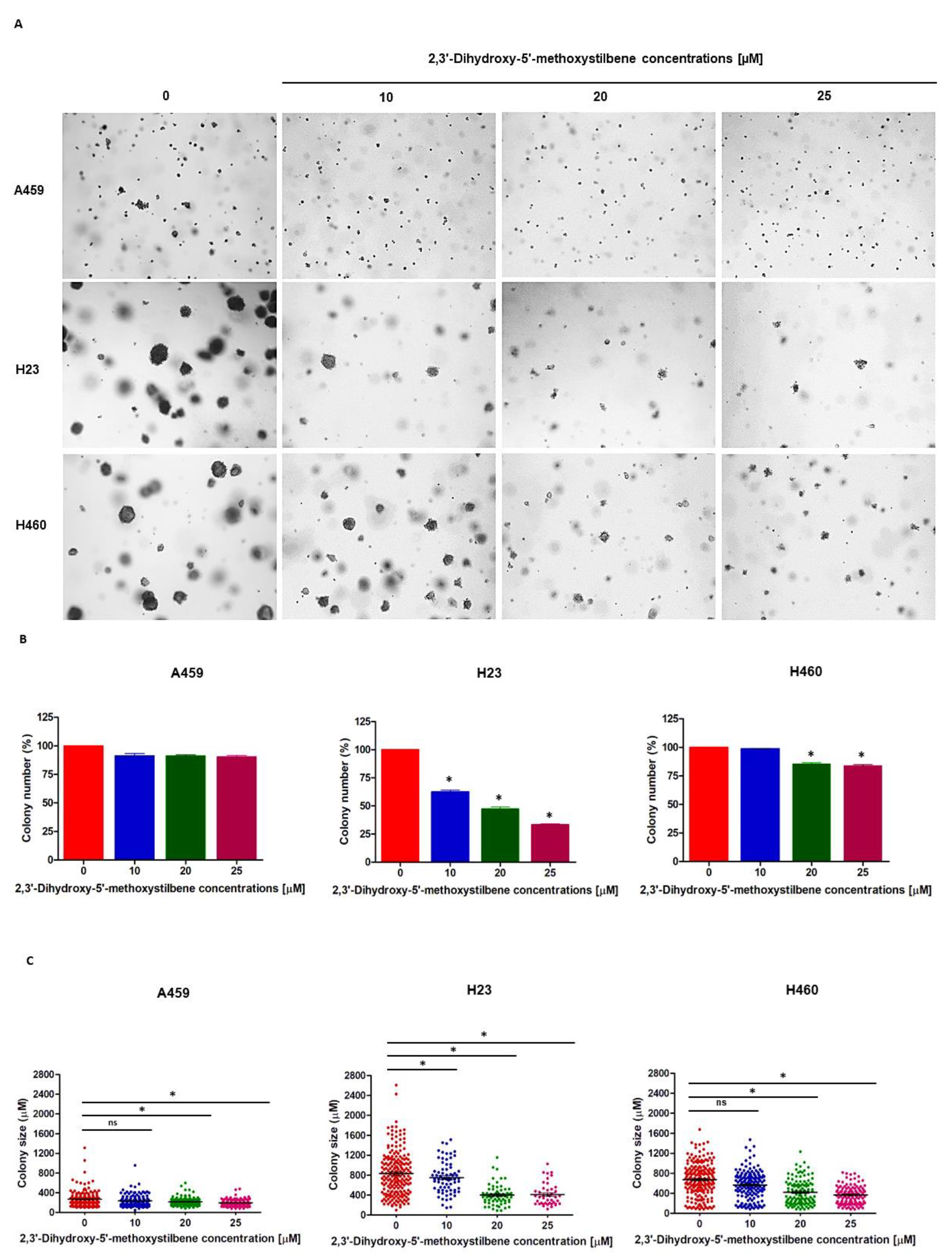
2.3. 2,3′-Dihydroxy-5′-Methoxystilbene Attenuates Anchorage-Independent Growth in NSCLC Cells
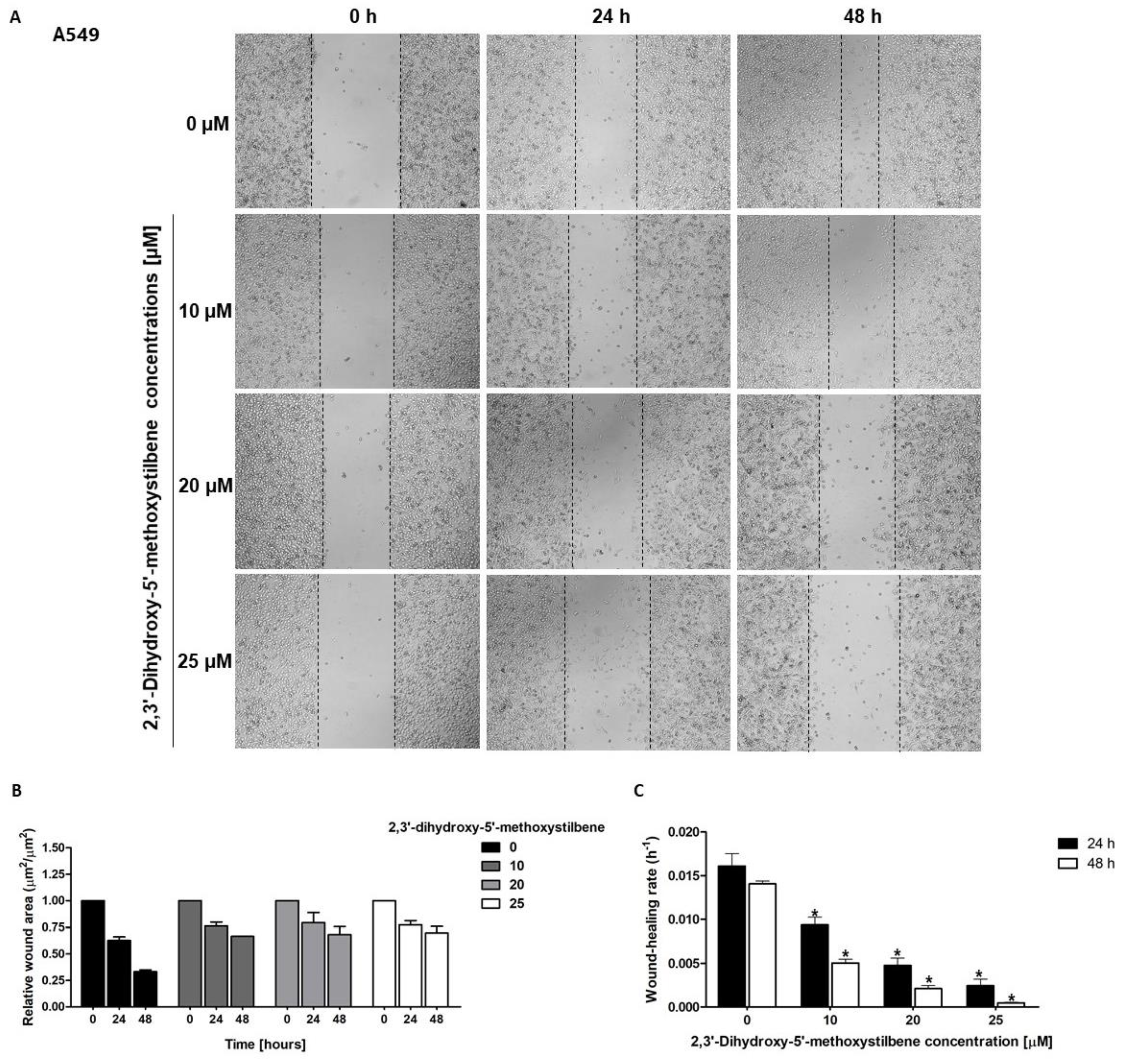
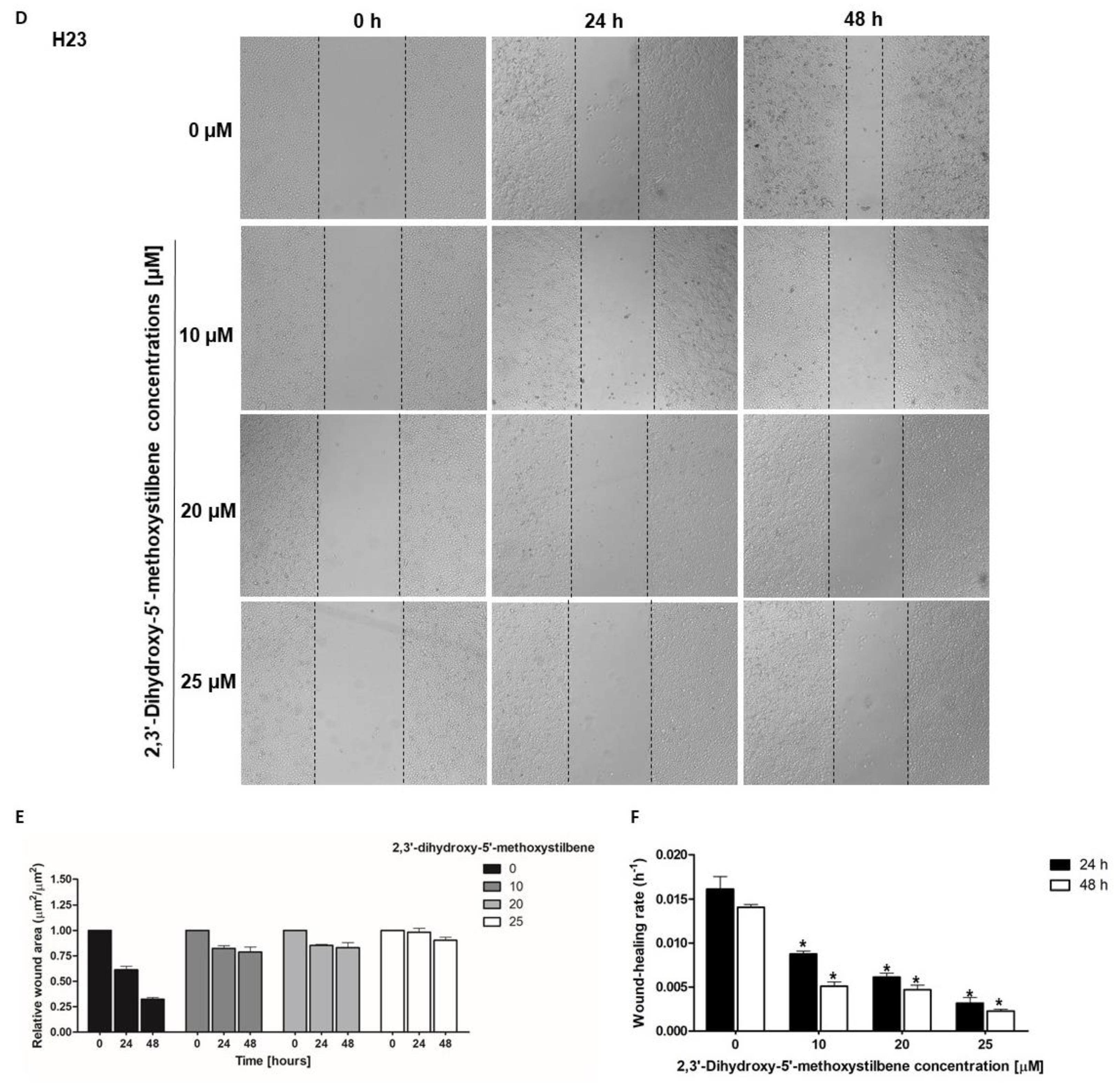
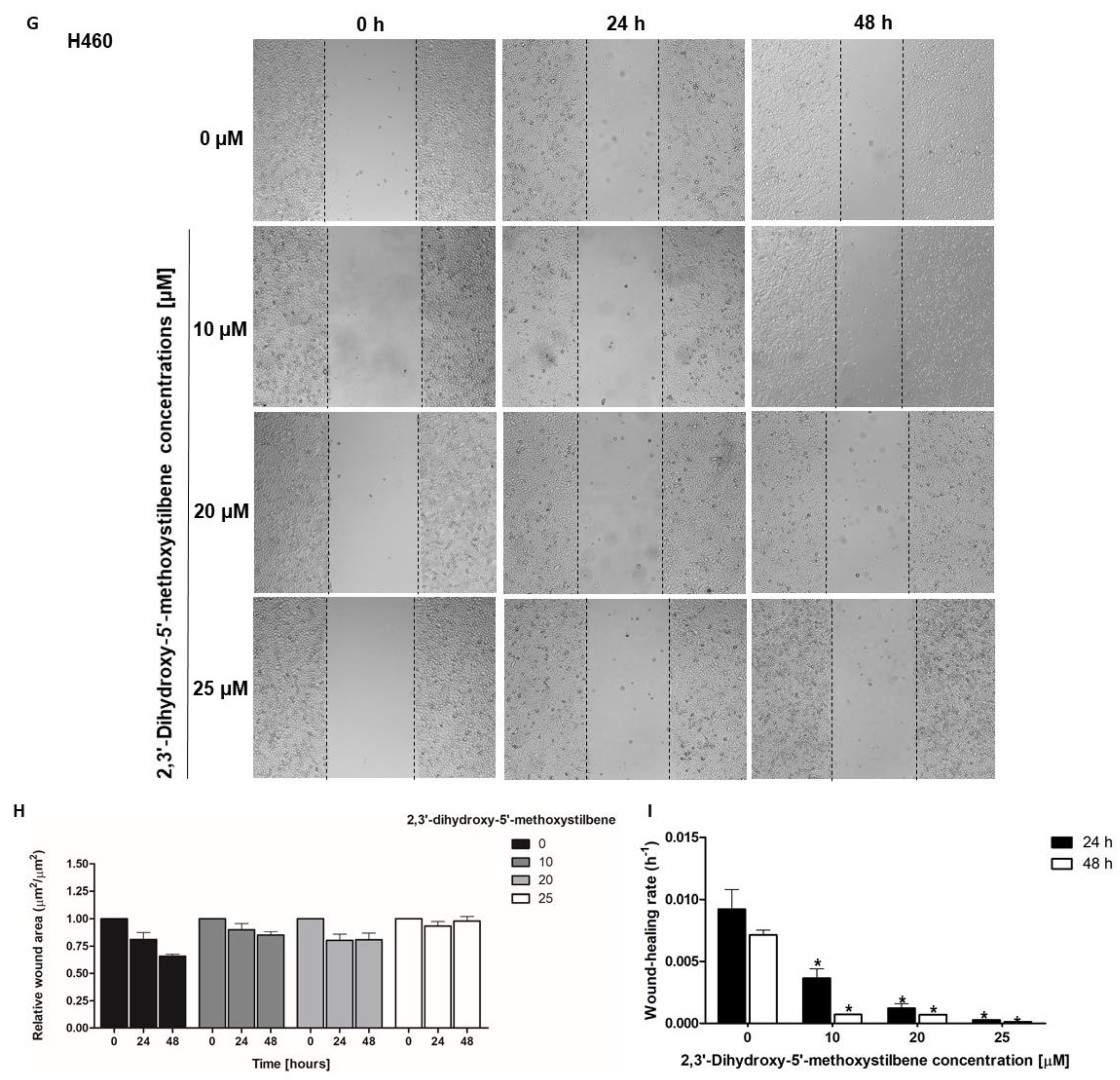
2.4. Inhibitory Effect of 2,3′-Dihydroxy-5′-Methoxystilbene on Lung Cancer Cell Migration
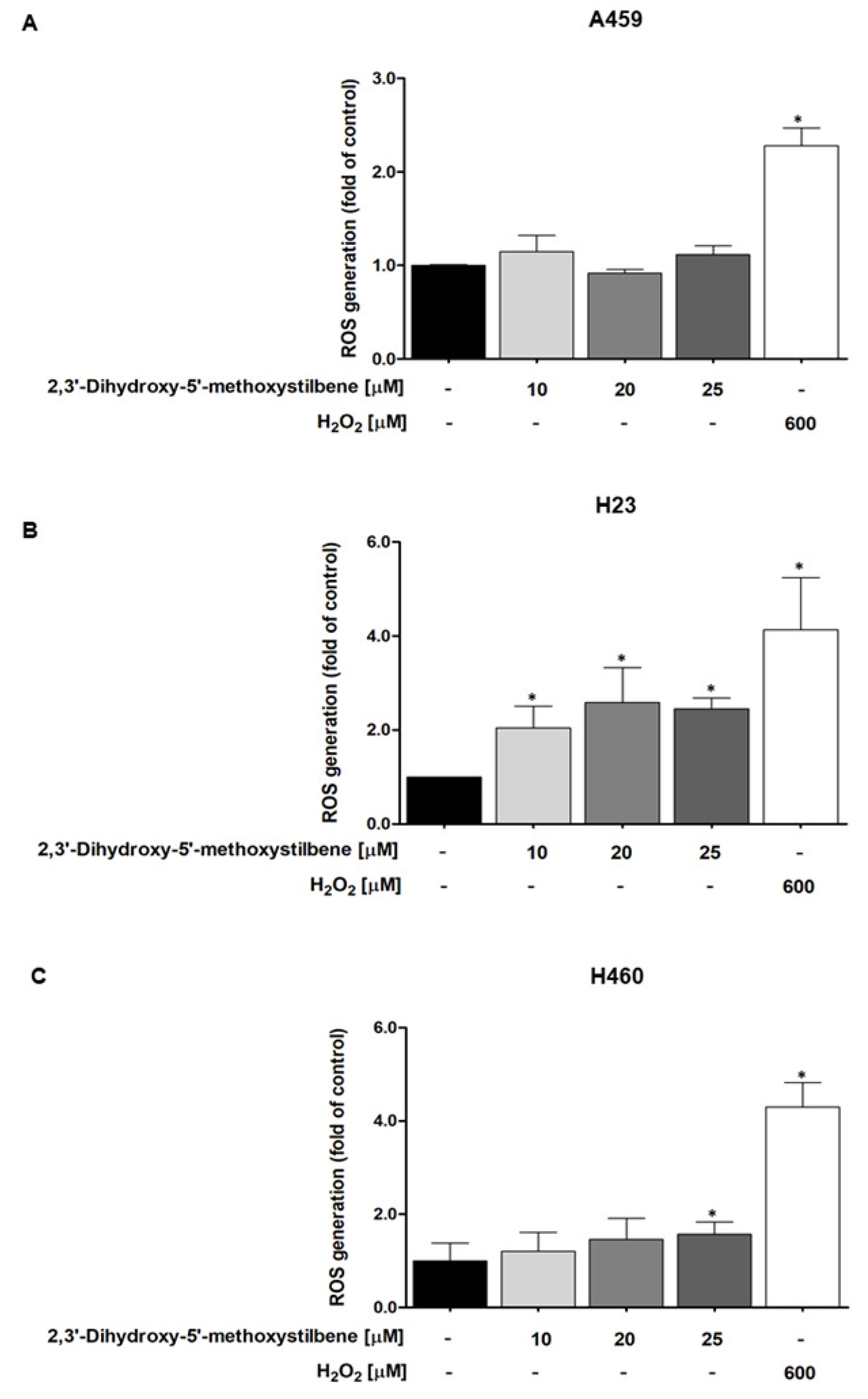
2.5. Effect of 2,3′-Dihydroxy-5′-Methoxystilbene on Oxidative Stress Induction
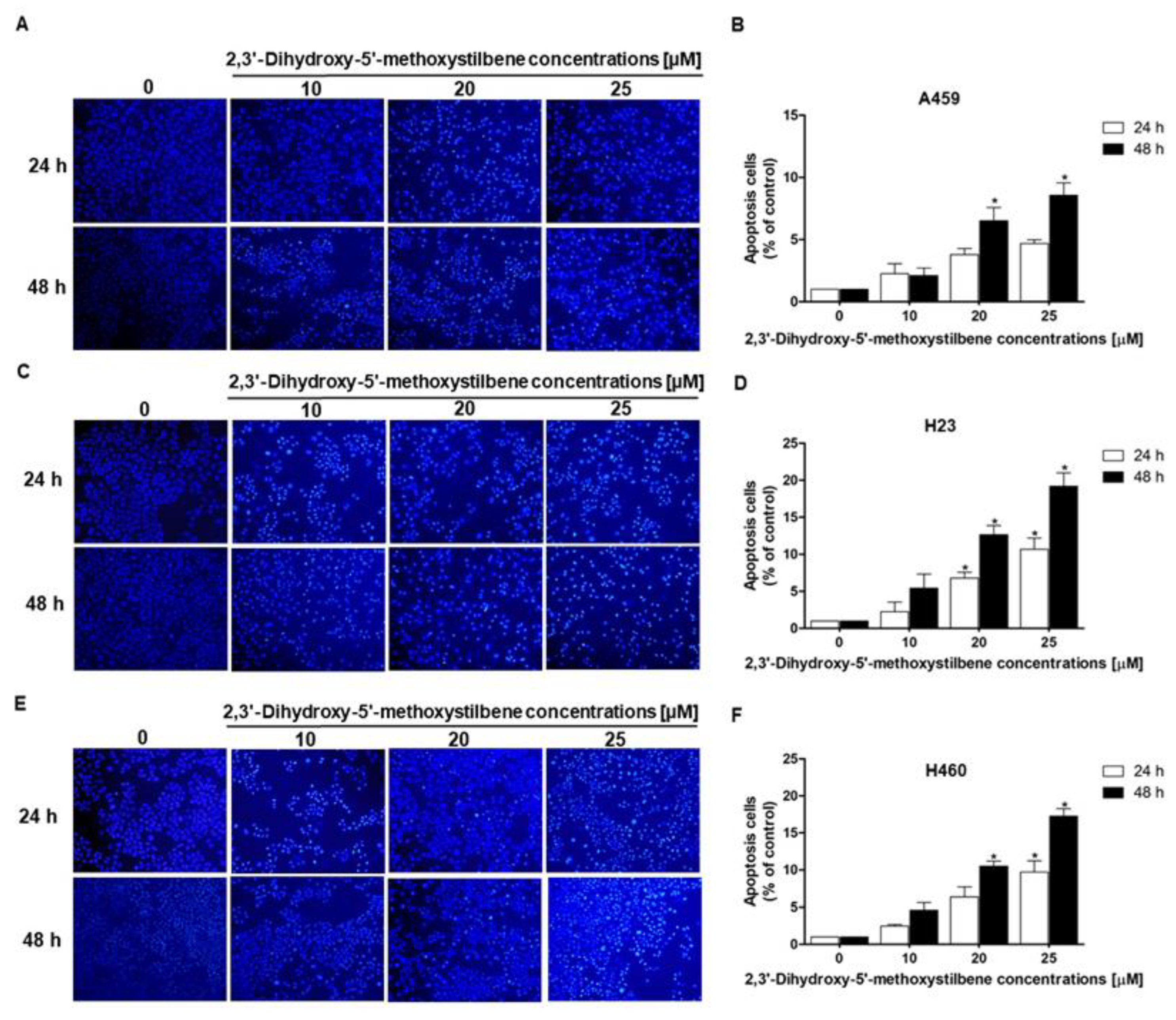
2.6. Effect of 2,3′-Dihydroxy-5′-Methoxystilbene on Apoptosis in NSCLC Cells

2.7. Computational Analysis of 2,3′-Dihydroxy-5′-Methoxystilbene: Target Identification and Molecular Mechanisms in NSCLC
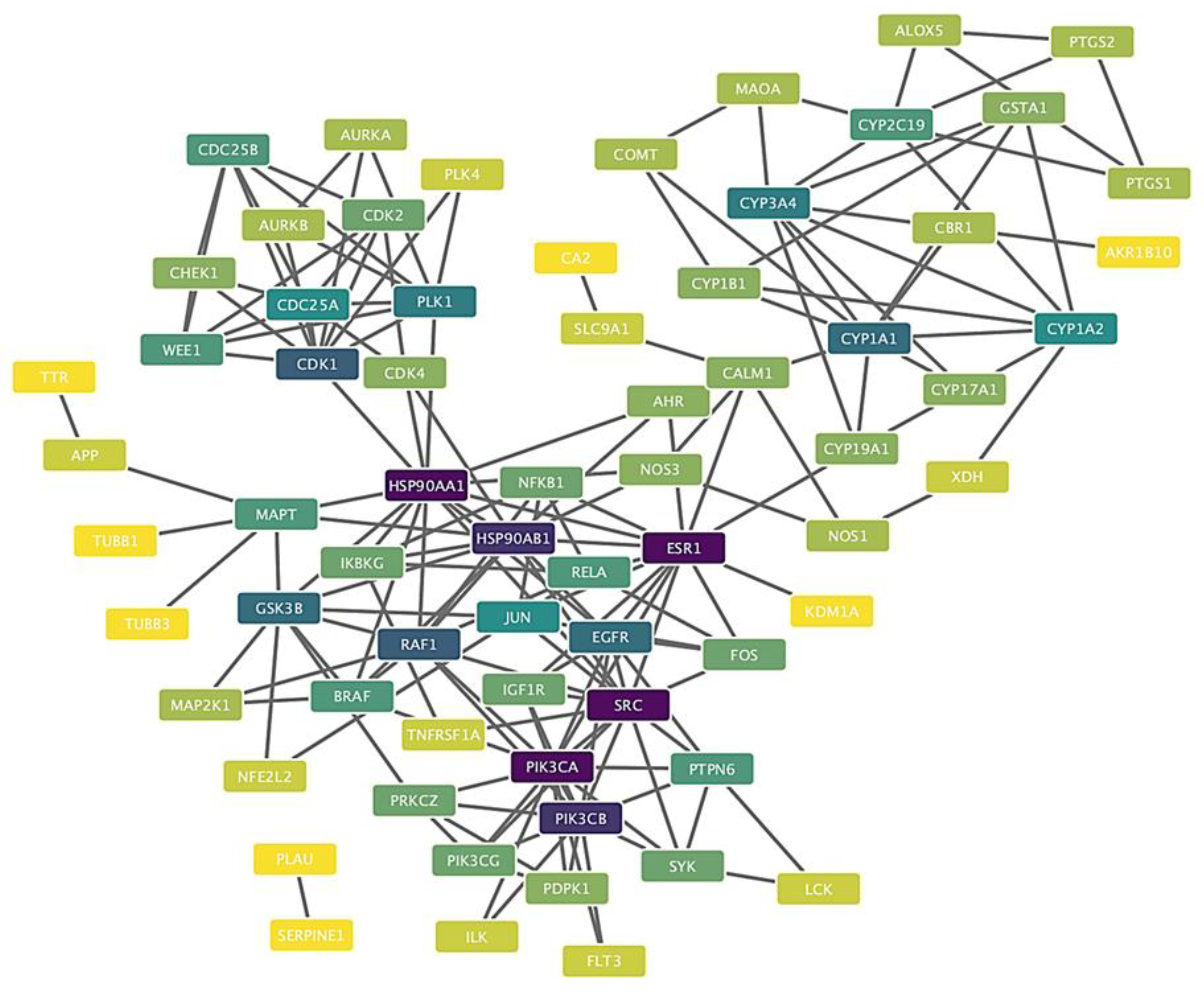
2.7.1. Target Network Analysis and Protein–Protein Interaction Mapping
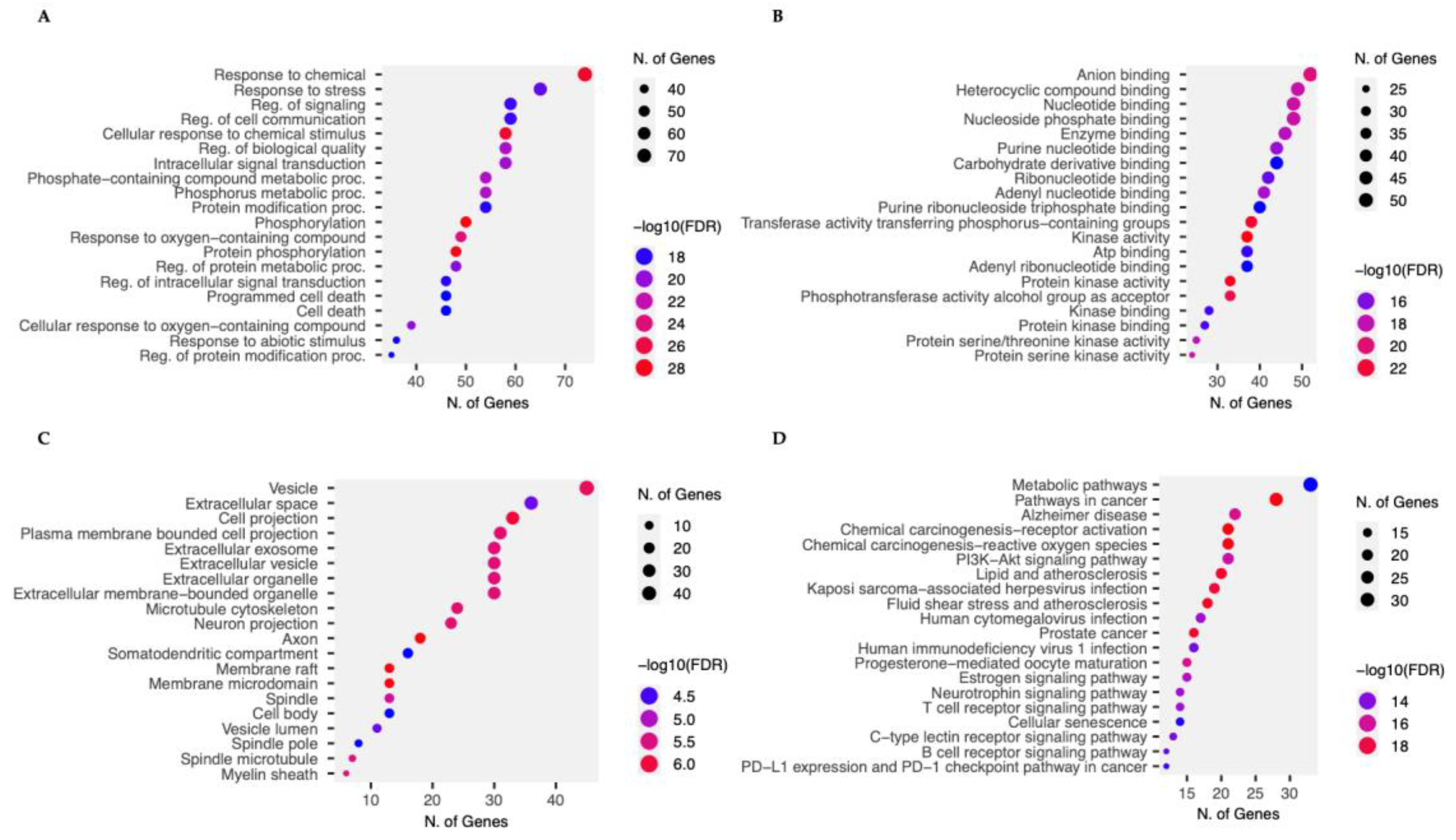
2.7.2. Gene Ontology (GO) and KEGG Pathway Enrichment Analysis of 2,3′-Dihydroxy-5′-Methoxystilbene-Associated Targets
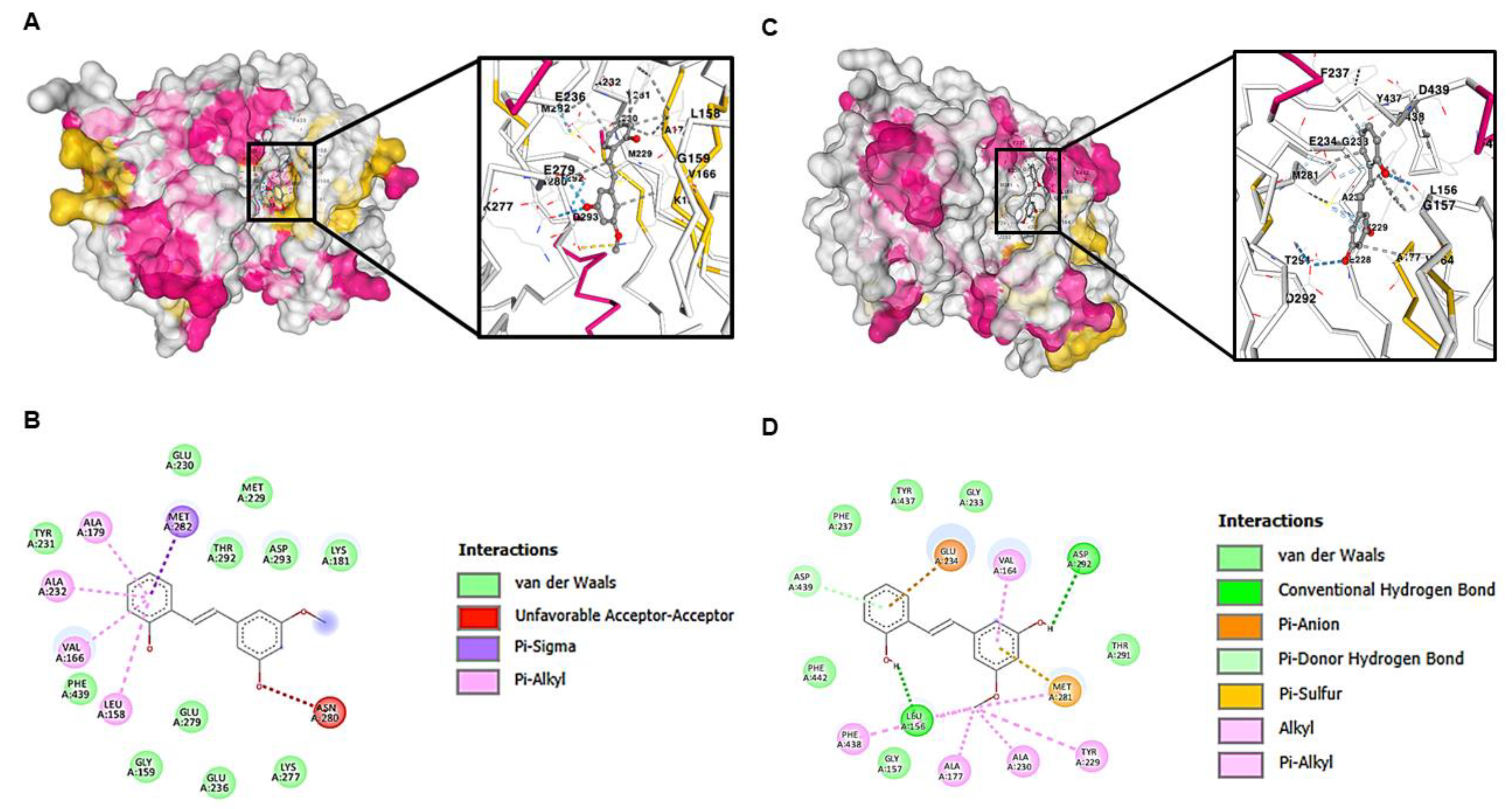
2.7.3. Computational Modeling of AKT with Molecular Docking and Structural Validation
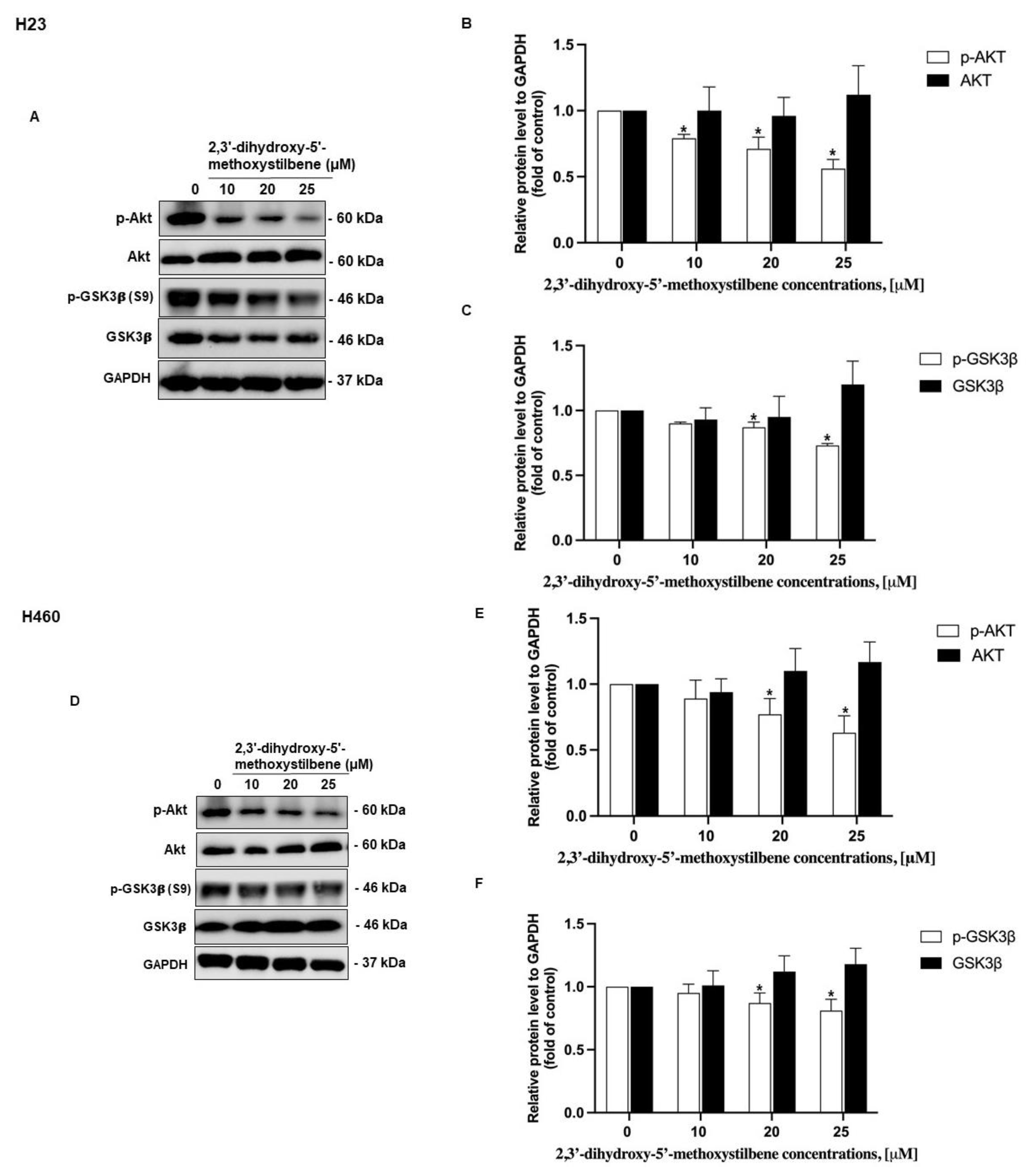
2.8. The Effect of 2,3′-Dihydroxy-5′-Methoxystilbene Inhibition on the Akt/GSK3β Signaling Pathway
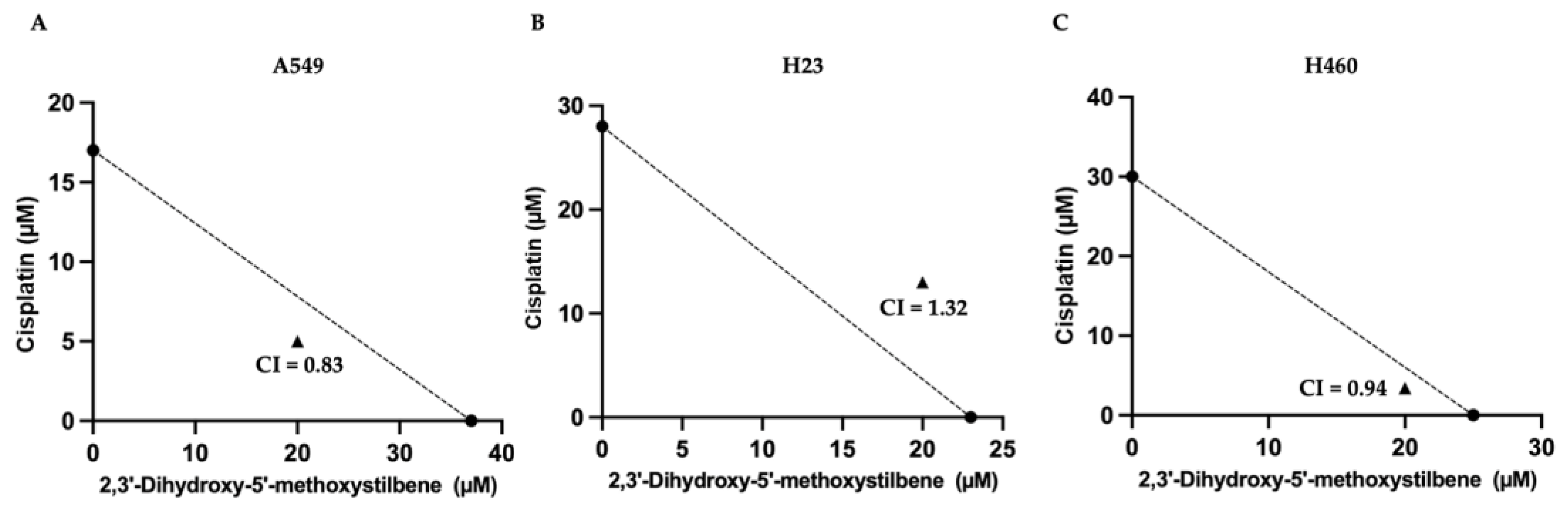
2.9. 2,3′- Dihydroxy-5′-Methoxystilbene Enhances Cisplatin-Induced Cytotoxicity in NSCLC Cells
3. Discussion
4. Materials and Methods
4.1. 2,3′-Dihydroxy-5′-Methoxystilbene Preparation
4.2. Cell Culture
4.3. Cytotoxicity and Cell Proliferation Assays
4.4. Cell Migration Assays
4.5. Anchorage-Independent Growth Assay
4.6. Determination of Reactive Oxygen Species (ROS)
4.7. Cell Apoptosis Analysis
4.8. Western Blot Analysis
4.9. Gene Ontology (GO) and Kyoto Encyclopedia of Genes and Genomes (KEGG) Pathway Analysis
4.10. Protein–Protein Interaction (PPI) Network Construction and Molecular Docking Analysis with AKT
4.11. Calculation of the Combination Index
4.12. Statistical Analysis
5. Conclusions
Supplementary Materials
Author Contributions
Funding
Institutional Review Board Statement
Informed Consent Statement
Data Availability Statement
Acknowledgments
Conflicts of Interest
Abbreviations
| AKT | Activated protein kinase B |
| GSK3β | Glycogen synthase kinase 3 beta |
| NSCLC | Non-small-cell lung cancer |
| IC50 | Half-maximal inhibitory concentration |
| CI | Combination index |
| GO | Gene Ontology |
| KEGG | Kyoto Encyclopedia of Genes and Genomes |
| PPI | Protein–protein interaction |
| PDB | Protein Data Bank |
| DCFH-DA | 2′,7′-dichlorodihydrofluorescein diacetate |
| DCF | 2′,7′-dichlorofluorescein |
| MTT | 3-(4,5-dimethylthiazol-2-yl)-2,5-diphenyltetrazolium bromide |
| GAPDH | Glyceraldehyde-3-phosphate dehydrogenase |
| SDS-PAGE | Sodium dodecyl sulfate polyacrylamide gel electrophoresis |
| PVDF | Polyvinylidene difluoride |
| ANOVA | One-way analysis of variance |
| SEM | Standard error of the mean |
| Nrf2 | Nuclear factor erythroid 2 |
| HO-1 | Heme oxygenase-1 |
| ROS | Reactive oxygen species |
References
- World Health Organization. Lung Cancer. Available online: https://www.who.int/news-room/fact-sheets/detail/lung-cancer (accessed on 23 November 2025).
- Luo, G.; Zhang, Y.; Rumgay, H.; Morgan, E.; Langselius, O.; Vignat, J.; Colombet, M.; Bray, F. Estimated Worldwide Variation and Trends in Incidence of Lung Cancer by Histological Subtype in 2022 and over Time: A Population-Based Study. Lancet Respir. Med. 2025, 13, 348–363. [Google Scholar] [CrossRef] [PubMed]
- Field, R.W.; Withers, B.L. Occupational and Environmental Causes of Lung Cancer. Clin. Chest Med. 2012, 33, 681–703. [Google Scholar] [CrossRef]
- Chen, Z.; Fillmore, C.M.; Hammerman, P.S.; Kim, C.F.; Wong, K.-K. Non-Small-Cell Lung Cancers: A Heterogeneous Set of Diseases. Nat. Rev. Cancer 2014, 14, 535–546, Erratum in Nat. Rev. Cancer 2015, 15, 247. https://doi.org/10.1038/nrc3931. [Google Scholar] [CrossRef]
- Xu, Y.; Zhao, P.; Xu, X.; Zhang, S.; Xia, B.; Zhu, L. T790M Mutation Sensitizes Non-Small Cell Lung Cancer Cells to Radiation via Suppressing SPOCK1. Biochem. Biophys. Rep. 2024, 38, 101729. [Google Scholar] [CrossRef] [PubMed]
- Bethune, G.; Bethune, D.; Ridgway, N.; Xu, Z. Epidermal Growth Factor Receptor (EGFR) in Lung Cancer: An Overview and Update. J. Thorac. Dis. 2010, 2, 48–51. [Google Scholar]
- Yun, C.-H.; Mengwasser, K.E.; Toms, A.V.; Woo, M.S.; Greulich, H.; Wong, K.-K.; Meyerson, M.; Eck, M.J. The T790M Mutation in EGFR Kinase Causes Drug Resistance by Increasing the Affinity for ATP. Proc. Natl. Acad. Sci. USA 2008, 105, 2070–2075. [Google Scholar] [CrossRef]
- Wang, S.; Cang, S.; Liu, D. Third-Generation Inhibitors Targeting EGFR T790M Mutation in Advanced Non-Small Cell Lung Cancer. J. Hematol. Oncol. 2016, 9, 34. [Google Scholar] [CrossRef]
- Sanaei, M.-J.; Razi, S.; Pourbagheri-Sigaroodi, A.; Bashash, D. The PI3K/Akt/mTOR Pathway in Lung Cancer; Oncogenic Alterations, Therapeutic Opportunities, Challenges, and a Glance at the Application of Nanoparticles. Transl. Oncol. 2022, 18, 101364. [Google Scholar] [CrossRef]
- Guo, Y.; Du, J.; Kwiatkowski, D.J. Molecular Dissection of AKT Activation in Lung Cancer Cell Lines. Mol. Cancer Res. 2013, 11, 282–293. [Google Scholar] [CrossRef] [PubMed]
- Manning, B.D.; Toker, A. AKT/PKB Signaling: Navigating the Network. Cell 2017, 169, 381–405. [Google Scholar] [CrossRef]
- Bian, C.; Liu, Z.; Li, D.; Zhen, L. PI3K/AKT Inhibition Induces Compensatory Activation of the MET/STAT3 Pathway in Non-small Cell Lung Cancer. Oncol. Lett. 2018, 15, 9655–9662. [Google Scholar] [CrossRef]
- Beurel, E.; Grieco, S.F.; Jope, R.S. Glycogen Synthase Kinase-3 (GSK3): Regulation, Actions, and Diseases. Pharmacol. Ther. 2015, 148, 114–131. [Google Scholar] [CrossRef]
- He, R.; Du, S.; Lei, T.; Xie, X.; Wang, Y. Glycogen Synthase Kinase 3β in Tumorigenesis and Oncotherapy (Review). Oncol. Rep. 2020, 44, 2373–2385. [Google Scholar] [CrossRef]
- Yang, J.; Nie, J.; Ma, X.; Wei, Y.; Peng, Y.; Wei, X. Targeting PI3K in Cancer: Mechanisms and Advances in Clinical Trials. Mol. Cancer 2019, 18, 26. [Google Scholar] [CrossRef]
- Iksen; Pothongsrisit, S.; Pongrakhananon, V. Targeting the PI3K/AKT/mTOR Signaling Pathway in Lung Cancer: An Update Regarding Potential Drugs and Natural Products. Molecules 2021, 26, 4100. [Google Scholar] [CrossRef]
- Wang, X.; Huang, M.; Xie, W.; Ding, Q.; Wang, T. Eupafolin Regulates Non-Small-Cell Lung Cancer Cell Proliferation, Migration, and Invasion by Suppressing MMP9 and RhoA via FAK/PI3K/AKT Signaling Pathway. J. Biosci. 2023, 48, 1. [Google Scholar] [CrossRef]
- Pouyfung, P.; Lertnitikul, N.; Bai, H.; Chookaew, A.; Pongrakhananon, V.; Chonsut, P.; Chaisit, S. Antitumor Activity of Isalpinin from Paphiopedilum Dianthum on Non-Small Cell Lung Cancer Cell Lines. Molecules 2025, 30, 2762. [Google Scholar] [CrossRef] [PubMed]
- De Filippis, B.; Ammazzalorso, A.; Fantacuzzi, M.; Giampietro, L.; Maccallini, C.; Amoroso, R. Anticancer Activity of Stilbene-Based Derivatives. ChemMedChem 2017, 12, 558–570. [Google Scholar] [CrossRef]
- Hamze, A.; Alami, M.; Provot, O. Developments of IsoCombretastatin A-4 Derivatives as Highly Cytotoxic Agents. Eur. J. Med. Chem. 2020, 190, 112110. [Google Scholar] [CrossRef] [PubMed]
- Sein, K.L.; Lertnitikul, N.; Suttisri, R.; Jianmongkol, S. Anticancer and Chemosensitizing Activities of Stilbenoids from Three Orchid Species. Naunyn. Schmiedebergs Arch. Pharmacol. 2023, 396, 749–758. [Google Scholar] [CrossRef] [PubMed]
- Liu, P.; Wang, X.; Hu, C.; Hu, T. Inhibition of Proliferation and Induction of Apoptosis by Trimethoxyl Stilbene (TMS) in a Lung Cancer Cell Line. Asian Pac. J. Cancer Prev. APJCP 2011, 12, 2263–2269. [Google Scholar]
- Fu, Y.-H.; Hou, Y.-D.; Duan, Y.-Z.; Sun, X.-Y.; Chen, S.-Q. Six Undescribed Derivatives of Stilbene Isolated from Lindera reflexa Hemsl. and Their Anti-Tumor and Anti-Inflammatory Activities. Fitoterapia 2022, 163, 105331. [Google Scholar] [CrossRef]
- Balasubramani, S.P.; Rahman, M.A.; Basha, S.M. Synergistic Action of Stilbenes in Muscadine Grape Berry Extract Shows Better Cytotoxic Potential Against Cancer Cells Than Resveratrol Alone. Biomedicines 2019, 7, 96. [Google Scholar] [CrossRef] [PubMed]
- Wong, T.; Narayanan, S.; Brown, D.P.; Chen, Z.-S. Synthesis and Cytotoxicity Studies of Stilbene Long-Chain Fatty Acid Conjugates. J. Nat. Prod. 2020, 83, 1563–1570. [Google Scholar] [CrossRef] [PubMed]
- Li, B.; Wang, J.; Yuan, M.; Miao, Y.; Zhang, H.; Zhang, J. Design, Synthesis, and Biological Evaluation of Tetrahydroisoquinoline Stilbene Derivatives as Potential Antitumor Candidates. Chem. Biol. Drug Des. 2023, 101, 364–379. [Google Scholar] [CrossRef]
- Princiotto, S.; Pinna, C.; Mattio, L.M.; Annunziata, F.; Beretta, G.L.; Pinto, A.; Dallavalle, S. Cytotoxicity of Benzofuran-Containing Simplified Viniferin Analogues. Pharmaceuticals 2024, 17, 1012. [Google Scholar] [CrossRef] [PubMed]
- Zhang, H.; Li, M.; Zhou, X.; Tang, L.; Chen, G.; Zhang, Y. Design, Synthesis of Combretastatin A-4 Piperazine Derivatives as Potential Antitumor Agents by Inhibiting Tubulin Polymerization and Inducing Autophagy in HCT116 Cells. Eur. J. Med. Chem. 2024, 272, 116497. [Google Scholar] [CrossRef]
- Liu, Y.; You, Y.; Lu, J.; Chen, X.; Yang, Z. Recent Advances in Synthesis, Bioactivity, and Pharmacokinetics of Pterostilbene, an Important Analog of Resveratrol. Molecules 2020, 25, 5166. [Google Scholar] [CrossRef]
- Yang, Y.-T.; Weng, C.-J.; Ho, C.-T.; Yen, G.-C. Resveratrol Analog-3,5,4′-Trimethoxy-Trans-Stilbene Inhibits Invasion of Human Lung Adenocarcinoma Cells by Suppressing the MAPK Pathway and Decreasing Matrix Metalloproteinase-2 Expression. Mol. Nutr. Food Res. 2009, 53, 407–416. [Google Scholar] [CrossRef]
- Kim, H.-R.; Kim, S.; Kim, E.-J.; Park, J.-H.; Yang, S.-H.; Jeong, E.-T.; Park, C.; Youn, M.-J.; So, H.-S.; Park, R. Suppression of Nrf2-Driven Heme Oxygenase-1 Enhances the Chemosensitivity of Lung Cancer A549 Cells toward Cisplatin. Lung Cancer 2008, 60, 47–56. [Google Scholar] [CrossRef]
- Lee, E.-J.; Min, H.-Y.; Joo Park, H.; Chung, H.-J.; Kim, S.; Nam Han, Y.; Lee, S.K. G2/M Cell Cycle Arrest and Induction of Apoptosis by a Stilbenoid, 3,4,5-Trimethoxy-4′-Bromo-Cis-Stilbene, in Human Lung Cancer Cells. Life Sci. 2004, 75, 2829–2839. [Google Scholar] [CrossRef] [PubMed]
- Sirerol, J.A.; Rodríguez, M.L.; Mena, S.; Asensi, M.A.; Estrela, J.M.; Ortega, A.L. Role of Natural Stilbenes in the Prevention of Cancer. Oxid. Med. Cell. Longev. 2016, 2016, 3128951. [Google Scholar] [CrossRef] [PubMed]
- Huang, Q.; Li, Y.; Huang, Y.; Wu, J.; Bao, W.; Xue, C.; Li, X.; Dong, S.; Dong, Z.; Hu, S. Advances in Molecular Pathology and Therapy of Non-Small Cell Lung Cancer. Signal Transduct. Target. Ther. 2025, 10, 186. [Google Scholar] [CrossRef]
- Zhang, B.; Leung, P.-C.; Cho, W.C.-S.; Wong, C.-K.; Wang, D. Targeting PI3K Signaling in Lung Cancer: Advances, Challenges and Therapeutic Opportunities. J. Transl. Med. 2025, 23, 184. [Google Scholar] [CrossRef]
- Yu, X.; Xiao, L.; Zhu, J.; Sun, T.; Gong, K.; Kou, X.; Zhou, Y.; Xu, M.; Lu, K.; Sun, H.; et al. Pinostilbene Inhibits Lung Epithelial-Mesenchymal Transition and Delays Pulmonary Fibrosis by Modulating the PI3K/Akt Pathway. Front. Pharmacol. 2025, 16, 1614546. [Google Scholar] [CrossRef]
- Banegas, Y.C.; Ocolotobiche, E.E.; Padula, G.; Córdoba, E.E.; Fernández, E.; Güerci, A.M. Evaluation of Resveratrol Radiomodifying Potential for Radiotherapy Treatment. Mutat. Res. Genet. Toxicol. Environ. Mutagen. 2018, 836, 79–83. [Google Scholar] [CrossRef]
- Zhang, L.; Dai, F.; Sheng, P.-L.; Chen, Z.-Q.; Xu, Q.-P.; Guo, Y.-Q. Resveratrol Analogue 3,4,4′-Trihydroxy-Trans-Stilbene Induces Apoptosis and Autophagy in Human Non-Small-Cell Lung Cancer Cells in Vitro. Acta Pharmacol. Sin. 2015, 36, 1256–1265. [Google Scholar] [CrossRef]
- Livraghi, V.; Grossi, A.; Scopelliti, A.; Senise, G.; Gamboa, L.A.; Solito, S.; Stivala, L.A.; Sottile, V.; Savio, M. Stilbene Treatment Reduces Stemness Features in Human Lung Adenocarcinoma Model. Int. J. Mol. Sci. 2024, 25, 10390. [Google Scholar] [CrossRef]
- Lee, S.K.; Nam, K.A.; Hoe, Y.H.; Min, H.-Y.; Kim, E.-Y.; Ko, H.; Song, S.; Lee, T.; Kim, S. Synthesis and Evaluation of Cytotoxicity of Stilbene Analogues. Arch. Pharm. Res. 2003, 26, 253–257. [Google Scholar] [CrossRef]
- Borys, F.; Tobiasz, P.; Poterała, M.; Fabczak, H.; Krawczyk, H.; Joachimiak, E. Systematic Studies on Anti-Cancer Evaluation of Stilbene and Dibenzo[b,f]Oxepine Derivatives. Molecules 2023, 28, 3558. [Google Scholar] [CrossRef] [PubMed]
- Huang, C.; Lin, Z.-J.; Chen, J.-C.; Zheng, H.-J.; Lai, Y.-H.; Huang, H.-C. α-Viniferin-Induced Apoptosis through Downregulation of SIRT1 in Non-Small Cell Lung Cancer Cells. Pharmaceuticalsc 2023, 16, 727. [Google Scholar] [CrossRef]
- Sarin, N.; Engel, F.; Kalayda, G.V.; Mannewitz, M.; Cinatl, J.; Rothweiler, F.; Michaelis, M.; Saafan, H.; Ritter, C.A.; Jaehde, U.; et al. Cisplatin Resistance in Non-Small Cell Lung Cancer Cells Is Associated with an Abrogation of Cisplatin-Induced G2/M Cell Cycle Arrest. PLoS ONE 2017, 12, e0181081. [Google Scholar] [CrossRef]
- Moar, K.; Brahma, M.; Pant, A.; Maruthi, M.; Maurya, P.K. Synergistic Anticancer Activity of Resveratrol with Cisplatin and Carboplatin in A549 Lung Adenocarcinoma Cells. Int. J. Clin. Exp. Pathol. 2024, 17, 411–420. [Google Scholar] [CrossRef]
- Bao, L.-J.; Jaramillo, M.C.; Zhang, Z.-B.; Zheng, Y.-X.; Yao, M.; Zhang, D.D.; Yi, X.-F. Nrf2 Induces Cisplatin Resistance through Activation of Autophagy in Ovarian Carcinoma. Int. J. Clin. Exp. Pathol. 2014, 7, 1502–1513. [Google Scholar]
- Lertnitikul, N.; Liangsakul, J.; Jianmongkol, S.; Suttisri, R. Three New Cytotoxic Stilbene Dimers from Paphiopedilum Dianthum. Nat. Prod. Res. 2023, 37, 3685–3693. [Google Scholar] [CrossRef] [PubMed]
- Chaisit, S.; Jianmongkol, S. Apoptosis Inducing Activity of Rhinacanthin-C in Doxorubicin-Resistant Breast Cancer MCF-7 Cells. Biol. Pharm. Bull. 2021, 44, 1239–1246. [Google Scholar] [CrossRef]
- Witayateeraporn, W.; Arunrungvichian, K.; Pothongsrisit, S.; Doungchawee, J.; Vajragupta, O.; Pongrakhananon, V. A7-Nicotinic Acetylcholine Receptor Antagonist QND7 Suppresses Non-Small Cell Lung Cancer Cell Proliferation and Migration via Inhibition of Akt/mTOR Signaling. Biochem. Biophys. Res. Commun. 2020, 521, 977–983. [Google Scholar] [CrossRef] [PubMed]
- Du, F.; Zhao, X.; Fan, D. Soft Agar Colony Formation Assay as a Hallmark of Carcinogenesis. Bio-Protocol 2017, 7, e2351. [Google Scholar] [CrossRef] [PubMed]
- Kanzawa, F.; Matsushima, Y.; Hamburger, A.W.; Ishihara, J.; Sasaki, Y.; Shimizu, E.; Eguchi, K.; Shinkai, T.; Saijo, N.; Miyazawa, N. Human Tumor Clonogenic Assay for Carcinoma of the Lung. II. Factors That Influence Colony Formation in Soft Agar. Oncology 1987, 44, 150–155. [Google Scholar] [CrossRef]
- Crowley, L.C.; Marfell, B.J.; Waterhouse, N.J. Analyzing Cell Death by Nuclear Staining with Hoechst 33342. Cold Spring Harb. Protoc. 2016, 2016, pdb.prot087205. [Google Scholar] [CrossRef]
- Zhang, X.; Kiechle, F. Hoechst 33342-Induced Apoptosis Is Associated with Decreased Immunoreactive Topoisomerase I and Topoisomerase I-DNA Complex Formation. Ann. Clin. Lab. Sci. 2001, 31, 187–198. [Google Scholar]
- Ashburner, M.; Ball, C.A.; Blake, J.A.; Botstein, D.; Butler, H.; Cherry, J.M.; Davis, A.P.; Dolinski, K.; Dwight, S.S.; Eppig, J.T.; et al. Gene Ontology: Tool for the Unification of Biology. The Gene Ontology Consortium. Nat. Genet. 2000, 25, 25–29. [Google Scholar] [CrossRef]
- Kanehisa, M.; Furumichi, M.; Tanabe, M.; Sato, Y.; Morishima, K. KEGG: New Perspectives on Genomes, Pathways, Diseases and Drugs. Nucleic Acids Res. 2017, 45, D353–D361. [Google Scholar] [CrossRef]
- Kanehisa, M.; Goto, S. KEGG: Kyoto Encyclopedia of Genes and Genomes. Nucleic Acids Res. 2000, 28, 27–30. [Google Scholar] [CrossRef]
- Ge, S.X.; Jung, D.; Yao, R. ShinyGO: A Graphical Gene-Set Enrichment Tool for Animals and Plants. Bioinforma. Oxf. Engl. 2020, 36, 2628–2629. [Google Scholar] [CrossRef] [PubMed]
- Szklarczyk, D.; Kirsch, R.; Koutrouli, M.; Nastou, K.; Mehryary, F.; Hachilif, R.; Gable, A.L.; Fang, T.; Doncheva, N.T.; Pyysalo, S.; et al. The STRING Database in 2023: Protein-Protein Association Networks and Functional Enrichment Analyses for Any Sequenced Genome of Interest. Nucleic Acids Res. 2023, 51, D638–D646. [Google Scholar] [CrossRef]
- Szklarczyk, D.; Gable, A.L.; Lyon, D.; Junge, A.; Wyder, S.; Huerta-Cepas, J.; Simonovic, M.; Doncheva, N.T.; Morris, J.H.; Bork, P.; et al. STRING V11: Protein-Protein Association Networks with Increased Coverage, Supporting Functional Discovery in Genome-Wide Experimental Datasets. Nucleic Acids Res. 2019, 47, D607–D613. [Google Scholar] [CrossRef] [PubMed]
- Liu, Y.; Yang, X.; Gan, J.; Chen, S.; Xiao, Z.-X.; Cao, Y. CB-Dock2: Improved Protein-Ligand Blind Docking by Integrating Cavity Detection, Docking and Homologous Template Fitting. Nucleic Acids Res. 2022, 50, W159–W164. [Google Scholar] [CrossRef] [PubMed]
- Hastings, J.; Owen, G.; Dekker, A.; Ennis, M.; Kale, N.; Muthukrishnan, V.; Turner, S.; Swainston, N.; Mendes, P.; Steinbeck, C. ChEBI in 2016: Improved Services and an Expanding Collection of Metabolites. Nucleic Acids Res. 2016, 44, D1214–D1219. [Google Scholar] [CrossRef]
- Chou, T.-C. Drug Combination Studies and Their Synergy Quantification Using the Chou-Talalay Method. Cancer Res. 2010, 70, 440–446. [Google Scholar] [CrossRef]
- Chaisit, T.; Siripong, P.; Jianmongkol, S. Rhinacanthin-C Enhances Doxorubicin Cytotoxicity via Inhibiting the Functions of P-Glycoprotein and MRP2 in Breast Cancer Cells. Eur. J. Pharmacol. 2017, 795, 50–57. [Google Scholar] [CrossRef] [PubMed]



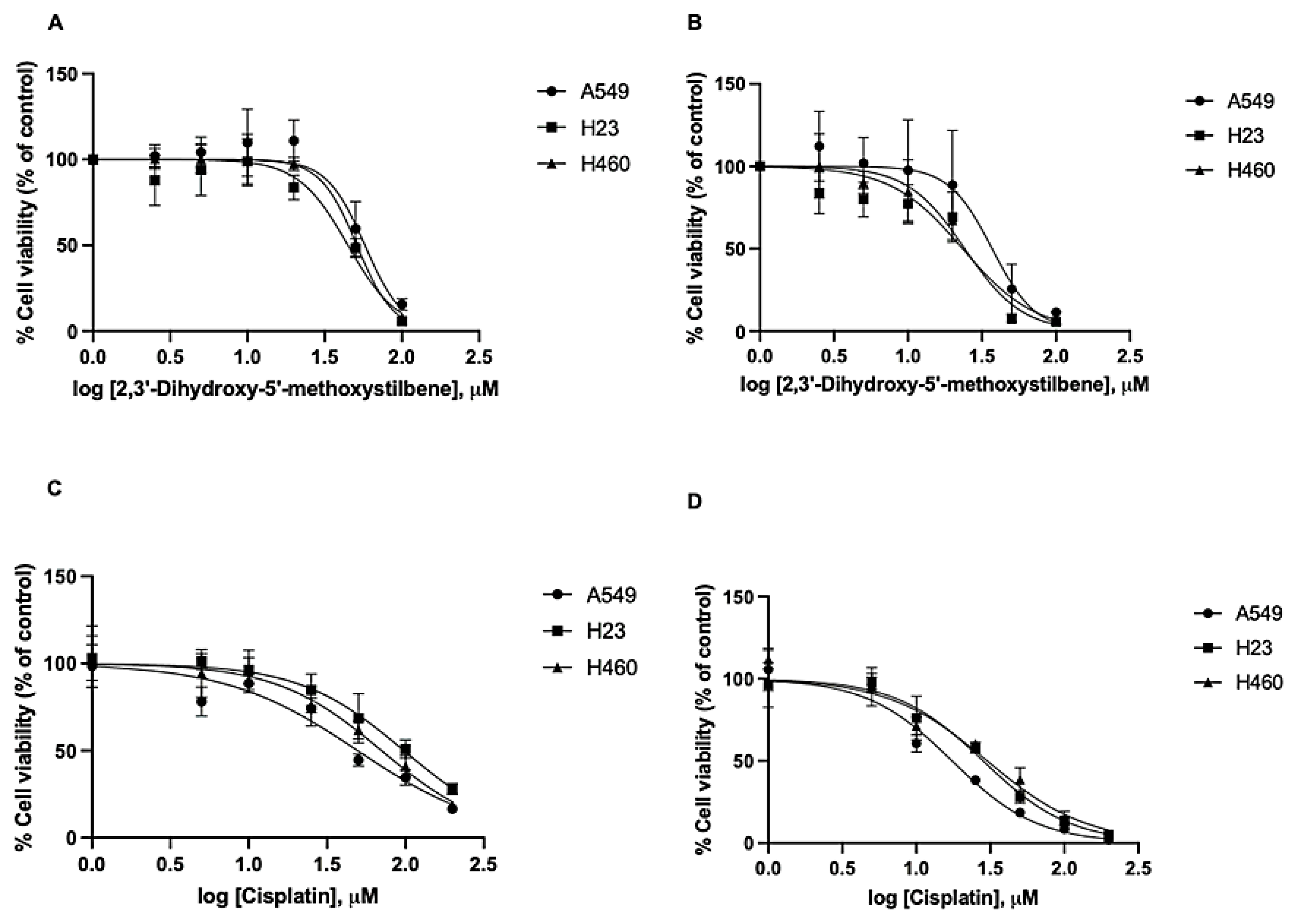
| NSCLC Cell Lines/Normal Mouse Fibroblast Embryonic Cell Lines | a IC50 (μM ± SEM) | |||
|---|---|---|---|---|
| 2,3′-Dihydroxy-5′-Methoxystilbene | Cisplatin | |||
| 24 h | 48 h | 24 h | 48 h | |
| A549 | 57.68 ± 4.93 | 37.03 ± 5.96 | 49.57 ± 5.26 | 17.44 ± 1.33 |
| H23 | 44.79 ± 5.92 | 23.39 ± 3.27 | 97.87 ± 8.99 | 28.26 ± 2.19 |
| H460 | 51.14 ± 3.91 | 24.20 ± 2.61 | 70.46 ± 6.36 | 30.12 ± 3.27 |
| NIH/3T3 | >100 | >100 | 38.62 ± 4.46 | 16.49 ± 1.97 |
Disclaimer/Publisher’s Note: The statements, opinions and data contained in all publications are solely those of the individual author(s) and contributor(s) and not of MDPI and/or the editor(s). MDPI and/or the editor(s) disclaim responsibility for any injury to people or property resulting from any ideas, methods, instructions or products referred to in the content. |
© 2026 by the authors. Licensee MDPI, Basel, Switzerland. This article is an open access article distributed under the terms and conditions of the Creative Commons Attribution (CC BY) license.
Share and Cite
Pouyfung, P.; Lertnitikul, N.; Ogino, N.; Chookaew, A.; Pongrakhananon, V.; Chonsut, P.; Sueangoen, N.; Chaisit, S. Anticancer Activity of 2,3′-Dihydroxy-5′-Methoxystilbene Against NSCLC Cell Lines Through AKT-Dependent Mechanisms: A Comprehensive In Vitro and Computational Analysis. Int. J. Mol. Sci. 2026, 27, 719. https://doi.org/10.3390/ijms27020719
Pouyfung P, Lertnitikul N, Ogino N, Chookaew A, Pongrakhananon V, Chonsut P, Sueangoen N, Chaisit S. Anticancer Activity of 2,3′-Dihydroxy-5′-Methoxystilbene Against NSCLC Cell Lines Through AKT-Dependent Mechanisms: A Comprehensive In Vitro and Computational Analysis. International Journal of Molecular Sciences. 2026; 27(2):719. https://doi.org/10.3390/ijms27020719
Chicago/Turabian StylePouyfung, Phisit, Nonthalert Lertnitikul, Noriyoshi Ogino, Achitphol Chookaew, Varisa Pongrakhananon, Piriya Chonsut, Natthaporn Sueangoen, and Suwichak Chaisit. 2026. "Anticancer Activity of 2,3′-Dihydroxy-5′-Methoxystilbene Against NSCLC Cell Lines Through AKT-Dependent Mechanisms: A Comprehensive In Vitro and Computational Analysis" International Journal of Molecular Sciences 27, no. 2: 719. https://doi.org/10.3390/ijms27020719
APA StylePouyfung, P., Lertnitikul, N., Ogino, N., Chookaew, A., Pongrakhananon, V., Chonsut, P., Sueangoen, N., & Chaisit, S. (2026). Anticancer Activity of 2,3′-Dihydroxy-5′-Methoxystilbene Against NSCLC Cell Lines Through AKT-Dependent Mechanisms: A Comprehensive In Vitro and Computational Analysis. International Journal of Molecular Sciences, 27(2), 719. https://doi.org/10.3390/ijms27020719