Review

Osteoporosis After Menopause and After Drug Therapy: The Molecular Mechanism of Bone Loss and Its Treatment
1
School of Medicine, College of Medicine, MacKay Medical University, New Taipei City 25245, Taiwan
2
Department of Obstetrics and Gynecology, Taipei Tzu-Chi Hospital, The Buddhist Tzu-Chi Medical Foundation, New Taipei City 23142, Taiwan
3
School of Medicine, Tzu-Chi University, Hualien 97004, Taiwan
*
Author to whom correspondence should be addressed.
Int. J. Mol. Sci. 2026, 27(2), 641; https://doi.org/10.3390/ijms27020641
Submission received: 24 November 2025 / Revised: 2 January 2026 / Accepted: 4 January 2026 / Published: 8 January 2026
(This article belongs to the Special Issue Osteoporosis: From Molecular Research to Novel Therapies)

Abstract

Osteoporosis is a prevalent skeletal disorder characterized by reduced bone mass and microarchitectural deterioration, leading to increased fracture risk, particularly in aging populations. Postmenopausal osteoporosis (PMOP) remains the most common primary form and results from abrupt estrogen deficiency after menopause, which disrupts bone remodeling by accelerating the receptor activator of nuclear factor-κB ligand (RANKL)-mediated osteoclastogenesis, suppressing Wnt/β-catenin signaling, and promoting inflammatory cytokine production. In contrast, drug-induced osteoporosis (DIOP) encompasses a heterogeneous group of secondary bone disorders arising from pharmacologic exposures. Glucocorticoids suppress osteoblastogenesis, enhance osteoclast activity, and increase reactive oxygen species; long-term bisphosphonate therapy may oversuppress bone turnover, resulting in microdamage accumulation; denosumab withdrawal triggers a unique rebound surge in RANKL activity, often leading to rapid bone loss and multiple vertebral fractures. Medications including aromatase inhibitors, SSRIs, proton pump inhibitors, heparin, and antiepileptic drugs impair bone quality through diverse mechanisms. Standard antiresorptive agents remain first-line therapies, while anabolic agents such as teriparatide, abaloparatide, and romosozumab provide enhanced benefits in high-risk or drug-suppressed bone states. Transitional bisphosphonate therapy is essential when discontinuing denosumab, and individualized treatment plans—including drug holidays, lifestyle interventions, and monitoring vulnerable patients—are critical for optimizing outcomes. Emerging approaches such as small interfering RNA (siRNA)-based therapeutics, anti-sclerostin agents, digital monitoring technologies, and regenerative strategies show promise for future precision medicine management. Understanding the distinct and overlapping molecular mechanisms of osteoporosis is essential for improving fracture prevention and long-term skeletal health.

1. Introduction

Osteoporosis is a systemic skeletal disorder characterized by reduced bone mass and microarchitectural deterioration, ultimately leading to increased bone fragility and fracture susceptibility [1]. Affecting more than 200 million individuals worldwide, it represents a major global health burden, particularly in aging populations [2]. As life expectancy continues to rise, the incidence of osteoporotic fractures—most commonly involving the hip, vertebrae, and wrist—is expected to increase substantially. These fractures contribute to significant morbidity, loss of independence, and excess mortality among older adults [3]. Although osteoporosis affects both sexes, postmenopausal women constitute a disproportionately high-risk group because the abrupt decline in estrogen at menopause accelerates bone turnover and favors bone resorption [4]. According to the International Osteoporosis Foundation, one in three women and one in five men over age 50 will sustain at least one osteoporotic fracture in their lifetime [5].
Postmenopausal osteoporosis (PMOP), the most common form of primary osteoporosis, is primarily driven by estrogen deprivation after menopause [1,6]. Estrogen is essential for skeletal homeostasis through its regulation of osteoclastogenesis, promotion of osteoblast survival, and maintenance of balanced bone remodeling via the receptor activator of nuclear factor-κB ligand (RANKL)/osteoprotegerin (OPG) system and the Wnt/β-catenin pathway [1,4,7,8]. Estrogen deficiency increases RANKL production while reducing OPG expression, thereby enhancing osteoclast differentiation and activity. In addition, estrogen withdrawal stimulates production of pro-inflammatory cytokines—including IL-1, IL-6, and TNF-α—further accelerating high-turnover bone loss [4,9,10].
In contrast, secondary osteoporosis, especially pharmacologically induced osteoporosis (DIOP), has become increasingly prevalent in modern clinical practice [11]. Long-term glucocorticoid exposure is one of the most common causes and leads to profound suppression of bone formation, increased osteoblast and osteocyte apoptosis, and inhibition of Wnt signaling [4,12]. More recently, denosumab withdrawal has emerged as a critical therapeutic challenge; its sudden cessation can cause rapid “rebound” activation of osteoclastogenesis through unopposed RANKL signaling, resulting in severe bone loss and clusters of vertebral fractures [13,14]. Additional drug classes—including aromatase inhibitors, proton pump inhibitors, selective serotonin reuptake inhibitors (SSRIs), heparin, and antiepileptic agents—have also been implicated in skeletal deterioration through diverse molecular mechanisms [15].
Although PMOP and DIOP share the final common pathway of skeletal fragility, they differ substantially in etiology, molecular drivers, clinical trajectory, and therapeutic considerations. PMOP typically follows a gradual, high-turnover bone loss pattern, whereas DIOP may manifest as either a low-turnover state (e.g., glucocorticoids, bisphosphonate oversuppression) or abrupt high-turnover crises (e.g., denosumab rebound) [4]. A major clinical challenge arises when these mechanisms coexist or when patients transition between different drug-induced states, for which current guidelines provide limited practical direction.
Recent advances in osteoporosis therapeutics have expanded treatment options beyond conventional antiresorptive agents. Romosozumab, a monoclonal antibody targeting sclerostin, and abaloparatide, a PTHrP analog, exert dual anabolic and antiresorptive effects, offering substantial improvements in bone mass and microarchitecture [16,17,18]. Furthermore, emerging non-pharmacological and technological approaches—including whole-body vibration therapy, wearable sensor–guided fall prevention, and nucleic acid-based therapeutics such as small interfering RNA (siRNA)—represent promising adjunctive strategies for enhancing bone regeneration and reducing fracture risk [19,20].
This review provides a comprehensive and integrated analysis of the molecular mechanisms, clinical manifestations, and therapeutic strategies underlying osteoporosis in two major settings: postmenopausal estrogen deficiency and drug-induced bone loss. By contrasting their pathophysiological foundations and treatment implications, we aim to clarify how personalized and mechanism-based interventions may optimize outcomes and advance precision medicine in osteoporosis care.

2. Methods of Literature Review

As a narrative review, the literature was searched to collect basic and clinical studies which investigated the molecular and cellular mechanism of osteoporosis after menopause and after drug therapy. For this review discussing the etiology of bone loss as well as its treatment, all of the articles had been solicited from the databases Ovid Medline and PubMed using the following search terms “osteoporosis”, “postmenopausal osteoporosis”, “drug induced osteoporosis” and “treatment of osteoporosis”. For screening and inclusion in the next stage, only English language articles with full text were considered for inclusion in a subsequent analysis. Duplicated articles were also excluded in the stage.
In the second stage, two experts in the field then inspected these articles to exclude studies with poor research design, questionable methods or unclear outcomes to ensure the quality of retrieved studies. Finally, a total of 174 articles were eligible for inclusion in this review.

3. Clinical Subtypes of Osteoporosis

3.1. Postmenopausal Osteoporosis (PMOP)

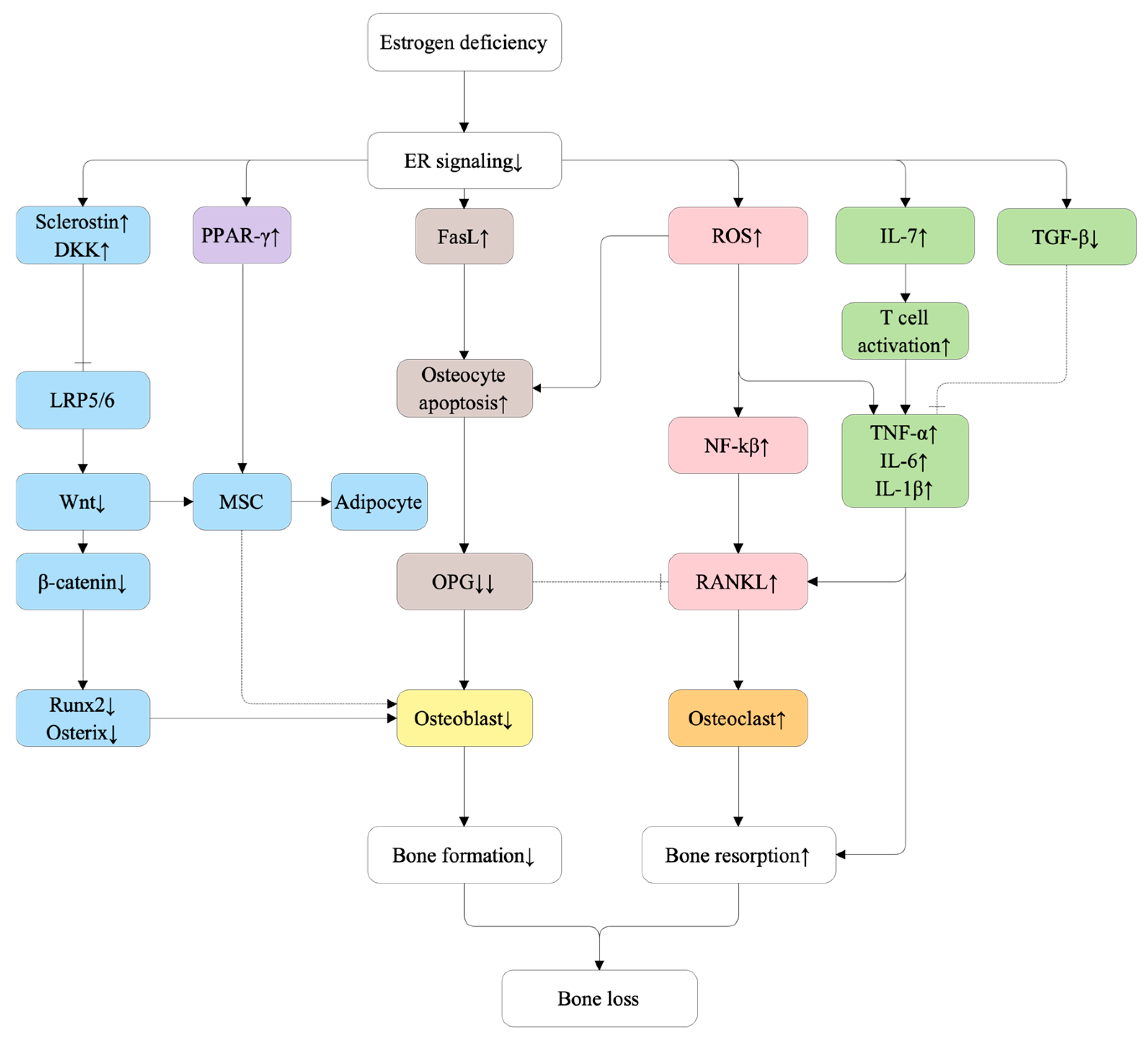
The molecular pathways involved in postmenopausal osteoporosis (PMOP) are illustrated in Figure 1.
Postmenopausal osteoporosis (PMOP) is the most common form of primary osteoporosis and predominantly affects women after menopause as a result of a marked decline in circulating estrogen levels [21]. Estrogen is essential for preserving skeletal integrity through its regulation of bone remodeling, modulation of osteoblast and osteoclast activity, and suppression of pro-inflammatory signaling [22]. Following menopause, the abrupt withdrawal of estrogen shifts the remodeling balance toward accelerated bone resorption, leading to a progressive decline in bone mineral density (BMD) [23].
The onset of PMOP is typically insidious, with cumulative bone loss occurring silently over many years before fragility fractures become clinically apparent [24]. Well-established risk factors include advancing age, early menopause (particularly before age 45), low body mass index (BMI), physical inactivity, insufficient intake of calcium or vitamin D, and a family history of osteoporosis [25]. A comprehensive summary of osteoporosis and fracture risk factors is presented in Table 1 [25,26,27,28,29,30]. Clinically, PMOP most commonly manifests as vertebral compression fractures, progressive loss of height, thoracic kyphosis, or low-energy fractures of the wrist or hip, particularly in elderly women [31,32]. Early identification of at-risk individuals through detailed clinical evaluation and BMD assessment is critical for timely intervention and fracture prevention [33].

3.2. Drug-Induced Osteoporosis (DIOP)

Drug-induced osteoporosis (DIOP) is a subtype of secondary osteoporosis that arises from prolonged exposure to specific pharmacologic agents or from the abrupt discontinuation of antiresorptive therapies [34]. In contrast to postmenopausal osteoporosis (PMOP), DIOP may develop more rapidly and often remains clinically silent until a fracture occurs, making early detection particularly challenging [34,35].
Glucocorticoids are the most extensively documented contributors to DIOP; they inhibit osteoblast differentiation, induce apoptosis of osteoblasts and osteocytes, and impair intestinal calcium absorption [4]. Other medications associated with significant skeletal deterioration include aromatase inhibitors used in breast cancer therapy, gonadotropin-releasing hormone (GnRH) agonists, and several antiepileptic drugs [36,37]. Notably, discontinuation of denosumab has been associated with an acute and severe rebound in bone resorption, frequently resulting in multiple vertebral fractures within months of cessation [38]. Additional agents—such as selective serotonin reuptake inhibitors (SSRIs), proton pump inhibitors (PPIs), Thiazolidinediones (TZDs), opioid, heparin, and various chemotherapeutic drugs—have also been implicated in accelerating bone loss through diverse mechanisms [39]. Because patients are often unaware of medication-related skeletal risks, osteoporosis may remain undiagnosed until a low-trauma fracture occurs [34]. Unlike PMOP, DIOP affects both men and women and can arise across a broader age spectrum.
Given the heterogeneous pathophysiology underlying DIOP, management strategies must be tailored to the specific pharmacologic agent and its mechanism of skeletal toxicity. A thorough medication history, baseline and follow-up bone mineral density (BMD) assessments, and careful monitoring for rebound dynamics following drug discontinuation are essential for early risk identification and prevention [33,40]. Clinical decision-making should balance the therapeutic benefits of the primary medication against its potential skeletal harm, integrating prophylactic interventions—such as calcium and vitamin D supplementation or timely initiation of antiresorptive therapy—when appropriate [41].

4. Molecular Biology, Physiology, and Pathophysiology of Postmenopausal Osteoporosis

4.1. Estrogen Signaling in Bone Metabolism

Estrogen is a central regulator of skeletal homeostasis, exerting its effects primarily through estrogen receptors alpha (ERα) and beta (ERβ), which are expressed in osteoblasts, osteoclasts, and osteocytes [42]. Among these receptor subtypes, ERα is the dominant mediator of estrogen’s osteoprotective actions, as evidenced by the profound skeletal abnormalities observed in ERα-knockout models, whereas ERβ deficiency results in comparatively minimal skeletal alterations [42,43]. Of the major endogenous estrogens—estrone (E1), estradiol (E2), and estriol (E3)—estradiol (E2) exhibits the highest affinity for estrogen receptors and is therefore the most potent regulator of downstream signaling events. Upon binding to ERα, estrogen initiates genomic signaling that modulates the transcription of key genes, including those encoding RANKL and osteoprotegerin (OPG), thereby suppressing osteoclast differentiation and promoting bone formation [4].
In addition to these nuclear effects, membrane-associated estrogen receptors mediate rapid non-genomic responses through activation of intracellular signaling cascades such as PI3K–Akt, MAPK/ERK, and c-Src [44]. These pathways contribute to osteoblast survival, cytoskeletal remodeling, and anti-apoptotic responses, providing an additional layer of regulatory control over bone cell activity [45,46]. This coordinated genomic and non-genomic signaling framework enables estrogen to exert both immediate and long-term effects on skeletal metabolism.
Furthermore, estrogen enhances osteoanabolic pathways, including the Wnt/β-catenin and bone morphogenetic protein (BMP) signaling networks, by promoting their activation and suppressing their endogenous antagonists [47]. For example, estrogen downregulates sclerostin, an osteocyte-derived inhibitor of Wnt signaling, thereby stabilizing β-catenin and facilitating osteoblast differentiation and function [48]. Estrogen also interacts with the TGF-β signaling axis to support efficient coupling between bone resorption and formation during the remodeling cycle [49,50]. Collectively, the multifaceted actions of estrogen through ERα, ERβ, and their downstream canonical and non-canonical pathways underscore its indispensable role in maintaining bone mass, microarchitecture, and skeletal integrity.

4.2. Bone Remodeling: Normal Physiology and Menopause-Related Disruption

Bone remodeling is a dynamic and lifelong physiological process essential for maintaining skeletal integrity and mineral homeostasis [51]. It proceeds through five highly coordinated phases—activation (recruitment of osteoclast precursors), resorption (osteoclast-mediated bone degradation), reversal (transition mediated by mononuclear cells), formation (osteoblast-driven matrix deposition and mineralization), and termination—that together ensure balanced turnover under normal hormonal conditions, particularly under the regulatory influence of estrogen [52,53].
A central molecular regulator of bone remodeling is the receptor activator of nuclear factor κB (RANK) signaling pathway [54]. RANK, expressed on osteoclast precursors, is activated by its ligand RANKL and inhibited by osteoprotegerin (OPG), a soluble decoy receptor. By competitively binding RANKL, OPG prevents osteoclastogenesis and suppresses resorptive activity [22]. Estrogen maintains skeletal homeostasis by promoting OPG expression and suppressing RANKL, thereby restraining osteoclast differentiation and enhancing osteoclast apoptosis in part through the stimulation of TGF-β production [55]. In estrogen-deficient states, however, RANKL expression increases while OPG decreases, shifting the remodeling balance toward osteoclast activation [22]. Osteocytes further contribute to this process by producing RANKL, amplifying osteoclast recruitment and activity. Osteocytes also regulate bone formation through modulation of the Wnt/β-catenin pathway. By secreting sclerostin and dickkopf-1 (DKK1), both potent Wnt antagonists, osteocytes suppress β-catenin signaling and inhibit osteoblast differentiation [48]. Estrogen normally downregulates these inhibitors, thereby supporting Wnt-mediated osteoanabolic signaling; however, estrogen withdrawal removes this restraint, allowing sclerostin and DKK1 to rise and further suppress osteoblastogenesis [48].
Following menopause, the abrupt decline in estrogen accelerates bone remodeling and shifts it toward a high-turnover state dominated by osteoclast activity [56]. Consistent with the molecular mechanisms described above, disruption of the RANKL/OPG balance favors excessive osteoclastogenesis, resulting in heightened bone resorption [57]. In parallel, estrogen deficiency functionally suppresses Wnt/β-catenin signaling, leading to impaired osteoblast differentiation and reduced bone formation, a process further compounded by increased oxidative stress and osteoblast dysfunction [48,55,58]. The combined effects of enhanced resorption and attenuated formation ultimately produce characteristic structural deterioration, including trabecular thinning, loss of trabecular connectivity, and increased cortical porosity [59]. These microarchitectural changes substantially increase skeletal fragility and fracture susceptibility, particularly at trabecular-rich sites such as the vertebral bodies and the proximal femur [33].

4.3. Immune and Inflammatory Mechanisms

Estrogen deficiency has profound immunological consequences and contributes to the pathogenesis of postmenopausal osteoporosis through osteoimmunological mechanisms [60]. In the absence of estrogen, activated T cells and macrophages produce elevated levels of pro-inflammatory cytokines—including tumor necrosis factor-α (TNF-α), interleukin-1 (IL-1), and interleukin-6 (IL-6)—which collectively enhance osteoclastogenesis and prolong osteoclast survival [61,62]. Estrogen withdrawal is also associated with increased interleukin-7 (IL-7), a potent stimulator of T-cell proliferation that amplifies TNF-α secretion and further intensifies inflammatory signaling [22]. These cytokines upregulate RANKL expression in osteoblasts and osteocytes while simultaneously suppressing osteoprotegerin (OPG), thereby exacerbating the RANKL/OPG imbalance that drives osteoclast activation [63,64].
In parallel, estrogen deficiency induces a marked rise in oxidative stress within the bone microenvironment [65]. Accumulation of reactive oxygen species (ROS) impairs osteoblast differentiation, promotes apoptosis of osteoblasts and osteocytes, and enhances osteoclast activity through redox-sensitive transcription factors [62,66]. ROS additionally stimulates TNF-α production and activates the NF-κB pathway, which further increases RANKL expression and accelerates osteoclast differentiation [59]. Mitochondrial dysfunction contributes to sustained ROS generation and suppresses Wnt/β-catenin signaling, thereby impairing osteoblastogenesis and perpetuating bone loss [67]. The convergence of amplified inflammatory cytokine signaling, NF-κB activation, and oxidative stress establishes a strongly pro-resorptive milieu. This environment accelerates trabecular deterioration, increases cortical porosity, and ultimately contributes to the heightened fragility fracture risk characteristic of postmenopausal osteoporosis [62,68].

4.4. Genetic and Environmental Factors

Genetic susceptibility plays a significant role in the onset and severity of postmenopausal osteoporosis (PMOP) [69]. Numerous single-nucleotide polymorphisms (SNPs) have been linked to reduced bone mineral density (BMD) and increased fracture risk, spanning genes central to bone metabolism. These include classic osteoporosis-associated genes such as ESR1, VDR, and COL1A1 [26,27,28]; Wnt-related regulators such as CTNNB1, LRP5, DAAM2, and WNT16 [62,68]; and emerging GWAS-identified loci including VTI1A and EPDR1 [70,71,72]. Additional contributors include the monogenic mutation PLS3 [73], as well as regulatory and transcriptional factors such as RANKL, ESR2, CREB1, ERBB2, and ING3 [26,72,74,75]. Epigenetic mechanisms—including DNA methylation, histone modifications, and non-coding RNAs—further modulate osteoblastogenesis and osteoclastogenesis, although their specific roles in PMOP continue to be elucidated [76].
Environmental and behavioral factors interact with genetic predispositions to further influence disease risk. Early menopause, inadequate intake of calcium or vitamin D, physical inactivity, low body mass index (BMI), cigarette smoking, excessive alcohol consumption, and a personal or family history of fractures are all well-established contributors to bone loss [77,78,79]. These factors affect endocrine regulation, nutrient metabolism, and mechanical loading of bone, thereby compounding fracture susceptibility. The interplay between underlying genetic architecture and modifiable lifestyle-related influences highlights the multifactorial nature of PMOP and underscores the need for comprehensive risk assessment and individualized prevention strategies [77,78]. Given the complexity of these signaling pathways, the key molecular mechanisms driving postmenopausal osteoporosis are summarized in Table 2.

5. Molecular and Cellular Mechanisms of Drug-Induced Osteoporosis

5.1. Glucocorticoid-Induced Osteoporosis (GIOP)

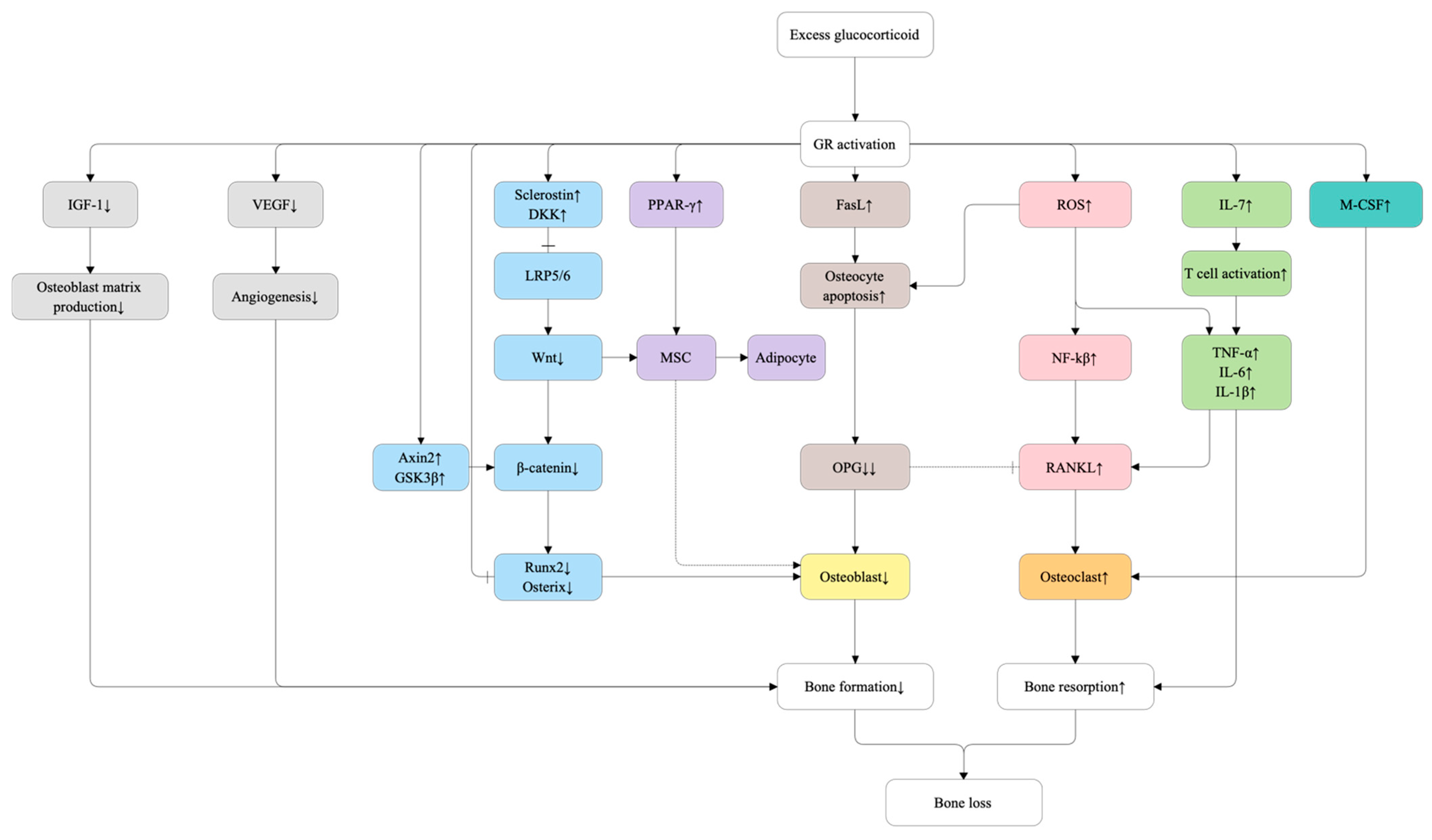
Glucocorticoids (GCs) induce osteoporosis primarily through multifaceted disruption of the molecular pathways governing bone remodeling. A central mechanism involves the suppression of osteoblastogenesis through downregulation of the osteogenic transcription factor RUNX2 and inhibition of Wnt/β-catenin signaling [80,81]. GCs increase the expression of Wnt antagonists—including Dickkopf-1 (DKK1) and sclerostin—and upregulate intracellular inhibitors such as Axin2 and GSK3β, which collectively destabilize β-catenin by impairing LRP5/6-mediated Wnt ligand activation. These changes prevent β-catenin nuclear translocation and suppress the transcription of osteoblast-related genes, thereby attenuating osteoblast differentiation and function [81,82,83]. In addition, GCs promote adipogenic commitment of mesenchymal stem cells (MSCs) through upregulation of PPAR-γ2, further reducing the pool of osteoprogenitors available for bone formation [84].
Concurrently, GCs enhance osteoclastogenesis by increasing the expression of RANKL and macrophage colony-stimulating factor (M-CSF) while reducing osteoprotegerin (OPG) production, thus shifting the RANKL/OPG balance toward osteoclast differentiation and activation [84,85]. This dual disruption—suppression of anabolic Wnt signaling and amplification of catabolic RANKL signaling—creates a profoundly uncoupled remodeling environment characterized by excessive bone resorption alongside impaired bone formation [86]. Moreover, GCs downregulate vascular endothelial growth factor (VEGF), resulting in reduced skeletal angiogenesis and compromised bone strength [87]. The integrated molecular mechanisms underlying glucocorticoid-induced osteoporosis (GIOP) are summarized in Figure 2.
At the cellular level, glucocorticoids induce apoptosis in osteoblasts and osteocytes by activating pro-apoptotic members of the Bcl-2 family and suppressing key survival pathways such as PI3K/Akt [88,89]. This depletion of bone-forming cells disrupts the osteocytic network, which is essential for mechanosensation and coordination of bone turnover [90,91]. Glucocorticoids also impair mitochondrial function, leading to the accumulation of reactive oxygen species (ROS) [92]. Elevated ROS antagonizes β-catenin activity and activates NF-κB signaling in osteoclast precursors, thereby promoting osteoclastogenesis and amplifying bone resorption [65]. Moreover, glucocorticoids downregulate insulin-like growth factor-1 (IGF-1) signaling, an anabolic pathway critical for matrix synthesis, osteoblast differentiation, and cell survival [93].
At the epigenetic and transcriptional levels, glucocorticoids exert widespread gene-regulatory effects through glucocorticoid response elements (GREs), broadly repressing osteogenic transcriptional programs while enhancing catabolic signaling profiles [94]. This coordinated reprogramming further reinforces a skeletal microenvironment characterized by reduced bone formation and increased bone resorption [95].

5.2. Other Drug-Induced Mechanisms

A range of commonly used medications exert osteotoxic effects through diverse but mechanistically interconnected pathways.

5.2.1. Proton Pump Inhibitors (PPIs)

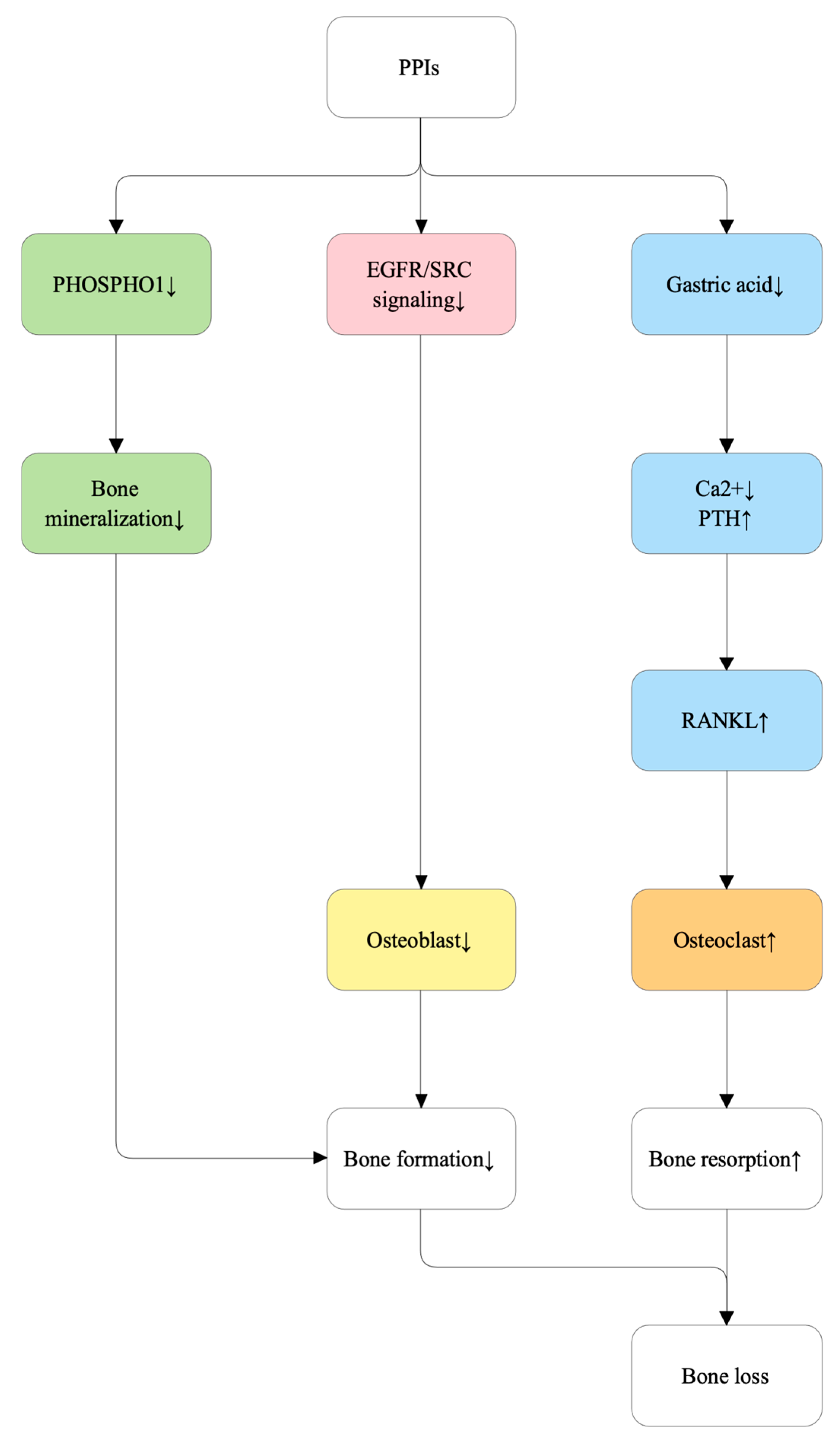
Proton pump inhibitors (PPIs) may contribute to osteoporosis through several biological mechanisms. Reduced gastric acidity decreases the solubility and absorption of insoluble calcium salts, potentially impairing calcium homeostasis in susceptible individuals. Beyond effects on mineral absorption, PPIs directly inhibit osteoblast mineralization by suppressing PHOSPHO1, a phosphatase essential for matrix vesicle–mediated bone mineralization [96]. Recent genomic analyses further suggest that PPIs can perturb bone-cell signaling by altering the expression or activity of key regulatory genes—including EGFR, ESR1, and SRC—which are enriched in endocrine-resistance and ErbB signaling pathways, both of which intersect with osteogenic and survival signaling in bone cells [96,97,98].
Secondary systemic effects such as hypergastrinemia, hypomagnesemia, and impaired vitamin B12 absorption may further disrupt bone remodeling and contribute to increased fracture risk, particularly with long-term therapy [97]. Figure 3 summarizes the proposed molecular mechanisms of PPI-induced bone loss.

5.2.2. Antiepileptic Drugs (AEDs)

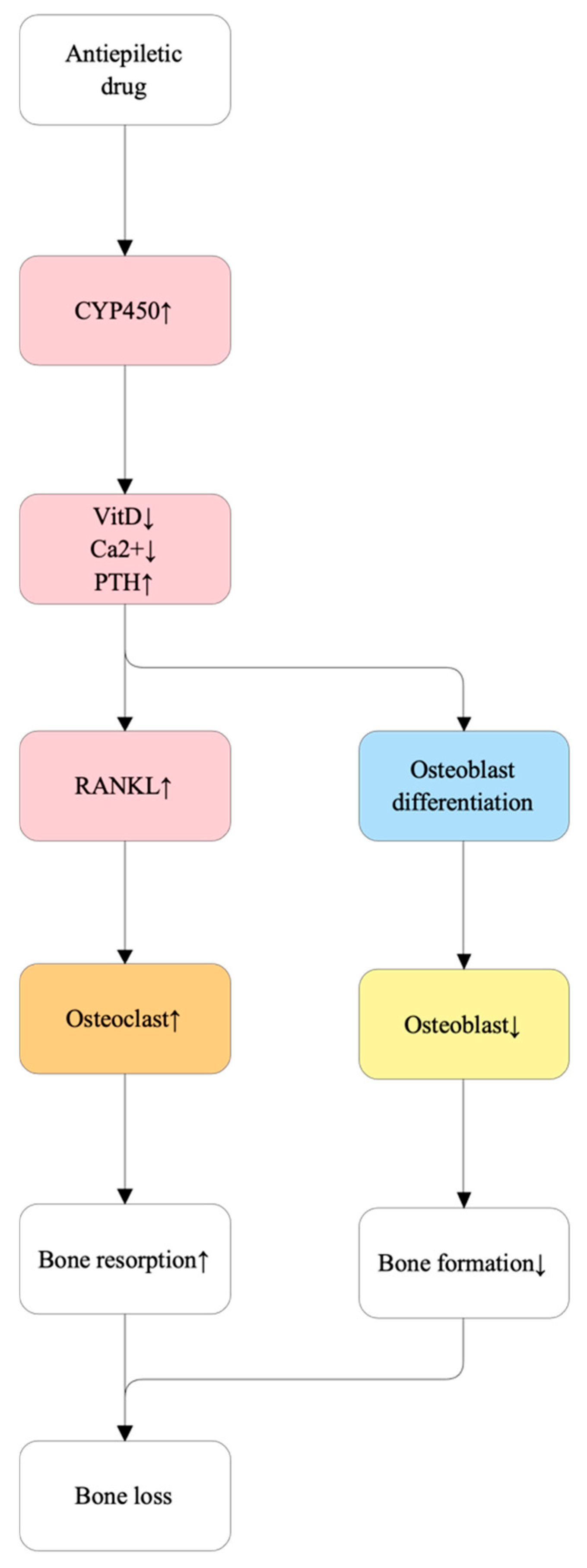
Antiepileptic drugs (AEDs) accelerate cytochrome P450-mediated vitamin D catabolism, leading to hypocalcemia and a compensatory rise in parathyroid hormone (PTH) levels, which subsequently enhances osteoclast activity and bone resorption [99,100]. In addition to these endocrine disturbances, several AEDs directly impair osteoblast differentiation and bone formation by downregulating the synthesis of type I procollagen (COL1A1), a critical component of the bone matrix [101]. Furthermore, chronic AED therapy has been associated with hyperhomocysteinemia, which may independently alter bone microarchitecture and increase skeletal fragility [101]. Collectively, these metabolic and direct cellular effects disrupt the remodeling cycle and significantly elevate fracture risk [101]. The molecular mechanisms underlying AED-induced bone loss are summarized in Figure 4.

5.2.3. SSRIs Modulate the Serotonin Transporter (SERT)

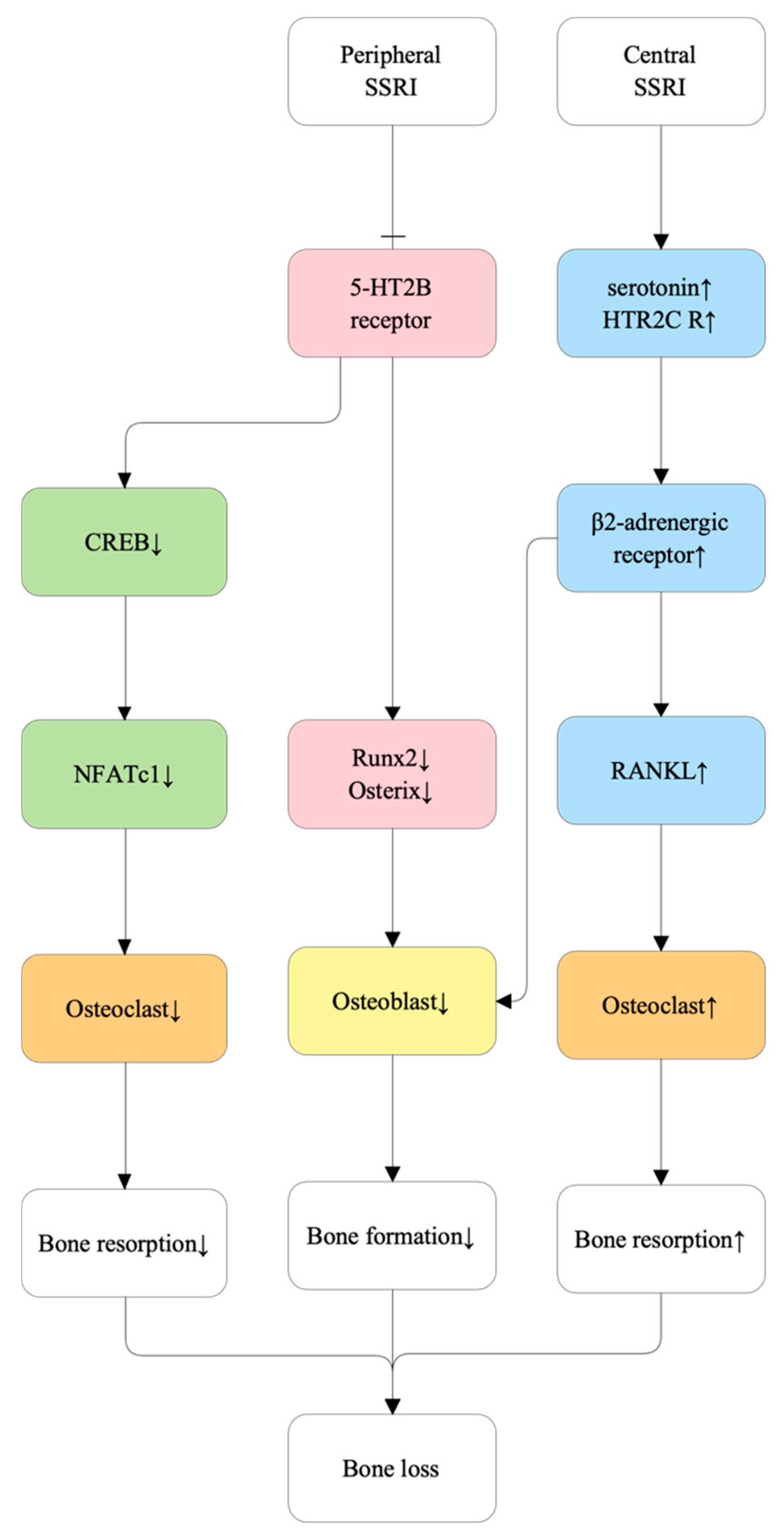
Selective serotonin reuptake inhibitors (SSRIs) alter bone metabolism through both serotonin transporter (SERT)–dependent and SERT-independent mechanisms. Beyond inhibiting SERT in osteoblasts and osteoclasts, SSRIs suppress the Ca2+/calmodulin–CREB–NFATc1 signaling cascade and perturb cAMP/PKA pathways, collectively impairing osteoblastogenesis, promoting apoptosis, and disrupting osteoclast function [102,103,104,105]. These alterations shift bone remodeling toward a net catabolic state, predisposing patients to bone loss and fragility fractures [103]. Figure 5 illustrates the proposed molecular pathways through which SSRIs influence bone remodeling.

5.2.4. Thiazolidinediones (TZDs)

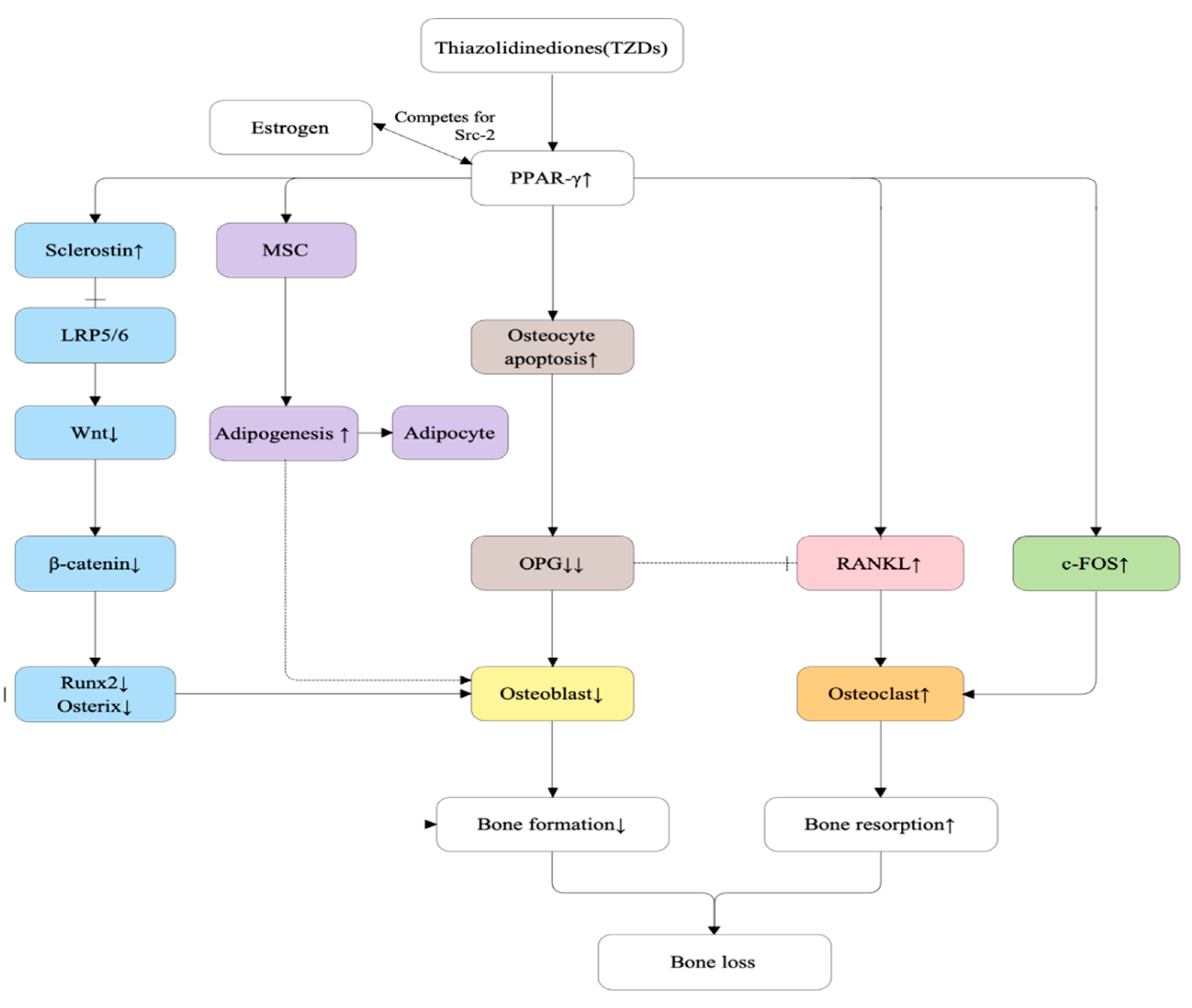
Thiazolidinediones (TZDs) exert adverse skeletal effects primarily through activation of the nuclear transcription factor peroxisome proliferator–activated receptor-γ (PPARγ), resulting in dysregulated bone remodeling [106]. Activation of PPARγ in bone marrow mesenchymal stem cells (MSCs) shifts lineage commitment toward adipogenesis at the expense of osteoblastogenesis, leading to reduced bone formation and increased accumulation of marrow adipose tissue [107]. In addition to suppressing osteoblast differentiation, TZDs promote bone resorption by enhancing osteoclast differentiation and activity, a process mediated in part by upregulation of receptor activator of nuclear factor-κB ligand (RANKL) and the osteoclastogenic transcription factor c-Fos [106,107]. Notably, experimental studies suggest that this interaction involves competition between PPARγ and estrogen receptor for the shared transcriptional coactivator steroid receptor coactivator-2 (SRC-2), thereby modulating osteoblast gene transcription and amplifying TZD-induced bone loss under estrogen-deficient conditions [106].
Emerging evidence further indicates that TZDs induce osteocyte apoptosis and increase osteocyte-derived sclerostin expression, a potent inhibitor of the Wnt/β-catenin signaling pathway, thereby further suppressing osteoblastic activity and amplifying skeletal fragility [107]. Collectively, these mechanisms converge to create a low-formation, high-resorption state that accelerates bone loss and increases fracture risk in patients receiving TZD therapy [106,107]. Figure 6 shows the proposed mechanism of TZD-related bone loss.

5.2.5. Opioids

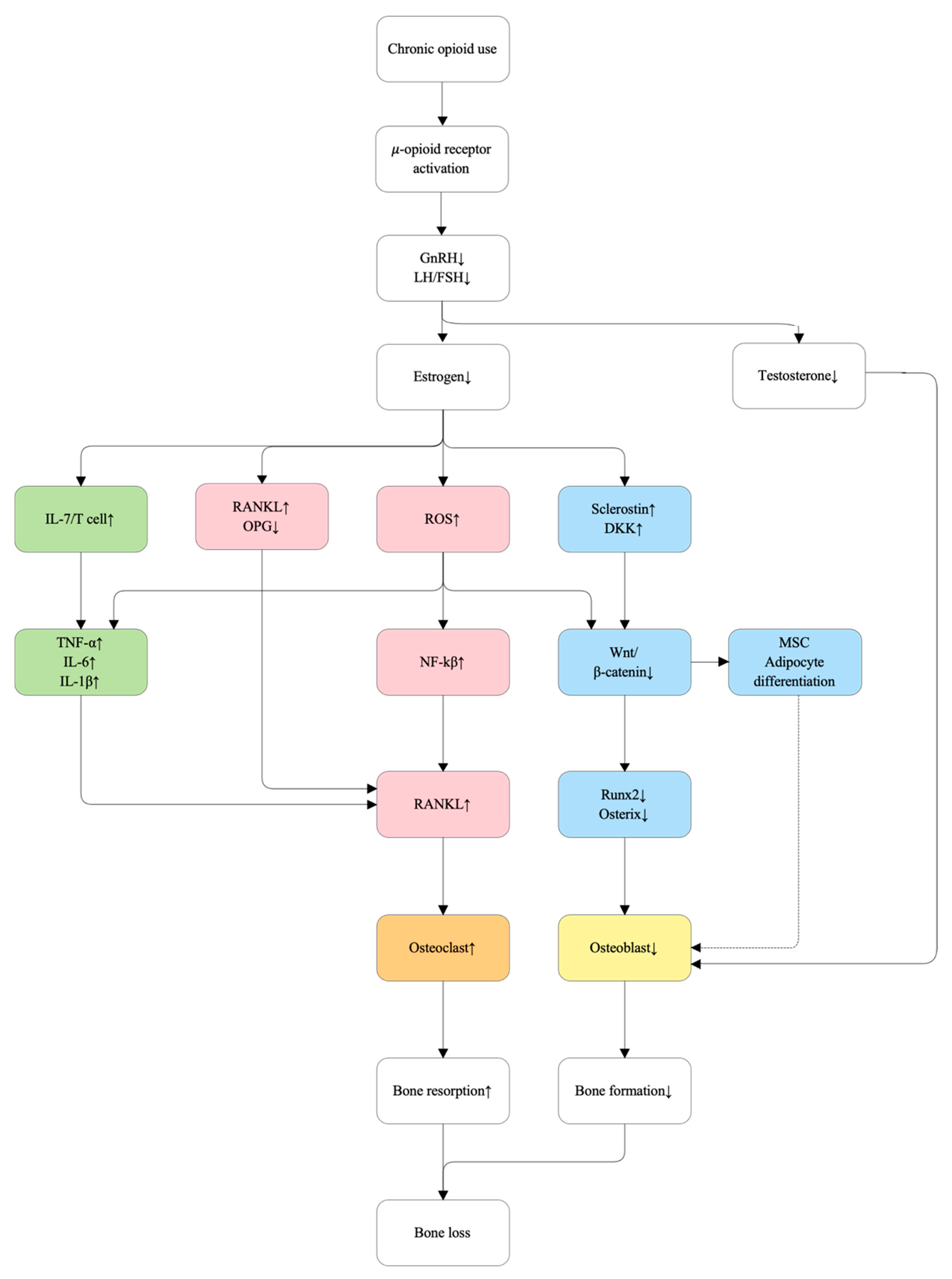
Chronic opioid use is increasingly recognized as a contributor to osteoporosis through combined endocrine and direct skeletal mechanisms [108,109,110]. Centrally, activation of μ-opioid receptors suppresses the hypothalamic–pituitary–gonadal axis, reducing gonadotropin secretion and leading to decreased circulating sex hormones [108]. This functional hypogonadism mimics estrogen deficiency, resulting in increased RANKL expression, reduced osteoprotegerin (OPG) production, and enhanced osteoclastogenesis [55,109,110]. In parallel, opioid-induced reductions in testosterone further impair androgen receptor–mediated osteoblast activity and bone formation, thereby exacerbating opioid-associated skeletal fragility [111].
In addition to hormonal effects, opioids may exert direct actions on bone cells [110]. μ-Opioid receptors are expressed in osteocytes and osteoblasts, and experimental studies suggest that opioid exposure increases oxidative stress and osteocyte apoptosis [110,112]. These changes can impair Wnt/β-catenin signaling and suppress osteoblast differentiation through downregulation of RUNX2 and Osterix [48,62,110]. Opioid-induced oxidative stress further activates NF-κB signaling, thereby amplifying RANKL-mediated osteoclast differentiation and activity [62,112]. Collectively, these mechanisms uncouple bone remodeling by simultaneously suppressing bone formation and enhancing bone resorption, contributing to accelerated bone loss during long-term opioid therapy [52,62,108,110]. Figure 7 illustrates the proposed molecular mechanisms underlying opioid-associated bone loss.

5.2.6. Aromatase Inhibitors (AIs)

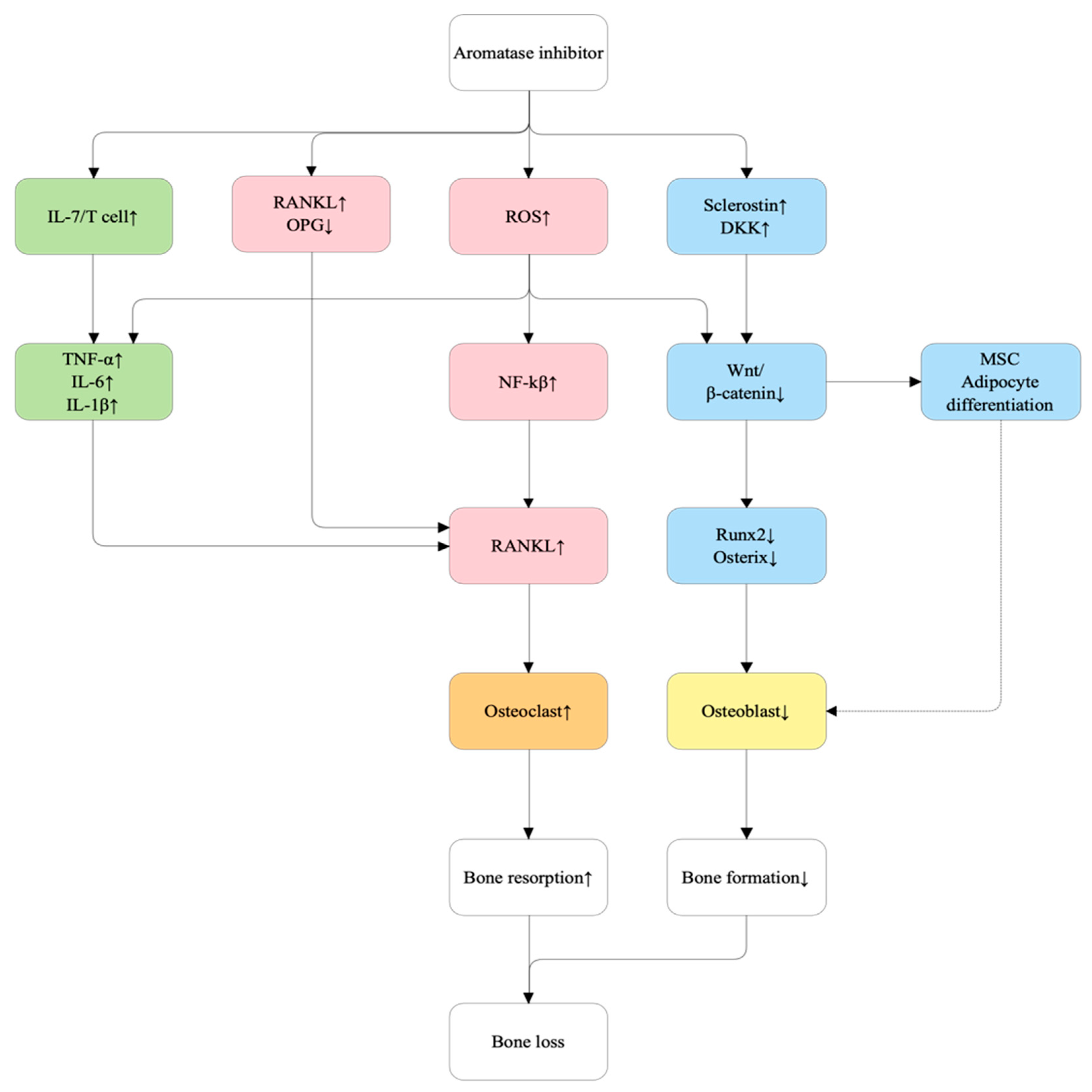
Aromatase inhibitors (AIs) suppress estrogen synthesis, resulting in the loss of estrogen-mediated protection on bone. Reduced estrogen signaling leads to unchecked RANKL expression, increased production of IL-6, and downregulation of key osteoanabolic pathways such as Wnt/β-catenin and BMP signaling [47,57,61,62,113]. Collectively, these molecular disruptions contribute to AI-induced osteoporosis. Figure 8 shows the proposed mechanism of AI-related bone loss.

5.2.7. Heparin

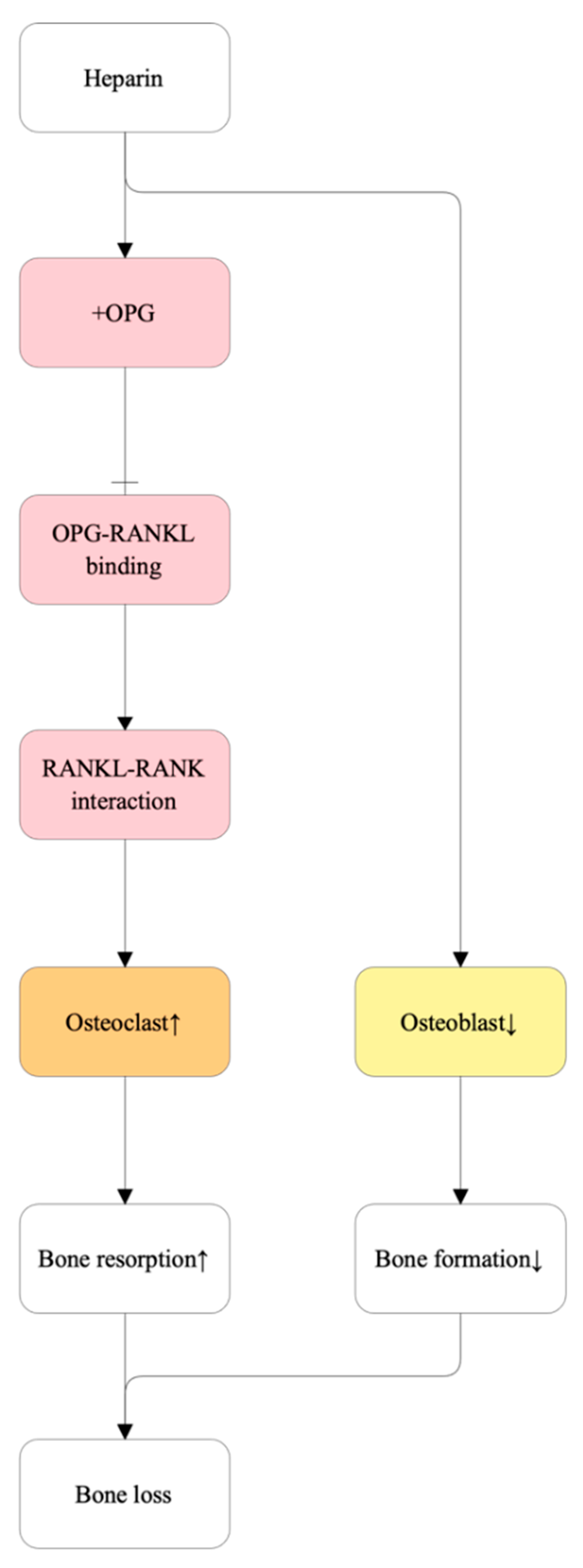
Heparin promotes bone resorption primarily by binding to osteoprotegerin (OPG), thereby preventing OPG from sequestering RANKL and resulting in unopposed RANK–RANKL signaling [114,115]. This shift in the RANKL/OPG balance enhances osteoclast differentiation and activity. Unfractionated heparin (UFH) exhibits more pronounced skeletal effects than low-molecular-weight heparin (LMWH), largely due to its higher binding affinity for OPG and greater degree of biological interaction within the bone microenvironment [114,116]. In addition to its effects on osteoclast regulation, heparin suppresses osteoblast activity and may perturb anabolic pathways involving TGF-β and BMP/Wnt signaling; however, the dominant outcome is a net increase in bone resorption that ultimately contributes to reduced bone mass and skeletal fragility [117]. Figure 9 illustrates the proposed molecular mechanisms underlying heparin-induced osteoporosis.

5.3. Denosumab Withdrawal and RANKL Rebound

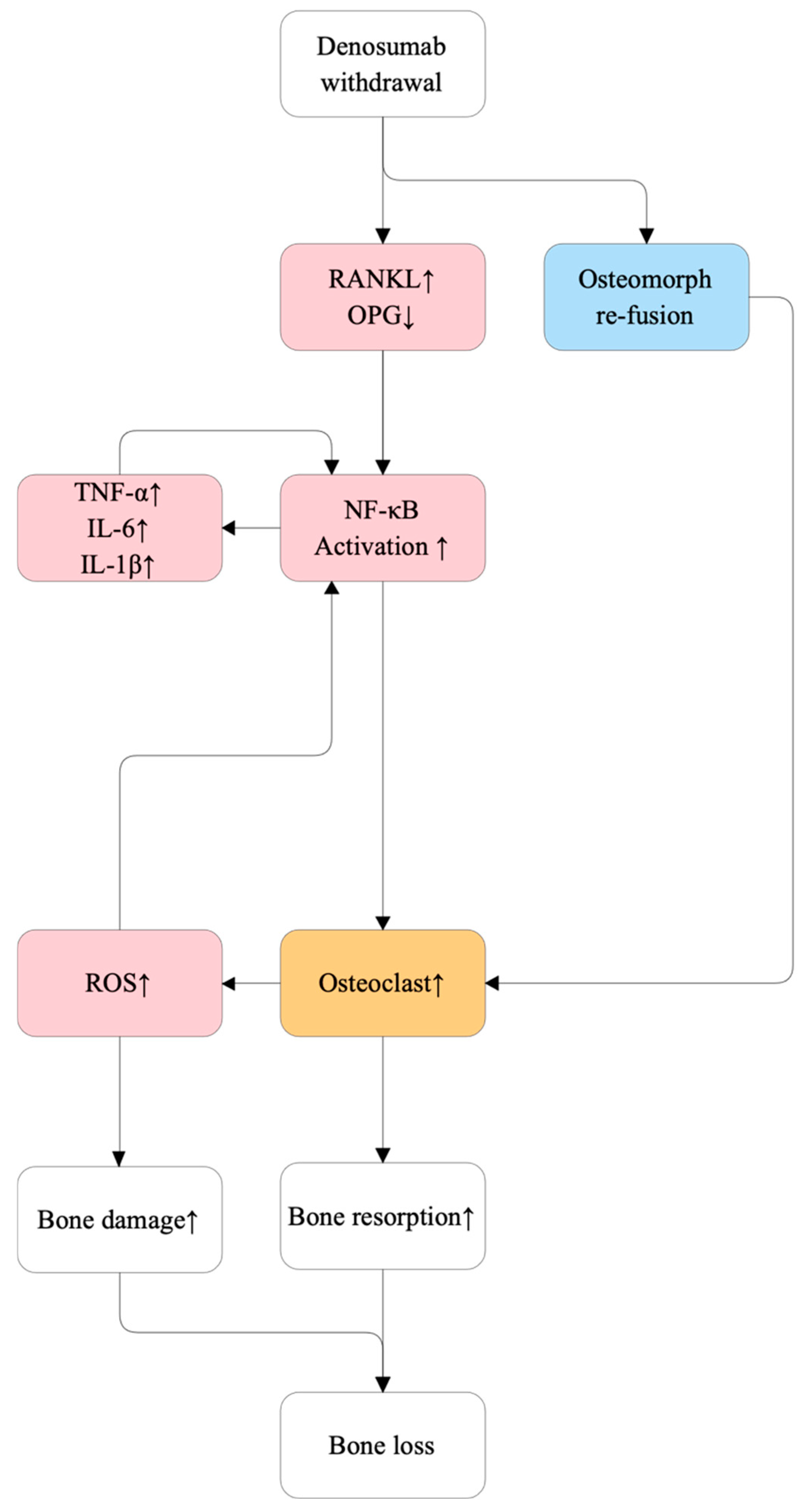
Denosumab is a fully human monoclonal antibody with high specificity for RANKL, preventing its interaction with RANK on osteoclast precursors and thereby inhibiting osteoclast formation, function, and survival [118]. This results in profound suppression of bone resorption and substantial gains in bone mineral density (BMD) during treatment [119,120]. However, because denosumab does not bind to the bone matrix, its antiresorptive effects dissipate rapidly once therapy is discontinued. This leads to a rebound surge in available RANKL, reactivation of osteoclast precursors, and an abrupt acceleration of bone remodeling, often exceeding pre-treatment levels [119,121]. Recent findings show that osteomorphs—osteoclast-derived precursor-like cells that accumulate during denosumab therapy—can rapidly re-fuse into mature osteoclasts upon discontinuation, further amplifying bone resorption [122]. Clinically, this rebound phenomenon is associated with a markedly increased risk of multiple vertebral fractures, especially in trabecular-rich skeletal sites [121]. Figure 10 depicts the molecular mechanisms driving bone loss after denosumab withdrawal.
From a molecular standpoint, rebound bone loss following denosumab cessation may be further exacerbated by osteoimmune interactions [121]. Under conditions of estrogen deficiency or pharmacologic perturbation, activated T cells and B cells contribute to increased RANKL production, while pro-inflammatory cytokines—including IL-6 and TNF-α—synergize with RANKL signaling to enhance osteoclast differentiation and prolong osteoclast survival [121,123,124,125]. Concurrent reductions in OPG after treatment cessation further tilt the RANKL/OPG balance toward osteoclastogenesis [119,121]. This imbalance activates nuclear factor kappa-B (NF-κB), a master regulator of osteoclast differentiation and function [126]. Excessive osteoclast activity also elevates reactive oxygen species (ROS), which contribute directly to bone matrix damage and indirectly reinforce pro-resorptive pathways via further NF-κB activation [127]. Elevated pro-inflammatory cytokines such as TNF-α, IL-6, and IL-1β downstream of NF-κB signaling additionally promote osteoclastogenesis and bone resorption following denosumab withdrawal [126,128]. Although immune-mediated amplification is not the primary trigger of rebound bone loss, it may worsen outcomes in aging individuals with underlying inflammatory dysregulation [121,125]. Together, these mechanisms characterize denosumab withdrawal as a distinct, pharmacologically induced RANKL-driven osteolytic crisis, underscoring the need for transitional antiresorptive therapy—most commonly bisphosphonates—to prevent skeletal deterioration [119].

5.4. Bisphosphonate Oversuppression and Microdamage Accumulation

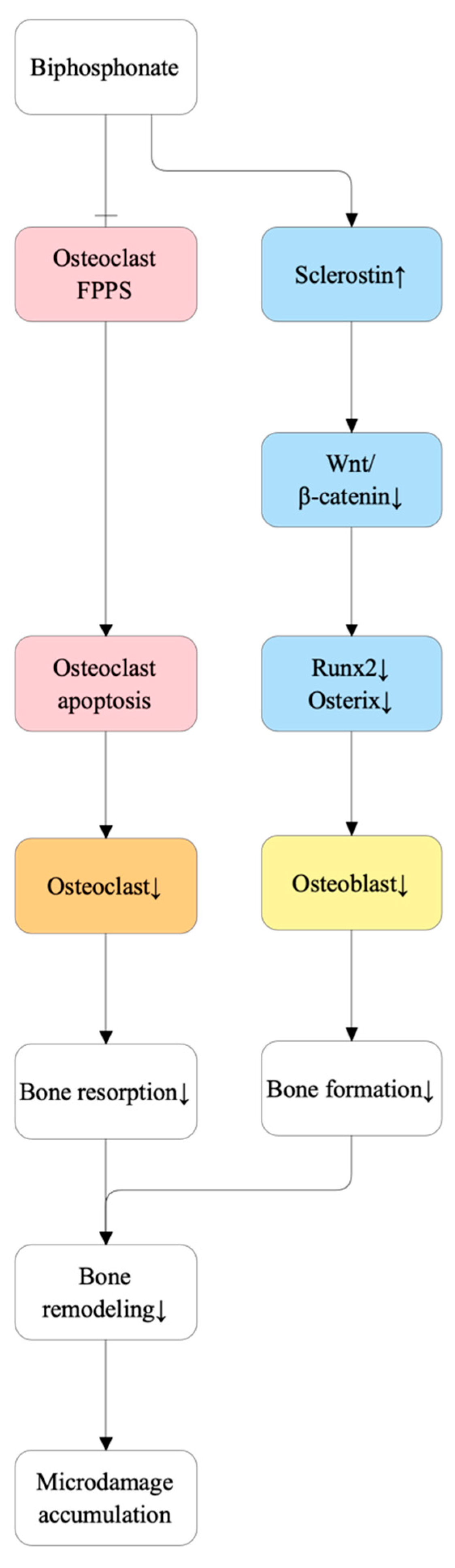
Bisphosphonates (BPs) inhibit osteoclast activity by targeting farnesyl pyrophosphate synthase (FPPS), disrupting cytoskeletal organization and inducing osteoclast apoptosis [129,130]. While initially protective, prolonged suppression of bone turnover impairs the skeleton’s ability to repair microdamage, especially within cortical bone [131]. Adequate bone turnover is required for removing aged, microdamaged bone; chronic oversuppression reduces both resorption and formation, lowering overall remodeling capacity [132]. Experimental models demonstrate that extended suppression leads to the accumulation of linear microcracks, compromising bone mechanical integrity and predisposing to structural failure [131,132].
Prolonged remodeling suppression also alters osteocyte-mediated signaling. Suppressed turnover elevates sclerostin levels, inhibiting Wnt/β-catenin signaling and impairing osteoblast differentiation and matrix formation [133,134,135]. Downregulation of Wnt signaling subsequently reduces RUNX2 and Osterix expression, further impairing osteoblastogenesis [136]. This sustained low-turnover state promotes matrix aging and advanced collagen cross-linking, diminishing bone toughness and increasing susceptibility to atypical femoral fractures (AFFs), particularly in the subtrochanteric region with minimal trauma [115,137,138]. Importantly, prolonged suppression of bone remodeling has also been implicated in the pathogenesis of osteonecrosis of the jaw (ONJ), a rare but serious complication characterized by impaired bone healing following dental trauma or infection [33,129]. Low bone turnover, reduced osteoclast-mediated remodeling, and compromised microdamage repair are thought to impair jawbone resilience, particularly in the setting of local inflammatory or mechanical stress [139,140]. Additional contributing factors—including advanced age, long-term glucocorticoid co-treatment, diabetes, and alterations in collagen cross-linking—may further heighten skeletal fragility [141,142,143]. Current therapeutic guidelines therefore recommend periodic reassessment of bisphosphonate treatment duration and consideration of “drug holidays” in low-risk patients to restore physiological remodeling dynamics [144]. Figure 11 summarizes the proposed mechanism of bisphosphonate-induced bone loss.
Although individual drug mechanisms differ, these agents collectively destabilize the tightly regulated balance of bone remodeling. Cross-talk among metabolic, endocrine, and local signaling pathways further amplifies skeletal vulnerability, particularly in older adults or those exposed to polypharmacy. Given the wide range of pharmacological agents and the complexity of their underlying mechanisms, Table 3 provides a comprehensive summary of the specific molecular pathways and the associated impact on bone remodeling for all drug classes discussed in this section.
While elucidating the molecular mechanisms of drug-induced osteoporosis is fundamental, translating this knowledge into clinical practice requires identifying susceptible patient profiles and recognizing the thresholds for intervention. To this end, Table 4 summarizes the clinical risk factors, typical dosages, and treatment durations associated with clinically significant bone loss for the pharmacologic agents discussed [31,109,145,146,147,148]. This consolidation is particularly critical for widely prescribed medications such as proton pump inhibitors (PPIs) and antiepileptic drugs, where fracture risk is often underestimated in the general population compared to well-established offenders like glucocorticoids. To avoid redundancy with general osteoporosis risk factors (e.g., age, smoking, low BMI) discussed in previous section, this table highlights only those factors that specifically potentiate the adverse skeletal effects of the respective pharmacotherapies.

6. Treatment Strategies and Comparative Therapeutic Approaches

6.1. Standard Pharmacological Therapies

Antiresorptive therapies remain the foundation of osteoporosis management [26,80]. Bisphosphonates and denosumab, a monoclonal antibody targeting RANKL, effectively suppress osteoclast-mediated bone resorption, whereas selective estrogen receptor modulators (SERMs) provide particular benefit in postmenopausal osteoporosis (PMOP) owing to their estrogen-agonistic effects on bone [25,118,149]. In drug-induced osteoporosis (DIOP)—including glucocorticoid-induced osteoporosis (GIOP)—antiresorptives are similarly employed; however, management requires careful monitoring due to the potential for rapid bone turnover recovery following drug discontinuation, as exemplified by the rebound phenomenon associated with denosumab withdrawal [119,150].
Individualized therapy is essential and should consider patient age, renal function, fracture risk, comorbidities, and medication tolerance [33,129,151]. Long-term bisphosphonate treatment warrants periodic reassessment because of rare but serious adverse events, including atypical femoral fractures and osteonecrosis of the jaw (ONJ) [35]. When discontinuing denosumab, sequential bisphosphonate therapy is recommended to mitigate rebound bone loss and prevent vertebral fractures [119].
Anabolic agents—including teriparatide, abaloparatide, and romosozumab—directly stimulate bone formation and are particularly beneficial for patients at very high fracture risk or those with severe GIOP, in whom osteoblast function is profoundly suppressed [25,35,150]. These agents achieve more rapid and substantial gains in bone density than antiresorptives. For patients with severe osteoporosis, sequential regimens beginning with an anabolic agent followed by antiresorptive consolidation are recommended [33,120].

6.2. Emerging and Adjunctive Therapies

Emerging therapies aim to address limitations of standard pharmacologic options and broaden the scope of individualized care. Whole-body vibration therapy (WBVT) and virtual reality-based rehabilitation can improve neuromuscular performance, thereby enhancing bone strength and reducing fall risk [152,153]. Wearable sensor technologies enable continuous assessment of mobility and fall propensity, providing opportunities for personalized, data-driven interventions [154,155].
Nucleic acid-based therapeutics, particularly small interfering RNAs (siRNAs) targeting key regulators such as sclerostin or DKK1, represent a promising frontier by enabling selective modulation of osteogenic pathways and Wnt signaling [156,157]. This mechanism parallels the biologic action of romosozumab, an anti-sclerostin monoclonal antibody that simultaneously enhances bone formation and reduces resorption.
Bioactive compounds derived from traditional Chinese medicine—many with anti-inflammatory, antioxidant, and osteoanabolic properties—are increasingly evaluated in clinical and translational studies [158,159]. Gene therapy and stem-cell-based approaches have demonstrated potential in preclinical models but require further investigation before clinical translation [156].

6.3. Non-Pharmacological Interventions

Non-pharmacological strategies form an essential component of comprehensive care for both PMOP and DIOP [31,34]. Weight-bearing and resistance exercise enhances osteogenesis and improves muscle strength, contributing to fall prevention [25,33]. Adequate calcium, vitamin D, and protein intake supports bone mineralization and skeletal repair [25,41]. Fall prevention measures—such as home environment modifications, balance training, and hazard mitigation—are crucial in reducing fracture incidence [31,33].
Lifestyle modifications, including smoking cessation and limiting alcohol consumption, significantly improve bone health [25]. Appropriate sunlight exposure should be encouraged to support endogenous vitamin D synthesis while balancing skin cancer risk [41].

6.4. Treatment Matching and Drug

Optimal treatment selection requires alignment with the underlying pathophysiology of the disease [33,34]. In PMOP, which is driven by estrogen deficiency leading to increased RANKL signaling and reduced Wnt/β-catenin activity, hormone replacement therapy, bisphosphonates, or denosumab remain first-line interventions, followed by maintenance therapy to preserve bone mass [31,33,34,150].
In contrast, DIOP necessitates mechanism-specific treatment. In GIOP, early initiation of anabolic therapy (teriparatide, abaloparatide, or romosozumab) is recommended to counteract profound suppression of osteoblast function [34,35,39,150]. When feasible, discontinuing or reducing exposure to the offending drug is the most effective strategy for mitigating skeletal harm.
For patients discontinuing denosumab, sequential bisphosphonate therapy is essential to suppress rebound RANKL activation and prevent vertebral fractures [40]. Other DIOP entities require targeted interventions: PPI-associated bone loss warrants correction of calcium and vitamin D deficiency; AED-induced osteoporosis may require supplementation and antiresorptive therapy; and heparin-induced bone loss may be mitigated by transitioning from unfractionated heparin (UFH) to low-molecular-weight heparin (LMWH) [36,39,101].
Bisphosphonate drug holidays may be considered for low-risk patients after 3–5 years of therapy, whereas individuals with GIOP usually require continuous therapy until glucocorticoid tapering restores bone balance [33,35,150].
Economic constraints and treatment adherence—shaped by regimen complexity, medication costs, limited disease awareness, and concerns about side effects—substantially influence therapeutic sequencing and long-term success [31,33,150].

6.5. Influence of Comorbidities on Treatment Decisions

Beyond hormone- or drug-mediated mechanisms, osteoporosis should be viewed as a disease embedded within a broader multimorbidity context [160]. In clinical settings, osteoporosis rarely occurs in isolation; instead, it coexists with metabolic, cardiovascular, renal, and inflammatory disorders that independently affect skeletal integrity [161]. Failure to account for these comorbidities may lead to underestimation of fracture risk and suboptimal therapeutic decision-making, particularly in patients receiving long-term pharmacologic treatments [33].
Diabetes, chronic kidney disease, obesity, and cardiovascular disease alter bone quality, modify drug response, and increase fracture risk [162,163,164]. These conditions should direct clinicians toward earlier screening, preference for medications with safer metabolic profiles, and closer monitoring [33].

7. Discussion

Bone loss resulting from estrogen deficiency, glucocorticoid excess, denosumab withdrawal, and long-term pharmacotherapy with agents such as bisphosphonates, selective serotonin reuptake inhibitors (SSRIs), proton pump inhibitors (PPIs), heparin, or antiepileptic drugs shares several convergent mechanisms [22,88,97,103,116,119,143,144]. Central among these are dysregulation of the RANKL/OPG axis, suppression of Wnt/β-catenin signaling, and the accumulation of reactive oxygen species (ROS), all of which contribute to uncoupled bone remodeling [21,50,124,165]. These pathways highlight the inherent vulnerability of skeletal homeostasis to both endocrine alterations and pharmacological perturbations [34,50].
Although these mechanisms converge on similar downstream pathways, the initiating triggers and dominant molecular disruptions differ substantially across etiologies. Denosumab withdrawal is marked by abrupt reactivation of the RANKL–RANK pathway and osteomorph re-fusion—phenomena uniquely attributable to pharmacologic RANKL inhibition [119]. Bisphosphonate therapy, in contrast, induces sustained oversuppression of turnover, leading to microdamage accumulation rather than excessive osteoclastogenesis [149]. SSRIs exert both peripheral impairment of CREB/NFATc1-mediated osteoblast and osteoclast signaling and central enhancement of sympathetic β2-adrenergic tone, increasing RANKL expression [104]. PPIs and heparin primarily alter mineral homeostasis or extracellular protein interactions such as calcium solubility, phosphate balance, or OPG sequestration, while antiepileptic drugs accelerate vitamin D catabolism and impair osteoblast differentiation [34,101,117]. Together, these distinctions demonstrate that drug-induced osteoporosis cannot be conceptualized as a single mechanistic entity but instead reflects diverse and drug-specific perturbations [34,36].
Beyond hormone- or drug-mediated mechanisms, osteoporosis is fundamentally a multimorbidity-associated condition, a factor underemphasized in many prior reviews and clinical discussions. Several common chronic diseases—particularly type 2 diabetes mellitus (T2DM), hypertension, obesity, chronic kidney disease, and rheumatoid arthritis—independently alter bone quality, modify bone turnover, and significantly influence fracture risk [162,163,164,166].
Patients with T2DM exhibit paradoxically normal or elevated BMD yet sustain higher fracture rates due to impaired microarchitecture, accumulation of advanced glycation end-products (AGEs), reduced bone turnover, and altered osteocyte function [167]. Chronic kidney disease (CKD) is frequently accompanied by CKD–mineral and bone disorder (CKD-MBD), a systemic disturbance of calcium, phosphate, parathyroid hormone, and vitamin D metabolism that progressively impairs bone strength and markedly increases fracture risk as renal function declines [168]. Hypertension is associated with increased fracture risk through mechanisms involving chronic low-grade inflammation, vascular calcification, and disturbed calcium homeostasis, reflecting shared pathophysiological pathways between arterial calcification and skeletal demineralization [169]. Obesity, while traditionally considered protective, is increasingly recognized as a state of chronic low-grade inflammation and altered adipokine signaling that can exacerbate osteoblast suppression and dysregulate MSC differentiation [170,171]. Comorbidities and polypharmacy can compound fracture risk and complicate osteoporosis prevention and treatment decisions, beyond the effect of any single exposure [141,168,169,172,173]. Accordingly, osteoporosis should be approached as a comorbidity-driven disorder requiring comprehensive clinical evaluation and tailored therapeutic decision-making.
Medication-induced osteoporosis remains a particularly underrecognized contributor to fracture risk in clinical practice [31,101]. Long-term exposure to antiepileptic drugs (AEDs)—including phenytoin, carbamazepine, and valproate—has been consistently associated with reduced BMD and increased fracture rates [101]. AEDs induce CYP450-mediated vitamin D catabolism, leading to secondary hyperparathyroidism and enhanced osteoclast activity, while simultaneously impairing osteoblast differentiation and bone formation [101]. These findings indicate that AED-related bone loss is not solely metabolic but also reflects direct interference with osteogenic pathways [101,145]. Routine monitoring of vitamin D status and early implementation of supplementation should therefore be considered standard components of long-term AED therapy [101,145].
Other commonly prescribed medications also warrant vigilance. Proton pump inhibitors (PPIs), widely used for gastrointestinal disorders, can impair the absorption of insoluble calcium (e.g., calcium carbonate) by suppressing gastric acid secretion, thereby increasing the risk of hip and vertebral fractures with long-term use [174]. Furthermore, patients receiving long-term heparin therapy—such as those managing thromboembolic risks—may experience suppressed osteoblast formation and increased bone resorption [148]. Recognizing these iatrogenic risks allows physicians to consider alternative treatments or initiate early bone-protective strategies [31].
The mechanistic diversity underlying osteoporosis carries direct and clinically meaningful implications. For example, denosumab discontinuation requires transitional antiresorptive therapy—typically a bisphosphonate—to blunt rebound osteoclastogenesis and prevent vertebral fractures [119]. Conversely, long-term bisphosphonate therapy necessitates periodic reassessment and strategic drug holidays to mitigate the risk of atypical femoral fractures [33,149]. Patients treated with SSRIs, PPIs, heparin, or AEDs may require earlier and more frequent BMD monitoring, particularly when additional skeletal risk factors such as advanced age, menopause, glucocorticoid use, or endocrine comorbidities are present [35,96,101,103,116].
Importantly, patient-related risk factors (age, frailty, sarcopenia, nutritional deficiency, and metabolic comorbidities) frequently exert effects comparable to or greater than those of the medications themselves [25,33]. Clinical management must therefore incorporate individualized fracture risk estimation, lifestyle modification, fall-risk reduction, and correction of reversible contributors such as vitamin D deficiency, hypocalcemia, or chronic inflammatory states [33].
Given the multifactorial nature of osteoporosis, a proactive and individualized clinical approach is essential [25,33]. Comprehensive medication reconciliation should be performed for all patients presenting with low bone mass or fragility fractures, with particular attention to individuals exposed to long-term osteotoxic agents such as glucocorticoids, antiepileptic drugs, proton pump inhibitors, or selective serotonin reuptake inhibitors [33]. In patients with high-risk comorbidities—especially diabetes mellitus, chronic kidney disease, or hypertension, conditions known to impair bone material quality and accelerate calcium loss—baseline DXA screening may warrant earlier initiation than current guidelines recommend [33,162,168,169]. Longitudinal monitoring of bone mineral density and bone turnover markers can aid in assessing treatment response and identifying early skeletal deterioration [25,33]. Ultimately, a comprehensive approach that addresses both underlying comorbidities and medication-related skeletal toxicity is fundamental to long-term osteoporosis care.
Finally, it must be emphasized that many mechanistic insights summarized in this review originate from preclinical models, and large-scale human studies validating these pathways remain limited. Important uncertainties persist regarding dose–response relationships, exposure thresholds required to induce skeletal toxicity, and the reversibility of drug-induced molecular alterations [39]. The dynamic interplay between oxidative stress, immune activation, and disrupted osteoblast–osteoclast–osteocyte communication represents a major frontier for future investigation [50]. Addressing these gaps will be essential for refining risk stratification, improving therapeutic decision-making, and advancing precision medicine approaches in the management of osteoporosis [33,50].

8. Conclusions

Osteoporosis resulting from postmenopausal estrogen deficiency and diverse pharmacologic exposures—including glucocorticoids, bisphosphonates, denosumab withdrawal, selective serotonin reuptake inhibitors, proton pump inhibitors, heparin, and antiepileptic drugs—represents a heterogeneous clinical entity underpinned by convergent disruptions in skeletal homeostasis. Despite distinct molecular origins, these conditions commonly impair bone remodeling through dysregulation of the RANKL/OPG axis, suppression of Wnt/β-catenin signaling, reduced osteoblast differentiation, enhanced osteoclast activation, and increased oxidative stress. The cumulative effect is an imbalance between bone resorption and formation, ultimately compromising bone strength and increasing fracture susceptibility.
Understanding these mechanistic pathways carries significant therapeutic implications. Glucocorticoid-induced osteoporosis characteristically produces a low-turnover phenotype, often necessitating anabolic therapy, while SSRIs, PPIs, heparin, and antiepileptic drugs demand vigilant monitoring and individualized metabolic support. Denosumab withdrawal exemplifies a RANKL-driven osteolytic rebound requiring timely antiresorptive transition. Long-term bisphosphonate therapy highlights the risks of excessive remodeling suppression and microdamage accumulation, underscoring the need for periodic reassessment and potential drug holidays.
Moreover, comorbid conditions—particularly diabetes mellitus, hypertension, and other chronic systemic disorders—interact with these drug-induced pathways and further modulate skeletal vulnerability. Incorporating comorbidity profiles, medication exposures, and molecular mechanisms into clinical decision-making is therefore essential.
Future work should prioritize the identification of early biomarkers of skeletal toxicity, delineation of reversible versus irreversible drug effects, and evaluation of emerging interventions such as anti-sclerostin therapies, siRNA-based gene modulation, and digital adherence technologies. Through integration of mechanistic insight, comorbidity assessment, and precision medicine strategies, clinicians may better prevent fractures, preserve bone quality, and improve long-term outcomes in patients affected by both physiologic and medication-associated osteoporosis.

Author Contributions

K.I.-R.L., J.-H.C. and K.-H.C. conceived the review and designed the searching methods for the literature. K.I.-R.L. and K.-H.C. collected the data in the literature. K.I.-R.L., J.-H.C. and K.-H.C. performed the data analysis. K.I.-R.L. and K.-H.C. wrote the review. All authors have read and agreed to the published version of the manuscript.

Funding

This review was supported by a grant of Taipei Tzu-Chi Hospital, Taiwan (TCRD-TPE-115-46) for K.-H.C. The funders had no role in the design of the study; in the collection, analyses, or interpretation of data; in writing the manuscript, or in deciding to publish the results.

Data Availability Statement

No new data were created or analyzed in this study. Data sharing is not applicable to this article.

Conflicts of Interest

The authors declare no conflicts of interest.

References

  1. Eastell, R.; O’Neill, T.W.; Hofbauer, L.C.; Langdahl, B.; Reid, I.R.; Gold, D.T.; Cummings, S.R. Postmenopausal osteoporosis. Nat. Rev. Dis. Primers. 2016, 2, 16069. [Google Scholar] [CrossRef]
  2. Hernlund, E.; Svedbom, A.; Ivergard, M.; Compston, J.; Cooper, C.; Stenmark, J.; McCloskey, E.V.; Jonsson, B.; Kanis, J.A. Osteoporosis in the European Union: Medical management, epidemiology and economic Burden: A report prepared in collaboration with the International Osteoporosis Foundation (IOF) and the European Federation of Pharmaceutical Industry Associations (EFPIA). Arch. Osteoporos. 2013, 8, 136. [Google Scholar] [CrossRef]
  3. Rachner, T.D.; Khosla, S.; Hofbauer, L.C. Osteoporosis: Now and the future. Lancet 2011, 377, 1276–1287. [Google Scholar] [CrossRef] [PubMed]
  4. Cheng, C.-H.; Chen, L.-R.; Chen, K.-H. Osteoporosis Due to Hormone Imbalance: An Overview of the Effects of Estrogen Deficiency and Glucocorticoid Overuse on Bone Turnover. Int. J. Mol. Sci. 2022, 23, 1376. [Google Scholar] [CrossRef] [PubMed]
  5. Clynes, M.A.; Harvey, N.C.; Curtis, E.M.; Fuggle, N.R.; Dennison, E.M.; Cooper, C. The epidemiology of osteoporosis. Br. Med. Bull. 2020, 133, 105–117. [Google Scholar] [CrossRef]
  6. Khosla, S.; Oursler, M.J.; Monroe, D.G. Estrogen and the skeleton. Trends Endocrinol. Metab. 2012, 23, 576–581. [Google Scholar] [CrossRef]
  7. Manolagas, S.C. From Estrogen-Centric to Aging and Oxidative Stress: A Revised Perspective of the Pathogenesis of Osteoporosis. Endocr. Rev. 2010, 31, 266–300. [Google Scholar] [CrossRef]
  8. Khosla, S.; Monroe, D.G. Regulation of Bone Metabolism by Sex Steroids. Cold Spring Harb. Perspect. Med. 2017, 8, a031211. [Google Scholar] [CrossRef]
  9. Fuentes, N.; Silveyra, P. Estrogen receptor signaling mechanisms. Adv. Protein Chem. Struct. Biol. 2019, 116, 135–170. [Google Scholar] [CrossRef]
  10. Yeh, P.-S.; Chen, J.-T.; Cherng, Y.-G.; Yang, S.-T.; Tai, Y.-T.; Chen, R.-M. Methylpiperidinopyrazole Attenuates Estrogen-Induced Mitochondrial Energy Production and Subsequent Osteoblast Maturation via an Estrogen Receptor Alpha-Dependent Mechanism. Molecules 2020, 25, 2876. [Google Scholar] [CrossRef] [PubMed]
  11. Seibel, M.J.; Cooper, M.S.; Zhou, H. Glucocorticoid-induced osteoporosis: Mechanisms, management, and future perspectives. Lancet Diabetes Endocrinol. 2013, 1, 59–70. [Google Scholar] [CrossRef] [PubMed]
  12. Schepper, J.D.; Collins, F.; Rios-Arce, N.D.; Kang, H.J.; Schaefer, L.; Gardinier, J.D.; Raghuvanshi, R.; Quinn, R.A.; Britton, R.; Parameswaran, N.; et al. Involvement of the Gut Microbiota and Barrier Function in Glucocorticoid-Induced Osteoporosis. J. Bone Miner. Res. 2019, 35, 801–820. [Google Scholar] [CrossRef]
  13. Saag, K.G.; Pannacciulli, N.; Geusens, P.; Adachi, J.D.; Messina, O.D.; Morales-Torres, J.; Emkey, R.; Butler, P.W.; Yin, X.; Lems, W.F. Denosumab Versus Risedronate in Glucocorticoid-Induced Osteoporosis: Final Results of a Twenty-Four–Month Randomized, Double-Blind, Double-Dummy Trial. Arthritis Rheumatol. 2019, 71, 1174–1184. [Google Scholar] [CrossRef]
  14. Popp, A.W.; Zysset, P.K.; Lippuner, K. Rebound-associated vertebral fractures after discontinuation of denosumab—From clinic and biomechanics. Osteoporos. Int. 2015, 27, 1917–1921. [Google Scholar] [CrossRef]
  15. Gregson, C.L.; Armstrong, D.J.; Bowden, J.; Cooper, C.; Edwards, J.; Gittoes, N.J.L.; Harvey, N.; Kanis, J.; Leyland, S.; Low, R.; et al. UK clinical guideline for the prevention and treatment of osteoporosis. Arch. Osteoporos. 2022, 17, 58, Erratum in Arch Osteoporos. 2022, 17, 80. https://doi.org/10.1007/s11657-022-01115-8. PMID: 35378630; PMCID: PMC8979902. [Google Scholar] [CrossRef]
  16. Lim, S.Y. Romosozumab for the treatment of osteoporosis in women: Efficacy, safety, and cardiovascular risk. Women’s Health 2022, 18, 17455057221125577. [Google Scholar] [CrossRef]
  17. Dempster, D.W.; Zhou, H.; Rao, S.D.; Recknor, C.; Miller, P.D.; Leder, B.Z.; Annett, M.; Ominsky, M.S.; Mitlak, B.H. Early Effects of Abaloparatide on Bone Formation and Resorption Indices in Postmenopausal Women With Osteoporosis. J. Bone Miner. Res. 2020, 36, 644–653. [Google Scholar] [CrossRef] [PubMed]
  18. Augustine, M.; Horwitz, M.J. Parathyroid Hormone and Parathyroid Hormone-Related Protein Analogs as Therapies for Osteoporosis. Curr. Osteoporos. Rep. 2013, 11, 400–406. [Google Scholar] [CrossRef] [PubMed]
  19. Liang, B.; Burley, G.; Lin, S.; Shi, Y.-C. Osteoporosis pathogenesis and treatment: Existing and emerging avenues. Cell. Mol. Biol. Lett. 2022, 27, 72. [Google Scholar] [CrossRef]
  20. Singh, A.; Varma, A.R. Whole Body Vibration Therapy as a Modality for Treatment of Senile and Postmenopausal Osteoporosis: A Review Article. Cureus 2023, 15, e33690. [Google Scholar] [CrossRef]
  21. Almeida, M.; Iyer, S.; Martin-Millan, M.; Bartell, S.M.; Han, L.; Ambrogini, E.; Onal, M.; Xiong, J.; Weinstein, R.S.; Jilka, R.L.; et al. Estrogen receptor-α signaling in osteoblast progenitors stimulates cortical bone accrual. J. Clin. Investig. 2012, 123, 394–404. [Google Scholar] [CrossRef]
  22. Weitzmann, M.N.; Pacifici, R. Estrogen deficiency and bone loss: An inflammatory tale. J. Clin. Investig. 2006, 116, 1186–1194. [Google Scholar] [CrossRef]
  23. Wong, R.H.; Zaw, J.J.T.; Xian, C.J.; Howe, P.R. Regular Supplementation With Resveratrol Improves Bone Mineral Density in Postmenopausal Women: A Randomized, Placebo-Controlled Trial. J. Bone Miner. Res. 2020, 35, 2121–2131. [Google Scholar] [CrossRef]
  24. Pingali, U.; Nutalapati, C. Shilajit extract reduces oxidative stress, inflammation, and bone loss to dose-dependently preserve bone mineral density in postmenopausal women with osteopenia: A randomized, double-blind, placebo-controlled trial. Phytomedicine 2022, 105, 154334. [Google Scholar] [CrossRef] [PubMed]
  25. Pouresmaeili, F.; Dehghan, B.K.; Kamarehei, M.; Meng, G.Y. A comprehensive overview on osteoporosis and its risk factors. Ther. Clin. Risk Manag. 2018, 14, 2029–2049. [Google Scholar] [CrossRef]
  26. Bai, X.-H.; Su, J.; Mu, Y.-Y.; Zhang, X.-Q.; Li, H.-Z.; He, X.-F. Association between the ESR1 and ESR2 polymorphisms and osteoporosis risk: An updated meta-analysis. Medicine 2023, 102, e35461. [Google Scholar] [CrossRef]
  27. Jiang, L.L.; Zhang, C.; Zhang, Y.; Ma, F.; Guan, Y. Associations between polymorphisms in VDR gene and the risk of osteoporosis: A meta-analysis. Arch. Physiol. Biochem. 2020, 128, 1637–1644. [Google Scholar] [CrossRef]
  28. Moradifard, S.; Hoseinbeyki, M.; Emam, M.M.; Parchiniparchin, F.; Ebrahimi-Rad, M. Association of the Sp1 binding site and -1997 promoter variations in COL1A1 with osteoporosis risk: The application of meta-analysis and bioinformatics approaches offers a new perspective for future research. Mutat. Res.-Rev. Mutat. Res. 2020, 786, 108339. [Google Scholar] [CrossRef] [PubMed]
  29. Özmen, S.; Kurt, S.; Timur, H.T.; Yavuz, O.; Kula, H.; Demir, A.Y.; Balcı, A. Prevalence and Risk Factors of Osteoporosis: A Cross-Sectional Study in a Tertiary Center. Medicina 2024, 60, 2109. [Google Scholar] [CrossRef] [PubMed]
  30. Gaudio, A.; Xourafa, A.; Rapisarda, R.; Zanoli, L.; Signorelli, S.S.; Castellino, P. Hematological Diseases and Osteoporosis. Int. J. Mol. Sci. 2020, 21, 3538. [Google Scholar] [CrossRef]
  31. Sözen, T.; Özışık, L.; Başaran, N.Ç. An overview and management of osteoporosis. Eur. J. Rheumatol. 2019, 4, 46–56. [Google Scholar] [CrossRef]
  32. Alexandru, D.; So, W. Evaluation and Management of Vertebral Compression Fractures. Perm. J. 2012, 16, 46–51. [Google Scholar] [CrossRef] [PubMed]
  33. LeBoff, M.S.; Greenspan, S.L.; Insogna, K.L.; Lewiecki, E.M.; Saag, K.G.; Singer, A.J.; Siris, E.S. The clinician’s guide to prevention and treatment of osteoporosis. Osteoporos. Int. 2022, 33, 2049–2102. [Google Scholar] [CrossRef] [PubMed]
  34. Wang, L.-T.; Chen, L.-R.; Chen, K.-H. Hormone-Related and Drug-Induced Osteoporosis: A Cellular and Molecular Overview. Int. J. Mol. Sci. 2023, 24, 5814. [Google Scholar] [CrossRef]
  35. Adler, R.A. Glucocorticoid-Induced Osteoporosis: Management Challenges in Older Patients. J. Clin. Densitom. 2019, 22, 20–24. [Google Scholar] [CrossRef] [PubMed]
  36. Mirza, F.; Canalis, E. MANAGEMENT OF ENDOCRINE DISEASE: Secondary osteoporosis: Pathophysiology and management. Eur. J. Endocrinol. 2015, 173, R131–R151. [Google Scholar] [CrossRef]
  37. Griepp, D.W.; Kim, D.J.; Ganz, M.; Dolphin, E.J.; Sotudeh, N.; Burekhovich, S.A.; Naziri, Q. The effects of antiepileptic drugs on bone health: A systematic review. Epilepsy Res. 2021, 173, 106619. [Google Scholar] [CrossRef]
  38. Appelman-Dijkstra, N.M.; Oei, H.D.; Vlug, A.G.; Winter, E.M. The effect of osteoporosis treatment on bone mass. Best Pract. Res. Clin. Endocrinol. Metab. 2022, 36, 101623. [Google Scholar] [CrossRef] [PubMed]
  39. Panday, K.; Gona, A.; Humphrey, M.B. Medication-induced osteoporosis: Screening and treatment strategies. Ther. Adv. Musculoskelet. Dis. 2014, 6, 185–202. [Google Scholar] [CrossRef]
  40. Tay, W.L.; Tay, D. Discontinuing Denosumab: Can It Be Done Safely? A Review of the Literature. Endocrinol. Metab. 2022, 37, 183–194. [Google Scholar] [CrossRef]
  41. Sunyecz, J. The use of calcium and vitamin D in the management of osteoporosis. Ther. Clin. Risk Manag. 2008, 4, 827–836. [Google Scholar] [CrossRef]
  42. Chen, P.; Li, B.; Ou-Yang, L. Role of estrogen receptors in health and disease. Front. Endocrinol. 2022, 13, 839005. [Google Scholar] [CrossRef] [PubMed]
  43. Jia, M.; Dahlman-Wright, K.; Gustafsson, J.Å. Estrogen receptor alpha and beta in health and disease. Best Pract. Res. Clin. Endocrinol. Metab. 2015, 29, 557–568. [Google Scholar] [CrossRef] [PubMed]
  44. Schwartz, N.; Verma, A.; Bivens, C.B.; Schwartz, Z.; Boyan, B.D. Rapid steroid hormone actions via membrane receptors. Biochim. et Biophys. Acta (BBA)-Mol. Cell Res. 2016, 1863, 2289–2298. [Google Scholar] [CrossRef]
  45. Baron, S.; Manin, M.; Beaudoin, C.; Leotoing, L.; Communal, Y.; Veyssiere, G.; Morel, L. Androgen receptor mediates non-genomic activation of phosphatidylinositol 3-OH kinase in androgen-sensitive epithelial cells. J. Biol. Chem. 2004, 279, 14579–14586. [Google Scholar] [CrossRef] [PubMed]
  46. Steelman, L.S.; Chappell, W.H.; Abrams, S.L.; Kempf, C.R.; Long, J.; Laidler, P.; Mijatovic, S.; Maksimovic-Ivanic, D.; Stivala, F.; Mazzarino, M.C.; et al. Roles of the Raf/MEK/ERK and PI3K/PTEN/Akt/mTOR pathways in controlling growth and sensitivity to therapy-implications for cancer and aging. Aging 2011, 3, 192–222. [Google Scholar] [CrossRef]
  47. Macdonald, B.T.; Tamai, K.; He, X. Wnt/β-Catenin Signaling: Components, Mechanisms, and Diseases. Dev. Cell 2009, 17, 9–26. [Google Scholar] [CrossRef]
  48. Shahid, H.; Morya, V.K.; Noh, K.-C. Sclerostin’s role in bone–muscle crosstalk and osteoporosis pathogenesis. Osteoporos. Sarcopenia 2025, 11, 69–82. [Google Scholar] [CrossRef]
  49. Gao, Y.; Qian, W.-P.; Dark, K.; Toraldo, G.; Lin, A.S.P.; Guldberg, R.E.; Flavell, R.A.; Weitzmann, M.N.; Pacifici, R. Estrogen prevents bone loss through transforming growth factor β signaling in T cells. Proc. Natl. Acad. Sci. USA 2004, 101, 16618–16623. [Google Scholar] [CrossRef]
  50. Xu, H.; Wang, W.; Liu, X.; Huang, W.; Zhu, C.; Xu, Y.; Yang, H.; Bai, J.; Geng, D. Targeting strategies for bone diseases: Signaling pathways and clinical studies. Signal Transduct. Target. Ther. 2023, 8, 202. [Google Scholar] [CrossRef]
  51. Siddiqui, J.A.; Partridge, N.C. Physiological Bone Remodeling: Systemic Regulation and Growth Factor Involvement. Physiology 2016, 31, 233–245. [Google Scholar] [CrossRef]
  52. Raggatt, L.J.; Partridge, N.C. Cellular and Molecular Mechanisms of Bone Remodeling. J. Biol. Chem. 2010, 285, 25103–25108. [Google Scholar] [CrossRef]
  53. Florencio-Silva, R.; da Silva Sasso, G.R.; Sasso-Cerri, E.; Simões, M.J.; Cerri, P.S. Biology of Bone Tissue: Structure, Function, and Factors That Influence Bone Cells. BioMed Res. Int. 2015, 2015, 421746. [Google Scholar] [CrossRef] [PubMed]
  54. Ralston, S.H.; Uitterlinden, A.G. Genetics of Osteoporosis. Endocr. Rev. 2010, 31, 629–662. [Google Scholar] [CrossRef] [PubMed]
  55. Demontiero, O.; Vidal, C.; Duque, G. Aging and bone loss: New insights for the clinician. Ther. Adv. Musculoskelet. Dis. 2012, 4, 61–76. [Google Scholar] [CrossRef]
  56. Rockville, Office of the Surgeon General (US). Bone Health and Osteoporosis: A Report of the Surgeon General. 2004. Available online: https://www.ncbi.nlm.nih.gov/books/NBK45513/ (accessed on 27 July 2025).
  57. Ni, X.; Wu, B.; Li, S.; Zhu, W.; Xu, Z.; Zhang, G.; Cui, H.; Bai, Q.; Wang, J. Equol exerts a protective effect on postmenopausal osteoporosis by upregulating OPG/RANKL pathway. Phytomedicine 2022, 108, 154509. [Google Scholar] [CrossRef]
  58. Feng, X.; McDonald, J.M. Disorders of Bone Remodeling. Annu. Rev. Pathol. Mech. Dis. 2011, 6, 121–145. [Google Scholar] [CrossRef] [PubMed]
  59. Chavassieux, P.; Seeman, E.; Delmas, P.D. Insights into Material and Structural Basis of Bone Fragility from Diseases Associated with Fractures: How Determinants of the Biomechanical Properties of Bone Are Compromised by Disease. Endocr. Rev. 2006, 28, 151–164. [Google Scholar] [CrossRef]
  60. Fischer, V.; Haffner-Luntzer, M. Interaction between bone and immune cells: Implications for postmenopausal osteoporosis. Semin. Cell Dev. Biol. 2022, 123, 14–21. [Google Scholar] [CrossRef]
  61. Umur, E.; Bulut, S.B.; Yiğit, P.; Bayrak, E.; Arkan, Y.; Arslan, F.; Baysoy, E.; Kaleli-Can, G.; Ayan, B. Exploring the Role of Hormones and Cytokines in Osteoporosis Development. Biomedicines 2024, 12, 1830. [Google Scholar] [CrossRef]
  62. Iantomasi, T.; Romagnoli, C.; Palmini, G.; Donati, S.; Falsetti, I.; Miglietta, F.; Aurilia, C.; Marini, F.; Giusti, F.; Brandi, M.L. Oxidative Stress and Inflammation in Osteoporosis: Molecular Mechanisms Involved and the Relationship with microRNAs. Int. J. Mol. Sci. 2023, 24, 3772. [Google Scholar] [CrossRef]
  63. Weitzmann, M.N. The Role of Inflammatory Cytokines, the RANKL/OPG Axis, and the Immunoskeletal Interface in Physiological Bone Turnover and Osteoporosis. Scientifica 2013, 2013, 125705. [Google Scholar] [CrossRef] [PubMed]
  64. Zhou, P.; Zheng, T.; Zhao, B. Cytokine-mediated immunomodulation of osteoclastogenesis. Bone 2022, 164, 116540. [Google Scholar] [CrossRef] [PubMed]
  65. Zhang, C.; Li, H.; Li, J.; Hu, J.; Yang, K.; Tao, L. Oxidative stress: A common pathological state in a high-risk population for osteoporosis. Biomed. Pharmacother. 2023, 163, 114834. [Google Scholar] [CrossRef] [PubMed]
  66. Huh, Y.J.; Kim, J.M.; Kim, H.; Song, H.; So, H.; Lee, S.Y.; Kwon, S.B.; Kim, H.J.; Kim, H.H.; Lee, S.H.; et al. Regulation of osteoclast differentiation by the redox-dependent modulation of nuclear import of transcription factors. Cell Death Differ. 2006, 13, 1138–1146. [Google Scholar] [CrossRef]
  67. Liu, S.; Liu, J.; Wang, Y.; Deng, F.; Deng, Z. Oxidative Stress: Signaling Pathways, Biological Functions, and Disease. Medcomm 2025, 6, e70268. [Google Scholar] [CrossRef]
  68. Wang, J.; Stein, E.M.; Zhou, B.; Nishiyama, K.K.; Yu, Y.E.; Shane, E.; Guo, X.E. Deterioration of trabecular plate-rod and cortical microarchitecture and reduced bone stiffness at distal radius and tibia in postmenopausal women with vertebral fractures. Bone 2016, 88, 39–46. [Google Scholar] [CrossRef]
  69. Zurel, F.; Bux, H.; Diveli, A.; Rashid, Z. Genetic Influences and Targeted Treatments in Osteoporosis: A Systematic Review. Cureus 2025, 17, e87436. [Google Scholar] [CrossRef]
  70. Liaw, Y.-C.; Matsuda, K.; Liaw, Y.-P. Identification of an novel genetic variant associated with osteoporosis: Insights from the Taiwan Biobank Study. JBMR Plus 2024, 8, ziae028. [Google Scholar] [CrossRef] [PubMed]
  71. Pippin, J.A.; Chesi, A.; Wagley, Y.; Su, C.; Pahl, M.C.; Hodge, K.M.; Johnson, M.E.; Wells, A.D.; Hankenson, K.D.; Grant, S.F.A. CRISPR-Cas9–Mediated Genome Editing Confirms EPDR1 as an Effector Gene at the BMD GWAS-Implicated ‘STARD3NL’ Locus. JBMR Plus 2021, 5, e10531. [Google Scholar] [CrossRef]
  72. Chesi, A.; Wagley, Y.; Johnson, M.E.; Manduchi, E.; Su, C.; Lu, S.; Leonard, M.E.; Hodge, K.M.; Pippin, J.A.; Hankenson, K.D.; et al. Genome-scale Capture C promoter interactions implicate effector genes at GWAS loci for bone mineral density. Nat. Commun. 2019, 10, 1260. [Google Scholar] [CrossRef] [PubMed]
  73. van Dijk, F.S.; Zillikens, M.C.; Micha, D.; Riessland, M.; Marcelis, C.L.; de Die-Smulders, C.E.; Milbradt, J.; Franken, A.A.; Harsevoort, A.J.; Lichtenbelt, K.D.; et al. PLS3 Mutations in X-Linked Osteoporosis with Fractures. N. Engl. J. Med. 2013, 369, 1529–1536. [Google Scholar] [CrossRef] [PubMed]
  74. Fujiwara, Y.; Piemontese, M.; Liu, Y.; Thostenson, J.D.; Xiong, J.; O’BRien, C.A. RANKL (Receptor Activator of NFκB Ligand) Produced by Osteocytes Is Required for the Increase in B Cells and Bone Loss Caused by Estrogen Deficiency in Mice. J. Biol. Chem. 2016, 291, 24838–24850. [Google Scholar] [CrossRef]
  75. Hasan, L.K.; Aljabban, J.; Rohr, M.; Mukhtar, M.; Adapa, N.; Salim, R.; Aljabban, N.; Syed, S.; Syed, S.; Panahiazar, M.; et al. Metaanalysis Reveals Genetic Correlates of Osteoporosis Pathogenesis. J. Rheumatol. 2020, 48, 940–945. [Google Scholar] [CrossRef]
  76. Xu, F.; Li, W.; Yang, X.; Na, L.; Chen, L.; Liu, G. The Roles of Epigenetics Regulation in Bone Metabolism and Osteoporosis. Front. Cell Dev. Biol. 2021, 8, 619301. [Google Scholar] [CrossRef]
  77. Voulgaridou, G.; Papadopoulou, S.K.; Detopoulou, P.; Tsoumana, D.; Giaginis, C.; Kondyli, F.S.; Lymperaki, E.; Pritsa, A. Vitamin D and Calcium in Osteoporosis, and the Role of Bone Turnover Markers: A Narrative Review of Recent Data from RCTs. Diseases 2023, 11, 29. [Google Scholar] [CrossRef] [PubMed]
  78. Waugh, E.J.; Lam, M.-A.; Hawker, G.A.; McGowan, J.; Papaioannou, A.; Cheung, A.M.; Hodsman, A.B.; Leslie, W.D.; Siminoski, K.; Jamal, S.A. Risk factors for low bone mass in healthy 40–60 year old women: A systematic review of the literature. Osteoporos. Int. 2008, 20, 1–21. [Google Scholar] [CrossRef]
  79. Cheraghi, Z.; Doosti-Irani, A.; Almasi-Hashiani, A.; Baigi, V.; Mansournia, N.; Etminan, M.; Mansournia, M.A. The effect of alcohol on osteoporosis: A systematic review and meta-analysis. Drug Alcohol Depend. 2019, 197, 197–202. [Google Scholar] [CrossRef]
  80. Koromila, T.; Baniwal, S.K.; Song, Y.S.; Martin, A.; Xiong, J.; Frenkel, B. Glucocorticoids Antagonize RUNX2 During Osteoblast Differentiation in Cultures of ST2 Pluripotent Mesenchymal Cells. J. Cell. Biochem. 2013, 115, 27–33. [Google Scholar] [CrossRef]
  81. Meszaros, K.; Patocs, A. Glucocorticoids Influencing Wnt/β-Catenin Pathway; Multiple Sites, Heterogeneous Effects. Molecules 2020, 25, 1489. [Google Scholar] [CrossRef]
  82. Liu, J.; Xiao, Q.; Xiao, J.; Niu, C.; Li, Y.; Zhang, X.; Zhou, Z.; Shu, G.; Yin, G. Wnt/β-catenin signalling: Function, biological mechanisms, and therapeutic opportunities. Signal Transduct. Target. Ther. 2022, 7, 3. [Google Scholar] [CrossRef]
  83. Wróbel, E.; Wojdasiewicz, P.; Mikulska, A.; Szukiewicz, D. β-Catenin: A Key Molecule in Osteoblast Differentiation. Biomolecules 2025, 15, 1043. [Google Scholar] [CrossRef]
  84. Chen, Y.-J.; Jia, L.-H.; Han, T.-H.; Zhao, Z.-H.; Yang, J.; Xiao, J.-P.; Yang, H.-J.; Yang, K. Osteoporosis treatment: Current drugs and future developments. Front. Pharmacol. 2024, 15, 1456796. [Google Scholar] [CrossRef]
  85. Chen, M.; Fu, W.; Xu, H.; Liu, C.-J. Pathogenic mechanisms of glucocorticoid-induced osteoporosis. Cytokine Growth Factor Rev. 2023, 70, 54–66. [Google Scholar] [CrossRef]
  86. Kim, K.J.; Ha, J.; Kim, S.W.; Kim, J.-E.; Lee, S.; Choi, H.S.; Hong, N.; Kong, S.H.; Ahn, S.H.; Park, S.Y.; et al. Bone Loss after Solid Organ Transplantation: A Review of Organ-Specific Considerations. Endocrinol. Metab. 2024, 39, 267–282. [Google Scholar] [CrossRef]
  87. Weinstein, R.S.; Wan, C.; Liu, Q.; Wang, Y.; Almeida, M.; O’bRien, C.A.; Thostenson, J.; Roberson, P.K.; Boskey, A.L.; Clemens, T.L.; et al. Endogenous glucocorticoids decrease skeletal angiogenesis, vascularity, hydration, and strength in aged mice. Aging Cell 2010, 9, 147–161. [Google Scholar] [CrossRef] [PubMed]
  88. Frenkel, B.; White, W.; Tuckermann, J. Glucocorticoid-Induced Osteoporosis. Adv. Exp. Med. Biol. 2015, 872, 179–215. [Google Scholar]
  89. Gruver-Yates, A.L.; Cidlowski, J.A. Tissue-Specific Actions of Glucocorticoids on Apoptosis: A Double-Edged Sword. Cells 2013, 2, 202–223. [Google Scholar] [CrossRef]
  90. Delgado-Calle, J.; Bellido, T. The osteocyte as a signaling cell. Physiol. Rev. 2022, 102, 379–410. [Google Scholar] [CrossRef] [PubMed]
  91. Xia, X.; Kar, R.; Gluhak-Heinrich, J.; Yao, W.; Lane, N.E.; Bonewald, L.F.; Biswas, S.K.; Lo, W.-K.; Jiang, J.X. Glucocorticoid-induced autophagy in osteocytes. J. Bone Miner. Res. 2010, 25, 2479–2488. [Google Scholar] [CrossRef] [PubMed]
  92. Burke, M.R.; Sotiropoulos, I.; Waites, C.L. The multiple roles of chronic stress and glucocorticoids in Alzheimer’s disease pathogenesis. Trends Neurosci. 2024, 47, 933–948. [Google Scholar] [CrossRef]
  93. Delany, A.M.; Durant, D.; Canalis, E. Glucocorticoid Suppression of IGF I Transcription in Osteoblasts. Mol. Endocrinol. 2001, 15, 1781–1789. [Google Scholar] [CrossRef]
  94. Munck, A.; Guyre, P.M.; Holbrook, N.J. Physiological Functions of Glucocorticoids in Stress and Their Relation to Pharmacological Actions. Endocr. Rev. 1984, 5, 25–44. [Google Scholar] [CrossRef]
  95. Ilias, I.; Milionis, C.; Zoumakis, E. An Overview of Glucocorticoid-Induced Osteoporosis. In Endotext; Feingold, K.R., Adler, R.A., Ahmed, S.F., Eds.; MDText.com, Inc.: South Dartmouth, MA, USA, 2000. Available online: https://www.ncbi.nlm.nih.gov/books/NBK278968/ (accessed on 28 July 2025).
  96. Lespessailles, E.; Toumi, H. Proton Pump Inhibitors and Bone Health: An Update Narrative Review. Int. J. Mol. Sci. 2022, 23, 10733. [Google Scholar] [CrossRef] [PubMed]
  97. Hansen, K.E.; Jones, A.N.; Lindstrom, M.J.; Davis, L.A.; Ziegler, T.E.; Penniston, K.L.; Alvig, A.L.; Shafer, M.M. Do proton pump inhibitors decrease calcium absorption? J. Bone Miner. Res. 2010, 25, 2786–2795. [Google Scholar] [CrossRef]
  98. Mu, Y.; Zhou, Y.; Zhang, X.; Shao, Y. Exploring the mechanisms and targets of proton pump inhibitors-induced osteoporosis through network toxicology, molecular docking, and molecular dynamics simulations. Front. Pharmacol. 2025, 16, 1592048. [Google Scholar] [CrossRef]
  99. Gauci, Z.; Rizzo, C.; Mifsud, S.; Cachia, M.J. Paradoxical deterioration in seizure control due to anticonvulsant-induced hypocalcaemia. BMJ Case Rep. 2019, 12, e232429. [Google Scholar] [CrossRef] [PubMed]
  100. Silva, B.C.; Bilezikian, J.P. Parathyroid hormone: Anabolic and catabolic actions on the skeleton. Curr. Opin. Pharmacol. 2015, 22, 41–50. [Google Scholar] [CrossRef] [PubMed]
  101. Siniscalchi, A.; Murphy, S.; Cione, E.; Piro, L.; De Sarro, G.; Gallelli, L. Antiepileptic Drugs and Bone Health: Current Concepts. Psychopharmacol. Bull. 2025, 50, 36–44. [Google Scholar] [CrossRef]
  102. Lavoie, B.; Lian, J.B.; Mawe, G.M. Regulation of Bone Metabolism by Serotonin. Adv. Exp. Med. Biol. 2017, 1033, 35–46. [Google Scholar]
  103. Hodge, J.M.; Wang, Y.; Berk, M.; Collier, F.M.; Fernandes, T.J.; Constable, M.J.; Pasco, J.A.; Dodd, S.; Nicholson, G.C.; Kennedy, R.L.; et al. Selective Serotonin Reuptake Inhibitors Inhibit Human Osteoclast and Osteoblast Formation and Function. Biol. Psychiatry 2013, 74, 32–39. [Google Scholar] [CrossRef]
  104. Ortuño, M.J.; Robinson, S.T.; Subramanyam, P.; Paone, R.; Huang, Y.-Y.; Guo, X.E.; Colecraft, H.M.; Mann, J.J.; Ducy, P. Serotonin-reuptake inhibitors act centrally to cause bone loss in mice by counteracting a local anti-resorptive effect. Nat. Med. 2016, 22, 1170–1179. [Google Scholar] [CrossRef] [PubMed]
  105. Xu, Z.; He, S.; Yang, C.; Ye, Y.; Zheng, G.; Wang, H.; Liang, L.; Xu, C.; Cao, P.; Wu, X.; et al. Interoceptive regulation of bone homeostasis: The interplay between the nervous and skeletal systems in pathophysiology. Pharmacol. Res. 2025, 218, 107850. [Google Scholar] [CrossRef]
  106. Lecka-Czernik, B. Bone Loss in Diabetes: Use of Antidiabetic Thiazolidinediones and Secondary Osteoporosis. Curr. Osteoporos. Rep. 2010, 8, 178–184. [Google Scholar] [CrossRef]
  107. Mabilleau, G.; Chappard, D.; Baslé, M.F. Cellular and molecular effects of thiazolidinediones on bone cells: A review. Int. J. Biochem. Mol. Biol. 2011, 2, 240–246. [Google Scholar]
  108. de Vries, F.; Bruin, M.; Lobatto, D.J.; Dekkers, O.M.; Schoones, J.W.; van Furth, W.R.; Pereira, A.M.; Karavitaki, N.; Biermasz, N.R.; Najafabadi, A.H.Z. Opioids and Their Endocrine Effects: A Systematic Review and Meta-analysis. J. Clin. Endocrinol. Metab. 2019, 105, 1020–1029. [Google Scholar] [CrossRef]
  109. Karavitaki, N.; Bettinger, J.J.; Biermasz, N.; Christ-Crain, M.; Gadelha, M.R.; Inder, W.J.; Tsourdi, E.; Wakeman, S.E.; Zatelli, M. Exogenous Opioids and the Human Endocrine System: An Endocrine Society Scientific Statement. Endocr. Rev. 2024, 45, 773–794. [Google Scholar] [CrossRef]
  110. Coluzzi, F.; Mattia, C.; Raffa, R.R.; Pergolizzi, J. The unsolved case of “bone-impairing analgesics”: The endocrine effects of opioids on bone metabolism. Ther. Clin. Risk Manag. 2015, 11, 515–523. [Google Scholar] [CrossRef]
  111. Michael, H.; Härkönen, P.L.; Väänänen, H.K.; Hentunen, T.A. Estrogen and Testosterone Use Different Cellular Pathways to Inhibit Osteoclastogenesis and Bone Resorption. J. Bone Miner. Res. 2005, 20, 2224–2232. [Google Scholar] [CrossRef] [PubMed]
  112. Salarian, A.; Kadkhodaee, M.; Zahmatkesh, M.; Seifi, B.; Bakhshi, E.; Akhondzadeh, S.; Adeli, S.; Askari, H.; Arbabi, M. Opioid Use Disorder Induces Oxidative Stress and Inflammation: The Attenuating Effect of Methadone Maintenance Treatment. Iran. J. Psychiatry 2018, 13, 46–54. [Google Scholar] [PubMed]
  113. Peters, A.; Tadi, P. Aromatase Inhibitors. In StatPearls; StatPearls Publishing: Treasure Island, FL, USA, 2025. Available online: https://www.ncbi.nlm.nih.gov/books/NBK557856/ (accessed on 29 July 2025).
  114. Signorelli, S.S.; Scuto, S.; Marino, E.; Giusti, M.; Xourafa, A.; Gaudio, A. Anticoagulants and Osteoporosis. Int. J. Mol. Sci. 2019, 20, 5275. [Google Scholar] [CrossRef]
  115. Brodin, E.; Sveinbjörnsson, B.; Hansen, J.-B.; Vik, A. Heparin induces mobilization of osteoprotegerin into the circulation. Thromb. Haemost. 2007, 98, 148–154. [Google Scholar] [CrossRef]
  116. Rajgopal, R.; Bear, M.; Butcher, M.K.; Shaughnessy, S.G. The effects of heparin and low molecular weight heparins on bone. Thromb. Res. 2008, 122, 293–298. [Google Scholar] [CrossRef] [PubMed]
  117. Wang, J.; Xiao, L.; Wang, W.; Zhang, D.; Ma, Y.; Zhang, Y.; Wang, X. The Auxiliary Role of Heparin in Bone Regeneration and its Application in Bone Substitute Materials. Front. Bioeng. Biotechnol. 2022, 10, 837172. [Google Scholar] [CrossRef] [PubMed]
  118. Hanley, D.A.; Adachi, J.D.; Bell, A.; Brown, V. Denosumab: Mechanism of action and clinical outcomes. Int. J. Clin. Pract. 2012, 66, 1139–1146. [Google Scholar] [CrossRef]
  119. Anastasilakis, A.D.; Makras, P.; Yavropoulou, M.P.; Tabacco, G.; Naciu, A.M.; Palermo, A. Denosumab Discontinuation and the Rebound Phenomenon: A Narrative Review. J. Clin. Med. 2021, 10, 152. [Google Scholar] [CrossRef]
  120. Zaheer, S.; LeBoff, M.; Lewiecki, E.M. Denosumab for the treatment of osteoporosis. Expert Opin. Drug Metab. Toxicol. 2014, 11, 461–470. [Google Scholar] [CrossRef]
  121. Kim, A.S.; Girgis, C.M.; McDonald, M.M. Osteoclast Recycling and the Rebound Phenomenon Following Denosumab Discontinuation. Curr. Osteoporos. Rep. 2022, 20, 505–515. [Google Scholar] [CrossRef]
  122. Schini, M.; Gossiel, F.; Saini, T.; Banda, P.; Ward, R.; Vilaca, T.; Eastell, R.; Fontalis, A. The effects of denosumab on osteoclast precursors in postmenopausal women: A possible explanation for the overshoot phenomenon after discontinuation. J. Bone Miner. Res. 2024, 40, 301–306. [Google Scholar] [CrossRef]
  123. Zhang, R.; Peng, S.; Zhu, G. The role of secreted osteoclastogenic factor of activated T cells in bone remodeling. Jpn. Dent. Sci. Rev. 2022, 58, 227–232. [Google Scholar] [CrossRef]
  124. Kawai, T.; Matsuyama, T.; Hosokawa, Y.; Makihira, S.; Seki, M.; Karimbux, N.Y.; Goncalves, R.B.; Valverde, P.; Dibart, S.; Li, Y.-P.; et al. B and T Lymphocytes Are the Primary Sources of RANKL in the Bone Resorptive Lesion of Periodontal Disease. Am. J. Pathol. 2006, 169, 987–998. [Google Scholar] [CrossRef] [PubMed]
  125. Yang, M.; Zhu, L. Osteoimmunology: The Crosstalk between T Cells, B Cells, and Osteoclasts in Rheumatoid Arthritis. Int. J. Mol. Sci. 2024, 25, 2688. [Google Scholar] [CrossRef]
  126. Boyce, B.F.; Li, J.; Yao, Z.; Xing, L. Nuclear Factor-Kappa B Regulation of Osteoclastogenesis and Osteoblastogenesis. Endocrinol. Metab. 2023, 38, 504–521. [Google Scholar] [CrossRef] [PubMed]
  127. Marques-Carvalho, A.; Kim, H.-N.; Almeida, M. The role of reactive oxygen species in bone cell physiology and pathophysiology. Bone Rep. 2023, 19, 101664. [Google Scholar] [CrossRef]
  128. Lin, S.-C.; Tsou, S.-H.; Kuo, C.-Y.; Chen, W.-L.; Wu, K.-W.; Lin, C.-L.; Huang, C.-N. Denosumab Attenuates Glucolipotoxicity-Induced β-Cell Dysfunction and Apoptosis by Attenuating RANK/RANKL Signals. Int. J. Mol. Sci. 2023, 24, 10289. [Google Scholar] [CrossRef] [PubMed]
  129. Drake, M.T.; Clarke, B.L.; Khosla, S. Bisphosphonates: Mechanism of Action and Role in Clinical Practice. Mayo Clin. Proc. 2008, 83, 1032–1045. [Google Scholar] [CrossRef]
  130. Roane, K.G.; Ganesan, K.; Goyal, A. Bisphosphonate. In StatPearls; StatPearls Publishing: Treasure Island, FL, USA, 2023. [Google Scholar]
  131. Ma, S.; Goh, E.L.; Jin, A.; Bhattacharya, R.; Boughton, O.R.; Patel, B.; Karunaratne, A.; Vo, N.T.; Atwood, R.; Cobb, J.P.; et al. Long-term effects of bisphosphonate therapy: Perforations, microcracks and mechanical properties. Sci. Rep. 2017, 7, srep43399. [Google Scholar] [CrossRef]
  132. Mashiba, T.; Mori, S.; Komatsubara, S.; Cao, Y.; Manabe, T.; Norimatsu, H.; Burr, D.B. THe effects of suppressed bone remodeling by bisphosphonates on microdamage accumulation and degree of mineralization in the cortical bone of dog rib. J. Bone Miner. Metab. 2005, 23, 36–42. [Google Scholar] [CrossRef]
  133. Noh, J.-Y.; Yang, Y.; Jung, H. Molecular Mechanisms and Emerging Therapeutics for Osteoporosis. Int. J. Mol. Sci. 2020, 21, 7623. [Google Scholar] [CrossRef]
  134. Li, X.; Zhang, Y.; Kang, H.; Liu, W.; Liu, P.; Zhang, J.; Harris, S.E.; Wu, D. Sclerostin Binds to LRP5/6 and Antagonizes Canonical Wnt Signaling. J. Biol. Chem. 2005, 280, 19883–19887. [Google Scholar] [CrossRef]
  135. Robling, A.G.; Niziolek, P.J.; Baldridge, L.A.; Condon, K.W.; Allen, M.R.; Alam, I.; Mantila, S.M.; Gluhak-Heinrich, J.; Bellido, T.M.; Harris, S.E.; et al. Mechanical Stimulation of Bone in Vivo Reduces Osteocyte Expression of Sost/Sclerostin. J. Biol. Chem. 2008, 283, 5866–5875. [Google Scholar] [CrossRef]
  136. De Maré, A.; D’haese, P.C.; Verhulst, A. The Role of Sclerostin in Bone and Ectopic Calcification. Int. J. Mol. Sci. 2020, 21, 3199. [Google Scholar] [CrossRef]
  137. Schurman, C.A.; Kaya, S.; Dole, N.; Luna, N.M.M.; Castillo, N.; Potter, R.; Rose, J.P.; Bons, J.; King, C.D.; Burton, J.B.; et al. Aging impairs the osteocytic regulation of collagen integrity and bone quality. Bone Res. 2024, 12, 13. [Google Scholar] [CrossRef]
  138. Schilcher, J.; Koeppen, V.; Aspenberg, P.; Michaëlsson, K. Risk of atypical femoral fracture during and after bisphosphonate use. Acta Orthop. 2015, 86, 100–107. [Google Scholar] [CrossRef]
  139. George, E.L.; Lin, Y.-L.; Saunders, M.M. Bisphosphonate-related osteonecrosis of the jaw: A mechanobiology perspective. Bone Rep. 2018, 8, 104–109, Erratum in Bone Rep. 2021, 14, 101084. https://doi.org/10.1016/j.bonr.2021.101084. PMID: 29955628; PMCID: PMC6020112. [Google Scholar] [CrossRef]
  140. Bansal, H. Medication-related osteonecrosis of the jaw: An update. Natl. J. Maxillofac. Surg. 2022, 13, 5–10. [Google Scholar] [CrossRef]
  141. Sundararaghavan, V.; Mazur, M.M.; Evans, B.; Liu, J.; Ebraheim, N.A. Diabetes and bone health: Latest evidence and clinical implications. Ther. Adv. Musculoskelet. Dis. 2017, 9, 67–74. [Google Scholar] [CrossRef] [PubMed]
  142. Saito, M.; Marumo, K. Collagen cross-links as a determinant of bone quality: A possible explanation for bone fragility in aging, osteoporosis, and diabetes mellitus. Osteoporos. Int. 2009, 21, 195–214. [Google Scholar] [CrossRef] [PubMed]
  143. Compston, J. Glucocorticoid-induced osteoporosis: An update. Endocrine 2018, 61, 7–16. [Google Scholar] [CrossRef] [PubMed]
  144. Hayes, K.N.; Winter, E.M.; Cadarette, S.M.; Burden, A.M. Duration of Bisphosphonate Drug Holidays in Osteoporosis Patients: A Narrative Review of the Evidence and Considerations for Decision-Making. J. Clin. Med. 2021, 10, 1140. [Google Scholar] [CrossRef]
  145. Meier, C.; Kraenzlin, M.E. Antiepileptics and bone health. Ther. Adv. Musculoskelet. Dis. 2011, 3, 235–243. [Google Scholar] [CrossRef]
  146. Rizzoli, R.; Cooper, C.; Reginster, J.-Y.; Abrahamsen, B.; Adachi, J.; Brandi, M.; Bruyère, O.; Compston, J.; Ducy, P.; Ferrari, S.; et al. Antidepressant medications and osteoporosis. Bone 2012, 51, 606–613. [Google Scholar] [CrossRef]
  147. Falchetti, A.; Masi, L.; Brandia, M.L. Thiazolidinediones and bone. Clin. Cases Miner. Bone Metab. 2007, 4, 103–107. [Google Scholar] [PubMed]
  148. Le Templier, G.; Rodger, M.A. Heparin-induced osteoporosis and pregnancy. Curr. Opin. Pulm. Med. 2008, 14, 403–407. [Google Scholar] [CrossRef] [PubMed]
  149. Scala, R.; Maqoud, F.; Antonacci, M.; Dibenedetto, J.R.; Perrone, M.G.; Scilimati, A.; Castillo, K.; Latorre, R.; Conte, D.; Bendahhou, S.; et al. Bisphosphonates Targeting Ion Channels and Musculoskeletal Effects. Front. Pharmacol. 2022, 13, 837534. [Google Scholar] [CrossRef]
  150. Tu, K.N.; Lie, J.D.; Wan, C.K.V.; Cameron, M.; Austel, A.G.; Nguyen, J.K.; Van, K.; Hyun, D. Osteoporosis: A review of treatment options. Pharm. Ther. 2018, 43, 92–104. [Google Scholar]
  151. American Academy of Family Physicians (AAFP). Practice Guidelines: Osteoporosis Treatment. Available online: https://www.aafp.org/pubs/afp/issues/2023/0700/practice-guidelines-osteoporosis-treatment.html (accessed on 31 July 2025).
  152. Ma, C.; Liu, A.; Sun, M.; Zhu, H.; Wu, H. Effect of whole-body vibration on reduction of bone loss and fall prevention in postmenopausal women: A meta-analysis and systematic review. J. Orthop. Surg. Res. 2016, 11, 24. [Google Scholar] [CrossRef]
  153. Thuilier, E.; Carey, J.; Dempsey, M.; Dingliana, J.; Whelan, B.; Brennan, A. Virtual rehabilitation for patients with osteoporosis or other musculoskeletal disorders: A systematic review. Virtual Real. 2024, 28, 93. [Google Scholar] [CrossRef]
  154. Kristoffersson, A.; Lindén, M. A Systematic Review of Wearable Sensors for Monitoring Physical Activity. Sensors 2022, 22, 573. [Google Scholar] [CrossRef]
  155. Fuller, D.; Colwell, E.; Low, J.; Orychock, K.; Tobin, M.A.; Simango, B.; Buote, R.; Van Heerden, D.; Luan, H.; Cullen, K.; et al. Reliability and Validity of Commercially Available Wearable Devices for Measuring Steps, Energy Expenditure, and Heart Rate: Systematic Review. JMIR mHealth uHealth 2020, 8, e18694. [Google Scholar] [CrossRef]
  156. Chu, X.; Xiong, Y.; Lu, L.; Wang, Y.; Wang, J.; Zeng, R.; Hu, L.; Yan, C.; Zhao, Z.; Lin, S.; et al. Research progress of gene therapy combined with tissue engineering to promote bone regeneration. APL Bioeng. 2024, 8, 031502. [Google Scholar] [CrossRef]
  157. Liu, M.; Wang, Y.; Zhang, Y.; Hu, D.; Tang, L.; Zhou, B.; Yang, L. Landscape of small nucleic acid therapeutics: Moving from the bench to the clinic as next-generation medicines. Signal Transduct. Target. Ther. 2025, 10, 73. [Google Scholar] [CrossRef]
  158. Chen, J.; Zheng, J.; Chen, M.; Lin, S.; Lin, Z. The Efficacy and Safety of Chinese Herbal Medicine Xianling Gubao Capsule Combined with Alendronate in the Treatment of Primary Osteoporosis: A Systematic Review and Meta-Analysis of 20 Randomized Controlled Trials. Front. Pharmacol. 2021, 12, 695832. [Google Scholar] [CrossRef] [PubMed]
  159. Wang, Z.-Q.; Li, J.-L.; Sun, Y.-L.; Yao, M.; Gao, J.; Yang, Z.; Shi, Q.; Cui, X.-J.; Wang, Y.-J. Chinese Herbal Medicine for Osteoporosis: A Systematic Review of Randomized Controlled Trails. Evid.-Based Complement. Altern. Med. 2013, 2013, 356260. [Google Scholar] [CrossRef]
  160. Bliuc, D.; Tran, T.; Chen, W.; Alarkawi, D.; Alajlouni, D.A.; Blyth, F.; March, L.; Ensrud, K.E.; Blank, R.D.; Center, J.R. The association between multimorbidity and osteoporosis investigation and treatment in high-risk fracture patients in Australia: A prospective cohort study. PLoS Med. 2023, 20, e1004142. [Google Scholar] [CrossRef] [PubMed]
  161. Puth, M.-T.; Klaschik, M.; Schmid, M.; Weckbecker, K.; Münster, E. Prevalence and comorbidity of osteoporosis—A cross-sectional analysis on 10,660 adults aged 50 years and older in Germany. BMC Musculoskelet. Disord. 2018, 19, 144. [Google Scholar] [CrossRef]
  162. Jiao, H.; Xiao, E.; Graves, D.T. Diabetes and Its Effect on Bone and Fracture Healing. Curr. Osteoporos. Rep. 2015, 13, 327–335. [Google Scholar] [CrossRef] [PubMed]
  163. Gonnelli, S. Obesity and fracture risk. Bone Abstr. 2014, 11, 9–14. [Google Scholar] [CrossRef]
  164. Eastell, R.; Newman, C.; Crossman, D.C. Cardiovascular disease and bone. Arch. Biochem. Biophys. 2010, 503, 78–83. [Google Scholar] [CrossRef]
  165. Xiao, W.; Yike, W.; Gongwen, L.; Youjia, X. Ferroptosis-mediated immune responses in osteoporosis. J. Orthop. Transl. 2025, 52, 116–125. [Google Scholar] [CrossRef]
  166. Gupta, N.; Kanwar, N.; Arora, A.; Khatri, K.; Kanwal, A. The interplay of rheumatoid arthritis and osteoporosis: Exploring the pathogenesis and pharmacological approaches. Clin. Rheumatol. 2024, 43, 1421–1433. [Google Scholar] [CrossRef]
  167. Picke, A.-K.; Campbell, G.; Napoli, N.; Hofbauer, L.C.; Rauner, M. Update on the impact of type 2 diabetes mellitus on bone metabolism and material properties. Endocr. Connect. 2019, 8, R55–R70. [Google Scholar] [CrossRef]
  168. Pimentel, A.; Ureña-Torres, P.; Zillikens, M.C.; Bover, J.; Cohen-Solal, M. Fractures in patients with CKD—Diagnosis, treatment, and prevention: A review by members of the European Calcified Tissue Society and the European Renal Association of Nephrology Dialysis and Transplantation. Kidney Int. 2017, 92, 1343–1355. [Google Scholar] [CrossRef] [PubMed]
  169. Du, X.-P.; Zheng, M.-L.; Yang, X.-C.; Zheng, M.-L. High blood pressure is associated with increased risk of future fracture, but not vice versa. Sci. Rep. 2024, 14, 8005. [Google Scholar] [CrossRef]
  170. Wu, C.-L.; Diekman, B.O.; Jain, D.; Guilak, F. Diet-induced obesity alters the differentiation potential of stem cells isolated from bone marrow, adipose tissue and infrapatellar fat pad: The effects of free fatty acids. Int. J. Obes. 2012, 37, 1079–1087. [Google Scholar] [CrossRef]
  171. Jouy, S.H.; Mohan, S.; Scichilone, G.; Mostafa, A.; Mahmoud, A.M. Adipokines in the Crosstalk between Adipose Tissues and Other Organs: Implications in Cardiometabolic Diseases. Biomedicines 2024, 12, 2129. [Google Scholar] [CrossRef] [PubMed]
  172. Mazzucchelli, R.; Fernandez, E.P.; Crespí-Villarías, N.; Quirós-Donate, J.; Vadillo, A.G.; Espinosa, M.; Peña, M.; Macía-Villa, C.; Morell-Hita, J.L.; Martinez-Prada, C.; et al. Trends in hip fracture in patients with rheumatoid arthritis: Results from the Spanish National Inpatient Registry over a 17-year period (1999–2015). TREND-AR study. RMD Open 2018, 4, e000671. [Google Scholar] [CrossRef] [PubMed]
  173. Hung, C.-D.; Yang, C.-C.; Lee, C.-Y.; Hu, S.C.-S.; Chen, S.-C.; Hung, C.-H.; Chuang, H.-Y.; Chen, C.-Y.; Kuo, C.-H. Polypharmacy Is Significantly and Positively Associated with the Frailty Status Assessed Using the 5-Item FRAIL Scale, Cardiovascular Health Phenotypic Classification of Frailty Index, and Study of Osteoporotic Fractures Scale. J. Clin. Med. 2021, 10, 4413. [Google Scholar] [CrossRef]
  174. Targownik, L.E.; Lix, L.M.; Metge, C.J.; Prior, H.J.; Leung, S.; Leslie, W.D. Use of proton pump inhibitors and risk of osteoporosis-related fractures. Can. Med. Assoc. J. 2008, 179, 319–326. [Google Scholar] [CrossRef]
Figure 1. Molecular pathways involved in postmenopausal osteoporosis (PMOP). Estrogen deficiency reduces ERα signaling, increasing Fas ligand (FasL)–mediated osteocyte apoptosis and secretion of Wnt antagonists sclerostin and dickkopf-1 (DKK1), which inhibit Wnt/β-catenin signaling and downregulate RUNX2 and Osterix, impairing osteoblastogenesis. Reduced ERα signaling also increases peroxisome proliferator-activated receptor gamma (PPAR-γ) activity, promoting mesenchymal stem cell (MSC) differentiation toward adipocytes. In parallel, decreased transforming growth factor-beta (TGF-β) and increased interleukin-7 (IL-7) activate T cells, elevating pro-inflammatory cytokines (TNF-α, IL-1β, IL-6) that stimulate RANKL production. Estrogen deficiency elevates reactive oxygen species (ROS), which activate NF-κB to enhance RANKL expression, further enhancing osteoclast differentiation. The combined effects of increased RANKL/OPG ratio, reduced osteoblast number, and enhanced osteoclastogenesis lead to uncoupled bone remodeling and net bone loss. Solid arrows indicate direct stimulatory or inhibitory effects. Dashed inhibitory lines denote loss of inhibitory control mediated by decoy receptors (e.g., OPG), rather than direct suppression of ligand expression. ↑ and ↓ indicate relative increases or decreases compared with physiological baseline.
Ijms 27 00641 g001
Figure 2. Molecular mechanisms of glucocorticoid-induced osteoporosis (GIOP). Excess glucocorticoid binds to the glucocorticoid receptor (GR), activating GR-dependent transcriptional regulation. GR activation directly upregulates sclerostin and Dickkopf-1 (DKK1), which inhibit the Wnt/β-catenin pathway by binding to LRP5/6, and increases AXIN2 and GSK3β expression, enhancing β-catenin degradation. Reduced β-catenin impairs transcription of osteogenic factors RUNX2 and Osterix, while GR also directly represses their transcription via glucocorticoid response elements (GREs), collectively suppressing mesenchymal stem cell (MSC) differentiation into osteoblasts. GR activation further increases PPAR-γ, favoring MSC adipogenic differentiation. In parallel, GR signaling elevates macrophage colony-stimulating factor (M-CSF), promoting osteoclastogenesis, and enhances reactive oxygen species (ROS) generation, which activates NF-κB and upregulates RANKL expression in osteoblast-lineage cells, further enhancing osteoclast differentiation. Elevated RANKL, together with markedly reduced osteoprotegerin (OPG), shifts the RANKL/OPG ratio toward osteoclast activation. Glucocorticoids also suppress vascular endothelial growth factor (VEGF), impairing angiogenesis, and reduce insulin-like growth factor-1 (IGF-1), limiting osteoblast matrix production. The convergence of Wnt/β-catenin suppression, osteoblast transcription factor inhibition, increased osteoclastogenic signaling, oxidative stress, and impaired bone vascular and matrix support results in decreased bone formation and increased bone resorption, culminating in net bone loss. Solid arrows indicate direct stimulatory or inhibitory effects. Dashed inhibitory lines denote loss of inhibitory control mediated by decoy receptors (e.g., OPG), rather than direct suppression of ligand expression.
Ijms 27 00641 g002
Figure 3. Proposed molecular mechanisms of proton pump inhibitor (PPI)-induced bone loss. Proton pump inhibitors (PPIs) contribute to skeletal fragility through multiple pathways. By suppressing gastric acid secretion, PPIs impair intestinal calcium absorption, leading to hypocalcemia and compensatory parathyroid hormone (PTH) elevation, which increases receptor activator of nuclear factor κB ligand (RANKL) expression and osteoclast-mediated bone resorption. In addition to indirect effects on calcium absorption, proton pump inhibitors directly impair osteoblast-mediated bone mineralization by suppressing PHOSPHO1, a key phosphatase required for matrix vesicle–dependent hydroxyapatite formation. PPIs also downregulate epidermal growth factor receptor (EGFR)/SRC signaling in osteoblasts, reducing osteoblast differentiation and bone formation. The combined effects of increased bone resorption and decreased bone formation culminate in net bone loss.
Ijms 27 00641 g003
Figure 4. Molecular mechanisms of antiepileptic drug (AED)–induced bone loss. Enzyme-inducing AEDs accelerate cytochrome P450 (CYP450)-mediated vitamin D catabolism, leading to reduced serum vitamin D and calcium levels. This hypocalcemia triggers secondary hyperparathyroidism, elevating parathyroid hormone (PTH) levels and upregulating receptor activator of nuclear factor κB ligand (RANKL) expression, thereby promoting osteoclastogenesis and bone resorption. Concurrently, decreased vitamin D availability impairs osteoblast differentiation and reduces bone formation. The combined increase in bone resorption and decrease in bone formation disrupt bone remodeling, ultimately resulting in net bone loss.
Ijms 27 00641 g004
Figure 5. Molecular mechanisms under which selective serotonin reuptake inhibitors (SSRIs) affect bone metabolism. SSRIs influence bone remodeling through distinct peripheral and central pathways. Peripheral effects involve inhibition of the serotonin 5-HT2B receptor on osteoblasts and osteoclasts, reducing cAMP response element-binding protein (CREB) activation and subsequent nuclear factor of activated T-cells 1 (NFATc1) signaling, which suppresses osteoclastogenesis and lowers bone resorption. However, peripheral SSRI exposure downregulates the osteogenic transcription factors runt-related transcription factor 2 (Runx2) and Osterix, impairing osteoblast differentiation and reducing bone formation. Central effects are mediated via increased central serotonin levels and 5-HTR2C receptor activation, leading to desensitization-driven increases in sympathetic nervous system tone and β2-adrenergic receptor activation on bone cells. This enhances receptor activator of nuclear factor-κB ligand (RANKL) expression, stimulating osteoclastogenesis and elevating bone resorption, while also contributing to osteoblast suppression. The net effect of combined pathways is an imbalance between bone resorption and formation, ultimately leading to bone loss.
Ijms 27 00641 g005
Figure 6. Molecular mechanisms underlying thiazolidinedione (TZD)–induced bone loss. TZDs activate peroxisome proliferator–activated receptor-γ (PPARγ), a nuclear receptor that disrupts skeletal homeostasis through coordinated effects on osteocytes, mesenchymal stem cells, and osteoclasts. Estrogen deficiency amplifies these effects by reducing estrogen receptor competition for the shared coactivator SRC-2, thereby enhancing PPARγ transcriptional activity. PPARγ promotes osteocyte apoptosis and increases sclerostin expression, suppressing Wnt signaling and bone formation; shifts mesenchymal stem cell differentiation toward adipogenesis at the expense of osteoblastogenesis; and upregulates c-Fos and RANKL, leading to increased osteoclast differentiation and bone resorption. Collectively, these mechanisms result in reduced bone formation, increased bone resorption, and an elevated risk of osteoporosis and fractures. Solid arrows indicate activation or upregulation. Dashed inhibitory lines denote loss of inhibitory control mediated by decoy receptors (e.g., OPG), rather than direct suppression of ligand expression.
Ijms 27 00641 g006
Figure 7. Proposed molecular mechanisms of opioid-induced bone loss. Chronic opioid exposure suppresses the hypothalamic–pituitary–gonadal axis, leading to reduced circulating sex hormones, particularly testosterone, thereby mimicking a hypogonadal state characterized by increased RANKL expression and decreased osteoprotegerin (OPG), which promotes osteoclastogenesis. In parallel, direct μ-opioid receptor signaling in osteocytes induces apoptosis and increases sclerostin expression, resulting in inhibition of Wnt/β-catenin signaling and suppression of osteoblast differentiation via downregulation of RUNX2 and Osterix. Opioid-induced oxidative stress further activates NF-κB signaling, amplifying RANKL-mediated osteoclast differentiation and bone resorption. Collectively, these endocrine and cell-intrinsic mechanisms uncouple bone remodeling and accelerate bone loss during long-term opioid therapy.
Ijms 27 00641 g007
Figure 8. Proposed molecular mechanisms of aromatase inhibitor (AI)-induced bone loss. Aromatase inhibitors (AIs) suppress estrogen biosynthesis, resulting in estrogen deficiency and downstream disruption of bone remodeling. Reduced estrogen signaling increases interleukin-7 (IL-7) production and T-cell activation, elevating pro-inflammatory cytokines (TNF-α, IL-6, IL-1β) that enhance receptor activator of nuclear factor κB ligand (RANKL) expression and osteoclastogenesis. Estrogen deficiency also reduces osteoprotegerin (OPG) levels, shifting the RANKL/OPG ratio toward bone resorption. Concurrently, elevated reactive oxygen species (ROS) activate NF-κB to further increase RANKL expression. Estrogen deficiency upregulates Wnt antagonists sclerostin and Dickkopf-1 (DKK1), which inhibit Wnt/β-catenin signaling, leading to downregulation of osteogenic transcription factors RUNX2 and Osterix, impaired osteoblast differentiation, and increased mesenchymal stem cell (MSC) commitment toward adipocytes. The combined effects of increased osteoclast activity and reduced osteoblast-mediated bone formation lead to uncoupled remodeling and net bone loss.
Ijms 27 00641 g008
Figure 9. Proposed molecular mechanism of heparin-induced osteoporosis. Heparin binds to osteoprotegerin (OPG), reducing its ability to sequester receptor activator of nuclear factor κB ligand (RANKL). The resulting decrease in OPG–RANKL binding enhances RANK–RANKL interactions, thereby promoting osteoclast differentiation and activity, leading to increased bone resorption. Concurrently, heparin exerts inhibitory effects on osteoblast activity, further reducing bone formation. The combined effects of elevated bone resorption and suppressed bone formation result in net bone loss.
Ijms 27 00641 g009
Figure 10. Molecular mechanisms of bone loss following denosumab withdrawal. Denosumab discontinuation rapidly reverses its antiresorptive effect, leading to a rebound increase in RANKL and a decrease in osteoprotegerin (OPG), thereby shifting the RANKL/OPG balance toward osteoclastogenesis. In parallel, osteomorphs—osteoclast-derived cells generated during therapy—re-fuse into mature osteoclasts, further amplifying osteoclast number and activity. Elevated IL-7 promotes T cell activation, which enhances the production of pro-inflammatory cytokines (TNF-α, IL-6, IL-1β) that synergize with RANKL signaling to stimulate osteoclast differentiation and survival. Activated osteoclasts increase bone resorption and generate reactive oxygen species (ROS), which both activate NF-κB–dependent pro-resorptive pathways and directly damage bone matrix. The combined effects of accelerated bone resorption and ROS-induced bone damage result in rapid bone loss and increased fracture risk.
Ijms 27 00641 g010
Figure 11. Proposed mechanism of bone loss induced by bisphosphonates. The diagram illustrates two primary pathways through which bisphosphonates may disrupt bone metabolism. The first pathway involves the inhibition of farnesyl pyrophosphate synthase (FPPS) within osteoclasts, leading to osteoclast apoptosis, reduced osteoclast numbers, and decreased bone resorption. The second pathway shows that bisphosphonates can increase the expression of Sclerostin, which suppresses the Wnt/β-catenin signaling pathway. This in turn downregulates osteogenic transcription factors Runx2 and Osterix, resulting in impaired osteoblast differentiation and reduced bone formation. Both decrease in bone resorption and formation can contribute to an overall decline in bone remodeling. This prolonged suppression of bone remodeling ultimately leads to the accumulation of microdamage within the bone matrix, potentially compromising skeletal integrity.
Ijms 27 00641 g011
Table 1. Comprehensive risk factors for osteoporosis and fragility fractures.
CategoryRisk Factor
Non-modifiableAdvanced age
Female sex
Early menopause (<45 years)/menopause
Genetic predisposition (ESR1, COL1A1, etc.)
Family history of osteoporosis or fractures
ModifiablePhysical inactivity/sedentary behavior
Low BMI (<18.5)
Low calcium intake
Vitamin D deficiency
Smoking
Excessive alcohol consumption
ComorbiditiesInflammatory diseases
Inflammatory bowel disease
Chronic kidney disease
Celiac disease and other malabsorption disorders
Chronic liver disease
Dementia
Chronic obstructive pulmonary disease (COPD)
Systemic lupus erythematosus (SLE)
Rheumatoid arthritis (RA)
Multiple myeloma (MM)
Monoclonal gammopathy of undetermined significance (MGUS)
Thalassemia
Mastocytosis
Medication-inducedGlucocorticoids
Aromatase inhibitors
Denosumab withdrawal
Long-term bisphosphonates
SSRIs
Proton pump inhibitors
Heparin
Antiepileptic drugs (CYP450-inducing)
Thiazolidinediones (PPAR-γ agonists)
Warfarin
Antiandrogens
Chemotherapeutic agents
Anticancer agents
Endocrine/metabolic factorsHyperparathyroidism
Hypercortisolism
Hypogonadism
Type 1 diabetes mellitus
Type 2 diabetes mellitus
Hyperthyroidism
Acromegaly
Table 2. Summary of Key Molecular Mechanisms Driving Postmenopausal Osteoporosis (PMOP).
Key MediatorsMechanism of ActionImpact on Bone Remodeling
Estrogen receptor signaling
ERα ↓
  • Upstream trigger
Estrogen deficiency reduces ERα activity, the central master switch of bone homeostasis.
  • Transcriptional control
Removes suppression on osteoclastogenic genes (e.g., RANKL) and reduces promotion of osteogenic genes.
Initiation of dysregulation
Triggers the downstream cascades involving RANKL, Wnt, and inflammatory cytokines.
RANKL/OPG signaling
RANKL ↑
OPG ↓
  • Ligand-receptor interaction
Increased RANKL binds to RANK receptors on osteoclast precursors; decreased OPG reduces the decoy effect.
  • Differentiation
Directly stimulates osteoclast differentiation, activation, and survival.
Dominant resorption
Shifts the remodeling balance heavily toward bone resorption (High turnover).
Wnt/β-catenin signaling
Sclerostin ↑
DKK1 ↑
β-catenin ↓
  • Inhibition
Upregulated inhibitors (Sclerostin, DKK1) bind LRP5/6 receptors.
  • Downregulation
Blocks β-catenin stabilization, reducing Runx2 and Osterix expression.
Impaired formation
Suppresses osteoblast differentiation and matrix deposition, preventing repair.
Immune and Inflammatory
T-cells ↑
Cytokines ↑
(TNF-α, IL-1β, IL-6, IL-7)
  • T-cell activation
Estrogen deficiency increases IL-7, promoting T-cell expansion.
  • Synergy
Pro-inflammatory cytokines stimulate RANKL expression and synergize with RANKL signaling.
Accelerated turnover
Creates a pro-inflammatory microenvironment that perpetuates bone loss.
Oxidative stress
ROS ↑
NF-κB ↑
  • Signaling activation
ROS activate NF-κB to directly increase RANKL expression.
  • Cellular damage
ROS induces osteoblast apoptosis and impairs differentiation.
Uncoupled remodeling
Simultaneous stimulation of resorption and suppression of formation.
Genetic and Epigenetic factors
SNPs
Non-coding RNAs
  • Susceptibility
Genetic variations (FSNPs) modulate BMD and fracture risk.
  • Regulation
Epigenetic regulators modulate osteoblast/osteoclast lineage commitment.
Risk modulation
Determines individual susceptibility to bone loss and severity of disease.
↑ and ↓ indicate relative increases or decreases compared with physiological baseline.
Table 3. Summary of key molecular mechanisms driving drug-induced osteoporosis.
Molecular Pathway/TargetMechanism of ActionImpact on Bone Remodeling
Glucocorticoids
Wnt/β-catenin signalingUpregulates DKK1 and Sclerostin, inhibiting Wnt signaling and osteoblast differentiation.Bone formation ↓↓↓
RANKL/OPG axisIncreases RANKL and decreases OPG expression; prolongs osteoclast lifespan.Bone resorption ↑
PPAR-γ pathwayPromotes MSC differentiation into adipocytes instead of osteoblasts.Marrow adiposity ↑
Apoptosis pathwaysDirect induction of apoptosis in osteoblasts and osteocytes via ROS and caspase activation.Bone quality ↓
Proton pump inhibitors (PPIs)
Gastric acidityIncreases gastric pH, reducing solubility and absorption of calcium salts.Secondary hyperparathyroidism
PHOSPHO1 enzymeInhibits PHOSPHO1 phosphatase activity, which is essential for initiation of matrix mineralization.Mineralization defect
Antiepileptics (AEDs)
CYP450 inductionInduces hepatic CYP450 enzymes, accelerating catabolism of Vitamin D into inactive metabolites.Hypocalcemia and PTH ↑
SSRIs
Serotonin transporter
(5-HTT)
Peripheral: Blocks 5-HTT in osteoblasts; extracellular 5-HT inhibits CREB/Runx2.
Central: Increases sympathetic tone via hypothalamus.
Bone formation ↓
Bone resorption ↑
Thiazolidinediones (TZDs)
PPARγ pathway
(Primary Driver)
Activates PPARγ, suppressing Runx2 expression; diverts MSC differentiation towards adipocytes instead of osteoblasts.Bone formation ↓
Marrow adiposity ↑
Wnt/β-catenin signalingUpregulates sclerostin expression in osteocytes, inhibiting the canonical Wnt signaling pathway required for osteogenesis.Bone formation ↓
RANKL/OPG axisIncreases RANKL expression and alters the RANKL/OPG ratio (secondary to PPARγ, enhancing osteoclastogenesis.Bone resorption ↑
Opioids
HPG axis
(Primary Driver)
Inhibits GnRH release in the hypothalamus, leading to reduced LH/FSH and subsequent deficiency in sex hormones (Testosterone/Estrogen).Bone resorption ↑
Opioid receptors
(Direct)
Direct binding to receptors on osteoblasts inhibits proliferation and decreases Osteocalcin synthesis via cAMP pathway suppression.Bone formation ↓
Aromatase inhibitors
Estrogen depletionBlocks conversion of androgens to estrogens, removing estrogenic inhibition on cytokines (IL-6, TNF-α) and RANKL.High turnover bone loss
Heparin
OPG sequestrationElectrostatically binds to OPG, preventing it from neutralizing RANKL.Acute bone resorption
Denosumab withdrawal
RANKL reboundCessation leads to a rapid surge in RANKL levels and fusion of osteomorphs (pre-osteoclasts).Rapid bone resorption ↑↑
Osteoimmune signalingUpregulation of osteoclast markers (TRAP, CTSK) due to loss of RANKL inhibition.Vertebral fracture risk
Bisphosphonates(Long-term use)
FPPS enzymeInhibits Farnesyl Pyrophosphate Synthase in osteoclasts, disrupting cytoskeleton and inducing apoptosis.Bone resorption ↓↓
Bone turnover suppressionSevere suppression of remodeling leads to accumulation of microdamage (microcracks) and brittle bone matrix.Atypical fractures
↑ and ↓ indicate relative increases or decreases compared with physiological baseline.
Table 4. Clinical risk factors, typical dosages, and treatment durations associated with drug-induced osteoporosis.
Drug NamePatient Risk Factors
(Comorbidities)
Dosage/Guideline ThresholdClinical Relevance Duration
Glucocorticoids (GCs)Underlying Inflammation
(e.g., Rheumatoid arthritis, Systemic lupus erythematosus)
2.5 mg/day>3 months
Highest rate of bone loss in initial 3–6 months.
Proton pump
inhibitors (PPIs)
Achlorydria
Hypochlorhydria
Malabsorption syndromes
Standard therapeutic doseContinuous use for >1 year.
Antiepileptic drugs
(AEDs)
Vitamin D Deficiency
Institutionalized patients
Polytherapy (Taking >2 AEDs)
Cumulative high dose
(Dose-dependent risk)
Long term use
Antidepressants (SSRIs/TCAs)Hyponatremia
Concurrent Benzodiazepine use
Standard therapeutic dose
(Dose-dependent risk)
Risk peaks within 1 month (TCAs) to 8 months (SSRIs). Risk diminishes toward baseline 1 year after cessation.
Thiazolidinediones (TZDs)Postmenopausal Women
Type 2 diabetes mellitus
Standard therapeutic doseIncreased fracture risk after 1 year treatment
OpioidHypogonadism 50–60 MME/day
(Dose-dependent risk)
Risk peaks within 14 days due to CNS side effects leading to falls.
Continuous use for >3 months.
HeparinPregnancy
Primipara
>15,000–30,000 IU/day>3 months
(Usually reversible after cessation)
Denosumab (DEN)Advanced CKDStandard therapeutic doseIncreased risk of severe hypocalcemia in eGFR < 30 mL/min; requires calcium/vitamin D optimization and close monitoring. Subsequent antiresorptive therapy required upon discontinuation.
Bisphosphonates (BP)Prior ChemotherapyStandard therapeutic doseFirst-line therapy for moderate fracture risk; may be used in high-risk patients when anabolic therapy is not feasible. After prolonged therapy (>5 years), reassessment and possible drug holiday may be considered in low-to-moderate risk patients.
Disclaimer/Publisher’s Note: The statements, opinions and data contained in all publications are solely those of the individual author(s) and contributor(s) and not of MDPI and/or the editor(s). MDPI and/or the editor(s) disclaim responsibility for any injury to people or property resulting from any ideas, methods, instructions or products referred to in the content.