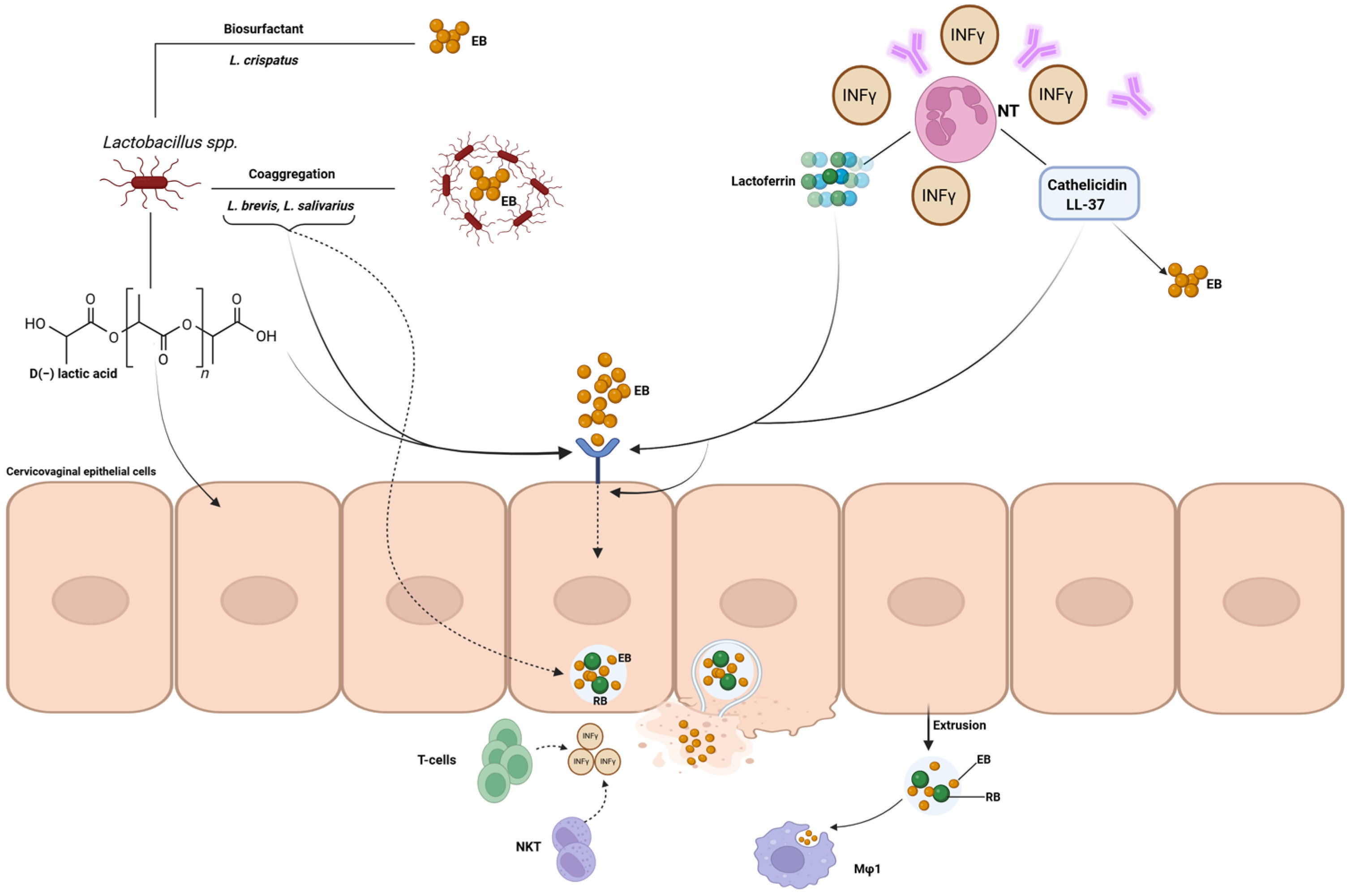
Anti-Chlamydia trachomatis Host Defence Arsenal Within the Cervicovaginal Environment




Abstract
1. Introduction
2. C. trachomatis Interaction and Host Defence Factors
2.1. C. trachomatis Developmental Cycle
2.2. Cervicovaginal Defence Factors Against C. trachomatis
2.2.1. Cervicovaginal Microbiota
2.2.2. Cervicovaginal Proteins
2.2.3. Immune Response
3. Discussion
4. Conclusions
Author Contributions
Funding
Data Availability Statement
Conflicts of Interest
References
- World Health Organization. Sexually Transmitted Infections (STIs). 2022. Available online: https://www.who.int/news-room/fact-sheets/detail/sexually-transmitted-infections-(STIs) (accessed on 18 September 2025).
- European Centre for Disease Prevention and Control. Chlamydia. In Annual Epidemiological Report for 2023; ECDC, Ed.; ECDC: Stockholm, Sweden, 2025; Available online: https://www.ecdc.europa.eu/sites/default/files/documents/CHLAM_AER_2023_Report.pdf (accessed on 18 September 2025).
- Akbari, E.; Milani, A.; Seyedinkhorasani, M.; Bolhassani, A. HPV co-infections with other pathogens in cancer development: A comprehensive review. J. Med. Virol. 2023, 95, e29236. [Google Scholar] [CrossRef]
- Ghasemian, E.; Harding-Esch, E.; Mabey, D.; Holland, M.J. When Bacteria and Viruses Collide: A Tale of Chlamydia trachomatis and Sexually Transmitted Viruses. Viruses 2023, 15, 1954. [Google Scholar] [CrossRef]
- Adachi, K.N.; Nielsen-Saines, K.; Klausner, J.D. Chlamydia trachomatis Screening and Treatment in Pregnancy to Reduce Adverse Pregnancy and Neonatal Outcomes: A Review. Front. Public Health 2021, 9, 531073. [Google Scholar] [CrossRef] [PubMed]
- He, W.; Jin, Y.; Zhu, H.; Zheng, Y.; Qian, J. Effect of Chlamydia trachomatis on adverse pregnancy outcomes: A meta-analysis. Arch. Gynecol. Obstet. 2020, 302, 553–567. [Google Scholar] [CrossRef] [PubMed]
- Di Pietro, M.; Filardo, S.; Mattioli, R.; Bozzuto, G.; Molinari, A.; Mosca, L.; Sessa, R. Extra Virgin Olive Oil-Based Formulations: A “Green” Strategy against Chlamydia trachomatis. Int. J. Mol. Sci. 2023, 24, 12701. [Google Scholar] [CrossRef] [PubMed]
- Benamri, I.; Azzouzi, M.; Sanak, K.; Moussa, A.; Radouani, F. An overview of genes and mutations associated with Chlamydiae species’ resistance to antibiotics. Ann. Clin. Microbiol. Antimicrob. 2021, 20, 59. [Google Scholar] [CrossRef]
- Dugan, J.; Rockey, D.D.; Jones, L.; Andersen, A.A. Tetracycline resistance in Chlamydia suis mediated by genomic islands inserted into the chlamydial inv-like gene. Antimicrob. Agents Chemother. 2004, 48, 3989–3995. [Google Scholar] [CrossRef]
- McCullough, A.; Huang, S.; Weber, M.M. Pathogenicity and virulence of Chlamydia trachomatis: Insights into host interactions, immune evasion, and intracellular survival. Virulence 2025, 16, 2503423. [Google Scholar] [CrossRef]
- Di Pietro, M.; Filardo, S.; Romano, S.; Sessa, R. Chlamydia trachomatis and Chlamydia pneumoniae Interaction with the Host: Latest Advances and Future Prospective. Microorganisms 2019, 7, 140. [Google Scholar] [CrossRef]
- Ouellette, S.P.; Fisher-Marvin, L.A.; Harpring, M.; Lee, J.; Rucks, E.A.; Cox, J.V. Localized cardiolipin synthesis is required for the assembly of MreB during the polarized cell division of Chlamydia trachomatis. PLoS Pathog. 2022, 18, e1010836. [Google Scholar] [CrossRef]
- Liechti, G.W. Localized Peptidoglycan Biosynthesis in Chlamydia trachomatis Conforms to the Polarized Division and Cell Size Reduction Developmental Models. Front. Microbiol. 2021, 12, 733850. [Google Scholar] [CrossRef] [PubMed]
- Cox, J.V.; Abdelrahman, Y.M.; Ouellette, S.P. Penicillin-binding proteins regulate multiple steps in the polarized cell division process of Chlamydia. Sci. Rep. 2020, 10, 12588. [Google Scholar] [CrossRef] [PubMed]
- Abdelrahman, Y.; Ouellette, S.P.; Belland, R.J.; Cox, J.V. Polarized Cell Division of Chlamydia trachomatis. PLoS Pathog. 2016, 12, e1005822, Correction in PLoS Pathog. 2016, 12, e1005866. https://doi.org/10.1371/journal.ppat.1005822. [Google Scholar] [CrossRef] [PubMed]
- Liechti, G.; Kuru, E.; Packiam, M.; Hsu, Y.P.; Tekkam, S.; Hall, E.; Rittichier, J.T.; VanNieuwenhze, M.; Brun, Y.V.; Maurelli, A.T. Pathogenic Chlamydia Lack a Classical Sacculus but Synthesize a Narrow, Mid-cell Peptidoglycan Ring, Regulated by MreB, for Cell Division. PLoS Pathog. 2016, 12, e1005590. [Google Scholar] [CrossRef]
- Kozusnik, T.; Adams, S.E.; Greub, G. Aberrant Bodies: An Alternative Metabolic Homeostasis Allowing Survivability? Microorganisms 2024, 12, 495, Correction in Microorganisms 2025, 13, 2769. https://doi.org/10.3390/microorganisms12030495. [Google Scholar] [CrossRef]
- Somboonna, N.; Ziklo, N.; Ferrin, T.E.; Hyuk Suh, J.; Dean, D. Clinical Persistence of Chlamydia trachomatis Sexually Transmitted Strains Involves Novel Mutations in the Functional αββα Tetramer of the Tryptophan Synthase Operon. mBio 2019, 10, e01464-19. [Google Scholar] [CrossRef]
- Suchland, R.J.; Dimond, Z.E.; Putman, T.E.; Rockey, D.D. Demonstration of Persistent Infections and Genome Stability by Whole-Genome Sequencing of Repeat-Positive, Same-Serovar Chlamydia trachomatis Collected from the Female Genital Tract. J. Infect. Dis. 2017, 215, 1657–1665. [Google Scholar] [CrossRef]
- Lewis, M.E.; Belland, R.J.; AbdelRahman, Y.M.; Beatty, W.L.; Aiyar, A.A.; Zea, A.H.; Greene, S.J.; Marrero, L.; Buckner, L.R.; Tate, D.J.; et al. Morphologic and molecular evaluation of Chlamydia trachomatis growth in human endocervix reveals distinct growth patterns. Front. Cell. Infect. Microbiol. 2014, 4, 71. [Google Scholar] [CrossRef]
- Fasoulakis, Z.; Papageorgiou, D.; Papanikolaou, A.; Chatziioannou, M.; Sapantzoglou, I.; Pegkou, A.; Daskalakis, G.; Antsaklis, P. Impact of the Female Genital Microbiota on Outcomes of Assisted Reproductive Techniques. Biomedicines 2025, 13, 1332. [Google Scholar] [CrossRef]
- Lehtoranta, L.; Ala-Jaakkola, R.; Laitila, A.; Maukonen, J. Healthy Vaginal Microbiota and Influence of Probiotics Across the Female Life Span. Front. Microbiol. 2022, 13, 819958. [Google Scholar] [CrossRef]
- Ravel, J.; Gajer, P.; Abdo, Z.; Schneider, G.M.; Koenig, S.S.K.; McCulle, S.L.; Karlebach, S.; Gorle, R.; Russell, J.; Tacket, C.O.; et al. Vaginal microbiome of reproductive-age women. Proc. Natl. Acad. Sci. USA 2011, 108, 4680–4687. [Google Scholar] [CrossRef]
- Zheng, N.; Guo, R.; Wang, J.; Zhou, W.; Ling, Z. Contribution of Lactobacillus iners to Vaginal Health and Diseases: A Systematic Review. Front. Cell. Infect. Microbiol. 2021, 11, 792787. [Google Scholar] [CrossRef] [PubMed]
- Linhares, I.M.; Summers, P.R.; Larsen, B.; Giraldo, P.C.; Witkin, S.S. Contemporary perspectives on vaginal pH and lactobacilli. Am. J. Obstet. Gynecol. 2011, 204, 120.e1–120.e5. [Google Scholar] [CrossRef] [PubMed]
- O’Hanlon, D.E.; Moench, T.R.; Cone, R.A. Vaginal pH and Microbicidal Lactic Acid When Lactobacilli Dominate the Microbiota. PLoS ONE 2013, 8, e80074. [Google Scholar] [CrossRef] [PubMed]
- Peebles, K.; Velloza, J.; Balkus, J.E.; McClelland, R.S.; Barnabas, R. High Global Burden and Costs of Bacterial Vaginosis: A Systematic Review and Meta-Analysis. Sex. Transm. Dis. 2019, 46, 304–311. [Google Scholar] [CrossRef]
- Di Pietro, M.; Filardo, S.; Sessa, R. Cervicovaginal microbiota in Chlamydia trachomatis and other preventable sexually transmitted infections of public health importance: A systematic umbrella review. New Microbiol. 2025, 48, 5–13. [Google Scholar]
- Di Pietro, M.; Filardo, S.; Simonelli, I.; Pasqualetti, P.; Sessa, R. Cervicovaginal Microbiota Composition in Chlamydia trachomatis Infection: A Systematic Review and Meta-Analysis. Int. J. Mol. Sci. 2022, 23, 9554. [Google Scholar] [CrossRef]
- Wang, L.; Hou, Y.; Yuan, H.; Chen, H. The role of tryptophan in Chlamydia trachomatis persistence. Front. Cell. Infect. Microbiol. 2022, 12, 931653. [Google Scholar] [CrossRef]
- Pokorzynski, N.D.; Thompson, C.C.; Carabeo, R.A. Ironing Out the Unconventional Mechanisms of Iron Acquisition and Gene Regulation in Chlamydia. Front. Cell. Infect. Microbiol. 2017, 7, 394. [Google Scholar] [CrossRef]
- Hand, E.; Hood-Pishchany, I.; Darville, T.; O’Connell, C.M. Influence of cervicovaginal microbiota on Chlamydia trachomatis infection dynamics. Microb. Cell 2025, 12, 93–108. [Google Scholar] [CrossRef]
- Pokorzynski, N.D.; Brinkworth, A.J.; Carabeo, R. A bipartite iron-dependent transcriptional regulation of the tryptophan salvage pathway in Chlamydia trachomatis. eLife 2019, 8, e42295. [Google Scholar] [CrossRef] [PubMed]
- Borgogna, J.-L.C.; Shardell, M.D.; Yeoman, C.J.; Ghanem, K.G.; Kadriu, H.; Ulanov, A.V.; Gaydos, C.A.; Hardick, J.; Robinson, C.K.; Bavoil, P.M.; et al. The association of Chlamydia trachomatis and Mycoplasma genitalium infection with the vaginal metabolome. Sci. Rep. 2020, 10, 3420. [Google Scholar] [CrossRef] [PubMed]
- Sharma, M.; Recuero-Checa, M.A.; Fan, F.Y.; Dean, D. Chlamydia trachomatis regulates growth and development in response to host cell fatty acid availability in the absence of lipid droplets. Cell. Microbiol. 2018, 20, e12801. [Google Scholar] [CrossRef] [PubMed]
- Morselli, S.; Ceccarani, C.; Djusse, M.E.; Laghi, L.; Camboni, T.; Consolandi, C.; Foschi, C.; Severgnini, M.; Marangoni, A. Anti-chlamydial activity of vaginal fluids: New evidence from an in vitro model. Front. Cell. Infect. Microbiol. 2024, 14, 1403782. [Google Scholar] [CrossRef]
- Parolin, C.; Foschi, C.; Laghi, L.; Zhu, C.; Banzola, N.; Gaspari, V.; D’Antuono, A.; Giordani, B.; Severgnini, M.; Consolandi, C.; et al. Insights into Vaginal Bacterial Communities and Metabolic Profiles of Chlamydia trachomatis Infection: Positioning Between Eubiosis and Dysbiosis. Front. Microbiol. 2018, 9, 600. [Google Scholar] [CrossRef]
- Filardo, S.; Di Pietro, M.; Tranquilli, G.; Sessa, R. Biofilm in Genital Ecosystem: A Potential Risk Factor for Chlamydia trachomatis Infection. Can. J. Infect. Dis. Med. Microbiol. 2019, 2019, 1672109. [Google Scholar] [CrossRef]
- Gong, Z.; Luna, Y.; Yu, P.; Fan, H. Lactobacilli Inactivate Chlamydia trachomatis through Lactic Acid but Not H2O2. PLoS ONE 2014, 9, e107758. [Google Scholar] [CrossRef]
- Edwards, V.L.; Smith, S.B.; McComb, E.J.; Tamarelle, J.; Ma, B.; Humphrys, M.S.; Gajer, P.; Gwilliam, K.; Schaefer, A.M.; Lai, S.K.; et al. The Cervicovaginal Microbiota-Host Interaction Modulates Chlamydia Trachomatis Infection. mBio 2019, 10, e01548-19. [Google Scholar] [CrossRef]
- Boskey, E.R.; Cone, R.A.; Whaley, K.J.; Moench, T.R. Origins of vaginal acidity: High d/l lactate ratio is consistent with bacteria being the primary source. Hum. Reprod. 2001, 16, 1809–1813. [Google Scholar] [CrossRef]
- Zalambani, C.; Rizzardi, N.; Marziali, G.; Foschi, C.; Morselli, S.; Djusse, M.E.; Naldi, M.; Fato, R.; Calonghi, N.; Marangoni, A. Role of D(−)-Lactic Acid in Prevention of Chlamydia trachomatis Infection in an In Vitro Model of HeLa Cells. Pathogens 2023, 12, 883. [Google Scholar] [CrossRef]
- Sessa, R.; Di Pietro, M.; Filardo, S.; Bressan, A.; Mastromarino, P.; Biasucci, A.V.; Rosa, L.; Cutone, A.; Berlutti, F.; Paesano, R.; et al. Lactobacilli–lactoferrin interplay in Chlamydia trachomatis infection. Pathog. Dis. 2017, 75, ftx054. [Google Scholar] [CrossRef]
- Nardini, P.; Ñahui Palomino, R.A.; Parolin, C.; Laghi, L.; Foschi, C.; Cevenini, R.; Vitali, B.; Marangoni, A. Lactobacillus crispatus inhibits the infectivity of Chlamydia trachomatis elementary bodies, in vitro study. Sci. Rep. 2016, 6, 29024. [Google Scholar] [CrossRef]
- Mastromarino, P.; Di Pietro, M.; Schiavoni, G.; Nardis, C.; Gentile, M.; Sessa, R. Effects of vaginal lactobacilli in Chlamydia trachomatis infection. Int. J. Med. Microbiol. 2014, 304, 654–661. [Google Scholar] [CrossRef] [PubMed]
- Foschi, C.; Parolin, C.; Giordani, B.; Morselli, S.; Luppi, B.; Vitali, B.; Marangoni, A. Lactobacillus crispatus BC1 Biosurfactant Counteracts the Infectivity of Chlamydia trachomatis Elementary Bodies. Microorganisms 2021, 9, 975. [Google Scholar] [CrossRef] [PubMed]
- Parolin, C.; Frisco, G.; Foschi, C.; Giordani, B.; Salvo, M.; Vitali, B.; Marangoni, A.; Calonghi, N. Lactobacillus crispatus BC5 Interferes with Chlamydia trachomatis Infectivity Through Integrin Modulation in Cervical Cells. Front. Microbiol. 2018, 9, 2630. [Google Scholar] [CrossRef] [PubMed]
- Kim, J.W.; Lee, J.S.; Choi, Y.J.; Kim, C. The Multifaceted Functions of Lactoferrin in Antimicrobial Defense and Inflammation. Biomolecules 2025, 15, 1174. [Google Scholar] [CrossRef]
- Filardo, S.; Di Pietro, M.; Tranquilli, G.; Latino, M.A.; Recine, N.; Porpora, M.G.; Sessa, R. Selected Immunological Mediators and Cervical Microbial Signatures in Women with Chlamydia trachomatis Infection. mSystems 2019, 4, e00094-19. [Google Scholar] [CrossRef]
- Spear, G.T.; Kendrick, S.R.; Chen, H.Y.; Thomas, T.T.; Bahk, M.; Balderas, R.; Ghosh, S.; Weinberg, A.; Landay, A.L. Multiplex Immunoassay of Lower Genital Tract Mucosal Fluid from Women Attending an Urban STD Clinic Shows Broadly Increased IL1ß and Lactoferrin. PLoS ONE 2011, 6, e19560. [Google Scholar] [CrossRef]
- Sawada, M.; Otsuki, K.; Mitsukawa, K.; Yakuwa, K.; Nagatsuka, M.; Okai, T. Cervical inflammatory cytokines and other markers in the cervical mucus of pregnant women with lower genital tract infection. Int. J. Gynecol. Obstet. 2006, 92, 117–121. [Google Scholar] [CrossRef]
- Sessa, R.; Di Pietro, M.; Filardo, S.; Bressan, A.; Rosa, L.; Cutone, A.; Frioni, A.; Berlutti, F.; Paesano, R.; Valenti, P. Effect of bovine lactoferrin on Chlamydia trachomatis infection and inflammation. Biochem. Cell Biol. 2017, 95, 34–40. [Google Scholar] [CrossRef]
- Marchetti, M.; Trybala, E.; Superti, F.; Johansson, M.; Bergström, T. Inhibition of herpes simplex virus infection by lactoferrin is dependent on interference with the virus binding to glycosaminoglycans. Virology 2004, 318, 405–413. [Google Scholar] [CrossRef] [PubMed]
- Ji, Z.S.; Mahley, R.W. Lactoferrin binding to heparan sulfate proteoglycans and the LDL receptor-related protein. Further evidence supporting the importance of direct binding of remnant lipoproteins to HSPG. Arterioscler. Thromb. 1994, 14, 2025–2031. [Google Scholar] [CrossRef] [PubMed]
- Stallmann, S.; Hegemann, J.H. The Chlamydia trachomatis Ctad1 invasin exploits the human integrin β1 receptor for host cell entry. Cell. Microbiol. 2016, 18, 761–775. [Google Scholar] [CrossRef] [PubMed]
- Donati, M.; di Leo, K.; Benincasa, M.; Cavrini, F.; Accardo, S.; Moroni, A.; Gennaro, R.; Cevenini, R. Activity of Cathelicidin Peptides against Chlamydia spp. Antimicrob. Agents Chemother. 2005, 49, 1201–1202. [Google Scholar] [CrossRef]
- Mukura, L.R.; Hickey, D.K.; Rodriguez-Garcia, M.; Fahey, J.V.; Wira, C.R. Chlamydia trachomatis regulates innate immune barrier integrity and mediates cytokine and antimicrobial responses in human uterine ECC-1 epithelial cells. Am. J. Reprod. Immunol. 2017, 78, e12764. [Google Scholar] [CrossRef]
- Noda-Nicolau, N.M.; Bastos, L.B.; Bolpetti, A.N.; Pinto, G.V.S.; Marcolino, L.D.; Marconi, C.; Ferreira, C.S.T.; Polettini, J.; Vieira, E.P.; da Silva, M.G. Cervicovaginal Levels of Human β-Defensin 1, 2, 3, and 4 of Reproductive-Aged Women with Chlamydia trachomatis Infection. J. Low. Genit. Tract. Dis. 2017, 21, 189–192. [Google Scholar] [CrossRef]
- Helble, J.D.; Starnbach, M.N. T cell responses to Chlamydia. Pathog. Dis. 2021, 79, ftab014. [Google Scholar] [CrossRef]
- Murray, S.M.; McKay, P.F. Chlamydia trachomatis: Cell biology, immunology and vaccination. Vaccine 2021, 39, 2965–2975. [Google Scholar] [CrossRef]
- Wilton, Z.E.R.; Jamus, A.N.; Core, S.B.; Frietze, K.M. Pathogenic and Protective Roles of Neutrophils in Chlamydia trachomatis Infection. Pathogens 2025, 14, 112. [Google Scholar] [CrossRef]
- Wang, X.; Wu, H.; Fang, C.; Li, Z. Insights into innate immune cell evasion by Chlamydia trachomatis. Front. Immunol. 2024, 15, 1289644. [Google Scholar] [CrossRef]
- Mao, H.; Dumas, E.K.; Starnbach, M.N. Chlamydia trachomatis impairs T cell priming by inducing dendritic cell death. Infect. Immun. 2025, 93, e00402-24. [Google Scholar] [CrossRef]
- Guo, Y.; Stulz, S.V.; Kessie, D.K.; Vollmuth, N.; Torcellan, T.; Knobeloch, K.-P.; Gasteiger, G.; Rudel, T. Secreted ISG15 induced by Chlamydia trachomatis infection exerts immunomodulatory effects on IFN-γ defense and inflammation. PLoS Pathog. 2025, 21, e1013315. [Google Scholar] [CrossRef]
- Reitano, J.R.; Coers, J. Restriction and evasion: A review of IFNγ-mediated cell-autonomous defense pathways during genital Chlamydia infection. Pathog. Dis. 2024, 82, ftae019. [Google Scholar] [CrossRef] [PubMed]
- Vollmuth, N.; Schlicker, L.; Guo, Y.; Hovhannisyan, P.; Janaki-Raman, S.; Kurmasheva, N.; Schmitz, W.; Schulze, A.; Stelzner, K.; Rajeeve, K.; et al. C-Myc plays a key role in IFN-γ-induced persistence of Chlamydia trachomatis. eLife 2022, 11, e76721. [Google Scholar] [CrossRef] [PubMed]
- Challagundla, N.; Shah, D.; Dalai, S.K.; Agrawal-Rajput, R. IFN-γ insufficiency during mouse intra-vaginal Chlamydia trachomatis infection exacerbates alternative activation in macrophages with compromised CD40 functions. Int. Immunopharmacol. 2024, 131, 111821. [Google Scholar] [CrossRef]
- Chen, H.; Wen, Y.; Li, Z. Clear Victory for Chlamydia: The Subversion of Host Innate Immunity. Front. Microbiol. 2019, 10, 1412. [Google Scholar] [CrossRef]
- Bugalhão, J.N.; Mota, L.J. The multiple functions of the numerous Chlamydia trachomatis secreted proteins: The tip of the iceberg. Microb. Cell 2019, 6, 414–449. [Google Scholar] [CrossRef]
- Del Balzo, D.; Capmany, A.; Cebrian, I.; Damiani, M.T. Chlamydia trachomatis Infection Impairs MHC-I Intracellular Trafficking and Antigen Cross-Presentation by Dendritic Cells. Front. Immunol. 2021, 12, 662096. [Google Scholar] [CrossRef]
- Jahnke, R.; Matthiesen, S.; Zaeck, L.M.; Finke, S.; Knittler, M.R. Chlamydia trachomatis Cell-to-Cell Spread through Tunneling Nanotubes. Microbiol. Spectr. 2022, 10, e0281722. [Google Scholar] [CrossRef]
- Wang, X.; Rockey, D.D.; Dolan, B.P. Chlamydia Lipooligosaccharide Has Varied Direct and Indirect Roles in Evading both Innate and Adaptive Host Immune Responses. Infect. Immun. 2020, 88, e00198-20. [Google Scholar] [CrossRef]
- Yang, C.; Briones, M.; Chiou, J.; Lei, L.; Patton, M.J.; Ma, L.; McClarty, G.; Caldwell, H.D. Chlamydia trachomatis Lipopolysaccharide Evades the Canonical and Noncanonical Inflammatory Pathways to Subvert Innate Immunity. mBio 2019, 10, e00595-19. [Google Scholar] [CrossRef]
- Dong, M.; Dong, Y.; Bai, J.; Li, H.; Ma, X.; Li, B.; Wang, C.; Li, H.; Qi, W.; Wang, Y.; et al. Interactions between microbiota and cervical epithelial, immune, and mucus barrier. Front. Cell. Infect. Microbiol. 2023, 13, 1124591. [Google Scholar] [CrossRef] [PubMed]
- Raimondi, S.; Candeliere, F.; Amaretti, A.; Foschi, C.; Morselli, S.; Gaspari, V.; Rossi, M.; Marangoni, A. Vaginal and Anal Microbiome during Chlamydia trachomatis Infections. Pathogens 2021, 10, 1347. [Google Scholar] [CrossRef] [PubMed]
- Ziklo, N.; Huston, W.M.; Taing, K.; Katouli, M.; Timms, P. In vitro rescue of genital strains of Chlamydia trachomatis from interferon-γ and tryptophan depletion with indole-positive, but not indole-negative Prevotella spp. BMC Microbiol. 2016, 16, 286. [Google Scholar] [CrossRef] [PubMed]
- Brockett, M.R.; Liechti, G.W. Persistence Alters the Interaction between Chlamydia trachomatis and Its Host Cell. Infect. Immun. 2021, 89, e0068520. [Google Scholar] [CrossRef]
- Walsh, S.C.; Reitano, J.R.; Dickinson, M.S.; Kutsch, M.; Hernandez, D.; Barnes, A.B.; Schott, B.H.; Wang, L.; Ko, D.C.; Kim, S.Y.; et al. The bacterial effector GarD shields Chlamydia trachomatis inclusions from RNF213-mediated ubiquitylation and destruction. Cell Host Microbe 2022, 30, 1671–1684.e9. [Google Scholar] [CrossRef]
- Sherrid, A.M.; Hybiske, K. Chlamydia trachomatis Cellular Exit Alters Interactions with Host Dendritic Cells. Infect. Immun. 2017, 85, e00046-17. [Google Scholar] [CrossRef]
- Zuck, M.; Ellis, T.; Venida, A.; Hybiske, K. Extrusions are phagocytosed and promote Chlamydia survival within macrophages. Cell. Microbiol. 2017, 19, e12683. [Google Scholar] [CrossRef]
- Zuck, M.; Sherrid, A.; Suchland, R.; Ellis, T.; Hybiske, K. Conservation of extrusion as an exit mechanism for Chlamydia. Pathog. Dis. 2016, 74, ftw093. [Google Scholar] [CrossRef]
- Koch, R.; Challagundla, N.; Stelzner, K.; Rudel, T. Chlamydia trachomatis subverts neutrophil cell death pathways through RIP3 and Mcl-1 manipulation. mBio 2025, 16, e0209825. [Google Scholar] [CrossRef]
- Wiesenfeld, H.C.; Heine, R.P.; Krohn, M.A.; Hillier, S.L.; Amortegui, A.A.; Nicolazzo, M.; Sweet, R.L. Association between elevated neutrophil defensin levels and endometritis. J. Infect. Dis. 2002, 186, 792–797. [Google Scholar] [CrossRef]
- Darville, T.; Albritton, H.L.; Zhong, W.; Dong, L.; O’Connell, C.M.; Poston, T.B.; Quayle, A.J.; Goonetilleke, N.; Wiesenfeld, H.C.; Hillier, S.L.; et al. Anti-chlamydia IgG and IgA are insufficient to prevent endometrial chlamydia infection in women, and increased anti-chlamydia IgG is associated with enhanced risk for incident infection. Am. J. Reprod. Immunol. 2019, 81, e13103. [Google Scholar] [CrossRef]
- Zuo, Y.; Jiang, T.T.; Teng, Y.; Han, Y.; Yin, Y.P.; Chen, X.S. Associations of Chlamydia trachomatis serology with fertility-related and pregnancy adverse outcomes in women: A systematic review and meta-analysis of observational studies. eBioMedicine 2023, 94, 104696. [Google Scholar] [CrossRef]
- Liu, C.; Hufnagel, K.; O’Connell, C.M.; Goonetilleke, N.; Mokashi, N.; Waterboer, T.; Tollison, T.S.; Peng, X.; Wiesenfeld, H.C.; Hillier, S.L.; et al. Reduced Endometrial Ascension and Enhanced Reinfection Associated with Immunoglobulin G Antibodies to Specific Chlamydia trachomatis Proteins in Women at Risk for Chlamydia. J. Infect. Dis. 2022, 225, 846–855. [Google Scholar] [CrossRef]
- Li, P.; Chen, Z. Association between serum Chlamydia trachomatis antibody levels and infertility among reproductive-aged women in the U.S. Front. Public Health 2023, 11, 1117245. [Google Scholar] [CrossRef]
- Liu, C.; Mokashi, N.V.; Darville, T.; Sun, X.; O’Connell, C.M.; Hufnagel, K.; Waterboer, T.; Zheng, X. A Machine Learning-Based Analytic Pipeline Applied to Clinical and Serum IgG Immunoproteome Data to Predict Chlamydia trachomatis genital tract ascension and Incident Infection in Women. Microbiol. Spectr. 2023, 11, e0468922. [Google Scholar] [CrossRef]

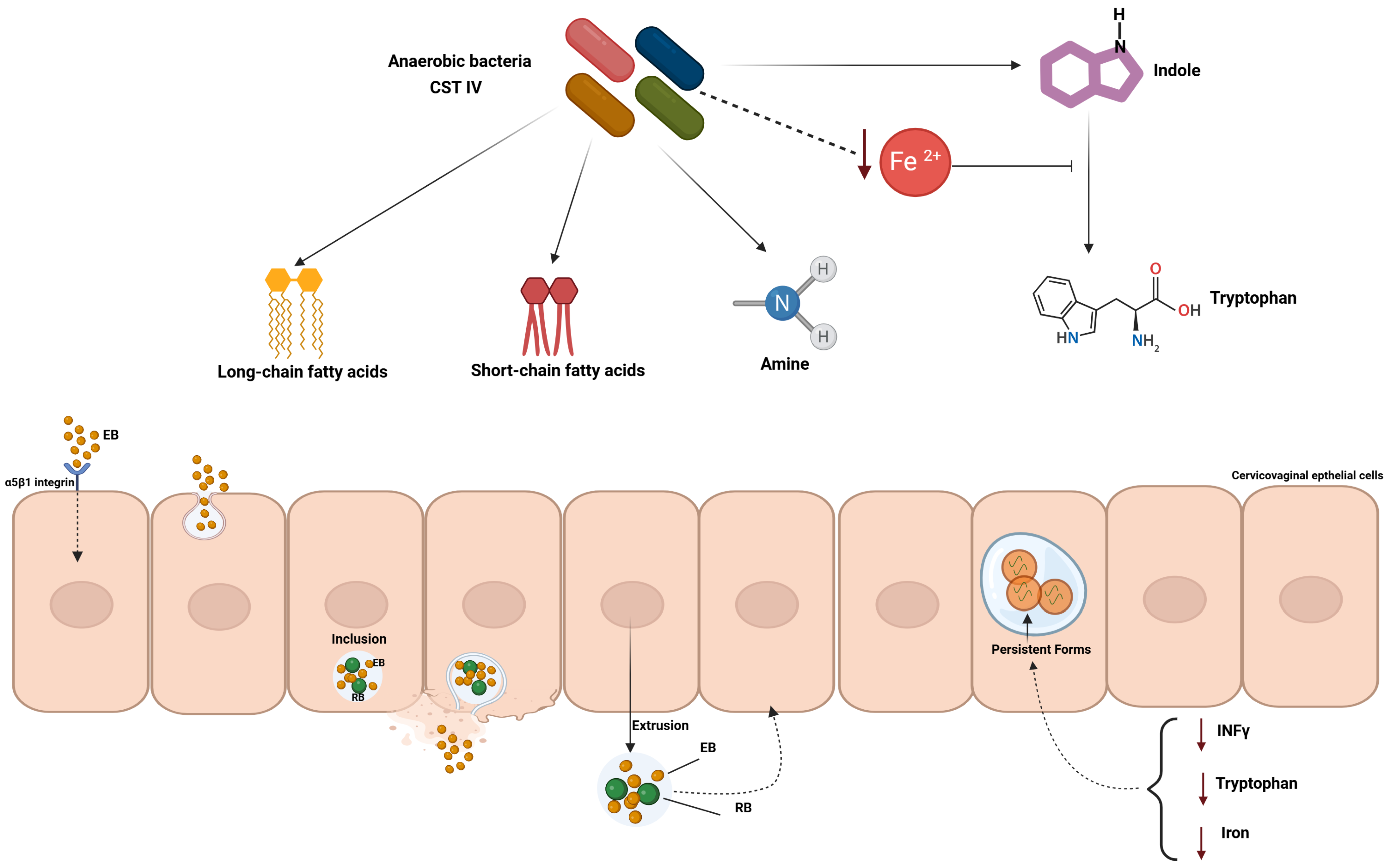
Disclaimer/Publisher’s Note: The statements, opinions and data contained in all publications are solely those of the individual author(s) and contributor(s) and not of MDPI and/or the editor(s). MDPI and/or the editor(s) disclaim responsibility for any injury to people or property resulting from any ideas, methods, instructions or products referred to in the content. |
© 2026 by the authors. Licensee MDPI, Basel, Switzerland. This article is an open access article distributed under the terms and conditions of the Creative Commons Attribution (CC BY) license.
Share and Cite
Filardo, S.; Chicarella, G.; Sessa, R.; Di Pietro, M. Anti-Chlamydia trachomatis Host Defence Arsenal Within the Cervicovaginal Environment. Int. J. Mol. Sci. 2026, 27, 1115. https://doi.org/10.3390/ijms27021115
Filardo S, Chicarella G, Sessa R, Di Pietro M. Anti-Chlamydia trachomatis Host Defence Arsenal Within the Cervicovaginal Environment. International Journal of Molecular Sciences. 2026; 27(2):1115. https://doi.org/10.3390/ijms27021115
Chicago/Turabian StyleFilardo, Simone, Giulia Chicarella, Rosa Sessa, and Marisa Di Pietro. 2026. "Anti-Chlamydia trachomatis Host Defence Arsenal Within the Cervicovaginal Environment" International Journal of Molecular Sciences 27, no. 2: 1115. https://doi.org/10.3390/ijms27021115
APA StyleFilardo, S., Chicarella, G., Sessa, R., & Di Pietro, M. (2026). Anti-Chlamydia trachomatis Host Defence Arsenal Within the Cervicovaginal Environment. International Journal of Molecular Sciences, 27(2), 1115. https://doi.org/10.3390/ijms27021115