Cell Surface Shaving-Based Proteomic Profiling of the Surfaceome in Pathogenic Microorganisms


Abstract
1. Introduction
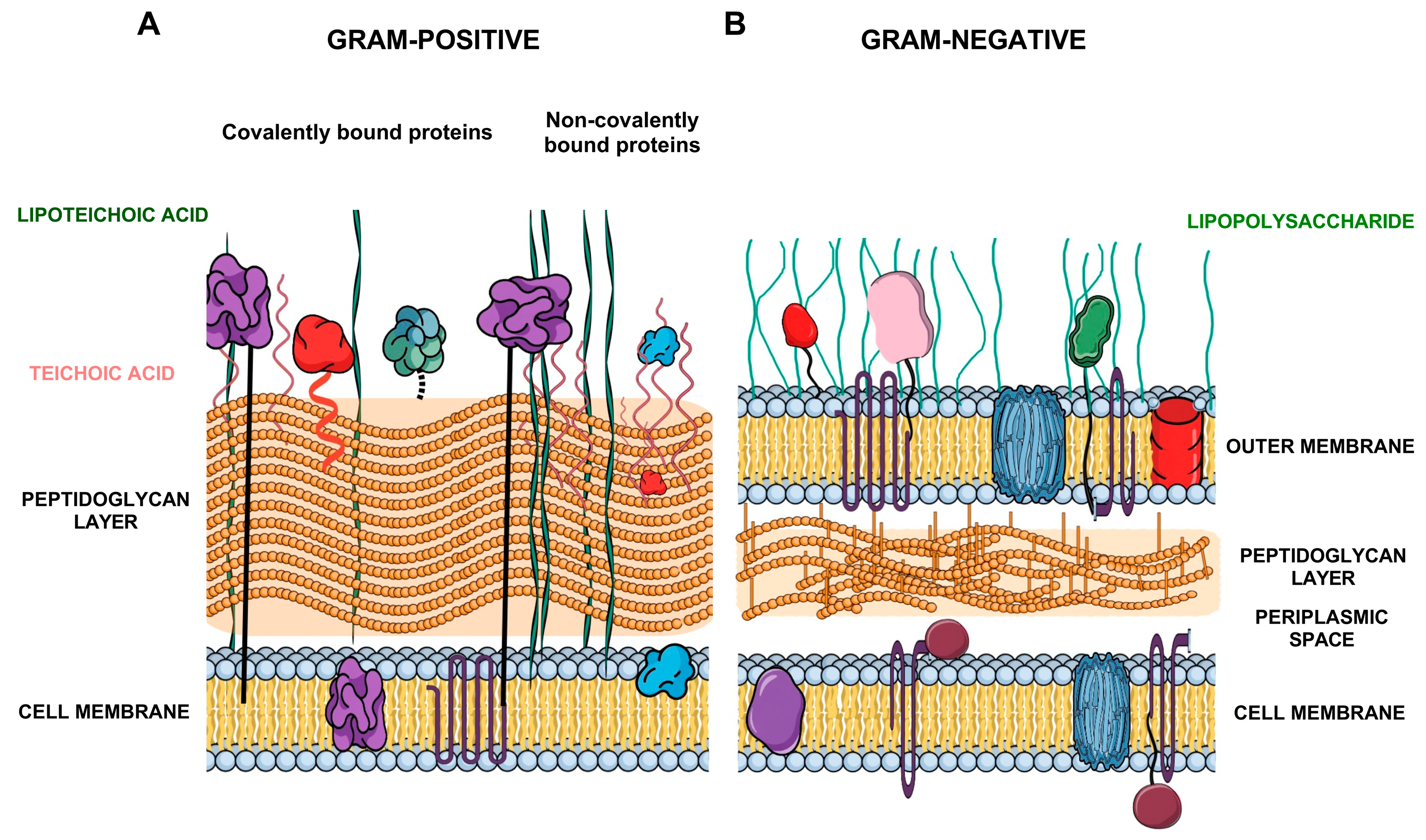
2. Cell Surface Shaving in Identification of Surface Exposed Proteins in Bacteria
Surface Shaving as a Technique for Identifying Bacterial Antigens for Vaccine Development
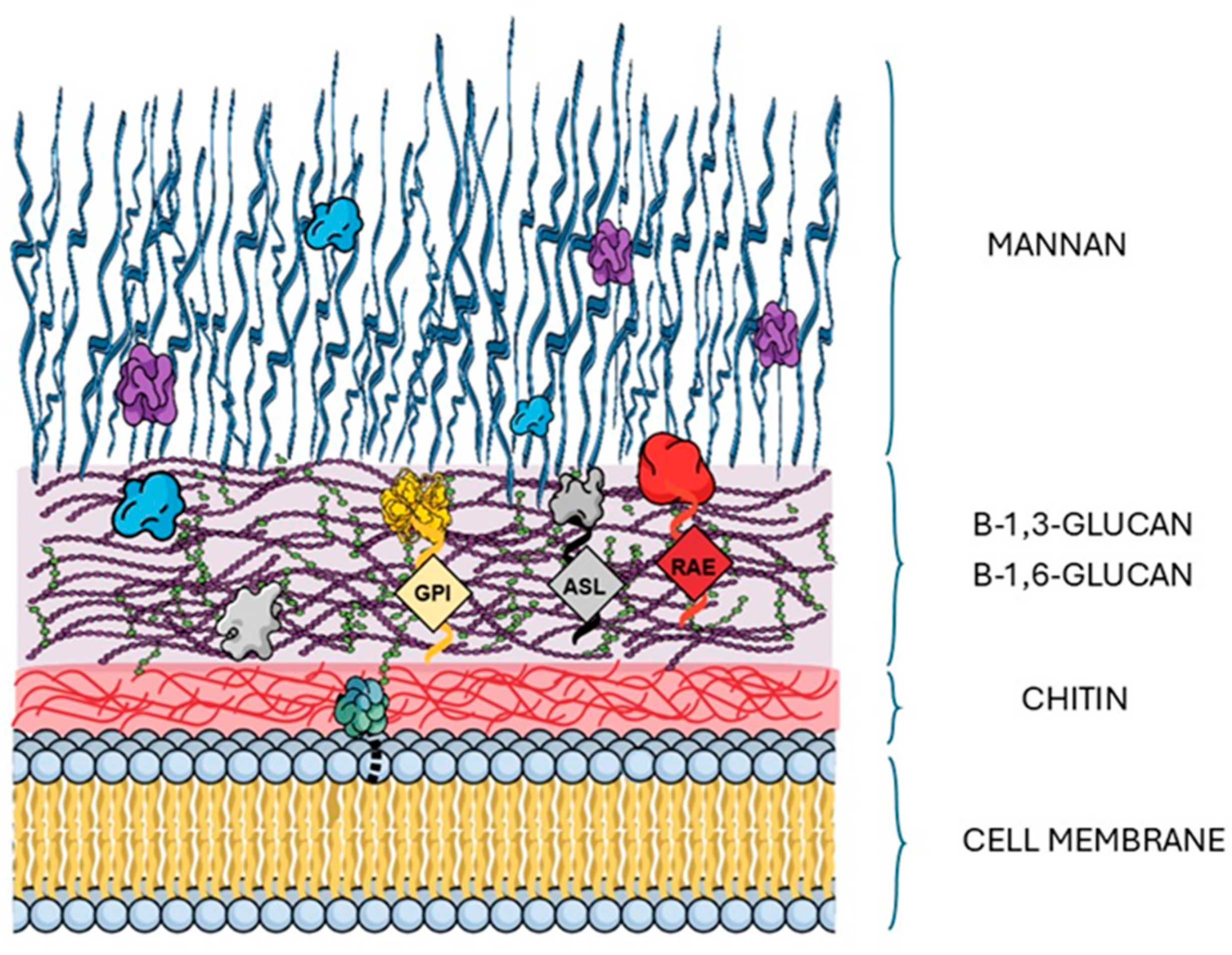
3. Cell Surface Shaving in Identification of Surface Exposed Proteins in Fungi
4. Cell Surface Shaving of Fungal Extracellular Vesicles
5. Cell Surface Shaving in Identification of Surface Exposed Proteins in Protozoa and Helminths
6. Cell Surface Shaving in Studying Interactions
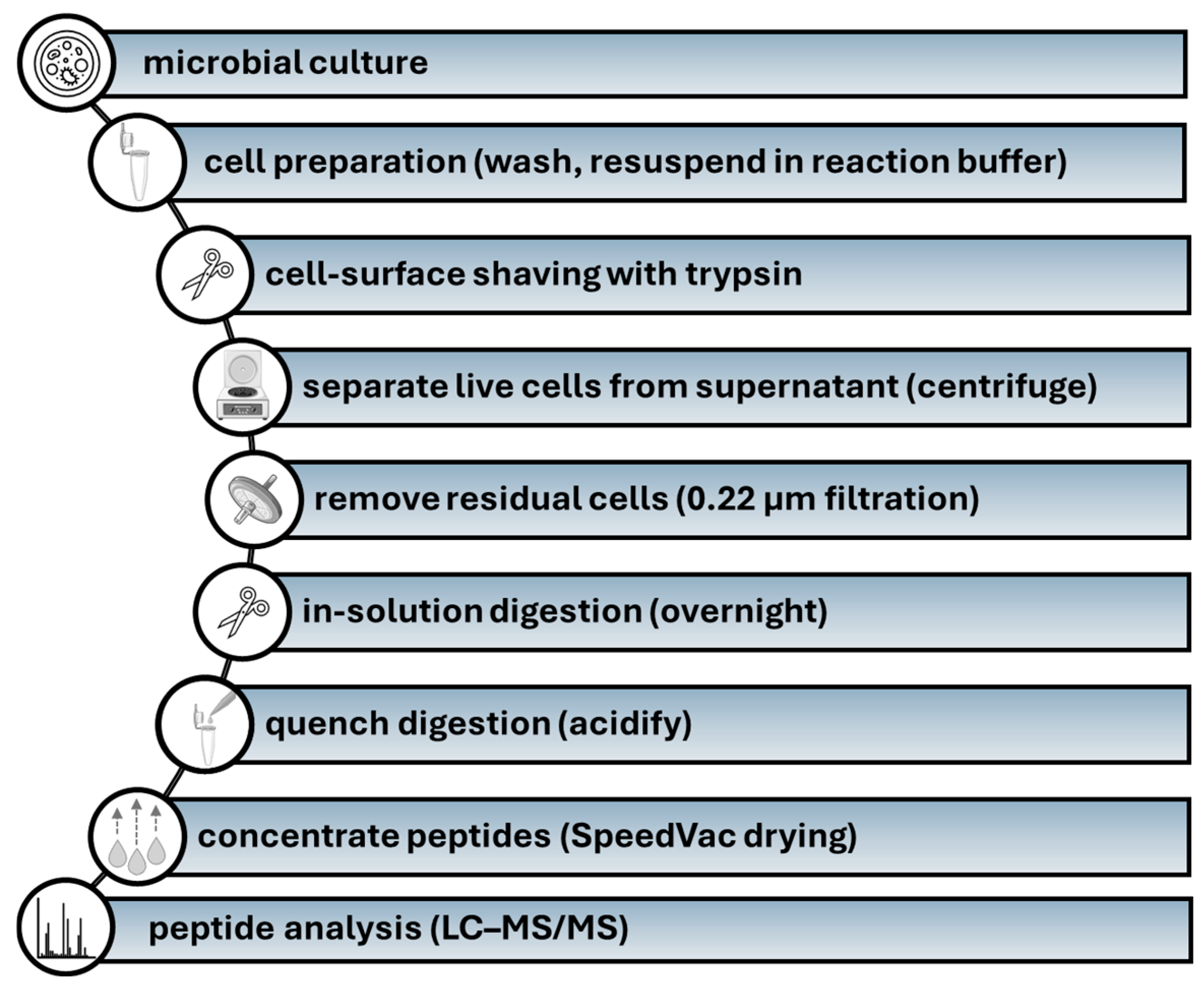
7. Methodological Considerations, Advantages, and Limitations of Cell Surface Shaving
8. Conclusions and Future Perspectives
Author Contributions
Funding
Data Availability Statement
Conflicts of Interest
Abbreviations
| COL | Collagen |
| ELA | Elastin |
| FN | Fibronectin |
| FXII | factor XII |
| GPI | Glycosylphosphatidylinositol |
| HK | High-molecular-mass kininogen |
| HNE | Elastase |
| HPG | Plasminogen |
| LAM | Laminin |
| LC–MS/MS | High-performance liquid chromatography–coupled tandem mass spectrometry |
| LF | Lactoferrin |
| LL-37 | Cathelicidin LL-37 |
| MPO | Myeloperoxidase |
| PG | Peptidoglycan |
| PPK | Prekallikrein |
| VTR | Vitronectin |
References
- Aggarwal, N.; Kitano, S.; Puah, G.R.Y.; Kittelmann, S.; Hwang, I.Y.; Chang, M.W. Microbiome and Human Health: Current Understanding, Engineering, and Enabling Technologies. Chem. Rev. 2023, 123, 31–72. [Google Scholar] [CrossRef]
- Arana, D.M.; Prieto, D.; Román, E.; Nombela, C.; Alonso-Monge, R.; Pla, J. The Role of the Cell Wall in Fungal Pathogenesis. Microb. Biotechnol. 2009, 2, 308–320. [Google Scholar] [CrossRef]
- Pickering, A.C.; Fitzgerald, J.R. The Role of Gram-Positive Surface Proteins in Bacterial Niche- and Host-Specialization. Front. Microbiol. 2020, 11, 594737. [Google Scholar] [CrossRef]
- Karkowska-Kuleta, J.; Kozik, A. Moonlighting Proteins as Virulence Factors of Pathogenic Fungi, Parasitic Protozoa and Multicellular Parasites. Mol. Oral. Microbiol. 2014, 29, 270–283. [Google Scholar] [CrossRef]
- Karkowska-Kuleta, J.; Kozik, A. Cell Wall Proteome of Pathogenic Fungi. Acta Biochim. Pol. 2015, 62, 339–351. [Google Scholar] [CrossRef]
- Jeffery, C.J. Moonlighting Proteins. Trends Biochem. Sci. 1999, 24, 8–11. [Google Scholar] [CrossRef]
- Chaffin, W.L. Candida albicans Cell Wall Proteins. Microbiol. Mol. Biol. Rev. 2008, 72, 495–544. [Google Scholar] [CrossRef] [PubMed]
- Satala, D.; Karkowska-Kuleta, J.; Zelazna, A.; Rapala-Kozik, M.; Kozik, A. Moonlighting Proteins at the Candidal Cell Surface. Microorganisms 2020, 8, 1046. [Google Scholar] [CrossRef] [PubMed]
- Marín, E.; Parra-Giraldo, C.M.; Hernández-Haro, C.; Hernáez, M.L.; Nombela, C.; Monteoliva, L.; Gil, C. Candida albicans Shaving to Profile Human Serum Proteins on Hyphal Surface. Front. Microbiol. 2015, 6, 1343. [Google Scholar] [CrossRef] [PubMed]
- Olaya-Abril, A.; Jiménez-Munguía, I.; Gómez-Gascón, L.; Rodríguez-Ortega, M.J. Surfomics: Shaving Live Organisms for a Fast Proteomic Identification of Surface Proteins. J. Proteom. 2014, 97, 164–176. [Google Scholar] [CrossRef]
- Steimle, A.; Autenrieth, I.B.; Frick, J.-S. Structure and Function: Lipid A Modifications in Commensals and Pathogens. Int. J. Med. Microbiol. 2016, 306, 290–301. [Google Scholar] [CrossRef]
- Fagerquist, C.K.; Zaragoza, W.J. Proteolytic Surface-Shaving and Serotype-Dependent Expression of SPI-1 Invasion Proteins in Salmonella enterica Subspecies enterica. Front. Nutr. 2018, 5, 124. [Google Scholar] [CrossRef] [PubMed]
- Karlsson, A.; Alarcón, L.A.; Piñeiro-Iglesias, B.; Jacobsson, G.; Skovbjerg, S.; Moore, E.R.B.; Kopparapu, P.K.; Jin, T.; Karlsson, R. Surface-Shaving of Staphylococcus aureus Strains and Quantitative Proteomic Analysis Reveal Differences in Protein Abundance of the Surfaceome. Microorganisms 2024, 12, 1725. [Google Scholar] [CrossRef]
- Doro, F.; Liberatori, S.; Rodríguez-Ortega, M.J.; Rinaudo, C.D.; Rosini, R.; Mora, M.; Scarselli, M.; Altindis, E.; D’Aurizio, R.; Stella, M.; et al. Surfome Analysis as a Fast Track to Vaccine Discovery: Identification of a Novel Protective Antigen for Group B Streptococcus Hypervirulent Strain COH1. Mol. Cell. Proteom. 2009, 8, 1728–1737. [Google Scholar] [CrossRef]
- Hook, M.; Foster, T.J. Editorial: Cell Surface Proteins of Gram-Positive Pathogenic Bacteria. Front. Microbiol. 2021, 12, 681880. [Google Scholar] [CrossRef]
- Svetlicic, E.; Alarcon, L.A.; Karlsson, R.; Jers, C.; Mijakovic, I. Mass Spectrometry-Based Analysis of Surface Proteins in Staphylococcus aureus Clinical Strains: Identification of Promising k-Mer Targets for Diagnostics. J. Proteome Res. 2025, 24, 4575–4585. [Google Scholar] [CrossRef]
- Ythier, M.; Resch, G.; Waridel, P.; Panchaud, A.; Gfeller, A.; Majcherczyk, P.; Quadroni, M.; Moreillon, P. Proteomic and Transcriptomic Profiling of Staphylococcus aureus Surface LPXTG-Proteins: Correlation with Agr Genotypes and Adherence Phenotypes. Mol. Cell. Proteom. 2012, 11, 1123–1139. [Google Scholar] [CrossRef] [PubMed]
- Olaya-Abril, A.; Gómez-Gascón, L.; Jiménez-Munguía, I.; Obando, I.; Rodríguez-Ortega, M.J. Another Turn of the Screw in Shaving Gram-Positive Bacteria: Optimization of Proteomics Surface Protein Identification in Streptococcus Pneumoniae. J. Proteom. 2012, 75, 3733–3746. [Google Scholar] [CrossRef] [PubMed]
- Savijoki, K.; Myllymäki, H.; Luukinen, H.; Paulamäki, L.; Vanha-Aho, L.-M.; Svorjova, A.; Miettinen, I.; Fallarero, A.; Ihalainen, T.O.; Yli-Kauhaluoma, J.; et al. Surface-Shaving Proteomics of Mycobacterium Marinum Identifies Biofilm Subtype-Specific Changes Affecting Virulence, Tolerance, and Persistence. mSystems 2021, 6, e00500-21. [Google Scholar] [CrossRef]
- Manfredi, P.; Renzi, F.; Mally, M.; Sauteur, L.; Schmaler, M.; Moes, S.; Jenö, P.; Cornelis, G.R. The Genome and Surface Proteome of Capnocytophaga canimorsus Reveal a Key Role of Glycan Foraging Systems in Host Glycoproteins Deglycosylation. Mol. Microbiol. 2011, 81, 1050–1060. [Google Scholar] [CrossRef]
- Rodríguez-Ortega, M.J.; Norais, N.; Bensi, G.; Liberatori, S.; Capo, S.; Mora, M.; Scarselli, M.; Doro, F.; Ferrari, G.; Garaguso, I.; et al. Characterization and Identification of Vaccine Candidate Proteins through Analysis of the Group A Streptococcus Surface Proteome. Nat. Biotechnol. 2006, 24, 191–197. [Google Scholar] [CrossRef] [PubMed]
- Rodríguez-Ortega, M.J.; Luque, I.; Tarradas, C.; Bárcena, J.A. Overcoming Function Annotation Errors in the Gram-Positive Pathogen Streptococcus suis by a Proteomics-Driven Approach. BMC Genom. 2008, 9, 588. [Google Scholar] [CrossRef]
- Prados de la Torre, E.; Rodríguez-Franco, A.; Rodríguez-Ortega, M.J. Proteomic and Bioinformatic Analysis of Streptococcus suis Human Isolates: Combined Prediction of Potential Vaccine Candidates. Vaccines 2020, 8, 188. [Google Scholar] [CrossRef]
- de la Torre, E.P.; Rodríguez-Franco, A.; Rodríguez-Ortega, M.J. Comparative Exoproteome Analysis of Streptococcus suis Human Isolates. Microorganisms 2021, 9, 1287. [Google Scholar] [CrossRef]
- Olaya-Abril, A.; Jiménez-Munguía, I.; Gómez-Gascón, L.; Obando, I.; Rodríguez-Ortega, M.J. Identification of Potential New Protein Vaccine Candidates through Pan-Surfomic Analysis of Pneumococcal Clinical Isolates from Adults. PLoS ONE 2013, 8, e70365. [Google Scholar] [CrossRef]
- Briles, D.E.; Hollingshead, S.K.; King, J.; Swift, A.; Braun, P.A.; Park, M.K.; Ferguson, L.M.; Nahm, M.H.; Nabors, G.S. Immunization of Humans with Recombinant Pneumococcal Surface Protein A (rPspA) Elicits Antibodies That Passively Protect Mice from Fatal Infection with Streptococcus Pneumoniae Bearing Heterologous PspA. J. Infect. Dis. 2000, 182, 1694–1701. [Google Scholar] [CrossRef] [PubMed]
- Ogunniyi, A.D.; Folland, R.L.; Briles, D.E.; Hollingshead, S.K.; Paton, J.C. Immunization of Mice with Combinations of Pneumococcal Virulence Proteins Elicits Enhanced Protection against Challenge with Streptococcus pneumoniae. Infect. Immun. 2000, 68, 3028–3033. [Google Scholar] [CrossRef]
- Ogunniyi, A.D.; Grabowicz, M.; Briles, D.E.; Cook, J.; Paton, J.C. Development of a Vaccine against Invasive Pneumococcal Disease Based on Combinations of Virulence Proteins of Streptococcus pneumoniae. Infect. Immun. 2007, 75, 350–357. [Google Scholar] [CrossRef] [PubMed]
- Romero-Saavedra, F.; Laverde, D.; Wobser, D.; Michaux, C.; Budin-Verneuil, A.; Bernay, B.; Benachour, A.; Hartke, A.; Huebner, J. Identification of Peptidoglycan-Associated Proteins as Vaccine Candidates for Enterococcal Infections. PLoS ONE 2014, 9, e111880. [Google Scholar] [CrossRef]
- Lepe, B.A.; Zheng, C.R.; Leddy, O.K.; Allsup, B.L.; Solomon, S.L.; Bryson, B.D. Protease Shaving of Mycobacterium Tuberculosis Facilitates Vaccine Antigen Discovery and Delivery of Novel Cargoes to the Mtb Surface. Microbiol. Spectr. 2025, 13, e02277-24. [Google Scholar] [CrossRef]
- Galán-Relaño, Á.; Gómez-Gascón, L.; Rodríguez-Franco, A.; Luque, I.; Huerta, B.; Tarradas, C.; Rodríguez-Ortega, M.J. Search of Potential Vaccine Candidates against Trueperella pyogenes Infections through Proteomic and Bioinformatic Analysis. Vaccines 2020, 8, 314. [Google Scholar] [CrossRef] [PubMed]
- Sadones, O.; Kramarska, E.; Sainz-Mejías, M.; Berisio, R.; Huebner, J.; McClean, S.; Romero-Saavedra, F. Identification of Cross-Reactive Vaccine Antigen Candidates in Gram-Positive ESKAPE Pathogens through Subtractive Proteome Analysis Using Opsonic Sera. PLoS ONE 2025, 20, e0319933. [Google Scholar] [CrossRef] [PubMed]
- Sousa, S.A.; Seixas, A.M.M.; Mandal, M.; Rodríguez-Ortega, M.J.; Leitão, J.H. Characterization of the Burkholderia cenocepacia J2315 Surface-Exposed Immunoproteome. Vaccines 2020, 8, 509. [Google Scholar] [CrossRef]
- Luu, L.D.W.; Octavia, S.; Aitken, C.; Zhong, L.; Raftery, M.J.; Sintchenko, V.; Lan, R. Surfaceome Analysis of Australian Epidemic Bordetella pertussis Reveals Potential Vaccine Antigens. Vaccine 2020, 38, 539–548. [Google Scholar] [CrossRef]
- Giuliani, M.M.; Adu-Bobie, J.; Comanducci, M.; Aricò, B.; Savino, S.; Santini, L.; Brunelli, B.; Bambini, S.; Biolchi, A.; Capecchi, B.; et al. A Universal Vaccine for Serogroup B Meningococcus. Proc. Natl. Acad. Sci. USA 2006, 103, 10834–10839. [Google Scholar] [CrossRef] [PubMed]
- Gow, N.A.R.; Latge, J.-P.; Munro, C.A. The Fungal Cell Wall: Structure, Biosynthesis, and Function. Microbiol. Spectr. 2017, 5, 28513415. [Google Scholar] [CrossRef]
- Gil-Bona, A.; Amador-García, A.; Gil, C.; Monteoliva, L. The External Face of Candida albicans: A Proteomic View of the Cell Surface and the Extracellular Environment. J. Proteom. 2018, 180, 70–79. [Google Scholar] [CrossRef]
- Vialás, V.; Perumal, P.; Gutierrez, D.; Ximénez-Embún, P.; Nombela, C.; Gil, C.; Chaffin, W.L. Cell Surface Shaving of Candida albicans Biofilms, Hyphae, and Yeast Form Cells. Proteomics 2012, 12, 2331–2339. [Google Scholar] [CrossRef]
- Gil-Bona, A.; Parra-Giraldo, C.M.; Hernáez, M.L.; Reales-Calderon, J.A.; Solis, N.V.; Filler, S.G.; Monteoliva, L.; Gil, C. Candida albicans Cell Shaving Uncovers New Proteins Involved in Cell Wall Integrity, Yeast to Hypha Transition, Stress Response and Host-Pathogen Interaction. J. Proteom. 2015, 127, 340–351. [Google Scholar] [CrossRef]
- Karkowska-Kuleta, J.; Wronowska, E.; Satala, D.; Zawrotniak, M.; Bras, G.; Kozik, A.; Nobbs, A.H.; Rapala-Kozik, M. Als3-Mediated Attachment of Enolase on the Surface of Candida albicans Cells Regulates Their Interactions with Host Proteins. Cell Microbiol. 2021, 23, e13297. [Google Scholar] [CrossRef]
- Karkowska-Kuleta, J.; Zajac, D.; Bochenska, O.; Kozik, A. Surfaceome of Pathogenic Yeasts, Candida parapsilosis and Candida tropicalis, Revealed with the Use of Cell Surface Shaving Method and Shotgun Proteomic Approach. Acta Biochim. Pol. 2015, 62, 807–819. [Google Scholar] [CrossRef]
- Karkowska-Kuleta, J.; Satala, D.; Bochenska, O.; Rapala-Kozik, M.; Kozik, A. Moonlighting Proteins Are Variably Exposed at the Cell Surfaces of Candida glabrata, Candida parapsilosis and Candida tropicalis under Certain Growth Conditions. BMC Microbiol. 2019, 19, 149. [Google Scholar] [CrossRef]
- Zajac, D.; Karkowska-Kuleta, J.; Bochenska, O.; Rapala-Kozik, M.; Kozik, A. Interaction of Human Fibronectin with Candida glabrata Epithelial Adhesin 6 (Epa6). Acta Biochim. Pol. 2016, 63, 417–426. [Google Scholar] [CrossRef]
- Satala, D.; Karkowska-Kuleta, J.; Bras, G.; Rapala-Kozik, M.; Kozik, A. Candida parapsilosis Cell Wall Proteins-CPAR2_404800 and CPAR2_404780-Are Adhesins That Bind to Human Epithelial and Endothelial Cells and Extracellular Matrix Proteins. Yeast 2023, 40, 377–389. [Google Scholar] [CrossRef] [PubMed]
- Voltersen, V.; Blango, M.G.; Herrmann, S.; Schmidt, F.; Heinekamp, T.; Strassburger, M.; Krüger, T.; Bacher, P.; Lother, J.; Weiss, E.; et al. Proteome Analysis Reveals the Conidial Surface Protein CcpA Essential for Virulence of the Pathogenic Fungus Aspergillus fumigatus. mBio 2018, 9, e01557-18. [Google Scholar] [CrossRef]
- Reales-Calderón, J.A.; Vaz, C.; Monteoliva, L.; Molero, G.; Gil, C. Candida albicans Modifies the Protein Composition and Size Distribution of THP-1 Macrophage-Derived Extracellular Vesicles. J. Proteome Res. 2017, 16, 87–105. [Google Scholar] [CrossRef] [PubMed]
- Kulig, K.; Rudolphi-Szydlo, E.; Barbasz, A.; Surowiec, M.; Wronowska, E.; Kowalik, K.; Satala, D.; Bras, G.; Barczyk-Woznicka, O.; Karnas, E.; et al. Functional Properties of Candida albicans Extracellular Vesicles Released in the Presence of the Antifungal Drugs Amphotericin B, Fluconazole and Caspofungin. Microbiology 2025, 171, 001565. [Google Scholar] [CrossRef] [PubMed]
- Kulig, K.; Bednaruk, K.; Rudolphi-Szydło, E.; Barbasz, A.; Wronowska, E.; Barczyk-Woznicka, O.; Karnas, E.; Pyza, E.; Zuba-Surma, E.; Rapala-Kozik, M.; et al. Stress Conditions Affect the Immunomodulatory Potential of Candida albicans Extracellular Vesicles and Their Impact on Cytokine Release by THP-1 Human Macrophages. Int. J. Mol. Sci. 2023, 24, 17179. [Google Scholar] [CrossRef]
- Shaba, E.; Vantaggiato, L.; Governini, L.; Haxhiu, A.; Sebastiani, G.; Fignani, D.; Grieco, G.E.; Bergantini, L.; Bini, L.; Landi, C. Multi-Omics Integrative Approach of Extracellular Vesicles: A Future Challenging Milestone. Proteomes 2022, 10, 12. [Google Scholar] [CrossRef]
- Théry, C.; Witwer, K.W.; Aikawa, E.; Alcaraz, M.J.; Anderson, J.D.; Andriantsitohaina, R.; Antoniou, A.; Arab, T.; Archer, F.; Atkin-Smith, G.K.; et al. Minimal Information for Studies of Extracellular Vesicles 2018 (MISEV2018): A Position Statement of the International Society for Extracellular Vesicles and Update of the MISEV2014 Guidelines. J. Extracell. Vesicles 2018, 7, 1535750. [Google Scholar] [CrossRef]
- Rizzo, J.; Wong, S.S.W.; Gazi, A.D.; Moyrand, F.; Chaze, T.; Commere, P.-H.; Novault, S.; Matondo, M.; Péhau-Arnaudet, G.; Reis, F.C.G.; et al. Cryptococcus Extracellular Vesicles Properties and Their Use as Vaccine Platforms. J. Extracell. Vesicles 2021, 10, e12129. [Google Scholar] [CrossRef] [PubMed]
- Karkowska-Kuleta, J.; Kulig, K.; Karnas, E.; Zuba-Surma, E.; Woznicka, O.; Pyza, E.; Kuleta, P.; Osyczka, A.; Rapala-Kozik, M.; Kozik, A. Characteristics of Extracellular Vesicles Released by the Pathogenic Yeast-Like Fungi Candida glabrata, Candida parapsilosis and Candida tropicalis. Cells 2020, 9, 1722. [Google Scholar] [CrossRef]
- Zarnowski, R.; Sanchez, H.; Jaromin, A.; Zarnowska, U.J.; Nett, J.E.; Mitchell, A.P.; Andes, D. A Common Vesicle Proteome Drives Fungal Biofilm Development. Proc. Natl. Acad. Sci. USA 2022, 119, e2211424119. [Google Scholar] [CrossRef] [PubMed]
- Nilsson Bark, S.K.; Ahmad, R.; Dantzler, K.; Lukens, A.K.; De Niz, M.; Szucs, M.J.; Jin, X.; Cotton, J.; Hoffmann, D.; Bric-Furlong, E.; et al. Quantitative Proteomic Profiling Reveals Novel Plasmodium Falciparum Surface Antigens and Possible Vaccine Candidates. Mol. Cell. Proteom. 2018, 17, 43–60. [Google Scholar] [CrossRef]
- Castro-Borges, W.; Dowle, A.; Curwen, R.S.; Thomas-Oates, J.; Wilson, R.A. Enzymatic Shaving of the Tegument Surface of Live Schistosomes for Proteomic Analysis: A Rational Approach to Select Vaccine Candidates. PLoS Negl. Trop. Dis. 2011, 5, e993. [Google Scholar] [CrossRef]
- Queiroz, R.M.L.; Charneau, S.; Motta, F.N.; Santana, J.M.; Roepstorff, P.; Ricart, C.A.O. Comprehensive Proteomic Analysis of Trypanosoma cruzi Epimastigote Cell Surface Proteins by Two Complementary Methods. J. Proteome Res. 2013, 12, 3255–3263. [Google Scholar] [CrossRef]
- Seweryn, K.; Karkowska-Kuleta, J.; Wolak, N.; Bochenska, O.; Kedracka-Krok, S.; Kozik, A.; Rapala-Kozik, M. Kinetic and Thermodynamic Characterization of the Interactions between the Components of Human Plasma Kinin-Forming System and Isolated and Purified Cell Wall Proteins of Candida albicans. Acta Biochim. Pol. 2015, 62, 825–835. [Google Scholar] [CrossRef]
- Satala, D.; Satala, G.; Karkowska-Kuleta, J.; Bukowski, M.; Kluza, A.; Rapala-Kozik, M.; Kozik, A. Structural Insights into the Interactions of Candidal Enolase with Human Vitronectin, Fibronectin and Plasminogen. Int. J. Mol. Sci. 2020, 21, 7843. [Google Scholar] [CrossRef]
- Karkowska-Kuleta, J.; Smolarz, M.; Seweryn-Ozog, K.; Satala, D.; Zawrotniak, M.; Wronowska, E.; Bochenska, O.; Kozik, A.; Nobbs, A.H.; Gogol, M.; et al. Proteinous Components of Neutrophil Extracellular Traps Are Arrested by the Cell Wall Proteins of Candida albicans during Fungal Infection, and Can Be Used in the Host Invasion. Cells 2021, 10, 2736. [Google Scholar] [CrossRef]
- Satala, D.; Satala, G.; Zawrotniak, M.; Kozik, A. Candida albicans and Candida glabrata Triosephosphate Isomerase—A Moonlighting Protein That Can Be Exposed on the Candidal Cell Surface and Bind to Human Extracellular Matrix Proteins. BMC Microbiol. 2021, 21, 199. [Google Scholar] [CrossRef] [PubMed]
- Satala, D.; Zelazna, A.; Satala, G.; Bukowski, M.; Zawrotniak, M.; Rapala-Kozik, M.; Kozik, A. Towards Understanding the Novel Adhesin Function of Candida albicans Phosphoglycerate Mutase at the Pathogen Cell Surface: Some Structural Analysis of the Interactions with Human Host Extracellular Matrix Proteins. Acta Biochim. Pol. 2021, 68, 515–525. [Google Scholar] [CrossRef]
- Bednarek, A.; Satala, D.; Zawrotniak, M.; Nobbs, A.H.; Rapala-Kozik, M.; Kozik, A. Glyceraldehyde 3-Phosphate Dehydrogenase on the Surface of Candida albicans and Nakaseomyces glabratus Cells-A Moonlighting Protein That Binds Human Vitronectin and Plasminogen and Can Adsorb to Pathogenic Fungal Cells via Major Adhesins Als3 and Epa6. Int. J. Mol. Sci. 2024, 25, 1013. [Google Scholar] [CrossRef]
- Karkowska-Kuleta, J.; Zajac, D.; Bras, G.; Bochenska, O.; Rapala-Kozik, M.; Kozik, A. Binding of Human Plasminogen and High-Molecular-Mass Kininogen by Cell Surface-Exposed Proteins of Candida parapsilosis. Acta Biochim. Pol. 2017, 64, 391–400. [Google Scholar] [CrossRef]
- Karkowska-Kuleta, J.; Zajac, D.; Bras, G.; Bochenska, O.; Seweryn, K.; Kedracka-Krok, S.; Jankowska, U.; Rapala-Kozik, M.; Kozik, A. Characterization of the Interactions between Human High-Molecular-Mass Kininogen and Cell Wall Proteins of Pathogenic Yeasts Candida tropicalis. Acta Biochim. Pol. 2016, 63, 427–436. [Google Scholar] [CrossRef] [PubMed]
- Pinzan, C.F.; Valero, C.; de Castro, P.A.; da Silva, J.L.; Earle, K.; Liu, H.; Horta, M.A.C.; Kniemeyer, O.; Krüger, T.; Pschibul, A.; et al. Aspergillus fumigatus Conidial Surface-Associated Proteome Reveals Factors for Fungal Evasion and Host Immunity Modulation. Nat. Microbiol. 2024, 9, 2710–2726. [Google Scholar] [CrossRef] [PubMed]
- Wolden, R.; Pain, M.; Karlsson, R.; Karlsson, A.; Aarag Fredheim, E.G.; Cavanagh, J.P. Identification of Surface Proteins in a Clinical Staphylococcus haemolyticus Isolate by Bacterial Surface Shaving. BMC Microbiol. 2020, 20, 80. [Google Scholar] [CrossRef]
- Olaya-Abril, A.; González-Reyes, J.A.; Rodríguez-Ortega, M.J. Approaching In Vivo Models of Pneumococcus-Host Interaction: Insights into Surface Proteins, Capsule Production, and Extracellular Vesicles. Pathogens 2021, 10, 1098. [Google Scholar] [CrossRef] [PubMed]
- Dreisbach, A.; van der Kooi-Pol, M.M.; Otto, A.; Gronau, K.; Bonarius, H.P.J.; Westra, H.; Groen, H.; Becher, D.; Hecker, M.; van Dijl, J.M. Surface Shaving as a Versatile Tool to Profile Global Interactions between Human Serum Proteins and the Staphylococcus aureus Cell Surface. Proteomics 2011, 11, 2921–2930. [Google Scholar] [CrossRef]
- Bartnicka, D.; Karkowska-Kuleta, J.; Zawrotniak, M.; Satała, D.; Michalik, K.; Zielinska, G.; Bochenska, O.; Kozik, A.; Ciaston, I.; Koziel, J.; et al. Adhesive Protein-Mediated Cross-Talk between Candida albicans and Porphyromonas gingivalis in Dual Species Biofilm Protects the Anaerobic Bacterium in Unfavorable Oxic Environment. Sci. Rep. 2019, 9, 4376. [Google Scholar] [CrossRef]
- Karkowska-Kuleta, J.; Surowiec, M.; Gogol, M.; Koziel, J.; Potempa, B.; Potempa, J.; Kozik, A.; Rapala-Kozik, M. Peptidylarginine Deiminase of Porphyromonas gingivalis Modulates the Interactions between Candida albicans Biofilm and Human Plasminogen and High-Molecular-Mass Kininogen. Int. J. Mol. Sci. 2020, 21, 2495. [Google Scholar] [CrossRef]
- Rodríguez-Ortega, M.J. “Shaving” Live Bacterial Cells with Proteases for Proteomic Analysis of Surface Proteins. In The Surfaceome; Boheler, K.R., Gundry, R.L., Eds.; Methods in Molecular Biology; Springer: New York, NY, USA, 2018; Volume 1722, pp. 21–29. ISBN 978-1-4939-7551-8. [Google Scholar]
- Millard, P.J.; Roth, B.L.; Thi, H.P.; Yue, S.T.; Haugland, R.P. Development of the FUN-1 Family of Fluorescent Probes for Vacuole Labeling and Viability Testing of Yeasts. Appl. Environ. Microbiol. 1997, 63, 2897–2905. [Google Scholar] [CrossRef]
- Kwolek-Mirek, M.; Zadrag-Tecza, R. Comparison of Methods Used for Assessing the Viability and Vitality of Yeast Cells. FEMS Yeast Res. 2014, 14, 1068–1079. [Google Scholar] [CrossRef]
- Shailaja, A.; Bruce, T.F.; Gerard, P.; Powell, R.R.; Pettigrew, C.A.; Kerrigan, J.L. Comparison of Cell Viability Assessment and Visualization of Aspergillus Niger Biofilm with Two Fluorescent Probe Staining Methods. Biofilm 2022, 4, 100090. [Google Scholar] [CrossRef] [PubMed]
- Casanova, M.; Lopez-Ribot, J.L.; Martinez, J.P.; Sentandreu, R. Characterization of Cell Wall Proteins from Yeast and Mycelial Cells of Candida albicans by Labelling with Biotin: Comparison with Other Techniques. Infect. Immun. 1992, 60, 4898–4906. [Google Scholar] [CrossRef]
- Li, J.; Han, S.; Li, H.; Udeshi, N.D.; Svinkina, T.; Mani, D.R.; Xu, C.; Guajardo, R.; Xie, Q.; Li, T.; et al. Cell-Surface Proteomic Profiling in the Fly Brain Uncovers Wiring Regulators. Cell 2020, 180, 373–386.e15. [Google Scholar] [CrossRef] [PubMed]
- Olsen, J.V.; Ong, S.-E.; Mann, M. Trypsin Cleaves Exclusively C-Terminal to Arginine and Lysine Residues. Mol. Cell. Proteom. 2004, 3, 608–614. [Google Scholar] [CrossRef]
- Zybailov, B.; Mosley, A.L.; Sardiu, M.E.; Coleman, M.K.; Florens, L.; Washburn, M.P. Statistical Analysis of Membrane Proteome Expression Changes in Saccharomyces cerevisiae. J. Proteome Res. 2006, 5, 2339–2347. [Google Scholar] [CrossRef] [PubMed]
- Solis, N.; Larsen, M.R.; Cordwell, S.J. Improved Accuracy of Cell Surface Shaving Proteomics in Staphylococcus aureus Using a False-Positive Control. Proteomics 2010, 10, 2037–2049. [Google Scholar] [CrossRef]
- Solis, N.; Cordwell, S.J. Cell Shaving and False-Positive Control Strategies Coupled to Novel Statistical Tools to Profile Gram-Positive Bacterial Surface Proteomes. Methods Mol. Biol. 2016, 1440, 47–55. [Google Scholar] [CrossRef]
- Jeffery, C.J. Mass Spectrometry and the Search for Moonlighting Proteins. Mass. Spectrom. Rev. 2005, 24, 772–782. [Google Scholar] [CrossRef]
- Pauwels, J.; Fijałkowska, D.; Eyckerman, S.; Gevaert, K. Mass Spectrometry and the Cellular Surfaceome. Mass. Spectrom. Rev. 2022, 41, 804–841. [Google Scholar] [CrossRef]
- Acha Alarcon, L.; Seguí, G.; Piñeiro-Iglesias, B.; Svetlicic, E.; Kondori, N.; Gomila, M.; Moore, E.R.B.; Karlsson, R. Identification of Streptococcus pneumoniae-Specific Proteins by Surface-Shaving Proteomics. J. Proteome Res. 2025, 24, 6154–6173. [Google Scholar] [CrossRef] [PubMed]
- Elia, G. Biotinylation Reagents for the Study of Cell Surface Proteins. Proteomics 2008, 8, 4012–4024. [Google Scholar] [CrossRef]
- Masuoka, J.; Guthrie, L.N.; Hazen, K.C. Complications in Cell-Surface Labelling by Biotinylation of Candida albicans Due to Avidin Conjugate Binding to Cell-Wall Proteins. Microbiology 2002, 148, 1073–1079. [Google Scholar] [CrossRef]
- Roh, J.W.; Choi, H.W.; Gee, H.Y. Guidelines for Plasma Membrane Protein Detection by Surface Biotinylation. Mol. Cells 2025, 48, 100174. [Google Scholar] [CrossRef]
- Bonn, F.; Maaß, S.; van Dijl, J.M. Enrichment of Cell Surface-Associated Proteins in Gram-Positive Bacteria by Biotinylation or Trypsin Shaving for Mass Spectrometry Analysis. In Microbial Proteomics: Methods and Protocols; Becher, D., Ed.; Springer: New York, NY, USA, 2018; pp. 35–43. ISBN 978-1-4939-8695-8. [Google Scholar]
- Langó, T.; Pataki, Z.G.; Turiák, L.; Ács, A.; Varga, J.K.; Várady, G.; Kucsma, N.; Drahos, L.; Tusnády, G.E. Partial Proteolysis Improves the Identification of the Extracellular Segments of Transmembrane Proteins by Surface Biotinylation. Sci. Rep. 2020, 10, 8880. [Google Scholar] [CrossRef]
- Tremblay, T.-L.; Fauteux, F.; Callaghan, D.; Hill, J.J. Cell Surface Profiling of Cultured Cells by Direct Hydrazide Capture of Oxidized Glycoproteins. MethodsX 2023, 11, 102349. [Google Scholar] [CrossRef] [PubMed]
- Chandler, K.B.; Costello, C.E. Glycomics and Glycoproteomics of Membrane Proteins and Cell-Surface Receptors: Present Trends and Future Opportunities. Electrophoresis 2016, 37, 1407–1419. [Google Scholar] [CrossRef]
- Russo, D.A.; Oliinyk, D.; Pohnert, G.; Meier, F.; Zedler, J.A.Z. EXCRETE Workflow Enables Deep Proteomics of the Microbial Extracellular Environment. Commun. Biol. 2024, 7, 1189. [Google Scholar] [CrossRef]
- Tjalsma, H.; Lambooy, L.; Hermans, P.W.; Swinkels, D.W. Shedding & Shaving: Disclosure of Proteomic Expressions on a Bacterial Face. Proteomics 2008, 8, 1415–1428. [Google Scholar] [CrossRef] [PubMed]
- Besingi, R.N.; Clark, P.L. Extracellular Protease Digestion to Evaluate Membrane Protein Cell Surface Localization. Nat. Protoc. 2015, 10, 2074–2080. [Google Scholar] [CrossRef]
- Wei, Z.; Zhou, N.; Jing, M.; Cai, Y.; Zhang, Y.; Wang, X.; Wang, L.; Wu, D.; Xue, F.; Hou, Q. SVAtlas: A Comprehensive Single Extracellular Vesicle Omics Resource. Nucleic Acids Res 2025, gkaf1189. [Google Scholar] [CrossRef]
- Xu, X.; Yin, K.; Xu, S.; Wang, Z.; Wu, R. Mass Spectrometry-Based Methods for Investigating the Dynamics and Organization of the Surfaceome: Exploring Potential Clinical Implications. Expert. Rev. Proteom. 2024, 21, 99–113. [Google Scholar] [CrossRef]
- Sa, M.; da Silva, M.; Ball, B.; Geddes-McAlister, J. Revealing the Dynamics of Fungal Disease with Proteomics. Mol. Omics 2025, 21, 173–184. [Google Scholar] [CrossRef]
- Montin, D.; Santilli, V.; Beni, A.; Costagliola, G.; Martire, B.; Mastrototaro, M.F.; Ottaviano, G.; Rizzo, C.; Sgrulletti, M.; Miraglia Del Giudice, M.; et al. Towards Personalized Vaccines. Front. Immunol. 2024, 15, 1436108. [Google Scholar] [CrossRef] [PubMed]
- Muselius, B.; Durand, S.-L.; Geddes-McAlister, J. Proteomics of Cryptococcus Neoformans: From the Lab to the Clinic. Int. J. Mol. Sci. 2021, 22, 12390. [Google Scholar] [CrossRef] [PubMed]
- Montemari, A.L.; Marzano, V.; Essa, N.; Levi Mortera, S.; Rossitto, M.; Gardini, S.; Selan, L.; Vrenna, G.; Onetti Muda, A.; Putignani, L.; et al. A Shaving Proteomic Approach to Unveil Surface Proteins Modulation of Multi-Drug Resistant Pseudomonas Aeruginosa Strains Isolated from Cystic Fibrosis Patients. Front. Med. 2022, 9, 818669. [Google Scholar] [CrossRef]
- Peters, B.M.; Jabra-Rizk, M.A.; O’May, G.A.; Costerton, J.W.; Shirtliff, M.E. Polymicrobial Interactions: Impact on Pathogenesis and Human Disease. Clin. Microbiol. Rev. 2012, 25, 193–213. [Google Scholar] [CrossRef] [PubMed]
- Rowe, H.M.; Rosch, J.W. Polymicrobial Interactions Operative during Pathogen Transmission. mBio 2021, 12, e01027-21. [Google Scholar] [CrossRef]
- Rees, M.A.; Kleifeld, O.; Crellin, P.K.; Ho, B.; Stinear, T.P.; Smith, A.I.; Coppel, R.L. Proteomic Characterization of a Natural Host-Pathogen Interaction: Repertoire of in Vivo Expressed Bacterial and Host Surface-Associated Proteins. J. Proteome Res. 2015, 14, 120–132. [Google Scholar] [CrossRef]



| Functional Category | C. parapsilosis | C. tropicalis | C. glabrata |
|---|---|---|---|
| Cell wall integrity & remodeling | Pga45, Xog1, Scw4, Ecm33, Phr2, Bgl2, Mp65, Mnn7, Pir1, Ywp1 | Phr1, Mp65, Atc1, Bgl2, Phr2, Scw4 | Cwp1, Scw4, Exg1/Spr1, Exg1, Ath1, GAS-1 homolog, Ecm33 |
| Adhesion | putative adhesin-like, Op4 | Rbt1, Op4, putative adhesin-like, Hyr3, Pga17 | |
| Carbon metabolism & energy production | Adh1, Adh2, Eno1, Gca1, Tdh3, Pgk1, Pma1, Cdc19 | Acs1, Hxt7, Hxk2, Tal1, Tdh3, Cys3, Pck1, Eno1, Adh1, Fba1, Pgk1, Pdc1, Cdc19, Gnd1 | |
| Protein synthesis & translation | P0, L1, Eft2, Tif1, Hsc82, Asc1 | ||
| Proteolysis & protein modification | Prc3, Kex2 | Cyp1, Sapt4 | Yap3 |
| Lipid metabolism | Plb3 | ||
| Phosphatases | Pho100 | Pho113, Pho100 | |
| Uncharacterized/Other | CPAR2_107330, CPAR2_108490, CPAR2_300570, Abg1, CPAR2_407280, CPAR2_807950, CPAR2_500500 | CTRG_04138, CTRG_05676, CTRG_01989, CTRG_04834, CTRG_02903, CTRG_03859 | CAGL0A02255g, Spg2, Pst2, Ygp1 |
| Moonlighting Protein | Confirmed Host Binding Partner(s) | KD (M) | Reference | |
|---|---|---|---|---|
| Candida albicans | ||||
| enolase (Eno1) | plasma factors | HK | 2.25 × 10⁻⁷ | [57] |
| FXII | 7.33 × 10⁻⁷ | [57] | ||
| PPK | 2.13 × 10⁻⁷ | [57] | ||
| HPG | 1.20 × 10⁻⁷ | [58] | ||
| components of NETs | MPO | 7.87 × 10⁻⁸ | [59] | |
| HNE | 3.61 × 10⁻⁸ | [59] | ||
| LF | 7.22 × 10⁻⁸ | [59] | ||
| antibacterial peptide | LL-37 | 1.46 × 10⁻⁸ | [59] | |
| extracellular matrix components | VTR | 3.11 × 10⁻⁸ | [58] | |
| FN | 3.68 × 10⁻⁸ | [58] | ||
| triosephosphate isomerase 1 (Tpi1) | plasma factors | HK | 7.87 × 10⁻⁸ | [57] |
| FXII | 7.21 × 10⁻⁸ | [57] | ||
| PPK | 6.69 × 10⁻⁷ | [57] | ||
| components of NETs | MPO | 4.50 × 10⁻⁸ | [59] | |
| LF | 1.63 × 10⁻⁷ | [59] | ||
| antibacterial peptide | LL-37 | 6.83 × 10⁻⁸ | [59] | |
| extracellular matrix components | VTR | 8.60 × 10⁻⁸ | [60] | |
| FN | 3.26 × 10⁻⁷ | [60] | ||
| LAM | 7.39 × 10⁻⁷ | [60] | ||
| COL | 1.09 × 10⁻⁷ | [60] | ||
| ELA | 8.21 × 10⁻⁷ | [60] | ||
| phosphoglycerate mutase 1 (Gpm1) | plasma factors | HK | 4.79 × 10⁻⁷ | [57] |
| FXII | 5.48 × 10⁻⁷ | [57] | ||
| PPK | 3.97 × 10⁻⁷ | [57] | ||
| components of NETs | MPO | 3.53 × 10⁻⁷ | [59] | |
| LF | 2.14 × 10⁻⁸ | [59] | ||
| antibacterial peptide | LL-37 | 5.98 × 10⁻⁷ | [59] | |
| extracellular matrix components | VTR | 2.73 × 10⁻⁸ | [61] | |
| FN | 2.02 × 10⁻⁸ | [61] | ||
| glyceraldehyde 3-phosphate dehydrogenase (GAPDH) | plasma factors | HPG | 1.50 × 10⁻⁷ | [62] |
| extracellular matrix components | VTR | 4.42 × 10⁻⁸ | [62] | |
| glucose-6-phosphate isomerase (Gpi1) | plasma factors | PPK | 6.09 × 10⁻⁷ | [57] |
| Candida parapsilosis | ||||
| 6-phosphogluconate dehydrogenase 1 (Gnd1) | plasma factors | HK | 7.22 × 10⁻⁹ | [63] |
| heat shock protein Ssa2 | plasma factors | HK | 6.93 × 10⁻⁸ | [63] |
| HPG | 4.03 × 10⁻⁷ | [63] | ||
| Candida tropicalis | ||||
| enolase (Eno1) | plasma factors | HK | 1.42 × 10⁻⁷ | [64] |
| HPG | 2.53 × 10⁻⁷ | [58] | ||
| extracellular matrix components | VTR | 6.83 × 10⁻⁷ | [58] | |
| FN | 5.18 × 10⁻⁸ | [58] | ||
| phosphoglycerate mutase 1 (Gpm1) | plasma factors | HK | 5.81 × 10⁻⁷ | [64] |
| Candida glabrata | ||||
| triosephosphate isomerase 1 (Tpi1) | extracellular matrix components | VTR | 1.68 × 10⁻⁷ | [60] |
| FN | 7.30 × 10⁻⁷ | [60] | ||
| LAM | 2.53 × 10⁻⁷ | [60] | ||
| COL | 2.14 × 10⁻⁷ | [60] | ||
| ELA | 2.01 × 10⁻⁸ | [60] | ||
| glyceraldehyde 3-phosphate dehydrogenase (GAPDH) | plasma factors | HPG | 8.69 × 10⁻⁹ | [62] |
| extracellular matrix components | VTR | 4.80 × 10⁻⁸ | [62] | |
| Principle | Key Advantages | Typical Limitations/Artifacts | Practical Use/Example | Reference |
|---|---|---|---|---|
| cell surface shaving | ||||
| brief incubation of intact/live cells with a protease → identification of protease-accessible peptides by LC–MS/MS | enriches for truly accessible regions; provides domain-level exposure information; strong for condition/morphotype comparisons (remodeling) | sensitive to micro-lysis (cytosolic carryover); accessibility/penetration bias depends on the surface barrier; protease-specific cleavage bias | prioritize vaccine candidates by focusing on peptides proven accessible on intact cells | [10,16,71,76,82,83] |
| surface biotinylation (NHS-biotin labeling) | ||||
| chemical labeling of accessible surface amines → affinity capture (pull-down) → LC–MS/MS | strong surface enrichment; no proteolysis required; scalable | steric hindrance possible; depends on accessible amines; membrane damage can cause intracellular labeling; Candida: avidin/streptavidin-related binding can confound | use overlap (biotinylation—shaving) to increase confidence in true surface localization | [16,76,84,85,86,87,88] |
| periodate–hydrazide (surface glycan capture) | ||||
| oxidize accessible glycans with periodate → couple hydrazide/biotin → enrich surface glycoprotein | targets glycoprotein-rich outer layers; useful when heavy glycosylation masks protease access | oxidation can alter structures; biased toward glycosylated proteins; misses non-glycosylated targets | map surface glycoproteins and compare epitope masking/unmasking across growth states | [76,89,90] |
| cell wall/envelope fractionation + proteomics | ||||
| mechanical/chemical fractionation of wall/envelope → LC–MS/MS of fraction proteins | often higher coverage of wall/envelope-associated proteins | cytosolic contamination if lysis occurs; does not directly prove surface exposure | build a comprehensive wall proteome, then validate exposure by shaving or labeling | [71,76] |
| exoproteomics/secretome (supernatant proteomics) | ||||
| LC–MS/MS of proteins found in the culture supernatant | excellent for secreted factors (enzymes, toxins); simple sampling | mixes secretion + shedding + lysis; does not directly report surface exposure | compare secretome vs. shaving to separate released proteins from stably surface-associated ones | [82,91,92] |
| surface-exposure validation assays | ||||
| independent assays that confirm extracellular epitope accessibility or enrichment in surface fractions (IF/protease accessibility/protease protection/surface-fraction WB) | increases confidence; distinguishes exposure vs. artifacts; supports mechanistic claims | requires reagents (e.g., antibodies); lower throughput than MS | validate a candidate by loss of signal after external protease treatment + WB enrichment in surface fraction | [9,54,93] |
Disclaimer/Publisher’s Note: The statements, opinions and data contained in all publications are solely those of the individual author(s) and contributor(s) and not of MDPI and/or the editor(s). MDPI and/or the editor(s) disclaim responsibility for any injury to people or property resulting from any ideas, methods, instructions or products referred to in the content. |
© 2026 by the authors. Licensee MDPI, Basel, Switzerland. This article is an open access article distributed under the terms and conditions of the Creative Commons Attribution (CC BY) license.
Share and Cite
Satala, D.; Kowalik, K.; Karkowska-Kuleta, J. Cell Surface Shaving-Based Proteomic Profiling of the Surfaceome in Pathogenic Microorganisms. Int. J. Mol. Sci. 2026, 27, 1048. https://doi.org/10.3390/ijms27021048
Satala D, Kowalik K, Karkowska-Kuleta J. Cell Surface Shaving-Based Proteomic Profiling of the Surfaceome in Pathogenic Microorganisms. International Journal of Molecular Sciences. 2026; 27(2):1048. https://doi.org/10.3390/ijms27021048
Chicago/Turabian StyleSatala, Dorota, Katarzyna Kowalik, and Justyna Karkowska-Kuleta. 2026. "Cell Surface Shaving-Based Proteomic Profiling of the Surfaceome in Pathogenic Microorganisms" International Journal of Molecular Sciences 27, no. 2: 1048. https://doi.org/10.3390/ijms27021048
APA StyleSatala, D., Kowalik, K., & Karkowska-Kuleta, J. (2026). Cell Surface Shaving-Based Proteomic Profiling of the Surfaceome in Pathogenic Microorganisms. International Journal of Molecular Sciences, 27(2), 1048. https://doi.org/10.3390/ijms27021048