Article

Diversity of Cardinium Endosymbiont Genomes from Plant-Parasitic Nematodes

by
Sergey V. Tarlachkov
1,
Alexander Y. Ryss
2,
Yury Y. Ilinsky
3,
Dmitry A. Rodionov
4,
Lydmila I. Evtushenko
1 and
Sergei A. Subbotin
5,6,*
1
All-Russian Collection of Microorganisms (VKM), G.K. Skryabin Institute of Biochemistry and Physiology of Microorganisms, Pushchino Scientific Center for Biological Research of the Russian Academy of Sciences, Pushchino 142290, Russia
2
Laboratory for Parasitic Worms and Protists, Zoological Institute of the Russian Academy of Sciences, Universitetskaya Naberezhnaya 1, St. Petersburg 199034, Russia
3
Laboratory of Molecular Genetics of Insect, Institute of Cytology and Genetics of Siberian Branch of Russian Academy of Sciences, Novosibirsk 630090, Russia
4
Sanford Burnham Prebys Medical Discovery Institute, La Jolla, CA 92037, USA
5
California Department of Food and Agriculture, Plant Pest Diagnostic Center, Sacramento, CA 95832, USA
6
Department of Entomology and Nematology, University of California One Shields Avenue, Davis, CA 95616, USA
*
Author to whom correspondence should be addressed.
Int. J. Mol. Sci. 2026, 27(2), 1038; https://doi.org/10.3390/ijms27021038
Submission received: 21 December 2025 / Revised: 15 January 2026 / Accepted: 17 January 2026 / Published: 20 January 2026

Abstract

Cardinium endosymbionts are obligate intracellular bacteria found in a wide range of invertebrate hosts. In this study, we generated ten new Cardinium genomes from plant-parasitic nematodes of the genera Amplimerlinius, Bursaphelenchus, Cactodera, Ditylenchus, Globodera, Meloidoderita, and Rotylenchus, revealing their broad ecological and phylogenetic distribution. Using an expanded set of genes, we clarified the relationship between previously defined Cardinium groups B and F from nematodes, showing that they are closely related and likely share a single evolutionary origin within nematode-associated Cardinium. Among the newly assembled Cardinium genomes obtained in this study, two genomes originating from strains associated with wood-inhabiting Bursaphelenchus species exhibited remarkable genome reduction, with estimated sizes of approximately 695 kb. Functional annotation of Cardinium genomes indicated an absence of or a reduction in several central metabolic pathways, including the biotin biosynthetic pathway. A complete biotin pathway was found only in D. weischeri, and this pathway is only partially encoded in Cactodera sp. The polA gene, which encodes DNA polymerase I, showed partial loss in several Cardinium strains. Phylogenetic and comparative genomic analyses provided strong evidence that several carbohydrate, glycerophospholipid, and biotin metabolism genes in these endosymbionts have been acquired through horizontal gene transfer. Future research that integrates high-quality genome assemblies with functional analyses of host–symbiont interactions will be essential to elucidate how metabolic dependency, genome reduction, and horizontal gene transfer collectively shape the evolution and ecological diversification of Cardinium across nematode hosts.

1. Introduction

Bacteria belonging to the genus Candidatus Cardinium (Bacteroidota) and related organisms composing the Cardinium clade are intracellular endosymbionts that are widely spread among a diverse range of invertebrate hosts. These include arachnids, insects, copepods, ostracods, and mussels, as well as certain plant-parasitic nematodes [1,2,3,4,5,6,7,8]. Cardinium is best known for its ability to manipulate host reproduction through a variety of mechanisms: cytoplasmic incompatibility, parthenogenesis induction, and feminization [8]. Endosymbionts can strongly influence an insect host’s nutrition, immune function, development, and reproductive processes [9]. It has been hypothesized that this bacterium might stimulate pheromone production (aggregation/sex) via the terpenoid pathway [10]. Cardinium shows promise for applications in the control of arthropod pest species and arthropod-vectored disease transmission; however, much remains unknown about its physiology and interactions with host organisms. Although Cardinium-associated phenotypes have been investigated in various arthropod hosts, very little is known about the phenotypic effects of Cardinium infection in nematodes [8].
Phylogenetic analyses based on 16S rRNA gene sequences have delineated Cardinium into seven groups [4,7]. This grouping is further supported by analyses of additional loci, including gyrB, sufB, groEL, fusA, and infB [7,11]. Group A is currently the most well characterized and broadly distributed, encompassing strains that infect a wide array of arthropod hosts, including both mandibulate taxa (e.g., insects, crustaceans) and chelicerates (e.g., mites, spiders) [4]. Group B is composed of Cardinium strains associated with plant-parasitic nematodes, such as Heterodera species, Globodera rostochiensis, Cactodera rosae, Punctodera chalcoensis, and Rotylenchus zhongshanensis [4,7,12,13]. Group C appears to be host-restricted, consisting exclusively of Cardinium strains isolated from Culicoides biting midges [14]. Subsequently, representatives of group D were reported in a single marine copepod species, Nitocra spinipes, and presumed to occur in other copepods [15]. Group E contains a Cardinium strain from a single oribatid mite species, Achipteria coleoptrata [16], whereas group F is composed of that from a plant-parasitic root lesion nematode, P. penetrans, only [17]. Group G includes Cardinium strains from non-marine ostracod species and a freshwater mussel, Unio crassus [6,7,18]. Recently, intracellular Cardinium-like symbionts were detected in the wood-inhabiting nematode Bursaphelenchus mucronatus through transmission electron microscopy [19]. These endosymbionts were observed within the nematode’s tissues, suggesting a potential intimate association between the microorganism and its host. However, the molecular characterization and phylogenetic identification of this Cardinium-like bacterium have not yet been performed, leaving its taxonomic position and functional role within B. mucronatus unresolved.
To date, 27 Cardinium genomes are publicly available, representing a growing but still limited genomic dataset for this diverse group of endosymbionts. Of these, seven genomes have been completed, and the remaining genomes are draft assemblies of varying quality and remain incomplete [8]. Two genomes belong to Cardinium group B, one to group F, and the rest to group A. The Cardinium genomes are reduced in size (0.9–1.5 Mbp), with a 33.5–39.0% GC content and a gene count of ~1000 [8,20,21]. For comparison, the closest known relative of Cardinium, the species Candidatus Amoebophilus asiaticus, which is also an obligate symbiont, has a 1.9 Mbp genome, ~1500 genes, and a 35% GC content [22].
The primary aim of this study was to expand the genomic information on Cardinium from plant-parasitic nematodes. To achieve this, we screened both newly generated and publicly available raw genomic sequencing data, successfully recovering ten previously unreported Cardinium genomes. We conducted phylogenetic analyses to determine their evolutionary relationships, assembled genomes of ten Cardinium strains, and performed annotation to characterize their genomic features. Notably, this study reports the first detection of Cardinium in two additional nematode hosts, namely, a stem nematode of the genus Ditylenchus and a sedentary nematode of the genus Meloidoderita, and also molecularly confirms the presence of Cardinium in wood-inhabiting nematodes of the genus Bursaphelenchus. These findings broaden the known host range of Cardinium and contribute to a more complete understanding of the diversity and evolutionary history of this bacterium within nematode symbioses.

2. Results

2.1. New Findings of Cardinium in Plant-Parasitic Nematodes and Their Phylogenetic Relationships

Screening of both original and publicly available Sequence Read Archive (SRA) datasets for the presence of Cardinium 16S rRNA and gyrB gene fragments revealed the occurrence of this endosymbiotic bacterium in genomic assemblies of several nematode taxa. Specifically, Cardinium sequences were detected in datasets corresponding to Amplimerlinius sp., Bursaphelenchus fraudulentus, B. mucronatus, Ditylenchus weischeri, Globodera ellingtonae, and Rotylenchus zhongshanensis (Table A1). In addition, the presence of Cardinium was confirmed in the SRA datasets of Cactodera rosae, Cactodera sp., G. rostochiensis, Heterodera goettingiana, H. latipons, and H. sturhani, as identified in our previous study [6].
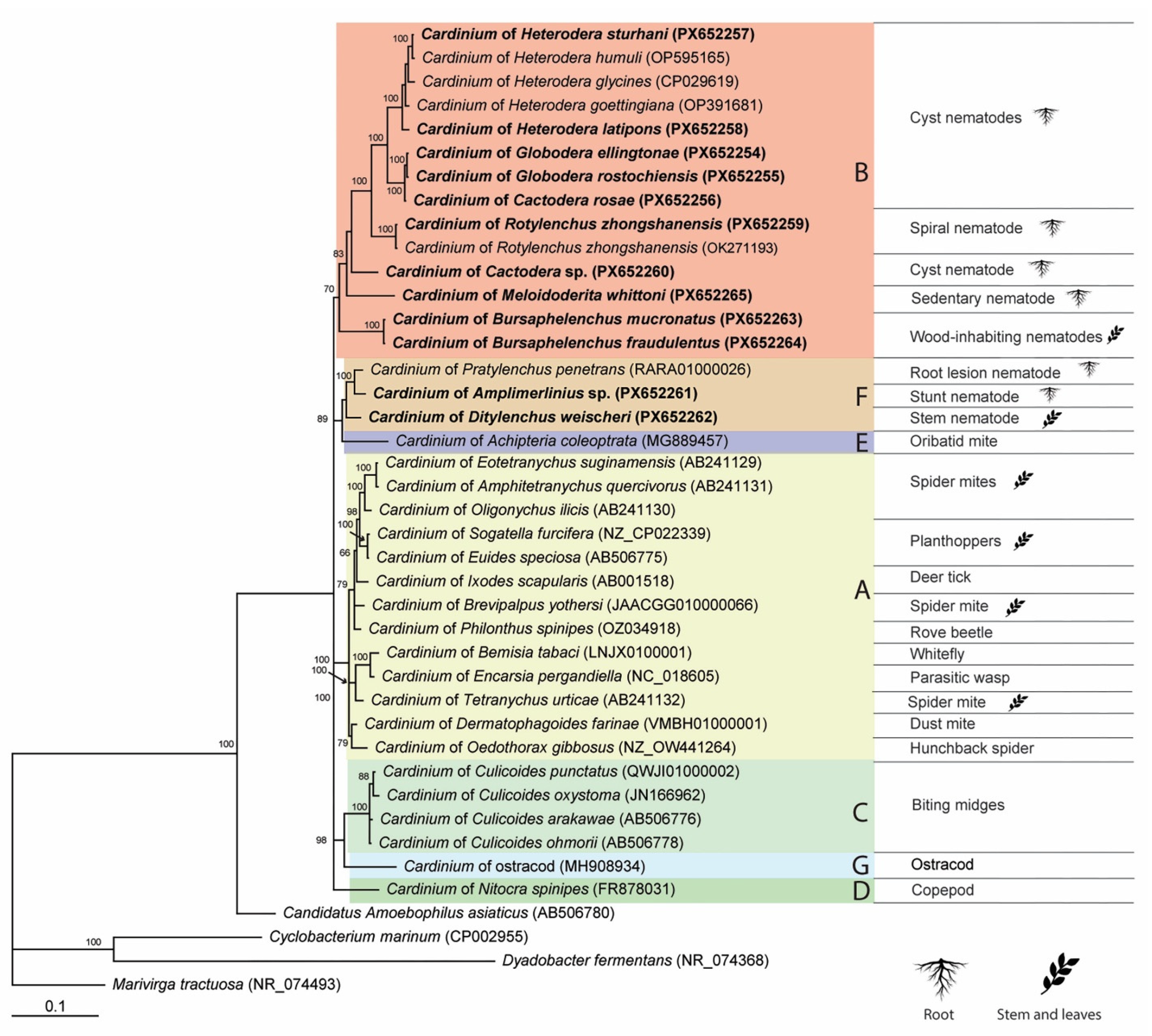
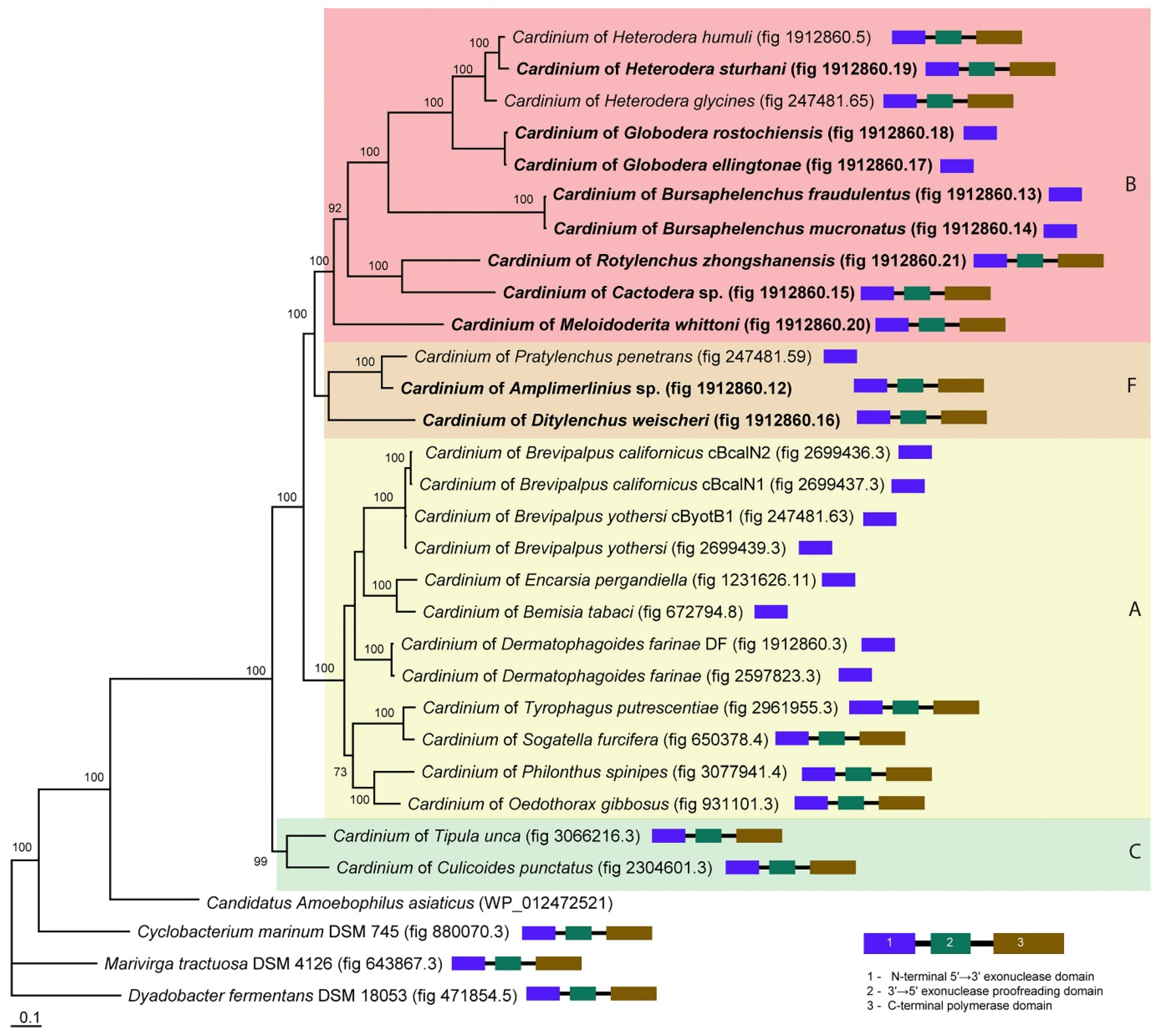
The phylogenetic relationships of Cardinium strains based on the 16S rRNA gene sequences obtained from plant-parasitic nematodes and other arthropod hosts are shown in Figure 1. Overall, the relationships among the major Cardinium groups were not well resolved based on the 16S rRNA gene, due to the conserved nature of this marker and limited phylogenetic signal. Intraspecific sequence variation for group B was up to 6.5%, group F—2.7%, and group A—3.1%.
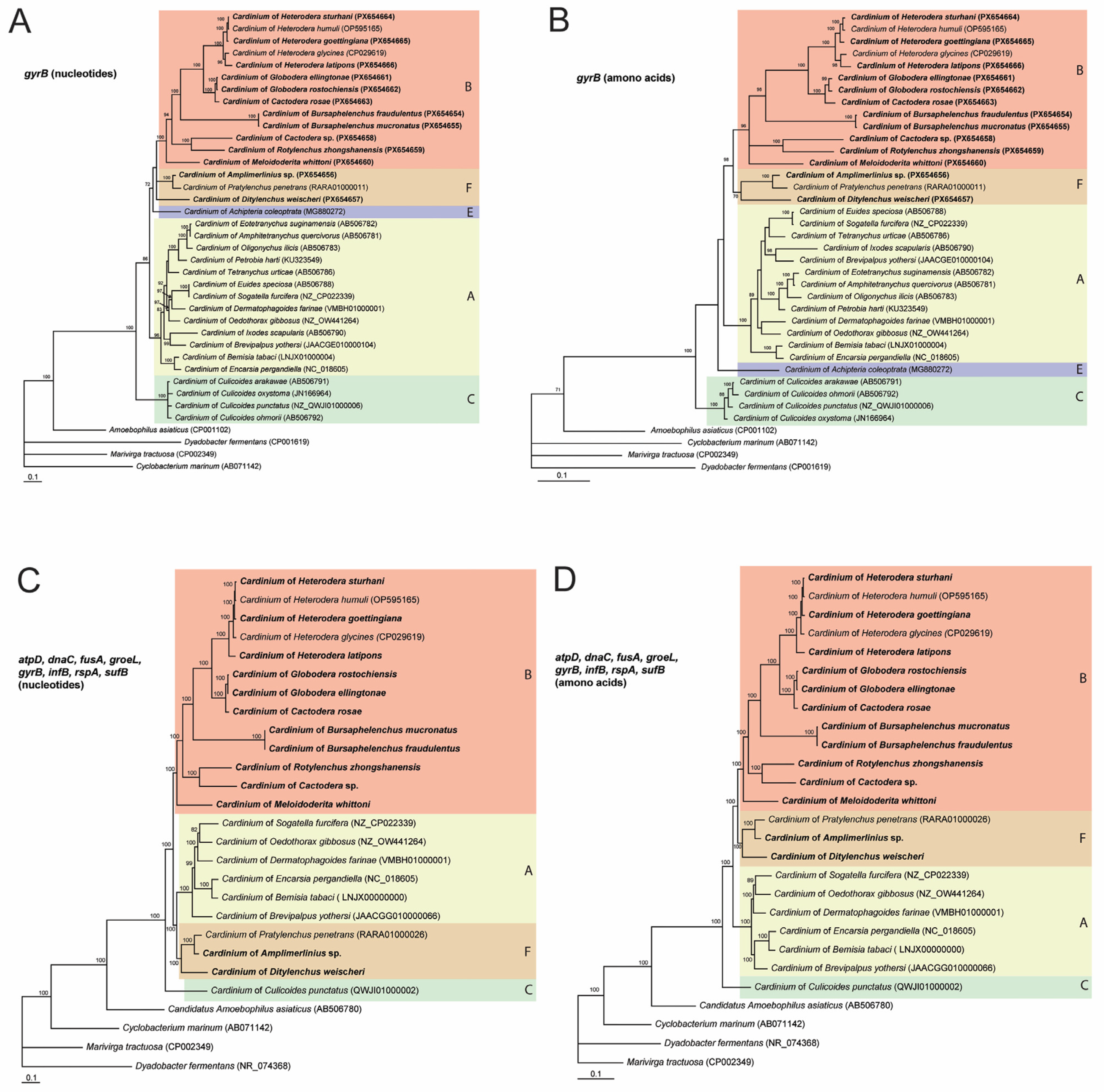
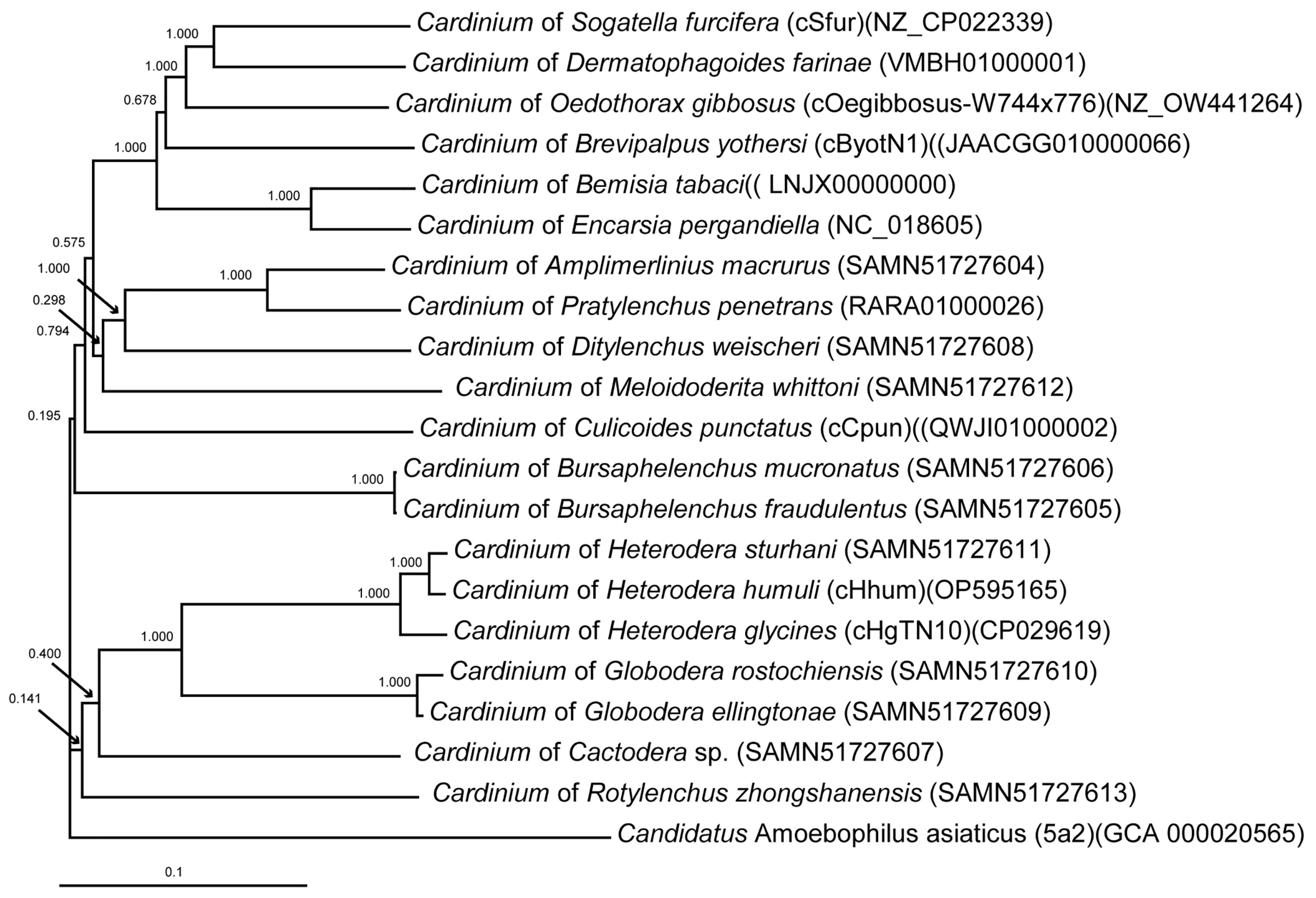
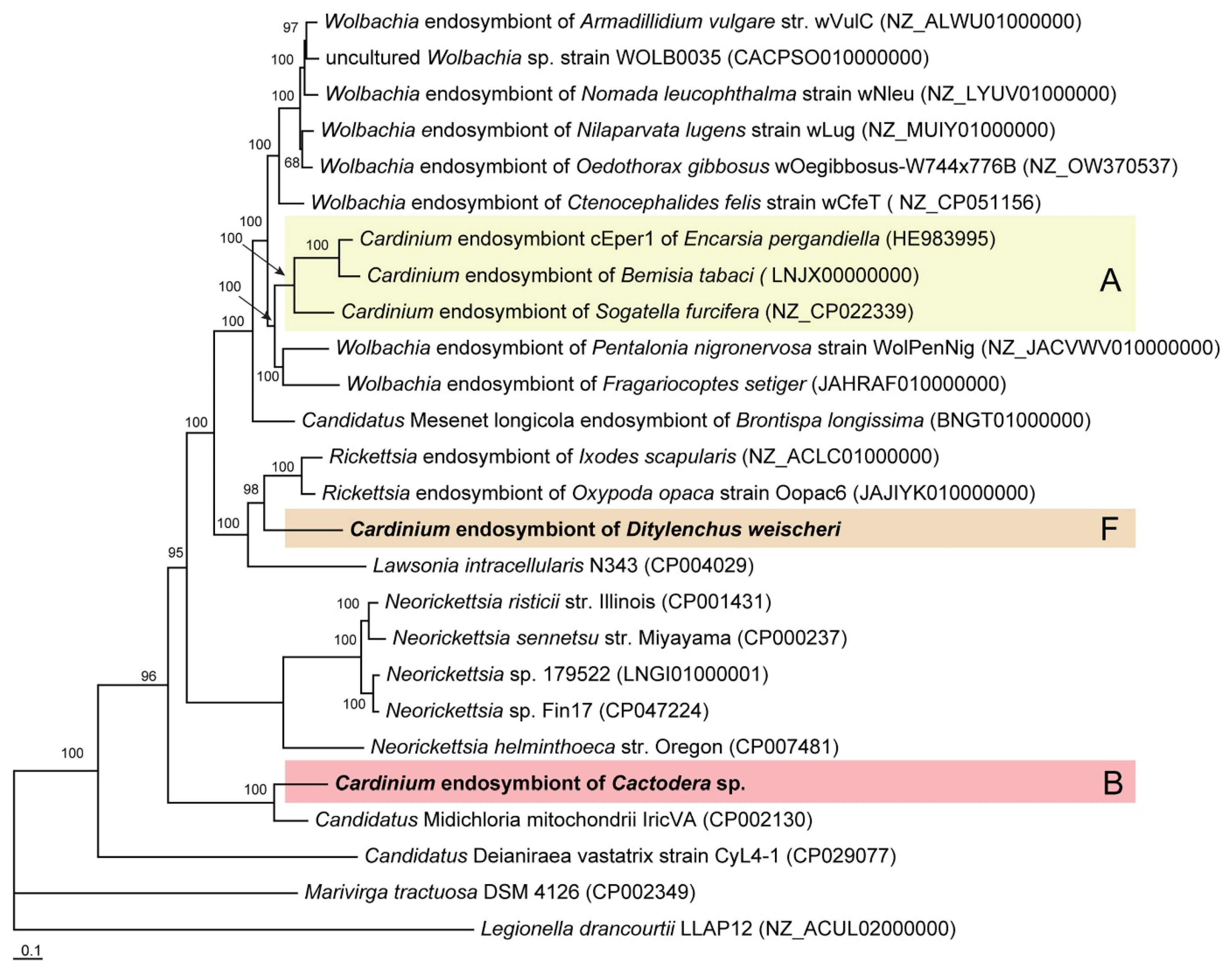
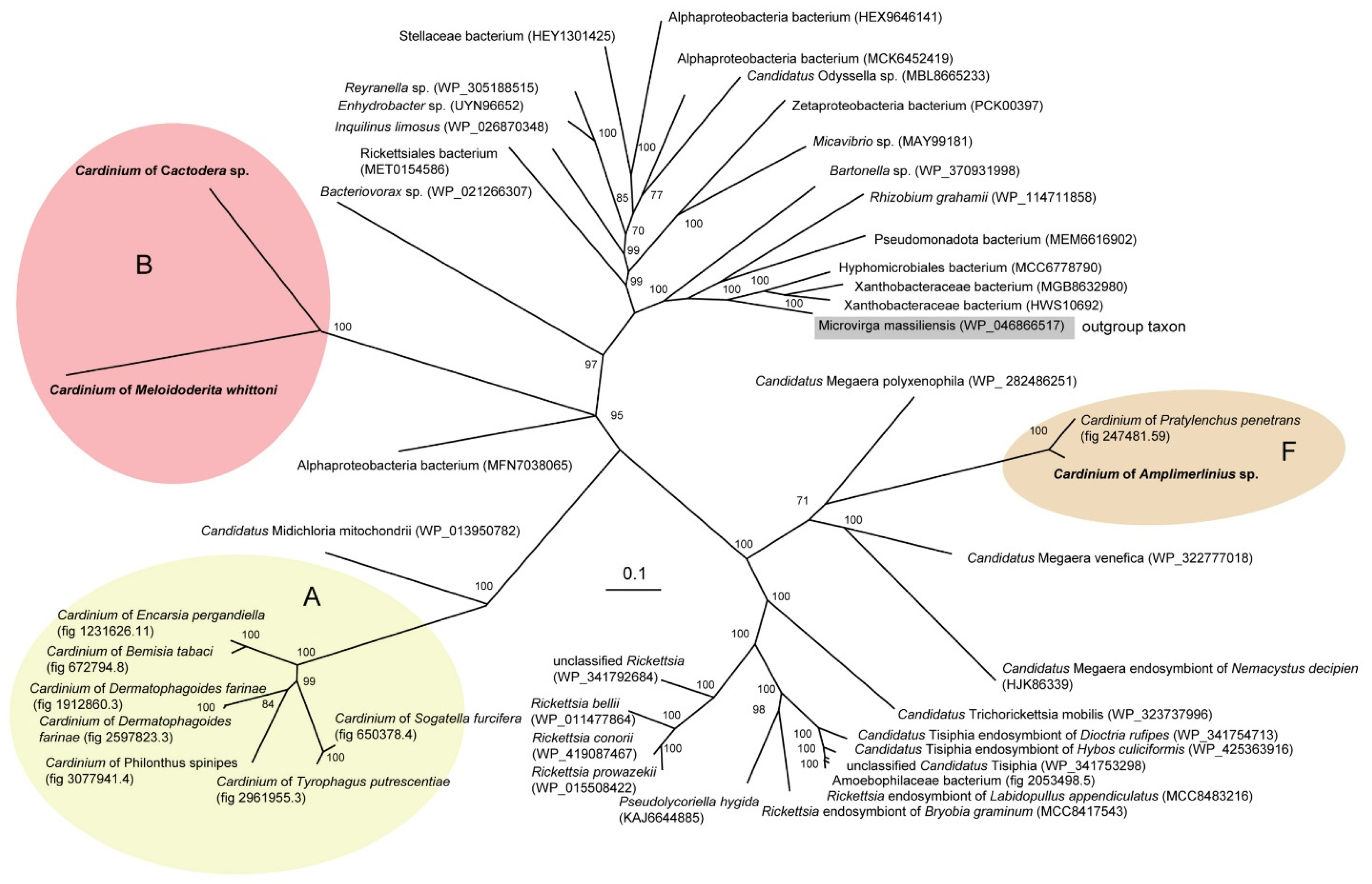
Phylogenetic trees inferred from gyrB gene fragment sequences and from a concatenated dataset comprising eight protein-coding genes (atpD, dnaB, fusA, groEL, gyrB, infB, rpsA, and sufB) (Table A2) are presented in Figure A1. These multilocus phylogenetic analyses provided improved phylogenetic resolution within the Cardinium clade. Notably, Cardinium strains associated with nematodes formed a well-supported monophyletic lineage (groups B and F) in all analyses, except for the tree reconstructed from the nucleotide alignment of the eight-gene concatenation, where the nematode-associated sequences appeared paraphyletic. In single-gene phylogenetic analyses, nucleotide sequences of dnaB, groEL, gyrB, and rpsA recovered nematode-associated Cardinium as a monophyletic lineage, whereas analyses based on atpD, fusA, infB, and sufB indicated paraphyletic relationships. Maximum likelihood comparisons of alternative tree topologies using the Kishino–Hasegawa (KH), Shimodaira–Hasegawa (SH), and Shimodaira approximately unbiased (AU) tests did not reject the hypothesis (p < 0.05) of nematode-associated Cardinium monophyly for the atpD, fusA, and sufB datasets. Only the infB alignment significantly rejected this hypothesis under both SH (p = 0.034) and AU (p = 0.017) tests. Phylogenetic analysis based on amino acid sequences of the polA gene also demonstrated the monophyly of Cardinium strains from plant-parasitic nematodes (Figure A2). The sequence of Cardinium from biting midges occupied a basal position on the trees in all the analyses. The phylogenomic tree inferred from 20 bacterial genomes of the Cardinium clade using JolyTree is given in Figure A3.
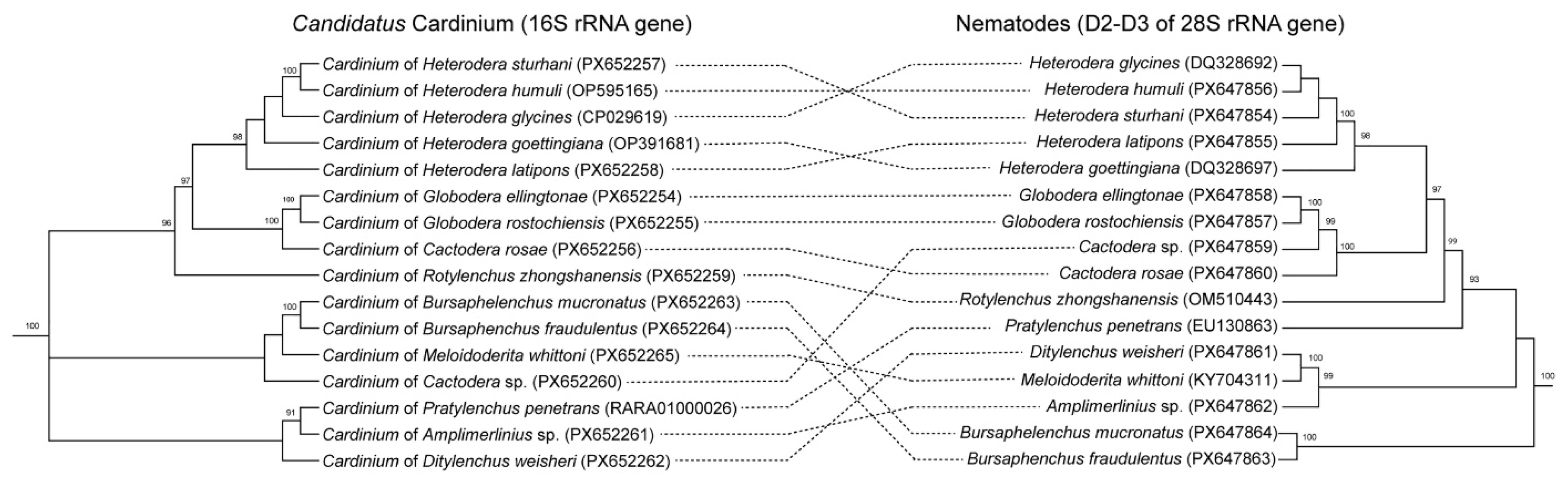
The Cardinium 16S rRNA gene sequences and the D2–D3 expansion fragments of the nematode 28S rRNA gene were used to perform a cophylogenetic analysis aimed at exploring potential patterns of host–symbiont association. Although the 16S rRNA gene provided limited phylogenetic resolution among Cardinium strains, the Procrustean Approach to Cophylogeny (PACo) analysis revealed a significant global cophylogenetic signal, indicating that host and symbiont phylogenies are more congruent than expected by chance. The sum of squared residuals (SS) was 0.78, and the permutation test with 1000 replicates produced a p-value of 0, supporting the hypothesis of cophylogeny. However, there were several clear topological incongruences between some bacterial and host lineages (Figure A4). For instance, Cardinium sequences associated with wood-inhabiting nematodes of the genus Bursaphelenchus clustered together with bacterial strains from sedentary plant-parasitic nematodes, despite the fact that these hosts belong to different nematode superfamilies or orders and are only distantly related. Similarly, two morphologically and genetically similar species of Cactodera harbored phylogenetically distinct and unrelated Cardinium strains (Figure A4).

2.2. The Whole and Draft Genomes of Cardinium and Their Annotation

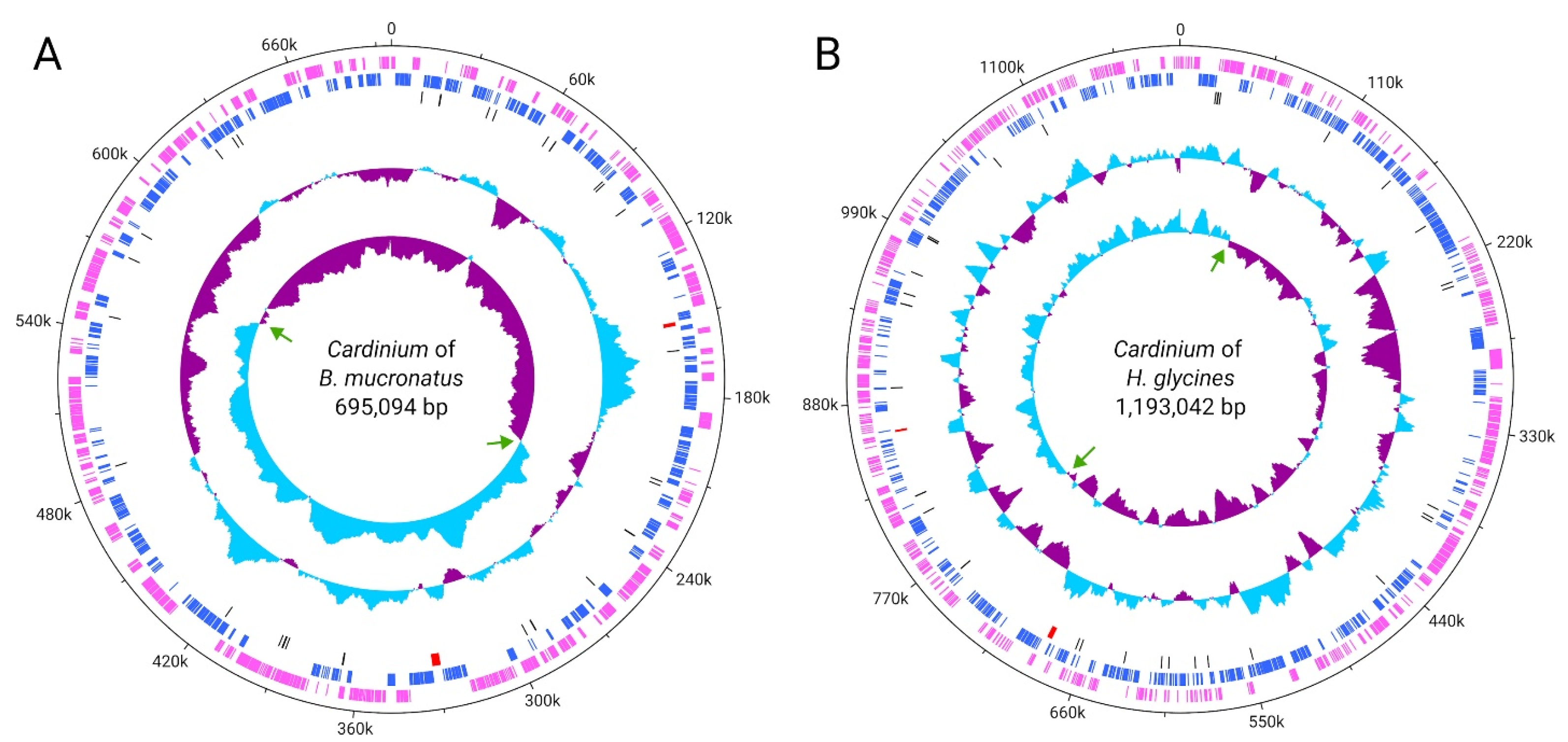
In this study, we successfully assembled ten Cardinium genomes, including two complete (single circular contig without gaps) and eight draft assemblies (Table S1). The summary statistics for these genomes are presented in Table 1. The assemblies ranged from 1 to 144 scaffolds, with total sizes varying between 695,026 and 1,345,476 base pairs. The Cardinium endosymbionts of Bursaphylenchus fraudulentus and B. mucronatus have chromosomes of 695,026 bp and 695,094 bp (Figure 2) in size, respectively, which were assembled in a single circular contig (Table 1 and Table S1). Sequencing depth (genome coverage) for these ten genomes spanned from 19× to 1313×. The GC content of the ten genomes ranged from 35.23% to 41.07%. A total of 600 to 1025 protein-coding genes were predicted per genome, reflecting notable variability in gene content across different strains. There was no evidence of plasmids in the genomes. CheckM analysis showed low levels of contamination (less than 5%) and moderate levels of completeness (approximately 70%). It is worth noting that other Cardinium genomes represented in Genbank have a similar level of completeness. For example, the complete genome of Cardinium hertigii cHgTN10 has a completeness metric of 70% with a contamination level of 1%.
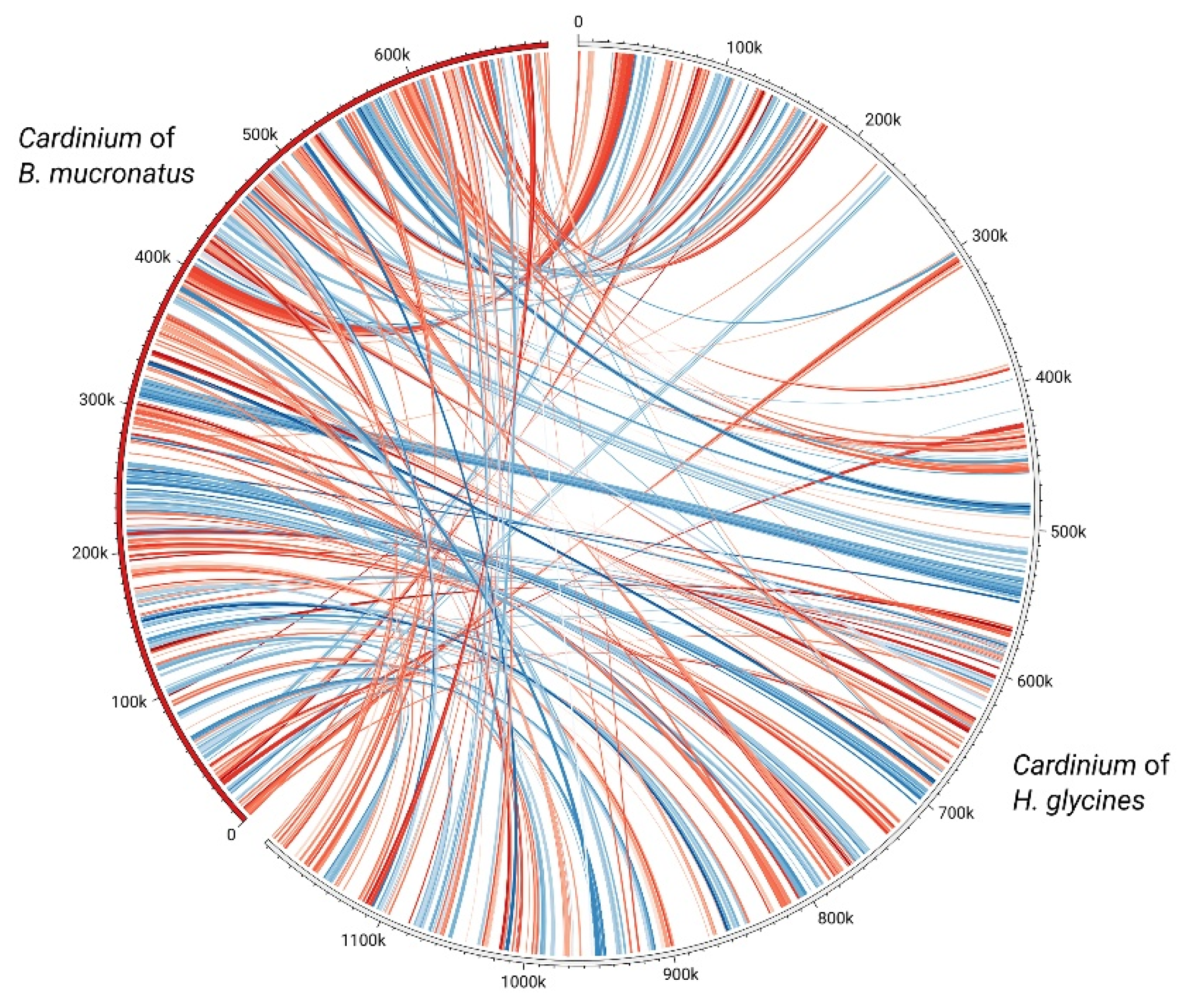
In the Cardinium symbionts of B. mucronatus and B. fraudulentus, a pronounced enrichment in guanine over cytosine and thymine over adenine is observed across one half of the genome, with the opposite pattern in the other half (Figure 2A, inner track). This asymmetric nucleotide composition, known as GC skew, typically changes sign at genomic positions corresponding to the origin and terminus of DNA replication (Figure 2A, green arrows). In contrast, the Cardinium symbiont of Heterodera glycines also exhibits GC skew, although it is less pronounced (Figure 2B, innermost track), possibly reflecting subsequent genomic rearrangements that have altered replication-associated asymmetry. Furthermore, in both genomes, the putative origins of replication are located at positions distant from the dnaA gene, which is set at position zero on the circular genome map. It is also noteworthy that in both Cardinium genomes, the ribosomal RNA genes are not organized into a single operon but instead occur in two separate regions, corresponding to the 16S and 23S–5S rRNA loci (Figure 2, track 3, highlighted in red). As shown in Figure A5, the genomes of Cardinium associated with B. mucronatus and H. glycines exhibit extensive genomic rearrangements, indicating substantial structural divergence between these strains.
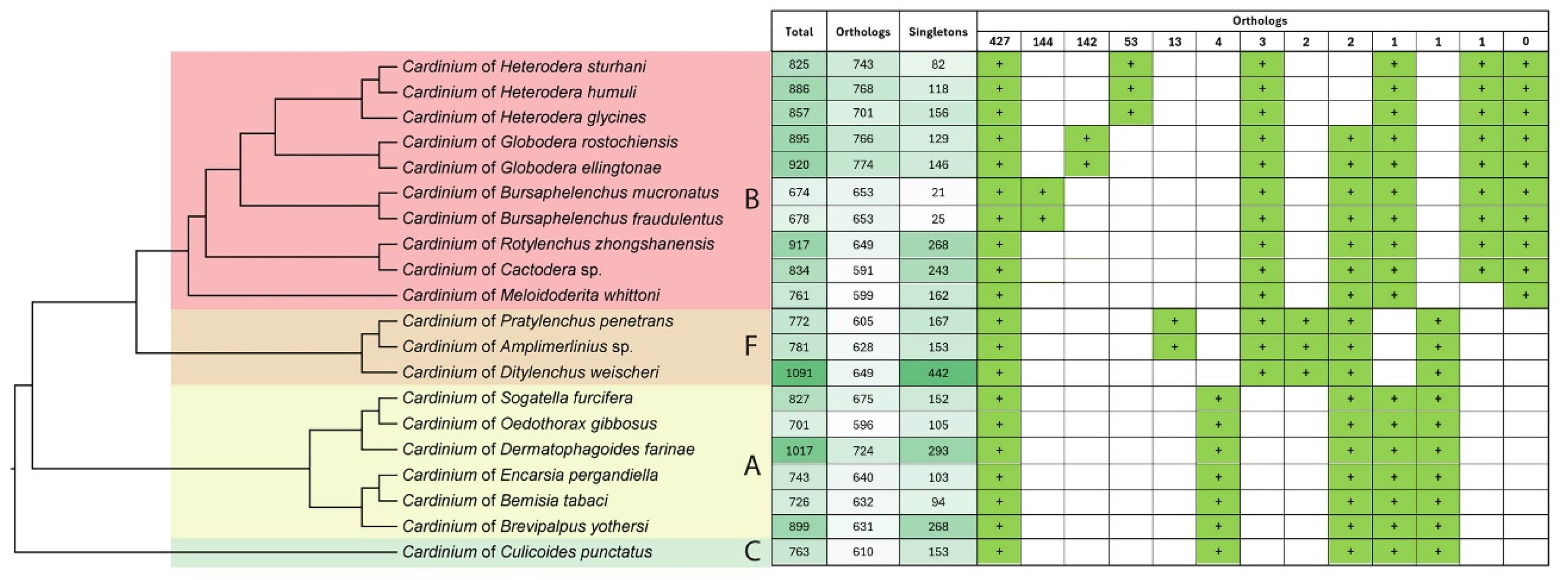
The orthologous group (orthogroup) analysis of twenty Cardinium genomes is presented in Figure 3. These genomes share a total of 427 orthogroups (Table S2). The Cardinium genomes from nematodes contain between 21 (cBmuc) and 442 (cDwei) unique strain-specific genes (singletons), of which only 0–9% have an assigned function. All genomes from groups A, B, and C share only one orthogroup encoding a hypothetical protein. In addition, genomes from groups A, C, and F share a siderophore (surfactin) biosynthesis regulatory protein that is absent in the other groups. Genomes from groups B and F each possess three genes encoding unique proteins: a 57-amino acid hypothetical protein, ATP-dependent DNA helicase RecG, and N-acetylmuramoyl-L-alanine amidase. Although group B has no unique orthologues overall, the anhydromuropeptide permease (AmpG), a transporter protein located in the inner membrane of certain Gram-negative bacteria, becomes a unique orthologue for this group once the cMwhi genome is excluded.
Among Cardinium genomes from nematodes of different genera, shared orthologues vary substantially. Strains from Heterodera share 53 orthologues, including 51 hypothetical proteins, a low-specificity L-threonine aldolase, and a glycosyl transferase family 1 protein. Strains from Globodera share 142 orthologues, comprising 140 hypothetical proteins, phenylalanyl-tRNA synthetase β chain, and 1-acyl-sn-glycerol-3-phosphate acyltransferase. In contrast, Bursaphelenchus-associated Cardinium strains share only 144 hypothetical proteins (Figure 3).
The values of average nucleotide identity (ANI) and digital DNA-DNA hybridization (dDDH) based on a genome-to-genome sequence comparison calculated for Cardinium strains from plant-parasitic nematodes are shown in Table A3. Only three strain pairs, namely, cBmuc and cBfra, cGell and cGros, and cHhum and cHstu, are clearly above 95–96% (ANI) and 70% (DDH), used as boundaries for prokaryote species delineation, and, thus, these values indicate co-specificity of strains from these pairs.
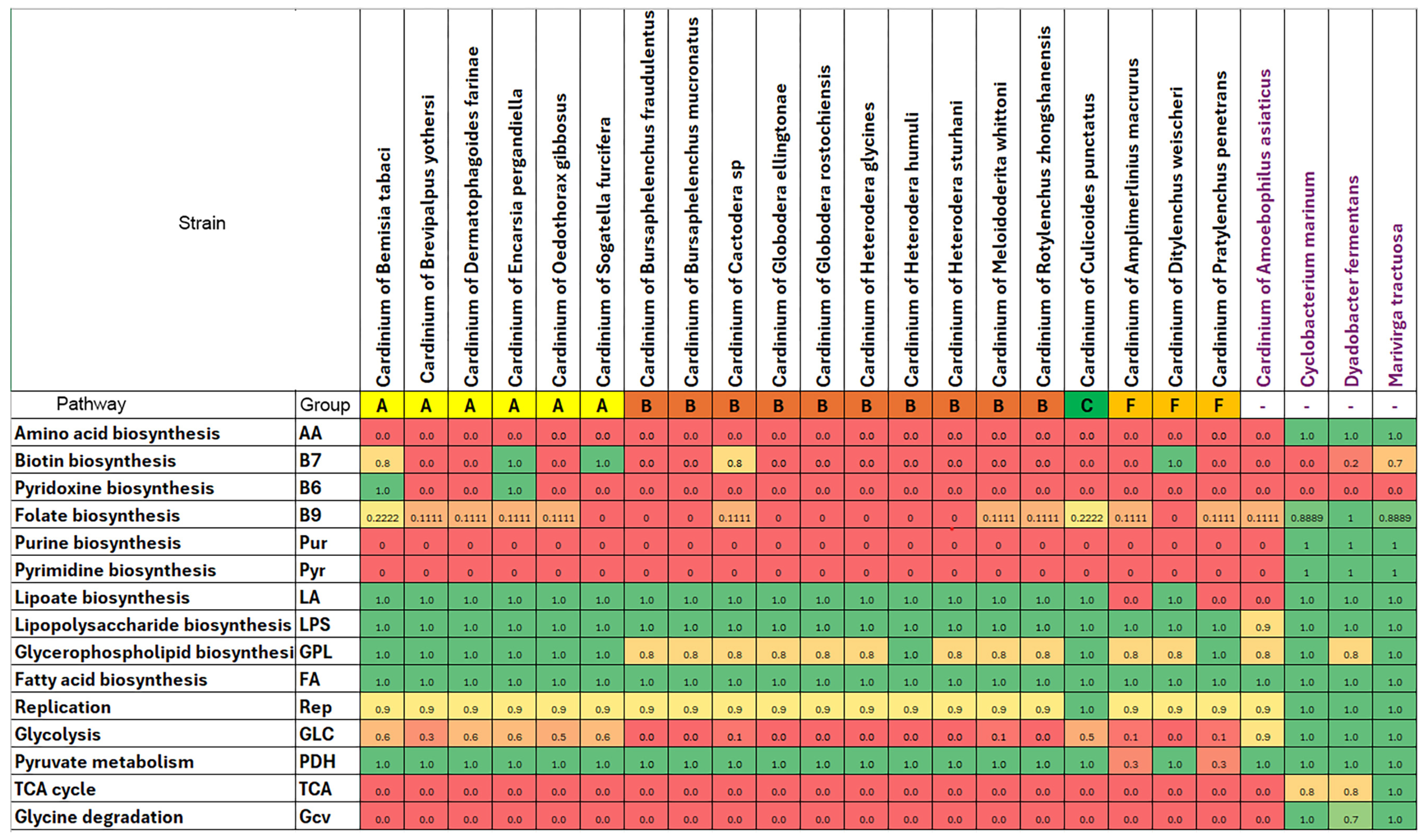
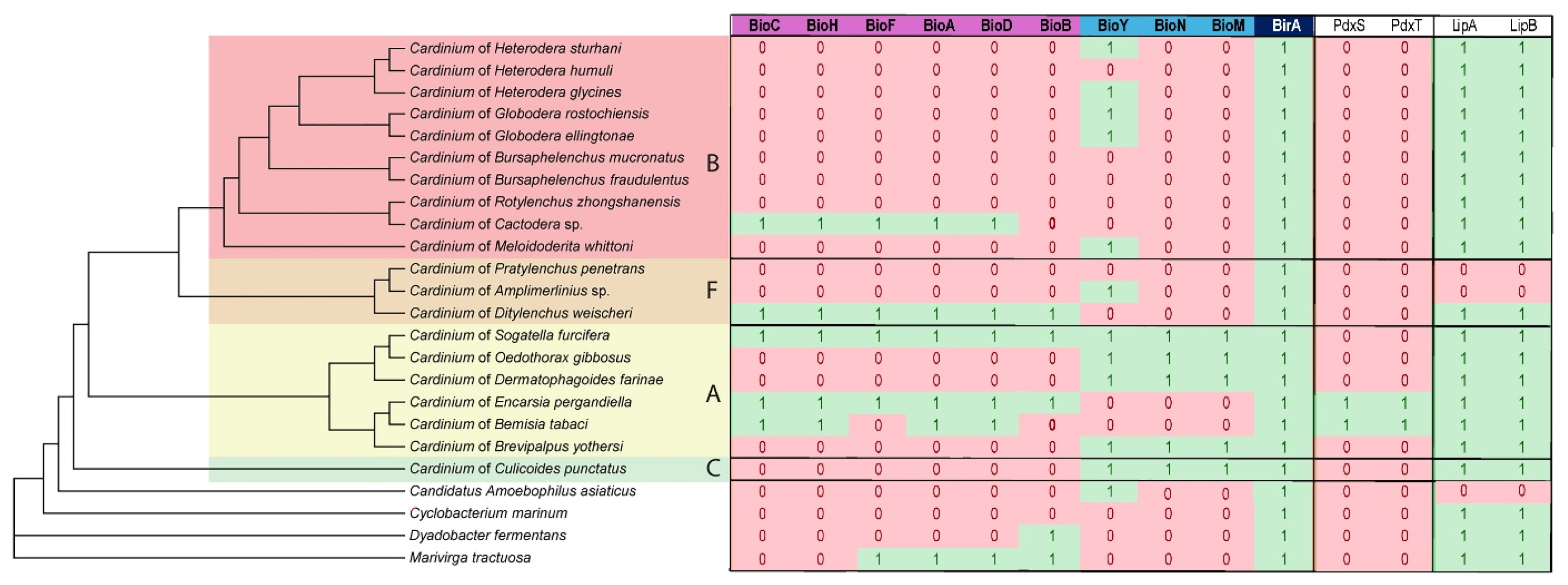
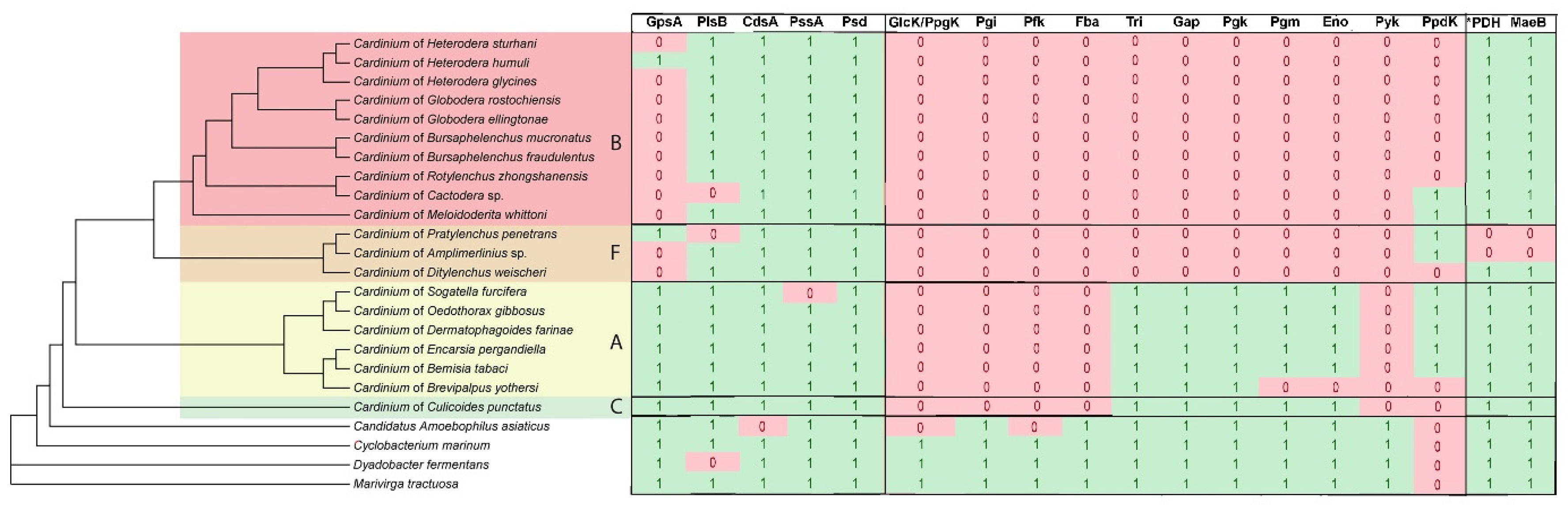
Functional annotations of metabolic pathways in twenty Cardinium genomes, including ten new ones and four outgroup bacterial taxa, are given in Figure 4 and Table S3. Although the majority of Cardinium genomes lack biosynthetic pathways for all amino acids and nucleotides and most B vitamins, functional annotation indicates the presence of biosynthetic pathways for two B vitamins, pyridoxine (B6) and biotin (B7), in a small subset of genomes, while the lipoate coenzyme biosynthesis is conserved in all Cardinium genomes from groups A, B, and C and in one out of three group-F genomes. The unique distribution of the B7 biosynthetic pathway is described below, while the B6 biosynthesis genes were identified in two group-A Cardinium genomes. While the biosynthetic pathways for fatty acids and lipopolysaccharides are conserved in all analyzed genomes, the glycerophospholipid pathway is incomplete in eleven Cardinium genomes, with the absence of the gpsA gene encoding glycerol-3-phosphate dehydrogenase, a first pathway step converting glycerate-3-phosphate to glycerol-3-phosphate. We observed a significant reduction in the central carbohydrate metabolism pathways, namely, glycolysis/gluconeogenesis and the tricarboxylic acid (TCA) cycle, and conservation of the pyruvate dehydrogenase (PDH) enzymatic complex in all analyzed Cardinium except two group-F genomes. Finally, all Cardinium genomes lack catabolic or degradation pathways for carbohydrates and amino acids, confirming their metabolic dependence on carbon sources from the host.
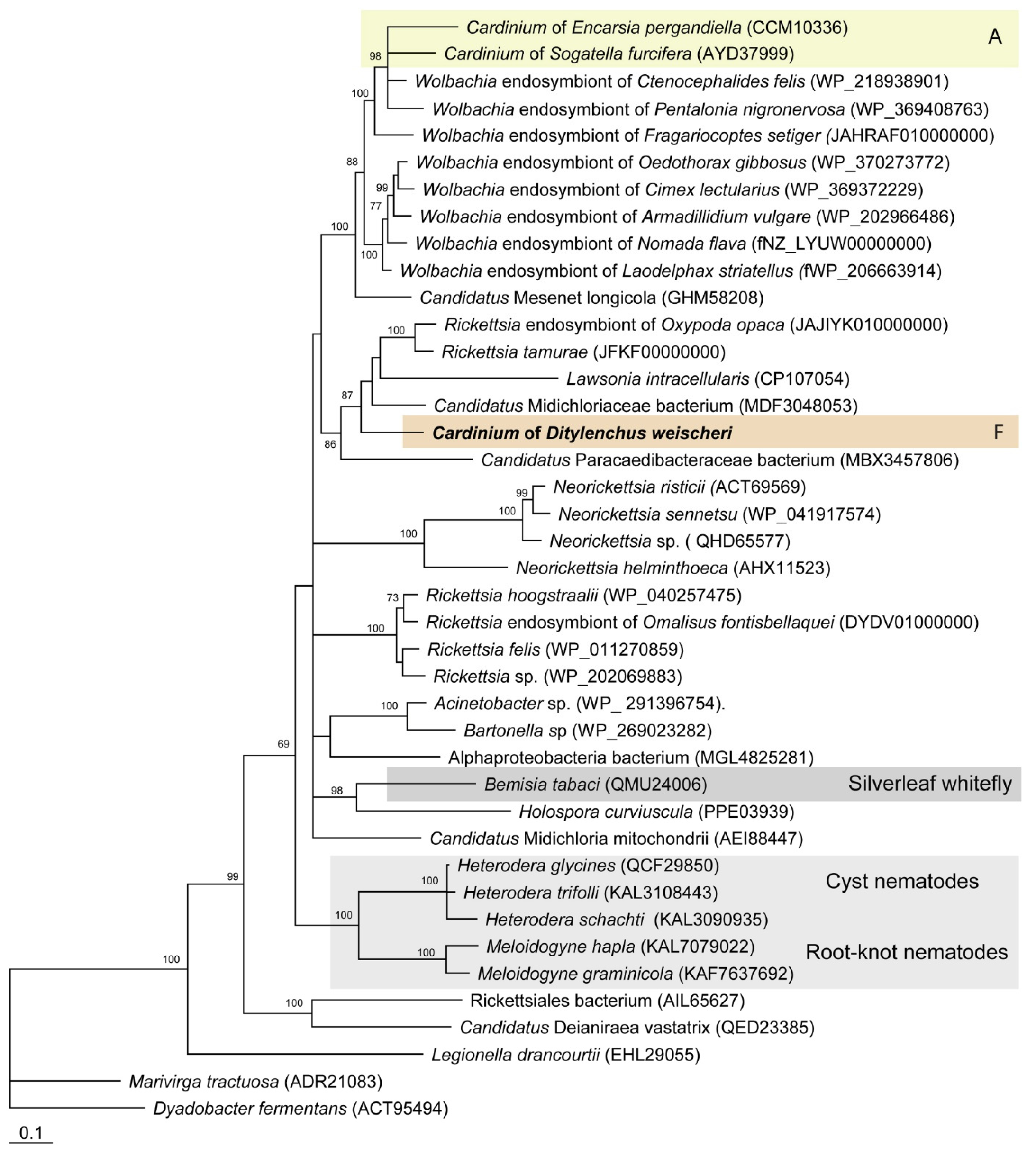
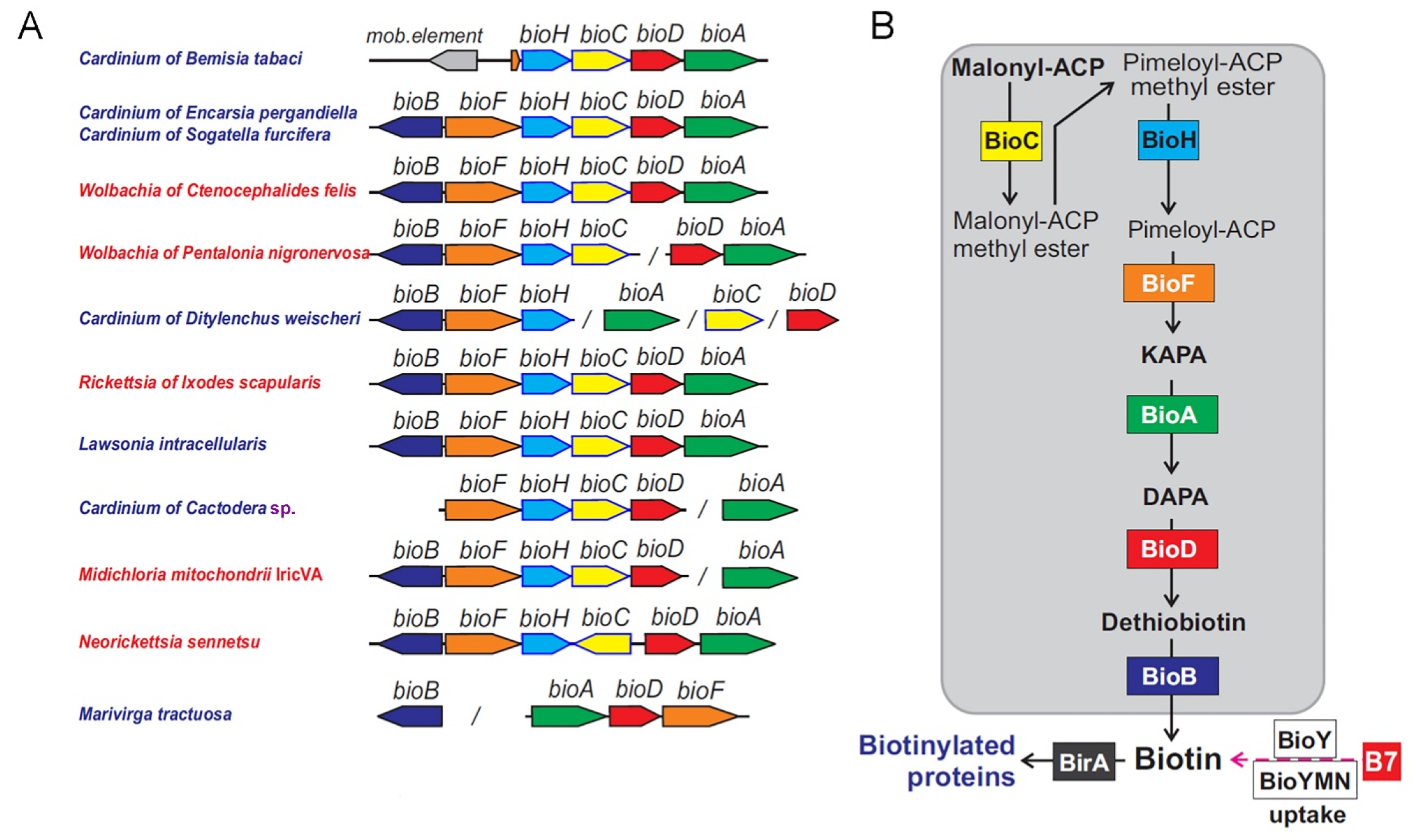
The biotin biosynthesis pathway is present in two genomes (cCsp3 and cDwei) and absent in other Cardinium strains from nematodes (Figure 4 and Figure 5). Within Cardinium from nematodes, a complete biotin pathway is found only in cDwei, and this pathway is only partially encoded in cCsp3. The bioY gene coding a membrane protein, which is part of the BioMNY ABC transporter system for biotin, is found in several Cardinium strains (cHstu, cHgTN10, cGros, cGell, cMwhi, and cAsp). In contrast, the biotin protein ligase BirA is present in all genomes, since it is an essential enzyme for the use of this cofactor by biotin-dependent enzymes from the fatty acid biosynthesis pathway (Figure 5). Genes involved in the biotin pathway are not arranged in one operon for cDwei (Figure A6). Phylogenetic analysis of the concatenation of bioA, bioB, bioD, and bioF genes for Cardinium and other bacteria indicated that these genes may undergo independent horizontal transfer events at least two times from distinct bacterial donors to Cardinium symbionts of plant-parasitic nematodes (Figure A7). The phylogeny of the bioB gene also confirms the independent origin of this gene for groups A and F and suggests an ancient origin of this gene for nematodes and its horizontal transfer from a rickettsia-like bacterium (Figure 6).
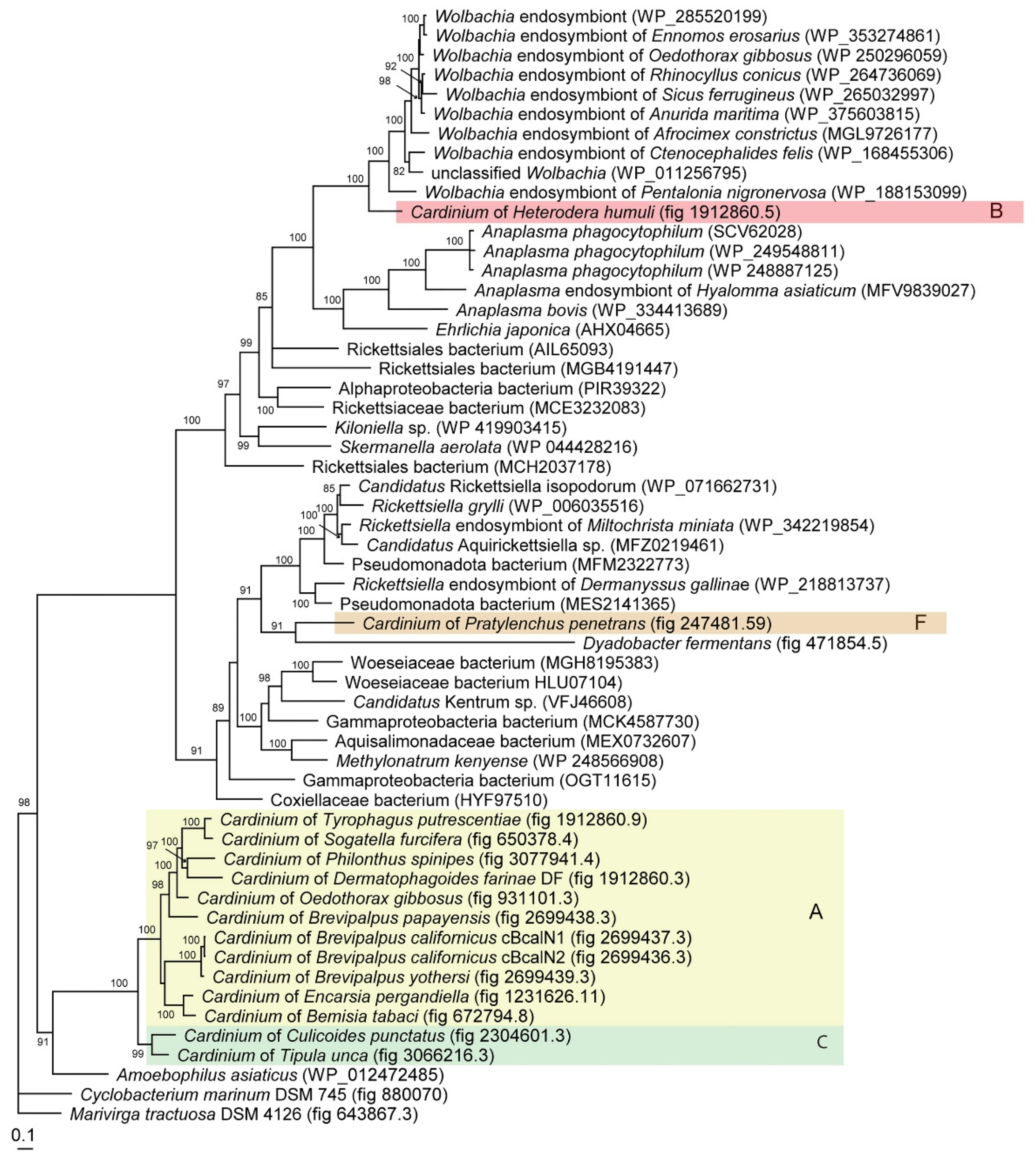
The glycerophospholipid biosynthesis pathway is also incomplete in groups B and F, where the gpsA gene encoding the first pathway step is absent in most strains, except for cPpe and cHgTN10 (Figure 7). Phylogenetic analysis of gpsA amino acid sequences indicates that this gene was acquired independently in cPpe and cHgTN10 through horizontal gene transfer (HGT), rather than through close evolutionary relationships with the gpsA genes of groups A and C (Figure A8). The majority of core genes involved in glycolysis are also missing in Cardinium strains from nematodes. Phylogenetic analysis of the ppdK gene encoding the gluconeogenic enzyme pyruvate phosphate dikinase suggests that this gene was independently acquired by groups A, B, and F through horizontal transfer from at least three distinct bacterial donors (Figure A9). The aceE, aceF, and lpdA genes encoding the pyruvate dehydrogenase complex (PDH) form the only set of the central carbohydrate metabolism genes that is conserved in all Cardinium genomes from groups A, B, and C and is present in cDwei from group F. The malic MaeB enzyme converting malate to pyruvate is universally conserved in all Cardinium genomes.
Genes associated with DNA replication were found in all Cardinium genomes, except for recN, encoding the DNA repair protein RecN, which is present only in group C. The polA gene, which encodes DNA polymerase I and is a multifunctional enzyme essential for DNA replication and repair in prokaryotes, shows partial loss in several Cardinium strains. Specifically, deletions affecting fragments encoding the 5′→3′ polymerase domain (C-terminal region) and the 3′→5′ exonuclease domain (proofreading, central region) were detected in multiple strains from groups A and B and in one strain from group F (Figure A2). These gene reductions appear to have occurred independently during Cardinium evolution.

3. Discussion

Our findings highlight the remarkable diversity of Cardinium strains associated with plant-parasitic nematodes, expanding the known host range beyond previously reported species [7,12,13,17]. In particular, we report novel Cardinium associations in representatives of the nematode genera Amplimerlinius, Bursaphelenchus, Ditylenchus, and Meloidoderita, underscoring the broad phylogenetic and ecological distribution of this symbiont within plant-parasitic taxa. Plant-parasitic nematodes from these genera exhibit diverse feeding strategies and ecological behaviors, ranging from ecto- and endo-root parasites to wood inhabitants transmitted by insect vectors. A relatively larger number of Cardinium was found in the cyst nematodes (Cactodera, Heterodera, Globodera, and Punctodera), which are sedentary endoparasites that form long-lasting cysts in soil. Their infective juveniles invade plant roots and induce specialized feeding sites called syncytia. These genera are highly specialized and often target specific plants. Other Cardinium strains were presently reported from only one species of other nematode genera. Meloidoderita species are characterized by swollen, cystoid females with a functional stylet, vermiform males often lacking a stylet, and second-stage juveniles that induce syncytia in host roots. In the present classification, Meloidoderita and cyst nematodes belong to different orders or superfamilies. Stem nematodes of the genus Ditylenchus induce characteristic swellings, distortions, and hypertrophy in above-ground plant tissues, particularly stems, leaves, buds, and floral structures. These symptoms result from the nematodes’ feeding within the parenchyma, which disrupts normal cell development and triggers abnormal growth responses. Ditylenchus weischeri, in which Cardinium was found in the present study, is a highly specialized parasite associated with Canada thistle, Cirsium arvense. Amplimerlinius species are ectoparasitic nematodes that feed externally on root surfaces. While they are generally less destructive than endoparasites, they can impair root function, particularly under stress conditions or in high populations. Nematodes of the genus Bursaphelenchus represent a distinct ecological niche among plant-parasitic nematodes. Several species induce wilt diseases in various wood trees and palms. Some representatives of the genus combine plant parasitism with mycophagy (fungus-feeding) and rely on insect vectors. This dual feeding strategy and vector association make Bursaphelenchus ecologically unique in forest ecosystems [23].
Previous phylogenetic analyses based on limited Cardinium gene sequences identified the presence of two major lineages, or groups B and F, associated with plant-parasitic nematodes; however, the evolutionary relationship between these groups remained unresolved [7]. By incorporating a broader set of genes into the analysis, a clearer and more robust phylogenetic framework has emerged. This expanded dataset reveals that the two lineages are likely related and share a common ancestor, suggesting a single evolutionary origin followed by diversification within nematode-associated Cardinium. These findings refine our understanding of Cardinium evolution and suggest a potentially conserved symbiotic co-evolution within nematode hosts.
Symbionts belonging to the Cardinium clade are known to be vertically transmitted through maternal inheritance. However, the presence of closely related Cardinium strains in diverse and distantly related host species suggests that vertical transmission alone does not explain their distribution. This pattern has led to the conclusion that horizontal transmission events also play a role in the spread of these endosymbionts across different host lineages [11,24]. While horizontal transmission of Cardinium among arthropod hosts has been well documented in previous studies, this study represents the first comprehensive analysis of such patterns within plant-parasitic nematode groups. Cophylogenetic analyses of Cardinium strains and their plant-parasitic nematode hosts reveal that host and symbiont lineages have undergone correlated evolution, reflecting some degree of co-diversification. However, patterns of incongruence between host and symbiont phylogenies indicate evidence for several host switching events. These results expand our understanding of Cardinium’s evolutionary dynamics and suggest that cross-species transmission may play a significant role in shaping symbiont–host associations beyond arthropods.
The most widespread group within the Cardinium clade is group A, likely originating in soil mites, where it circulated extensively. From herbivorous mites, the symbiont spread to phloem-feeding insects with piercing–sucking mouthparts, enabling transmission to plants via salivary secretions. Experimental evidence confirms that Cardinium of insects can undergo interspecific horizontal transmission through plant tissue [25,26]. Subsequent evolutionary transitions led to its presence in endoparasitic wasps and predators such as spiders, rove beetles, and opilionids, likely via trophic interactions with infected hosts [7]. While there is no direct evidence that Cardinium is transmitted via plant tissue during nematode feeding, the hypothesis is biologically plausible and should be carefully experimentally tested. Discovering Cardinium in a wide range of plant-parasitic nematodes with diverse feeding strategies and ecological behaviors suggested that plants may serve as ecological reservoirs for Cardinium bacteria, facilitating their persistence in the environment and enabling horizontal transmission to new nematode hosts. This plant-mediated route may not only support the survival of Cardinium outside its primary host but also enhance its potential to colonize novel nematode hosts, contributing to the symbiont’s broad and scattered phylogenetic distribution.
Among the newly assembled Cardinium genomes obtained from plant nematodes in this study, two genomes originating from strains associated with wood-inhabiting Bursaphelenchus species exhibited remarkable genome reduction, with estimated sizes of approximately 695 kb. However, such a pronounced genome size reduction is not associated with extensive orthologous gene loss in these strains. This represents, to our knowledge, the smallest Cardinium genomes described to date. Interestingly, despite their extreme reduction, these genomes are comparable in size to those of certain genera and species of highly specialized endosymbiotic bacteria found in arthropods and nematodes [27,28].
Despite extensive genome reduction, Cardinium genomes retain a conserved core of DNA replication genes, including dnaA, dnaB, dnaG, and others, indicating a functional but streamlined replication apparatus. In contrast, genes involved in DNA repair, recombination, and replication checkpoint control are often incomplete or absent, reflecting increasing reliance on host cellular processes [29]. In several Cardinium strains, the polA gene encoding DNA polymerase I, a multifunctional enzyme that plays a key role in DNA replication and repair in prokaryotes, showed partial loss of domains. Loss of the proofreading exonuclease domain in family A DNA polymerase is well documented, whereas cases in which the polymerase domain itself is absent while exonuclease activity is retained are not well known [30,31].
Functional annotation of Cardinium genomes indicates the absence of or a reduction in several pathways, including the biotin biosynthetic pathway. Biotin, a vitamin belonging to the B-complex group, serves as a vital coenzyme that participates in fatty acid synthesis and other metabolic pathways in all bacteria. A complete biotin biosynthetic pathway, comprising bioA, bioD, bioC, bioH, bioF, and bioB, was identified in Cardinium cEper1 and Cardinium cSfur, endosymbionts that occur, respectively, in wasp Encarsia pergandiella [29] and planthopper Sogatella furcifera [24]. An incomplete biotin biosynthetic pathway, with losses of bioB and nearly all of bioF, was reported in the genome of Cardinium cBtQ1 from silverleaf whitefly, Bemisia tabaci [32]. In this study, a complete biotin synthesis pathway was found in the Cardinium strain from D. weischeri; only a partially encoded pathway was found in the Cardinium strain from Cactodera sp., and it was completely absent in all other newly sequenced Cardinium. The universal conservation of the biotin ligase gene birA, as well as of the fatty acid biosynthesis pathway, confirms that the biotin cofactor is universally indispensable in all Cardinium species and that most of them acquire this vitamin from the host.
The loss or absence of the biotin biosynthetic pathway in the majority of Cardinium strains suggests that endogenous synthesis of this vitamin is neither essential for the bacterium’s own metabolic requirements nor a critical factor in most Cardinium–host symbiotic relationships [8]. However, it is plausible that the biotin biosynthesis capabilities confer a nutritional advantage to their arthropod and nematode hosts. B vitamins, including biotin, are essential micronutrients that play critical roles in metabolic processes and overall host fitness. In such nutritional contexts, the ability of endosymbiotic bacteria to synthesize and supplement B vitamins may be crucial for host survival and reproductive success. Indeed, all Cardinium genomes lack biosynthetic pathways for the majority of B vitamins (with the only two exceptions of vitamins B6 and B7, as discussed above), suggesting the Cardinium species are multi-auxotrophs for nearly all indispensable B vitamins, thus, being totally dependent on their salvage from the host (and if it is a non-plant host, dependent on the host dietary supply).
Although biotin plays essential roles in metabolism, the capacity for de novo synthesis is limited to bacteria, plants, and some fungi, via a conserved four-step pathway beginning with pimeloyl-CoA and ending with biotin [33,34,35,36]. Animals, by contrast, lack this biosynthetic ability and rely on dietary intake [37,38]. Interestingly, biotin-related metabolism is dynamically regulated in cyst and root-knot nematodes and plant-parasitic nematodes, which have reacquired a bacterial-like biotin synthase gene through HGT [38]. While nematodes do not possess the full biosynthetic pathway, they retain the final step—conversion of dethiobiotin to biotin [39]—suggesting it may scavenge this metabolic precursor from the host to fulfill its biotin requirements and highlighting the nutrient’s functional importance in the nematode [38]. It has been well established that several genes involved in biotin biosynthesis, namely, bioA, bioB, and bioD, were horizontally transferred from bacteria into the genome of the whitefly (Bemisia tabaci) [40]. These horizontally acquired genes are believed to play an important role in supplementing the insect’s nutritional requirements, particularly given its nutrient-limited phloem-feeding lifestyle. Our analysis also confirms the presence of a horizontally transferred bioB gene in nematodes [38,41]. This finding suggests that nematodes, like whiteflies, may have independently acquired bacterial biotin-related genes, potentially enhancing their metabolic capabilities or ecological adaptability.
Phylogenetic analysis of the biotin gene cluster in endosymbiotic bacteria does not support previous hypotheses suggesting that these operons were acquired by Wolbachia through horizontal gene transfer from the genus Cardinium [42,43,44]. Instead, the data indicate a possible transfer from Wolbachia and related bacteria to Cardinium, as proposed by Zeng et al. [24]. The lack of phylogenetic congruence suggests that the acquisition of the biotin operon in Cardinium did not occur through a single ancestral event. Rather, it points to at least three independent horizontal transfer events throughout Cardinium’s evolutionary history: (i) endosymbionts of planthoppers, the whitefly Encarsia parasitoid wasp, and the silverleaf whitefly (group A); (ii) an endosymbiont of a stem nematode (group F); and (iii) an endosymbiont of a cyst nematode (group B). These instances of horizontal gene transfer likely originated from phylogenetically distinct bacterial donors.
It has been known that the highly conserved pathways of central metabolism are reduced or entirely absent in Cardinium. Moreover, our genomic searches did not find any catabolic pathway for carbohydrates or amino acids in Cardinium genomes. This indicates that Cardinium depends heavily on host-derived metabolites and pathway intermediates to compensate for its incomplete biosynthetic capabilities [8]. Analysis shows that most Cardinium genomes retain only a partial glycolytic pathway and, in the nematode-associated lineages, it is completely absent, suggesting an even higher degree of host dependence. Gluconeogenesis is similarly incomplete across Cardinium, and most strains lack the capacity to synthesize six-carbon sugars [8]. Glycerophospholipid metabolism appears to be incomplete in groups B and F, where the gpsA gene is missing. The GpsA enzyme normally catalyzes the reduction of glycerone-P (dihydroxyacetone phosphate, DHAP) to glycerol-P, a key precursor for glycerophospholipid biosynthesis. The absence of gpsA therefore disrupts the canonical entry point into the pathway. Interestingly, this pattern mirrors the presence of incomplete glycolysis observed in groups A and C. In these organisms, glycolysis does not proceed through the full set of enzymatic steps, yet glycerone-P remains one of the central intermediates that is still produced. The shared dependence on glycerone-P suggests a functional link between the truncated glycolytic pathway and the glycerophospholipid biosynthesis pathway.
There is strong phylogenetic and comparative genomic evidence that several glycolytic and carbohydrate metabolism enzyme genes have undergone horizontal gene transfer among bacteria. In Cardinium from the planthopper S. furcifera, for example, gpml, enolase, and ppdK were previously identified as HGT-derived genes acquired from distantly related proteobacterial donors [24]. These findings highlight the role of horizontal gene transfer in supplementing or restoring key metabolic functions in intracellular bacteria with reduced genomes. Our analysis further supports this pattern and reveals that ppdK was also horizontally acquired in Cardinium strains associated with nematodes. Notably, the phylogenetic placement of nematode-associated ppdK sequences indicates that these transfer events occurred independently from those reported in insect-associated Cardinium.

4. Materials and Methods

4.1. Nematode Populations, DNA Extraction, and Whole-Genome Amplification

Six nematode DNA samples containing Cardinium detected from our previous project [7] and several new nematode DNA samples were obtained and used in this study (Table A1). DNA from each sample was extracted from several adult and juvenile specimens using the proteinase K protocol. Nematodes were cut under a stereomicroscope. Cut nematodes in 16 μL water suspension were transferred into a 0.2 mL Eppendorf tube, and 3 μL proteinase K (600 μg mL−1) (Promega, Madison, WI, USA) with 2 μL 10 × PCR buffer (Taq PCR Core Kit, Qiagen, Germantown, MD, USA) was added to each tube. The tubes were incubated at 65 °C (1 h) and 95 °C (15 min) consecutively. Then, 2 or 3 μL from each sample in two or three replicates was submitted for whole-genome amplification (WGA). WGA was performed using an Illustra GenomiPhi V2 DNA amplification kit (Cytiva, Marlborough, MA, USA) following the manufacturer’s instructions. The replicates belonging to the same sample were mixed and purified using a QIAquick PCR Purification Kit (Qiagen, Germantown, MD, USA). A total of 30 μL containing 60 ng or more of DNA per μL was submitted for genome sequencing.

4.2. Genome Sequencing and Genome Assembly

DNA library construction and sequencing of samples was conducted by Novogene Co., Ltd. (Sacramento, CA, USA), and Dante Labs Inc. (New York, NY, USA). At Novogene, a NEBNext Ultra II DNA library prep kit from Illumina (New England Biolabs, Inc., Ipswich, MA, USA) was used following the manufacturer’s recommendations. Pooled DNA libraries were sequenced on an Illumina NovaSeq 6000 instrument to obtain 150 bp paired-end reads for three samples. At Dante Labs, an MGI library prep kit was used following the manufacturer’s recommendations. Pooled DNA libraries were sequenced on an MGI T7 instrument to obtain 150 bp paired-end reads for the samples. The quality of raw reads was evaluated using FastQC [45]. All genomes except Bursaphelenchus fraudulentus were assembled using SqueezeMeta v1.7.0 [46]. Assembly graphs were then manually checked with Bandage v0.8.1 [47] to remove short, low-coverage sequences not connected to the main graph. The Cardinium of the B. fraudulentus genome was assembled using the Cardinium of the B. mucronatus genome as a reference. In short, raw reads were cleaned using Trimmomatic v0.39 [48] and mapped to the reference genome using Bowtie2 v2.5.4 [49], followed by genome polishing using Polypolish v0.6.0 [50]. The same clean reads were then mapped to the genomic sequence obtained in the previous step using BWA v0.7.19 [51], followed by final polishing using Pilon v1.24 [52]. Genome completeness and contamination metrics were estimated by CheckM v1.2.4 [53]. Orthogroups between the genomes were found using OrthoFinder 3.0.1b1 [54]. The genome relatedness indices, viz., the average nucleotide identity (ANI) and digital DNA-DNA hybridization (dDDH) values, were calculated using JSpecies 1.2.1 [55] and GGDC 3.0 [56] tools, respectively. Genomes were visualized using DNAPlotter v18.2.0 [57]. A circular diagram of orthology between genomes was generated using the mummer2circos program [58].
The 16S rRNA, atpD, dnaB, fusA, groEL, gyrB, infB, rspA, and sufB Cardinium genes were assembled using corresponding reference genes of Cardinium of H. humuli (JAOPFT000000000.1) and H. glycines (CP029619) with Geneious 9.5 [59]. The D2–D3 expansion segments of the 28S rRNA gene for nematodes were also assembled with Geneious using published gene fragments of related species [60].

4.3. Phylogenetic Analysis of Bacterial and Nematode Genes

The new Cardinium gene sequences were aligned using ClustalX 1.83 [61] with their corresponding published gene sequences extracted from published genomes of selected Cardinium from GenBank [7,14,15,24,62,63]. Several alignments were generated: (i) 16S rRNA gene; (ii) gyrB gene; (iii) atpD, dnaB, fusA, groEL, gyrB, infB, rspA, and sufB genes; (iv) bioA, bioB, bioD, and bioF genes; (v) bioB gene; (vi) polA gene; (vii) gpsA gene; and (viii) ppdK gene. Outgroup taxa were chosen based on previously published data [7]. New and published D2–D3 expansion segments of 28S rRNA gene sequences of nematodes were also aligned using ClustalX. The best-fit models of DNA and protein evolution for sequence alignments were obtained using jModeltest [64] and ProtTest3.4.2 [65], respectively, with the Akaike Information Criterion. Nucleotide and amino acid sequence alignments were analyzed with Bayesian inference (BI) using MrBayes 3.1.2 and MrBayes 3.2.7, respectively [66]. BI analysis was initiated with a random starting tree and run with four chains for 1.0 × 10⁶ generations for nucleotide sequence alignment and for 1.0 × 10⁴ generation for amino acid sequence alignment. Two runs were performed for each analysis. The Markov chains were sampled at intervals of 100 generations. After discarding 10% and 25% burn-in samples for nucleotide and amino acid alignments, respectively, 50% majority rule consensus trees were generated. Posterior probabilities in percentage are given on the appropriate clades. The phylogenomic tree was inferred by JolyTree 2.1.211019ac [67]. For testing of alternative topologies, ML trees were reconstructed, and we used the Kishino–Hasegawa, Shimodaira–Hasegawa, and Shimodaira Approximately Unbiased tests as implemented in PAUP. 4.0 [68]. Trees were visualized with the TreeView 1.6.6 program [69] and drawn with Adobe Illustrator v.10. Cophylogenetic analysis was conducted to assess the evolutionary associations between host and symbiont lineages. Phylogenetic trees for the hosts and symbionts were constructed and imported in NEXUS format using the ape package in R. An association matrix was generated to indicate the presence or absence of each host–symbiont link. Pairwise phylogenetic distance matrices were calculated for hosts and symbionts using the cophenetic function. The Procrustean Approach to Cophylogeny (PACo) was implemented via the paco package, with a Cailliez correction applied to handle non-Euclidean distances. The significance of the global cophylogenetic signal was assessed using 1000 permutations, and residuals from the Procrustes analysis were intended to identify host–symbiont pairs contributing most to phylogenetic congruence [70,71].

4.4. Genome Annotation and Metabolic Reconstruction

New Cardinium genomes were initially automatically annotated by RAST [72], while the previously assembled genomes were downloaded from the Bacterial and Viral Bioinformatic Resource Center (BV-BRC) database [73], which also uses RAST for genome annotation. For functional gene annotation and reconstruction of metabolic pathways, we used a subsystems-based approach implemented in the SEED platform [74], which combines homology-based methods with three genome context techniques, namely, clustering of genes on the chromosome (operons), co-regulation of genes (regulons), and co-occurrence of genes in genomes. This approach allowed us to capture alternative biochemical routes (e.g., vitamin biosynthesis pathways implemented by different subsets of enzymes), as well as diverse nutrient transporters. For each metabolic pathway, we established genomic signatures represented by a subset of genes that are required for a complete pathway and determined the pathway completeness index by calculating the ratio of genes present in the genomes to the total number of pathway signature genes. The reference collection of bacterial metabolic pathways in the SEED database that was used for functional annotation of target genomes included biosynthetic pathways for all essential vitamins and cofactors, amino acids and nucleotides, and the central carbohydrate metabolism, as well as catabolic utilization pathways for ~100 carbohydrates, amino acids, and other carbon sources, such as lactate and short-chain fatty acids.

5. Conclusions

The newly assembled Cardinium genomes from diverse plant-parasitic nematodes broaden our understanding of the ecological and phylogenetic scope of this endosymbiont lineage. By clarifying the close evolutionary relationship of Cardinium groups B and F, this study supports a single origin for nematode-associated strains and highlights the extensive metabolic streamlining that characterizes these symbionts. The discovery of highly reduced Cardinium genomes in wood-associated Bursaphelenchus species, together with the patchy distribution of biotin biosynthesis and evidence for horizontal acquisition of key metabolic genes, underscores the dynamic evolutionary pressures shaping Cardinium–nematode associations. Future efforts integrating more complete genome assemblies with functional analyses of host–symbiont interactions will be critical for elucidating how metabolic dependency, genome reduction, and horizontal gene transfer jointly drive the evolution and ecological diversification of Cardinium across nematode hosts.

Supplementary Materials

The following supporting information can be downloaded at: https://www.mdpi.com/article/10.3390/ijms27021038/s1.

Author Contributions

Conceptualization, S.V.T., D.A.R. and S.A.S.; methodology, S.V.T., S.A.S., A.Y.R., Y.Y.I., D.A.R., L.I.E. and S.A.S.; software, S.V.T., D.A.R. and S.A.S.; validation, S.V.T., D.A.R. and S.A.S.; formal analysis, S.V.T., A.Y.R., Y.Y.I., D.A.R. and S.A.S.; investigation, A.Y.R. and Y.Y.I.; resources, S.A.S., A.Y.R., Y.Y.I. and S.A.S.; data curation, S.V.T., A.Y.R. and D.A.R.; writing—original draft preparation, S.V.T., D.A.R. and S.A.S.; writing—review and editing, S.V.T., A.Y.R., Y.Y.I., D.A.R., L.I.E. and S.A.S.; visualization, S.V.T., D.A.R. and S.A.S.; supervision, S.A.S. and L.I.E.; project administration, S.A.S., A.Y.R. and Y.Y.I.; funding acquisition, S.A.S., A.Y.R. and Y.Y.I. All authors have read and agreed to the published version of the manuscript.

Funding

This project was partly sponsored by the Ministry of Science and Higher Education of the Russian Federation, agreement: 75-15-2025-485 for S.V.T and L.I.E., State Assignment No. 125012800903-5 for A.Y.R., and the USDA APHIS FarmBill grant, agreement: AP23PPQS& T00C125/23-0428 000-FR for S.A.S.

Institutional Review Board Statement

Not applicable.

Informed Consent Statement

Not applicable.

Data Availability Statement

Sequencing data are available from the NCBI database; accession numbers are indicated in Table 1, Table A1 and Table A2. All other relevant data are included within the manuscript.

Acknowledgments

The authors thank A. Osterman, Sanford Burnham Prebys Medical Discovery Institute, USA, and T.A. Pankratov, Winogradsky Institute of Microbiology, Russia, for their comments and corrections of the manuscript draft.

Conflicts of Interest

The authors declare no conflicts of interest.

Appendix A

Table A1. Plant-parasitic nematode species and Cardinium analyzed in this study.
Nematode SpeciesNematode CDFA Sample Code or NCBI SRA NumberLocationCardinium Strain CodeGenBank Accession Number
16S rRNA Gene of Cardinium28S rRNA Gene of Nematodes
Amplimerlinius sp.SRX25153634ChinacAmpPX652261PX647862
Bursaphylenchus fraudulentusCD4140RussiacBfraPX652264PX647863
B. mucronatusCD4127RussiacBmucPX652263PX647864
Cactodera rosaeCD329Mexico-PX652256PX647860
Cactodera sp.CD3612MexicocCsp3PX652260PX647859
Ditylenchus weischeriCD3221Russia, Moscow regioncDweiPX652262PX647861
Globodera ellingtonaeCD3815bBoliviacGellPX652254PX647858
G. rostochiensisCD2568bBolivia, CochabambacGrosPX652255PX647857
Heterodera latiponsCD2047Turkey, Kilis, Merkez-PX652258PX647855
H. sturhaniCD2360aChinacHstuPX652257PX647854
Meloidoderita whittoniCD1799USA, FloridacMwhiPX652265KY704311
Rotylenchus zhongshanensisSRX25153627ChinacRzhoPX652259OM510443
Table A2. Protein-coding genes of Cardinium obtained and analyzed in this study.
Cardinium StrainNematode CDFA Sample Code or NCBI SRA NumberGenBank Accession Number
atpDdnaBfusAgroELgyrBinfBrspAsufB
Cardinium of Amplimerlinius sp. (cAmp)SRX25153634PX675661PX654637PX654650PX675646PX654656PX654676PX654689PX654702
Cardinium of Bursaphylenchus fraudulentus (cBfra)CD4140PX675652PX654628PX654641PX675637PX654654PX654667PX654681PX654693
Cardinium of B. mucronatus (cBmuc)CD4127PX675653PX654629PX654642PX675638PX654655PX654668PX654680PX654694
Cardinium of Cactodera rosaeCD329PX675656PX654632PX654645PX675641PX654663PX654671PX654684PX654697
Cardinium of Cactodera sp. (cCsp3)CD3612PX675664PX654640PX654653PX675649PX654658PX654679PX654690PX654705
Cardinium of Ditylenchus weischeri (cDwei)CD3221PX675662PX654638PX654651PX675647PX654657PX654677PX654692PX654703
Cardinium of Globodera ellingtonae (cGell)CD3815bPX675655PX654631PX654644PX675640PX654661PX654670PX654683PX654696
Cardinium of G. rostochiensis (cGros)CD2568bPX675654PX654630PX654643PX675639PX654662PX654669PX654682PX654695
Cardinium of Heterodera goettingianaCD3123aPX675658PX654634PX654647PX675643PX654665PX654673PX654686PX654699
Cardinium of H. latiponsCD2047PX675659PX654635PX654648PX675644PX654666PX654674PX654687PX654700
Cardinium of H. sturhani (cHstu)CD2360aPX675657PX654633PX654646PX675642PX654664PX654672PX654685PX654698
Cardinium of Meloidoderita whittoni (cMwhi)CD1799PX675660PX654636PX654649PX675645PX654660PX654675PX654688PX654701
Cardinium of Rotylenchus zhongshanensis (cRzho)SRX25153627PX675663PX654639PX654652PX675648PX654659PX654678PX654691PX654704
Table A3. ANI (left) and dDDH (right) values for some Cardinium strains from plant-parasitic nematodes.
StrainsNematode CDFA Sample Code or NCBI SRA NumberStrains
cAmpcBfracBmuccCsp3cDweicGellcGroscHgTN10cHhumcHstucMwhicPpecRzho
cAmpSRX25153634 17.7017.7019.8021.9019.4019.1019.5020.4019.9020.2039.6020.90
cBfraCD414067.75 99.5019.4020.1019.7018.0018.9019.3019.3018.4018.9021.00
cBmucCDA412767.8399.90 19.4020.0019.8018.0018.9019.3019.3018.4018.9021.00
cCsp3CD361269.6366.9466.99 20.8020.5021.1020.6021.5021.0022.1020.7018.80
cDweiCD322177.667.5167.5769.07 21.2019.9021.6020.3021.0019.0022.3019.20
cGellCD3815b71.6667.6867.7570.770.91 79.3022.3022.8022.4019.0020.0020.90
cGrosCD2568b71.6367.7267.7670.6971.0897.55 22.6022.8022.4018.1019.6020.10
cHgTN10CP02961970.4267.0467.0968.5169.5977.4777.47 55.0054.2018.5018.3019.90
cHhumJAOPFT0170.7367.3167.3369.2470.0777.8977.8893.96 77.8019.4019.0019.70
cHstuCD2360a70.7667.2167.2568.7269.9177.8577.7893.9797.52 20.1019.1019.80
cMwhiCD179973.4167.5267.5469.2672.5470.4570.5569.1969.8469.75 20.6019.80
cPpeRARA0188.2267.6867.6669.5176.7671.4471.2770.1570.7270.6973.23 23.10
cRzhoSRX2515362770.7367.2267.1970.8870.2769.7769.6569.0969.5669.4270.2670.85
cHgTN10—Cardinium of Heterodera glycines; cPpe—Cardinium of Pratylenchus penetrans. Values above the thresholds (95% for ANI, 70% for dDDH) for classification as the same species are marked in green.
Figure A1. Phylogenetic relationships among representatives of the Cardinium clade. Bayesian 50% majority rule consensus trees as inferred from gyrB nucleotide (ntax = 39; nchar = 1412) (A) and amino acid (ntax = 39; nchar = 470) (B). Bayesian 50% majority rule consensus trees as inferred from the concatenation of atpD, dnaB, fusA, groEL, gyrB, infB, rspA, and sufB genes: nucleotide (ntax = 27; nchar = 12,638) (C) and amino acid (ntax = 27; nchar = 4122) (D) sequence alignments. Posterior probabilities of more than 70% are shown at branching points. New sequences are given in bold. See Table S2 for GenBank accession numbers. Capital letters and color areas indicate the Cardinium group.
Ijms 27 01038 g0a1
Figure A2. Phylogeny of the polA gene with domain mapping as inferred from Bayesian analysis of amino acid sequence alignment (ntax = 33; nchar = 997). Posterior probabilities of more than 70% are shown at branching points. New sequences are given in bold. Capital letters and color areas indicate the Cardinium group.
Ijms 27 01038 g0a2
Figure A3. Phylogenomic relationships among representatives of the Cardinium clade. The tree is drawn to scale, with branch lengths measured in the estimated evolutionary distance.
Ijms 27 01038 g0a3
Figure A4. Cophylogenetic relationships between the endosymbionts Candidatus Cardinium (16S rRNA gene tree; ntax = 16; nchar = 1468) and their nematode hosts (partial 28S rRNA gene tree; ntax = 16; nchar = 819). Bayesian 50% majority consensus trees with posterior probability values of more than 70% for appropriate clades. Dotted lines show the association between bacteria and their hosts.
Ijms 27 01038 g0a4
Figure A5. A plot showing the orthologs shared between the genomes of Cardinium of Bursaphelenchus mucronatus and Cardinium of Heterodera glycines. Coordinates are specified in bp.
Ijms 27 01038 g0a5
Figure A6. Genomic organization of the biotin biosynthesis pathway genes in Cardinium and some other bacteria (A) and schema of the biotin biosynthesis (B). Cardinium and related Bacteroidota species are shown in blue, while Rickettsiales species are in red.
Ijms 27 01038 g0a6
Figure A7. Phylogeny of the biotin synthesis pathway (concatenation of bioA, bioB, bioD, and bioF genes) as inferred from Bayesian analysis of amino acid sequence alignment (ntax = 26; nchar = 1373). Posterior probabilities of more than 70% are shown at branching points. Legionella drancourtii and Marivirga tractuosa are used as outgroups. New sequences are given in bold. Capital letters and color areas indicate the Cardinium group.
Ijms 27 01038 g0a7
Figure A8. Phylogeny of the gpsA gene from the glycerophospholipid biosynthesis pathway as inferred from Bayesian analysis of amino acid sequence alignment (ntax = 57; nchar = 359). Posterior probabilities of more than 70% are shown at branching points. Capital letters and color areas indicate the Cardinium group.
Ijms 27 01038 g0a8
Figure A9. Phylogeny of the ppdK gene from gluconeogenesis as inferred from Bayesian analysis of amino acid sequence alignment (ntax = 46; nchar = 886). Posterior probabilities of more than 70% are shown at branching points. New sequences are given in bold. Capital letters and color areas indicate the Cardinium group.
Ijms 27 01038 g0a9

References

  1. Zchori-Fein, E.; Perlman, S.J. Distribution of the bacterial symbiont Cardinium in arthropods. Mol. Ecol. 2004, 13, 2009–2016. [Google Scholar] [CrossRef] [PubMed]
  2. Zchori-Fein, E.; Perlman, S.J.; Kelly, S.E.; Katzir, N.; Hunter, M.S. Characterization of a ‘Bacteroidetes’ symbiont in Encarsia wasps (Hymenoptera: Aphelinidae): Proposal of ‘Candidatus Cardinium hertigii’. Int. J. Syst. Evol. Microbiol. 2004, 54, 961–968. [Google Scholar] [CrossRef] [PubMed]
  3. Duron, O.; Hurst, G.D.; Hornett, E.A.; Josling, J.A.; Engelstädter, J. High incidence of the maternally inherited bacterium Cardinium in spiders. Mol. Ecol. 2008, 17, 1427–1437. [Google Scholar] [CrossRef] [PubMed]
  4. Nakamura, Y.; Kawai, S.; Yukuhiro, F.; Ito, S.; Gotoh, T.; Kisimoto, R.; Yanase, T.; Matsumoto, Y.; Kageyama, D.; Noda, H. Prevalence of Cardinium bacteria in planthoppers and spider mites and taxonomic revision of “Candidatus Cardinium hertigii” based on detection of a new Cardinium group from biting midges. Appl. Environ. Microbiol. 2009, 75, 6757–6763. [Google Scholar] [CrossRef]
  5. Weinert, L.A.; Araujo-Jnr, E.V.; Ahmed, M.Z.; Welch, J.J. The incidence of bacterial endosymbionts in terrestrial arthropods. Proc. Biol. Sci. 2015, 282, 20150249. [Google Scholar] [CrossRef]
  6. Schön, I.; Kamiya, T.; Van den Berghe, T.; Van den Broecke, L.; Martens, K. Novel Cardinium strains in non-marine ostracod (Crustacea) hosts from natural populations. Mol. Phylogenet. Evol. 2019, 130, 406–415. [Google Scholar] [CrossRef]
  7. Tarlachkov, S.V.; Efeykin, B.D.; Castillo, P.; Evtushenko, L.I.; Subbotin, S.A. Distribution of bacterial endosymbionts of the Cardinium clade in plant-parasitic nematodes. Int. J. Mol. Sci. 2023, 24, 2905. [Google Scholar] [CrossRef]
  8. Mathieson, O.L.; Schultz, D.L.; Hunter, M.S.; Kleiner, M.; Schmitz-Esser, S.; Doremus, M.R. The ecology, evolution, and physiology of Cardinium: A widespread heritable endosymbiont of invertebrates. FEMS Microbiol. Rev. 2025, 49, fuaf031. [Google Scholar] [CrossRef]
  9. Li, T.P.; Zhou, C.Y.; Wang, M.K.; Zha, S.S.; Chen, J.; Bing, X.L.; Hoffmann, A.A.; Hong, X.Y. Endosymbionts reduce microbiome diversity and modify host metabolism and fecundity in the planthopper Sogatella furcifera. mSystems 2022, 7, e0151621. [Google Scholar] [CrossRef]
  10. Hubert, J.; Nesvorna, M.; Klimov, P.B.; Erban, T.; Sopko, B.; Dowd, S.E.; Scully, E.D. Interactions of the intracellular bacterium Cardinium with its host, the house dust mite Dermatophagoides farinae, based on gene expression data. mSystems 2021, 6, e0091621. [Google Scholar] [CrossRef]
  11. Stouthamer, C.M.; Kelly, S.E.; Mann, E.; Schmitz-Esser, S.; Hunter, M.S. Development of a multi-locus sequence typing system helps reveal the evolution of Cardinium hertigii, a reproductive manipulator symbiont of insects. BMC Microbiol. 2019, 19, 266. [Google Scholar] [CrossRef] [PubMed]
  12. Noel, G.R.; Atibalentja, N. ‘Candidatus Paenicardinium endonii’, an endosymbiont of the plant-parasitic nematode Heterodera glycines (Nemata: Tylenchida), affiliated to the phylum Bacteroidetes. Int. J. Syst. Evol. Microbiol. 2006, 56, 1697–1702. [Google Scholar] [CrossRef] [PubMed]
  13. Guo, F.; Castillo, P.; Li, C.; Qing, X.; Li, H. Description of Rotylenchus zhongshanensis sp. nov. (Tylenchomorpha: Hoplolaimidae) and discovery of its endosymbiont Cardinium. J. Helminthol. 2022, 96, e48. [Google Scholar] [CrossRef] [PubMed]
  14. Siozios, S.; Pilgrim, J.; Darby, A.C.; Baylis, M.; Hurst, G.D.D. The draft genome of strain cCpun from biting midges confirms insect Cardinium are not a monophyletic group and reveals a novel gene family expansion in a symbiont. PeerJ 2019, 7, e6448. [Google Scholar] [CrossRef]
  15. Edlund, A.; Ek, K.; Breitholtz, M.; Gorokhova, E. Antibiotic-induced change of bacterial communities associated with the copepod Nitocra spinipes. PLoS ONE 2012, 7, e33107. [Google Scholar] [CrossRef]
  16. Konecka, E.; Olszanowski, Z. A new Cardinium group of bacteria found in Achipteria coleoptrata (Acari: Oribatida). Mol. Phylogenetics Evol. 2019, 131, 64–71. [Google Scholar] [CrossRef]
  17. Brown, A.M.V. Endosymbionts of plant-parasitic nematodes. Annu. Rev. Phytopathol. 2018, 56, 225–242. [Google Scholar] [CrossRef]
  18. Mioduchowska, M.; Katarzyna, Z.; Tadeusz, Z.; Jerzy, S. Wolbachia and Cardinium infection found in threatened unionid species: A new concern for conservation of freshwater mussels? Conserv. Genet. 2020, 21, 381–386. [Google Scholar] [CrossRef]
  19. Yushin, V.V.; Gliznutsa, L.A.; Ryss, A. Ultrastructural detection of intracellular bacterial symbionts in the wood- inhabiting nematode Bursaphelenchus mucronatus (Nematoda: Aphelenchoididae). Nematology 2022, 24, 1073–1083. [Google Scholar] [CrossRef]
  20. McCutcheon, J.P.; Moran, N.A. Extreme genome reduction in symbiotic bacteria. Nat. Rev. Microbiol. 2012, 10, 13–26. [Google Scholar] [CrossRef]
  21. Moran, N.A.; Bennett, G.M. The tiniest tiny genomes. Annu. Rev. Microbiol. 2014, 68, 195–215. [Google Scholar] [CrossRef] [PubMed]
  22. Schmitz-Esser, S.; Tischler, P.; Arnold, R.; Montanaro, J.; Wagner, M.; Rattei, T.; Horn, M. The genome of the amoeba symbiont “Candidatus Amoebophilus asiaticus” reveals common mechanisms for host cell interaction among amoeba-associated bacteria. J. Bacteriol. 2010, 192, 1045–1057. [Google Scholar] [CrossRef] [PubMed]
  23. Yeates, G.W.; Bongers, T.; De Goede, R.G.M.; Freckman, D.W.; Georgieva, S.S. Feeding habits in soil nematode families and genera—An outline for soil ecologists. J. Nematol. 1993, 25, 315–331. [Google Scholar] [PubMed]
  24. Zeng, Z.; Fu, Y.; Guo, D.Y.; Wu, Y.X.; Ajayi, O.E.; Wu, Q.F. Bacterial endosymbiont Cardinium cSfur genome sequence provides insights for understanding the symbiotic relationship in Sogatella furcifera host. Genomics 2018, 19, 688. [Google Scholar] [CrossRef]
  25. Gonella, E.; Pajoro, M.; Marzorati, M.; Crotti, E.; Mandrioli, M.; Pontini, M.; Bulgari, D.; Negri, I.; Sacchi, L.; Chouaia, B.; et al. Plant mediated interspecific horizontal transmission of an intracellular symbiont in insects. Sci. Rep. 2015, 5, 15811. [Google Scholar] [CrossRef]
  26. Chrostek, E.; Pelz-Stelinski, K.; Hurst, G.D.D.; Hughes, G.L. Horizontal transmission of intracellular insect symbionts via plants. Front. Microbiol. 2017, 8, 2237. [Google Scholar] [CrossRef]
  27. Moran, N.A.; McCutcheon, J.P.; Nakabachi, A. Genomics and evolution of heritable bacterial symbionts. Annu. Rev. Genet. 2008, 42, 165–190. [Google Scholar] [CrossRef]
  28. Dudzic, J.P.; Curtis, C.I.; Gowen, B.E.; Perlman, S.J. A highly divergent Wolbachia with a tiny genome in an insect-parasitic tylenchid nematode. Proc. R. Soc. B 2022, 289, 20221518. [Google Scholar] [CrossRef]
  29. Penz, T.; Schmitz-Esser, S.; Kelly, S.E.; Cass, B.N.; Müller, A.; Woyke, T.; Malfatti, S.A.; Hunter, M.S.; Horn, M. Comparative genomics suggests an independent origin of cytoplasmic incompatibility in Cardinium hertigii. PLoS Genet. 2012, 8, e1003012. [Google Scholar] [CrossRef]
  30. Díaz, A.; Lacks, S.A.; López, P. The 5’ to 3’ exonuclease activity of DNA polymerase I is essential for Streptococcus pneumoniae. Mol. Microbiol. 1992, 6, 3009–3019. [Google Scholar] [CrossRef]
  31. Czernecki, D.; Nourisson, A.; Legrand, P.; Delarue, M. Reclassification of family a DNA polymerases reveals novel functional subfamilies and distinctive structural features. Nucleic Acids Res. 2023, 51, 4488–4507, Erratum in Nucleic Acids Res. 2023, 51, 10808. [Google Scholar] [CrossRef]
  32. Santos-Garcia, D.; Rollat-Farnier, P.A.; Beitia, F.; Zchori-Fein, E.; Vavre, F.; Mouton, L.; Moya, A.; Latorre, A.; Silva, F.J. The genome of Cardinium cBtQ1 provides insights into genome reduction, symbiont motility, and its settlement in Bemisia tabaci. Genome Biol. Evol. 2014, 6, 1013–1030. [Google Scholar] [CrossRef] [PubMed]
  33. Rodionov, D.A.; Mironov, A.A.; Gelfand, M.S. Conservation of the biotin regulon and the BirA regulatory signal in Eubacteria and Archaea. Genome Res. 2002, 12, 1507–1516. [Google Scholar] [CrossRef] [PubMed]
  34. Hall, C.; Dietrich, F.S. The reacquisition of biotin prototrophy in Saccharomyces cerevisiae involved horizontal gene transfer, gene duplication and gene clustering. Genetics 2007, 177, 2293–2307. [Google Scholar] [CrossRef] [PubMed]
  35. Alban, C.; Job, D.; Douce, R. Biotin metabolism in plants. Annu. Rev. Plant Biol. 2000, 51, 17–47. [Google Scholar] [CrossRef]
  36. Lin, S.; Cronan, J.E. Closing in on complete pathways of biotin biosynthesis. Mol. Biosyst. 2011, 7, 1811–1821. [Google Scholar] [CrossRef]
  37. Craig, J.P.; Bekal, S.; Hudson, M.; Domier, L.; Niblack, T.; Lambert, K.N. Analysis of a horizontally transferred pathway involved in vitamin b6 biosynthesis from the soybean cyst nematode Heterodera glycines. Mol. Biol. Evol. 2008, 25, 2085–2098. [Google Scholar] [CrossRef]
  38. Craig, J.P.; Bekal, S.; Niblack, T.; Domier, L.; Lambert, K.N. Evidence for horizontally transferred genes involved in the biosynthesis of vitamin B(1), B(5), and B(7) in Heterodera glycines. J. Nematol. 2009, 41, 281–290. [Google Scholar]
  39. Cleary, P.P.; Campbell, A. Deletion and complementation analysis of the biotin gene cluster of Escherichia coli. J. Bacteriol. 1972, 112, 830–839. [Google Scholar] [CrossRef]
  40. Luan, J.B.; Chen, W.; Hasegawa, D.K.; Simmons, A.M.; Wintermantel, W.M.; Ling, K.S.; Fei, Z.; Liu, S.S.; Douglas, A.E. Metabolic coevolution in the bacterial symbiosis of whiteflies and related plant sap-feeding insects. Genome Biol. Evol. 2015, 7, 2635–2647. [Google Scholar] [CrossRef]
  41. Danchin, E.G.J.; Guzeeva, E.A.; Mantelin, S.; Berepiki, A.; Jones, J.T. Horizontal gene transfer from bacteria has enabled the plant-parasitic nematode Globodera pallida to feed on host-derived sucrose. Mol. Biol. Evol. 2016, 33, 1571–1579. [Google Scholar] [CrossRef]
  42. Gerth, M.; Bleidorn, C. Comparative genomics provides a timeframe for Wolbachia evolution and exposes a recent biotin synthesis operon transfer. Nat. Microbiol. 2016, 2, 16241. [Google Scholar] [CrossRef]
  43. Ju, J.F.; Bing, X.L.; Zhao, D.S.; Guo, Y.; Xi, Z.; Hoffmann, A.A.; Zhang, K.J.; Huang, H.J.; Gong, J.T.; Zhang, X.; et al. Wolbachia supplement biotin and riboflavin to enhance reproduction in planthoppers. ISME J. 2020, 14, 676–687. [Google Scholar] [CrossRef]
  44. Lefoulon, E.; Clark, T.; Borveto, F.; Perriat-Sanguinet, M.; Moulia, C.; Slatko, B.E.; Gavotte, L. Pseudoscorpion Wolbachia symbionts: Diversity and evidence for a new supergroup S. BMC Microbiol. 2020, 20, 188. [Google Scholar] [CrossRef] [PubMed]
  45. Andrews, S. FastQC. A Quality Control Tool for High Throughput Sequence Data. 2010. Available online: http://www.bioinformatics.babraham.ac.uk/projects/fastqc (accessed on 16 October 2025).
  46. Tamames, J.; Puente-Sánchez, F. SqueezeMeta, a highly portable, fully automatic metagenomic analysis pipeline. Front. Microbiol. 2019, 9, 3349. [Google Scholar] [CrossRef] [PubMed]
  47. Wick, R.R.; Schultz, M.B.; Zobel, J.; Holt, K.E. Bandage: Interactive visualisation of de novo genome assemblies. Bioinformatics 2015, 31, 3350–3352. [Google Scholar] [CrossRef] [PubMed]
  48. Bolger, A.M.; Lohse, M.; Usadel, B. Trimmomatic: A flexible trimmer for Illumina sequence data. Bioinformatics 2014, 30, 2114–2120. [Google Scholar] [CrossRef]
  49. Langmead, B.; Salzberg, S.L. Fast gapped-read alignment with Bowtie 2. Nat. Methods 2012, 9, 357–359. [Google Scholar] [CrossRef]
  50. Bouras, G.; Judd, L.M.; Edwards, R.A.; Vreugde, S.; Stinear, T.P.; Wick, R.R. How low can you go? Short-read polishing of Oxford Nanopore bacterial genome assemblies. Microb. Genom. 2024, 10, 001254. [Google Scholar] [CrossRef]
  51. Li, H.; Durbin, R. Fast and accurate short read alignment with Burrows-Wheeler transform. Bioinformatics 2009, 25, 1754–1760. [Google Scholar] [CrossRef]
  52. Walker, B.J.; Abeel, T.; Shea, T.; Priest, M.; Abouelliel, A.; Sakthikumar, S.; Cuomo, C.A.; Zeng, Q.; Wortman, J.; Young, S.K.; et al. Pilon: An integrated tool for comprehensive microbial variant detection and genome assembly improvement. PLoS ONE. 2014, 9, e112963. [Google Scholar] [CrossRef]
  53. Parks, D.H.; Imelfort, M.; Skennerton, C.T.; Hugenholtz, P.; Tyson, G.W. Assessing the quality of microbial genomes recovered from isolates, single cells, and metagenomes. Genome Res. 2014, 25, 1043–1055. [Google Scholar] [CrossRef] [PubMed]
  54. Emms, D.M.; Kelly, S. OrthoFinder: Phylogenetic orthology inference for comparative genomics. Genome Biol. 2019, 20, 238. [Google Scholar] [CrossRef] [PubMed]
  55. Richter, M.; Rosselló-Móra, R. Shifting the genomic gold standard for the prokaryotic species definition. Proc. Natl. Acad. Sci. USA 2009, 106, 19126–19131. [Google Scholar] [CrossRef] [PubMed]
  56. Meier-Kolthoff, J.P.; Auch, A.F.; Klenk, H.-P.; Göker, M. Genome sequence-based species delimitation with confidence intervals and improved distance functions. BMC Bioinform. 2013, 4, 60. [Google Scholar] [CrossRef]
  57. Carver, T.; Thomson, N.; Bleasby, A.; Berriman, M.; Parkhill, J. DNAPlotter: Circular and linear interactive genome visualization. Bioinformatics 2009, 25, 119–120. [Google Scholar] [CrossRef]
  58. Mummer2circos Program. Available online: https://github.com/metagenlab/mummer2circos (accessed on 16 October 2025).
  59. Geneious 9.5. Available online: https://www.geneious.com (accessed on 16 October 2025).
  60. Subbotin, S.A.; Sturhan, D.; Chizhov, V.N.; Vovlas, N.; Baldwin, J.G. Phylogenetic analysis of Tylenchida Thorne, 1949 as inferred from D2 and D3 expansion fragments of the 28S rRNA gene sequences. Nematology 2006, 8, 455–474. [Google Scholar] [CrossRef]
  61. Chenna, R.; Sugawara, H.; Koike, T.; Lopez, R.; Gibson, T.J.; Higgins, D.G.; Thompson, J.D. Multiple sequence alignment with the Clustal series of programs. Nucleic Acids Res. 2003, 31, 3497–3500. [Google Scholar] [CrossRef]
  62. Brown, A.M.V.; Wasala, S.K.; Howe, D.K.; Peetz, A.B.; Zasada, I.A.; Denver, D.R. Comparative genomics of Wolbachia–Cardinium dual endosymbiosis in a plant-parasitic nematode. Front. Microbiol. 2018, 9, 2482. [Google Scholar] [CrossRef]
  63. Showmaker, K.C.; Walden, K.K.O.; Fields, C.J.; Lambert, K.N.; Hudson, M.E. Genome sequence of the soybean cyst nematode (Heterodera glycines) endosymbiont “Candidatus Cardinium hertigii” strain cHgTN10. Genome Announc. 2018, 6, e00624-18. [Google Scholar] [CrossRef]
  64. Posada, D. jModelTest: Phylogenetic model averaging. Mol. Biol. Evol. 2008, 25, 1253–1256. [Google Scholar] [CrossRef] [PubMed]
  65. Darriba, D.; Taboada, G.L.; Doallo, R.; Posada, D. ProtTest 3: Fast selection of best-fit models of protein evolution. Bioinformatics 2011, 27, 1164–1165. [Google Scholar] [CrossRef] [PubMed]
  66. Ronquist, F.; Huelsenbeck, J.P. MRBAYES 3: Bayesian phylogenetic inference under mixed models. Bioinformatics 2003, 19, 1572–1574. [Google Scholar] [CrossRef] [PubMed]
  67. Criscuolo, A. On the transformation of MinHash-based uncorrected distances into proper evolutionary distances for phylogenetic inference. F1000Research 2020, 9, 1309. [Google Scholar] [CrossRef]
  68. Swofford, D.L. PAUP*: Phylogenetic Analysis Using Parsimony (*and Other Methods), version 4.0b 10; Sinauer Associates: Sunderland, MA, USA, 2003.
  69. Page, R.D.M. TREEVIEW: An application to display phylogenetic trees on personal computers. Comput. Appl. Biosci. 1996, 12, 357–358. [Google Scholar] [CrossRef]
  70. Balbuena, J.A.; Míguez-Lozano, R.; Blasco-Costa, I. PACo: A novel procrustes application to cophylogenetic analysis. PLoS ONE 2013, 8, e61048. [Google Scholar] [CrossRef]
  71. Hutchinson, M.C.; Cagua, E.F.; Balbuena, J.A.; Stouffer, D.B.; Poisot, T. paco: Implementing Procrustean Approach to Cophylogeny in R. Methods Ecol. Evol. 2017, 8, 932–940. [Google Scholar] [CrossRef]
  72. Aziz, R.K.; Bartels, D.; Best, A.A.; DeJongh, M.; Disz, T.; Edwards, R.A.; Formsma, K.; Gerdes, S.; Glass, E.M.; Kubal, M.; et al. The RAST Server: Rapid annotations using subsystems technology. BMC Genom. 2008, 9, 75. [Google Scholar] [CrossRef]
  73. Olson, R.D.; Assaf, R.; Brettin, T.; Conrad, N.; Cucinell, C.; Davis, J.J.; Dempsey, D.M.; Dickerman, A.; Dietrich, E.M.; Kenyon, R.W.; et al. Introducing the Bacterial and Viral Bioinformatics Resource Center (BV-BRC): A resource combining PATRIC, IRD and ViPR. Nucleic Acids Res. 2023, 51, D678–D689. [Google Scholar] [CrossRef]
  74. Overbeek, R.; Begley, T.; Butler, R.M.; Choudhuri, J.V.; Chuang, H.-Y.; Cohoon, M.; de Crécy-Lagard, V.; Diaz, N.; Disz, T.; Edwards, R.; et al. The subsystems approach to genome annotation and its use in the project to annotate 1000 genomes. Nucleic Acids Res. 2005, 33, 5691–5702. [Google Scholar] [CrossRef]
Figure 1. Phylogenetic relationships among representatives of the Cardinium clade. Bayesian 50% majority rule consensus tree as inferred from 16S rRNA gene sequence alignment (ntax = 41; nchar = 1468 bp) under the GTR + I + G model. Posterior probabilities of more than 50% are shown at branching points. New sequences are given in bold. Capital letters and color areas indicate the Cardinium group, and symbols of root and stem with leaves indicate part of the plant from which the host organism is feeding.
Ijms 27 01038 g001
Figure 2. Chromosome maps of Cardinium of Bursaphelenchus mucronatus (A) and Cardinium of Heterodera glycines (B). Designations from the outer circle to the inner one: circles 1 and 2—predicted genes in forward and reverse orientation, respectively, 3—rRNAs, tRNAs, and tmRNAs, 4—GC-plot, showing deviations from the mean value, and 5—GC-skew. Coordinates are specified in bp.
Ijms 27 01038 g002
Figure 3. Distribution of total proteins, orthologue groups, and singletons encoded in twenty Cardinium genomes. Each column in the intersection matrix shows the presence of common orthologue clusters and their total number. The Bayesian 50% majority rule consensus tree as inferred from analysis of amino acid sequences of concatenation from eight protein-coding genes is given at the left. Capital letters and color areas indicate the Cardinium group.
Ijms 27 01038 g003
Figure 4. Distribution of reconstructed metabolic pathways and their completeness among genomes of Cardinium strains. Each number indicates a fraction of identified pathway genes (see Table S3 for more details).
Ijms 27 01038 g004
Figure 5. Presence (1) and absence (0) of genes of vitamin B7 (biotin), vitamin B6 (pyridoxal phosphate), and lipoic acid biosynthesis pathways in Cardinium and related bacteria. A Bayesian 50% majority rule consensus tree as inferred from the analysis of amino acid sequences of concatenation from eight protein-coding genes is given at the left. Capital letters and color areas indicate the Cardinium group.
Ijms 27 01038 g005
Figure 6. Phylogeny of the bioB gene from the biotin biosynthesis obtained from bacteria, nematodes, and whitefly, as inferred from the Bayesian analysis of amino acid sequence alignment (ntax = 41; nchar = 314). Posterior probabilities of more than 60% are shown at the branching points. The new sequence is given in bold. Capital letters and color areas indicate the Cardinium group.
Ijms 27 01038 g006
Figure 7. Presence (1) and absence (0) of genes of the glycerophospholipid biosynthesis pathway, glycolysis/gluconeogenesis, and pyruvate metabolism in Cardinium and related bacteria. A Bayesian 50% majority rule consensus tree as inferred from the analysis of amino acid sequences of concatenation from eight protein-coding genes is given at the left. Capital letters and color areas indicate the Cardinium group.
Ijms 27 01038 g007
Table 1. Assembly details and genome features for ten new strains of the Cardinium clade obtained in the present study.
Strain
Characteristics
cAmpcBfracBmuccCsp3cDwei
NCBI BioSample numberSAMN51727604SAMN51727605SAMN51727606SAMN51727607SAMN51727608
Coverage (×)91644190131328
No. of scaffolds73111249
Scaffold N50 (bp)29,808695,026695,094140,63972,357
Assembly size (bp)1,021,696695,026695,094937,6741,256,818
GC content (%)37.9941.0741.0738.7135.23
No. of protein-coding genes8576026007941025
No. of hypothetical proteins436261259409576
No. of rRNAs33333
No. of tRNAs3835353638
No. of ncRNAs103332
CheckM completeness68.2969.2969.2971.4872.02
CheckM contamination4.690.550.551.373.21
Strain
Characteristics
cGellcGroscHstucMwhicRzho
NCBI BioSample numberSAMN51727609SAMN51727610SAMN51727611SAMN51727612SAMN51727613
Coverage (×)1108831856119
No. of scaffolds841051953144
Scaffold N50 (bp)37,89627,522137,26932,88018,797
Assembly size (bp)1,184,2911,053,0451,022,943921,3231,345,476
GC content (%)37.6437.6838.6936.8436.53
No. of protein-coding genes9729438698061061
No. of hypothetical proteins565564460408621
No. of rRNAs32323
No. of tRNAs3737363636
No. of ncRNAs22433
CheckM completeness70.3869.8469.8471.2969.02
CheckM contamination2.091.000.550.822.46
cAmp—Cardinium of Amplimerlinius sp.; cBfra—Cardinium of Bursaphylenchus fraudulentus; cBmuc—Cardinium of B. mucronatus; cCsp3—Cardinium of Cactodera sp.; cDwei—Cardinium of Ditylenchus weischeri; cGell—Cardinium of Globodera ellingtonae; cGros—Cardinium of G. rostochiensis; cHstu—Cardinium of H. sturhani; cMwhi—Cardinium of Meloidoderita whittoni; cRzho—Cardinium of Rotylenchus zhongshanensis.
Disclaimer/Publisher’s Note: The statements, opinions and data contained in all publications are solely those of the individual author(s) and contributor(s) and not of MDPI and/or the editor(s). MDPI and/or the editor(s) disclaim responsibility for any injury to people or property resulting from any ideas, methods, instructions or products referred to in the content.