Review

Molecular Mechanisms and Network Integration of Oxylipin Signaling in Plant Abiotic Stress Tolerance


1
Graduate School and Kumho Life Science Laboratory, Department of Integrative Food, Bioscience and Biotechnology, College of Agriculture and Life Sciences, Chonnam National University, Gwangju 61186, Republic of Korea
2
Molecular Biotechnology and Modern Botanical Research Laboratory, Department of Biotechnology and Plant Genomics, Samarkand State University named after Sharof Rashidov, University Boulevard 15, Samarkand 140100, Uzbekistan
3
Faculty of Biotechnology, Vietnam National University of Agriculture, Hanoi 12406, Vietnam
4
Department of Molecular Biotechnology, Chonnam National University, Gwangju 61186, Republic of Korea
*
Authors to whom correspondence should be addressed.
Int. J. Mol. Sci. 2026, 27(18), 8362; https://doi.org/10.3390/ijms27188362 (registering DOI)
Submission received: 7 September 2026 / Revised: 17 September 2026 / Accepted: 17 September 2026 / Published: 19 September 2026
(This article belongs to the Special Issue Molecular Mechanisms of Plant Abiotic Stress Tolerance: 3rd Edition)

Abstract

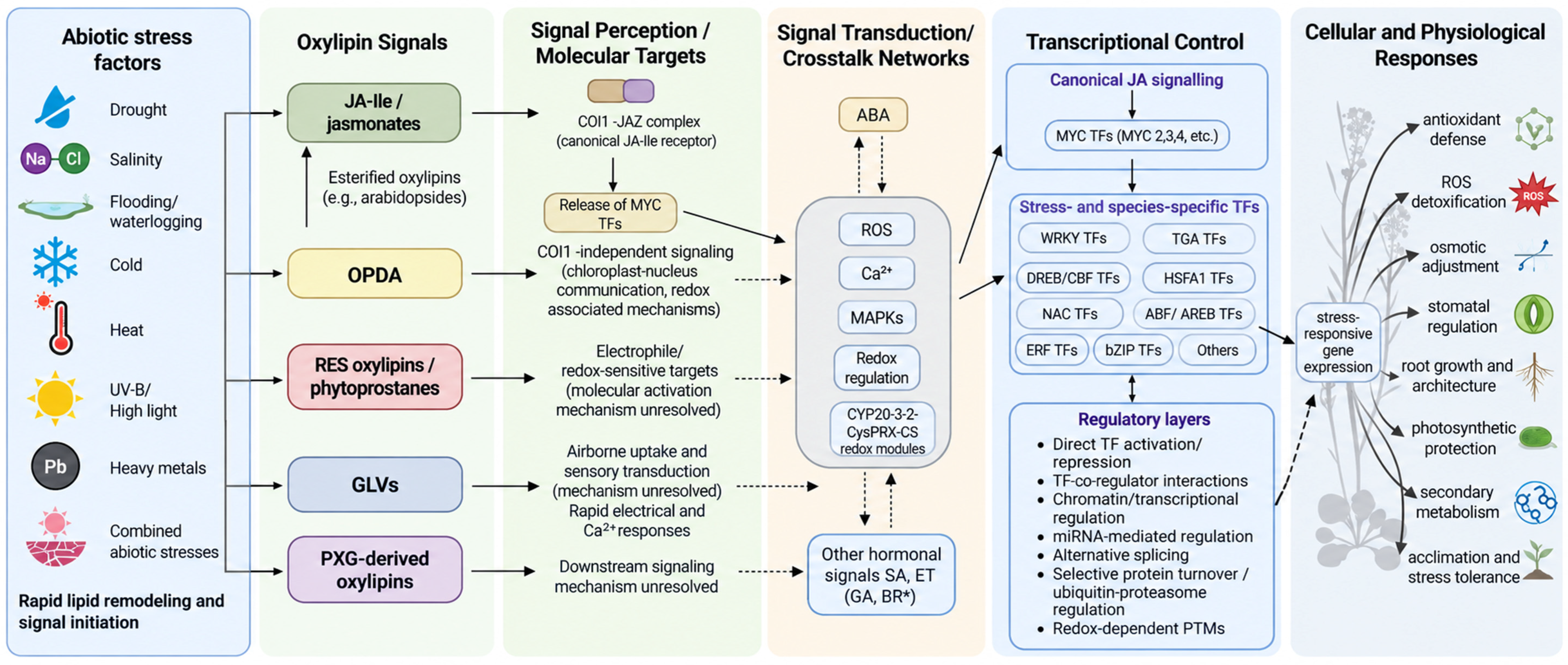
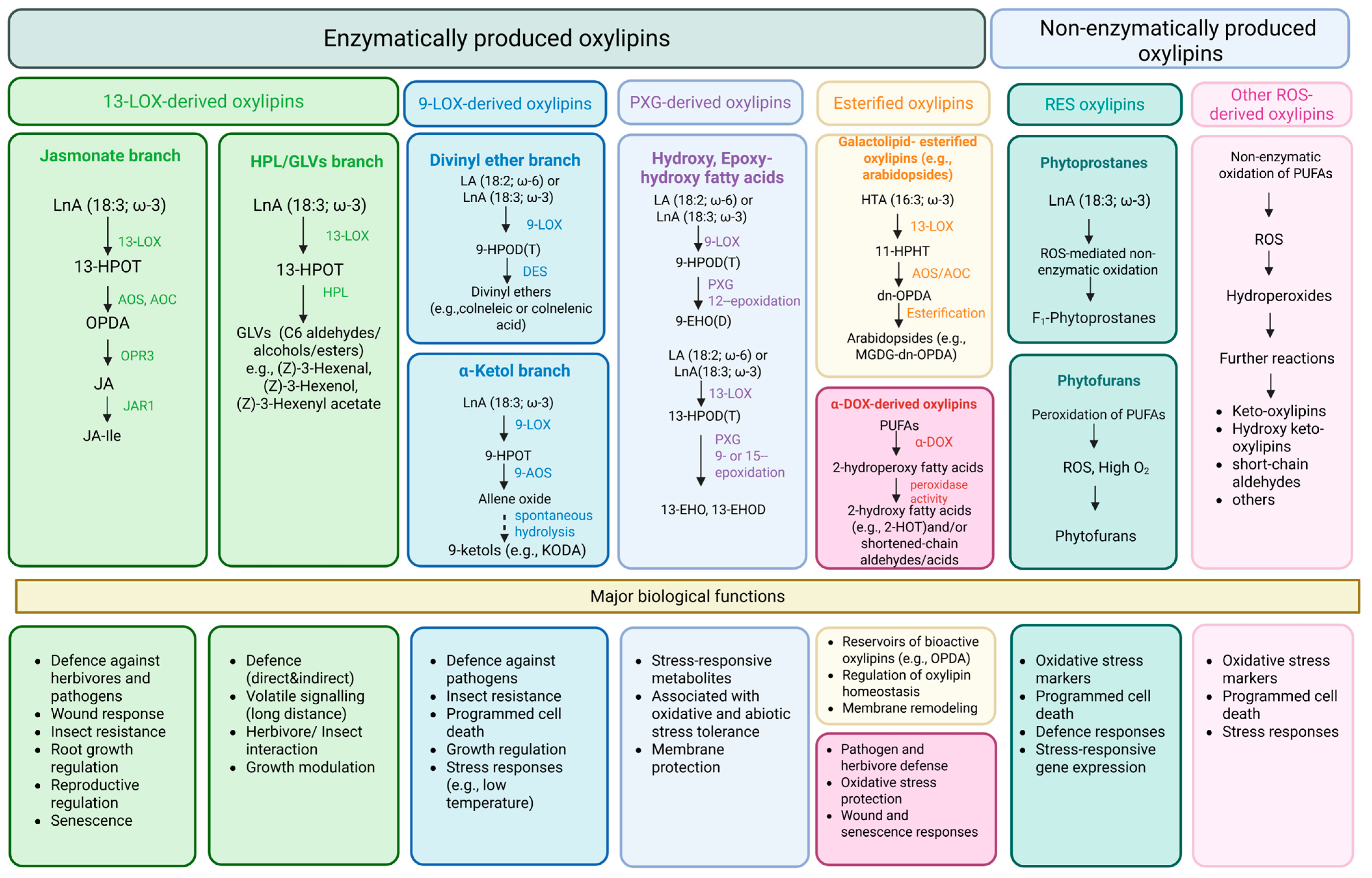
Plant oxylipins are a diverse group of oxygenated fatty acid derivatives that function as important signaling molecules in plant responses to abiotic stress. Although jasmonates, particularly jasmonic acid (JA) and its derivatives, have been extensively studied, increasing evidence demonstrates that other oxylipin classes, including 12-oxophytodienoic acid (OPDA), green leaf volatiles (GLVs), reactive electrophilic oxylipins (RES), and peroxygenase (PXG)-derived oxylipins, also contribute to stress adaptation. This review summarizes current understanding of the molecular mechanisms underlying oxylipin signal perception, transduction, and regulation, with particular emphasis on interactions with other plant hormone pathways, reactive oxygen species (ROS), Calcium (Ca2+), and mitogen-activated protein kinase (MAPK) signaling. We further examine transcriptional, post-transcriptional, and post-translational mechanisms that regulate oxylipin responses and discuss their integration across individual and combined abiotic stresses. Particular attention is given to experimentally established mechanisms while distinguishing emerging or unresolved signaling processes. Understanding these interconnected signaling mechanisms will be important for developing strategies to improve crop resilience under global climate change.
Keywords: oxylipins; jasmonates; OPDA; oxylipin signaling; abiotic stress; signal crosstalk; ROS; calcium signaling; MAPK signaling; plant stress tolerance oxylipins; jasmonates; OPDA; oxylipin signaling; abiotic stress; signal crosstalk; ROS; calcium signaling; MAPK signaling; plant stress tolerance
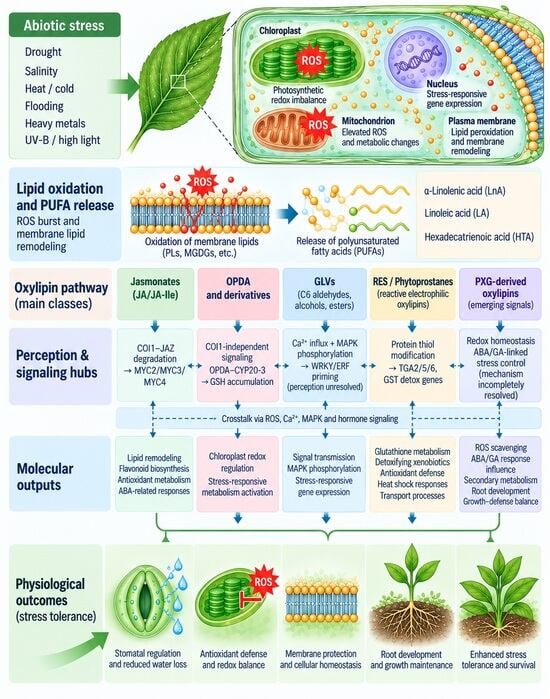
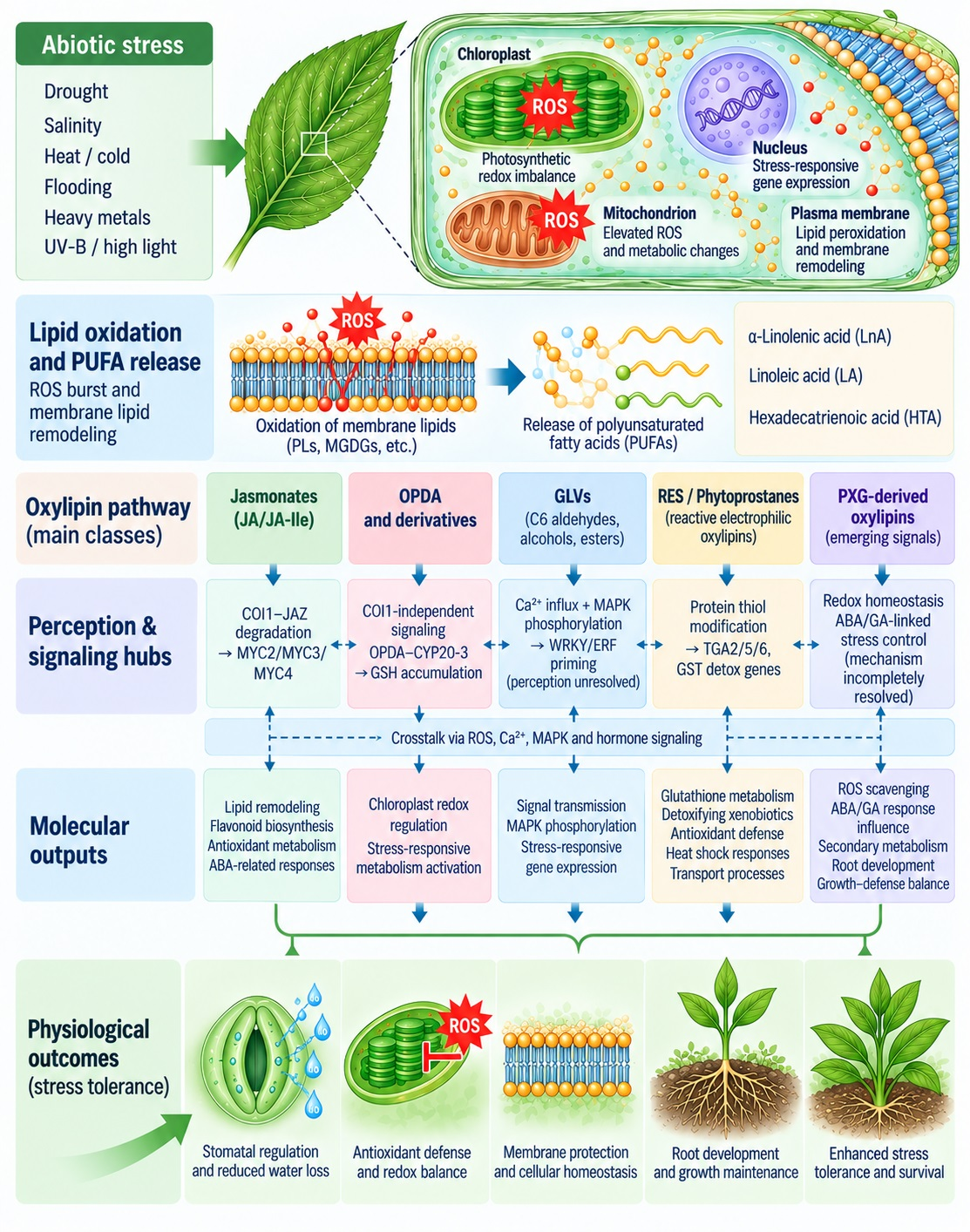
Graphical Abstract