How Do Green-Leaf and Yellow Tea Cultivars Influence Black Tea Flavor? Insights from Metabolomic Analysis with Ninghong Tea-Processing Technologies


Abstract
1. Introduction
2. Results
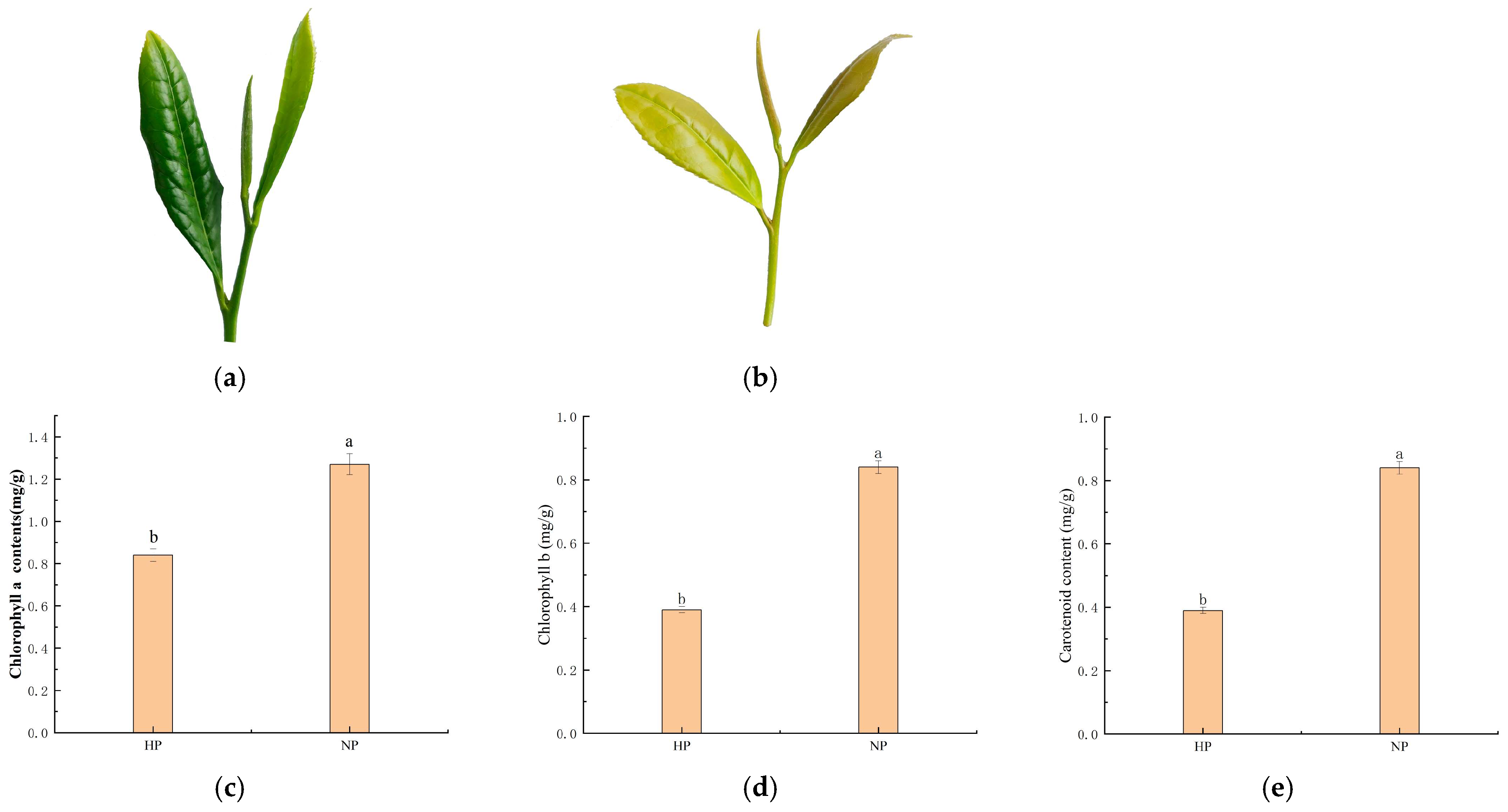
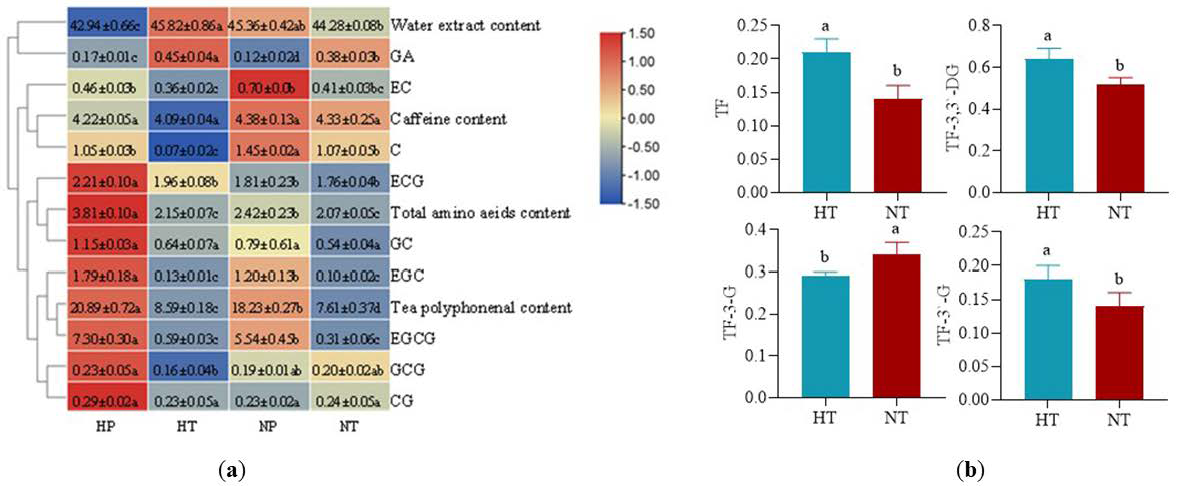
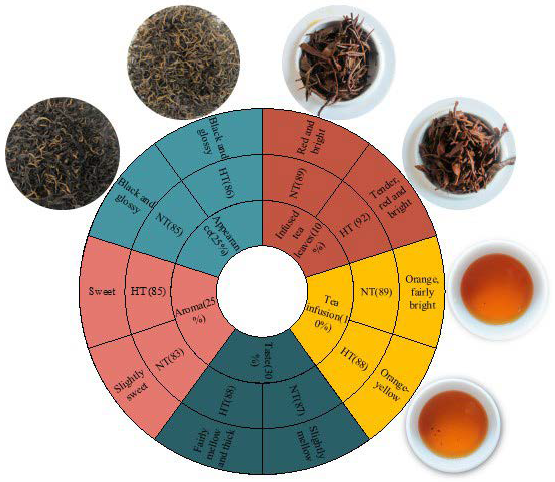
2.1. Phenotypic Traits and Pigment Content of HP and NP, and Sensory Characteristics of HT and NT
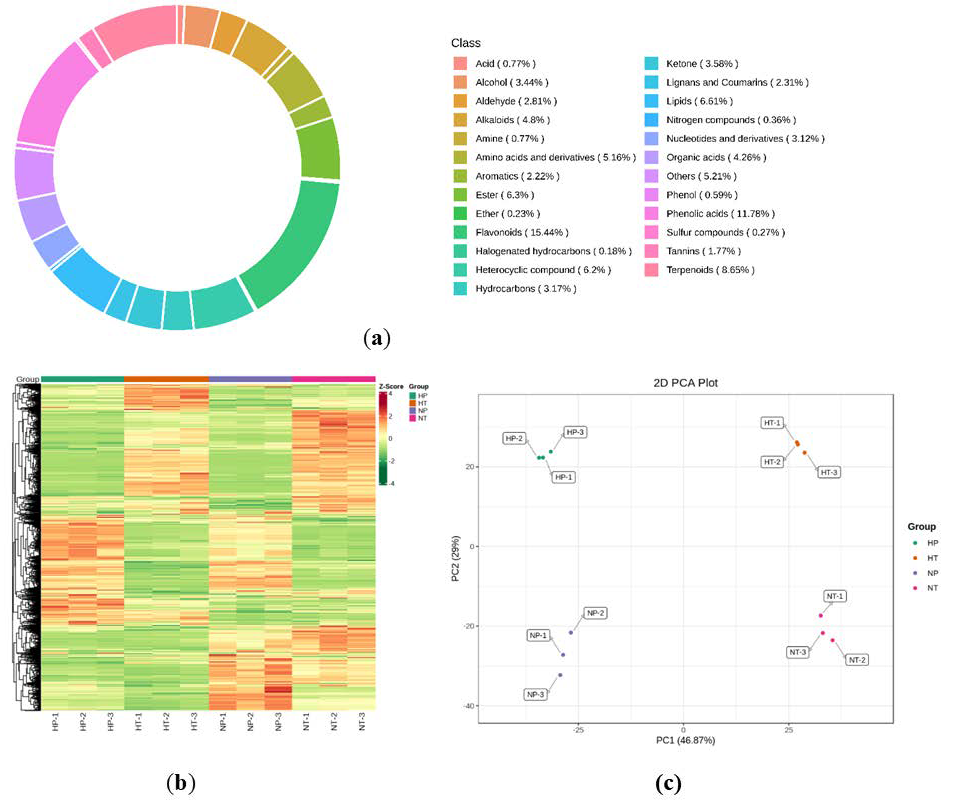
2.2. Overview of Metabolites for “Huangjinju” and “Ningzhou No. 2” Samples
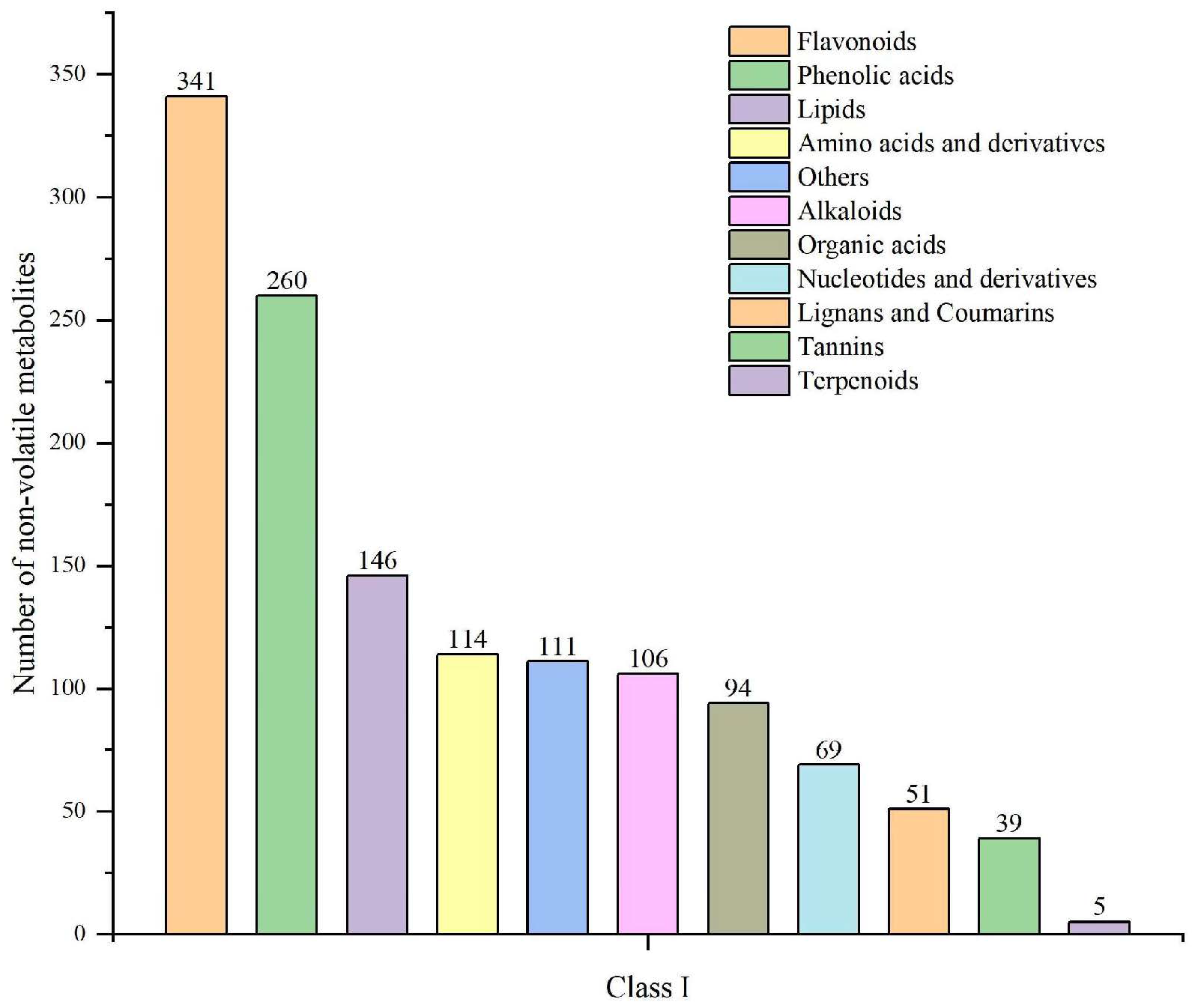
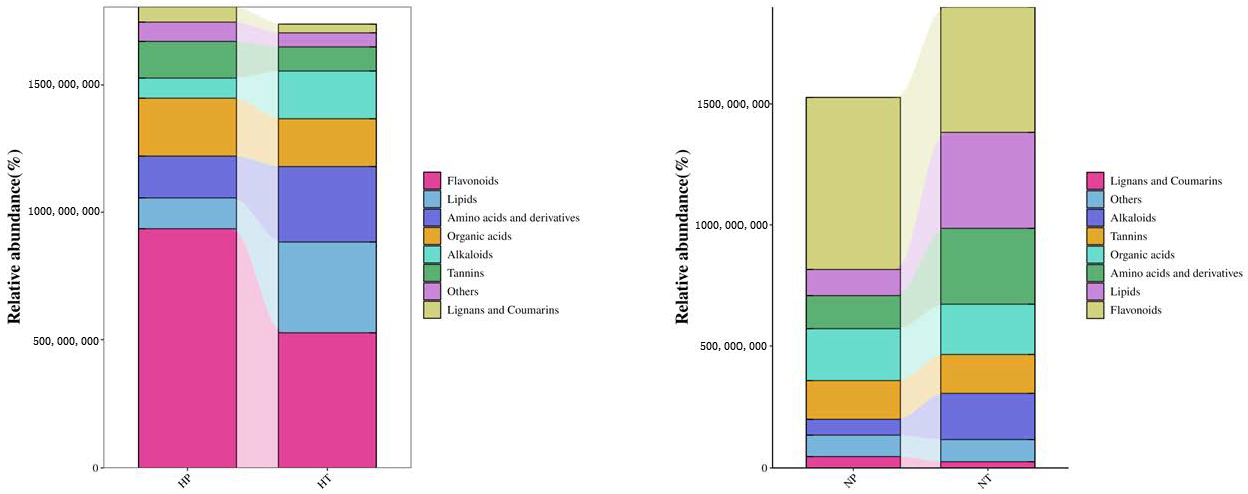
2.2.1. Non-Volatile Metabolites in Fresh Leaves and Processed Black Tea Samples of “Huangjinju” and “Ningzhou No. 2”
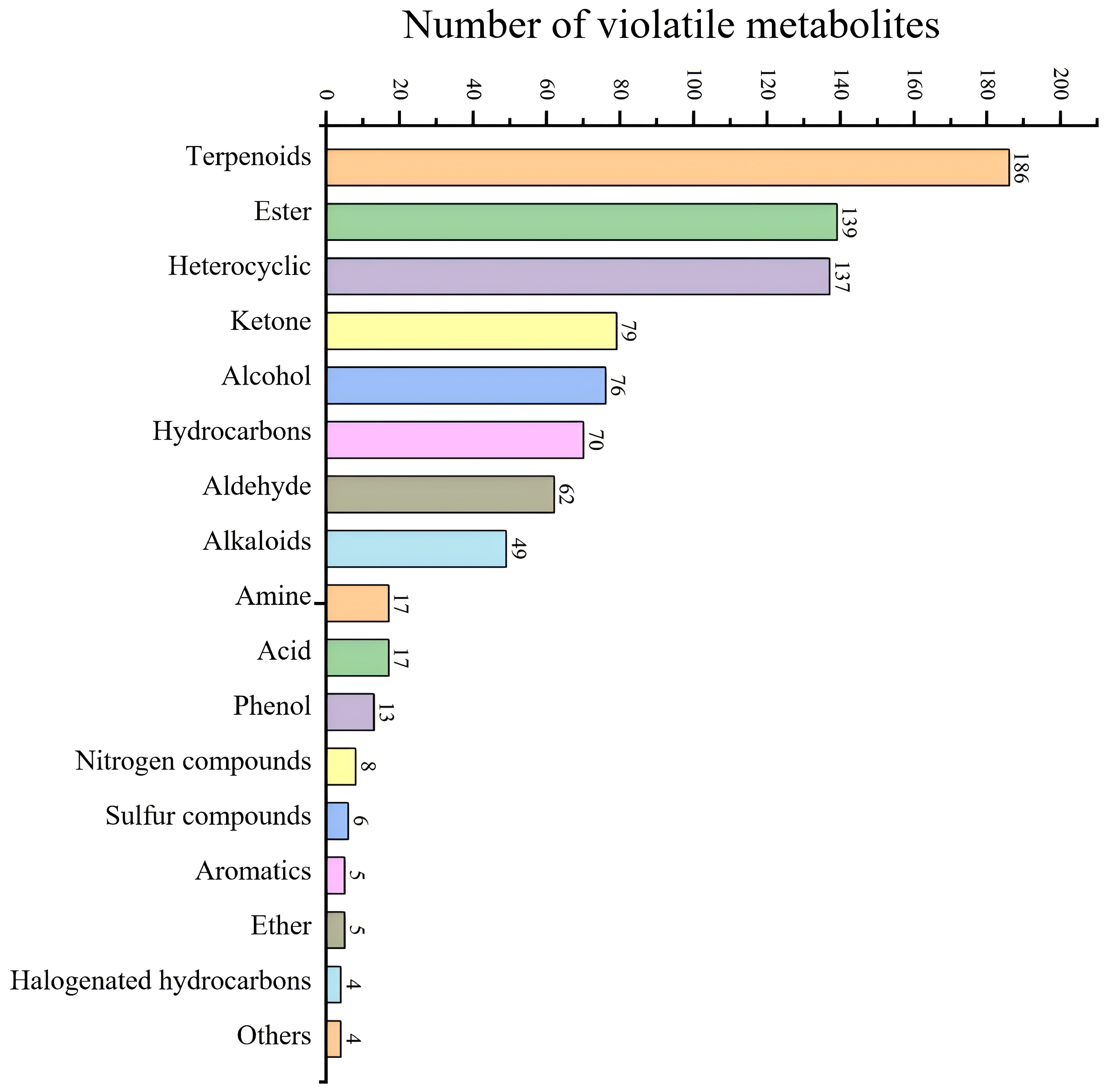
2.2.2. Volatile Metabolites in Fresh Leaves and Processed Black Tea Samples of “Huangjinju” and “Ningzhou No. 2”
2.3. Screening of Differential Metabolites
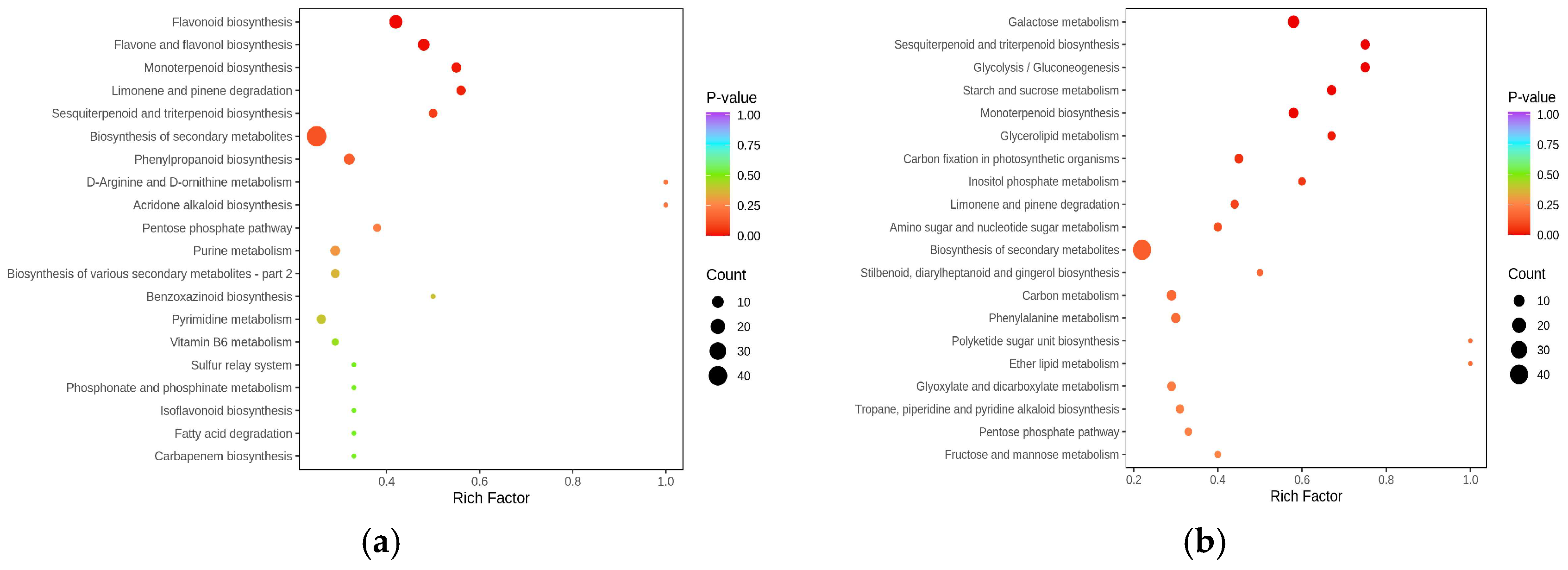
2.4. KEGG Annotation and Enrichment Analysis of Differential Metabolites
3. Discussion
4. Materials and Methods
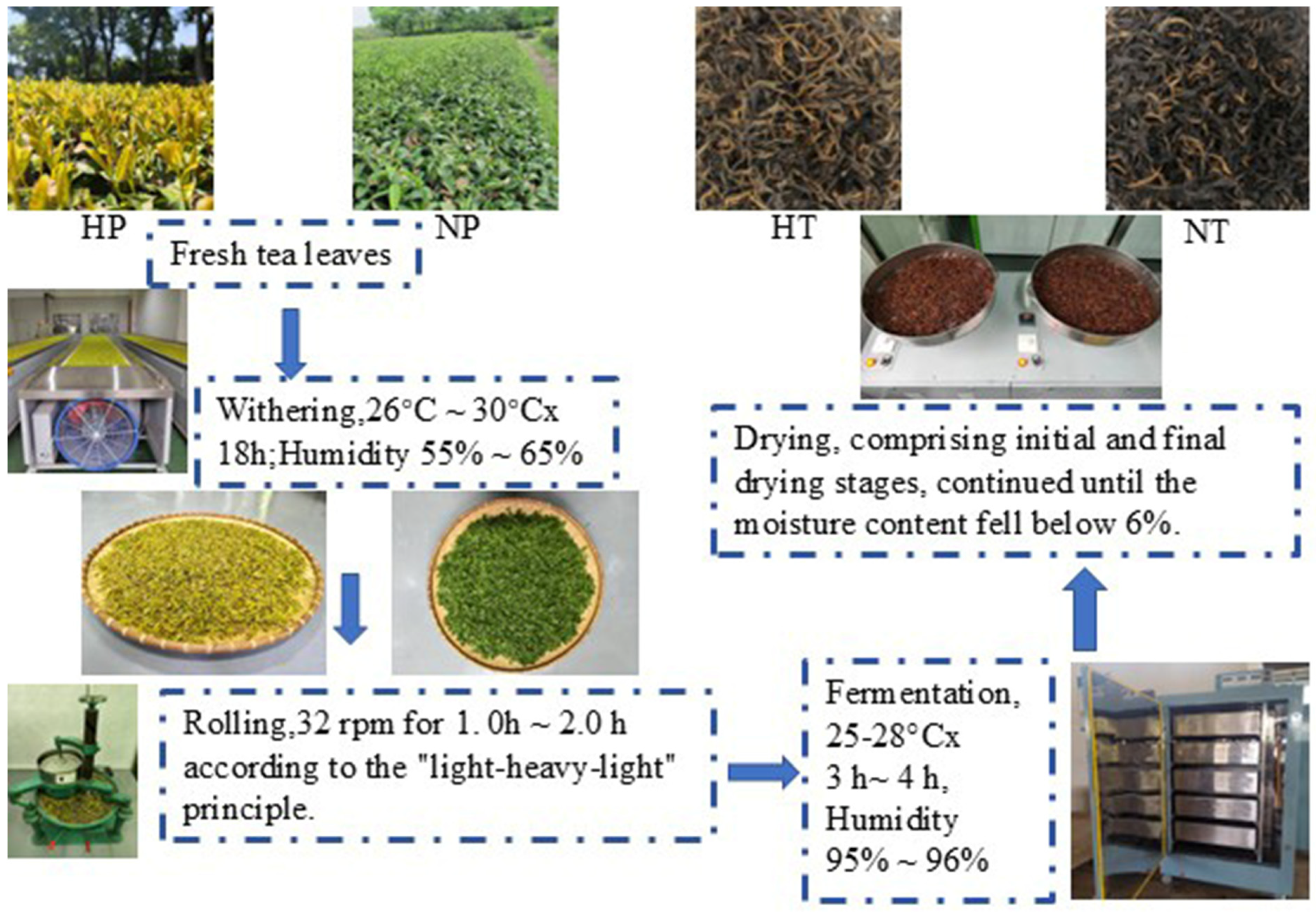
4.1. Plant Materials and Sample Preparation
4.2. Sampling
4.3. Pigment Content Determination
4.4. Main Biochemical Component Measurement
4.5. Sensory Evaluation
4.6. Analysis of Non-Volatile Metabolites in Black Teas Using UPLCMS/MS
4.6.1. Extraction of Non-Volatiles
4.6.2. LC–MS Conditions
4.6.3. Qualitative and Quantitative Analysis of Metabolites Using LC–MS
4.7. Analysis of Volatile Metabolites in Black Teas Using GC–MS
4.7.1. Extraction of Volatiles
4.7.2. HS–SPME Extraction Conditions
4.7.3. GC–MS Conditions
4.7.4. Metabolite Identification and Quantification Principles of GC–MS
4.8. OAV Calculation
4.9. Statistical Analysis
Supplementary Materials
Author Contributions
Funding
Institutional Review Board Statement
Informed Consent Statement
Data Availability Statement
Acknowledgments
Conflicts of Interest
Abbreviations
| OAV | Odor Activity Value |
| PCA | Principal Component Analysis |
| OPLS-DA | Orthogonal Partial Least-Squares Discriminant Analysis |
| VIP | Variable Importance in Projection |
| GA | Gallate |
| EC | Epicatechin |
| C | Catechin |
| ECG | Epicatechin Gallate |
| GC | Gallocatechin |
| EGC | Epigallocatechin |
| EGCG | Epigallocatechin Gallate |
| GCG | Gallocatechin gallate |
| CG | Catechin gallate |
References
- Chen, T.N.; Hu, Y.J.; Fan, Q.S. Renowned Ningzhou Gongfu black tea at home and abroad. China Tea 2009, 10, 24–25. [Google Scholar]
- Liu, Y.F.; Teng, J.; Liu, Y.; Wang, M.; Chen, Q.C.; Liu, Y. SBSE-GC-MS Analysis the Differential Aroma Components of Ning Black Teas at Different Quality Levels. Sci. Technol. Food Ind. 2023, 44, 254–264. [Google Scholar]
- Jiang, X.F.; Li, Y.S.; Shi, X.P.; Yang, P.X.; Liu, B.Y.; Ni, D.J. SBSE-GC-MS Suitability of “Huangjinju”(C. sinensis) for manufacture. J. Food Saf. Qual. 2019, 10, 4217–4221. [Google Scholar]
- Jiang, X.F. Identification and Evaluation of Specific Tea Germplasm Resources in Jiangxi Province and Multiomics Analysis of Shoot Etiolation in Camellia sinensis var. Huangjinju. Doctoral Dissertation, Huazhong Agricultural University, Wuhan, China, 2021. [Google Scholar]
- Ye, M.F. Evaluation and identification of special tea tree resources-Huanjinju. China Tea 1994, 5, 28–29. [Google Scholar]
- Jiang, X.F.; Li, C.; Cao, H.H.; Zhang, J.G.; Yu, Z.; Ni, D.J.; Jiang, H.Y.; Hu, Y.G. Seasonal variation characteristics of biochemical components of Camellia sinensis var. “Huangjinju” and Camellia sinensis var. “Ningzhou2”. J. Food Saf. Qual. 2023, 14, 261–269. [Google Scholar]
- Shang, C.L.; Liu, Q.; Wang, M.X.; Hou, L.; Zhao, C.Z.; Wang, X.J.; Xia, H. Research Progress on Molecular Mechanisms of Leaf Color Variation in Plants. Shandong Agric. Sci. 2021, 53, 127–134. [Google Scholar]
- Gao, X.; Ho, C.T.; Li, X.F.; Lin, X.R.; Zhang, Y.Y.; Chen, Z.Z.; Li, B. Phytochemicals, Anti-inflammatory, Antiproliferative, and Methylglyoxal Trapping Properties of Zijuan Tea. J. Food Sci. 2018, 83, 517–524. [Google Scholar] [CrossRef] [PubMed]
- Lin, X.Y.; Chen, X.J.; Wang, P.J.; Zheng, Y.C.; Guo, Y.C.; Hong, Y.P.; Yang, R.X.; Ye, N.X. Metabolite Profiling in Albino Tea Mutant Camellia sinensis ‘Fuyun 6’ Using LC–ESI–MS/MS. Trees 2022, 36, 261–272. [Google Scholar] [CrossRef]
- Zhou, Z.; Chen, Z.D.; Wu, Q.J.; Xu, Y.L.; Sun, W.J. Cloning and Expression Analysis of CsPPH Gene in Tea Plant (Camellia sinensis). J. Tea Sci. 2020, 40, 39–50. [Google Scholar]
- Zhang, X.N.; Wen, B.B.; Zhang, Y.B.; Li, Y.; Yu, C.M.; Peng, Z.K.; Wang, K.B.; Liu, Z.H.; Huang, J.A.; Xiong, L.G.; et al. Transcriptomic and Biochemical Analysis Reveal Differential Regulatory Mechanisms of Photosynthetic Pigment and Characteristic Secondary Metabolites between High Amino Acids Green-leaf and Albino Tea Cultivars. Sci. Hortic. 2022, 295, 110823. [Google Scholar] [CrossRef]
- Luo, X.Y.; Zhang, M.X.; Xu, P. The Intron Retention Variant CsClpP3m is Involved in Leaf Chlorosis in Some Tea Cultivars. Front. Plant Sci. 2022, 12, 804428. [Google Scholar] [CrossRef] [PubMed]
- Lu, M.Q.; Li, Y.F.; Jia, H.Y. Integrated Proteomics and Transcriptome Analysis Reveal a Decreased Catechins Metabolism in Variegated Tea Leaves. Sci. Hortic. 2022, 295, 110824. [Google Scholar] [CrossRef]
- Jiang, X.F.; Li, C.; Cao, H.H.; Wang, Z.H.; Jiang, H.Y.; Dong, C.W.; Ni, D.J.; Tong, Z.F. Transmission Electron Microscopic Study of Chloroplast Structure of Yellow Tea Cultivar Huangjinju. Acta Agric. Jiangxi 2022, 34, 52–57. [Google Scholar]
- Shen, G.Z.; Xie, Y.H.; Fan, X.J.; Yang, T.Y. Research Progress on the Physiological and Biochemical Characteristics and Mechanism of Leaf Color Heteromorphosis in Tea Plants (Camellia sinensis L.). J. Anhui Agric. Univ. 2023, 4, 582–594. [Google Scholar]
- Wang, P.J.; Zheng, Y.C.; Guo, Y.C. Widely Targeted Metabolomic and Transcriptomic Analyses of A Novel Albino Tea Mutant of “Rougui”. Forests 2020, 11, 229. [Google Scholar] [CrossRef]
- Wang, W.; Guo, Y.L. Development and Application of Albino Tea Varieties. J. Food Saf. Qual. 2017, 8, 3104–3110. [Google Scholar]
- Dong, F.; Zeng, L.T.; Yu, Z.M. Differential Accumulation of Aroma Compounds in Normal Green and Albino-induced Yellow Tea (Camellia sinensis) Leaves. Molecules 2018, 23, 2677. [Google Scholar] [CrossRef] [PubMed]
- Mei, X.; Lin, C.Y.; Wan, S.H.; Chen, B.Y.; Wu, H.L.; Zhang, L.Y. A Comparative Metabolomic Analysis Reveals Difference Manufacture Suitability in “Yinghong 9” and “Huangyu” Teas (Camellia sinensis). Front. Plant Sci. 2021, 12, 767724. [Google Scholar] [CrossRef] [PubMed]
- Wang, L.Y.; Zhao, R.B.; Cheng, H.; Wei, K.; Ruan, L.; Wu, L.Y. Current Situation on Breeding of Tea Cultivars with Special Leaf Colors. China Tea 2020, 42, 15–19. [Google Scholar]
- Song, L.; Ma, Q.; Zou, Z. Molecular Link between Leaf Coloration and Gene Expression of Flavonoid and Carotenoid Biosynthesis in Camellia sinensis Cultivar ‘Huangjinya’. Front. Plant Sci. 2017, 8, 803. [Google Scholar] [CrossRef] [PubMed]
- Zhong, Q.S.; Peng, J.K.; Dai, W.D.; Lin, Z.; Lv, H.P.; Chen, Q.B.; Li, X.L.; Chen, C.S. UHPLC-Q-Exactive/MS-based Differential Analysis of Chemical Components in Different Roasting Treatments of Yancha. Food Sci. 2023, 44, 268–282. [Google Scholar]
- Kaneko, S.; Kumazawa, K.; Masuda, H. Molecular and Sensory Studies on the Umami Taste of Japanese Green Tea. J. Agric. Food Chem. 2006, 54, 2688–2694. [Google Scholar] [CrossRef] [PubMed]
- Li, N.; Xu, J.R.; Zhao, Y.Q.; Zhao, M.M.; Liu, Z.H.; Wang, K.B.; Huang, J.A.; Zhu, M.Z. The Influence of Processing Methods on Polyphenol Profiling of Tea Leaves from the Aame Large-leaf Cultivar (Camellia sinensis var. assamica cv. Yunkang-10): Nontargeted/Targeted Polyphenomics and Electronic Sensory Analysis. Food Chem. 2024, 460, 140515. [Google Scholar] [CrossRef] [PubMed]
- Du, Y.Y. Studies on Albinism of Tea Cultivars with Albino Shoots. Doctorate’s Thesis, Zhejiang University, Hangzhou, China, 2008. [Google Scholar]
- Du, Y.Y.; Liang, Y.R.; Wang, H.; Wang, K.R.; Lu, J.L.; Zhang, G.H.; Lin, W.P.; Li, M.; Fang, Q.Y. A Study on the Chemical Composition of Albino Tea Cultivars. J. Hortic. Sci. Biotechnol. 2006, 81, 809–812. [Google Scholar] [CrossRef]
- Ma, Q.; Li, H.; Zou, Z.; Arkorful, E.; Lv, Q.; Zhou, Q.; Chen, X.; Sun, K.; Li, X. Transcriptomic Analyses Identify Albino-associated Genes of a Novel Albino Tea Germplasm ‘Huabai 1’. Hortic. Res. 2018, 5, 54. [Google Scholar] [CrossRef] [PubMed]
- Lu, M.; Han, J.; Zhu, B. Significantly Increased Amino Acid Accumulation in A Novel Albino Branch of the Tea Plant (Camellia sinensis). Planta 2019, 249, 363–376. [Google Scholar] [CrossRef] [PubMed]
- Zhang, Y.; Zhu, Y.; Ye, H.X. Comparative Study on the Contents of the Major Chemical Constituents of Fragrant Tea from Different Producing Areas. Food Sci. 2017, 38, 184–191. [Google Scholar]
- Chen, D.; Zhao, Y.N.; Peng, J.F. Chemical Composition Profiling of Sun-Dried Black Tea of Different Ages Based on Metabolomics Approach. Food Sci. 2022, 43, 150–159. [Google Scholar]
- Jabeen, S.; Alam, S.; Saleem, M. Withering Timings Affect the Total Free Amino Acids and Mineral Contents of Tea Leaves during Black Tea Manufacturing. Arab. J. Chem. 2019, 12, 2411–2417. [Google Scholar] [CrossRef]
- Al-Dalali, S.; Zheng, F.; Sun, B. Characterization and Comparison of Aroma Profiles and Aroma-Active Compounds between Traditional and Modern Sichuan Vinegars by Molecular Sensory Science. J. Agric. Food Chem. 2020, 18, 68. [Google Scholar] [CrossRef] [PubMed]
- Nagegowda, D.A. Plant Volatile Terpenoid Metabolism: Biosynthetic Genes, Transcriptional Regulation and Subcellular Compartmentation. FEBS Lett. 2010, 584, 2965–2973. [Google Scholar] [CrossRef] [PubMed]
- Wu, Y. Terpenoid compounds and tea aroma. Chem. Eng. Equip. 2009, 11, 123–125. [Google Scholar]
- Song, C.J.; Fan, F.Y.; Gong, S.Y.; Guo, H.W.; Li, C.L.; Zong, B.Z. Taste Characteristic and Main Contributing Compounds of Different Origin Black tea. Chin. Agric. Sci. 2020, 53, 383–394. [Google Scholar]
- Jiang, X.; Zhao, H.; Guo, F.; Shi, X.; Ye, C.; Yang, P.; Liu, B.; Ni, D. Transcriptomic analysis reveals mechanism of light-sensitive albinism in tea plant Camellia sinensis ‘Huangjinju’. BMC Plant Biol. 2020, 20, 216. [Google Scholar] [CrossRef] [PubMed]
- Zhou, J.; Fang, T.; Li, W.; Jiang, Z.; Zhou, T.; Zhang, L.; Yu, Y. Widely targeted metabolomics using UPLC-QTRAP-MS/MS reveals chemical changes during the processing of black tea from the cultivar Camellia sinensis (L.) O. Kuntze cv. Huangjinya. Food Res. Int. 2022, 162, 112169. [Google Scholar] [CrossRef] [PubMed]
- Wu, H.; Huang, W.; Chen, Z.; Chen, Z.; Shi, J.; Kong, Q.; Sun, S.; Jiang, X.; Chen, D.; Yan, S. GC-MS-based metabolomic study reveals dynamic changes of chemical compositions during black tea processing. Food Res. Int. 2019, 120, 330–338. [Google Scholar] [CrossRef] [PubMed]
- Chen, D.; Sun, Z.; Gao, J.; Peng, J.; Wang, Z.; Zhao, Y.; Lin, Z.; Dai, W. Metabolomics combined with proteomics provides a novel interpretation of the compound differences among Chinese tea cultivars (Camellia sinensis var. sinensis) with different manufacturing suitabilities. Food Chem. 2022, 377, 131976. [Google Scholar] [CrossRef] [PubMed]
- Wu, R.; Liang, H.; Hu, N.; Lu, J.; Li, C.; Tang, D. Chemical, Sensory Variations in Black Teas from Six Tea Cultivars in Jingshan, China. Foods 2025, 14, 1558. [Google Scholar] [CrossRef] [PubMed]
- Tan, J.; Dai, W.; Lu, M.; Lv, H.; Guo, L.; Zhang, Y.; Zhu, Y.; Peng, Q.; Lin, Z. Study of the dynamic changes in the non-volatile chemical constituents of black tea during fermentation processing by a non-targeted metabolomics approach. Food Res. Int. 2016, 79, 106–113. [Google Scholar] [CrossRef]
- Yuan, H.; Cao, G.; Hou, X.; Huang, M.; Du, P.; Tan, T.; Zhang, Y.; Zhou, H.; Liu, X.; Liu, L.; et al. Development of a widely targeted volatilomics method for profiling volatilomes in plants. Mol. Plant 2022, 15, 189–202. [Google Scholar] [CrossRef] [PubMed]
- Zhai, X.; Zhang, L.; Granvogl, M.; Ho, C.T.; Wan, X. Flavor of tea (Camellia sinensis): A review on odorants and analytical techniques. Compr. Rev. Food Sci. Food Saf. 2022, 21, 3867–3909. [Google Scholar] [CrossRef] [PubMed]








| Compounds | Class I | CAS | Odor Threshold | HP | HT | NP | NT |
|---|---|---|---|---|---|---|---|
| 1,3,6-Octatriene, 3,7-dimethyl-, (Z)- | Terpenoids | 3338-55-4 | 0.055 | 1.372 ± 0.138 | 0.988 ± 0.226 | 4.736 ± 0.662 | 3.557 ± 0.095 |
| alpha.-Phellandrene | Terpenoids | 99-83-2 | 0.16 | 0.100 ± 0.012 | 0.069 ± 0.012 | 0.275 ± 0.036 | 0.208 ± 0.004 |
| 1,3-Cyclohexadiene, 1-methyl-4-(1-methylethyl)- | Terpenoids | 99-86-5 | 0.08 | 0.137 ± 0.013 | 0.093 ± 0.019 | 0.399 ± 0.043 | 0.319 ± 0.012 |
| trans-.beta.-Ocimene | Terpenoids | 3779-61-1 | 0.034 | 2.992 ± 0.303 | 2.555 ± 0.548 | 9.942 ± 1.338 | 7.683 ± 0.146 |
| (2S,4R)-4-Methyl-2-(2-methylprop-1-en-1-yl)tetrahydro-2H-pyran | Terpenoids | 3033-23-6 | 0.0005 | 147.977 ± 2.698 | 46.916 ± 5.119 | 115.182 ± 10.720 | 44.678 ± 3.698 |
| β-Ionone | Terpenoids | 14901-07-6 | 0.021 | 1.977 ± 0.347 | 1.885 ± 0.635 | 1.866 ± 0.583 | 2.448 ± 0.385 |
| 2,4-Heptadien-1-ol, (E,E)- | Alcohol | 33467-79-7 | 0.032 | 0.701 ± 0.018 | 0.039 ± 0.006 | 1.143 ± 0.051 | 0.109 ± 0.008 |
| 2-Furanmethanol | Alcohol | 98-00-0 | 0.0123 | 0.430 ± 0.068 | 0.290 ± 0.014 | 1.566 ± 0.719 | 0.299 ± 0.036 |
| 2-Octanol | Alcohol | 123-96-6 | 0.0715 | 0.036 ± 0.001 | 0.000 ± 0.00 | 0.053 ± 0.001 | 0.000 ± 0.000 |
| 3-Mercapto-3-methylbutanol | Alcohol | 34300-94-2 | 0.002 | 0.266 ± 0.033 | 0.072 ± 0.003 | 0.615 ± 0.167 | 0.180 ± 0.017 |
| 1-Octen-3-ol | Alcohol | 3391-86-4 | 0.016 | 0.347 ± 0.025 | 0.088 ± 0.009 | 0.473 ± 0.091 | 0.182 ± 0.016 |
| trans,cis-2,6-Nonadien-1-ol | Alcohol | 28069-72-9 | 0.001 | 17.225 ± 0.894 | 12.687 ± 2.573 | 14.098 ± 3.200 | 11.629 ± 1.978 |
| 1-Nonanol | Alcohol | 143-08-8 | 0.09 | 0.014 ± 0.001 | 0.050 ± 0.006 | 0.016 ± 0.002 | 0.081 ± 0.006 |
| Benzene, 1,2,4,5-tetramethyl- | Aromatics | 95-93-2 | 0.083 | 0.212 ± 0.021 | 0.076 ± 0.003 | 0.227 ± 0.035 | 0.095 ± 0.010 |
| 2,4-Decadienal, (E,E)- | Aldehyde | 25152-84-5 | 0.027 | 0.025 ± 0.003 | 0.021 ± 0.008 | 0.029 ± 0.008 | 0.049 ± 0.012 |
| BenzenAmine, N,N-dimethyl- | Amine | 121-69-7 | 0.012 | 0.905 ± 0.015 | 0.209 ± 0.018 | 0.633 ± 0.073 | 0.193 ± 0.017 |
Disclaimer/Publisher’s Note: The statements, opinions and data contained in all publications are solely those of the individual author(s) and contributor(s) and not of MDPI and/or the editor(s). MDPI and/or the editor(s) disclaim responsibility for any injury to people or property resulting from any ideas, methods, instructions or products referred to in the content. |
© 2026 by the authors. Licensee MDPI, Basel, Switzerland. This article is an open access article distributed under the terms and conditions of the Creative Commons Attribution (CC BY) license.
Share and Cite
Jiang, X.; Li, C.; Yu, Y.; Wang, L.; Yang, X.; Wang, X. How Do Green-Leaf and Yellow Tea Cultivars Influence Black Tea Flavor? Insights from Metabolomic Analysis with Ninghong Tea-Processing Technologies. Int. J. Mol. Sci. 2026, 27, 8313. https://doi.org/10.3390/ijms27188313
Jiang X, Li C, Yu Y, Wang L, Yang X, Wang X. How Do Green-Leaf and Yellow Tea Cultivars Influence Black Tea Flavor? Insights from Metabolomic Analysis with Ninghong Tea-Processing Technologies. International Journal of Molecular Sciences. 2026; 27(18):8313. https://doi.org/10.3390/ijms27188313
Chicago/Turabian StyleJiang, Xinfeng, Chen Li, Yanfang Yu, Lixian Wang, Xuezhen Yang, and Xiaoling Wang. 2026. "How Do Green-Leaf and Yellow Tea Cultivars Influence Black Tea Flavor? Insights from Metabolomic Analysis with Ninghong Tea-Processing Technologies" International Journal of Molecular Sciences 27, no. 18: 8313. https://doi.org/10.3390/ijms27188313
APA StyleJiang, X., Li, C., Yu, Y., Wang, L., Yang, X., & Wang, X. (2026). How Do Green-Leaf and Yellow Tea Cultivars Influence Black Tea Flavor? Insights from Metabolomic Analysis with Ninghong Tea-Processing Technologies. International Journal of Molecular Sciences, 27(18), 8313. https://doi.org/10.3390/ijms27188313