Review

Modeling Diabetic Neuropathy: Injury Biomarkers for Early Detection Through Neuronal and Glial In Vitro Models


by
Luisa Muratori
1,2,†,
Simona Rando
1,2,† and
Stefania Raimondo
1,2,*
1
Department of Clinical and Biological Sciences, University of Torino, 10043 Orbassano, Italy
2
Neuroscience Institute Cavalieri Ottolenghi (NICO), University of Torino, 10043 Orbassano, Italy
*
Author to whom correspondence should be addressed.
These authors contributed equally to this work.
Int. J. Mol. Sci. 2026, 27(18), 8234; https://doi.org/10.3390/ijms27188234
Submission received: 31 July 2026 / Revised: 2 September 2026 / Accepted: 14 September 2026 / Published: 16 September 2026
(This article belongs to the Special Issue Molecular Mechanisms and Pathophysiology of Nerve Regeneration)

Abstract

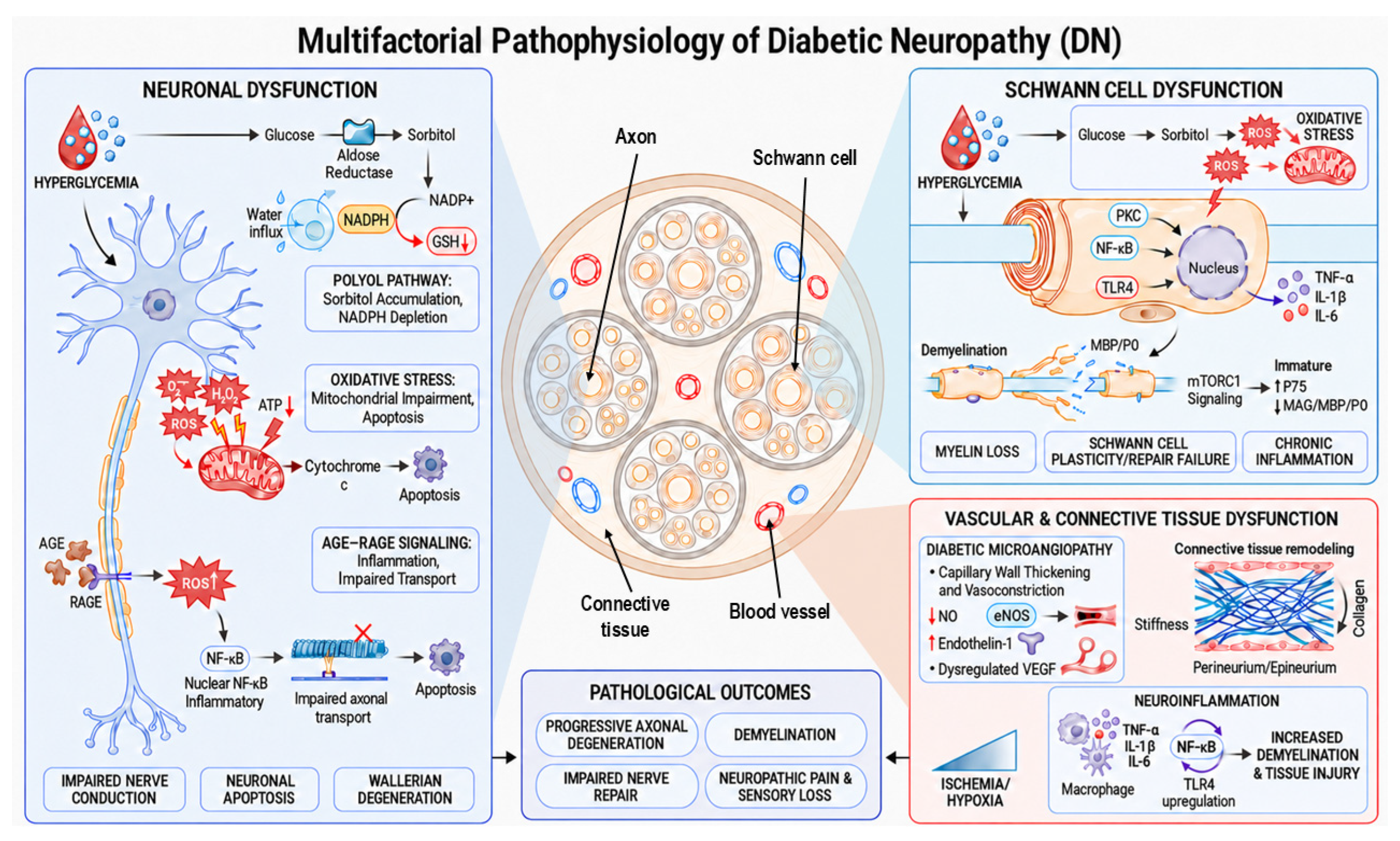
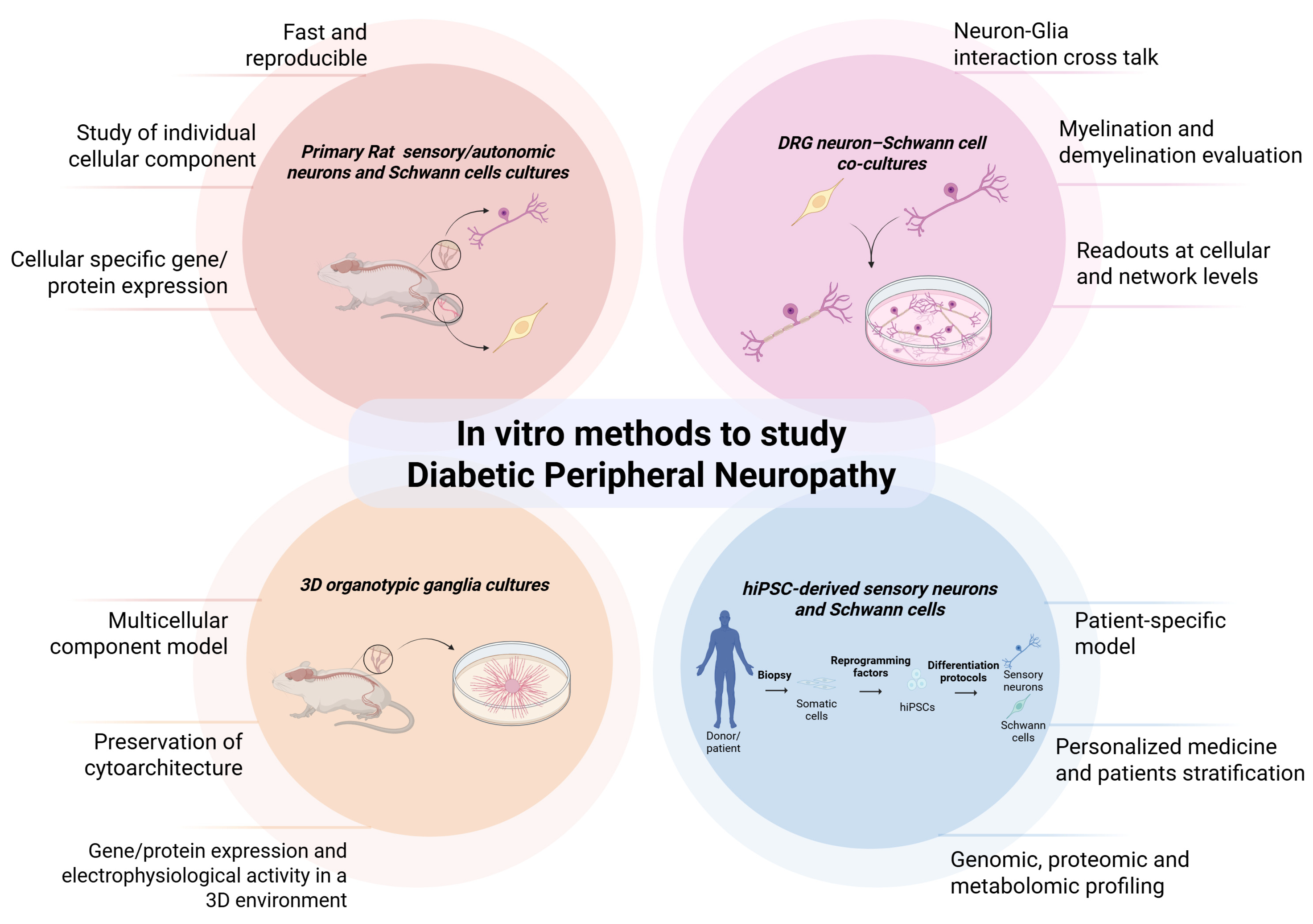
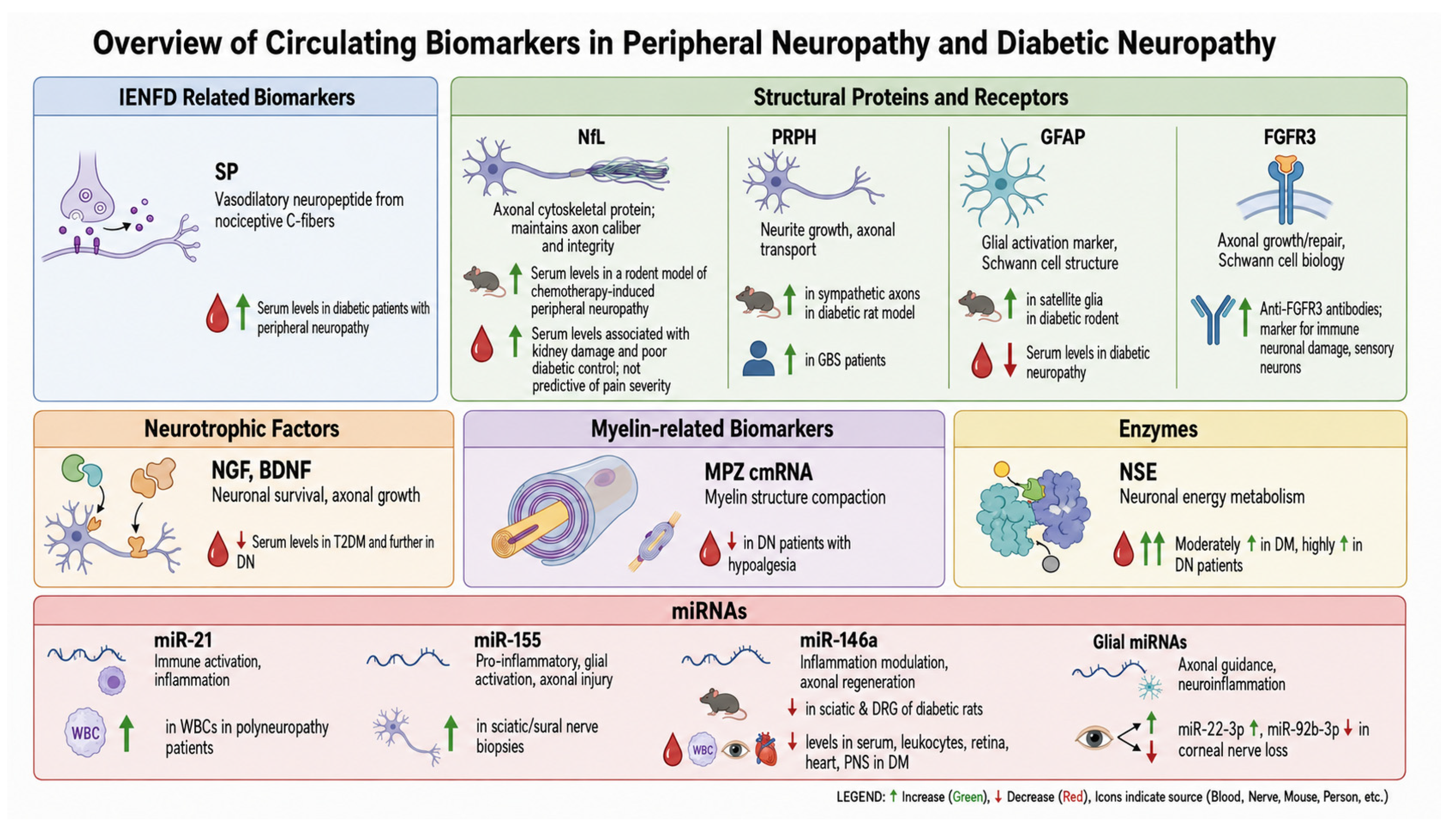
Diabetes mellitus (DM) is a rapidly expanding global health burden and a leading cause of chronic complications. Among these, diabetic peripheral neuropathy (DN) is one of the most prevalent and disabling, affecting up to half of individuals with long-standing diabetes and involving both somatic and autonomic nerve fibers. DN is characterized by an insidious onset: axonal and glial damage begins during subclinical phases and is frequently detected only when irreversible injury has occurred, as conventional neurological examinations and nerve conduction studies lack sensitivity for detecting early-stage disease. DN pathogenesis is multifactorial and primarily driven by chronic hyperglycemia, which triggers a network of converging pathogenic mechanisms. This narrative review aims to explore the evolving landscape of DN, with a particular focus on the study of neuronal injury biomarkers in the early detection of diabetic nerve damage. In addition, it highlights the relevance of in vitro neuronal and glial models as complementary experimental platforms to investigate the molecular and cellular mechanisms underlying DN and to support the identification and validation of candidate biomarkers. Moreover, these in vitro systems provide a strategic tool for examining the impact of circulating factors on axonal and glial integrity, thereby facilitating the discovery and preliminary assessment of potential blood-based biomarkers.
Keywords: diabetes; nerve damage; biomarker; diabetic peripheral neuropathy; hyperglycemia; hypoxia; neuronal injury diabetes; nerve damage; biomarker; diabetic peripheral neuropathy; hyperglycemia; hypoxia; neuronal injury