Structural Remodeling of TCR–HLA-DQ8 Recognition by a β-Cell Stress-Associated C19S Insulin Neoepitope in Type 1 Diabetes


Abstract
1. Introduction
2. Results
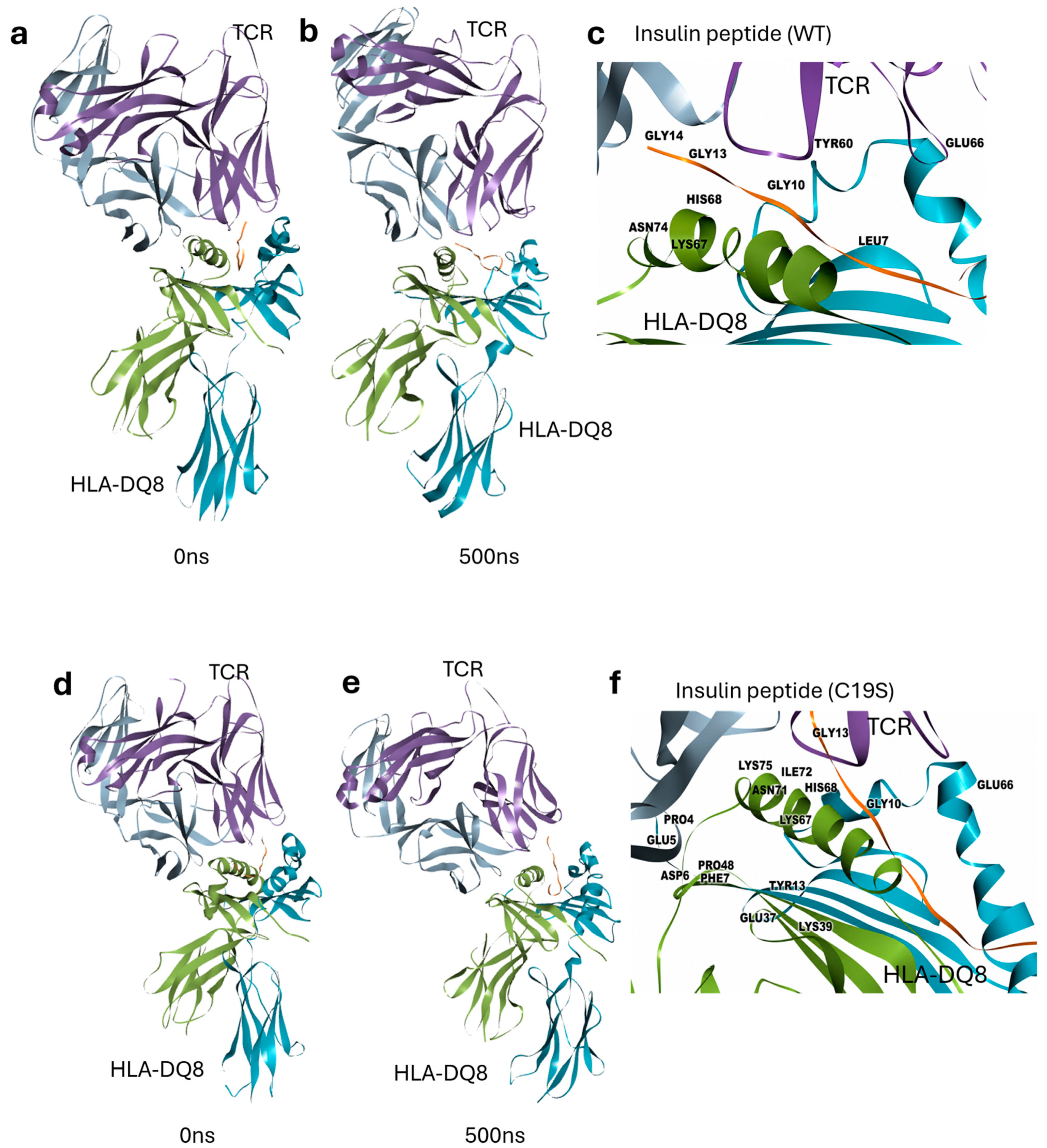
2.1. C19S Preserves TCR-Compatible HLA-DQ8 Presentation Relative to WT Insulin Peptide
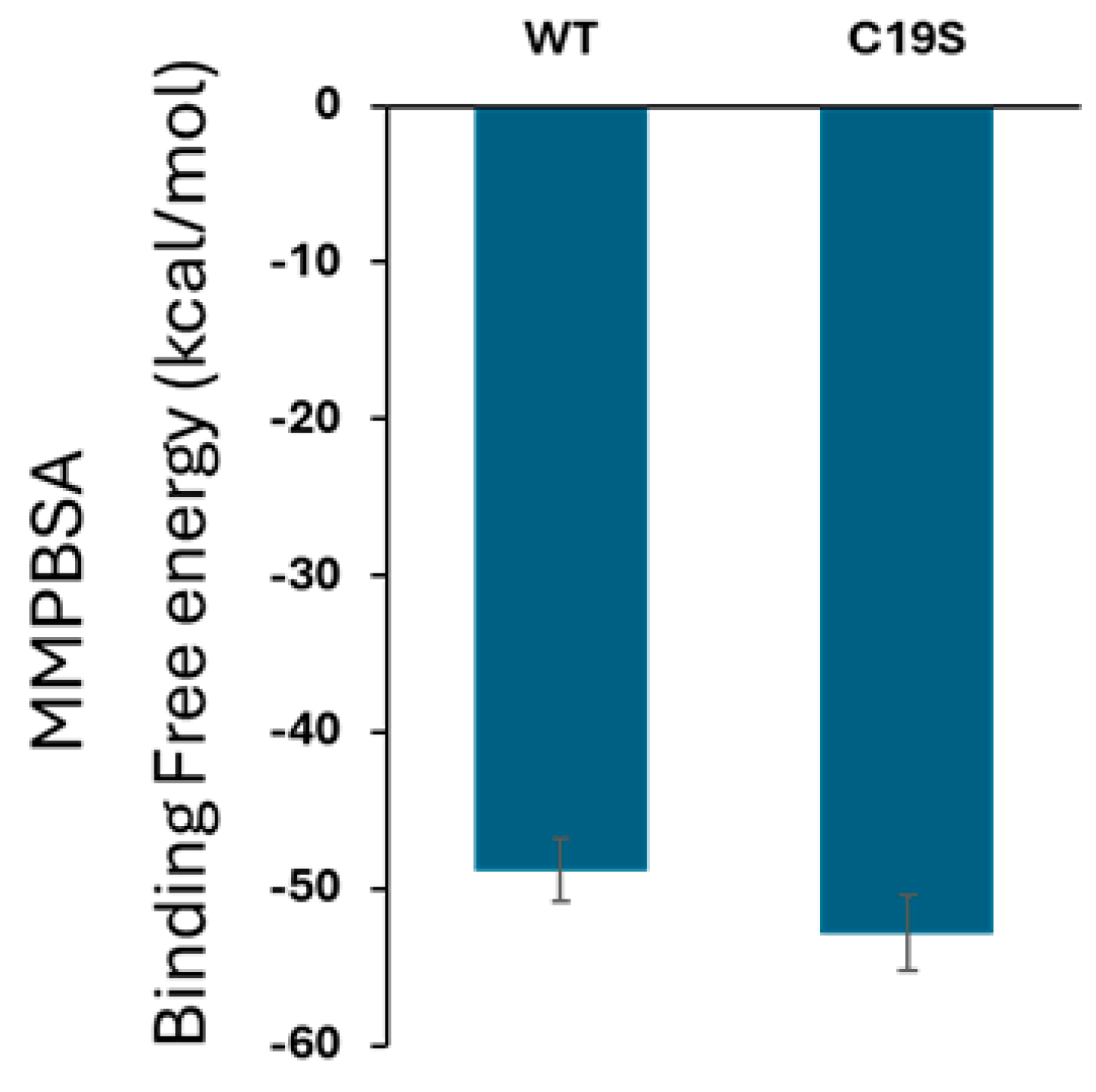
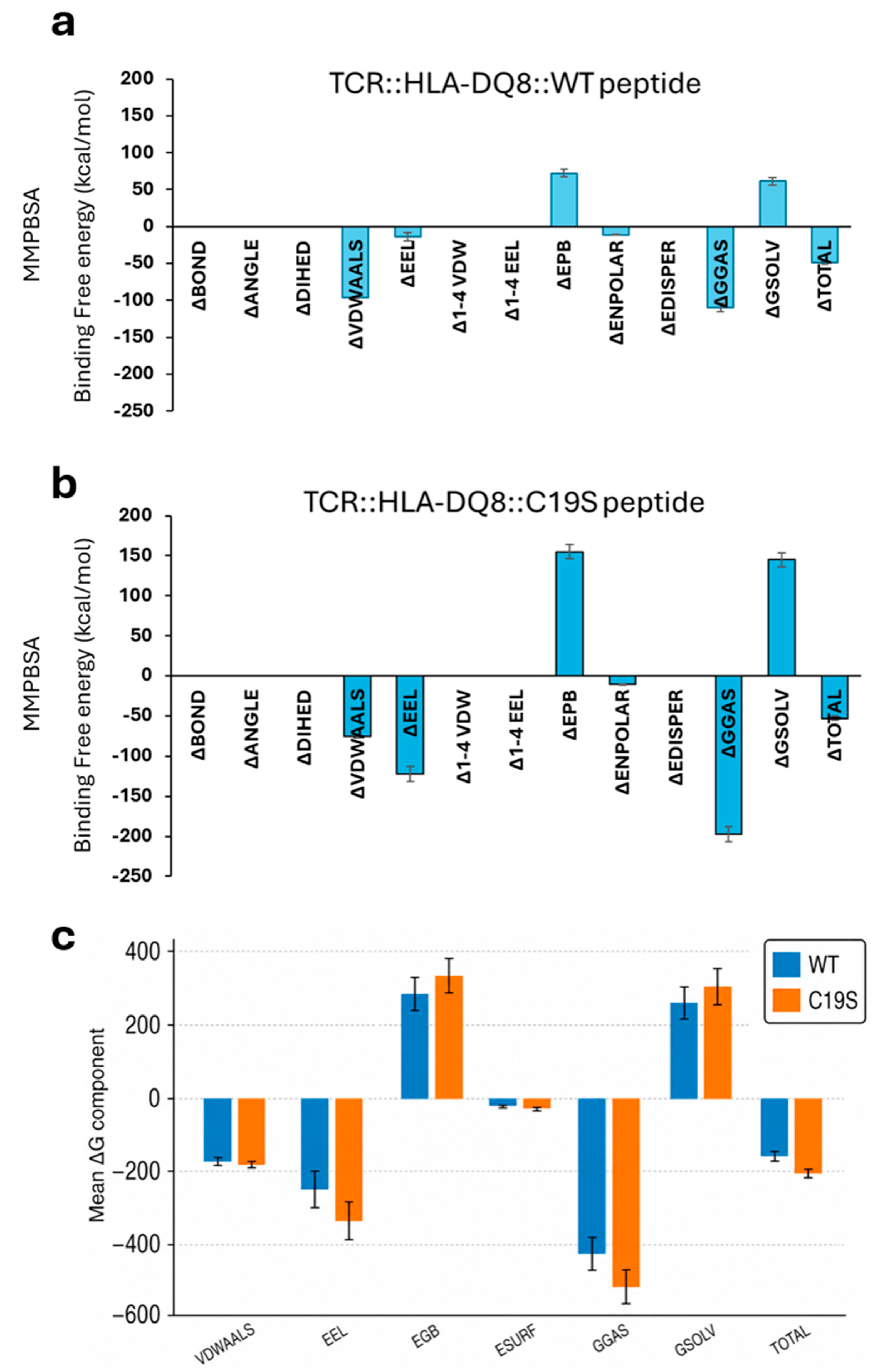
2.2. C19S Is Associated with a More Favorable Calculated Binding Free-Energy Profile
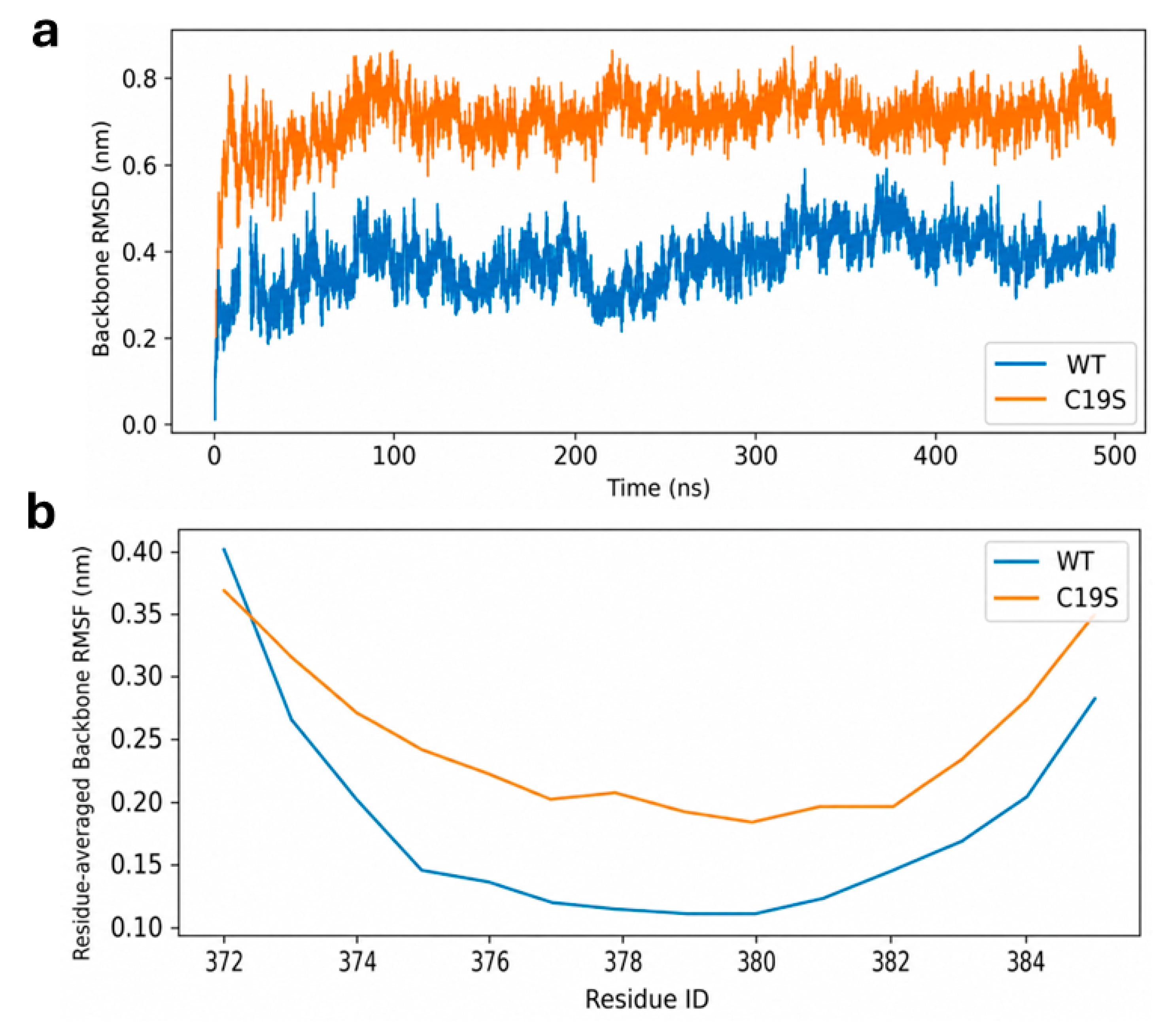
2.3. C19S Alters Peptide-Centered Dynamics Within the TCR–HLA-DQ8 Complex
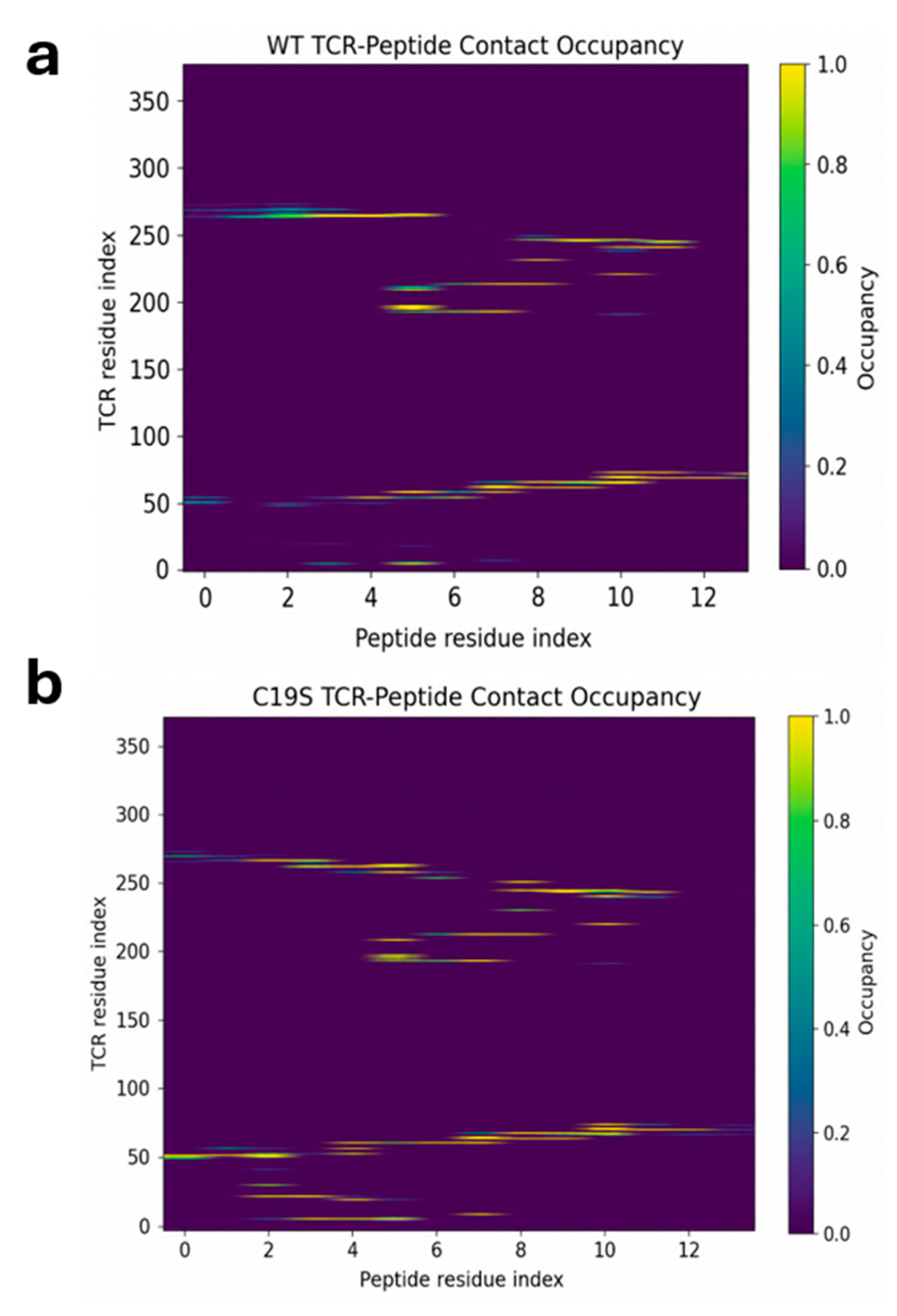
2.4. C19S Is Associated with Changes in the TCR-Facing Contact Architecture
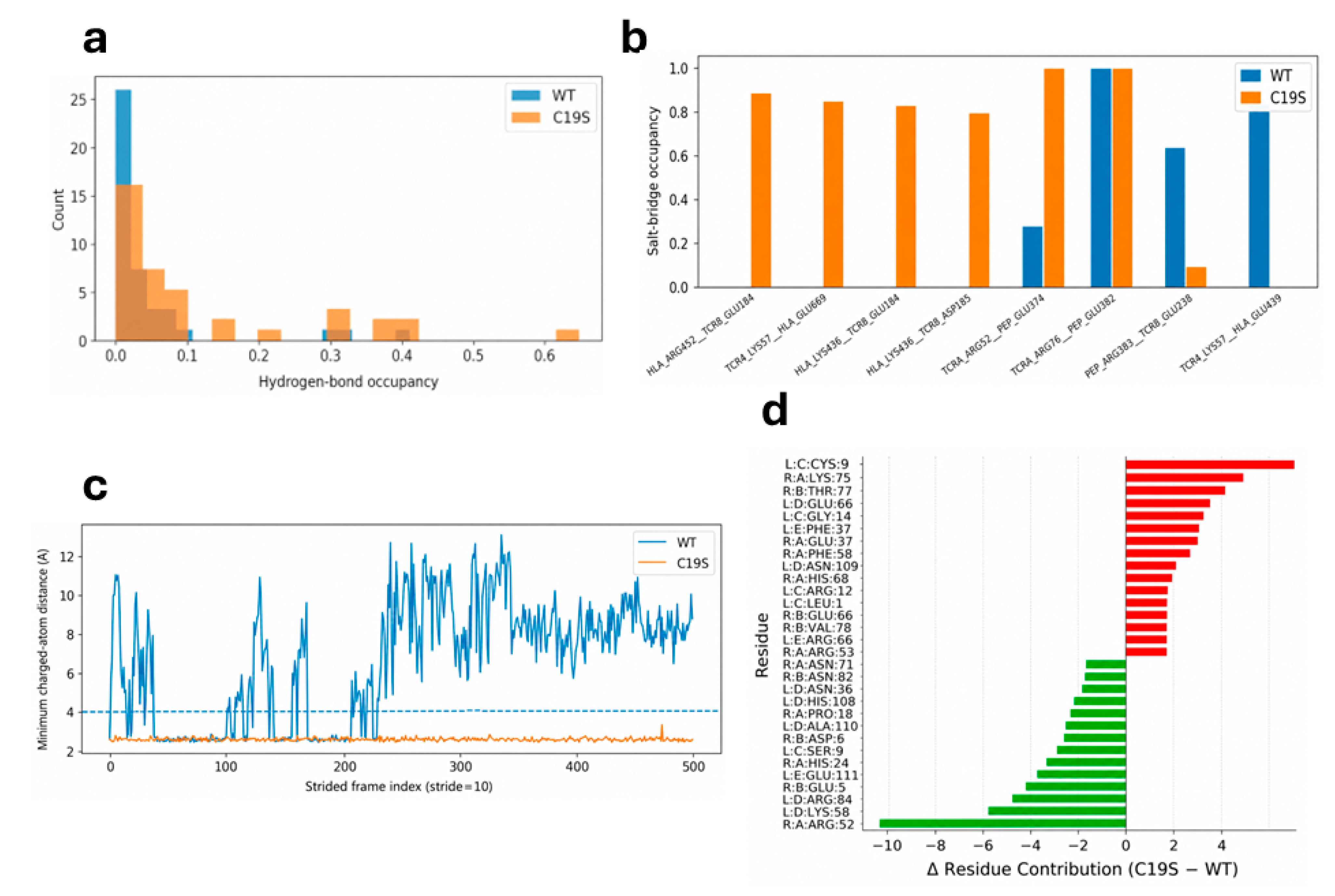
2.5. C19S Is Associated with a Predicted Redistribution of Polar and Electrostatic Interactions
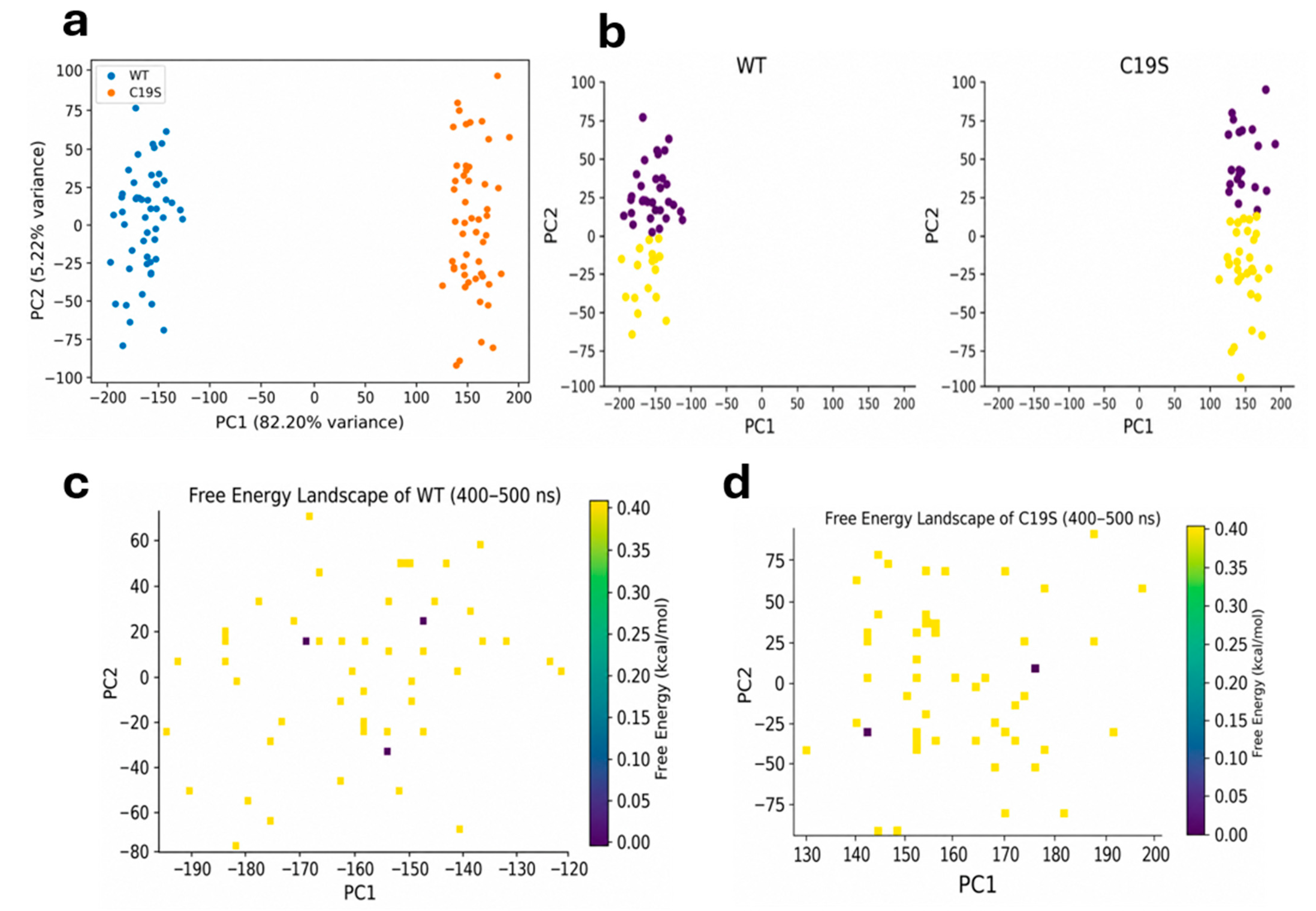
2.6. C19S Is Associated with Late-Phase Conformational Separation from WT
3. Discussion
4. Materials and Methods
4.1. Structural Preparation and System Validation of TCR–HLA-DQ8–Insulin Peptide Complexes
4.2. Protein–Protein Docking
4.3. MD Simulations and Trajectory Processing
4.4. MM/PBSA and MM/GBSA Binding-Energy Analyses
4.5. RMSD, RMSF, and Peptide-Presentation Geometry Analyses
4.6. Interface Contact, Hydrogen-Bond, and Salt-Bridge Analyses
4.7. Principal Component Analysis, Clustering, and Free-Energy Landscape Analysis
Supplementary Materials
Author Contributions
Funding
Institutional Review Board Statement
Informed Consent Statement
Data Availability Statement
Acknowledgments
Conflicts of Interest
References
- Eugster, A.; Lorenc, A.; Kotrulev, M.; Kamra, Y.; Goel, M.; Steinberg-Bains, K.; Sabbah, S.; Dietz, S.; Bonifacio, E.; Peakman, M.; et al. Physiological and pathogenic T cell autoreactivity converge in type 1 diabetes. Nat. Commun. 2024, 15, 9204. [Google Scholar] [CrossRef] [Scilit] [PubMed]
- Aamodt, K.I.; Powers, A.C. The pathophysiology, presentation and classification of Type 1 diabetes. Diabetes Obes. Metab. 2025, 27, 15–27. [Google Scholar] [CrossRef] [Scilit] [PubMed]
- Mittal, R.; Camick, N.; Lemos, J.R.N.; Hirani, K. Gene-environment interaction in the pathophysiology of type 1 diabetes. Front. Endocrinol. 2024, 15, 1335435. [Google Scholar] [CrossRef] [Scilit] [PubMed]
- Mauvais, F.X.; van Endert, P.M. Type 1 Diabetes: A Guide to Autoimmune Mechanisms for Clinicians. Diabetes Obes. Metab. 2025, 27, 40–56. [Google Scholar] [CrossRef] [Scilit] [PubMed]
- Mittal, R.; Alipour, F.; Doshi, J.; Mittal, M.; Hirani, K. Stress-driven remodeling of antigen presentation and chemokine signaling in pancreatic β-cells: Implications for type 1 diabetes. Front. Immunol. 2026, 17, 1772399. [Google Scholar] [CrossRef] [Scilit] [PubMed]
- Mittal, R.; Goldmann, R.; Mittal, M.; Chaudhary, N.; Ravindra, V.; Hirani, K. Neoepitopes at the crossroads of immunometabolism: Metabolic remodeling of antigen presentation in type 1 diabetes. Front. Immunol. 2026, 17, 1744422. [Google Scholar] [CrossRef] [Scilit] [PubMed]
- Racine, J.J.; Misherghi, A.; Dwyer, J.R.; Maser, R.; Forte, E.; Bedard, O.; Sattler, S.; Pugliese, A.; Landry, L.; Elso, C.; et al. HLA-DQ8 Supports Development of Insulitis Mediated by Insulin-Reactive Human TCR-Transgenic T Cells in Nonobese Diabetic Mice. J. Immunol. 2023, 211, 1792–1805. [Google Scholar] [CrossRef] [Scilit] [PubMed]
- Bhattacharjee, P.; Pakusch, M.; Lacorcia, M.; Tresoldi, E.; Rubin, A.F.; Foster, A.; King, L.; Chiu, C.Y.; Kay, T.W.H.; Karas, J.A.; et al. Proinsulin C-peptide is a major source of HLA-DQ8 restricted hybrid insulin peptides recognized by human islet-infiltrating CD4(+) T cells. PNAS Nexus 2024, 3, pgae491. [Google Scholar] [CrossRef] [Scilit] [PubMed]
- Michalek, D.A.; Tern, C.; Robertson, C.C.; Chen, W.M.; Onengut-Gumuscu, S.; Rich, S.S. HLA-focused type 1 diabetes genetic risk prediction in populations of diverse ancestry. Diabetologia 2026, 69, 146–156. [Google Scholar] [CrossRef] [Scilit] [PubMed]
- Caramalho, I.; Matoso, P.; Ligeiro, D.; Paixão, T.; Sobral, D.; Fitas, A.L.; Limbert, C.; Demengeot, J.; Penha-Gonçalves, C. The rare DRB1*04:08-DQ8 haplotype is the main HLA class II genetic driver and discriminative factor of Early-onset Type 1 diabetes in the Portuguese population. Front. Immunol. 2023, 14, 1299609. [Google Scholar] [CrossRef] [Scilit] [PubMed]
- Dashti, M.; Nizam, R.; Jacob, S.; Al-Kandari, H.; Al Ozairi, E.; Thanaraj, T.A.; Al-Mulla, F. Association between alleles, haplotypes, and amino acid variations in HLA class II genes and type 1 diabetes in Kuwaiti children. Front. Immunol. 2023, 14, 1238269. [Google Scholar] [CrossRef] [Scilit] [PubMed]
- Lee, K.H.; Wucherpfennig, K.W.; Wiley, D.C. Structure of a human insulin peptide-HLA-DQ8 complex and susceptibility to type 1 diabetes. Nat. Immunol. 2001, 2, 501–507, Erratum in Nat. Immunol. 2001, 2, 889. [Google Scholar] [CrossRef] [Scilit] [PubMed]
- Groegler, J.; Mangold, K.; Nicholson, K.; Dang, M.; Wenzlau, J.; Beard, K.S.; Hohenstein, A.; Powell, R.; Baker, R.; Haskins, K.; et al. Strategic Reduction of Hybrid Insulin Peptide Formation Significantly Delays Diabetes Onset in NOD Mice. Diabetes 2026, 75, 115–123. [Google Scholar] [CrossRef] [Scilit] [PubMed]
- Gray, G.I.; Chukwuma, P.C.; Eldaly, B.; Perera, W.; Brambley, C.A.; Rosales, T.J.; Baker, B.M. The Evolving T Cell Receptor Recognition Code: The Rules Are More Like Guidelines. Immunol. Rev. 2025, 329, e13439. [Google Scholar] [CrossRef] [Scilit] [PubMed]
- Yu, Y.; Zu, L.; Jiang, J.; Wu, Y.; Wang, Y.; Xu, M.; Liu, Q. Structure-aware deep model for MHC-II peptide binding affinity prediction. BMC Genom. 2024, 25, 127. [Google Scholar] [CrossRef] [Scilit] [PubMed]
- Gao, L.; Zhang, Y.; Ge, F.; Li, S.; Guo, Y.; Song, J.; Yu, D.J. Structure-Directed Pan-Specific T-Cell Receptor-Peptide-Major Histocompatibility Complex Interaction Prediction. J. Chem. Inf. Model. 2025, 65, 4674–4686. [Google Scholar] [CrossRef] [Scilit] [PubMed]
- Callebaut, A.; Guyer, P.; Derua, R.; Buitinga, M.; Manganaro, A.; Yi, X.; Sodré, F.M.C.; Vig, S.; Suleiman, M.; Marchetti, P.; et al. CD4+ T Cells From Individuals With Type 1 Diabetes Respond to a Novel Class of Deamidated Peptides Formed in Pancreatic Islets. Diabetes 2024, 73, 728–742. [Google Scholar] [CrossRef] [Scilit] [PubMed]
- Wenzlau, J.M.; Peterson, O.J.; Vomund, A.N.; DiLisio, J.E.; Hohenstein, A.; Haskins, K.; Wan, X. Mapping of a hybrid insulin peptide in the inflamed islet β-cells from NOD mice. Front. Immunol. 2024, 15, 1348131. [Google Scholar] [CrossRef] [Scilit] [PubMed]
- Srivastava, N.; Vomund, A.N.; Yu, R.; Peterson, O.J.; Yang, Y.; Turicek, D.P.; Abousaway, O.; Li, T.; Kain, L.; Stone, P.; et al. A microenvironment-driven HLA-II-associated insulin neoantigen elicits persistent memory T cell activation in diabetes. Nat. Immunol. 2026, 27, 82–97. [Google Scholar] [CrossRef] [Scilit] [PubMed]
- Mittal, R.; Karki, U.; Lemos, J.R.N.; Chapagain, P.; Hirani, K. Structural Modulation and Binding of HLA-DQ8 by Cysteine-to-Serine Mutated Insulin Peptide: Insights from Molecular Dynamics Simulations. Int. J. Mol. Sci. 2026, 27, 4846. [Google Scholar] [CrossRef] [Scilit] [PubMed]
- Ma, J.; Ayres, C.M.; Brambley, C.A.; Chandran, S.S.; Rosales, T.J.; Perera, W.; Eldaly, B.; Murray, W.T.; Corcelli, S.A.; Kovrigin, E.L.; et al. Dynamic allostery in the peptide/MHC complex enables TCR neoantigen selectivity. Nat. Commun. 2025, 16, 849. [Google Scholar] [CrossRef] [Scilit] [PubMed]
- McMaster, B.; Thorpe, C.J.; Rossjohn, J.; Deane, C.M.; Koohy, H. Quantifying conformational changes in the TCR:pMHC-I binding interface. Front. Immunol. 2024, 15, 1491656. [Google Scholar] [CrossRef] [Scilit] [PubMed]
- Ayres, C.M.; Corcelli, S.A.; Baker, B.M. The Energetic Landscape of Catch Bonds in TCR Interfaces. J. Immunol. 2023, 211, 325–332. [Google Scholar] [CrossRef] [Scilit] [PubMed]
- Bradley, P. Structure-based prediction of T cell receptor:peptide-MHC interactions. eLife 2023, 12, e82813. [Google Scholar] [CrossRef] [Scilit] [PubMed]
- Alhamar, G.; Vinci, C.; Franzese, V.; Tramontana, F.; Le Goux, N.; Ludvigsson, J.; Nissim, A.; Strollo, R. The role of oxidative post-translational modifications in type 1 diabetes pathogenesis. Front. Immunol. 2025, 16, 1537405. [Google Scholar] [CrossRef] [Scilit] [PubMed]
- Mannering, S.I.; Di Carluccio, A.R.; Elso, C.M. Neoepitopes: A new take on beta cell autoimmunity in type 1 diabetes. Diabetologia 2019, 62, 351–356. [Google Scholar] [CrossRef] [Scilit] [PubMed]
- Rodriguez-Calvo, T.; Johnson, J.D.; Overbergh, L.; Dunne, J.L. Neoepitopes in Type 1 Diabetes: Etiological Insights, Biomarkers and Therapeutic Targets. Front. Immunol. 2021, 12, 667989. [Google Scholar] [CrossRef] [Scilit] [PubMed]
- Herold, K.C.; Delong, T.; Perdigoto, A.L.; Biru, N.; Brusko, T.M.; Walker, L.S.K. The immunology of type 1 diabetes. Nat. Rev. Immunol. 2024, 24, 435–451. [Google Scholar] [CrossRef] [Scilit] [PubMed]
- Nanaware, P.P.; Calvo-Calle, J.M.; Redick, S.D.; Tarpley, M.W.; Cruz, J.; Clement, C.C.; Manganaro, A.; Velarde de la Cruz, E.E.; Muneeruddin, K.; Faulkner, M.; et al. The antigen presentation landscape of cytokine-stressed human pancreatic islets. Cell Rep. 2025, 44, 115927. [Google Scholar] [CrossRef] [Scilit] [PubMed]
- Anderson, A.M.; Landry, L.G.; Alkanani, A.A.; Pyle, L.; Powers, A.C.; Atkinson, M.A.; Mathews, C.E.; Roep, B.O.; Michels, A.W.; Nakayama, M. Human islet T cells are highly reactive to preproinsulin in type 1 diabetes. Proc. Natl. Acad. Sci. USA 2021, 118, e2107208118. [Google Scholar] [CrossRef] [Scilit] [PubMed]
- Pathiraja, V.; Kuehlich, J.P.; Campbell, P.D.; Krishnamurthy, B.; Loudovaris, T.; Coates, P.T.; Brodnicki, T.C.; O’Connell, P.J.; Kedzierska, K.; Rodda, C.; et al. Proinsulin-specific, HLA-DQ8, and HLA-DQ8-transdimer-restricted CD4+ T cells infiltrate islets in type 1 diabetes. Diabetes 2015, 64, 172–182. [Google Scholar] [CrossRef] [Scilit] [PubMed]
- Enczmann, J.; Balz, V.; Hoffmann, M.; Kummer, S.; Reinauer, C.; Döing, C.; Förtsch, K.; Welters, A.; Mayatepek, E.; Meissner, T.; et al. Next Generation Sequencing Identifies the HLA-DQA1*03:03 Allele in the Type 1 Diabetes Risk-Associated HLA-DQ8 Serotype. Genes 2021, 12, 1879. [Google Scholar] [CrossRef] [Scilit] [PubMed]
- Redondo, M.J.; Cuthbertson, D.; Steck, A.K.; Herold, K.C.; Oram, R.; Atkinson, M.; Brusko, T.M.; Parikh, H.M.; Krischer, J.P.; Onengut-Gumuscu, S.; et al. Characteristics of autoantibody-positive individuals without high-risk HLA-DR4-DQ8 or HLA-DR3-DQ2 haplotypes. Diabetologia 2025, 68, 588–601. [Google Scholar] [CrossRef] [Scilit] [PubMed]
- Koskenniemi, J.J.; Clasen, J.L.; You, L.; Parikh, H.M.; Vehik, K.; Yang, J.; Uusitalo, U.; Veijola, R.; Haller, M.J.; Ziegler, A.G.; et al. The Contribution of BMI to a Young Child’s Risk of Islet Autoimmunity Is Dependent on HLA-DR4-DQ8 Without HLA-DR3-DQ2. Diabetes Care 2025, 48, 2103–2110. [Google Scholar] [CrossRef] [Scilit] [PubMed]
- Natarajan, K.; Jiang, J.; May, N.A.; Mage, M.G.; Boyd, L.F.; McShan, A.C.; Sgourakis, N.G.; Bax, A.; Margulies, D.H. The Role of Molecular Flexibility in Antigen Presentation and T Cell Receptor-Mediated Signaling. Front. Immunol. 2018, 9, 1657. [Google Scholar] [CrossRef] [Scilit] [PubMed]
- Lazarski, C.A.; Chaves, F.A.; Jenks, S.A.; Wu, S.; Richards, K.A.; Weaver, J.M.; Sant, A.J. The kinetic stability of MHC class II:peptide complexes is a key parameter that dictates immunodominance. Immunity 2005, 23, 29–40. [Google Scholar] [CrossRef] [Scilit] [PubMed]
- Baumgartner, C.K.; Ferrante, A.; Nagaoka, M.; Gorski, J.; Malherbe, L.P. Peptide-MHC class II complex stability governs CD4 T cell clonal selection. J. Immunol. 2010, 184, 573–581. [Google Scholar] [CrossRef] [Scilit] [PubMed]
- Ferrante, A.; Templeton, M.; Hoffman, M.; Castellini, M.J. The Thermodynamic Mechanism of Peptide-MHC Class II Complex Formation Is a Determinant of Susceptibility to HLA-DM. J. Immunol. 2015, 195, 1251–1261. [Google Scholar] [CrossRef] [Scilit] [PubMed]
- Ayres, C.M.; Baker, B.M. Peptide-dependent tuning of major histocompatibility complex motional properties and the consequences for cellular immunity. Curr. Opin. Immunol. 2022, 76, 102184. [Google Scholar] [CrossRef] [Scilit] [PubMed]
- Yang, J.; Chow, I.T.; Sosinowski, T.; Torres-Chinn, N.; Greenbaum, C.J.; James, E.A.; Kappler, J.W.; Davidson, H.W.; Kwok, W.W. Autoreactive T cells specific for insulin B:11-23 recognize a low-affinity peptide register in human subjects with autoimmune diabetes. Proc. Natl. Acad. Sci. USA 2014, 111, 14840–14845. [Google Scholar] [CrossRef] [Scilit] [PubMed]
- Ihantola, E.L.; Ilmonen, H.; Kailaanmäki, A.; Rytkönen-Nissinen, M.; Azam, A.; Maillère, B.; Lindestam Arlehamn, C.S.; Sette, A.; Motwani, K.; Seay, H.R.; et al. Characterization of Proinsulin T Cell Epitopes Restricted by Type 1 Diabetes-Associated HLA Class II Molecules. J. Immunol. 2020, 204, 2349–2359. [Google Scholar] [CrossRef] [Scilit] [PubMed]
- Tran, M.T.; Faridi, P.; Lim, J.J.; Ting, Y.T.; Onwukwe, G.; Bhattacharjee, P.; Jones, C.M.; Tresoldi, E.; Cameron, F.J.; La Gruta, N.L.; et al. T cell receptor recognition of hybrid insulin peptides bound to HLA-DQ8. Nat. Commun. 2021, 12, 5110. [Google Scholar] [CrossRef] [Scilit] [PubMed]
- Tran, M.T.; Lim, J.J.; Loh, T.J.; Mannering, S.I.; Rossjohn, J.; Reid, H.H. A structural basis of T cell cross-reactivity to native and spliced self-antigens presented by HLA-DQ8. J. Biol. Chem. 2024, 300, 107612. [Google Scholar] [CrossRef] [Scilit] [PubMed]
- Mitchell, A.M.; Baschal, E.E.; McDaniel, K.A.; Fleury, T.; Choi, H.; Pyle, L.; Yu, L.; Rewers, M.J.; Nakayama, M.; Michels, A.W. Tracking DNA-based antigen-specific T cell receptors during progression to type 1 diabetes. Sci. Adv. 2023, 9, eadj6975. [Google Scholar] [CrossRef] [Scilit] [PubMed]
- Jiménez-García, B.; Roel-Touris, J.; Barradas-Bautista, D. The LightDock Server: Artificial Intelligence-powered modeling of macromolecular interactions. Nucleic Acids Res. 2023, 51, W298–W304. [Google Scholar] [CrossRef] [Scilit] [PubMed]
- Jiménez-García, B.; Roel-Touris, J.; Romero-Durana, M.; Vidal, M.; Jiménez-González, D.; Fernández-Recio, J. LightDock: A new multi-scale approach to protein-protein docking. Bioinformatics 2018, 34, 49–55. [Google Scholar] [CrossRef] [Scilit] [PubMed]
- Vervliet, T.; Loncke, J.; Sever, M.; Ahuja, K.; Van den Haute, C.; Luyten, T.; Stutzmann, G.E.; Verfaillie, C.; Tomašič, T.; Bultynck, G. Inactive ryanodine receptors sustain lysosomal availability for autophagy by promoting ER-lysosomal contact site formation. Nat. Commun. 2026, 17, 1293. [Google Scholar] [CrossRef] [Scilit] [PubMed]
- Chatzifrangkeskou, M.; Stanly, T.; Koennig, D.; Campos-Soares, L.; Eyres, M.; Hasson, A.; Perdiou, A.; Vendrell, I.; Fischer, R.; Das, S.; et al. ATR-hippo drives force signaling to nuclear F-actin and links mechanotransduction to neurological disorders. Sci. Adv. 2025, 11, eadr5683. [Google Scholar] [CrossRef] [Scilit] [PubMed]
- Stefańczyk, E.; Mitura, A.; Utratna, M.; Staniszewska, M. Investigating and evaluating potential antigen binding sites for monoclonal anti-HER2 antibodies: The LightDock approach. Comput. Struct. Biotechnol. J. 2025, 27, 2515–2525. [Google Scholar] [CrossRef] [Scilit] [PubMed]
- Abraham, M.J.; Murtola, T.; Schulz, R.; Páll, S.; Smith, J.C.; Hess, B.; Lindahl, E. GROMACS: High performance molecular simulations through multi-level parallelism from laptops to supercomputers. SoftwareX 2015, 1–2, 19–25. [Google Scholar] [CrossRef] [Scilit]
- Pronk, S.; Páll, S.; Schulz, R.; Larsson, P.; Bjelkmar, P.; Apostolov, R.; Shirts, M.R.; Smith, J.C.; Kasson, P.M.; van der Spoel, D.; et al. GROMACS 4.5: A high-throughput and highly parallel open source molecular simulation toolkit. Bioinformatics 2013, 29, 845–854. [Google Scholar] [CrossRef] [Scilit] [PubMed]
- Hess, B.; Kutzner, C.; van der Spoel, D.; Lindahl, E. GROMACS 4: Algorithms for Highly Efficient, Load-Balanced, and Scalable Molecular Simulation. J. Chem. Theory Comput. 2008, 4, 435–447. [Google Scholar] [CrossRef] [Scilit] [PubMed]
- Van Der Spoel, D.; Lindahl, E.; Hess, B.; Groenhof, G.; Mark, A.E.; Berendsen, H.J. GROMACS: Fast, flexible, and free. J. Comput. Chem. 2005, 26, 1701–1718. [Google Scholar] [CrossRef] [Scilit] [PubMed]
- Shamsi, A.; Shahwan, M.; Zuberi, A.; Altwaijry, N. Identification of Potential Inhibitors of Histone Deacetylase 6 Through Virtual Screening and Molecular Dynamics Simulation Approach: Implications in Neurodegenerative Diseases. Pharmaceuticals 2024, 17, 1536. [Google Scholar] [CrossRef] [Scilit] [PubMed]
- Yang, S.; Kar, S. Protracted molecular dynamics and secondary structure introspection to identify dual-target inhibitors of Nipah virus exerting approved small molecules repurposing. Sci. Rep. 2024, 14, 3696. [Google Scholar] [CrossRef] [Scilit] [PubMed]
- Hasannejad-Asl, B.; Hashemzadeh, H.; Pooresmaeil, F.; Dabiri, M.; Pooresmaeil, M.R.; Ahmadvand, D.; Hosseini, A. Molecular dynamics simulation of the brain-isolated single-domain antibody/nanobody from camels through in vivo phage display screening. Front. Mol. Biosci. 2024, 11, 1414119. [Google Scholar] [CrossRef] [Scilit] [PubMed]
- Krishna, N.B.; Roopa, L.; Pravin Kumar, R.; Gopenath, T.S. Computational studies on the catalytic potential of the double active site for enzyme engineering. Sci. Rep. 2024, 14, 17892. [Google Scholar] [CrossRef] [Scilit] [PubMed]
- Gómez Borrego, J.; Torrent Burgas, M. Evaluating ligand docking methods for drugging protein-protein interfaces: Insights from AlphaFold2 and molecular dynamics refinement. J. Cheminform 2025, 17, 144. [Google Scholar] [CrossRef] [Scilit] [PubMed]
- Alshahrani, M.M. Computational identification and mechanistic characterization of natural product binders targeting the PDE6D prenyl binding tunnel. Sci. Rep. 2026, 16, 6571. [Google Scholar] [CrossRef] [Scilit] [PubMed]
- Mukherjee, S.; Schäfer, L.V. Thermodynamic forces from protein and water govern condensate formation of an intrinsically disordered protein domain. Nat. Commun. 2023, 14, 5892. [Google Scholar] [CrossRef] [Scilit] [PubMed]
- Pandi, A.; Adam, D.; Zare, A.; Trinh, V.T.; Schaefer, S.L.; Burt, M.; Klabunde, B.; Bobkova, E.; Kushwaha, M.; Foroughijabbari, Y.; et al. Cell-free biosynthesis combined with deep learning accelerates de novo-development of antimicrobial peptides. Nat. Commun. 2023, 14, 7197. [Google Scholar] [CrossRef] [Scilit] [PubMed]
- Ayala, R.; Moiseenko, A.V.; Chen, T.H.; Kulikov, E.E.; Golomidova, A.K.; Orekhov, P.S.; Street, M.A.; Sokolova, O.S.; Letarov, A.V.; Wolf, M. Nearly complete structure of bacteriophage DT57C reveals architecture of head-to-tail interface and lateral tail fibers. Nat. Commun. 2023, 14, 8205. [Google Scholar] [CrossRef] [Scilit] [PubMed]
- Hui, C.; de Vries, R.; Kopec, W.; de Groot, B.L. Effective polarization in potassium channel simulations: Ion conductance, occupancy, voltage response, and selectivity. Proc. Natl. Acad. Sci. USA 2025, 122, e2423866122. [Google Scholar] [CrossRef] [Scilit] [PubMed]
- Duan, J.; Song, C. Twist is the key to the gating of mechanosensitive ion channel NOMPC. eLife 2025, 13, RP102941. [Google Scholar] [CrossRef] [PubMed]
- Valdés-Tresanco, M.S.; Valdés-Tresanco, M.E.; Valiente, P.A.; Moreno, E. gmx_MMPBSA: A New Tool to Perform End-State Free Energy Calculations with GROMACS. J. Chem. Theory Comput. 2021, 17, 6281–6291. [Google Scholar] [CrossRef] [Scilit] [PubMed]


Disclaimer/Publisher’s Note: The statements, opinions and data contained in all publications are solely those of the individual author(s) and contributor(s) and not of MDPI and/or the editor(s). MDPI and/or the editor(s) disclaim responsibility for any injury to people or property resulting from any ideas, methods, instructions or products referred to in the content. |
© 2026 by the authors. Licensee MDPI, Basel, Switzerland. This article is an open access article distributed under the terms and conditions of the Creative Commons Attribution (CC BY) license.
Share and Cite
Mittal, R.; Alipour, F.; Chapagain, P.; Hirani, K. Structural Remodeling of TCR–HLA-DQ8 Recognition by a β-Cell Stress-Associated C19S Insulin Neoepitope in Type 1 Diabetes. Int. J. Mol. Sci. 2026, 27, 6556. https://doi.org/10.3390/ijms27156556
Mittal R, Alipour F, Chapagain P, Hirani K. Structural Remodeling of TCR–HLA-DQ8 Recognition by a β-Cell Stress-Associated C19S Insulin Neoepitope in Type 1 Diabetes. International Journal of Molecular Sciences. 2026; 27(15):6556. https://doi.org/10.3390/ijms27156556
Chicago/Turabian StyleMittal, Rahul, Farhad Alipour, Prem Chapagain, and Khemraj Hirani. 2026. "Structural Remodeling of TCR–HLA-DQ8 Recognition by a β-Cell Stress-Associated C19S Insulin Neoepitope in Type 1 Diabetes" International Journal of Molecular Sciences 27, no. 15: 6556. https://doi.org/10.3390/ijms27156556
APA StyleMittal, R., Alipour, F., Chapagain, P., & Hirani, K. (2026). Structural Remodeling of TCR–HLA-DQ8 Recognition by a β-Cell Stress-Associated C19S Insulin Neoepitope in Type 1 Diabetes. International Journal of Molecular Sciences, 27(15), 6556. https://doi.org/10.3390/ijms27156556