Serum CCL2 and CCL7 in Prostate Cancer: Evaluation of Their Diagnostic Utility in Comparison with Benign Prostatic Hyperplasia and Healthy Controls




Abstract
1. Introduction
2. Results
3. Discussion
Limitations and Future Perspectives
4. Materials and Methods
5. Conclusions
Author Contributions
Funding
Institutional Review Board Statement
Informed Consent Statement
Data Availability Statement
Acknowledgments
Conflicts of Interest
References
- Majewska, Z.; Zajkowska, M.; Pączek, S.; Nowiński, A.R.; Sokólska, W.; Gryko, M.; Orywal, K. The Clinical Relevance of Tumor Biomarkers in Prostate Cancer—A Review. Cancers 2025, 17, 3742. [Google Scholar] [CrossRef] [PubMed]
- Sekhoacha, M.; Riet, K.; Motloung, P.; Gumenku, L.; Adegoke, A.; Mashele, S. Prostate Cancer Review: Genetics, Diagnosis, Treatment Options, and Alternative Approaches. Molecules 2022, 27, 5730. [Google Scholar] [CrossRef] [PubMed]
- Kratzer, T.B.; Mazzitelli, N.; Star, J.; Dahut, W.L.; Jemal, A.; Siegel, R.L. Prostate Cancer Statistics, 2025. CA Cancer J. Clin. 2025, 75, 485–497. [Google Scholar] [CrossRef] [PubMed]
- Wu, L.; Qiu, J.; Hong, Z.; Wang, Q.; Li, Q.; Zhou, W. Unravelling Targeted Therapy in Prostate Cancer: From Molecular Mechanisms to Translational Opportunities. Front. Cell Dev. Biol. 2025, 13, 1685857. [Google Scholar] [CrossRef] [PubMed]
- Fettke, H.; Dai, C.; Kwan, E.M.; Zheng, T.; Du, P.; Ng, N.; Bukczynska, P.; Docanto, M.; Kostos, L.; Foroughi, S.; et al. BRCA-Deficient Metastatic Prostate Cancer Has an Adverse Prognosis and Distinct Genomic Phenotype. eBioMedicine 2023, 95, 104738. [Google Scholar] [CrossRef] [PubMed]
- Xie, J.; He, H.; Kong, W.; Li, Z.; Gao, Z.; Xie, D.; Sun, L.; Fan, X.; Jiang, X.; Zheng, Q.; et al. Targeting Androgen Receptor Phase Separation to Overcome Antiandrogen Resistance. Nat. Chem. Biol. 2022, 18, 1341–1350. [Google Scholar] [CrossRef] [PubMed]
- Qiu, X.; Boufaied, N.; Hallal, T.; Feit, A.; de Polo, A.; Luoma, A.M.; Alahmadi, W.; Larocque, J.; Zadra, G.; Xie, Y.; et al. MYC Drives Aggressive Prostate Cancer by Disrupting Transcriptional Pause Release at Androgen Receptor Targets. Nat. Commun. 2022, 13, 2559. [Google Scholar] [CrossRef] [PubMed]
- Gu, C.Y.; Dai, B.; Zhu, Y.; Lin, G.W.; Wang, H.K.; Ye, D.W.; Qin, X.J. The Novel Transcriptomic Signature of Angiogenesis Predicts Clinical Outcome, Tumor Microenvironment and Treatment Response for Prostate Adenocarcinoma. Mol. Med. 2022, 28, 78. [Google Scholar] [CrossRef] [PubMed]
- Wu, W.; Wang, X.; Le, W.; Lu, C.; Li, H.; Zhu, Y.; Chen, X.; An, W.; Xu, C.; Wu, Q.; et al. Immune Microenvironment Infiltration Landscape and Immune-Related Subtypes in Prostate Cancer. Front. Immunol. 2023, 13, 1001297. [Google Scholar] [CrossRef] [PubMed]
- Wang, X.; Xu, T.; Wu, S.; Li, L.; Cai, X.; Chen, F.; Yan, Z. Candida albicans-Myeloid Cells-T Lymphocytes Axis in the Tumor Microenvironment of Oral Tumor-Bearing Mice. Cancer Lett. 2024, 588, 216814. [Google Scholar] [CrossRef] [PubMed]
- Lin, H.; Fu, L.; Zhou, X.; Yu, A.; Chen, Y.; Liao, W.; Shu, G.; Zhang, L.; Tan, L.; Liang, H.; et al. LRP1 Induces Anti-PD-1 Resistance by Modulating the DLL4-NOTCH2-CCL2 Axis and Redirecting M2-Like Macrophage Polarisation in Bladder Cancer. Cancer Lett. 2024, 593, 216807. [Google Scholar] [CrossRef] [PubMed]
- Takacs, G.P.; Kreiger, C.J.; Luo, D.; Tian, G.; Garcia, J.S.; Deleyrolle, L.P.; Mitchell, D.A.; Harrison, J.K. Glioma-Derived CCL2 and CCL7 Mediate Migration of Immune Suppressive CCR2+/CX3CR1+ M-MDSCs into the Tumor Microenvironment in a Redundant Manner. Front. Immunol. 2023, 13, 993444. [Google Scholar] [CrossRef] [PubMed]
- Chen, W.; Chen, M.; Hong, L.; Xiahenazi, A.; Huang, M.; Tang, N.; Yang, X.; She, F.; Chen, Y. M2-Like Tumor-Associated Macrophage-Secreted CCL2 Facilitates Gallbladder Cancer Stemness and Metastasis. Exp. Hematol. Oncol. 2024, 13, 83. [Google Scholar] [CrossRef] [PubMed]
- Chen, X.; Yang, M.; Yin, J.; Li, P.; Zeng, S.; Zheng, G.; He, Z.; Liu, H.; Wang, Q.; Zhang, F.; et al. Tumor-Associated Macrophages Promote Epithelial–Mesenchymal Transition and the Cancer Stem Cell Properties in Triple-Negative Breast Cancer through CCL2/AKT/β-Catenin Signaling. Cell Commun. Signal. 2022, 20, 92. [Google Scholar] [CrossRef] [PubMed]
- Yi, X.; Li, J.; Li, Y.; Huang, T.; Xiong, B.; Zhang, F.; Zhao, Z. Predictive Diagnostic Value of Mean Platelet Volume to Platelet Count and Neutrophil to Lymphocyte Ratios in the Gray Zone of Prostate Cancer with tPSA between 4 to 10 ng/mL. Front. Oncol. 2024, 14, 1454124. [Google Scholar] [CrossRef] [PubMed]
- Höti, N.; Lih, T.S.; Dong, M.; Zhang, Z.; Mangold, L.; Partin, A.W.; Sokoll, L.J.; Li, Q.K.; Zhang, H. Urinary PSA and Serum PSA for Aggressive Prostate Cancer Detection. Cancers 2023, 15, 960. [Google Scholar] [CrossRef] [PubMed]
- Wu, B.; Shao, Y.; Lin, X.; Hasi, C.; Jia, W.; Wang, D.; Cao, X. Comparisons of the Diagnostic Accuracy across Prostate Health Index, Prostate Health Index Density, and Percentage Free Prostate-Specific Antigen for Clinically Significant Prostate Cancer: A Prospective Diagnostic Study. Transl. Androl. Urol. 2023, 12, 425–432. [Google Scholar] [CrossRef] [PubMed]
- Gershman, B.; Van Houten, H.K.; Herrin, J.; Moreira, D.M.; Kim, S.P.; Shah, N.D.; Karnes, R.J. Impact of Prostate-Specific Antigen (PSA) Screening Trials and Revised PSA Screening Guidelines on Rates of Prostate Biopsy and Postbiopsy Complications. Eur. Urol. 2017, 71, 55–65, Corrigendum in Eur. Urol. 2017, 71, e160. [Google Scholar] [CrossRef] [PubMed]
- McHugh, J.K.; Bancroft, E.K.; Saunders, E.; Brook, M.N.; McGrowder, E.; Wakerell, S.; James, D.; Rageevakumar, R.; Benton, B.; Taylor, N.; et al. Assessment of a Polygenic Risk Score in Screening for Prostate Cancer. N. Engl. J. Med. 2025, 392, 1406–1417. [Google Scholar] [CrossRef] [PubMed]
- Hoffman, K.E.; Penson, D.F.; Zhao, Z.; Huang, L.C.; Conwill, R.; Laviana, A.A.; Joyce, D.D.; Luckenbaugh, A.N.; Goodman, M.; Hamilton, A.S.; et al. Patient-Reported Outcomes Through 5 Years for Active Surveillance, Surgery, Brachytherapy, or External Beam Radiation with or without Androgen Deprivation Therapy for Localized Prostate Cancer. JAMA 2020, 323, 149–163. [Google Scholar] [CrossRef] [PubMed]
- Xie, M.; Gao, X.S.; Ma, M.W.; Gu, X.B.; Li, H.Z.; Lyu, F.; Bai, Y.; Chen, J.Y.; Ren, X.Y.; Liu, M.Z. Population-Based Comparison of Different Risk Stratification Systems among Prostate Cancer Patients. Front. Oncol. 2021, 11, 646073. [Google Scholar] [CrossRef] [PubMed]
- Li, L.; Jiang, K.; Li, D.; Li, D.; Fan, Z.; Dai, G.; Tu, S.; Liu, X.; Wei, G. The Chemokine CXCL7 Is Related to Angiogenesis and Associated with Poor Prognosis in Colorectal Cancer Patients. Front. Oncol. 2021, 11, 754221. [Google Scholar] [CrossRef] [PubMed]
- Xu, W.; Weng, J.; Xu, M.; Zhou, Q.; Liu, S.; Hu, Z.; Ren, N.; Zhou, C.; Shen, Y. Chemokine CCL21 Determines Immunotherapy Response in Hepatocellular Carcinoma by Affecting Neutrophil Polarization. Cancer Immunol. Immunother. 2024, 73, 56. [Google Scholar] [CrossRef] [PubMed]
- Yang, X.; Yabe-Wada, T.; Han, J.; Saito, F.; Ogasawara, C.; Yamada, S.; Onai, N. PCBP1 Acts as a Regulator of CCL2 Expression in Macrophages to Induce Recruitment of Monocyte-Derived Macrophages into the Inflamed Colon. Int. Immunol. 2023, 35, 287–299. [Google Scholar] [CrossRef] [PubMed]
- Chen, Z.; Feng, X.; Pathak, J.L.; Fu, Z.; Chen, X.; Zeng, L.; Zheng, Y.; Qiu, Q.; Qiao, L.; Wu, L. FAP+ Fibroblasts Promote C1QC+ Macrophage Infiltration via WNT2 Signaling to Exacerbate T Cell Exhaustion in Oral Squamous Cell Carcinoma. Cancer Lett. 2026, 646, 218410. [Google Scholar] [CrossRef] [PubMed]
- Thompson, W.L.; Van Eldik, L.J. Inflammatory Cytokines Stimulate the Chemokines CCL2/MCP-1 and CCL7/MCP-3 through NFκB- and MAPK-Dependent Pathways in Rat Astrocytes. Brain Res. 2009, 1287, 47–57. [Google Scholar] [CrossRef] [PubMed]
- Popiolek-Barczyk, K.; Ciechanowska, A.; Ciapała, K.; Pawlik, K.; Oggioni, M.; Mercurio, D.; De Simoni, M.G.; Mika, J. The CCL2/CCL7/CCL12/CCR2 Pathway Is Substantially and Persistently Upregulated in Mice after Traumatic Brain Injury, and CCL2 Modulates the Complement System in Microglia. Mol. Cell. Probes 2020, 54, 101671. [Google Scholar] [CrossRef] [PubMed]
- Vantur, R.; Rihar, M.; Koren, A.; Rijavec, M.; Kopac, P.; Bidovec-Stojkovic, U.; Erzen, R.; Korosec, P. Chemokines during Anaphylaxis: The Importance of CCL2 and CCL2-Dependent Chemotactic Activity for Basophils. Clin. Transl. Allergy 2020, 10, 63. [Google Scholar] [CrossRef] [PubMed]
- Shao, Z.; Tan, Y.; Shen, Q.; Hou, L.; Yao, B.; Qin, J.; Xu, P.; Mao, C.; Chen, L.N.; Zhang, H.; et al. Molecular Insights into Ligand Recognition and Activation of Chemokine Receptors CCR2 and CCR3. Cell Discov. 2022, 8, 44. [Google Scholar] [CrossRef] [PubMed]
- Tu, M.M.; Abdel-Hafiz, H.A.; Jones, R.T.; Jean, A.; Hoff, K.J.; Duex, J.E.; Chauca-Diaz, A.; Costello, J.C.; Dancik, G.M.; Tamburini, B.A.J.; et al. Inhibition of the CCL2 Receptor, CCR2, Enhances Tumor Response to Immune Checkpoint Therapy. Commun. Biol. 2020, 3, 720. [Google Scholar] [CrossRef] [PubMed]
- Dong, Y.; Dong, Y.; Zhu, C.; Yang, L.; Wang, H.; Li, J.; Zheng, Z.; Zhao, H.; Xie, W.; Chen, M.; et al. Targeting CCL2–CCR2 Signaling Pathway Alleviates Macrophage Dysfunction in COPD via PI3K-AKT Axis. Cell Commun. Signal. 2024, 22, 364. [Google Scholar] [CrossRef] [PubMed]
- Tang, C.H.; Tsai, C.C. CCL2 Increases MMP-9 Expression and Cell Motility in Human Chondrosarcoma Cells via the Ras/Raf/MEK/ERK/NF-κB Signaling Pathway. Biochem. Pharmacol. 2012, 83, 335–344. [Google Scholar] [CrossRef] [PubMed]
- Zhu, L.P.; Xu, M.L.; Yuan, B.T.; Ma, L.J.; Gao, Y.J. Chemokine CCL7 Mediates Trigeminal Neuropathic Pain via CCR2/CCR3-ERK Pathway in the Trigeminal Ganglion of Mice. Mol. Pain 2023, 19, 17448069231169373. [Google Scholar] [CrossRef] [PubMed]
- Lin, T.H.; Liu, H.H.; Tsai, T.H.; Chen, C.C.; Hsieh, T.F.; Lee, S.S.; Lee, Y.J.; Chen, W.C.; Tang, C.H. CCL2 Increases αvβ3 Integrin Expression and Subsequently Promotes Prostate Cancer Migration. Biochim. Biophys. Acta 2013, 1830, 4917–4927. [Google Scholar] [CrossRef] [PubMed]
- Wang, J.; Wu, W.; Yuan, T.; Wang, L.; Zang, L.; Liu, Q.; Wang, L.; Huo, X.; Huo, B.; Tang, Y.; et al. Tumor-Associated Macrophages and PD-L1 in Prostate Cancer: A Possible Key to Unlocking Immunotherapy Efficacy. Aging 2024, 16, 445–465. [Google Scholar] [PubMed]
- Pan, Y.; Song, Q.; Lai, B.; Ma, H. Advances in the Identification of Novel Cell Signatures in Benign Prostatic Hyperplasia and Prostate Cancer Using Single-Cell RNA Sequencing. Front. Immunol. 2026, 16, 1684895. [Google Scholar] [CrossRef] [PubMed]
- Shroka, T.M.; Kufareva, I.; Salanga, C.L.; Handel, T.M. The Dual-Function Chemokine Receptor CCR2 Drives Migration and Chemokine Scavenging through Distinct Mechanisms. Sci. Signal. 2023, 16, eabo4314. [Google Scholar] [CrossRef] [PubMed]
- Marsland, M.; Jiang, C.C.; Faulkner, S.; Steigler, A.; McEwan, K.; Jobling, P.; Oldmeadow, C.; Delahunt, B.; Denham, J.W.; Hondermarck, H. CCL2/CCR2 Expression in Locally Advanced Prostate Cancer and Patient Long-Term Outcome: 10-Year Results from the TROG 03.04 RADAR Trial. Cancers 2024, 16, 2794. [Google Scholar] [CrossRef] [PubMed]
- Iwamoto, H.; Izumi, K.; Nakagawa, R.; Toriumi, R.; Aoyama, S.; Kamijima, T.; Shimada, T.; Kano, H.; Makino, T.; Naito, R.; et al. Serum CCL2 Is a Prognostic Biomarker for Non-Metastatic Castration-Sensitive Prostate Cancer. Biomedicines 2022, 10, 2369. [Google Scholar] [CrossRef] [PubMed]
- Iwamoto, H.; Izumi, K.; Nakagawa, R.; Toriumi, R.; Aoyama, S.; Shimada, T.; Kano, H.; Makino, T.; Kadomoto, S.; Yaegashi, H.; et al. Usefulness of Serum CCL2 as Prognostic Biomarker in Prostate Cancer: A Long-Term Follow-Up Study. Jpn. J. Clin. Oncol. 2022, 52, 1337–1344. [Google Scholar] [PubMed]
- Li, W.; Chen, F.; Gao, H.; Xu, Z.; Zhou, Y.; Wang, S.; Lv, Z.; Zhang, Y.; Xu, Z.; Huo, J.; et al. Cytokine Concentration in Peripheral Blood of Patients with Colorectal Cancer. Front. Immunol. 2023, 14, 1175513. [Google Scholar] [CrossRef] [PubMed]
- Kishimoto, T.; Fujimoto, N.; Ebara, T.; Omori, T.; Oguri, T.; Niimi, A.; Yokoyama, T.; Kato, M.; Usami, I.; Nishio, M.; et al. Serum Levels of the Chemokine CCL2 Are Elevated in Malignant Pleural Mesothelioma Patients. BMC Cancer 2019, 19, 1204. [Google Scholar] [CrossRef] [PubMed]
- Korbecki, J.; Kojder, K.; Simińska, D.; Bohatyrewicz, R.; Gutowska, I.; Chlubek, D.; Baranowska-Bosiacka, I. CC Chemokines in a Tumor: A Review of Pro-Cancer and Anti-Cancer Properties of the Ligands of Receptors CCR1, CCR2, CCR3, and CCR4. Int. J. Mol. Sci. 2020, 21, 8412. [Google Scholar] [CrossRef] [PubMed]
- Tsaur, I.; Noack, A.; Makarevic, J.; Oppermann, E.; Waaga-Gasser, A.M.; Gasser, M.; Borgmann, H.; Huesch, T.; Gust, K.M.; Reiter, M.; et al. CCL2 Chemokine as a Potential Biomarker for Prostate Cancer: A Pilot Study. Cancer Res. Treat. 2015, 47, 306–312. [Google Scholar] [CrossRef] [PubMed]
- Laurent, V.; Guérard, A.; Mazerolles, C.; Le Gonidec, S.; Toulet, A.; Nieto, L.; Zaidi, F.; Majed, B.; Garandeau, D.; Socrier, Y.; et al. Periprostatic Adipocytes Act as a Driving Force for Prostate Cancer Progression in Obesity. Nat. Commun. 2016, 7, 10230. [Google Scholar] [CrossRef] [PubMed]
- Karan, D.; Wick, J.; Dubey, S.; Kumar-Sinha, C.; Siddiqui, J.; Kunju, L.P.; Iczkowski, K.A.; Chinnaiyan, A.M. Racial Differences in Serum Chemokines in Prostate Cancer Patients. Cancer 2023, 129, 3783–3789. [Google Scholar] [CrossRef] [PubMed]
- Chidimatsu, H.; Tsunedomi, R.; Nakagami, Y.; Xu, M.; Nakajima, M.; Nakashima-Nakasuga, C.; Tomochika, S.; Yoshida, S.; Suzuki, N.; Watanabe, Y.; et al. Serum CCL7 Is a Novel Prognostic Biomarker of Metastatic Colorectal Cancer. Anticancer Res. 2023, 43, 105–114. [Google Scholar] [PubMed]
- Bai, Y.; Liang, C.; Gu, J.; Wang, L.; Yang, K. CCL Chemokines as Prognostic and Immunotherapeutic Markers in Prostate Cancer: A Comprehensive Analysis. World J. Surg. Oncol. 2026, 24, 144. [Google Scholar] [CrossRef] [PubMed]
- Sokólska, W.; Zajkowska, M.; Kulczyńska-Przybik, A.; Werel, T.; Orywal, K. Serum Chemokines CCL3 and CCL7 as Complementary Diagnostic Biomarkers across Tumor Grades in Clear Cell Renal Cell Carcinoma. Int. J. Mol. Sci. 2026, 27, 2490. [Google Scholar] [CrossRef] [PubMed]
- Cho, Y.B.; Lee, W.Y.; Choi, S.J.; Kim, J.; Hong, H.K.; Kim, S.H.; Choi, Y.L.; Kim, H.C.; Yun, S.H.; Chun, H.K.; et al. CC Chemokine Ligand 7 Expression in Liver Metastasis of Colorectal Cancer. Oncol. Rep. 2012, 28, 689–694. [Google Scholar] [CrossRef] [PubMed]
- Jauregui, P. IL-4 Promotes Immunotherapy Resistance. Nat. Immunol. 2024, 25, 2169. [Google Scholar] [CrossRef] [PubMed]
- Han, S.; Wang, T.; Chen, Y.; Han, Z.; Guo, L.; Wu, Z.; Yan, W.; Wei, H.; Liu, T.; Zhao, J.; et al. High CCL7 Expression Is Associated with Migration, Invasion and Bone Metastasis of Non-Small Cell Lung Cancer Cells. Am. J. Transl. Res. 2019, 11, 442–452. [Google Scholar] [PubMed]
- Inouye, K.E.; Shi, H.; Howard, J.K.; Daly, C.H.; Lord, G.M.; Rollins, B.J.; Flier, J.S. Absence of CC Chemokine Ligand 2 Does Not Limit Obesity-Associated Infiltration of Macrophages into Adipose Tissue. Diabetes 2007, 56, 2242–2250. [Google Scholar] [CrossRef] [PubMed]
- Chan, P.C.; Lu, C.H.; Chien, H.C.; Tian, Y.F.; Hsieh, P.S. Adipose Tissue-Derived CCL5 Enhances Local Pro-Inflammatory Monocytic MDSCs Accumulation and Inflammation via CCR5 Receptor in High-Fat Diet-Fed Mice. Int. J. Mol. Sci. 2022, 23, 14226. [Google Scholar] [CrossRef] [PubMed]
- Pan, X.; Kaminga, A.C.; Wen, S.W.; Liu, A. Chemokines in Prediabetes and Type 2 Diabetes: A Meta-Analysis. Front. Immunol. 2021, 12, 622438. [Google Scholar] [CrossRef] [PubMed]
- Chang, T.T.; Chen, C.; Chen, J.W. CCL7 as a Novel Inflammatory Mediator in Cardiovascular Disease, Diabetes Mellitus, and Kidney Disease. Cardiovasc. Diabetol. 2022, 21, 185. [Google Scholar] [CrossRef] [PubMed]
- Dusi, V.; Ghidoni, A.; Ravera, A.; De Ferrari, G.M.; Calvillo, L. Chemokines and Heart Disease: A Network Connecting Cardiovascular Biology to Immune and Autonomic Nervous Systems. Mediat. Inflamm. 2016, 2016, 5902947, Corrigendum in Mediat. Inflamm. 2018, 2018, 4128049. [Google Scholar] [CrossRef]
- Oliveira de Moraes, L.H.; Beling, T.; Felix Pimenta, G.; Bruder-Nascimento, T. Chemokine Receptors in Vascular Biology: A Review of Current Evidence, Implications, and Therapeutic Targets for Hypertension. Clin. Sci. 2025, 139, 880–895. [Google Scholar] [CrossRef]
- Jougasaki, M.; Ichiki, T.; Takenoshita, Y.; Setoguchi, M. Statins Suppress Interleukin-6-Induced Monocyte Chemoattractant Protein-1 by Inhibiting Janus Kinase/Signal Transducers and Activators of Transcription Pathways in Human Vascular Endothelial Cells. Br. J. Pharmacol. 2010, 159, 1294–1303. [Google Scholar] [CrossRef] [PubMed]
- Kher, M.; Beri, S.; Rehan, H.S.; Prakash, A.; Gupta, L.K. Effect of Metformin and Insulin Combination on Monocyte Chemoattractant Protein-1 and Cathepsin-D in Type 2 Diabetes Mellitus. Diabetes Metab. Syndr. 2020, 14, 1703–1710. [Google Scholar] [CrossRef] [PubMed]
- Hachiya, K.; Masuya, M.; Kuroda, N.; Yoneda, M.; Tsuboi, J.; Nagaharu, K.; Nishimura, K.; Shiotani, T.; Ohishi, K.; Tawara, I.; et al. Irbesartan, an Angiotensin II Type 1 Receptor Blocker, Inhibits Colitis-Associated Tumourigenesis by Blocking the MCP-1/CCR2 Pathway. Sci. Rep. 2021, 11, 19943. [Google Scholar] [CrossRef] [PubMed]



| Group | Mean | Median | Min. | Max. | SD |
|---|---|---|---|---|---|
| CCL2 | |||||
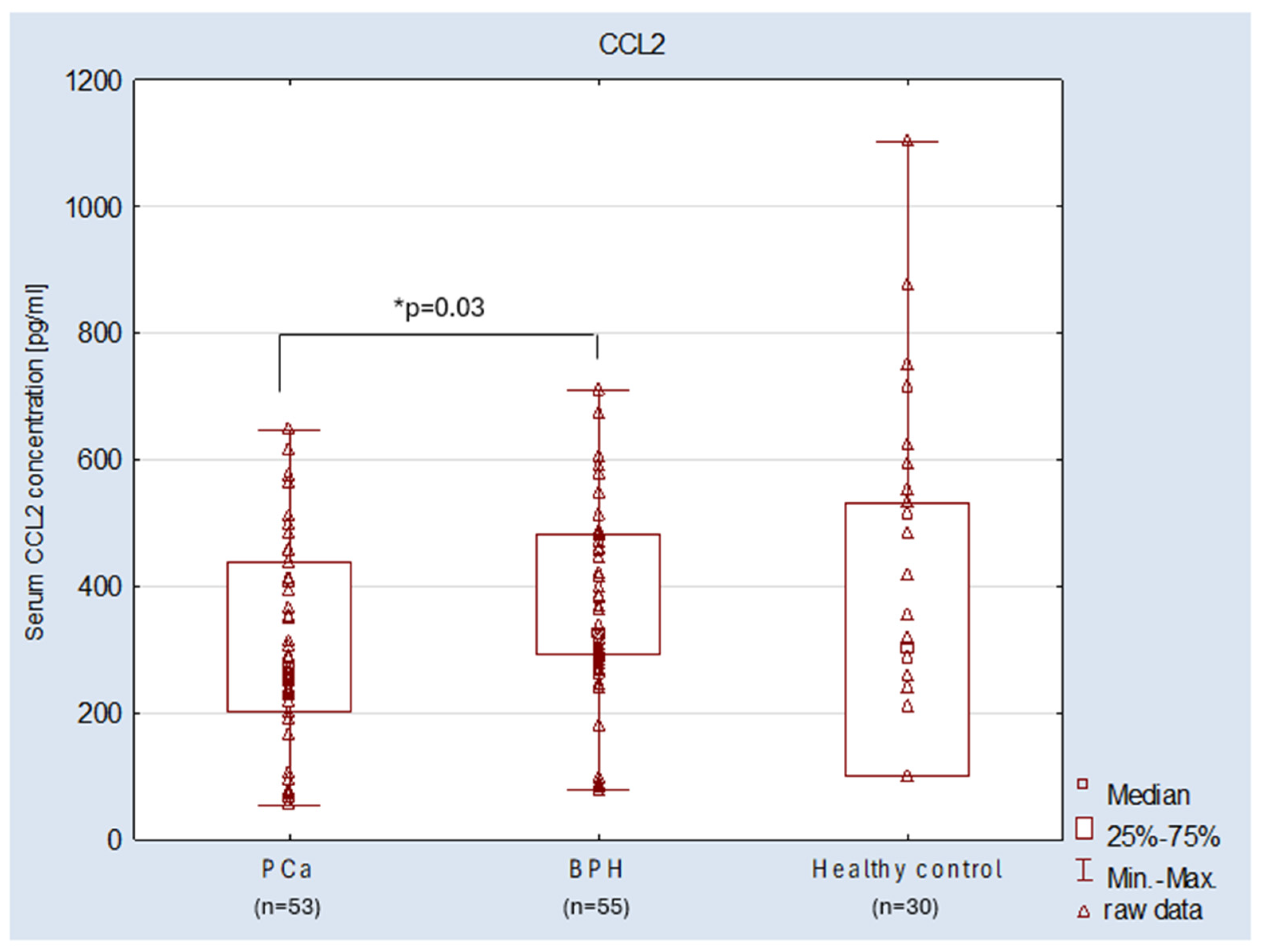
| PCa Group | 355.87 | 271.23 | 54.10 | 1534.38 | 316.54 |
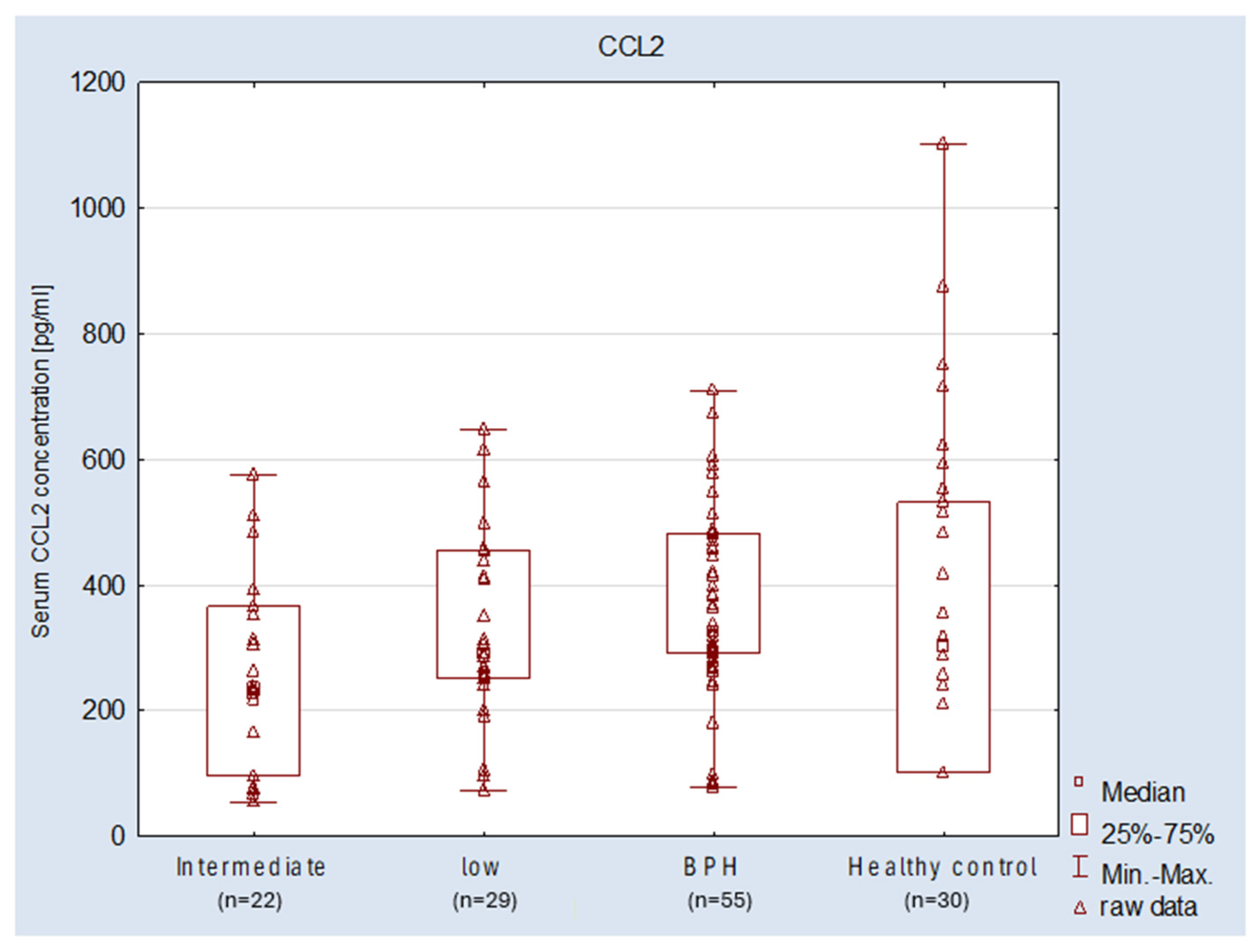
| PCa Low Risk | 400.37 | 289.06 | 72.73 | 1534.38 | 340.44 |
| PCa Intermediate Risk | 308.37 | 235.45 | 54.10 | 1443.44 | 294.24 |
| BPH Group | 458.10 | 325.27 | 77.70 | 1788.27 | 369.45 |
| Control Group | 369.77 | 302.72 | 101.00 | 1103.22 | 259.13 |
| p a = 0.40; p b = 0.03; p c = 0.68; p d = 1.00; p e = 1.00; p f = 1.00; p g = 0.051 | |||||
| CCL7 | |||||
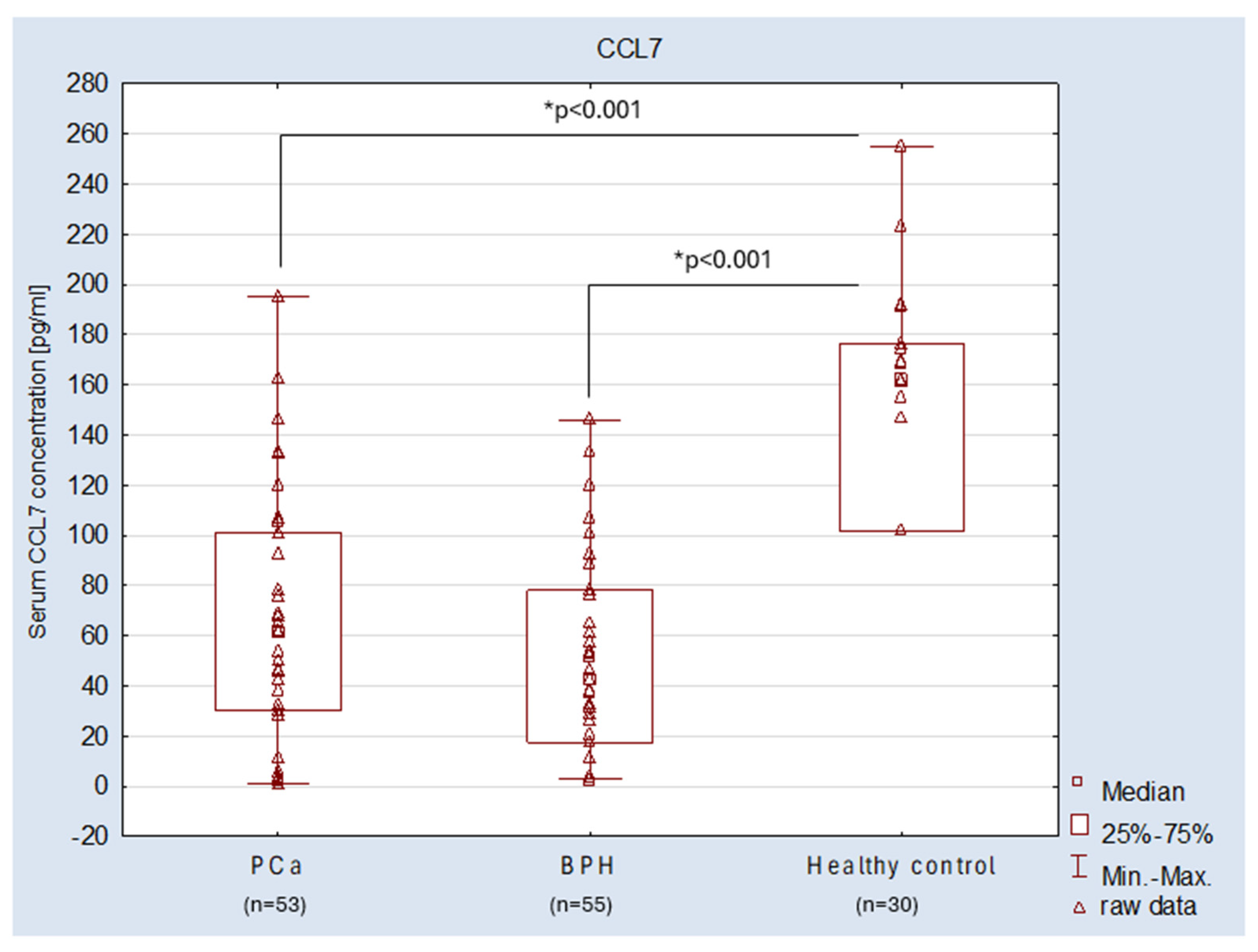
| PCa Group | 65.02 | 61.45 | 0.95 | 194.98 | 47.29 |
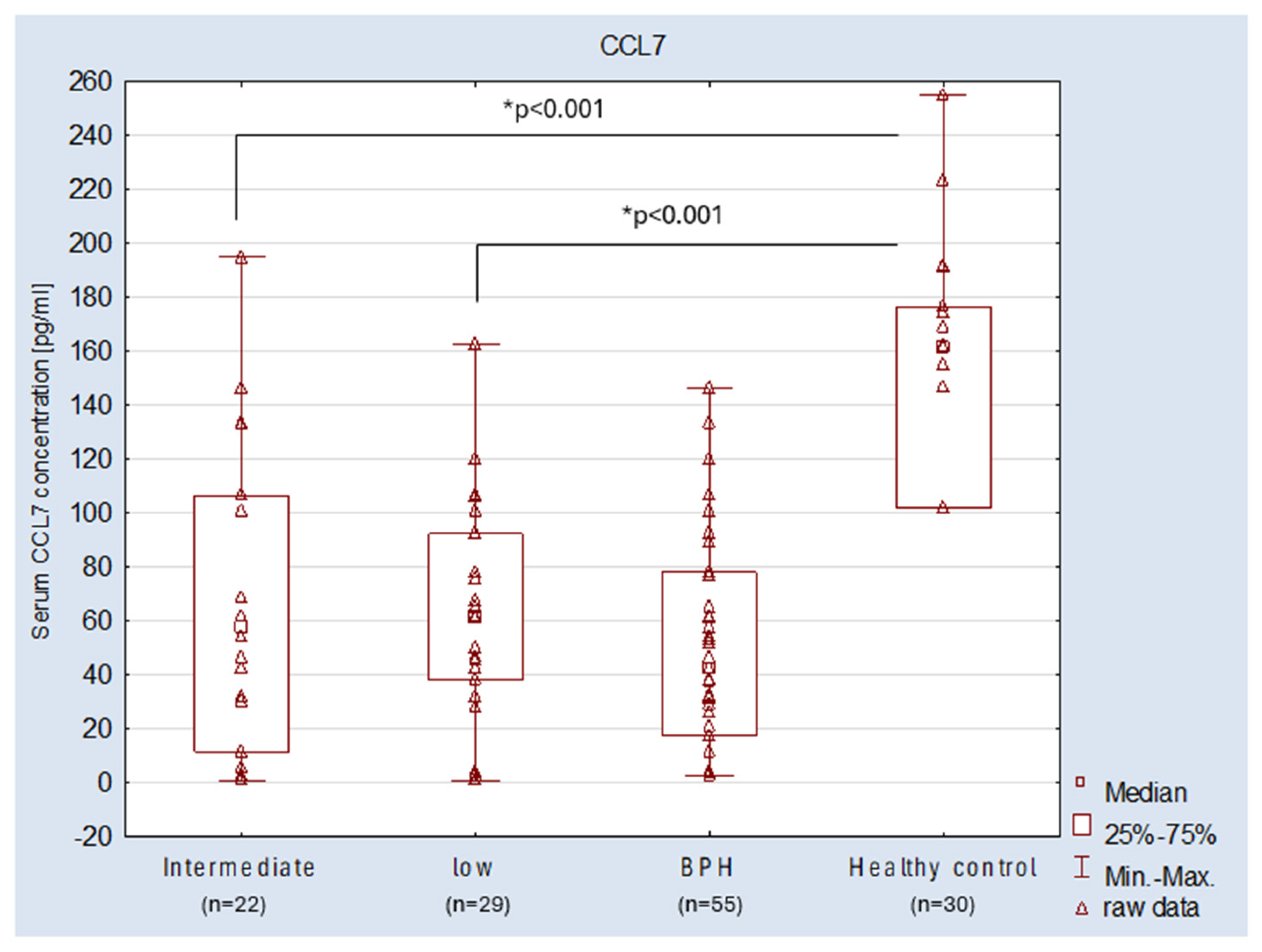
| PCa Low Risk | 62.53 | 61.99 | 0.95 | 162.50 | 40.29 |
| PCa Intermediate Risk | 68.60 | 57.71 | 0.95 | 194.98 | 55.02 |
| BPH Group | 52.05 | 42.63 | 2.84 | 146.09 | 36.99 |
| Control Group | 159.50 | 161.69 | 102.00 | 254.89 | 44.40 |
| p a < 0.001; p b = 0.62; p c < 0.001; p d < 0.001; p e = 1; p f < 0.001; p g = 1.00 | |||||
| tPSA | |||||
| PCa Group | 9.13 | 9.00 | 4.90 | 13.00 | 2.11 |
| PCa Low Risk | 9.23 | 9.00 | 4.90 | 13.00 | 2.24 |
| PCa Intermediate Risk | 9.06 | 8.95 | 6.50 | 13.00 | 2.08 |
| BPH Group | 3.20 | 3.10 | 0.91 | 7.10 | 1.62 |
| Control Group | 3.18 | 2.9 | 1.7 | 4.7 | 0.79 |
| p a < 0.001; p b < 0.001; p c = 1.00; p d < 0.001; p e < 0.001; p f < 0.001; p g < 0.001 | |||||
| Cut-Off | Diagnostic Sensitivity (%) | Diagnostic Specificity (%) | Positive Predictive Value (%) | Negative Predictive Value (%) | Accuracy (%) | AUC | |
|---|---|---|---|---|---|---|---|
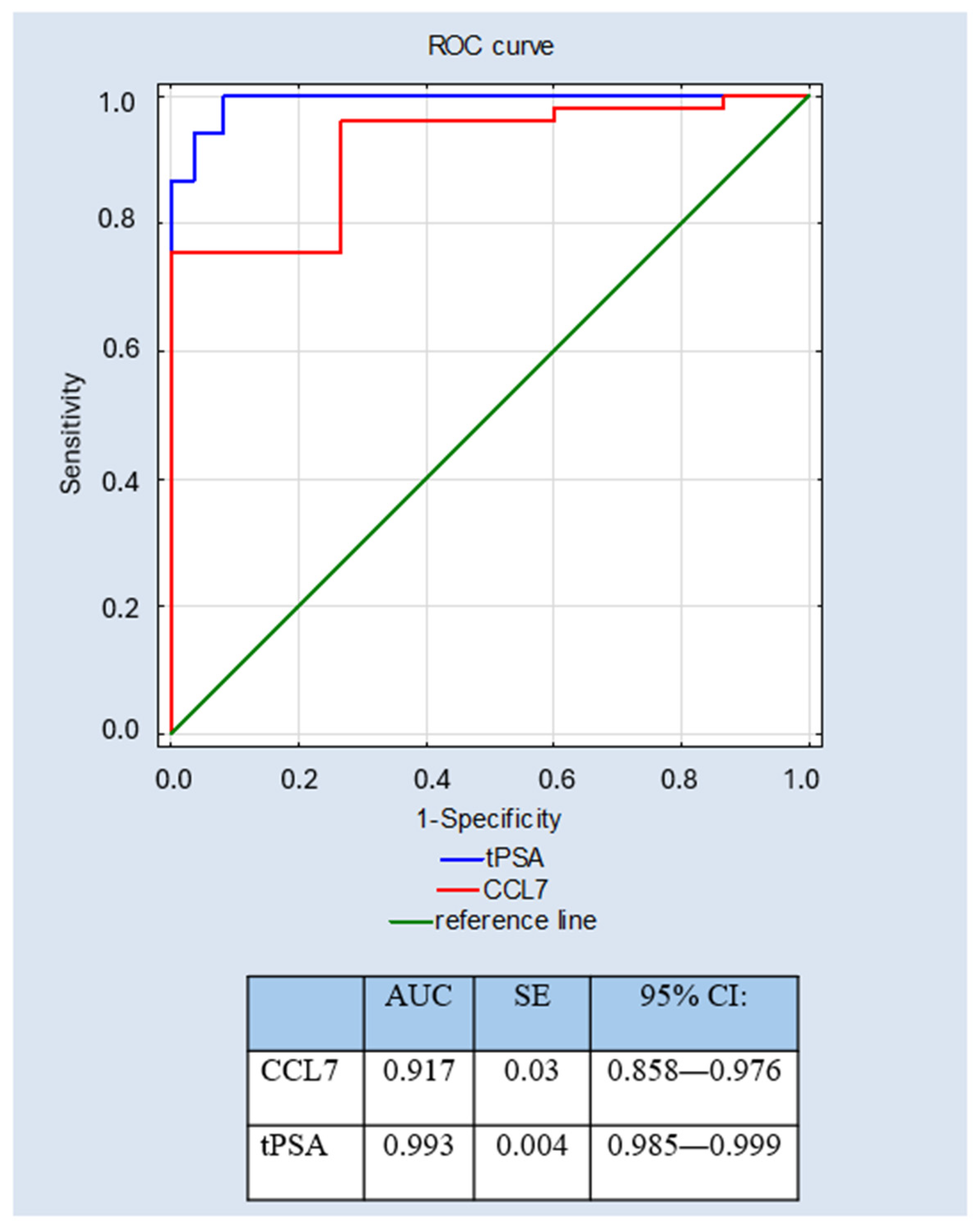
| CCL7 | 146.09 | 96.2 | 73.3 | 86.4 | 91.7 | 88.0 | 0.917 |
| tPSA | 6.5 | 94.3 | 96.5 | 94.3 | 96.5 | 95.7 | 0.993 |
| Risk Group | Criteria | Clinical Stage | |
|---|---|---|---|
| Low-risk | ISUP grade 1 and PSA < 10 ng/mLand cT1-2a * | Localised | |
| Intermediate-risk | Favourable | ISUP grade 2 and PSA < 10 ng/mL and cT1-2b * Or ISUP grade 1 and PSA 10–20 ng/mL and cT1-2b * Or ISUP grade 1 and PSA < 10 ng/mL and cT2b * | |
| Unfavourable | ISUP grade 2 and PSA 10–20 ng/mL and cT1-2b * Or ISUP grade 3 and cT1-2b * | ||
| High-risk | ISUP grade 4/5 Or PSA > 20 ng/mL Or cT2c * | ||
| cT3-4 * and/or cN+ ** any ISUP grade * any PSA | Locally advanced | ||
| Characteristic | Control Group (n = 30) | BPH Group (n = 29) | PCa Group (n = 51) | p-Value |
|---|---|---|---|---|
| Age (years), mean ± SD | 58 | 72.3 ± 5.8 | 68.6 ± 6.3 | p a < 0.001 |
| p b < 0.001 | ||||
| p c = 0.010 | ||||
| Age range | 51–67 | 60–85 | 50–88 | – |
| PSA (ng/mL), mean ± SD | 3.18 ± 0.79 | 3.20 ± 1.62 | 9.13 ± 2.11 | p a < 0.001 |
| p b < 0.001 | ||||
| p c = 0.001 | ||||
| PSA range (ng/mL) | 1.7–4.7 | 0.91–7.10 | 4.9–13.0 | – |
| Clinical stage, n (%) | ||||
| Localized | – | – | 50 (98.0) | – |
| Locally advanced | – | – | 1 (2.0) | – |
| EAU risk group, n (%) | ||||
| Low risk | – | – | 26 (51.0) | – |
| Intermediate risk | – | – | 23 (45.1) | – |
| High risk | – | – | 2 (3.9) | – |
| Characteristic | Low Risk (n = 26) | Intermediate Risk (n = 23) | High Risk (n = 2) | p-Value (Low vs. Intermediate) |
|---|---|---|---|---|
| Age (years), mean ± SD | 68.4 ± 7.2 | 68.8 ± 5.2 | 73.0 ± 2.8 | 0.83 |
| Age range | 50–88 | 59–76 | 71–75 | - |
| PSA (ng/mL), mean ± SD | 9.25 ± 2.63 | 8.68 ± 2.05 | 9.40 ± 0.99 | 1.00 |
| PSA range (ng/mL) | 4.9–14.0 | 3.5–15.0 | 8.7–10.1 | - |
| Clinical stage, n (%) | ||||
| Localized | 26 (100) | 22 (95.7) | 1 (50.0) | - |
| Locally advanced | 0 | 1 (4.3) | 1 (50.0) | - |
| Gleason score, n (%) | ||||
| GS 6 | 25 (96.2) | 0 | 0 | - |
| GS 7 | 1 (3.8) | 23 (100) | 0 | - |
| GS ≥ 8 | 0 | 0 | 2 (100) | - |
Disclaimer/Publisher’s Note: The statements, opinions and data contained in all publications are solely those of the individual author(s) and contributor(s) and not of MDPI and/or the editor(s). MDPI and/or the editor(s) disclaim responsibility for any injury to people or property resulting from any ideas, methods, instructions or products referred to in the content. |
© 2026 by the authors. Licensee MDPI, Basel, Switzerland. This article is an open access article distributed under the terms and conditions of the Creative Commons Attribution (CC BY) license.
Share and Cite
Sokólska, W.; Zajkowska, M.; Nowiński, A.R.; Orywal, K. Serum CCL2 and CCL7 in Prostate Cancer: Evaluation of Their Diagnostic Utility in Comparison with Benign Prostatic Hyperplasia and Healthy Controls. Int. J. Mol. Sci. 2026, 27, 6197. https://doi.org/10.3390/ijms27146197
Sokólska W, Zajkowska M, Nowiński AR, Orywal K. Serum CCL2 and CCL7 in Prostate Cancer: Evaluation of Their Diagnostic Utility in Comparison with Benign Prostatic Hyperplasia and Healthy Controls. International Journal of Molecular Sciences. 2026; 27(14):6197. https://doi.org/10.3390/ijms27146197
Chicago/Turabian StyleSokólska, Weronika, Monika Zajkowska, Adam Rafał Nowiński, and Karolina Orywal. 2026. "Serum CCL2 and CCL7 in Prostate Cancer: Evaluation of Their Diagnostic Utility in Comparison with Benign Prostatic Hyperplasia and Healthy Controls" International Journal of Molecular Sciences 27, no. 14: 6197. https://doi.org/10.3390/ijms27146197
APA StyleSokólska, W., Zajkowska, M., Nowiński, A. R., & Orywal, K. (2026). Serum CCL2 and CCL7 in Prostate Cancer: Evaluation of Their Diagnostic Utility in Comparison with Benign Prostatic Hyperplasia and Healthy Controls. International Journal of Molecular Sciences, 27(14), 6197. https://doi.org/10.3390/ijms27146197