


Neuroinflammation in Epilepsy: Biochemical and Molecular Mechanisms and Implications for Natural Product-Driven Drug Discovery

 ,
,  , ,
, ,  ,
,  ,
,  and
and 
Abstract
1. Introduction: Epilepsy
2. Molecular Mechanisms of Neuroinflammatory Signaling Pathways and Their Modulation by Natural Products in Epilepsy
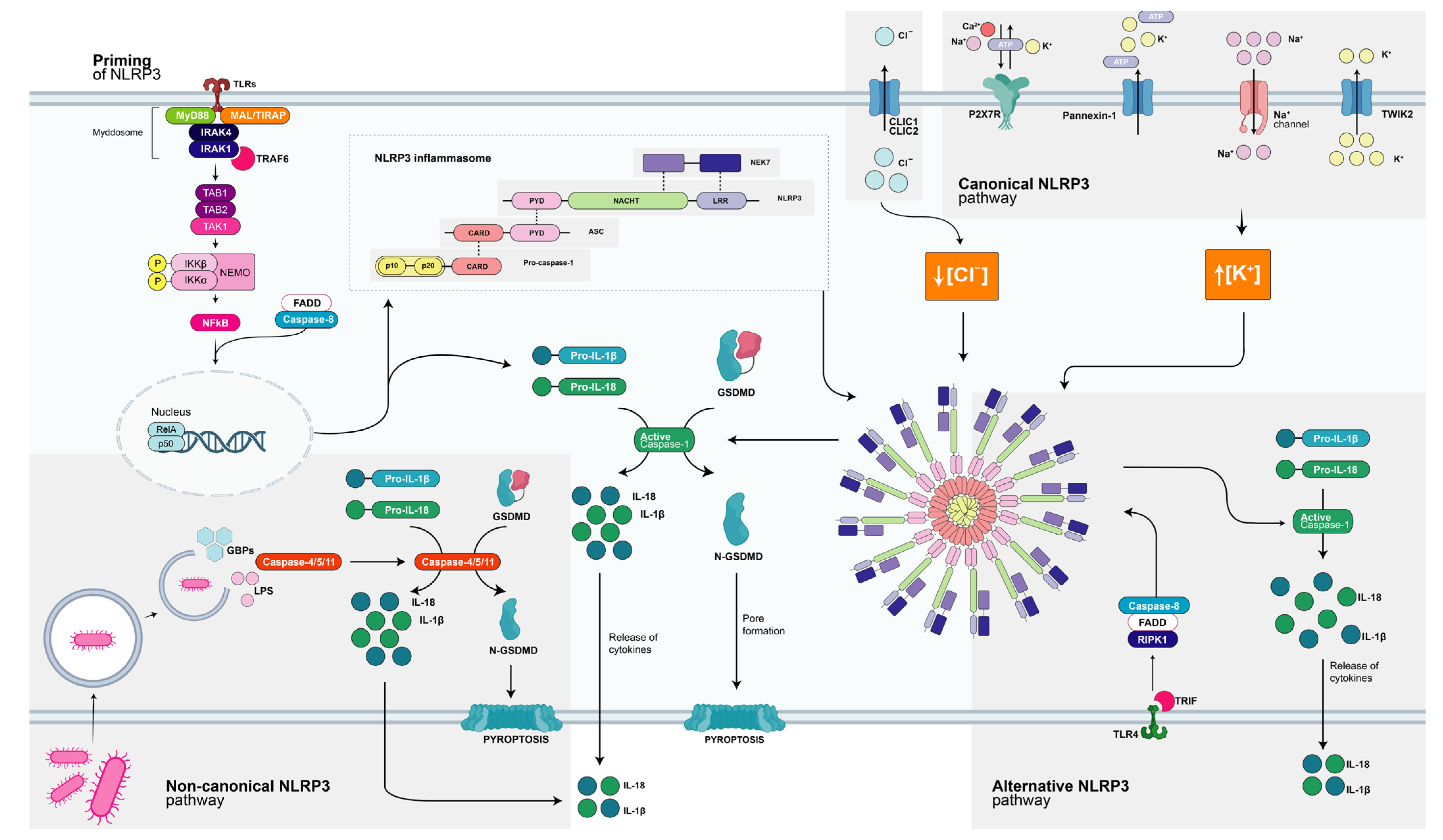
2.1. Inflammasome/NLRP3
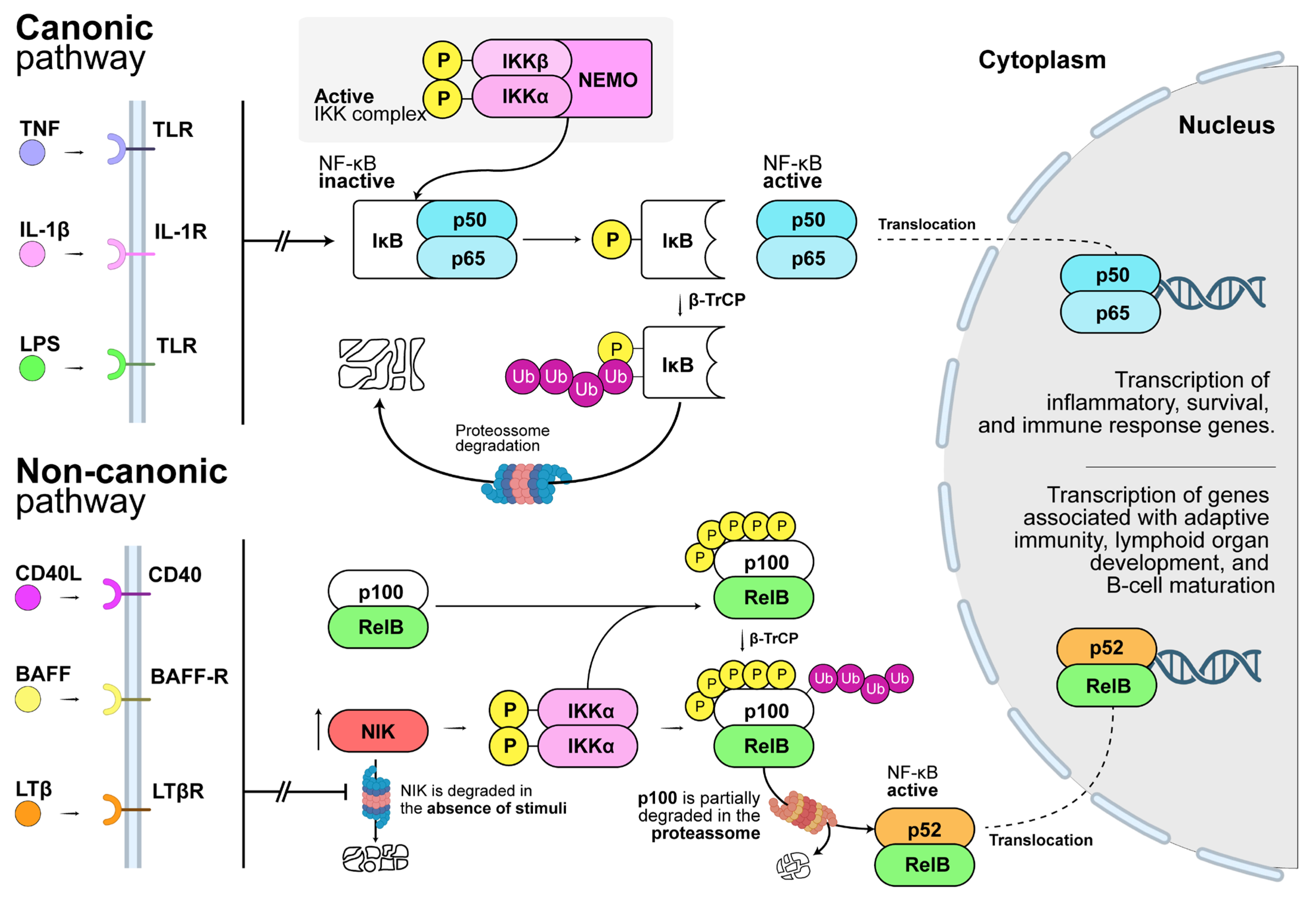
2.2. NF-κB
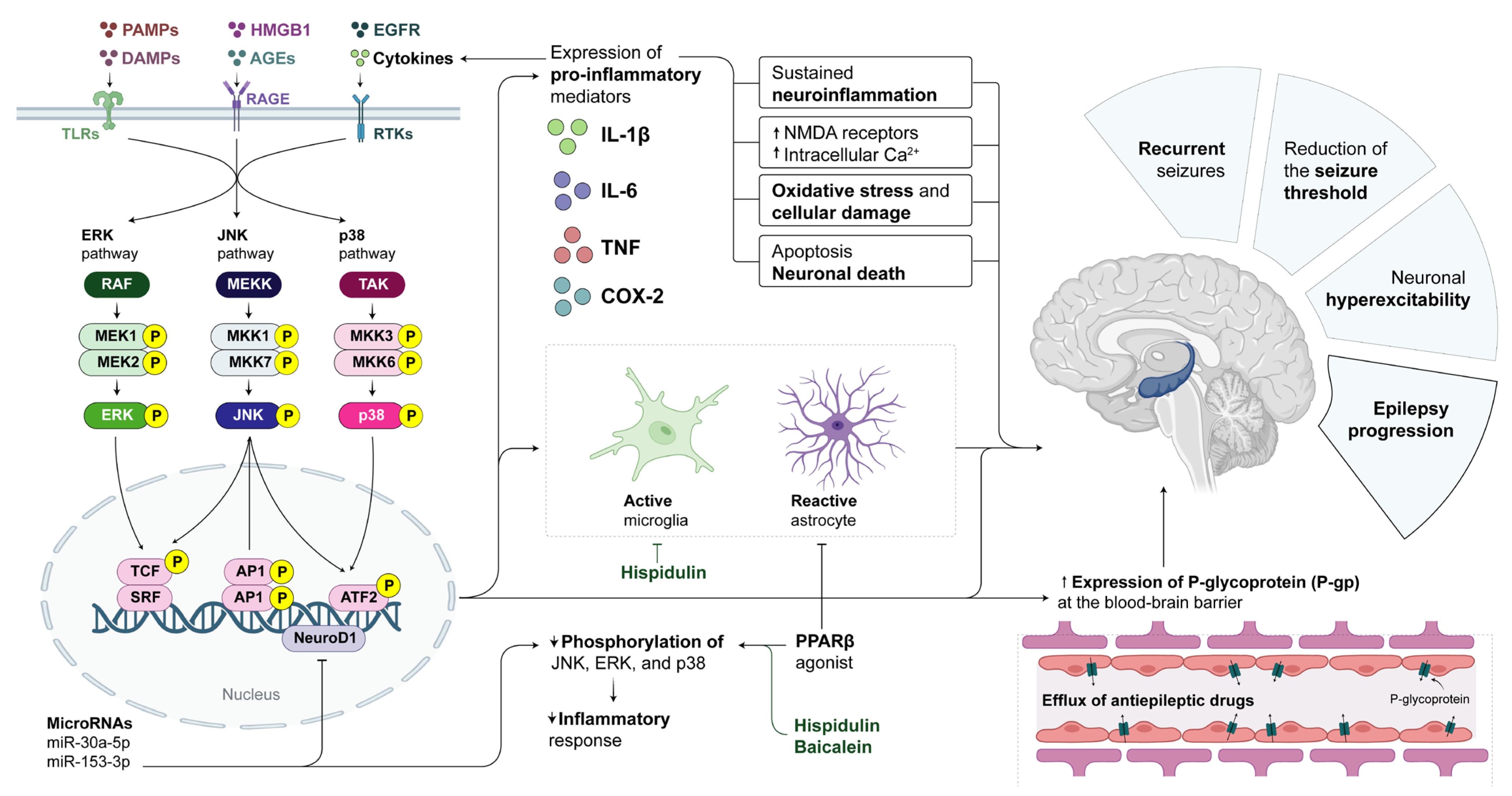
2.3. MAPK

| Natural Compound | Treatment Regimen | Experimental Model | References |
|---|---|---|---|
| Baicalein | 10, 20, and 40 mg/kg/day, i.p. | In vivo (Genetic epilepsy-like tremor rats [TRM strain]) | [91] |
| In vivo: 20, 40, and 80 mg/kg/day, oral administration. In vitro: 5, 10, and 20 μM | In vivo: Sprague-Dawley rats, Lithium-Pilocarpine-induced SE model In vitro: BV2 microglia, LPS-stimulated (100 ng/mL) | [92] | |
| Hispidulin | 3, 10, 30, and 100 μM | In vitro (BV2 microglia, LPS-stimulated: 100 ng/mL) | [84] |
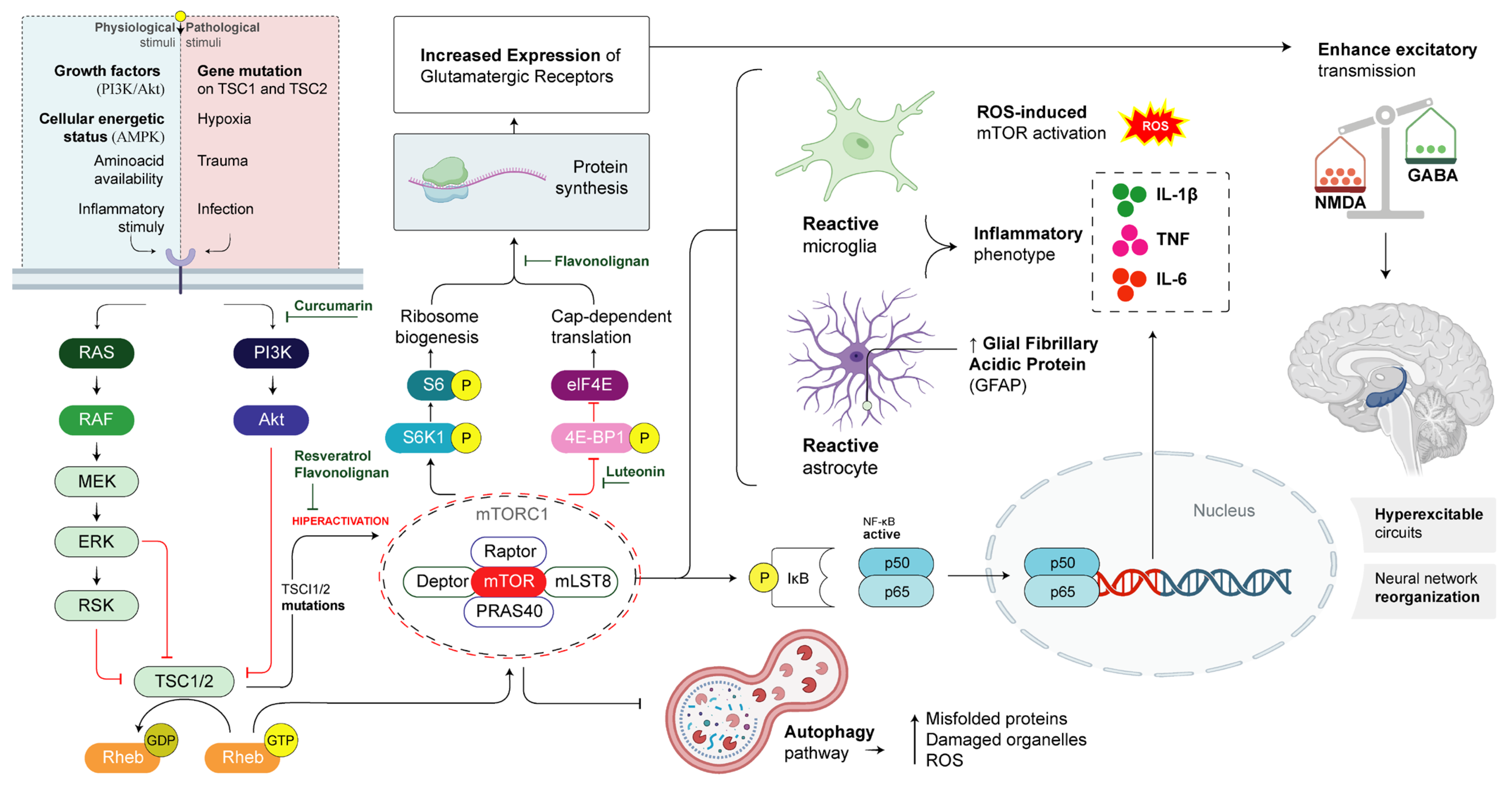
2.4. mTOR
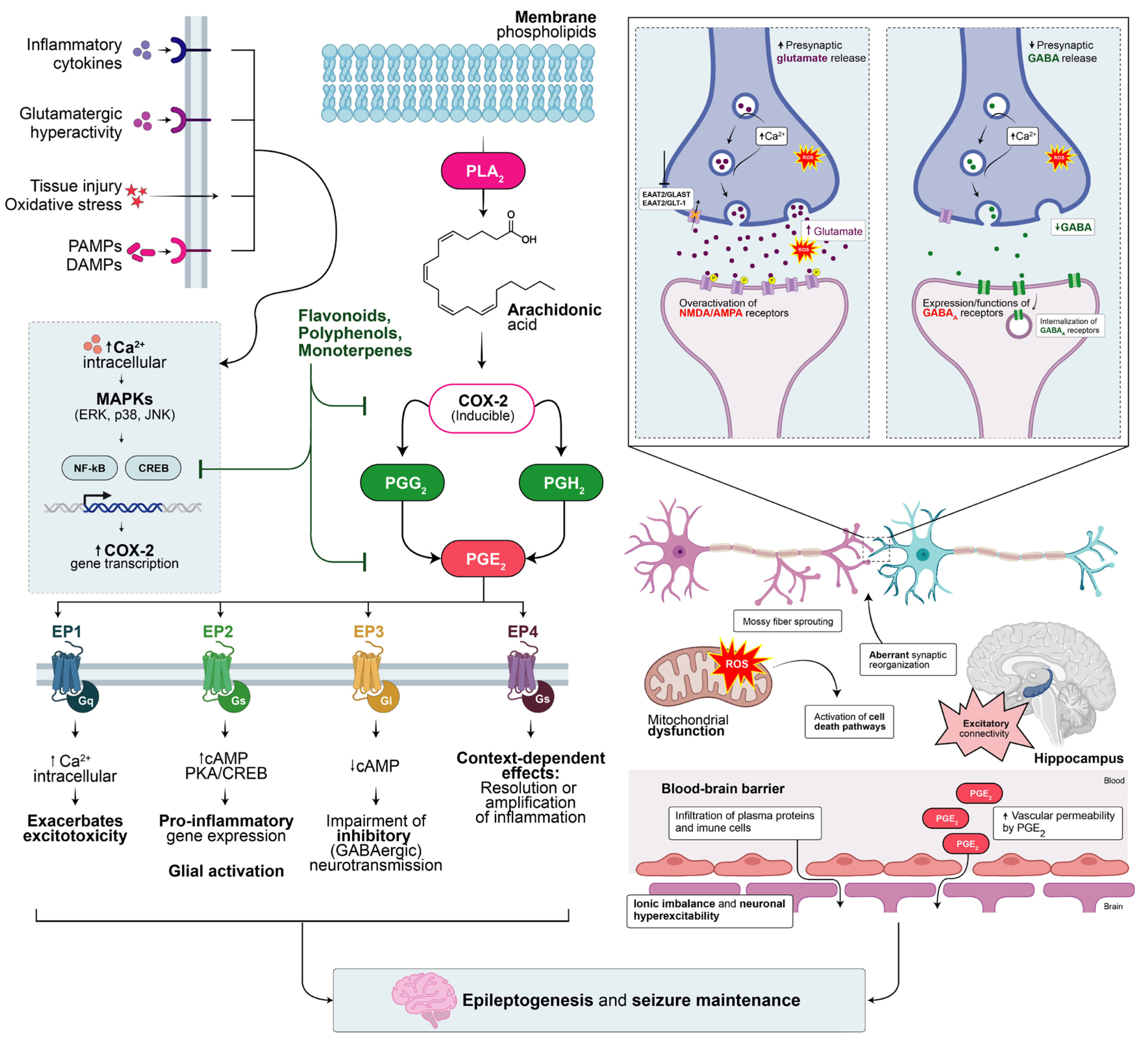
2.5. COX-2/PGE2
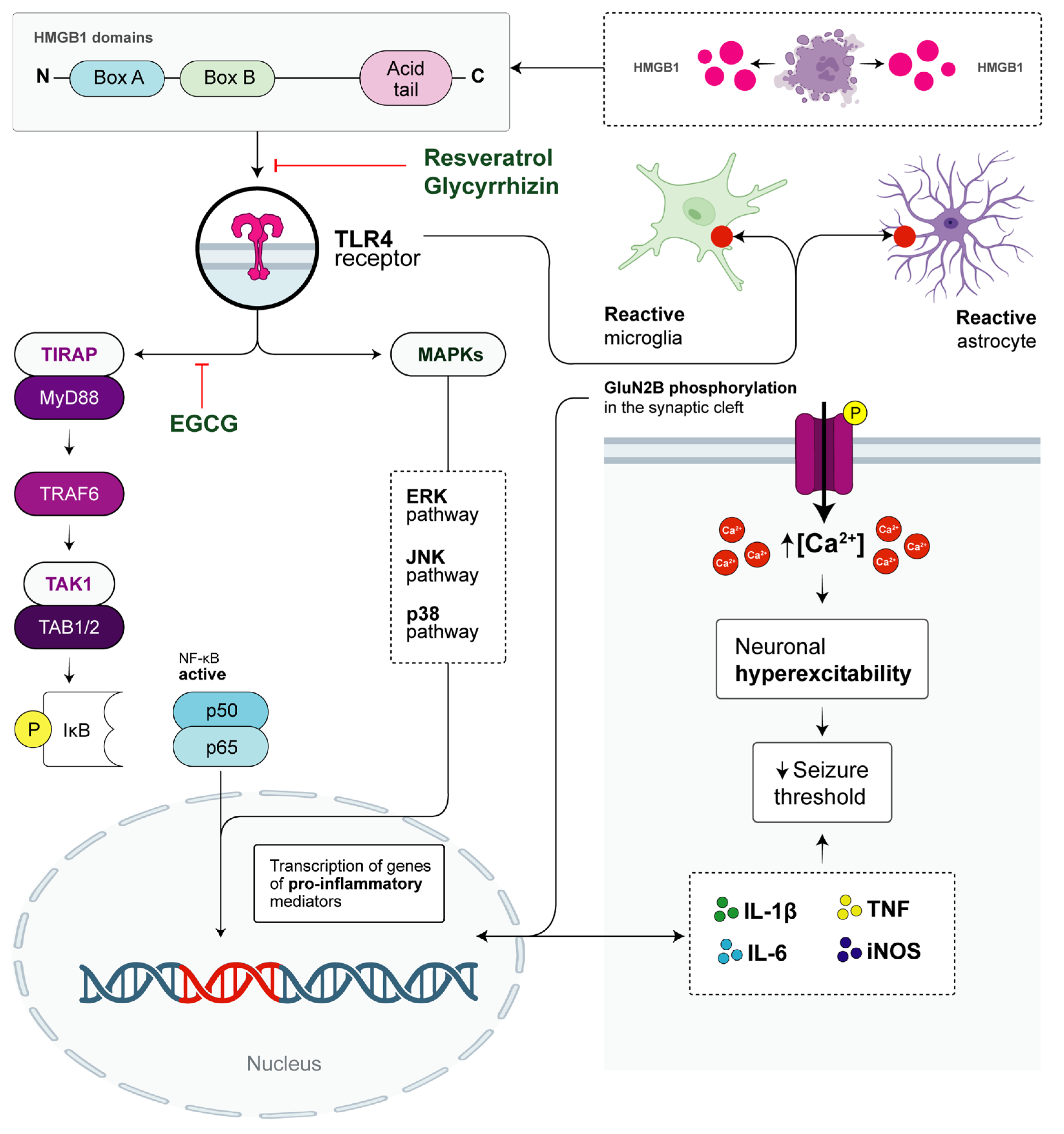
2.6. TLR4/HMGB1
3. Conclusions
Author Contributions
Funding
Institutional Review Board Statement
Informed Consent Statement
Data Availability Statement
Acknowledgments
Conflicts of Interest
Abbreviations
| AA | Arachidonic acid |
| AD | Alzheimer’s Disease |
| A1R | Adenosine A1 Receptor |
| AMPK | Adenosine Monophosphate-Activated Protein Kinase |
| Aβ | Amyloid-Beta |
| BAFF | B-cell Activating Factor |
| BBB | Blood–Brain Barrier |
| cAMP | Cyclic Adenosine Monophosphate |
| CAT | Catalase |
| CD40 | CD40 Receptor |
| CD40L | CD40 Ligand |
| CK-1 | Casein Kinase 1 |
| CNS | Central Nervous System |
| COX-1 | Cyclooxygenase-1 |
| COX-2 | Cyclooxygenase-2 |
| CREB | cAMP response element-binding protein |
| DAMPs | Damage-associated molecular patterns |
| DAPK1 | Death-Associated Protein Kinase 1 |
| DNA | Deoxyribonucleic Acid |
| DUSPs | Dual-Specificity Phosphatases |
| EGCG | Epigallocatechin-3-gallate |
| ENT1 | Equilibrium nucleoside transporter 1 |
| ERK | Extracellular Signal-Regulated Kinase |
| GABA | Gamma-Aminobutyric Acid |
| GFAP | Glial Fibrillary Acidic Protein |
| GL | Glycyrrhizin |
| GPx | Glutathione Peroxidase |
| GSH | Reduced Glutathione |
| HMGB1 | High Mobility Group Box 1 |
| IKK | IκB kinase |
| IL-1β | interleukin-1 beta |
| IL-6 | interleukin-6 |
| iNOS | Inducible Nitric Oxide Synthase |
| IκB | Inhibitor of κB |
| JAK/STAT | Janus Kinase/Signal Transducer and Activator of Transcription |
| JNKs | c-Jun N-terminal kinases |
| LPS | Lipopolysaccharide |
| LTβ | Lymphotoxin beta |
| MAP2Ks | MAP Kinase Kinases |
| MAP3Ks | MAP Kinase Kinase Kinases |
| MAPK | Mitogen-Activated Protein Kinase |
| MKP-1 | Mitogen-Activated Protein Kinase Phosphatase 1 |
| MS | Multiple Sclerosis |
| mTOR | mammalian Target of Rapamycin |
| MyD88 | Myeloid Differentiation Primary Response 88 |
| NEMO/IKKγ | NF-κB Essential Modulator/Inhibitor of κB Kinase gamma |
| NF-κB | Nuclear Factor-Kappa B |
| NIK | NF-κB-Inducing Kinase |
| NLR | Nod-Like Receptor |
| NLRP3 | Nod-Like Receptor Family Pyrin Domain Containing 3 |
| NMDA | N-Methyl-D-Aspartate |
| Nrf2 | Nuclear Factor Erythroid 2–Related Factor 2 |
| PAMPs | Pathogen-Associated Molecular Patterns |
| PGE2 | Prostaglandin E2 |
| PGG2 | Prostaglandin G2 |
| PGH2 | Prostaglandin H2 |
| P-gp | P-glycoprotein |
| PI3K | Phosphoinositide 3-Kinase |
| PIKK | Phosphatidylinositol 3-Kinase-Related Kinases |
| PKA | Protein Kinase A |
| PKB | Protein Kinase B |
| PKC | Protein Kinase C |
| PLA2 | Phospholipase A2 |
| PPARs | Peroxisome Proliferator-Activated Receptors |
| PRR | Pattern Recognition Receptor |
| RAGE | Receptor for Advanced Glycation End Products |
| RelB | v-rel Avian Reticuloendotheliosis Viral Oncogene Homolog B |
| RHD | Rel Homology Domain |
| ROS | Reactive Oxygen Species |
| SIRT1 | Sirtuin 1 |
| TAD | Transactivation Domain |
| TGF-β | Transforming Growth Factor Beta |
| TLR | Toll-Like Receptor |
| TNF | Tumor Necrosis Factor |
| TPA | 12-O-tetradecanoylphorbol-13-acetate |
| TSC1 | Tuberous Sclerosis Complex 1 |
| TSC2 | Tuberous Sclerosis Complex 2 |
| β-TrCP | Beta-Transducin Repeat-Containing Protein |
References
- Kumar, H.; Debnath, S.; Sharma, A. Can epilepsy be cured? A review. Health Sci. Rev. 2022, 5, 100062. [Google Scholar] [CrossRef]
- Vidyaratne, L.S.; Iftekharuddin, K.M. Real-Time Epileptic Seizure Detection Using EEG. IEEE Trans. Neural Syst. Rehabil. Eng. 2017, 25, 2146–2156. [Google Scholar] [CrossRef] [PubMed]
- Beniczky, S.; Trinka, E.; Wirrell, E.; Abdulla, F.; Al Baradie, R.; Alonso Vanegas, M.; Auvin, S.; Singh, M.B.; Blumenfeld, H.; Bogacz Fressola, A.; et al. Updated classification of epileptic seizures: Position paper of the International League Against Epilepsy. Epilepsia 2025, 66, 1804–1823. [Google Scholar] [CrossRef] [PubMed]
- Devinsky, O.; Elder, C.; Sivathamboo, S.; Scheffer, I.E.; Koepp, M.J. Idiopathic Generalized Epilepsy Misunderstandings, Challenges, and Opportunities. Neurology 2023, 102, e208076. [Google Scholar] [CrossRef] [PubMed]
- Abarrategui, B.; Mai, R.; Sartori, I.; Francione, S.; Pelliccia, V.; Cossu, M.; Tassi, L. Temporal lobe epilepsy: A never-ending story. Epilepsy Behav. 2021, 122, 108122. [Google Scholar] [CrossRef] [PubMed]
- Neumann, A.M.; Britsch, S. Molecular Genetics of Acquired Temporal Lobe Epilepsy. Biomolecules 2024, 14, 669. [Google Scholar] [CrossRef] [PubMed]
- Monteiro, Á.B.; Nunes de Andrade, H.H.; da Cruz Guedes, E.; Ribeiro Portela, A.C.; Oliveira Pires, H.F.; Pereira Lopes, M.J.; Medeiros Vilar Barbosa, N.M.; Alves, A.F.; Fernandes de Oliveira Golzio, A.M.; Pergentino De Sousa, D.; et al. Neuroprotective effect of cinnamic alcohol: A bioactive compound of Cinnamomum spp. essential oil. Neurochem. Int. 2024, 179, 105807. [Google Scholar] [CrossRef] [PubMed]
- Soltani Khaboushan, A.; Yazdanpanah, N.; Rezaei, N. Neuroinflammation and Proinflammatory Cytokines in Epileptogenesis. Mol. Neurobiol. 2022, 59, 1724–1743. [Google Scholar] [CrossRef] [PubMed]
- Lach, P.; Klus, W.; Zajdel, K.; Szeleszczuk, A.; Komorowska, E.; Burda, K.; Kurowski, P. Neuroinflammation in Epilepsy—Diagnostics and Therapeutic Perspectives. Curr. Pharmacol. Rep. 2022, 8, 31–35. [Google Scholar] [CrossRef]
- Binder, D.K.; Steinhäuser, C. Astrocytes and Epilepsy. Neurochem. Res. 2021, 46, 2687–2695. [Google Scholar] [CrossRef] [PubMed]
- Guo, A.; Zhang, H.; Li, H.; Chiu, A.; Garc Ia-Rodr Iguez, C.; Lagos, C.F.; Sáez, J.C.; Lau, C.G. Inhibition of connexin hemichannels alleviates neuroinflammation and hyperexcitability in temporal lobe epilepsy. Proc. Natl. Acad. Sci. USA 2020, 117, 11220–11222. [Google Scholar] [CrossRef]
- Elkommos, S.; Mula, M. Current and future pharmacotherapy options for drug-resistant epilepsy. Expert Opin. Pharmacother. 2022, 23, 2023–2034. [Google Scholar] [CrossRef] [PubMed]
- Beghi, E. The Epidemiology of Epilepsy. Neuroepidemiology 2020, 54, 185–191. [Google Scholar] [CrossRef] [PubMed]
- Pan, I.; LoPresti, M.A.; Clarke, D.F.; Lam, S. The effectiveness of medical and surgical treatment for children with refractory epilepsy. Neurosurgery 2021, 88, E73–E81. [Google Scholar] [CrossRef] [PubMed]
- Falco-Walter, J. Epilepsy-Definition, Classification, Pathophysiology, and Epidemiology. Semin. Neurol. 2020, 40, 617–623. [Google Scholar] [CrossRef] [PubMed]
- Da Guedes, E.; Ribeiro, L.R.; Carneiro, C.A.; Santos, A.M.F.; Brito Monteiro, Á.; De Andrade, H.H.N.; Castro, R.D.; Barbosa, F.F.; Barbosa Filho, J.M.; De Almeida, R.N.; et al. Anticonvulsant Activity of trans -Anethole in Mice. BioMed Res. Int. 2022, 2022, 9902905. [Google Scholar] [CrossRef] [PubMed]
- Tomson, T.; Zelano, J.; Dang, Y.L.; Perucca, P. The pharmacological treatment of epilepsy in adults. Epileptic Disord. 2023, 25, 649–669. [Google Scholar] [CrossRef] [PubMed]
- He, L.Y.; Hu, M.B.; Li, R.L.; Zhao, R.; Fan, L.H.; He, L.; Lu, F.; Ye, X.; Huang, Y.; Wu, C.-J. Natural Medicines for the Treatment of Epilepsy: Bioactive Components, Pharmacology and Mechanism. Front. Pharmacol. 2021, 12, 604040. [Google Scholar] [CrossRef] [PubMed]
- Malaník, M.; Čulenová, M.; Sychrová, A.; Skiba, A.; Skalicka-Woźniak, K.; Šmejkal, K. Treating Epilepsy with Natural Products: Nonsense or Possibility? Pharmaceuticals 2023, 16, 1061. [Google Scholar] [CrossRef] [PubMed]
- Chou, W.C.; Jha, S.; Linhoff, M.W.; Ting, J.P.Y. The NLR gene family: From discovery to present day. Nat. Rev. Immunol. 2023, 23, 635–654, Erratum in Nat. Rev. Immunol. 2023, 23, 472.. [Google Scholar] [CrossRef] [PubMed]
- Cabral, J.E.; Wu, A.; Zhou, H.; Pham, M.A.; Lin, S.; McNulty, R. Targeting the NLRP3 inflammasome for inflammatory disease therapy. Trends Pharmacol. Sci. 2025, 46, 503–519. [Google Scholar] [CrossRef] [PubMed]
- Próchnicki, T.; Vasconcelos, M.B.; Robinson, K.S.; Mangan, M.S.J.; De Graaf, D.; Shkarina, K.; Lovotti, M.; Standke, L.; Kaiser, R.; Stahl, R.; et al. Mitochondrial damage activates the NLRP10 inflammasome. Nat. Immunol. 2023, 24, 595–603. [Google Scholar] [CrossRef] [PubMed]
- Chen, Y.; Ye, X.; Escames, G.; Lei, W.; Zhang, X.; Li, M.; Jing, T.; Yao, Y.; Qiu, Z.; Wang, Z.; et al. The NLRP3 inflammasome: Contributions to inflammation-related diseases. Cell Mol. Biol. Lett. 2023, 28, 51. [Google Scholar] [CrossRef] [PubMed]
- Cao, F.; Deliz-Aguirre, R.; Gerpott, F.H.; Ziska, E.; Taylor, M.J. Myddosome clustering in IL -1 receptor signaling regulates the formation of an NF-kB activating signalosome. EMBO Rep. 2023, 24, e57233. [Google Scholar] [CrossRef] [PubMed]
- Gupta, S.; Cassel, S.L.; Sutterwala, F.S.; Dagvadorj, J. Regulation of the NLRP3 inflammasome by autophagy and mitophagy. Immunol. Rev. 2025, 329, e13410. [Google Scholar] [CrossRef] [PubMed]
- Kodi, T.; Sankhe, R.; Gopinathan, A.; Nandakumar, K.; Kishore, A. New Insights on NLRP3 Inflammasome: Mechanisms of Activation, Inhibition, and Epigenetic Regulation. J. Neuroimmune Pharmacol. 2024, 19, 7. [Google Scholar] [CrossRef] [PubMed]
- Zhan, X.; Li, Q.; Xu, G.; Xiao, X.; Bai, Z. The mechanism of NLRP3 inflammasome activation and its pharmacological inhibitors. Front. Immunol. 2023, 13, 1109938. [Google Scholar] [CrossRef] [PubMed]
- Akbal, A.; Dernst, A.; Lovotti, M.; Mangan, M.S.J.; McManus, R.M.; Latz, E. How location and cellular signaling combine to activate the NLRP3 inflammasome. Cell Mol. Immunol. 2022, 19, 1201–1214. [Google Scholar] [CrossRef] [PubMed]
- Meng, P.; Wang, X.; Yang, W.; Jiang, Y.; Cheng, W.; Zhang, Q. Advances in acupuncture modulation of signaling pathways for epilepsy treatment: A review. Medicine 2025, 104, e46110. [Google Scholar] [CrossRef] [PubMed]
- Chen, J.; Gao, Y.; Liu, N.; Hai, D.; Wei, W.; Liu, Y.; Lan, X.; Jin, X.; Yu, J.; Ma, L. Mechanism of NLRP3 Inflammasome in Epilepsy and Related Therapeutic Agents. Neuroscience 2024, 546, 157–177. [Google Scholar] [CrossRef] [PubMed]
- Khedpande, N.; Barve, K. Mitochondrial dysfunction and NLRP3 inflammasome activation in drug-resistant epilepsy: Emerging insights and mitochondrial-targeted therapeutic strategies. Naunyn Schmiedebergs Arch. Pharmacol. 2025, 398, 16951–16965. [Google Scholar] [CrossRef] [PubMed]
- Maan, G.; Sikdar, B.; Kumar, A.; Shukla, R.; Mishra, A. Role of Flavonoids in Neurodegenerative Diseases: Limitations and Future Perspectives. Curr. Top. Med. Chem. 2020, 20, 1169–1194. [Google Scholar] [CrossRef] [PubMed]
- Gopnar, V.V.; Rakshit, D.; Bandakinda, M.; Kulhari, U.; Sahu, B.D.; Mishra, A. Fisetin attenuates arsenic and fluoride subacute co-exposure induced neurotoxicity via regulating TNF-α mediated activation of NLRP3 inflammasome. Neurotoxicology 2023, 97, 133–149. [Google Scholar] [CrossRef] [PubMed]
- Wang, Y.; Wu, X.; Ren, W.; Liu, Y.; Dai, X.; Wang, S.; Huo, Q.; Sun, Y. Protective effects of fisetin in an Aβ1-42-induced rat model of Alzheimer’s disease. Folia Neuropathol. 2023, 61, 196–208. [Google Scholar] [CrossRef] [PubMed]
- Zhang, L.; Wang, H.; Zhou, Y.; Zhu, Y.; Fei, M. Fisetin alleviates oxidative stress after traumatic brain injury via the Nrf2-ARE pathway. Neurochem. Int. 2018, 118, 304–313. [Google Scholar] [CrossRef] [PubMed]
- Mahawar, S.; Rakshit, D.; Patel, I.; Gore, S.K.; Sen, S.; Ranjan, O.P.; Mishra, A. Fisetin-loaded chitosan nanoparticles ameliorate pilocarpine-induced temporal lobe epilepsy and associated neurobehavioral alterations in mice: Role of ROS/TNF-α-NLRP3 inflammasomes pathway. Nanomedicine 2024, 59, 102752. [Google Scholar] [CrossRef] [PubMed]
- Hamdy, M.; Antar, A.; El-Mesery, M.; El-Shafey, M.; Ali, A.N.; Abbas, K.M.; Abulseoud, O.A.; Hussein, A.M. Curcumin offsets PTZ-induced epilepsy: Involving inhibition of apoptosis, wnt/β-catenin, and autophagy pathways. Egypt. J. Basic Appl. Sci. 2020, 7, 240–251. [Google Scholar] [CrossRef]
- Wang, S.J.; Bo, Q.Y.; Zhao, X.H.; Yang, X.; Chi, Z.F.; Liu, X.W. Resveratrol pre-treatment reduces early inflammatory responses induced by status epilepticus via mTOR signaling. Brain Res. 2013, 1492, 122–129. [Google Scholar] [CrossRef] [PubMed]
- Siddiqui, M.A.; Asad, M.; Akhter, J.; Hoda, U.; Rastogi, S.; Arora, I.; Aggarwal, N.B.; Samim, M. Resveratrol-Loaded Glutathione-Coated Collagen Nanoparticles Attenuate Acute Seizures by Inhibiting HMGB1 and TLR-4 in the Hippocampus of Mice. ACS Chem. Neurosci. 2022, 13, 1342–1354. [Google Scholar] [CrossRef] [PubMed]
- Lin, T.Y.; Hung, C.Y.; Chiu, K.M.; Wang, S.J.; Lee, M.Y.; Lu, C.W. Neferine, an Alkaloid from Lotus Seed Embryos, Exerts Antiseizure and Neuroprotective Effects in a Kainic Acid-Induced Seizure Model in Rats. Int. J. Mol. Sci. 2022, 23, 4130. [Google Scholar] [CrossRef] [PubMed]
- Razavi, S.M.; Najafi Arab, Z.; Hosseini, Y.; Niknejad, A.; Mavaddat, H.; Momtaz, S.; Jamialahmadi, T.; Kesharwani, P.; Abdolghaffari, A.H.; Sahebkar, A. Therapeutic effects of curcumin on seizure and its mechanisms of action. Inflammopharmacology 2025, 34, 47–78. [Google Scholar] [CrossRef] [PubMed]
- Nascimento, C.P.; Ferreira, L.O.; da Silva, A.L.M.; da Silva, A.B.N.; Rodrigues, J.C.M.; Teixeira, L.L.; Azevedo, J.E.C.; Araujo, D.B.D.; Hamoy, A.O.; Gonçalves, B.H.; et al. A Combination of Curcuma longa and Diazepam Attenuates Seizures and Subsequent Hippocampal Neurodegeneration. Front. Cell Neurosci. 2022, 16, 884813. [Google Scholar] [CrossRef] [PubMed]
- Zhu, X.; Ma, E.; Ge, Y.; Yuan, M.; Guo, X.; Peng, J.; Zhu, W.; Ren, D.; Wo, D. Resveratrol protects against myocardial ischemic injury in obese mice via activating SIRT3/FOXO3a signaling pathway and restoring redox homeostasis. Biomed. Pharmacother. 2024, 174, 116476. [Google Scholar] [CrossRef] [PubMed]
- Cui, J.; Zhai, Q.; Tan, Z.; Zou, Z.; Zhang, M.; Gao, N.; Sun, J. Resveratrol-loaded self-assembled tetrahedral framework nucleic acids reshape the epileptic microenvironment by regulating oxidative stress and neuroinflammation via the SIRT3/SOD2 pathway. J. Nanobiotechnol. 2026, 24, 290. [Google Scholar] [CrossRef] [PubMed]
- Alharbi, K.S.; Fuloria, N.K.; Fuloria, S.; Rahman, S.B.; Al-Malki, W.H.; Javed Shaikh, M.A.; Thangavelu, L.; Singh, S.K.; Rama Raju Allam, V.S.; Jha, N.K.; et al. Nuclear factor-kappa B and its role in inflammatory lung disease. Chem. Biol. Interact. 2021, 345, 109568. [Google Scholar] [CrossRef] [PubMed]
- Ma, Q.; Hao, S.; Hong, W.; Tergaonkar, V.; Sethi, G.; Tian, Y.; Duan, C. Versatile function of NF-ĸB in inflammation and cancer. Exp. Hematol. Oncol. 2024, 13, 68. [Google Scholar] [CrossRef] [PubMed]
- Guo, Q.; Jin, Y.; Chen, X.; Ye, X.; Shen, X.; Lin, M.; Zeng, C.; Zhou, T.; Zhang, J. NF-κB in biology and targeted therapy: New insights and translational implications. Signal Transduct. Target. Ther. 2024, 9, 53. [Google Scholar] [CrossRef] [PubMed]
- McKenzie, M.; Lian, G.Y.; Pennel, K.A.F.; Quinn, J.A.; Jamieson, N.B.; Edwards, J. NFκB signalling in colorectal cancer: Examining the central dogma of IKKα and IKKβ signalling. Heliyon 2024, 10, e32904. [Google Scholar] [CrossRef] [PubMed]
- Iacobazzi, D.; Convertini, P.; Todisco, S.; Santarsiero, A.; Iacobazzi, V.; Infantino, V. New Insights into NF-κB Signaling in Innate Immunity: Focus on Immunometabolic Crosstalks. Biology 2023, 12, 776. [Google Scholar] [CrossRef] [PubMed]
- Wang, P.S.; Liu, Z.; Sweef, O.; Saeed, A.F.; Kluz, T.; Costa, M.; Shroyer, K.R.; Kondo, K.; Wang, Z.; Yang, C. Hexavalent chromium exposure activates the non-canonical nuclear factor kappa B pathway to promote immune checkpoint protein programmed death-ligand 1 expression and lung carcinogenesis. Cancer Lett. 2024, 589, 216827. [Google Scholar] [CrossRef] [PubMed]
- Anilkumar, S.; Wright-Jin, E. NF-κB as an Inducible Regulator of Inflammation in the Central Nervous System. Cells 2024, 13, 485. [Google Scholar] [CrossRef] [PubMed]
- Fornari Laurindo, L.; Aparecido Dias, J.; Cressoni Araújo, A.; Torres Pomini, K.; Machado Galhardi, C.; Rucco Penteado Detregiachi, C.; Santos De Argollo Haber, L.; Donizeti Roque, D.; Dib Bechara, M.; Vialogo Marques De Castro, M.; et al. Immunological dimensions of neuroinflammation and microglial activation: Exploring innovative immunomodulatory approaches to mitigate neuroinflammatory progression. Front. Immunol. 2023, 14, 1305933. [Google Scholar] [CrossRef] [PubMed]
- Alrouji, M.; Al-kuraishy, H.M.; Al-Gareeb, A.I.; Alexiou, A.; Papadakis, M.; Jabir, M.S.; Saad, H.M.; Batiha, G.E. NF-κB/NLRP3 inflammasome axis and risk of Parkinson’s disease in Type 2 diabetes mellitus: A narrative review and new perspective. J. Cell. Mol. Med. 2023, 27, 1775–1789. [Google Scholar] [CrossRef] [PubMed]
- Li, H.; Zhang, Y.; Zhang, Y.; Li, Y.; Wang, H. Inhibition of oxidative stress and the Neuropilin-2-induced neuroinflammatory pathway by EMO ameliorates epileptic seizures in the preclinical model of epilepsy. Redox Rep. 2025, 30, 2547405, Erratum in Redox Rep. 2026, 31, 2647496.. [Google Scholar] [CrossRef] [PubMed]
- Cai, M.; Lin, W. The Function of NF-Kappa B During Epilepsy, a Potential Therapeutic Target. Front. Neurosci. 2022, 16, 851394. [Google Scholar] [CrossRef] [PubMed]
- Rabidas, S.S.; Prakash, C.; Tyagi, J.; Suryavanshi, J.; Kumar, P.; Bhattacharya, J.; Sharma, D. A Comprehensive Review on Anti-Inflammatory Response of Flavonoids in Experimentally-Induced Epileptic Seizures. Brain Sci. 2023, 13, 102. [Google Scholar] [CrossRef] [PubMed]
- Alatawi, S.; Albalawi, M.S.; Alfaifi, R.M.; Al-Twalhy, R.; Al-Johani, M.D.; Alanazi, D.; Al-Otaibi, R.M.; Hassan, H.M.; Al-Gayyar, M.M.H. The Potential Protective Effects of EGCG Against Epilepsy-Induced Damage in Rats by Mitigating Oxidative Stress, Inflammation, and Apoptosis. Scientifica 2025, 2025, 8209714. [Google Scholar] [CrossRef] [PubMed]
- Dang, J.; Paudel, Y.N.; Yang, X.; Ren, Q.; Zhang, S.; Ji, X.; Liu, K.; Jin, M. Schaftoside Suppresses Pentylenetetrazol-Induced Seizures in Zebrafish via Suppressing Apoptosis, Modulating Inflammation, and Oxidative Stress. ACS Chem. Neurosci. 2021, 12, 2542–2552. [Google Scholar] [CrossRef] [PubMed]
- Qi, H.; Liu, L. Rhoifolin attenuates damage to hippocampal neuronal culture model of acquired epilepsy in vitro by regulating NF-κB/iNOS/COX-2 axis. Qual. Assur. Saf. Crops Foods 2022, 14, 116–123. [Google Scholar] [CrossRef]
- Xiong, X.; Tang, N.; Lai, X.; Zhang, J.; Wen, W.; Li, X.; Li, A.; Wu, Y.; Liu, Z. Insights Into Amentoflavone: A Natural Multifunctional Biflavonoid. Front. Pharmacol. 2021, 12, 768708. [Google Scholar] [CrossRef] [PubMed]
- Wu, D.; Zheng, Z.; Fan, S.; Wen, X.; Han, X.; Wang, S.; Wang, Y.; Zhang, Z.; Shan, Q.; Li, M.; et al. Ameliorating effect of quercetin on epilepsy by inhibition of inflammation in glial cells. Exp. Ther. Med. 2020, 20, 854–859. [Google Scholar] [CrossRef] [PubMed]
- Nieoczym, D.; Socała, K.; Raszewski, G.; Wlaź, P. Effect of quercetin and rutin in some acute seizure models in mice. Prog. Neuropsychopharmacol. Biol. Psychiatry 2014, 54, 50–58. [Google Scholar] [CrossRef] [PubMed]
- Bano, S.; Khan, A.U.; Ali, K.; Rehman, B.; Khattak, A.; Zeb, A.; Zhang, X.; Ullah, A.; Khan, S. Exploring the Antiepileptic Potential of Puerarin in a PTZ-Induced Epilepsy Model Using Combined In Vivo and In Silico Approaches. ChemistrySelect 2026, 11, e02811. [Google Scholar] [CrossRef]
- Grabarczyk, M.; Justyńska, W.; Czpakowska, J.; Smolińska, E.; Bielenin, A.; Glabinski, A.; Szpakowski, P. Role of Plant Phytochemicals: Resveratrol, Curcumin, Luteolin and Quercetin in Demyelination, Neurodegeneration, and Epilepsy. Antioxidants 2024, 13, 1364. [Google Scholar] [CrossRef] [PubMed]
- Kim, K.; Han, Y.; Duan, L.; Chung, K.Y. Scaffolding of Mitogen-Activated Protein Kinase Signaling by β-Arrestins. Int. J. Mol. Sci. 2022, 23, 1000. [Google Scholar] [CrossRef] [PubMed]
- Seger, R. Special Issue: MAPK Signaling Cascades in Human Health and Diseases. Int. J. Mol. Sci. 2024, 25, 1226. [Google Scholar] [CrossRef] [PubMed]
- Nussinov, R.; Regev, C.; Jang, H. Kinase signaling cascades: An updated mechanistic landscape. Chem. Sci. 2025, 16, 15815–15835. [Google Scholar] [CrossRef] [PubMed]
- Ullah, R.; Yin, Q.; Snell, A.H.; Wan, L. RAF-MEK-ERK pathway in cancer evolution and treatment. Semin. Cancer Biol. 2022, 85, 123–154. [Google Scholar] [CrossRef] [PubMed]
- Gagnani, R.; Srivastava, M.; Suri, M.; Singh, H.; Shanker Navik, U.; Bali, A. A focus on c-Jun-N-terminal kinase signaling in sepsis-associated multiple organ dysfunction: Mechanisms and therapeutic strategies. Int. Immunopharmacol. 2024, 143, 113552. [Google Scholar] [CrossRef] [PubMed]
- Brennan, C.M.; Emerson, C.P.; Owens, J.; Christoforou, N. p38 MAPKs—roles in skeletal muscle physiology, disease mechanisms, and as potential therapeutic targets. JCI Insight 2021, 6, 149915. [Google Scholar] [CrossRef] [PubMed]
- Almasoudi, S.H.; Al-kuraishy, H.M.; Al-Gareeb, A.I.; Eliwa, D.; Alexiou, A.; Papadakis, M.; Batiha, G.E.-S. Role of mitogen-activated protein kinase inhibitors in Alzheimer’s disease: Rouge of brain kinases. Brain Res. Bull. 2025, 224, 111296. [Google Scholar] [CrossRef] [PubMed]
- Zhang, W.; Xiao, D.; Mao, Q.; Xia, H. Role of neuroinflammation in neurodegeneration development. Signal Transduct. Target Ther. 2023, 8, 267. [Google Scholar] [CrossRef] [PubMed]
- Geng, M.; Shao, Q.; Fu, J.; Gu, J.; Feng, L.; Zhao, L.; Liu, C.; Mu, J.; Zhang, X.; Zhao, M.; et al. Down-regulation of MKP-1 in hippocampus protects against stress-induced depression-like behaviors and neuroinflammation. Transl. Psychiatry 2024, 14, 130. [Google Scholar] [CrossRef] [PubMed]
- Pérez-Sen, R.; Queipo, M.J.; Gil-Redondo, J.C.; Ortega, F.; Gómez-Villafuertes, R.; Miras-Portugal, M.T.; Delicado, E.G. Dual-specificity phosphatase regulation in neurons and glial cells. Int. J. Mol. Sci. 2019, 20, 1999. [Google Scholar] [CrossRef] [PubMed]
- Chistyakov, D.V.; Astakhova, A.A.; Goriainov, S.V.; Sergeeva, M.G. Comparison of PPAR ligands as modulators of resolution of inflammation, via their influence on cytokines and oxylipins release in astrocytes. Int. J. Mol. Sci. 2020, 21, 9577. [Google Scholar] [CrossRef] [PubMed]
- Parikh, A.N.; Concepcion, F.A.; Khan, M.N.; Boehm, R.D.; Poolos, O.C.; Dhami, A.; Poolos, N.P. Selective hyperactivation of JNK2 in an animal model of temporal lobe epilepsy. IBRO Rep. 2020, 8, 48–55. [Google Scholar] [CrossRef] [PubMed]
- Small, C.; Dagra, A.; Martinez, M.; Williams, E.; Lucke-Wold, B. Examining the role of astrogliosis and JNK signaling in post-traumatic epilepsy. Egypt. J. Neurosurg. 2022, 37, 1. [Google Scholar] [CrossRef]
- Busquets, O.; Ettcheto, M.; Cano, A.; Manzine, P.R.; Sánchez-Lopez, E.; Espinosa-Jiménez, T.; Verdaguer, E.; Dario Castro-Torres, R.; Beas-Zarate, C.; Sureda, F.X.; et al. Role of c-jun N-terminal kinases (JNKs) in epilepsy and metabolic cognitive impairment. Int. J. Mol. Sci. 2020, 21, 255. [Google Scholar] [CrossRef] [PubMed]
- Liu, S.; Luo, Z.; Li, F.; Zhang, L.; Xie, M.; Yang, J.; Xu, Z. The JNK Signaling Pathway Regulates Seizures Through ENT1 in Pilocarpine-Induced Epilepsy Rat Model. CNS Neurosci. Ther. 2024, 30, e70190. [Google Scholar] [CrossRef] [PubMed]
- Gan, C.; Zou, Y.; Chen, D.; Shui, X.; Hu, L.; Li, R.; Zhang, T.; Wang, J.; Mei, Y.; Wang, L.; et al. Blocking ERK-DAPK1 Axis Attenuates Glutamate Excitotoxicity in Epilepsy. Int. J. Mol. Sci. 2022, 23, 6370. [Google Scholar] [CrossRef] [PubMed]
- Zhou, X.; Chen, Q.; Huang, H.; Zhang, J.; Wang, J.; Chen, Y.; Peng, Y.; Zhang, H.; Zeng, J.; Feng, Z.; et al. Inhibition of p38 MAPK regulates epileptic severity by decreasing expression levels of A1R and ENT1. Mol. Med. Rep. 2020, 22, 5348–5357. [Google Scholar] [CrossRef] [PubMed]
- Zheng, X.; Zhang, X.; Zeng, F. Biological Functions and Health Benefits of Flavonoids in Fruits and Vegetables: A Contemporary Review. Foods 2025, 14, 155. [Google Scholar] [CrossRef] [PubMed]
- Zhang, Y.; Hu, X.; Zou, L.Q. Flavonoids as therapeutic agents for epilepsy: Unveiling anti-inflammatory and antioxidant pathways for novel treatments. Front. Pharmacol. 2024, 15, 1457284. [Google Scholar] [CrossRef] [PubMed]
- Yu, C.I.; Cheng, C.I.; Kang, Y.F.; Chang, P.C.; Lin, I.P.; Kuo, Y.H.; Jhou, A.-J.; Lin, M.-Y.; Chen, C.-Y.; Lee, C.-H. Hispidulin Inhibits Neuroinflammation in Lipopolysaccharide-Activated BV2 Microglia and Attenuates the Activation of Akt, NF-κB, and STAT3 Pathway. Neurotox. Res. 2020, 38, 163–174. [Google Scholar] [CrossRef] [PubMed]
- Shao, Y.; Wang, C.; Hong, Z.; Chen, Y. Inhibition of p38 mitogen-activated protein kinase signaling reduces multidrug transporter activity and anti-epileptic drug resistance in refractory epileptic rats. J. Neurochem. 2016, 136, 1096–1105. [Google Scholar] [CrossRef] [PubMed]
- Wang, C.; Hong, Z.; Chen, Y. Involvement of p38 MAPK in the Drug Resistance of Refractory Epilepsy Through the Regulation Multidrug Resistance-Associated Protein 1. Neurochem. Res. 2015, 40, 1546–1553. [Google Scholar] [CrossRef] [PubMed]
- Khoshkhoo, S.; Wang, Y.; Chahine, Y.; Erson-Omay, E.Z.; Robert, S.M.; Kiziltug, E.; Damisah, E.C.; Nelson-Williams, C.; Zhu, G.; Kong, W.; et al. Contribution of Somatic Ras/Raf/Mitogen-Activated Protein Kinase Variants in the Hippocampus in Drug-Resistant Mesial Temporal Lobe Epilepsy. JAMA Neurol. 2023, 80, 578–587. [Google Scholar] [CrossRef] [PubMed]
- Waris, A.; Ullah, A.; Asim, M.; Ullah, R.; Rajdoula, M.R.; Bello, S.T.; Alhumaydhi, F.A. Phytotherapeutic options for the treatment of epilepsy: Pharmacology, targets, and mechanism of action. Front. Pharmacol. 2024, 15, 1403232. [Google Scholar] [CrossRef] [PubMed]
- Challal, S.; Skiba, A.; Langlois, M.; Esguerra, C.V.; Wolfender, J.L.; Crawford, A.D.; Skalicka-Woźniak, K. Natural product-derived therapies for treating drug-resistant epilepsies: From ethnopharmacology to evidence-based medicine. J. Ethnopharmacol. 2023, 317, 116740. [Google Scholar] [CrossRef] [PubMed]
- Xiao, L.; Chen, W.; Guo, W.; Li, H.; Chen, R.; Chen, Q. Exploring the mechanism of action of Phyllanthus emblica in the treatment of epilepsy based on network pharmacology and molecular docking. Medicine 2025, 104, e41414. [Google Scholar] [CrossRef] [PubMed]
- Mao, X.; Cao, Y.; Li, X.; Yin, J.; Wang, Z.; Zhang, Y.; Mao, C.; Fan, K.; Zhou, H.; Cai, J.; et al. Baicalein ameliorates cognitive deficits in epilepsy-like tremor rat. Neurol. Sci. 2014, 35, 1261–1268. [Google Scholar] [CrossRef] [PubMed]
- Fu, P.; Yuan, Q.; Sun, Y.; Wu, X.; Du, Z.; Li, Z.; Yu, J.; Lv, K.; Hu, J. Baicalein Ameliorates Epilepsy Symptoms in a Pilocarpine-Induced Rat Model by Regulation of IGF1R. Neurochem. Res. 2020, 45, 3021–3033. [Google Scholar] [CrossRef] [PubMed]
- Gerasimenko, A.; Baldassari, S.; Baulac, S. mTOR pathway: Insights into an established pathway for brain mosaicism in epilepsy. Neurobiol. Dis. 2023, 182, 106144. [Google Scholar] [CrossRef] [PubMed]
- Ribierre, T.; Bacq, A.; Donneger, F.; Doladilhe, M.; Maletic, M.; Roussel, D.; Le Roux, I.; Chassoux, F.; Devaux, B.; Adle-Biassette, H.; et al. Targeting pathological cells with senolytic drugs reduces seizures in neurodevelopmental mTOR-related epilepsy. Nat. Neurosci. 2024, 27, 1125–1136. [Google Scholar] [CrossRef] [PubMed]
- Oane, I.; Barborica, A.; Daneasa, A.; Maliia, M.D.; Ciurea, J.; Stoica, S.; Dabu, A.; Bratu, F.; Lentoiu, C.; Mindruta, I. Organization of the epileptogenic zone and signal analysis at seizure onset in patients with drug-resistant epilepsy due to focal cortical dysplasia with mTOR pathway gene mutations—An SEEG study. Epilepsia Open 2023, 8, 1588–1595. [Google Scholar] [CrossRef] [PubMed]
- Nguyen, L.H.; Xu, Y.; Mahadeo, T.; Zhang, L.; Lin, T.V.; Born, H.A.; Anderson, A.E.; Bordey, A. Expression of 4E-BP1 in juvenile mice alleviates mTOR-induced neuronal dysfunction and epilepsy. Brain 2022, 145, 1310–1325. [Google Scholar] [CrossRef] [PubMed]
- Hodges, S.L.; Lugo, J.N. Therapeutic role of targeting mTOR signaling and neuroinflammation in epilepsy. Epilepsy Res. 2020, 161, 106282. [Google Scholar] [CrossRef] [PubMed]
- Zhao, W.; Xie, C.; Zhang, X.; Liu, J.; Liu, J.; Xia, Z. Advances in the mTOR signaling pathway and its inhibitor rapamycin in epilepsy. Brain Behav. 2023, 13, e2995. [Google Scholar] [CrossRef] [PubMed]
- Kim, S.; Jung, U.J.; Oh, Y.S.; Jeon, M.T.; Kim, H.J.; Shin, W.H.; Hong, J.; Kim, S.R. Beneficial effects of silibinin against kainic acidinduced neurotoxicity in the hippocampus in vivo. Exp. Neurobiol. 2017, 26, 266–277. [Google Scholar] [CrossRef] [PubMed]
- Lin, T.Y.; Lu, C.W.; Wang, S.J. Luteolin protects the hippocampus against neuron impairments induced by kainic acid in rats. Neurotoxicology 2016, 55, 48–57. [Google Scholar] [CrossRef] [PubMed]
- Zhou, W.; Hu, M.; Hu, J.; Du, Z.; Su, Q.; Xiang, Z. Luteolin Suppresses Microglia Neuroinflammatory Responses and Relieves Inflammation-Induced Cognitive Impairments. Neurotox. Res. 2021, 39, 1800–1811. [Google Scholar] [CrossRef] [PubMed]
- Wei, L.; Ou, S.; Meng, Y.; Sun, L.; Zhang, L.; Lu, Y.; Wu, Y. Glycyrrhizin as a potential disease-modifying therapy for epilepsy: Insights into targeting pyroptosis to exert neuroprotective and anticonvulsant effects. Front. Pharmacol. 2024, 15, 1530735. [Google Scholar] [CrossRef] [PubMed]
- Drion, C.M.; van Scheppingen, J.; Arena, A.; Geijtenbeek, K.W.; Kooijman, L.; van Vliet, E.A.; Aronica, E.; Gorter, J.A. Effects of rapamycin and curcumin on inflammation and oxidative stress in vitro and in vivo—In search of potential anti-epileptogenic strategies for temporal lobe epilepsy. J. Neuroinflamm. 2018, 15, 212. [Google Scholar] [CrossRef] [PubMed]
- Rojas, A.; Jiang, J.; Ganesh, T.; Yang, M.S.; Lelutiu, N.; Gueorguieva, P.; Dingledine, R. Cyclooxygenase-2 in epilepsy. Epilepsia 2014, 55, 17–25. [Google Scholar] [CrossRef] [PubMed]
- López, D.E.; Ballaz, S.J. The Role of Brain Cyclooxygenase-2 (Cox-2) Beyond Neuroinflammation: Neuronal Homeostasis in Memory and Anxiety. Mol. Neurobiol. 2020, 57, 5167–5176. [Google Scholar] [CrossRef] [PubMed]
- Jiang, C.; Yu, Y.; Liu, J.; Jiang, J. Modulating inflammatory prostaglandin E2 signaling to mitigate neurobehavioral comorbidities associated with seizure disorders. Acta Pharm. Sin. B 2025, 15, 2351–2362. [Google Scholar] [CrossRef] [PubMed]
- Yu, H.; Zhang, S.; Li, R.; Ma, C.; Zhang, Q.; Xia, F.; Zhou, B.; Xie, Z.; Liao, Z. Berberine alleviates inflammation and suppresses PLA2-COX-2-PGE2-EP2 pathway through targeting gut microbiota in DSS-induced ulcerative colitis. Biochem. Biophys. Res. Commun. 2024, 695, 149411. [Google Scholar] [CrossRef] [PubMed]
- Rojas, A.; Chen, D.; Ganesh, T.; Varvel, N.H.; Dingledine, R. The COX-2/prostanoid signaling cascades in seizure disorders. Expert Opin. Ther. Targets 2019, 23, 1–13. [Google Scholar] [CrossRef] [PubMed]
- Zhu, X.; Yao, Y.; Yang, J.; Zhengxie, J.; Li, X.; Hu, S.; Zhang, A.; Dong, J.; Zhang, C.; Gan, G. COX-2-PGE2 signaling pathway contributes to hippocampal neuronal injury and cognitive impairment in PTZ-kindled epilepsy mice. Int. Immunopharmacol. 2020, 87, 106801. [Google Scholar] [CrossRef] [PubMed]
- Katyal, J.; Kumar, H.; Gupta, Y.K. Anticonvulsant activity of the cyclooxygenase-2 (COX-2) inhibitor etoricoxib in pentylenetetrazole-kindled rats is associated with memory impairment. Epilepsy Behav. 2015, 44, 98–103. [Google Scholar] [CrossRef] [PubMed]
- Li, C.; Wang, X.; Deng, M.; Luo, Q.; Yang, C.; Gu, Z.; Lin, S.; Luo, Y.; Chen, L.; Li, Y.; et al. Antiepileptic Drug Combinations for Epilepsy: Mechanisms, Clinical Strategies, and Future Prospects. Int. J. Mol. Sci. 2025, 26, 4035. [Google Scholar] [CrossRef] [PubMed]
- Shokr, M.M.; Eladawy, R.M. HMGB1: Different secretion pathways with pivotal role in epilepsy and major depressive disorder. Neuroscience 2025, 570, 55–67. [Google Scholar] [CrossRef] [PubMed]
- Dai, S.; Shao, Y.; Zheng, Y.; Sun, J.; Li, Z.; Shi, J.; Yan, M.; Qiu, X.; Xu, C.; Cho, W.; et al. Inflachromene attenuates seizure severity in mouse epilepsy models via inhibiting HMGB1 translocation. Acta Pharmacol. Sin. 2023, 44, 1737–1747. [Google Scholar] [CrossRef] [PubMed]
- Wang, S.; Guan, Y.; Li, T. The Potential Therapeutic Role of the HMGB1-TLR Pathway in Epilepsy. Curr. Drug Targets 2020, 22, 171–182. [Google Scholar] [CrossRef] [PubMed]
- Soytürk, H.; Önal, C.; Kılıç, Ü.; Türkoğlu, Ş.A.; Ayaz, E. The effect of the HMGB1/RAGE/TLR4/NF-κB signalling pathway in patients with idiopathic epilepsy and its relationship with toxoplasmosis. J. Cell Mol. Med. 2024, 28, e18542. [Google Scholar] [CrossRef] [PubMed]
- Ke, P.; Liu, J.; Chen, C.; Luo, S.; Gu, H.; Gu, J.; Liu, Y.; Ma, Y.; Meng, Y.; Hu, L.; et al. Zinc Oxide Nanoparticles Exacerbate Epileptic Seizures by Modulating the TLR4-Autophagy Axis. Int. J. Nanomed. 2024, 19, 2025–2038. [Google Scholar] [CrossRef] [PubMed]
- Ngadimon, I.W.; Seth, E.A.; Shaikh, M.F. Exploring the Neuroinflammatory Pathway in Epilepsy and Cognitive Impairment: Role of HMGB1 and Translational Challenges. Front. Biosci.-Landmark 2024, 29, 229. [Google Scholar] [CrossRef] [PubMed]
- Yue, Z.; Tang, J.; Peng, S.; Cai, X.; Rong, X.; Yang, L. Serum concentration of high-mobility group box 1, Toll-like receptor 4 as biomarker in epileptic patients. Epilepsy Res. 2023, 192, 107138. [Google Scholar] [CrossRef] [PubMed]
- Semwal, D.K.; Kumar, A.; Semwal, R.B.; Dadhich, N.K.; Chauhan, A.; Kumar, V. Glycyrrhizin (Glycyrrhizic Acid)—Pharmacological Applications and Associated Molecular Mechanisms. Drugs Drug Candidates 2025, 4, 44. [Google Scholar] [CrossRef]


| Natural Compound | Treatment Regimen | Experimental Model | References |
|---|---|---|---|
| Fisetin | 5 mg/kg/day (free form and nanoformulation, oral administration) for 28 days | In vivo (male BALB/c mice, Pilocarpine-induced temporal lobe epilepsy) | [36] |
| Curcumin | 200 mg/kg/day, (oral administration) for 14 days | In vivo (Rats, PTZ-induced kindling model: 50 mg/kg, i.p.) | [37] |
| Resveratrol | 40 mg/kg, i.p. | In vivo (Male Wistar rats, pilocarpine-induced SE model: 300 mg/kg, i.p.) | [38] |
| Resveratrol: 40 mg/kg; Nanoresveratrol: 0.04, 0.4, and 4 mg/kg, i.p. | In vivo (Male Swiss albino mice, PTZ-induced [60 mg/kg, i.p.] and ICES models) | [39] | |
| Neferine | 10 and 50 mg/kg, i.p. | In vivo (Male Sprague-Dawley rats, KA-induced seizure model: 15 mg/kg, i.p.) | [40] |
| Natural Compound | Treatment Regimen | Experimental Model | References |
|---|---|---|---|
| Epigallocatechin-3-gallate (EGCG) | 20 mg/kg/day, (oral administration) for 3 weeks | In vivo (Sprague-Dawley rats, chronic PTZ-induced kindling model) | [57] |
| Apigenin 6-C-glucoside-8-C-arabinoside | 100, 200, and 400 μM | In vivo (Zebrafish larvae, PTZ-induced seizure model: 5 mM) | [58] |
| Rhoifolin | 5, 10, and 20 μM | In vitro (HT-22 cells, MgCl2-free AE model) | [59] |
| Amentoflavone | 25 mg/kg, p.o. (oral administration, pre or post-SE) | In vivo (Mice, pilocarpine-induced SE model: 300 mg/kg, i.p.) | [60] |
| Quercetin | In vivo: 100 mg/kg/day, i.p. In vitro: 10 nM | In vivo: BALB/c mice, KA-induced seizure (10 mg/kg, i.p.); In vitro: Primary mouse microglia, KA-stimulated (100 µM) | [61] |
| 5–200 mg/kg (dose–response) and 200–800 mg/kg (in combination with AEDs), i.e., i.p. | In vivo (Mice, 6 Hz psychomotor seizure model) | [62] |
| Natural Compound | Treatment Regimen | Experimental Model | References |
|---|---|---|---|
| Silibinin | 50, 100, and 200 mg/kg | In vivo (C57BL/6 mice, intrahippocampal KA-induced seizure model) | [99] |
| Luteolin | 10 and 50 mg/kg, i.p. | In vivo (Male Sprague-Dawley rats, KA-induced seizure model: 15 mg/kg, i.p.) | [100] |
| 120 mg/kg/day, (oral administration) | In vivo (C57BL/6 mice, chronic LPS-induced neuroinflammation model) | [101] | |
| Glycyrrhizin | 25, 50, and 100 mg/kg/day, i.p. | In vivo (C57BL/6J mice, intrahippocampal [CA3] KA-induced SE model) | [102] |
Disclaimer/Publisher’s Note: The statements, opinions and data contained in all publications are solely those of the individual author(s) and contributor(s) and not of MDPI and/or the editor(s). MDPI and/or the editor(s) disclaim responsibility for any injury to people or property resulting from any ideas, methods, instructions or products referred to in the content. |
© 2026 by the authors. Licensee MDPI, Basel, Switzerland. This article is an open access article distributed under the terms and conditions of the Creative Commons Attribution (CC BY) license.
Share and Cite
Dias, A.L.; da Silva, P.R.; Souza, L.R.P.; Pires, H.F.O.; Gonçalves, M.C.F.; Neri, L.C.D.; Barbosa, N.M.M.V.; de Souza Matos, A.L.L.; Nayarisseri, A.; Scotti, M.T.; et al. Neuroinflammation in Epilepsy: Biochemical and Molecular Mechanisms and Implications for Natural Product-Driven Drug Discovery. Int. J. Mol. Sci. 2026, 27, 5857. https://doi.org/10.3390/ijms27135857
Dias AL, da Silva PR, Souza LRP, Pires HFO, Gonçalves MCF, Neri LCD, Barbosa NMMV, de Souza Matos ALL, Nayarisseri A, Scotti MT, et al. Neuroinflammation in Epilepsy: Biochemical and Molecular Mechanisms and Implications for Natural Product-Driven Drug Discovery. International Journal of Molecular Sciences. 2026; 27(13):5857. https://doi.org/10.3390/ijms27135857
Chicago/Turabian StyleDias, Arthur Lins, Pablo R. da Silva, Livia R. P. Souza, Hugo F. O. Pires, Maria C. F. Gonçalves, Luiza C. D. Neri, Nayana M. M. V. Barbosa, André Luiz Leocádio de Souza Matos, Anuraj Nayarisseri, Marcus T. Scotti, and et al. 2026. "Neuroinflammation in Epilepsy: Biochemical and Molecular Mechanisms and Implications for Natural Product-Driven Drug Discovery" International Journal of Molecular Sciences 27, no. 13: 5857. https://doi.org/10.3390/ijms27135857
APA StyleDias, A. L., da Silva, P. R., Souza, L. R. P., Pires, H. F. O., Gonçalves, M. C. F., Neri, L. C. D., Barbosa, N. M. M. V., de Souza Matos, A. L. L., Nayarisseri, A., Scotti, M. T., de Oliveira-Golzio, A. M. F., Felipe, C. F. B., da Silva Stiebbe Salvadori, M. G., & Scotti, L. (2026). Neuroinflammation in Epilepsy: Biochemical and Molecular Mechanisms and Implications for Natural Product-Driven Drug Discovery. International Journal of Molecular Sciences, 27(13), 5857. https://doi.org/10.3390/ijms27135857