Moringa oleifera Seed Cake as a Promising Prototype for Designing Phyto-Protectants Against Fusarium oxysporum f. sp. lycopersici in Tomato



Abstract
1. Introduction
2. Results
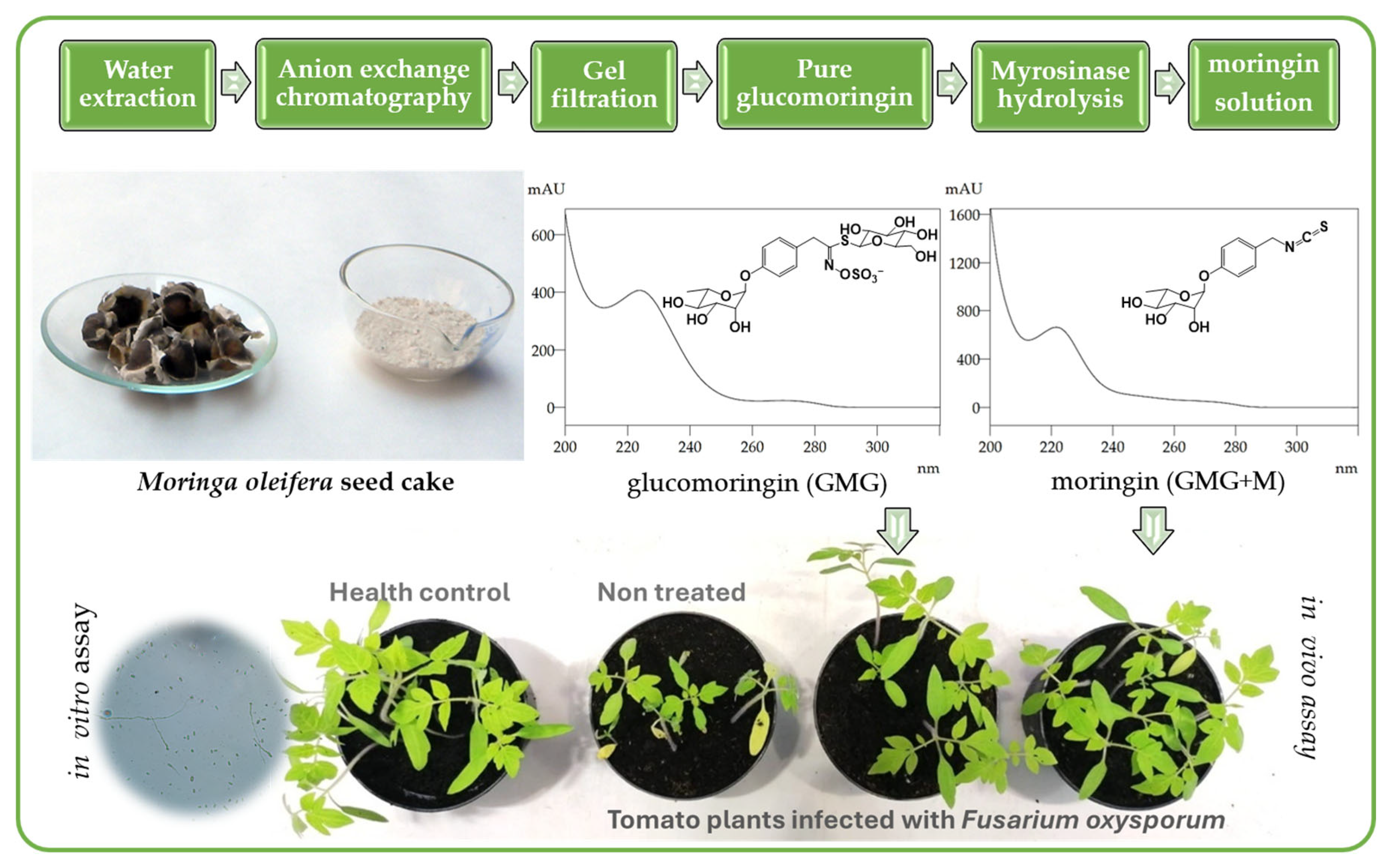
2.1. Glucomoringin Purification
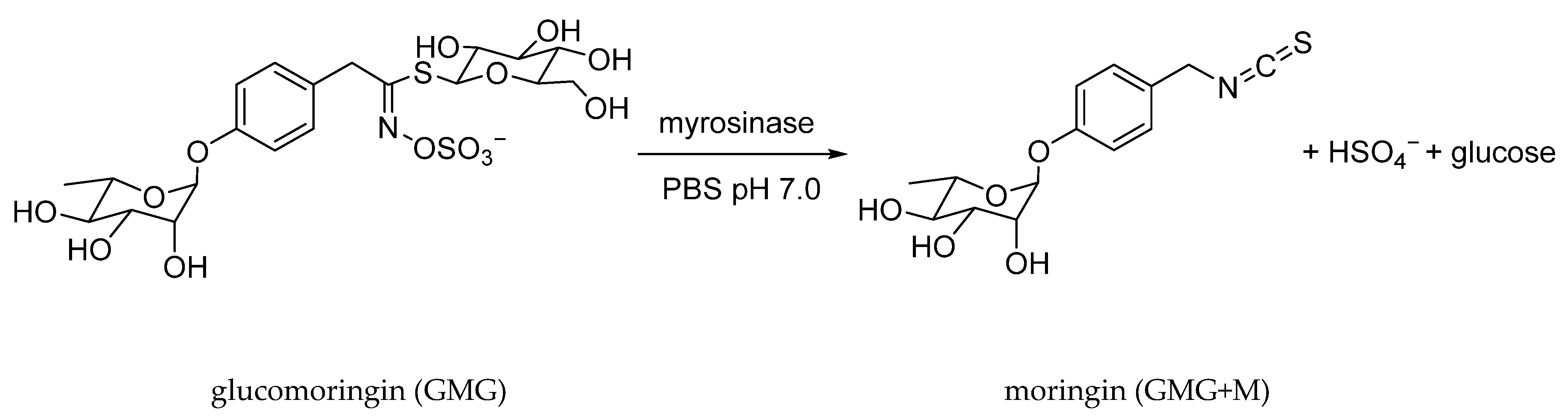
2.2. Glucomoringin Biotransformation into Moringin
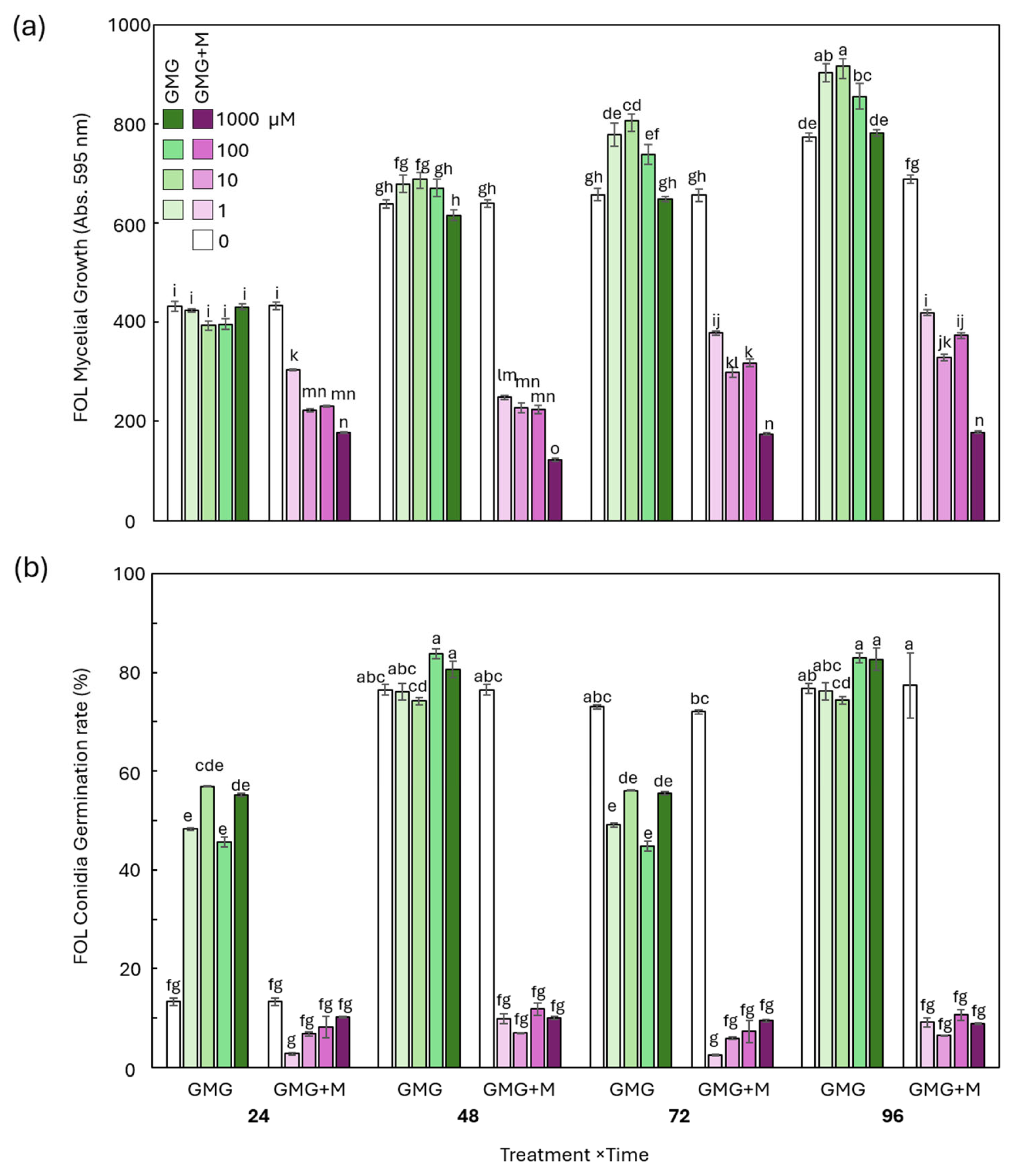
2.3. In Vitro Antifungal Activity
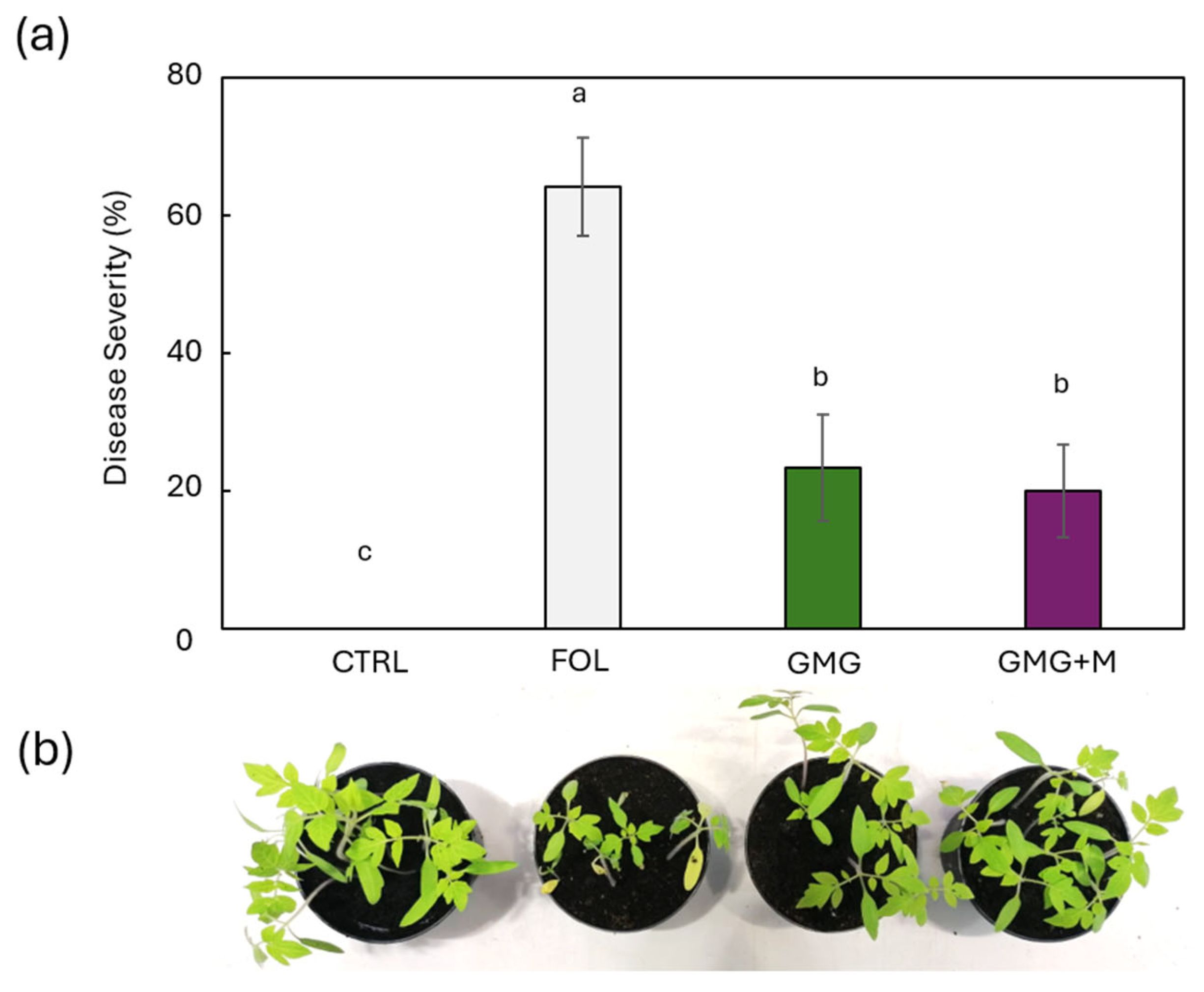
2.4. In Vivo Disease Control Ability on Tomato Plants
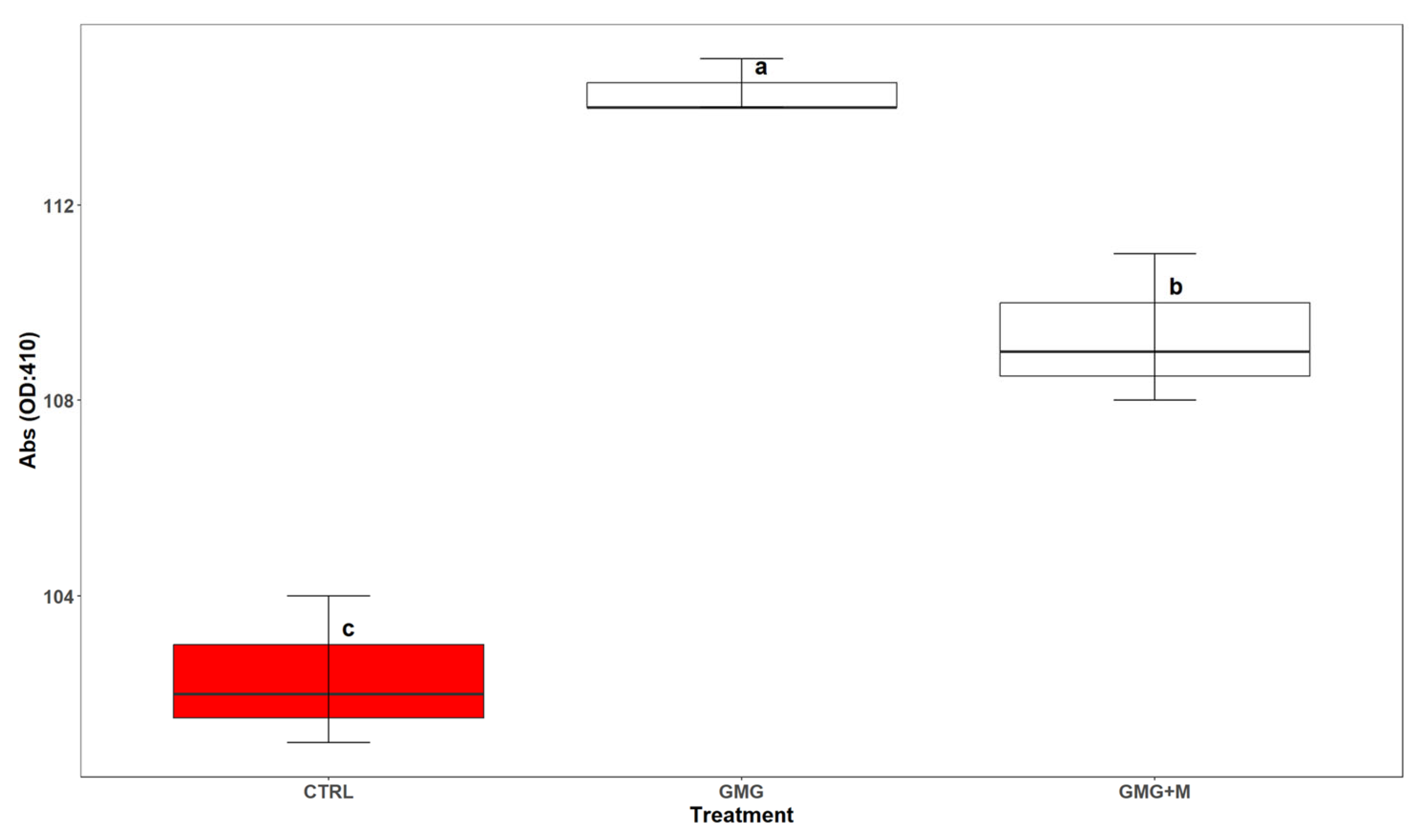
2.5. Effect of Seed Coating on Oxidative Stress in Tomato Sprouted Rootlets
3. Discussion
3.1. Supply of Glucomoringin and Moringin
3.2. Antifungal Properties and Seed Coating Efficacy
3.3. Literature Brief Review on Mechanistic Hypothesis
4. Materials and Methods
4.1. Isolation and Purification of Glucomoringin
4.2. Glucomoringin Extraction, Desulfation and HPLC Analysis
4.3. Myrosinase-Catalyzed Hydrolysis of Glucomoringin
4.4. Plant Pathogen
4.5. Evaluation of the In Vitro Antifungal Activity
4.6. Evaluation of the In Vivo Disease Control Ability on Tomato Plants
4.7. Polyphenol Oxidase Activity Assay in Tomato Sprouted Rootlets
4.8. Statistics
5. Conclusions
Author Contributions
Funding
Institutional Review Board Statement
Informed Consent Statement
Data Availability Statement
Conflicts of Interest
References
- Vengassery, H.; Ameer, M.; Augustine, R. Biotechnological interventions for genetic improvement of the miracle tree Moringa oleifera Lam. Euphytica 2026, 222, 23. [Google Scholar] [CrossRef]
- Orhevba, B.A.; Sunmonu, M.O.; Iwunze, H.I. Extraction and characterization of Moringa oleifera seed oil. Res. Rev. J. Food Dairy Technol. 2013, 1, 22–27. Available online: https://www.rroij.com/open-access/extraction-and-characterization-of-moringa-oleifera-seed-oil-22-27.pdf (accessed on 21 June 2026).
- Yadav, L.P.; Gangadhara, K.; Apparao, V.V. Evaluation of Moringa oleifera (drumstick) variety Thar Harsha under rainfed semi-arid conditions for growth, yield and quality along with antioxidant potentiality and nutrient content. S. Afr. J. Bot. 2022, 148, 112–122. [Google Scholar] [CrossRef]
- Cervera-Chiner, L.; Pageo, S.; Juan-Borrás, M.; García-Mares, F.J.; Castelló, M.L.; Ortolá, M.D. Fatty acid profile and physicochemical properties of Moringa oleifera seed oil extracted at different temperatures. Foods 2024, 13, 2733. [Google Scholar] [CrossRef] [PubMed]
- Ramteke, T.R.; Kuril, L.; Suryawanshi, O.P. Quality evaluation of moringa (Moringa oleifera) seed and defatted cake. Int. J. Adv. Biochem. Res. 2024, 8, 226–231. [Google Scholar] [CrossRef]
- Peña-Gómez, N.; Escobar-García, J.D.; Álvarez, A.A.; Haros, C.M. Revalorization of the residual cake from Moringa seeds as an alternative source of plant-based proteins. Biol. Life Sci. Forum 2025, 50, 2. [Google Scholar] [CrossRef]
- Bokhad, M.N.; Jagtap, U.B. Bioactive phytochemicals from Moringa (M. oleifera) seed oil processing by-products. In Bioactive Phytochemicals from Vegetable Oil and Oilseed Processing By-Products; Ramadan Hassanien, M.F., Ed.; Reference Series in Phytochemistry; Springer: Cham, Switzerland, 2022; pp. 685–701. [Google Scholar] [CrossRef]
- Camilleri, E.; Blundell, R. A comprehensive review of the phytochemicals, health benefits, pharmacological safety and medicinal prospects of Moringa oleifera. Heliyon 2024, 10, e27807. [Google Scholar] [CrossRef] [PubMed]
- Omokpariola, D.O.; Precious-Egere, S.C.; Omokpariola, P.L.; Okechukwu, V.U. Phytochemical and anti-microbial analysis of metabolites in seeds of Moringa oleifera grown in Nigeria. Prog. Chem. Biochem. Res. 2021, 4, 268–277. [Google Scholar] [CrossRef]
- Jaja-Chimedza, A.; Graf, B.L.; Simmler, C.; Kim, Y.; Kuhn, P.; Pauli, G.F.; Raskin, I. Biochemical characterization and anti-inflammatory properties of an isothiocyanate-enriched moringa (Moringa oleifera) seed extract. PLoS ONE 2017, 12, e0182658. [Google Scholar] [CrossRef] [PubMed]
- Jahan, I.A.; Hossain, M.H.; Ahmed, K.S.; Sultana, Z.; Biswas, P.K.; Nada, K. Antioxidant activity of Moringa oleifera seed extracts. Orient. Pharm. Exp. Med. 2018, 18, 299–307. [Google Scholar] [CrossRef]
- Adebayoa, I.A.; Arsada, H.; Samianb, M.R. Antiproliferative effect on breast cancer (MCF7) of Moringa oleifera seed extracts. Afr. J. Tradit. Complement. Alt. M. 2017, 14, 282–287. [Google Scholar] [CrossRef] [PubMed]
- Jabeen, R.; Shahid, M.; Jamil, A.; Ashraf, M. Microscopic evaluation of the antimicrobial activity of seed extracts of Moringa oleifera. Pak. J. Bot. 2008, 40, 1349–1358. [Google Scholar]
- Ayirezang, F.; Azumah, B.; Achio, S. Effects of Moringa oleifera leaves and seeds extracts against food spoilage fungi. Adv. Microbiol. 2020, 10, 27–38. [Google Scholar] [CrossRef]
- Garcia, T.B.; Soares, A.A.; Costa, J.H.; Costa, H.P.; Neto, J.X.; Rocha-Bezerra, L.C.B.; Silva, F.D.A.; Arantes, M.R.; Sousa, D.O.; Vasconcelos, I.M.; et al. Gene expression and spatiotemporal localization of antifungal chitin-binding proteins during Moringa oleifera seed development and germination. Planta 2019, 249, 1503–1519. [Google Scholar] [CrossRef] [PubMed]
- Chandrashekar, S.; Vijayakumar, R.; Chelliah, R.; Oh, D.-H. Identification and purification of potential bioactive peptide of Moringa oleifera seed extracts. Plants 2020, 9, 1445. [Google Scholar] [CrossRef] [PubMed]
- Padla, E.P.; Solis, L.T.; Levida, R.M.; Shen, C.C.; Ragasa, C.Y. Antimicrobial isothiocyanates from the seeds of Moringa oleifera Lam. Z. Naturforsch C J. Biosci. 2012, 67, 557–564. [Google Scholar] [CrossRef] [PubMed]
- Dzuvor, C.K.O.; Pan, S.; Amanze, C.; Amuzu, P.; Asakiya, C.; Kubi, F. Bioactive components from Moringa oleifera seeds: Production, functionalities and applications—A critical review. Crit. Rev. Biotechnol. 2022, 42, 271–293. [Google Scholar] [CrossRef] [PubMed]
- Paliwal, R.; Sharma, V.; Pracheta, J. A review on horseradish tree (Moringa oleifera): A multipurpose tree with high economic and commercial importance. Asian J. Biotechnol. 2011, 3, 317–328. [Google Scholar] [CrossRef]
- Kissen, R.; Rossiter, J.T.; Bones, A.M. The ‘mustard oil bomb’: Not so easy to assemble?! Localization, expression and distribution of the components of the myrosinase enzyme system. Phytochem. Rev. 2009, 8, 69–86. [Google Scholar] [CrossRef]
- Maldini, M.; Maksoud, S.A.; Natella, F.; Montoro, P.; Petretto, G.L.; Foddai, M.; De Nicola, G.R.; Chessa, M.; Pintore, G. Moringa oleifera: Study of phenolics and glucosinolates by mass spectrometry. J. Mass. Spectrom. 2014, 9, 900–910. [Google Scholar] [CrossRef] [PubMed]
- Galuppo, M.; De Nicola, G.R.; Iori, R.; Dell’Utri, P.; Bramanti, P.; Mazzon, E. Antibacterial activity of glucomoringin bioactivated with myrosinase against two important pathogens affecting the health of long-term patients in hospitals. Molecules 2013, 18, 14340–14348. [Google Scholar] [CrossRef] [PubMed]
- Mathiron, D.; Iori, R.; Pilard, S.; Soundara Rajan, T.; Landy, D.; Mazzon, E.; Rollin, P.; Djedaïni-Pilard, F. A combined approach of NMR and mass spectrometry techniques applied to the α-cyclodextrin/moringin complex for a novel bioactive formulation. Molecules 2018, 23, 1714. [Google Scholar] [CrossRef] [PubMed]
- Faostat—Crops and Livestock Products. Available online: https://www.fao.org/faostat/en/#data/QCL (accessed on 1 June 2026).
- Srinivas, C.; Nirmala Devi, D.; Narasimha Murthy, K.; Mohan, C.D.; Lakshmeesha, T.R.; Singh, B.P.; Kalagatur, N.K.; Niranjana, S.R.; Hashem, A.; Alqarawi, A.A.; et al. Fusarium oxysporum f. sp. lycopersici causal agent of vascular wilt disease of tomato: Biology to diversity—A review. Saudi J. Biol. Sci. 2019, 26, 1315–1324. [Google Scholar] [CrossRef] [PubMed]
- Maurya, S.; Dubey, S.; Kumari, R.; Verma, R. Management tactics for fusarium wilt of tomato caused by Fusarium oxysporum f. sp. lycopersici (Sacc.): A review. Int. J. Res. Pharm. Pharm. Sci. 2019, 4, 1–7. [Google Scholar]
- Hassan, H.A. Biology and integrated control of tomato wilt caused by Fusarium oxysporum lycopersici: A comprehensive review under the light of recent advancements. J. Bot. Res. 2020, 3, 84–99. [Google Scholar] [CrossRef] [PubMed]
- Nasrin, L.; Podder, S.; Mahmud, M.R. Investigation of potential biological control of Fusarium oxysporum f.sp. lycopersici by plant extracts, antagonistic sp. and chemical elicitors in vitro. Fungal Genom. Biol. 2018, 8, 1000155. [Google Scholar] [CrossRef]
- Deresa, E.M.; Diriba, T.F. Phytochemicals as alternative fungicides for controlling plant diseases: A comprehensive review of their efficacy, commercial representatives, advantages, challenges for adoption, and possible solutions. Heliyon 2023, 9, e13810. [Google Scholar] [CrossRef] [PubMed]
- Gaber, M.A.; El-Messeiry, S.; El-Tanbouly, R.; Elkashef, A.A.; Behiry, S.I.; Aboshosha, S.S.; Aamer, H.A. Eco-friendly management of Fusarium wilt in tomato using Salvia officinalis methanolic extract: In vitro, in vivo, and molecular docking approaches. J. Plant Pathol. 2026, 108, 311–324. [Google Scholar] [CrossRef]
- Paikaray, P.N.; Paikaray, S.S.; Mohapatra, A.; Sahoo, B.R. Induced systemic resistance in tomato (Solanum lycopersicum L.) plants treated with botanical extracts against Fusarium oxysporum. Ecol. Environ. Conserv. 2025, 31, S288–S292. [Google Scholar] [CrossRef]
- Abubakar, M.; Koul, B.; Sharma, Y. Plant-based fungicides: A sustainable alternative to synthetic fungicides in vegetable production. Phytochem. Rev. 2026, 25, 1681–1749. [Google Scholar] [CrossRef]
- Javaid, A.; Bashir, A. Radish extracts as natural fungicides for management of Fusarium oxysporum f. sp. lycopersici, the cause of tomato wilt. Pak. J. Bot. 2015, 47, 321–324. [Google Scholar]
- Vandicke, J.; De Visschere, K.; Deconinck, S.; Leenknecht, D.; Vermeir, P.; Audenaert, K.; Haesaert, G. Uncovering the biofumigant capacity of allyl isothiocyanate from several Brassicaceae crops against Fusarium pathogens in maize. J. Sci. Food Agric. 2020, 100, 5476–5486. [Google Scholar] [CrossRef] [PubMed]
- Galuppo, M.; Giacoppo, S.; Iori, R.; De Nicola, G.R.; Bramanti, P.; Mazzon, E. Administration of 4-(α-L-rhamnosyloxy)-benzyl isothiocyanate delays disease phenotype in SOD1(G93A) rats: A transgenic model of amyotrophic lateral sclerosis. Biomed. Res. Int. 2015, 2015, 259417. [Google Scholar] [CrossRef] [PubMed]
- Razis, A.F.A.; Kamal, R.M.; De Nicola, G.R.; Montaut, S.; Perimal, E.K.; Ahmad, H.; Rollin, P.; Rigaud, S.; Mazzon, E.; Djedaini-Pilard, F. Cardio- and neuroprotective effects by pretreatment of dietary moringin from Moringa oleifera seeds and α-CD/moringin formulation in a rat model of isoproterenol-induced myocardial infarction. J. Nutr. Sci. 2025, 14, e62. [Google Scholar] [CrossRef] [PubMed]
- Margiotta, F.; Lucarini, E.; Toti, A.; Cataldi, M.G.; Ciampi, C.; De Nicola, G.R.; Di Cesare Mannelli, L.; Ghelardini, C. A Combined colon organoid-sensory neuron model reveals epithelial contribution to moringin efficacy against painful inflammatory bowel disease. Phytother. Res. 2026, 40, 3250–3266. [Google Scholar] [CrossRef] [PubMed]
- Poveda, J.; Eugui, D.; Velasco, P. Natural control of plant pathogens through glucosinolates: An effective strategy against fungi and oomycetes. Phytochem. Rev. 2020, 19, 1045–1059. [Google Scholar] [CrossRef]
- Pacifico, D.; Lanzanova, C.; Pagnotta, E.; Bassolino, L.; Mastrangelo, A.M.; Marone, D.; Matteo, R.; Lo Scalzo, R.; Balconi, C. Sustainable use of bioactive compounds from Solanum Tuberosum and Brassicaceae wastes and by-products for crop protection—A Review. Molecules 2021, 26, 2174. [Google Scholar] [CrossRef] [PubMed]
- Shinali, T.S.; Zhang, Y.; Altaf, M.; Nsabiyeze, A.; Han, Z.; Shi, S.; Shang, N. The valorization of wastes and byproducts from cruciferous vegetables: A review on the potential utilization of cabbage, cauliflower, and broccoli byproducts. Foods 2024, 13, 1163. [Google Scholar] [CrossRef] [PubMed]
- Blažević, I.; Montaut, S.; Burčul, F.; Olsen, C.E.; Burow, M.; Rollin, P.; Agerbirk, N. Glucosinolate structural diversity, identification, chemical synthesis and metabolism in plants. Phytochemistry 2020, 169, 112100. [Google Scholar] [CrossRef] [PubMed]
- Abuyusuf, M.; Rubel, M.H.; Kim, H.-T.; Jung, H.-J.; Nou, I.-S.; Park, J.-I. Glucosinolates and biotic stress tolerance in Brassicaceae with emphasis on cabbage: A Review. Biochem. Genet. 2023, 61, 451–470. [Google Scholar] [CrossRef] [PubMed]
- Abdel-Farid, I.B.; Jahangir, M.; Mustafa, N.R.; Van Dam, N.M.; Van den Hondel, C.A.; Kim, H.K.; Choi, Y.H.; Verpoorte, R. Glucosinolate profiling of Brassica rapa cultivars after infection by Leptosphaeria maculans and Fusarium oxysporum. Biochem. Syst. Ecol. 2010, 38, 612–620. [Google Scholar] [CrossRef]
- Rahimi, F.; Rahmanpour, S. Overcoming glucosinolate-myrosinase-isothiocyanate defense system by plant pathogenic fungi. Int. J. Sec. Metab. 2020, 7, 19–27. [Google Scholar] [CrossRef]
- Moreno, D.J.; Romero, C.C.; Lovera, D.F. Applications and Uses of Moringa Oleifera seeds for water treatment, agricultural fertilization, and nutraceuticals. Sustainability 2026, 18, 3. [Google Scholar] [CrossRef]
- Lu, Y.; Maria Vos, R.D.; Zhang, Y.; Zhang, M.; Liu, Y.; Fu, C.; Liu, S.Q.; Huang, D. The degradation kinetics and mechanism of moringin in aqueous solution and the cytotoxicity of degraded products. Food Chem. 2021, 364, 130424. [Google Scholar] [CrossRef] [PubMed]
- Nakamura, Y.; Miyoshi, N. Electrophiles in foods: The current status of isothiocyanates and their chemical biology. Biosci. Biotechnol. Biochem. 2010, 74, 242–255. [Google Scholar] [CrossRef] [PubMed]
- Hanschen, F.S.; Brüggemann, N.; Brodehl, A.; Mewis, I.; Schreiner, M.; Rohn, S.; Kroh, L.W. Characterization of products from the reaction of glucosinolate-derived isothiocyanates with cysteine and lysine derivatives formed in either model systems or broccoli sprouts. J. Agric. Food Chem. 2012, 60, 7735–7745. [Google Scholar] [CrossRef] [PubMed]
- Plaszkó, T.; Szűcs, Z.; Vasas, G.; Gonda, S. Effects of glucosinolate-derived isothiocyanates on fungi: A comprehensive review on direct effects, mechanisms, structure-activity relationship data and possible agricultural applications. J. Fungi 2021, 7, 539. [Google Scholar] [CrossRef] [PubMed]
- Gan, R.-Y.; Li, H.-B.; Corke, H.; Yang, H. Editorial: Discovery of novel plant-derived compounds with antibacterial actions against antibiotic-resistant bacteria, volume II. Front. Microbiol. 2022, 13, 1027679. [Google Scholar] [CrossRef] [PubMed]
- Wen, Y.; Li, W.; Su, R.; Yang, M.; Zhang, N.; Li, X.; Li, L.; Sheng, J.; Tian, Y. Multi-target antibacterial mechanism of moringin from Moringa oleifera seeds against Listeria monocytogenes. Front. Microbiol. 2022, 13, 925291. [Google Scholar] [CrossRef] [PubMed]
- Wen, Y.; Li, W.; Ma, S.; Sha, Y.; Sheng, J.; Li, L.; Tian, Y. Preparation and characterization of moringin-loaded chitosan-coated liposomes and their antibacterial activity against Staphylococcus aureus. Int. J. Biol. Macromol. 2024, 282, 136815. [Google Scholar] [CrossRef] [PubMed]
- Eilert, U.; Wolters, B.; Nahrstedt, A. The antibiotic principle of seeds of Moringa oleifera and Moringa stenopetala. Planta Med. 1981, 42, 55–61. [Google Scholar] [CrossRef] [PubMed]
- Li, Y.; Liu, Y.; Zhang, Z.; Cao, Y.; Li, J.; Luo, L. Allyl isothiocyanate (AITC) triggered toxicity and FsYvc1 (a STRPC family member) responded sense in Fusarium solani. Front. Microbiol. 2020, 11, 870. [Google Scholar] [CrossRef] [PubMed]
- Smolinska, U.; Morra, M.J.; Knudsen, G.R.; James, R.L. Isothiocyanates produced by Brassicaceae species as inhibitors of Fusarium oxysporum. Plant Dis. 2003, 87, 407–412. [Google Scholar] [CrossRef] [PubMed]
- Vincenzo, C.; Tripodi, P.; Lombardi, N.; Manganiello, G.; Pane, C. Plant phenomics-assisted selection of Trichoderma spp. strains effective in the biocontrol of tomato soil-borne fungal diseases. Environ. Technol. Innov. 2025, 40, 104357. [Google Scholar] [CrossRef]
- Vincenzo, C.; Tripodi, P.; Lombardi, N.; Pane, C. Boosting innovative microbial solutions by understanding the functional benefits of endophytic rhizobacteria on tomato growth and protection using plant phenomics. Chem. Biol. Technol. Agric. 2026, 13, 51. [Google Scholar] [CrossRef]
- Pane, C.; Rongai, D.; Zaccardelli, M. Foliar spray application of glucosinolates and essential oils on processing tomato in open field production system. Agric. Sci. 2013, 4, 149–153. [Google Scholar] [CrossRef]
- Albaladejo-Marico, L.; Carvajal, M.; Yepes-Molina, L. Involvement of glucosinolates and phenolics in the promotion of broccoli seedling growth through the modulation of primary and secondary metabolism. Plant Sci. 2024, 347, 112205. [Google Scholar] [CrossRef] [PubMed]
- Li, L.; Steffens, J.C. Overexpression of polyphenol oxidase in transgenic tomato plants results in enhanced bacterial disease resistance. Planta 2002, 215, 239–247. [Google Scholar] [CrossRef] [PubMed]
- Chakraborty, N.; Chandra, S.; Sarkar, A.; Ghosh, S.; Dasgupta, A.; Acharya, K. An in planta approach for understanding defense responses in tomato plants against Fusarium oxysporum Schltdl. J. Plant Pathol. 2023, 105, 129–136. [Google Scholar] [CrossRef]
- Patil, S.; Gavandi, T.; Karuppayil, S.M.; Jadhav, A. Glucosinolate derivatives as antifungals: A review. Phytother. Res. 2024, 38, 5052–5066. [Google Scholar] [CrossRef] [PubMed]
- Wang, L.; Shen, H.; Wang, Y.; Wu, X.; Zhao, H.; Luo, L.; Li, J. Microorganisms achieve the transformation of sulforaphane through active the synergistic action of myrosinase-like enzyme systems and transport networks. Trends Food Sci. Technol. 2026, 171, 105625. [Google Scholar] [CrossRef]
- Gimsing, A.L.; Sørensen, J.C.; Tovgaard, L.; Jørgensen, A.M.; Hansen, H.C. Degradation kinetics of glucosinolates in soil. Environ. Toxicol. Chem. 2006, 25, 2038–2044. [Google Scholar] [CrossRef] [PubMed]
- Gimsing, A.L.; Kirkegaard, J.A. Glucosinolates and biofumigation: Fate of glucosinolates and their hydrolysis products in soil. Phytochem. Rev. 2009, 8, 299–310. [Google Scholar] [CrossRef]
- Wang, Y.; Li, X.; Fan, B.; Zhu, C.; Chen, Z. Regulation and function of defense-related callose deposition in plants. Int. J. Mol. Sci. 2021, 22, 2393. [Google Scholar] [CrossRef] [PubMed]
- Cao, L.; Blekemolen, M.C.; Tintor, N.; Cornelissen, B.J.C.; Takken, F.L.W. The Fusarium oxysporum Avr2-Six5 effector pair alters plasmodesmatal exclusion selectivity to facilitate cell-to-cell movement of Avr2. Mol. Plant 2018, 11, 691–705. [Google Scholar] [CrossRef] [PubMed]
- Luna, E.; Pastor, V.; Robert, J.; Flors, V.; Mauch-Mani, B.; Ton, J. Callose deposition: A multifaceted plant defense response. Mol. Plant-Microbe Interact. 2011, 24, 183–193. [Google Scholar] [CrossRef] [PubMed]
- Wu, S.W.; Kumar, R.; Iswanto, A.B.B.; Kim, J.Y. Callose balancing at plasmodesmata. J. Exp. Bot. 2018, 69, 5325–5339. [Google Scholar] [CrossRef] [PubMed]
- Luo, S.; Jiang, X.; Ouyang, S.; Zhang, Q. Reactive oxygen species, cell death, callose deposition and photosynthesis of tomato after infection with Meloidogyne incognita may contribute to aggravated Fusarium wilt. Eur. J. Plant Pathol. 2025, 171, 391–406. [Google Scholar] [CrossRef]
- Fernandez, J.C.; Azim, M.F.; Adams, N.; Strong, M.; Piya, S.; Xu, M.; Brunkard, J.O.; Hewezi, T.; Sams, C.E.; Burch-Smith, T.M. Glucosinolates can act as signals to modulate intercellular trafficking via plasmodesmata. New Phytol. 2025, 246, 1163–1182. [Google Scholar] [CrossRef] [PubMed]
- Trillas, M.I.; Cotxarrera, L.; Casanova, E.; Cortadellas, N. Ultrastructural changes and localization of chitin and callose in compatible and incompatible interactions between carnation callus and Fusarium oxysporum. Physiol. Mol. Plant Pathol. 2000, 56, 107–116. [Google Scholar] [CrossRef]
- Zhang, S. Recent advances of polyphenol oxidases in plants. Molecules 2023, 28, 2158. [Google Scholar] [CrossRef] [PubMed]
- ISO 9167:2019; Rapeseed and Rapeseed Meals—Determination of Glucosinolates Content—Method Using High-Performance Liquid Chromatography. ISO: Geneva, Switzerland, 2019. Available online: https://www.iso.org/standard/72207.html (accessed on 10 April 2026).
- Kiddle, G.; Bennett, R.N.; Botting, N.P.; Davidson, N.E.; Robertson, A.A.; Wallsgrove, R.M. High-performance liquid chromatographic separation of natural and synthetic desulphoglucosinolates and their chemical validation by UV, NMR and chemical ionisation-MS methods. Phytochem. Anal. 2001, 12, 226–242. [Google Scholar] [CrossRef] [PubMed]
- Taglienti, A.; Tava, A.; Bertin, S.; Biazzi, E.; Vincenzo, C.; Corrado, C.L.; Simoni, S.; Pane, C. Biopesticidal potential of alfalfa extracts against tomato diseases and assessment of their nontarget effects. Pest Manag. Sci. 2025, 81, 7197–7209. [Google Scholar] [CrossRef] [PubMed]
- Larkin, R.P.; Honeycutt, C.W. Effects of different 3-year cropping systems on soil microbial communities and Rhizoctonia diseases of potato. Phytopathology 2006, 96, 68–79. [Google Scholar] [CrossRef] [PubMed]
- Chiang, K.S.; Liu, H.I.; Bock, C.H. A discussion on disease severity index values. Part I: Warning on inherent errors and suggestions to maximize accuracy. Ann. Appl. Biol. 2017, 171, 139–154. [Google Scholar] [CrossRef]




| FOL Mycelial Growth (Abs. 595 nm) | FOL Conidia Germination Rate (%) | |||||||||
|---|---|---|---|---|---|---|---|---|---|---|
| Source of Variance | SS | DF | MS | F | p | SS | DF | MS | F | p |
| Tr 1 | 6,502,688 | 1 | 6,502,688 | 4449.04 | <0.001 | 17.05833 | 1 | 17.05833 | 633.087 | <0.001 |
| C 2 | 1,249,853 | 4 | 312,463 | 213.78 | <0.001 | 0.57341 | 4 | 0.14335 | 5.320 | <0.001 |
| Tr × C | 1,498,205 | 4 | 374,551 | 256.26 | <0.001 | 4.27045 | 4 | 1.06761 | 39.622 | <0.001 |
| Error | 73,080 | 50 | 1462 | 1.34723 | 50 | 0.02694 | ||||
| Ti 3 | 2,497,765 | 3 | 832,588 | 1723.96 | <0.001 | 4.65317 | 3 | 1.55106 | 568.768 | <0.001 |
| Ti × Tr | 773,086 | 3 | 257,695 | 533.58 | <0.001 | 0.55446 | 3 | 0.18482 | 67.772 | <0.001 |
| Ti × C | 150,973 | 12 | 12,581 | 26.05 | <0.001 | 2.77103 | 12 | 0.23092 | 84.677 | <0.001 |
| Ti × Tr × C | 156,012 | 12 | 13,001 | 26.92 | <0.001 | 0.24309 | 12 | 0.02026 | 7.428 | <0.001 |
| Error | 72,443 | 150 | 483 | 0.40906 | 150 | 0.00273 | ||||
Disclaimer/Publisher’s Note: The statements, opinions and data contained in all publications are solely those of the individual author(s) and contributor(s) and not of MDPI and/or the editor(s). MDPI and/or the editor(s) disclaim responsibility for any injury to people or property resulting from any ideas, methods, instructions or products referred to in the content. |
© 2026 by the authors. Licensee MDPI, Basel, Switzerland. This article is an open access article distributed under the terms and conditions of the Creative Commons Attribution (CC BY) license.
Share and Cite
De Nicola, G.R.; Vincenzo, C.; Pane, C. Moringa oleifera Seed Cake as a Promising Prototype for Designing Phyto-Protectants Against Fusarium oxysporum f. sp. lycopersici in Tomato. Int. J. Mol. Sci. 2026, 27, 5788. https://doi.org/10.3390/ijms27135788
De Nicola GR, Vincenzo C, Pane C. Moringa oleifera Seed Cake as a Promising Prototype for Designing Phyto-Protectants Against Fusarium oxysporum f. sp. lycopersici in Tomato. International Journal of Molecular Sciences. 2026; 27(13):5788. https://doi.org/10.3390/ijms27135788
Chicago/Turabian StyleDe Nicola, Gina Rosalinda, Cono Vincenzo, and Catello Pane. 2026. "Moringa oleifera Seed Cake as a Promising Prototype for Designing Phyto-Protectants Against Fusarium oxysporum f. sp. lycopersici in Tomato" International Journal of Molecular Sciences 27, no. 13: 5788. https://doi.org/10.3390/ijms27135788
APA StyleDe Nicola, G. R., Vincenzo, C., & Pane, C. (2026). Moringa oleifera Seed Cake as a Promising Prototype for Designing Phyto-Protectants Against Fusarium oxysporum f. sp. lycopersici in Tomato. International Journal of Molecular Sciences, 27(13), 5788. https://doi.org/10.3390/ijms27135788