Amine-Functionalized and Gold-Decorated Amine-Functionalized TiO2 Nanoparticles Modulate Breast Cancer Cell Viability

 , , and
Abstract
1. Introduction
2. Results
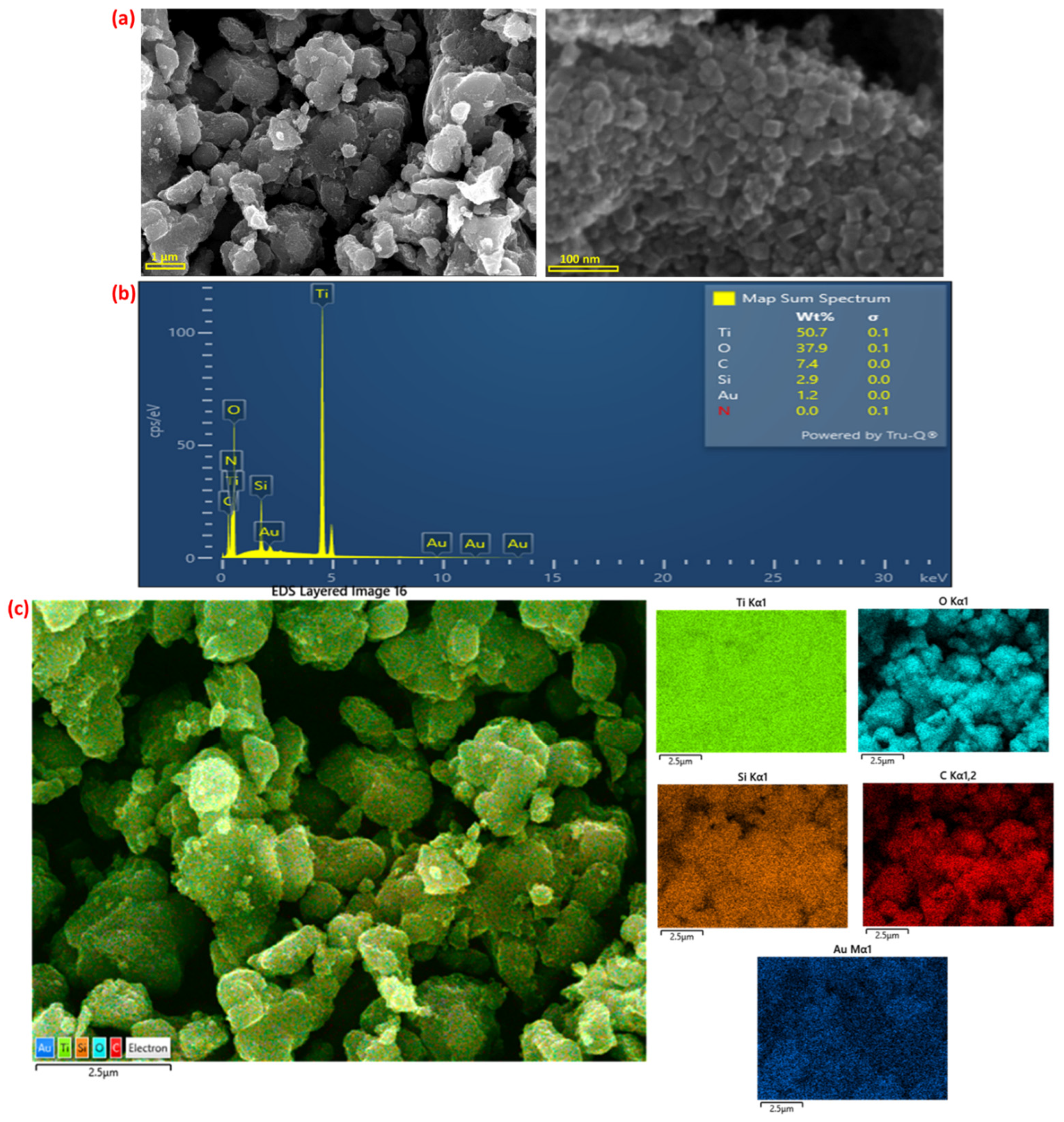
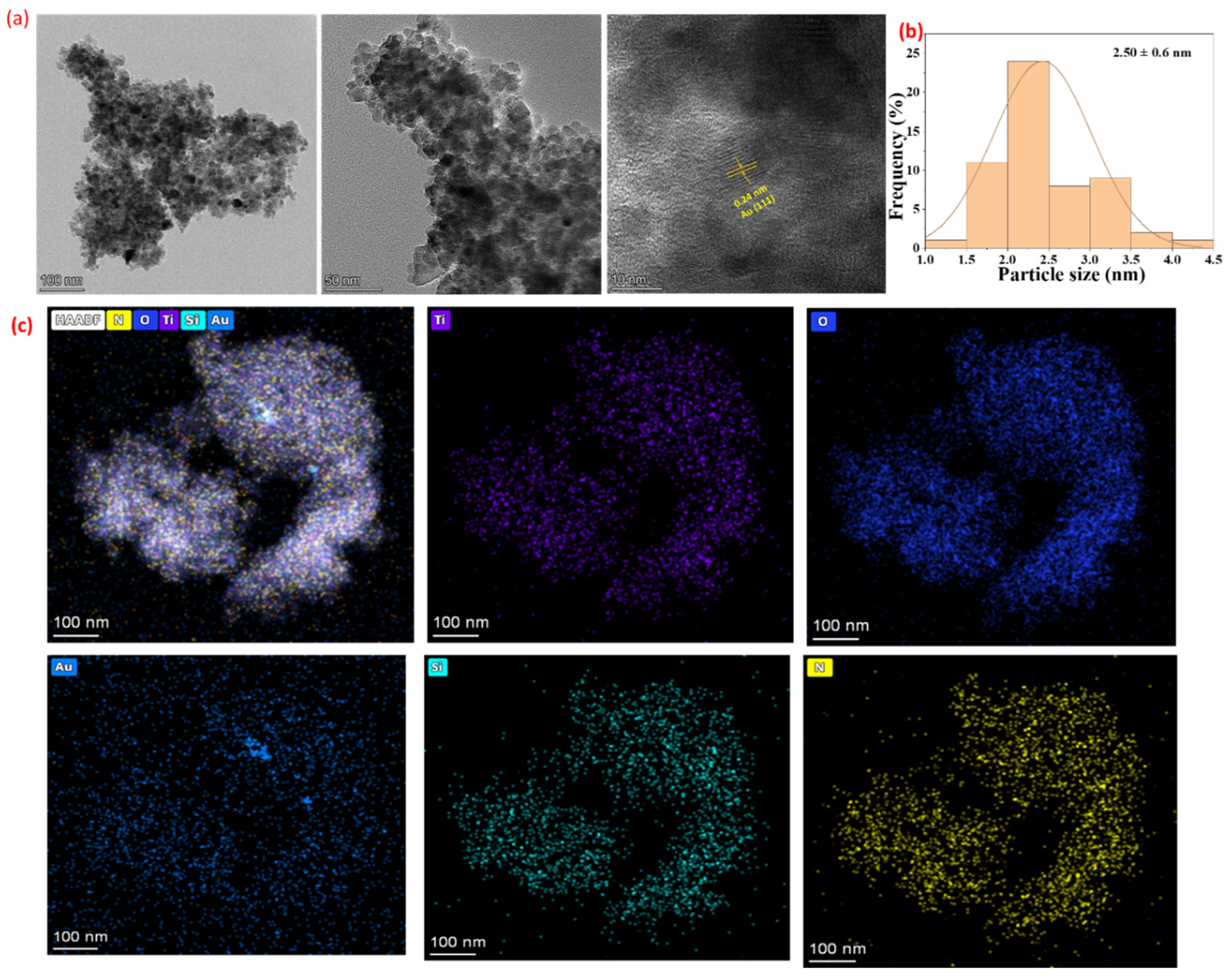
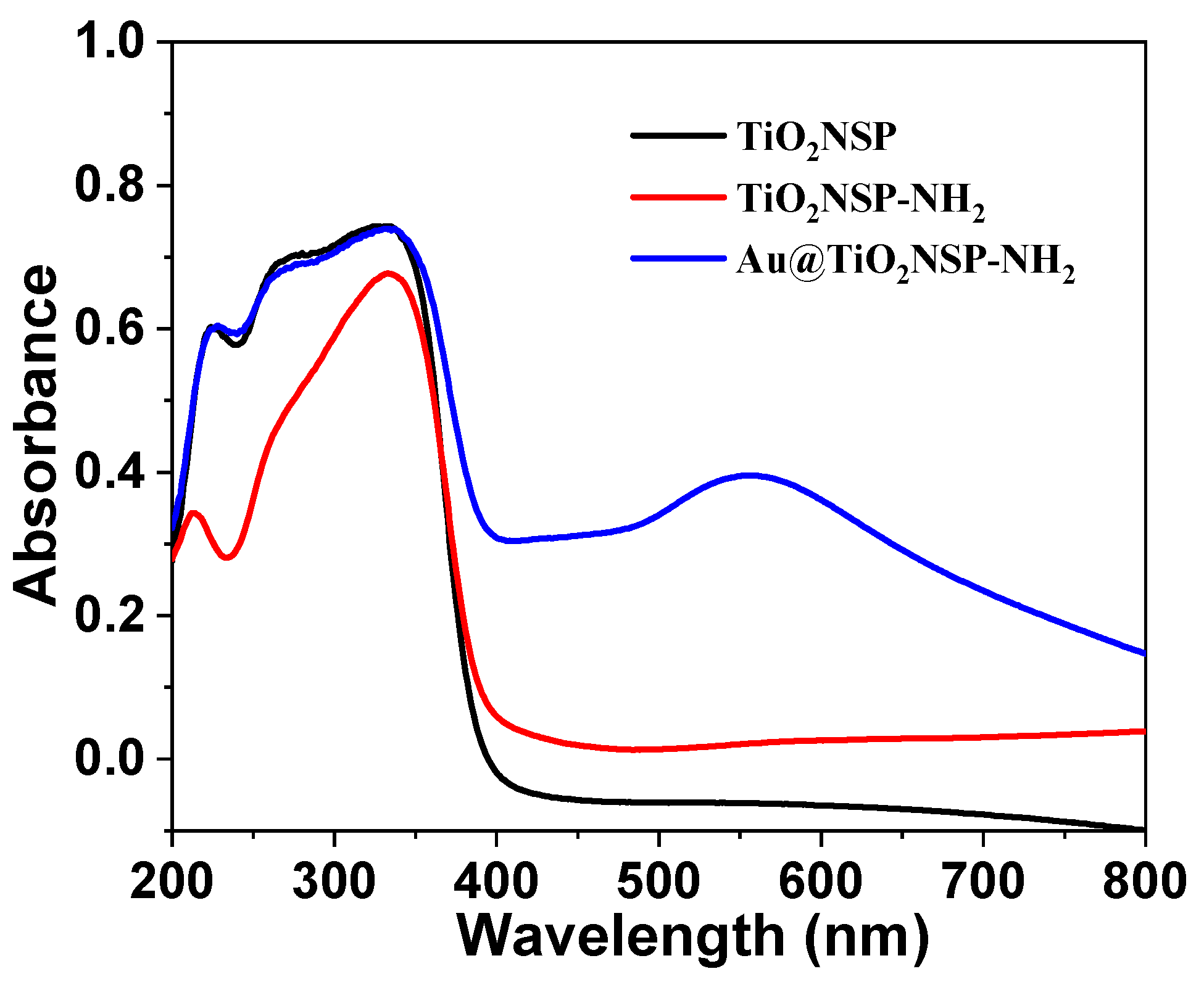
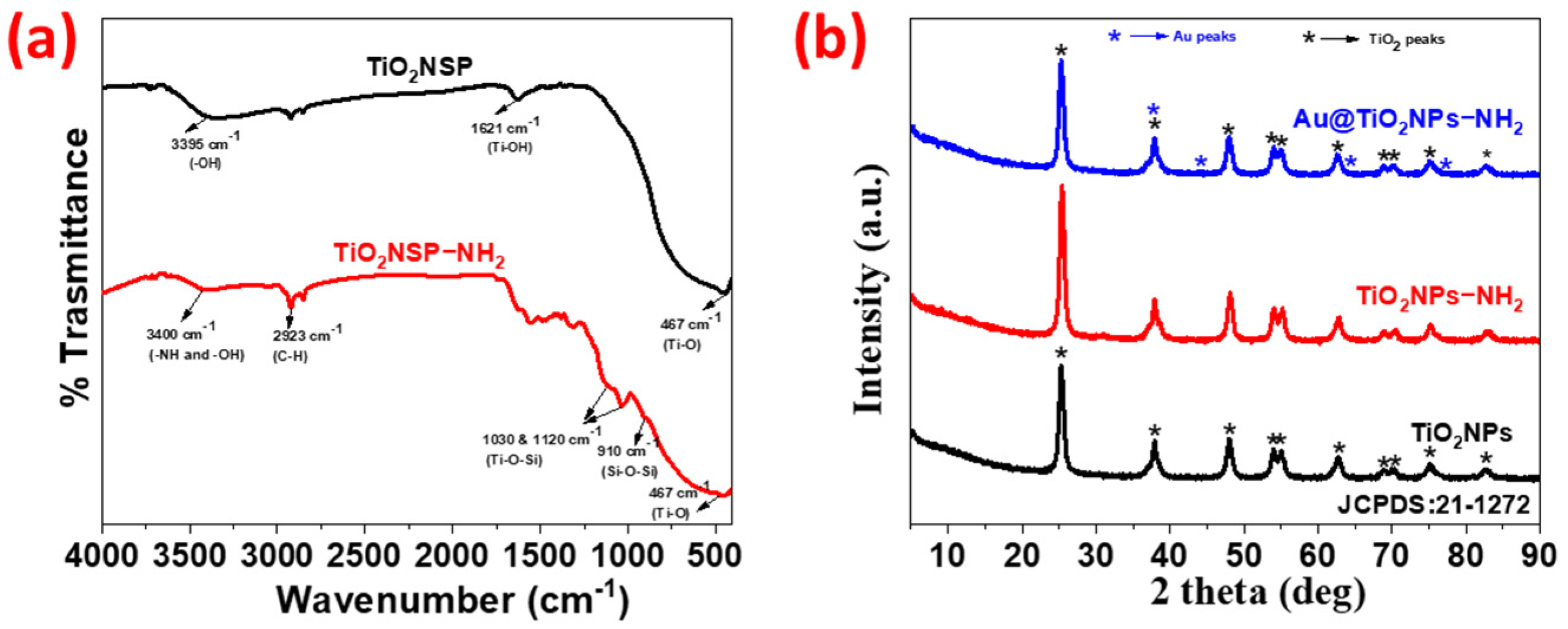
2.1. Physicochemical Characterization of TiO2NPs, TiO2NPs-NH2, and Au@TiO2NPs-NH2
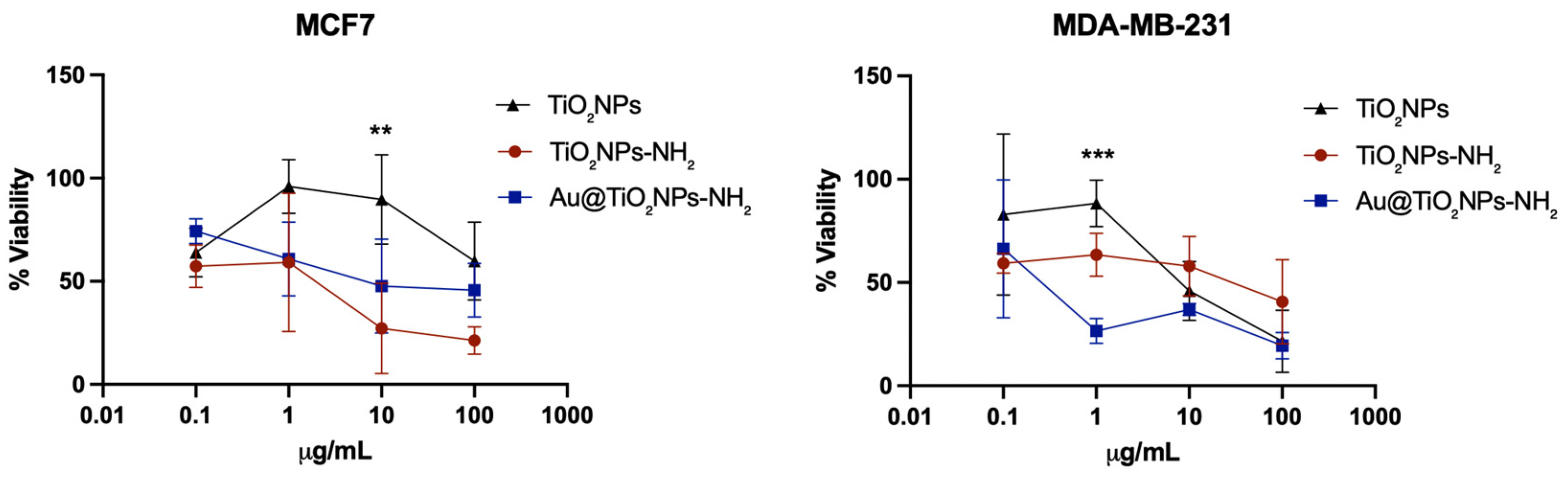
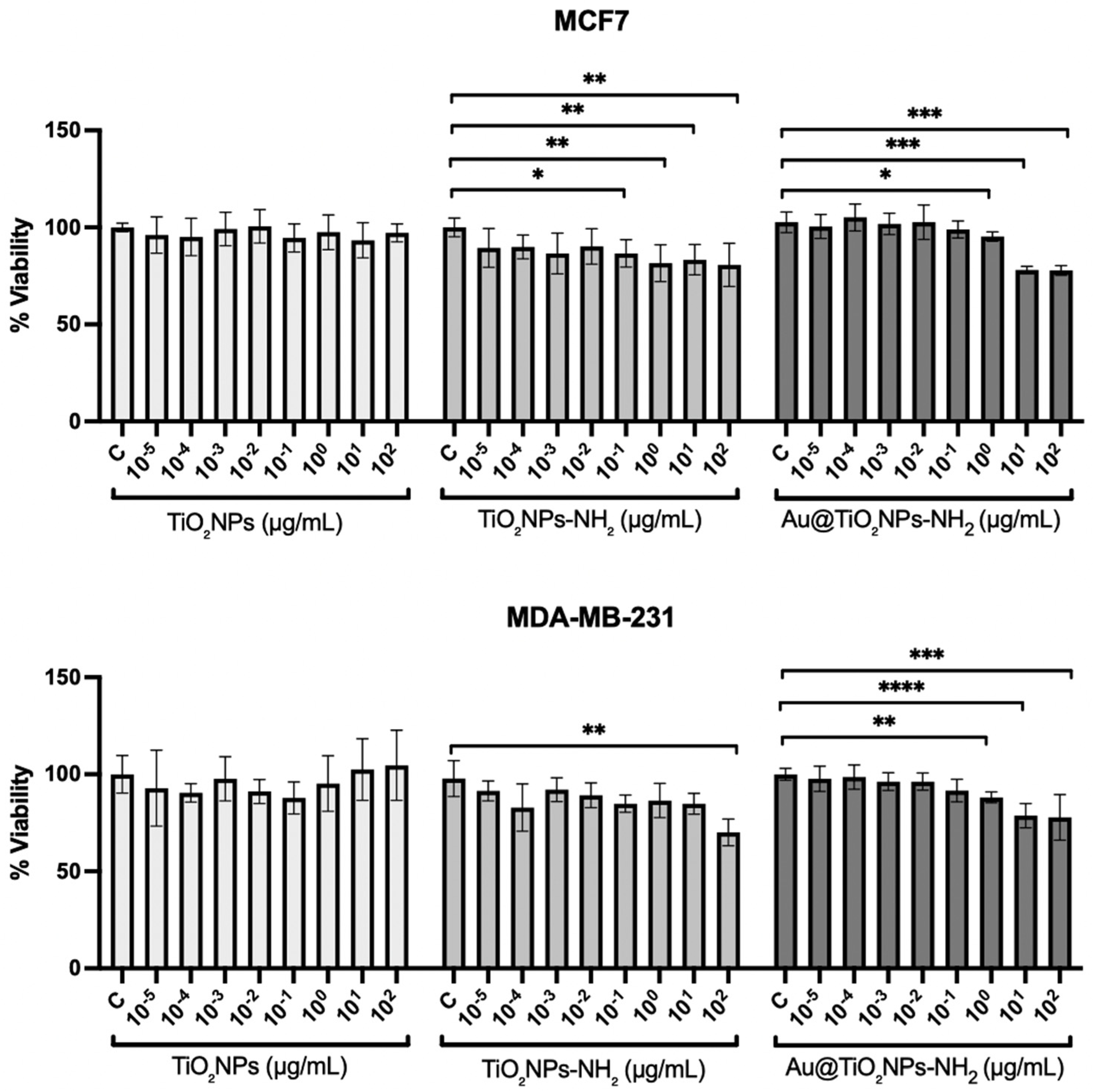
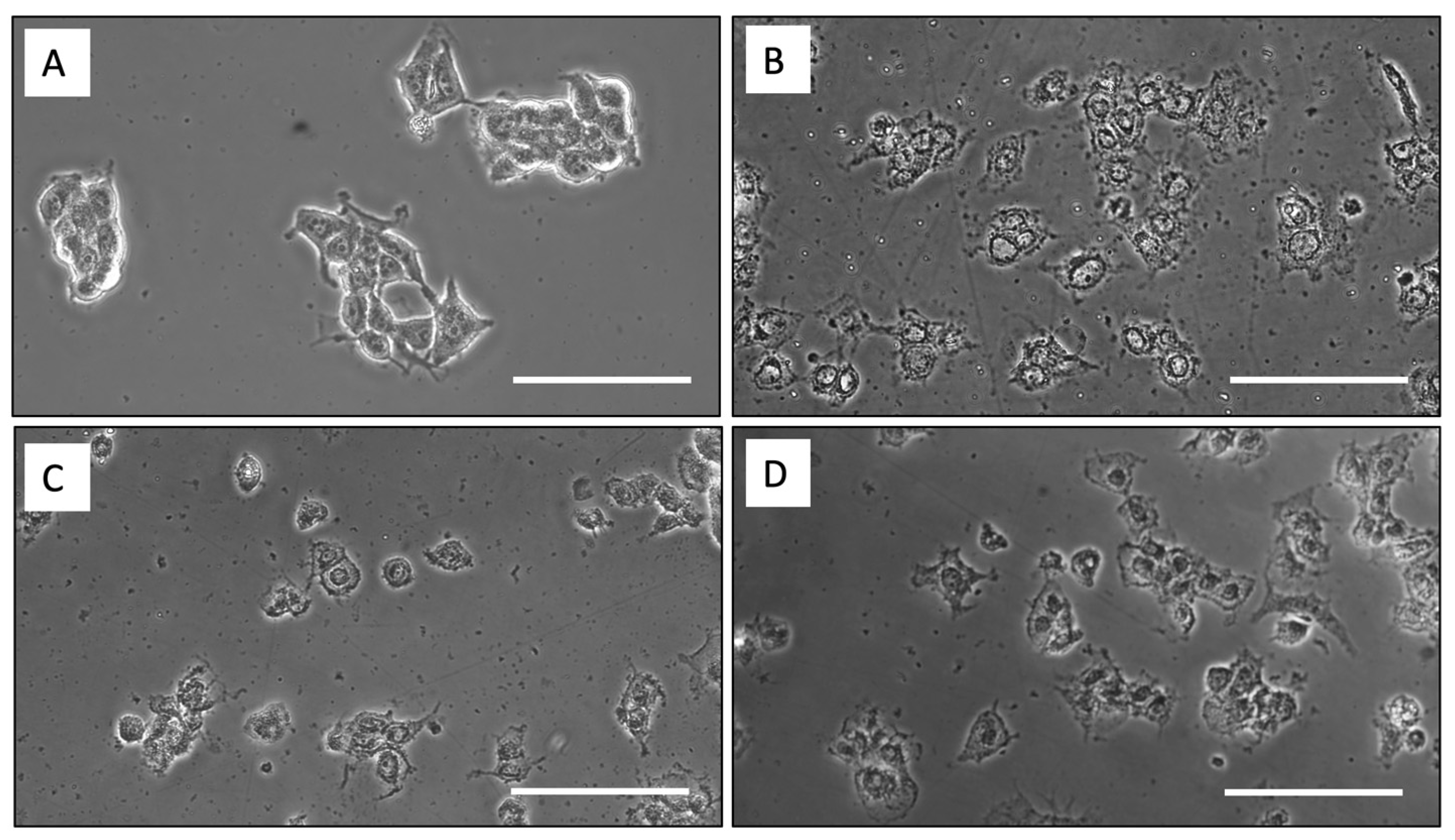
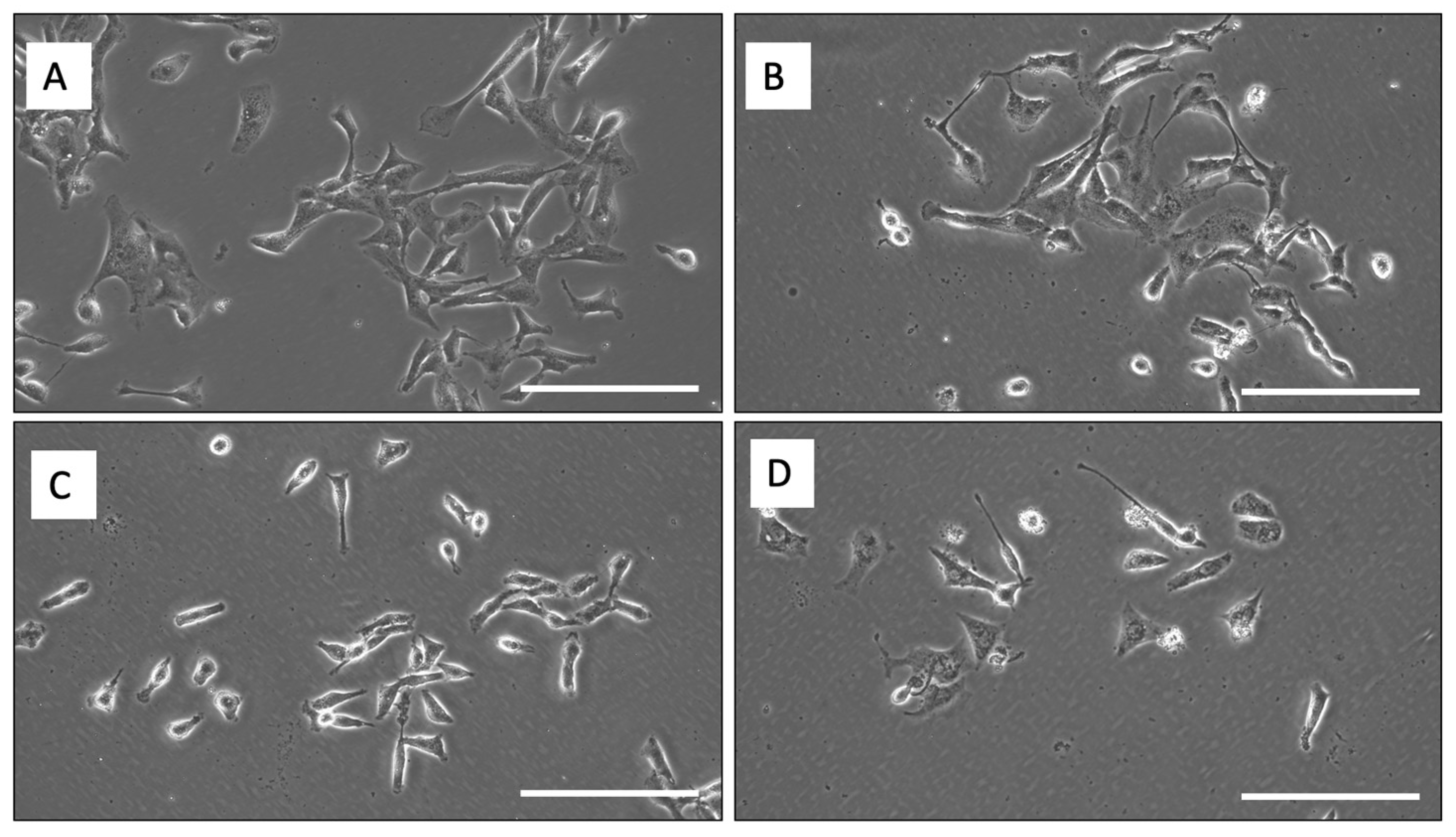
2.2. Surface Modification of TiO2NPs Alters Breast Cancer Cell Viability
3. Discussion
4. Materials and Methods
4.1. Reagents
4.2. Synthesis of Au@TiO2NPs-NH2
4.3. Cell Lines and Culture Conditions
4.4. Cell Viability Assay
4.5. Trypan Blue Exclusion Counting
5. Conclusions
Supplementary Materials
Author Contributions
Funding
Institutional Review Board Statement
Informed Consent Statement
Data Availability Statement
Acknowledgments
Conflicts of Interest
Abbreviations
| APTMS | (3-Aminopropyl)trimethoxysilane |
| ATCC | American Type Culture Collection |
| Au | Gold |
| Au@TiO2NPs-NH2 | Gold nanoparticle-decorated NH2-functionalized TiO2NPs |
| DMEM | Dulbecco’s Modified Eagle’s Medium |
| DMSO | Dimethyl sulfoxide |
| DRS | Diffuse reflectance spectroscopy |
| EDS | Energy-dispersive X-ray spectroscopy |
| EGFR | Epidermal growth factor receptor |
| ERK | Extracellular signal-regulated kinase |
| FBS | Fetal bovine serum |
| FT-IR | Fourier-transform infrared spectroscopy |
| HAADF-STEM | High-angle annular dark-field scanning transmission electron microscopy |
| HR-TEM | High-resolution transmission electron microscopy |
| LDH | Lactate dehydrogenase |
| MTT | 3-(4,5-Dimethylthiazol-2-yl)-2,5-diphenyltetrazolium bromide |
| NH2 | Amine group |
| PBS | Phosphate-buffered saline |
| ROS | Reactive oxygen species |
| SD | Standard deviation |
| SEM | Scanning electron microscopy |
| SPR | Surface plasmon resonance |
| TEM | Transmission electron microscopy |
| TiO2 | Titanium dioxide |
| TiO2NPs | Titanium dioxide nanoparticles |
| TiO2NPs-NH2 | NH2-functionalized TiO2NPs |
| UV–vis | Ultraviolet–visible |
| XRD | X-ray diffraction |
References
- Harbeck, N.; Penault-Llorca, F.; Cortes, J.; Gnant, M.; Houssami, N.; Poortmans, P.; Ruddy, K.; Tsang, J.; Cardoso, F. Breast cancer. Nat. Rev. Dis. Prim. 2019, 5, 66. [Google Scholar] [CrossRef] [Scilit] [PubMed]
- Turashvili, G.; Brogi, E. Tumor Heterogeneity in Breast Cancer. Front. Med. 2017, 4, 227. [Google Scholar] [CrossRef] [Scilit] [PubMed]
- Kim, J.; Harper, A.; McCormack, V.; Sung, H.; Houssami, N.; Morgan, E.; Mutebi, M.; Garvey, G.; Soerjomataram, I.; Fidler-Benaoudia, M.M. Global patterns and trends in breast cancer incidence and mortality across 185 countries. Nat. Med. 2025, 31, 1154–1162. [Google Scholar] [CrossRef] [Scilit] [PubMed]
- Mahvi, D.A.; Liu, R.; Grinstaff, M.W.; Colson, Y.L.; Raut, C.P. Local cancer recurrence: The realities, challenges, and opportunities for new therapies. CA A Cancer J. Clin. 2018, 68, 488–505. [Google Scholar] [CrossRef] [Scilit] [PubMed]
- Srinivasan, M.; Rajabi, M.; Mousa, S.A. Multifunctional Nanomaterials and Their Applications in Drug Delivery and Cancer Therapy. Nanomaterials 2015, 5, 1690–1703. [Google Scholar] [CrossRef] [Scilit] [PubMed]
- Tang, X.; Loc, W.S.; Dong, C.; Matters, G.L.; Butler, P.J.; Kester, M.; Meyers, C.; Jiang, Y.; Adair, J.H. The use of nanoparticulates to treat breast cancer. Nanomedicine 2017, 12, 2367–2388. [Google Scholar] [CrossRef] [Scilit] [PubMed]
- Shi, J.; Li, J.; Wang, Y.; Zhang, C.Y. TiO2-based nanosystem for cancer therapy and antimicrobial treatment: A review. Chem. Eng. J. 2022, 431, 133714. [Google Scholar] [CrossRef] [Scilit]
- Chen, X.; Mao, S.S. Titanium Dioxide Nanomaterials: Synthesis, Properties, Modifications, and Applications. Chem. Rev. 2007, 107, 2891–2959. [Google Scholar] [CrossRef] [Scilit] [PubMed]
- Jafari, S.; Mahyad, B.; Hashemzadeh, H.; Janfaza, S.; Gholikhani, T.; Tayebi, L. Biomedical Applications of TiO2 Nanostructures: Recent Advances. Int. J. Nanomed. 2020, 15, 3447–3470. [Google Scholar] [CrossRef] [Scilit] [PubMed]
- Ziental, D.; Czarczynska-Goslinska, B.; Mlynarczyk, D.T.; Glowacka-Sobotta, A.; Stanisz, B.; Goslinski, T.; Sobotta, L. Titanium Dioxide Nanoparticles: Prospects and Applications in Medicine. Nanomaterials 2020, 10, 387. [Google Scholar] [CrossRef] [Scilit] [PubMed]
- Tang, Y.; Wang, F.; Jin, C.; Liang, H.; Zhong, X.; Yang, Y. Mitochondrial injury induced by nanosized titanium dioxide in A549 cells and rats. Environ. Toxicol. Pharmacol. 2013, 36, 66–72. [Google Scholar] [CrossRef] [Scilit] [PubMed]
- Kusior, A.; Banas, J.; Trenczek-Zajac, A.; Zubrzycka, P.; Micek-Ilnicka, A.; Radecka, M. Structural properties of TiO2 nanomaterials. J. Mol. Struct. 2018, 1157, 327–336. [Google Scholar] [CrossRef] [Scilit]
- Thomsen, T.; Klok, H.-A. Chemical cell surface modification and analysis of nanoparticle-modified living cells. ACS Appl. Biol. Mater. 2021, 4, 2293–2306. [Google Scholar] [CrossRef] [Scilit] [PubMed]
- Zuo, F.; Zhu, Y.; Wu, T.; Li, C.; Liu, Y.; Wu, X.; Ma, J.; Zhang, K.; Ouyang, H.; Qiu, X.; et al. Titanium Dioxide Nanomaterials: Progress in Synthesis and Application in Drug Delivery. Pharmaceutics 2024, 16, 1214. [Google Scholar] [CrossRef] [Scilit] [PubMed]
- Bouazizi, N.; Vieillard, J.; Samir, B.; Le Derf, F. Advances in Amine-Surface Functionalization of Inorganic Adsorbents for Water Treatment and Antimicrobial Activities: A Review. Polymers 2022, 14, 378. [Google Scholar] [CrossRef] [Scilit] [PubMed]
- Nawaz, M.N.; Zhang, Z.; Yuan, W.; Khan, S.B. Photocatalytic enhancement of TiO2 through silver, gold, and platinum doping. Energy Nexus 2025, 19, 100495. [Google Scholar] [CrossRef] [Scilit]
- Gomathi Devi, L.; Kavitha, R. A review on plasmonic metal TiO2 composite for generation, trapping, storing and dynamic vectorial transfer of photogenerated electrons across the Schottky junction in a photocatalytic system. Appl. Surf. Sci. 2016, 360, 601–622. [Google Scholar] [CrossRef] [Scilit]
- Rayalu, S.S.; Jose, D.; Joshi, M.V.; Mangrulkar, P.A.; Shrestha, K.; Klabunde, K. Photocatalytic water splitting on Au/TiO2 nanocomposites synthesized through various routes: Enhancement in photocatalytic activity due to SPR effect. Appl. Catal. B Environ. 2013, 142–143, 684–693. [Google Scholar] [CrossRef] [Scilit]
- Ayati, A.; Ahmadpour, A.; Bamoharram, F.F.; Tanhaei, B.; Mänttäri, M.; Sillanpää, M. A review on catalytic applications of Au/TiO2 nanoparticles in the removal of water pollutant. Chemosphere 2014, 107, 163–174. [Google Scholar] [CrossRef] [Scilit] [PubMed]
- Elsayed, K.A.; Alomari, M.; Drmosh, Q.A.; Manda, A.A.; Haladu, S.A.; Olanrewaju Alade, I. Anticancer Activity of TiO2/Au Nanocomposite Prepared by Laser Ablation Technique on Breast and Cervical Cancers. Opt. Laser Technol. 2022, 149, 107828. [Google Scholar] [CrossRef] [Scilit]
- Kim, H.; Jeon, D.; Oh, S.; Nam, K.; Son, S.; Gye, M.C.; Shin, I. Titanium dioxide nanoparticles induce apoptosis by interfering with EGFR signaling in human breast cancer cells. Environ. Res. 2019, 175, 117–123. [Google Scholar] [CrossRef] [Scilit] [PubMed]
- Ahamed, M.; Khan, M.A.M.; Akhtar, M.J.; Alhadlaq, H.A.; Alshamsan, A. Ag-doping regulates the cytotoxicity of TiO2 nanoparticles via oxidative stress in human cancer cells. Sci. Rep. 2017, 7, 17662. [Google Scholar] [PubMed]
- Dai, X.; Cheng, H.; Bai, Z.; Li, J. Breast Cancer Cell Line Classification and Its Relevance with Breast Tumor Subtyping. J. Cancer 2017, 8, 3131–3141. [Google Scholar] [CrossRef] [Scilit] [PubMed]
- Zewde, B.; Pitliya, P.; Raghavan, D. The role of surface modified TiO2 nanoparticles on the mechanical and thermal properties of CTBN toughened epoxy nanocomposite. J. Mater. Sci. 2016, 51, 9314–9329. [Google Scholar] [CrossRef] [Scilit]
- Fadillah, G.; Wahyuningsih, S.; Ramelan, A. Enhanced photovoltaic performance by surface modification of TiO2 nanorods with aminopropyltrimethoxysilane (APTMS). In Proceedings of the IOP Conference Series: Earth and Environmental Science, Solo, Indonesia, 14–15 November 2016; p. 012005. [Google Scholar]
- Photong, S.; Boonamnuayvitaya, V. Preparation and characterization of amine-functionalized SiO2/TiO2 films for formaldehyde degradation. Appl. Surf. Sci. 2009, 255, 9311–9315. [Google Scholar] [CrossRef] [Scilit]
- Zhu, Y.; Xu, Y.; Chen, S.; Zhou, Y.; Zhu, J.; Chen, G. (3-Aminopropyl) trimethoxysilane-functionalized titanium dioxide thin-film nanocomposite membrane: Enhanced rejection performance for unary and binary high-salt wastewater. ACS Appl. Polym. Mater. 2023, 5, 10137–10147. [Google Scholar] [CrossRef] [Scilit]
- Rashid, T.M.; Rahmah, M.I.; Mahmood, W.K.; Fahem, M.Q.; Jabir, M.S.; Bidan, A.K.; Adbalrazaq, S.; Jawad, M.H.; Awaid, D.M.; Qamandar, M.A. Eco-friendly laser ablation for synthesis of CNF@ Au nanoparticles: Insights into enhancing NO2 gas detection and antibacterial activity. Plasmonics 2025, 20, 8461–8472. [Google Scholar] [CrossRef] [Scilit]
- Shanmugaraj, K.; Mangalaraja, R.V.; Campos, C.H.; Singh, D.P.; Aepuru, R.; Thirumurugan, A.; Gracia-Pinilla, M.; Shaji, S. Gold nanoparticles decorated two-dimensional TiO2 nanosheets as effective catalyst for nitroarenes and rhodamine B dye reduction in batch and continuous flow methods. Inorg. Chem. Commun. 2023, 149, 110406. [Google Scholar] [CrossRef] [Scilit]
- Slapničar, Š.; Žerjav, G.; Zavašnik, J.; Finšgar, M.; Pintar, A. Synthesis and characterization of plasmonic Au/TiO2 nanorod solids for heterogeneous photocatalysis. J. Environ. Chem. Eng. 2023, 11, 109835. [Google Scholar] [CrossRef] [Scilit]
- Agarwal, P.; Raman, R.; Dalal, R.; Jain, H.; Sisodia, A.; Agarwal, P.; Kumar, P. Titanium dioxide nanoparticles in oncology: Synthesis, application, and challenges. Cell Biol. Toxicol. 2026, 42, 72. [Google Scholar] [CrossRef] [Scilit] [PubMed]
- Tyagi, R.; Maurya, A. Titanium Dioxide-Based Multifunctional Hybrid Nanomaterials: A Comprehensive Study of Their Biological Applications. In Titanium Dioxide-Based Multifunctional Hybrid Nanomaterials: Application on Health, Energy and Environment; Springer: Berlin/Heidelberg, Germany, 2025; pp. 291–312. [Google Scholar]
- Augustine, R.; Hasan, A.; Primavera, R.; Wilson, R.J.; Thakor, A.S.; Kevadiya, B.D. Cellular uptake and retention of nanoparticles: Insights on particle properties and interaction with cellular components. Mater. Today Commun. 2020, 25, 101692. [Google Scholar] [CrossRef] [Scilit]
- Thevenot, P.; Cho, J.; Wavhal, D.; Timmons, R.B.; Tang, L. Surface chemistry influences cancer killing effect of TiO2 nanoparticles. Nanomedicine 2008, 4, 226–236. [Google Scholar] [CrossRef] [Scilit] [PubMed]
- Kose, O.; Tomatis, M.; Leclerc, L.; Belblidia, N.B.; Hochepied, J.F.; Turci, F.; Pourchez, J.; Forest, V. Impact of the Physicochemical Features of TiO2 Nanoparticles on Their In Vitro Toxicity. Chem. Res. Toxicol. 2020, 33, 2324–2337. [Google Scholar] [CrossRef] [Scilit] [PubMed]
- Wang, J.; Fan, Y. Lung Injury Induced by TiO2 Nanoparticles Depends on Their Structural Features: Size, Shape, Crystal Phases, and Surface Coating. Int. J. Mol. Sci. 2014, 15, 22258–22278. [Google Scholar] [CrossRef] [Scilit] [PubMed]
- Nakayama, M.; Akasaka, H.; Sasaki, R.; Geso, M. Titanium dioxide-based nanoparticles to enhance radiation therapy for cancer: A literature review. J. Nanotheranostics 2024, 5, 60–74. [Google Scholar] [CrossRef] [Scilit]
- Ahamed, M.; Khan, M.A.M.; Akhtar, M.J.; Alhadlaq, H.A.; Alshamsan, A. Role of Zn doping in oxidative stress mediated cytotoxicity of TiO2 nanoparticles in human breast cancer MCF-7 cells. Sci. Rep. 2016, 6, 30196. [Google Scholar] [CrossRef] [Scilit] [PubMed]
- Iqbal, H.; Razzaq, A.; Uzair, B.; Ain, N.U.; Sajjad, S.; Althobaiti, N.A.; Albalawi, A.E.; Menaa, B.; Haroon, M.; Khan, M. Breast cancer inhibition by biosynthesized titanium dioxide nanoparticles is comparable to free doxorubicin but appeared safer in BALB/c mice. Materials 2021, 14, 3155, Correction in Materials 2026, 19, 420. [Google Scholar] [CrossRef] [Scilit] [PubMed]
- Bian, Z.; Tachikawa, T.; Zhang, P.; Fujitsuka, M.; Majima, T. Au/TiO2 Superstructure-Based Plasmonic Photocatalysts Exhibiting Efficient Charge Separation and Unprecedented Activity. J. Am. Chem. Soc. 2014, 136, 458–465. [Google Scholar] [PubMed]
- van Meerloo, J.; Kaspers, G.J.L.; Cloos, J. Cell Sensitivity Assays: The MTT Assay. In Cancer Cell Culture: Methods and Protocols; Cree, I.A., Ed.; Humana Press: Totowa, NJ, USA, 2011; pp. 237–245. [Google Scholar]
- Riss, T.L.; Moravec, R.A.; Niles, A.L.; Duellman, S.; Benink, H.A.; Worzella, T.J.; Minor, L. Cell viability assays. In Assay Guidance Manual [Internet]; Eli Lilly & Company and the National Center for Advancing Translational Sciences: Bethesda, MD, USA, 2016. [Google Scholar]
- Ong, K.J.; MacCormack, T.J.; Clark, R.J.; Ede, J.D.; Ortega, V.A.; Felix, L.C.; Dang, M.K.; Ma, G.; Fenniri, H.; Veinot, J.G.; et al. Widespread nanoparticle-assay interference: Implications for nanotoxicity testing. PLoS ONE 2014, 9, e90650. [Google Scholar] [CrossRef] [Scilit] [PubMed]
- Park, E.-J.; Yi, J.; Chung, K.-H.; Ryu, D.-Y.; Choi, J.; Park, K. Oxidative stress and apoptosis induced by titanium dioxide nanoparticles in cultured BEAS-2B cells. Toxicol. Lett. 2008, 180, 222–229. [Google Scholar] [CrossRef] [Scilit] [PubMed]
- Anjugam Vandarkuzhali, S.A.; Pugazhenthiran, N.; Mangalaraja, R.V.; Sathishkumar, P.; Viswanathan, B.; Anandan, S. Ultrasmall Plasmonic Nanoparticles Decorated Hierarchical Mesoporous TiO2 as an Efficient Photocatalyst for Photocatalytic Degradation of Textile Dyes. ACS Omega 2018, 3, 9834–9845. [Google Scholar] [CrossRef] [Scilit] [PubMed]
- Shanmugaraj, K.; Bedoya, S.; González-Vera, D.; Mangalaraja, R.V.; Vigneshwaran, S.; de León, J.N.D.; Herrera, C.; Al-Sehemi, A.G.; Campos, C.H. Palladium nanoparticles immobilized on TiO2 nanosheets matrix for the valorization of furfural to produce tetrahydrofurfuryl alcohol. J. Environ. Chem. Eng. 2024, 12, 113442. [Google Scholar] [CrossRef] [Scilit]



Disclaimer/Publisher’s Note: The statements, opinions and data contained in all publications are solely those of the individual author(s) and contributor(s) and not of MDPI and/or the editor(s). MDPI and/or the editor(s) disclaim responsibility for any injury to people or property resulting from any ideas, methods, instructions or products referred to in the content. |
© 2026 by the authors. Licensee MDPI, Basel, Switzerland. This article is an open access article distributed under the terms and conditions of the Creative Commons Attribution (CC BY) license.
Share and Cite
Muñoz, J.P.; Muñoz-Jaime, K.; Soto-Jiménez, D.; Venkatesh, N.; Novoa, N.; Shanmugaraj, K. Amine-Functionalized and Gold-Decorated Amine-Functionalized TiO2 Nanoparticles Modulate Breast Cancer Cell Viability. Int. J. Mol. Sci. 2026, 27, 5475. https://doi.org/10.3390/ijms27125475
Muñoz JP, Muñoz-Jaime K, Soto-Jiménez D, Venkatesh N, Novoa N, Shanmugaraj K. Amine-Functionalized and Gold-Decorated Amine-Functionalized TiO2 Nanoparticles Modulate Breast Cancer Cell Viability. International Journal of Molecular Sciences. 2026; 27(12):5475. https://doi.org/10.3390/ijms27125475
Chicago/Turabian StyleMuñoz, Juan P., Kiamara Muñoz-Jaime, Diego Soto-Jiménez, Nachimuthu Venkatesh, Néstor Novoa, and Krishnamoorthy Shanmugaraj. 2026. "Amine-Functionalized and Gold-Decorated Amine-Functionalized TiO2 Nanoparticles Modulate Breast Cancer Cell Viability" International Journal of Molecular Sciences 27, no. 12: 5475. https://doi.org/10.3390/ijms27125475
APA StyleMuñoz, J. P., Muñoz-Jaime, K., Soto-Jiménez, D., Venkatesh, N., Novoa, N., & Shanmugaraj, K. (2026). Amine-Functionalized and Gold-Decorated Amine-Functionalized TiO2 Nanoparticles Modulate Breast Cancer Cell Viability. International Journal of Molecular Sciences, 27(12), 5475. https://doi.org/10.3390/ijms27125475