1. Introduction
Iron is an essential and irreplaceable element in the human body required for oxygen transport, tissue perfusion, DNA synthesis, and various enzymatic processes [
1]. In contrast to iron deficiency, excessive iron accumulation may disrupt tissue homeostasis through the generation of reactive oxygen species, lipid peroxidation, and protein modification [
2]. Systemic iron homeostasis is regulated by the hepcidin–ferroportin axis, which controls intestinal iron absorption, iron recycling from senescent erythrocytes, and the release of iron from hepatic stores [
3].
Recent studies have demonstrated associations between disturbances in iron metabolism and metabolic syndrome (MetS) and its components, including type 2 diabetes mellitus (T2DM), insulin resistance, hypertension, dyslipidemia, and abdominal obesity [
4,
5]. Several cohort studies have shown that both elevated and high–normal serum ferritin levels are associated with an increased incidence of MetS and T2DM [
6,
7]. From a pathophysiological perspective, iron overload may impair pancreatic β-cell function through oxidative stress and inflammation, thereby contributing to insulin resistance and adipose tissue dysfunction [
8,
9]. It should be noted that ferritin is not only a marker of iron stores but also an acute-phase reactant; therefore, its elevation in MetS and T2DM may partly reflect concomitant low-grade systemic inflammation rather than iron dysregulation alone [
10]. However, Mendelian randomization studies have yielded inconsistent findings. Earlier studies suggested that elevated systemic iron status may play a causal role in the development of T2DM, whereas more recent bidirectional analyses demonstrated that ferritin, transferrin saturation (TSAT), and total iron-binding capacity (TIBC) do not exert a causal effect on T2DM; the potential positive association of serum iron requires further confirmation [
11].
Iron homeostasis is tightly regulated through a highly coordinated network of systemic and cellular mechanisms controlling iron absorption, transport, storage, and recycling [
12]. At each of these stages, the genetic architecture of iron homeostasis involves several key regulatory genes. The HFE gene regulates hepcidin production in response to changes in iron status, and pathogenic variants such as C282Y (rs1800562) and H63D (rs1799945) are well-established causes of hereditary hemochromatosis [
13]. The
TMPRSS6 gene encodes matriptase-2, a hepatic serine protease that suppresses hepcidin expression by cleaving hemojuvelin. Common
TMPRSS6 variants, including rs855791 and rs4820268, are among the strongest genomic determinants of serum iron, transferrin saturation, ferritin, and hemoglobin levels in both European and Asian populations [
14]. The TF gene encodes transferrin, the principal plasma iron transport protein, and contains variants associated with circulating transferrin concentrations [
15]. In addition,
TFR2,
SLC40A1 (ferroportin), and
FTL (ferritin light chain) genes are involved in iron sensing, export, and storage, respectively [
16,
17]. Identifying which stages of iron metabolism and which iron-related genes are disrupted in patients with MetS is important for a deeper understanding of the pathophysiological mechanisms underlying the development of metabolic syndrome.
Despite the large number of genetic association studies related to iron metabolism, most investigations have been conducted in populations of European or East Asian ancestry. Central Asian populations, including Kazakhs, remain substantially underrepresented in genomic studies [
18]. Located at the intersection of Europe and Asia, the Kazakh population is characterized by considerable genetic admixture, which may contribute to population-specific allele frequencies and effect sizes [
19]. Such population-specific data are essential for accurate risk stratification, the development of personalized medicine, and appropriate comparisons across global cohorts.
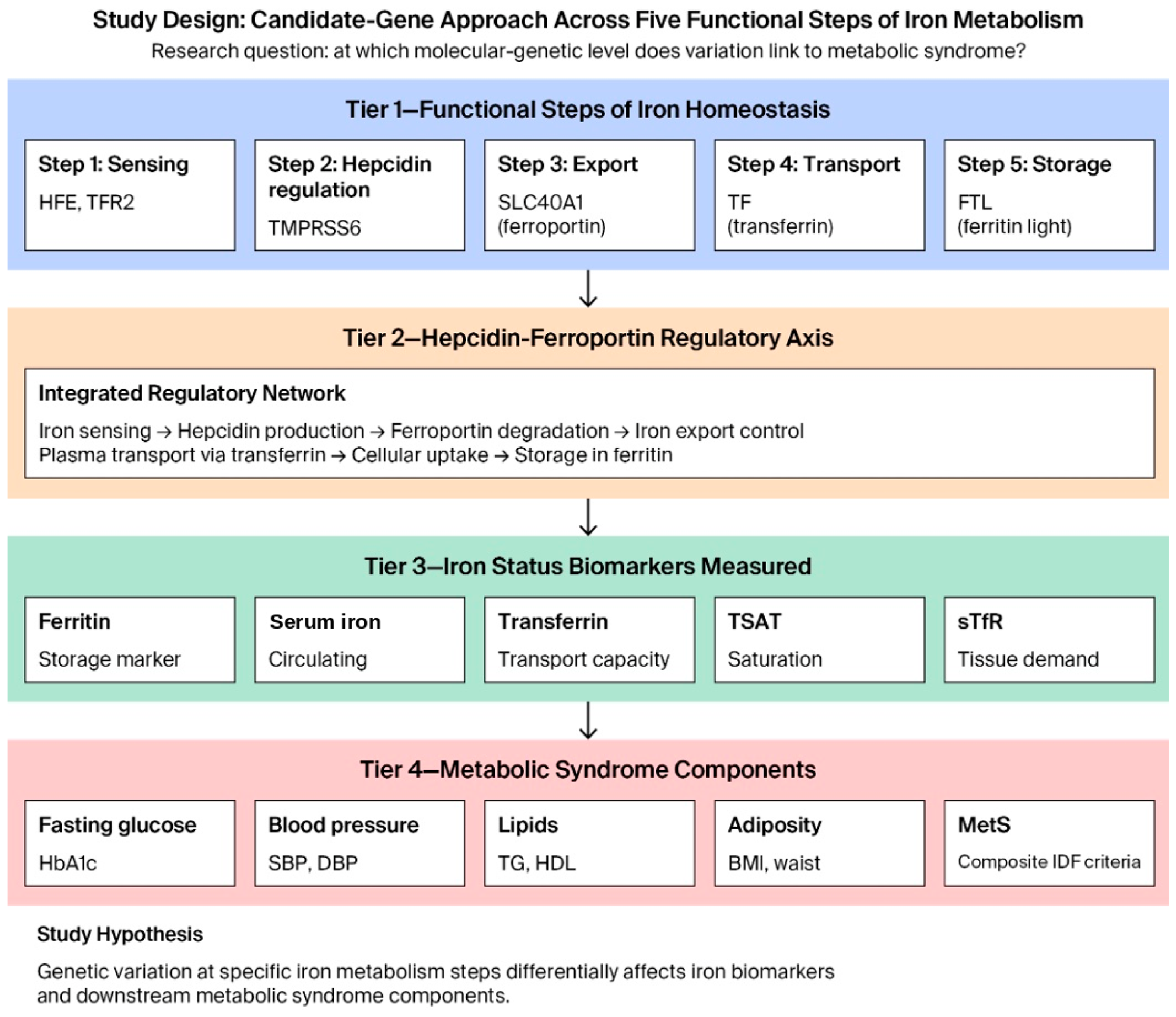
In this pilot study, leveraging whole-exome sequencing data, we aimed to (i) characterize allele frequencies of 18 SNPs in six genes involved in different stages of iron metabolism (
HFE,
SLC40A1,
TMPRSS6,
FTL,
TFR2, and
TF) in a cohort of adult Kazakhs; (ii) investigate their associations with iron metabolism biomarkers, including ferritin, serum iron, transferrin, transferrin saturation (TSAT), and soluble transferrin receptor (sTfR), as well as with metabolic syndrome and its components; and (iii) formally test, using rigorous bootstrap causal mediation analysis, whether iron biomarkers mediate the relationship between genetic variants and metabolic syndrome and its components (
Figure 1).
2. Results
2.1. Cohort Characteristics
The study included 96 adults of Kazakh ethnicity, comprising 62 women and 34 men. According to the IDF 2009 criteria [
20], 52 participants were diagnosed with metabolic syndrome, while the remaining 44 individuals formed the control group. The demographic and clinical characteristics of the participants are presented in
Table 1 according to MetS status. Compared with the control group, individuals with metabolic syndrome exhibited statistically significant differences in several parameters. They were older (median age 60.5 vs. 55.0 years;
p = 0.003), had a larger waist circumference (105.0 vs. 96.0 cm;
p = 0.005), and higher blood pressure levels (SBP: 130 vs. 110 mmHg,
p < 0.001; DBP: 80 vs. 70.5 mmHg,
p = 0.001). In addition, fasting glucose (5.63 vs. 5.06 mmol/L;
p = 0.014), HbA1c (5.80 vs. 5.65%;
p = 0.010), and triglyceride levels (1.71 vs. 1.10 mmol/L;
p = 0.001) were higher, whereas high-density lipoprotein cholesterol (HDL-C) levels were lower (1.13 vs. 1.27 mmol/L;
p = 0.013). These findings are consistent with the diagnostic components of metabolic syndrome.
Notably, the iron metabolism profile differed selectively between groups. Functional iron transport markers were significantly elevated in MetS: serum transferrin (2.70 vs. 2.50 g/L; p = 0.026) and soluble transferrin receptor (sTfR; 3.01 vs. 2.50 mg/L; p = 0.008). Transferrin saturation (TSAT) showed a trend toward lower values in MetS (21.0 vs. 26.5%; p = 0.098). In contrast, serum ferritin—the principal indicator of iron stores—did not differ between groups (77.1 vs. 83.4 ng/mL; p = 0.334), nor did serum iron (15.5 vs. 15.8 µmol/L; p = 0.676).
2.2. Allele Frequencies and Hardy–Weinberg Equilibrium
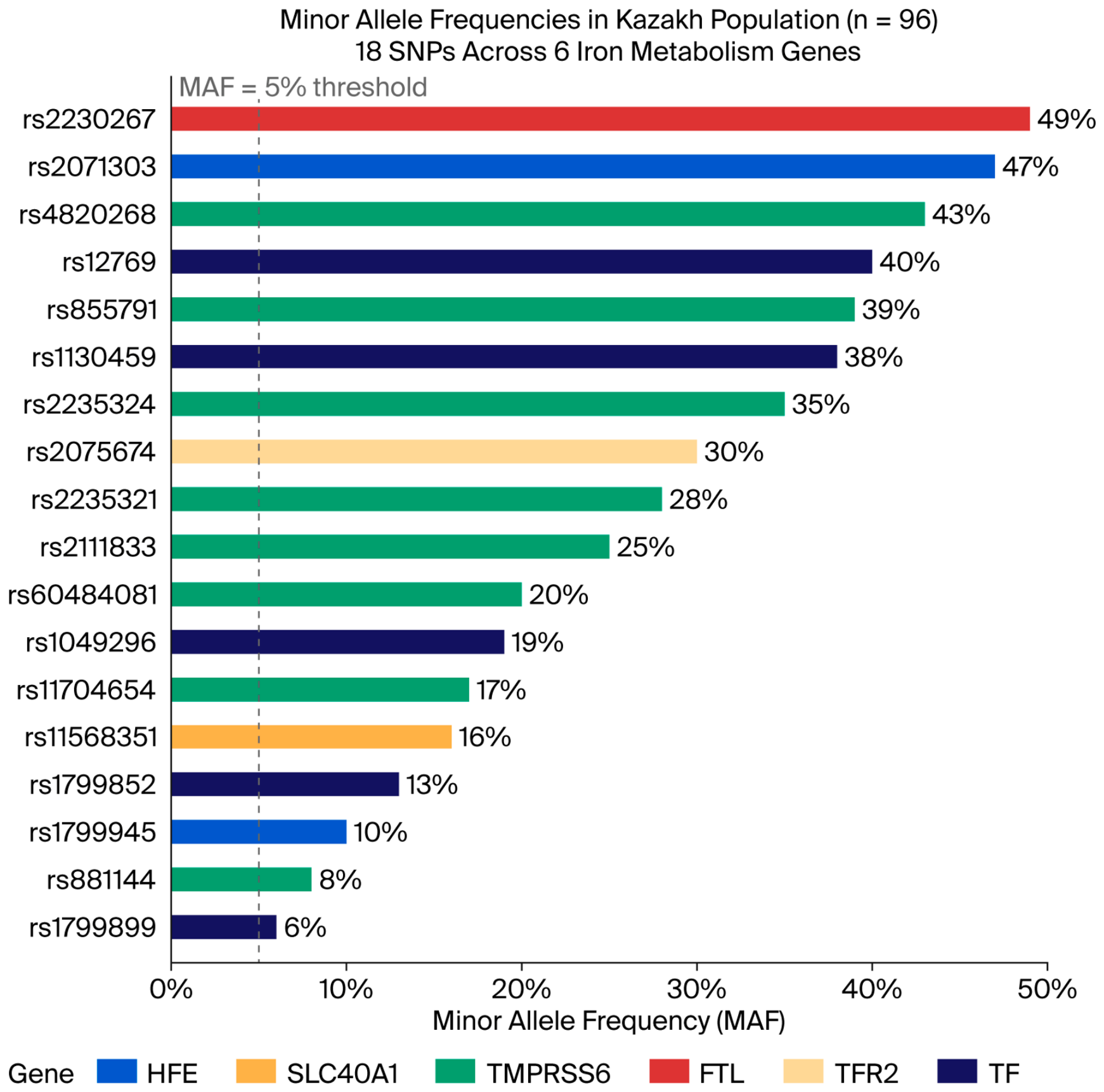
From the whole-exome sequencing dataset, minor allele frequencies (MAFs) ranged from 0.062 for
TF rs1799899 and
FTL rs2230267 to 0.49 (
Supplementary Table S1,
Figure 2). All SNPs were in Hardy–Weinberg equilibrium after Bonferroni correction (α = 0.05/18 = 0.0028).
2.3. TF rs12769 Is Strongly Associated with Serum Transferrin Levels
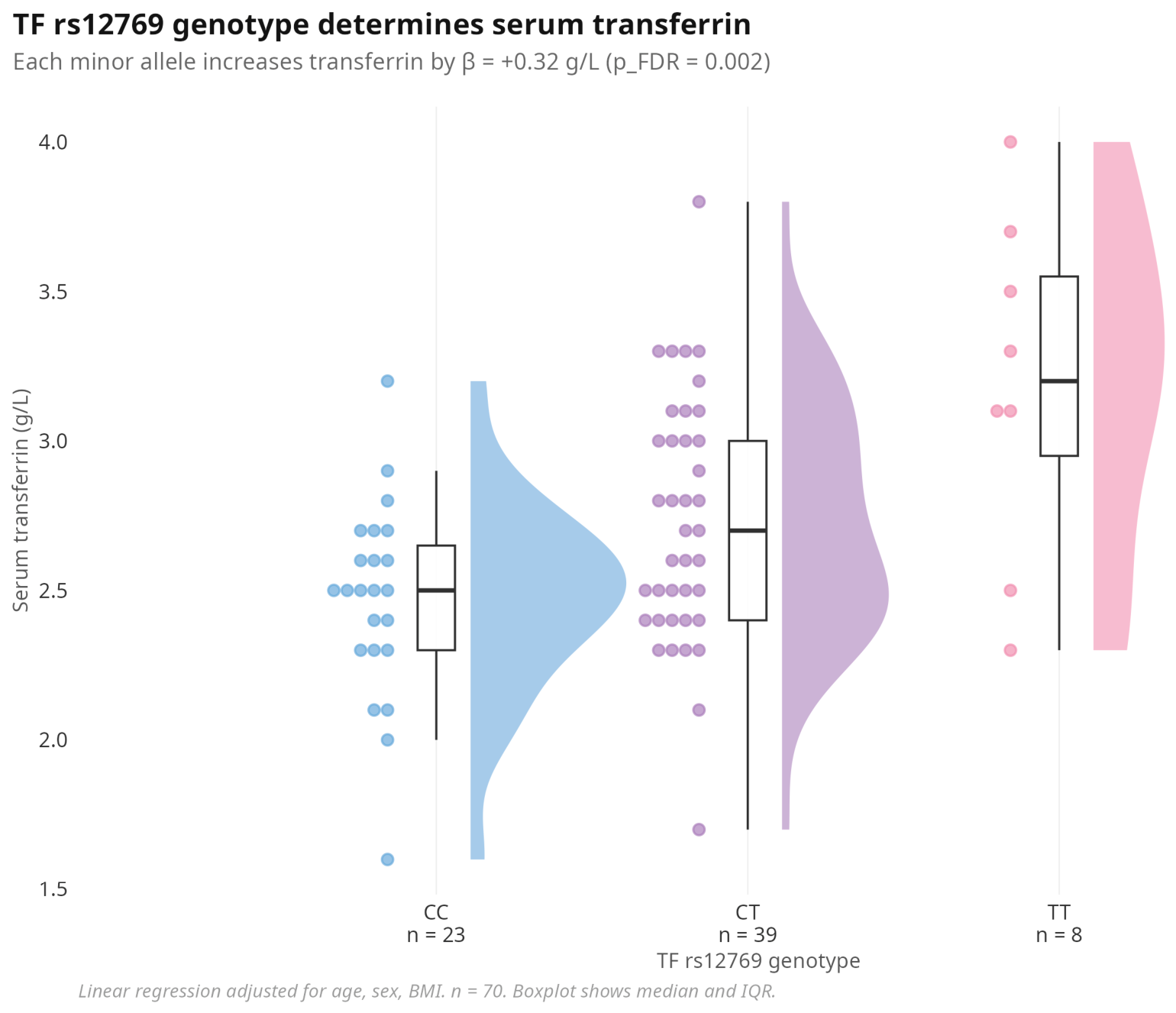
Linear regression analysis of 18 SNPs related to iron metabolism and biochemical iron status parameters identified the
TF rs12769 polymorphism as a robust determinant of serum transferrin levels. Adjustments were made for age, sex, and BMI. Under the additive model, each minor allele of TF rs12769 was associated with an increase in serum transferrin levels (β = +0.32 g/L, 95% CI: 0.16–0.47;
p = 5.4 × 10
−5; pFDR = 0.002) (
Figure 3). Pleiotropic effects on other iron-related biomarkers were also observed, with each minor allele associated with lower TSAT levels (β = −4.25%;
p = 0.009) and lower serum ferritin concentrations (β = −0.36 log-units;
p = 0.027). These findings are consistent with physiological changes related to increased plasma iron-binding capacity.
Among the five
TF gene polymorphisms analyzed (rs1799852, rs1799899, rs1049296, rs1130459, and rs12769), haplotype analysis further supported the central role of rs12769. Three haplotypes carrying the C allele at the rs12769 position were associated with lower transferrin levels compared with the reference haplotype (β ranging from −0.27 to −0.52 g/L; all
p ≤ 0.010). In contrast, haplotypes lacking the T allele at rs12769, but differing at the remaining four SNPs, did not significantly deviate from the reference. These findings were consistent with the single-SNP analysis, in which each T allele was associated with a +0.34 g/L increase in transferrin levels, supporting rs12769 as the principal determinant of transferrin concentrations within the analyzed SNP panel (
Figure 3).
2.4. No FDR-Significant Associations Were Identified with Metabolic Syndrome Status
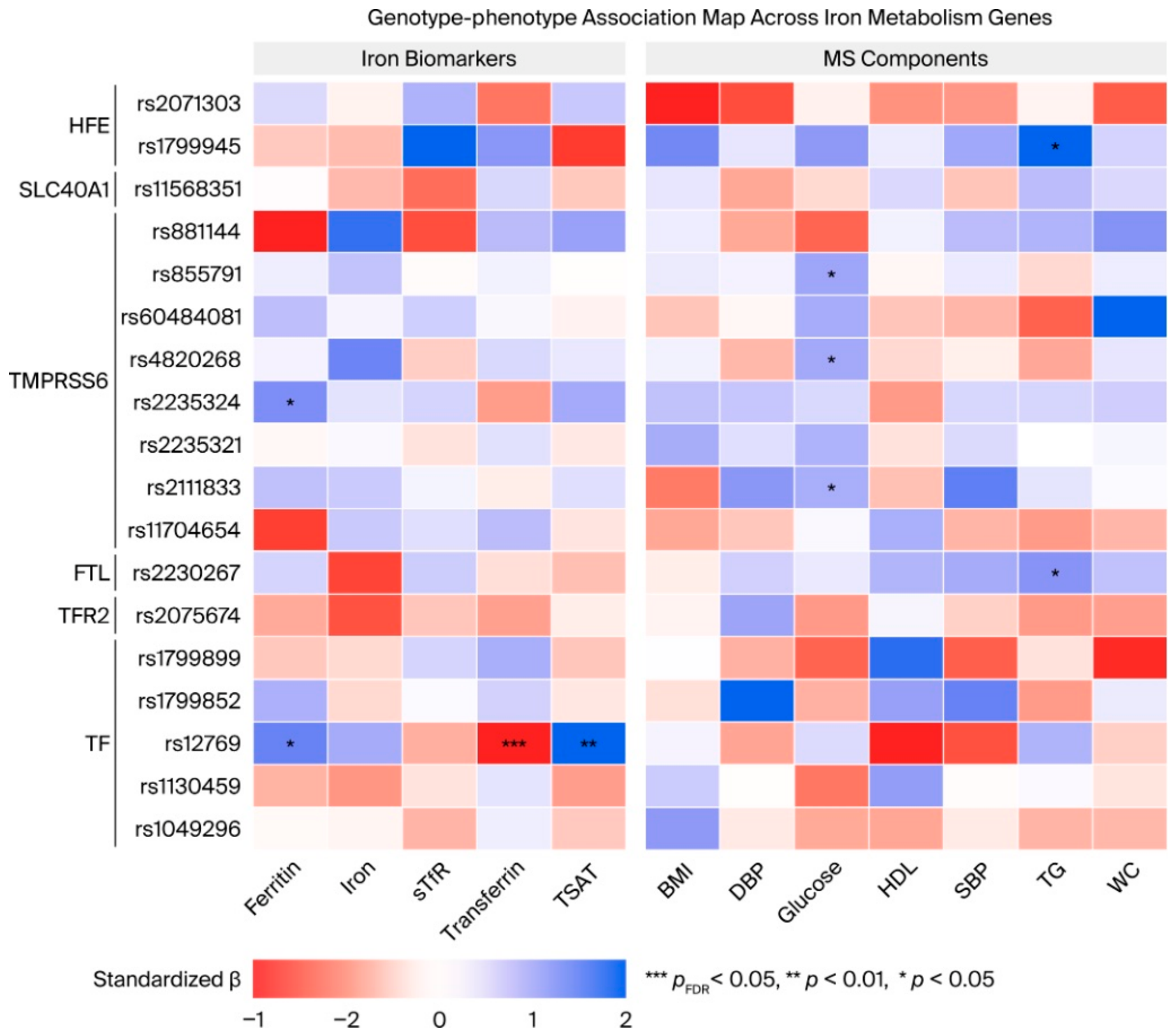
Logistic regression analysis examining associations between iron metabolism-related polymorphisms and metabolic syndrome components revealed no FDR-significant associations after adjustment for age and sex (
Table S2,
Figure 4).
2.5. TMPRSS6 Haplotype Is Associated with Lower Fasting Glucose Levels
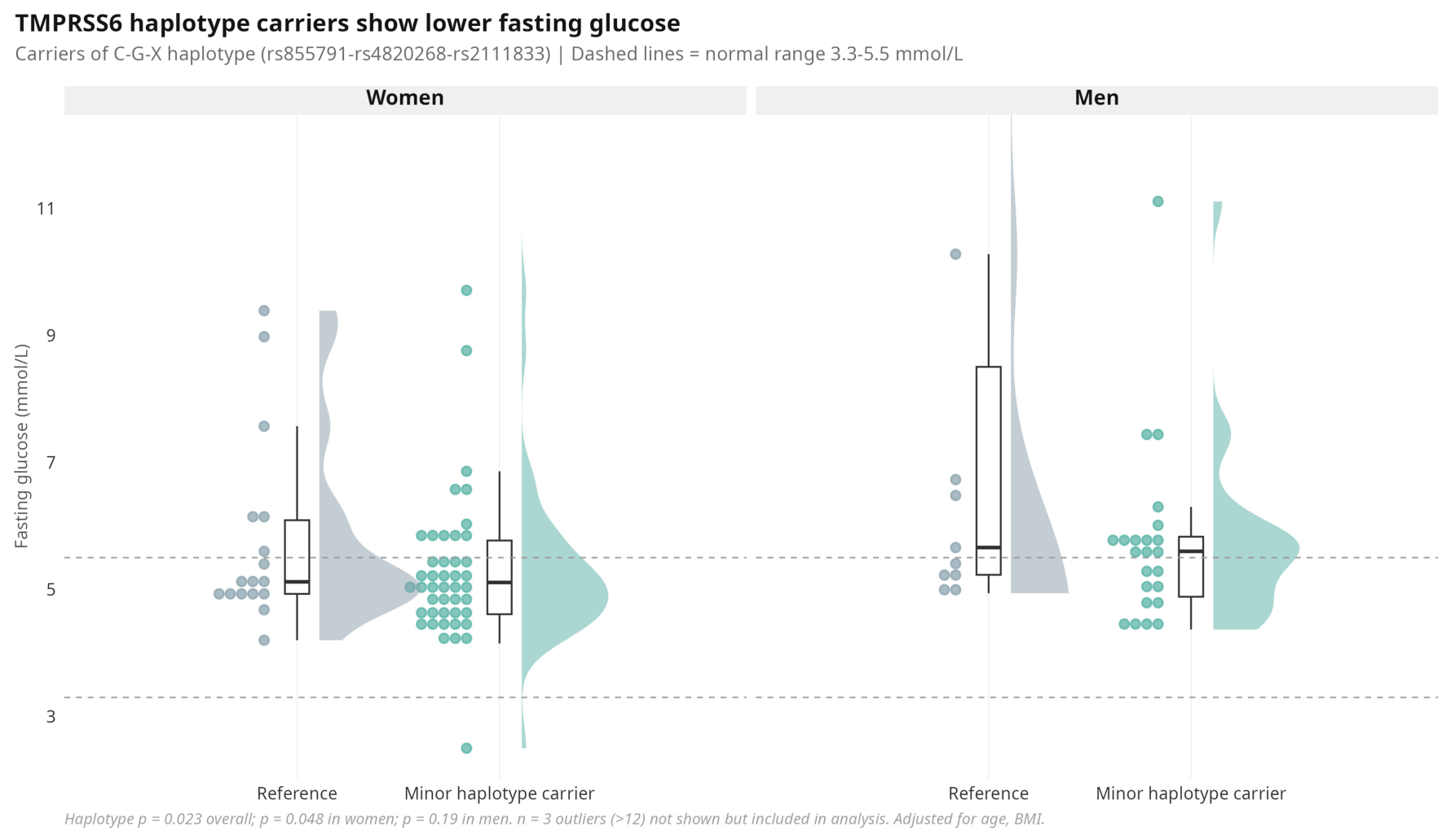
Several TMPRSS6 polymorphisms showed inverse associations with fasting glucose levels under the additive model (adjusted for age, sex, and BMI): rs855791 (β = −0.95 mmol/L; p = 0.021), rs4820268 (β = −0.91; p = 0.028), rs2111833 (β = −0.88; p = 0.042), and rs2235321 (β = −0.82; p = 0.064). Although these individual SNP associations did not remain significant after FDR correction, they demonstrated a consistent joint pattern.
To strengthen the overall signal, haplotype analysis was performed for three functional TMPRSS6 polymorphisms: rs855791, rs4820268, and rs2111833. Compared with carriers of the reference haplotype (T–A–T), carriers of the minor haplotype C–G–C (frequency 18.9%) showed significantly lower fasting glucose levels (β = −1.19 mmol/L; p = 0.023). A second minor haplotype, C–G–T (frequency 19.6%), demonstrated a similar trend (β = −1.02; p = 0.054).
Sex-stratified analysis showed a consistent direction of effect in both groups. Among women (n = 62), the
TMPRSS6 C–G–C haplotype was significantly associated with lower glucose levels (β = −0.79;
p = 0.048), whereas in men (n = 34) the effect size was substantially larger (β ranging from −2.10 to −2.80) but did not reach statistical significance due to the limited sample size (
Figure 5).
2.6. Causal Mediation Analysis: TMPRSS6 → Fasting Glucose
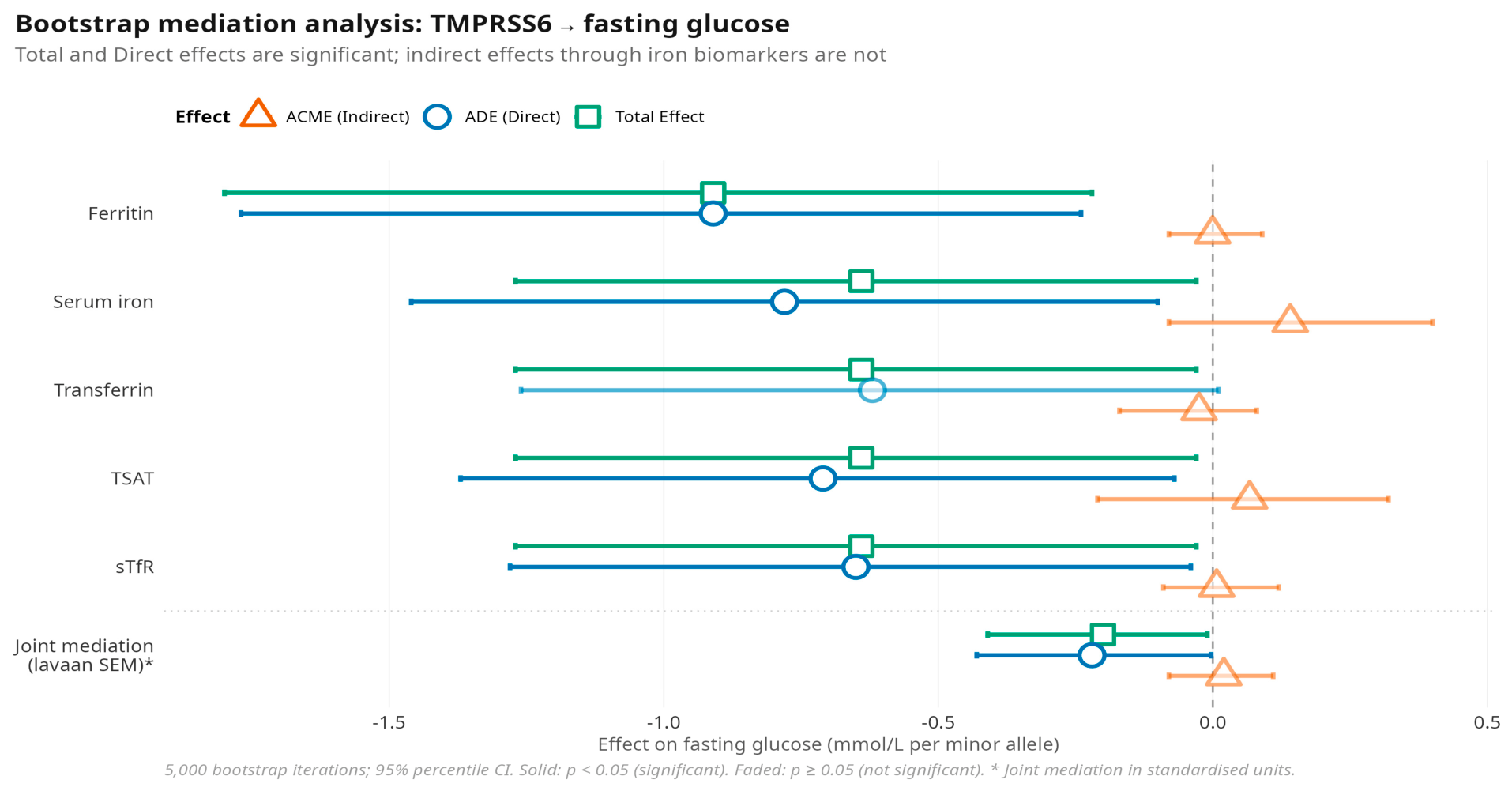
To test whether iron biomarkers mediated the TMPRSS6 association with fasting glucose, we performed bootstrap causal mediation analysis (5000 iterations) with TMPRSS6 rs4820268 (additive coding) as the exposure, fasting glucose as the outcome, and ferritin, serum iron, transferrin, TSAT, and sTfR as candidate mediators in separate single-mediator models adjusted for age, sex, and BMI.
The Total Effect of
TMPRSS6 on glucose was significant across all models (
Table 2): β = −0.91 mmol/L per minor allele (
p = 0.002) in the ferritin model (n = 96), and β = −0.64 (
p = 0.038) in the other models (n = 71). The Average Direct Effect (ADE) was also significant (
p = 0.001–0.054), whereas the Average Causal Mediation Effect (ACME) was null for every biomarker—all
p-values exceeded 0.20, and 95% confidence intervals widely crossed zero.
A joint mediation model in lavaan, including all four functional biomarkers (iron, transferrin, TSAT, sTfR) as parallel mediators, confirmed the same pattern: a significant standardized direct effect (c = −0.22; p = 0.042) and total effect (−0.20; p = 0.046), but a null combined indirect effect (0.020; p = 0.67).
Taken together (
Figure 6), the
TMPRSS6 → fasting glucose association in this Kazakh pilot cohort is best characterized as a direct genetic effect, not mediated by measured iron biomarkers.
3. Discussion
In this pilot study conducted in a Kazakh population, we performed a systematic analysis of 18 polymorphisms in six iron metabolism genes and their associations with iron biomarkers, metabolic syndrome, and its components. At the descriptive stage of the cohort analysis, we observed a selective increase in functional iron transport markers—transferrin and soluble transferrin receptor—among individuals with MetS, whereas ferritin levels did not differ significantly between groups. This observation proved to be biologically consistent with the two principal findings of our association analyses.
Our study yielded two main findings. First, we identified TF rs12769 as a robust determinant of serum transferrin levels in the Kazakh population and demonstrated its pleiotropic effects on TSAT and ferritin concentrations. Second, a three-SNP TMPRSS6 haplotype was associated with lower fasting glucose levels, and rigorous bootstrap mediation analysis showed that this effect operates as a direct genetic effect, not mediated by measured iron biomarkers (ferritin, serum iron, transferrin, TSAT, or sTfR).
Functional biomarkers of iron metabolism (transferrin, TSAT, and sTfR) reflect the actively circulating iron fraction available for erythropoiesis and cellular metabolism and are more sensitive than storage markers to early alterations in systemic iron homeostasis [
21]. In contrast, ferritin is not only a marker of tissue iron stores but also an acute-phase protein whose plasma concentration is substantially elevated in the presence of low-grade systemic inflammation, metabolic syndrome, and hepatic steatosis—conditions commonly observed in the study cohort [
10]. Therefore, genetic effects detected specifically through functional iron biomarkers (as in the case of
TF rs12769 in our study) may more reliably reflect direct mechanisms of iron regulation, whereas ferritin-related signals require additional interpretation in light of potential inflammatory influences [
22].
3.1. TF rs12769 as a Determinant of Plasma Transferrin
The strong association between
TF rs12769 and transferrin levels (pFDR = 0.002) supports the biological relevance of the
TF locus in iron metabolism. In the study by Bell S. et al., which combined UK Biobank and deCODE Genetics data (n > 200,000), TF rs12769 was identified as one of the principal determinants of serum transferrin concentration with a consistent direction of effect across all analyzed populations [
23]. In addition, genome-wide association studies by Benyamin B. et al. and McLaren C.E. et al. demonstrated that variants within the
TF locus and its regulatory regions are associated with circulating transferrin concentrations in European populations [
15,
24]. Our findings are consistent with these reference studies and extend the evidence to the Kazakh population.
3.2. TMPRSS6 and Glucose Homeostasis
Iron accumulation in tissues has been associated with insulin resistance, impaired pancreatic β-cell function, and an increased risk of T2DM through Fenton reaction-dependent oxidative stress mechanisms [
4,
5,
6,
7].
TMPRSS6 encodes matriptase-2, a transmembrane serine protease expressed in hepatocytes that negatively regulates hepcidin transcription through cleavage of hemojuvelin. Minor alleles of rs855791 (T>C, Ala736Val) and rs4820268 (A>G) are considered loss-of-function variants that reduce the proteolytic activity of matriptase-2, leading to increased hepcidin production, ferroportin inhibition, and lower systemic iron bioavailability [
14,
25]. As a consequence, fasting glucose levels may decrease, and the risk of T2DM may be reduced. Large cohort study has similarly shown that carriers of these variants exhibit lower transferrin saturation, lower serum iron levels, elevated sTfR, and a higher prevalence of iron deficiency anemia [
26].
Thus, the
TMPRSS6 minor haplotype may represent a genetically determined mild hypoferremic phenotype that, in our study, demonstrated a protective metabolic effect. Our findings are also consistent with Mendelian randomization studies reporting that genetically determined lower iron status is causally associated with reduced T2DM risk. In particular, MR studies using
TMPRSS6 variants as instrumental variables demonstrated that lower serum iron predicts reduced T2DM risk in European populations [
27]. It is important to distinguish two distinct phenomena: while elevated iron status is associated with increased risk of incident T2DM, established T2DM frequently coexists with functional iron-deficiency anemia driven by chronic inflammation and hepcidin dysregulation [
28]. These are not contradictory but complementary mechanisms operating at different stages of disease progression.
Sex-stratified analysis revealed a consistent direction of effect in both subgroups: in women (n = 62), the TMPRSS6 C–G–C haplotype was significantly associated with lower glucose levels (β = −0.79; p = 0.048), whereas in men (n = 34) the effect size was substantially larger (β ranging from −2.10 to −2.80) but did not reach statistical significance. This pattern aligns with known sex differences in iron homeostasis—men have higher baseline iron stores and a stronger hepcidin-mediated response—suggesting that TMPRSS6 variants may exert a more pronounced metabolic effect in male carriers, which warrants confirmation in larger sex-balanced cohorts.
To the best of our knowledge, this is the first study to (1) confirm the protective role of the TMPRSS6 haplotype at the individual carrier level in a Central Asian cohort, and (2) formally evaluate iron biomarker mediation using rigorous bootstrap causal methods, demonstrating that this effect operates through direct pathways rather than measured iron pools.
3.3. Associations of HFE and FTL with Triglycerides
Beyond the main findings, we observed nominal associations between
HFE and
FTL polymorphisms and triglyceride (TG) levels that did not survive FDR correction but remain biologically interesting. Both genes belong to the storage iron compartment:
HFE regulates iron uptake by hepatocytes through hepcidin [
29], while
FTL encodes the ferritin light chain [
30]. Hepatic iron accumulation has been described as a driver of de novo lipogenesis and elevated circulating TG in hepatic steatosis and hereditary haemochromatosis [
31]. In this context, our findings are biologically plausible, though confirmation in a larger sample with concurrent assessment of steatosis and hepatic function is required—a priority of our ongoing extension study.
3.4. TMPRSS6 Influences Fasting Glucose Through Pathways Beyond the Standard Iron Panel
We initially hypothesized that the
TMPRSS6 → fasting glucose association (Total Effect
p = 0.002) would be mediated by functional iron-transport biomarkers, consistent with the canonical role of
TMPRSS6 (matriptase-2) as a negative regulator of hepcidin transcription [
25] and prior GWAS findings linking
TMPRSS6 variants to iron homeostasis and metabolic traits [
26]. However, formal bootstrap mediation analyses—including single-mediator, joint SEM, and sex-stratified models—did not support this hypothesis: no measured iron biomarker mediated the relationship significantly, while the Average Direct Effect remained robust (
p = 0.001–0.054). The genetic effect on glucose is real but operates through pathways other than the standard iron panel.
Three candidate pathways deserve attention. First, hepatic dysfunction:
TMPRSS6 is predominantly expressed in hepatocytes, where it may directly affect gluconeogenesis and insulin clearance independently of iron flux; hepatic enzymes such as GGT, ALT, and AST—established predictors of incident type 2 diabetes [
32]—were not measured in the present pilot. Second, circulating hepcidin—the proximal molecular target of
TMPRSS6—would be the most direct intermediate but requires specialized immunoassay. Third, low-grade inflammation (hs-CRP) is bidirectionally linked to both iron metabolism and glucose dysregulation.
3.5. Population-Specific Allele Frequencies
To the best of our knowledge, this is the first report describing allele frequencies of 18 iron metabolism-related SNPs in a Kazakh cohort. Most allele frequencies were within European reference ranges; however,
TMPRSS6 rs2111833 and
TF rs1130459 showed lower frequencies than European and East Asian populations, which is expected for Central Asian populations with mixed genetic ancestry [
19].
TMPRSS6 rs2111833 in the Kazakh cohort (MAF = 0.250) showed a lower frequency compared to both East Asian (EAS, MAF = 0.336) and European (NFE, MAF = 0.339) reference populations. A similar pattern was observed for
TF rs1130459 (Kazakh MAF = 0.380), with a frequency markedly lower than both European (NFE, MAF = 0.527) and East Asian (EAS, MAF = 0.759) populations [
33]. These reference data may contribute to future risk stratification and personalized medicine efforts in Kazakhstan and neighboring countries.
3.6. Strengths and Limitations
A major strength of our study is the use of whole-exome sequencing for genotyping, providing high-quality direct sequencing data rather than imputed genotypes. This approach also enables future exploration of additional variants in iron metabolism genes beyond the candidate SNPs analyzed here. Another strength is the expanded panel of iron metabolism biomarkers (n = 71 with complete transferrin, serum iron, TSAT, and sTfR data), the use of three complementary genetic approaches (single-SNP additive analysis, haplotype analysis, and mediation analysis), FDR correction, and the focus on a previously underrepresented population. Several limitations should also be acknowledged: The sample size provided adequate power for the primary direct effects (≈80% for
TMPRSS6 → glucose Total Effect at standardized |β| ≥ 0.30), the pilot was under-powered for detecting small indirect (mediation) effects of the observed magnitude (point estimates < |0.15|), which would require approximately n = 300–500 participants. The detection of binary outcomes (MetS as a whole) and variants with MAF < 0.10 was similarly limited. The stronger effect of
TMPRSS6 on glucose observed in men did not reach statistical significance and requires confirmation in larger cohorts. The cross-sectional design precludes definitive causal conclusions, although the direction of our findings is consistent with previous Mendelian randomization studies [
11]. Population-specific effects should be replicated in independent Central Asian cohorts. Finally, hepcidin levels were not measured, and inclusion of this biomarker would enable more direct validation of the proposed mechanistic pathway.
4. Materials and Methods
4.1. Ethical Approval and Informed Consent
After obtaining approval from the ethics committee, the participants were provided with a clear and simple explanation of the purpose of the study, the study procedures, and the potential risks and benefits. Additional explanations were provided to ensure that each participant fully understood what would be required during the study and his or her role in it. After asking questions and receiving complete answers, the participants provided written informed consent by signing the informed consent form.
4.2. Anthropometric, Biochemical, and Clinical Data
Participants were recruited from the clinic of Khoja Akhmet Yassawi International Kazakh–Turkish University in Turkistan. Potential participants were contacted through general practitioners and invited to take part in the study. Patients who provided informed consent were referred for physical examination and blood sample collection. Physical measurements included height, body weight, waist circumference, and hip circumference. Height was measured using a stadiometer. Body weight was measured using an electronic scale. After height and body weight were determined, body mass index (BMI) was calculated as weight (kg) divided by height squared (m2). Waist circumference was measured using a flexible measuring tape with an accuracy of 0.1 cm. Blood samples were collected into serum separation tubes and tubes containing ethylenediaminetetraacetic acid (EDTA).
In this study, metabolic syndrome (MetS) was defined according to the criteria of the International Diabetes Federation (IDF, 2009) [
20]. MetS was diagnosed when three or more of the following five criteria were present: triglycerides ≥ 1.7 mmol/L; high-density lipoprotein cholesterol (HDL-C) < 1.03 mmol/L in men and <1.29 mmol/L in women; blood pressure ≥ 130/85 mmHg; fasting glucose ≥ 5.6 mmol/L; and waist circumference > 90 cm in men and >80 cm in women.
4.3. DNA Isolation
In this study, peripheral whole blood samples collected from participants were used for genomic DNA extraction. Genomic DNA was isolated using the GeneAll DNA Extraction Kit (GeneAll Biotechnology Co., Ltd., Seoul, Republic of Korea) according to the manufacturer’s protocol. The kit is based on an SV spin-column system designed for genomic DNA isolation from blood and body fluids.
4.4. Whole Exome Sequencing (WES) and Bioinformatics Analysis
DNA libraries were prepared according to standard manufacturer protocols, including random fragmentation, adapter ligation, and PCR amplification steps. Target exonic regions were enriched using the Twist Human Comprehensive Exome Kit (Twist Bioscience, San Francisco, CA, USA). Sequencing was performed on the Illumina NovaSeq 6000 platform (Illumina, San Diego, CA, USA) using a paired-end approach, generating raw FASTQ files.
Alignment, variant calling, and annotation were conducted using the clinically validated and CE-IVD–certified SOPHiA DDM™ v5.4.1 platform (Sophia Genetics SA, Rolle, Switzerland). The GRCh37/hg19 reference genome was used for all analyses. This reference assembly was selected because, at the time of the study, the SOPHiA DDM™ analytical workflow, including its variant-calling algorithms, clinical validation framework, and annotation pipelines, had been optimized and validated using GRCh37/hg19. The use of this reference genome ensured analytical consistency, preserved data integrity, and maintained compatibility with clinically relevant variant annotations from major databases, including ClinVar and dbSNP.
Variants were filtered according to the following sequential criteria. Variants with a sequencing depth of ≥10× and a variant allele fraction of ≥30% were retained. Exonic variants and splice-site variants located within 10 nucleotides of exon–intron boundaries were included, whereas synonymous, untranslated region (UTR), intergenic, and upstream/downstream variants were excluded. Common variants with a minor allele frequency (MAF) > 0.1% in gnomAD, the 1000 Genomes Project, ESP6500, and the SOPHiA DDM database were filtered out. Missense variants predicted as benign by the majority of in silico prediction tools, including SIFT, PolyPhen-2, and MutationTaster, were also excluded. Priority was given to phenotype-related genes, and additional filters were applied according to inheritance models (autosomal dominant, autosomal recessive, and X-linked) as well as de novo occurrence. Clinical pathogenicity classification was performed according to the guidelines of the American College of Medical Genetics and Genomics.
4.5. Variant Filtering and Interpretation
Variants obtained after the bioinformatics analyses with a read depth of ≥10 and allele fraction of ≥30% were included. Protein-coding exonic variants and intronic variants within ±10 nucleotides from the exon-intron boundary were included in the analysis, synonymous variants, variants located in non-coding regions, intergenic, upstream and downstream variants were excluded. Common variants with a minor allele frequency (MAF) below 0.1% in population databases such as gnomAD, ExAC, 1000 Genomes, dbSNP and ESP6500 and the SOPHiA DDM (version 7.19.0.2-h853950-9adac33; pipeline revision v5.5.) internal database were evaluated. Pathogenicity classification was performed using in silico analysis tools such as SIFT, PolyPhen-2, GERP and MutationTaster. Variants were comparatively analyzed using databases such as ClinVar, Franklin, Varsome and HGMD and relevant scientific publications. The identified variants were classified according to the American College of Medical Genetics and Genomics (ACMG) guidelines.
4.6. Statistical Analysis
All analyses were done in R 4.5.3 with Hardy–Weinberg (1.7.9), haplo.stats (1.9.8.7), tidyverse (2.0.0), ggplot2 (4.0.2), and ggdist (3.3.3). Two-sided p < 0.05 was nominal; FDR values are flagged. Continuous data are shown as mean ± SD or median (IQR), depending on the distribution. Group comparisons used t-tests, Mann–Whitney U, or χ2/Fisher tests. Hardy–Weinberg equilibrium was checked in the non-MS controls with Bonferroni correction. SNPs with MAF below 5% were excluded—too few carriers.
Single-SNP associations were tested by linear regression under an additive model (0/1/2 minor alleles), adjusting for age, sex, and BMI. Ferritin and triglycerides were log-transformed. Binary outcomes were modeled with logistic regression. We applied the Benjamini–Hochberg FDR within each phenotype family.
Haplotypes for TF (5 SNPs) and TMPRSS6 (3 SNPs) were reconstructed and tested with haplo.stats using the most common haplotype as reference.
A priori power calculations indicated approximately 80% power to detect a
TMPRSS6 → glucose Total Effect of standardized |β| ≥ 0.30 at α = 0.05, with more limited power (55–65%) for indirect effects of small-to-medium magnitude. Causal mediation analysis was performed using the R package
mediation (4.5.1) [
34] with 5000 nonparametric bootstrap iterations and 95% percentile confidence intervals for ACME, ADE, Total Effect, and Proportion Mediated. A joint mediation model was additionally fitted via structural equation modeling
lavaan, (0.6-21) [
35] with bootstrap standard errors, and analyses were repeated separately in men and women.




 ,
,