The In Vivo Existence Forms of Engeletin and Their Anti-Hyperuricemia Activity

 , and
, and
Abstract
1. Introduction
2. Results and Discussion
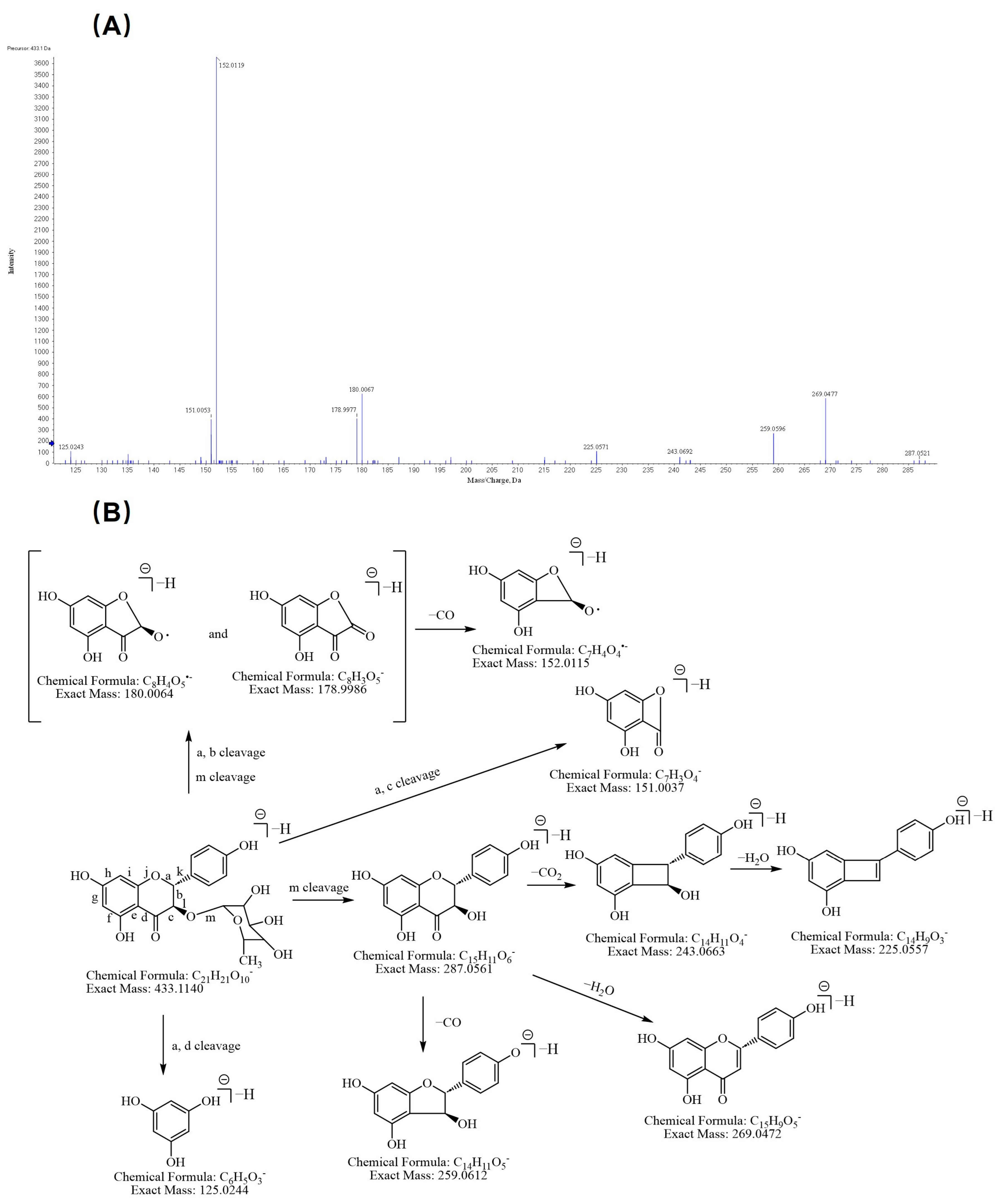
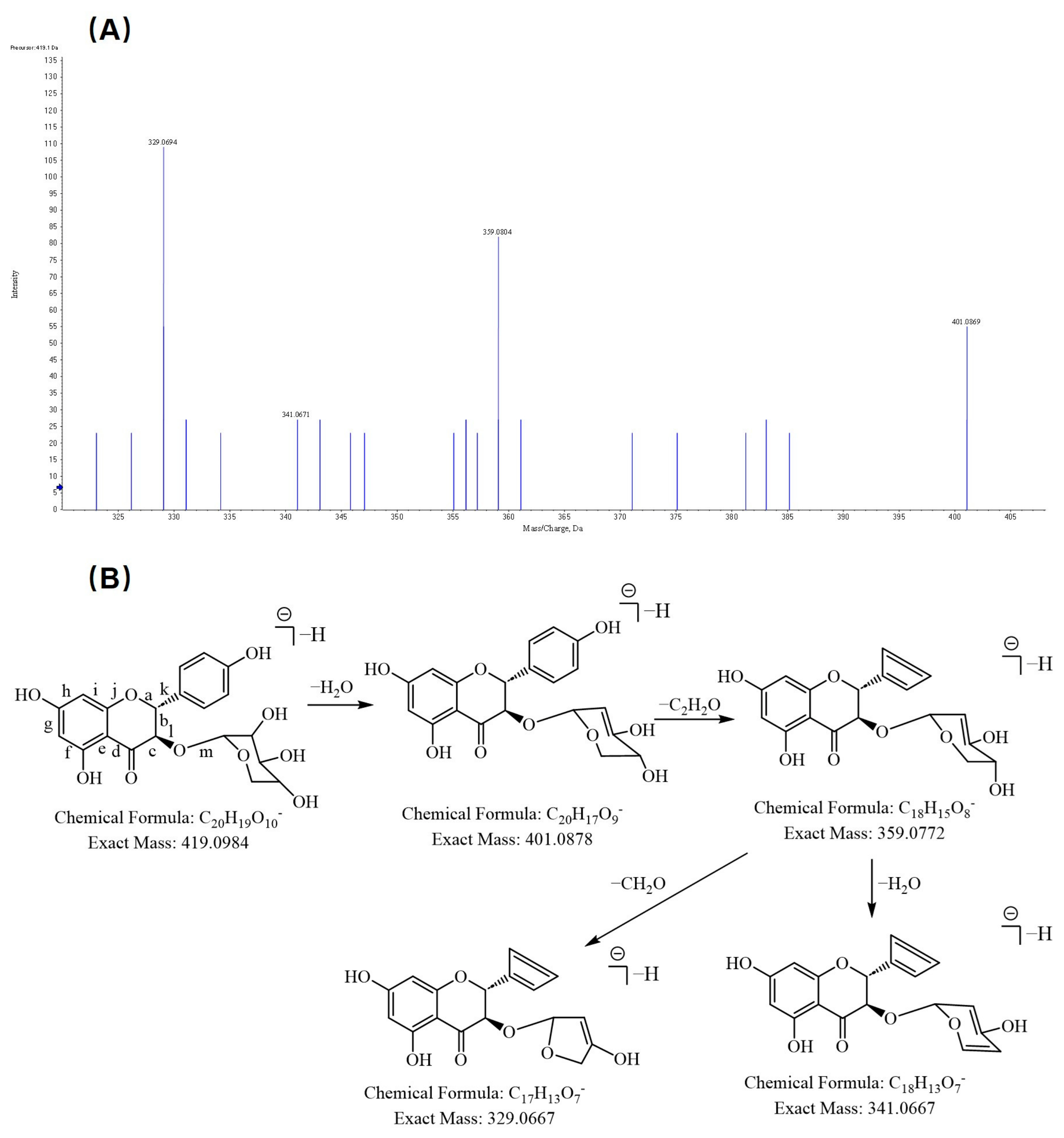
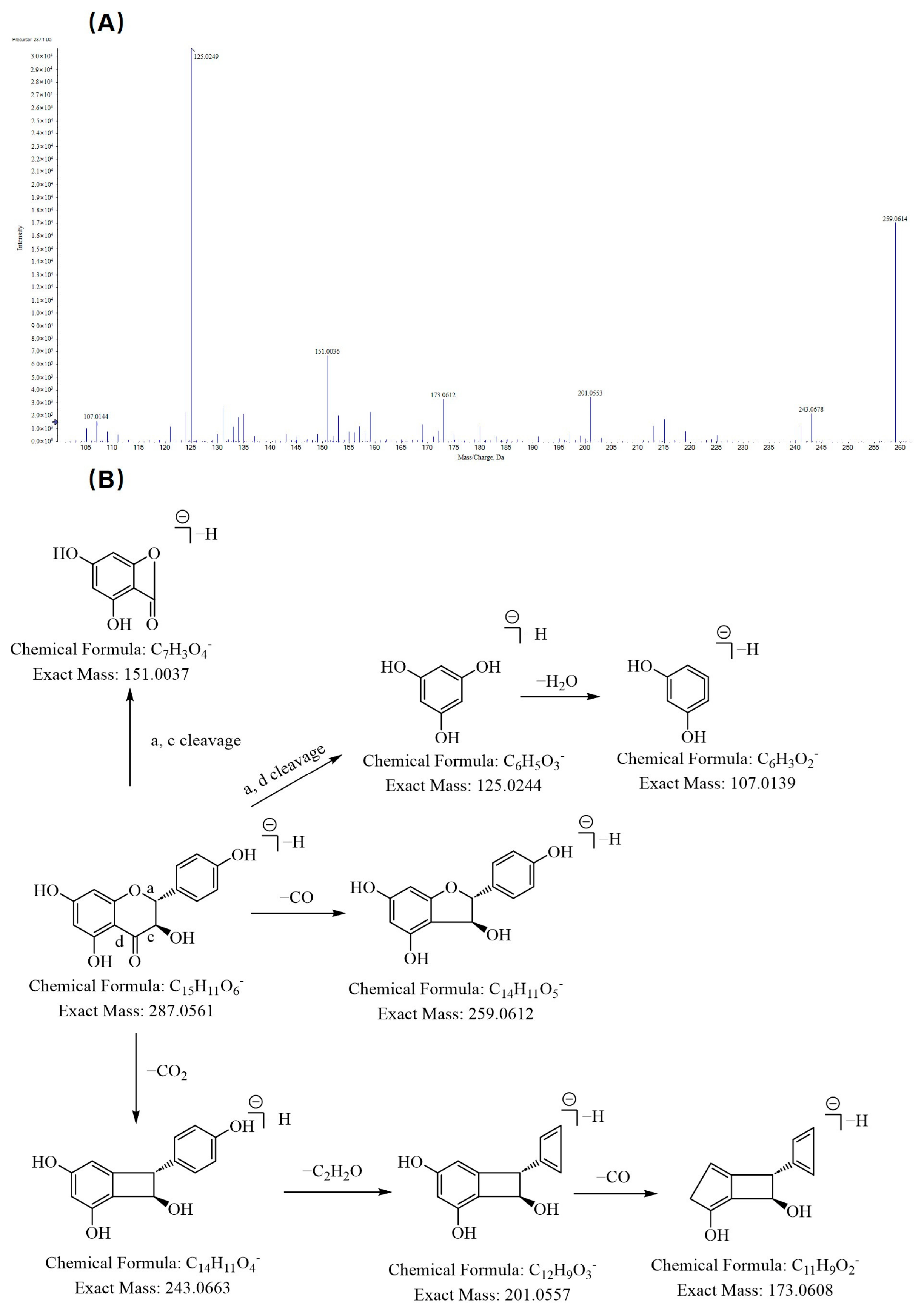
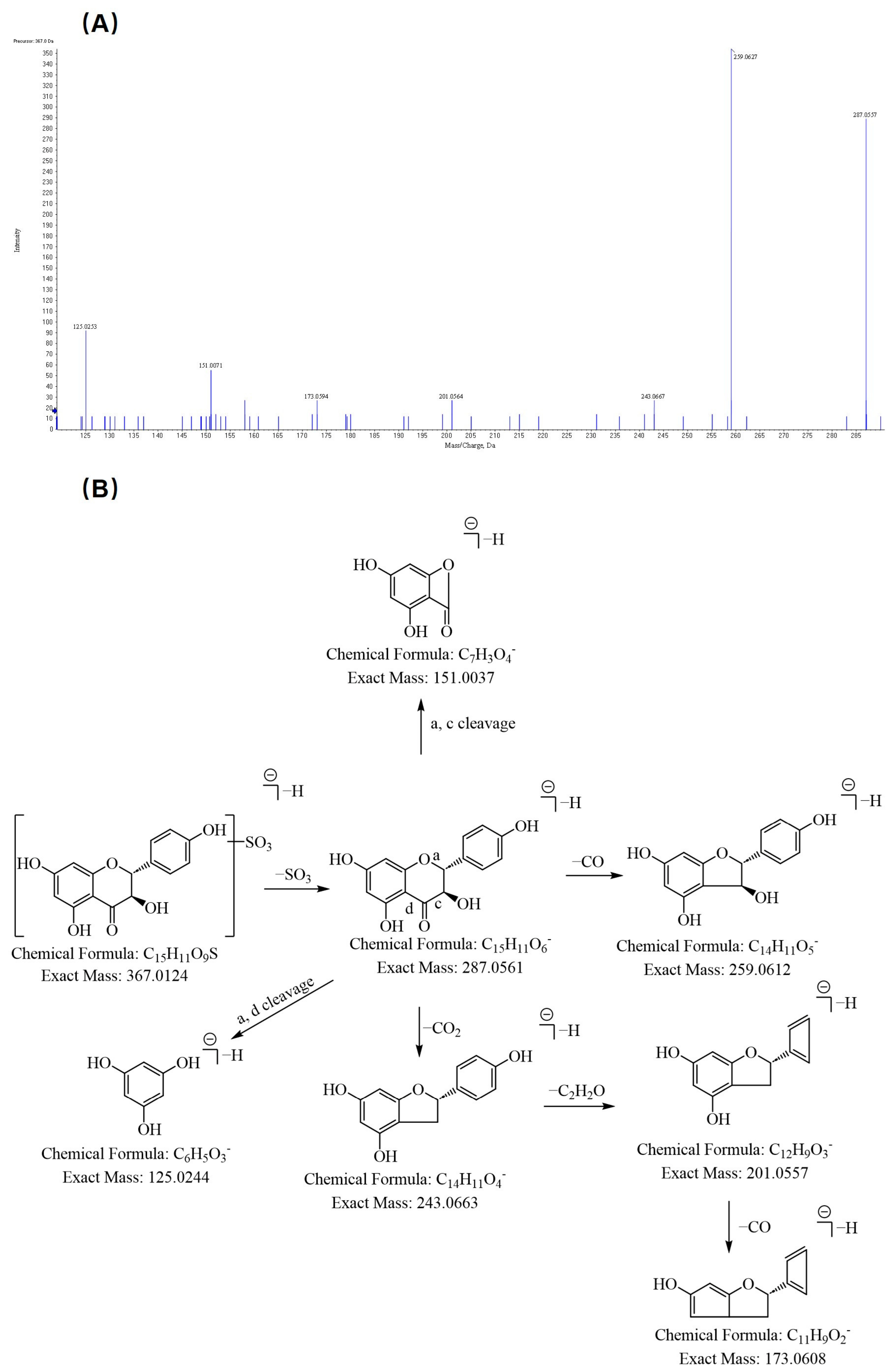
2.1. The Fragmentation Pathways of Engeletin
2.2. Detection and Identification of the Metabolites of Engeletin In Vivo
2.2.1. Metabolites with the Skeleton of Engeletin
Engeletin (E0) and Its Isomer (E1–E5)
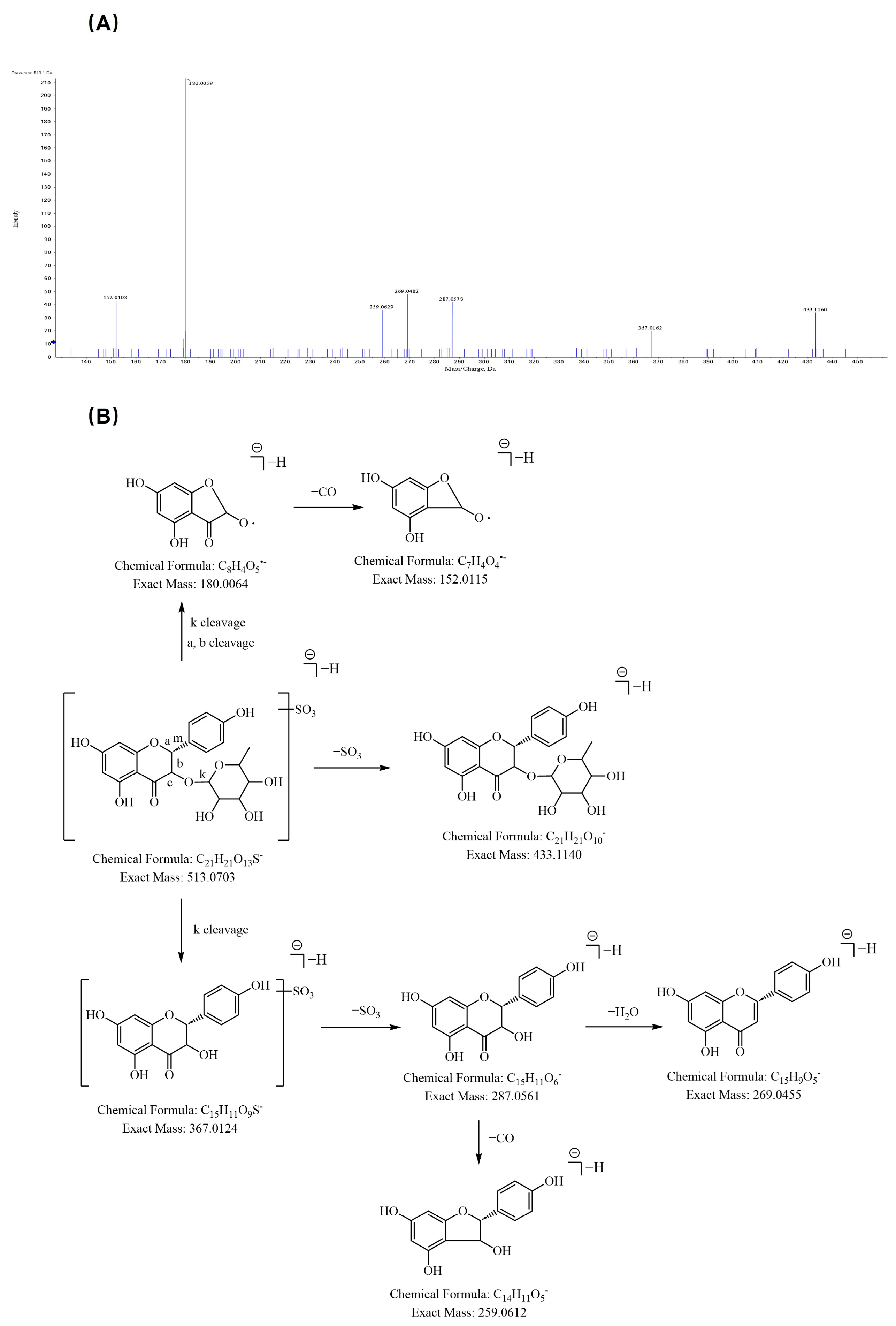
Metabolites Formed by Sulfation of Engeletin (E6–E10)
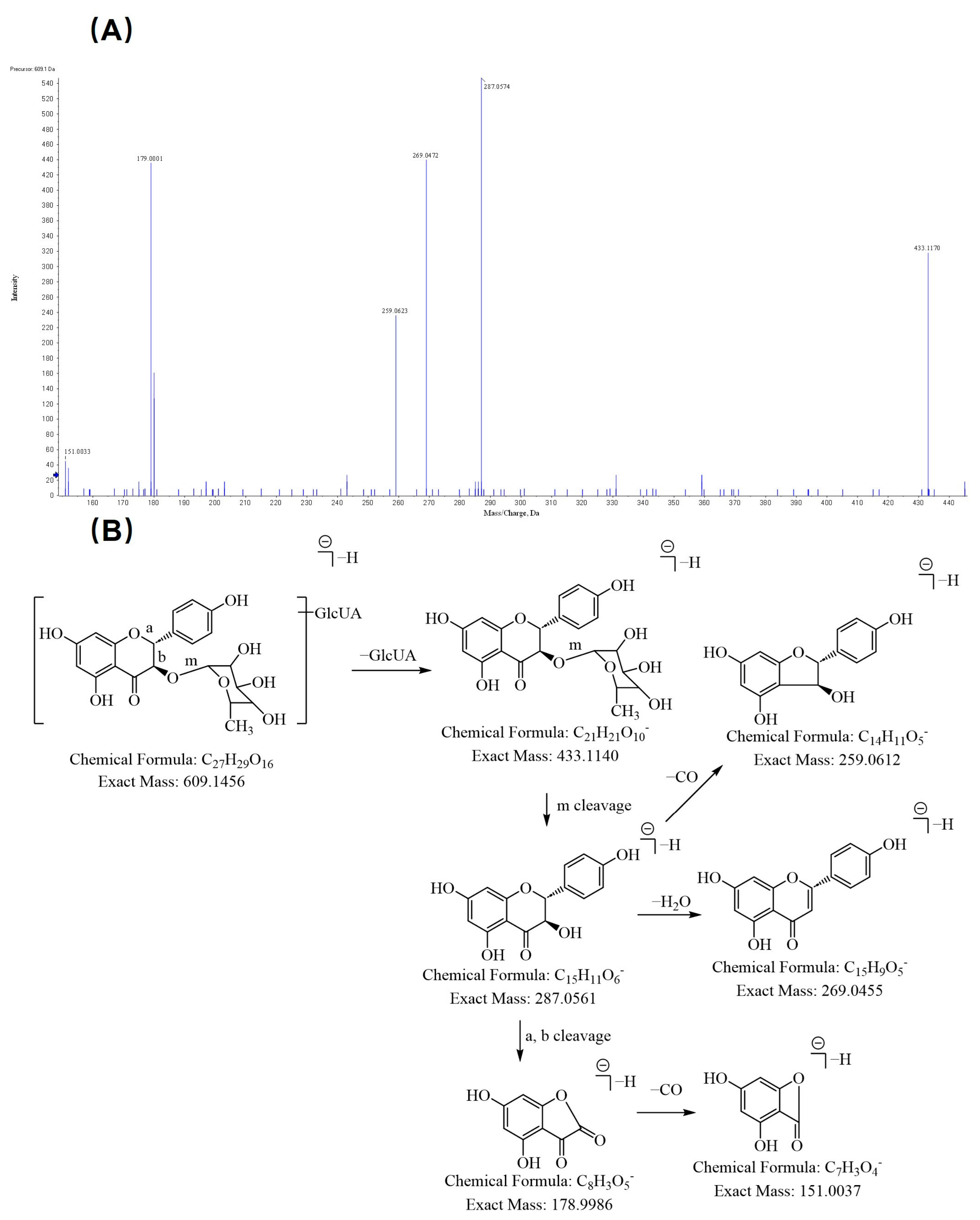
Metabolites Formed by Glucuronidation of Engeletin (E11–E22)
Metabolites Formed by Hydrogenation and Glucuronidation of Engeletin (E23–E25)
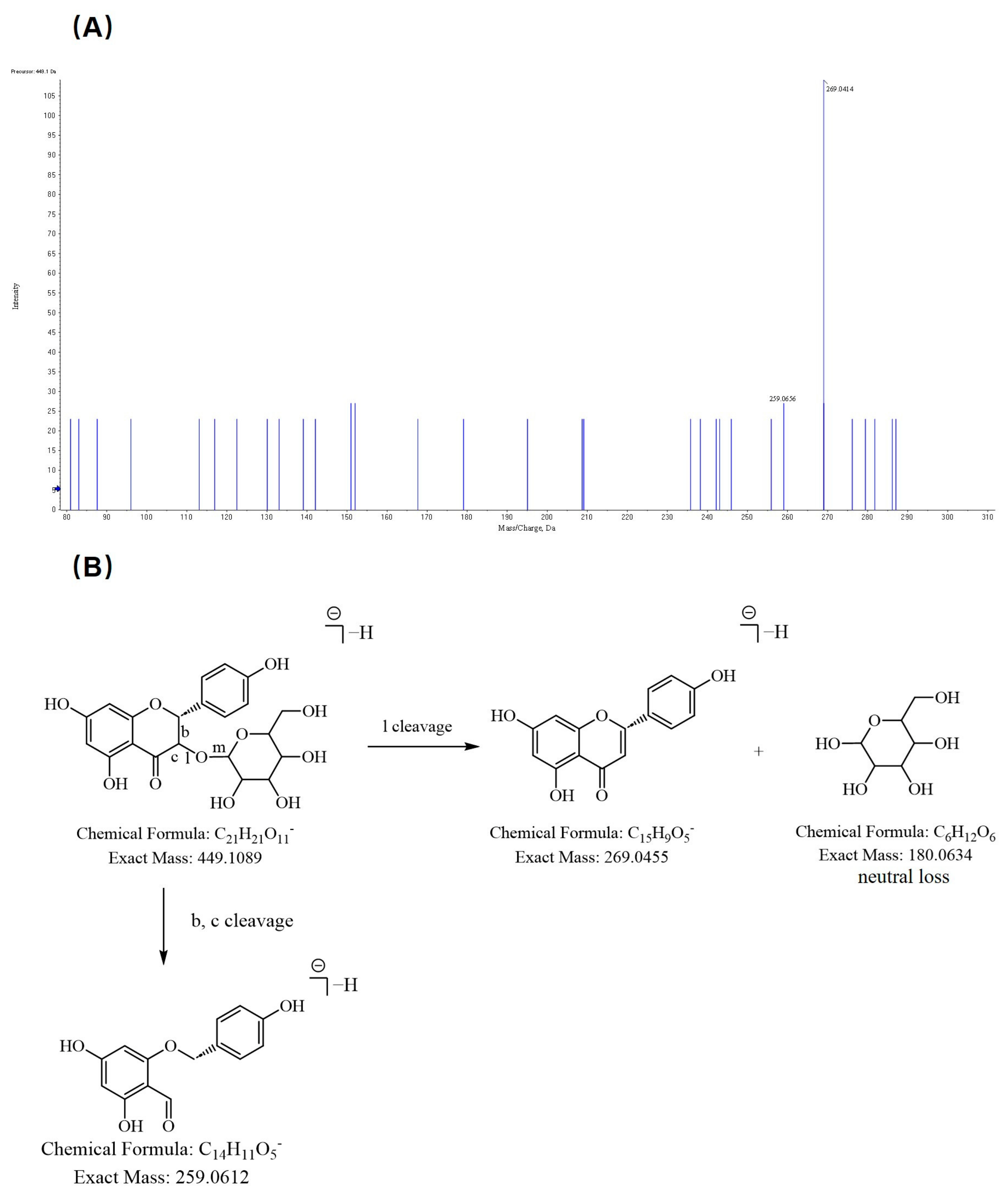
Metabolites Formed by Hydroxylation of Engeletin (E26–E28)
Metabolites Formed by Methylation and Hydroxylation of Engeletin (E32–E35)
Metabolites Formed by Demethylation of Engeletin (E36)
Metabolites Formed by Methylation of Engeletin Skeleton (E29–E31)
Metabolites Formed by Methylation and Dehydrogenation of Engeletin (E37 and E38)
Metabolites Formed by Acetylation and Hydrogenation of Engeletin (E39)
2.2.2. Metabolites with the Skeleton of Dihydrokaempferol (E40–E51)
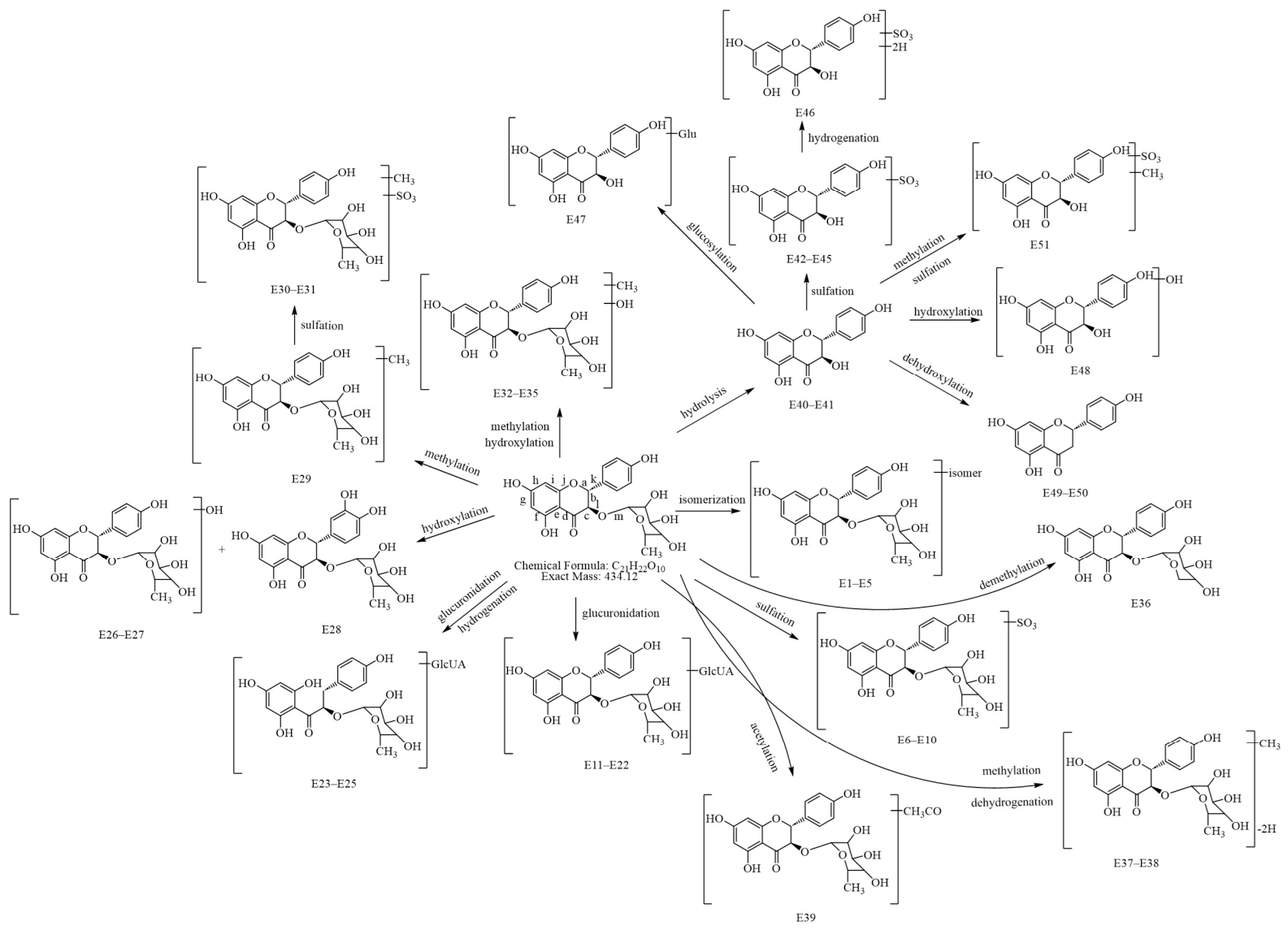
2.3. Proposed Metabolic Pathways of Engeletin In Vivo
2.4. Metabolic Reaction Types of Engeletin in Mice
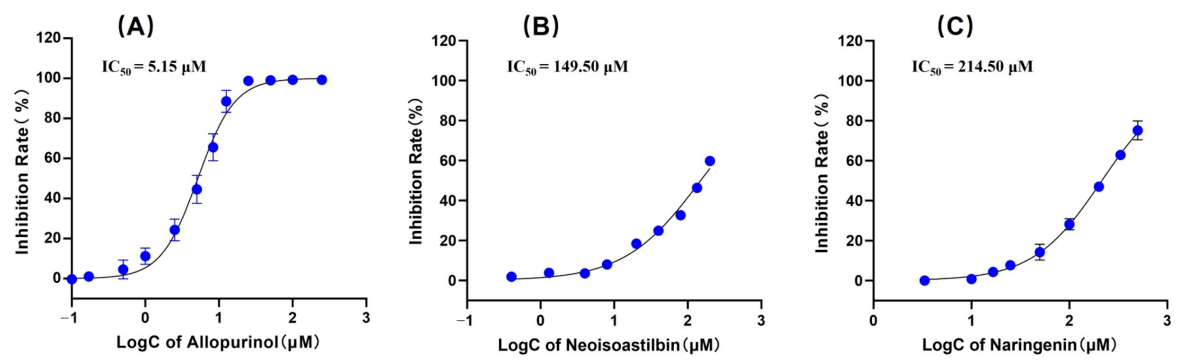
2.5. Xanthine Oxidase Inhibitory Activity of Engeletin and Its Metabolites
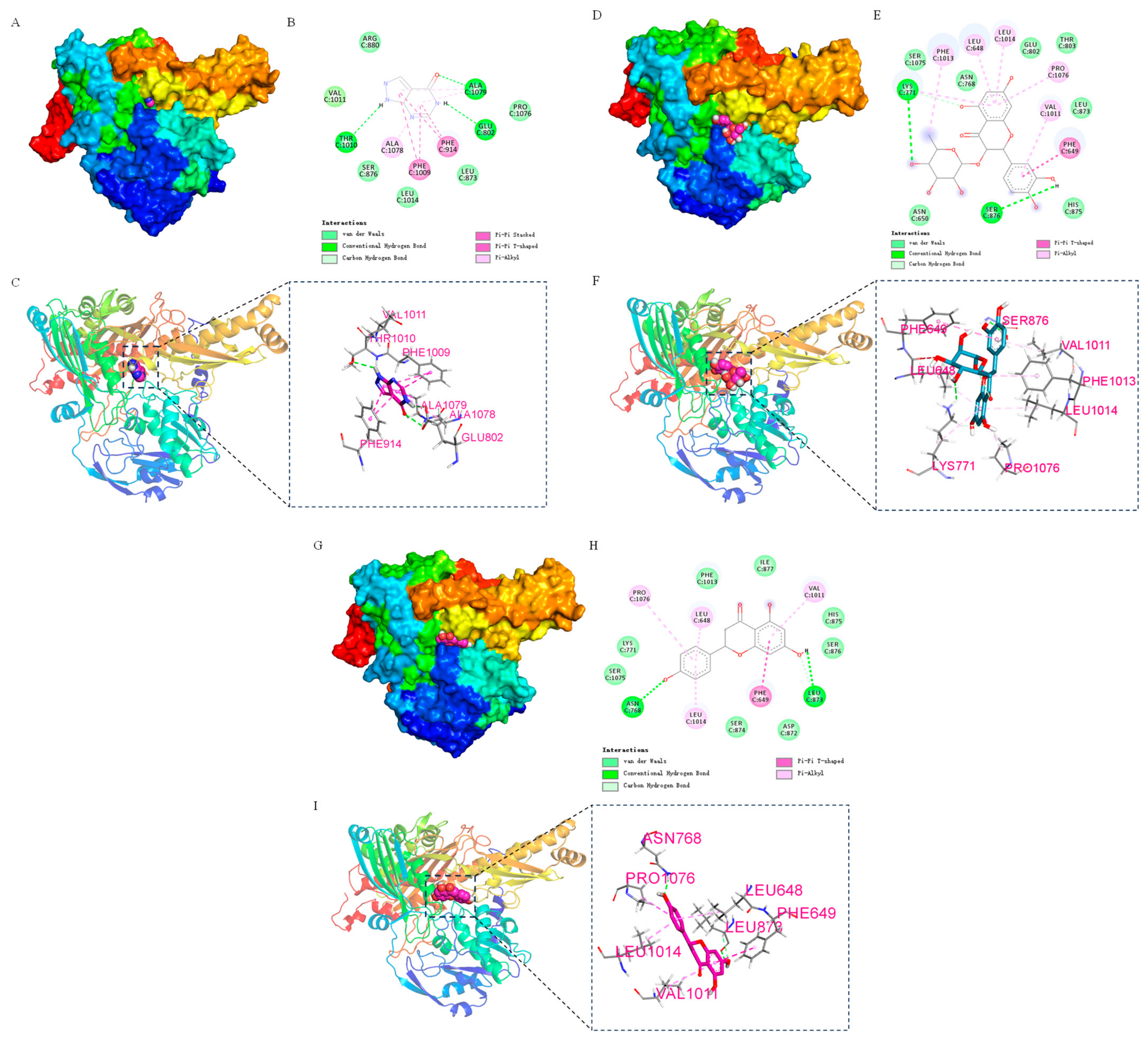
2.6. Molecular Docking Analysis
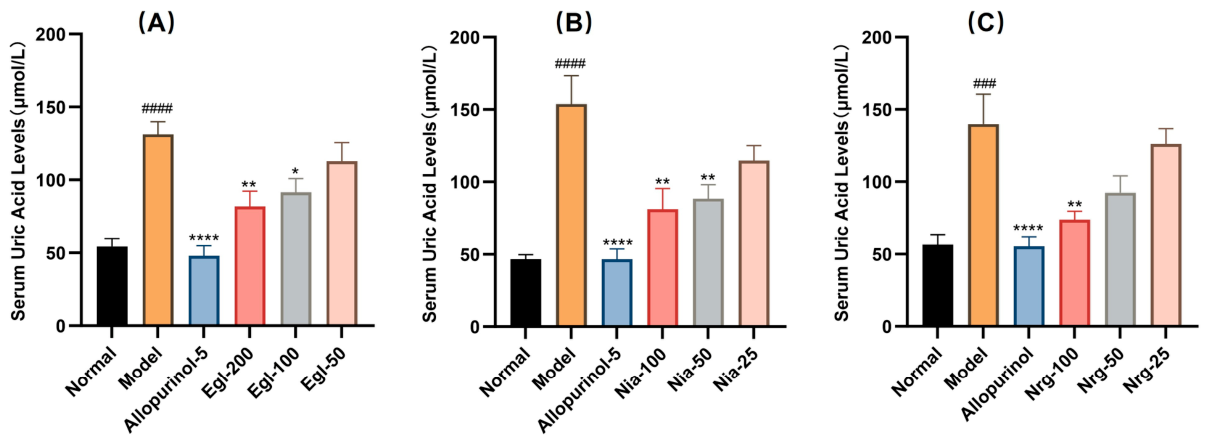
2.7. Effects of Engeletin and Its Metabolites on Serum Uric Acid Levels in Hyperuricemia Mice
3. Materials and Methods
3.1. Reagents and Chemicals
3.2. Animals and Experimental Procedures
3.2.1. Metabolic Study of Engeletin
3.2.2. Validation of Uric Acid-Lowering Activity of Engeletin and Its Metabolites In Vivo
3.3. Instruments and Conditions
3.4. Identification of the Existence Forms of Engeletin in Mice Samples
3.5. Assay of Inhibitory Activity on Xanthine Oxidase In Vitro
3.6. Molecular Docking
3.7. Statistical Analysis
4. Conclusions
Supplementary Materials
Author Contributions
Funding
Institutional Review Board Statement
Informed Consent Statement
Data Availability Statement
Conflicts of Interest
References
- Amiri, F.; Kolahi, A.A.; Nejadghaderi, S.A.; Noori, M.; Khabbazi, A.; Sullman, M.; Kaufman, J.S.; Collins, G.S.; Safiri, S. The Burden of Gout and its Attributable Risk Factors in the Middle East and North Africa Region, 1990 to 2019. J. Rheumatol. 2023, 50, 107–116. [Google Scholar] [CrossRef]
- Dehlin, M.; Jacobsson, L.; Roddy, E. Global epidemiology of gout: Prevalence, incidence, treatment patterns and risk factors. Nat. Rev. Rheumatol. 2020, 16, 380–390. [Google Scholar] [CrossRef]
- Dalbeth, N.; Phipps-Green, A.; Frampton, C.; Neogi, T.; Taylor, W.J.; Merriman, T.R. Relationship between serum urate concentration and clinically evident incident gout: An individual participant data analysis. Ann. Rheum. Dis. 2018, 77, 1048–1052. [Google Scholar] [CrossRef] [PubMed]
- Campion, E.W.; Glynn, R.J.; Delabry, L.O. Asymptomatic hyperuricemia. Risks and consequences in the normative aging study. Am. J. Med. 1987, 82, 421–426. [Google Scholar] [CrossRef] [PubMed]
- Bhole, V.; Choi, J.W.J.; Woo Kim, S.; de Vera, M.; Choi, H. Serum Uric Acid Levels and the Risk of Type 2 Diabetes: A Prospective Study. Am. J. Med. 2010, 123, 957–961. [Google Scholar] [CrossRef]
- Borghi, C.; Rosei, E.A.; Bardin, T.; Dawson, J.; Dominiczak, A.; Kielstein, J.T.; Manolis, A.J.; Perez-Ruiz, F.; Mancia, G. Serum uric acid and the risk of cardiovascular and renal disease. J. Hypertens. 2015, 33, 1729–1741. [Google Scholar] [CrossRef]
- Fitzgerald, J.D. Gout. Ann. Intern. Med. 2025, 178, ITC33–ITC48. [Google Scholar] [CrossRef]
- Yanai, H.; Adachi, H.; Hakoshima, M.; Katsuyama, H. Molecular Biological and Clinical Understanding of the Pathophysiology and Treatments of Hyperuricemia and its Association with Metabolic Syndrome, Cardiovascular Diseases and Chronic Kidney Disease. Int. J. Mol. Sci. 2021, 22, 9221. [Google Scholar] [CrossRef]
- Du, L.; Zong, Y.; Li, H.; Wang, Q.; Xie, L.; Yang, B.; Pang, Y.; Zhang, C.; Zhong, Z.; Gao, J. Hyperuricemia and its related diseases: Mechanisms and advances in therapy. Signal Transduct. Target. Ther. 2024, 9, 212. [Google Scholar] [CrossRef] [PubMed]
- Gutiérrez-Macías, A.; Lizarralde-Palacios, E.; Martínez-Odriozola, P.; Miguel-De La Villa, F. Fatal allopurinol hypersensitivity syndrome after treatment of asymptomatic hyperuricaemia. BMJ 2005, 331, 623. [Google Scholar] [CrossRef]
- Becker, M.A.; Schumacher, H.R.; Wortmann, R.L.; Macdonald, P.A.; Eustace, D.; Palo, W.A.; Streit, J.; Joseph-Ridge, N. Febuxostat Compared with Allopurinol in Patients with Hyperuricemia and Gout. N Engl. J. Med. 2005, 353, 2450–2461. [Google Scholar] [CrossRef] [PubMed]
- Lee, M.H.; Graham, G.G.; Williams, K.M.; Day, R.O. A Benefit-Risk Assessment of Benzbromarone in the Treatment of Gout. Drug. Saf. 2008, 31, 643–665. [Google Scholar] [CrossRef]
- Umamaheswari, M.; Madeswaran, A.; Asokkumar, K. Virtual Screening Analysis and in-vitro Xanthine Oxidase Inhibitory Activity of some Commercially Available Flavonoids. Iran. J. Pharm. Res. 2013, 12, 317–323. [Google Scholar]
- Yang, B.; Xin, M.; Liang, S.; Huang, Y.; Li, J.; Wang, C.; Liu, C.; Song, X.; Sun, J.; Sun, W. Naringenin Ameliorates Hyperuricemia by Regulating Renal Uric Acid Excretion via the PI3K/AKT Signaling Pathway and Renal Inflammation through the NF-κB Signaling Pathway. J. Agric. Food. Chem. 2023, 71, 1434–1446. [Google Scholar] [CrossRef]
- Mohos, V.; Pánovics, A.; Fliszár-Nyúl, E.; Schilli, G.; Hetényi, C.; Mladěnka, P.; Needs, P.W.; Kroon, P.A.; Pethő, G.; Poór, M. Inhibitory Effects of Quercetin and its Human and Microbial Metabolites on Xanthine Oxidase Enzyme. Int. J. Mol. Sci. 2019, 20, 2681. [Google Scholar] [CrossRef]
- Zhu, J.X.; Wang, Y.; Kong, L.D.; Yang, C.; Zhang, X. Effects of Biota orientalis extract and its flavonoid constituents, quercetin and rutin on serum uric acid levels in oxonate-induced mice and xanthine dehydrogenase and xanthine oxidase activities in mouse liver. J. Ethnopharmacol. 2004, 93, 133–140. [Google Scholar] [CrossRef] [PubMed]
- Shi, W.; Li, X.; Zhao, X.; Jiang, J.; Wang, C.; Fan, G.; Lou, Y. Bibliometric analysis of global research trends and development prospects of Smilax glabra Roxb using CiteSpace. Front. Plant Sci. 2025, 16, 1651650. [Google Scholar] [CrossRef] [PubMed]
- Zhang, X.X.; Sun, W.; Hou, Y.; Liu, Y.; He, Y. Clinical Observation on Fufang Tufuling Keli Treating 40 Cases of Hyperuricemia: A Randomize-Controlled Study. J. Tradit. Chin. Med. 2016, 57, 41–45. [Google Scholar]
- Huang, L.; Deng, J.; Chen, G.; Zhou, M.; Liang, J.; Yan, B.; Shu, J.; Liang, Y.; Huang, H. The anti-hyperuricemic effect of four astilbin stereoisomers in Smilax glabra on hyperuricemic mice. J. Ethnopharmacol. 2019, 238, 111777. [Google Scholar] [CrossRef]
- Wang, S.; Fang, Y.; Yu, X.; Guo, L.; Zhang, X.; Xia, D. The flavonoid-rich fraction from rhizomes of Smilax glabra Roxb. Ameliorates renal oxidative stress and inflammation in uric acid nephropathy rats through promoting uric acid excretion. Biomed. Pharmacother. 2019, 111, 162–168. [Google Scholar] [CrossRef]
- Zhong, X.; Huang, R.; Chen, X.; Lei, Y. A Review on the Pharmacological Aspects of Engeletin as Natural Compound. Drug Des. Dev. Ther. 2023, 17, 3833–3843. [Google Scholar] [CrossRef] [PubMed]
- Wei, Z.; Ni, X.; Cui, H.; Shu, C.; Peng, Y.; Liu, J.; Li, Y. Engeletin attenuates the inflammatory response via inhibiting TLR4-NFκB signaling pathway in Crohn’s disease-like colitis. J. Ethnopharmacol. 2025, 336, 118733. [Google Scholar] [CrossRef] [PubMed]
- Huang, Z.; Ji, H.; Shi, J.; Zhu, X.; Zhi, Z. Engeletin Attenuates Aβ1–42-Induced Oxidative Stress and Neuroinflammation by Keap1/Nrf2 Pathway. Inflammation 2020, 43, 1759–1771. [Google Scholar] [CrossRef] [PubMed]
- Liu, T.; Li, Y.; Sun, J.; Tian, G.; Shi, Z. Engeletin suppresses lung cancer progression by inducing apoptotic cell death through modulating the XIAP signaling pathway: A molecular mechanism involving ER stress. Biomed. Pharmacother. 2020, 128, 110221. [Google Scholar] [CrossRef]
- Liang, G.; Nie, Y.; Chang, Y.; Zeng, S.; Liang, C.; Zheng, X.; Xiao, D.; Zhan, S.; Zheng, Q. Protective effects of Rhizoma smilacis glabrae extracts on potassium oxonate- and monosodium urate-induced hyperuricemia and gout in mice. Phytomedicine 2019, 59, 152772. [Google Scholar] [CrossRef]
- Yang, P.; Xu, F.; Li, H.; Wang, Y.; Li, F.; Shang, M.; Liu, G.; Wang, X.; Cai, S. Detection of 191 Taxifolin Metabolites and their Distribution in Rats Using HPLC-ESI-IT-TOF-MSn. Molecules 2016, 21, 1209. [Google Scholar] [CrossRef]
- Tukey, R.H.; Strassburg, C.P. Human UDP-glucuronosyltransferases: Metabolism, expression, and disease. Annu. Rev. Pharmacol. Toxicol. 2000, 40, 581–616. [Google Scholar] [CrossRef]
- Nigam, S.K. The SLC22 Transporter Family: A Paradigm for the Impact of Drug Transporters on Metabolic Pathways, Signaling, and Disease. Annu. Rev. Pharmacol. Toxicol. 2018, 58, 663–687. [Google Scholar] [CrossRef]
- Wen, X.; Walle, T. Methylated Flavonoids Have Greatly Improved Intestinal Absorption and Metabolic Stability. Drug. Metab. Dispos. 2006, 34, 1786–1792. [Google Scholar] [CrossRef]
- Gamage, N.; Barnett, A.; Hempel, N.; Duggleby, R.G.; Windmill, K.F.; Martin, J.L.; Mcmanus, M.E. Human Sulfotransferases and their Role in Chemical Metabolism. Toxicol. Sci. 2006, 90, 5–22. [Google Scholar] [CrossRef]
- Coughtrie, M.W.H. Function and organization of the human cytosolic sulfotransferase (SULT) family. Chem. Biol. Interact. 2016, 259, 2–7. [Google Scholar] [CrossRef]
- Biasutto, L.; Marotta, E.; De Marchi, U.; Zoratti, M.; Paradisi, C. Ester-Based Precursors to Increase the Bioavailability of Quercetin. J. Med. Chem. 2007, 50, 241–253. [Google Scholar] [CrossRef]
- Jornada, D.H.; Dos Santos Fernandes, G.F.; Chiba, D.E.; De Melo, T.R.; Dos Santos, J.L.; Chung, M.C. The Prodrug Approach: A Successful Tool for Improving Drug Solubility. Molecules 2016, 21, 42. [Google Scholar] [CrossRef] [PubMed]
- Liu, Y.; Han, C.; Lu, T.; Liu, Y.; Chen, H.; Yang, C.; Tu, Y.; Li, Y. Investigation of the interaction between Chrysoeriol and xanthine oxidase using computational and in vitro approaches. Int. J. Biol. Macromol. 2021, 190, 463–473. [Google Scholar] [CrossRef]
- Wang, H.; Zhou, X.; Liu, Y.; Xie, W.; Yang, D.; Huo, D.; Guo, Q.; Wang, R. Identification and molecular docking of xanthine oxidase and α-glucosidase inhibitors in Opuntia ficus-indica fruit. J. Food Sci. 2024, 89, 4192–4204. [Google Scholar] [CrossRef]
- Ballante, F.; Kooistra, A.J.; Kampen, S.; de Graaf, C.; Carlsson, J. Structure-Based Virtual Screening for Ligands of G Protein–Coupled Receptors: What Can Molecular Docking Do for You? Pharmacol. Rev. 2021, 73, 1698–1736. [Google Scholar] [CrossRef]
- Kitchen, D.B.; Decornez, H.; Furr, J.R.; Bajorath, J. Docking and scoring in virtual screening for drug discovery: Methods and applications. Nat. Rev. Drug Discov. 2004, 3, 935–949. [Google Scholar] [CrossRef] [PubMed]
- Zhou, G.; Rusnac, D.; Park, H.; Canzani, D.; Nguyen, H.M.; Stewart, L.; Bush, M.F.; Nguyen, P.T.; Wulff, H.; Yarov-Yarovoy, V.; et al. An artificial intelligence accelerated virtual screening platform for drug discovery. Nat. Commun. 2024, 15, 7761. [Google Scholar] [CrossRef] [PubMed]
- Paggi, J.M.; Pandit, A.; Dror, R.O. The Art and Science of Molecular Docking. Annu. Rev. Biochem. 2024, 93, 389–410. [Google Scholar] [CrossRef]
- Thuy Hang, D.T.; Trang, D.T.; Dung, D.T.; Hai Yen, D.T.; Hoang, N.H.; Bang, N.A.; Cuc, N.T.; Nhiem, N.X.; Thanh Huong, P.T.; Tai, B.H.; et al. Guaianolide sesquiterpenes and benzoate esters from the aerial parts of Siegesbeckia orientalis L. And their xanthine oxidase inhibitory activity. Phytochemistry 2021, 190, 112889. [Google Scholar] [CrossRef]
- Ghallab, D.S.; Shawky, E.; Metwally, A.M.; Celik, I.; Ibrahim, R.S.; Mohyeldin, M.M. Integrated in silico—In vitro strategy for the discovery of potential xanthine oxidase inhibitors from Egyptian propolis and their synergistic effect with allopurinol and febuxostat. RSC Adv. 2022, 12, 2843–2872. [Google Scholar] [CrossRef]
- Ou, R.; Lin, L.; Zhao, M.; Xie, Z. Action mechanisms and interaction of two key xanthine oxidase inhibitors in galangal: Combination of in vitro and in silico molecular docking studies. Int. J. Biol. Macromol. 2020, 162, 1526–1535, Erratum in Int. J. Biol. Macromol. 2020, 169, 597. [Google Scholar] [CrossRef] [PubMed]
- Okamoto, K.; Kusano, T.; Nishino, T. Chemical nature and reaction mechanisms of the molybdenum cofactor of xanthine oxidoreductase. Curr. Pharm. Des. 2013, 19, 2606–2614. [Google Scholar] [CrossRef]
- Enroth, C.; Eger, B.T.; Okamoto, K.; Nishino, T.; Nishino, T.; Pai, E.F. Crystal structures of bovine milk xanthine dehydrogenase and xanthine oxidase: Structure-based mechanism of conversion. Proc. Natl. Acad. Sci. USA 2000, 97, 10723–10728. [Google Scholar] [CrossRef]
- Cardona, F.; Andrés-Lacueva, C.; Tulipani, S.; Tinahones, F.J.; Queipo-Ortuño, M.I. Benefits of polyphenols on gut microbiota and implications in human health. J. Nutr. Biochem. 2013, 24, 1415–1422. [Google Scholar] [CrossRef]
- Williamson, G.; Clifford, M.N. Role of the small intestine, colon and microbiota in determining the metabolic fate of polyphenols. Biochem. Pharmacol. 2017, 139, 24–39. [Google Scholar] [CrossRef] [PubMed]
- Braune, A.; Blaut, M. Bacterial species involved in the conversion of dietary flavonoids in the human gut. Gut Microbes 2016, 7, 216–234. [Google Scholar] [CrossRef] [PubMed]
- Chen, L.; Cao, H.; Huang, Q.; Xiao, J.; Teng, H. Absorption, metabolism and bioavailability of flavonoids: A review. Crit. Rev. Food. Sci. Nutr. 2022, 62, 7730–7742. [Google Scholar] [CrossRef]
- Stevens, Y.; Rymenant, E.V.; Grootaert, C.; Camp, J.V.; Possemiers, S.; Masclee, A.; Jonkers, D. The Intestinal Fate of Citrus Flavanones and their Effects on Gastrointestinal Health. Nutrients 2019, 11, 1464. [Google Scholar] [CrossRef]
- Liang, A.; Leonard, W.; Beasley, J.T.; Fang, Z.; Zhang, P.; Ranadheera, C.S. Anthocyanins-gut microbiota-health axis: A review. Crit. Rev. Food. Sci. Nutr. 2024, 64, 7563–7588. [Google Scholar] [CrossRef]
- Duda-Chodak, A. The inhibitory effect of polyphenols on human gut microbiota. J. Physiol. Pharmacol. 2012, 63, 497–503. [Google Scholar]
- Dang, K.; Zhang, N.; Gao, H.; Wang, G.; Liang, H.; Xue, M. Influence of intestinal microecology in the development of gout or hyperuricemia and the potential therapeutic targets. Int. J. Rheum. Dis. 2023, 26, 1911–1922. [Google Scholar] [CrossRef]
- Wang, J.; Chen, Y.; Zhong, H.; Chen, F.; Regenstein, J.; Hu, X.; Cai, L.; Feng, F. The gut microbiota as a target to control hyperuricemia pathogenesis: Potential mechanisms and therapeutic strategies. Crit. Rev. Food. Sci. Nutr. 2022, 62, 3979–3989. [Google Scholar] [CrossRef]
- Kasahara, K.; Kerby, R.L.; Zhang, Q.; Pradhan, M.; Mehrabian, M.; Lusis, A.J.; Bergström, G.; Bäckhed, F.; Rey, F.E. Gut bacterial metabolism contributes to host global purine homeostasis. Cell Host Microbe 2023, 31, 1038–1053. [Google Scholar] [CrossRef]
- Wang, Z.; Li, Y.; Liao, W.; Huang, J.; Liu, Y.; Li, Z.; Tang, J. Gut microbiota remodeling: A promising therapeutic strategy to confront hyperuricemia and gout. Front. Cell Infect. Microbiol. 2022, 12, 935723. [Google Scholar] [CrossRef] [PubMed]
- Han, X.; Wang, P.; Zhang, J.; Lv, Y.; Zhao, Z.; Zhang, F.; Shang, M.; Liu, G.; Wang, X.; Cai, S.; et al. A-Glucosidase Inhibition Mechanism and Anti-Hyperglycemic Effects of Flavonoids from Astragali Radix and their Mixture Effects. Pharmaceuticals 2025, 18, 744. [Google Scholar] [CrossRef] [PubMed]
- Liang, J.; Xu, F.; Zhang, Y.; Huang, S.; Zang, X.; Zhao, X.; Zhang, L.; Shang, M.; Yang, D.; Wang, X.; et al. The profiling and identification of the absorbed constituents and metabolites of Paeoniae Radix Rubra decoction in rat plasma and urine by the HPLC–DAD–ESI-IT-TOF-MSn technique: A novel strategy for the systematic screening and identification of absorbed constituents and metabolites from traditional Chinese medicines. J. Pharm. Biomed. Anal. 2013, 83, 108–121. [Google Scholar]
- Cao, H.; Pauff, J.M.; Hille, R. X-ray Crystal Structure of a Xanthine Oxidase Complex with the Flavonoid Inhibitor Quercetin. J. Nat. Prod. 2014, 77, 1693–1699. [Google Scholar] [CrossRef]
- Martignoni, M.; Groothuis, G.M.M.; de Kanter, R. Species differences between mouse, rat, dog, monkey and human CYP-mediated drug metabolism, inhibition and induction. Expert Opin. Drug Metab. Toxicol. 2006, 2, 875–894. [Google Scholar] [CrossRef]
- Nguyen, T.L.A.; Vieira-Silva, S.; Liston, A.; Raes, J. How informative is the mouse for human gut microbiota research? Dis. Model. Mech. 2015, 8, 1–16. [Google Scholar] [CrossRef] [PubMed]



| No. | tR (min) | Formula | Ion | Meas. m/z | Pred. m/z | Diff (ppm) | Identification | U | F | S | L | K |
|---|---|---|---|---|---|---|---|---|---|---|---|---|
| E0 a | 82.29 | C21H22O10 | [M−H]− | 433.1135 | 433.1140 | −1.2 | engeletin | − | + | + | − | − |
| E1 | 80.88 | C21H22O10 | [M−H]− | 433.1130 | 433.1140 | −2.4 | engeletin isomer | − | + | − | + | + |
| E2 | 83.80 | C21H22O10 | [M−H]− | 433.1151 | 433.1140 | 2.5 | engeletin isomer | + | − | − | − | − |
| E3 | 92.52 | C21H22O10 | [M−H]− | 433.1133 | 433.1140 | −1.7 | engeletin isomer | − | + | − | − | − |
| E4 | 98.06 | C21H22O10 | [M−H]− | 433.1140 | 433.1140 | 0.0 | engeletin isomer | − | − | − | + | − |
| E5 | 100.18 | C21H22O10 | [M−H]− | 433.1138 | 433.1140 | −0.5 | engeletin isomer | − | + | − | − | − |
| E6 | 25.58 | C21H22O13S | [M−H]− | 513.0705 | 513.0708 | −0.7 | engeletin sulfate or isomer | − | + | − | − | − |
| E7 | 56.58 | C21H22O13S | [M−H]− | 513.0695 | 513.0708 | −2.6 | engeletin sulfate or isomer | − | + | − | − | − |
| E8 | 58.32 | C21H22O13S | [M−H]− | 513.0693 | 513.0708 | −3.0 | engeletin sulfate or isomer | − | + | − | − | − |
| E9 | 68.85 | C21H22O13S | [M−H]− | 513.0700 | 513.0708 | −1.6 | engeletin sulfate or isomer | − | + | − | − | − |
| E10 | 70.19 | C21H22O13S | [M−H]− | 513.0691 | 513.0708 | −3.4 | engeletin sulfate or isomer | + | − | − | − | − |
| E11 n | 31.75 | C27H30O16 | [M−H]− | 609.1472 | 609.1461 | 1.8 | engeletin glucuronide or isomer | − | − | + | − | − |
| E12 n | 33.02 | C27H30O16 | [M−H]− | 609.1465 | 609.1461 | 0.6 | engeletin glucuronide or isomer | − | − | − | + | + |
| E13 n | 34.91 | C27H30O16 | [M−H]− | 609.1471 | 609.1461 | 1.6 | engeletin glucuronide or isomer | + | − | + | − | − |
| E14 n | 44.31 | C27H30O16 | [M−H]− | 609.1456 | 609.1461 | −0.8 | engeletin glucuronide or isomer | − | − | − | + | + |
| E15 n | 45.76 | C27H30O16 | [M−H]− | 609.1460 | 609.1461 | −0.2 | engeletin glucuronide or isomer | − | − | + | − | − |
| E16 n | 49.85 | C27H30O16 | [M−H]− | 609.1473 | 609.1461 | 2.0 | engeletin glucuronide or isomer | + | − | − | − | − |
| E17 n | 52.19 | C27H30O16 | [M−H]− | 609.1471 | 609.1461 | 1.6 | engeletin glucuronide or isomer | + | − | + | − | − |
| E18 n | 54.81 | C27H30O16 | [M−H]− | 609.1451 | 609.1461 | −1.7 | engeletin glucuronide or isomer | − | − | − | + | + |
| E19 n | 58.06 | C27H30O16 | [M−H]− | 609.1479 | 609.1461 | 2.9 | engeletin glucuronide or isomer | + | − | + | − | − |
| E20 n | 60.46 | C27H30O16 | [M−H]− | 609.1450 | 609.1461 | −1.8 | engeletin glucuronide or isomer | − | − | − | + | + |
| E21 n | 63.55 | C27H30O16 | [M−H]− | 609.1473 | 609.1461 | 2.0 | engeletin glucuronide or isomer | + | − | + | − | − |
| E22 n | 76.93 | C27H30O16 | [M−H]− | 609.1444 | 609.1461 | −2.8 | engeletin glucuronide or isomer | − | + | − | − | − |
| E23 | 40.95 | C27H32O16 | [M−H]− | 611.1640 | 611.1618 | 3.7 | dihydro-engeletin glucuronide or isomer | − | + | − | − | − |
| E24 | 45.08 | C27H32O16 | [M−H]− | 611.1633 | 611.1618 | 2.5 | dihydro-engeletin glucuronide or isomer | − | + | − | − | − |
| E25 | 59.74 | C27H32O16 | [M−H]− | 611.1632 | 611.1618 | 2.4 | dihydro-engeletin glucuronide or isomer | − | + | − | − | − |
| E26 | 64.46 | C21H22O11 | [M−H]− | 449.1077 | 449.1089 | −2.8 | hydroxy-engeletin or isomer | − | + | − | − | − |
| E27 | 67.02. | C21H22O11 | [M−H]− | 449.1082 | 449.1089 | −1.6 | hydroxy-engeletin or isomer | − | + | − | − | − |
| E28 a | 79.64 | C21H22O11 | [M−H]− | 449.1071 | 449.1089 | −4.1 | neoisoastilbin | − | + | − | − | − |
| E29 n | 102.45 | C22H24O10 | [M−H]− | 447.1285 | 447.1297 | −2.6 | methyl-engeletin | − | + | − | − | − |
| E30 n | 53.22 | C22H24O13S | [M−H]− | 527.0851 | 527.0865 | −2.6 | methyl-engeletin sulfate or isomer | − | + | − | − | − |
| E31 n | 68.20 | C22H24O13S | [M−H]− | 527.0845 | 527.0865 | −3.8 | methyl-engeletin sulfate or isomer | − | + | − | − | − |
| E32 | 71.50 | C22H24O11 | [M−H]− | 463.1231 | 463.1246 | −3.2 | methyl-hydroxy-engeletin or isomer | − | + | − | − | − |
| E33 | 86.31 | C22H24O11 | [M−H]− | 463.1228 | 463.1246 | −3.9 | methyl-hydroxy-engeletin or isomer | − | + | − | − | − |
| E34 | 97.25 | C22H24O11 | [M−H]− | 463.1235 | 463.1246 | −2.3 | methyl-hydroxy-engeletin or isomer | − | + | − | − | − |
| E35 | 87.09 | C22H24O11 | [M−H]− | 463.1260 | 463.1246 | 3.1 | methyl-hydroxy-engeletin or isomer | + | − | − | − | − |
| E36 | 48.42 | C20H20O10 | [M−H]− | 419.0976 | 419.0984 | −1.8 | demethyl-engeletin | − | + | − | − | − |
| E37 | 55.19 | C22H22O10 | [M−H]− | 445.1124 | 445.1140 | −3.6 | methyl-dehydrogenated-engeletin or isomer | − | + | − | − | − |
| E38 | 54.49 | C22H22O10 | [M−H]− | 445.1138 | 445.1140 | −0.5 | methyl-dehydrogenated-engeletin or isomer | − | + | − | − | − |
| E39 n | 103.77 | C23H26O11 | [M−H]− | 477.1397 | 477.1402 | −1.1 | acetylated-hydrogenated-engeletin | − | + | − | − | − |
| E40 a | 67.35 | C15H12O6 | [M−H]− | 287.0567 | 287.0561 | 2.0 | dihydrokaempferol | − | + | − | − | − |
| E41 | 68.23 | C15H12O6 | [M−H]− | 287.0564 | 287.0561 | 1.0 | dihydrokaempferol isomer | + | − | − | − | − |
| E42 | 33.79 | C15H12O9S | [M−H]− | 367.0126 | 367.0129 | −0.9 | dihydrokaempferol sulfate or isomer | + | − | − | − | − |
| E43 | 38.42 | C15H12O9S | [M−H]− | 367.0124 | 367.0129 | −1.4 | dihydrokaempferol sulfate or isomer | + | − | − | − | − |
| E44 | 42.08 | C15H12O9S | [M−H]− | 367.0121 | 367.0129 | −2.3 | dihydrokaempferol sulfate or isomer | − | + | − | − | − |
| E45 | 50.43 | C15H12O9S | [M−H]− | 367.0120 | 367.0129 | −2.5 | dihydrokaempferol sulfate or isomer | − | + | − | − | − |
| E46 | 49.03 | C15H14O9S | [M−H]− | 369.0269 | 369.0286 | −4.5 | dihydro-dihydrokaempferol sulfate | − | + | − | − | − |
| E47 | 67.06 | C21H22O11 | [M−H]− | 449.1082 | 449.1089 | −1.6 | dihydrokaempferol glucoside | − | + | − | − | − |
| E48 a | 48.44 | C15H12O7 | [M−H]− | 303.0505 | 303.0510 | −1.7 | taxifolin | − | + | − | − | − |
| E49 | 78.02 | C15H12O5 | [M−H]− | 271.0604 | 271.0612 | −2.9 | naringenin isomer | − | + | − | − | − |
| E50 a | 123.55 | C15H12O5 | [M−H]− | 271.0604 | 271.0612 | −2.9 | naringenin | − | + | − | − | − |
| E51 | 40.16 | C16H14O9S | [M−H]− | 381.0271 | 381.0286 | −3.9 | methyl-dihydrokaempferol sulfate | − | + | − | − | − |
| Metabolite | Number | Metabolic Reaction | |||||||||||
|---|---|---|---|---|---|---|---|---|---|---|---|---|---|
| Phase I Metabolism | Phase II Metabolism | ||||||||||||
| −OH | +OH | −2H | +2H | −CH3 | Hyds | Iso | +CH3 | +SO3H | +GlcUA | +Glc | +Acy | ||
| E1–E5 | 5 | ● | |||||||||||
| E6–E10 | 5 | ● | |||||||||||
| E11–E22 | 12 | ● | |||||||||||
| E23–E25 | 3 | ● | ● | ||||||||||
| E26–E28 | 3 | ● | |||||||||||
| E29 | 1 | ● | |||||||||||
| E30–E31 | 2 | ● | ● | ||||||||||
| E32–E35 | 4 | ● | ● | ||||||||||
| E36 | 1 | ● | |||||||||||
| E37–E38 | 2 | ● | ● | ||||||||||
| E39 | 1 | ● | |||||||||||
| E40–E41 | 2 | ● | |||||||||||
| E42–E45 | 4 | ● | ● | ||||||||||
| E46 | 1 | ● | ● | ● | |||||||||
| E47 | 1 | ● | ● | ||||||||||
| E48 | 1 | ● | ● | ||||||||||
| E49–E50 | 2 | ● | ● | ||||||||||
| E51 | 1 | ● | ● | ||||||||||
| Sum | 51 | 2 | 8 | 2 | 4 | 1 | 11 | 5 | 10 | 13 | 15 | 1 | 1 |
Disclaimer/Publisher’s Note: The statements, opinions and data contained in all publications are solely those of the individual author(s) and contributor(s) and not of MDPI and/or the editor(s). MDPI and/or the editor(s) disclaim responsibility for any injury to people or property resulting from any ideas, methods, instructions or products referred to in the content. |
© 2026 by the authors. Licensee MDPI, Basel, Switzerland. This article is an open access article distributed under the terms and conditions of the Creative Commons Attribution (CC BY) license.
Share and Cite
Lv, Y.; Zhang, J.; Chen, S.-J.; Zhang, J.; Han, X.; Shang, M.-Y.; Liu, G.-X.; Wang, X.; Cai, S.-Q.; Xu, F. The In Vivo Existence Forms of Engeletin and Their Anti-Hyperuricemia Activity. Int. J. Mol. Sci. 2026, 27, 5353. https://doi.org/10.3390/ijms27125353
Lv Y, Zhang J, Chen S-J, Zhang J, Han X, Shang M-Y, Liu G-X, Wang X, Cai S-Q, Xu F. The In Vivo Existence Forms of Engeletin and Their Anti-Hyperuricemia Activity. International Journal of Molecular Sciences. 2026; 27(12):5353. https://doi.org/10.3390/ijms27125353
Chicago/Turabian StyleLv, Yang, Jing Zhang, Shao-Jing Chen, Jing Zhang, Xing Han, Ming-Ying Shang, Guang-Xue Liu, Xuan Wang, Shao-Qing Cai, and Feng Xu. 2026. "The In Vivo Existence Forms of Engeletin and Their Anti-Hyperuricemia Activity" International Journal of Molecular Sciences 27, no. 12: 5353. https://doi.org/10.3390/ijms27125353
APA StyleLv, Y., Zhang, J., Chen, S.-J., Zhang, J., Han, X., Shang, M.-Y., Liu, G.-X., Wang, X., Cai, S.-Q., & Xu, F. (2026). The In Vivo Existence Forms of Engeletin and Their Anti-Hyperuricemia Activity. International Journal of Molecular Sciences, 27(12), 5353. https://doi.org/10.3390/ijms27125353