Macrophage Plasticity: Phenotypic and Functional Profiles Across Pathological Microenvironments


Abstract
1. Introduction
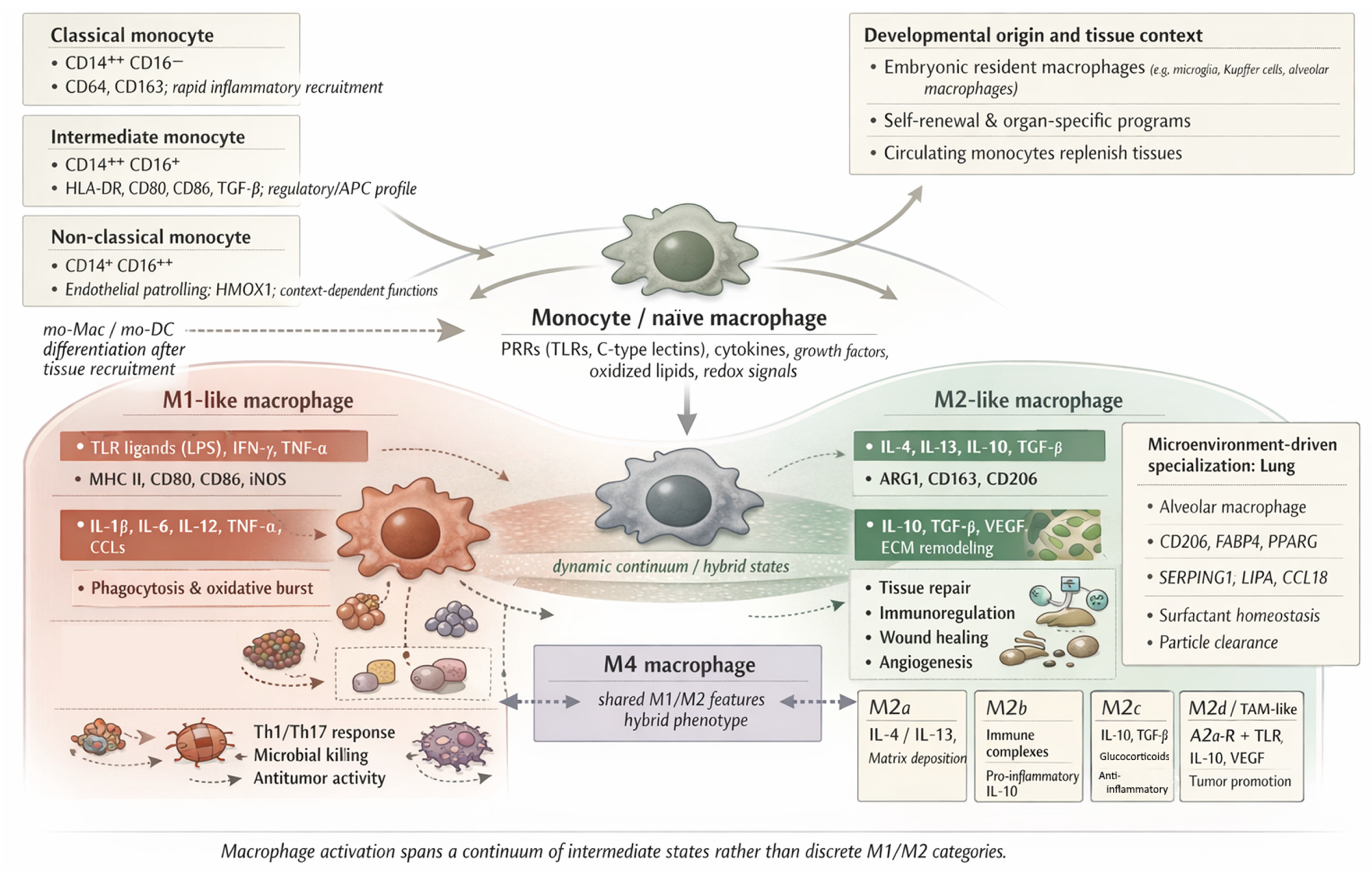
2. Macrophage Phenotypic Diversity and Underlying Molecular Programs
3. Dynamic Crosstalk Between Macrophages and the Pathological Tissue Microenvironment
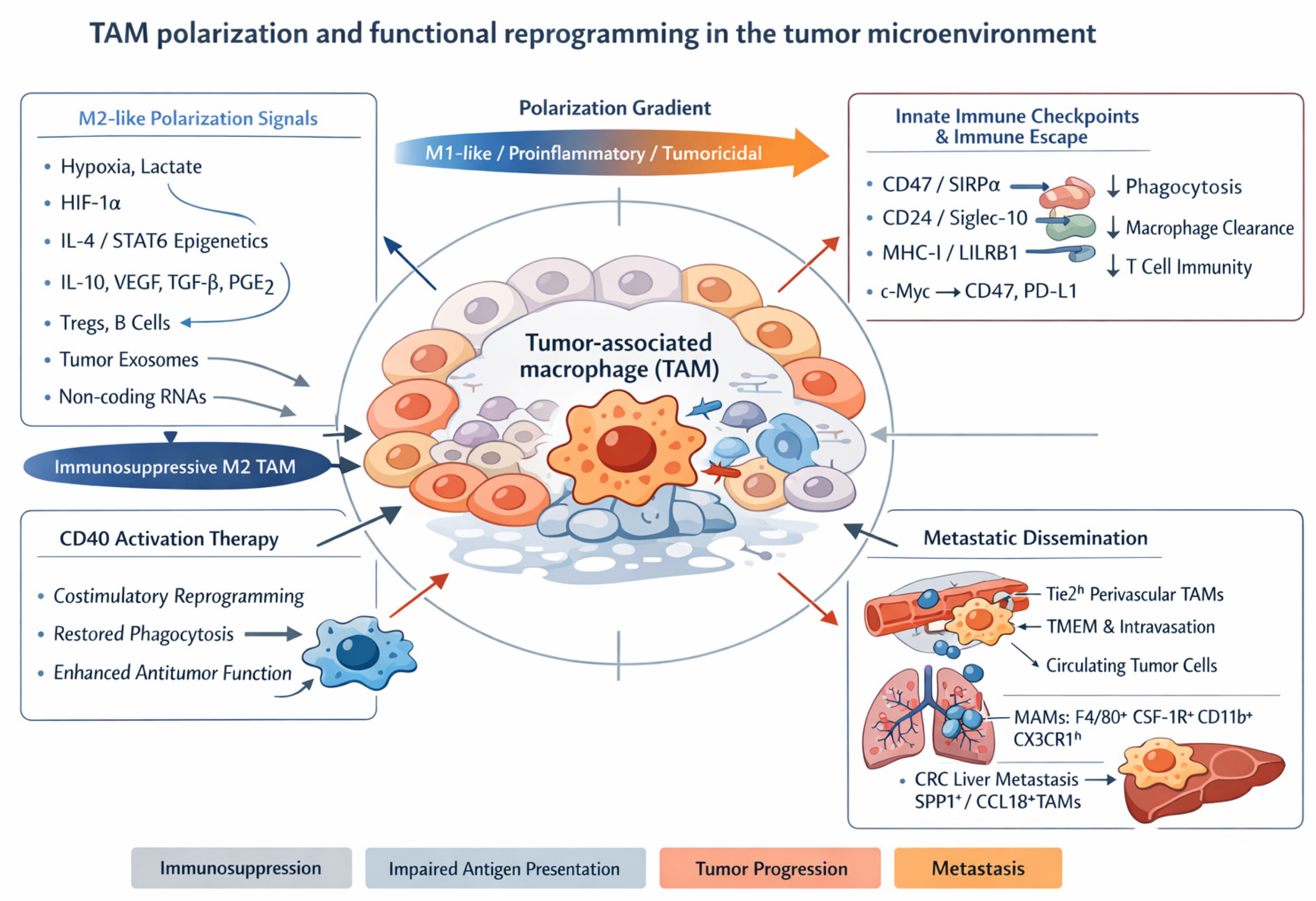
3.1. Oncology
3.1.1. Breast and Ovarian Cancer
3.1.2. Lung Cancer
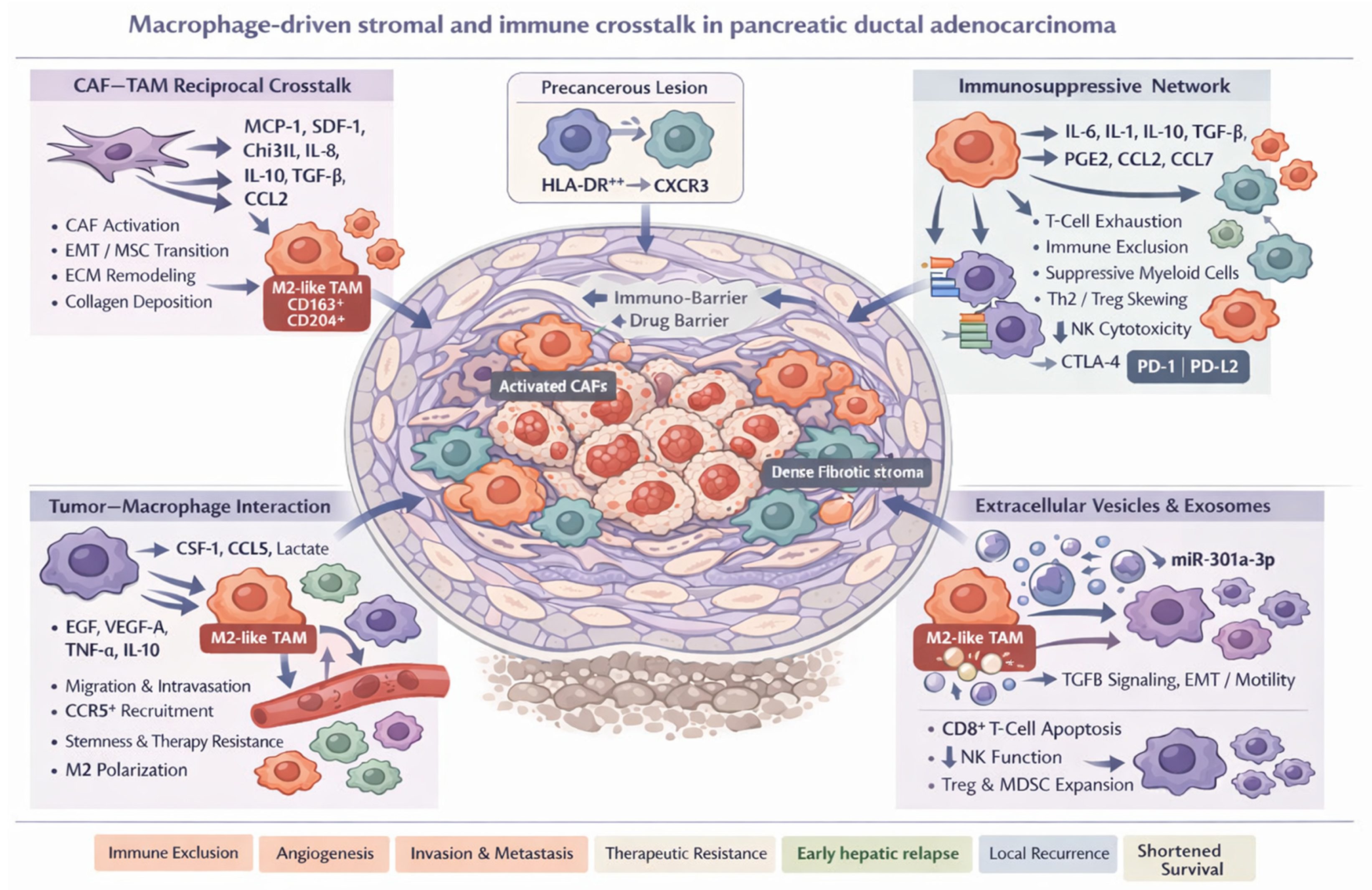
3.1.3. Pancreatic Cancer
3.1.4. Glioblastoma
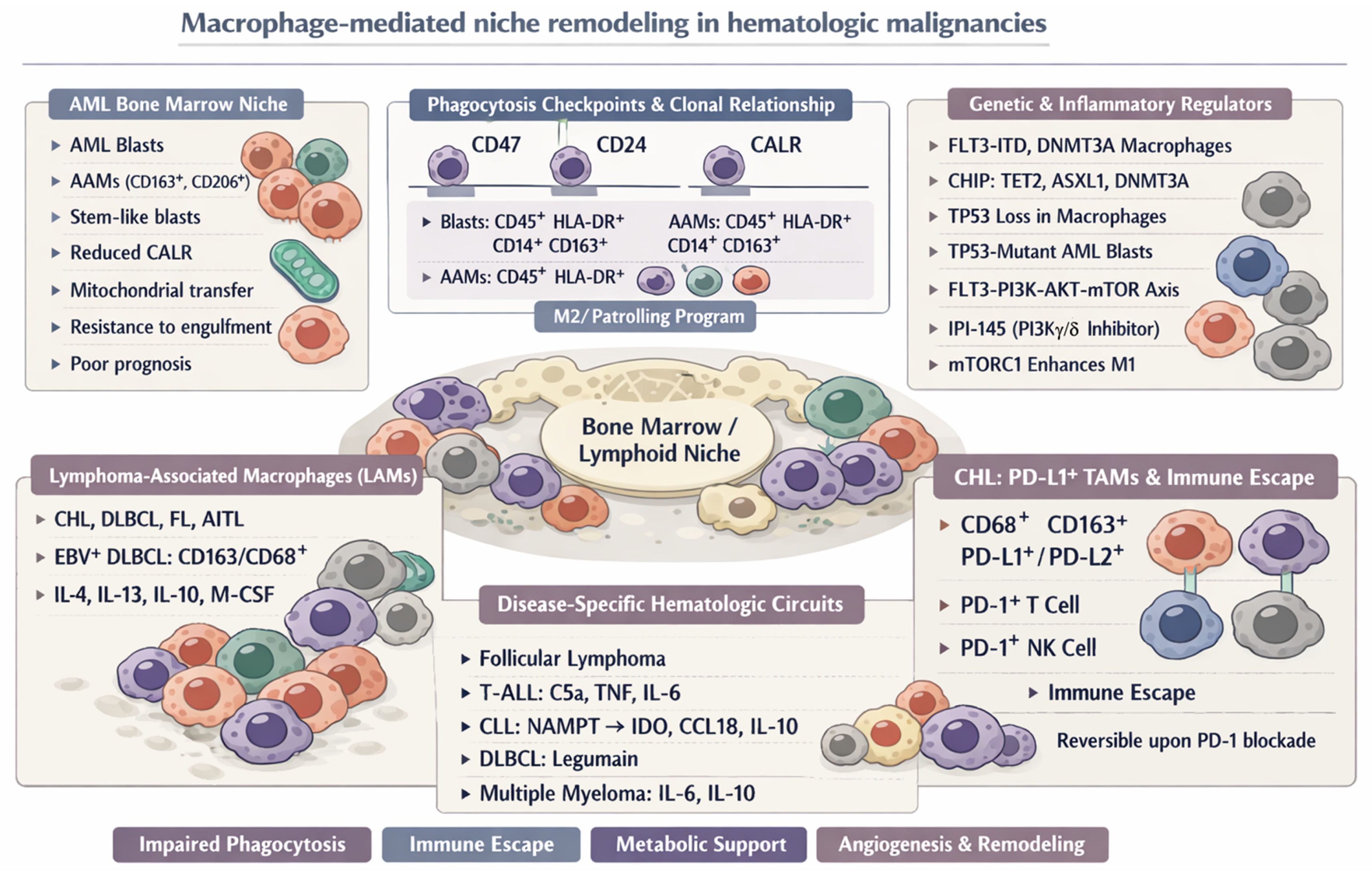
3.1.5. Hematologic Malignancies (Leukemia and Lymphoma)
3.1.6. Colorectal Cancer
3.1.7. Melanoma
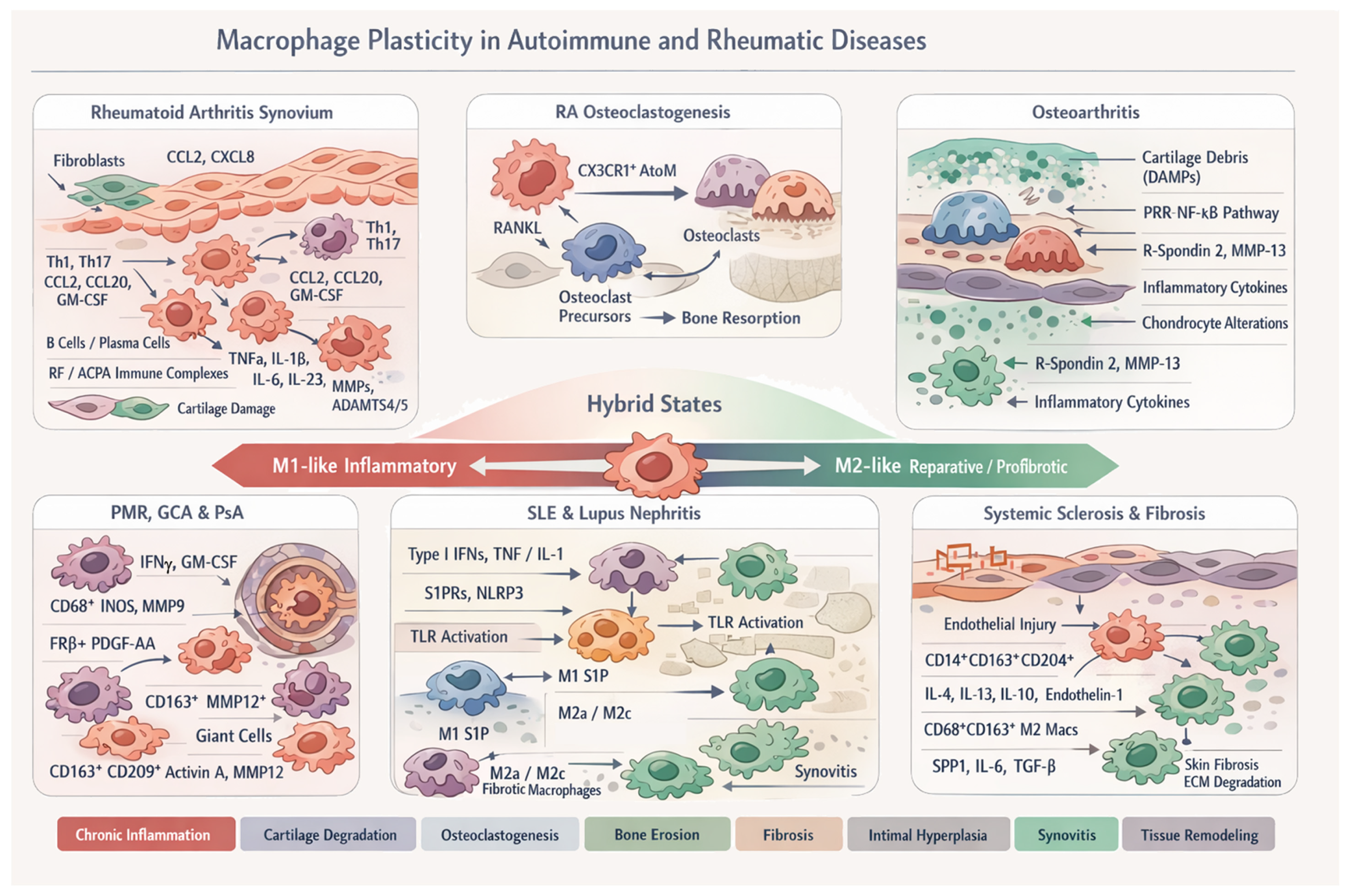
3.2. Autoimmune and Rheumatic Diseases
3.3. Inflammatory Bowel Diseases
3.4. Macrophage Plasticity in Non-Neoplastic Lung Diseases
3.5. Macrophage Activation Syndrome (MAS) and Hemophagocytic Syndromes
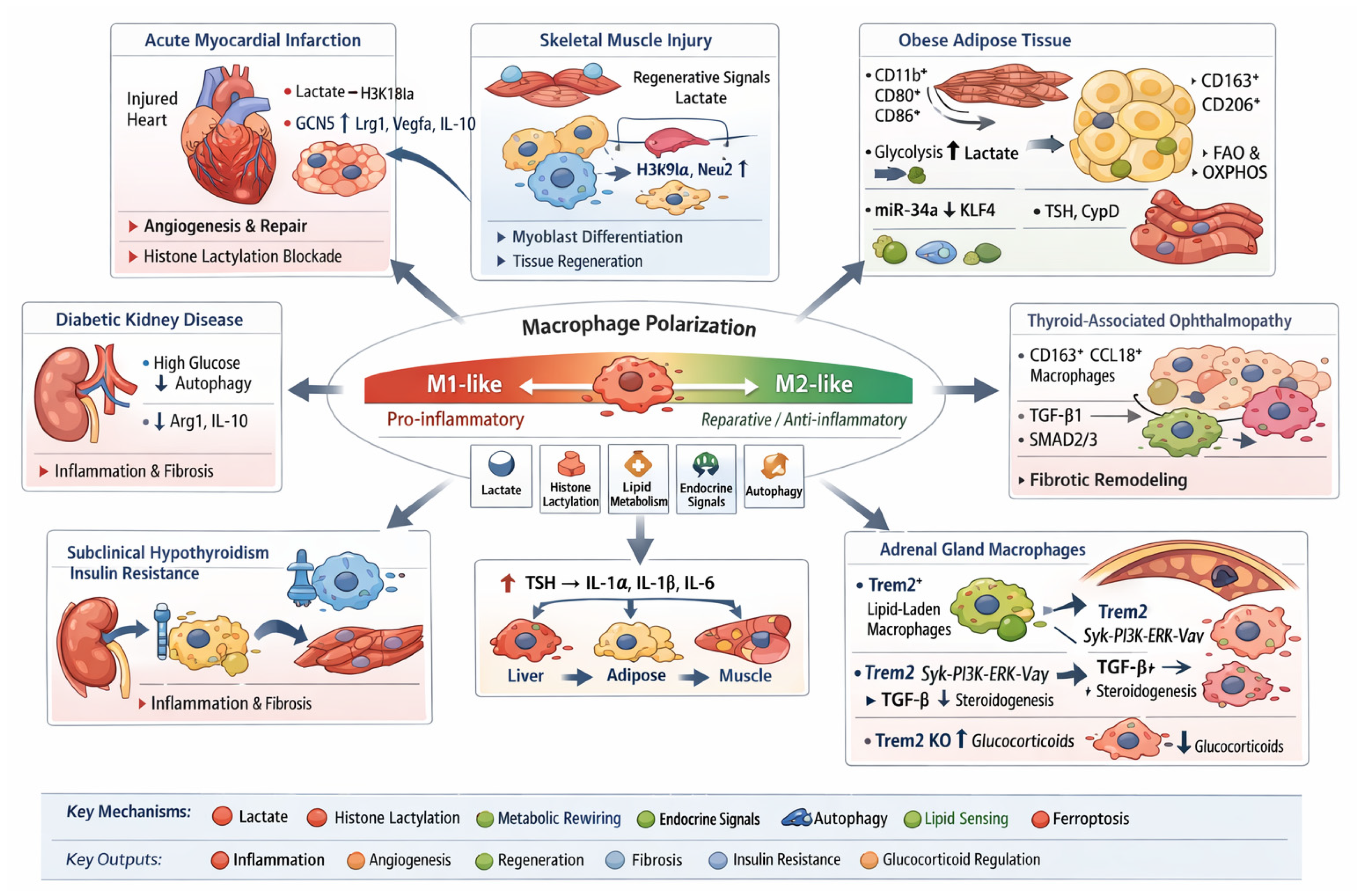
3.6. Macrophage Polarization in Metabolic, Endocrine, and Cardiovascular Diseases
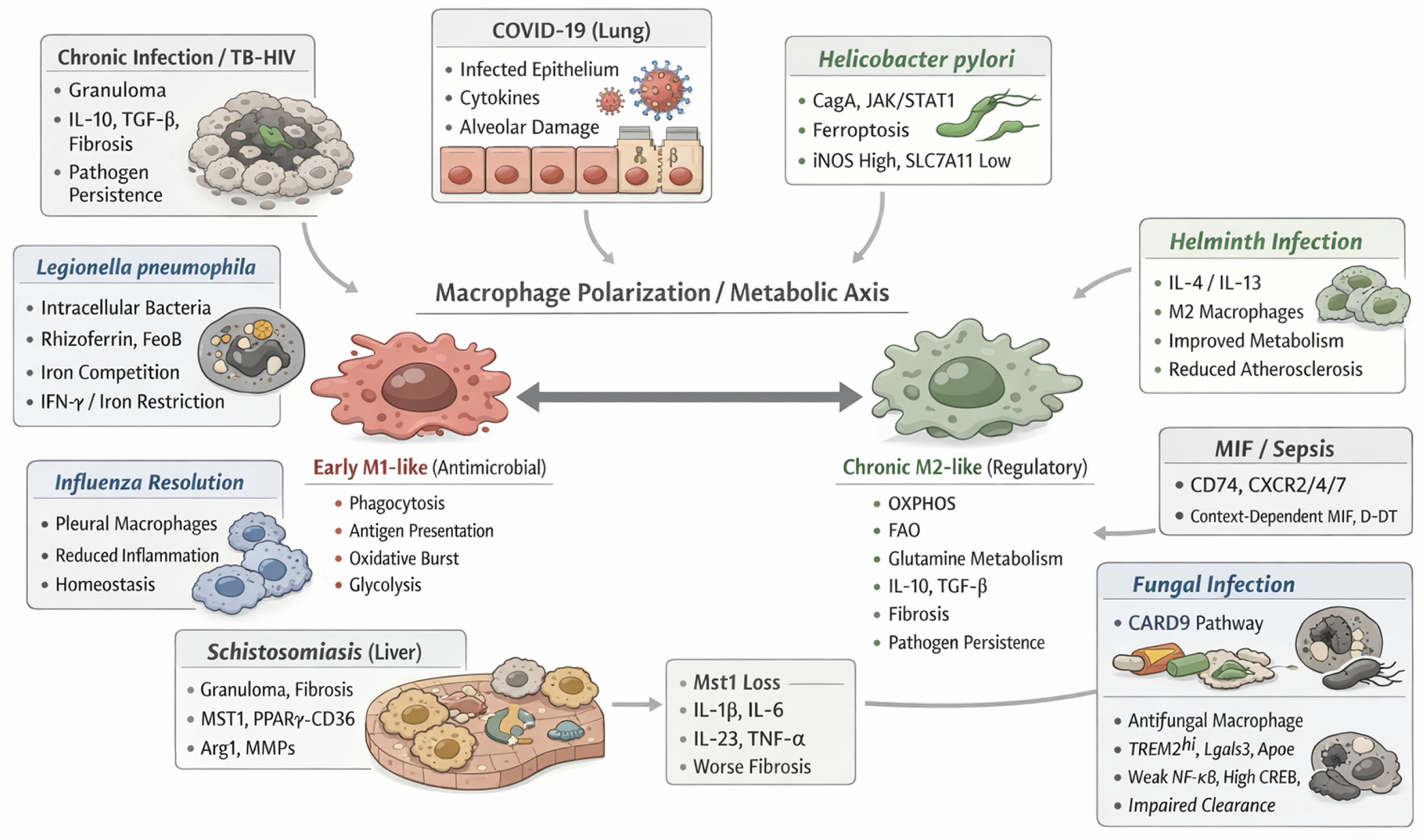
3.7. Macrophage Plasticity in Infectious Diseases
3.8. Macrophage Plasticity in Non-Neoplastic Neurological Diseases
4. Therapy-Driven Reprogramming of Macrophage Plasticity
4.1. Oncology
4.2. Autoimmune and Rheumatic Diseases
4.3. Inflammatory Bowel Disease and Skin Inflammation
4.4. Infectious Diseases
4.5. Neurological Diseases
5. Discussion
6. Future Directions
Funding
Institutional Review Board Statement
Informed Consent Statement
Data Availability Statement
Acknowledgments
Conflicts of Interest
References
- Mills, C.D. Anatomy of a discovery: M1 and M2 macrophages. Front. Immunol. 2015, 6, 212. [Google Scholar] [CrossRef]
- Yan, L.; Wang, J.; Cai, X.; Liou, Y.-C.; Shen, H.-M.; Hao, J.; Huang, C.; Luo, G.; He, W. Macrophage plasticity: Signaling pathways, tissue repair, and regeneration. MedComm 2024, 5, e658. [Google Scholar] [CrossRef]
- Ji, Y.; Li, X.; Yao, X.; Sun, J.; Yi, J.; Shen, Y.; Chen, B.; Sun, H. Macrophage polarization: Molecular mechanisms, disease implications, and targeted therapeutic strategies. Front. Immunol. 2025, 16, 1732718. [Google Scholar] [CrossRef] [PubMed]
- Lampiasi, N. Macrophage polarization: Learning to manage it 2.0. Int. J. Mol. Sci. 2023, 24, 17409. [Google Scholar] [CrossRef]
- Furgiuele, S.; Descamps, G.; Cascarano, L.; Boucq, A.; Dubois, C.; Journe, F.; Saussez, S. Dealing with macrophage plasticity to address therapeutic resistance. Int. J. Mol. Sci. 2022, 23, 6385. [Google Scholar] [CrossRef]
- Rath, M.; Müller, I.; Kropf, P.; Closs, E.I.; Munder, M. Metabolism via arginase or nitric oxide synthase: Two competing arginine pathways in macrophages. Front. Immunol. 2014, 5, 532. [Google Scholar] [CrossRef] [PubMed]
- Stayer, K.; Smith, A.; Johnson, R.; Patel, M.; Nguyen, T.; Lopez, D.; Chen, Y.; Roberts, L.; Williams, P.; Thompson, J.; et al. Exogenous arginine differentially regulates inflammatory macrophage responses beyond iNOS and ARG1. ImmunoHorizons 2025, 9, vlaf028. [Google Scholar] [CrossRef]
- Williams, H.; Mack, C.; Baraz, R.; Marimuthu, R.; Naralashetty, S.; Li, S.; Medbury, H. Monocyte differentiation and heterogeneity: Inter-subset and interindividual differences. Int. J. Mol. Sci. 2023, 24, 8757. [Google Scholar] [CrossRef] [PubMed]
- Gomez Perdiguero, E.; Klapproth, K.; Schulz, C.; Busch, K.; Azzoni, E.; Crozet, L.; Garner, H.; Trouillet, C.; de Bruijn, M.F.; Geissmann, F.; et al. Tissue-resident macrophages originate from yolk-sac-derived erythro-myeloid progenitors. Nature 2015, 518, 547–551. [Google Scholar] [CrossRef]
- Kapellos, T.S.; Bonaguro, L.; Gemünd, I.; Reusch, N.; Saglam, A.; Hinkley, E.R.; Schultze, J.L. Human monocyte subsets and phenotypes in major inflammatory diseases. Front. Immunol. 2019, 10, 2035. [Google Scholar] [CrossRef]
- Monaghan, K.L.; Zheng, W.; Hu, G.; Wan, E.C.K. Monocytes and monocyte-derived antigen-presenting cells have distinct gene signatures in an experimental model of multiple sclerosis. Front. Immunol. 2019, 10, 2779. [Google Scholar] [CrossRef]
- Thornton, S.; Tan, R.; Sproles, A.; Do, T.; Schick, J.; Grom, A.A.; DeLay, M.; Schulert, G.S. A multiparameter flow cytometry analysis panel to assess CD163 mRNA and protein in monocyte and macrophage populations in hyperinflammatory diseases. J. Immunol. 2019, 202, 240–248. [Google Scholar] [CrossRef] [PubMed]
- Liu, Z.; Li, Y.; Cao, J.; Qiu, Y.; Yu, K.; Deng, S. The role of macrophages in cancer: From basic research to clinical applications. MedComm 2025, 7, e70547. [Google Scholar] [CrossRef] [PubMed]
- Bao, C.; Ma, Q.; Ying, X.; Wang, F.; Hou, Y.; Wang, D.; Zhu, L.; Huang, J.; He, C. Histone lactylation in macrophage biology and disease: From plasticity regulation to therapeutic implications. eBioMedicine 2025, 111, 105502. [Google Scholar] [CrossRef]
- Locati, M.; Curtale, G.; Mantovani, A. Diversity, mechanisms and significance of macrophage plasticity. Annu. Rev. Pathol. 2020, 15, 123–147. [Google Scholar] [CrossRef] [PubMed]
- Spiller, K.L.; Anfang, R.R.; Spiller, K.J.; Ng, J.; Nakazawa, K.R.; Daulton, J.W.; Vunjak-Novakovic, G. The Role of Macrophage Phenotype in Vascularization of Tissue Engineering Scaffolds. Biomaterials 2014, 35, 4477–4488. [Google Scholar] [CrossRef]
- Strizova, Z.; Benesova, I.; Bartolini, R.; Novysedlak, R.; Cecrdlova, E.; Foley, L.K.; Striz, I. M1/M2 macrophages and their overlaps—Myth or reality? Clin. Sci. 2023, 137, 1067–1093. [Google Scholar] [CrossRef]
- Chen, J.; Wu, Q.; Berglund, A.E.; Macaulay, R.J.; Mulé, J.J.; Etame, A.B. Tumor-Associated Macrophages in Glioblastoma: Mechanisms of Tumor Progression and Therapeutic Strategies. Cells 2025, 14, 1458. [Google Scholar] [CrossRef]
- Mantovani, A.; Sica, A.; Sozzani, S.; Allavena, P.; Vecchi, A.; Locati, M. The Chemokine System in Diverse Forms of Macrophage Activation and Polarization. Trends Immunol. 2004, 25, 677–686. [Google Scholar] [CrossRef]
- Chen, R.; Zhang, H.; Tang, B.; Luo, Y.; Yang, Y.; Zhong, X.; Chen, S.; Xu, X.; Huang, S.; Liu, C. Macrophages in cardiovascular diseases: Molecular mechanisms and therapeutic targets. Signal Transduct. Target. Ther. 2024, 9, 130. [Google Scholar] [CrossRef]
- Xu, J.; Ding, L.; Mei, J.; Hu, Y.; Kong, X.; Dai, S.; Bu, T.; Xiao, Q.; Ding, K. Dual roles and therapeutic targeting of tumor-associated macrophages in tumor microenvironments. Signal Transduct. Target. Ther. 2025, 10, 268. [Google Scholar] [CrossRef]
- Ferrante, C.J.; Leibovich, S.J. Regulation of Macrophage Polarization and Wound Healing. Adv. Wound Care 2012, 1, 10–16. [Google Scholar] [CrossRef]
- Gleissner, C.A. Macrophage phenotype modulation by CXCL4 in atherosclerosis. Front. Physiol. 2012, 3, 1. [Google Scholar] [CrossRef] [PubMed]
- Lee-Rueckert, M.; Jauhiainen, M.; Kovanen, P.T.; Escolà-Gil, J.C. Lipids and lipoproteins in the interstitial tissue fluid regulate the formation of dysfunctional tissue-resident macrophages: Implications for atherogenic, tumorigenic, and obesogenic processes. Semin. Cancer Biol. 2025, 114, 104–127. [Google Scholar] [CrossRef]
- Møller, H.J.; Peterslund, N.A.; Graversen, J.H.; Moestrup, S.K. Hemoglobin scavenger receptor CD163 mediates interleukin-10 release and heme oxygenase-1 synthesis: Anti-inflammatory monocyte–macrophage responses. J. Exp. Med. 2004, 198, 117–127. [Google Scholar]
- Echols, J.B.; Meehan, A.W.; Marotto, K.A.; Ordonez, V.; Hildreth, B.E., III. Tumor-Associated Macrophages: Orchestrators of the Tumor Microenvironment. Am. J. Physiol. Cell Physiol. 2026, 330, C752–C773. [Google Scholar] [CrossRef]
- Morrell, E.D.; Holton, S.E.; Lawrance, M.; Orlov, M.; Franklin, Z.; Mitchem, M.A.; DeBerg, H.; Gersuk, V.H.; Garay, A.; Barnes, E.; et al. The transcriptional and phenotypic characteristics that define alveolar macrophage subsets in acute hypoxemic respiratory failure. Nat. Commun. 2023, 14, 7443. [Google Scholar] [CrossRef]
- Roussel, M.; Ferrell, P.B., Jr.; Greenplate, A.R.; Lhomme, F.; Le Gallou, S.; Diggins, K.E.; Johnson, D.B.; Irish, J.M. Mass Cytometry Deep Phenotyping of Human Mononuclear Phagocytes and Myeloid-Derived Suppressor Cells from Human Blood and Bone Marrow. J. Leukoc. Biol. 2017, 102, 437–447. [Google Scholar] [CrossRef]
- Wang, Y.; Song, Y.; Zhang, L.; Huang, X. The paradoxical role of zinc on microglia. J. Trace Elem. Med. Biol. 2024, 83, 127380. [Google Scholar] [CrossRef] [PubMed]
- Tao, X.; Wang, J.; Liu, B.; Cheng, P.; Mu, D.; Du, H.; Niu, B. Plasticity and crosstalk of mesenchymal stem cells and macrophages in immunomodulation in sepsis. Front. Immunol. 2024, 15, 1338744. [Google Scholar] [CrossRef]
- Yao, M.; Cui, B.; Zhang, W.; Ma, W.; Zhao, G.; Xing, L. Exosomal miR-21 Secreted by IL-1β-Primed Mesenchymal Stem Cells Induces Macrophage M2 Polarization and Ameliorates Sepsis. Life Sci. 2021, 264, 118658. [Google Scholar] [CrossRef]
- Li, R.; Zhao, K.; Ruan, Q.; Meng, C.; Yin, F. Bone Marrow Mesenchymal Stem Cell-Derived Exosomal microRNA-124-3p Attenuates Neurological Damage in Spinal Cord Ischemia-Reperfusion Injury by Downregulating Ern1 and Promoting M2 Macrophage Polarization. Arthritis Res. Ther. 2020, 22, 75. [Google Scholar] [CrossRef] [PubMed] [PubMed Central]
- Wang, Y.; Jiang, H.; Yan, J.; Li, S.; Xin, Z.; He, J.; Wang, S.; Fan, C.; Zhang, L. Human spinal cord microglia/macrophages culture: Accutase digestion and non-enzymatic purification. J. Neurosci. Methods 2025, 423, 110558. [Google Scholar] [CrossRef]
- Huang, Z.; Liu, S.; Zhuang, J.; Li, L.; Li, M.; Huang, Y.; Chen, Y.; Chen, X.; Lin, S.; Ye, L.; et al. Role of microglial metabolic reprogramming in Parkinson’s disease. Biochem. Pharmacol. 2023, 213, 115619. [Google Scholar] [CrossRef] [PubMed]
- Nusraty, S.; Boddeti, U.; Zaghloul, K.A.; Brown, D.A. Microglia in glioblastomas: Molecular insight and immunotherapeutic potential. Cancers 2024, 16, 1972. [Google Scholar] [CrossRef] [PubMed]
- Liu, C.; Guo, Y.; Deng, S.; Zhou, S.; Wu, S.; Chen, T.; Shi, X.; Mamtilahun, M.; Xu, T.; Liu, Z.; et al. Hemorrhagic Stroke-Induced Subtype of Inflammatory Reactive Astrocytes Disrupts the Blood–Brain Barrier. J. Cereb. Blood Flow Metab. 2024, 44, 1102–1116. [Google Scholar] [CrossRef]
- Xue, J.; Schmidt, S.V.; Sander, J.; Draffehn, A.; Krebs, W.; Quester, I.; De Nardo, D.; Gohel, T.D.; Emde, M.; Schmidleithner, L.; et al. Transcriptome-Based Network Analysis Reveals a Spectrum Model of Human Macrophage Activation. Immunity 2014, 40, 274–288. [Google Scholar] [CrossRef]
- Mercanti, L.; Sindaco, M.; Mazzone, M.; Di Marcantonio, M.C.; D’Angelo, G.; Di Giacomo, F.; Di Tommaso, G.; Di Carlo, F.; Di Giacomo, G.; Di Giacomo, A.; et al. PDAC, the influencer cancer: Crosstalk with tumor microenvironment and connected potential therapy strategies. Cancers 2024, 16, 2923. [Google Scholar] [CrossRef]
- Weinhäuser, I.; Pereira-Martins, D.A.; Almeida, L.Y.; Hilberink, J.R.; Silveira, D.R.A.; Quek, L.; Ortiz, C.; Araujo, C.L.; Bianco, T.M.; Lucena-Araujo, A.; et al. M2 macrophages drive leukemic transformation by imposing resistance to phagocytosis and improving mitochondrial metabolism. Sci. Adv. 2023, 9, eadf8522. [Google Scholar] [CrossRef]
- Zhao, J.; Tian, H.; Zhao, X.; Lan, L.; Liu, H.; Sun, Y.; Yu, F. PKCα induced the generation of extracellular vesicles in activated platelets to promote breast cancer metastasis. Int. J. Biol. Sci. 2024, 20, 3956–3971. [Google Scholar] [CrossRef]
- Lu, C.; Liu, Y.; Miao, L.; Kong, X.; Li, H.; Chen, H.; Zhao, X.; Zhang, B.; Cui, X. Research progress on the role of tumor-associated macrophages in tumor development and their use as molecular targets. Int. J. Oncol. 2024, 64, 11. [Google Scholar] [CrossRef] [PubMed]
- Niture, S.; Ghosh, S.; Jaboin, J.; Seneviratne, D. Tumor microenvironment dynamics of triple-negative breast cancer under radiation therapy. Int. J. Mol. Sci. 2025, 26, 2795. [Google Scholar] [CrossRef] [PubMed]
- Moura, T.; Laranjeira, P.; Caramelo, O.; Gil, A.M.; Paiva, A. Breast cancer and tumor microenvironment: The crucial role of immune cells. Curr. Oncol. 2025, 32, 143. [Google Scholar] [CrossRef] [PubMed]
- Sun, R.; Han, R.; McCornack, C.; Khan, S.; Tabor, G.T.; Chen, Y.; Hou, J.; Jiang, H.; Schoch, K.M.; Mao, D.D.; et al. TREM2 inhibition triggers antitumor cell activity of myeloid cells in glioblastoma. Sci. Adv. 2023, 9, eade3559, Erratum in Sci. Adv. 2024, 10, eadq2160. https://doi.org/10.1126/sciadv.adq2160. [Google Scholar] [CrossRef]
- Brancewicz, J.; Kucharzewska, P. Emerging Macrophage-Based Therapies for Cancer: A Review of Preclinical and Clinical Advances. Front. Immunol. 2025, 16, 1679271. [Google Scholar] [CrossRef]
- Mantovani, A.; Marchesi, F.; Di Mitri, D.; Garlanda, C. Macrophage diversity in cancer dissemination and metastasis. Cell. Mol. Immunol. 2024, 21, 1201–1214. [Google Scholar] [CrossRef]
- Wang, H.; Wang, X.; Zhang, X.; Xu, W. The promising role of tumor-associated macrophages in the treatment of cancer. Drug Resist. Updates 2024, 73, 101041. [Google Scholar] [CrossRef]
- McKiver, B.D.; Herz, S.M.; Patel, S.; Bryan, T.; Mann, J.; Poklis, J.L.; Bigbee, J.W.; Windle, J.J.; Salem, A.K.; Sarkar, D.; et al. Astrocyte elevated gene-1 (AEG-1) in myeloid cells is a key driver for the development of chemotherapy-induced peripheral neuropathy. Brain Behav. Immun. 2025, 127, 329–340. [Google Scholar] [CrossRef]
- Wang, S.; Liang, K.; Hu, Q.; Li, P.; Song, J.; Yang, Y.; Yao, J.; Mangala, L.S.; Li, C.; Yang, W.; et al. JAK2-Binding Long Noncoding RNA Promotes Breast Cancer Brain Metastasis. J. Clin. Investig. 2017, 127, 4498–4515. [Google Scholar] [CrossRef]
- Kitamura, T.; Qian, B.Z.; Soong, D.; Cassetta, L.; Noy, R.; Sugano, G.; Kato, Y.; Li, J.; Pollard, J.W. CCL2-Induced Chemokine Cascade Promotes Breast Cancer Metastasis by Enhancing Retention of Metastasis-Associated Macrophages. J. Exp. Med. 2015, 212, 1043–1059. [Google Scholar] [CrossRef]
- Jiang, P.; Gao, W.; Ma, T.; Wang, R.; Piao, Y.; Dong, X.; Wang, P.; Zhang, X.; Liu, Y.; Su, W.; et al. CD137 promotes bone metastasis of breast cancer by enhancing the migration and osteoclast differentiation of monocytes/macrophages. Theranostics 2019, 9, 2950–2966. [Google Scholar] [CrossRef] [PubMed] [PubMed Central]
- Xun, J.; Du, L.; Gao, R.; Shen, L.; Wang, D.; Kang, L.; Chen, C.; Zhang, Z.; Zhang, Y.; Yue, S.; et al. Cancer-derived exosomal miR-138-5p modulates polarization of tumor-associated macrophages through inhibition of KDM6B. Theranostics 2021, 11, 6847–6859. [Google Scholar] [CrossRef] [PubMed] [PubMed Central]
- Ni, J.; Xi, X.; Xiao, S.; Xiao, X. Tumor cell-derived exosomal miR-191-5p activates M2-subtype macrophages through SOCS3 to facilitate breast cancer. Mol. Biotechnol. 2024, 66, 1314–1325. [Google Scholar] [CrossRef]
- He, Z.N.; Zhang, C.Y.; Zhao, Y.W.; He, S.L.; Li, Y.; Shi, B.L.; Hu, J.Q.; Qi, R.Z.; Hua, B.J. Regulation of T Cells by Myeloid-Derived Suppressor Cells: Emerging Immunosuppressor in Lung Cancer. Discov. Oncol. 2023, 14, 185. [Google Scholar] [CrossRef]
- Li, J.; Li, J.; Wang, L.; Hao, J.; Wu, L.; Tao, H.; Zhang, S.; Cui, P.; Li, X.; Zhang, X.; et al. Alveolar macrophages in patients with non-small cell lung cancer. Int. J. Clin. Exp. Pathol. 2020, 13, 1867–1872. [Google Scholar]
- Kwiecień, I.; Rutkowska, E.; Raniszewska, A.; Rzeszotarska, A.; Polubiec-Kownacka, M.; Domagała-Kulawik, J.; Korsak, J.; Rzepecki, P. Flow cytometric analysis of macrophages and cytokine profile in bronchoalveolar lavage fluid in patients with lung cancer. Cancers 2023, 15, 5175. [Google Scholar] [CrossRef]
- Lorestani, P.; Dashti, M.; Nejati, N.; Habibi, M.A.; Askari, M.; RobatJazi, B.; Ahmadpour, S.; Tavakolpour, S. The complex role of macrophages in pancreatic cancer tumor microenvironment: A review on cancer progression and potential therapeutic targets. Discov. Oncol. 2024, 15, 369. [Google Scholar] [CrossRef]
- McCarty, E.; Yu, J.; Ninh, V.K.; Calcagno, D.M.; Lee, J.; King, K.R. Single-cell transcriptomics of bone marrow-derived macrophages reveals Ccl5 as a biomarker of direct IFNAR-independent responses to DNA sensing. Front. Immunol. 2023, 14, 1199730. [Google Scholar] [CrossRef]
- Huang, J.; Xiao, R.; Shi, S.; Li, Q.; Li, M.; Xiao, M.; Wang, Y.; Yang, Y.; Li, W.; Tang, Y. Circulating IL-6 is involved in the infiltration of M2 macrophages and CD8+ T cells. Sci. Rep. 2025, 15, 8681. [Google Scholar] [CrossRef]
- Pandey, V.; Fleming-Martinez, A.; Bastea, L.; Doeppler, H.R.; Eisenhauer, J.; Le, T.; Edenfield, B.; Storz, P. CXCL10/CXCR3 Signaling Contributes to an Inflammatory Microenvironment and Its Blockade Enhances Progression of Murine Pancreatic Precancerous Lesions. eLife 2021, 10, e60646. [Google Scholar] [CrossRef]
- Wang, X.; Luo, G.; Zhang, K.; Cao, J.; Huang, C.; Jiang, T.; Liu, B.; Su, L.; Qiu, Z. Hypoxic Tumor-Derived Exosomal miR-301a Mediates M2 Macrophage Polarization via PTEN/PI3Kγ to Promote Pancreatic Cancer Metastasis. Cancer Res. 2018, 78, 4586–4598, Erratum in Cancer Res. 2018, 80, 922. https://doi.org/10.1158/0008-5472.CAN-19-3872. [Google Scholar] [CrossRef] [PubMed]
- Chang, C.H.; Pauklin, S. Extracellular Vesicles in Pancreatic Cancer Progression and Therapies. Cell Death Dis. 2021, 12, 973. [Google Scholar] [CrossRef]
- Xiao, M.; Li, X. The impact of the tumor microenvironment on macrophages. Front. Immunol. 2025, 16, 1572764. [Google Scholar] [CrossRef] [PubMed]
- Kłodnicka, K.; Januszewski, J.; Forma, A.; Pająk, W.; Teresińska, B.; Baj, J. Iron in multiple sclerosis—From pathophysiology to disease progression: A narrative literature review. Acta Neurobiol. Exp. 2025, 85, 75–93. [Google Scholar] [CrossRef]
- Mao, X.; Xu, J.; Wang, W.; Liang, C.; Hua, J.; Liu, J.; Zhang, B.; Meng, Q.; Yu, X.; Shi, S. Crosstalk between cancer-associated fibroblasts and immune cells in the tumor microenvironment: New findings and future perspectives. Mol. Cancer 2021, 20, 131. [Google Scholar] [CrossRef] [PubMed]
- Khan, F.; Pang, L.; Dunterman, M.; Lesniak, M.S.; Heimberger, A.B.; Chen, P. Macrophages and microglia in glioblastoma: Heterogeneity, plasticity, and therapy. J. Clin. Investig. 2023, 133, e163446. [Google Scholar] [CrossRef] [PubMed] [PubMed Central]
- Klemm, F.; Maas, R.R.; Bowman, R.L.; Kornete, M.; Soukup, K.; Nassiri, S.; Brouland, J.P.; Iacobuzio-Donahue, C.A.; Brennan, C.; Tabar, V.; et al. Interrogation of the Microenvironmental Landscape in Brain Tumors Reveals Disease-Specific Alterations of Immune Cells. Cell 2020, 181, 1643–1660.e17. [Google Scholar] [CrossRef]
- Friebel, E.; Kapolou, K.; Unger, S.; Núñez, N.G.; Utz, S.; Rushing, E.J.; Regli, L.; Weller, M.; Greter, M.; Tugues, S.; et al. Single-Cell Mapping of Human Brain Cancer Reveals Tumor-Specific Instruction of Tissue-Invading Leukocytes. Cell 2020, 181, 1626–1642.e20. [Google Scholar] [CrossRef]
- Yuan, W.; Zhang, Q.; Gu, D.; Lu, C.; Dixit, D.; Gimple, R.C.; Gao, Y.; Gao, J.; Li, D.; Shan, D.; et al. Dual role of CXCL8 in maintaining the mesenchymal state of glioblastoma stem cells and M2-like tumor-associated macrophages. Clin. Cancer Res. 2023, 29, 3779–3792. [Google Scholar] [CrossRef]
- Wang, W.; Li, J.; He, Q.; Liu, C.; Zheng, Z.; Zhang, B.; Mou, S.; Sun, W.; Zhao, J. Crosstalk between CD180-overexpression macrophages and glioma cells worsens patient survival through malignant phenotype promotion and immunosuppressive regulation. Mol. Med. 2024, 30, 264. [Google Scholar] [CrossRef]
- Yu, W.; Gui, S.; Peng, L.; Luo, H.; Xie, J.; Xiao, J.; Yilamu, Y.; Sun, Y.; Cai, S.; Cheng, Z.; et al. STAT3-controlled CHI3L1/SPP1 positive feedback loop demonstrates the spatial heterogeneity and immune characteristics of glioblastoma. Dev. Cell 2025, 60, 1751–1767. [Google Scholar] [CrossRef]
- Guetta-Terrier, C.; Karambizi, D.; Akosman, B.; Zepecki, J.P.; Chen, J.S.; Kamle, S.; Fajardo, J.E.; Fiser, A.; Singh, R.; Toms, S.A.; et al. Chi3l1 Is a Modulator of Glioma Stem Cell States and a Therapeutic Target in Glioblastoma. Cancer Res. 2023, 83, 1984–1999. [Google Scholar] [CrossRef]
- Mesaros, O.; Onciul, M.; Matei, E.; Joldes, C.; Jimbu, L.; Neaga, A.; Serban, O.; Zdrenghea, M.; Nanut, A.M. Macrophages as potential therapeutic targets in acute myeloid leukemia. Biomedicines 2024, 12, 2306. [Google Scholar] [CrossRef]
- Hassan, E.M.; Walker, G.C.; Wang, C.; Zou, S. Anti-leukemia effect associated with down-regulated CD47 and up-regulated calreticulin by stimulated macrophages in co-culture. Cancer Immunol. Immunother. 2021, 70, 787–801. [Google Scholar] [CrossRef] [PubMed] [PubMed Central]
- Petty, A.J.; Yang, Y. Tumor-associated macrophages in hematologic malignancies: New insights and targeted therapies. Cells 2019, 8, 1526. [Google Scholar] [CrossRef]
- Wang, M.; Zhao, J.-H.; Tang, M.-X.; Li, M.; Zhao, H.; Li, Z.-Y.; Liu, A.-D. Cell death modalities in therapy of melanoma. Int. J. Mol. Sci. 2025, 26, 3475. [Google Scholar] [CrossRef] [PubMed]
- Li, P.; Yuan, J.; Ahmed, F.S.; McHenry, A.; Fu, K.; Yu, G.; Cheng, H.; Xu, M.L.; Rimm, D.L.; Pan, Z. High counts of CD68+ and CD163+ macrophages in mantle cell lymphoma are associated with inferior prognosis. Front. Oncol. 2021, 11, 701492. [Google Scholar] [CrossRef] [PubMed]
- Pillinger, G.; Loughran, N.V.; Piddock, R.E.; Shafat, M.S.; Zaitseva, L.; Abdul-Aziz, A.; Lawes, M.J.; Bowles, K.M.; Rushworth, S.A. Targeting PI3Kδ and PI3Kγ Signalling Disrupts Human AML Survival and Bone Marrow Stromal Cell Mediated Protection. Oncotarget 2016, 7, 39784–39795. [Google Scholar] [CrossRef]
- Collins, S.L.; Oh, M.H.; Sun, I.H.; Chan-Li, Y.; Zhao, L.; Powell, J.D.; Horton, M.R. Mtorc1 Signaling Regulates Proinflammatory Macrophage Function and Metabolism. J. Immunol. 2021, 207, 913–922. [Google Scholar] [CrossRef]
- Jiang, M.; Zhang, J.; Qian, L.; Miao, Y.; Song, W.; Liu, H.; Li, R. MOZ Forms an Autoregulatory Feedback Loop with miR-223 in AML and Monocyte/Macrophage Development. iScience 2019, 11, 189–204. [Google Scholar] [CrossRef]
- Poles, W.A.; Nishi, E.E.; de Oliveira, M.B.; Eugênio, A.I.P.; de Andrade, T.A.; Campos, A.H.F.M.; de Campos, R.R., Jr.; Vassallo, J.; Alves, A.C.; Scapulatempo Neto, C.; et al. Targeting the Polarization of Tumor-Associated Macrophages and Modulating miR-155 Expression Might Be a New Approach to Treat Diffuse Large B-Cell Lymphoma of the Elderly. Cancer Immunol. Immunother. 2019, 68, 269–282. [Google Scholar] [CrossRef]
- Komohara, Y.; Niino, D.; Saito, Y.; Ohnishi, K.; Horlad, H.; Ohshima, K.; Takeya, M. Clinical Significance of CD163+ Tumor-Associated Macrophages in Patients with Adult T-Cell Leukemia/Lymphoma. Cancer Sci. 2013, 104, 945–951. [Google Scholar] [CrossRef]
- Al-Matary, Y.S.; Botezatu, L.; Opalka, B.; Hönes, J.M.; Lams, R.F.; Thivakaran, A.; Schütte, J.; Köster, R.; Lennartz, K.; Schroeder, T.; et al. Acute myeloid leukemia cells polarize macrophages towards a leukemia supporting state in a Growth factor independence 1 dependent manner. Haematologica 2016, 101, 1216–1227. [Google Scholar] [CrossRef] [PubMed] [PubMed Central]
- Yang, X.; Feng, W.; Wang, R.; Yang, F.; Wang, L.; Chen, S.; Ru, Y.; Cheng, T.; Zheng, G. Repolarizing Heterogeneous Leukemia-Associated Macrophages with More M1 Characteristics Eliminates Their Pro-Leukemic Effects. Oncoimmunology 2017, 7, e1412910. [Google Scholar] [CrossRef]
- Vari, F.; Arpon, D.; Keane, C.; Hertzberg, M.S.; Talaulikar, D.; Jain, S.; Cui, Q.; Han, E.; Tobin, J.; Bird, R.; et al. Immune Evasion via PD-1/PD-L1 on NK Cells and Monocyte/Macrophages Is More Prominent in Hodgkin Lymphoma than DLBCL. Blood 2018, 131, 1809–1819. [Google Scholar] [CrossRef]
- Shen, L.; Li, H.; Shi, Y.; Wang, D.; Gong, J.; Xun, J.; Zhou, S.; Xiang, R.; Tan, X. M2 Tumour-Associated Macrophages Contribute to Tumour Progression via Legumain Remodelling the Extracellular Matrix in Diffuse Large B Cell Lymphoma. Sci. Rep. 2016, 6, 30347. [Google Scholar] [CrossRef] [PubMed]
- Zheng, Y.; Cai, Z.; Wang, S.; Zhang, X.; Qian, J.; Hong, S.; Li, H.; Wang, M.; Yang, J.; Yi, Q. Macrophages Are an Abundant Component of the Myeloma Microenvironment and Protect Myeloma Cells from Chemotherapy Drug-Induced Apoptosis. Blood 2009, 114, 3625–3628. [Google Scholar] [CrossRef] [PubMed]
- Serna, L.; Azcoaga, P.; Brahmachary, M.; Caffarel, M.M.; Braza, M.S. Diffuse large B-cell lymphoma microenvironment displays a predominant macrophage infiltrate marked by a strong inflammatory signature. Front. Immunol. 2023, 14, 1048567. [Google Scholar] [CrossRef]
- Andreuzzi, E.; Fejza, A.; Polano, M.; Poletto, E.; Camicia, L.; Carobolante, G.; Tarticchio, G.; Todaro, F.; Di Carlo, E.; Scarpa, M.; et al. Colorectal Cancer Development Is Affected by the ECM Molecule EMILIN-2 Hinged on Macrophage Polarization via the TLR-4/MyD88 Pathway. J. Exp. Clin. Cancer Res. 2022, 41, 60. [Google Scholar] [CrossRef]
- Murdoch, C.; Muthana, M.; Coffelt, S.B.; Lewis, C.E. The Role of Myeloid Cells in the Promotion of Tumour Angiogenesis. Nat. Rev. Cancer 2008, 8, 618–631. [Google Scholar] [CrossRef]
- Cortese, N.; Carriero, R.; Barbagallo, M.; Putignano, A.R.; Costa, G.; Giavazzi, F.; Grizzi, F.; Pasqualini, F.; Peano, C.; Basso, G.; et al. High-Resolution Analysis of Mononuclear Phagocytes Reveals GPNMB as a Prognostic Marker in Human Colorectal Liver Metastasis. Cancer Immunol. Res. 2023, 11, 405–420. [Google Scholar] [CrossRef]
- Sokolove, J.; Zhao, X.; Chandra, P.E.; Robinson, W.H. Immune Complexes Containing Citrullinated Fibrinogen Costimulate Macrophages via Toll-Like Receptor 4 and Fcγ Receptor. Arthritis Rheum. 2011, 63, 53–62. [Google Scholar] [CrossRef]
- Mierke, C.T. Phenotypic heterogeneity, bidirectionality, universal cues, plasticity, mechanics, and the tumor microenvironment drive cancer metastasis. Biomolecules 2024, 14, 184. [Google Scholar] [CrossRef]
- Wu, M.; Wu, L.; Wu, W.; Zhu, M.; Li, J.; Wang, Z.; Li, J.; Ding, R.; Liang, Y.; Li, L.; et al. Phagocytosis of glioma cells enhances the immunosuppressive phenotype of bone marrow–derived macrophages. Cancer Res. 2023, 83, 771–785. [Google Scholar] [CrossRef] [PubMed]
- Menjivar, R.E.; Nwosu, Z.C.; Du, W.; Donahue, K.L.; Hong, H.S.; Espinoza, C.; Brown, K.; Velez-Delgado, A.; Yan, W.; Lima, F.; et al. Arginase 1 Is a Key Driver of Immune Suppression in Pancreatic Cancer. eLife 2023, 12, e80721. [Google Scholar] [CrossRef] [PubMed]
- Giorgino, R.; Albano, D.; Fusco, S.; Peretti, G.M.; Mangiavini, L.; Messina, C. Knee osteoarthritis: Epidemiology, pathogenesis, and mesenchymal stem cells—What else is new? An update. Int. J. Mol. Sci. 2023, 24, 6405. [Google Scholar] [CrossRef]
- Pemmari, A.; Moilanen, E. Macrophage and chondrocyte phenotypes in inflammation. Basic Clin. Pharmacol. Toxicol. 2024, 135, 537–549. [Google Scholar] [CrossRef]
- Wei, Z.; Chen, X.; Sun, Y.; Zhang, Y.; Dong, R.; Wang, X.; Chen, S. Exploring the molecular mechanisms and shared potential drugs between rheumatoid arthritis and arthrofibrosis based on large language model and synovial microenvironment analysis. Sci. Rep. 2024, 14, 18939. [Google Scholar] [CrossRef] [PubMed]
- Takeuchi, Y.; Hirota, K.; Sakaguchi, S. Synovial tissue inflammation mediated by autoimmune T cells. Front. Immunol. 2019, 10, 1989. [Google Scholar] [CrossRef]
- Cutolo, M.; Campitiello, R.; Gotelli, E.; Soldano, S. The role of M1/M2 macrophage polarization in rheumatoid arthritis synovitis. Front. Immunol. 2022, 13, 867260. [Google Scholar] [CrossRef]
- Chang, J.-W.; Tang, C.-H. The role of macrophage polarization in rheumatoid arthritis and osteoarthritis: Pathogenesis and therapeutic strategies. Int. Immunopharmacol. 2024, 142, 113056. [Google Scholar] [CrossRef]
- Stober, C.B.; Ellis, L.; Goodall, J.C.; Veldhoen, M.; Gaston, J.S.H. Metabolic stress expands polyfunctional, proinflammatory Th17 cells in patients with psoriatic arthritis for whom there is interleukin-23–independent interleukin-17 production. Arthritis Rheumatol. 2025, 77, 842–853. [Google Scholar] [CrossRef]
- Elliott, S.E.; Kongpachith, S.; Lingampalli, N.; Adamska, J.Z.; Cannon, B.J.; Blum, L.K.; Bloom, M.S.; Henkel, M.; McGeachy, M.J.; Moreland, L.W.; et al. B Cells in Rheumatoid Arthritis Synovial Tissues Encode Focused Antibody Repertoires That Include Antibodies That Stimulate Macrophage TNF-α Production. Clin. Immunol. 2020, 212, 108360. [Google Scholar] [CrossRef]
- Smolen, J.S.; Aletaha, D.; Barton, A.; Burmester, G.R.; Emery, P.; Firestein, G.S.; Kavanaugh, A.; McInnes, I.B.; Solomon, D.H.; Strand, V.; et al. Rheumatoid arthritis. Nat. Rev. Dis. Primers 2018, 4, 18001. [Google Scholar] [CrossRef] [PubMed]
- Hasegawa, T.; Kikuta, J.; Sudo, T.; Matsuura, Y.; Matsui, T.; Simmons, S.; Ebina, K.; Hirao, M.; Okuzaki, D.; Yoshida, Y.; et al. Identification of a Novel Arthritis-Associated Osteoclast Precursor Macrophage Regulated by FoxM1. Nat. Immunol. 2019, 20, 1631–1643. [Google Scholar] [CrossRef]
- Campitiello, R.; Soldano, S.; Gotelli, E.; Hysa, E.; Montagna, P.; Casabella, A.; Paolino, S.; Pizzorni, C.; Sulli, A.; Smith, V.; et al. The Intervention of Macrophages in Progressive Fibrosis Characterizing Systemic Sclerosis: A Systematic Review. Autoimmun. Rev. 2024, 23, 103637. [Google Scholar] [CrossRef]
- Skaug, B.; Khanna, D.; Swindell, W.R.; Hinchcliff, M.E.; Frech, T.M.; Steen, V.D.; Hant, F.N.; Gordon, J.K.; Shah, A.A.; Zhu, L.; et al. Global Skin Gene Expression Analysis of Early Diffuse Cutaneous Systemic Sclerosis Shows a Prominent Innate and Adaptive Inflammatory Profile. Ann. Rheum. Dis. 2020, 79, 379–386. [Google Scholar] [CrossRef] [PubMed]
- Papazoglou, A.; Huang, M.; Bulik, M.; Lafyatis, A.; Tabib, T.; Morse, C.; Sembrat, J.; Rojas, M.; Valenzi, E.; Lafyatis, R. Epigenetic Regulation of Profibrotic Macrophages in Systemic Sclerosis-Associated Interstitial Lung Disease. Arthritis Rheumatol. 2022, 74, 2003–2014. [Google Scholar] [CrossRef] [PubMed]
- Gotelli, E.; Soldano, S.; Feghali-Bostwick, C.; Montagna, P.; Campitiello, R.; Contini, P.; Mora, M.; Benelli, R.; Hysa, E.; Paolino, S.; et al. Prevalence of Hybrid TLR4+M2 Monocytes/Macrophages in Peripheral Blood and Lung of Systemic Sclerosis Patients with Interstitial Lung Disease. Front. Immunol. 2024, 15, 1488867. [Google Scholar] [CrossRef]
- Cutolo, M.; Soldano, S.; Smith, V.; Gotelli, E.; Hysa, E. Dynamic macrophage phenotypes in autoimmune and inflammatory rheumatic diseases. Nat. Rev. Rheumatol. 2025, 21, 546–565. [Google Scholar] [CrossRef] [PubMed]
- Christmann, R.B.; Lafyatis, R. The Cytokine Language of Monocytes and Macrophages in Systemic Sclerosis. Arthritis Res. Ther. 2010, 12, 146. [Google Scholar] [CrossRef]
- Ferreté-Bonastre, A.G.; Martínez-Gallo, M.; Morante-Palacios, O.; Calvillo, C.L.; Calafell-Segura, J.; Rodríguez-Ubreva, J.; Esteller, M.; Cortés-Hernández, J.; Ballestar, E. Disease Activity Drives Divergent Epigenetic and Transcriptomic Reprogramming of Monocyte Subpopulations in Systemic Lupus Erythematosus. Ann. Rheum. Dis. 2024, 83, 865–878. [Google Scholar] [CrossRef]
- Tian, J.; Chang, S.; Wang, J.; Chen, J.; Xu, H.; Huang, T.; Wang, J.; Kang, J.; Fan, W.; Wang, Y. S1P/S1PR1 Axis Promotes Macrophage M1 Polarization through NLRP3 Inflammasome Activation in Lupus Nephritis. Mol. Immunol. 2023, 160, 55–66. [Google Scholar] [CrossRef]
- Niu, D.; Yang, J.J.; He, D.F. The Role of Macrophages in Renal Fibrosis and Therapeutic Prospects. PeerJ 2025, 13, e19769. [Google Scholar] [CrossRef]
- Jiemy, W.F.; Zhang, A.; Abdulahad, W.H.; Reitsema, R.D.; van Sleen, Y.; Sandovici, M.; Alegria, G.C.; Cornec, D.; Devauchelle-Pensec, V.; Hemon, P.; et al. GM-CSF Drives IL-6 Production by Macrophages in Polymyalgia Rheumatica. Ann. Rheum. Dis. 2025, 84, 833–843. [Google Scholar] [CrossRef]
- Jiemy, W.F.; van Sleen, Y.; van der Geest, K.S.; Ten Berge, H.A.; Abdulahad, W.H.; Sandovici, M.; Boots, A.M.; Heeringa, P.; Brouwer, E. Distinct Macrophage Phenotypes Skewed by Local Granulocyte Macrophage Colony-Stimulating Factor (GM-CSF) and Macrophage Colony-Stimulating Factor (M-CSF) Are Associated with Tissue Destruction and Intimal Hyperplasia in Giant Cell Arteritis. Clin. Transl. Immunol. 2020, 9, e1164. [Google Scholar] [CrossRef]
- Hutton, J.; Sun, W.; Hasegawa, T. The ontogeny of synovial tissue macrophages. Front. Immunol. 2025, 16, 1603473. [Google Scholar] [CrossRef]
- Watanabe, N.; Hara, Y.; Nishito, Y.; Kounoe, M.; Sekiyama, K.; Takamasu, E.; Kise, T.; Chinen, N.; Shimada, K.; Sugihara, M.; et al. Tissue Degrading and Remodelling Molecules in Giant Cell Arteritis. Rheumatology 2025, 64, 3095–3103. [Google Scholar] [CrossRef]
- Luo, M.; Zhao, F.; Cheng, H.; Su, M.; Wang, Y. Macrophage polarization: An important role in inflammatory diseases. Front. Immunol. 2024, 15, 1352946. [Google Scholar] [CrossRef]
- Fuentelsaz-Romero, S.; Cuervo, A.; Estrada-Capetillo, L.; Celis, R.; García-Campos, R.; Ramírez, J.; Sastre, S.; Samaniego, R.; Puig-Kröger, A.; Cañete, J.D. GM-CSF Expression and Macrophage Polarization in Joints of Undifferentiated Arthritis Patients Evolving to Rheumatoid Arthritis or Psoriatic Arthritis. Front. Immunol. 2021, 11, 613975. [Google Scholar] [CrossRef]
- Padoan, A.; Musso, G.; Contran, N.; Basso, D. Inflammation, autoinflammation and autoimmunity in inflammatory bowel diseases. Curr. Issues Mol. Biol. 2023, 45, 5534–5557. [Google Scholar] [CrossRef]
- Small, C.-L.N.; Reid-Yu, S.A.; McPhee, J.B.; Coombes, B.K. Persistent infection with Crohn’s disease-associated adherent-invasive Escherichia coli leads to chronic inflammation and intestinal fibrosis. Nat. Commun. 2013, 4, 1957. [Google Scholar] [CrossRef]
- Xu, Y.; Zhang, X.; Li, J.; Chen, H.; Wang, Q.; Liu, Z.; Sun, L.; Zhao, M.; Huang, Y.; Zhou, F. Crohn’s Disease-Associated AIEC Inhibiting Intestinal Epithelial Cell-Derived Exosomal let-7b Expression Regulates Macrophage Polarization to Exacerbate Intestinal Fibrosis. Gut Microbes 2023, 15, 2193115. [Google Scholar] [CrossRef]
- Mehto, S.; Jena, K.K.; Nath, P.; Chauhan, S.; Kolapalli, S.P.; Das, S.K.; Sahoo, P.K.; Jain, A.; Taylor, G.A.; Chauhan, S. The Crohn’s Disease Risk Factor IRGM Limits NLRP3 Inflammasome Activation by Impeding Its Assembly and by Mediating Its Selective Autophagy. Mol. Cell 2019, 73, 429–445.e7. [Google Scholar] [CrossRef]
- Wang, X.; Chen, S.; Xiang, H.; Wang, X.; Xiao, J.; Zhao, S.; Shu, Z.; Ouyang, J.; Liang, Z.; Deng, M.; et al. S1PR2/RhoA/ROCK1 Pathway Promotes Inflammatory Bowel Disease by Inducing Intestinal Vascular Endothelial Barrier Damage and M1 Macrophage Polarization. Biochem. Pharmacol. 2022, 201, 115077. [Google Scholar] [CrossRef]
- Ahn, J.-H.; Kim, S.; Lee, H.; Park, J.; Choi, Y.; Seo, M.; Han, J.; Kwon, D. Intestinal E. coli-Produced Yersiniabactin Promotes Profibrotic Macrophages in Crohn’s Disease. Cell Host Microbe 2025, 33, 71–88.e9. [Google Scholar] [CrossRef]
- Liu, N.; Feng, Y.; Liu, H.; Wu, W.; Liang, Y.; Li, P.; Wei, Z.; Wu, M.; Tang, Z.H.; Han, J.; et al. ATP6V0d2 Suppresses Alveolar Macrophage Alternative Polarization and Allergic Asthma via Degradation of PU.1. Allergy Asthma Immunol. Res. 2021, 13, 479–497. [Google Scholar] [CrossRef]
- Mahida, R.Y.; Scott, A.; Parekh, D.; Lugg, S.T.; Belchamber, K.B.R.; Hardy, R.S.; Matthay, M.A.; Naidu, B.; Thickett, D.R. Assessment of alveolar macrophage dysfunction using an in vitro model of acute respiratory distress syndrome. Front. Med. 2021, 8, 737859. [Google Scholar] [CrossRef]
- Costantini, T.W.; Park, D.J.; Johnston, W.; Nakatsutsumi, K.; Kezios, J.; Weaver, J.L.; Coimbra, R.; Eliceiri, B.P. A heterogeneous population of extracellular vesicles mobilize to the alveoli post-injury. J. Trauma Acute Care Surg. 2024, 96, 371–377. [Google Scholar] [CrossRef]
- Itabashi, Y.; Ravichandran, R.; Bansal, S.; Bharat, A.; Hachem, R.; Bremner, R.; Smith, M.; Mohanakumar, T. Decline in club cell secretory proteins, exosome induction and immune responses to lung self-antigens leading to chronic rejection after human lung transplantation. Transplantation 2021, 105, 1337–1348. [Google Scholar] [CrossRef]
- Saradna, A.; Do, D.C.; Kumar, S.; Fu, Q.-L.; Gao, P. Macrophage Polarization and Allergic Asthma. Transl. Res. 2018, 191, 1–14. [Google Scholar] [CrossRef]
- Misharin, A.V.; Morales-Nebreda, L.; Reyfman, P.A.; Cuda, C.M.; Walter, J.M.; McQuattie-Pimentel, A.C.; Chen, C.-I.; Anekalla, K.R.; Joshi, N.; Williams, K.J.N.; et al. Monocyte-Derived Alveolar Macrophages Drive Lung Fibrosis and Persist in the Lung over the Life Span. J. Exp. Med. 2017, 214, 2387–2404. [Google Scholar] [CrossRef]
- Kobayashi, N.; Karisola, P.; Peña-Cruz, V.; Dorfman, D.M.; Jinushi, M.; Umetsu, S.E.; Butte, M.J.; Nagumo, H.; Chernova, I.; Zhu, B.; et al. TIM-1 and TIM-4 Glycoproteins Bind Phosphatidylserine and Mediate Uptake of Apoptotic Cells. Immunity 2007, 27, 927–940. [Google Scholar] [CrossRef]
- Bos, S.; Hunter, B.; McDonald, D.; Merces, G.; Sheldon, G.; Pradère, P.; Majo, J.; Pulle, J.; Vanstapel, A.; Vanaudenaerde, B.M.; et al. High-dimensional tissue profiling of immune cell responses in chronic lung allograft dysfunction. J. Heart Lung Transplant. 2025, 44, 645–658. [Google Scholar] [CrossRef]
- Andrechak, J.C.; Dooling, L.J.; Discher, D.E. The macrophage checkpoint CD47–SIRPα for recognition of “self” cells: From clinical trials of blocking antibodies to mechanobiological fundamentals. Philos. Trans. R. Soc. Lond. B Biol. Sci. 2019, 374, 20180217. [Google Scholar] [CrossRef]
- Ngai, D.; Lim, C.Y.; Meraney, D.; Cui, Y.; Wang, H.; Tabas, I. Efferocytosis-induced lactate enables the proliferation of pro-resolving macrophages to mediate tissue repair. Nat. Metab. 2023, 5, 2206–2219. [Google Scholar] [CrossRef]
- Allard, B.; Panariti, A.; Martin, J.G. Alveolar macrophages in the resolution of inflammation, tissue repair, and tolerance to infection. Front. Immunol. 2018, 9, 1777. [Google Scholar] [CrossRef]
- Calabrese, D.R.; Yellamilli, S.; Ekstrand, C.; Singer, J.P.; Hays, S.R.; Leard, L.E.; Shah, R.J.; Venado, A.; Kolaitis, N.A.; Perez, A.; et al. Macrophage and CD8 T cell discordance are associated with acute lung allograft dysfunction progression. J. Heart Lung Transplant. 2024, 43, 1074–1086. [Google Scholar] [CrossRef]
- Bandola-Simon, J.; Roche, P.A. Regulation of MHC class II and CD86 expression by March-I in immunity and disease. Curr. Opin. Immunol. 2023, 82, 102325. [Google Scholar] [CrossRef]
- Bleesing, J.; Prada, A.; Siegel, D.M.; Villanueva, J.; Olson, J.; Ilowite, N.T.; Brunner, H.I.; Griffin, T.; Graham, T.B.; Sherry, D.D.; et al. The Diagnostic Significance of Soluble CD163 and Soluble Interleukin-2 Receptor Alpha-Chain in Macrophage Activation Syndrome and Untreated New-Onset Systemic Juvenile Idiopathic Arthritis. Arthritis Rheum. 2007, 56, 965–971. [Google Scholar] [CrossRef]
- Nielsen, M.C.; Andersen, M.N.; Rittig, N.; Rødgaard-Hansen, S.; Grønbaek, H.; Moestrup, S.K.; Møller, H.J.; Etzerodt, A. The Macrophage-Related Biomarkers sCD163 and sCD206 Are Released by Different Shedding Mechanisms. J. Leukoc. Biol. 2019, 106, 1129–1138. [Google Scholar] [CrossRef]
- Mouton, A.J.; Aitken, N.M.; Moak, S.P.; do Carmo, J.M.; da Silva, A.A.; Omoto, A.C.M.; Li, X.; Wang, Z.; Schrimpe-Rutledge, A.C.; Codreanu, S.G.; et al. Temporal Changes in Glucose Metabolism Reflect Polarization in Resident and Monocyte-Derived Macrophages after Myocardial Infarction. Front. Cardiovasc. Med. 2023, 10, 1136252. [Google Scholar] [CrossRef]
- Li, L.; Ma, Q.; Wang, M.; Mou, J.; Han, Y.; Wang, J.; Ye, J.; Sun, G. Single-cell transcriptome sequencing of macrophages in common cardiovascular diseases. J. Leukoc. Biol. 2023, 113, 139–148. [Google Scholar] [CrossRef]
- Verberk, S.G.S.; de Goede, K.E.; Gorki, F.S.; van Dierendonck, X.A.M.H.; Argüello, R.J.; Van den Bossche, J. An Integrated Toolbox to Profile Macrophage Immunometabolism. Cell Rep. Methods 2022, 2, 100192. [Google Scholar] [CrossRef]
- Dai, W.; Wu, G.; Liu, K.; Chen, Q.; Tao, J.; Liu, H.; Shen, M. Lactate Promotes Myogenesis via Activating H3K9 Lactylation-Dependent Up-Regulation of Neu2 Expression. J. Cachexia Sarcopenia Muscle 2023, 14, 2851–2865. [Google Scholar] [CrossRef]
- Hou, P.; Fang, J.; Liu, Z.; Shi, Y.; Agostini, M.; Bernassola, F.; Bove, P.; Candi, E.; Rovella, V.; Sica, G.; et al. Macrophage polarization and metabolism in atherosclerosis. Cell Death Dis. 2023, 14, 691. [Google Scholar] [CrossRef]
- Zhang, Y.; Wang, H.; Fu, M.; Yang, L.; Chen, X.; Wang, Z.; Liu, J.; Sun, H. Mechanistic insights into TSH-mediated macrophage mitochondrial dysfunction via TSHR signaling in metabolic disorders. Free Radic. Biol. Med. 2025, 240, 783–793. [Google Scholar] [CrossRef]
- Zhang, H.; Zeng, Z.; Liu, Y.; Zheng, W.; Wang, J.; Yao, Y.; Wang, Y.; Ji, M.; Hou, P. Thyrotropin exacerbates insulin resistance by triggering macrophage inflammation in subclinical hypothyroidism. Exp. Mol. Med. 2025, 57, 1246–1259. [Google Scholar] [CrossRef]
- Zhao, Y.; Jiang, Y.; Wang, F. High glucose promotes macrophage switching to the M1 phenotype via the downregulation of STAT-3-mediated autophagy. PLoS ONE 2024, 19, e0314974. [Google Scholar] [CrossRef]
- Xu, Y.; Patterson, M.T.; Dolfi, B.; Zhu, A.; Bertola, A.; Schrank, P.R.; Gallerand, A.; Kennedy, A.E.; Hillman, H.; Dinh, L.; et al. Adrenal gland macrophages regulate glucocorticoid production through Trem2 and TGF-β. JCI Insight 2024, 9, e174746. [Google Scholar] [CrossRef]
- Li, X.; Wang, S.; Cao, H.; Xu, S.; Xiong, C.; Yu, J.; Chen, Y.; Ren, Z.; Li, M.; Hu, Y.; et al. The CD163+ tissue-infiltrating macrophages regulate ferroptosis in thyroid-associated ophthalmopathy orbital fibroblasts via the TGF-β/Smad2/3 signaling pathway. J. Transl. Med. 2025, 23, 423. [Google Scholar] [CrossRef]
- Poznyak, A.V.; Nikiforov, N.G.; Starodubova, A.V.; Popkova, T.V.; Orekhov, A.N. Macrophages and foam cells: Brief overview of their role, linkage, and targeting potential in atherosclerosis. Biomedicines 2021, 9, 1221. [Google Scholar] [CrossRef] [PubMed]
- Eligini, S.; Gianazza, E.; Mallia, A.; Ghilardi, S.; Banfi, C. Macrophage phenotyping in atherosclerosis by proteomics. Int. J. Mol. Sci. 2023, 24, 2613. [Google Scholar] [CrossRef]
- Patterson, M.T.; Firulyova, M.M.; Xu, Y.; Hillman, H.; Bishop, C.; Zhu, A.; Hickok, G.H.; Schrank, P.R.; Ronayne, C.E.; Caillot, Z.; et al. Trem2 Promotes Foamy Macrophage Lipid Uptake and Survival in Atherosclerosis. Nat. Cardiovasc. Res. 2023, 2, 1015–1031. [Google Scholar] [CrossRef] [PubMed]
- Ma, W.; Zhang, Y.; Liu, N.; Wang, Y.; Li, H.; Li, X.; Li, Y.; Zhang, M.; Zhang, Y.; Zhang, C.; et al. Macrophage subsets and death are responsible for atherosclerotic plaque progression. Front. Immunol. 2022, 13, 843712. [Google Scholar] [CrossRef]
- Lugo-Villarino, G.; Vérollet, C.; Maridonneau-Parini, I.; Neyrolles, O. Macrophage polarization: Convergence point targeted by mycobacterium tuberculosis and HIV. Front Immunol. 2011, 2, 43. [Google Scholar] [CrossRef] [PubMed] [PubMed Central]
- Trifone, C.; Salido, J.; Ruiz, M.J.; Leng, L.; Quiroga, M.F.; Salomón, H.; Bucala, R.; Ghiglione, Y.; Turk, G. Interaction Between Macrophage Migration Inhibitory Factor and CD74 in Human Immunodeficiency Virus Type I Infected Primary Monocyte-Derived Macrophages Triggers the Production of Proinflammatory Mediators and Enhances Infection of Unactivated CD4+ T Cells. Front. Immunol. 2018, 9, 1494. [Google Scholar] [CrossRef]
- Ogger, P.P.; Byrne, A.J. Macrophage Metabolic Reprogramming during Chronic Lung Disease. Mucosal Immunol. 2021, 14, 282–295. [Google Scholar] [CrossRef]
- Kourtzelis, I.; Hewitson, J.; Roger, T. Editorial: Macrophage plasticity in sterile and pathogen-induced inflammation. Front. Immunol. 2021, 12, 823023. [Google Scholar] [CrossRef]
- Merad, M.; Martin, J.C. Pathological Inflammation in Patients with COVID-19: A Key Role for Monocytes and Macrophages. Nat. Rev. Immunol. 2020, 20, 355–362, Erratum in Nat. Rev. Immunol. 2020, 20, 448. https://doi.org/10.1038/s41577-020-0353-y. [Google Scholar] [CrossRef]
- Lin, J.; Lu, W.; Cheng, S.; Zhang, Z.; Hu, Y.; Chen, S.; Li, H.; Chi, J.; Liu, X.; Guo, Y.; et al. Exosomal CagA induces macrophage polarization and ferroptosis by JAK1/2–STAT1 signaling pathway in Helicobacter pylori-associated gastritis. Free Radic. Biol. Med. 2025, 239, 91–103. [Google Scholar] [CrossRef] [PubMed]
- Lopez, A.E.; Grigoryeva, L.S.; Barajas, A.; Cianciotto, N.P. Legionella pneumophila rhizoferrin promotes bacterial biofilm formation and growth within amoebae and macrophages. Infect. Immun. 2023, 91, e00072-23. [Google Scholar] [CrossRef]
- Stumpff, J.P., II; Kim, S.Y.; McFadden, M.I.; Nishida, A.; Shirazi, R.; Steuerman, Y.; Gat-Viks, I.; Forero, A.; Nair, M.G.; Morrison, J. Pleural macrophages translocate to the lung during infection to promote improved influenza outcomes. Proc. Natl. Acad. Sci. USA 2023, 120, e2300474120. [Google Scholar] [CrossRef] [PubMed]
- Lin, J.-D.; Loke, P. Helminth infections and cardiovascular diseases: A role for the microbiota and macrophages? J. Leukoc. Biol. 2021, 110, 1269–1276. [Google Scholar] [CrossRef] [PubMed]
- Li, J.; Cai, X.; Yang, Y.; Mao, Y.; Ding, L.; Xue, Q.; Hu, X.; Huang, Y.; Sui, C.; Zhang, Y. Macrophage MST1 protects against schistosomiasis-induced liver fibrosis by promoting the PPARγ–CD36 pathway and suppressing NF-κB signaling. PLoS Pathog. 2024, 20, e1012790. [Google Scholar] [CrossRef]
- Alampour-Rajabi, S.; El Bounkari, O.; Rot, A.; Müller-Newen, G.; Bachelerie, F.; Gawaz, M.; Weber, C.; Schober, A.; Bernhagen, J. MIF Interacts with CXCR7 to Promote Receptor Internalization, ERK1/2 and ZAP-70 Signaling, and Lymphocyte Chemotaxis. FASEB J. 2015, 29, 4497–4511. [Google Scholar] [CrossRef]
- Assunção-Miranda, I.; Amaral, F.A.; Bozza, F.A.; Fagundes, C.T.; Sousa, L.P.; Souza, D.G.; Pacheco, P.; Barbosa-Lima, G.; Gomes, R.N.; Bozza, P.T.; et al. Contribution of macrophage migration inhibitory factor to the pathogenesis of dengue virus infection. FASEB J. 2010, 24, 218–228. [Google Scholar] [CrossRef]
- de Souza, G.F.; Muraro, S.P.; Santos, L.D.; Monteiro, A.P.T.; da Silva, A.G.; de Souza, A.P.D.; Stein, R.T.; Bozza, P.T.; Porto, B.N. Macrophage Migration Inhibitory Factor (MIF) Controls Cytokine Release during Respiratory Syncytial Virus Infection in Macrophages. Inflamm. Res. 2019, 68, 481–491. [Google Scholar] [CrossRef]
- Flores, M.; Saavedra, R.; Bautista, R.; Viedma, R.; Tenorio, E.P.; Leng, L.; Sánchez, Y.; Juárez, I.; Satoskar, A.A.; Shenoy, A.S.; et al. Macrophage Migration Inhibitory Factor (MIF) Is Critical for the Host Resistance against Toxoplasma gondii. FASEB J. 2008, 22, 3661–3671. [Google Scholar] [CrossRef]
- Stojanovic, I.; Mirkov, I.; Kataranovski, M.; Glamoclija, J.; Stosic-Grujicic, S. A Role for Macrophage Migration Inhibitory Factor in Protective Immunity against Aspergillus fumigatus. Immunobiology 2011, 216, 1018–1027. [Google Scholar] [CrossRef]
- Nicolo, C.; Le Roy, D.; Reymond, M.K.; Roger, T.; Calandra, T. Macrophage Migration Inhibitory Factor Plays an Important Role in the Host Innate Immune Defenses against Candida Infection. Int. J. Infect. Dis. 2006, 10, S46–S47. [Google Scholar] [CrossRef]
- Salazar-Castañón, V.H.; Juárez-Avelar, I.; Legorreta-Herrera, M.; Rodriguez-Sosa, M. Macrophage Migration Inhibitory Factor Contributes to Immunopathogenesis during Plasmodium yoelii 17XL Infection. Front. Cell Infect. Microbiol. 2022, 12, 968422, Erratum in Front. Cell Infect. Microbiol. 2022, 12, 1106479. https://doi.org/10.3389/fcimb.2022.1106479. [Google Scholar] [CrossRef]
- Breidung, D.; Megas, I.-F.; Freytag, D.L.; Bernhagen, J.; Grieb, G. The role of macrophage migration inhibitory factor (MIF) and D-dopachrome tautomerase (D-DT/MIF-2) in infections: A clinical perspective. Biomedicines 2024, 12, 2. [Google Scholar] [CrossRef] [PubMed]
- Zhang, L.; Tang, Z.; Zhang, Y.; Liu, W.; Jiang, H.; Yu, L.; Lei, K.; Ma, Y.; Fu, Y.-X.; Li, R.; et al. CARD9-dependent macrophage plasticity regulates effective fungal clearance. J. Clin. Investig. 2026, 136, e188827. [Google Scholar] [CrossRef] [PubMed]
- Zhang, X.; Li, H.; Gu, Y.; Ping, A.; Chen, J.; Zhang, Q.; Xu, Z.; Wang, J.; Tang, S.; Wang, R.; et al. Repair-associated macrophages increase after early-phase microglia attenuation to promote ischemic stroke recovery. Nat. Commun. 2025, 16, 3089. [Google Scholar] [CrossRef] [PubMed]
- Liu, Z.; Qin, Q.; Wang, S.; Kang, X.; Liu, Y.; Wei, L.; Lu, Z.; Cai, W.; Hu, M. STING Activation in Macrophages and Microglia Drives Poststroke Inflammation: Implications for Neuroinflammatory Mechanisms and Therapeutic Interventions. CNS Neurosci. Ther. 2024, 30, e70106. [Google Scholar] [CrossRef]
- Masenga, S.K.; Kirabo, A. The NLRP3 Inflammasome in Ischemic Stroke. Front. Stroke 2024, 3, 1382379. [Google Scholar] [CrossRef]
- Guo, S.; Wang, H.; Yin, Y. Microglia Polarization from M1 to M2 in Neurodegenerative Diseases. Front. Aging Neurosci. 2022, 14, 815347. [Google Scholar] [CrossRef]
- Lu, W.; Wen, J. Crosstalk Among Glial Cells in the Blood-Brain Barrier Injury After Ischemic Stroke. Mol. Neurobiol. 2024, 61, 6161–6174. [Google Scholar] [CrossRef] [PubMed]
- Timofeeva, A.V.; Akhmetzyanova, E.R.; Rizvanov, A.A.; Mukhamedshina, Y.O. Interaction of Microglia with the Microenvironment in Spinal Cord Injury. Neuroscience 2025, 565, 594–603. [Google Scholar] [CrossRef]
- Terashima, T.; Nakae, Y.; Katagi, M.; Okano, J.; Suzuki, Y.; Kojima, H. Stem Cell Factor Induces Polarization of Microglia to the Neuroprotective Phenotype In Vitro. Heliyon 2018, 4, e00837. [Google Scholar] [CrossRef] [PubMed]
- Anilkumar, S.; Wright-Jin, E. NF-κB as an Inducible Regulator of Inflammation in the Central Nervous System. Cells 2024, 13, 485. [Google Scholar] [CrossRef]
- Qin, Z.; Tao, L.; Chen, X. Dual Roles of NF-κB in Cell Survival and Implications of NF-κB Inhibitors in Neuroprotective Therapy. Acta Pharmacol. Sin. 2007, 28, 1859–1872. [Google Scholar] [CrossRef] [PubMed]
- Li, Y.; Yu, L.; Liu, C.; Duan, W.; Zhang, S.; Li, Z.; Yi, L.; Guo, M.; Bi, Y.; Li, C.; et al. IRF5 knockdown reverses TDP-related phenotypes partially by increasing TBK1 expression. Brain Res. 2023, 1798, 148155. [Google Scholar] [CrossRef] [PubMed]
- Tu, D.; Gao, Y.; Yang, R.; Guan, T.; Hong, J.S.; Gao, H.M. The pentose phosphate pathway regulates chronic neuroinflammation and dopaminergic neurodegeneration. J. Neuroinflamm. 2019, 16, 255. [Google Scholar] [CrossRef] [PubMed] [PubMed Central]
- Li, R.; Feng, J.; Li, L.; Luo, G.; Shi, Y.; Shen, S.; Yuan, X.; Wu, J.; Yan, B.; Yang, L.; et al. Recombinant fibroblast growth factor 4 ameliorates axonal regeneration and functional recovery in acute spinal cord injury through altering microglia/macrophage phenotype. Int. Immunopharmacol. 2024, 134, 112188. [Google Scholar] [CrossRef]
- Fu, S.P.; Chen, S.Y.; Pang, Q.M.; Zhang, M.; Wu, X.C.; Wan, X.; Wan, W.H.; Ao, J.; Zhang, T. Advances in the Research of the Role of Macrophage/Microglia Polarization-Mediated Inflammatory Response in Spinal Cord Injury. Front. Immunol. 2022, 13, 1014013. [Google Scholar] [CrossRef]
- Jeon, H.-J.; Byun, J.-K.; Lee, S.B.; Son, K.H.; Lim, J.-Y.; Lee, D.S.; Kim, K.S.; Park, J.W.; Shin, G.R.; Kim, Y.; et al. N-methyl-D-aspartate receptors induce M1 polarization of macrophages: Feasibility of targeted imaging in inflammatory response in vivo. Cell Biosci. 2023, 13, 69. [Google Scholar] [CrossRef]
- Kijima, K.; Ono, G.; Kobayakawa, K.; Saiwai, H.; Hara, M.; Yoshizaki, S.; Yokota, K.; Saito, T.; Tamaru, T.; Iura, H.; et al. Zinc deficiency impairs axonal regeneration and functional recovery after spinal cord injury by modulating macrophage polarization via NF-κB pathway. Front. Immunol. 2023, 14, 1290100. [Google Scholar] [CrossRef]
- Mengos, A.E.; Gastineau, D.A.; Gustafson, M.P. The CD14+HLA-DRlo/neg Monocyte: An Immunosuppressive Phenotype That Restrains Responses to Cancer Immunotherapy. Front. Immunol. 2019, 10, 1147. [Google Scholar] [CrossRef]
- Quadrini, K.J.; Patti-Diaz, L.; Maghsoudlou, J.; Cuomo, J.; Hedrick, M.N.; McCloskey, T.W. A Flow Cytometric Assay for HLA-DR Expression on Monocytes Validated as a Biomarker for Enrollment in Sepsis Clinical Trials. Cytom. B Clin. Cytom. 2021, 100, 103–114. [Google Scholar] [CrossRef]
- Zhang, Y.; Chen, H.; Mo, H.; Hu, X.; Gao, R.; Zhao, Y.; Liu, B.; Niu, L.; Sun, X.; Yu, X.; et al. Single-Cell Analyses Reveal Key Immune Cell Subsets Associated with Response to PD-L1 Blockade in Triple-Negative Breast Cancer. Cancer Cell 2021, 39, 1578–1593.e8. [Google Scholar] [CrossRef]
- Duan, Z.; Luo, Y. Targeting Macrophages in Cancer Immunotherapy. Signal Transduct. Target. Ther. 2021, 6, 127. [Google Scholar] [CrossRef]
- Kovaleva, O.V.; Rashidova, M.A.; Sinyov, V.V.; Malashenko, O.S.; Gratchev, A. M1 Macrophages—Unexpected Contribution to Tumor Progression. Front. Immunol. 2025, 16, 1638102. [Google Scholar] [CrossRef]
- Yuan, J.; Yang, L.; Zhang, H.; Beeraka, N.M.; Zhang, D.; Wang, Q.; Wang, M.; Hemanth Vikram, P.R.; Sethi, G.; Wang, G. Decoding tumor microenvironment: EMT modulation in breast cancer metastasis and therapeutic resistance, and implications of novel immune checkpoint blockers. Biomed. Pharmacother. 2024, 181, 117714. [Google Scholar] [CrossRef]
- Chen, H.M.; van der Touw, W.; Wang, Y.S.; Kang, K.; Mai, S.; Zhang, J.; Alsina-Beauchamp, D.; Duty, J.A.; Mungamuri, S.K.; Zhang, B.; et al. Blocking Immunoinhibitory Receptor LILRB2 Reprograms Tumor-Associated Myeloid Cells and Promotes Antitumor Immunity. J. Clin. Investig. 2018, 128, 5647–5662. [Google Scholar] [CrossRef] [PubMed]
- de Groot, A.E.; Pienta, K.J. Epigenetic Control of Macrophage Polarization: Implications for Targeting Tumor-Associated Macrophages. Oncotarget 2018, 9, 20908–20927. [Google Scholar] [CrossRef] [PubMed]
- Pierini, S.; Gabbasov, R.; Oliveira-Nunes, M.C.; Qureshi, R.; Worth, A.; Huang, S.; Nagar, K.; Griffin, C.; Lian, L.; Yashiro-Ohtani, Y. Chimeric Antigen Receptor Macrophages (CAR-M) Sensitize HER2+ Solid Tumors to PD-1 Blockade in Pre-Clinical Models. Nat. Commun. 2025, 16, 706, Erratum in Nat. Commun. 2025, 16, 2692. https://doi.org/10.1038/s41467-025-57496-0. [Google Scholar] [CrossRef]
- Reiss, K.A.; Angelos, M.G.; Dees, E.C.; Yuan, Y.; Ueno, N.T.; Pohlmann, P.R.; Johnson, M.L.; Chao, J.; Shestova, O.; Serody, J.S.; et al. CAR-Macrophage Therapy for HER2-Overexpressing Advanced Solid Tumors: A Phase 1 Trial. Nat. Med. 2025, 31, 1171–1182. [Google Scholar] [CrossRef] [PubMed]
- Etzerodt, A.; Tsalkitzi, K.; Maniecki, M.; Damsky, W.; Delfini, M.; Baudoin, E.; Moulin, M.; Bosenberg, M.; Graversen, J.H.; Auphan-Anezin, N.; et al. Specific Targeting of CD163+ TAMs Mobilizes Inflammatory Monocytes and Promotes T Cell-Mediated Tumor Regression. J. Exp. Med. 2019, 216, 2394–2411. [Google Scholar] [CrossRef]
- Yang, S.; Wang, Y.; Jia, J.; Fang, Y.; Yang, Y.; Yuan, W.; Hu, J. Advances in Engineered Macrophages: A New Frontier in Cancer Immunotherapy. Cell Death Dis. 2024, 15, 238. [Google Scholar] [CrossRef]
- Taciak, B.; Bialasek, M.; Kubiak, M.; Marszalek, I.; Gorczak, M.; Osadchuk, O.; Kurpiel, D.; Strzemecki, D.; Barwik, K.; Skorzynski, M.; et al. Harnessing Macrophage-Drug Conjugates for Allogeneic Cell-Based Therapy of Solid Tumors via the TRAIN Mechanism. Nat. Commun. 2025, 16, 1327. [Google Scholar] [CrossRef]
- Peng, M.; Zhu, Y.; Hu, Y.; Wen, J.; Huang, W. Advances in the regulation of macrophage polarization by the tumor microenvironment. Discov. Oncol. 2025, 16, 1487. [Google Scholar] [CrossRef]
- Li, X.; Su, X.; Liu, R.; Pan, Y.; Fang, J.; Cao, L.; Feng, C.; Shang, Q.; Chen, Y.; Shao, C.; et al. HDAC Inhibition Potentiates Anti-Tumor Activity of Macrophages and Enhances Anti-PD-L1-Mediated Tumor Suppression. Oncogene 2021, 40, 1836–1850. [Google Scholar] [CrossRef]
- Dhupkar, P.; Gordon, N.; Stewart, J.; Kleinerman, E.S. Anti-PD-1 Therapy Redirects Macrophages from an M2 to an M1 Phenotype Inducing Regression of OS Lung Metastases. Cancer Med. 2018, 7, 2654–2664. [Google Scholar] [CrossRef]
- Palmieri, E.M.; Menga, A.; Martín-Pérez, R.; Quinto, A.; Riera-Domingo, C.; De Tullio, G.; Hooper, D.C.; Lamers, W.H.; Ghesquière, B.; McVicar, D.W.; et al. Pharmacologic or Genetic Targeting of Glutamine Synthetase Skews Macrophages toward an M1-like Phenotype and Inhibits Tumor Metastasis. Cell Rep. 2017, 20, 1654–1666. [Google Scholar] [CrossRef]
- Wu, C.; Zhong, Q.; Shrestha, R.; Wang, J.; Hu, X.; Li, H.; Rouchka, E.C.; Yan, J.; Ding, C. Reactive myelopoiesis and FX-expressing macrophages triggered by chemotherapy promote cancer lung metastasis. JCI Insight 2023, 8, e167499. [Google Scholar] [CrossRef]
- Liang, Y.; Zhang, H.; Song, X.; Yang, Q. Metastatic heterogeneity of breast cancer: Molecular mechanism and potential therapeutic targets. Semin. Cancer Biol. 2020, 60, 14–27. [Google Scholar] [CrossRef]
- Chen, Q.; Zheng, W.; Guan, J.; Liu, H.; Dan, Y.; Zhu, L.; Song, Y.; Zhou, Y.; Zhao, X.; Zhang, Y.; et al. SOCS2-Enhanced Ubiquitination of SLC7A11 Promotes Ferroptosis and Radiosensitization in Hepatocellular Carcinoma. Cell Death Differ. 2023, 30, 137–151. [Google Scholar] [CrossRef]
- Xu, J.; Chen, Q.; Tian, K.; Liang, R.; Chen, T.; Gong, A.; Mathy, N.W.; Yu, T.; Chen, X. m6A Methyltransferase METTL3 Maintains Colon Cancer Tumorigenicity by Suppressing SOCS2 to Promote Cell Proliferation. Oncol. Rep. 2020, 44, 973–986. [Google Scholar] [CrossRef]
- Nguyen, C.H.; Glüxam, T.; Schlerka, A.; Bauer, K.; Grandits, A.M.; Hackl, H.; Dovey, O.; Zöchbauer-Müller, S.; Cooper, J.L.; Vassiliou, G.S.; et al. SOCS2 Is Part of a Highly Prognostic 4-Gene Signature in AML and Promotes Disease Aggressiveness. Sci. Rep. 2019, 9, 9139. [Google Scholar] [CrossRef]
- Hoefer, J.; Kern, J.; Ofer, P.; Eder, I.E.; Schäfer, G.; Dietrich, D.; Kristiansen, G.; Geley, S.; Rainer, J.; Gunsilius, E.; et al. SOCS2 Correlates with Malignancy and Exerts Growth-Promoting Effects in Prostate Cancer. Endocr. Relat. Cancer 2014, 21, 175–187. [Google Scholar] [CrossRef]
- Wang, J.-L.; Ji, W.-W.; Huang, A.-L.; Liu, Z.; Chen, D.-F. CEBPA restrains the malignant progression of breast cancer by prompting the transcription of SOCS2. Mol. Biotechnol. 2025, 67, 2127–2137. [Google Scholar] [CrossRef]
- Ab Razak, N.S.; Ab Mutalib, N.S.; Mohtar, M.A.; Abu, N. Impact of Chemotherapy on Extracellular Vesicles: Understanding the Chemo-EVs. Front. Oncol. 2019, 9, 1113. [Google Scholar] [CrossRef]
- Keklikoglou, I.; Cianciaruso, C.; Güç, E.; Squadrito, M.L.; Spring, L.M.; Tazzyman, S.; Lambein, L.; Poissonnier, A.; Ferraro, G.B.; Baer, C.; et al. Chemotherapy Elicits Pro-Metastatic Extracellular Vesicles in Breast Cancer Models. Nat. Cell Biol. 2019, 21, 190–202. [Google Scholar] [CrossRef]
- Brunetto, E.; De Monte, L.; Balzano, G.; Camisa, B.; Laino, V.; Riba, M.; Heltai, S.; Bianchi, M.; Bordignon, C.; Falconi, M.; et al. The IL-1/IL-1 Receptor Axis and Tumor Cell Released Inflammasome Adaptor ASC Are Key Regulators of TSLP Secretion by Cancer-Associated Fibroblasts in Pancreatic Cancer. J. Immunother. Cancer 2019, 7, 45. [Google Scholar] [CrossRef]
- Storz, P. Roles of differently polarized macrophages in the initiation and progression of pancreatic cancer. Front. Immunol. 2023, 14, 1237711. [Google Scholar] [CrossRef]
- Lakshmanachetty, S.; Riemondy, K.; Sanford, B.; Donson, A.; Chen, V.; Balakrishnan, I.; Prince, E.W.; Hankinson, T.; Dahl, N.; Vibhakar, R.; et al. Differential phagocytosis induces diverse macrophage activation states in malignant gliomas. J. Immunother. Cancer 2025, 13, e012211. [Google Scholar] [CrossRef]
- Deswal, B.; Bagchi, U.; Santra, M.K.; Garg, M.; Kapoor, S. Inhibition of STAT3 by 2-methoxyestradiol suppresses M2 polarization and protumoral functions of macrophages in breast cancer. BMC Cancer 2024, 24, 1129. [Google Scholar] [CrossRef]
- Kamerkar, S.; Leng, C.; Burenkova, O.; Jang, S.C.; McCoy, C.; Zhang, K.; Dooley, K.; Kasera, S.; Zi, T.; Sisó, S.; et al. Exosome-Mediated Genetic Reprogramming of Tumor-Associated Macrophages by exoASO-STAT6 Leads to Potent Monotherapy Antitumor Activity. Sci. Adv. 2022, 8, eabj7002. [Google Scholar] [CrossRef]
- Blasi, E.; Mathieson, B.J.; Varesio, L.; Cleveland, J.L.; Borchert, P.A.; Rapp, U.R. Selective Immortalization of Murine Macrophages from Fresh Bone Marrow by a raf/myc Recombinant Murine Retrovirus. Nature 1985, 318, 667–670. [Google Scholar] [CrossRef]
- Spera, I.; Sánchez-Rodríguez, R.; Favia, M.; Menga, A.; Venegas, F.C.; Angioni, R.; Munari, F.; Lanza, M.; Campanella, A.; Pierri, C.L.; et al. The J2-Immortalized Murine Macrophage Cell Line Displays Phenotypical and Metabolic Features of Primary BMDMs in Their M1 and M2 Polarization State. Cancers 2021, 13, 5478. [Google Scholar] [CrossRef]
- Xie, D.K.; Yao, J.; Li, P.H.; Zhu, Y.W.; Chen, J.N.; Cao, X.L.; Cheng, S.L.; Chen, Y.M.; Huang, Y.F.; Wang, L.; et al. Phenotypic Comparison and the Potential Antitumor Function of Immortalized Bone Marrow-Derived Macrophages (iBMDMs). Front. Immunol. 2024, 15, 1379853. [Google Scholar] [CrossRef]
- Aktories, P.; Petry, P.; Glatz, P.; Andrieux, G.; Oschwald, A.; Botterer, H.; Gorka, O.; Erny, D.; Boerries, M.; Henneke, P.; et al. An improved organotypic cell culture system to study tissue-resident macrophages ex vivo. Cell Rep. Methods 2022, 2, 100260. [Google Scholar] [CrossRef] [PubMed] [PubMed Central]
- Xu, X.; Yi, C.; Feng, T.; Ge, Y.; Liu, M.; Wu, C.; Yu, H.; Chen, X.; Gopinath, S.C.B.; Zhang, W.; et al. Regulating tumor microenvironments by a lymph node-targeting adjuvant via tumor-specific CTL-derived IFNγ. Clin. Immunol. 2023, 253, 109685. [Google Scholar] [CrossRef]
- Yang, L.; Hu, Q.; Huang, T. Breast cancer treatment strategies targeting the tumor microenvironment: How to convert “cold” tumors to “hot” tumors. Int. J. Mol. Sci. 2024, 25, 7208. [Google Scholar] [CrossRef]
- Xu, X.; Gan, M.; Ge, Y.; Yi, C.; Feng, T.; Liu, M.; Wu, C.; Chen, X.; Zhang, W.; Zhao, L.; et al. Multifaceted Glycoadjuvant@AuNPs Inhibits Tumor Metastasis through Promoting T Cell Activation and Remodeling Tumor Microenvironment. J. Nanobiotechnol. 2021, 19, 376. [Google Scholar] [CrossRef]
- Mitchem, J.B.; Brennan, D.J.; Knolhoff, B.L.; Belt, B.A.; Zhu, Y.; Sanford, D.E.; Belaygorod, L.; Carpenter, D.; Collins, L.; Piwnica-Worms, D.; et al. Targeting Tumor-Infiltrating Macrophages Decreases Tumor-Initiating Cells, Relieves Immunosuppression, and Improves Chemotherapeutic Responses. Cancer Res. 2013, 73, 1128–1141. [Google Scholar] [CrossRef]
- Ireland, L.; Santos, A.; Ahmed, M.S.; Rainer, C.; Nielsen, S.R.; Quaranta, V.; Weyer-Czernilofsky, U.; Engle, D.D.; Perez-Mancera, P.A.; Coupland, S.E.; et al. Chemoresistance in Pancreatic Cancer Is Driven by Stroma-Derived Insulin-Like Growth Factors. Cancer Res. 2016, 76, 6851–6863. [Google Scholar] [CrossRef]
- Shree, T.; Olson, O.C.; Elie, B.T.; Kester, J.C.; Garfall, A.L.; Simpson, K.; Bell-McGuinn, K.M.; Zabor, E.C.; Brogi, E.; Joyce, J.A. Macrophages and Cathepsin Proteases Blunt Chemotherapeutic Response in Breast Cancer. Genes Dev. 2011, 25, 2465–2479. [Google Scholar] [CrossRef]
- Zhu, Y.; Knolhoff, B.L.; Meyer, M.A.; Nywening, T.M.; West, B.L.; Luo, J.; Wang-Gillam, A.; Goedegebuure, S.P.; Linehan, D.C.; DeNardo, D.G.; et al. CSF1/CSF1R Blockade Reprograms Tumor-Infiltrating Macrophages and Improves Response to T-Cell Checkpoint Immunotherapy in Pancreatic Cancer Models. Cancer Res. 2014, 74, 5057–5069. [Google Scholar] [CrossRef]
- Sanford, D.E.; Belt, B.A.; Panni, R.Z.; Mayer, A.; Deshpande, A.D.; Carpenter, D.; Mitchem, J.B.; Plambeck-Suess, S.M.; Worley, L.A.; Goetz, B.D.; et al. Inflammatory Monocyte Mobilization Decreases Patient Survival in Pancreatic Cancer: A Role for Targeting the CCL2/CCR2 Axis. Clin. Cancer Res. 2013, 19, 3404–3415. [Google Scholar] [CrossRef]
- Fei, L.; Ren, X.; Yu, H.; Zhan, Y. Targeting the CCL2/CCR2 Axis in Cancer Immunotherapy: One Stone, Three Birds? Front. Immunol. 2021, 12, 771210. [Google Scholar] [CrossRef]
- Tang, S.; Sheng, L.; Mu, Q.; Wang, Y.; Chen, L.; Xu, K.; Zhou, M.; Xu, Z.; Wu, A.; Ouyang, G. NIPA1 depletion in tumor-associated macrophages via IGFBP2/EGFR attenuates acute myeloid leukemia progression and chemoresistance. Ann. Hematol. 2025, 104, 5125–5137. [Google Scholar] [CrossRef]
- Song, M.; Liu, T.; Shi, C.; Zhang, X.; Chen, X. Bioconjugated Manganese Dioxide Nanoparticles Enhance Chemotherapy Response by Priming Tumor-Associated Macrophages toward M1-like Phenotype and Attenuating Tumor Hypoxia. ACS Nano 2016, 10, 633–647, Erratum in ACS Nano 2016, 10, 3872. https://doi.org/10.1021/acsnano.6b01206. [Google Scholar] [CrossRef]
- Zhang, Y.; Kurupati, R.; Liu, L.; Zhou, X.Y.; Zhang, G.; Hudaihed, A.; Filisio, F.; Giles-Davis, W.; Xu, X.; Karakousis, G.C.; et al. Enhancing CD8+ T Cell Fatty Acid Catabolism within a Metabolically Challenging Tumor Microenvironment Increases the Efficacy of Melanoma Immunotherapy. Cancer Cell 2017, 32, 377–391.e9. [Google Scholar] [CrossRef]
- Lepland, A.; Malfanti, A.; Haljasorg, U.; Asciutto, E.K.; Pickholz, M.; Bringas, M.; Đorđević, S.; Salumäe, L.; Peterson, P.; Teesalu, T.; et al. Depletion of Mannose Receptor-Positive Tumor-Associated Macrophages via a Peptide-Targeted Star-Shaped Polyglutamate Inhibits Breast Cancer Progression in Mice. Cancer Res. Commun. 2022, 2, 533–551. [Google Scholar] [CrossRef]
- Sarker, D.; Plummer, R.; Meyer, T.; Sodergren, M.H.; Basu, B.; Chee, C.E.; Huang, K.W.; Palmer, D.H.; Ma, Y.T.; Evans, T.J.; et al. MTL-CEBPA, a Small Activating RNA Therapeutic Upregulating C/EBP-α, in Patients with Advanced Liver Cancer: A First-in-Human, Multicenter, Open-Label, Phase I Trial. Clin. Cancer Res. 2020, 26, 3936–3946. [Google Scholar] [CrossRef]
- Saint Fleur-Lominy, S.; Maus, M.; Vaeth, M.; Lange, I.; Zee, I.; Suh, D.; Liu, C.; Wu, X.; Tikhonova, A.; Aifantis, I.; et al. STIM1 and STIM2 Mediate Cancer-Induced Inflammation in T Cell Acute Lymphoblastic Leukemia. Cell Rep. 2018, 24, 3045–3060.e5. [Google Scholar] [CrossRef]
- Polk, A.; Lu, Y.; Wang, T.; Seymour, E.; Bailey, N.G.; Singer, J.W.; Boonstra, P.S.; Lim, M.S.; Malek, S.; Wilcox, R.A.; et al. Colony-Stimulating Factor-1 Receptor Is Required for Nurse-Like Cell Survival in Chronic Lymphocytic Leukemia. Clin. Cancer Res. 2016, 22, 6118–6128. [Google Scholar] [CrossRef]
- Valero, J.G.; Matas-Céspedes, A.; Arenas, F.; Rodriguez, V.; Carreras, J.; Serrat, N.; Guerrero-Hernández, M.; Yahiaoui, A.; Balagué, O.; Martin, S.; et al. The Receptor of the Colony-Stimulating Factor-1 (CSF-1R) Is a Novel Prognostic Factor and Therapeutic Target in Follicular Lymphoma. Leukemia 2021, 35, 2635–2649. [Google Scholar] [CrossRef] [PubMed]
- Majeti, R.; Chao, M.P.; Alizadeh, A.A.; Tang, C.; Myklebust, J.H.; Varghese, B.; Gill, S.; Jan, M.; Cha, A.C.; Chan, C.K.; et al. CD47 Is an Adverse Prognostic Factor and Therapeutic Antibody Target on Human Acute Myeloid Leukemia Stem Cells. Cell 2009, 138, 286–299. [Google Scholar] [CrossRef]
- Chao, M.P.; Alizadeh, A.A.; Tang, C.; Myklebust, J.H.; Varghese, B.; Gill, S.; Jan, M.; Cha, A.C.; Chan, C.K.; Tan, B.T.; et al. Anti-CD47 Antibody Synergizes with Rituximab to Promote Phagocytosis and Eradicate Non-Hodgkin Lymphoma. Cell 2010, 142, 699–713. [Google Scholar] [CrossRef] [PubMed]
- Kim, D.; Wang, J.; Willingham, S.B.; Martin, R.; Wernig, G.; Weissman, I.L. Anti-CD47 antibodies promote phagocytosis and inhibit the growth of human myeloma cells. Leukemia 2012, 26, 2538–2545. [Google Scholar] [CrossRef]
- Piccione, E.C.; Juarez, S.; Liu, J.; Tseng, S.; Ryan, C.E.; Narayanan, C.; Wang, L.; Weiskopf, K.; Majeti, R. A Bispecific Antibody Targeting CD47 and CD20 Selectively Binds and Eliminates Dual Antigen Expressing Lymphoma Cells. MAbs 2015, 7, 946–956. [Google Scholar] [CrossRef]
- Spertini, C.; Bénéchet, A.P.; Birch, F.; Bellotti, A.; Román-Trufero, M.; Arber, C.; Auner, H.W.; Mitchell, R.A.; Spertini, O.; Smirnova, T.; et al. Macrophage Migration Inhibitory Factor Blockade Reprograms Macrophages and Disrupts Prosurvival Signaling in Acute Myeloid Leukemia. Cell Death Discov. 2024, 10, 157. [Google Scholar] [CrossRef]
- Mok, S.; Koya, R.C.; Tsui, C.; Xu, J.; Robert, L.; Wu, L.; Graeber, T.; West, B.L.; Bollag, G.; Ribas, A.; et al. Inhibition of CSF-1 Receptor Improves the Antitumor Efficacy of Adoptive Cell Transfer Immunotherapy. Cancer Res. 2014, 74, 153–161. [Google Scholar] [CrossRef]
- Georgoudaki, A.M.; Prokopec, K.E.; Boura, V.F.; Hellqvist, E.; Sohn, S.; Östling, J.; Dahan, R.; Harris, R.A.; Rantalainen, M.; Klevebring, D.; et al. Reprogramming Tumor-Associated Macrophages by Antibody Targeting Inhibits Cancer Progression and Metastasis. Cell Rep. 2016, 15, 2000–2011. [Google Scholar] [CrossRef] [PubMed]
- Zheng, M.; Zhu, Y.; Wei, K.; Pu, H.; Peng, R.; Xiao, J.; Liu, C.; Sun, X. Metformin Attenuates the Inflammatory Response via the Regulation of Synovial M1 Macrophage in Osteoarthritis. Int. J. Mol. Sci. 2023, 24, 5355. [Google Scholar] [CrossRef]
- Chi, H.; Barry, S.P.; Roth, R.J.; Wu, J.J.; Jones, E.A.; Bennett, A.M.; Flavell, R.A. Dynamic Regulation of Pro- and Anti-Inflammatory Cytokines by MAPK Phosphatase 1 (MKP-1) in Innate Immune Responses. Proc. Natl. Acad. Sci. USA 2006, 103, 2274–2279. [Google Scholar] [CrossRef]
- Chen, J.; Cui, L.; Ouyang, J.; Wang, J.; Xu, W. Clinicopathological Significance of Tubulointerstitial CD68 Macrophages in Proliferative Lupus Nephritis. Clin. Rheumatol. 2022, 41, 2729–2736. [Google Scholar] [CrossRef] [PubMed]
- You, Y.; Zhou, Z.; Wang, F.; Li, J.; Liu, H.; Cheng, X.; Su, Y.; Chen, X.; Zheng, H.; Sun, Y.; et al. Mycophenolate Mofetil and New-Onset Systemic Lupus Erythematosus: A Randomized Clinical Trial. JAMA Netw. Open 2024, 7, e2432131. [Google Scholar] [CrossRef] [PubMed]
- Jiang, B.; Zhang, Y.; Li, Y.; Chen, Y.; Sha, S.; Zhao, L.; Li, D.; Wen, J.; Lan, J.; Lou, Y.; et al. A Tissue-Tended Mycophenolate-Modified Nanoparticle Alleviates Systemic Lupus Erythematosus in MRL/Lpr Mouse Model Mainly by Promoting Local M2-Like Macrophagocytes Polarization. Int. J. Nanomed. 2022, 17, 3251–3267. [Google Scholar] [CrossRef] [PubMed]
- Peng, M.; Qiang, L.; Xu, Y.; Li, C.; Li, T.; Wang, J. IL-35 Ameliorates Collagen-Induced Arthritis by Promoting TNF-α-Induced Apoptosis of Synovial Fibroblasts and Stimulating M2 Macrophages Polarization. FEBS J. 2019, 286, 1972–1985. [Google Scholar] [CrossRef]
- Boutet, M.A.; Najm, A.; Bart, G.; Brion, R.; Touchais, S.; Trichet, V.; Layrolle, P.; Gabay, C.; Palmer, G.; Blanchard, F.; et al. IL-38 Overexpression Induces Anti-Inflammatory Effects in Mice Arthritis Models and in Human Macrophages In Vitro. Ann. Rheum. Dis. 2017, 76, 1304–1312. [Google Scholar] [CrossRef]
- Liu, H.; Zhu, Y.; Gao, Y.; Qi, D.; Zhao, L.; Zhao, L.; Liu, C.; Tao, T.; Zhou, C.; Sun, X.; et al. NR1D1 Modulates Synovial Inflammation and Bone Destruction in Rheumatoid Arthritis. Cell Death Dis. 2020, 11, 129. [Google Scholar] [CrossRef]
- Fang, C.; Zhong, R.; Lu, S.; Yu, G.; Liu, Z.; Yan, C.; Gao, J.; Tang, Y.; Wang, Y.; Zhao, Q.; et al. TREM2 Promotes Macrophage Polarization from M1 to M2 and Suppresses Osteoarthritis through the NF-κB/CXCL3 Axis. Int. J. Biol. Sci. 2024, 20, 1992–2007. [Google Scholar] [CrossRef]
- Cleynen, I.; Vermeire, S. Paradoxical Inflammation Induced by Anti-TNF Agents in Patients with IBD. Nat. Rev. Gastroenterol. Hepatol. 2012, 9, 496–503. [Google Scholar] [CrossRef]
- Karuppagounder, V.; Arumugam, S.; Thandavarayan, R.A.; Sreedhar, R.; Giridharan, V.V.; Pitchaimani, V.; Afrin, R.; Harima, M.; Krishnamurthy, P.; Suzuki, K.; et al. Naringenin Ameliorates Skin Inflammation and Accelerates Phenotypic Reprogramming from M1 to M2 Macrophage Polarization in Atopic Dermatitis NC/Nga Mouse Model. Exp. Dermatol. 2016, 25, 404–407. [Google Scholar] [CrossRef]
- Lee, D.H.; Park, J.K.; Choi, J.; Jang, H.; Seol, J.W. Anti-Inflammatory Effects of Natural Flavonoid Diosmetin in IL-4- and LPS-Induced Macrophage Activation and Atopic Dermatitis Model. Int. Immunopharmacol. 2020, 89, 107046. [Google Scholar] [CrossRef]
- Cui, H.; Wang, M.; Jiao, S.; Tian, S.; Li, H.; Lu, B. Macrophages in chronic infections: Regulation and remodeling. Front. Immunol. 2025, 16, 1594988. [Google Scholar] [CrossRef]
- Zhang, W.; Yang, H.; Sui, B.; Gui, Y.; Sun, J.; Shui, Y.; Pu, Z. Ophiopogonin C protects against acute lung injury by fatal sepsis through pyroptosis regulation in macrophages. Phytomedicine 2025, 142, 156698. [Google Scholar] [CrossRef] [PubMed]
- Lampropoulou, V.; Sergushichev, A.; Bambouskova, M.; Nair, S.; Vincent, E.E.; Loginicheva, E.; Cervantes-Barragan, L.; Ma, X.; Huang, S.C.; Griss, T.; et al. Itaconate Links Inhibition of Succinate Dehydrogenase with Macrophage Metabolic Remodeling and Regulation of Inflammation. Cell Metab. 2016, 24, 158–166. [Google Scholar] [CrossRef]
- Wang, Y.; Zhou, C.; Li, Z.; Li, G.; Zou, Y.; Li, X.; Gu, P.; Liu, J.; Bai, L.; Yan, H.; et al. Injectable immunoregulatory hydrogels sequentially drive phenotypic polarization of macrophages for infected wound healing. Bioact. Mater. 2024, 41, 193–206. [Google Scholar] [CrossRef] [PubMed]
- Salina, A.C.G.; dos Santos, D.; Rodrigues, T.S.; Fortes-Rocha, M.; Freitas-Filho, E.G.; Alzamora-Terrel, D.L.; Castro, I.M.S.; Fraga da Silva, T.F.C.; de Lima, M.H.F.; Nascimento, D.C.; et al. Efferocytosis of SARS-CoV-2-infected dying cells impairs macrophage anti-inflammatory functions and clearance of apoptotic cells. eLife 2022, 11, e74443. [Google Scholar] [CrossRef]
- Scholaert, M.; Peries, M.; Braun, E.; Martin, J.; Serhan, N.; Loste, A.; Bruner, A.; Basso, L.; Chaput, B.; Merle, E.; et al. Multimodal profiling of biostabilized human skin modules reveals a coordinated ecosystem response to injected mRNA-1273 COVID-19 vaccine. Allergy 2024, 79, 3341–3359. [Google Scholar] [CrossRef] [PubMed]
- Kigerl, K.A.; Lai, W.; Wallace, L.M.; Yang, H.; Popovich, P.G. High Mobility Group Box-1 (HMGB1) Is Increased in Injured Mouse Spinal Cord and Can Elicit Neurotoxic Inflammation. Brain Behav. Immun. 2018, 72, 22–33. [Google Scholar] [CrossRef]
- Fan, H.; Tang, H.B.; Chen, Z.; Wang, H.Q.; Zhang, L.; Jiang, Y.; Li, T.; Yang, C.F.; Wang, X.Y.; Li, X.; et al. Inhibiting HMGB1-RAGE Axis Prevents Pro-Inflammatory Macrophages/Microglia Polarization and Affords Neuroprotection after Spinal Cord Injury. J. Neuroinflamm. 2020, 17, 295. [Google Scholar] [CrossRef]
- Shen, H.; Xu, B.; Yang, C.; Xue, W.; You, Z.; Wu, X.; Ma, D.; Shao, D.; Leong, K.; Dai, J.; et al. A DAMP-Scavenging, IL-10-Releasing Hydrogel Promotes Neural Regeneration and Motor Function Recovery after Spinal Cord Injury. Biomaterials 2022, 280, 121279. [Google Scholar] [CrossRef]
- Gadani, S.P.; Walsh, J.T.; Smirnov, I.; Zheng, J.; Kipnis, J. The Glia-Derived Alarmin IL-33 Orchestrates the Immune Response and Promotes Recovery following CNS Injury. Neuron 2015, 85, 703–709. [Google Scholar] [CrossRef]
- Rajkovic, C.; MacElroy, D.; Spirollari, E.; Vazquez, S.; Subah, G.; Lazzari, J.; Zeller, S.L.; Wainwright, J.V.; Jhanwar-Uniyal, M.; Kinon, M.D.; et al. The role of alarmins in neuroinflammation following spinal cord injury: A systematic review. Mol. Cell. Neurosci. 2025, 133, 104011. [Google Scholar] [CrossRef]
- Rodriguez-Meira, A.; Norfo, R.; Wen, S.; Chédeville, A.L.; Rahman, H.; O’Sullivan, J.; Wang, G.; Louka, E.; Kretzschmar, W.W.; Paterson, A.; et al. Single-cell multi-omics identifies chronic inflammation as a driver of TP53-mutant leukemic evolution. Nat. Genet. 2023, 55, 1531–1541. [Google Scholar] [CrossRef]
- Bernier, E.D.; Bartnicki, E.; Khanna, K.M. Macrophages: Sentinels, Warriors, and Healers. Hum. Mol. Genet. 2025, 34, R110–R120. [Google Scholar] [CrossRef]
- Xue, M.; Lin, H.; Lynch, T.; Bereza-Malcolm, L.; Sinnathurai, P.; Thomas, R.; Keen, H.; Hill, C.; Lester, S.; Wechalekar, M.; et al. Exploring the Association between Circulating Endothelial Protein C Receptor and Disease Activity of Rheumatoid Arthritis in a Pilot Study. Rheumatol. Adv. Pract. 2024, 8, rkae096. [Google Scholar] [CrossRef]
- Burdo, T.H.; Lentz, M.R.; Autissier, P.; Krishnan, A.; Halpern, E.; Letendre, S.; Rosenberg, E.S.; Ellis, R.J.; Williams, K.C. Soluble CD163 Made by Monocyte/Macrophages Is a Novel Marker of HIV Activity in Early and Chronic Infection Prior to and After Anti-Retroviral Therapy. J. Infect. Dis. 2011, 204, 154–163. [Google Scholar] [CrossRef] [PubMed]
- Dige, A.; Støy, S.; Thomsen, K.L.; Hvas, C.L.; Agnholt, J.; Dahlerup, J.F.; Møller, H.J.; Grønbaek, H. Soluble CD163, a Specific Macrophage Activation Marker, Is Decreased by Anti-TNF-α Antibody Treatment in Active Inflammatory Bowel Disease. Scand. J. Immunol. 2014, 80, 417–423. [Google Scholar] [CrossRef]
- Xu, H.; Xue, S.; Sun, Y.; Ma, J.; Li, S.; Wang, Y.; Zhang, Q.; Liu, R.; Chen, L.; Zhao, M.; et al. CREB3L1 Facilitates Pancreatic Tumor Progression and Reprograms Intratumoral Tumor-Associated Macrophages to Shape an Immunotherapy-Resistance Microenvironment. J. Immunother. Cancer 2025, 13, e010029. [Google Scholar] [CrossRef]
- Fitzsimons, S.; Muñoz-San Martín, M.; Nally, F.; Dillon, E.; Fashina, I.A.; Strowitzki, M.J.; Ramió-Torrentà, L.; Dowling, J.K.; De Santi, C.; McCoy, C.E. Inhibition of Pro-Inflammatory Signaling in Human Primary Macrophages by Enhancing Arginase-2 via Target Site Blockers. Mol. Ther. Nucleic Acids 2023, 33, 941–959. [Google Scholar] [CrossRef] [PubMed]
- Rota, M.; Torresan, I.; Palmerio, S.; Tasselli, E.; Rossi, A.; Zivi, A.; Zacchi, F. The Role of Therapeutic Cancer Vaccines in the Modern Immunotherapy Era: State of the Art with Recent Progress and Future Challenges. Crit. Rev. Oncol. Hematol. 2026, 217, 105068. [Google Scholar] [CrossRef] [PubMed]



| Disease/Context | Dominant Macrophage Phenotype | Key Mechanisms | Clinical/Functional Significance |
|---|---|---|---|
| Breast cancer | M2-like TAMs (CD206+, CD163+, PD-L1+) | CXCL12-driven M1-to-M2 shift; HDAC inhibitors reprogram to M1-like; SOCS2/CCAAT/ CEBPA axis | Immunosuppression; target for HDAC inhibitors and PD-1 blockade |
| Lung cancer | M2-like/mixed TAMs; interstitial macrophages | Chemotherapy-induced CCL2 increase; coagulation factor X upregulation; reactive myelopoiesis | Pro-metastatic niche formation; chemotherapy paradox |
| Pancreatic cancer (PDAC) | M2-like TAMs (CD206hi, MARCO+, CD163+) | IGF1/2 chemoresistance; CSF-1R-driven M2 skewing; CCL2/CCR2 myeloid recruitment; Arginase-1-mediated T-cell exclusion | Chemoresistance; CD163/MARCO as prognostic markers |
| Glioblastoma | Mixed M1/M2 GAMs; TREM2+ immunosuppressive subset | PI3K/AKT-mediated M1-to-M2 transition; CD47-SIRPalpha axis; RT-induced DAMP signaling | Cold TME; resistance to checkpoint blockade; TREM2 as therapeutic target |
| Hematologic malignancies | M2-like AAMs (CD163+CD206+); CD45highHLA-DR+CD14+CD163high clonal AAMs; M2-skewed LAMs (PD-L1+) | CD47/CD24 ‘don’t-eat-me’ signals blocking phagocytosis; mitochondrial transfer from M2-AAMs to blasts; NAMPT/STAT3/NF-κB M2 skewing in CLL; PI3K–AKT–mTOR axis (FLT3-ITD); HMGB1-driven monocyte-to-TAM differentiation | Chemoresistance in AML; lymphoma progression; CLL myeloid niche |
| Colorectal cancer | M2-like TAMs; AIEC-educated macrophages | EMILIN-2/TLR4/MyD88/NF-κB M1 polarization; SPP1/TREM2/GPNMB liver-metastasis TAM program; HGF/c-Met extravasation; TAM-derived thymidine phosphorylase and uPA promoting angiogenesis | Liver metastasis niche formation; GPNMB as adverse prognostic marker; pro-tumoral angiogenesis and ECM degradation |
| Melanoma | M2-like TAMs; immunosuppressive phenotype driven by TGF-β1, IL-10, and tumor-derived exosomes | TGF-β1/IL-10/exosome-mediated macrophage recruitment and M2 skewing; hypoxia and ADM/CD73 shifting arginine metabolism toward M2; VEGF/TGF-β/IL-10 promoting angiogenesis and immune suppression | Immune evasion; resistance to checkpoint immunotherapy |
| Autoimmune/Rheumatic diseases (RA, SSc, SLE, GCA, PMR) | Mixed M1/M2; hybrid TLR4+M2 monocytes; non-classical CD16+ subsets | NF-kB/STAT in RA synovium; M2c profibrotic in SSc; GM-CSF/M-CSF skewing in GCA; monocyte subset redistribution in PMR | Synovial inflammation; fibrosis; organ damage; macrophage profiling as biomarker |
| IBD/Skin inflammation | Pro-inflammatory M1-like (active phase); M2-like (resolution) | AIEC macrophage education; TNF-alpha/IL-17 axis; MSC-exosome M2 reprogramming; flavonoid modulation | Mucosal homeostasis breakdown; barrier dysfunction; anti-TNF response |
| Non-neoplastic lung diseases (asthma, IPF, CLAD) and MAS/HLH | M2/hybrid macrophages; alveolar and hemophagocytic macrophages | CCL18 production; TGF-beta/IL-10 profibrotic axis; ferritin/hemophagocytosis in MAS; TLR4+M2 hybrid phenotype | ILD progression; pulmonary fibrosis; life-threatening cytokine storm in MAS/HLH |
| Metabolic/Endocrine organ diseases (MI, adipose, kidney, endocrine) | M1-like (injury/inflammation); M2-like (repair/resolution) | Lactate-histone lactylation M1-to-M2 shift; miR-34a/Klf4 M2 suppression in obesity; STAT3-autophagy in DKD; TREM2-LAM in adrenal macrophages | Post-MI remodeling; insulin resistance; diabetic nephropathy; glucocorticoid dysregulation |
| Infectious diseases | Context-dependent M1/M2; pleural/alveolar macrophages | H. pylori CagA ferroptosis via JAK/STAT1; SARS-CoV-2 efferocytosis disruption; schistosome MST1 activation; CARD9/TREM2 antifungal axis | Host defense vs. immunopathology; chronic inflammation and fibrosis risk |
| Neurological diseases (stroke, SCI, PD, MS/neurodegeneration) | M1-like microglia/macrophages (acute phase); M2-like repair phase | HMGB1/DAMP-driven M1 activation; TLR4/NF-κB and NLRP3 inflammasome signaling; STING-driven type I IFN promoting late-phase M1 shift in stroke; iron/ferroptosis modulating M1 microglia in MS; glycolytic-NMDAR M1 reprogramming in PD | Neuroinflammation; neurodegeneration; secondary injury; axonal regrowth potential |
| Disease/Therapeutic Context | Strategy/Agent | Macrophage Target/Mechanism | Key Findings |
|---|---|---|---|
| Oncology (breast, lung, glioma, melanoma) | HDAC inhibitors + chemo/PD-1 blockade; liposomal anti-CD137; 2-methoxyestradiol (2ME2) | M2-to-M1 reprogramming of TAMs; CD137 myeloid signaling; STAT3 inhibition via 2ME2 | Improved antitumor efficacy in MMTV-PyMT and osteosarcoma models; reduced CD206 and CD163 expression |
| Oncology (solid tumors, broad) | CAR-macrophages (CAR-M); macrophage-derived EVs; immortalized iBMDMs; exoASO-STAT6/C-EBPbeta | Phagocytosis of tumor cells; EV-mediated reprogramming; M2-to-M1 ASO-mediated silencing | Tumor cell clearance; IL-12 secretion in TME; robust tumor control in orthotopic HCC models |
| Oncology—checkpoint and phagocytic axes | Anti-CD47/SIRPalpha; anti-CD24/Siglec-10; anti-TREM2; anti-LILRB2 (ILT4) | Removal of ‘don’t-eat-me’ signals; TREM2+ TAM depletion; relief of myeloid suppression | Enhanced phagocytosis; CD8+ T-cell infiltration in cold tumors; synergy with T-cell immunotherapy |
| Pancreatic cancer (PDAC) | CSF-1R inhibitors; anti-CCL2/CCR2; arginase inhibitor CB-1158; CAR-M targeting CD47 or CSF-1R | Depletion/reprogramming of CD206hi TAMs; CCR2+ monocyte exclusion; arginine restoration for T cells | Improved CD8+ T-cell immunity; sensitization to anti-PD-1; smaller tumors in combination models |
| Hematologic malignancies (AML, CLL, lymphoma) | NIPA1 depletion; CSF-1R inhibitors (pacritinib, pexidartinib); MIF inhibitors + GM-CSF; CD47-CD20 bispecific antibody | M2-to-M1 shift via IGFBP2/EGFR blockade; TAM depletion in CLL/FL; M1 reprogramming in AML; phagocytosis restoration | Reduced leukemia burden; improved chemosensitivity; superior survival in NHL bispecific models |
| Autoimmune/Rheumatic diseases (RA, SSc, GCA, SLE, OA) | Metformin; glucocorticoids + MKP-1; TNF inhibitors; nintedanib; mavrilimumab (anti-GM-CSFR); IL-35/IL-38; NR1D1 agonists; TREM2 activators | M1 suppression in synovium; profibrotic M2c prevention in SSc; non-classical monocyte targeting in GCA; MAPK/NF-kB inhibition | Attenuated cartilage damage; reduced vascular inflammation in GCA; improved disease control in SLE and RA |
| IBD/Skin inflammation (atopic dermatitis) | MSC-derived exosomes; anti-TNF agents; naringenin; diosmetin | MSC-exosome M2 reprogramming; TNF-alpha/IL-17 axis modulation; M1 suppression and M2 promotion by flavonoids | Reduced colitis severity; improved mucosal homeostasis; attenuated skin inflammation in NC/Nga mouse models |
| Infectious diseases (sepsis, parasites, fungi, viral) | Ophiopogonin C (pyroptosis blockade); MST1 activators; injectable immunoregulatory hydrogels; MIF inhibitors; TREM2 modulators (antifungal) | NLRP3/DDX3X inflammasome inhibition; PPARgamma-CD36 phagocytosis boost; sequential M1-to-M2 biomaterial guidance; antifungal macrophage reprogramming | Reduced organ injury in sepsis; antifibrotic effects in schistosomiasis; improved wound healing; partial restoration of antifungal capacity |
| Neurological diseases (stroke, SCI, PD) | DAMP-scavenging IL-10 hydrogel; recombinant FGF4 (SCI); TLR4/NF-κB inhibitors; M1 glycolytic/metabolic inhibitors in PD | HMGB1/RAGE neutralization; TLR4/NF-κB blockade in SCI; M1 glycolytic inhibition in PD; FGF4-mediated M2 skewing of microglia/macrophages | Axonal regrowth and motor recovery in SCI models; neuroprotection in PD; attenuation of neuroinflammation in MS and acute CNS injury |
Disclaimer/Publisher’s Note: The statements, opinions and data contained in all publications are solely those of the individual author(s) and contributor(s) and not of MDPI and/or the editor(s). MDPI and/or the editor(s) disclaim responsibility for any injury to people or property resulting from any ideas, methods, instructions or products referred to in the content. |
© 2026 by the author. Licensee MDPI, Basel, Switzerland. This article is an open access article distributed under the terms and conditions of the Creative Commons Attribution (CC BY) license.
Share and Cite
Falda, A. Macrophage Plasticity: Phenotypic and Functional Profiles Across Pathological Microenvironments. Int. J. Mol. Sci. 2026, 27, 5333. https://doi.org/10.3390/ijms27125333
Falda A. Macrophage Plasticity: Phenotypic and Functional Profiles Across Pathological Microenvironments. International Journal of Molecular Sciences. 2026; 27(12):5333. https://doi.org/10.3390/ijms27125333
Chicago/Turabian StyleFalda, Alessandra. 2026. "Macrophage Plasticity: Phenotypic and Functional Profiles Across Pathological Microenvironments" International Journal of Molecular Sciences 27, no. 12: 5333. https://doi.org/10.3390/ijms27125333
APA StyleFalda, A. (2026). Macrophage Plasticity: Phenotypic and Functional Profiles Across Pathological Microenvironments. International Journal of Molecular Sciences, 27(12), 5333. https://doi.org/10.3390/ijms27125333