This is an early access version, the complete PDF, HTML, and XML versions will be available soon.
Review

Gut Microbiome–Hormone Interactions and Precision Fermentation in the Prevention of Early Cardiovascular Risk in Adolescents


1
Institute of Biology, Pomeranian University in Słupsk, Arciszewski St. 22B, 76-200 Słupsk, Poland
2
Department of Physiology and Toxicology, Faculty of Medicine, The John Paul II Catholic University of Lublin, 1I Konstantynów St., 20-708 Lublin, Poland
3
Department of Medical Biology and Biochemistry, Collegium Medicum in Bydgoszcz, Nicolaus Copernicus University in Toruń, M. Karłowicz St. 24, 85-092 Bydgoszcz, Poland
*
Authors to whom correspondence should be addressed.
Int. J. Mol. Sci. 2026, 27(12), 5309; https://doi.org/10.3390/ijms27125309
Submission received: 16 May 2026 / Revised: 6 June 2026 / Accepted: 8 June 2026 / Published: 11 June 2026
(This article belongs to the Special Issue Microbiomes in Human Health and Disease)

Abstract

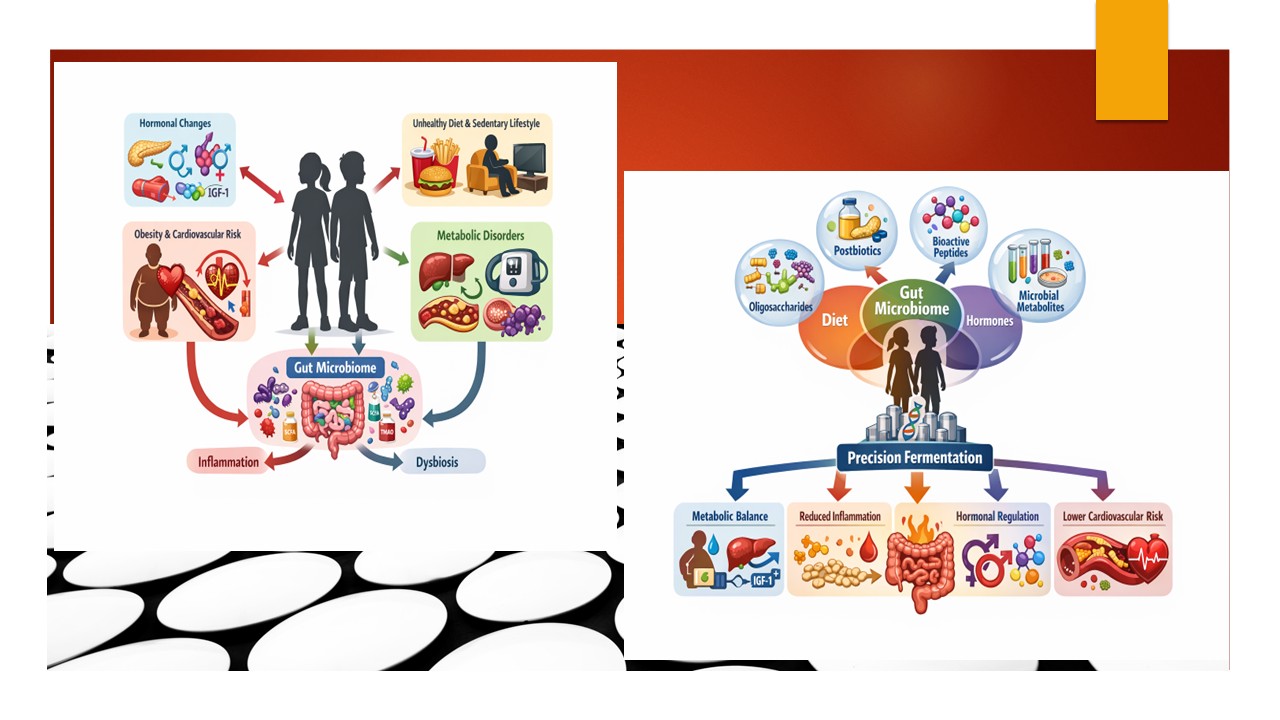
Adolescence is a developmental stage marked by dynamic interactions between diet, the gut microbiome and endocrine maturation, creating a physiological environment in which early metabolic disturbances can rapidly translate into long-term cardiovascular vulnerability. This narrative review summarises the latest research on the diet–microbiome–hormone axis in adolescents, focusing on the metabolic pathways through which microbial metabolites influence host physiology. Short-chain fatty acids (SCFAs), microbially transformed bile acids and postbiotic signalling molecules regulate enteroendocrine communication, insulin sensitivity, vascular function and inflammatory tone, thereby linking dietary exposures to early cardiometabolic alterations. Dysbiosis, driven by ultra-processed dietary patterns, low fibre intake and reduced microbial diversity, promotes metabolic endotoxemia, neuroendocrine imbalance and endothelial impairment, all of which are recognised as early indicators of cardiovascular disease. A distinctive contribution of this review is the integration of PF into the adolescent cardiometabolic framework. This emerging biotechnological process enables the controlled production of structurally defined bioactive compounds, including angiotensin-converting enzyme (ACE) inhibitory peptides, targeted prebiotic oligosaccharides, fermentable substrates that promote SCFA formation, microbially derived eicosapentaenoic acid (EPA) and docosahexaenoic acid (DHA), phytosterols and purified postbiotics. These compounds modulate several regulatory pathways, such as the renin–angiotensin–aldosterone system, lipid and bile acid metabolism, gut barrier stability, inflammatory signalling and endocrine axes involving glucagon-like peptide-1 (GLP-1), peptide YY (PYY), leptin, insulin sensitivity and growth hormone/insulin-like growth factor-1 (GH/IGF-1) dynamics. By situating precision fermentation within the broader context of adolescent metabolic susceptibility, this review highlights its potential to support microbiome resilience, stabilise hormonal regulation and mitigate early cardiovascular risk. However, further adolescent-specific clinical trials and long-term safety assessments are required to translate these advances into effective public health strategies.
Keywords: adolescence; cardiovascular risk; gut microbiome; diet–microbiome–hormone axis; precision fermentation; Poland adolescence; cardiovascular risk; gut microbiome; diet–microbiome–hormone axis; precision fermentation; Poland
Graphical Abstract