Differential Radiomodulatory Effects of Sodium Aminodihydrophthalazinedione (Tameron®) on Normal and Cancer Cells Cultures: Antioxidant Activity, DNA Damage Response, and Transcriptomic Profiling
 , , , , ,
Abstract
1. Introduction
2. Results and Discussion
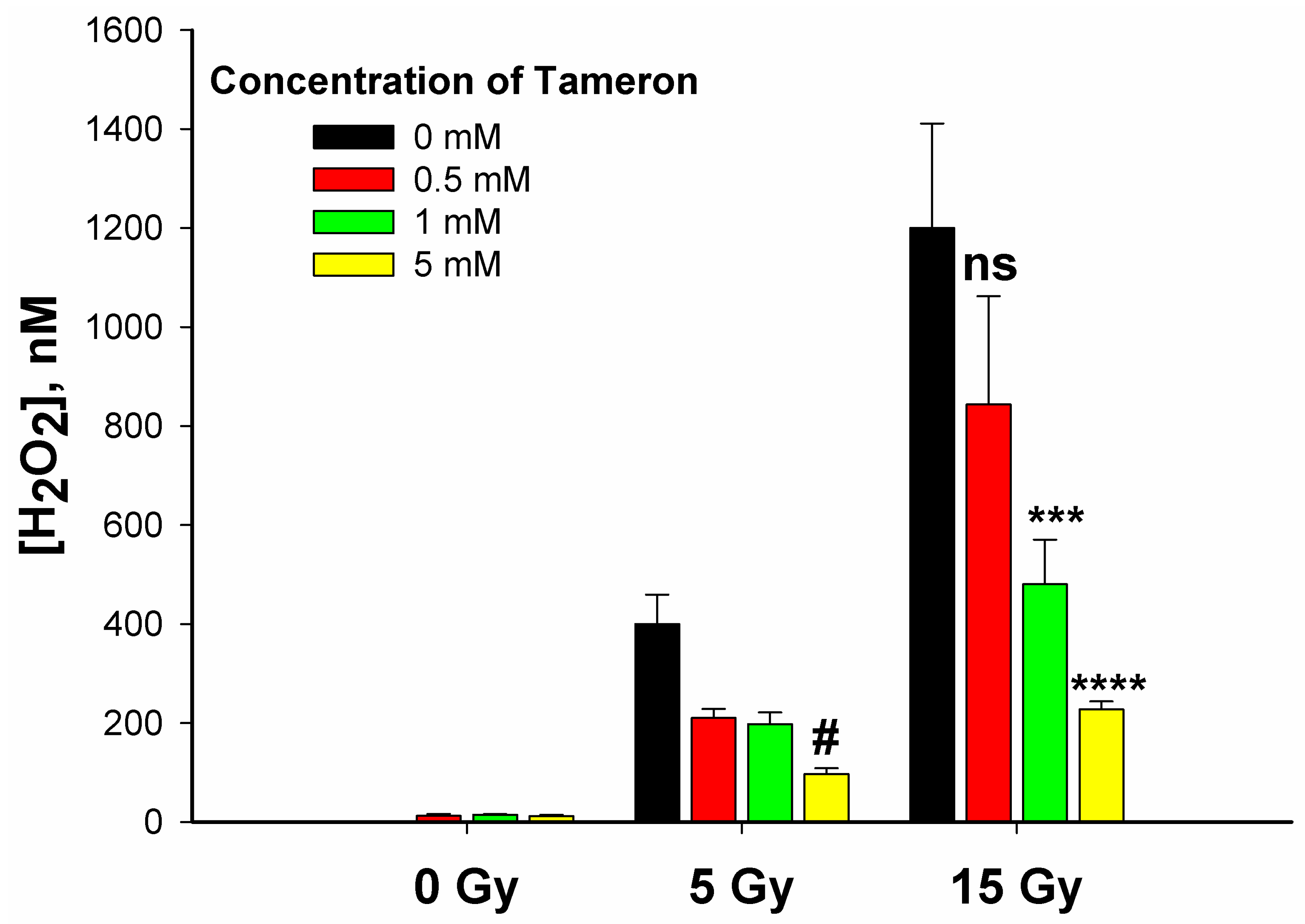
2.1. Tameron® Reduces the Generation of Hydrogen Peroxide After X-Ray Irradiation of Aqueous Solutions
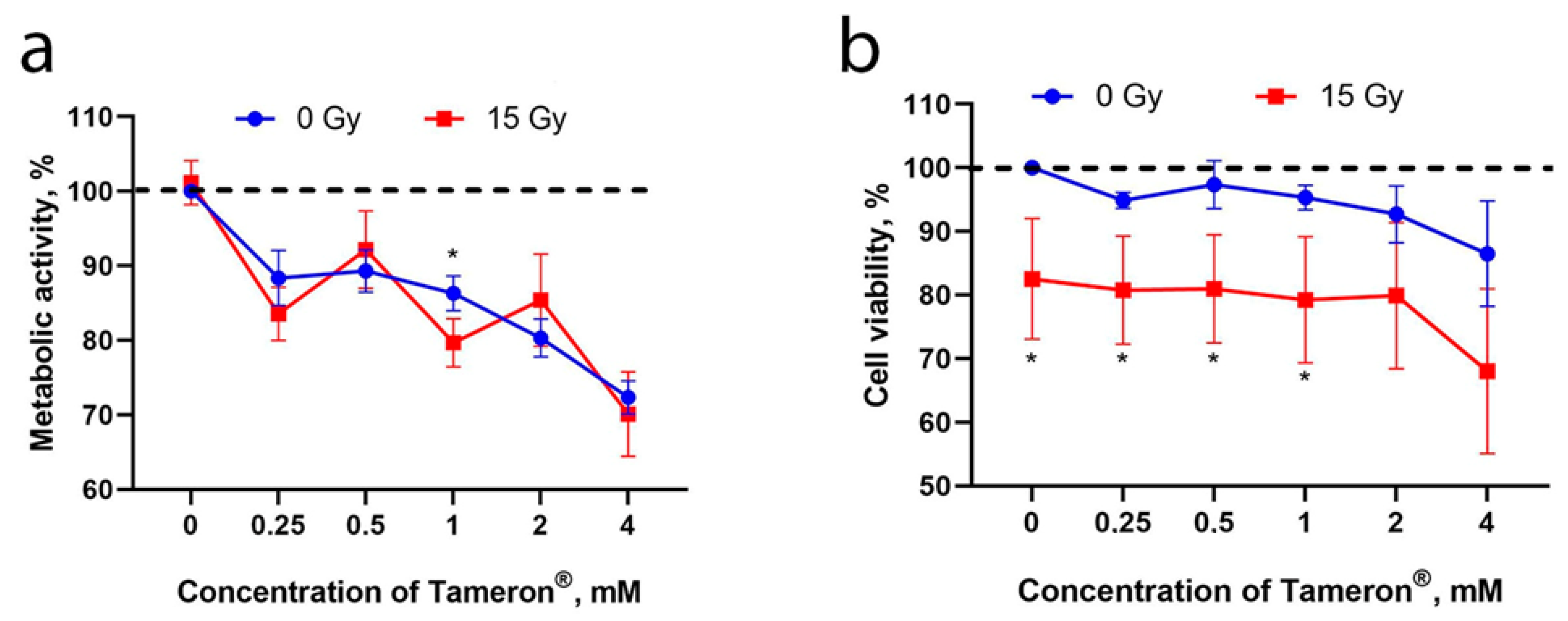
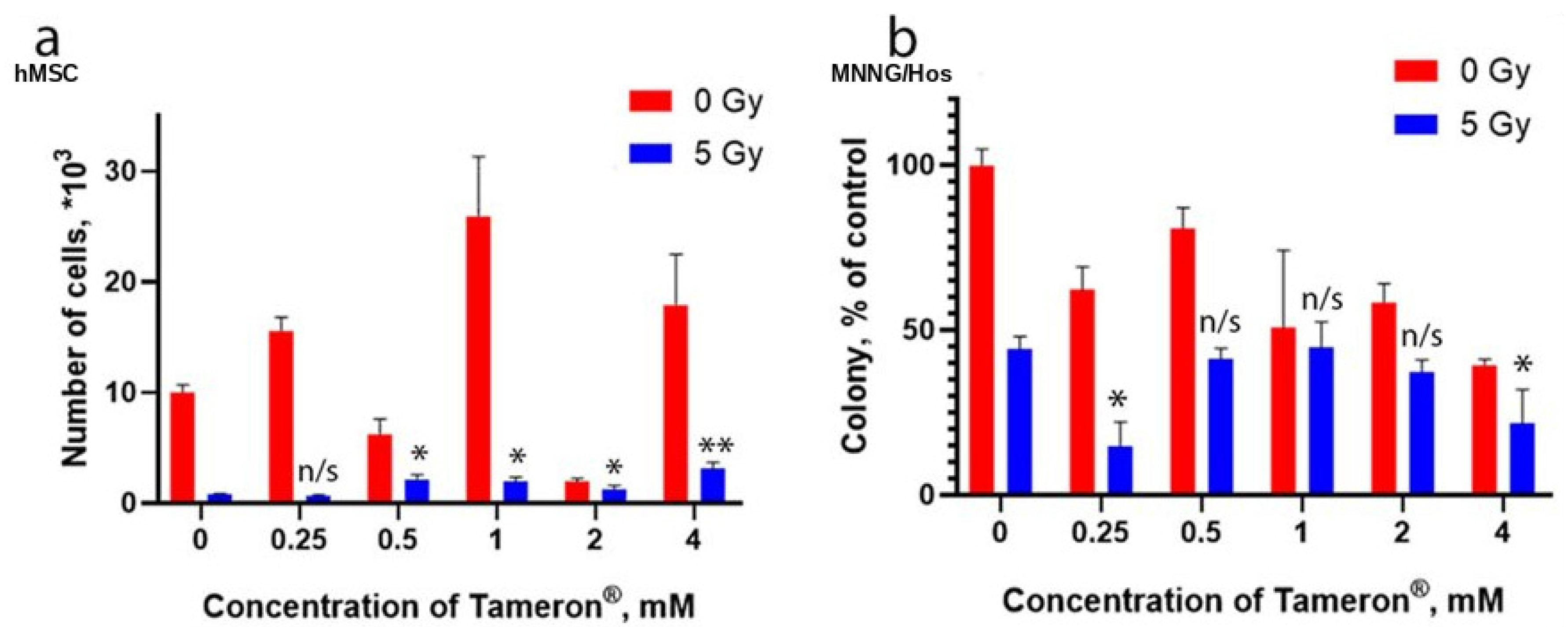
2.2. Tameron® Exhibits Selective Cytotoxicity upon X-Ray Irradiation In Vitro
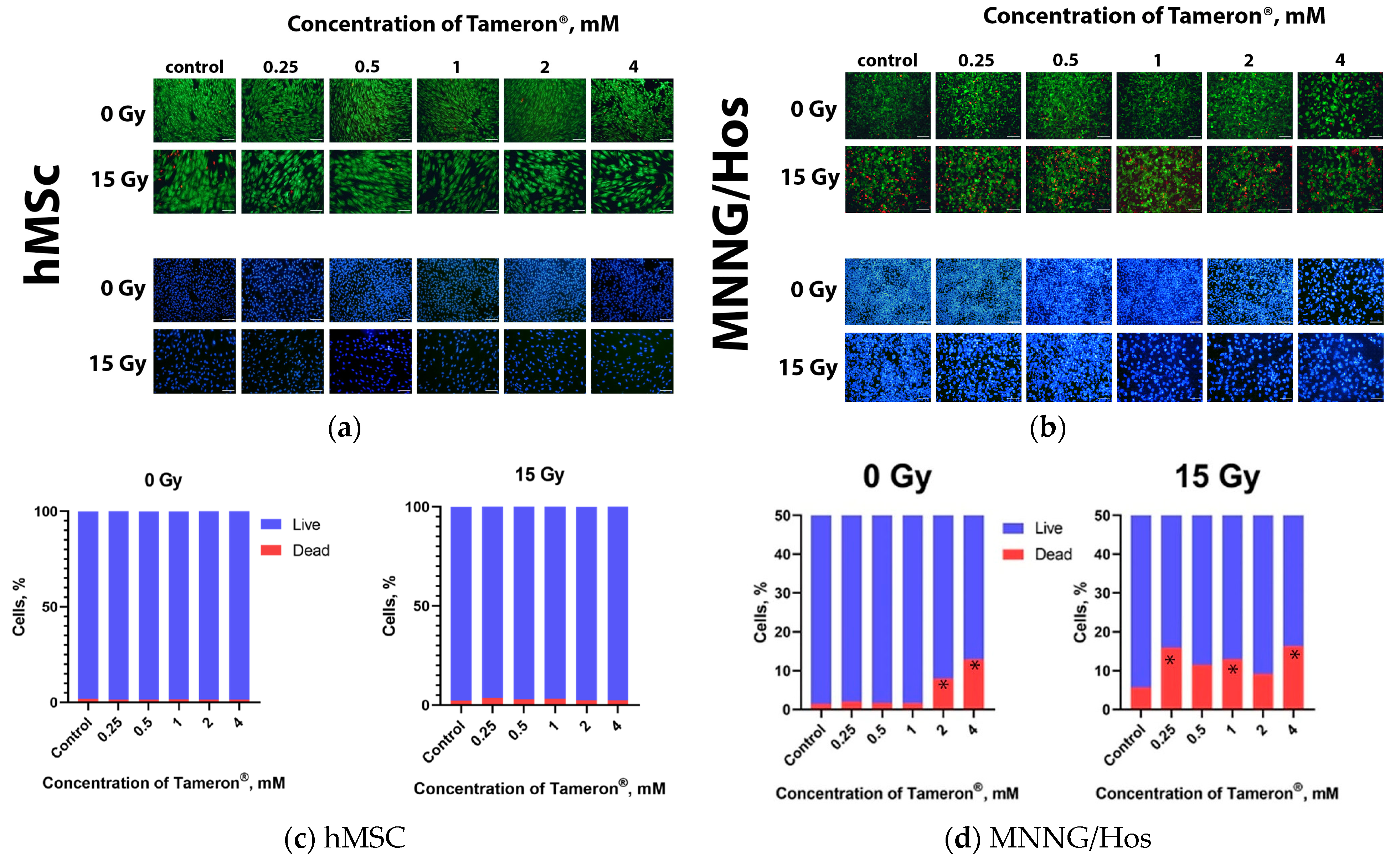
2.3. Tameron® Does Not Cause Cell Death and Shows a Radioprotective Effect on hMSC, While Causing Cell Death in MNNG/Hos
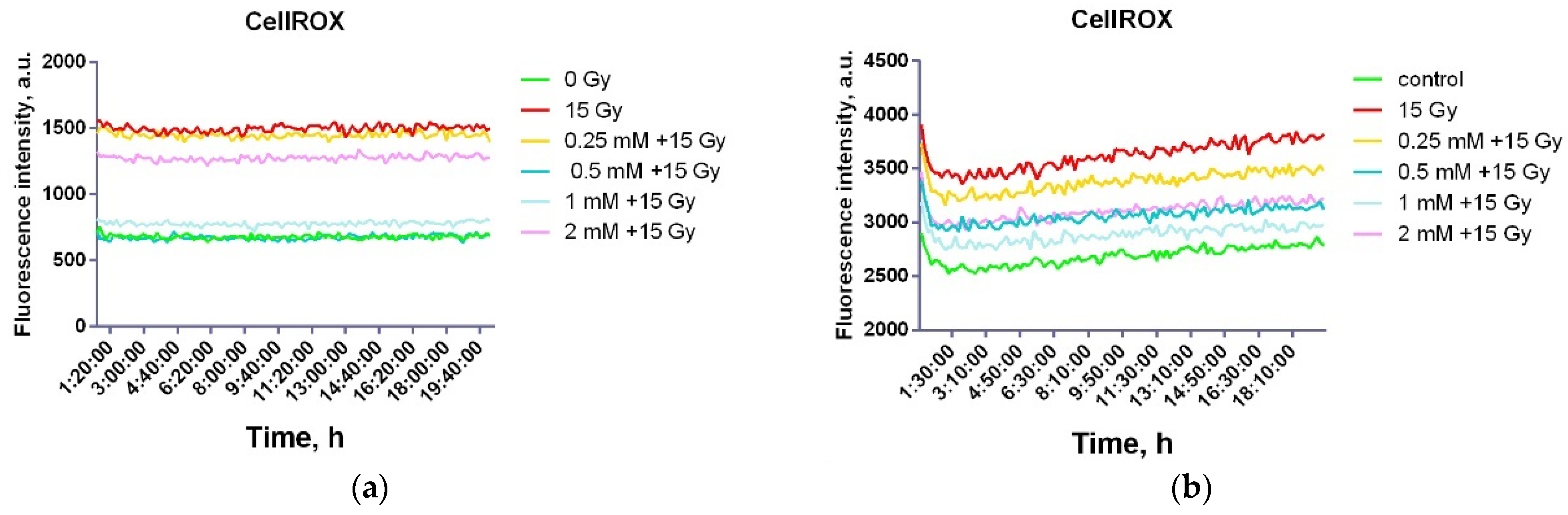
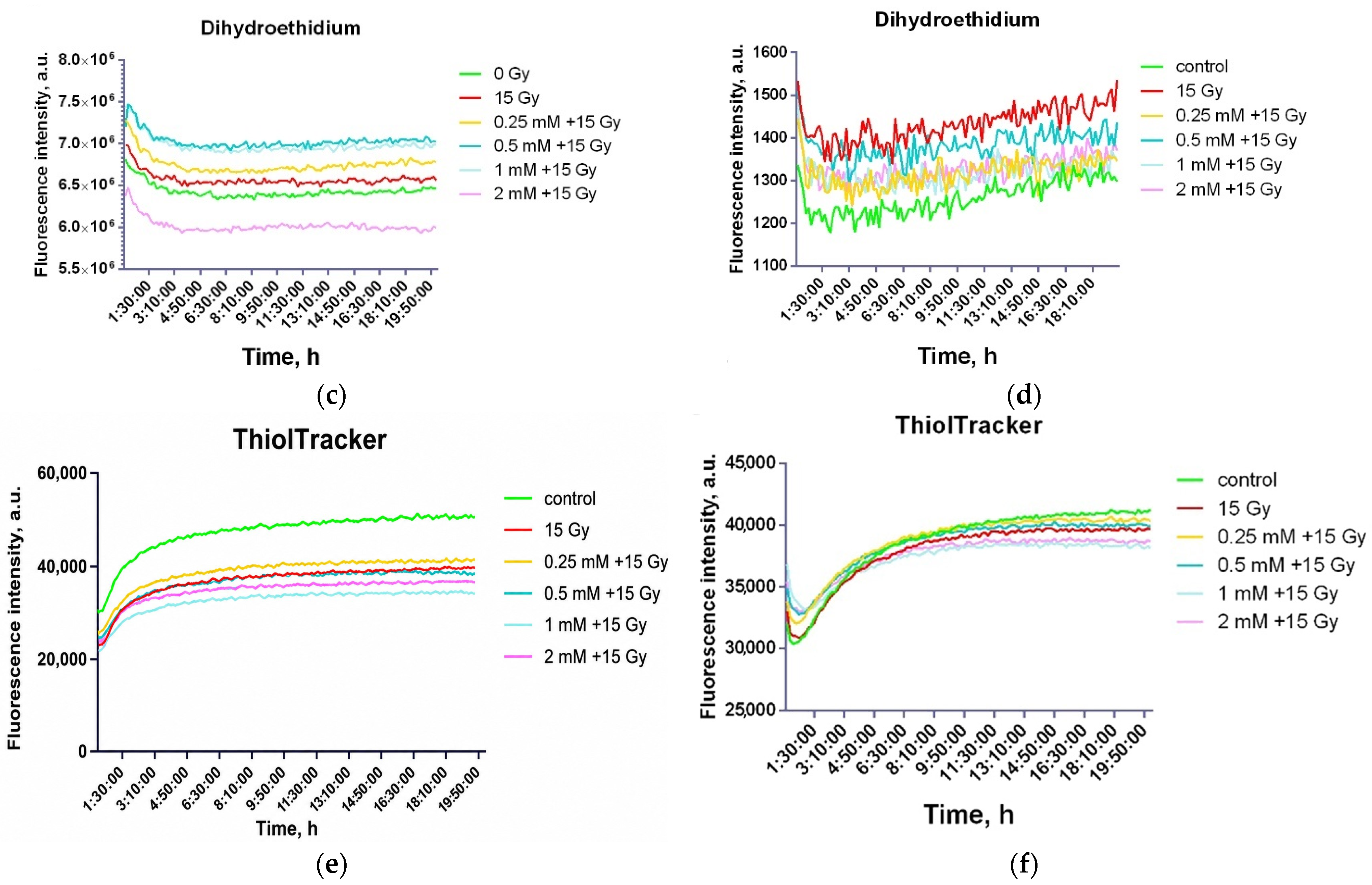
2.4. Tameron® Acts as an Antioxidant, Reducing Intracellular ROS and Increasing Glutathione
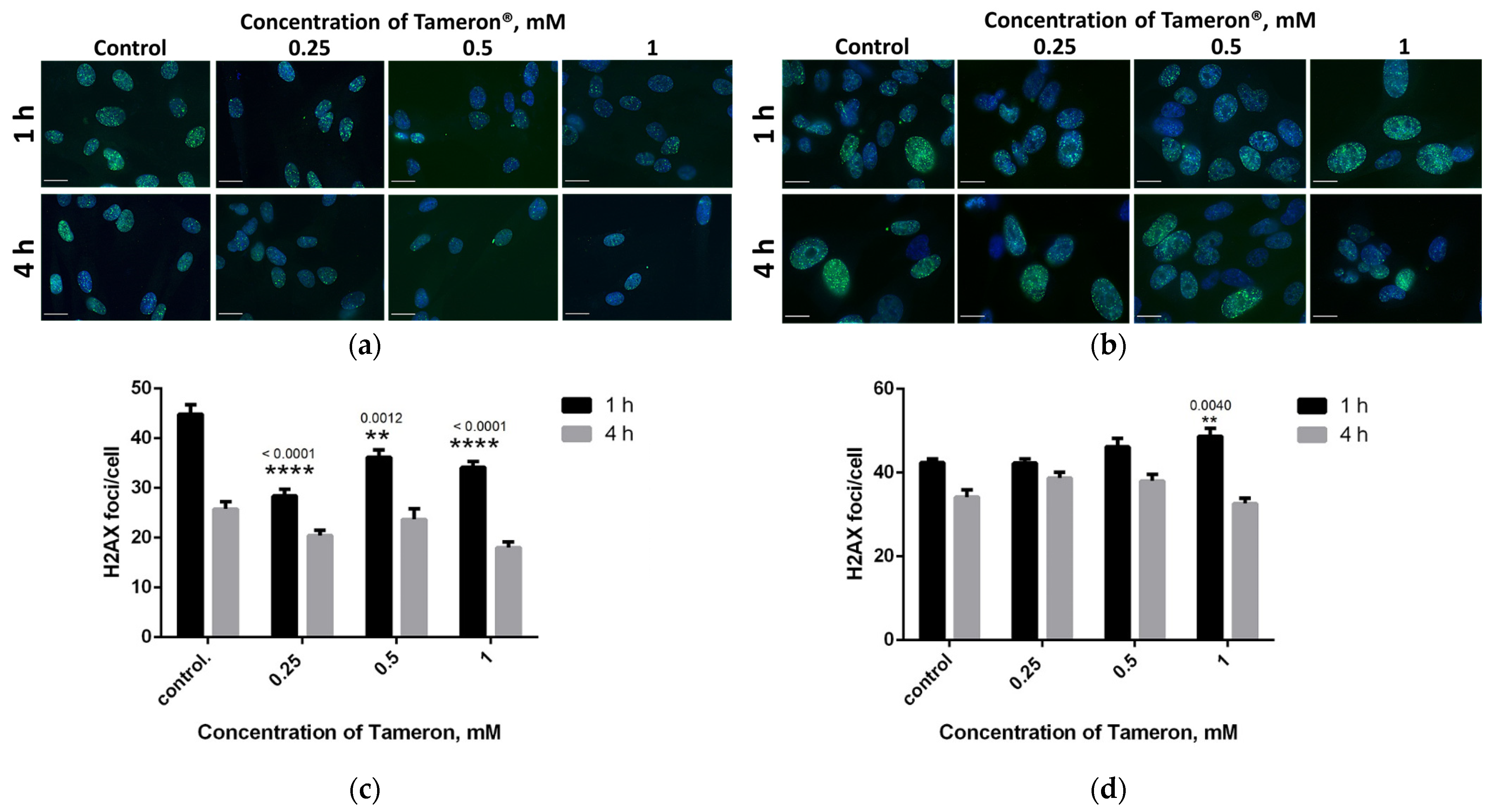
2.5. Tameron® Enhances DNA Repair After Irradiation in the Normal hMSC Cells, While Exhibiting a Radiosensitizing Effect on MNNG/Hos Cells
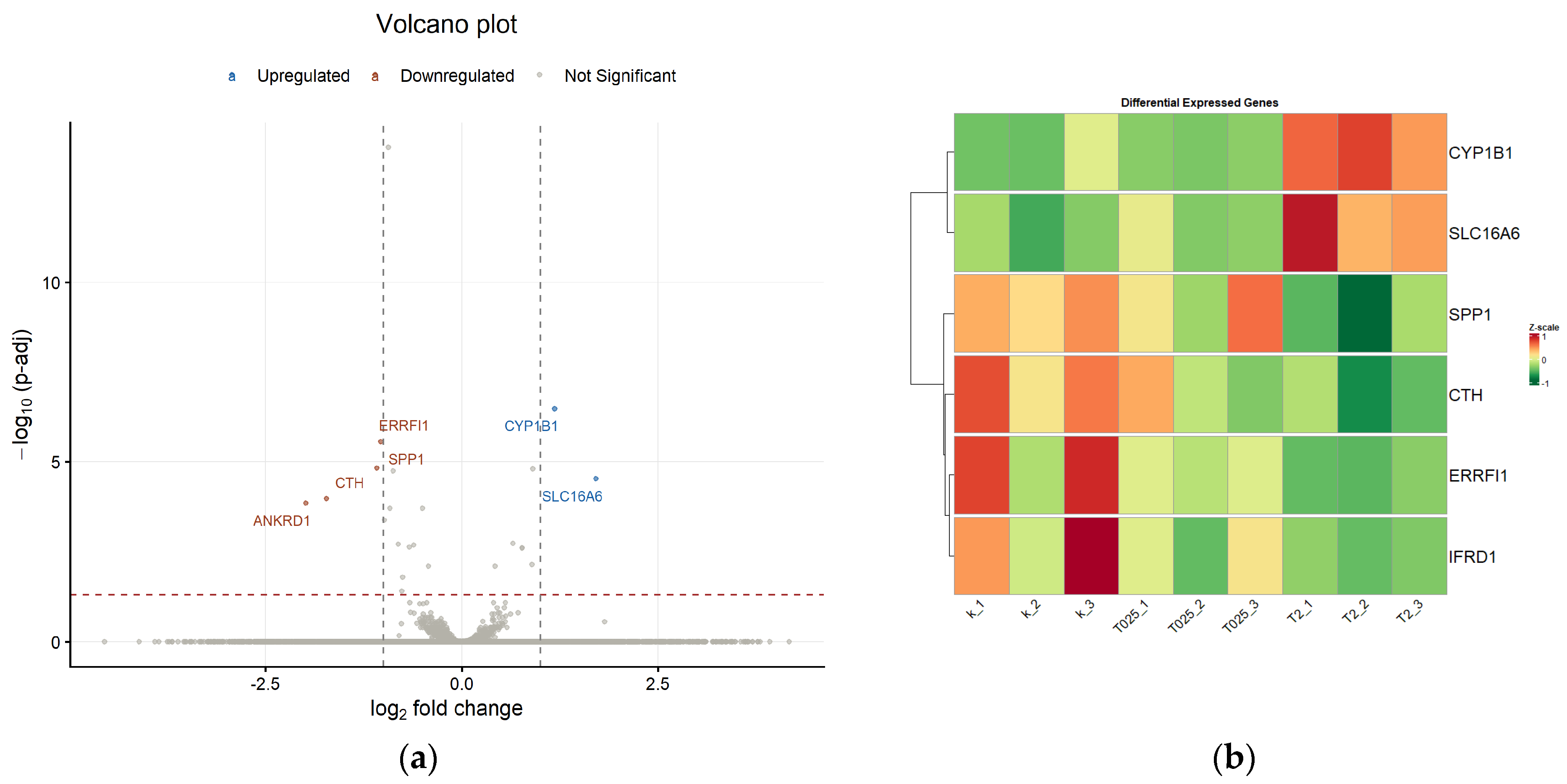
2.6. Transcriptomic Analysis of the MNNG/Hos Cells After X-Ray Irradiation
2.6.1. Changes in Gene Expression on the First Day After Treatment
Group 1 vs. Control: Effect of 2 mM Tameron® Without Irradiation (Day 1)
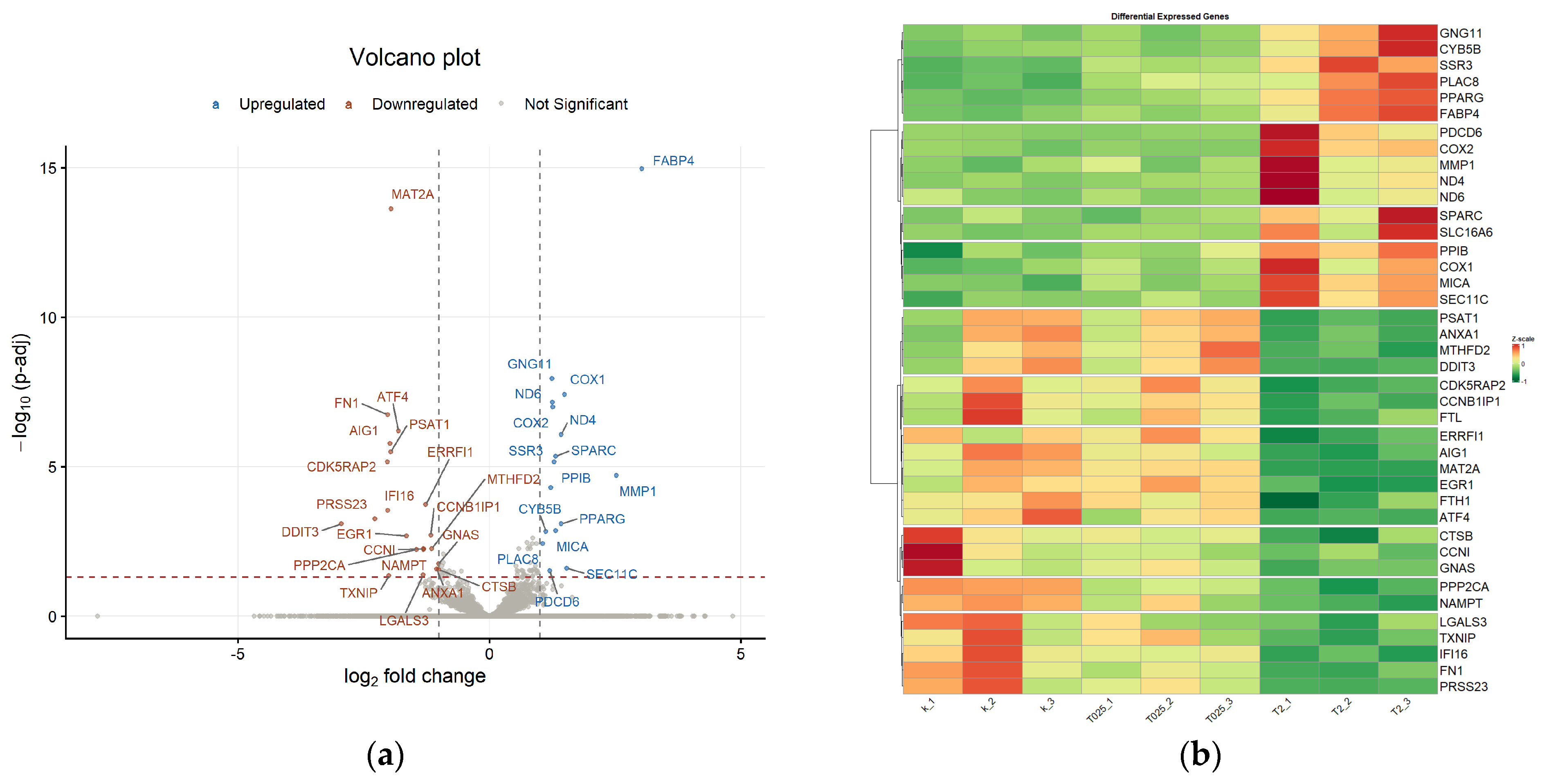
Group 3 vs. Group 2: Effect of 2 mM Tameron® Under Irradiation (Day 1)
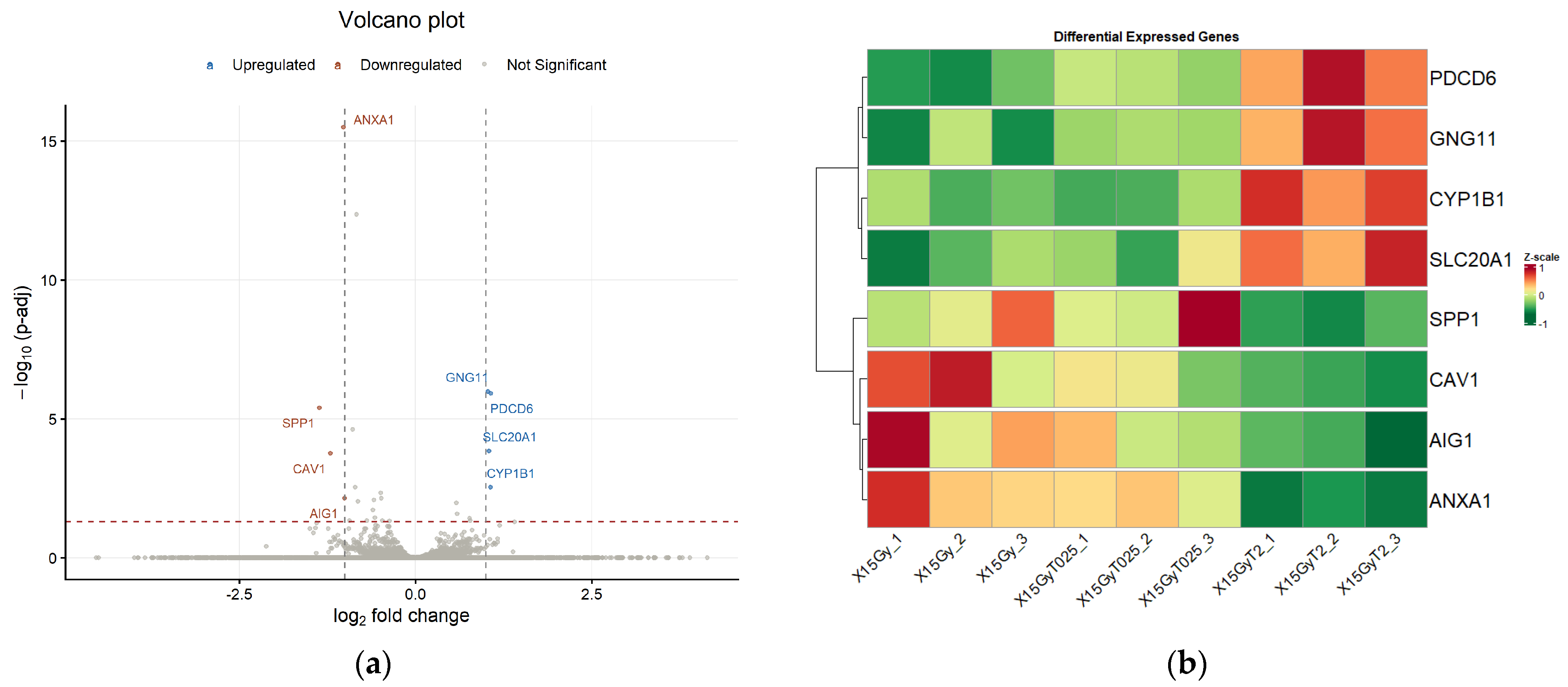
2.6.2. Changes in Gene Expression on the Third Day After Treatment
2.6.3. Pathway Enrichment Analysis
3. Materials and Methods
3.1. Object of Research
3.2. Cell Cultures
3.3. Antioxidant Effects in Buffer Solutions
3.4. Irradiation of Cell Cultures
3.5. Intracellular ROS Detection
3.6. Analysis of the Level of Non-Enzymatic Antioxidants
3.7. MTT Assay
3.8. Live/Dead Assay
3.9. Clonogenic Assay
3.10. DNA Double-Strand Break Analysis
3.11. Expression Level Analysis by Nanopore Sequencing
3.11.1. mRNA Isolation
3.11.2. Obtaining cDNA, PCR—Amplification of the cDNA Library
3.11.3. Preparation of cDNA Library for Sequencing on the MinION Platform
3.11.4. Bioinformatic Analysis of Nanopore Transcriptomic Data
3.12. Statistical Processing
4. Conclusions
Supplementary Materials
Author Contributions
Funding
Institutional Review Board Statement
Informed Consent Statement
Data Availability Statement
Conflicts of Interest
References
- Siemann, D.W.; Mendenhall, W.M. The role of amifostine as a radioprotector. Oncology 2001, 15, 1349–1354, discussion 1357–1360. [Google Scholar]
- Kouvaris, J.R.; Kouloulias, V.E.; Vlahos, L.J. Amifostine: The first selective-target and broad-spectrum radioprotector. Oncologist 2007, 12, 738–747. [Google Scholar] [CrossRef] [PubMed]
- King, M.; Joseph, S.; Albert, A.; Thomas, T.V.; Nittala, M.R.; Woods, W.C.; Vijayakumar, S.; Packianathan, S. Use of Amifostine for Cytoprotection during Radiation Therapy: A Review. Oncology 2020, 98, 61–80. [Google Scholar] [CrossRef]
- Shirazi, A.; Mihandoost, E.; Mahdavi, S.R.; Mohseni, M. Radio-protective role of antioxidant agents. Oncol. Rev. 2012, 6, e16. [Google Scholar] [CrossRef]
- Xu, P.; Zhang, W.B.; Cai, X.H.; Qiu, P.Y.; Hao, M.H.; Lu, D.D. Activating AKT to inhibit JNK by troxerutin antagonizes radiation-induced PTEN activation. Eur. J. Pharmacol. 2017, 795, 66–74. [Google Scholar] [CrossRef]
- Ozgen, S.; Dökmeci, D.; Akpolat, M.; Karadağ, C.H.; Gündüz, O.; Erbaş, H.; Benian, O.; Uzal, C.; Turan, F.N. The Protective Effect of Curcumin on Ionizing Radiation-induced Cataractogenesis in Rats. Balk. Med. J. 2012, 29, 358–363. [Google Scholar] [CrossRef] [PubMed]
- Khan, S.; Kumar, A.; Adhikari, J.S.; Rizvi, M.A.; Chaudhury, N.K. Protective effect of sesamol against 60Co γ-ray-induced hematopoietic and gastrointestinal injury in C57BL/6 male mice. Free Radic. Res. 2015, 49, 1344–1361. [Google Scholar] [CrossRef] [PubMed]
- Sredni, B.; Albeck, M.; Kazimirsky, G.; Shalit, F. The immunomodulator AS101 administered orally as a chemoprotective and radioprotective agent. Int. J. Immunopharmacol. 1992, 14, 613–619. [Google Scholar] [CrossRef]
- Shepet’ko, E.N.; Bychkova, N.G.; Garmash, D.A.; Kurbanov, A.K. Efficacy of the immunomodulating therapy in complex treatment of gastric cancer complicated by acute hemorrhage using radical operations. Klin. Khirurhiia 2011, 6, 15–18. [Google Scholar]
- Lungu, G.; Kuang, X.; Stoica, G.; Wong, P.K. Monosodium luminol upregulates the expression of Bcl-2 and VEGF in retrovirus-infected mice through downregulation of corresponding miRNAs. Acta Virol. 2010, 54, 27–32. [Google Scholar] [CrossRef][Green Version]
- Reddy, P.V.; Lungu, G.; Kuang, X.; Stoica, G.; Wong, P.K. Neuroprotective effects of the drug GVT (monosodium luminol) are mediated by the stabilization of Nrf2 in astrocytes. Neurochem. Int. 2010, 56, 780–788. [Google Scholar] [CrossRef][Green Version]
- Schumann, S.; Kaiser, A.; Nicoletti, F. Immune-Modulating Drug MP1032 with SARS-CoV-2 Antiviral Activity In Vitro: A potential Multi-Target Approach for Prevention and Early Intervention Treatment of COVID-19. Int. J. Mol. Sci. 2020, 21, 8803. [Google Scholar] [CrossRef]
- Scofield, V.L.; Yan, M.; Kuang, X.; Kim, S.J.; Crunk, D.; Wong, P.K. The drug monosodium luminol (GVT) preserves thymic epithelial cell cytoarchitecture and allows thymocyte survival in mice infected with the T cell-tropic, cytopathic retrovirus ts1. Immunol. Lett. 2009, 122, 159–169. [Google Scholar] [CrossRef] [PubMed]
- Shetty, A.K.; Attaluri, S.; Kodali, M.; Shuai, B.; Shetty, G.A.; Upadhya, D.; Hattiangady, B.; Madhu, L.N.; Upadhya, R.; Bates, A.; et al. Monosodium luminol reinstates redox homeostasis, improves cognition, mood and neurogenesis, and alleviates neuro- and systemic inflammation in a model of Gulf War Illness. Redox Biol. 2020, 28, 101389. [Google Scholar] [CrossRef]
- Le Caër, S. Water Radiolysis: Influence of Oxide Surfaces on H2 Production under Ionizing Radiation. Water 2011, 3, 235–253. [Google Scholar] [CrossRef]
- Kuwahara, Y.; Tomita, K. The Effects of Hydrogen Peroxide and/or Radiation on the Survival of Clinically Relevant Radioresistant Cells. Technol. Cancer Res. Treat. 2020, 19, 1533033820980077. [Google Scholar] [CrossRef]
- Berndt, T.; Richters, S.; Jokinen, T.; Hyttinen, N.; Kurtén, T.; Otkjær, R.V.; Kjaergaard, H.G.; Stratmann, F.; Herrmann, H.; Sipilä, M.; et al. Hydroxyl radical-induced formation of highly oxidized organic compounds. Nat. Commun. 2016, 7, 13677. [Google Scholar] [CrossRef]
- Andrés, C.M.C.; Pérez de la Lastra, J.M.; Juan, C.A.; Plou, F.J.; Pérez-Lebeña, E. Chemistry of Hydrogen Peroxide Formation and Elimination in Mammalian Cells, and Its Role in Various Pathologies. Stresses 2022, 2, 256–274. [Google Scholar] [CrossRef]
- Buch, K.; Peters, T.; Nawroth, T.; Sänger, M.; Schmidberger, H.; Langguth, P. Determination of cell survival after irradiation via clonogenic assay versus multiple MTT Assay—A comparative study. Radiat. Oncol. 2012, 7, 1. [Google Scholar] [CrossRef]
- Munshi, A.; Hobbs, M.; Meyn, R.E. Clonogenic cell survival assay. In Chemosensitivity; Methods in Molecular Medicine™; Humana Press: Totowa, NJ, USA, 2005; Volume 110, pp. 21–28. [Google Scholar] [CrossRef]
- Rai, Y.; Pathak, R.; Kumari, N.; Sah, D.K.; Pandey, S.; Kalra, N.; Bhatt, A.N. Mitochondrial biogenesis and metabolic hyperactivation limits the application of MTT assay in the estimation of radiation induced growth inhibition. Sci. Rep. 2018, 8, 1444. [Google Scholar] [CrossRef]
- Li, M.; You, L.; Xue, J.; Lu, Y. Ionizing Radiation-Induced Cellular Senescence in Normal, Non-transformed Cells and the Involved DNA Damage Response: A Mini Review. Front. Pharmacol. 2018, 9, 522. [Google Scholar] [CrossRef]
- Saito, Y.; Nishio, K.; Akazawa, Y.O.; Kimura, Y.; Nakamura, M.; Yamaguchi, H.; Yoshida, Y.; Noguchi, N. Prolonged expression of senescence markers in mice exposed to gamma-irradiation. PLoS ONE 2013, 8, e54283. [Google Scholar] [CrossRef]
- Merry, K.; Dodds, R.; Littlewood, A.; Gowen, M. Expression of osteopontin mRNA by osteoclasts and osteoblasts in modelling adult human bone. J. Cell Sci. 1993, 104, 1013–1020. [Google Scholar] [CrossRef] [PubMed]
- Choi, S.T.; Kim, J.H.; Kang, E.J.; Lee, S.W.; Park, M.C.; Park, Y.B.; Lee, S.K. Osteopontin might be involved in bone remodelling rather than in inflammation in ankylosing spondylitis. Rheumatology 2008, 47, 1775–1779. [Google Scholar] [CrossRef]
- Stier, S.; Ko, Y.; Forkert, R.; Lutz, C.; Neuhaus, T.; Grünewald, E.; Cheng, T.; Dombkowski, D.; Calvi, L.M.; Rittling, S.R.; et al. Osteopontin is a hematopoietic stem cell niche component that negatively regulates stem cell pool size. J. Exp. Med. 2005, 201, 1781–1791. [Google Scholar] [CrossRef] [PubMed]
- Wang, K.X.; Denhardt, D.T. Osteopontin: Role in immune regulation and stress responses. Cytokine Growth Factor Rev. 2008, 19, 333–345. [Google Scholar] [CrossRef]
- Han, X.; Wang, W.; He, J.; Jiang, L.; Li, X. Osteopontin as a biomarker for osteosarcoma therapy and prognosis. Oncol. Lett. 2019, 17, 2592–2598. [Google Scholar] [CrossRef] [PubMed]
- Wick, M.; Bürger, C.; Funk, M.; Müller, R. Identification of a Novel Mitogen-Inducible Gene (mig-6): Regulation during G1 Progression and Differentiation. Exp. Cell Res. 1995, 219, 527–535. [Google Scholar] [CrossRef]
- Xu, D.; Makkinje, A.; Kyriakis, J.M. Gene 33 is an endogenous inhibitor of epidermal growth factor (EGF) receptor signaling and mediates dexamethasone-induced suppression of EGF function. J. Biol. Chem. 2005, 280, 2924–2933. [Google Scholar] [CrossRef]
- Makkinje, A.; Quinn, D.A.; Chen, A.; Cadilla, C.L.; Force, T.; Bonventre, J.V.; Kyriakis, J.M. Gene 33/Mig-6, a transcriptionally inducible adapter protein that binds GTP-Cdc42 and activates SAPK/JNK. A potential marker transcript for chronic pathologic conditions, such as diabetic nephropathy. Possible role in the response to persistent stress. J. Biol. Chem. 2000, 275, 17838–17847. [Google Scholar] [CrossRef]
- Fiorentino, L.; Pertica, C.; Fiorini, M.; Talora, C.; Crescenzi, M.; Castellani, L.; Alemà, S.; Benedetti, P.; Segatto, O. Inhibition of ErbB-2 mitogenic and transforming activity by RALT, a mitogen-induced signal transducer which binds to the ErbB-2 kinase domain. Mol. Cell. Biol. 2000, 20, 7735–7750. [Google Scholar] [CrossRef]
- Anastasi, S.; Lamberti, D.; Alemà, S.; Segatto, O. Regulation of the ErbB network by the MIG6 feedback loop in physiology, tumor suppression and responses to oncogene-targeted therapeutics. Semin. Cell Dev. Biol. 2016, 50, 115–124. [Google Scholar] [CrossRef]
- Jorgovanovic, D.; Song, M.; Wang, L.; Zhang, Y. Roles of IFN-γ in tumor progression and regression: A review. Biomark. Res. 2020, 8, 49. [Google Scholar] [CrossRef]
- Vietor, I.; Huber, L.A. Role of TIS7 family of transcriptional regulators in differentiation and regeneration. Differ. Res. Biol. Divers. 2007, 75, 891–897. [Google Scholar] [CrossRef]
- Micheli, L.; Leonardi, L.; Conti, F.; Maresca, G.; Colazingari, S.; Mattei, E.; Lira, S.A.; Farioli-Vecchioli, S.; Caruso, M.; Tirone, F. PC4/Tis7/IFRD1 stimulates skeletal muscle regeneration and is involved in myoblast differentiation as a regulator of MyoD and NF-kappaB. J. Biol. Chem. 2011, 286, 5691–5707. [Google Scholar] [CrossRef] [PubMed]
- Tirone, F.; Shooter, E.M. Early gene regulation by nerve growth factor in PC12 cells: Induction of an interferon-related gene. Proc. Natl. Acad. Sci. USA 1989, 86, 2088–2092. [Google Scholar] [CrossRef] [PubMed]
- Steegborn, C.; Clausen, T.; Sondermann, P.; Jacob, U.; Worbs, M.; Marinkovic, S.; Huber, R.; Wahl, M.C. Kinetics and inhibition of recombinant human cystathionine gamma-lyase. Toward the rational control of transsulfuration. J. Biol. Chem. 1999, 274, 12675–12684. [Google Scholar] [CrossRef] [PubMed]
- Kasamatsu, S.; Nishimura, A.; Morita, M.; Matsunaga, T.; Abdul Hamid, H.; Akaike, T. Redox Signaling Regulated by Cysteine Persulfide and Protein Polysulfidation. Molecules 2016, 21, 1721. [Google Scholar] [CrossRef]
- Kimura, H. Physiological Roles of Hydrogen Sulfide and Polysulfides. In Chemistry, Biochemistry and Pharmacology of Hydrogen Sulfide; Handbook of Experimental Pharmacology; Springer: Cham, Switzerland, 2015; Volume 230, pp. 61–81. [Google Scholar] [CrossRef]
- Sen, N.; Paul, B.D.; Gadalla, M.M.; Mustafa, A.K.; Sen, T.; Xu, R.; Kim, S.; Snyder, S.H. Hydrogen sulfide-linked sulfhydration of NF-κB mediates its antiapoptotic actions. Mol. Cell 2012, 45, 13–24. [Google Scholar] [CrossRef]
- Ju, Y.; Fu, M.; Stokes, E.; Wu, L.; Yang, G. H2S-Mediated Protein S-Sulfhydration: A Prediction for Its Formation and Regulation. Molecules 2017, 22, 1334. [Google Scholar] [CrossRef]
- Tang, Y.M.; Wo, Y.Y.; Stewart, J.; Hawkins, A.L.; Griffin, C.A.; Sutter, T.R.; Greenlee, W.F. Isolation and characterization of the human cytochrome P450 CYP1B1 gene. J. Biol. Chem. 1996, 271, 28324–28330. [Google Scholar] [CrossRef]
- Jong, C.J.; Sandal, P.; Schaffer, S.W. The Role of Taurine in Mitochondria Health: More Than Just an Antioxidant. Molecules 2021, 26, 4913. [Google Scholar] [CrossRef]
- Pan, C.; Giraldo, G.S.; Prentice, H.; Wu, J.-Y. Taurine protection of PC12 cells against endoplasmic reticulum stress induced by oxidative stress. J. Biomed. Sci. 2010, 17, S17. [Google Scholar] [CrossRef]
- Uribe, M.L.; Marrocco, I.; Yarden, Y. EGFR in Cancer: Signaling Mechanisms, Drugs, and Acquired Resistance. Cancers 2021, 13, 2748. [Google Scholar] [CrossRef]
- Liu, S.J.; Zhang, D.Q.; Sui, X.M.; Zhang, L.; Cai, Z.W.; Sun, L.Q.; Liu, Y.J.; Xue, Y.; Hu, G.F. The inhibition of in vivo tumorigenesis of osteosarcoma (OS)-732 cells by antisense human osteopontin RNA. Cell. Mol. Biol. Lett. 2008, 13, 11–19. [Google Scholar] [CrossRef]
- Berge, G.; Pettersen, S.; Grotterød, I.; Bettum, I.J.; Boye, K.; Mælandsmo, G.M. Osteopontin—an important downstream effector of S100A4-mediated invasion and metastasis. Int. J. Cancer 2011, 129, 780–790. [Google Scholar] [CrossRef] [PubMed]
- Dupree, P.; Parton, R.G.; Raposo, G.; Kurzchalia, T.V.; Simons, K. Caveolae and sorting in the trans-Golgi network of epithelial cells. EMBO J. 1993, 12, 1597–1605. [Google Scholar] [CrossRef] [PubMed]
- Kortum, R.L.; Fernandez, M.R.; Costanzo-Garvey, D.L.; Johnson, H.J.; Fisher, K.W.; Volle, D.J.; Lewis, R.E. Caveolin-1 is required for kinase suppressor of Ras 1 (KSR1)-mediated extracellular signal-regulated kinase 1/2 activation, H-RasV12-induced senescence, and transformation. Mol. Cell. Biol. 2014, 34, 3461–3472. [Google Scholar] [CrossRef] [PubMed]
- Xu, L.; Wang, L.; Wen, Z.; Wu, L.; Jiang, Y.; Yang, L.; Xiao, L.; Xie, Y.; Ma, M.; Zhu, W.; et al. Caveolin-1 is a checkpoint regulator in hypoxia-induced astrocyte apoptosis via Ras/Raf/ERK pathway. Am. J. Physiol. Cell Physiol. 2016, 310, C903–C910. [Google Scholar] [CrossRef]
- Galbiati, F.; Volonte, D.; Brown, A.M.; Weinstein, D.E.; Ben-Ze’ev, A.; Pestell, R.G.; Lisanti, M.P. Caveolin-1 expression inhibits Wnt/beta-catenin/Lef-1 signaling by recruiting beta-catenin to caveolae membrane domains. J. Biol. Chem. 2000, 275, 23368–23377. [Google Scholar] [CrossRef]
- Engelman, J.A.; Wykoff, C.C.; Yasuhara, S.; Song, K.S.; Okamoto, T.; Lisanti, M.P. Recombinant expression of caveolin-1 in oncogenically transformed cells abrogates anchorage-independent growth. J. Biol. Chem. 1997, 272, 16374–16381. [Google Scholar] [CrossRef] [PubMed]
- Galbiati, F.; Volonte, D.; Engelman, J.A.; Watanabe, G.; Burk, R.; Pestell, R.G.; Lisanti, M.P. Targeted downregulation of caveolin-1 is sufficient to drive cell transformation and hyperactivate the p42/44 MAP kinase cascade. EMBO J. 1998, 17, 6633–6648. [Google Scholar] [CrossRef]
- Buckingham, J.C.; Flower, R.J. Chapter 25—Annexin A1. In Stress: Neuroendocrinology and Neurobiology; Fink, G., Ed.; Academic Press: San Diego, CA, USA, 2017; pp. 257–263. [Google Scholar]
- Sugimoto, M.A.; Vago, J.P.; Teixeira, M.M.; Sousa, L.P. Annexin A1 and the Resolution of Inflammation: Modulation of Neutrophil Recruitment, Apoptosis, and Clearance. J. Immunol. Res. 2016, 2016, 8239258. [Google Scholar] [CrossRef] [PubMed]
- Araújo, T.G.; Mota, S.T.S.; Ferreira, H.S.V.; Ribeiro, M.A.; Goulart, L.R. Annexin A1 as a Regulator of Immune Response in Cancer. Cells 2021, 10, 2245. [Google Scholar] [CrossRef]
- Patel, D.M.; Ahmad, S.F.; Weiss, D.G.; Gerke, V.; Kuznetsov, S.A. Annexin A1 is a new functional linker between actin filaments and phagosomes during phagocytosis. J. Cell Sci. 2011, 124, 578–588. [Google Scholar] [CrossRef]
- Kaufman, M.; Leto, T.; Levy, R. Translocation of annexin I to plasma membranes and phagosomes in human neutrophils upon stimulation with opsonized zymosan: Possible role in phagosome function. Biochem. J. 1996, 316, 35–42. [Google Scholar] [CrossRef] [PubMed]
- Erikci Ertunc, M.; Kok, B.P.; Parsons, W.H.; Wang, J.G.; Tan, D.; Donaldson, C.J.; Pinto, A.F.M.; Vaughan, J.M.; Ngo, N.; Lum, K.M.; et al. AIG1 and ADTRP are endogenous hydrolases of fatty acid esters of hydroxy fatty acids (FAHFAs) in mice. J. Biol. Chem. 2020, 295, 5891–5905. [Google Scholar] [CrossRef]
- Parsons, W.H.; Kolar, M.J.; Kamat, S.S.; Cognetta, A.B., 3rd; Hulce, J.J.; Saez, E.; Kahn, B.B.; Saghatelian, A.; Cravatt, B.F. AIG1 and ADTRP are atypical integral membrane hydrolases that degrade bioactive FAHFAs. Nat. Chem. Biol. 2016, 12, 367–372. [Google Scholar] [CrossRef]
- Wu, G.; Sun, M.; Zhang, W.; Huo, K. AIG1 is a novel Pirh2-interacting protein that activates the NFAT signaling pathway. Front. Biosci. Elite Ed. 2011, 3, 834–842. [Google Scholar] [CrossRef]
- Jung, Y.S.; Kim, K.S.; Kim, K.D.; Lim, J.S.; Kim, J.W.; Kim, E. Apoptosis-linked gene 2 binds to the death domain of Fas and dissociates from Fas during Fas-mediated apoptosis in Jurkat cells. Biochem. Biophys. Res. Commun. 2001, 288, 420–426. [Google Scholar] [CrossRef]
- Zhu, Y.; Li, Q. Multifaceted roles of PDCD6 both within and outside the cell. J. Cell. Physiol. 2024, 239, e31235. [Google Scholar] [CrossRef]
- Rho, S.B.; Song, Y.J.; Lim, M.C.; Lee, S.H.; Kim, B.R.; Park, S.Y. Programmed cell death 6 (PDCD6) inhibits angiogenesis through PI3K/mTOR/p70S6K pathway by interacting of VEGFR-2. Cell. Signal. 2012, 24, 131–139. [Google Scholar] [CrossRef]
- Olah, Z.; Lehel, C.; Anderson, W.B.; Eiden, M.V.; Wilson, C.A. The cellular receptor for gibbon ape leukemia virus is a novel high affinity sodium-dependent phosphate transporter. J. Biol. Chem. 1994, 269, 25426–25431. [Google Scholar] [CrossRef] [PubMed]
- Miller, D.G.; Miller, A.D. A family of retroviruses that utilize related phosphate transporters for cell entry. J. Virol. 1994, 68, 8270–8276. [Google Scholar] [CrossRef]
- Matsuda, A.; Suzuki, Y.; Honda, G.; Muramatsu, S.; Matsuzaki, O.; Nagano, Y.; Doi, T.; Shimotohno, K.; Harada, T.; Nishida, E.; et al. Large-scale identification and characterization of human genes that activate NF-κB and MAPK signaling pathways. Oncogene 2003, 22, 3307–3318. [Google Scholar] [CrossRef] [PubMed]
- Demir Karaman, E.; Işık, Z. Multi-Omics Data Analysis Identifies Prognostic Biomarkers across Cancers. Med. Sci. 2023, 11, 44. [Google Scholar] [CrossRef] [PubMed]
- Tomczak, A.; Mortensen, J.M.; Winnenburg, R.; Liu, C.; Alessi, D.T.; Swamy, V.; Vallania, F.; Lofgren, S.; Haynes, W.; Shah, N.H.; et al. Interpretation of biological experiments changes with evolution of the Gene Ontology and its annotations. Sci. Rep. 2018, 8, 5115. [Google Scholar] [CrossRef]
- Liberti, M.V.; Locasale, J.W. The Warburg Effect: How Does it Benefit Cancer Cells? Trends Biochem. Sci. 2016, 41, 211–218, Correction in Trends Biochem. Sci. 2016, 41, 287. [Google Scholar] [CrossRef]
- Pan, R.; Chen, Y. Management of Oxidative Stress: Crosstalk Between Brown/Beige Adipose Tissues and Skeletal Muscles. Front. Physiol. 2021, 12, 712372. [Google Scholar] [CrossRef]
- Manem, V.S.K.; Lambie, M.; Smith, I.; Smirnov, P.; Kofia, V.; Freeman, M.; Schwartz, M.P.; Hassanein, M.; Haibe-Kains, B.; Bratman, S.V. Modeling cellular response in large-scale radiogenomic databases to advance precision radiotherapy. Cancer Res. 2019, 79, 6227–6237. [Google Scholar] [CrossRef]
- Tsifintaris, M.; Grigoriadis, D.; Sitmalidis, M.; Repanas, P.; Lazarashvili, E.K.; Anastasiadi, C.; Kavakiotis, I.; Sandaltzopoulos, R.; Pavlopoulos, G.A.; Giannakakis, A. ASTRA: A comprehensive resource of stress-induced transcriptional activity in human cell lines. Nucleic Acids Res. 2026, 54, D938–D948. [Google Scholar] [CrossRef]
- Su, D.; Xu, H.; Feng, J.; Gao, Y.; Gu, L.; Ying, L.; Katsaros, D.; Yu, H.; Xu, S.; Qi, M. PDCD6 is an independent predictor of progression free survival in epithelial ovarian cancer. J. Transl. Med. 2012, 10, 31. [Google Scholar] [CrossRef] [PubMed]
- Zhang, Z.; Liu, B.; Lin, Z.; Mei, L.; Chen, R.; Li, Z. SPP1 could be an immunological and prognostic biomarker: From pan-cancer comprehensive analysis to osteosarcoma validation. FASEB J. 2024, 38, e23783. [Google Scholar] [CrossRef] [PubMed]
- Herbert, A.D.; Carr, A.M.; Hoffmann, E. FindFoci: A focus detection algorithm with automated parameter training that closely matches human assignments, reduces human inconsistencies and increases speed of analysis. PLoS ONE 2014, 9, e114749. [Google Scholar] [CrossRef]
- Ge, S.X.; Son, E.W.; Yao, R. iDEP: An integrated web application for differential expression and pathway analysis of RNA-Seq data. BMC Bioinform. 2018, 19, 534. [Google Scholar] [CrossRef] [PubMed]



| Group | 0.25 mM Tameron® | 2mM Tameron® | 15 Gy |
|---|---|---|---|
| Control | − | − | − |
| Group1 | − | + | − |
| Group2 | − | − | + |
| Group3 | − | + | + |
| Group4 | + | − | + |
| Group5 | + | − | − |
Disclaimer/Publisher’s Note: The statements, opinions and data contained in all publications are solely those of the individual author(s) and contributor(s) and not of MDPI and/or the editor(s). MDPI and/or the editor(s) disclaim responsibility for any injury to people or property resulting from any ideas, methods, instructions or products referred to in the content. |
© 2026 by the authors. Licensee MDPI, Basel, Switzerland. This article is an open access article distributed under the terms and conditions of the Creative Commons Attribution (CC BY) license.
Share and Cite
Ermakov, A.; Tsarkova, E.; Ermakova, O.; Antonova, O.; Kochetkova, O.; Kolmanovich, D.; Kolotova, A.; Evdokimovskii, E.; Blagodatski, A.; Popov, A. Differential Radiomodulatory Effects of Sodium Aminodihydrophthalazinedione (Tameron®) on Normal and Cancer Cells Cultures: Antioxidant Activity, DNA Damage Response, and Transcriptomic Profiling. Int. J. Mol. Sci. 2026, 27, 5272. https://doi.org/10.3390/ijms27125272
Ermakov A, Tsarkova E, Ermakova O, Antonova O, Kochetkova O, Kolmanovich D, Kolotova A, Evdokimovskii E, Blagodatski A, Popov A. Differential Radiomodulatory Effects of Sodium Aminodihydrophthalazinedione (Tameron®) on Normal and Cancer Cells Cultures: Antioxidant Activity, DNA Damage Response, and Transcriptomic Profiling. International Journal of Molecular Sciences. 2026; 27(12):5272. https://doi.org/10.3390/ijms27125272
Chicago/Turabian StyleErmakov, Artem, Elena Tsarkova, Olga Ermakova, Olga Antonova, Olga Kochetkova, Danil Kolmanovich, Anastasia Kolotova, Edward Evdokimovskii, Artem Blagodatski, and Anton Popov. 2026. "Differential Radiomodulatory Effects of Sodium Aminodihydrophthalazinedione (Tameron®) on Normal and Cancer Cells Cultures: Antioxidant Activity, DNA Damage Response, and Transcriptomic Profiling" International Journal of Molecular Sciences 27, no. 12: 5272. https://doi.org/10.3390/ijms27125272
APA StyleErmakov, A., Tsarkova, E., Ermakova, O., Antonova, O., Kochetkova, O., Kolmanovich, D., Kolotova, A., Evdokimovskii, E., Blagodatski, A., & Popov, A. (2026). Differential Radiomodulatory Effects of Sodium Aminodihydrophthalazinedione (Tameron®) on Normal and Cancer Cells Cultures: Antioxidant Activity, DNA Damage Response, and Transcriptomic Profiling. International Journal of Molecular Sciences, 27(12), 5272. https://doi.org/10.3390/ijms27125272