Precision Cardiogenomics in Athletes

Abstract
1. Introduction
Methods: Literation Search and Source Selection
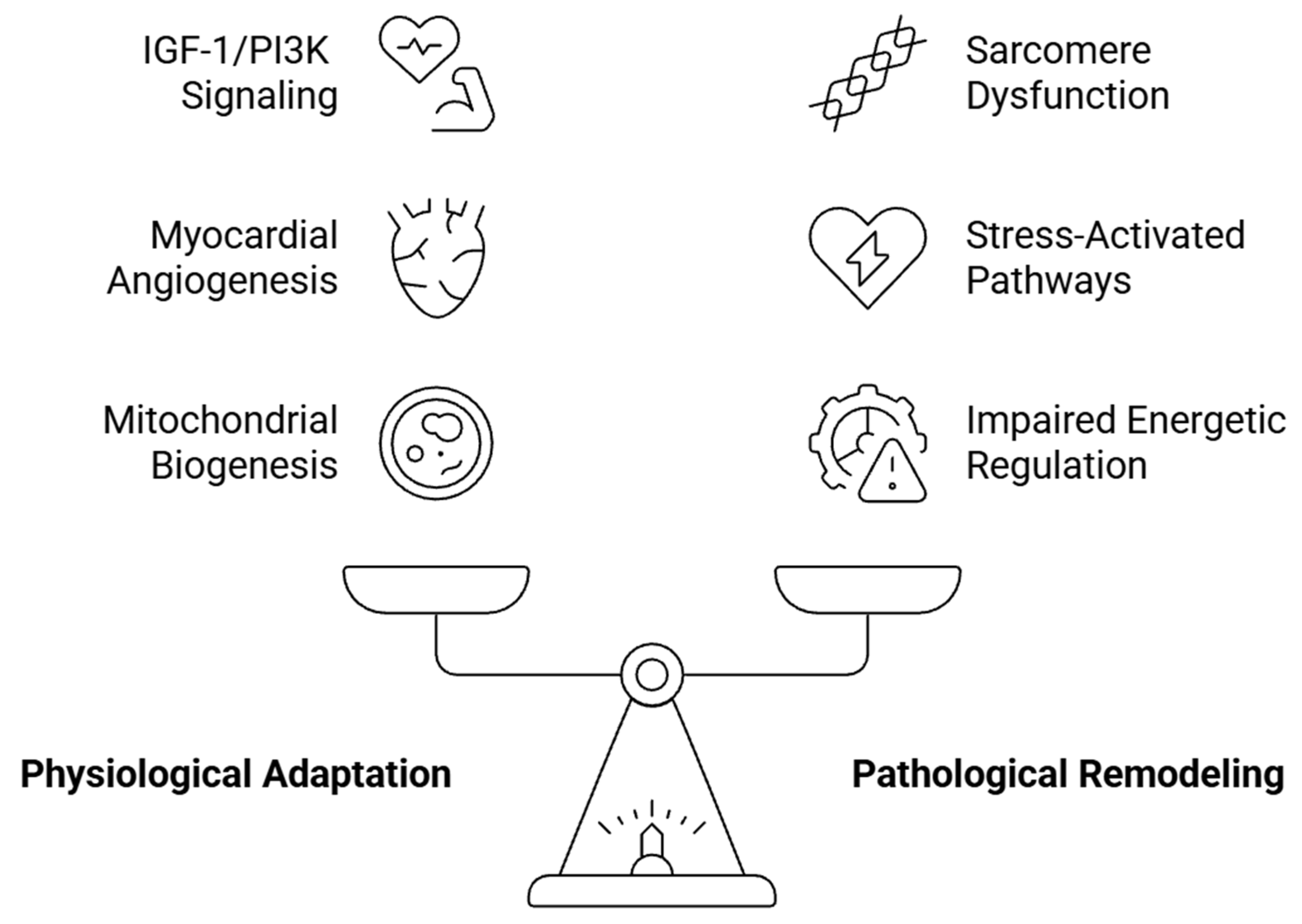
2. Physiological and Molecular Responses to Exercise
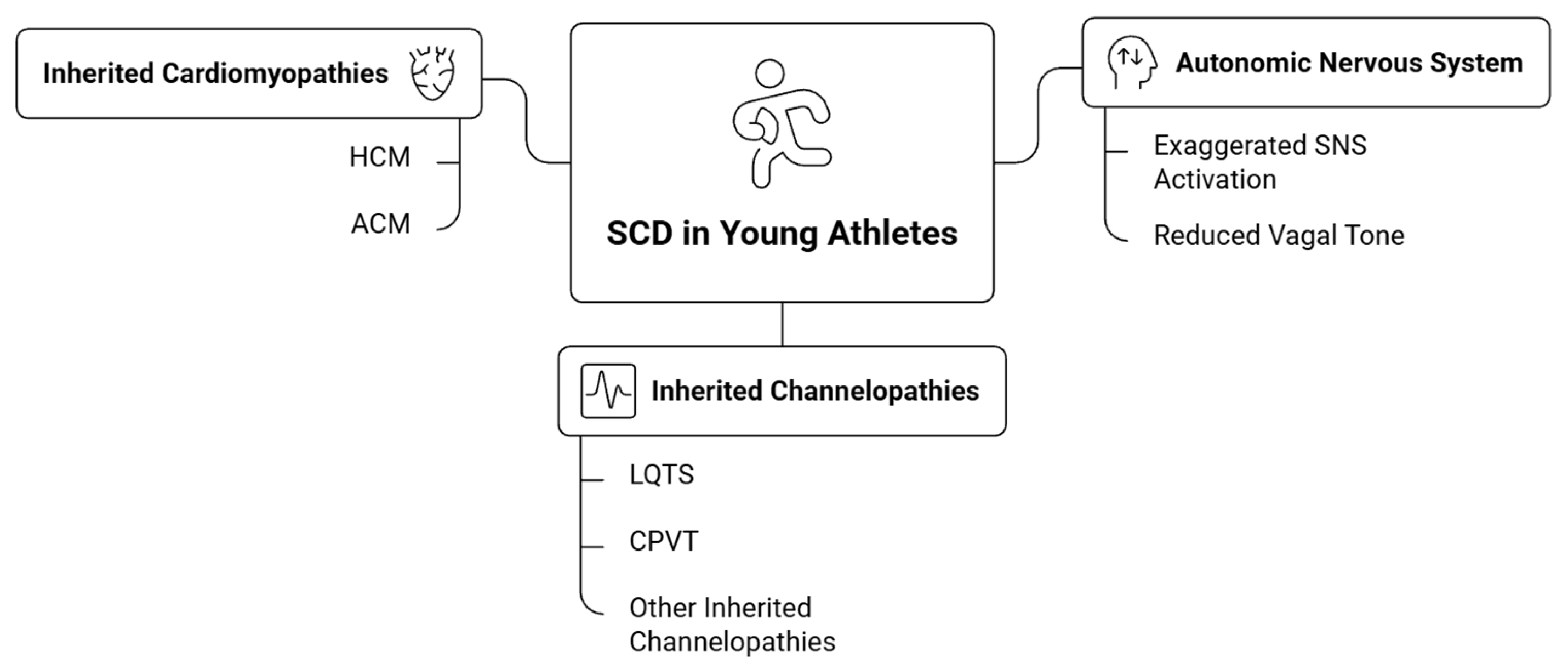
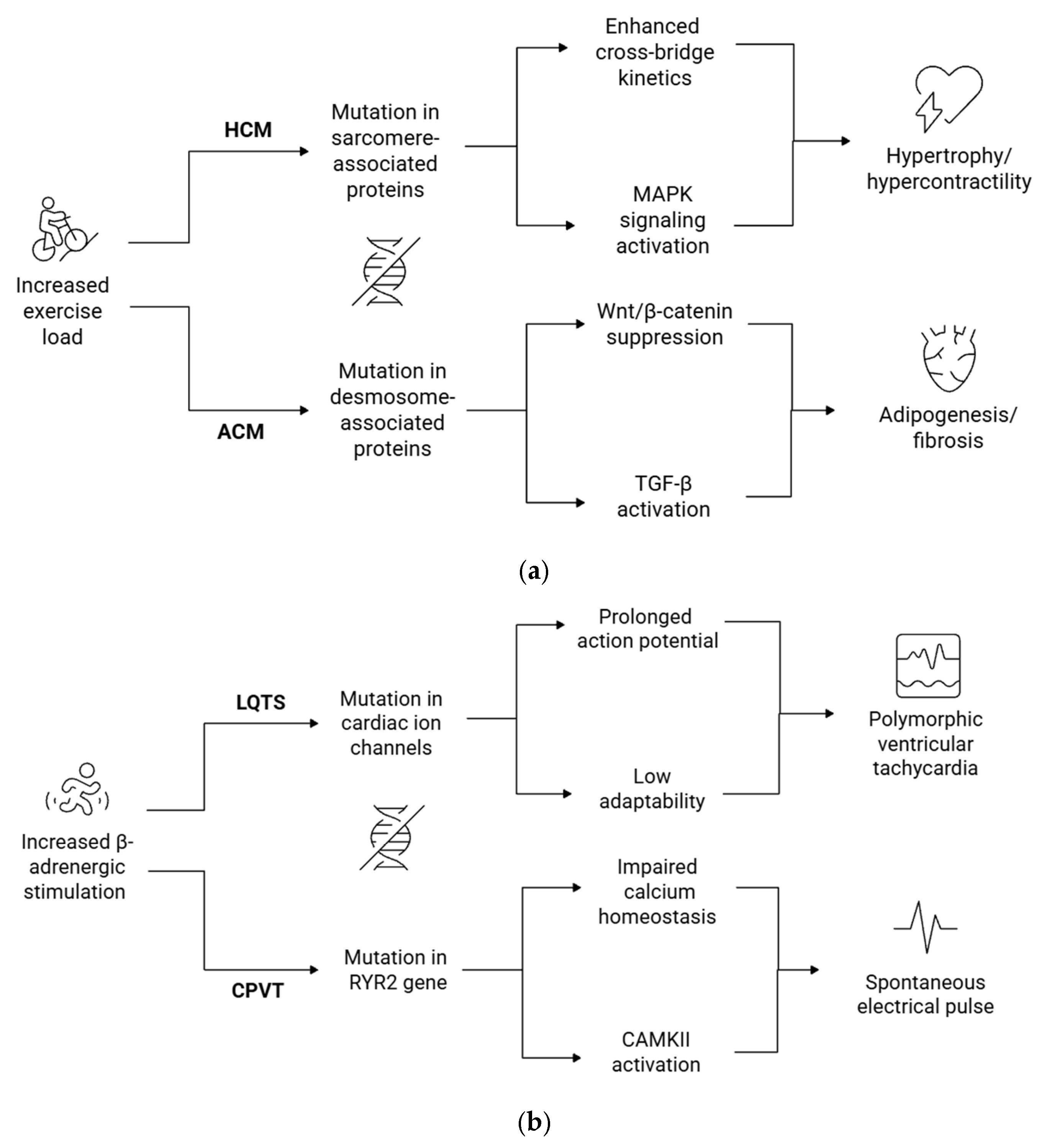
3. SCD in Athletes: Mutations and Molecular Pathways
3.1. HCM
3.2. ACM
3.3. LQTS
3.4. CPVT
3.5. Other Channelopathies
4. Physiological Impacts of Exercise on Underlying Cardiac Conditions
4.1. Autonomic Nervous System
4.2. Inflammatory Pathways
4.3. Mitochondrial and Metabolic Signaling
5. Molecular Markers in Genetic Testing for Cardiovascular Disease
5.1. Genotype-Positive, Phenotype-Negative Athlete Guidelines
5.2. Risk Stratification
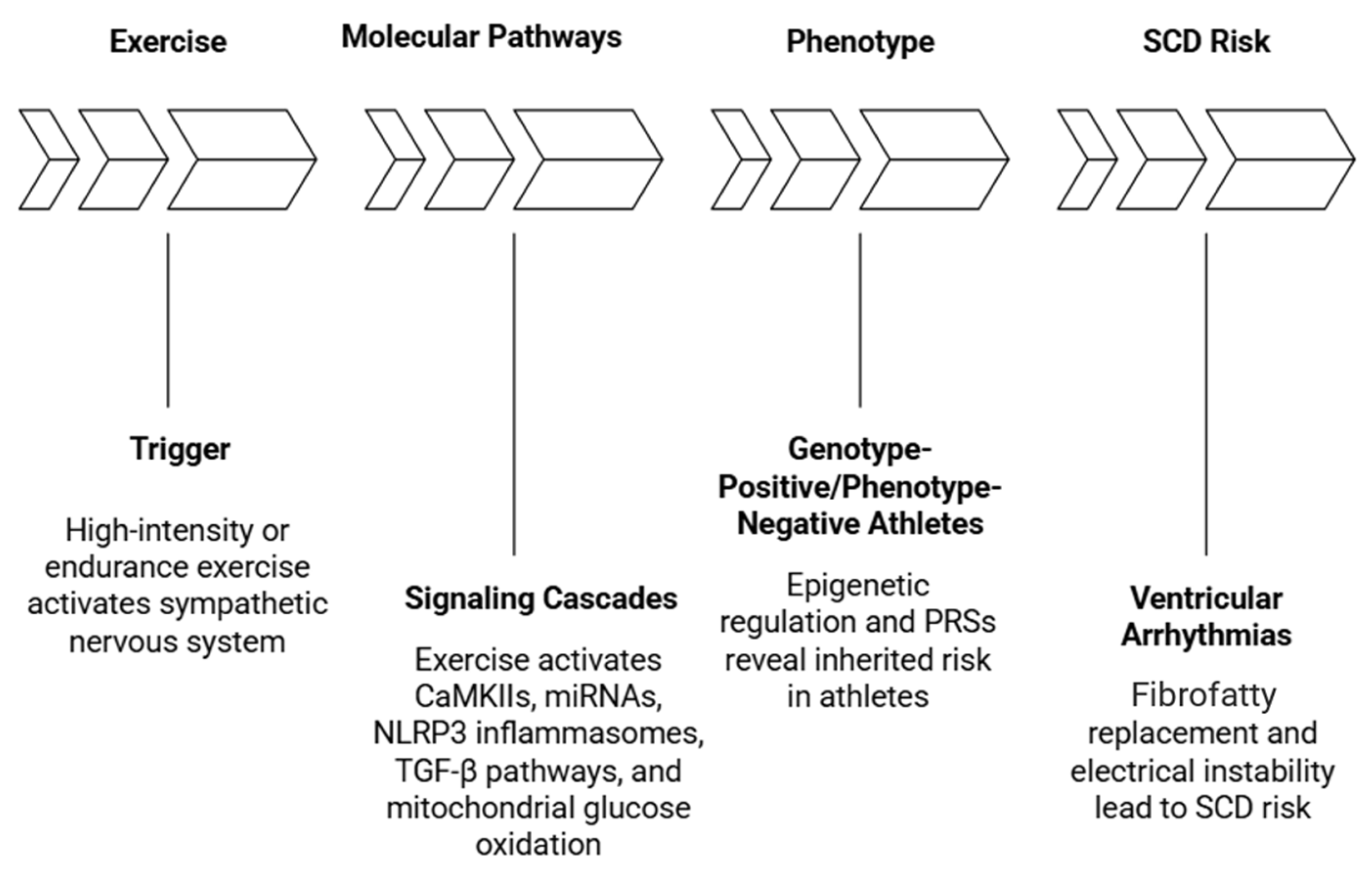
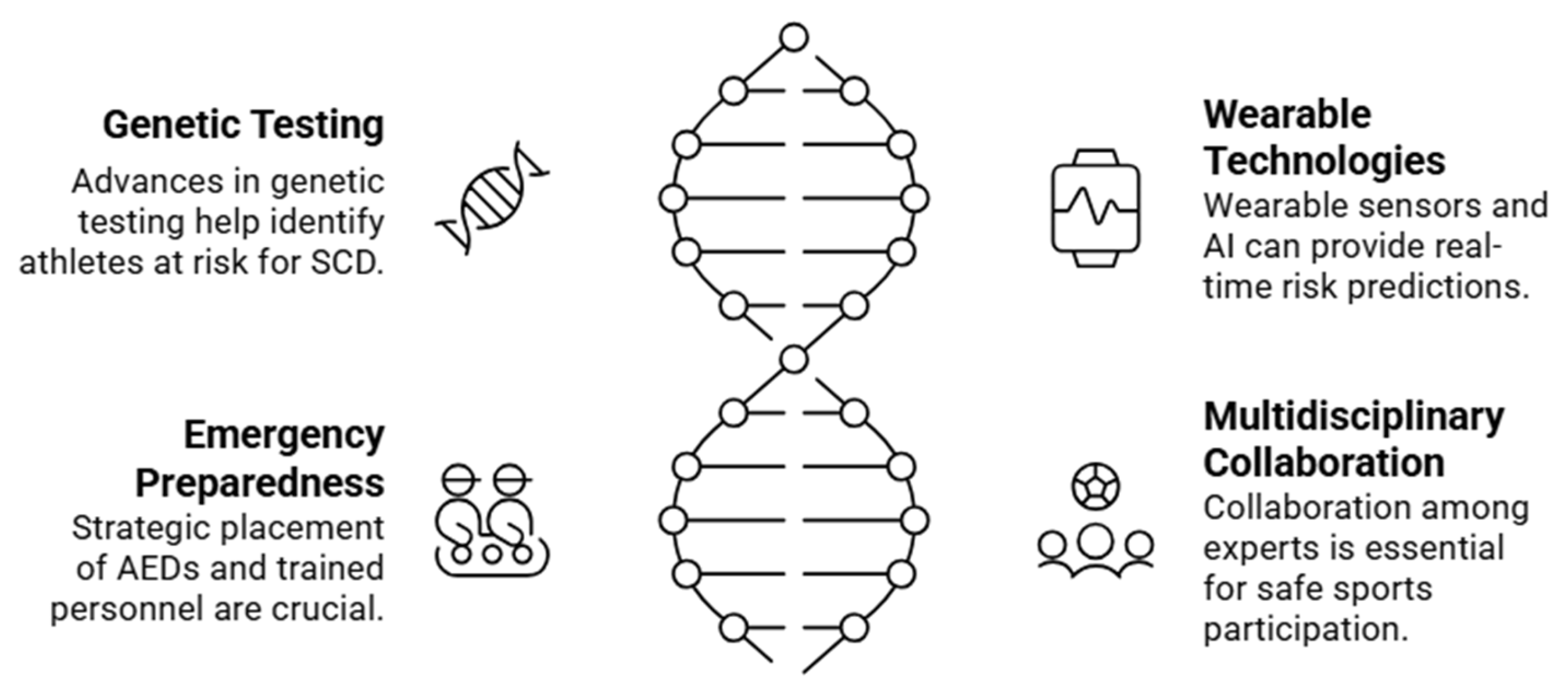
6. Future Perspectives
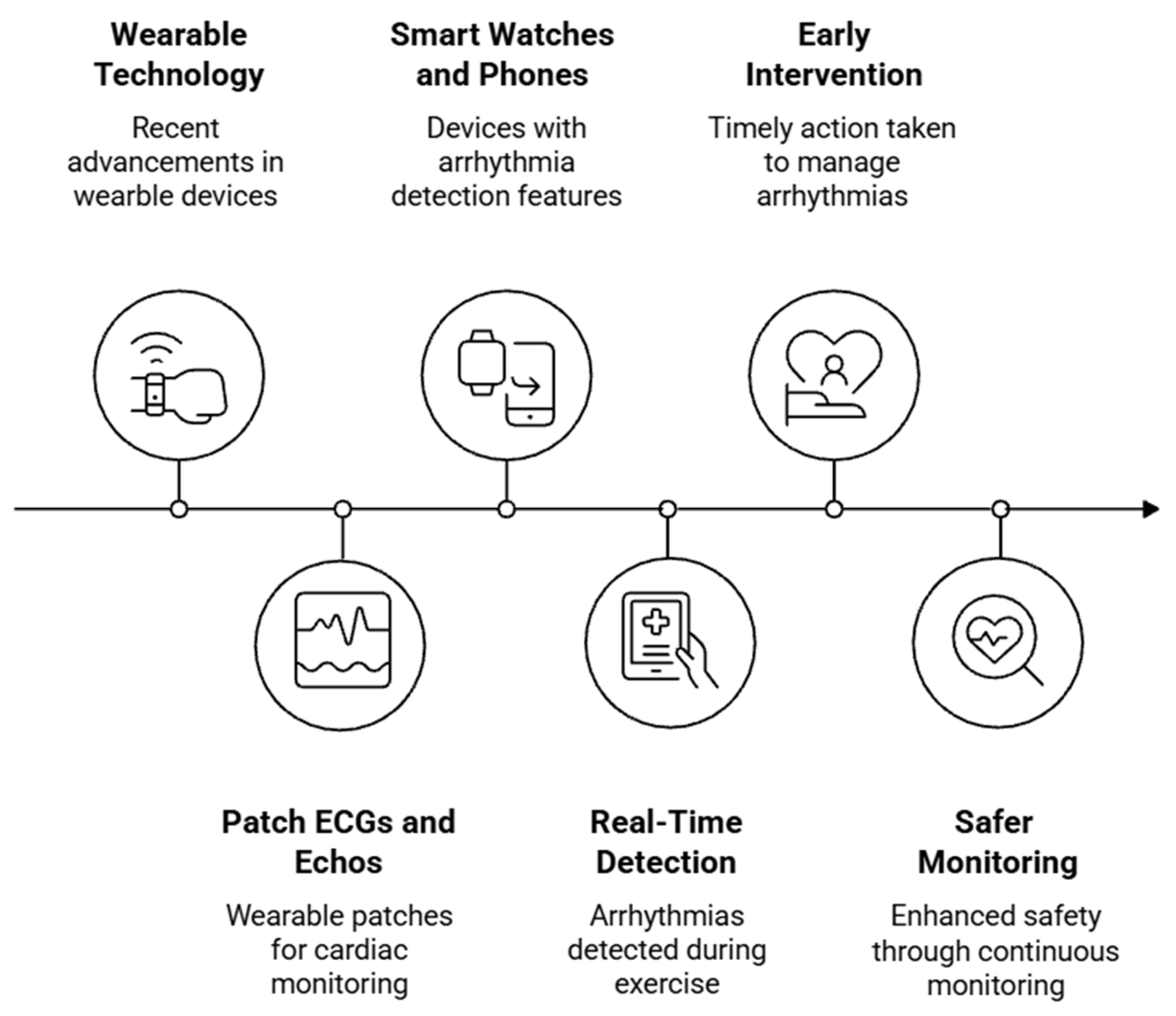
7. Integrating Wearables and AI into Genomics
AI-Driven Risk Stratification Models
8. Conclusions
Author Contributions
Funding
Data Availability Statement
Conflicts of Interest
References
- Petek, B.J.; Churchill, T.W.; Moulson, N.; Kliethermes, S.A.; Baggish, A.L.; Drezner, J.A.; Patel, M.R.; Ackerman, M.J.; Kucera, K.L.; Siebert, D.M.; et al. Sudden Cardiac Death in National Collegiate Athletic Association Athletes: A 20-Year Study. Circulation 2024, 149, 80–90. [Google Scholar] [CrossRef] [Scilit]
- Corrado, D.; Basso, C.; Rizzoli, G.; Schiavon, M.; Thiene, G. Does sports activity enhance the risk of sudden death in adolescents and young adults? J. Am. Coll. Cardiol. 2003, 42, 1959–1963. [Google Scholar] [CrossRef] [Scilit] [PubMed]
- Bagnall, R.D.; Weintraub, R.G.; Ingles, J.; Duflou, J.; Yeates, L.; Lam, L.; Davis, A.M.; Thompson, T.; Connell, V.; Wallace, J.; et al. A Prospective Study of Sudden Cardiac Death among Children and Young Adults. N. Engl. J. Med. 2016, 374, 2441–2452. [Google Scholar] [CrossRef] [Scilit] [PubMed]
- Lampert, R.; Harmon, K.G. Sudden Cardiac Arrest in Athletes. N. Engl. J. Med. 2026, 394, 268–280. [Google Scholar] [CrossRef] [Scilit]
- Peterson, D.F.; Kucera, K.; Thomas, L.C.; Maleszewski, J.; Siebert, D.; Lopez-Anderson, M.; Zigman, M.; Schattenkerk, J.; Harmon, K.G.; Drezner, J.A. Aetiology and incidence of sudden cardiac arrest and death in young competitive athletes in the USA: A 4-year prospective study. Br. J. Sports Med. 2021, 55, 1196–1203. [Google Scholar] [CrossRef] [Scilit] [PubMed] [PubMed Central]
- Malhotra, A.; Dhutia, H.; Finocchiaro, G.; Gati, S.; Beasley, I.; Clift, P.; Cowie, C.; Kenny, A.; Mayet, J.; Oxborough, D.; et al. Outcomes of Cardiac Screening in Adolescent Soccer Players. N. Engl. J. Med. 2018, 379, 524–534. [Google Scholar] [CrossRef] [Scilit] [PubMed]
- Oliver, T.E.; Sánchez-Hechavarría, M.E.; Carrazana-Escalona, R.; Blaha, C.A.; Sinoway, L.I.; Drew, R.C. Rapid adjustments to autonomic control of cardiac rhythm at the onset of isometric exercise in healthy young adults. Physiol. Rep. 2023, 11, e15616. [Google Scholar] [CrossRef] [Scilit] [PubMed] [PubMed Central]
- Dei, L.L.; Han, J.; Romano, S.; Sciarra, L.; Asimaki, A.; Papadakis, M.; Sharma, S.; Finocchiaro, G. Exercise Prescription in Arrhythmogenic Cardiomyopathy: Finding the Right Balance Between Risks and Benefits. J. Am. Heart Assoc. 2025, 14, e039125. [Google Scholar] [CrossRef] [Scilit] [PubMed] [PubMed Central]
- Tfelt-Hansen, J.; Garcia, R.; Albert, C.; Merino, J.; Krahn, A.; Marijon, E.; Basso, C.; Wilde, A.A.M.; Haugaa, K.H. Risk stratification of sudden cardiac death: A review. Europace 2023, 25, euad203. [Google Scholar] [CrossRef] [Scilit] [PubMed] [PubMed Central]
- Priori, S.G.; Wilde, A.A.; Horie, M.; Cho, Y.; Behr, E.R.; Berul, C.; Blom, N.; Brugada, J.; Chiang, C.E.; Huikuri, H.; et al. Executive summary: HRS/EHRA/APHRS expert consensus statement on the diagnosis and management of patients with inherited primary arrhythmia syndromes. Europace 2013, 15, 1389–1406. [Google Scholar] [CrossRef] [Scilit] [PubMed]
- Janik, M. Adaptive Changes in Endurance Athletes: A Review of Molecular, Echocardiographic, and Electrocardiographic Findings. Int. J. Mol. Sci. 2025, 26, 8329. [Google Scholar] [CrossRef] [Scilit] [PubMed]
- Pinckard, K.; Baskin, K.K.; Stanford, K.I. Effects of Exercise to Improve Cardiovascular Health. Front. Cardiovasc. Med. 2019, 6, 69. [Google Scholar] [CrossRef] [Scilit] [PubMed] [PubMed Central]
- Ostaiza-Cardenas, J.; Tobar, A.C.; Costa, S.C.; Calero, D.S.; López-Carrera, A.; Bermúdez, F.G.; Orellana-Manzano, A. Epigenetic modulation by life-style: Advances in diet, exercise, and mindfulness for disease prevention and health optimization. Front. Nutr. 2025, 12, 1632999. [Google Scholar] [CrossRef] [Scilit] [PubMed] [PubMed Central]
- Franklin, B.A.; Thompson, P.D.; Al-Zaiti, S.S.; Albert, C.M.; Hivert, M.F.; Levine, B.D.; Lobelo, F.; Madan, K.; Sharrief, A.Z.; Eijsvogels, T.M.H.; et al. Exercise-Related Acute Cardiovascular Events and Potential Deleterious Adaptations Following Long-Term Exercise Training: Placing the Risks into Perspective-An Update: A Scientific Statement from the American Heart Association. Circulation 2020, 141, e705–e736. [Google Scholar] [CrossRef] [Scilit] [PubMed]
- Claessen, G.; Eijsvogels, T.M.H.; Albert, C.M.; Baggish, A.L.; Levine, B.D.; Marijon, E.; Michos, E.D.; La Gerche, A. Coronary atherosclerosis in athletes: Emerging concepts and preventive strategies. Eur. Heart J. 2025, 46, 890–903. [Google Scholar] [CrossRef] [Scilit] [PubMed] [PubMed Central]
- Bass-Stringer, S. IGF1–PI3K-Induced Physiological Cardiac Hypertrophy: Implications for New Heart Failure Therapies, Biomarkers, and Predicting Cardiotoxicity. Cells 2020, 10, 637–647. [Google Scholar] [CrossRef] [Scilit] [PubMed]
- Lim, J. The Effects of Exercise Training on Mitochondrial Function in Cardiovascular Health and Disease. Int. J. Mol. Sci. 2022, 23, 12559. [Google Scholar] [CrossRef] [Scilit] [PubMed]
- Sacchetto, C.; Sequeira, V.; Bertero, E.; Dudek, J.; Maack, C.; Calore, M. Metabolic Alterations in Inherited Cardiomyopathies. J. Clin. Med. 2019, 8, 2195. [Google Scholar] [CrossRef] [Scilit] [PubMed] [PubMed Central]
- Pelliccia, A.; Sharma, S.; Gati, S.; Bäck, M.; Börjesson, M.; Caselli, S.; Collet, J.-P.; Corrado, D.; Drezner, J.A.; Halle, M.; et al. 2020 ESC Guidelines on sports cardiology and exercise in patients with cardiovascular disease. Eur. Heart J. 2021, 42, 17–96. [Google Scholar] [CrossRef] [Scilit]
- Martinez, M.W.; Kim, J.H.; Shah, A.B.; Phelan, D.; Emery, M.S.; Wasfy, M.M.; Fernandez, A.B.; Bunch, T.J.; Dean, P.; Danielian, A.; et al. Exercise-Induced Cardiovascular Adaptations and Approach to Exercise and Cardiovascular Disease: JACC State-of-the-Art Review. J. Am. Coll. Cardiol. 2021, 78, 1453–1470. [Google Scholar] [CrossRef] [Scilit] [PubMed]
- Caturano, A.; Vetrano, E.; Galiero, R.; Salvatore, T.; Docimo, G.; Epifani, R.; Alfano, M.; Sardu, C.; Marfella, R.; Rinaldi, L.; et al. Cardiac Hypertrophy: From Pathophysiological Mechanisms to Heart Failure Development. Rev. Cardiovasc. Med. 2022, 23, 165. [Google Scholar] [CrossRef] [Scilit] [PubMed] [PubMed Central]
- Feng, Y.; Rao, Z.; Tian, X.; Hu, Y.; Yue, L.; Meng, Y.; Zhong, Q.; Chen, W.; Xu, W.; Li, H.; et al. Endurance training enhances skeletal muscle mitochondrial respiration by promoting MOTS-c secretion. Free. Radic. Biol. Med. 2025, 227, 619–628. [Google Scholar] [CrossRef] [Scilit]
- Yang, B.; Yu, Q.; Chang, B.; Guo, Q.; Xu, S.; Yi, X.; Cao, S. MOTS-c interacts synergistically with exercise intervention to regulate PGC-1α expression, attenuate insulin resistance and enhance glucose metabolism in mice via AMPK signaling pathway. Biochim. Biophys. Acta Mol. Basis Dis. 2021, 1867, 166126. [Google Scholar] [CrossRef] [Scilit] [PubMed]
- Besnier, F.; Labrunée, M.; Pathak, A.; Traon, A.P.-L.; Galès, C.; Sénard, J.-M.; Guiraud, T. Exercise training-induced modification in autonomic nervous system: An update for cardiac patients. Ann. Phys. Rehabil. Med. 2017, 60, 27–35. [Google Scholar] [CrossRef] [Scilit]
- Matsumura, S.; Watanabe, K.; Saijo, N.; Ooishi, Y.; Kimura, T.; Kashino, M. Positive Relationship Between Precompetitive Sympathetic Predominance and Competitive Performance in Elite Extreme Sports Athletes. Front. Sports Act. Living 2021, 3, 712439. [Google Scholar] [CrossRef] [Scilit] [PubMed] [PubMed Central]
- Sterkowicz-Przybycień, K.; Purenović-Ivanović, T. Measurement of Training and Competition Loads in Elite Rhythmic Gymnastics: A Systematic Literature Review. Appl. Sci. 2024, 14, 6218. [Google Scholar] [CrossRef] [Scilit]
- Wilczyński, R.; Wdowiak, W.; Wrona, W.; Owsik, J.; Ludwisiak, H.; Dorożalska, M. Sudden cardiac arrest and sudden cardiac death in athletes: An updated perspective. Health Probl. Civiliz. 2026. [Google Scholar] [CrossRef] [Scilit]
- Wasfy, M.M.; Hutter, A.M.; Weiner, R.B. Sudden Cardiac Death in Athletes. Methodist. Debakey Cardiovasc. J. 2016, 12, 76–80. [Google Scholar] [CrossRef] [Scilit] [PubMed] [PubMed Central]
- Chowns, J.; Hoffman-Andrews, L.; Marzolf, A.; Reza, N.; Owens, A.T. Cardiovascular Genetics: The Role of Genetics in Predicting Risk. Med. Clin. N. Am. 2022, 106, 313–324. [Google Scholar] [CrossRef] [Scilit] [PubMed] [PubMed Central]
- Zheng, S.L.; Jurgens, S.J.; McGurk, K.A.; Xu, X.; Grace, C.; Theotokis, P.I.; Buchan, R.J.; Francis, C.; de Marvao, A.; Curran, L.; et al. Evaluation of polygenic scores for hypertrophic cardiomyopathy in the general population and across clinical settings. Nat. Genet. 2025, 57, 563–571. [Google Scholar] [CrossRef] [Scilit] [PubMed] [PubMed Central]
- Marian, A.J. Hypertrophic Cardiomyopathy: Genetics, Pathogenesis, Clinical Manifestations, Diagnosis, and Therapy. Circ. Res. 2017, 121, 749–770. [Google Scholar] [CrossRef] [Scilit]
- Frey, N.; Luedde, M.; Katus, H. Mechanisms of disease: Hypertrophic cardiomyopathy. Nat. Rev. Cardiol. 2012, 9, 91–100. [Google Scholar] [CrossRef] [Scilit]
- Cheng, P.; Zhang, X.; Si, Y.; Yin, Q.; Chen, L.; Ru, Q.; Chu, C.; Xiang, H.; Liao, L.; Ran, H.; et al. Regulatory mechanisms of exercise-induced physiological cardiac hypertrophy: Progress and prospects. Front. Cardiovasc. Med. 2025, 12, 1657950. [Google Scholar] [CrossRef] [Scilit] [PubMed] [PubMed Central]
- Gerull, B.; Brodehl, A. Insights into Genetics and Pathophysiology of Arrhythmogenic Cardiomyopathy. Curr. Heart Fail. Rep. 2021, 18, 378–390. [Google Scholar] [CrossRef] [Scilit] [PubMed] [PubMed Central]
- Austin, K.M.; Trembley, M.A.; Chandler, S.F.; Sanders, S.P.; Saffitz, J.E.; Abrams, D.J.; Pu, W.T. Molecular mechanisms of arrhythmogenic cardiomyopathy. Nat. Rev. Cardiol. 2019, 16, 519–537. [Google Scholar] [CrossRef] [Scilit] [PubMed] [PubMed Central]
- Gerche, A.L.; Heidbuchel, H. Can Intensive Exercise Harm the Heart? Circulation 2014, 130, 992–1002. [Google Scholar] [CrossRef] [Scilit]
- Stadiotti, I.; Catto, V.; Casella, M.; Tondo, C.; Pompilio, G.; Sommariva, E. Arrhythmogenic Cardiomyopathy: The Guilty Party in Adipogenesis. J. Cardiovasc. Transl. Res. 2017, 10, 446–454. [Google Scholar] [CrossRef] [Scilit] [PubMed] [PubMed Central]
- Gao, S.; Puthenvedu, D.; Lombardi, R.; Chen, S.N. Established and Emerging Mechanisms in the Pathogenesis of Arrhythmogenic Cardiomyopathy. Int. J. Mol. Sci. 2020, 21, 6320. [Google Scholar] [CrossRef] [Scilit] [PubMed]
- Schwartz, P.J.; Priori, S.G.; Spazzolini, C.; Moss, A.J.; Vincent, G.M.; Napolitano, C.; Denjoy, I.; Guicheney, P.; Breithardt, G.; Keating, M.T.; et al. Genotype-phenotype correlation in the long-QT syndrome: Gene-specific triggers for life-threatening arrhythmias. Circulation 2001, 103, 89–95. [Google Scholar] [CrossRef] [Scilit]
- Zhu, W.; Bian, X.; Lv, J. From genes to clinical management: A comprehensive review of long QT syndrome pathogenesis and treatment. Heart Rhythm. O2 2024, 5, 573–586. [Google Scholar] [CrossRef] [Scilit]
- Schnell, F.; Behar, N.; Carré, F. Long-QT Syndrome and Competitive Sports. Arrhythm. Electrophysiol. Rev. 2018, 7, 187–192. [Google Scholar] [CrossRef] [Scilit] [PubMed] [PubMed Central]
- Zeppenfeld, K.; Tfelt-Hansen, J.; de Riva, M.; Winkel, B.G.; Behr, E.R.; Blom, N.A.; Charron, P.; Corrado, D.; Dagres, N.; de Chillou, C.; et al. 2022 ESC Guidelines for the management of patients with ventricular arrhythmias and the prevention of sudden cardiac death: Developed by the task force for the management of patients with ventricular arrhythmias and the prevention of sudden cardiac death of the European Society of Cardiology (ESC) Endorsed by the Association for European Paediatric and Congenital Cardiology (AEPC). Eur. Heart J. 2022, 43, 3997–4126. [Google Scholar] [CrossRef] [Scilit]
- Schneider, L.; Begovic, M.; Zhou, X.; Hamdani, N.; Akin, I.; El-Battrawy, I. Catecholaminergic Polymorphic Ventricular Tachycardia: Advancing from Molecular Insights to Preclinical Models. J. Am. Heart Assoc. 2025, 14, e038308. [Google Scholar] [CrossRef] [Scilit] [PubMed] [PubMed Central]
- Swaminathan, P.D.; Purohit, A.; Hund, T.J.; Anderson, M.E. Calmodulin-dependent protein kinase II: Linking heart failure and arrhythmias. Circ. Res. 2012, 110, 1661–1677. [Google Scholar] [CrossRef] [Scilit] [PubMed] [PubMed Central]
- Shah, C.; Jiwani, S.; Limbu, B.; Weinberg, S.; Deo, M. Delayed afterdepolarization-induced triggered activity in cardiac purkinje cells mediated through cytosolic calcium diffusion waves. Physiol. Rep. 2019, 7, e14296. [Google Scholar] [CrossRef] [Scilit] [PubMed] [PubMed Central]
- Mizumaki, K.; Fujiki, A.; Nishida, K.; Sakabe, M.; Tsuneda, T.; Sugao, M.; Iwamoto, J.; Nagasawa, H.; Inoue, H. Bradycardia-dependent ECG changes in Brugada syndrome. Circ. J. 2006, 70, 896–901. [Google Scholar] [CrossRef] [Scilit] [PubMed]
- Scarà, A.; Sciarra, L.; Russo, A.D.; Cavarretta, E.; Palamà, Z.; Zorzi, A.; Brancati, F.; Compagnucci, P.; Casella, M.; Novelli, V.; et al. Brugada Syndrome in Sports Cardiology: An Expert Opinion Statement of the Italian Society of Sports Cardiology (SICSport). Am. J. Cardiol. 2025, 244, 9–17. [Google Scholar] [CrossRef] [Scilit]
- Dewi, I.P.; Dharmadjati, B.B. Short QT syndrome: The current evidences of diagnosis and management. J. Arrhythm. 2020, 36, 962–966, Erratum in J. Arrhythm. 2024, 40, 653. https://doi.org/10.1002/joa3.13043. [Google Scholar] [CrossRef] [Scilit] [PubMed] [PubMed Central]
- Bjerregaard, P.; Nallapaneni, H.; Gussak, I. Short QT interval in clinical practice. J. Electrocardiol. 2010, 43, 390–395. [Google Scholar] [CrossRef] [Scilit]
- Reyes Gaido, O.E.; Nkashama, L.J.; Schole, K.L.; Wang, Q.; Umapathi, P.; Mesubi, O.O.; Konstantinidis, K.; Luczak, E.D.; Anderson, M.E. CaMKII as a Therapeutic Target in Cardiovascular Disease. Annu. Rev. Pharmacol. Toxicol. 2023, 63, 249–272. [Google Scholar] [CrossRef] [Scilit] [PubMed] [PubMed Central]
- Moss, A.J.; Kass, R.S. Long QT syndrome: From channels to cardiac arrhythmias. J. Clin. Investig. 2005, 115, 2018–2024. [Google Scholar] [CrossRef] [Scilit] [PubMed] [PubMed Central]
- Van Guilder, G.P.; Preston, C.C.; Munce, T.A.; Faustino, R.S. Impacts of circulating microRNA in exercise-induced vascular remodeling. Am. J. Physiol.-Heart Circ. Physiol. 2021, 320, H2401–H2415. [Google Scholar] [CrossRef] [Scilit]
- Fan, J.; Ren, M.; Adhikari, B.K.; Wang, H.; He, Y. The NLRP3 Inflammasome as a Novel Therapeutic Target for Cardiac Fibrosis. J. Inflamm. Res. 2022, 15, 3847–3858. [Google Scholar] [CrossRef] [Scilit] [PubMed] [PubMed Central]
- Cui, P.; Zhao, X.; Liu, J.; Chen, X.; Gao, Y.; Tao, K.; Wang, C.; Zhang, X. miR-146a interacting with lncRNA EPB41L4A-AS1 and lncRNA SNHG7 inhibits proliferation of bone marrow-derived mesenchymal stem cells. J. Cell. Physiol. 2020, 235, 3292–3308. [Google Scholar] [CrossRef] [Scilit] [PubMed]
- Karakasis, P.; Pamporis, K.; Theofilis, P.; Milaras, N.; Vlachakis, P.K.; Grigoriou, K.; Patoulias, D.; Karamitsos, T.; Antoniadis, A.P.; Fragakis, N. Inflammasome signaling in cardiac arrhythmias: Linking inflammation, fibrosis, and electrical remodeling. Int. J. Mol. Sci. 2025, 26, 5954. [Google Scholar] [CrossRef] [Scilit]
- Jacobsen, A.P.; Chiampas, K.; Muller, S.A.; Gasperetti, A.; Yanek, L.R.; Carrick, R.T.; Gordon, C.; Tichnell, C.; Murray, B.; Calkins, H.; et al. Endurance Exercise Promotes Episodes of Myocardial Injury in Individuals with a Pathogenic Desmoplakin (DSP) Variant. Heart Rhythm. 2024, 22, 2924–2931. [Google Scholar] [CrossRef] [Scilit] [PubMed]
- Dass, S.; Cochlin, L.E.; Suttie, J.; Holloway, C.; Rodgers, C.T.; Tyler, D.; Karamitsos, T.; Clarke, K.; Watkins, H.; Neubauer, S. Derangement of cardiac energy metabolism is acutely exacerbated during exercise in hypertrophic cardiomyopathy, independent of hypertrophy or late gadolinium burden. J. Cardiovasc. Magn. Reson. 2012, 14, O75. [Google Scholar] [CrossRef] [Scilit] [PubMed Central]
- Lee, C.L.; Chuang, C.K.; Chiu, H.C.; Chang, Y.H.; Tu, Y.R.; Lo, Y.T.; Lin, H.Y.; Lin, S.P. Understanding Genetic Screening: Harnessing Health Information to Prevent Disease Risks. Int. J. Med. Sci. 2025, 22, 903–919. [Google Scholar] [CrossRef] [Scilit] [PubMed] [PubMed Central]
- Lampert, R.; Chung, E.H.; Ackerman, M.J.; Arroyo, A.R.; Darden, D.; Deo, R.; Dolan, J.; Etheridge, S.P.; Gray, B.R.; Harmon, K.G.; et al. 2024 HRS expert consensus statement on arrhythmias in the athlete: Evaluation, treatment, and return to play. Heart Rhythm 2024, 21, e151–e252. [Google Scholar] [CrossRef] [Scilit]
- O’Sullivan, J.W.; Raghavan, S.; Marquez-Luna, C.; Luzum, J.A.; Damrauer, S.M.; Ashley, E.A.; O’donnell, C.J.; Willer, C.J.; Natarajan, P.; Cardiology, C.O.C.; et al. Polygenic risk scores for cardiovascular disease: A scientific statement from the American Heart Association. Circulation 2022, 146, e93–e118. [Google Scholar] [CrossRef] [Scilit]
- Wu, Y. The epigenetic landscape of exercise in cardiac health and disease. J. Sport Health Sci. 2021, 10, 648–659. [Google Scholar] [CrossRef] [Scilit] [PubMed]
- Lira, V.A.; Benton, C.R.; Yan, Z.; Bonen, A. PGC-1alpha regulation by exercise training and its influences on muscle function and insulin sensitivity. Am. J. Physiol. Endocrinol. Metab. 2010, 299, E145–E161. [Google Scholar] [CrossRef] [Scilit] [PubMed] [PubMed Central]
- Melo, S.F.; Fernandes, T.; Baraúna, V.G.; Matos, K.C.; Santos, A.A.S.; Tucci, P.J.F.; Oliveira, E.M. Expression of microRNA-29 and collagen in cardiac muscle after swimming training in myocardial-infarcted rats. Cell Physiol. Biochem. 2014, 33, 657–669. [Google Scholar] [CrossRef] [Scilit]
- Aragam, K.G.; Natarajan, P. Polygenic Scores to Assess Atherosclerotic Cardiovascular Disease Risk: Clinical Perspectives and Basic Implications. Circ. Res. 2020, 126, 1159–1177. [Google Scholar] [CrossRef] [Scilit] [PubMed] [PubMed Central]
- Lazarte, J.; Dron, J.S.; McIntyre, A.D.; Skanes, A.C.; Gula, L.J.; Tang, A.S.; Tadros, R.; Laksman, Z.W.; Hegele, R.A.; Roberts, J.D. Evaluating Polygenic Risk Scores in “Lone” Atrial Fibrillation. CJC Open 2021, 3, 751–757. [Google Scholar] [CrossRef] [Scilit] [PubMed] [PubMed Central]
- Paldino, A.; Rossi, M.; Ferro, M.D.; Tavčar, I.; Behr, E.; Sharma, S.; Papadakis, M.; Sinagra, G.; Finocchiar, G.O. Sport and exercise in genotype positive (+) phenotype negative (−) individuals: Current dilemmas and future perspectives. Eur. J. Prev. Cardiol. 2023, 30, 871–883. [Google Scholar] [CrossRef] [Scilit]
- Gersh, B.J.; Maron, B.J.; Bonow, R.O.; Dearani, J.A.; Fifer, M.A.; Link, M.S.; Naidu, S.S.; Nishimura, R.A.; Ommen, S.R.; Rakowski, H.; et al. 2011 ACCF/AHA Guideline for the Diagnosis and Treatment of Hypertrophic Cardiomyopathy: A report of the American College of Cardiology Foundation/American Heart Association Task Force on Practice Guidelines. Developed in collaboration with the American Association for Thoracic Surgery, American Society of Echocardiography, American Society of Nuclear Cardiology, Heart Failure Society of America, Heart Rhythm Society, Society for Cardiovascular Angiography and Interventions, and Society of Thoracic Surgeons. J. Am. Coll. Cardiol. 2011, 58, e212–e260. [Google Scholar] [CrossRef] [Scilit] [PubMed]
- Basso, C.; Corrado, D.; Marcus, F.I.; Nava, A.; Thiene, G. Arrhythmogenic right ventricular cardiomyopathy. Lancet 2009, 373, 1289–1300. [Google Scholar] [CrossRef] [Scilit] [PubMed]
- Shibbani, K.; Abdulkarim, A.; Budts, W.; Roos–Hesselink, J.; Müller, J.; Shafer, K.; Porayette, P.; Zaidi, A.; Kreutzer, J.; Alsaied, T. Participation in Competitive Sports by Patients with Congenital Heart Disease: AHA/ACC and EAPC/ESC/AEPC Guidelines Comparison. JACC 2024, 83, 772–782. [Google Scholar] [CrossRef] [Scilit] [PubMed]
- Kim, J.H.; Baggish, A.L.; Levine, B.D.; Ackerman, M.J.; Day, S.M.; Dineen, E.H.; Guseh, J.S.; La Gerche, A.; Lampert, R.; Martinez, M.W.; et al. Clinical Considerations for Competitive Sports Participation for Athletes with Cardiovascular Abnormalities: A Scientific Statement from the American Heart Association and American College of Cardiology. Circulation 2025, 151, 11, Correction in Circulation 2025, 151, e864. https://doi.org/10.1161/CIR.0000000000001326. [Google Scholar]
- Rao, S.V.; O’Donoghue, M.L.; Ruel, M.; Rab, T.; Tamis-Holland, J.E.; Alexander, J.H.; Baber, U.; Baker, H.; Cohen, M.G.; Cruz-Ruiz, M.; et al. 2025 ACC/AHA/ACEP/NAEMSP/SCAI Guideline for the Management of Patients with Acute Coronary Syndromes: A Report of the American College of Cardiology/American Heart Association Joint Committee on Clinical Practice Guidelines. Circulation 2025, 151, e771–e862, Erratum in Circulation. 2025, 152, e402. https://doi.org/10.1161/CIR.0000000000001397. [Google Scholar] [CrossRef] [Scilit]
- Mahindru, A.; Patil, P.; Agrawal, V. Role of Physical Activity on Mental Health and Well-Being: A Review. Cureus 2023, 15, e33475. [Google Scholar] [CrossRef] [Scilit] [PubMed] [PubMed Central]
- Martinez, K.A.; Bos, J.M.; Baggish, A.L.; Phelan, D.M.; Tobert, K.E.; Newman, D.B.; Scherer, E.; Petek, B.J.; Ackerman, M.J.; Martinez, M.W. Return-to-Play for Elite Athletes with Genetic Heart Diseases Predisposing to Sudden Cardiac Death. J. Am. Coll. Cardiol. 2023, 82, 661–670. [Google Scholar] [CrossRef] [Scilit] [PubMed]
- Prior, D.; La Gerche, A. Exercise and Arrhythmogenic Right Ventricular Cardiomyopathy. Heart Lung Circ. 2020, 29, 547–555. [Google Scholar] [CrossRef] [Scilit]
- Palermi, S.; Vecchiato, M.; Saglietto, A.; Niederseer, D.; Oxborough, D.; Ortega-Martorell, S.; Olier, I.; Castelletti, S.; Baggish, A.; Maffessantiet, F.; et al. Unlocking the potential of artificial intelligence in sports cardiology. Eur. J. Prev. Cardiol. 2024, 31, 470–482. [Google Scholar] [CrossRef] [Scilit]
- Marvasti, T.B.; Gao, Y.; Murray, K.R.; Hershman, S.; McIntosh, C.; Moayedi, Y. Unlocking Tomorrow’s Health Care: Expanding the Clinical Scope of Wearables by Applying Artificial Intelligence. Can. J. Cardiol. 2024, 40, 1934–1945. [Google Scholar] [CrossRef] [Scilit] [PubMed]
- DeGroat, W.; Abdelhalim, H.; Peker, E.; Sheth, N.; Ahmed, Z. Multimodal AI/ML for discovering novel biomarkers and predicting disease using multi-omics profiles of patients with cardiovascular diseases. Sci. Rep. 2024, 14, 26503, Erratum in Sci. Rep. 2025, 15, 19417. https://doi.org/10.1038/s41598-025-03203-4. [Google Scholar] [CrossRef] [Scilit]
- Khera, R.; Oikonomou, E.K.; Nadkarni, G.N.; Morley, J.R.; Wiens, J.; Butte, A.J.; Topol, E.J. Transforming Cardiovascular Care with Artificial Intelligence: From Discovery to Practice: JACC State-of-the-Art Review. J. Am. Coll. Cardiol. 2024, 84, 97–114. [Google Scholar] [CrossRef] [Scilit] [PubMed]
- Popa, E.; Hostiuc, S. Molecular Pathogenesis of Arrhythmogenic Cardiomyopathy: Mechanisms and Therapeutic Perspectives. Biomolecules 2025, 15, 1512. [Google Scholar] [CrossRef] [Scilit] [PubMed]



| HCM | ACM | CPVT | LQTS | |
|---|---|---|---|---|
| Main Phenotype | Unexplained LV hypertrophy, myocyte disarray, diastolic dysfunction, myocardial fibrosis, ventricular arrhythmia/ SCD risk. | Fibrofatty myocardial replacement, ventricular dysfunction, ventricular arrhythmias; may involve RV, LV, or both. | Structurally normal heart with exercise- or emotion-triggered bidirectional/polymorphic VT. | QT prolongation, delayed repolarization, Torsade de Pointes, syncope, or SCD. |
| Genes (MIM) | MYH7 (160760) MYBPC3 (600958) TNNT2 (191045) TNNI3 (191044) TPM1 (191030) Less commonly Z-disk and non-sarcomeric genes | PKP2 (602861) DSP (125647) JUP (173325) DSG2 (125671) DSC2 (125645) Non-desmosomal genes | RYR2 (180902) CASQ2 (114251) TRDN (603283) CALM1 (114180) CALM2 (114182) CALM3 (114183) | KCNQ1 (604115) KCNH2 (152427) SCN5A (600163) Additional rarer LQTS |
| Molecular Pathways | Sarcomeric force generation abnormalities, altered cross-bridge kinetics, increased myofilament calcium sensitivity, energetic inefficiency, MAPK/calcineurin signaling, fibrosis. | Desmosomal/intercalated disk disruption, impaired cytoskeletal coupling, altered gap–junction and sodium channel organization, Hippo activation, Wnt/β-catenin suppression, TGF-β/fibrotic remodeling. | Abnormal SR calcium release, RYR2 destabilization, impaired calsequestrin buffering, diastolic calcium leak, delayed afterdepolarizations, CaMKII-mediated proarrhythmia. | Reduced repolarization reserve due to impaired potassium currents or persistent sodium current; genotype-specific adrenergic, auditory/emotional, or rest/sleep triggers. |
| Clinical Relevance | Important cause of athlete SCD and diagnostic overlap with athlete’s heart; exercise recommendations increasingly individualized using phenotype severity, symptoms, family history, arrhythmia burden, imaging, and shared decision-making. | Strongest evidence for exercise-modified penetrance/progression among inherited cardiomyopathies; high-intensity endurance exercise is generally discouraged in phenotype-positive disease and often in high-risk genotype-positive carriers, especially desmosomal disease. | High relevance to exertional syncope/SCD despite normal imaging; diagnosis depends on exercise testing, epinephrine challenge, genetic testing, and family evaluation; treatment includes β-blockers, flecainide, exercise modification, and selected implantable cardioverter-defibrillator (ICD)/left cardiac sympathetic denervation (LCSD) strategies. | Genotype-specific counseling is central; LQT1 is particularly triggered by exercise/swimming, while LQT2 and LQT3 have different trigger profiles; β-blockers and avoidance of QT-prolonging medications are clinically established. |
| Strength of evidence | Moderate-to-strong for genotype–phenotype association and clinical disease; emerging/mixed for vigorous exercise risk, with recent prospective data supporting individualized participation in selected patients. | Strongest among listed conditions for adverse association between high-volume/high-intensity endurance exercise and disease expression/progression, especially arrhythmogenic right ventricular cardiomyopathy (ARVC)/desmosomal disease; evidence mostly observational. | Strong mechanistic and clinical evidence linking adrenergic stress to arrhythmia; randomized athlete-specific data are limited. | Strong genotype–trigger and treatment evidence for major subtypes; athlete-specific participation data are increasingly supportive of individualized shared decision-making but remain observational. |
| Exercise studies are often observational, referral-center based, and event rates are low; heterogeneity in genotype, phenotype severity, age, sport type, and treatment limits generalizability. | Observational cohorts may be affected by referral bias, survivor bias, and variable exercise quantification; “exercise-induced ACM” remains debated; safe dose thresholds remain uncertain. | Rare disease limits large prospective trials; genotype-negative CPVT and variant interpretation remain challenging; athlete-specific longitudinal data are sparse. | Event rates are low in treated cohorts; genotype-specific risks vary; adherence, QT-prolonging exposures, sex, age, and exercise type modify risk; evidence for elite sport participation remains largely observational. | |
| Limitations of Available Studies | Several limitations should be considered when interpreting the literature reviewed here. First, much of the evidence linking inherited cardiovascular disease, exercise exposure, and sudden cardiac death risk is observational. Randomized trials are generally not feasible for rare, potentially lethal conditions, and event rates are low even in higher-risk cohorts. As a result, many estimates are limited by referral bias, survivor bias, heterogeneous ascertainment, and variable definitions of athletic exposure. | |||
| Second, the strength of evidence differs substantially by disease. In ACM/ARVC, particularly desmosomal disease, there is relatively consistent observational evidence that high-intensity and high-volume endurance exercise may increase penetrance, arrhythmic burden, and disease progression. In contrast, evidence in HCM is more mixed, and recent prospective data support a more individualized approach to exercise participation in selected patients evaluated in experienced centers. Channelopathies also differ by genotype; for example, LQT1 and CPVT have a clearer relationship with adrenergic or exercise-triggered arrhythmias than Brugada syndrome or short QT syndrome, which are less consistently exertional. | ||||
| Third, many molecular pathways discussed in this review are derived from experimental models, animal studies, induced pluripotent stem cell systems, and mechanistic human studies rather than athlete-specific prospective cohorts. These data are valuable for understanding disease biology, but they should not be interpreted as direct evidence that a given molecular pathway can currently guide sports eligibility or predict sudden cardiac death risk in an individual athlete. | ||||
| Fourth, emerging tools such as polygenic risk scores, wearable monitoring, and artificial intelligence remain promising but incompletely validated in athlete-specific inherited cardiovascular disease populations. Polygenic risk scores (PRSs) are limited by ancestry bias, incomplete calibration across populations, uncertain actionability, and limited prospective evidence in sports cardiology. Similarly, wearable and artificial intelligence (AI) based approaches may improve longitudinal monitoring but require rigorous validation, transparent model reporting, external replication, and demonstration that they improve clinical outcomes beyond existing evaluation strategies. | ||||
| Finally, current sports participation recommendations increasingly emphasize individualized assessment and shared decision-making. This approach reflects both the benefits of exercise and the uncertainty of risk prediction in rare inherited cardiovascular diseases. Therefore, the framework proposed in this review should be interpreted as a mechanistic and translational model rather than a prescriptive algorithm for universal genetic testing, sports restriction, or AI-based clearance. | ||||
Disclaimer/Publisher’s Note: The statements, opinions and data contained in all publications are solely those of the individual author(s) and contributor(s) and not of MDPI and/or the editor(s). MDPI and/or the editor(s) disclaim responsibility for any injury to people or property resulting from any ideas, methods, instructions or products referred to in the content. |
© 2026 by the authors. Licensee MDPI, Basel, Switzerland. This article is an open access article distributed under the terms and conditions of the Creative Commons Attribution (CC BY) license.
Share and Cite
Goyal, P.; Aljohar, A.; Mitchell, R.A.; Moulson, N.; McKinney, J.; Isserow, S.; Laksman, Z. Precision Cardiogenomics in Athletes. Int. J. Mol. Sci. 2026, 27, 5250. https://doi.org/10.3390/ijms27125250
Goyal P, Aljohar A, Mitchell RA, Moulson N, McKinney J, Isserow S, Laksman Z. Precision Cardiogenomics in Athletes. International Journal of Molecular Sciences. 2026; 27(12):5250. https://doi.org/10.3390/ijms27125250
Chicago/Turabian StyleGoyal, Pari, Alwaleed Aljohar, Reid A. Mitchell, Nathaniel Moulson, James McKinney, Saul Isserow, and Zachary Laksman. 2026. "Precision Cardiogenomics in Athletes" International Journal of Molecular Sciences 27, no. 12: 5250. https://doi.org/10.3390/ijms27125250
APA StyleGoyal, P., Aljohar, A., Mitchell, R. A., Moulson, N., McKinney, J., Isserow, S., & Laksman, Z. (2026). Precision Cardiogenomics in Athletes. International Journal of Molecular Sciences, 27(12), 5250. https://doi.org/10.3390/ijms27125250