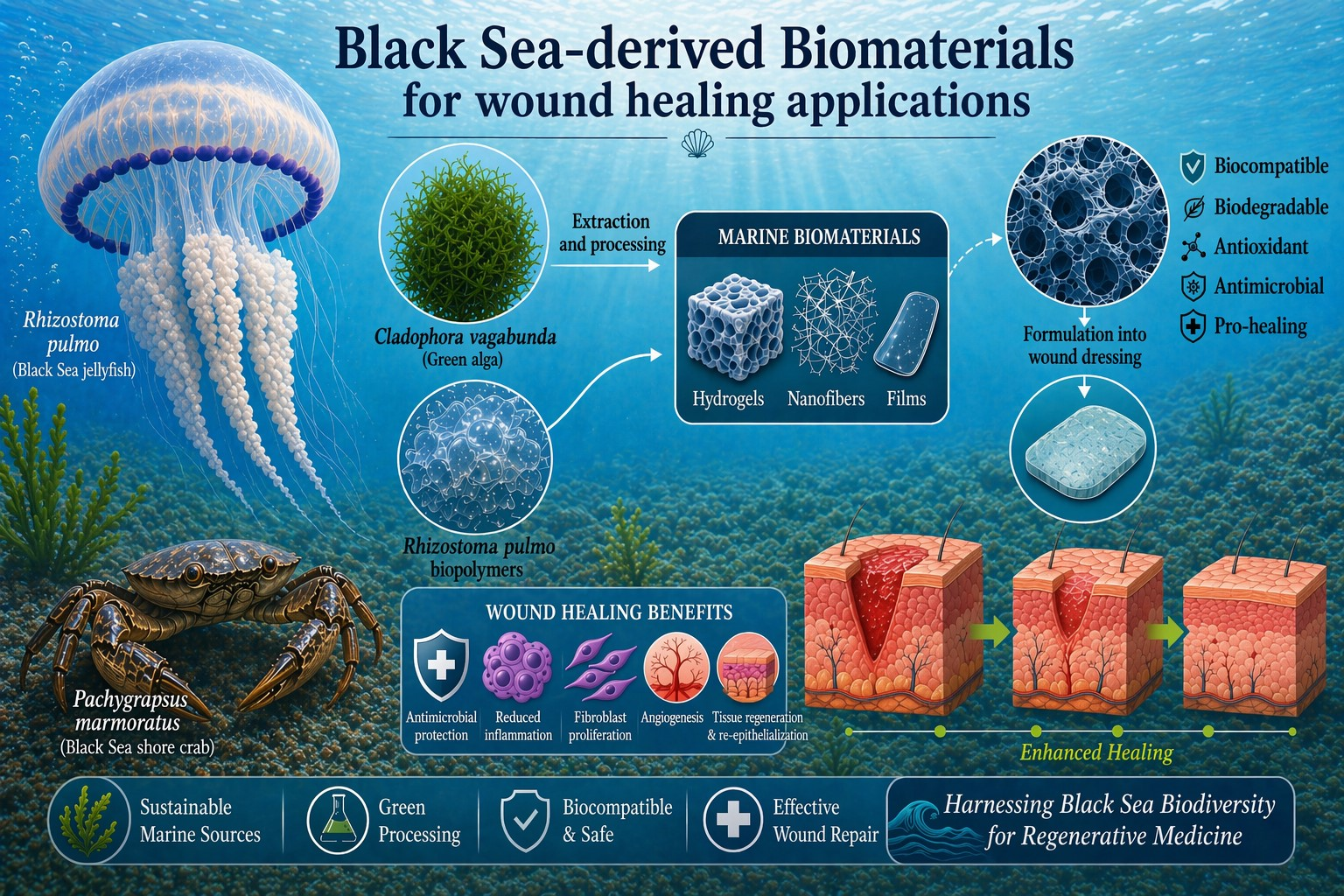
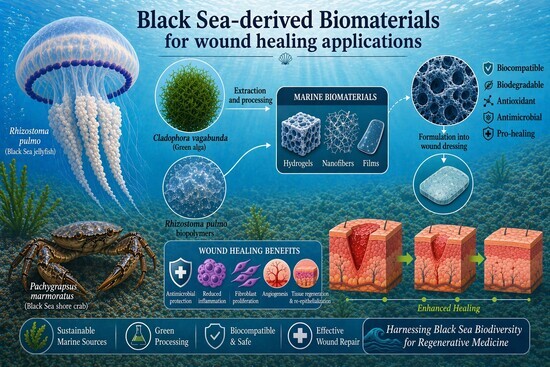
Black Sea-Derived Biomaterials for Wound-Healing Applications
 , , ,
, , ,  , ,
, ,  , and
, and
Abstract
1. Introduction
1.1. Acute Wounds and Chronic Wounds
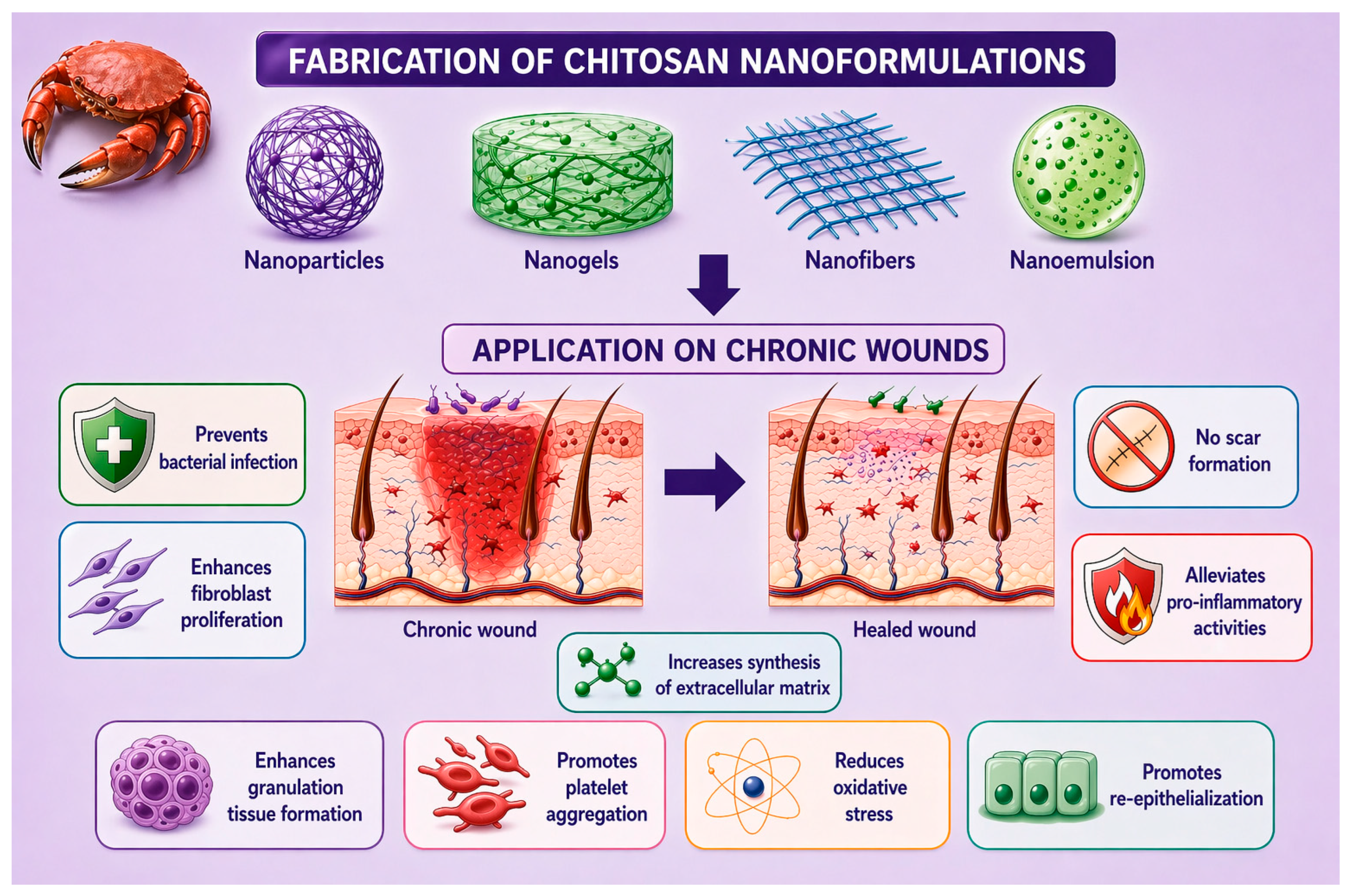
1.2. Materials from Marine Resources Used in Wound Healing
2. Results
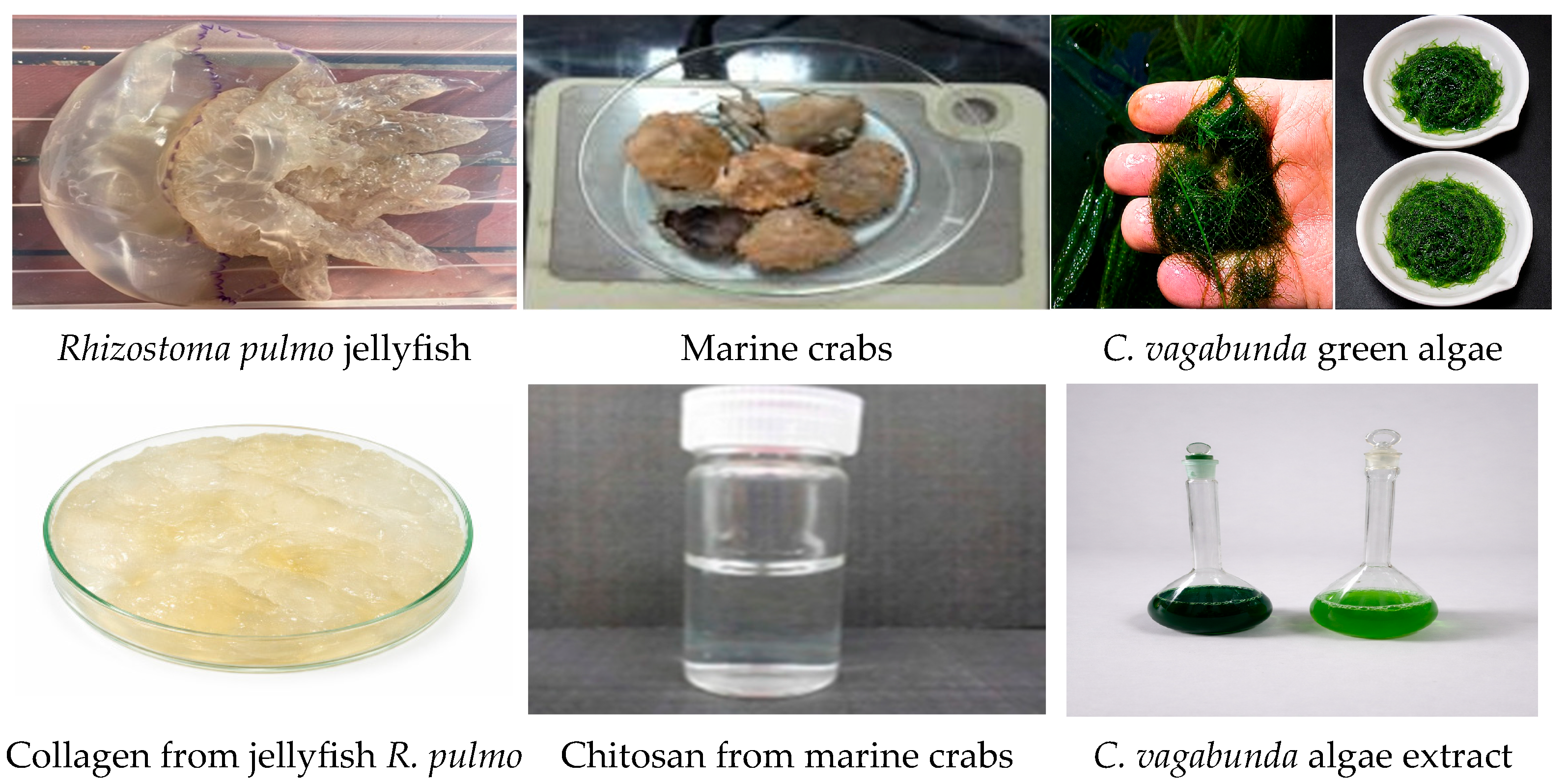
2.1. Biochemical Ingredients
2.2. Physico-Chemical Characteristics of the Ingredients
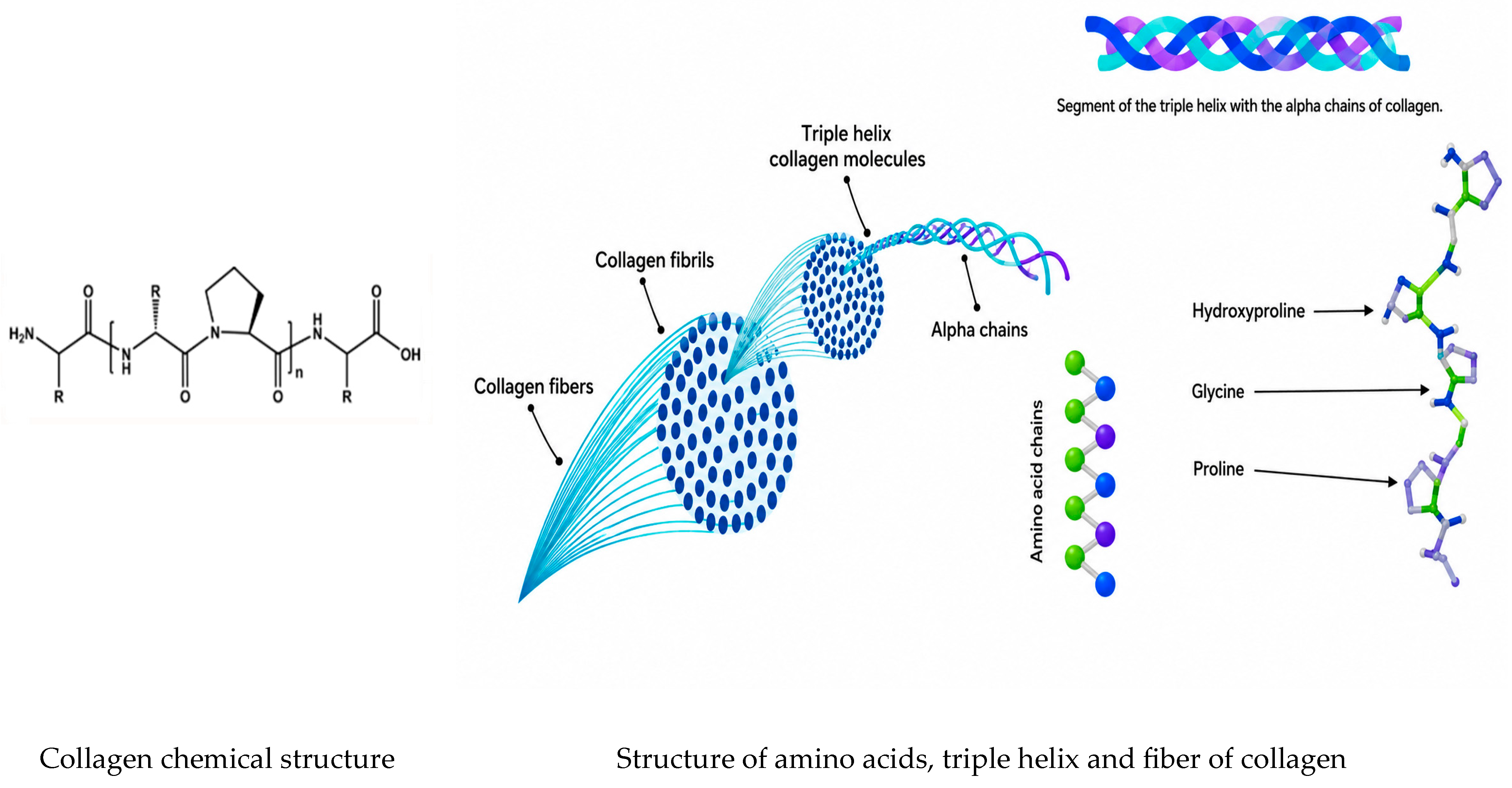
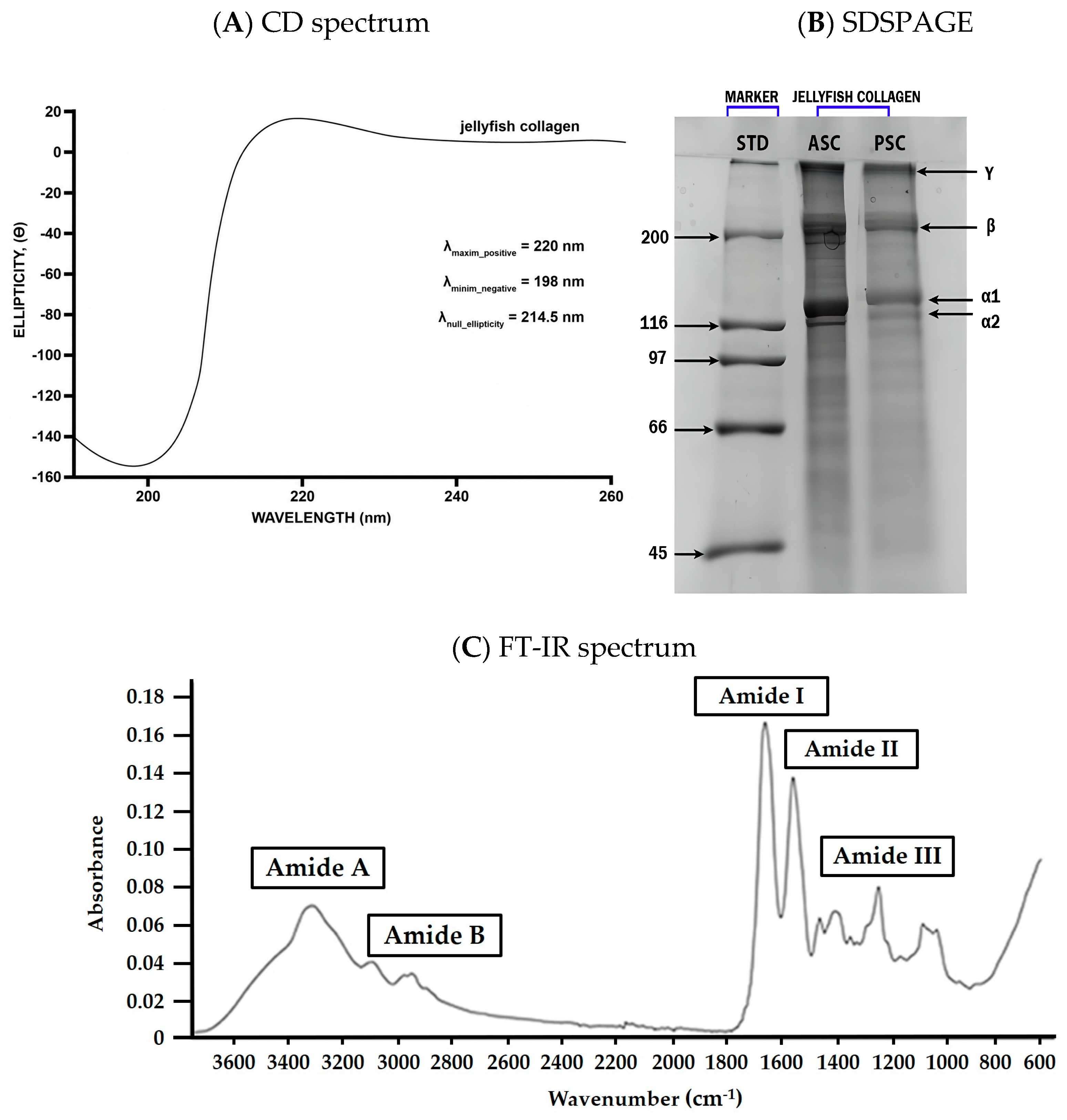
2.2.1. Marine Collagen from Jellyfish
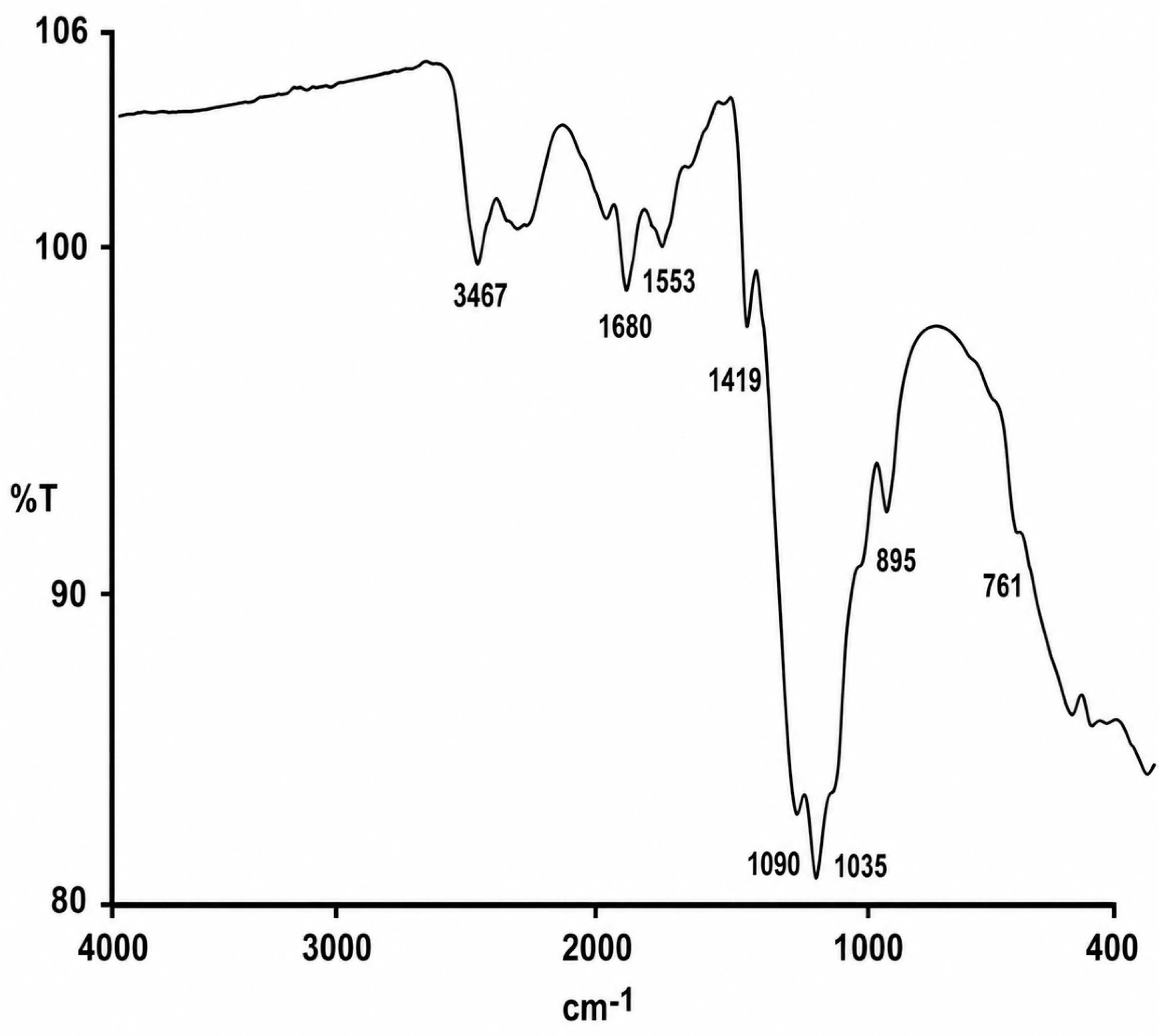
2.2.2. Structural Data for Marine Chitosan from Black Sea Stone Crabs
2.3. Composite Data for Marine Ingredients from the Black Sea
2.3.1. Biocomposition Data for Green Algae ALG and Collagen Peptides (JPCs)
2.3.2. Physico-Chemical Characteristics for Marine Chitosan
2.3.3. Amino-Acid Content
2.3.4. Polyphenolic Content
TPC (Total Phenolic Content) and TFC (Total Flavonoid Content)
Individual Phenolic Content
2.4. Characteristics of New Formulations F1 and F2 Intended for Wound Healing
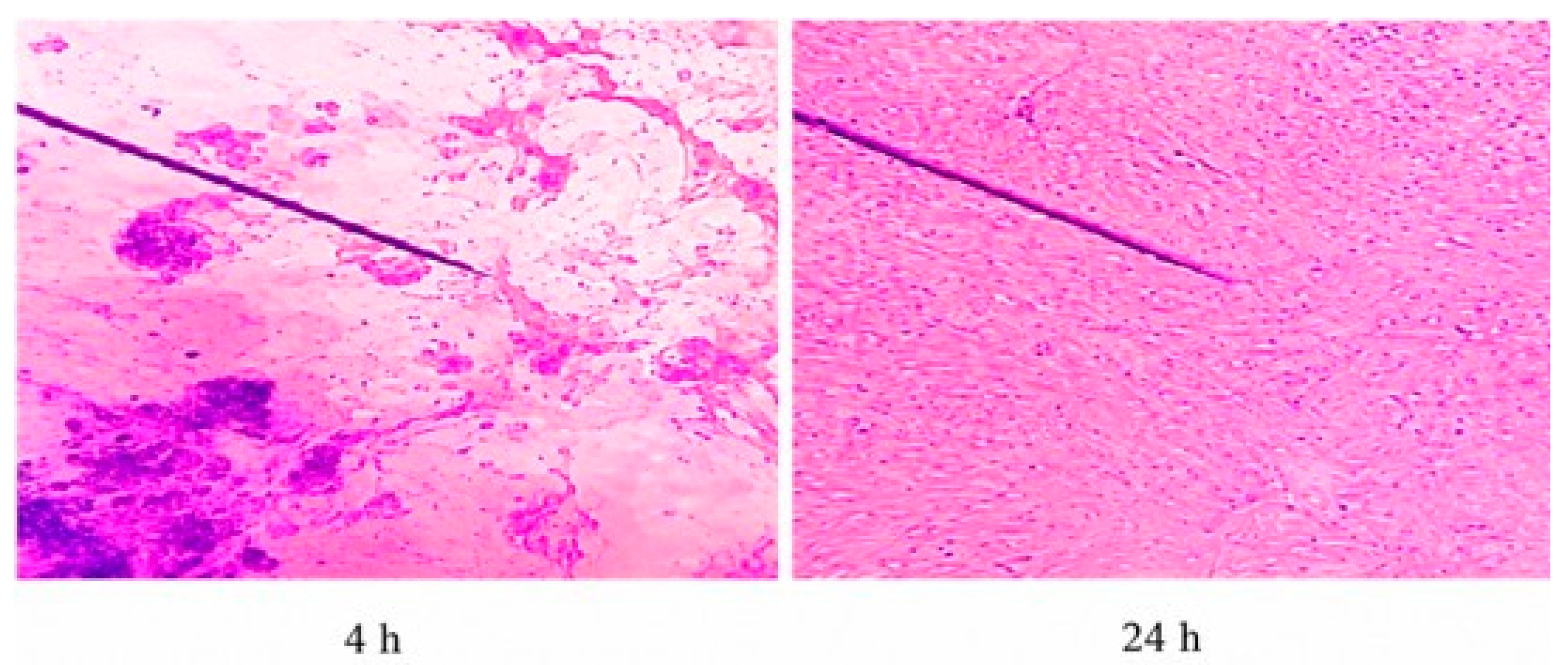
2.4.1. Microscopic Study
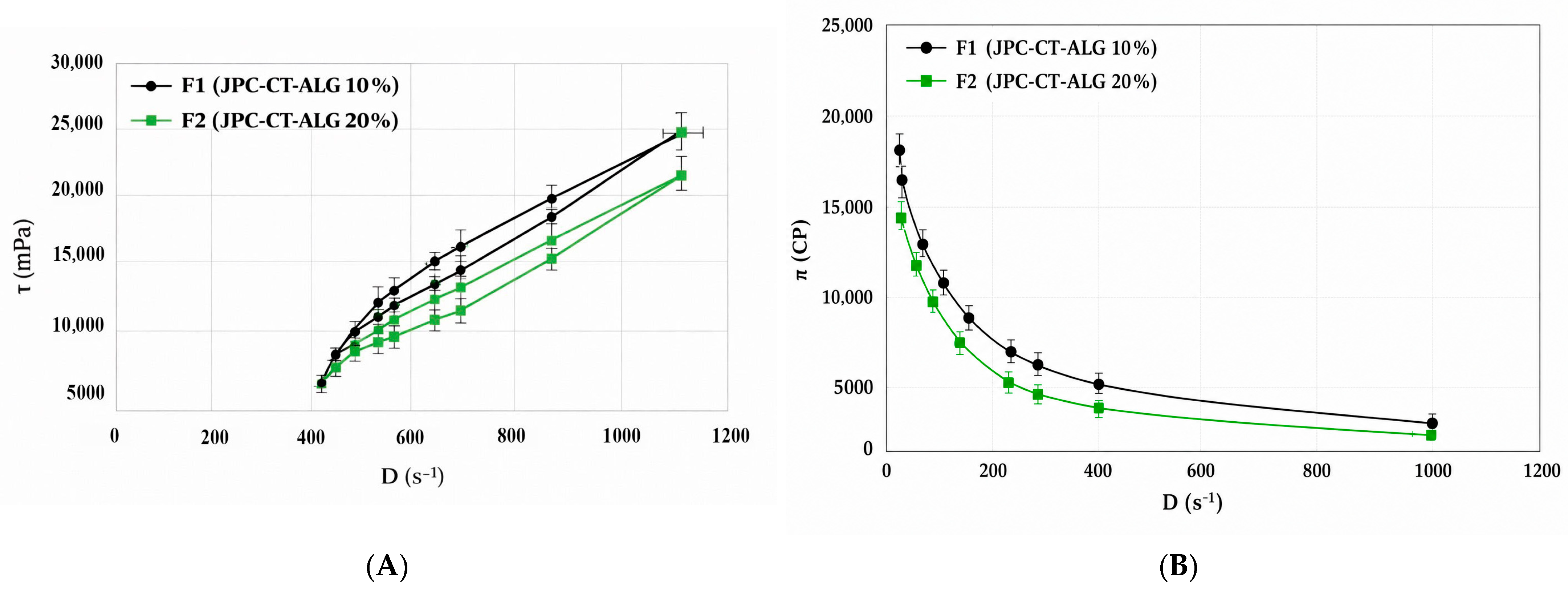
2.4.2. Rheological Study
2.5. Antioxidant Activity
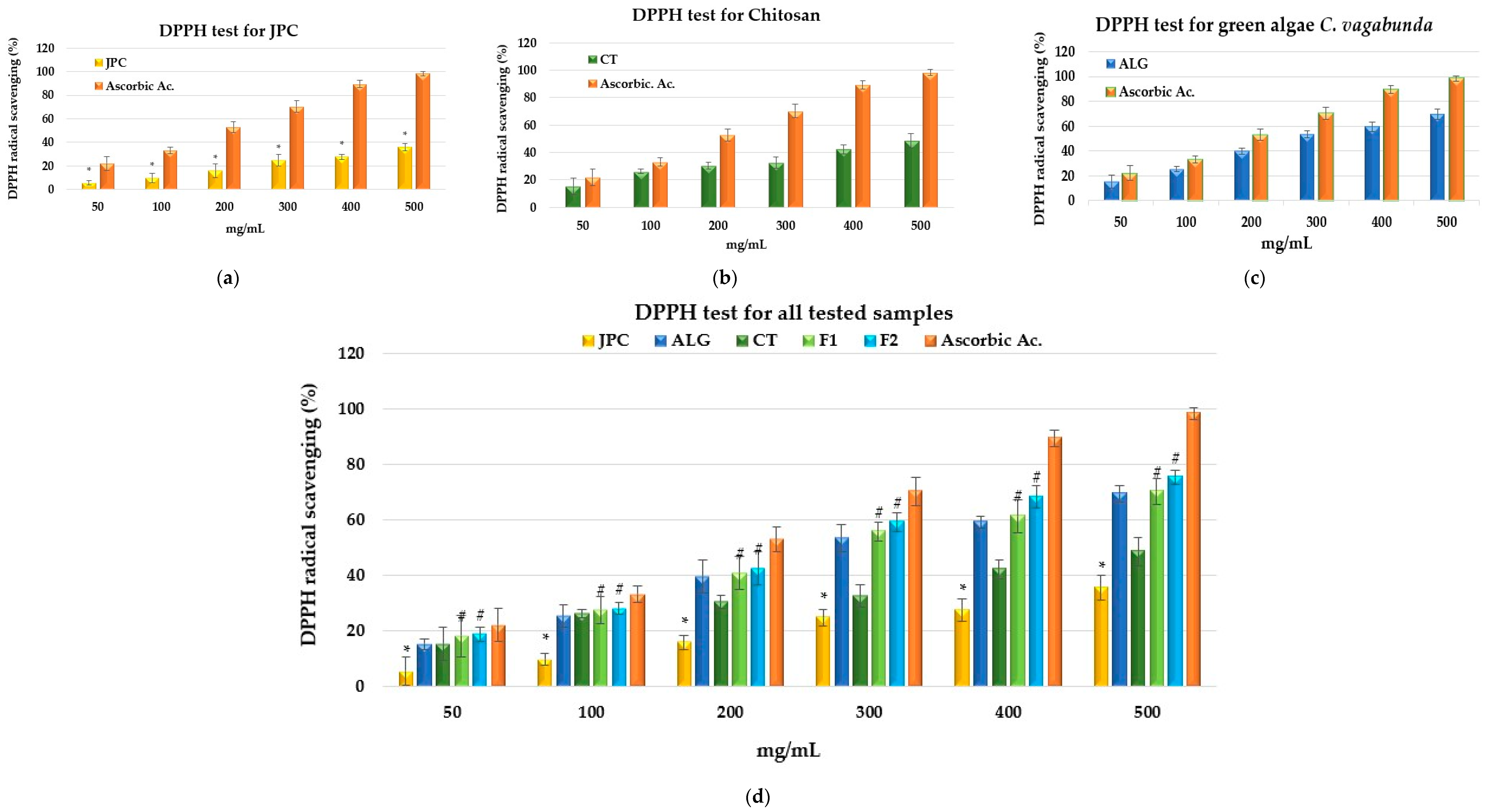
2.5.1. DPPH Test
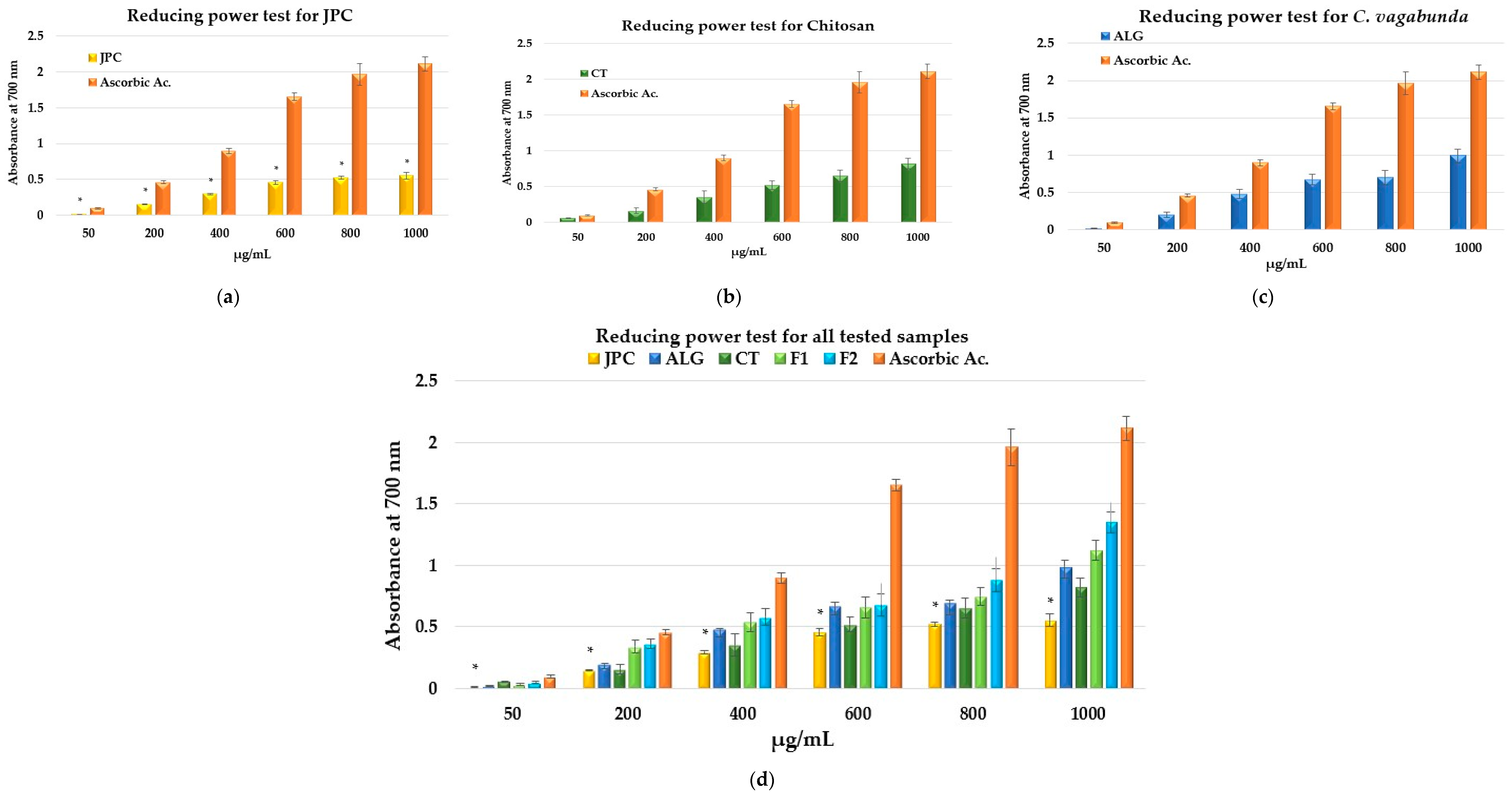
2.5.2. Testul Reducing Power
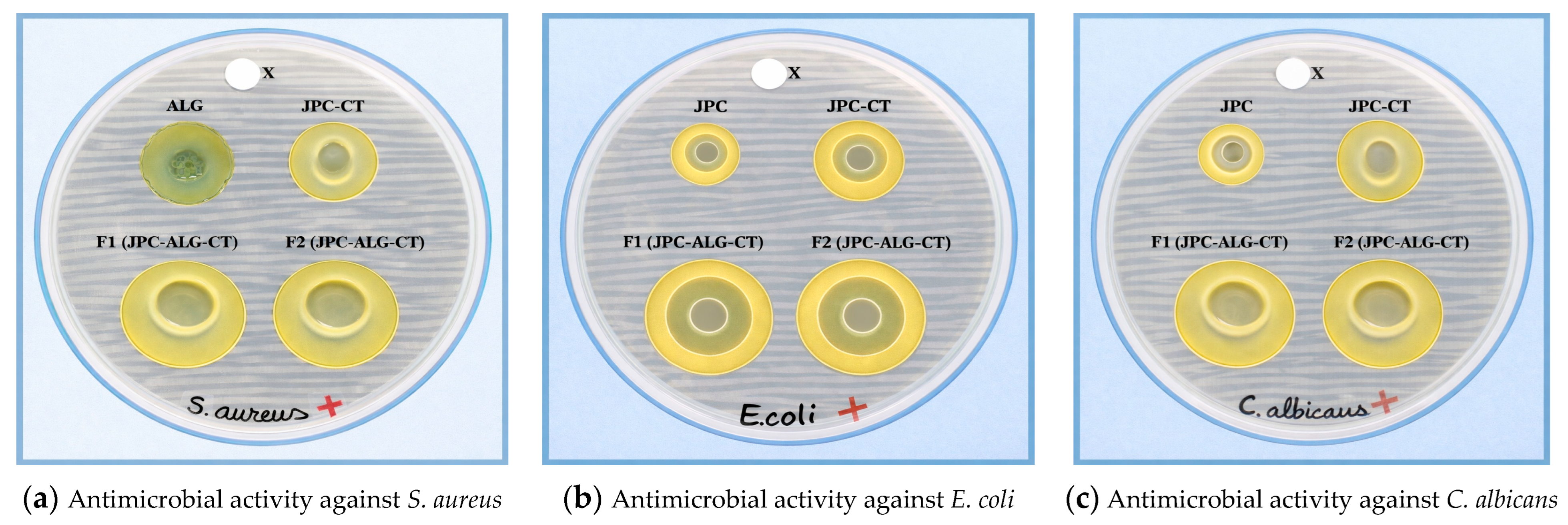
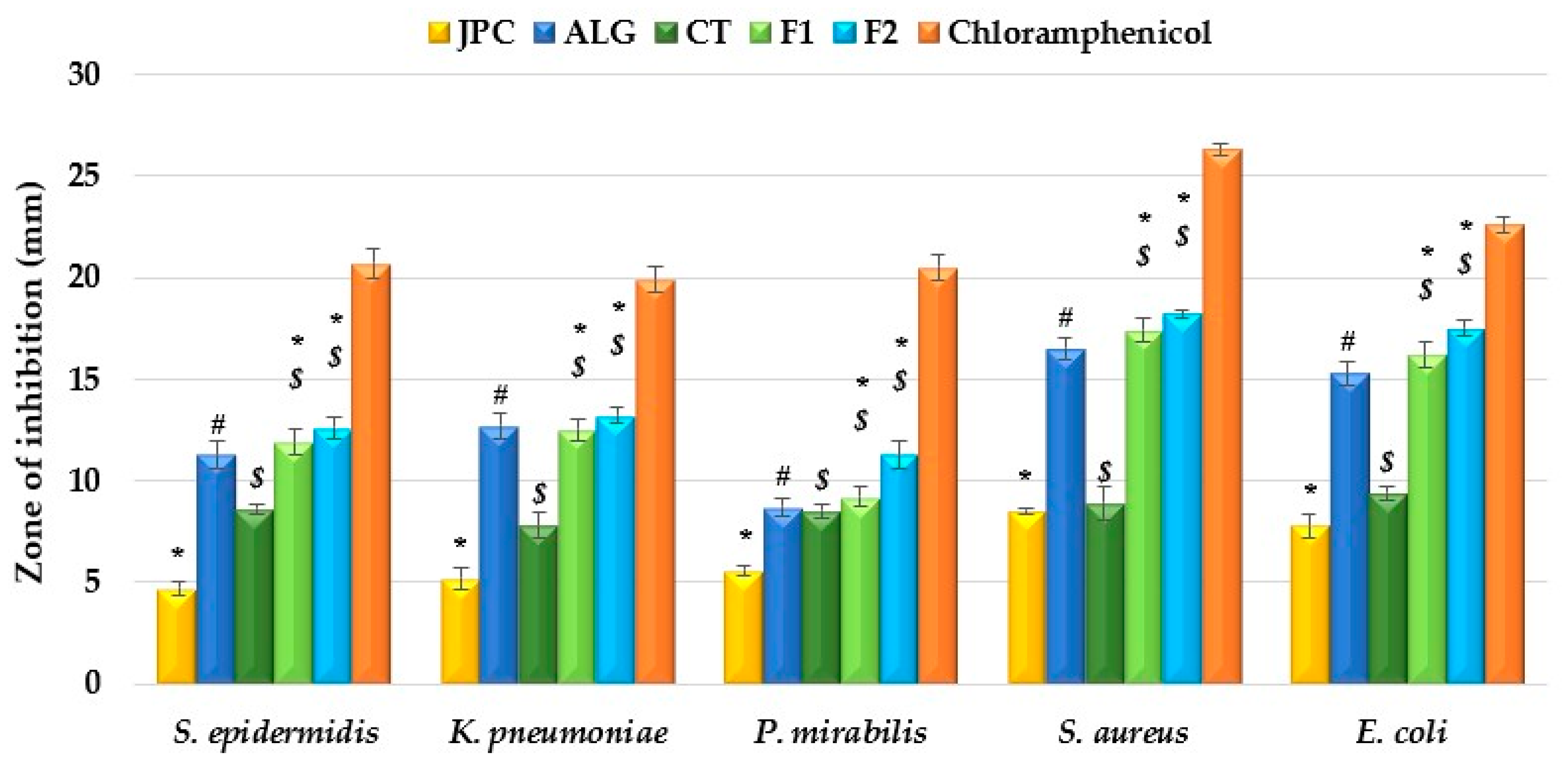
2.6. Amtimicrobian Activity
2.7. Biological Evaluations of New Composites for Wound-Healing Use
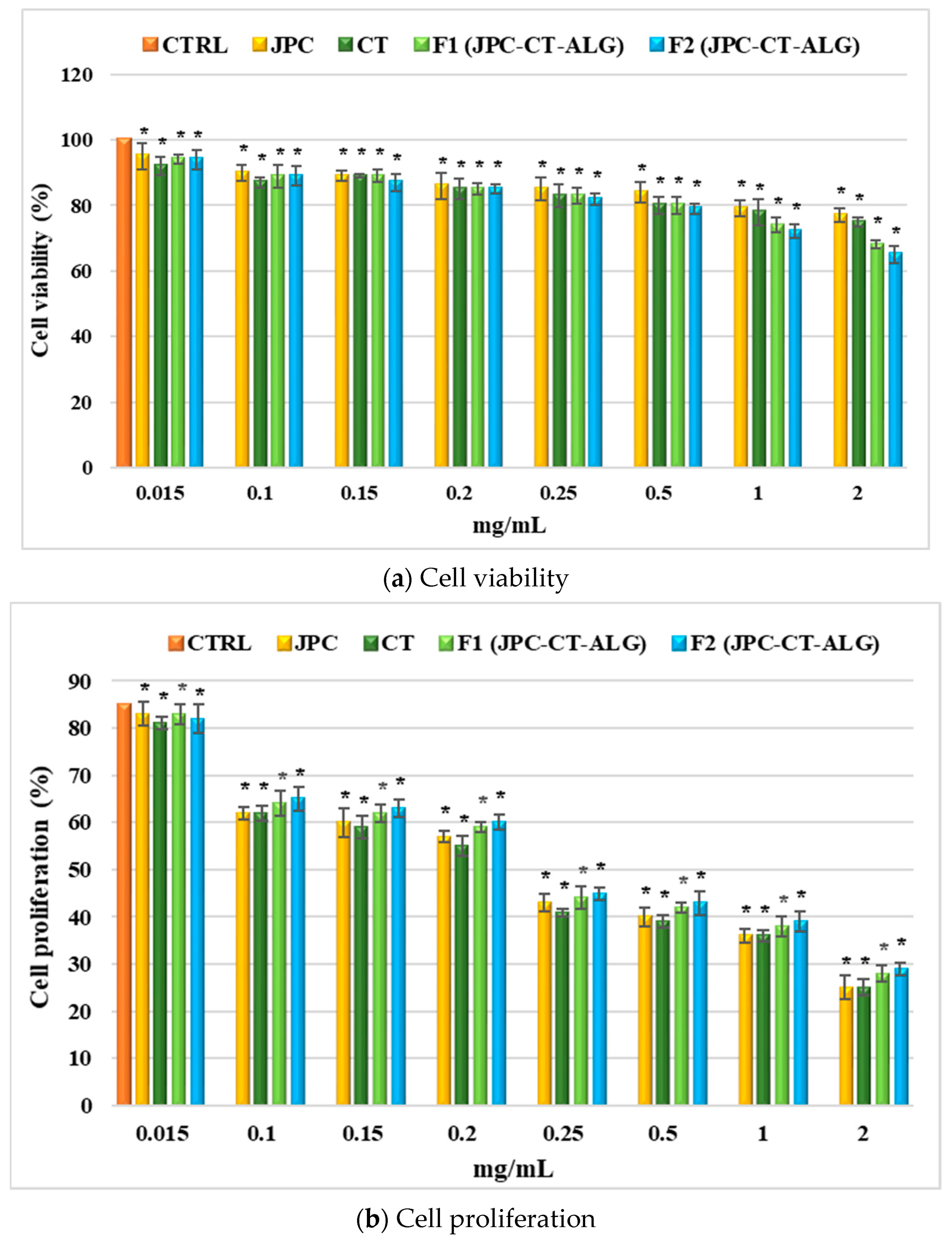
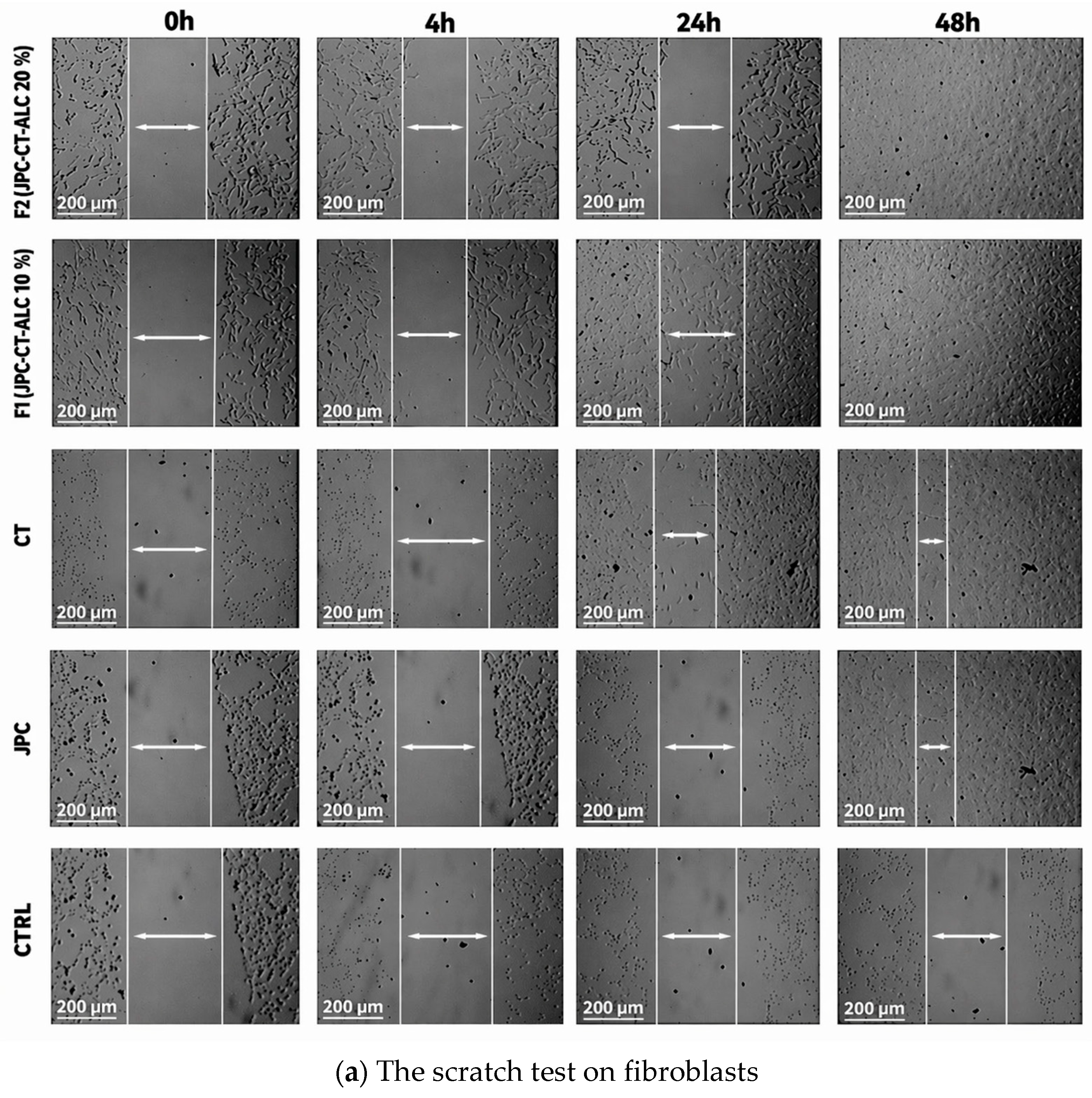
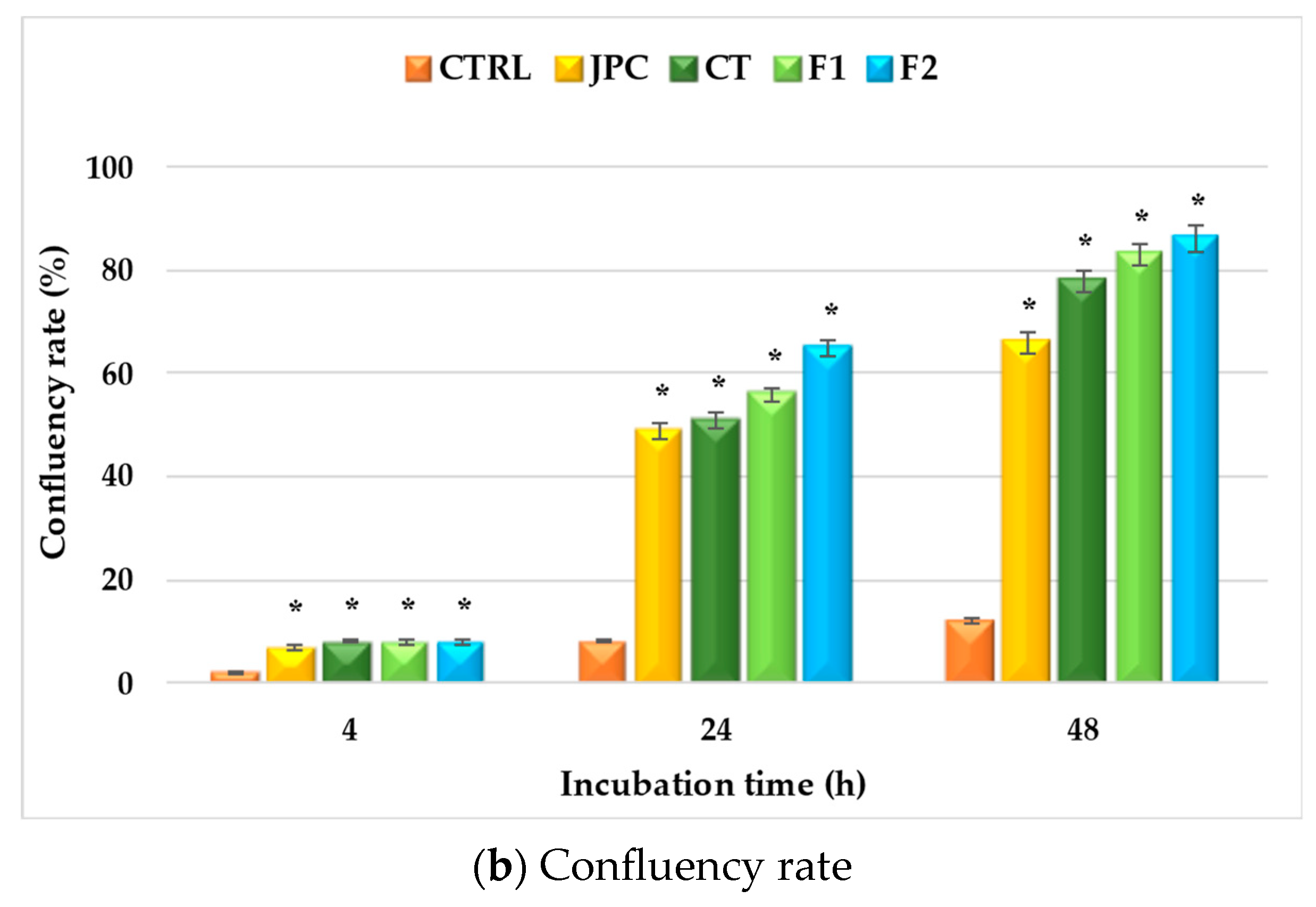
2.7.1. Biological Evaluations on BALB/3T3 Fibroblasts
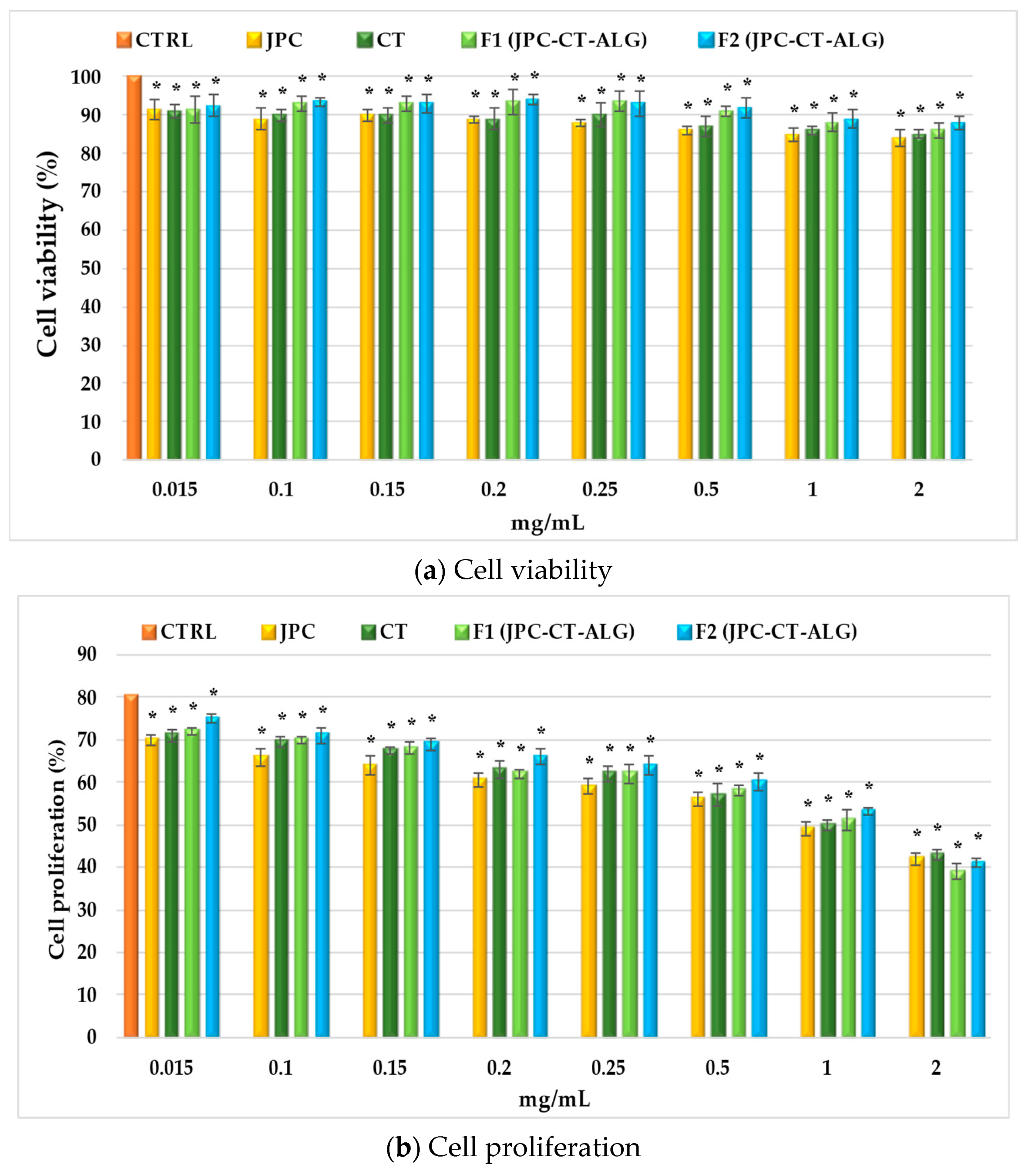
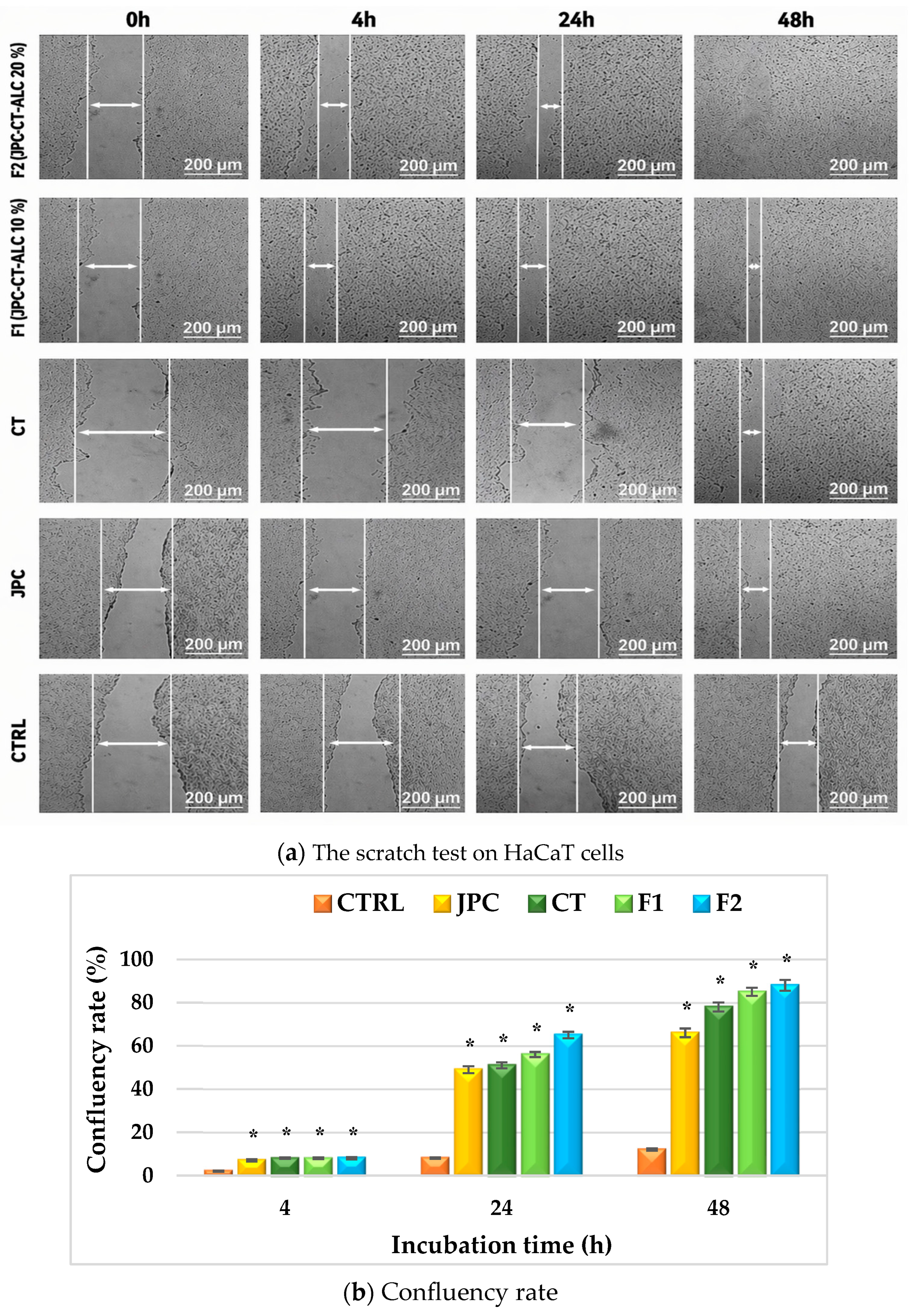
2.7.2. Biological Evaluations in the Wound-Healing Process on HaCaT Cells
3. Discussions
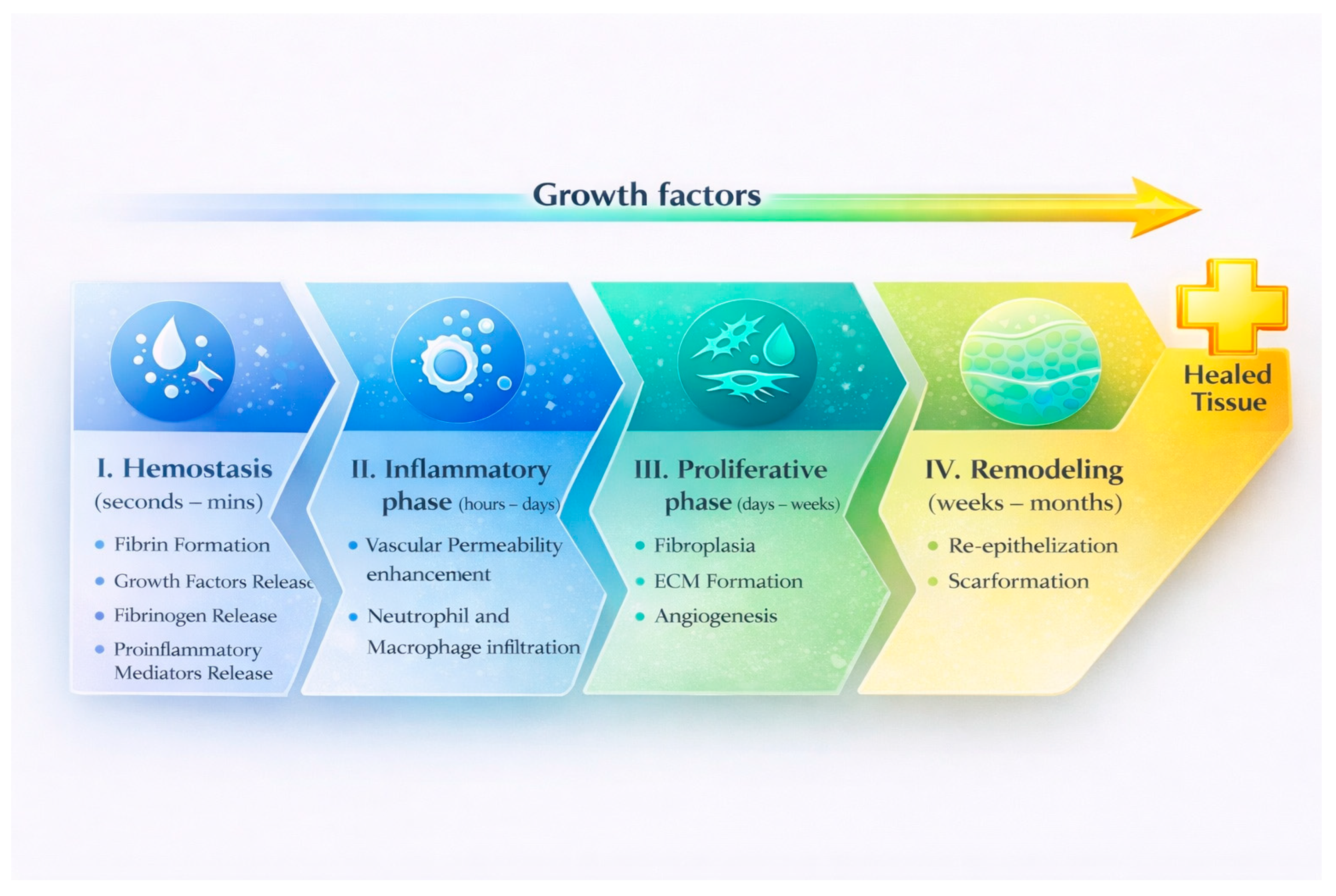
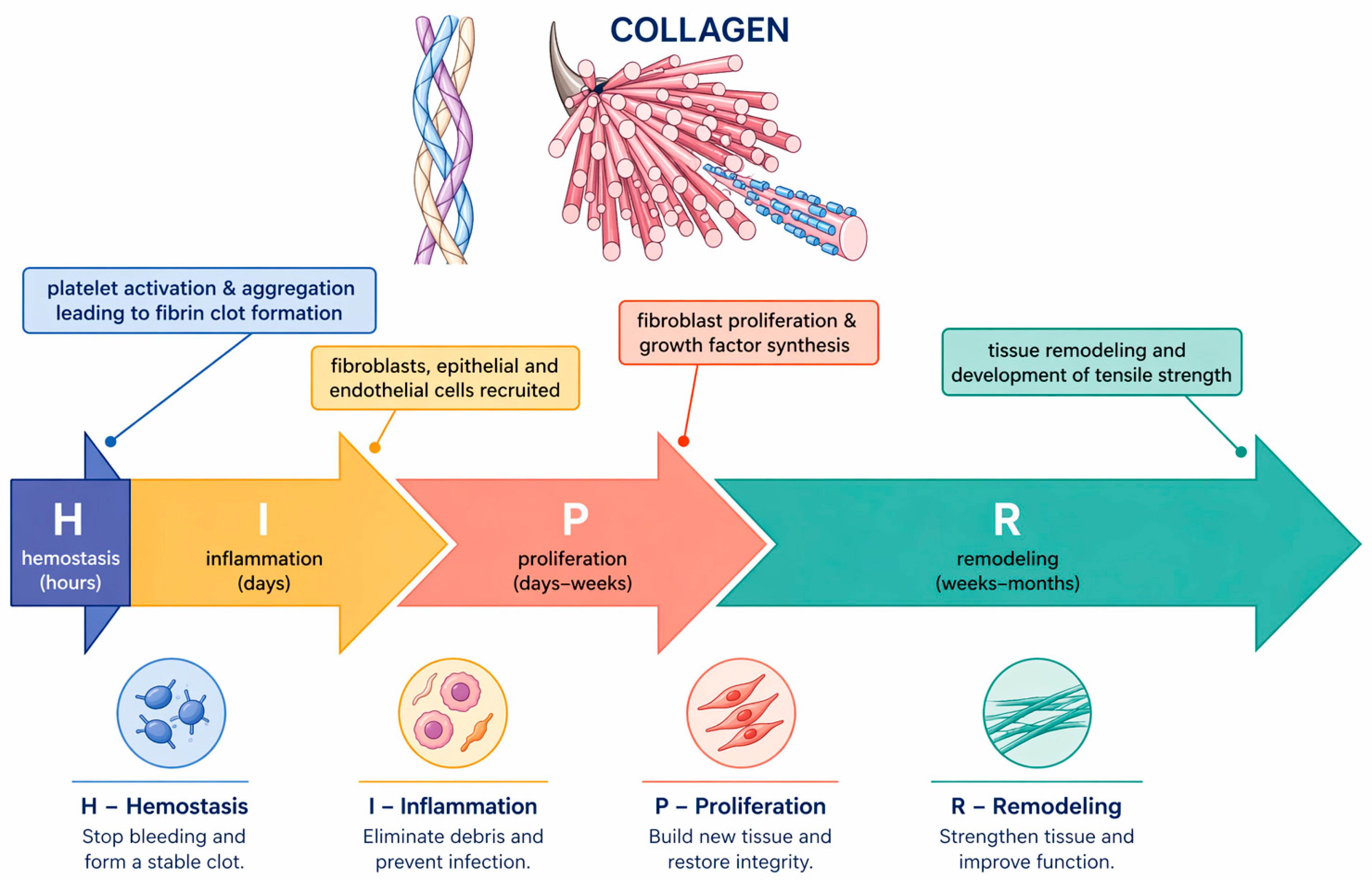
3.1. Biological Mechanisms in Acute Wound Healing
3.2. Characteristics of Chronic Wounds
3.3. Microbiological Characteristics of Chronic Wounds
3.4. Parameters That Influence Wound Healing Conditions
3.5. The Contribution of Marine Ingredients and New Biocomposite Formulations from Natural Resources
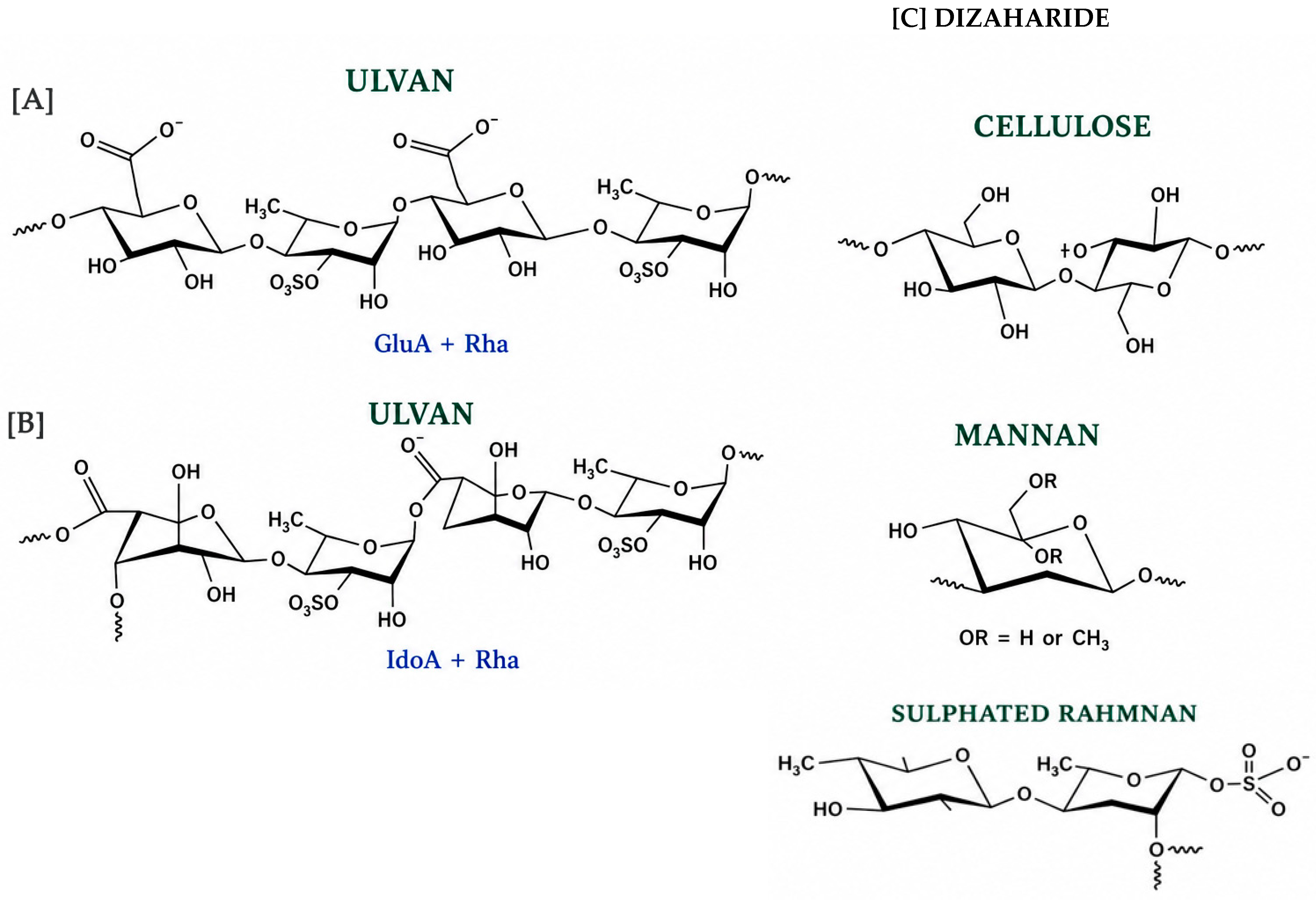
3.6. Structures of Bioactive Compounds of Interest Extracted from Marine Resources
4. Materials and Methods
4.1. Chemical Reagents
4.2. Extraction of Compounds from Marine Sources
4.2.1. Cladophora vagabunda Seaweed Extraction
4.2.2. Extraction of Collagen and Collagen Peptides from R. pulmo
4.2.3. Extraction of Chitosan
4.3. Development of Novel Pharmaceutical Systems
4.4. Phisyco-Chemical Determination for R. pulmo
4.4.1. SDS-PAGE Tehnique
4.4.2. Circular Dichroism Spectral Analysis
4.4.3. Spectroscopic FT-IR Analysis
4.5. Analysis of the Biochemical Composition of the Studied Species
4.5.1. Biochemical Composition for C. vagabunda
4.5.2. Biochemical Composition for R. pulmo
4.5.3. Biochemical Composition of Chitosan
4.5.4. Determination of Amino Acid Content from R. pulmo Collagen
4.6. Analysis of Polyphenolic Content
4.6.1. Analysis of Total Polyphenolic Content (TPC)
4.6.2. Analysis of Total Flavonoid Content (TFC)
4.6.3. Determination of Individual Phenol Content
4.7. Physico-Chemical Determinations for JPC-CT-ALG Formulations
4.7.1. Organoleptic Properties
4.7.2. Optical Microscopic Characterization of JPC-CT-ALG Composites
4.7.3. Rheological Analysis of Formulations
4.8. Determination of Antioxidant Activity
4.8.1. DPPH Assay
4.8.2. Reducing Power Test
4.9. Determination of Antimicrobial Activity
4.10. Biological Analysis
4.10.1. Cell Viability and Cell Proliferation of BALB/3T Clone A31 Fibroblasts
4.10.2. Scratch Test on BALB/3T3 Cells and HaCaT Cells
4.11. Statistical Analysis
5. Conclusions
Author Contributions
Funding
Institutional Review Board Statement
Informed Consent Statement
Data Availability Statement
Conflicts of Interest
Abbreviations
| JPCs | Jellyfish Peptide Collagen from Rhizostoma pulmo |
| ALG | Algae (green algae Cladophora vagabunda) |
| CT | Chitosan from Pachygrapsus Mormoratus rock crabs |
| JPC-CT-ALG | Composite Jellyfish Peptides-Chitosan-Algae |
| DC | Circular Dichroism Spectrum |
| SDS-PAGE | Sodium Dodecyl Sulfate–Polyacrylamide Gel Electrophoresis |
| FT-IR | Fourier-Transform Infrared Spectroscopy |
| PSC | Pepsin Soluble Collagen |
| TPC | Total Phenolic Content |
| TFC | Total Flavonoid Content |
| DPPH | 2,2-diphenyl-1-picrylhydrazyl |
| MIC | Minimal Inhibitory Concentration |
| BALB/3T3 | A fibroblast cell line |
| HaCaT | Keratinocyte cell line |
| ROS | Reactive Oxygen Species |
| ECM | Extracellular Matrix |
| TGF-α | Transforming Growth Factor-Alfa |
| TGF-β | Transforming Growth Factor-Beta |
| FGF | Fibroblast Growth Factor |
| PDGF | Platelet-Derived Growth Factor |
| VEGF | Vascular Endothelial Growth Factor |
References
- Gonzalez, A.C.O.; Costa, T.F.; Andrade, Z.A.; Medrato, A.R.A.P. Wound healing—A literature review. An. Bras. Dermatol. 2016, 91, 614–620. [Google Scholar] [CrossRef]
- Okur, M.E.; Karantas, I.D.; Şenyiğit, Z.; Okur, N.U.; Siafaka, P.I. Recent trends on wound management: New therapeutic choices based on polymeric carriers. Asian J. Pharm. Sci. 2020, 15, 661–684. [Google Scholar] [CrossRef]
- Wang, P.H.; Huang, B.S.; Horng, H.C.; Yeh, C.C.; Chen, Y.J. Wound healing. J. Chin. Med. Assoc. 2018, 81, 94–101. [Google Scholar] [CrossRef]
- Childs, D.R.; Murthy, A.S. Overview of wound healing and management. Surg. Clin. N. Am. 2017, 97, 189–207. [Google Scholar] [CrossRef]
- Wallace, H.A.; Basehore, B.M.; Zito, P.M. Wound Healing Phases; Stat Pearls Publishing: Treasure Island, FL, USA, 2024. Available online: https://www.ncbi.nlm.nih.gov/books/NBK470443/ (accessed on 12 June 2023).
- Chhabra, S.; Chhabra, N.; Kaur, A.; Gupta, N. Wound Healing Concepts in Clinical Practice of OMFS. J. Maxillofac. Oral Surg. 2017, 16, 403–423. [Google Scholar] [CrossRef] [PubMed]
- Barroso, A.F.N. Technological Advances in Cutaneous Wound Repair; Universidade del Lisboa: Lisboa, Portugal, 2019; Chapter 3; pp. 15–20. [Google Scholar]
- La Monica, F.; Campora, S.; Ghersi, G. Collagen-Based Scaffolds for Chronic Skin Wound Treatment. Gels 2024, 10, 137. [Google Scholar] [CrossRef] [PubMed]
- Broszczak, D.A.; Sydes, E.R.; Wallace, D.; Parker, T.J. Molecular aspects of wound healing and the rise of venous leg ulceration: Omics approaches to enhance anowledge and aid diagnostic discovery. Clin. Biochem. Rev. 2017, 38, 35–55. [Google Scholar] [PubMed]
- Dissemond, J.; Rembe, J.-D.; Assenheimer, B.; Barysch-Bonderer, M.; Gerber, V.; Kottner, J.; Kurz, P.; Motzkus, M.; Panfil, E.M.; Probst, S.; et al. Systematics, diagnosis and treatment of wound infections in chronic wounds: A position paper from WundDACH. J. Der Dtsch. Dermatol. Ges. 2025, 23, 565–574. [Google Scholar] [CrossRef]
- He, P.; Han, Y.; Mo, C.; Li, H.; Qi, X. Optimizing Wound Care: The Mechanistic Role of Dressing Change Frequency in Acute and Diabetic Wound Healing. J. Cosmet. Dermatol. 2026, 25, e70643. [Google Scholar] [CrossRef]
- Lam, W.; Lawson, A.; Chaudry, A.; De Vries, A.; Nestor, M.S. Wound Healing: Mechanisms, Advanced Management, and the Evolving Role of the Dermatologist. J. Skin. 2025, 9, s719. [Google Scholar] [CrossRef]
- Dhillon, Y.; Levine, L.; Tovmassian, G.; Reyzelman, A.; Perez-Clavijo, F.; Wodie, F.; Cazzell, S.; Grossman, A.; Robinson, L.; Sigal, F.; et al. A Multicenter, Randomized, Controlled, Clinical Trial Evaluating a Lyopreserved Amniotic Membrane in the Treatment of Venous Leg Ulcers. Health Sci. Rep. 2025, 8, e70819. [Google Scholar] [CrossRef]
- Holl, J.; Kowalewski, C.; Zimek, Z.; Fiedor, P.; Kaminski, A.; Oldak, T.; Moniuszko, M.; Eljaszewicz, A. Chronic Diabetic Wounds and Their Treatment with Skin Substitutes. Cells 2021, 10, 655. [Google Scholar] [CrossRef]
- Wu, S.; Carter, M.; Cole, W.; Crombie, R.; Kapp, D.L.; Kim, P.; Milne, C.; Molnar, J.; Niezgoda, J.; Woo, K.; et al. Best practice for wound repair and regeneration use of cellular, acellular and matrix-like products (CAMPs). J. Wound Care 2023, 32, S1–S31. [Google Scholar] [CrossRef]
- Sangha, M.S.; Deroide, F.; Meys, R. Wound healing, scarring and management. Clin. Exp. Dermatol. 2024, 49, 325–336. [Google Scholar] [CrossRef]
- Mamun, A.A.; Shao, C.; Geng, P.; Wang, S.; Xiao, J. Recent advances in molecular mechanisms of skin wound healing and its treatments. Front Immunol. 2024, 15, 1395479. [Google Scholar] [CrossRef]
- Gómez, C.A. Current best practices in wound care: An evidence-based and patient-centered approach. Int. Surgery J. 2025, 13, 181–185. [Google Scholar] [CrossRef]
- Haxho, F.; Lytvyn, Y.; Shelley, A.J.; Ortega, A.; Melin, M.; Alavi, A. Wound Care-Part I: A Practical Approach to Local Wound Care and Dressing Selection. J. Am. Acad. Dermatol. 2025; in press. [CrossRef]
- Criollo-Mendoza, M.S.; Contreras-Angulo, L.A.; Leyva-López, N.; Gutiérrez-Grijalva, E.P.; Jiménez-Ortega, L.A.; Heredia, J.B. Wound Healing Properties of Natural Products: Mechanisms of Action. Molecules 2023, 28, 598. [Google Scholar] [CrossRef]
- Trinh, X.T.; Long, N.V.; Van Anh, L.T.; Nga, P.T.; Giang, N.N.; Chien, P.N.; Nam, S.Y.; Heo, C.Y. A Comprehensive Review of Natural Compounds for Wound Healing: Targeting Bioactivity Perspective. Int. J. Mol. Sci. 2022, 23, 9573. [Google Scholar] [CrossRef] [PubMed]
- Tajbakhsh, E.; Khamesipour, A.; Hosseini, S.R.; Kosari, N.; Shantiae, S.; Khamesipour, F. The effects of medicinal herbs and marine natural products on wound healing of cutaneous leishmaniasis: A systematic review. Microb. Pathogen. 2021, 161, 105235. [Google Scholar] [CrossRef] [PubMed]
- Chattopadhyay, S.; Raines, R.T. Collagen-Based Biomaterials for Wound Healing. Biopolymers 2014, 101, 821–833. [Google Scholar] [CrossRef] [PubMed]
- Felician, F.F.; Yu, R.-H.; Li, M.-Z.; Li, C.-J.; Chen, H.-Q.; Jiang, Y.; Tang, T.; Qi, W.-Y.; Xu, H.-M. The wound healing potential of collagen peptides derived from the jellyfish Rhopilema esculentum. Chin. J. Traumatol. 2019, 22, 12–20. [Google Scholar] [CrossRef]
- Cherim, M.; Sirbu, R.; Tomescu, A.; Popa, M.F.; Cadar, E. Comparative Studies on the Physico-chemical Characteristics of Bio-materials with Collagen from Calf and Fish Skins from Black Sea. Mat. Plast. 2019, 56, 179–185. [Google Scholar] [CrossRef]
- Widdowson, P.J.; Picton, J.A.; Vinc, V.; Wright, C.J.; Mearns-Spragg, A. In vivo comparison of jellyfish and bovine collagen sponges as prototype medical devices. J. Biomed. Mater. Res. B Appl. Biomater. 2018, 106, 1524–1533. [Google Scholar] [CrossRef]
- Mathew-Steiner, S.S.; Roy, S.; Sen, C.K. Collagen in Wound Healing. Bioengineering 2021, 8, 63. [Google Scholar] [CrossRef]
- Cadar, E.; Pesterau, A.-M.; Prasacu, I.; Ionescu, A.-M.; Pascale, C.; Dragan, A.-M.L.; Sirbu, R.; Tomescu, C.L. Marine Antioxidants from Marine Collagen and Collagen Peptides with Nutraceuticals Applications: A Review. Antioxidants 2024, 13, 919–968. [Google Scholar] [CrossRef]
- Banerjee, P.; Suguna, L.; Shanthi, C. Wound healing activity of a collagen-derived cryptic peptide. Amino Acids. 2015, 47, 317–328. [Google Scholar] [CrossRef]
- Sirbu, R.; Stanciu, G.; Cadar, E.; Tomescu, A.; Cherim, M. Validation of a Quantitative Analysis Method for Collagen Extracted from Grey Mullet Marine Fish. Rev. Chim. 2019, 70, 835–842. [Google Scholar] [CrossRef]
- Cadar, E.; Pesterau, A.-M.; Sirbu, R.; Negreanu-Pirjol, B.S.; Tomescu, C.L. Jellyfishes—Significant Marine Resources with Potential in the Wound-Healing Process: A Review. Mar. Drugs 2023, 21, 201. [Google Scholar] [CrossRef] [PubMed]
- Furtado, M.; Chen, L.; Chen, Z.; Chen, A.; Cui, W. Development of fish collagen in tissue regeneration and drug delivery. Eng. Regen. 2022, 3, 217–231. [Google Scholar] [CrossRef]
- Addad, S.; Exposito, J.Y.; Faye, C.; Ricard-Blum, S.; Lethias, C. Isolation, characterization and biological evaluation of jellyfish collagen for use in biomedical applications. Mar. Drugs. 2011, 9, 967–983. [Google Scholar] [CrossRef]
- Leone, A.; Lecci, R.M.; Durante, M.; Meli, F.; Piraino, S. The Bright Side of Gelatinous Blooms: Nutraceutical Value and Antioxidant Properties of Three Mediterranean. Mar. Drugs 2015, 13, 4654–4681. [Google Scholar] [CrossRef]
- De Domenico, S.; De Rinaldis, G.; Paulmery, M.; Piraino, S.; Leone, A. Barrel Jellyfish (Rhizostoma pulmo) as Source of Antioxidant Peptides. Mar. Drugs 2019, 17, 134–155. [Google Scholar] [CrossRef]
- D’Ambra, I.; Merquiol, L. Jellyfish from Fisheries By-Catches as a Sustainable Source of High-Value Compounds with Biotechnological Applications. Mar. Drugs 2022, 20, 266. [Google Scholar] [CrossRef]
- James, S.; Tilvi, S.; Khandeparker, R.; Sreepada, R.A.; Thakur, N.; Gauthankar, M. Jellyfish Rhizostoma pulmo collected off Goa Coast (India) as a rich source of tryptophan containing collagen and its enhanced antioxidant potential. J. Food Sci. Technol. 2023, 60, 2825–2834. [Google Scholar] [CrossRef]
- Pesterau, A.-M.; Popescu, A.; Sirbu, R.; Cadar, E.; Busuricu, F.; Dragan, A.-M.L.; Pascale, C.; Ionescu, A.-M.; Bogdan-Andreescu, C.F.; Radu, M.-D.; et al. Marine Jellyfish Collagen and Other Bioactive Natural Compounds from the Sea, with Significant Potential for Wound Healing and Repair Materials. Mar. Drugs 2025, 23, 252. [Google Scholar] [CrossRef] [PubMed]
- Shen, S.; Chen, X.; Shen, Z.; Chen, H. Marine Polysaccharides for Wound Dressings Application: An Overview. Pharmaceutics 2021, 13, 1666. [Google Scholar] [CrossRef]
- Migone, C.; Scacciati, N.; Grassiri, B.; De Leo, M.; Braca, A.; Puppi, D.; Zambito, Y.; Piras, A.M. Jellyfish Polysaccharides for Wound Healing Applications. Int. J. Mol. Sci. 2022, 23, 11491. [Google Scholar] [CrossRef] [PubMed]
- Karma, N.-I.; Mellou, F.; Pavlou, P.; Siamidi, A.; Varvaresou, A. Compounds of Marine Origin with Possible Applications as Healing Agents. Mar. Drugs 2025, 23, 5. [Google Scholar] [CrossRef]
- Lungu, R.; Paun, M.-A.; Peptanariu, D.; Ailincai, D.; Marin, L.; Nichita, M.-V.; Paun, V.-A.; Paun, V.-P. Biocompatible Chitosan-Based Hydrogels for Bioabsorbable Wound Dressings. Gels 2022, 8, 107. [Google Scholar] [CrossRef] [PubMed]
- Feng, P.; Luo, Y.; Ke, C.; Qiu, H.; Wang, W.; Zhu, Y.; Hou, R.; Xu, L.; Wu, S. Chitosan-Based Functional Materials for Skin Wound Repair: Mechanisms and Applications. Front. Bioeng. Biotechnol. 2021, 9, 650598. [Google Scholar] [CrossRef]
- Elangwe, C.N.; Morozkina, S.N.; Olekhnovich, R.O.; Krasichkov, A.; Polyakova, V.O.; Uspenskaya, M.V. A Review on Chitosan and Cellulose Hydrogels for Wound Dressings. Polymers 2022, 14, 5163. [Google Scholar] [CrossRef] [PubMed]
- Pramanik, S.; Aggarwal, A.; Kadi, A.; Alhomrani, M.; Alamri, A.S.; Alsanie, W.F.; Koul, K.; Deepak, A.; Bellucci, S. Chitosan alchemy: Transforming tissue engineering and wound healing. RSC Adv. 2024, 14, 19219–19256. [Google Scholar] [CrossRef] [PubMed]
- Cabral, C.S.D.; Graça, M.F.P.; Moreira, A.F.; de Melo-Diogo, D.; Correia, I.J. Chitin- and chitosan-based strategies in wound healing. In Natural Polymers in Wound Healing and Repair; Sah, M.K., Kasoju, N., Mano, J.F., Eds.; Elsevier: Amsterdam, The Netherlands, 2022; Chapter 14; pp. 333–380. [Google Scholar] [CrossRef]
- Sirbu, R.; Mustafa, A.; Tomescu, A.; Stanciu, G.; Cadar, E. Rheological and Microbiological Study on Bio-Composites with Marine Chitosan Polymers from Black Sea Stone Crabs used in Medical Therapy of Tissue Regeneration. Mater. Plast. 2019, 56, 148–155. [Google Scholar] [CrossRef]
- Akhavan-Kharazian, N.; Izadi-Vasafi, H. Preparation and characterization of chitosan/gelatin/nanocrystalline cellulose/calcium peroxide films for potential wound dressing applications. Int. J. Biol. Macromol. 2019, 133, 881–891. [Google Scholar] [CrossRef]
- Kaolaor, A.; Phunpee, S.; Ruktanonchai, U.R.; Suwantong, O. Effects of β-cyclodextrin complexation of curcumin and quaternization of chitosan on the properties of the blend films for use as wound dressings. J. Polym. Res. 2019, 26, 43. [Google Scholar] [CrossRef]
- Cadar, E.; Negreanu-Pirjol, T.; Sirbu, R.; Dragan, A.-M.L.; Negreanu-Pirjol, B.-S.; Axente, E.R.; Ionescu, A.-M. Biocompounds from Green Algae of Romanian Black Sea Coast as Potential Nutraceuticals. Processes 2023, 11, 1750–1773. [Google Scholar] [CrossRef]
- Yalçın, S.; Karakaş, Ö.; Okudan, E.Ş.; Başkan, K.S.; Çekiç, S.D.; Apak, R. HPLC detection and antioxidant capacity determination of brown, red and green algal pigments in seaweed extracts. J. Chromatogr. Sci. 2021, 59, 325–337. [Google Scholar] [CrossRef]
- Cadar, E.; Axinte, E.R.; Amzoiu, M.; Jurja, S.; Cherim, M. Preliminary study on the marine algae from the romanian Black Sea coast. J. Sci. Arts 2019, 4, 989–1000. [Google Scholar]
- Cadar, E.; Popescu, A.; Dragan, A.-M.-L.; Pesterau, A.-M.; Pascale, C.; Anuta, V.; Prasacu, I.; Velescu, B.S.; Tomescu, C.L.; Bogdan-Andreescu, C.F.; et al. Bioactive Compounds of Marine Algae and Their Potential Health and Nutraceutical Applications: A Review. Mar. Drugs. 2025, 23, 152. [Google Scholar] [CrossRef]
- Sirbu, R.; Negreanu-Pirjol, T.; Mirea, M.; Negreanu-Pirjol, B.S. Bioactive Compounds from Three Green Algae Species along Romanian Black Sea Coast with Therapeutically Properties. Eur. J. Nat. Sci. Med. 2020, 3, 67–86. [Google Scholar] [CrossRef]
- Sirbu, R.; Stanciu, G.; Tomescu, A.; Ionescu, A.M.; Cadar, E. Evaluation of antioxidant and antimicrobial activity in relation to total phenolic content of green algae from Back Sea. Rev. Chim. 2019, 70, 1197–1203. [Google Scholar] [CrossRef]
- Peșterau, A.-M.; Sirbu, R.; Cadar, E. Extraction and method validation for collagen obtained from the jellysh Rhizostoma Pulmo found on the Romanian Black Sea coast. Eur. J. Nat. Sci. Med. (EJNSM) 2024, 7, 3–20. [Google Scholar] [CrossRef]
- Cherim, M.; Stanciu, G.; Rasit, E.Y.; Cadar, E. Capitalization of marine resources from Black Sea by obtaining and characterizing collagen from Grey Mullet. J. Sci. Arts 2017, 4, 795–802. [Google Scholar]
- Pascale, C.; Burcea, A.; Bogdan-Andreescu, C.F.; Cadar, E.; Popescu, A.; Negreanu-Pirjol, T.; Busuricu, F.; Pesterau, A.-M.; Rosca, A.C.; Sirbu, R. Characterization of a New Biocomposite Based on Bioactive Compounds from Ganoderma lucidum and Jellyfish Collagen Destined for In Vitro Evaluation of Antitumor Effects in the Oral Cavity. Pharmaceuticals 2026, 19, 108. [Google Scholar] [CrossRef]
- Cadar, E.; Sirbu, R.; Ibram, A.; Ionescu, A.M. Evaluation of Total Phenolic Content in Relation to Antioxidant Activity of Brown Algae Cystoseira barbata from Black Sea. Rev. Chim. 2019, 70, 2684–2689. [Google Scholar] [CrossRef]
- Wang, T.; Jónsdóttir, R.; Ólafsdóttir, G. Total phenolic compounds, radical scavenging and metal chelation of extracts from Icelandic, seaweeds. Food Chem. 2009, 116, 240–248. [Google Scholar] [CrossRef]
- Taskin, E.; Ozturk, M.; Taskin, E.; Kurt, O. Antibacterial activities of some marine algae from the Aegean Sea (Turkey). Afr. J. Biotechnol. 2007, 6, 2746–2751. [Google Scholar] [CrossRef]
- Alghazeer, R.; Whida, F.; Abduelrhman, E.; Gammoudi, F.; Azwai, S. Screening of antibacterial activity in marine green, red and brown macroalgae from the western coast of Libya. Nat. Sci. 2013, 5, 7–14. [Google Scholar] [CrossRef]
- Heijenoort, J. Formation of the glycan chains in the synthesis of bacterial peptidoglycan. Glycobiology 2001, 11, 25–36. [Google Scholar] [CrossRef]
- Ibtissam, C.; Hassane, R.; Jose, M.L.; Francisco, D.S.J.; Antonio, G.V.J.; Hassan, B.; Mohamed, K. Screening of antibacterial activity in marine green and brown macroalgae from the coast of Morocco. Afr. J. Biotechnol. 2009, 8, 1258–1262. [Google Scholar]
- ISO-10993-1; Biological Evaluation of Medical Devices—Part 1: Evaluation and Testing within a Risk Management Process. International Organization for Standardisation: Geneva, Switzerland, 2018.
- Bainbridge, P. Wound healing and the role of fibroblasts. J. Wound Care 2013, 22, 407–411. [Google Scholar] [CrossRef] [PubMed]
- López-García, J.; Lehocký, M.; Humpolíček, P.; Sáha, P. HaCaT Keratinocytes Response on Antimicrobial Atelocollagen Substrates: Extent of Cytotoxicity, Cell Viability and Proliferation. J. Funct. Biomater. 2014, 5, 43–57. [Google Scholar] [CrossRef] [PubMed]
- Premarathna, A.D.; Ranahewa, T.H.; Wijesekera, S.K.; Wijesundara, R.R.M.K.K.; Jayasooriya, A.P.; Wijewardana, V.; Rajapakse, R.P.V.J. Wound healing properties of aqueous extracts of Sargassum illicifolium: An in vitro assay. Wound Med. 2019, 24, 1–7. [Google Scholar] [CrossRef]
- Premarathna, A.D.; Ranahewa, T.H.; Wijesekera, S.K.; Harishchandra, D.L.; Karunathilake, K.J.K.; Waduge, R.N.; Wijewardana, R.R.M.K.K.; Jayasooriya, A.P.; Wijewardana, V.; Rajapakse, R.P.V.J. Preliminary screening of the aqueous extracts of twenty-three different seaweed species in Sri Lanka with in-vitro and in-vivo assays. Heliyon 2020, 6, e03918. [Google Scholar] [CrossRef]
- Premarathna, A.D.; Wijesekera, S.K.; Jayasooriya, A.P.; Waduge, R.N.; Wijesundara, R.R.M.K.K.; Tuvikene, R.; Harishchandra, D.L.; Ranahewa, T.H.; Perera, N.A.N.D.; Wijewardana, V.; et al. In vitro and in vivo evaluation of the wound healing properties and safety assessment of two seaweeds (Sargassum ilicifolium and Ulva lactuca). Biochem. Biophys. Rep. 2021, 26, 100986. [Google Scholar] [CrossRef]
- Moolsup, F.; Sukketsiri, W.; Sianglum, W.; Saetan, J.; Khumpirapang, N.; Tanasawet, S. Sargassum plagiophyllum Ethanolic Extract Enhances Wound Healing by Modulating FAK/Src/Akt/p38 and Rac1 Signaling in Keratinocytes HaCaT Cells. Adv. Pharmacol. Pharm. Sci. 2025, 1, 7198281. [Google Scholar] [CrossRef]
- Morgner, B.; Husmark, J.; Arvidsson, A.; Wiegand, C. Effect of a DACC-coated dressing on keratinocytes and fibroblasts in wound healing using an in vitro scratch model. J. Mater. Sci. Mater. Med. 2022, 33, 22. [Google Scholar] [CrossRef]
- Grada, A.; Otero-Vinas, M.; Prieto-Castrillo, F.; Obagi, Z.; Falanga, V. Research Techniques Made Simple: Analysis of Collective Cell Migration Using the Wound Healing Assay. J. Investig. Dermatol. 2017, 137, 11–16. [Google Scholar] [CrossRef]
- Geahchan, S.; Baharlouei, P.; Rahman, A. Marine Collagen: A Promising Biomaterial for Wound Healing, Skin Anti-Aging, and Bone Regeneration. Mar. Drugs 2022, 20, 61. [Google Scholar] [CrossRef]
- Galiano, R.D.; Tepper, O.M.; Pelo, C.R.; Bhatt, K.A.; Callaghan, M.; Bastidas, N. Topical vascular endothelial growth factor accelerates diabetic wound healing through increased angiogenesis and by mobilizing and recruiting bone marrow-derived cells. Am. J. Pathol. 2004, 164, 1935–1947. [Google Scholar] [CrossRef]
- Su, Y.; Richmond, A. Chemokine regulation of neutrophil infiltration of skin wounds. Adv. Wound Care 2015, 4, 631–640. [Google Scholar] [CrossRef] [PubMed]
- Demidova-Rice, T.N.; Hamblin, M.R.; Herman, I.M. Acute and impaired wound healing: Pathophysiology and current methods for drug delivery, part 2: Role of growth factors in normal and pathological wound healing: Therapeutic potential and methods of delivery. Adv. Ski. Wound Care 2012, 25, 349–370. [Google Scholar] [CrossRef] [PubMed]
- Kiritsi, D.; Nyström, A. The role of TGFβ in wound healing pathologies. Mech. Ageing Dev. 2017, 172, 51–58. [Google Scholar] [CrossRef]
- Johnson, B.Z.; Stevenson, A.W.; Prêle, C.M.; Fear, M.W.; Wood, F.M. The Role of IL-6 in Skin Fibrosis and Cutaneous Wound Healing. Biomedicines 2020, 8, 101. [Google Scholar] [CrossRef]
- Huan, W.; Hickson, L.J.; Eirin, A.; Kirkland, J.L.; Lerman, L.O. Cellular senescence: The good, the bad and the unknown. Nat. Rev. Nephrol. 2022, 18, 611–627. [Google Scholar] [CrossRef] [PubMed]
- Singh, S.; Young, A.; McNaught, C.-E. The physiology of wound healing. Surgery 2017, 35, 473–477. [Google Scholar] [CrossRef]
- Eming, S.A.; Krieg, T.; Davidson, J.M. Inflammation in wound repair: Molecular and cellular mechanisms. J. Investig. Dermatol. 2007, 127, 514–525. [Google Scholar] [CrossRef]
- Krzyszczyk, P.; Schloss, R.; Palmer, A.; Berthiaume, F. The role of macrophages in acute and chronic wound healing and interventions to promote pro-wound healing phenotypes. Front. Physiol. 2018, 9, 419. [Google Scholar] [CrossRef]
- Luttrell, T. Trauma and Inflammation of Soft Tissue: Rehabilitation and Wound Healing and Remodeling of Collagen. In Foundations of Orthopedic Physical Therapy; Routledge: New York, NY, USA, 2024; pp. 2–37. [Google Scholar]
- Beldon, P. Basic science of wound healing. Surgery 2010, 28, 409–412. [Google Scholar] [CrossRef]
- Velnar, T.V.; Ailey, T.B. The wound healing process: An overview of the cellular and molecular mechanisms. J. Int. Med. Res. 2009, 37, 1528–1542. [Google Scholar] [CrossRef] [PubMed]
- Anderson, K.; Hamm, R.L. Factors that impair wound healing. J. Am. Coll. Clin. Wound Spec. 2012, 4, 84–91. [Google Scholar] [CrossRef] [PubMed]
- Sorg, H.; Tilkorn, D.J.; Hager, S.; Hauser, J.; Mirastschijski, U. Skin wound healing: An update on the current knowledge and concepts. Eur. Surg. Res. 2017, 58, 81–94. [Google Scholar] [CrossRef] [PubMed]
- Li, J.; Chen, J.; Kirsner, R. Pathophysiology of acute wound healing. Clin. Dermatol. 2007, 25, 9–18. [Google Scholar] [CrossRef]
- Martin, P.; Nunan, R. Cellular and molecular mechanisms of repair in acute and chronic wound healing. Br. J. Dermatol. 2015, 173, 370–378. [Google Scholar] [CrossRef]
- Gould, L.; Abadir, P.; Brem, H.; Carter, M.; Conner-Kerr, T.; Davidson, J.; DiPietro, L.; Falanga, V.; Fife, C.; Gardner, S.; et al. Chronic wound repair and healing in older adults: Current status and future research. J. Am. Geriatr. Soc. 2015, 63, 427–438. [Google Scholar] [CrossRef]
- Frykberg, R.G.; Banks, J. Challenges in the treatment of chronic wounds. Adv. Wound Care 2015, 4, 560–582. [Google Scholar] [CrossRef]
- Han, G.; Ceilley, R. Chronic wound healing: A review of current management and treatments. Adv. Ther. 2017, 34, 599–610. [Google Scholar] [CrossRef] [PubMed]
- Nguyen, T.T.; Mobashery, S.; Chang, M. Roles of Matrix Metalloproteinases in Cutaneous Wound Healing. In Wound Healing—New Insights into Ancient Challenges; Alexandrescu, V.A., Ed.; IntechOpen: London, UK, 2016. [Google Scholar] [CrossRef]
- Bubulac, L.; Gheorghe, I.-R.; Ungureanu, E.; Bogdan-Andreescu, C.F.; Albu, C.-C.; Gheorghe, C.-M.; Mușat, O.; Eremia, I.A.; Panea, C.A.; Burcea, A. Promoting Re-Epithelialization in Diabetic Foot Wounds Using Integrative Therapeutic Approaches. Bioengineering 2025, 12, 1053. [Google Scholar] [CrossRef]
- Bogdan-Andreescu, C.F.; Bănățeanu, A.-M.; Botoacă, O.; Defta, C.L.; Poalelungi, C.-V.; Brăila, A.D.; Damian, C.M.; Brăila, M.G.; Dȋră, L.M. Oral Wound Healing in Aging Population. Surgeries 2024, 5, 956–969. [Google Scholar] [CrossRef]
- Edwards, R.; Harding, K.G. Bacteria and wound healing. Curr. Opin. Infect. Dis. 2004, 17, 91–96. [Google Scholar] [CrossRef]
- Gajula, B.; Munnamgi, S.; Basu, S. How bacterial biofilms affect chronic wound healing: A narrative review. Int. J. Surg. Glob. Health 2020, 3, e16. [Google Scholar] [CrossRef]
- Bogdan-Andreescu, C.F.; Bănățeanu, A.-M.; Albu, C.-C.; Poalelungi, C.-V.; Botoacă, O.; Damian, C.M.; Dȋră, L.M.; Albu, Ş.-D.; Brăila, M.G.; Cadar, E.; et al. Oral Mycobiome Alterations in Postmenopausal Women: Links to Inflammation, Xerostomia, and Systemic Health. Biomedicines 2024, 12, 2569. [Google Scholar] [CrossRef] [PubMed]
- Ovington, L. Bacterial toxins and wound healing. Clin. Microb. Rev. 2003, 49, 8–12. [Google Scholar]
- Yang, S.; Li, Y.; Liu, C.; Wu, Y.; Wan, Z.; Shen, D. Pathogenesis and treatment of wound healing in patients with diabetes after tooth extraction. Front. Endocrinol. 2022, 13, 949535. [Google Scholar] [CrossRef]
- Burgess, J.L.; Wyant, W.A.; Abdo Abujamra, B.; Kirsner, R.S.; Jozic, I. Diabetic Wound-Healing Science. Medicina 2021, 57, 1072. [Google Scholar] [CrossRef]
- Reynolds, L.; Luo, Z.; Singh, K. Diabetic complications and prospective immunotherapy. Front. Immunol. 2023, 14, 1219598. [Google Scholar] [CrossRef]
- Sen, C.K. Human Wounds and Its Burden: An Updated Compendium of Estimates. Adv. Wound Care 2019, 8, 39–48. [Google Scholar] [CrossRef]
- Okur, M.E.; Karantas, I.D.; Siafaka, P.I. Diabetes mellitus: A review on pathophysiology, current status of oral medications and future perspectives. Acta Pharm. Sci. 2017, 55, 61–82. [Google Scholar] [CrossRef]
- Campos, A.C.; Groth, A.K.; Branco, A.B. Assessment and nutritional aspects of wound healing. Curr. Opin. Clin. Nutr. Metab. Care 2008, 11, 281–288. [Google Scholar] [CrossRef] [PubMed]
- Molnar, J.A.; Underdown, M.J.; Clark, W.A. Nutrition and chronic wounds. Adv. Wound Care 2014, 3, 663–681. [Google Scholar] [CrossRef] [PubMed]
- Leone, A.; Lecci, M.; Milisenda, G.; Piraino, S. Mediterranean jellyfish as novel food: Effects of thermal processing on antioxidant, phenolic, and protein contents. Eur. Food Res. Technol. 2019, 245, 1611–1627. [Google Scholar] [CrossRef]
- Cadar, E.; Negreanu-Pirjol, T.; Pascale, C.; Sirbu, R.; Prasacu, I.; Negreanu-Pirjol, B.S.; Tomescu, C.L.; Ionescu, A.M. Natural Bio-Compounds from G lucidum and Their Beneficial Biological Actions for Anticancer Application: A Review. Antioxidants 2023, 12, 1907–1943. [Google Scholar] [CrossRef] [PubMed]
- Gaspar-Pintiliescu, A.; Anton, E.D.; Iosageanu, A.; Berger, D.; Matei, C.; Mitran, R.A.; Negreanu-Pirjol, T.; Craciunescu, O.; Moldovan, L. Enhanced Wound Healing Activity of Undenatured Type I Collagen Isolated from Discarded Skin of Black Sea Gilthead Bream (Sparus aurata) Conditioned as 3D Porous Dressing. Chem. Biodivers. 2021, 18, e2100293. [Google Scholar] [CrossRef] [PubMed]
- Hampton, S. The role of alginate dressings in wound healing. Diabet. Foot 2004, 7, 162–166. [Google Scholar]
- Simões, D.; Miguel, S.P.; Ribeiro, M.P.; Coutinho, P.; Mendonça, A.G.; Correia, I.J. Recent advances on antimicrobial wound dressing: A review. Eur. J. Pharm. Biopharm. 2018, 127, 130–141. [Google Scholar] [CrossRef]
- Aher, A.A.; Thitame, S.N.; Viddyasagar, M.; Wabale, A.S. Bioactive Algae in Wound Healing: Natural Solutions for Modern Medicine. J. Pharm. Bioallied Sci. 2025, 17, S20–S23. [Google Scholar] [CrossRef]
- Prelipcean, A.M.; Iosageanu, A.; Gaspar-Pintiliescu, A.; Moldovan, L.; Craciunescu, O.; Negreanu-Pirjol, T.; Negreanu-Pirjol, B.; Mitran, R.A.; Marin, M.; D’Amora, U. Marine and Agro-Industrial By-Products Valorisation Intended for Topical Formulations in Wound Healing Applications. Materials 2022, 15, 3507. [Google Scholar] [CrossRef]
- Zheng, K.; Ziwei Yang, Z.; Ba, T. Marine bioactive peptides as potential therapeutic agents for wound healing—A review. Ann. Med. 2025, 57, 2530693. [Google Scholar] [CrossRef]
- Cruz, M.A.; Araujo, T.A.; Avanzi, I.R.; Parisi, J.R.; de Andrade, A.L.M.; Rennó, A.C.M. Collagen from Marine Sources and Skin Wound Healing in Animal Experimental Studies: A Systematic Review. Mar. Biotechnol. 2021, 23, 1–11. [Google Scholar] [CrossRef]
- Yeung, D.A.; Kelly, N.H. The Role of Collagen-Based Biomaterials in Chronic Wound Healing and Sports Medicine Applications. Bioengineering 2021, 8, 8. [Google Scholar] [CrossRef]
- Hu, Z.; Yang, P.; Zhou, C.; Li, S.; Hong, P. Marine Collagen Peptides from the Skin of Nile Tilapia (Oreochromis niloticus): Characterization and Wound Healing Evaluation. Mar. Drugs 2017, 15, 102. [Google Scholar] [CrossRef]
- Sumiyoshi, H.; Nakao, S.; Endo, H.; Yanagawa, T.; Nakano, Y.; Okamura, Y.; Akira, T.; Kawaguchi, A.T.; Inagaki, Y. A novel composite biomaterial made of jellyfish and porcine collagens accelerates dermal wound healing by enhancing reepithelization and granulation tissue formation in mice. Adv. Wound Care 2020, 9, 295–311. [Google Scholar] [CrossRef]
- Sumiyoshi, H.; Okamura, Y.; Kawaguchi, A.T.; Kubota, T.; Endo, H.; Yanagawa, T.; Yasuda, J.; Matsuki, Y.; Nakao, S.; Inagaki, Y. External administration of moon jellyfish collagen solution accelerates physiological wound healing and improves delayed wound closure in diabetic model mice. Regen. Ther. 2021, 18, 223–230. [Google Scholar] [CrossRef]
- Coman, A.E.; Marin, M.M.; Roșca, A.M.; Albu Kaya, M.G.; Constantinescu, R.R.; Titorencu, I. Marine Resources Gels as Main Ingredient for Wound Healing Biomaterials: Obtaining and Characterization. Gels 2024, 10, 729. [Google Scholar] [CrossRef]
- Cadar, E.; Tomescu, A.; Negreanu-Pirjol, B.S. Studies on the identification of bioactive compounds in algae biomass in the Black Sea with major therapeutic actions. J. Sci. Arts 2017, 3, 533–538. [Google Scholar]
- Cadar, E.; Mustafa, A.; Aneta Tomescu, A.; Melat Cherim, M. Studies regarding polluting agents in Black Sea algae. J. Sci. Arts 2018, 42, 255–264. [Google Scholar]
- Cadar, E.; Sirbu, R.; Negreanu-Pîrjol, B.S.; Ionescu, A.M.; Negreanu-Pîrjol, T. Heavy metals bioaccumulation capacity on marine algae biomass from Romanian Black Sea Coast. Rev. Chim. 2019, 7, 3065–3072. [Google Scholar] [CrossRef]
- Alnazza Alhamad, A.; Zeghoud, S.; Ben Amor, I.; Hemmami, H. Chitosan-based hydrogels for wound healing: Correspondence. Int. J. Surg. 2023, 109, 1821–1822. [Google Scholar] [CrossRef] [PubMed]
- Raina, N.; Kumar, R.; Sharma, B.; Singh Tuli, H.; Sharma, U.; Late, D.J.; Kumar, A.; Raj, K.; Madhu Gupta, P. Chitosan-based systems for advanced wound healing. J. Drug Deliv. Sci. Technol. 2026, 116, 107843. [Google Scholar] [CrossRef]
- Muzzarelli, R.A.A. Chitins and chitosans for the repair of wounded skin, nerve, cartilage and bone. Carbohydr. Polym. 2009, 76, 167–182. [Google Scholar] [CrossRef]
- Rajinikanth, B.S.; Rajkumar, D.S.R.; Keerthika, K.; Vijayaragavan, V. Chitosan-Based Biomaterial in Wound Healing: A Review. Cureus 2024, 16, e55193. [Google Scholar] [CrossRef]
- Azuma, K. Applications of chitin and chitosan for wound healing. Glycoforum 2020, 23, A6. [Google Scholar] [CrossRef]
- Shah, J.; Patel, D.; Rananavare, D.; Hudson, D.; Tran, M.; Schloss, R.; Langrana, N.; Berthiaume, F.; Kumar, S. Recent Advancements in Chitosan-Based Biomaterials for Wound Healing. J. Funct. Biomater. 2025, 16, 45. [Google Scholar] [CrossRef] [PubMed]
- Gao, J.; Ning, C.; Wang, M.; Wei, M.; Ren, Y.; Li, W. Structural, antioxidant activity, and stability studies of jellyfish collagen peptide–calcium chelates. Food Chem. X 2024, 23, 101706. [Google Scholar] [CrossRef] [PubMed]
- Diao, P.; He, H.; Tang, J.; Xiong, L.; Li, L. Natural compounds protect the skin from airborne particulate matter by attenuating oxidative stress. Biomed. Pharmacother. 2021, 138, 111534. [Google Scholar] [CrossRef]
- Saini, K.C.; Rani, A.; Gupta, S.K.; Sharma, P. Algae a Potential Source in Cosmetics: Current Status, Challenges, and Economic Implications. Indian J. Microbiol. 2024, 64, 1445–1460. [Google Scholar] [CrossRef]
- Mustafa, A. Studii Fizico-Chimice Pentru Realizarea și Caracterizarea Unor Forme Farmaceutice pe Bază de Chitosan. Ph.D. Thesis, IOSUD Carol Davila UMF, Bucharest, Romania, 2018. [Google Scholar]
- Fernandez-Kim, S.O. Physicochemical and Functional Properties of Crawfish Chitosan as Affected by Different Processing Protocols. Master’s Thesis, Graduate Faculty of Seoul National University, Seoul, Republic of Korea, 2004. [Google Scholar]
- Janrao, A.; Shinde, M. Study of Extraction and Characterization of Chitosan and Investigation of its Properties. Ecol. Environ. Conserv. 2023, 29, S38–S40. [Google Scholar] [CrossRef]
- AOAC. Official Methods of Analysis of AOAC International, 19th ed.; AOAC International: Washington, DC, USA, 2019. [Google Scholar]
- Rohani-Ghadikolaei, K.; Abdulalian, E.; Wing-Keon, N.G. Evaluation of the proximate, fatty acid and mineral composition of representative green, brown and red seaweeds from the Persian Gulf of Iran as potential food and feed resources. J. Food Sci. Technol. 2012, 49, 774–780. [Google Scholar] [CrossRef]
- Ansari, F.A.; Shriwastav, A.; Gupta, S.K.; Rawat, I.; Guldhe, A.; Bux, F. Lipid extracted algae as a source for protein and reduced sugar: A step closer to the biorefinery. Bioresour. Technol. 2015, 179, 559–564. [Google Scholar] [CrossRef] [PubMed]
- Albalasmeh, A.A.; Berhe, A.A.; Ghezzehei, T.A. A new method for rapid determination of carbohydrate and total carbon concentrations using UV spectrophotometr. Carbohydr. Polym. 2013, 97, 253–261. [Google Scholar] [CrossRef]
- Yaich, H.; Garna, H.; Bchir, B.; Besbes, S.; Paquot, M.; Richel, A.; Blecker, C.; Attia, H. Chemical composition and functional properties of dietary fibre extracted by Englyst and Prosky methods from the alga Ulva lactuca collected in Tunisia. Algal Res. 2015, 9, 65–73. [Google Scholar] [CrossRef]
- Hubot, N.; Giering, S.L.C.; Lucas, C.H. Similarities between the biochemical composition of jellyfish body and mucus. J. Plankton Res. 2022, 44, 337–344. [Google Scholar] [CrossRef]
- Zhang, H.L.; Cui, S.H.; Zha, X.Q.; Bansal, V.; Xue, L.; Li, X.L.; Hao, R.; Pan, L.H.; Luo, J.P. Jellyfish skin polysaccharides: Extraction and inhibitory activity on macrophage-derived foam cell formation. Carbohydr. Polym. 2014, 106, 393–402. [Google Scholar] [CrossRef] [PubMed]
- Barzideh, Z.; Latiff, A.A.; Gan, C.-Y.; Benjakul, S.; Karim, A.A. Isolation and characterisation of collagen from the ribbon jellyfish (Chrysaora sp.). Int. J. Food Scie. Technol. 2014, 49, 1490–1499. [Google Scholar] [CrossRef]
- Stabili, L.; Rizzo, L.; Caprioli, R.; Leone, A.; Piraino, S. Jellyfish Bioprospecting in the Mediterranean Sea: Antioxidant and Lysozyme-Like Activities from Aurelia coerulea (Cnidaria, Scyphozoa) Extracts. Mar. Drugs 2021, 19, 619. [Google Scholar] [CrossRef] [PubMed]
- Ghasemzadeh, A.; Jaafar, H.Z.E.; Rahmat, A. Antioxidant Activities, Total Phenolics and Flavonoids Content in Two Varieties of Malaysia Young Ginger (Zingiber officinale Roscoe). Molecules 2010, 15, 4324–4333. [Google Scholar] [CrossRef] [PubMed]
- Lukiati, B.; Sulisetijono; Nugrahaningsih; Rahmi, M. Determination of total phenol and flavonoid levels and antioxidant activity of methanolic and ethanolic extract Zingiber officinale Rosc var. Rubrum rhizome. AIP Conf. Proc. 2020, 2231, 040003. [Google Scholar] [CrossRef]
- Li, Y.; Sun, S.; Pu, X.; Yang, Y.; Zhu, F.; Zhang, S.; Xu, N. Evaluation of Antimicrobial Activities of Seaweed Resources from Zhejiang Coast, China. Sustainability 2018, 10, 2158. [Google Scholar] [CrossRef]
- Fabiano, A.; Migone, C.; Cerri, L.; Piras, A.M.; Mezzetta, A.; Maisetta, G.; Esin, S.; Batoni, G.; Di Stefano, R.; Zambito, Y. Combination of Two Kinds of Medicated Microparticles Based on Hyaluronic Acid or Chitosan for a Wound Healing Spray Patch. Pharmaceutics 2021, 13, 2195. [Google Scholar] [CrossRef]





| Characteristics | C. vagabunda | Hydrogels Extract JPCs from R. pulmo | |||
|---|---|---|---|---|---|
| Algal Extract | References | With 10% Pepsin | Reference | ||
| [53] | [54] | [38] | |||
| Ash 600–800 °C % (DW) | 23.89 ± 0.94 | 24.63 ± 0.84 | 26.38 ± 0.31 | 0.85 ± 0.15 | 0.55 ± 0.1 |
| Moisture % (DW) | 9.12 ± 0.52 | 11.98 ± 0.84 | 5.71 ± 0.92 | 18.6 ± 0.18 | 15.1 ± 0.1 |
| Carbohydrates % (DW) | 62.22 ± 1.34 | 62.37 ± 1.74 | 58.45 ± 0.5 | 0.65 ± 1.28 W 0.28 ± 0.1 G | 0.59 ± 1.25 W; 0.25 ± 0.65 G |
| Sulphates (%) | 68.94 ± 1.25 | 68.65 ± 1.78 | 67.92 ± 0.53 | - | - |
| Total nitrogen (%) | 2.41 ± 0.31 | 2.39 ± 0.26 | 2.45 ± 0.02 | - | - |
| Proteins % (DW) | 15.07 ± 0.51 | 14.95 ± 0.92 | 15.43 ± 0.36 | 61.25 ± 1.25 W | 60.48 ± 1.72 W |
| Collagen content % (DW) | - | - | - | 57.5 ± 0.25 | 57.1 ± 0.6 |
| Lipid % (DW) | 3.15 ± 0.85 | 2.86 ± 0.75 | 3.85 ± 0.47 | 4.3 ± 0.55 | 4.9 ± 0.81 W; |
| Total dietary fiber % (DW) | 62.45 ± 1.25 | 63.35 ±1.24 | 61.56 ± 1.5 | - | - |
| Insoluble fiber %(DW) | 36.54 ± 1.34 | 34.68 ± 0.82 | 38 ± 2.68 | - | - |
| Soluble fiber % (DW) | 25.91 ± 1.28 | 28.67 ± 1.75 | 22.92 ± 1.66 | - | - |
| Physico-Chemical Parameter | Chitosan CT | Reference [47] |
|---|---|---|
| Moisture % | 8.42% | 8.54% |
| Ash % | 2.05% | 2.23% |
| Degree of deacetylation (DD) | 68.9% | 71.5% |
| Molecular Mass (Mw) | 9.05 × 10⁵ g/mol | 8.98 × 10⁵ g/mol |
| pH value | 6.8 | 6.9 |
| Solubility % | 70.3% | 74.75% |
| Amino Acids | R. pulmo from Black Sea Coast Residues/1000 Residues | R. pulmo from Goa Coast India % | |
|---|---|---|---|
| References | |||
| [38] | [37] | ||
| Tissue (Whole body) | |||
| Essential aminoacids (EAAs) | |||
| Arginine (Arg) | 5.8 | 6.2 | 5.63 |
| Cystine (Cys) | 1.8 | 1.2 | - |
| Glutamic acid (Glu) | 14.8 | 15.2 | 13.46 |
| Glycine (Gly) | 30.7 | 33.4 | 29.34 |
| Histidine (His) | 0.4 | 0.6 | - |
| Leucine (Leu) | 8.1 | 8.6 | 6.35 |
| Lysine (Lys) | 5.7 | 6.3 | 4.62 |
| Proline (Pro) | 3.2 | 3.9 | 2.97 |
| Hydroxiproline (Hyp) | 3.1 | 3.65 | 4.82 |
| Threonine (Thr) | 6.5 | 5.25 | 3.18 |
| Triptophan (Trp) | 2.9 | 2.8 | 4.72 |
| Tyrosine (Tyr) | 3.2 | 3.90 | 1.77 |
| Valine (Val) | 3.5 | 4.9 | 2.8 |
| Non-essential aminoacids (NEAAs) | |||
| Alanine (Ala) | 8.2 | 6.9 | 10.38 |
| Aspartic acid (Asp) | 9.5 | 6.65 | 10.91 |
| Serine (Ser) | 0.9 | 1.7 | - |
| Sample | TPC (mg GAE/100 g d.w.) | TFC (mg CE/100 g d.w.) | ||
|---|---|---|---|---|
| References | Reference | |||
| C. vagabunda | 405.5 ± 1.21 | 409.8 ± 1.68 [50] | 15.6 ± 1.78 | 12.3 ± 1.78 [50] |
| JPCs from R. pulmo | 1.54 ± 0.29 | 2.07 ± 0.31 [34] | - | - |
| Type of Acid | Mean Value for Extract ALG ± SD mg/100 g f.w. | Percentage for Extract ALG % | Reference [55] | Mean Value for JPC ± SD mg/100 g f.w. | Percentage for JPCs % |
|---|---|---|---|---|---|
| Gallic Acid | 8.2 ± 0.2 | 2.81 | 7.9 ± 0.1 | 5.84 ± 0.02 | 88.75 |
| Protocatechuic Acid | 72.1 ± 0.2 | 24.70 | 75.1 ± 0.03 | - | - |
| Gensitic Acid | 162.1 ± 0.3 | 55.55 | 155.3 ± 0.15 | - | - |
| p-Hydroxy-benzoic Acid | 5.2 ± 0.1 | 1.78 | 2.6 ± 0.01 | - | - |
| Vanillic Acid | 13.3 ± 0.05 | 4.55 | 12.8 ± 0.1 | - | - |
| Caffeic Acid | 12.4 ± 0.2 | 4.25 | 11.7 ± 0.09 | - | - |
| Caftaric Acid | - | - | - | 0.24 ± 0.01 | 3.65 |
| Feluric Acid | 4.1 ± 0.1 | 1.40 | 4.9 ± 0.2 | - | - |
| Salicylic Acid | 14.5 ± 0.2 | 4.96 | 13.1 ± 0.1 | - | - |
| Syringic Acid | - | - | - | 0.50 ± 0.009 | 7.60 |
| Appearance | Color | Appearance |
|---|---|---|
| Hidrogel from collagen peptides from jellyfish R. pulmo | White | Gelatin viscous |
| Hidrogel from collagen peptides from jellyfish R. pulmo, chitosan and from marine crabs, 1:1 (v/v) | White | Gelatin viscous |
| Formula F1 (JPC-CT-ALG), collagen peptide hydrogel from R. pulmo with marine chitosan hydrogel (1:1 v/v) and with hydroalcoholic extract of C. vagabunda 10% | Yellowish white | Gelatin |
| Formula F2 (JPC-CT-ALG), collagen peptide hydrogel from R. pulmo with marine chitosan hydrogel (1:1 v/v) and with hydroalcoholic extract of C. vagabunda 20% | Yellowish white | Gelatin viscous |
| Bacterial Strains | MIC (µg/mL) | |||
|---|---|---|---|---|
| JPC from R. pulmo | CT from Marine Crabs | ALG C. vagabunda | F (JPC-CTALG) | |
| S. aureus | 25 | 25 | 25 | 25 |
| E. coli | 25 | 25 | 25 | 25 |
| K. pneumonia | 50 | 50 | 50 | 50 |
| S. epidermidis | 50 | 50 | 50 | 50 |
| P. mirabilis | >100 | >100 | >100 | >100 |
| Viscosity ɳ (cP) Depending on Shear Speed D (s−1) | Shear Speed D (s−1) in Correlation with the Selected Rotation Speed ω (rpm) | Shear Stress τ (Pa) Depending on Viscosity ɳ (cP) and Shear Speed D (s−1) | Shear Speed D (s−1) Depending on Shear Stress τ (Pa) |
|---|---|---|---|
| ɳ = f(D) (9) | D = ω * R (10) | τ = ɳ * D (11) | D = f(τ) (12) |
Disclaimer/Publisher’s Note: The statements, opinions and data contained in all publications are solely those of the individual author(s) and contributor(s) and not of MDPI and/or the editor(s). MDPI and/or the editor(s) disclaim responsibility for any injury to people or property resulting from any ideas, methods, instructions or products referred to in the content. |
© 2026 by the authors. Licensee MDPI, Basel, Switzerland. This article is an open access article distributed under the terms and conditions of the Creative Commons Attribution (CC BY) license.
Share and Cite
Cadar, E.; Roncea, F.N.; Roșca, C.A.; Peșterău, A.-M.; Albu, C.-C.; Bubulac, L.; Drăgan, L.A.-M.; Jurja, S.; Bogdan-Andreescu, C.F.; Stoicescu, I.; et al. Black Sea-Derived Biomaterials for Wound-Healing Applications. Int. J. Mol. Sci. 2026, 27, 5066. https://doi.org/10.3390/ijms27115066
Cadar E, Roncea FN, Roșca CA, Peșterău A-M, Albu C-C, Bubulac L, Drăgan LA-M, Jurja S, Bogdan-Andreescu CF, Stoicescu I, et al. Black Sea-Derived Biomaterials for Wound-Healing Applications. International Journal of Molecular Sciences. 2026; 27(11):5066. https://doi.org/10.3390/ijms27115066
Chicago/Turabian StyleCadar, Emin, Florentina Nicoleta Roncea, Cosmin Adrian Roșca, Ana-Maria Peșterău, Cristina-Crenguța Albu, Lucia Bubulac, Laura Ana-Maria Drăgan, Sanda Jurja, Claudia Florina Bogdan-Andreescu, Iuliana Stoicescu, and et al. 2026. "Black Sea-Derived Biomaterials for Wound-Healing Applications" International Journal of Molecular Sciences 27, no. 11: 5066. https://doi.org/10.3390/ijms27115066
APA StyleCadar, E., Roncea, F. N., Roșca, C. A., Peșterău, A.-M., Albu, C.-C., Bubulac, L., Drăgan, L. A.-M., Jurja, S., Bogdan-Andreescu, C. F., Stoicescu, I., & Sirbu, R. (2026). Black Sea-Derived Biomaterials for Wound-Healing Applications. International Journal of Molecular Sciences, 27(11), 5066. https://doi.org/10.3390/ijms27115066