Article

ABCG2 Contributes to Multidrug Resistance and Aggressive Phenotypes Associated with ERK Signaling in Gastric Cancer
by
Özlem Türksoy Terzioğlu
1,2 and
Gökhan Terzioğlu
3,*
1
Department of Molecular Biology and Genetics, Hamidiye Institute of Health Sciences, University of Health Sciences, Istanbul 34899, Türkiye
2
Experimental Medicine Research and Application Center (DETUAM), Validebag Research Park, University of Health Sciences, Istanbul 34662, Türkiye
3
Department of Medical Biology, Hamidiye International School of Medicine, University of Health Sciences, Istanbul 34899, Türkiye
*
Author to whom correspondence should be addressed.
Int. J. Mol. Sci. 2026, 27(11), 5039; https://doi.org/10.3390/ijms27115039
Submission received: 24 March 2026 / Revised: 24 May 2026 / Accepted: 29 May 2026 / Published: 2 June 2026
(This article belongs to the Special Issue Recent Advances in Gastrointestinal Cancer, 3rd Edition)

Abstract

Multidrug resistance remains a major obstacle in gastric cancer therapy and is frequently associated with aggressive phenotypes. Although ABCG2 is a well-known drug efflux transporter, its functional contribution to paclitaxel (PTX) resistance and its relationship with ERK signaling in gastric cancer remain incompletely understood. In this study, PTX-resistant gastric cancer cell models were established through prolonged drug exposure. Resistant cells exhibited cross-resistance to cisplatin and 5-fluorouracil together with enhanced drug efflux activity, invasion capacity, spheroid formation, stemness-associated marker expression, and G0/G1 enrichment. ABCG2 expression was markedly increased in resistant cells. Stable knockdown of ABCG2 restored PTX sensitivity and significantly reduced drug efflux, invasion, spheroid formation, and stemness-associated phenotypes, while increasing apoptosis and altering cell cycle distribution. ABCG2 depletion was associated with reduced ERK phosphorylation and decreased expression of ERK downstream target genes. Pharmacological inhibition of ERK signaling similarly suppressed resistance-associated phenotypes and reduced ABCG2 expression. Whereas reactivation of ERK signaling by constitutively active MEK1 partially rescued the effects of ABCG2 depletion, restoring aggressive and multidrug-resistant phenotypes. Our findings indicate that ERK signaling functionally contributes to ABCG2-associated multidrug resistance and aggressive phenotypes in PTX-resistant gastric cancer cells.

1. Introduction

Gastric cancer (GC) remains a substantial public health concern globally, being the fifth most common cancer and the fourth leading cause of cancer-associated death, with nearly 1.1 million incident cases and 770,000 fatalities reported in 2020 [1]. Despite advances in systemic therapy, paclitaxel (PTX)-based chemotherapy remains ineffective in treating advanced gastric cancer because of the rapid development of multidrug resistance (MDR). These limitations highlight the urgency of developing strategies to improve the effectiveness of current chemotherapy drugs and to enhance survival rates in patients with gastric cancer [2].
MDR in cancer cells is often associated with alterations in epithelial–mesenchymal transition (EMT), cancer stem cell (CSC) plasticity, and cell cycle dynamics. All of them help tumor cells to evade cytotoxic suppression and relapse after treatment. A key molecular determinant of MDR, ATP-binding cassette subfamily G member 2 (ABCG2), is a member of the ATP-binding cassette (ABC) transporter family. It was first characterized in doxorubicin-resistant MCF-7 breast cancer cells and linked to the MDR phenotype [3,4]. Its overexpression and functional role in chemoresistance have been reported in multiple tumor types [5,6,7]. ABCG2 is increasingly recognized as a CSC-associated marker across many malignancies. It contributes to key processes such as tumor initiation, metastatic progression, recurrence, and drug resistance, highlighting its therapeutic relevance [8,9,10]. ABCG2 expression has also been reported to be enriched in poorly differentiated gastric tumors and gastric cancer stem-like cell populations. This suggests that ABCG2-associated resistance mechanisms may be especially relevant in this malignancy [10,11,12,13]. Gastric cancer, therefore, represents a clinically relevant model for investigating PTX resistance because of the frequent emergence of MDR during second-line therapy [14,15]. Although ABCG2 has been associated with gastric cancer, its role in PTX-induced MDR and its relationship with CSC-associated phenotypes and EMT programs are not fully understood. The signaling pathways through which ABCG2 may regulate these aggressive phenotypes have not yet been fully elucidated. Emerging evidence suggests that ERK signaling plays an important role in drug resistance and CSC maintenance [16,17,18]. However, the functional relationship between ABCG2 expression and ERK signaling in PTX-resistant gastric cancer cells remains unclear.
This study aimed to investigate the role of ABCG2 in PTX-induced multidrug resistance and to determine whether ERK signaling contributes to ABCG2-associated aggressive phenotypes in gastric cancer cells. We hypothesized that ABCG2 may contribute to chemoresistance-associated phenotypes linked to ERK signaling, CSC plasticity, and EMT. To test this hypothesis, we created PTX-resistant gastric cancer cell models and examined the effects of ABCG2 silencing, ERK inhibition, and ERK reactivation on drug sensitivity, stemness-associated features, invasion capacity, and efflux activity.

2. Results

2.1. Drug-Resistant Gastric Cancer Cells Can Develop a Multidrug-Resistant Phenotype

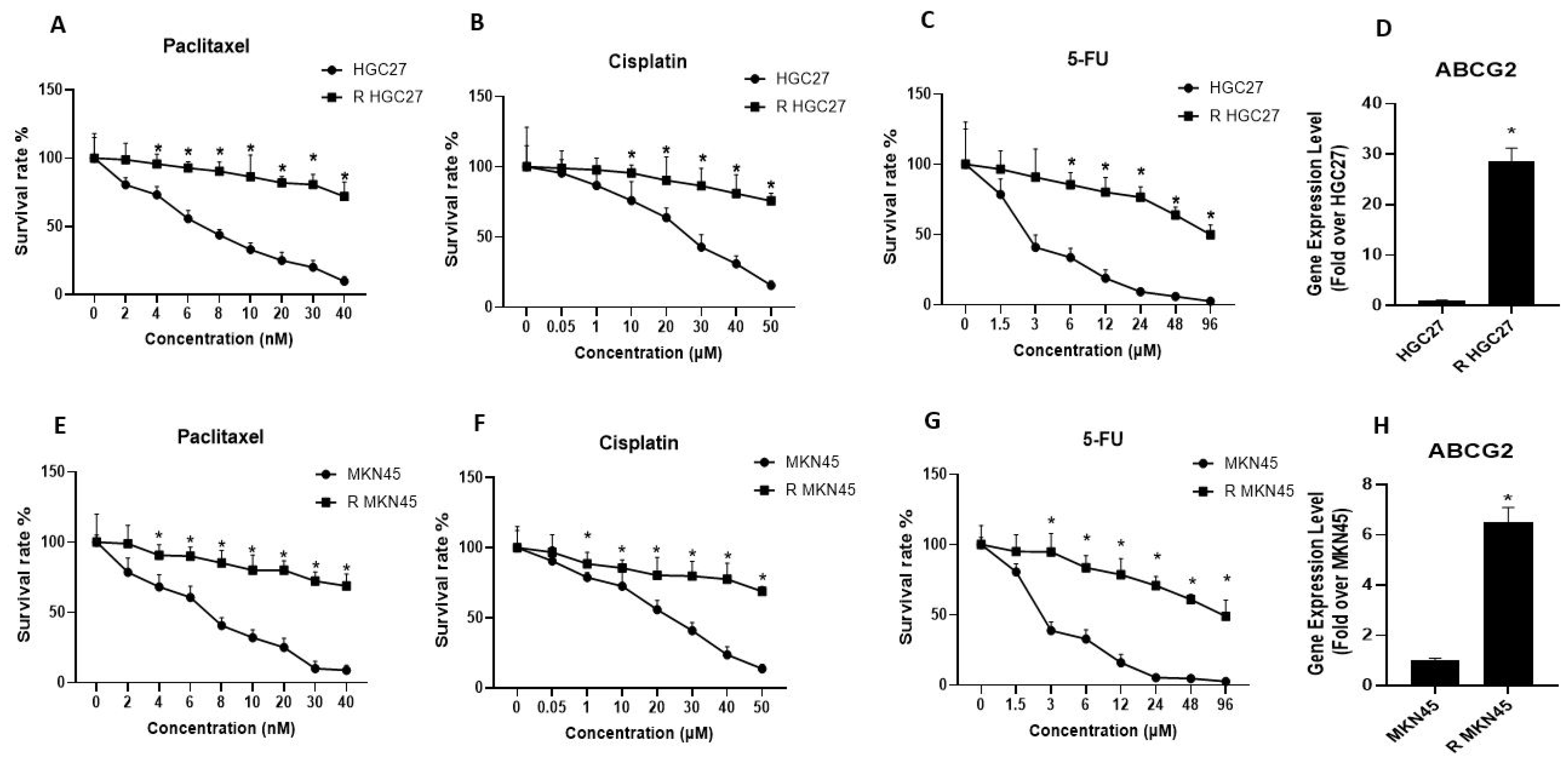
In this study, human gastric cancer cell lines HGC27 and MKN45 were used. PTX-resistant HGC27 cells (R HGC27) and MKN45 (R MKN45) were generated by stepwise adaptation of parental cells to increasing concentrations of PTX. It was initiated at one-fiftieth of the IC50 value, with 25% dose increments applied every two weeks. This selection process resulted in a cell population capable of sustained growth, even at PTX concentrations as high as 12.81 nM for HGC27 and 11.9 nM for MKN45. The IC50 of PTX was 12.81 ± 0.8 nM in HGC27 parental cells, whereas R HGC27 cells exhibited a markedly elevated IC50 of 72.88 ± 5.6 nM (Figure 1A). In addition, R HGC27 cells demonstrated cross-resistance to multiple chemotherapeutic agents with distinct mechanisms of action (Cisplatin IC50:27.57 µM for parental, 107.11 µM for R HGC27, and 5-FU IC50:4.35 µM for parental, 80.09 µM for R HGC27) (Figure 1B,C). Accordingly, this cell population was designated as multidrug-resistant HGC27 cells (R HGC27).
The IC50 value of PTX in parental MKN45 cells was 11.9 ± 1.1 nM, whereas PTX-resistant MKN45 cells showed a substantially increased IC50 of 61.46 ± 6.2 nM (Figure 1E). PTX-resistant MKN45 cells displayed significant cross-resistance to chemotherapeutic agents with different mechanisms of action, including cisplatin (IC50: 24.83 µM in parental cells vs. 89.64 µM in R MKN45 cells) and 5-FU (IC50: 2.64 µM in parental cells vs. 81.92 µM in R MKN45 cells) (Figure 1F,G).
qRT-PCR analysis revealed a significant upregulation of ABCG2 expression in resistant cells compared to their parental counterparts. This indicates an association between ABCG2 overexpression and the multidrug-resistant phenotype (p < 0.05) (Figure 1D,H).

2.2. Evaluation of ABCG2 Expression and Functional Effects Following ABCG2 Knockdown

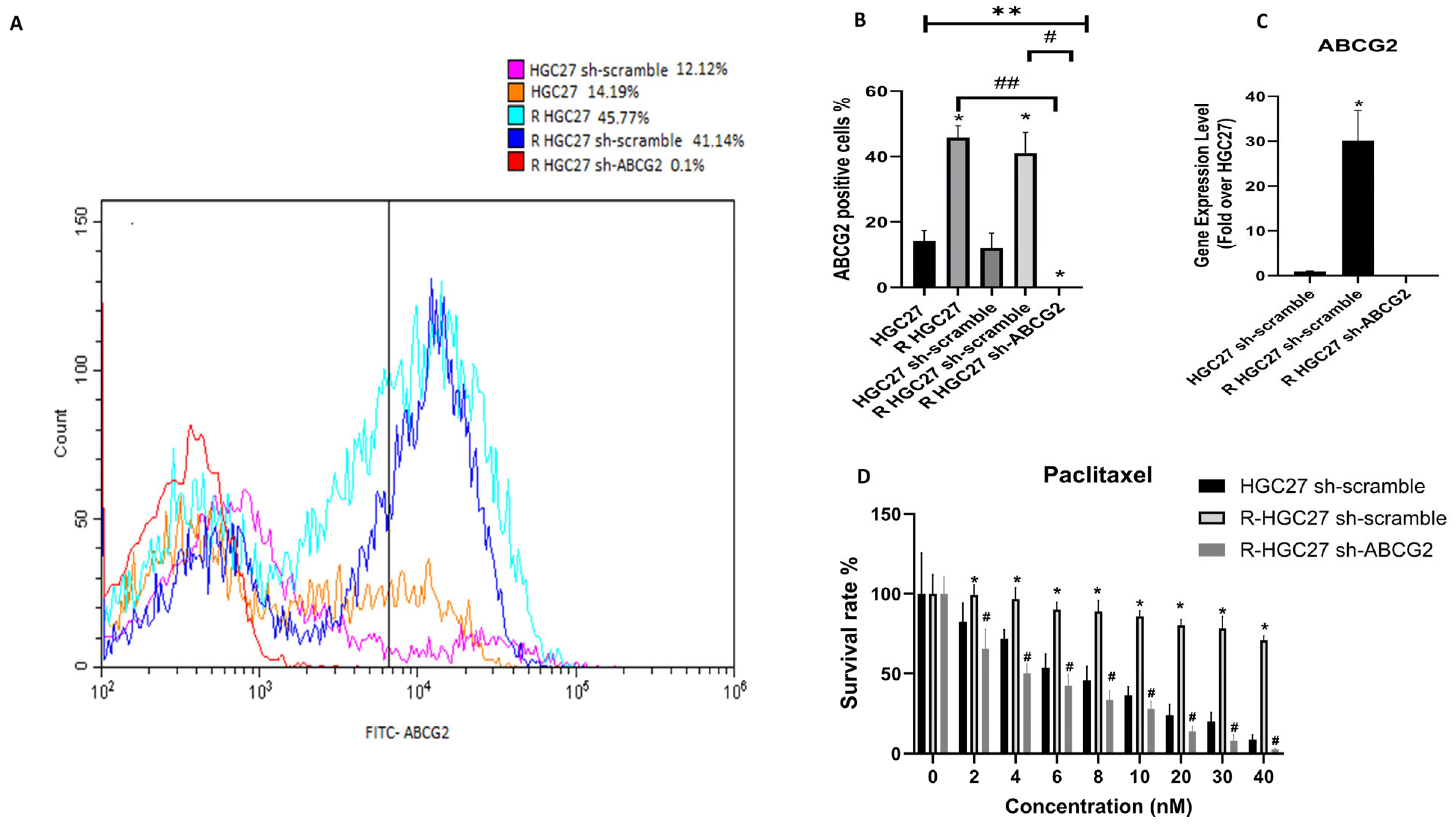
As comparable multidrug resistance and ABCG2 upregulation were observed in both HGC27 and MKN45 cells, HGC27 cells were selected for subsequent mechanistic analysis. ABCG2 expression and the number of ABCG2-positive cells were higher in the multidrug-resistant cells. To evaluate the functional consequences of ABCG2 knockdown in multidrug-resistant gastric cancer cells, ABCG2 expression, drug sensitivity, apoptosis, and cell cycle distribution were analyzed in control and multidrug-resistant HGC27 cells. Flow cytometry analysis revealed a marked increase in ABCG2 expression in R HGC27 sh-scramble cells compared with HGC27 sh-scramble cells, whereas ABCG2 knockdown significantly reduced the proportion of ABCG2-positive cells and ABCG2 gene expression (Figure 2A–C).
ABCG2 silencing significantly increased the sensitivity of resistant HGC27 cells to PTX (IC50 7.06 ± 0.06 nM), as demonstrated by a pronounced decrease in cell survival with increasing drug concentrations (Figure 2D). These findings indicate that ABCG2 contributes to PTX resistance in HGC27 cells.
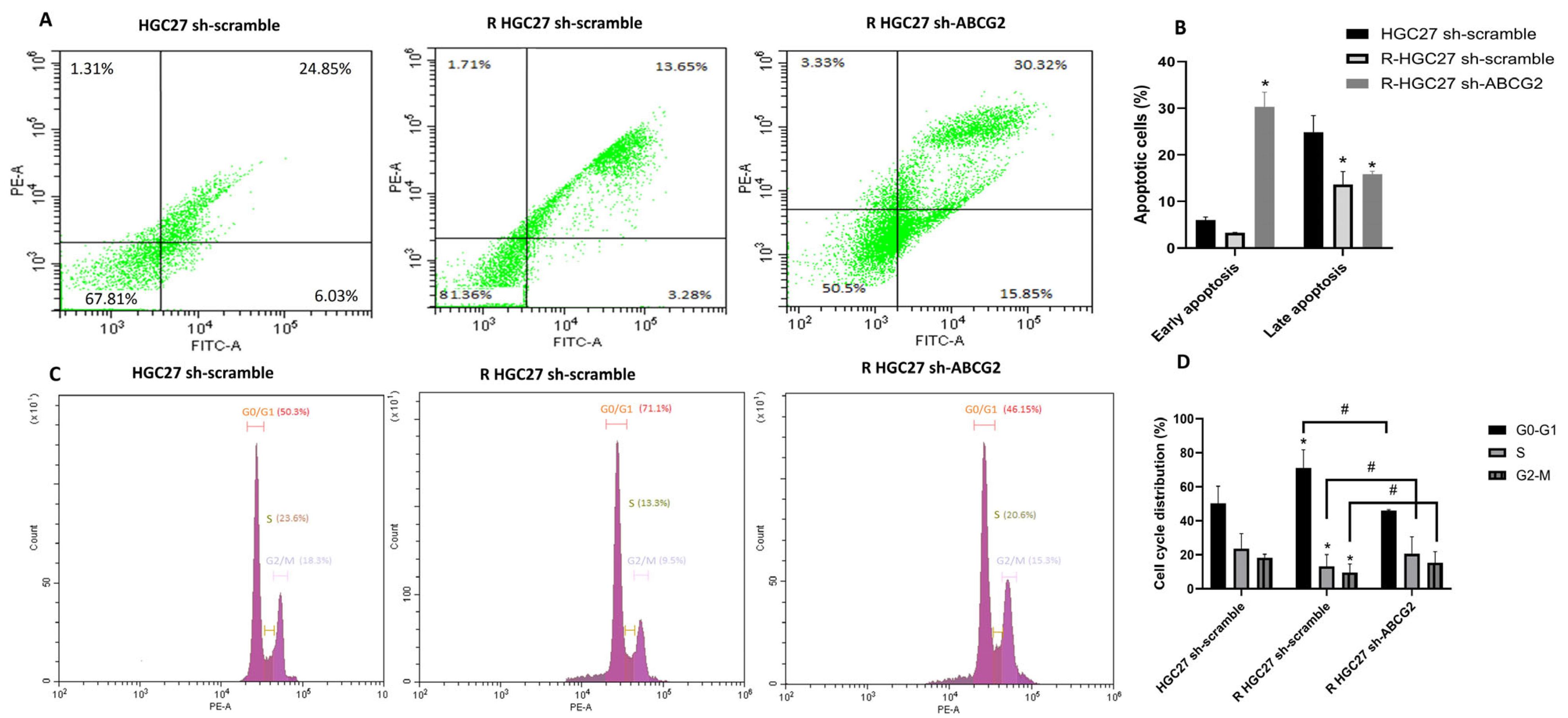
Furthermore, Annexin V/PI staining showed that PTX treatment at the IC50 concentration for each group induced significantly higher levels of apoptosis in R HGC27 sh-ABCG2 cells than in the other cell groups (Figure 3A,B). ABCG2 knockdown significantly increased both early and late apoptotic cell populations in resistant HGC27 cells following PTX treatment (Figure 3A,B).
Many chemotherapeutic agents show cytotoxic activity by selectively targeting proliferating cells. However, such strategies are often ineffective against stemness-associated phenotypes (CSCs), which are typically found in a quiescent G0 state. The elimination of quiescent CSC populations remains a major therapeutic challenge [19]. Similarly, cell cycle analysis revealed significant alterations in phase distribution between drug-resistant and parental HGC27 cells (Figure 3C,D). Compared with parental cells, R HGC27 cells exhibited an increased proportion in the G0/G1 phase and a reduced proportion in the S and G2/M phases. This was associated with an impaired apoptotic responsiveness to PTX. ABCG2 knockdown decreased the proportion of cells in the G0/G1 phase and increased the number of cells in the S and G2/M phases compared with R HGC27 cells (Figure 3C,D).
These results show that ABCG2 contributes to PTX resistance in HGC27 cells by decreasing drug-induced apoptosis and stimulating G0/G1 accumulation. Targeting ABCG2 restores PTX sensitivity in R HGC27 cells.

2.3. ABCG2 Depletion Suppresses Invasion, Stemness-Associated Features, and Drug Efflux in R HGC27 Cells

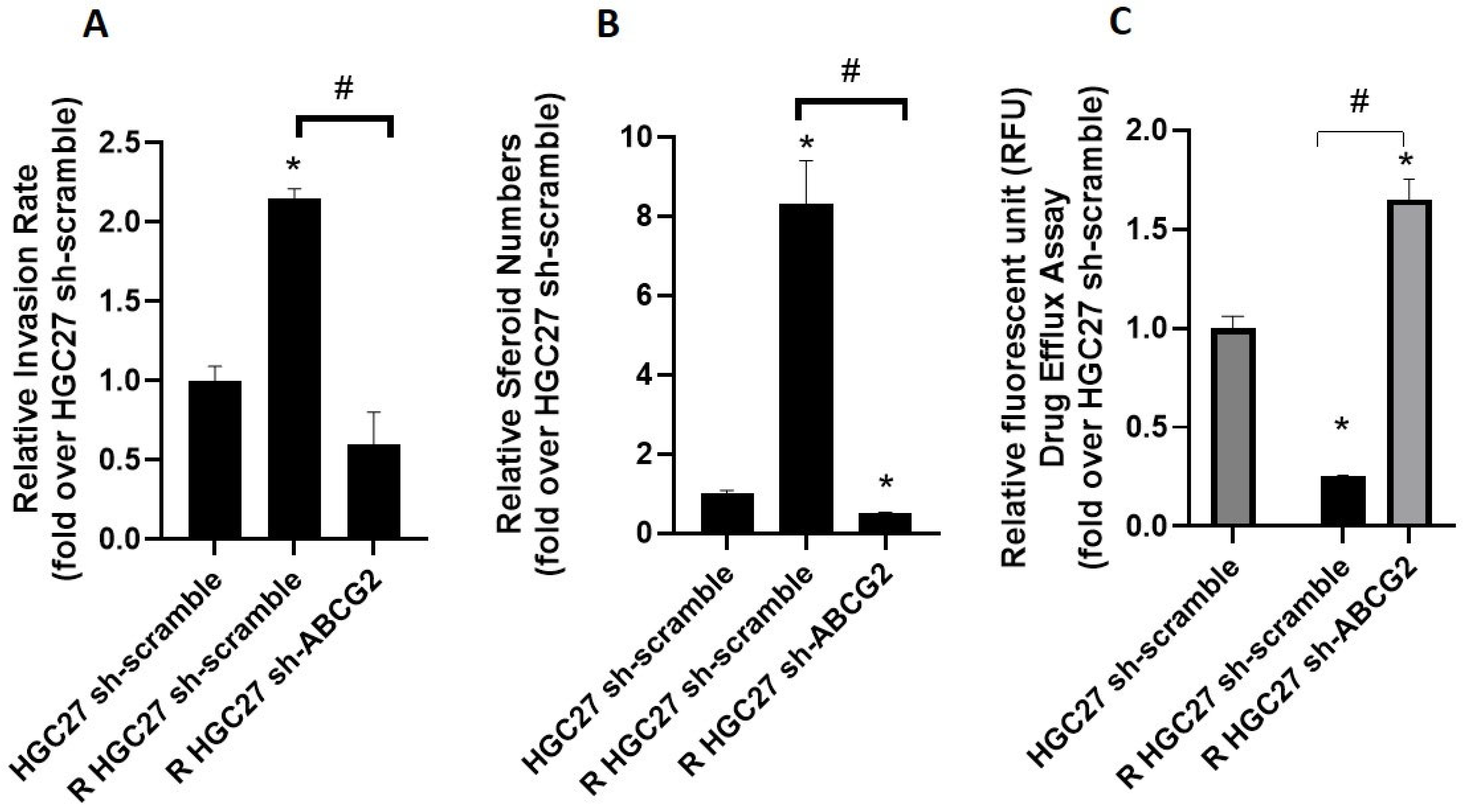
To investigate the role of ABCG2 in the aggressive phenotype of resistant gastric cancer cells, the invasion capacity, spheroid-forming ability, and efflux pump activity of parental and resistant HGC27 cells were assessed. Transwell invasion assays revealed that R HGC27 sh-scramble cells showed a significantly higher invasion rate than HGC27 sh-scramble cells. Silencing ABCG2 in resistant cells reduced their invasive capacity (Figure 4A). Consistently, spheroid formation assays showed a significant increase in spheroid numbers in R HGC27 sh-scramble cells, indicating enhanced stem-like properties associated with drug resistance. In contrast, ABCG2 knockdown significantly suppressed spheroid formation in resistant cells (Figure 4B). To further evaluate the functional capacity associated with stemness, a limiting dilution sphere formation assay was performed under single-cell seeding conditions. R HGC27 cells exhibited a higher frequency of spheroid-positive wells than parental cells, indicating an increased capacity for sphere initiation. Silencing of ABCG2 significantly decreased the capacity of sphere initiation (Supplementary Figure S8). Additionally, analysis of efflux pump activity revealed significantly reduced intracellular fluorescence in R HGC27 sh-scramble cells, indicating an increased capacity for drug efflux. Silencing ABCG2 significantly decreased efflux pump activity (Figure 4C). These results suggest that ABCG2 is related to increased capacity of invasion, spheroid formation, and efflux pump activity in R HGC27 cells. Thus, targeting ABCG2 can effectively decrease these aggressive and drug-resistant characteristics.

2.4. ABCG2 Knockdown Modulates Stemness and EMT-Related Gene Expression in Multidrug-Resistant HGC27 Cells

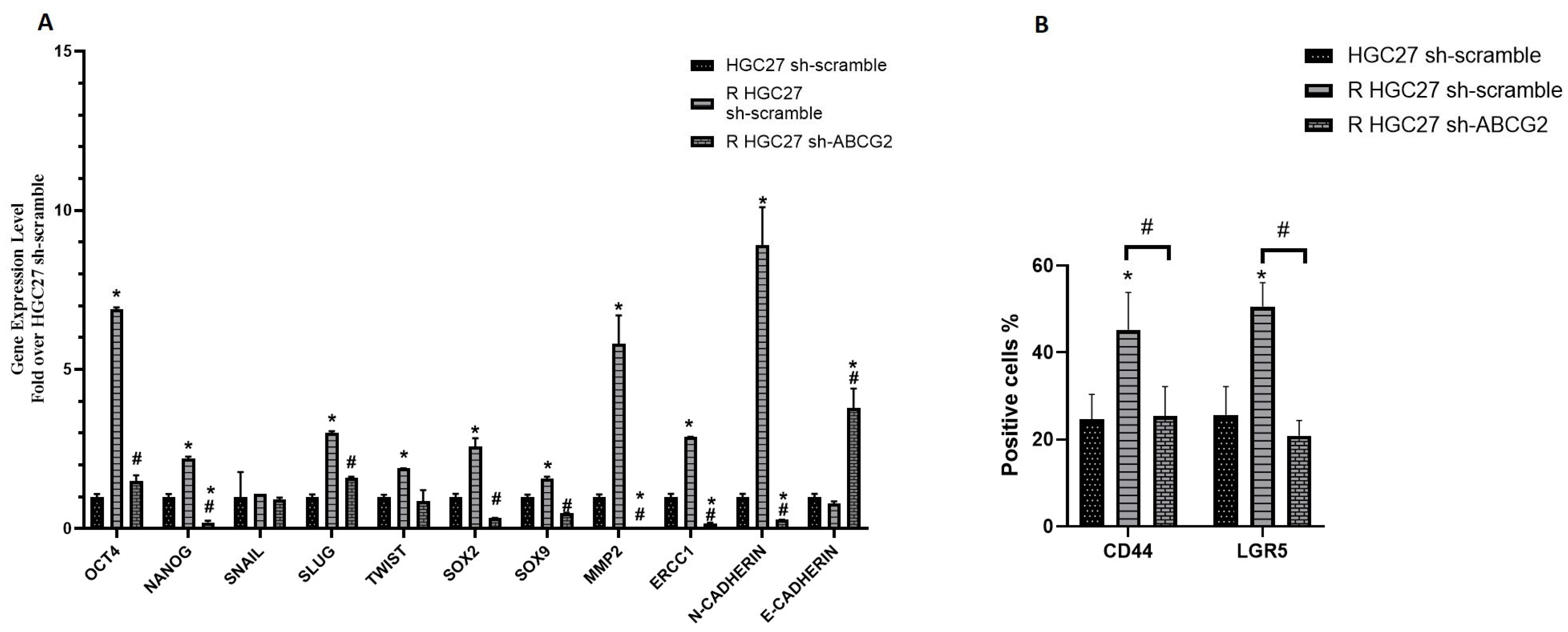
ABCG2 knockdown markedly affected the expression of stemness- and EMT-related genes in multidrug-resistant HGC27 cells (Figure 5A). Compared with parental HGC27 sh-scramble cells, R HGC27 sh-scramble cells exhibited significantly elevated mRNA levels of several stemness markers, including OCT4, NANOG, SLUG, TWIST, SOX2, and SOX9 (* p < 0.05). In addition, EMT-associated genes such as SNAIL, MMP2, ERCC1, and N-CADHERIN were upregulated in resistant cells, suggesting a more aggressive stem-like phenotype.
Silencing of ABCG2 in resistant HGC27 cells (R HGC27 sh-ABCG2) significantly reduced the expression levels of stemness- and EMT-related genes compared with those in R HGC27 sh-scramble cells (# p < 0.05). In contrast, the expression of the epithelial marker E-CADHERIN was increased following ABCG2 knockdown.
These findings demonstrate that ABCG2 contributes to the maintenance of stemness and EMT-related gene expression in multidrug-resistant HGC27 cells. This suggests a potential role for ABCG2 in regulating aggressive phenotypic characteristics associated with chemoresistance.

2.5. ABCG2 Silencing Decreases CD44- and LGR5-Positive Cell Populations in Resistant Cells

To investigate whether ABCG2 contributes to the maintenance of stem-like cell populations in chemoresistant gastric cancer cells, the proportions of CD44- and LGR5-positive cells were assessed using flow cytometry. R HGC27 sh-scramble cells exhibited a significantly greater proportion of CD44- and LGR5-positive cells than the parental HGC27 sh-scramble population (Figure 5B and Supplementary Figure S10).
Silencing ABCG2 in R HGC27 cells resulted in a marked decrease in CD44- and LGR5-positive cell populations. These findings demonstrate that ABCG2 plays a critical role in maintaining stem-like characteristics in R HGC27 cells. ABCG2 knockdown effectively attenuates the expression of stemness-associated markers.

2.6. ERK Signaling Modulates ABCG2 Expression, Efflux Function, and PTX Resistance in Resistant Cells

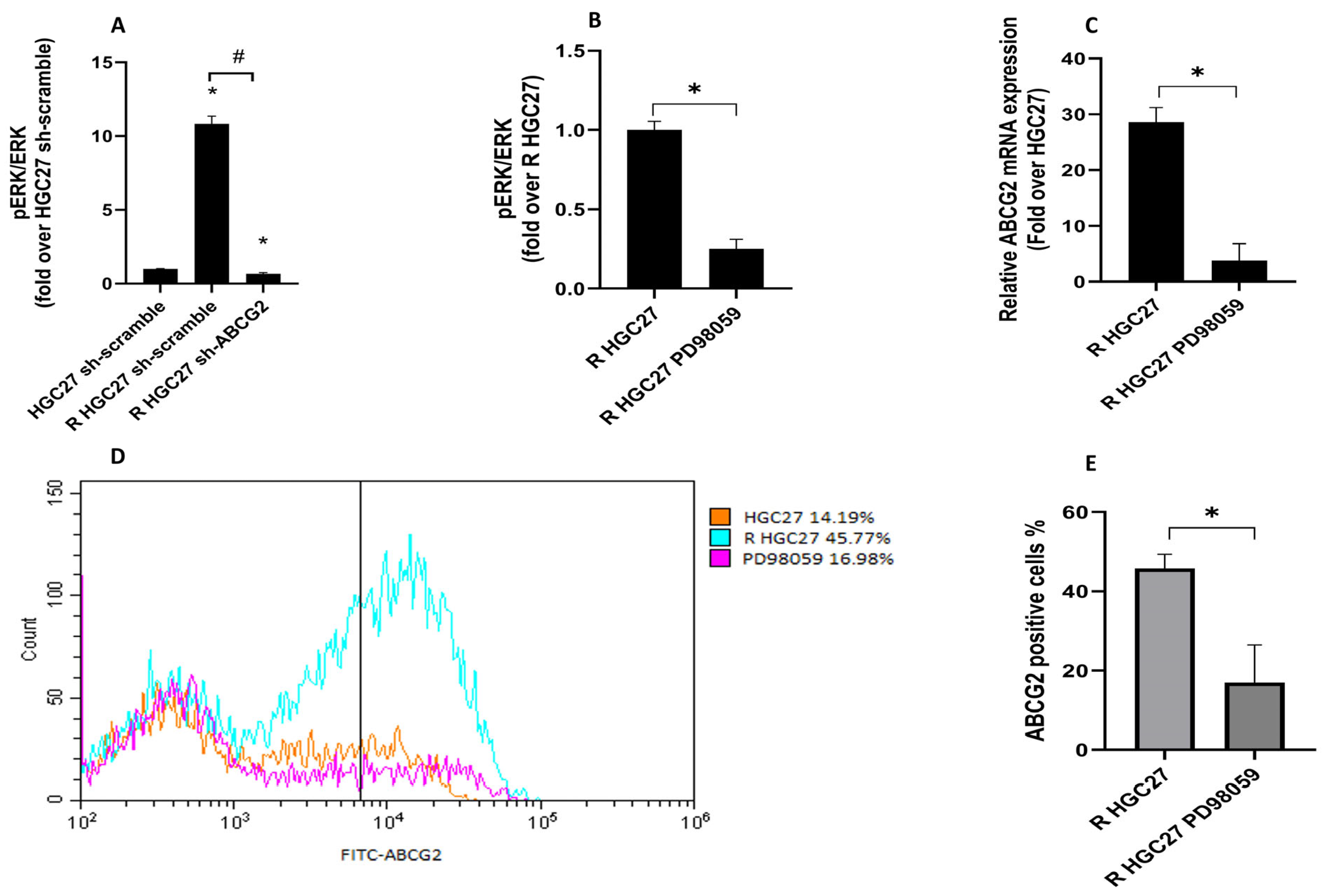
To investigate the involvement of ERK signaling in ABCG2-related drug resistance, we analyzed the ERK activation and ABCG2 expression in R HGC27 cells. The pERK/ERK ratio was significantly higher in R HGC27 sh-scramble cells than in parental counterparts. In contrast, ABCG2 knockdown markedly decreased ERK activation (Figure 6A). Immunofluorescence analysis revealed increased nuclear accumulation of pERK in resistant cells. This accumulation was decreased after silencing ABCG2. These findings suggest a functional association between ABCG2 expression and ERK signaling activity (Supplementary Figure S9).
Also, pharmacological inhibition of ERK signaling using PD98059 significantly decreased the pERK/ERK ratio in the R HGC27 cells (Figure 6B). PD98059 treatment significantly suppressed ABCG2 mRNA expression. It reduced ABCG2 protein levels, as demonstrated by flow cytometry analysis (Figure 6C–E).
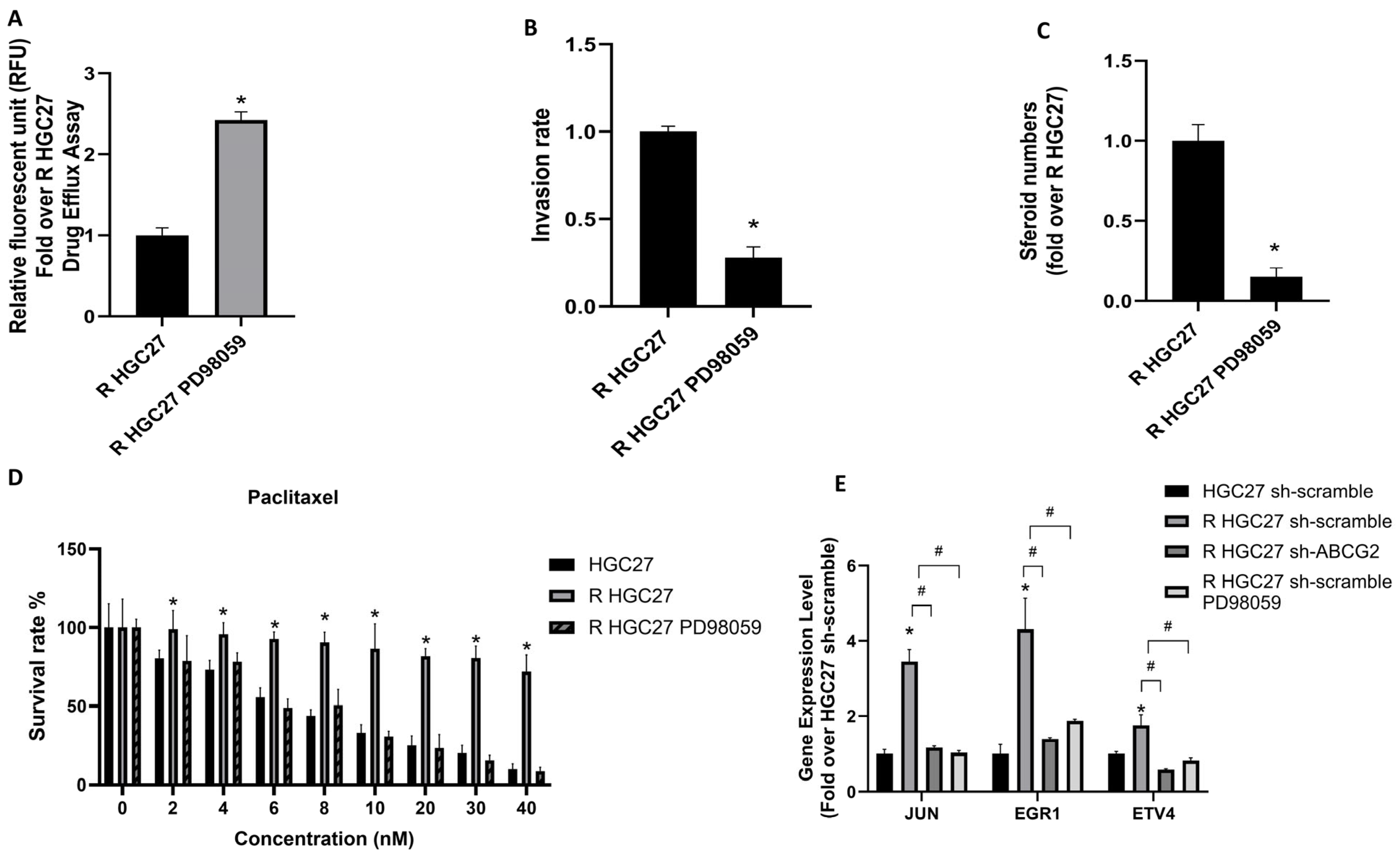
In parallel, suppression of ERK pathway activity significantly increased intracellular fluorescence during drug efflux analysis, indicating reduced efflux pump activity (Figure 7A). In addition, the sphere-forming and invasion capacities of R HGC27 cells decreased (Figure 7B,C).
Functional analysis showed that inhibiting ERK significantly increased the sensitivity of R HGC27 cells to PTX, as demonstrated by decreased cell survival at increasing drug concentrations (Figure 7D). Limiting dilution assay also showed a decreased sphere initiation capacity upon ERK inhibition (Supplementary Figure S8).
Increased ERK activation in resistant cells was accompanied by elevated expression of the downstream ERK target genes JUN, EGR1, and ETV4. Knockdown of ABCG2 and pharmacological inhibition of ERK signaling with PD98059 significantly reduced ABCG2 expression levels (Figure 7E).
These findings suggest a functional link between ERK signaling and ABCG2-mediated efflux activity, which could contribute to multidrug resistance in HGC27 cells. Targeting ERK-related ABCG2 activity could therefore help to reduce the resistant phenotype.

2.7. ERK Signaling Restores Chemoresistance and Aggressive Phenotypes in ABCG2-Depleted R HGC27 Cells

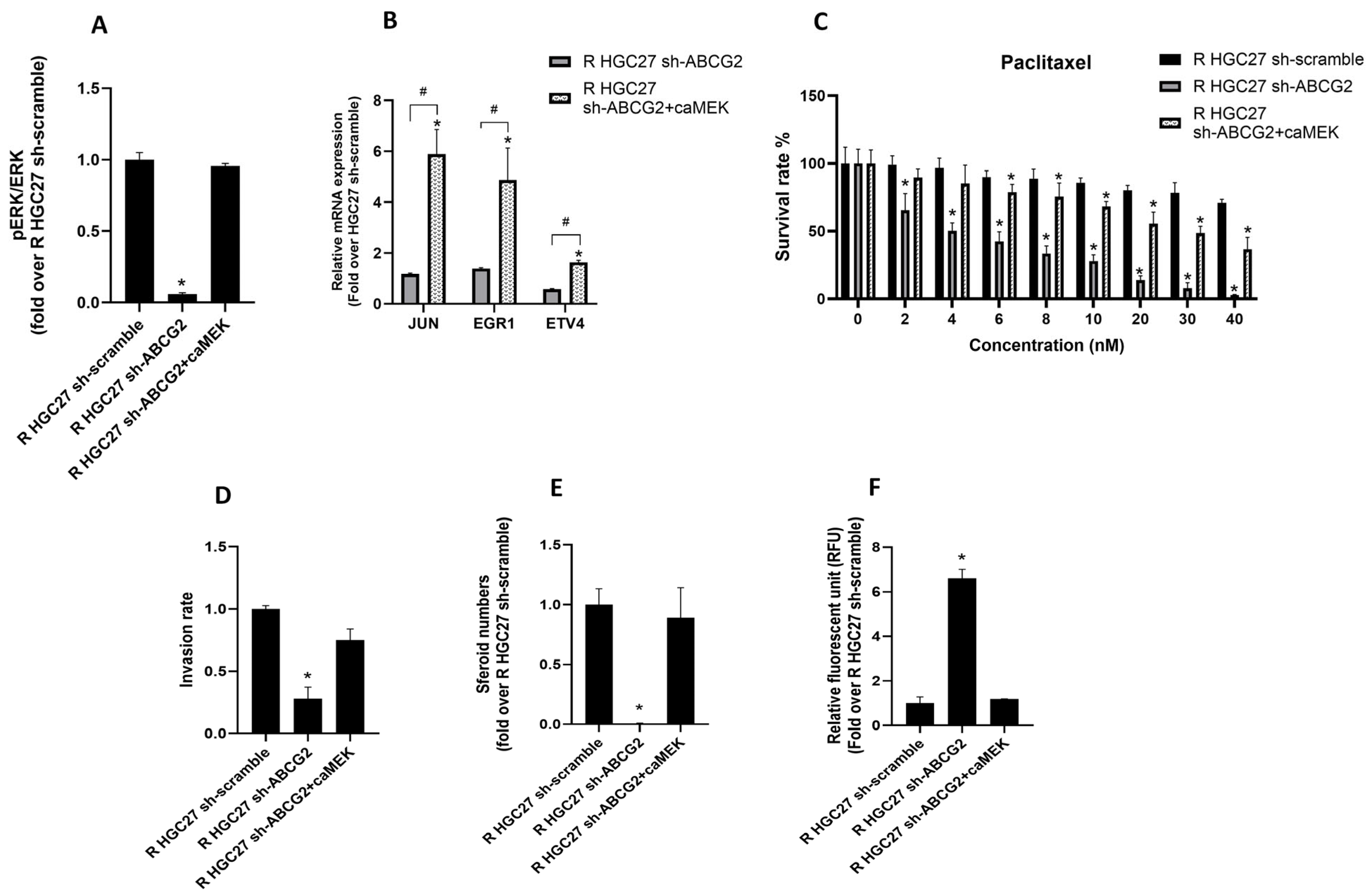
To functionally confirm the involvement of ERK signaling, constitutively active MEK1 (caMEK1), the upstream activator of ERK phosphorylation, was ectopically expressed in ABCG2-knockdown R HGC27 cells to restore the attenuated ERK activity (Figure 8A). Restoring ERK activity in R HGC27 sh-ABCG2 cells increased the expression levels of the ERK downstream target genes, JUN, EGR1, and ETV4. These findings further support a functional role for ERK signaling in mediating ABCG2-associated multidrug resistance phenotypes (Figure 8B). Reconstitution of ERK signaling by caMEK1 markedly restored PTX resistance in ABCG2-depleted R HGC27 cells (Figure 8C) and restored sphere formation, invasion and drug efflux capacity (Figure 8D). Restoration of ERK activity by constitutively active MEK partially rescued sphere initiation capacity in ABCG2-silenced cells, supporting the contribution of ERK signaling to stemness-associated phenotypes in multidrug-resistant gastric cancer cells (Supplementary Figure S8).
Kaplan–Meier survival analyses demonstrated that elevated ABCG2 expression was significantly associated with poorer overall survival in gastric cancer patients in both the KM-plotter and TCGA-STAD cohorts (Supplementary Figure S1). Similarly, increased expression of MAPK1 and MAPK3 was associated with decreased overall survival, supporting the clinical relevance of ERK pathway activation in gastric cancer (Supplementary Figure S2). Analysis of the TCGA-STAD cohort using the UCSC Xena browser revealed significant positive correlations between ABCG2 expression and ERK pathway components (MAPK3, JUN, FOS, and EGR1), and stemness-associated markers (LGR5 and NANOG) (Supplementary Figure S3). Similar correlation patterns were observed in the cBioPortal analysis of the TCGA-STAD cohort. This further supports the association between ABCG2 expression and ERK signaling, as well as stemness-related transcriptional programs (Supplementary Figure S4).
UALCAN/CPTAC proteomic analysis revealed variations in the expression levels of MAPK1 and MAPK3 proteins across different gastric cancer subtypes. Expression levels of MAPK1 and MAPK3 were markedly decreased in the S4 subtype, whereas relatively higher levels were observed in the S6 and S7 subtypes. Significant differences were detected in several comparisons between subtypes, particularly between the S2–S4 and S3–S6 groups. These findings further suggest heterogeneous activity of the ERK pathway among gastric cancer subtypes (Supplementary Figure S5).
RPPA-based co-expression analysis of TCGA-STAD samples revealed a modest yet significant positive correlation between ABCG2 mRNA expression and phosphorylated JUN (JUN_pS73), as well as between ABCG2 expression and phosphorylated RPS6KA1 (RPS6KA1_pT359/S363). This supports the potential association between ABCG2 expression and ERK-related signaling activity in gastric cancer (Supplementary Figure S6). Also, exploratory KEGG pathway enrichment analysis based on recurrently overexpressed genes identified in ABCG2-high TCGA-STAD gastric cancer samples demonstrated enrichment of oncogenic pathways associated with MAPK, PI3K-AKT, and ERBB signaling (Supplementary Figure S7 and Table S1).
These findings suggest that ERK signaling functionally contributes to ABCG2-associated MDR and aggressive phenotypes in gastric cancer cells.

3. Discussion

In this study, we analyzed the relationship between multidrug resistance and the aggressiveness-related characteristics in gastric cancer cells. PTX-resistant HGC27 cells showed cross-resistance to cisplatin and fluorouracil, and also exhibited increased drug efflux capacity, migratory behavior, and sphere-forming ability. These findings are consistent with multidrug resistance and stem cell-like phenotypes [20,21,22]. ABCG2 expression was increased in multidrug-resistant cells. As qRT-PCR analysis showed, stemness-related markers, including OCT4, NANOG, SOX2, and SOX9, and mesenchymal markers, including SLUG, TWIST, and N-CADHERIN, were also increased, while the epithelial marker E-CADHERIN was decreased. These findings suggest that PTX-resistant gastric cancer cells exhibit stem cell-like and mesenchymal-like characteristics [20,21,22].
Cancer stemness is associated with chemoresistance, self-renewal, and cell mobility, which are associated with metastasis and recurrence [23]. The interplay among chemoresistance, ABCG2 expression, and CSC- and EMT-associated properties, such as invasive behavior and spheroid-forming capacity, remains unclear. Therefore, the PTX-resistant HGC27 cell line, which exhibits multidrug resistance, was used for further investigation. Analysis of gene expression showed that the expression of stemness-related and mesenchymal genes decreased following ABCG2 knockdown in multidrug-resistant cells. ATP-binding transporters, such as ABCG2, mediate drug efflux in cancer cells [24,25]. Cells expressing high levels of ABCG2 have been shown to exhibit drug-resistant characteristics, CSC-, and EMT–like features [11,26]. Moreover, ABCG2 has been suggested as a putative marker for cancer stem cells in gastric cancer [12]. We investigated the relationship between ABCG2 expression and CSC-related traits, including drug efflux capacity, invasive potential, and spheroid-forming ability. Our findings revealed that ABCG2 contributes to drug efflux, spheroid formation, and the migratory ability of drug-resistant cells, in line with earlier studies [20,27,28,29,30,31]. The expansion of the CD44+ and LGR5+ cell populations, together with enhanced spheroid-forming capacity and invasive potential, further supports the presence of stemness-associated and therapy-resistant phenotypes, as CD44 and LGR5 are well-established gastric CSC markers associated with self-renewal and therapy resistance [8,32]. These findings suggest that beyond its role in drug excretion, ABCG2 contributes to multidrug resistance and aggressive phenotypes in PTX-resistant gastric cancer cells.
In our multidrug-resistant HGC27 cells, the G0/G1 phase cell ratio was significantly higher than in controls. Silencing the ABCG2 gene reduced G0/G1 enrichment while significantly increasing apoptosis. These findings suggest that ABCG2 contributes to the resistance phenotype not only by regulating drug elimination but also by modulating cell cycle distribution and survival signaling, which may reduce apoptotic responsiveness to PTX. ABC transporters, including ABCG2, are well-known mediators of decreased intracellular drug accumulation and increased chemoresistance [33]. Several reports describe how ABCG2 suppression can lead to G0/G1 accumulation by modulating cyclins and CDK inhibitors (such as cyclin D3 and p21). The effects of ABCG2 disruption on cell cycle phase distribution are context-dependent and may differ between cell types [34]. The increased apoptosis observed following ABCG2 silencing is consistent with studies showing that ABCG2 depletion or activity sensitizes cancer cells to cytotoxic agents and promotes apoptosis. This may occur either by increasing intracellular drug retention or by disrupting pro-survival signaling associated with the resistant state [33,35]. In summary, our data support the conclusion that ABCG2 is associated with the maintenance of drug tolerance and survival in multidrug-resistant HGC27 cells. Targeting ABCG2 shifts the cell cycle distribution towards the control profile and restores apoptotic responsiveness. These findings suggest that targeting ABCG2 could help to increase PTX sensitivity in gastric cancer cells.
Extracellular signal-regulated kinase (ERK) is a key component of the mitogen-activated protein kinase (MAPK) signaling cascade. The components of this cascade are activated through tightly regulated, reversible phosphorylation events, thereby providing precise control of cell proliferation. ERK signaling plays a key role in regulating tumor cell survival, proliferation, and resistance to therapy across multiple cancer types [36,37,38]. Although ABCG2 is primarily known as a membrane efflux transporter, ABC transporters may also indirectly affect intracellular signaling through cellular stress responses and receptor-associated signaling networks [33,39]. The precise molecular mechanism linking ABCG2 activity to ERK activation requires further investigation.
In this study, ABCG2 silencing significantly reduced ERK activation in PTX-resistant HGC27 cells, suggesting that ERK-related signaling may be associated with the resistant phenotype. In parallel, pharmacological inhibition of ERK signaling decreased ABCG2 expression and significantly impaired spheroid formation, invasion capacity, and drug efflux activity in multidrug-resistant cells. Importantly, restoration of ERK activity by constitutively active MEK1 reversed the chemosensitive and stemness-suppressive effects induced by ABCG2 depletion. Together, these findings support a functional contribution of ERK signaling to ABCG2-associated aggressive and stemness-related multidrug-resistant phenotypes. Previous evidence suggests that the MEK/ERK pathway may regulate ABCG2 expression in a context-dependent manner. Although inhibiting the MEK/ERK/RSK axis has been associated with increased ABCG2 expression, suppressing MEK/ERK signaling independently of RSK has been reported to decrease ABCG2 levels [40]. Suppression of ERK signaling abolished the upregulation of Ribophorin II (RPN2)-mediated P-gp and ABCG2 in SGC7901/DDP and SGC7901/VCR cells, suggesting that the ERK pathway plays a central role in RPN2-mediated multidrug resistance in gastric cancer [39]. Previous studies have linked ERK activation to drug resistance, EMT, and stemness-associated phenotypes. ERK signaling has been shown to regulate transcription factors associated with EMT drivers and to support survival under chemotherapy stress [21,38,41,42,43]. ERK activation was assessed using an ELISA-based phospho/total ERK approach rather than Western blotting. The functional role of ERK signaling was supported by additional pharmacological inhibition experiments and the rescue of the resistant phenotype by constitutively active MEK1. In addition, immunofluorescence analysis revealed increased nuclear accumulation of pERK in resistant cells, which was reduced following ABCG2 knockdown. This observation provides further support for the idea that ERK activation is increased in resistant cells. Taken together, these findings suggest that ERK-related signaling may be related to ABCG2-associated resistance phenotypes. Consistently, several downstream transcriptional regulators of ERK have been linked to signaling programs associated with chemoresistance. This highlights the potential biological relevance of ERK pathway activation in multidrug-resistant cancer cells.
The decrease in the expression of stemness markers, EMT-associated phenotypes, and invasive behavior following ABCG2 silencing suggests that ABCG2 may contribute to multidrug resistance beyond its transporter function, potentially through ERK-related signaling programs associated with CSC plasticity. The data suggest that ABCG2 expression and ERK-related signaling contribute to PTX resistance and aggressive phenotypes in HGC27 cells. Targeting this interaction may be a therapeutic approach for gastric cancer. In line with our experimental findings, survival analysis of publicly available datasets showed that high ABCG2 expression was associated with worse overall survival in gastric cancer patients. Further survival analyses showed that elevated expression of MAPK1 and MAPK3 was significantly associated with poorer overall survival in patients with gastric cancer. This supports the clinical significance of ERK pathway activation. In addition, analyses of publicly available clinical datasets, including TCGA cohorts, revealed significant positive correlations between ABCG2 expression and several ERK pathway-associated components, including MAPK3, JUN, and EGR1 (Supplementary Figures S1–S4).
Proteomic analyses using CPTAC/UALCAN revealed subtype-dependent differences in MAPK1 and MAPK3 expression in gastric cancer cohorts (Supplementary Figure S5). This suggests that ERK-related signaling may vary across gastric cancer subtypes. In addition, analyses of TCGA-STAD RPPA datasets revealed a modest positive correlation between ABCG2 expression and the phosphorylation of JUN and RPS6KA1. This finding supports the relationship between ABCG2 expression and ERK-related signaling activity in gastric cancer [44,45,46] (Supplementary Figure S6). An exploratory pathway enrichment analysis based on the identification of recurrently overexpressed genes in ABCG2-high TCGA-STAD gastric cancer samples revealed significant enrichment of gastric cancer-associated oncogenic pathways. These include MAPK, PI3K-AKT, and ERBB signaling pathways, as well as pathways related to central carbon metabolism [47,48] (see Supplementary Figure S7). Activation of the MAPK/ERK signaling cascade plays a common role in gastric cancer progression, invasion, metastasis, and chemotherapy resistance. This highlights the clinical significance of the ERK pathway-related transcriptional programs observed in this study [47].
Our study suggests a functional relationship between ABCG2 expression and ERK-dependent multidrug-resistant phenotypes in PTX-resistant gastric cancer cells. Although ERK inhibition and rescue experiments revealed an interaction between ABCG2 and ERK signaling, the molecular mechanism linking ABCG2 activity to ERK activation remains unclear. This interaction may involve receptor-associated signaling networks, intracellular stress responses, or indirect regulatory mechanisms. The present study was performed exclusively using in vitro gastric cancer models. Therefore, further in vivo validation using xenograft systems and patient-derived datasets will be necessary to confirm the biological and clinical relevance of the ABCG2–ERK signaling relationship.
From a therapeutic perspective, these findings suggest that targeting the ABCG2-ERK interaction could be a promising strategy to restore paclitaxel sensitivity in resistant gastric cancer cells. Pharmacological inhibition of ERK signaling reduced ABCG2 expression and reversed multiple resistance-associated phenotypes. This supports the potential of pathway-focused combination therapies to overcome chemoresistance. Although this study used gastric cancer cell models, ABCG2-mediated multidrug resistance and ERK-associated signaling pathways have also been reported in many other tumor types [49,50]. Similar ABCG2- and ERK-associated resistance mechanisms may also exist in other tumor types. However, further research involving additional cancer models is needed to confirm this.
In conclusion, ABCG2 was found to be related to multiple functions, including drug efflux activity, spheroid formation, and invasive capacity of gastric cancer cells with multidrug resistance. Our findings suggest a functional relationship between ERK signaling and the multidrug resistance and aggressive phenotypes associated with ABCG2 in PTX-resistant gastric cancer cells.
Future studies should investigate the in vivo relevance of the association between ABCG2 expression and ERK signaling using animal models. Evaluation of its clinical significance in patient-derived samples is crucial. In addition, identifying the regulatory mechanisms linking PTX exposure to ABCG2 activation may contribute to the development of more effective therapeutic strategies to overcome multidrug resistance in gastric cancer.

4. Materials and Methods

4.1. Cell Culture and Establishment of PTX-Resistant Cells

HGC27 cell line (Accession CVCL_1279), derived from the metastatic lymph node of gastric cancer, and MKN45 cell line (Accession CVCL_0434), derived from the liver metastasis of a poorly differentiated gastric adenocarcinoma, were obtained from the Yeditepe University Cell Bank (Istanbul, Türkiye). Cells were cultured in RPMI medium (Diagnovum GmbH, Greifswald, Germany) supplemented with 10% fetal bovine serum (FBS; (Diagnovum GmbH, Greifswald, Germany) and antibiotics (100 U/mL penicillin and 100 µg/mL streptomycin). Cultures were maintained at 37 °C in a humidified incubator under a 5% CO2 atmosphere.
Resistant HGC27 and MKN45 cells (designated R HGC27 and R MKN45) were generated by gradually exposing the parental line to increasing concentrations of PTX (MedChemExpress, Monmouth Junction, NJ, USA). Selection began at 1/50 of the IC50 value, and the drug concentration was raised by 25% every two weeks. Cells were considered resistant once they could proliferate exponentially at PTX concentrations equivalent to the IC50 of their respective parental lines. The established resistant cells were maintained under identical culture conditions to their non-resistant counterparts, with the addition of PTX at its IC50 value [51].

4.2. Cell Viability Assay (MTT)

Cell viability and cytotoxicity were analyzed through the MTT (3-[4,5-dimethylthiazol-2-yl]-2,5 diphenyl tetrazolium bromide) assay (Sigma-Aldrich, St. Louis, MO, USA). It measures mitochondrial metabolic activity as an indicator of cell viability. Briefly, cells were seeded into 96-well plates at a density of 2 × 10³ cells per well in 100 µL of complete medium, and allowed to attach overnight under standard culture conditions. Each experimental condition was performed with at least five biological replicates.
The cells were exposed to increasing concentrations of PTX, cisplatin or 5-fluorouracil (5-FU). The control cells received 0.01% dimethyl sulfoxide (DMSO) as the vehicle control. After 48 h of treatment, 20 µL of MTT reagent and 80 µL of fresh culture medium were added to each well. The cells were then incubated at 37 °C for 2–4 h until visible formazan crystals formed. The culture medium was then carefully removed, and the resulting formazan crystals were dissolved in 100 µL of DMSO prior to measuring the absorbance.
Absorbance was measured at 570 nm using an Agilent BioTek Synergy H1 microplate reader (Agilent Technologies, Santa Clara, CA, USA). Cell viability was expressed as a percentage relative to the untreated control cells. The half-maximal inhibitory concentration (IC50) is defined as the concentration required to reduce cell viability by 50%. It was determined using linear regression analysis from three independent experiments. Each experiment was performed with at least five replicates.

4.3. Establishment of a Stable Cell Line

ABCG2 was downregulated using an RNA interference-based approach. A lentiviral shRNA vector for ABCG2 (sc-41151-V, Santa Cruz, CA, USA), and an appropriate empty control vector (sc-108080, Santa Cruz, CA, USA) were used. Cells were transduced with lentiviral particles according to the manufacturer’s instructions. Empty vector-transduced control cells, called sh-scramble, and sh-ABCG2 stable cell lines were selected after treatment with 2 µg/mL puromycin for one month to establish stable knockdown cell lines. The silencing of ABCG2 was confirmed through qRT-PCR and flow cytometry [52].
For ERK reactivation experiments, ABCG2-depleted cells were transduced with lentiviral particles encoding a constitutively active MEK1 mutant (caMEK1; Addgene plasmid, 64604, Watertown, MA, USA). Transduced cells were maintained under puromycin selection. ERK reactivation was confirmed by increased pERK/ERK levels and elevated expression of ERK downstream target genes.

4.4. ERK Pathway Inhibition

For inhibition of the ERK pathway, cells were treated with the ERK1/2 inhibitor PD98059 (Sigma-Aldrich, Darmstadt, Germany) at a final concentration of 20 µM for 24 h prior to downstream analyses [53].

4.5. Spheroid Formation Assay

Tumor spheroids were generated by seeding 4 × 10⁴ cells per well into 24-well plates that had been precoated with 2% agarose to prevent cell attachment. The HGC27 cells were cultured in a serum-free RPMI-1640 medium supplemented with 100 U/mL penicillin and 100 µg/mL streptomycin (Thermo Fisher Scientific, Waltham, MA, USA), without additional growth factors. After 10 days of incubation, spheroid formation was evaluated, and spheroid number was quantified using an inverted microscope (Leica Microsystems, Wetzlar, Germany) at 100× magnification [54].

4.6. In Vitro Cell Invasion Assay

The capacity of cell invasion was assessed using Matrigel-coated Transwell inserts (NEST Biotechnology Co., Ltd., Wuxi, Jiangsu, China). Briefly, 100 µL of Matrigel was coated onto the upper surfaces of the inserts, and the inserts were incubated at 37 °C for 30 min to allow polymerization of the gel. Then, a total of 4 × 10⁴ cells suspended in 200 µL of serum-free medium were seeded into the upper chambers. The lower chambers were then filled with 750 µL of RPMI-1640 medium containing 10% fetal bovine serum (FBS) to serve as a chemoattractant. After 24 h of incubation, the non-invading cells were removed and the membranes were fixed with 3.7% formaldehyde for two minutes, followed by permeabilization with absolute methanol for 20 min. The invaded cells were then stained with crystal violet for 15 min. Non-invading cells on the upper surface of the membranes were carefully removed with a cotton swab. In contrast, cells that had invaded the lower surface were visualized and quantified in four randomly selected fields per membrane using an inverted microscope at 400× magnification [55].

4.7. RNA Extraction and Quantitative Real-Time Polymerase Chain Reactions (qRT-PCR)

Cells were plated in T25 culture flasks at a density of 5 × 10⁵ cells per well and cultured for 48 h. Following incubation, cells were detached using trypsin, collected, and centrifuged at 400× g for 5 min. The resulting cell pellets were stored at −80 °C until further processing.
Total RNA was extracted using the innuPREP RNA Mini Kit 2.0 (IST Innuscreen GmbH, Berlin, Germany) according to the manufacturer’s protocol. Complementary DNA (cDNA) synthesis was carried out using the Wonder RT-cDNA Kit (Euroclone, Pero, Italy). The expression levels of 11 genes associated with cancer progression (listed in Table 1) were analyzed by quantitative real-time PCR using the FluoCycle II SYBR Master Mix Kit (Euroclone, Pero, Italy). GAPDH served as the internal reference gene, and relative mRNA expression levels were calculated using the Livak (2−ΔΔCT) method [56].

4.8. Annexin V-FITC/PI Apoptosis Assay

Apoptotic cell death was evaluated using the Annexin V-FITC/PI Apoptosis Kit (BioLegend, San Diego, CA, USA) in accordance with the manufacturer’s instructions. Briefly, 8 × 10⁵ cells were seeded into 6-well culture plates. After 24 h, cells were treated with PTX at IC50 concentrations appropriate for each experimental group.
Following 48 h of treatment, culture supernatants were collected into centrifuge tubes, and adherent cells were gently washed with phosphate-buffered saline (PBS); the wash solutions were combined with the corresponding supernatants. Cells were then detached by trypsinization, pooled with the collected fractions, and centrifuged at 300× g for 5 min. The resulting pellets were washed twice with ice-cold PBS, with centrifugation at 300× g for 5 min after each wash.
Cell pellets were resuspended in 500 µL of 1× Annexin V Binding Buffer, followed by the addition of 5 µL Annexin V-FITC and 5 µL propidium iodide (PI). Samples were gently mixed and incubated for 20 min at room temperature in the dark. Apoptotic populations were analyzed within 1 h using a CytoFLEX flow cytometer (Beckman Coulter, Brea, CA, USA).

4.9. Cell Cycle Analysis

Cells were collected and washed with phosphate-buffered saline (PBS). Fixation was performed by gradually adding ice-cold ethanol to the cell suspension while gently vortexing, resulting in a final ethanol concentration of 70%. The cells were kept at 4 °C for at least 2 h. After fixation, the cells were washed once with PBS and resuspended in a staining buffer consisting of PBS containing 100 μg/mL RNase A and 50 μg/mL propidium iodide (PI). To improve membrane permeabilization, 0.1% Triton X-100 was added to the staining solution. All steps involving the PI were conducted in the absence of light. The cells were incubated in the staining buffer overnight at 4 °C, and DNA content was subsequently analyzed using a CytoFLEX flow cytometer (Beckman Coulter, Brea, CA, USA).

4.10. Efflux Pump Assay

A total of 1 × 10⁵ cells/well were seeded into black-walled, clear-bottom 96-well plates (Sigma-Aldrich) and allowed to adhere overnight. Once the cells reached approximately 70% confluence, the culture medium was removed, and the cells were washed twice with glucose-supplemented PBS(+), consisting of 0.9 mM CaCl2·2H2O, 0.33 mM MgCl2·12H2O, and 10 mM glucose. Subsequently, 100 µL of PBS(+) glucose buffer was added to each well, and the plates were incubated for 1 h at 37 °C.
After incubation, the buffer was replaced with 100 µL of Calcein-AM solution (4 μM) prepared in RPMI-1640 medium, and the cells were incubated for an additional 1 h at 37 °C. The staining solution was then aspirated, and the cells were washed with ice-cold PBS(+). Cell lysis was achieved by adding 100 µL of 1% SDS in PBS and incubating the plates for 10 min at room temperature in the dark. Intracellular calcein fluorescence, observed as a strong yellow–green signal, was measured using Synergy H1 Microplate Reader (BioTek Instruments, Winooski, VT, USA). Data are expressed as mean ± standard deviation from at least three independent experiments [27].

4.11. Flow Cytometry Analysis

Cells were washed once with PBS, detached using a cell scraper (NEST Biotechnology Co., Ltd., Wuxi, Jiangsu, China), and centrifuged to collect cell pellets. The cells were then resuspended and incubated with a CD44-specific antibody (Catalog no. 555478, BD Pharmingen, San Jose, CA, USA) and an LGR5-specific antibody (Catalog no. 373803, BioLegend, San Diego, CA, USA) and incubated with antibodies for 30 min at 4 °C in the dark. Flow cytometric analysis was performed using a CytoFLEX flow cytometer (Beckman Coulter, Brea, CA, USA). Instrument settings and analysis parameters were established based on unstained control samples.

4.12. Determination of Protein Levels by ELISA

Cells (5 × 10⁶) were plated in T75 culture flasks and incubated for 24 h to allow attachment. Subsequently, the medium was replaced with RPMI-1640 alone as the untreated control or RPMI-1640 containing the IC50 dose of PTX. Total cellular proteins were extracted using standard lysis procedures, and protein concentrations were quantified using the bicinchoninic acid (BCA) assay. Protein expression levels were subsequently evaluated using commercially available assay kits. Total and phosphorylated ERK1/ERK2 levels were measured using the ERK1/ERK2 (Total/Phospho) Multispecies InstantOne ELISA Kit (Catalog no. 85-86013-11; Thermo Fisher Scientific, Waltham, MA, USA) in accordance with the manufacturer’s protocol [57].

4.13. Statistical Analysis

Statistical analyses were conducted using the Kruskal–Wallis test, followed by the Mann–Whitney U test for pairwise comparisons. A p-value of <0.05 was considered to indicate statistical significance and is denoted by an asterisk (* or #). All experiments were performed in at least five independent biological replicates.

Supplementary Materials

The following supporting information can be downloaded at: https://www.mdpi.com/article/10.3390/ijms27115039/s1.

Author Contributions

Conceptualization, resources, validation, investigation, data curation, writing—original draft preparation, review and editing, supervision, and funding: Ö.T.T. Conceptualization, resources, funding, and writing—review and editing: G.T. All authors have read and agreed to the published version of the manuscript. Ö.T.T. actively participated in manuscript correspondence and revision.

Funding

This research received no external funding. The study and the article processing charge (APC) were supported by the personal funds of Ö.T.T. and G.T.

Institutional Review Board Statement

Not applicable.

Informed Consent Statement

Not applicable.

Data Availability Statement

The original contributions presented in this study are included in the article/Supplementary Material. Further inquiries can be directed to the corresponding author.

Conflicts of Interest

The authors declare no conflicts of interest.

Abbreviations

The following abbreviations are used in this manuscript:
PTXPaclitaxel
CSCsCancer Stem Cells
MDRMultidrug Resistance
PBSPhosphate-Buffered Saline
EMTEpithelial–Mesenchymal Transition
ABCG2ATP-Binding Cassette Subfamily G Member 2
ERKExtracellular Signal-Regulated Kinase
MAPKMitogen-Activated Protein Kinase
qRT-PCRQuantitative Real-Time Polymerase Chain Reaction
FITCFluorescein Isothiocyanate
PEPhycoerythrin
RFURelative Fluorescence Unit
IC50Half-Maximal Inhibitory Concentration
caMEK1Constitutively Active MEK1
5-FU5-Fluorouracil
FBSFetal Bovine Serum
SDStandard Deviation
RT-PCRReverse Transcription Polymerase Chain Reaction
TCGAThe Cancer Genome Atlas
STADStomach Adenocarcinoma
RPPAReverse-Phase Protein Array
KEGGKyoto Encyclopedia of Genes and Genomes

References

  1. Morgan, E.; Arnold, M.; Camargo, M.C.; Gini, A.; Kunzmann, A.T.; Matsuda, T.; Meheus, F.; Verhoeven, R.H.A.; Vignat, J.; Laversanne, M.; et al. The current and future incidence and mortality of gastric cancer in 185 countries, 2020–2040: A population-based modelling study. eClinicalMedicine 2022, 47, 101404. [Google Scholar] [CrossRef]
  2. Wang, F.-H.; Shen, L.; Li, J.; Zhou, Z.-W.; Liang, H.; Zhang, X.-T.; Tang, L.; Xin, Y.; Jin, J.; Zhang, Y.-J. The Chinese Society of Clinical Oncology (CSCO): Clinical guidelines for the diagnosis and treatment of gastric cancer. Cancer Commun. 2019, 39, 10. [Google Scholar] [CrossRef]
  3. Desuzinges-Mandon, E.; Arnaud, O.; Martinez, L.; Huché, F.; Di Pietro, A.; Falson, P. ABCG2 transports and transfers heme to albumin through its large extracellular loop. J. Biol. Chem. 2010, 285, 33123–33133. [Google Scholar] [CrossRef]
  4. Doyle, L.A.; Yang, W.; Abruzzo, L.V.; Krogmann, T.; Gao, Y.; Rishi, A.K.; Ross, D.D. A multidrug resistance transporter from human MCF-7 breast cancer cells. Proc. Natl. Acad. Sci. USA 1998, 95, 15665–15670. [Google Scholar] [CrossRef] [PubMed]
  5. Huang, W.-C.; Hsieh, Y.-L.; Hung, C.-M.; Chien, P.-H.; Chien, Y.-F.; Chen, L.-C.; Tu, C.-Y.; Chen, C.-H.; Hsu, S.-C.; Lin, Y.-M. BCRP/ABCG2 inhibition sensitizes hepatocellular carcinoma cells to sorafenib. PLoS ONE 2013, 8, e83627. [Google Scholar] [CrossRef]
  6. Shukla, S.; Meeran, S.M. Epigenetics of cancer stem cells: Pathways and therapeutics. Biochim. Biophys. Acta BBA-Gen. Subj. 2014, 1840, 3494–3502. [Google Scholar] [CrossRef]
  7. Honjo, Y.; Hrycyna, C.A.; Yan, Q.-W.; Medina-Pérez, W.Y.; Robey, R.W.; Van De Laar, A.; Litman, T.; Dean, M.; Bates, S.E. Acquired mutations in the MXR/BCRP/ABCP gene alter substrate specificity in MXR/BCRP/ABCP-overexpressing cells. Cancer Res. 2001, 61, 6635–6639. [Google Scholar]
  8. Takaishi, S.; Okumura, T.; Tu, S.; Wang, S.S.; Shibata, W.; Vigneshwaran, R.; Gordon, S.A.; Shimada, Y.; Wang, T.C. Identification of gastric cancer stem cells using the cell surface marker CD44. Stem Cells 2009, 27, 1006–1020. [Google Scholar] [CrossRef]
  9. Clarke, M.F.; Dick, J.E.; Dirks, P.B.; Eaves, C.J.; Jamieson, C.H.; Jones, D.L.; Visvader, J.; Weissman, I.L.; Wahl, G.M. Cancer stem cells—Perspectives on current status and future directions: AACR Workshop on cancer stem cells. Cancer Res. 2006, 66, 9339–9344. [Google Scholar] [CrossRef]
  10. Wang, J.; Yunyun, Z.; Wang, L.; Chen, X.; Zhu, Z. ABCG2 confers promotion in gastric cancer through modulating downstream CRKL in vitro combining with biostatistics mining. Oncotarget 2017, 8, 5256–5267. [Google Scholar] [CrossRef] [PubMed]
  11. Yu, B.; Gu, D.; Zhang, X.; Liu, B.; Xie, J. The role of GLI2-ABCG2 signaling axis for 5Fu resistance in gastric cancer. J. Genet. Genom. 2017, 44, 375–383. [Google Scholar] [CrossRef]
  12. Jiang, Y.; He, Y.; Li, H.; Li, H.-N.; Zhang, L.; Hu, W.; Sun, Y.-M.; Chen, F.-L.; Jin, X.-M. Expressions of putative cancer stem cell markers ABCB1, ABCG2, and CD133 are correlated with the degree of differentiation of gastric cancer. Gastric Cancer 2012, 15, 440–450. [Google Scholar] [CrossRef]
  13. Wang, N.; Chen, L.; Wei, B.; Zheng, W. Expression of ABCG2 in human gastric carcinoma. Chin.-Ger. J. Clin. Oncol. 2010, 9, 145–148. [Google Scholar] [CrossRef]
  14. Bei, Y.; Chen, X.; Xu, Q.; Lv, J.; Hu, J.; Yang, S. Apatinib weakens resistance of gastric cancer cells to paclitaxel by suppressing JAK/STAT3 signaling pathway. Drug Dev. Res. 2022, 83, 379–388. [Google Scholar] [CrossRef] [PubMed]
  15. Alalawy, A.I. Key genes and molecular mechanisms related to Paclitaxel Resistance. Cancer Cell Int. 2024, 24, 244. [Google Scholar] [CrossRef]
  16. Zhou, M.; Niu, H.; Cui, D.; Xu, M.; Li, J.; Huang, G.; Zhou, M.; Xiong, C.; Liu, Y.; Xu, X.; et al. Cancer stem cell-driven drug resistance in colorectal carcinoma: Molecular aspects and therapeutic potentials. Mol. Cancer 2026, 25, 54. [Google Scholar] [CrossRef]
  17. Paramanantham, A.; Jung, E.J.; Go, S.-I.; Jeong, B.K.; Jung, J.-M.; Hong, S.C.; Kim, G.S.; Lee, W.S. Activated ERK signaling is one of the major hub signals related to the acquisition of radiotherapy-resistant MDA-MB-231 breast cancer cells. Int. J. Mol. Sci. 2021, 22, 4940. [Google Scholar] [CrossRef] [PubMed]
  18. Chu, X.; Tian, W.; Ning, J.; Xiao, G.; Zhou, Y.; Wang, Z.; Zhai, Z.; Tanzhu, G.; Yang, J.; Zhou, R. Cancer stem cells: Advances in knowledge and implications for cancer therapy. Signal Transduct. Target. Ther. 2024, 9, 170. [Google Scholar] [CrossRef]
  19. Saito, Y.; Uchida, N.; Tanaka, S.; Suzuki, N.; Tomizawa-Murasawa, M.; Sone, A.; Najima, Y.; Takagi, S.; Aoki, Y.; Wake, A. Induction of cell cycle entry eliminates human leukemia stem cells in a mouse model of AML. Nat. Biotechnol. 2010, 28, 275–280. [Google Scholar] [CrossRef]
  20. Mani, S.A.; Guo, W.; Liao, M.J.; Eaton, E.N.; Ayyanan, A.; Zhou, A.Y.; Brooks, M.; Reinhard, F.; Zhang, C.C.; Shipitsin, M.; et al. The epithelial-mesenchymal transition generates cells with properties of stem cells. Cell 2008, 133, 704–715. [Google Scholar] [CrossRef]
  21. Shibue, T.; Weinberg, R.A. EMT, CSCs, and drug resistance: The mechanistic link and clinical implications. Nat. Rev. Clin. Oncol. 2017, 14, 611–629. [Google Scholar] [CrossRef]
  22. Aguilar-Medina, M.; Avendaño-Félix, M.; Lizárraga-Verdugo, E.; Bermúdez, M.; Romero-Quintana, J.G.; Ramos-Payan, R. SOX9 Stem-Cell Factor: Clinical and Functional Relevance in Cancer. J. Oncol. 2019, 2019, 6754040. [Google Scholar] [CrossRef]
  23. Lee, H.; Kim, B.; Park, J.; Park, S.; Yoo, G.; Yum, S.; Kang, W.; Lee, J.-M.; Youn, H.; Youn, B. Cancer stem cells: Landscape, challenges and emerging therapeutic innovations. Signal Transduct. Target. Ther. 2025, 10, 248. [Google Scholar] [CrossRef] [PubMed]
  24. Curran, S.; Vantangoli, M.M.; Boekelheide, K.; Morgan, J.R. Architecture of Chimeric Spheroids Controls Drug Transport. Cancer Microenviron. Off. J. Int. Cancer Microenviron. Soc. 2015, 8, 101–109. [Google Scholar] [CrossRef]
  25. Goebel, J.; Chmielewski, J.; Hrycyna, C.A. The roles of the human ATP-binding cassette transporters P-glycoprotein and ABCG2 in multidrug resistance in cancer and at endogenous sites: Future opportunities for structure-based drug design of inhibitors. Cancer Drug Resist. 2021, 4, 784. [Google Scholar] [CrossRef] [PubMed]
  26. Sasaki, N.; Ishiwata, T.; Hasegawa, F.; Michishita, M.; Kawai, H.; Matsuda, Y.; Arai, T.; Ishikawa, N.; Aida, J.; Takubo, K.; et al. Stemness and anti-cancer drug resistance in ATP-binding cassette subfamily G member 2 highly expressed pancreatic cancer is induced in 3D culture conditions. Cancer Sci. 2018, 109, 1135–1146. [Google Scholar] [CrossRef] [PubMed]
  27. Murakami, K.; Umemura, N.; Adachi, M.; Motoki, M.; Ohkoshi, E. ABCG2, CD44 and SOX9 are increased with the acquisition of drug resistance and involved in cancer stem cell activities in head and neck squamous cell carcinoma cells. Exp. Ther. Med. 2022, 24, 722. [Google Scholar] [CrossRef]
  28. Wee, B.; Pietras, A.; Ozawa, T.; Bazzoli, E.; Podlaha, O.; Antczak, C.; Westermark, B.; Nelander, S.; Uhrbom, L.; Forsberg-Nilsson, K. ABCG2 regulates self-renewal and stem cell marker expression but not tumorigenicity or radiation resistance of glioma cells. Sci. Rep. 2016, 6, 25956. [Google Scholar] [CrossRef]
  29. Hong, W.C.; Kim, M.; Kim, J.H.; Kang, H.W.; Fang, S.; Jung, H.-S.; Kwon, W.; Jang, J.-Y.; Kim, H.J.; Park, J.S. The FOXP1-ABCG2 axis promotes the proliferation of cancer stem cells and induces chemoresistance in pancreatic cancer. Cancer Gene Ther. 2025, 32, 563–572. [Google Scholar] [CrossRef]
  30. Ben-Porath, I.; Thomson, M.W.; Carey, V.J.; Ge, R.; Bell, G.W.; Regev, A.; Weinberg, R.A. An embryonic stem cell-like gene expression signature in poorly differentiated aggressive human tumors. Nat. Genet 2008, 40, 499–507. [Google Scholar] [CrossRef]
  31. Nieto, M.A.; Huang, R.Y.; Jackson, R.A.; Thiery, J.P. EMT: 2016. Cell 2016, 166, 21–45. [Google Scholar] [CrossRef]
  32. Barker, N.; Huch, M.; Kujala, P.; van de Wetering, M.; Snippert, H.J.; van Es, J.H.; Sato, T.; Stange, D.E.; Begthel, H.; van den Born, M.; et al. Lgr5(+ve) stem cells drive self-renewal in the stomach and build long-lived gastric units in vitro. Cell Stem Cell 2010, 6, 25–36. [Google Scholar] [CrossRef]
  33. Wu, C.P.; Hung, C.Y.; Lusvarghi, S.; Huang, Y.H.; Tseng, P.J.; Hung, T.H.; Yu, J.S.; Ambudkar, S.V. Overexpression of ABCB1 and ABCG2 contributes to reduced efficacy of the PI3K/mTOR inhibitor samotolisib (LY3023414) in cancer cell lines. Biochem. Pharmacol. 2020, 180, 114137. [Google Scholar] [CrossRef]
  34. Chen, Z.; Liu, F.; Ren, Q.; Zhao, Q.; Ren, H.; Lu, S.; Zhang, L.; Han, Z. Suppression of ABCG2 inhibits cancer cell proliferation. Int. J. Cancer 2010, 126, 841–851. [Google Scholar] [CrossRef]
  35. Chen, L.; Shi, L.; Wang, W.; Zhou, Y. ABCG2 downregulation in glioma stem cells enhances the therapeutic efficacy of demethoxycurcumin. Oncotarget 2017, 8, 43237–43247. [Google Scholar] [CrossRef]
  36. Zhang, W.; Liu, H.T. MAPK signal pathways in the regulation of cell proliferation in mammalian cells. Cell Res. 2002, 12, 9–18. [Google Scholar] [CrossRef]
  37. Roskoski, R., Jr. Targeting ERK1/2 protein-serine/threonine kinases in human cancers. Pharmacol. Res. 2019, 142, 151–168. [Google Scholar] [CrossRef]
  38. Salaroglio, I.C.; Mungo, E.; Gazzano, E. ERK is a Pivotal Player of Chemo-Immune-Resistance in Cancer. Int. J. Mol. Sci. 2019, 20, 2505. [Google Scholar] [CrossRef]
  39. Zhang, H.; Jiang, H.; Zhang, H.; Liu, J.; Hu, X.; Chen, L. Ribophorin II potentiates P-glycoprotein-and ABCG2-mediated multidrug resistance via activating ERK pathway in gastric cancer. Int. J. Biol. Macromol. 2019, 128, 574–582. [Google Scholar] [CrossRef]
  40. Imai, Y.; Ohmori, K.; Yasuda, S.i.; Wada, M.; Suzuki, T.; Fukuda, K.; Ueda, Y. Breast cancer resistance protein/ABCG2 is differentially regulated downstream of extracellular signal-regulated kinase. Cancer Sci. 2009, 100, 1118–1127. [Google Scholar] [CrossRef]
  41. Barbeau, M.C.; Brown, B.A.; Adair, S.J.; Bauer, T.W.; Lazzara, M.J. The kinase ERK plays a conserved dominant role in the heterogeneity of epithelial-mesenchymal transition in pancreatic cancer cells. Sci. Signal. 2025, 18, eads7002. [Google Scholar] [CrossRef] [PubMed]
  42. Zheng, H.-C. The molecular mechanisms of chemoresistance in cancers. Oncotarget 2017, 8, 59950–59964. [Google Scholar] [CrossRef] [PubMed]
  43. Liaghat, M.; Ferdousmakan, S.; Mortazavi, S.H.; Yahyazadeh, S.; Irani, A.; Banihashemi, S.; Seyedi Asl, F.S.; Akbari, A.; Farzam, F.; Aziziyan, F.; et al. The impact of epithelial-mesenchymal transition (EMT) induced by metabolic processes and intracellular signaling pathways on chemo-resistance, metastasis, and recurrence in solid tumors. Cell Commun. Signal. 2024, 22, 575. [Google Scholar] [CrossRef]
  44. Li, S.; Wei, Y.; Sun, X.; Liu, M.; Zhu, M.; Yuan, Y.; Zhang, J.; Dong, Y.; Hu, K.; Ma, S. JUNB mediates oxaliplatin resistance via the MAPK signaling pathway in gastric cancer by chromatin accessibility and transcriptomic analysis: JUNB mediates oxaliplatin resistance in gastric cancer. Acta Biochim. Biophys. Sin. 2023, 55, 1784. [Google Scholar] [CrossRef] [PubMed]
  45. Guo, Y.J.; Pan, W.W.; Liu, S.B.; Shen, Z.F.; Xu, Y.; Hu, L.L. ERK/MAPK signalling pathway and tumorigenesis. Exp. Ther. Med. 2020, 19, 1997–2007. [Google Scholar] [CrossRef]
  46. Araújo, D.; Ribeiro, E.; Amorim, I. Repurposed Drugs in Gastric Cancer. Molecules 2022, 28, 319. [Google Scholar] [CrossRef]
  47. Lei, Z.-N.; Teng, Q.-X.; Tian, Q.; Chen, W.; Xie, Y.; Wu, K.; Zeng, Q.; Zeng, L.; Pan, Y.; Chen, Z.-S. Signaling pathways and therapeutic interventions in gastric cancer. Signal Transduct. Target. Ther. 2022, 7, 358. [Google Scholar] [CrossRef]
  48. Pandian, J.; Ganesan, K. Delineation of gastric tumors with activated ERK/MAPK signaling cascades for the development of targeted therapeutics. Exp. Cell Res. 2022, 410, 112956. [Google Scholar] [CrossRef]
  49. Xie, J.; Jin, B.; Li, D.W.; Shen, B.; Cong, N.; Zhang, T.Z.; Dong, P. ABCG2 regulated by MAPK pathways is associated with cancer progression in laryngeal squamous cell carcinoma. Am. J. Cancer Res. 2014, 4, 698–709. [Google Scholar]
  50. He, X.; Wang, J.; Wei, W.; Shi, M.; Xin, B.; Zhang, T.; Shen, X. Hypoxia regulates ABCG2 activity through the activivation of ERK1/2/HIF-1α and contributes to chemoresistance in pancreatic cancer cells. Cancer Biol. Ther. 2016, 17, 188–198. [Google Scholar] [CrossRef]
  51. Schirizzi, A.; Contino, M.; Carrieri, L.; Riganti, C.; De Leonardis, G.; Scavo, M.P.; Perrone, M.G.; Miciaccia, M.; Kopecka, J.; Refolo, M.G.; et al. The multiple combination of Paclitaxel, Ramucirumab and Elacridar reverses the paclitaxel-mediated resistance in gastric cancer cell lines. Front. Oncol. 2023, 13, 1129832. [Google Scholar] [CrossRef]
  52. Szilagyi, J.T.; Gorczyca, L.; Brinker, A.; Buckley, B.; Laskin, J.D.; Aleksunes, L.M. Placental BCRP/ABCG2 transporter prevents fetal exposure to the estrogenic mycotoxin zearalenone. Toxicol. Sci. 2019, 168, 394–404. [Google Scholar] [CrossRef] [PubMed]
  53. Dudley, D.T.; Pang, L.; Decker, S.J.; Bridges, A.J.; Saltiel, A.R. A synthetic inhibitor of the mitogen-activated protein kinase cascade. Proc. Natl. Acad. Sci. USA 1995, 92, 7686–7689. [Google Scholar] [CrossRef]
  54. Gao, W.; Wu, D.; Wang, Y.; Wang, Z.; Zou, C.; Dai, Y.; Ng, C.F.; Teoh, J.Y.; Chan, F.L. Development of a novel and economical agar-based non-adherent three-dimensional culture method for enrichment of cancer stem-like cells. Stem Cell Res. Ther. 2018, 9, 243. [Google Scholar] [CrossRef] [PubMed]
  55. Justus, C.R.; Marie, M.A.; Sanderlin, E.J.; Yang, L.V. Transwell In Vitro Cell Migration and Invasion Assays. Methods Mol. Biol. 2023, 2644, 349–359. [Google Scholar] [CrossRef] [PubMed]
  56. Livak, K.J.; Schmittgen, T.D. Analysis of relative gene expression data using real-time quantitative PCR and the 2− ΔΔCT method. Methods 2001, 25, 402–408. [Google Scholar] [CrossRef]
  57. Richman, T.R.; Ermer, J.A.; Baker, J.; Siira, S.J.; Kile, B.T.; Linden, M.D.; Rackham, O.; Filipovska, A. Mitochondrial gene expression is required for platelet function and blood clotting. Cell Rep. 2023, 42, 113312. [Google Scholar] [CrossRef]
Figure 1. Chemotherapeutic drug response and ABCG2 expression in parental and resistant gastric cancer cells. (AC) Cell survival rates of parental HGC27 and resistant R HGC27 cells following treatment with increasing concentrations of PTX (A), cisplatin (B), and 5-FU (C), as determined by MTT assay. (D) Relative ABCG2 mRNA expression levels in HGC27 and R HGC27 cells. (EG) Cell survival rates of parental MKN45 and resistant R MKN45 cells treated with PTX, (E), cisplatin, (F), and 5-FU (G). (H) Relative ABCG2 expression levels in MKN45 and R MKN45 cells. Data are presented as mean ± SD. * p < 0.05 indicates a statistically significant difference from the corresponding parental control cells.
Ijms 27 05039 g001
Figure 2. ABCG2 expression contributes to paclitaxel resistance in HGC27 gastric cancer cells. (A) Representative flow cytometry histograms showing the percentage of ABCG2-positive cells in the following groups: parental HGC27 cells, paclitaxel-resistant HGC27 (R HGC27) cells, and ABCG2 knockdown cells. (B) Quantification of the percentage of ABCG2-positive cells measured by flow cytometry in the experimental groups. (C) qRT-PCR analysis showing relative ABCG2 mRNA expression levels and confirming efficient knockdown of ABCG2 in resistant HGC27 cells. (D) Paclitaxel chemoresistance assay demonstrating that ABCG2 knockdown significantly reduces cell survival in R HGC27 cells compared to scramble controls, indicating the restoration of drug sensitivity. * p < 0.05 indicates comparison between HGC27 sh-scramble cells and other groups; # p < 0.05 indicates comparison between R H GC27 sh-scramble cells and R HGC27 sh-ABCG2 cells. ** p < 0.05 indicates comparison between HGC27 cells and R HGC27 sh-ABCG2 cells. ## p < 0.05 indicates comparison between R HGC27 and R HGC27 sh-ABCG2 cells. Data are presented as mean ± SD.
Ijms 27 05039 g002
Figure 3. ABCG2 knockdown is associated with increased apoptosis and altered cell cycle distribution in PTX-resistant HGC27 cells. (A) Representative Annexin V–FITC/PI flow cytometry plots showing the apoptotic cell population. (B) Quantification of early and late apoptotic cells. (C) Representative cell cycle distribution profiles analyzed using flow cytometry. (D) Quantification of cell cycle distribution in G0/G1, S, and G2/M phases. * p < 0.05 indicates comparison between HGC27 sh-scramble cells and other groups; # p < 0.05 indicates comparison between R HGC27 sh-scramble cells and R HGC27 sh-ABCG2 cells. Data are presented as mean ± SD.
Ijms 27 05039 g003
Figure 4. ABCG2 knockdown suppresses the invasive and stem-like properties, as well as efflux activity, in resistant HGC27 cells. (A) Quantification of the invasion rate of HGC27 sh-scramble, R HGC27 sh-scramble, and R HGC27 sh-ABCG2 cells. (B) Spheroid formation assay showing the number of spheroids. (C) Efflux pump activity measured by fluorescence-based assay. R HGC27 sh-scramble cells exhibit increased invasion, spheroid formation, and efflux activity, all of which are significantly reduced by ABCG2 knockdown. Data are presented as mean ± SD. * p < 0.05 indicates comparison between HGC27 sh-scramble cells and other groups; # p < 0.05 indicates comparison between R HGC27 sh-scramble cells and R HGC27 sh-ABCG2 cells.
Ijms 27 05039 g004
Figure 5. ABCG2 knockdown significantly alters stemness and EMT-related gene expression and decreases the CD44- and LGR5-positive cell populations in multidrug-resistant HGC27 cells. (A) Relative mRNA expression levels are analyzed by quantitative real-time PCR in HGC27 sh-scramble, resistant HGC27 (R HGC27) sh-scramble, and R HGC27 sh-ABCG2 cells. (B) Quantification of the percentage of CD44- and LGR5-positive cells determined by flow cytometry analysis. * p < 0.05 indicates comparison between HGC27 sh-scramble cells and other groups; # p < 0.05 indicates com-parison between R HGC27 sh-scramble cells and R HGC27 sh-ABCG2 cells. Data are presented as mean ± SD.
Ijms 27 05039 g005
Figure 6. ERK signaling regulates ABCG2 expression in R HGC27 cells. (A) ERK activation status is assessed by pERK/ERK ratio in HGC27 sh-scramble, R HGC27, and R HGC27 sh-ABCG2 cells. ABCG2 silencing markedly reduces ERK phosphorylation in the resistant cells. (B) Pharmacological inhibition of ERK signaling with PD98059 significantly decreases pERK/ERK levels in R HGC27 cells. (C) Relative ABCG2 mRNA expression in R HGC27 cells treated with PD98059 compared to that in untreated R HGC27 cells. (D) Representative flow cytometry histograms showing ABCG2 expression in HGC27, R HGC27, and PD98059-treated R HGC27 cells. (E) Quantification of ABCG2-positive cell population. Data are presented as mean ± SD. * p < 0.05; # p < 0.05 vs. R HGC27 sh-scramble.
Ijms 27 05039 g006
Figure 7. ERK signaling regulates aggressive phenotypes in R HGC27 cells. (A) Drug efflux activity is expressed in relative fluorescence units (RFUs). (B) Invasion capacity of R HGC27 cells with or without ERK inhibition. (C) Spheroid-forming ability of R HGC27 cells following PD98059 treatment. (D) Cell survival rates following PTX treatment in HGC27, R HGC27, and PD98059-treated R HGC27 cells. (E) qRT-PCR analysis of relative mRNA expression levels of JUN, EGR1, and ETV4 in parental HGC27 sh-scramble, R HGC27 sh-scramble, R HGC27 sh-ABCG2, R HGC27 sh-scramble + PD98059. The expression levels are normalized to those of HGC27 sh-scramble cells. Data are represented as the mean ± SD. * p < 0.05 vs. HGC27 sh-scramble; # p < 0.05 vs. R HGC27 sh-scramble.
Ijms 27 05039 g007
Figure 8. Reactivation of ERK signaling by constitutively active MEK1 rescues the aggressive phenotype suppressed by ABCG2 knockdown in R HGC27 cells. (A) ERK activation is evaluated using the pERK/ERK ratio in R HGC27 sh-scramble, sh-ABCG2, or sh-ABCG2 cells with constitutively active MEK1 (caMEK1). ABCG2 silencing markedly reduces ERK phosphorylation, a reduction that is restored by caMEK1 expression. (B) qRT-PCR analysis of relative mRNA expression levels of JUN, EGR1, and ETV4 in R HGC27 sh-ABCG2, and rescue cells (R HGC27 sh-ABCG2 + caMEK1). (C) Cell survival rates following PTX treatment in R HGC27 sh-scramble, R HGC27 sh-ABCG2, and R HGC27 sh-ABCG2 + caMEK1 cells. caMEK1 expression significantly reverses the chemosensitive phenotype induced by ABCG2 knockdown. (D) Invasion capacity, (E) spheroid formation ability, and (F) drug efflux activity of R HGC27 cells following ABCG2 depletion and caMEK1 reconstitution. Data are shown as mean ± SD. * p < 0.05 compared with R HGC27 sh-scramble; # p < 0.05 vs. R HGC27 sh-ABCG2.
Ijms 27 05039 g008
Table 1. The primer sequences for qRT-PCR.
GenePrimers
GAPDHForward: 5′-GCACCGTCAAGGCTGAGAAC-3′
Reverse: 5′-ATGGTGGTGAAGACGCCAGT-3′
OCT4 (POU5F1)Forward: 5′-CCTGAAGCAGAAGAGGATCACC-3′
Reverse: 5′-AAAGCGGCAGATGGTCGTTTGG-3′
NANOGForward: 5′-CTCCAACATCCTGAACCTCAGC-3′
Reverse: 5′-CGTCACACCATTGCTATTCTTCG-3′
SNAIL (SNAI1)Forward: 5′-GCACATCCGAAGCCACACGC-3′
Reverse: 5′-CTTGACATCTGAGTGGGTCTGG-3′
TWIST (TWIST1)Forward: 5′-CTGGCGGCCAGGTACATCGAC-3′
Reverse: 5′-GGACGCGGACATGGACCAGGCC-3′
MMP2Forward: 5′-AGCGAGTGGATGCCGCCTTTAA-3′
Reverse: 5′-CATTCCAGGCATCTGCGATGAG-3′
ERCC1Forward: 5′-CTGGGAATTTGGCGACGTAA-3′
Reverse: 5′-ATGGATGTAGTCTGGGTGCAG-3′
SOX2Forward: 5′-GCTACAGCATGATGCAGGACCA-3′
Reverse: 5′-TCTGCGAGCTGGTCATGGAGTT-3′
SOX9Forward: 5′-AGGAAGCTCGCGGACCAGTAC-3′
Reverse: 5′-GGTGGTCCTTCTTGTGCTGCAC-3′
N-CADHERIN (CDH2)Forward: 5′-CCTCCAGAGTTACTGCCATGAC-3′
Reverse: 5′-GTAGGATCTCCGCCACTGATTC-3′
E-CADHERIN (CDH1)Forward: 5′-GCCTCCTGAAAAGAGAGTGGAAG-3′
Reverse: 5′-TGGCAGTGTCTCTCCAAATCCG-3′
ABCG2Forward: 5′-GTTCTCAGCAGCTCTTCGGCTT-3′
Reverse: 5′-TCCTCCAGACACACCACGGATA-3′
JUNForward: 5′-CCTTGAAAGCTCAGAACTCGGAG-3′
Reverse: 5′-TGCTGCGTTAGCATGAGTTGGC-3′
EGR1Forward: 5′-AGCAGCACCTTCAACCCTCAGG-3′
Reverse: 5′-GAGTGGTTTGGCTGGGGTAACT-3′
ETV4Forward: 5′-AGGAACAGACGGACTTCGCCTA-3′
Reverse: 5′-CTGGGAATGGTCGCAGAGGTTT-3′
Disclaimer/Publisher’s Note: The statements, opinions and data contained in all publications are solely those of the individual author(s) and contributor(s) and not of MDPI and/or the editor(s). MDPI and/or the editor(s) disclaim responsibility for any injury to people or property resulting from any ideas, methods, instructions or products referred to in the content.