Association Between the Levothyroxine Therapy and the Levels of Anti–Thyroid Antibodies in Women with Hypothyroidism Due to Hashimoto’s Thyroiditis—Narrative Review

 , , and
Abstract
1. Introduction
2. Materials and Methods
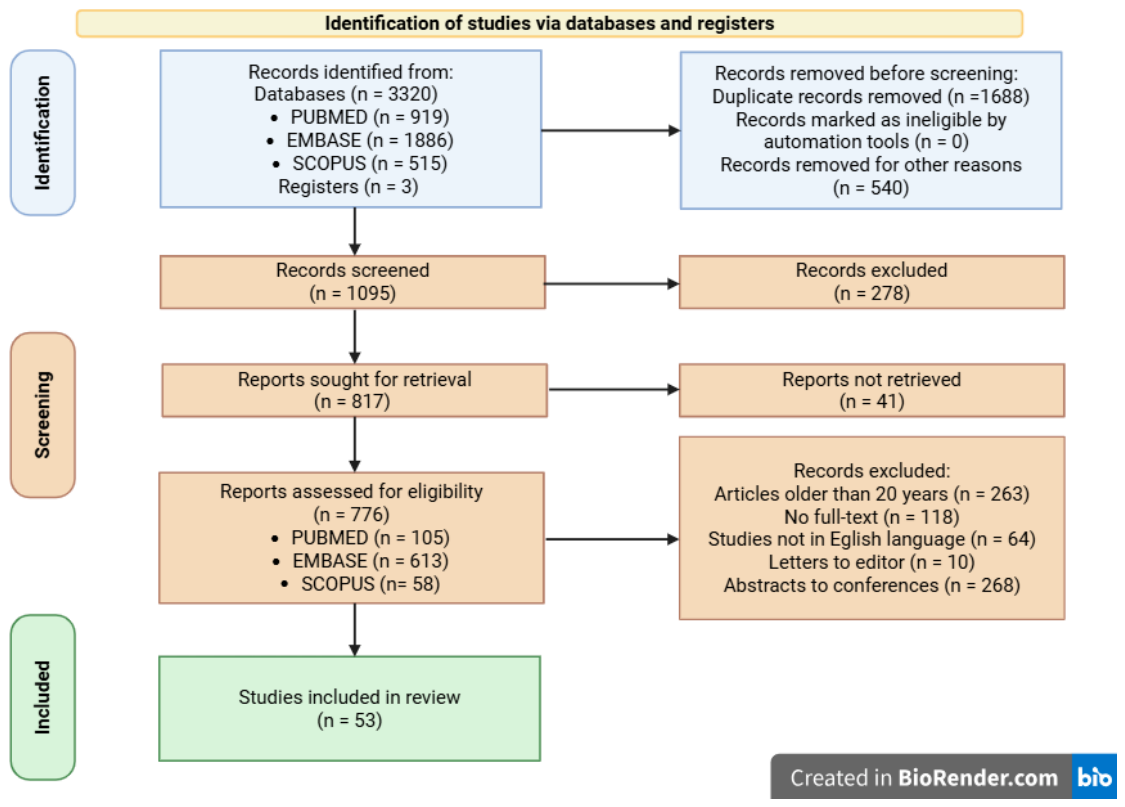
2.1. Search Strategy
- –
- Population (P): women with hypothyroidism and Hashimoto’s thyroiditis
- –
- Intervention (I): levothyroxine therapy; additionally: combination therapy
- –
- Comparator (C): lack of treatment for hypothyroidism in women with Hashimoto’s thyroiditis; various doses of levothyroxine
- –
- Outcomes (O): anti–TPO and anti–TG antibody levels; additionally: inflammatory markers; fertility and pregnancy outcomes
2.2. Inclusion and Exclusion Criteria
2.3. Data Extraction
3. Results
3.1. Pharmacological Treatment of Hypothyroidism in Hashimoto’s Thyroiditis
3.2. Studies on the Association Between Levothyroxine Treatment and Anti–Thyroid Antibody in Hashimoto’s Thyroiditis
3.2.1. Alterations in Antibody Levels During Levothyroxine Treatment
3.2.2. Association Between Levothyroxine Dose and Antibody Levels
3.3. Association Between Levothyroxine Treatment and Oxidative Stress
3.4. Studies on the Combination Therapies and Supplementation in Hashimoto’s Thyroiditis
3.5. Studies on the Association Between Levothyroxine and Pregnancy in Women with Hashimoto’s Thyroiditis
4. Factors Influencing Levothyroxine Therapy in Women with Hypothyroidism and Hashimoto’s Thyroiditis
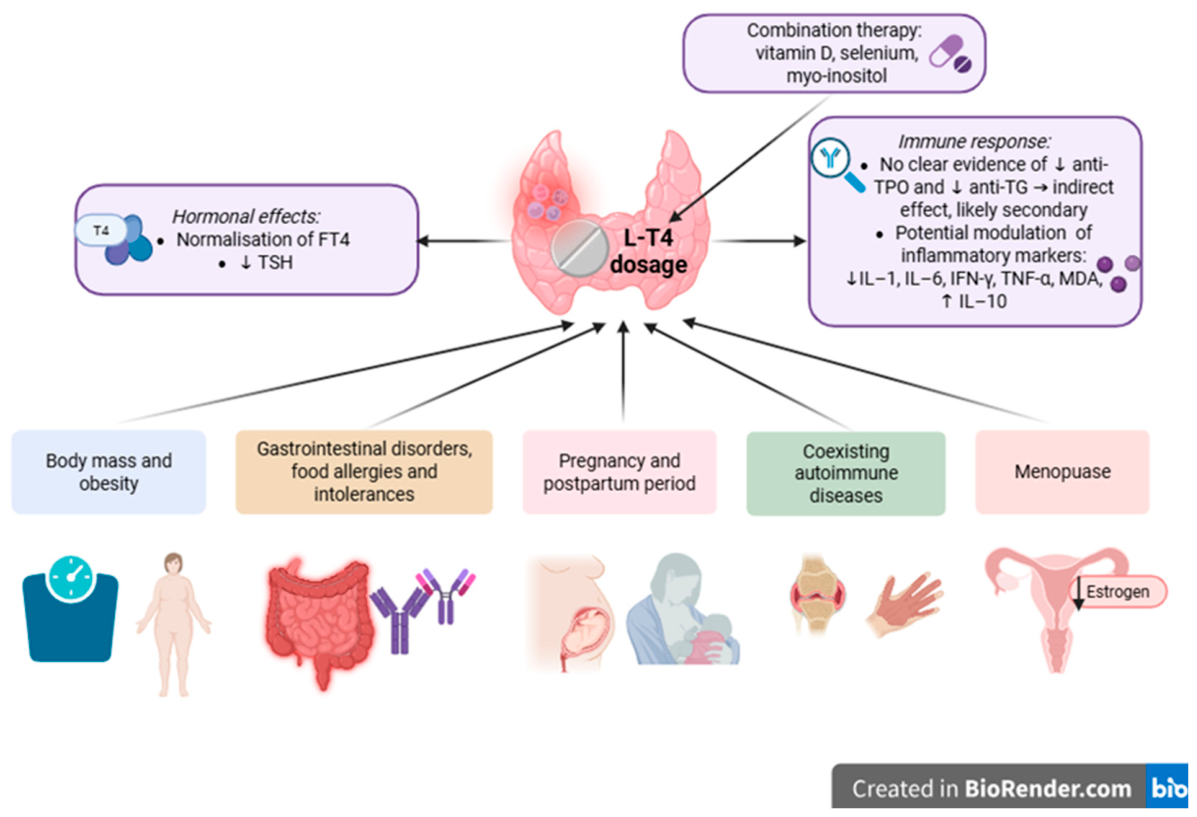
4.1. Influence of Physiological Status and Comorbidities on Levothyroxine Dosage
4.2. Influence of Gastrointestinal Disorders on Levothyroxine Dosage
5. Areas Requiring Further Research
6. Limitations
7. Conclusions
Author Contributions
Funding
Institutional Review Board Statement
Informed Consent Statement
Data Availability Statement
Conflicts of Interest
Abbreviations
| AITD | autoimmune thyroid diseases |
| anti–TG | thyroglobulin antibodies |
| anti–TPO | thyroid peroxidase antibodies |
| CTLA–4 | cytotoxic T–lymphocyte–associated protein 4 |
| HT | Hashimoto’s thyroiditis |
| HLA | human leukocyte antigens |
| IL1RN | interleukin 1 receptor antagonist |
| L–T4 | levothyroxine |
| TSH | thyroid–stimulating hormone |
References
- Vargas-Uricoechea, H.; Castellanos-Pinedo, A.; Urrego-Noguera, K.; Pinzón-Fernández, M.V.; Meza-Cabrera, I.A.; Vargas-Sierra, H. A Scoping Review on the Prevalence of Hashimoto’s Thyroiditis and the Possible Associated Factors. Med. Sci. 2025, 13, 43. [Google Scholar] [CrossRef]
- Crnčić, T.B.; Ćurko-Cofek, B.; Batičić, L.; Girotto, N.; Tomaš, M.I.; Kršek, A.; Krištofić, I.; Štimac, T.; Perić, I.; Sotošek, V.; et al. Autoimmune Thyroid Disease and Pregnancy: The Interaction Between Genetics, Epigenetics and Environmental Factors. J. Clin. Med. 2024, 14, 190. [Google Scholar] [CrossRef] [PubMed]
- Upmale-Engela, S.; Vaivode, I.; Peculis, R.; Litvina, H.; Zake, T.; Skesters, A.; Gogins, D.; Rovite, V.; Konrade, I. Genetic and Environmental Factors in Autoimmune Thyroid Disease: Exploring Associations with Selenium Levels and Novel Loci in a Latvian Cohort. Curr. Issues Mol. Biol. 2024, 46, 2553–2565. [Google Scholar] [CrossRef] [PubMed]
- Kaykhaei, M.; Moghadam, H.; Dabiri, S.; Salimi, S.; Jahantigh, D.; Kordi Tamandani, D.M.; Rasouli, A.; Narooie-Nejad, M. Association of CTLA4 (rs4553808) and PTPN22 (rs2476601) gene polymorphisms with Hashimoto’s thyroiditis disease: A case–control study and an In-silico analysis. Meta Gene 2020, 24, 100693. [Google Scholar] [CrossRef]
- Wrońska, K.; Hałasa, M.; Szczuko, M. The Role of the Immune System in the Course of Hashimoto’s Thyroiditis: The Current State of Knowledge. Int. J. Mol. Sci. 2024, 25, 6883. [Google Scholar] [CrossRef] [PubMed]
- Vargas-Uricoechea, H.; Nogueira, J.P.; Pinzón-Fernández, M.V.; Schwarzstein, D. The Usefulness of Thyroid Antibodies in the Diagnostic Approach to Autoimmune Thyroid Disease. Antibodies 2023, 12, 48. [Google Scholar] [CrossRef]
- Delgadillo, F.; Agrawal, D.K. Immunopathogenesis, Diagnosis, and Treatment of Hashimoto’s Thyroiditis. Arch. Intern. Med. Res. 2026, 9, 1–13. [Google Scholar] [CrossRef]
- Wrońska, K.; Ziętek, M.; Machałowski, T.; Szczuko, M. Association Between Complete Blood Count and the Lipoxygenase Pathway in Hashimoto’s Thyroiditis. Cells 2025, 14, 1933. [Google Scholar] [CrossRef]
- Oteri, V.; Volpe, S.; Lopes, M.; Sceusa, G.; Tumminia, A.; Belfiore, A.; Frasca, F.; Gullo, D. Therapeutic efficacy and patient compliance of levothyroxine liquid and softgel formulations taken with meals: A systematic review. Endocrine 2025, 87, 48–58. [Google Scholar] [CrossRef]
- Yuan, J.; Qi, S.; Zhang, X.; Lai, H.; Li, X.; Xiaoheng, C.; Li, Z.; Yao, S.; Ding, Z. Local symptoms of Hashimoto’s thyroiditis: A systematic review. Front. Endocrinol. 2022, 13, 1076793. [Google Scholar] [CrossRef]
- Kotak, P.S.; Kadam, A.; Acharya, S.; Kumar, S.; Varma, A. Beyond the Thyroid: A Narrative Review of Extra–thyroidal Manifestations in Hashimoto’s Disease. Cureus 2024, 16, e71126. [Google Scholar] [CrossRef]
- Tywanek, E.; Michalak, A.; Świrska, J.; Zwolak, A. Autoimmunity, New Potential Biomarkers and the Thyroid Gland–The Perspective of Hashimoto’s Thyroiditis and Its Treatment. Int. J. Mol. Sci. 2024, 25, 4703. [Google Scholar] [CrossRef]
- Scher, J.; Dabao, C.; Rukat, C. Thyroid Autoimmunity: The Treatment of Hashimoto’s Disease, or the Presence of Antithyroid Antibodies Alone, in Pregnancy. Am. J. Reprod. Immunol. 2025, 93, e70042. [Google Scholar] [CrossRef] [PubMed]
- Cherchir, F.; Oueslati, I.; Mouelhi, Y.; Talbi, E.; Feki, M.; Yazidi, M.; Chihaoui, M. Levothyroxine liquid oral substitution as an alternative treatment for refractory hypothyroidism due to gastrointestinal malabsorption: A case report. SAGE Open Med. Case Rep. 2023, 11, 2050313X231209229. [Google Scholar] [CrossRef]
- Caron, P.; Tudor, C.; Grunenwald, S. Levothyroxine Absorption Test With the Daily Levothyroxine Dose in Patients With “Refractory Hypothyroidism”. J. Endocr. Soc. 2025, 9, bvaf017, Correction in J. Endocr. Soc. 2025, 9, bvaf076. https://doi.org/10.1210/jendso/bvaf076. [Google Scholar] [CrossRef]
- Wiesner, A.; Gajewska, D.; Paśko, P. Levothyroxine Interactions with Food and Dietary Supplements—A Systematic Review. Pharmaceuticals 2021, 14, 206. [Google Scholar] [CrossRef] [PubMed]
- Duntas, L.H.; Jonklaas, J. Levothyroxine Dose Adjustment to Optimise Therapy Throughout a Patient’s Lifetime. Adv. Ther. 2019, 36, 30–46. [Google Scholar] [CrossRef]
- Virili, C.; Antonelli, A.; Santaguida, M.G.; Benvenga, S.; Centanni, M. Gastrointestinal Malabsorption of Thyroxine. Endocr. Rev. 2019, 40, 118–136. [Google Scholar] [CrossRef]
- Zhang, Q.Y.; Ye, X.P.; Zhou, Z.; Zhu, C.F.; Li, R.; Fang, Y.; Zhang, R.J.; Li, L.; Liu, W.; Wang, Z.; et al. Lymphocyte infiltration and thyrocyte destruction are driven by stromal and immune cell components in Hashimoto’s thyroiditis. Nat. Commun. 2022, 13, 775. [Google Scholar] [CrossRef]
- Agrawal, S.S.; Sinha, A.; Maiti, A.; Chakraborty, P.P.; Basu, A.K.; Agrawal, C.; Bankura, B. Correlation between estradiol-to-testosterone ratio and thyroid peroxidase antibody positivity in men with treatment-naïve primary hypothyroidism or euthyroidism. Arch. Endocrinol. Metab. 2024, 68, e230256. [Google Scholar] [CrossRef] [PubMed]
- Schmidt, M.; Voell, M.; Rahlff, I.; Dietlein, M.; Kobe, C.; Faust, M.; Schicha, H. Long-term follow-up of antithyroid peroxidase antibodies in patients with chronic autoimmune thyroiditis (Hashimoto’s thyroiditis) treated with levothyroxine. Thyroid 2008, 18, 755–760. [Google Scholar] [CrossRef]
- Okuroglu, N.; Ozdemir, A.; Sertbas, Y.; Sancak, S. The relationship between thyroid antibody titer and levothyroxine dose in patients with overt primary hypothyroidism. Ann. Saudi Med. 2017, 37, 189–193. [Google Scholar] [CrossRef]
- Liu, J.; Chen, Z.; Liu, M.; Jia, Y.; Yao, Z.; Wang, G. Levothyroxine Replacement Alleviates Thyroid Destruction in Hypothyroid Patients With Autoimmune Thyroiditis: Evidence From a Thyroid MRI Study. Front. Endocrinol. 2019, 10, 138. [Google Scholar] [CrossRef]
- Altun, R.; Canpolat, A.G.; Demir, Ö.; Erdogan, M.F. The course of Autoimmune Thyroiditis in WOMEN. Acta Endocrinol. (Buchar.) 2021, 17, 472–478. [Google Scholar] [CrossRef] [PubMed]
- Syamsundara Kiran, A.N.; Pal, G.K.; Pal, P.; Kamalanathan, S.; Parija, S.; Pinjar, M.J. Effects of Six Months of Levothyroxine Therapy on Sympathovagal Imbalance and Cardiometabolic Profile in Overt Hypothyroid Patients. Cureus 2025, 17, e81268. [Google Scholar] [CrossRef]
- Szczuko, M.; Szmigiel, O.; Szczuko, U.; Rudak, L.; Wrońska, K.; Kwiatkowska, L.; Tomasik, M.; Syrenicz, A.; Pobłocki, J. Thyroid Hormone Replacement Dose Is Not Associated with Anti-TPO and Anti-TG Antibody Titers in Hashimoto’s Disease. J. Clin. Med. 2026, 15, 970. [Google Scholar] [CrossRef] [PubMed]
- Marchiori, R.C.; Pereira, L.A.F.; Naujorks, A.A.; Rovaris, D.L.; Meinerz, D.F.; Duarte, M.M.; Rocha, J.B. Improvement of blood inflammatory marker levels in patients with hypothyroidism under levothyroxine treatment. BMC Endocr. Disord. 2015, 15, 32. [Google Scholar] [CrossRef] [PubMed]
- Ates, I.; Altay, M.; Yilmaz, F.M.; Topcuoglu, C.; Yilmaz, N.; Berker, D.; Guler, S. The impact of levothyroxine sodium treatment on oxidative stress in Hashimoto’s thyroiditis. Eur. J. Endocrinol. 2016, 174, 727–734. [Google Scholar] [CrossRef][Green Version]
- Helvacı, B.C.; Helvacı, Ö.; Dam, G.; Neşelioğlu, S.; Erel, Ö. Assessment of Oxidative Stress in Hashimoto’s Thyroiditis Patients: Effects of Levothyroxine Sodium Treatment: Oxidative Stress in Hashimoto’s Thyroiditis. J. Eur. Intern. Med. Prof. 2025, 3, 98–104. [Google Scholar] [CrossRef]
- Chahardoli, R.; Saboor-Yaraghi, A.A.; Amouzegar, A.; Khalili, D.; Vakili, A.Z.; Azizi, F. Can Supplementation with Vitamin D Modify Thyroid Autoantibodies (Anti-TPO Ab, Anti-Tg Ab) and Thyroid Profile (T3, T4, TSH) in Hashimoto’s Thyroiditis? A Double Blind, Randomized Clinical Trial. Horm. Metab. Res. 2019, 51, 296–301. [Google Scholar] [CrossRef]
- Bozkurt, N.C.; Karbek, B.; Ucan, B.; Sahin, M.; Cakal, E.; Ozbek, M.; Delibasi, T. The association between severity of vitamin D deficiency and Hashimoto’s thyroiditis. Endocr. Pract. 2013, 19, 479–484. [Google Scholar] [CrossRef]
- Ostrowska, L.; Gier, D.; Zyśk, B. The Influence of Reducing Diets on Changes in Thyroid Parameters in Women Suffering from Obesity and Hashimoto’s Disease. Nutrients 2021, 13, 862. [Google Scholar] [CrossRef]
- Peng, B.; Wang, W.; Gu, Q.; Wang, P.; Teng, W.; Shan, Z. Effects of different supplements on Hashimoto’s thyroiditis: A systematic review and network meta-analysis. Front. Endocrinol. 2024, 15, 1445878. [Google Scholar] [CrossRef]
- Yu, L.; Zhou, L.; Xu, E.; Bi, Y.; Hu, X.; Pei, X.; Jin, G. Levothyroxine monotherapy versus levothyroxine and selenium combination therapy in chronic lymphocytic thyroiditis. J. Endocrinol. Investig. 2017, 40, 1243–1250. [Google Scholar] [CrossRef]
- Anastasilakis, A.D.; Toulis, K.A.; Nisianakis, P.; Goulis, D.G.; Kampas, L.; Valeri, R.-M.; Oikonomou, D.; Tzellos, T.G.; Delaroudis, S. Selenomethionine treatment in patients with autoimmune thyroiditis: A prospective, quasi-randomised trial. Int. J. Clin. Pract. 2012, 66, 378–383. [Google Scholar] [CrossRef] [PubMed]
- Nordio, M.; Basciani, S. Myo-inositol plus selenium supplementation restores euthyroid state in Hashimoto’s patients with subclinical hypothyroidism. Eur. Rev. Med. Pharmacol. Sci. 2017, 21, 51–59. [Google Scholar]
- Miranda, D.M.C.; Massom, J.N.; Catarino, R.M.; Santos, R.T.M.; Toyoda, S.S.; Marone, M.M.S.; Tomimori, E.K.; Monte, O. Impact of nutritional iodine optimization on rates of thyroid hypoechogenicity and autoimmune thyroiditis: A cross-sectional, comparative study. Thyroid 2015, 25, 118–124. [Google Scholar] [CrossRef]
- Song, H.; Cui, T.; Shi, S.; Xiao, H.; Wei, A. Effect of anti-thyroid antibodies on recurrent miscarriage: A meta-analysis. J. Obstet. Gynaecol. Res. 2024, 50, 1095–1105. [Google Scholar] [CrossRef]
- Maraka, S.; Mwangi, R.; McCoy, R.G.; Yao, X.; Sangaralingham, L.R.; Ospina, N.M.S.; O’Keeffe, D.T.; De Ycaza, A.E.E.; Rodriguez-Gutierrez, R.; Coddington, C.C., III; et al. Thyroid hormone treatment among pregnant women with subclinical hypothyroidism: US national assessment. BMJ 2017, 356, i6865. [Google Scholar] [CrossRef] [PubMed]
- Rao, M.; Zeng, Z.; Zhou, F.; Wang, H.; Liu, J.; Wang, R.; Wen, Y.; Yang, Z.; Su, C.; Su, Z.; et al. Effect of levothyroxine supplementation on pregnancy loss and preterm birth in women with subclinical hypothyroidism and thyroid autoimmunity: A systematic review and meta-analysis. Hum. Reprod. Update 2019, 25, 344–361. [Google Scholar] [CrossRef] [PubMed]
- Wang, J.; Li, J.; Zhang, J.; Liu, A.; Yang, W.; Zhai, X.; Teng, W.; Li, Y.; Shan, Z. Levothyroxine supplementation and pregnancy outcomes in women with thyroid disorders: An umbrella review of systematic reviews and meta–analyses of randomized controlled trials. Hum. Reprod. Open. 2025, 2025, hoaf036. [Google Scholar] [CrossRef]
- Yanachkova, V.; Staynova, R.; Grekova-Kafalova, D.; Petkova, V. Levothyroxine therapy in pregnancy: Are we overtreating patients? Pharmacia 2024, 71, 1–7. [Google Scholar] [CrossRef]
- Chan, S.Y.; Marsh, M.S.; Gilbert, J.; Boelaert, K.; Evans, C.; Dhillon-Smith, R.; Royal College of Obstetricians and Gynaecologists. Management of Thyroid Disorders in Pregnancy: Green-top Guideline No. 76. BJOG Int. J. Obstet. Gynaecol. 2025, 132, e130–e161, Correction in BJOG Int. J. Obstet. Gynaecol. 2026. https://doi.org/10.1111/1471-0528.70259. [Google Scholar] [CrossRef]
- Kiran, Z.; Khalid, W.; Sheikh, A.; Islam, N. Levothyroxine dosages during pregnancy among hypothyroid women. An experience from a tertiary care center of Karachi, Pakistan, based on data from Maternal Hypothyroidism on Pregnancy Outcomes Study (MHPO–5). BMC Res. Notes 2022, 15, 92. [Google Scholar] [CrossRef] [PubMed]
- Gao, X.; Liu, A.; Wang, X.; Han, Y.; Wang, H.; Li, J.; Hou, Y.; Yang, Y.; Wang, H.; Zhang, C.; et al. Postpartum Levothyroxine Adjustment and Its Impact Factors in Women With Hypothyroidism in Pregnancy. Endocr. Pract. 2022, 28, 578–585. [Google Scholar] [CrossRef]
- Venkateswarlu, D.; Goroshi, M.; Ganakumar, V.; Ghatnatti, V.; Kotla, S. Lean Body Mass as a Predictor of Levothyroxine Requirement in Primary Hypothyroidism as Compared to Actual Body Weight. J. Endocr. Soc. 2025, 9, bvaf159. [Google Scholar] [CrossRef] [PubMed]
- Pustilnik, E.; Schwarzstein, D.; Feldman, R.; Mancinelli, L.; Paladini, L.; Pellizzón, N.A.; Stieben, L.A.R. The influence of age and body weight on levothyroxine replacement dosage to achieve euthyroidism in patients with primary hypothyroidism. Endocrinol. Diabetes Y Nutr. 2021, 68, 542–547. [Google Scholar] [CrossRef]
- Caron, P.; Grunenwald, S.; Persani, L.; Borson-Chazot, F.; Leroy, R.; Duntas, L. Factors influencing the levothyroxine dose in the hormone replacement therapy of primary hypothyroidism in adults. Rev. Endocr. Metab. Disord. 2022, 23, 463–483. [Google Scholar] [CrossRef]
- Guarnotta, V.; Pillitteri, G.; Gambino, G.; Radellini, S.; Vigneri, E.; Pizzolanti, G.; Giordano, C. Levothyroxine and insulin requirement in autoimmune polyglandular type 3 syndrome: A real-life study. J. Endocrinol. Investig. 2021, 44, 1387–1394. [Google Scholar] [CrossRef] [PubMed]
- Ferrari, S.M.; Ragusa, F.; Elia, G.; Paparo, S.R.; Mazzi, V.; Baldini, E.; Benvenga, S.; Antonelli, A.; Fallahi, P. Precision Medicine in Autoimmune Thyroiditis and Hypothyroidism. Front. Pharmacol. 2021, 12, 750380. [Google Scholar] [CrossRef]
- Virili, C.; Brusca, N.; Capriello, S.; Centanni, M. Levothyroxine Therapy in Gastric Malabsorptive Disorders. Front. Endocrinol. 2020, 11, 621616. [Google Scholar] [CrossRef] [PubMed]
- Ribichini, D.; Fiorini, G.; Repaci, A.; Castelli, V.; Gatta, L.; Vaira, D.; Pasquali, R. Tablet and oral liquid L–thyroxine formulation in the treatment of naïve hypothyroid patients with Helicobacter pylori infection. Endocrine 2017, 57, 394–401. [Google Scholar] [CrossRef] [PubMed]
- Ferrari, S.M.; Patrizio, A.; Mazzi, V.; Ragusa, F.; Botrini, C.; Elia, G.; Balestri, E.; Barozzi, E.; Rugani, L.; Bracchitta, F.; et al. Lactose intolerance and levothyroxine malabsorption: A review of the literature and report of a series of patients treated with liquid L-T4 without lactose. Front. Endocrinol. 2024, 15, 1386510. [Google Scholar] [CrossRef] [PubMed]



| Author, Year of Publication | Type of Study | Number of Patients, Gender | Medicines Taken | Results | Comments |
|---|---|---|---|---|---|
| Schmidt et al., 2008 [21] | Retrospective study (January 1994–April 2004) | From 111 patients with HT, the analysis was restricted to 36 women and 2 men with a mean age of 51 ± 16 years; 19–81 years | 20 patients received L–T4 at a dose that maintained their levels within the normal range | Serum anti–TPO levels decreased in the majority of patients with HT taking L–T4. However, anti–TPO levels turned negative in a small number of patients after a median of 50 months. Only 16% of patients achieved normal anti–TPO levels despite many years of L–T4 treatment. |
|
| Okuroglu et al., 2017 [22] | Retrospective, review of data in medical records (January 2015– December 2015) | 303 patients with overt primary hypothyroidism; 273 women and 30 men, aged 19–73 | All patients were receiving L–T4 at various doses to maintain appropriate blood TSH levels. L–T4 treatment lasted for at least one year | Hormone replacement therapy to achieve target TSH levels was more common in patients with positive antibodies than in those with negative antibodies. Positive correlation between L–T4 doses and anti–TPO (r = 0.217; p < 0.01) and anti–TG doses (r = 0.158; p < 0.05) in the antibody positive group. |
|
| Liu et al., 2019 [23] | Prospective cohort study | 29 hypothyroid drug–naïve autoimmune thyroiditis patients with overt hypothyroidism; mean age: 36.7 ± 9.3; 26 women, 3 men | The initial dose L–T4 was 50 μg/d. The euthyroid state was achieved with a mean dose of 109.4 μg/d. | L–T4 treatment significantly decreased anti–TPO (p < 0.01) and anti–TG (p < 0.05) in hypothyroid HT patients. |
|
| Altun et al., 2021 [24] | Retrospective study (2010–2018) | 101 women, mean age at diagnosis was 39.4 ± 12.8 years | 31 patients (30.7%) received no treatment and 70 patients (69.3%) received L–T4 treatment; the mean dose was 91.5 ± 31.9 µg/day. | During treatment with levothyroxine, anti–TG levels remained unchanged (p = 0.274); however, anti–TPO levels decreased significantly at the time of observation (p < 0.001). |
|
| Syamsundara Kiran et al., 2025 [25] | Follow–up study | 106 overt hypothyroid patients–75 women and 31 men. Only 42 participants returned for follow–up after six months–32 women and 10 men. | At baseline, patients were instructed to continue taking L–T4, for six months. | Anti–TPO and anti–TG were significantly decreased after six months of L–T4 therapy in the overt hypothyroid group (p < 0.001). |
|
| Szczuko et al., 2026 [26] | Cross–sectional study | 70 Caucasian women, 36.68 years ± 8.34 years | Three groups based on their L–T4 dosage: ≤50 μg n = 30; 50–100 μg n = 30; >100 μg n = 10 The average dose of levothyroxine taken by patients was 71.16 μg ± 36.15 μg. | No significant association between the dosage of L–T4 and anti–TPO (p = 0.0677) and anti–TG (p = 0.4258). |
|
| Author, Year of Publication | Type of Study | Number of Patients, Gender | Results | Comments |
|---|---|---|---|---|
| Maraka et al., 2017 [39] | Retrospective cohort study (January 2010–December 2014) | 5405 pregnant women with subclinical hypothyroidism; TSH concentration 2.5–10 mIU/L. | A lower risk of miscarriage was observed among women taking L–T4 (n = 89; 10.6%) than among untreated women (n = 614; 13.5%) (p < 0.01). Women receiving pharmacological treatment also had a lower adjusted probability of miscarriage (OR 0.62, 95% confidence interval 0.48–0.82), but a higher probability of preterm birth (1.60; 1.14–2.24), gestational diabetes (1.37; 1.05–1.79) and preeclampsia (1.61; 1.10–2.37). | Incomplete information regarding anti–TPO levels, which made it impossible to carry out a stratification analysis based on the presence of antibodies. |
| Rao et al., 2019 [40] | Systematic review and meta-analysis (8 studies were randomized controlled trials; 5 studies were retrospective studies) | 7970 pregnant women with hypothyroidism and AITD who received L–T4 treatment throughout their pregnancy; in some of these women, levothyroxine treatment was initiated prior to undergoing assisted reproductive technology | L–T4 reduced the rate of pregnancy loss (RR = 0.56, 95% CI: 0.42–0.75, I2 = 1%, 12 studies) and the rate of preterm births (RR = 0.68, 95% CI: 0.51–0.91, I2 = 21%, eight studies) in women with subclinical hypothyroidism and/or AITD. | The number of studies included in the meta–analysis was limited; larger studies are recommended. |
| Wang et al., 2025 [41] | Systematic reviews and meta-analyses of randomized controlled trials (11 meta–analyses were included) | 11 meta–analyses involving a total of 51,826 pregnant women with subclinical hypothyroidism or anti–TPO positivity; L–T4 treatment before pregnancy and/or started in early pregnancy | L–T4 therapy during pregnancy in women with hypothyroidism was associated with better pregnancy outcomes and a lower risk of miscarriage, preterm birth and gestational hypertension. No significant effect of L–T4 treatment on the rate of live births, placental abruption or gestational diabetes. | Potential biases in selection and reporting. |
| Kiran et al., 2022 [44] | Retrospective study (2008–2016) | 280 pregnant women with hypothyroidism; some of the women had autoimmune hypothyroidism | In women with subclinical hypothyroidism, the dose of L–T4 throughout pregnancy was lower (<100 mcg per day) than in women with overt hypothyroidism. The dose of L–T4 in women with autoimmune hypothyroidism was higher during the preconception period and in the third trimester of pregnancy compared to women without autoimmune disease. | Groups of women that were not of equal size (78 women with autoimmune hypothyroidism and 202 with non–autoimmune hypothyroidism). |
Disclaimer/Publisher’s Note: The statements, opinions and data contained in all publications are solely those of the individual author(s) and contributor(s) and not of MDPI and/or the editor(s). MDPI and/or the editor(s) disclaim responsibility for any injury to people or property resulting from any ideas, methods, instructions or products referred to in the content. |
© 2026 by the authors. Licensee MDPI, Basel, Switzerland. This article is an open access article distributed under the terms and conditions of the Creative Commons Attribution (CC BY) license.
Share and Cite
Wrońska, K.; Szczuko, U.; Szydłowska, I.; Nawrocka-Rutkowska, J.; Rudak, L.; Kwiatkowska, L.; Szukalska, I.; Szczuko, M. Association Between the Levothyroxine Therapy and the Levels of Anti–Thyroid Antibodies in Women with Hypothyroidism Due to Hashimoto’s Thyroiditis—Narrative Review. Int. J. Mol. Sci. 2026, 27, 4864. https://doi.org/10.3390/ijms27114864
Wrońska K, Szczuko U, Szydłowska I, Nawrocka-Rutkowska J, Rudak L, Kwiatkowska L, Szukalska I, Szczuko M. Association Between the Levothyroxine Therapy and the Levels of Anti–Thyroid Antibodies in Women with Hypothyroidism Due to Hashimoto’s Thyroiditis—Narrative Review. International Journal of Molecular Sciences. 2026; 27(11):4864. https://doi.org/10.3390/ijms27114864
Chicago/Turabian StyleWrońska, Karolina, Urszula Szczuko, Iwona Szydłowska, Jolanta Nawrocka-Rutkowska, Leon Rudak, Lidia Kwiatkowska, Iga Szukalska, and Małgorzata Szczuko. 2026. "Association Between the Levothyroxine Therapy and the Levels of Anti–Thyroid Antibodies in Women with Hypothyroidism Due to Hashimoto’s Thyroiditis—Narrative Review" International Journal of Molecular Sciences 27, no. 11: 4864. https://doi.org/10.3390/ijms27114864
APA StyleWrońska, K., Szczuko, U., Szydłowska, I., Nawrocka-Rutkowska, J., Rudak, L., Kwiatkowska, L., Szukalska, I., & Szczuko, M. (2026). Association Between the Levothyroxine Therapy and the Levels of Anti–Thyroid Antibodies in Women with Hypothyroidism Due to Hashimoto’s Thyroiditis—Narrative Review. International Journal of Molecular Sciences, 27(11), 4864. https://doi.org/10.3390/ijms27114864