Safety of Adeno-Associated Viral Vectors in Gene Therapy: Mechanisms of Toxicity, Clinical Risks, and Strategies for Their Minimization

 , ,
, , 
Abstract
1. Introduction
1.1. AAV-Based Gene Therapy: Key Milestones in Scientific and Clinical Development
1.2. The Role of AAV Vectors in Modern Gene Medicine
1.3. Modern Safety Challenges
1.4. Clinical Experience with AAV Therapies
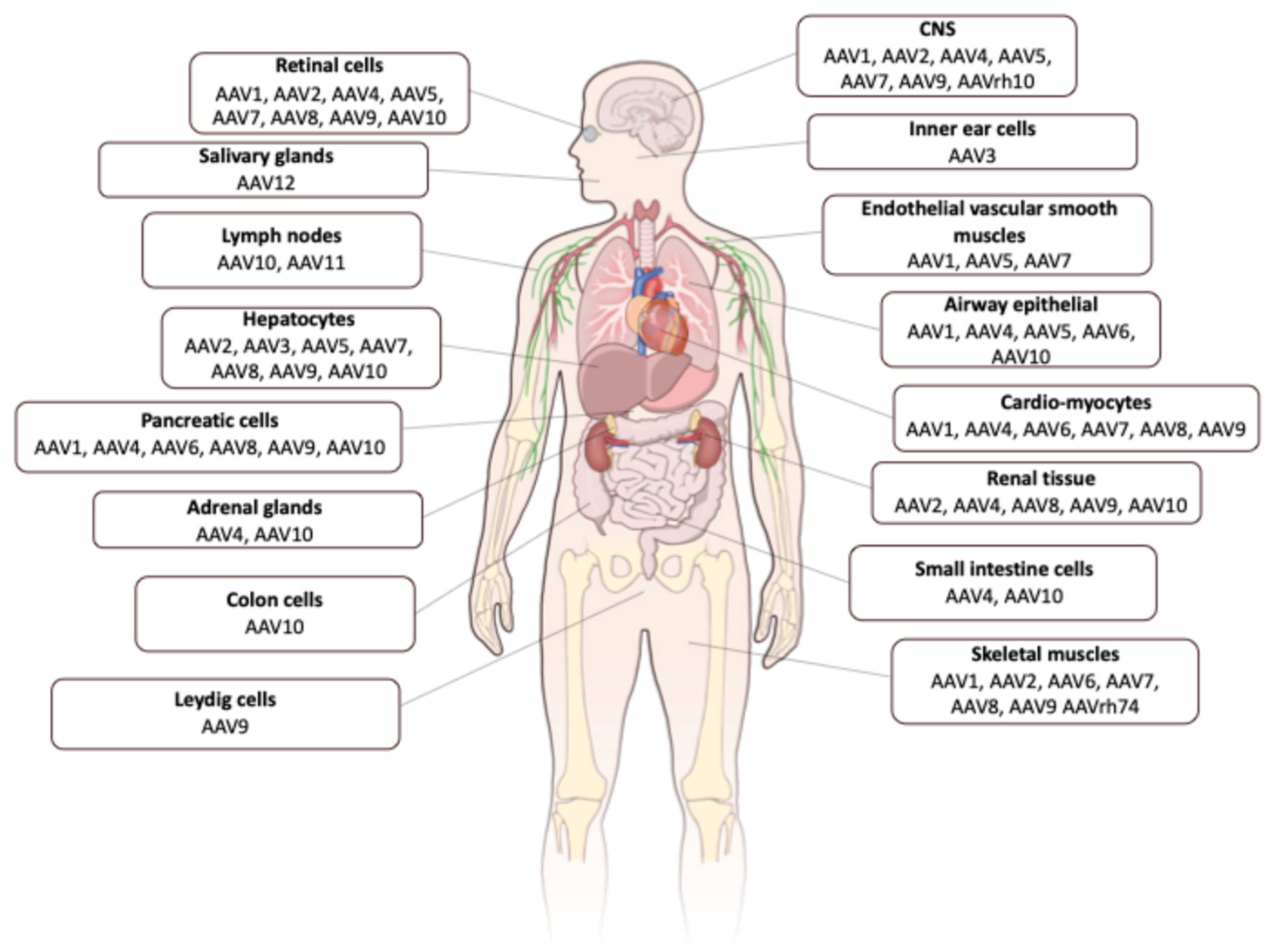
2. AAV Serotypes and Tropism
3. Routes of Administration
3.1. Systemic (Intravenous and Intra-Arterial) Administration
3.2. CNS-Specific Routes of Administration
3.3. Local (Regional) Administration
4. Risk Factors and Predictors of Toxicity
5. Cases of Severe Toxicity and Fatal Outcomes of AAV Gene Therapy in Humans
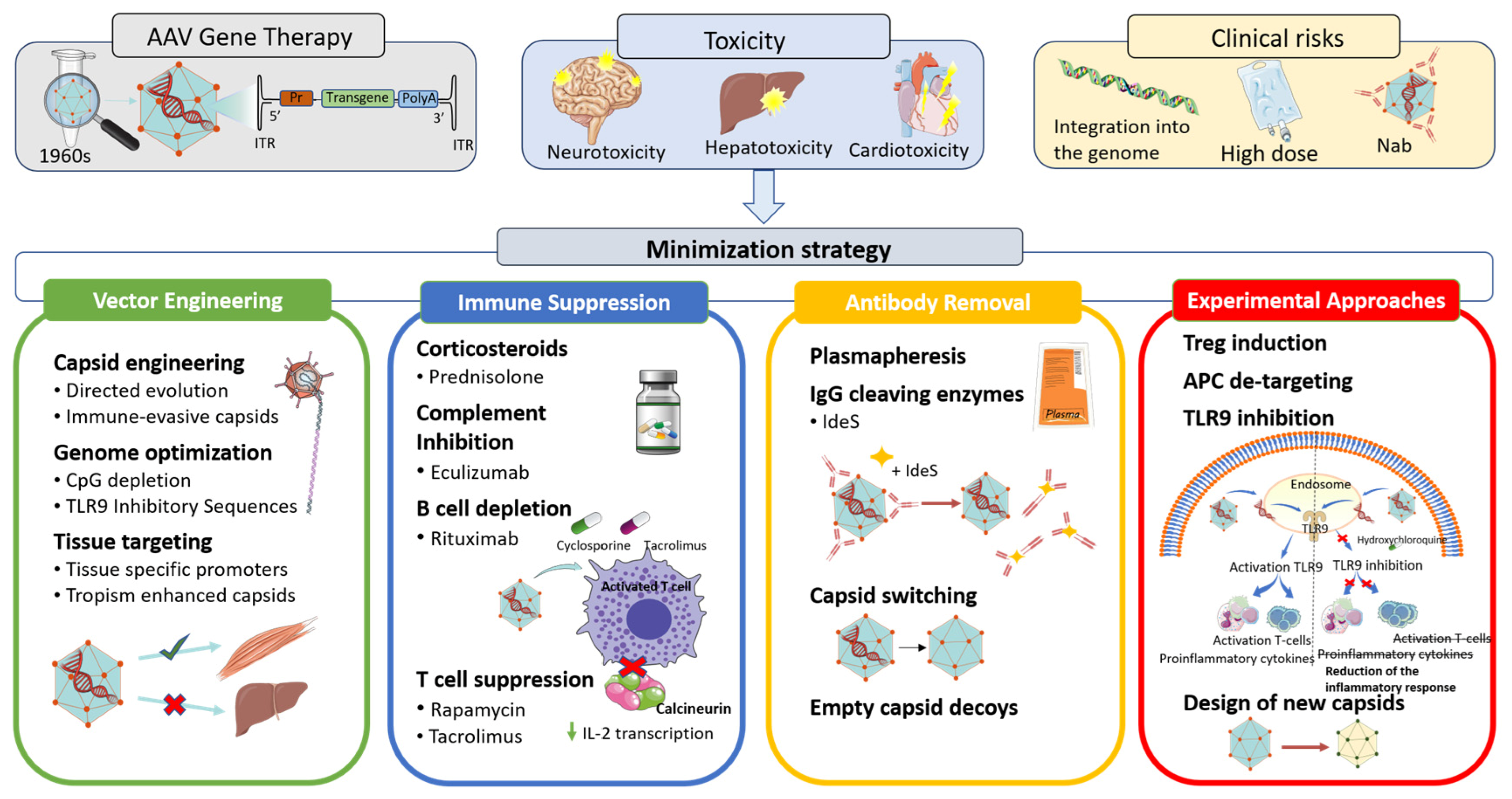
6. Strategies for Reducing AAV Therapy Toxicity
6.1. Prophylactic Immunosuppression Regimens
6.2. Genetic Engineering of Vector
6.3. Re-Administration and Neutralizing Antibodies Control
6.4. Preclinical Approaches to Enhance Safety
6.5. Dose Reduction Technologies
6.6. AAV Premedication and Post-Infusion Patient Monitoring
7. Prospective and Experimental Approaches to Immunomodulation
8. Conclusions
Author Contributions
Funding
Institutional Review Board Statement
Informed Consent Statement
Data Availability Statement
Acknowledgments
Conflicts of Interest
Abbreviations
| AAV | Adeno-Associated Virus |
| ALT | Alanine Aminotransferase |
| APC | Antigen-Presenting Cell |
| AST | Aspartate Aminotransferase |
| BBB | Blood–Brain Barrier |
| BDD | B-Domain–Deleted |
| CK | Creatine Kinase |
| CMV | Cytomegalovirus |
| CNS | Central Nervous System |
| CTLA-4 | Cytotoxic T-Lymphocyte Associated Protein 4 |
| DMD | Duchenne Muscular Dystrophy |
| ELISA | Enzyme-linked Immunosorbent Assay |
| EMA | European Medicines Agency |
| FcRN | Neonatal Fragment Crystallizable Receptor |
| FDA | Food and Drug Administration (USA) |
| FGFR1 | Fibroblast Growth Factor Receptor 1 |
| FIX/F9 | Coagulation Factor IX/its gene |
| FVIII | Coagulation Factor VIII |
| GGT | Gamma-Glutamyltransferase |
| HGFR | Hepatocyte Growth Factor Receptor |
| HSPG | Heparan Sulfate Proteoglycans |
| IdeS | Immunoglobulin G-Degrading Enzyme Of Streptococcus pyogenes |
| Ig | Immunoglobulin |
| IL | Interleukins |
| IMPDH | Inosine-5′-Monophosphate Dehydrogenase |
| ITRs | Inverted Terminal Repeats |
| LamR | Laminin Receptor |
| LDH | Lactate Dehydrogenase |
| LPL | Lipoprotein Lipase gene/enzyme |
| MHC | Major Histocompatibility Complex |
| mTOR | Mechanistic Target Of Rapamycin |
| Nab | Neutralizing Antibody |
| PD-L1 | Programmed Death-Ligand 1 |
| PLA2 | Phospholipase A2 |
| rAAV | Recombinant Adeno-Associated Virus |
| RPE65 | Retinal Pigment Epithelium-Specific 65 kDa Protein |
| scAAV | Self-Complementary Adeno-Associated Virus |
| SMN | Survival Motor Neuron gene/enzyme |
| TLR | Toll-Like Receptor |
| TMA | Thrombotic Microangiopathy |
| Treg | Regulatory T-Cells |
References
- Wang, J.-H.; Gessler, D.J.; Zhan, W.; Gallagher, T.L.; Gao, G. Adeno-Associated Virus as a Delivery Vector for Gene Therapy of Human Diseases. Signal Transduct. Target. Ther. 2024, 9, 78. [Google Scholar] [CrossRef] [PubMed]
- Challis, R.C.; Ravindra Kumar, S.; Chen, X.; Goertsen, D.; Coughlin, G.M.; Hori, A.M.; Chuapoco, M.R.; Otis, T.S.; Miles, T.F.; Gradinaru, V. Adeno-Associated Virus Toolkit to Target Diverse Brain Cells. Annu. Rev. Neurosci. 2022, 45, 447–469. [Google Scholar] [CrossRef]
- Lopez-Gordo, E.; Chamberlain, K.; Riyad, J.M.; Kohlbrenner, E.; Weber, T. Natural Adeno-Associated Virus Serotypes and Engineered Adeno-Associated Virus Capsid Variants: Tropism Differences and Mechanistic Insights. Viruses 2024, 16, 442, Correction in Viruses 2024, 16, 1366. https://doi.org/10.3390/v16091366. [Google Scholar] [CrossRef]
- Muhuri, M.; Levy, D.I.; Schulz, M.; McCarty, D.; Gao, G. Durability of Transgene Expression after rAAV Gene Therapy. Mol. Ther. 2022, 30, 1364–1380. [Google Scholar] [CrossRef]
- Suarez-Amaran, L.; Song, L.; Tretiakova, A.P.; Mikhail, S.A.; Samulski, R.J. AAV Vector Development, Back to the Future. Mol. Ther. 2025, 33, 1903–1936. [Google Scholar] [CrossRef] [PubMed]
- Zwi-Dantsis, L.; Mohamed, S.; Massaro, G.; Moeendarbary, E. Adeno-Associated Virus Vectors: Principles, Practices, and Prospects in Gene Therapy. Viruses 2025, 17, 239. [Google Scholar] [CrossRef]
- Beloukhova, M.I.; Lukashev, A.N.; Volchkov, P.Y.; Zamyatnin, A.A.; Deviatkin, A.A. Robust AAV Genotyping Based on Genetic Distances in Rep Gene That Are Maintained by Ubiquitous Recombination. Viruses 2022, 14, 1038. [Google Scholar] [CrossRef]
- Samulski, R.J.; Muzyczka, N. AAV-Mediated Gene Therapy for Research and Therapeutic Purposes. Annu. Rev. Virol. 2014, 1, 427–451. [Google Scholar] [CrossRef]
- Carter, B.J. My Pathway to Adeno-Associated Virus and Adeno-Associated Virus Gene Therapy: A Personal Perspective. Hum. Gene Ther. 2020, 31, 494–498. [Google Scholar] [CrossRef] [PubMed]
- Flotte, T.R. Birth of a New Therapeutic Platform: 47 Years of Adeno-Associated Virus Biology from Virus Discovery to Licensed Gene Therapy. Mol. Ther. 2013, 21, 1976–1981. [Google Scholar] [CrossRef]
- Issa, S.S.; Shaimardanova, A.A.; Solovyeva, V.V.; Rizvanov, A.A. Various AAV Serotypes and Their Applications in Gene Therapy: An Overview. Cells 2023, 12, 785. [Google Scholar] [CrossRef] [PubMed]
- Hastie, E.; Samulski, R.J. Adeno-Associated Virus at 50: A Golden Anniversary of Discovery, Research, and Gene Therapy Success—A Personal Perspective. Hum. Gene Ther. 2015, 26, 257–265. [Google Scholar] [CrossRef] [PubMed]
- Bryant, L.M.; Christopher, D.M.; Giles, A.R.; Hinderer, C.; Rodriguez, J.L.; Smith, J.B.; Traxler, E.A.; Tycko, J.; Wojno, A.P.; Wilson, J.M. Lessons Learned from the Clinical Development and Market Authorization of Glybera. Hum. Gene Ther. Clin. Dev. 2013, 24, 55–64. [Google Scholar] [CrossRef]
- Sonntag, F.; Bleker, S.; Leuchs, B.; Fischer, R.; Kleinschmidt, J.A. Adeno-Associated Virus Type 2 Capsids with Externalized VP1/VP2 Trafficking Domains Are Generated Prior to Passage through the Cytoplasm and Are Maintained until Uncoating Occurs in the Nucleus. J. Virol. 2006, 80, 11040–11054. [Google Scholar] [CrossRef] [PubMed]
- Nonnenmacher, M.; Weber, T. Adeno-Associated Virus 2 Infection Requires Endocytosis through the CLIC/GEEC Pathway. Cell Host Microbe 2011, 10, 563–576. [Google Scholar] [CrossRef]
- Bartlett, J.S.; Wilcher, R.; Samulski, R.J. Infectious Entry Pathway of Adeno-Associated Virus and Adeno-Associated Virus Vectors. J. Virol. 2000, 74, 2777–2785. [Google Scholar] [CrossRef]
- Popa-Wagner, R.; Porwal, M.; Kann, M.; Reuss, M.; Weimer, M.; Florin, L.; Kleinschmidt, J.A. Impact of VP1-Specific Protein Sequence Motifs on Adeno-Associated Virus Type 2 Intracellular Trafficking and Nuclear Entry. J. Virol. 2012, 86, 9163–9174. [Google Scholar] [CrossRef]
- Wang, D.; Tai, P.W.L.; Gao, G. Adeno-Associated Virus Vector as a Platform for Gene Therapy Delivery. Nat. Rev. Drug Discov. 2019, 18, 358–378. [Google Scholar] [CrossRef]
- Batty, P.; Fong, S.; Franco, M.; Sihn, C.-R.; Swystun, L.L.; Afzal, S.; Harpell, L.; Hurlbut, D.; Pender, A.; Su, C.; et al. Vector Integration and Fate in the Hemophilia Dog Liver Multiple Years after AAV-FVIII Gene Transfer. Blood 2024, 143, 2373–2385. [Google Scholar] [CrossRef]
- Penaud-Budloo, M.; Le Guiner, C.; Nowrouzi, A.; Toromanoff, A.; Chérel, Y.; Chenuaud, P.; Schmidt, M.; von Kalle, C.; Rolling, F.; Moullier, P.; et al. Adeno-Associated Virus Vector Genomes Persist as Episomal Chromatin in Primate Muscle. J. Virol. 2008, 82, 7875–7885. [Google Scholar] [CrossRef] [PubMed]
- Zhu, L.; Xu, K.; Ding, Y.; Liu, K.; Liu, J.; Hou, Z.; Niu, R.; Yang, N.; Qin, H.; Hu, B.; et al. Identification and Phylogenetic Characterisation of Novel Adeno-Associated Virus Capsids in Non-Human Primate Tissues. Cell Prolif. 2025, 59, e70127. [Google Scholar] [CrossRef]
- Hildyard, J.C.W.; Piercy, R.J. When Size Really Matters: The Eccentricities of Dystrophin Transcription and the Hazards of Quantifying mRNA from Very Long Genes. Biomedicines 2023, 11, 2082. [Google Scholar] [CrossRef] [PubMed]
- Mendell, J.R.; Shieh, P.B.; McDonald, C.M.; Sahenk, Z.; Lehman, K.J.; Lowes, L.P.; Reash, N.F.; Iammarino, M.A.; Alfano, L.N.; Sabo, B.; et al. Expression of SRP-9001 Dystrophin and Stabilization of Motor Function up to 2 Years Post-Treatment with Delandistrogene Moxeparvovec Gene Therapy in Individuals with Duchenne Muscular Dystrophy. Front. Cell Dev. Biol. 2023, 11, 1167762. [Google Scholar] [CrossRef] [PubMed]
- Uddin, F.; Rudin, C.M.; Sen, T. CRISPR Gene Therapy: Applications, Limitations, and Implications for the Future. Front. Oncol. 2020, 10, 1387. [Google Scholar] [CrossRef] [PubMed]
- Raper, S.E.; Chirmule, N.; Lee, F.S.; Wivel, N.A.; Bagg, A.; Gao, G.; Wilson, J.M.; Batshaw, M.L. Fatal Systemic Inflammatory Response Syndrome in a Ornithine Transcarbamylase Deficient Patient Following Adenoviral Gene Transfer. Mol. Genet. Metab. 2003, 80, 148–158. [Google Scholar] [CrossRef]
- Hinderer, C.; Katz, N.; Buza, E.L.; Dyer, C.; Goode, T.; Bell, P.; Richman, L.K.; Wilson, J.M. Severe Toxicity in Nonhuman Primates and Piglets Following High-Dose Intravenous Administration of an Adeno-Associated Virus Vector Expressing Human SMN. Hum. Gene Ther. 2018, 29, 285–298. [Google Scholar] [CrossRef]
- Mullard, A. Gene Therapy Community Grapples with Toxicity Issues, as Pipeline Matures. Nat. Rev. Drug Discov. 2021, 20, 804–805. [Google Scholar] [CrossRef]
- Kuzmin, D.A.; Shutova, M.V.; Johnston, N.R.; Smith, O.P.; Fedorin, V.V.; Kukushkin, Y.S.; van der Loo, J.C.M.; Johnstone, E.C. The Clinical Landscape for AAV Gene Therapies. Nat. Rev. Drug Discov. 2021, 20, 173–174. [Google Scholar] [CrossRef]
- Scott, L.J. Alipogene Tiparvovec: A Review of Its Use in Adults with Familial Lipoprotein Lipase Deficiency. Drugs 2015, 75, 175–182. [Google Scholar] [CrossRef]
- Gaudet, D.; Méthot, J.; Kastelein, J. Gene Therapy for Lipoprotein Lipase Deficiency. Curr. Opin. Lipidol. 2012, 23, 310–320. [Google Scholar] [CrossRef] [PubMed]
- European Medicines Agency (EMA). Glybera. Available online: https://www.ema.europa.eu/en/medicines/human/EPAR/glybera (accessed on 25 March 2026).
- Yu, T.T.L.; Gupta, P.; Ronfard, V.; Vertès, A.A.; Bayon, Y. Recent Progress in European Advanced Therapy Medicinal Products and Beyond. Front. Bioeng. Biotechnol. 2018, 6, 130. [Google Scholar] [CrossRef] [PubMed]
- Kwok, E.; Alam, K.; Lim, J.; Niyazmand, H.; Tang, V.; Trinh, H.; Chen, F.K.; Charng, J. Evaluating Ocular Health in Retinal Gene Therapies. Clin. Exp. Optom. 2025, 108, 657–668. [Google Scholar] [CrossRef]
- Russell, S.; Bennett, J.; Wellman, J.A.; Chung, D.C.; Yu, Z.-F.; Tillman, A.; Wittes, J.; Pappas, J.; Elci, O.; McCague, S.; et al. Efficacy and Safety of Voretigene Neparvovec (AAV2-hRPE65v2) in Patients with RPE65-Mediated Inherited Retinal Dystrophy: A Randomised, Controlled, Open-Label, Phase 3 Trial. Lancet 2017, 390, 849–860, Erratum in Lancet 2017, 390, 848. https://doi.org/10.1016/S0140-6736(17)32235-3. [Google Scholar] [CrossRef]
- Day, J.W.; Finkel, R.S.; Chiriboga, C.A.; Connolly, A.M.; Crawford, T.O.; Darras, B.T.; Iannaccone, S.T.; Kuntz, N.L.; Peña, L.D.M.; Shieh, P.B.; et al. Onasemnogene Abeparvovec Gene Therapy for Symptomatic Infantile-Onset Spinal Muscular Atrophy in Patients with Two Copies of SMN2 (STR1VE): An Open-Label, Single-Arm, Multicentre, Phase 3 Trial. Lancet Neurol. 2021, 20, 284–293. [Google Scholar] [CrossRef]
- Von Drygalski, A.; Giermasz, A.; Castaman, G.; Key, N.S.; Lattimore, S.; Leebeek, F.W.G.; Miesbach, W.; Recht, M.; Long, A.; Gut, R.; et al. Etranacogene Dezaparvovec (AMT-061 Phase 2b): Normal/near Normal FIX Activity and Bleed Cessation in Hemophilia B. Blood Adv. 2019, 3, 3241–3247, Erratum in Blood Adv. 2020, 4, 3668. https://doi.org/10.1182/bloodadvances.2020002987. [Google Scholar] [CrossRef]
- Bolous, N.S.; Bhatt, N.; Bhakta, N.; Neufeld, E.J.; Davidoff, A.M.; Reiss, U.M. Gene Therapy and Hemophilia: Where Do We Go from Here? J. Blood Med. 2022, 13, 559–580. [Google Scholar] [CrossRef]
- Samelson-Jones, B.J.; Small, J.C.; George, L.A. Roctavian Gene Therapy for Hemophilia A. Blood Adv. 2024, 8, 5179–5189. [Google Scholar] [CrossRef] [PubMed]
- Zaidman, C.M.; Proud, C.M.; McDonald, C.M.; Lehman, K.J.; Goedeker, N.L.; Mason, S.; Murphy, A.P.; Guridi, M.; Wang, S.; Reid, C.; et al. Delandistrogene Moxeparvovec Gene Therapy in Ambulatory Patients (Aged ≥4 to <8 Years) with Duchenne Muscular Dystrophy: 1-Year Interim Results from Study SRP-9001-103 (ENDEAVOR). Ann. Neurol. 2023, 94, 955–968. [Google Scholar] [CrossRef]
- Mendell, J.R.; Sahenk, Z.; Lehman, K.J.; Lowes, L.P.; Reash, N.F.; Iammarino, M.A.; Alfano, L.N.; Lewis, S.; Church, K.; Shell, R.; et al. Long-Term Safety and Functional Outcomes of Delandistrogene Moxeparvovec Gene Therapy in Patients with Duchenne Muscular Dystrophy: A Phase 1/2a Nonrandomized Trial. Muscle Nerve 2024, 69, 93–98. [Google Scholar] [CrossRef] [PubMed]
- Mendell, J.R.; Muntoni, F.; McDonald, C.M.; Mercuri, E.M.; Ciafaloni, E.; Komaki, H.; Leon-Astudillo, C.; Nascimento, A.; Proud, C.; Schara-Schmidt, U.; et al. AAV Gene Therapy for Duchenne Muscular Dystrophy: The EMBARK Phase 3 Randomized Trial. Nat. Med. 2025, 31, 332–341. [Google Scholar] [CrossRef]
- Chuecos, M.A.; Lagor, W.R. Liver Directed Adeno-Associated Viral Vectors to Treat Metabolic Disease. J. Inherit. Metab. Dis. 2024, 47, 22–40. [Google Scholar] [CrossRef] [PubMed]
- Egorova, T.; Starikova, A.; Polikarpova, A. Emerging Technologies Tackling Adeno-Associated Viruses (AAV) Immunogenicity in Gene Therapy Applications. Pharmaceutics 2025, 17, 1492. [Google Scholar] [CrossRef]
- Srivastava, A. mGem: AAV, from Almost a Virus to an Awesome Vector-or Is It? mBio 2026, 17, e0295725. [Google Scholar] [CrossRef]
- Mietzsch, M.; Jose, A.; Chipman, P.; Bhattacharya, N.; Daneshparvar, N.; McKenna, R.; Agbandje-McKenna, M. Completion of the AAV Structural Atlas: Serotype Capsid Structures Reveals Clade-Specific Features. Viruses 2021, 13, 101. [Google Scholar] [CrossRef] [PubMed]
- Dhungel, B.P.; Winburn, I.; Pereira, C.d.F.; Huang, K.; Chhabra, A.; Rasko, J.E.J. Understanding AAV Vector Immunogenicity: From Particle to Patient. Theranostics 2024, 14, 1260–1288. [Google Scholar] [CrossRef]
- Tsaregorodtseva, T.S.; Gubaidullina, A.A.; Kayumova, B.R.; Shaimardanova, A.A.; Issa, S.S.; Solovyeva, V.V.; Sufianov, A.A.; Sufianova, G.Z.; Rizvanov, A.A. Neutralizing Antibodies: Role in Immune Response and Viral Vector Based Gene Therapy. Int. J. Mol. Sci. 2025, 26, 5224. [Google Scholar] [CrossRef]
- Wang, X.; Klann, P.J.; Wiedtke, E.; Sano, Y.; Fischer, N.; Schiller, L.; Elfert, A.; Güttsches, A.-K.; Weyen, U.; Grimm, D.; et al. Seroprevalence of Binding and Neutralizing Antibodies against 18 Adeno-Associated Virus Types in Patients with Neuromuscular Disorders. Front. Immunol. 2024, 15, 1450858. [Google Scholar] [CrossRef]
- Vercauteren, K.; Hoffman, B.E.; Zolotukhin, I.; Keeler, G.D.; Xiao, J.W.; Basner-Tschakarjan, E.; High, K.A.; Ertl, H.C.; Rice, C.M.; Srivastava, A.; et al. Superior In Vivo Transduction of Human Hepatocytes Using Engineered AAV3 Capsid. Mol. Ther. 2016, 24, 1042–1049. [Google Scholar] [CrossRef]
- Yin, L.; Keeler, G.D.; Zhang, Y.; Hoffman, B.E.; Ling, C.; Qing, K.; Srivastava, A. AAV3-miRNA Vectors for Growth Suppression of Human Hepatocellular Carcinoma Cells in Vitro and Human Liver Tumors in a Murine Xenograft Model in Vivo. Gene Ther. 2021, 28, 422–434. [Google Scholar] [CrossRef] [PubMed]
- Walkey, C.J.; Snow, K.J.; Bulcha, J.; Cox, A.R.; Martinez, A.E.; Ljungberg, M.C.; Lanza, D.G.; De Giorgi, M.; Chuecos, M.A.; Alves-Bezerra, M.; et al. A Comprehensive Atlas of AAV Tropism in the Mouse. Mol. Ther. 2025, 33, 1282–1299. [Google Scholar] [CrossRef]
- Albright, B.H.; Madigan, V.; Rao, L.; Chiorini, J.A.; Agbandje-McKenna, M.; Asokan, A. 302. Combinatorial Engineering of a Receptor Footprint on AAV Serotype 4 Yields Novel Vectors. Mol. Ther. 2015, 23, S122. [Google Scholar] [CrossRef]
- Matsuzaki, Y.; Fukai, Y.; Konno, A.; Hirai, H. Optimal Different Adeno-Associated Virus Capsid/Promoter Combinations to Target Specific Cell Types in the Common Marmoset Cerebral Cortex. Mol. Ther. Methods Clin. Dev. 2024, 32, 101337. [Google Scholar] [CrossRef]
- Pietersz, K.L.; Plessis, F.D.; Pouw, S.M.; Liefhebber, J.M.; van Deventer, S.J.; Martens, G.J.M.; Konstantinova, P.S.; Blits, B. PhP.B Enhanced Adeno-Associated Virus Mediated-Expression Following Systemic Delivery or Direct Brain Administration. Front. Bioeng. Biotechnol. 2021, 9, 679483. [Google Scholar] [CrossRef] [PubMed]
- Wang, J.; Jonker, T.; Cervera-Barea, A.; Dong, Z.; Visser, R.N.; Birza, E.E.; Boender, A.R.; Klerk, M.; Yang, Y.; Visser, J.; et al. AAV6 Vectors Provide Superior Gene Transfer Compared to AAV9 Vectors Following Intramyocardial Administration. Mol. Ther. Methods Clin. Dev. 2025, 33, 101532. [Google Scholar] [CrossRef] [PubMed]
- Boychenko, S.; Abdullina, A.; Laktyushkin, V.S.; Brovin, A.; Egorov, A.D. Assessment of Adipocyte Transduction Using Different AAV Capsid Variants. Pharmaceuticals 2024, 17, 1227. [Google Scholar] [CrossRef]
- Gao, G.-P.; Alvira, M.R.; Wang, L.; Calcedo, R.; Johnston, J.; Wilson, J.M. Novel Adeno-Associated Viruses from Rhesus Monkeys as Vectors for Human Gene Therapy. Proc. Natl. Acad. Sci. USA 2002, 99, 11854–11859. [Google Scholar] [CrossRef]
- Bhadury, R.; Athar, M.; Mishra, P.; Gogoi, C.; Sharma, S.; Ghorpade, D.S. Development and Validation of AAV-Mediated Liver, Liver-VAT, and Liver-Brain SORT and Therapeutic Regulation of FASN in Hepatic De Novo Lipogenesis. Cells 2025, 14, 372. [Google Scholar] [CrossRef] [PubMed]
- Flotte, T.R. Liver Targeting with rAAV7: Balancing Tropism with Immune Profiles. Gene Ther. 2021, 28, 115–116. [Google Scholar] [CrossRef]
- Ros-Gañán, I.; Hommel, M.; Trigueros-Motos, L.; Tamarit, B.; Rodríguez-García, E.; Salas, D.; Pérez, G.; Douar, A.; Combal, J.P.; Benichou, B.; et al. Optimising the IgG-Degrading Enzyme Treatment Regimen for Enhanced Adeno-Associated Virus Transduction in the Presence of Neutralising Antibodies. Clin. Transl. Immunol. 2022, 11, e1375. [Google Scholar] [CrossRef]
- Nathwani, A.C.; Reiss, U.M.; Tuddenham, E.G.D.; Rosales, C.; Chowdary, P.; McIntosh, J.; Della Peruta, M.; Lheriteau, E.; Patel, N.; Raj, D.; et al. Long-Term Safety and Efficacy of Factor IX Gene Therapy in Hemophilia B. N. Engl. J. Med. 2014, 371, 1994–2004. [Google Scholar] [CrossRef]
- McGowan, T.J.; Lewerenz, N.; Maino, E.; Thürkauf, M.; Jörin, L.; Rüegg, M.A. AAV Capsids Target Muscle-Resident Cells with Different Efficiencies—A Comparative Study between AAV8, AAVMYO, and AAVMYO2. Mol. Ther. Methods Clin. Dev. 2025, 33, 101451. [Google Scholar] [CrossRef]
- Voznesenskaya, A.; Berggren, P.-O.; Ilegems, E. Sustained Heterologous Gene Expression in Pancreatic Islet Organoids Using Adeno-Associated Virus Serotype 8. Front. Bioeng. Biotechnol. 2023, 11, 1147244. [Google Scholar] [CrossRef]
- Yao, Y.; Wang, J.; Liu, Y.; Qu, Y.; Wang, K.; Zhang, Y.; Chang, Y.; Yang, Z.; Wan, J.; Liu, J.; et al. Variants of the Adeno-Associated Virus Serotype 9 with Enhanced Penetration of the Blood-Brain Barrier in Rodents and Primates. Nat. Biomed. Eng. 2022, 6, 1257–1271. [Google Scholar] [CrossRef]
- Mullagulova, A.; Shaimardanova, A.; Solovyeva, V.; Mukhamedshina, Y.; Chulpanova, D.; Kostennikov, A.; Issa, S.; Rizvanov, A. Safety and Efficacy of Intravenous and Intrathecal Delivery of AAV9-Mediated ARSA in Minipigs. Int. J. Mol. Sci. 2023, 24, 9204. [Google Scholar] [CrossRef]
- Christou, M.; Sargiannidou, I.; Papacharalambous, R.; Richter, J.; Tryfonos, C.; Christodoulou, C.; Kagiava, A.; Kleopa, K.A. A Dose Escalation and Safety Study of AAVrh10-Mediated Schwann Cell-Targeted Gene Therapy for CMT1X. Neurotherapeutics 2025, 22, e00568. [Google Scholar] [CrossRef]
- Cong, L.; Qi, B.; Ma, W.; Ren, Z.; Liang, Q.; Zhou, Q.; Zhang, B.N.; Xie, L. Preventing and Treating Neurotrophic Keratopathy by a Single Intrastromal Injection of AAV-Mediated Gene Therapy. Ocul. Surf. 2024, 34, 406–414. [Google Scholar] [CrossRef]
- Kagiava, A.; Richter, J.; Tryfonos, C.; Leal-Julià, M.; Sargiannidou, I.; Christodoulou, C.; Bosch, A.; Kleopa, K.A. Efficacy of AAV Serotypes to Target Schwann Cells after Intrathecal and Intravenous Delivery. Sci. Rep. 2021, 11, 23358. [Google Scholar] [CrossRef]
- Seitz, I.P.; Michalakis, S.; Wilhelm, B.; Reichel, F.F.; Ochakovski, G.A.; Zrenner, E.; Ueffing, M.; Biel, M.; Wissinger, B.; Bartz-Schmidt, K.U.; et al. Superior Retinal Gene Transfer and Biodistribution Profile of Subretinal Versus Intravitreal Delivery of AAV8 in Nonhuman Primates. Investig. Ophthalmol. Vis. Sci. 2017, 58, 5792–5801. [Google Scholar] [CrossRef]
- Shen, W.; Liu, S.; Ou, L. rAAV Immunogenicity, Toxicity, and Durability in 255 Clinical Trials: A Meta-Analysis. Front. Immunol. 2022, 13, 1001263, Erratum in Front. Immunol. 2023, 13, 1104646. https://doi.org/10.3389/fimmu.2022.1104646. [Google Scholar] [CrossRef]
- Chowdhury, E.A.; Ahuja, M.; Wu, S.; Liu, S.; Huang, H.W.; Kumar, M.; Sunkara, K.S.; Ghobrial, A.; Chandran, J.; Jamier, T.; et al. Pharmacokinetics of AAV9 Mediated Trastuzumab Expression in Rat Brain Following Systemic and Local Administration. J. Pharm. Sci. 2024, 113, 131–140. [Google Scholar] [CrossRef]
- Ronzitti, G.; Gross, D.-A.; Mingozzi, F. Human Immune Responses to Adeno-Associated Virus (AAV) Vectors. Front. Immunol. 2020, 11, 670. [Google Scholar] [CrossRef]
- Słyk, Ż.; Stachowiak, N.; Małecki, M. Recombinant Adeno-Associated Virus Vectors for Gene Therapy of the Central Nervous System: Delivery Routes and Clinical Aspects. Biomedicines 2024, 12, 1523. [Google Scholar] [CrossRef]
- Chen, N.; Sun, K.; Chemuturi, N.V.; Cho, H.; Xia, C.Q. The Perspective of DMPK on Recombinant Adeno-Associated Virus-Based Gene Therapy: Past Learning, Current Support, and Future Contribution. AAPS J. 2022, 24, 31. [Google Scholar] [CrossRef]
- McMillan, H.J.; Baranello, G.; Farrar, M.A.; Zaidman, C.M.; Moreno, T.; De Waele, L.; Jong, Y.-J.; Laugel, V.; Quijano-Roy, S.; Mercuri, E.; et al. Safety and Efficacy of IV Onasemnogene Abeparvovec for Pediatric Patients with Spinal Muscular Atrophy: The Phase 3b SMART Study. Neurology 2025, 104, e210268. [Google Scholar] [CrossRef] [PubMed]
- Mercuri, E.; Muntoni, F.; Baranello, G.; Masson, R.; Boespflug-Tanguy, O.; Bruno, C.; Corti, S.; Daron, A.; Deconinck, N.; Servais, L.; et al. Onasemnogene Abeparvovec Gene Therapy for Symptomatic Infantile-Onset Spinal Muscular Atrophy Type 1 (STR1VE-EU): An Open-Label, Single-Arm, Multicentre, Phase 3 Trial. Lancet Neurol. 2021, 20, 832–841. [Google Scholar] [CrossRef] [PubMed]
- Estevez-Fraga, C.; Tabrizi, S.J.; Wild, E.J. Huntington’s Disease Clinical Trials Corner: November 2022. J. Huntingt. Dis. 2022, 11, 351–367. [Google Scholar] [CrossRef] [PubMed]
- Reichel, F.F.; Fischer, M.D.; Stingl, K.; Kuehlewein, L.; Seitz, I.; Peters, T.; Ziegler, M.; Wilhelm, B.; Kohl, S.; Weisschuh, N.; et al. Safety and Vision Outcomes of Subretinal Gene Supplementation Therapy in PDE6A-Associated Retinitis Pigmentosa: A Non-Randomised Controlled Trial. Br. J. Ophthalmol. 2026, 110, 173–179. [Google Scholar] [CrossRef]
- Fuller-Carter, P.I.; Basiri, H.; Harvey, A.R.; Carvalho, L.S. Focused Update on AAV-Based Gene Therapy Clinical Trials for Inherited Retinal Degeneration. BioDrugs 2020, 34, 763–781. [Google Scholar] [CrossRef]
- Reiss, U.M.; Davidoff, A.M.; Tuddenham, E.G.D.; Chowdary, P.; McIntosh, J.; Muczynski, V.; Journou, M.; Simini, G.; Ireland, L.; Mohamed, S.; et al. Sustained Clinical Benefit of AAV Gene Therapy in Severe Hemophilia B. N. Engl. J. Med. 2025, 392, 2226–2234. [Google Scholar] [CrossRef]
- Chapin, J.; Álvarez Román, M.T.; Ayash-Rashkovsky, M.; Diogo, D.; Kenniston, J.; Lopez-Jaime, F.-J.; Maggiore, C.; Mingot-Castellano, M.-E.; Rajavel, K.; Rauch, A.; et al. A Phase 1/2 Safety and Efficacy Study of TAK-754 Gene Therapy: The Challenge of Achieving Durable Factor VIII Expression in Haemophilia A Clinical Trials. Haemophilia 2025, 31, 108–117. [Google Scholar] [CrossRef]
- Muntoni, F.; Nascimento, A.; Shin, J.; Guglieri, M.; Stettner, G.M.; Veerapandiyan, A.; Gallo, S.; Shi, H.; Gundapaneni, B.; Neelakantan, S.; et al. Safety and Efficacy of Fordadistrogene Movaparvovec in Ambulatory Participants with Duchenne Muscular Dystrophy (CIFFREO): A Phase 3, Double-Blind, Randomised, Placebo-Controlled Study. Lancet Neurol. 2026, 25, 245–255. [Google Scholar] [CrossRef]
- Butterfield, R.J.; Shieh, P.B.; Li, H.; Binks, M.; McDonnell, T.G.; Ryan, K.A.; Delnomdedieu, M.; Belluscio, B.A.; Neelakantan, S.; Levy, D.I.; et al. AAV Mini-Dystrophin Gene Therapy for Duchenne Muscular Dystrophy: A Phase 1b Trial. Nat. Med. 2025, 31, 2712–2721. [Google Scholar] [CrossRef]
- Moss, R.B.; Rodman, D.; Spencer, L.T.; Aitken, M.L.; Zeitlin, P.L.; Waltz, D.; Milla, C.; Brody, A.S.; Clancy, J.P.; Ramsey, B.; et al. Repeated Adeno-Associated Virus Serotype 2 Aerosol-Mediated Cystic Fibrosis Transmembrane Regulator Gene Transfer to the Lungs of Patients with Cystic Fibrosis: A Multicenter, Double-Blind, Placebo-Controlled Trial. Chest 2004, 125, 509–521. [Google Scholar] [CrossRef]
- Aitken, M.L.; Moss, R.B.; Waltz, D.A.; Dovey, M.E.; Tonelli, M.R.; McNamara, S.C.; Gibson, R.L.; Ramsey, B.W.; Carter, B.J.; Reynolds, T.C. A Phase I Study of Aerosolized Administration of tgAAVCF to Cystic Fibrosis Subjects with Mild Lung Disease. Hum. Gene Ther. 2001, 12, 1907–1916. [Google Scholar] [CrossRef]
- Chu, W.S.; Ng, J. Immunomodulation in Administration of rAAV: Preclinical and Clinical Adjuvant Pharmacotherapies. Front. Immunol. 2021, 12, 658038. [Google Scholar] [CrossRef]
- Wang, D.; Zhong, L.; Nahid, M.A.; Gao, G. The Potential of Adeno-Associated Viral Vectors for Gene Delivery to Muscle Tissue. Expert. Opin. Drug Deliv. 2014, 11, 345–364. [Google Scholar] [CrossRef]
- Mullagulova, A.I.; Shaimardanova, A.A.; Mukhamedshina, Y.O.; Solovyeva, V.V.; Ibrahim, A.; Rizvanov, A.A. Biodistribution Analysis of Adeno-Associated Viral Vectors of Serotypes 9 and Rh.10 Encoding Arylsulfatase A Following Prior Immunization with Serotype 9 in Pigs. Acad. Notes Kazan Univ. 2024, 166, 683–703. [Google Scholar] [CrossRef]
- Xu, L.; Yao, S.; Ding, Y.E.; Xie, M.; Feng, D.; Sha, P.; Tan, L.; Bei, F.; Yao, Y. Designing and Optimizing AAV-Mediated Gene Therapy for Neurodegenerative Diseases: From Bench to Bedside. J. Transl. Med. 2024, 22, 866. [Google Scholar] [CrossRef] [PubMed]
- Li, W.; Sun, J.; Feng, S.L.; Wang, F.; Miao, M.Z.; Wu, E.Y.; Wallet, S.; Loeser, R.; Li, C. Intra-Articular Delivery of AAV Vectors Encoding PD-L1 Attenuates Joint Inflammation and Tissue Damage in a Mouse Model of Rheumatoid Arthritis. Front. Immunol. 2023, 14, 1116084. [Google Scholar] [CrossRef] [PubMed]
- Upadhyay, A.; Drag, S.; Singh, P.; Rajanala, K.; Arumugham, R. Preclinical Biodistribution and Toxicology Assessment of an AAV5-Based Subretinal Modifier Gene Therapy for Retinitis Pigmentosa. Front. Med. 2025, 12, 1679619. [Google Scholar] [CrossRef]
- Arjomandnejad, M.; Dasgupta, I.; Flotte, T.R.; Keeler, A.M. Immunogenicity of Recombinant Adeno-Associated Virus (AAV) Vectors for Gene Transfer. BioDrugs 2023, 37, 311–329. [Google Scholar] [CrossRef]
- Ail, D.; Ren, D.; Brazhnikova, E.; Nouvel-Jaillard, C.; Bertin, S.; Mirashrafi, S.B.; Fisson, S.; Dalkara, D. Systemic and Local Immune Responses to Intraocular AAV Vector Administration in Non-Human Primates. Mol. Ther. Methods Clin. Dev. 2022, 24, 306–316. [Google Scholar] [CrossRef]
- Reichel, F.F.L.; Wozar, F.; Seitz, I.; Ochakovski, A.; Bartz-Schmidt, K.U.; Peters, T.; Fischer, M.D.; the RD-CURE Consortium. An Optimized Treatment Protocol for Subretinal Injections Limits Intravitreal Vector Distribution. Ophthalmol. Sci. 2021, 1, 100050. [Google Scholar] [CrossRef] [PubMed]
- Byrne, B.J.; Flanigan, K.M.; Matesanz, S.E.; Finkel, R.S.; Waldrop, M.A.; D’Ambrosio, E.S.; Johnson, N.E.; Smith, B.K.; Bönnemann, C.; Carrig, S.; et al. Current Clinical Applications of AAV-Mediated Gene Therapy. Mol. Ther. 2025, 33, 2479–2516. [Google Scholar] [CrossRef] [PubMed]
- Parajuli, S.; Gallagher, T.; Flotte, T.R. Immune Toxicities in AAV Gene Therapy: Overview for Clinicians. Int. J. Mol. Sci. 2026, 27, 3196. [Google Scholar] [CrossRef]
- Chhabra, A.; Bashirians, G.; Petropoulos, C.J.; Wrin, T.; Paliwal, Y.; Henstock, P.V.; Somanathan, S.; da Fonseca Pereira, C.; Winburn, I.; Rasko, J.E.J. Global Seroprevalence of Neutralizing Antibodies against Adeno-Associated Virus Serotypes Used for Human Gene Therapies. Mol. Ther. Methods Clin. Dev. 2024, 32, 101273. [Google Scholar] [CrossRef]
- Long, B.R.; Robinson, T.M.; Day, J.R.S.; Yu, H.; Lau, K.; Imtiaz, U.; Patton, K.S.; de Hart, G.; Henshaw, J.; Agarwal, S.; et al. Clinical Immunogenicity Outcomes from GENEr8-1, a Phase 3 Study of Valoctocogene Roxaparvovec, an AAV5-Vectored Gene Therapy for Hemophilia A. Mol. Ther. 2024, 32, 2052–2063. [Google Scholar] [CrossRef]
- Assaf, B.T. Systemic Toxicity of Recombinant Adeno-Associated Virus Gene Therapy Vectors. Toxicol. Pathol. 2024, 52, 523–530. [Google Scholar] [CrossRef]
- Buss, N.; Lanigan, L.; Zeller, J.; Cissell, D.; Metea, M.; Adams, E.; Higgins, M.; Kim, K.H.; Budzynski, E.; Yang, L.; et al. Characterization of AAV-Mediated Dorsal Root Ganglionopathy. Mol. Ther. Methods Clin. Dev. 2022, 24, 342–354. [Google Scholar] [CrossRef]
- Chen, X.; Ravindra Kumar, S.; Adams, C.D.; Yang, D.; Wang, T.; Wolfe, D.A.; Arokiaraj, C.M.; Ngo, V.; Campos, L.J.; Griffiths, J.A.; et al. Engineered AAVs for Non-Invasive Gene Delivery to Rodent and Non-Human Primate Nervous Systems. Neuron 2022, 110, 2242–2257.e6. [Google Scholar] [CrossRef] [PubMed]
- Ertl, H.C.J. Immunogenicity and Toxicity of AAV Gene Therapy. Front. Immunol. 2022, 13, 975803. [Google Scholar] [CrossRef]
- Pichard, V.; Guilbaud, M.; Devaux, M.; Jaulin, N.; Journou, M.; Cospolite, M.; Garcia, A.; Ferry, N.; Michalak-provost, S.; Gernoux, G.; et al. Incomplete Elimination of Viral Genomes Is Associated with Chronic Inflammation in Nonhuman Primate Livers after AAV-Mediated Gene Transfer. Gene Ther. 2025, 32, 287–298. [Google Scholar] [CrossRef]
- Artemyev, V.; Gubaeva, A.; Paremskaia, A.I.; Dzhioeva, A.A.; Deviatkin, A.; Feoktistova, S.G.; Mityaeva, O.; Volchkov, P.Y. Synthetic Promoters in Gene Therapy: Design Approaches, Features and Applications. Cells 2024, 13, 1963. [Google Scholar] [CrossRef]
- Lukashchuk, V.; Lewis, K.E.; Coldicott, I.; Grierson, A.J.; Azzouz, M. AAV9-Mediated Central Nervous System-Targeted Gene Delivery via Cisterna Magna Route in Mice. Mol. Ther. Methods Clin. Dev. 2016, 3, 15055. [Google Scholar] [CrossRef]
- Gong, J.; Yang, R.; Zhou, M.; Chang, L.-J. Improved Intravenous Lentiviral Gene Therapy Based on Endothelial-Specific Promoter-Driven Factor VIII Expression for Hemophilia A. Mol. Med. 2023, 29, 74. [Google Scholar] [CrossRef]
- Monahan, P.E.; Négrier, C.; Tarantino, M.; Valentino, L.A.; Mingozzi, F. Emerging Immunogenicity and Genotoxicity Considerations of Adeno-Associated Virus Vector Gene Therapy for Hemophilia. J. Clin. Med. 2021, 10, 2471. [Google Scholar] [CrossRef]
- Maina, A.; Foster, G.R. Hepatitis after Gene Therapy, What Are the Possible Causes? J. Viral Hepat. 2024, 31, 14–20. [Google Scholar] [CrossRef]
- Ferriero, R.; Bruno, G.; Padula, A.; Pisano, S.; Boffa, I.; Gargaro, M.; Imperatore, T.; Battipaglia, M.; Vivenzio, S.; Perna, C.; et al. Impact of Liver Fibrosis on AAV-Mediated Gene Transfer to Mouse Hepatocytes. Nat. Commun. 2025, 16, 2118. [Google Scholar] [CrossRef]
- Kim, J.-J.; Kurial, S.N.T.; Choksi, P.K.; Nunez, M.; Lunow-Luke, T.; Bartel, J.; Driscoll, J.; Her, C.L.; Dhillon, S.; Yue, W.; et al. AAV Capsid Prioritization in Normal and Steatotic Human Livers Maintained by Machine Perfusion. Nat. Biotechnol. 2025, 43, 1966–1978. [Google Scholar] [CrossRef]
- La Mura, V.; Cardinale, V.; De Cristofaro, R.; De Santis, A.; Di Minno, G.; Fabris, L.; Marra, F.; Morisco, F.; Peyvandi, F.; Pompili, M.; et al. Liver-Related Aspects of Valoctocogene Roxaparvovec Gene Therapy for Hemophilia A: Expert Guidance for Clinical Practice. Blood Adv. 2024, 8, 5725–5734. [Google Scholar] [CrossRef]
- Ertl, H.C.J. T Cell-Mediated Immune Responses to AAV and AAV Vectors. Front. Immunol. 2021, 12, 666666. [Google Scholar] [CrossRef]
- Xicluna, R.; Schwalie, P.C.; Bell, E.; Von Tell, D.; Steiner, G.; Seeger, E.; Freen-van Heeren, J.J.; Turksma, A.W.; Pouw, R.B.; Schwandt, T.; et al. Innate Immune Response to AAV-Based Gene Therapy Vectors: Mechanisms of Complement Activation and Cytokine Release. Mol. Ther. Methods Clin. Dev. 2025, 33, 101551. [Google Scholar] [CrossRef]
- Smith, C.J.; Ross, N.; Kamal, A.; Kim, K.Y.; Kropf, E.; Deschatelets, P.; Francois, C.; Quinn, W.J.; Singh, I.; Majowicz, A.; et al. Pre-Existing Humoral Immunity and Complement Pathway Contribute to Immunogenicity of Adeno-Associated Virus (AAV) Vector in Human Blood. Front. Immunol. 2022, 13, 999021. [Google Scholar] [CrossRef]
- Mueller, C.; Berry, J.D.; McKenna-Yasek, D.M.; Gernoux, G.; Owegi, M.A.; Pothier, L.M.; Douthwright, C.L.; Gelevski, D.; Luppino, S.D.; Blackwood, M.; et al. SOD1 Suppression with Adeno-Associated Virus and MicroRNA in Familial ALS. N. Engl. J. Med. 2020, 383, 151–158. [Google Scholar] [CrossRef]
- Jagadisan, B.; Dhawan, A. Adeno-Associated Viral Vector Gene Therapy: Challenges for the Paediatric Hepatologist. J. Pediatr. Gastroenterol. Nutr. 2024, 79, 485–494. [Google Scholar] [CrossRef]
- Delire, B.; De Martin, E.; Meunier, L.; Larrey, D.; Horsmans, Y. Immunotherapy and Gene Therapy: New Challenges in the Diagnosis and Management of Drug-Induced Liver Injury. Front. Pharmacol. 2021, 12, 786174. [Google Scholar] [CrossRef]
- Ringelstein, M.; Asseyer, S.; Lindenblatt, G.; Fischer, K.; Pul, R.; Skuljec, J.; Revie, L.; Giglhuber, K.; Häußler, V.; Karenfort, M.; et al. Eculizumab Use in Neuromyelitis Optica Spectrum Disorders: Routine Clinical Care Data From a European Cohort. Neurology 2024, 103, e209888. [Google Scholar] [CrossRef]
- Guillou, J.; de Pellegars, A.; Porcheret, F.; Frémeaux-Bacchi, V.; Allain-Launay, E.; Debord, C.; Denis, M.; Péréon, Y.; Barnérias, C.; Desguerre, I.; et al. Fatal Thrombotic Microangiopathy Case Following Adeno-Associated Viral SMN Gene Therapy. Blood Adv. 2022, 6, 4266–4270. [Google Scholar] [CrossRef]
- Rapti, K.; Grimm, D. Adeno-Associated Viruses (AAV) and Host Immunity—A Race Between the Hare and the Hedgehog. Front. Immunol. 2021, 12, 753467. [Google Scholar] [CrossRef]
- Servais, L.; Horton, R.; Saade, D.; Bonnemann, C.; Muntoni, F.; 261st ENMC workshop study group. 261st ENMC International Workshop: Management of Safety Issues Arising Following AAV Gene Therapy. 17th–19th June 2022, Hoofddorp, The Netherlands. Neuromuscul. Disord. 2023, 33, 884–896. [Google Scholar] [CrossRef]
- Lek, A.; Wong, B.; Keeler, A.; Blackwood, M.; Ma, K.; Huang, S.; Sylvia, K.; Batista, A.R.; Artinian, R.; Kokoski, D.; et al. Death after High-Dose rAAV9 Gene Therapy in a Patient with Duchenne’s Muscular Dystrophy. N. Engl. J. Med. 2023, 389, 1203–1210. [Google Scholar] [CrossRef]
- Uniqure BV. uniQure Announces Updated Preliminary AMT-191 Phase I/IIa Data Showing Sustained Increases in α-Gal A Enzyme Activity in Patients with Fabry Disease. Available online: https://uniqure.gcs-web.com/news-releases/news-release-details/uniqure-announces-updated-preliminary-amt-191-phase-iiia-data (accessed on 26 March 2026).
- Shieh, P.B.; Kuntz, N.L.; Dowling, J.J.; Müller-Felber, W.; Bönnemann, C.G.; Seferian, A.M.; Servais, L.; Smith, B.K.; Muntoni, F.; Blaschek, A.; et al. Safety and Efficacy of Gene Replacement Therapy for X-Linked Myotubular Myopathy (ASPIRO): A Multinational, Open-Label, Dose-Escalation Trial. Lancet Neurol. 2023, 22, 1125–1139. [Google Scholar] [CrossRef]
- Nathwani, A.C.; Tuddenham, E.G.D.; Rangarajan, S.; Rosales, C.; McIntosh, J.; Linch, D.C.; Chowdary, P.; Riddell, A.; Pie, A.J.; Harrington, C.; et al. Adenovirus-Associated Virus Vector-Mediated Gene Transfer in Hemophilia B. N. Engl. J. Med. 2011, 365, 2357–2365. [Google Scholar] [CrossRef]
- Day, J.W.; Mendell, J.R.; Mercuri, E.; Finkel, R.S.; Strauss, K.A.; Kleyn, A.; Tauscher-Wisniewski, S.; Tukov, F.F.; Reyna, S.P.; Chand, D.H. Clinical Trial and Postmarketing Safety of Onasemnogene Abeparvovec Therapy. Drug Saf. 2021, 44, 1109–1119, Correction in Drug Saf. 2022, 45, 191–192. https://doi.org/10.1007/s40264-021-01130-7. [Google Scholar] [CrossRef]
- Coutinho, A.E.; Chapman, K.E. The Anti-Inflammatory and Immunosuppressive Effects of Glucocorticoids, Recent Developments and Mechanistic Insights. Mol. Cell Endocrinol. 2011, 335, 2–13. [Google Scholar] [CrossRef]
- Baroja-Mazo, A.; Revilla-Nuin, B.; Ramírez, P.; Pons, J.A. Immunosuppressive Potency of Mechanistic Target of Rapamycin Inhibitors in Solid-Organ Transplantation. World J. Transplant. 2016, 6, 183–192. [Google Scholar] [CrossRef]
- Allison, A.C. Mechanisms of Action of Mycophenolate Mofetil. Lupus 2005, 14, 2–8. [Google Scholar] [CrossRef]
- Bendickova, K.; Fric, J. Roles of IL-2 in Bridging Adaptive and Innate Immunity, and as a Tool for Cellular Immunotherapy. J. Leukoc. Biol. 2020, 108, 427–437. [Google Scholar] [CrossRef]
- Cerny, T.; Borisch, B.; Introna, M.; Johnson, P.; Rose, A.L. Mechanism of Action of Rituximab. Anticancer. Drugs 2002, 13, S3–S10. [Google Scholar] [CrossRef]
- Chandler, L.C.; Yusuf, I.H.; McClements, M.E.; Barnard, A.R.; MacLaren, R.E.; Xue, K. Immunomodulatory Effects of Hydroxychloroquine and Chloroquine in Viral Infections and Their Potential Application in Retinal Gene Therapy. Int. J. Mol. Sci. 2020, 21, 4972. [Google Scholar] [CrossRef]
- Salabarria, S.M.; Corti, M.; Coleman, K.E.; Wichman, M.B.; Berthy, J.A.; D’Souza, P.; Tifft, C.J.; Herzog, R.W.; Elder, M.E.; Shoemaker, L.R.; et al. Thrombotic Microangiopathy Following Systemic AAV Administration Is Dependent on Anti-Capsid Antibodies. J. Clin. Investig. 2024, 134, e173510. [Google Scholar] [CrossRef]
- Prasad, S.; Dimmock, D.P.; Greenberg, B.; Walia, J.S.; Sadhu, C.; Tavakkoli, F.; Lipshutz, G.S. Immune Responses and Immunosuppressive Strategies for Adeno-Associated Virus-Based Gene Therapy for Treatment of Central Nervous System Disorders: Current Knowledge and Approaches. Hum. Gene Ther. 2022, 33, 1228–1245. [Google Scholar] [CrossRef]
- Verhave, J.; Boucher, A.; Dandavino, R.; Collette, S.; Senécal, L.; Hebert, M.-J.; Girardin, C.; Cardinal, H. The Incidence, Management, and Evolution of Rapamycin-Related Side Effects in Kidney Transplant Recipients. Clin. Transplant. 2014, 28, 616–622. [Google Scholar] [CrossRef]
- Cao, Y.; Chen, H.; Liao, Z.; Xiang, H.; Zhang, X.; Di, X.; Tang, W.; Ding, L.; Liao, L. Adverse Dermatological Reaction to Mycophenolate Mofetil in a Patient with Systemic Lupus Erythematosus: A Case Report. Am. J. Case Rep. 2025, 26, e948698. [Google Scholar] [CrossRef]
- Kraaijeveld, R.; Li, Y.; Yan, L.; de Leur, K.; Dieterich, M.; Peeters, A.M.A.; Wang, L.; Shi, Y.; Baan, C.C. Inhibition of T Helper Cell Differentiation by Tacrolimus or Sirolimus Results in Reduced B-Cell Activation: Effects on T Follicular Helper Cells. Transplant. Proc. 2019, 51, 3463–3473. [Google Scholar] [CrossRef]
- Drugs@FDA: FDA-Approved Drugs. Available online: https://www.accessdata.fda.gov/scripts/cder/daf/index.cfm?event=overview.process&ApplNo=050709 (accessed on 26 March 2026).
- Kasi, P.M.; Tawbi, H.A.; Oddis, C.V.; Kulkarni, H.S. Clinical Review: Serious Adverse Events Associated with the Use of Rituximab—A Critical Care Perspective. Crit. Care 2012, 16, 231. [Google Scholar] [CrossRef]
- Rother, R.P.; Rollins, S.A.; Mojcik, C.F.; Brodsky, R.A.; Bell, L. Discovery and Development of the Complement Inhibitor Eculizumab for the Treatment of Paroxysmal Nocturnal Hemoglobinuria. Nat. Biotechnol. 2007, 25, 1256–1264, Erratum in Nat. Biotechnol. 2007, 25, 1488. [Google Scholar] [CrossRef]
- Schrezenmeier, E.; Dörner, T. Mechanisms of Action of Hydroxychloroquine and Chloroquine: Implications for Rheumatology. Nat. Rev. Rheumatol. 2020, 16, 155–166. [Google Scholar] [CrossRef]
- Faust, S.M.; Bell, P.; Cutler, B.J.; Ashley, S.N.; Zhu, Y.; Rabinowitz, J.E.; Wilson, J.M. CpG-Depleted Adeno-Associated Virus Vectors Evade Immune Detection. J. Clin. Investig. 2013, 123, 2994–3001. [Google Scholar] [CrossRef]
- Pan, X.; Yue, Y.; Boftsi, M.; Wasala, L.P.; Tran, N.T.; Zhang, K.; Pintel, D.J.; Tai, P.W.L.; Duan, D. Rational Engineering of a Functional CpG-Free ITR for AAV Gene Therapy. Gene Ther. 2022, 29, 333–345. [Google Scholar] [CrossRef]
- Chattopadhyay, S.; Sen, G.C. dsRNA-Activation of TLR3 and RLR Signaling: Gene Induction-Dependent and Independent Effects. J. Interferon Cytokine Res. 2014, 34, 427–436. [Google Scholar] [CrossRef]
- Muhuri, M.; Maeda, Y.; Ma, H.; Ram, S.; Fitzgerald, K.A.; Tai, P.W.; Gao, G. Overcoming Innate Immune Barriers That Impede AAV Gene Therapy Vectors. J. Clin. Investig. 2021, 131, e143780, 143780. [Google Scholar] [CrossRef]
- Abulimiti, A.; Lai, M.S.-L.; Chang, R.C.-C. Applications of Adeno-Associated Virus Vector-Mediated Gene Delivery for Neurodegenerative Diseases and Psychiatric Diseases: Progress, Advances, and Challenges. Mech. Ageing Dev. 2021, 199, 111549. [Google Scholar] [CrossRef] [PubMed]
- Sands, M.S. AAV-Mediated Liver-Directed Gene Therapy. Methods Mol. Biol. 2011, 807, 141–157. [Google Scholar] [CrossRef]
- Carpentier, M.; Lorain, S.; Chappert, P.; Lalfer, M.; Hardet, R.; Urbain, D.; Peccate, C.; Adriouch, S.; Garcia, L.; Davoust, J.; et al. Intrinsic Transgene Immunogenicity Gears CD8+ T-Cell Priming after rAAV-Mediated Muscle Gene Transfer. Mol. Ther. 2015, 23, 697–706. [Google Scholar] [CrossRef]
- Xu, D.; Walker, C.M. Continuous CD8+ T-Cell Priming by Dendritic Cell Cross-Presentation of Persistent Antigen Following Adeno-Associated Virus-Mediated Gene Delivery. J. Virol. 2011, 85, 12083–12086. [Google Scholar] [CrossRef] [PubMed][Green Version]
- Lam, A.K.; Frabutt, D.; Li, L.; Xiao, W. Chemical Modifications of the Capsid for Redirecting and Improving the Efficacy of Adeno-Associated Virus Vectors. Hum. Gene Ther. 2021, 32, 1433–1438. [Google Scholar] [CrossRef]
- Han, J.; Zhu, L.; Zhang, J.; Guo, L.; Sun, X.; Huang, C.; Xu, K.; Zhang, Y.; Li, W.; Zhou, Q. Rational Engineering of Adeno-Associated Virus Capsid Enhances Human Hepatocyte Tropism and Reduces Immunogenicity. Cell Prolif. 2022, 55, e13339. [Google Scholar] [CrossRef] [PubMed]
- McElroy, A.; Sena-Esteves, M.; Arjomandnejad, M.; Keeler, A.M.; Gray-Edwards, H.L. Redosing Adeno-Associated Virus Gene Therapy to the Central Nervous System. Hum. Gene Ther. 2022, 33, 889–892. [Google Scholar] [CrossRef]
- Horton, R.H.; Saade, D.; Markati, T.; Harriss, E.; Bönnemann, C.G.; Muntoni, F.; Servais, L. A Systematic Review of Adeno-Associated Virus Gene Therapies in Neurology: The Need for Consistent Safety Monitoring of a Promising Treatment. J. Neurol. Neurosurg. Psychiatry 2022, 93, 1276–1288. [Google Scholar] [CrossRef]
- Daci, R.; Flotte, T.R. Delivery of Adeno-Associated Virus Vectors to the Central Nervous System for Correction of Single Gene Disorders. Int. J. Mol. Sci. 2024, 25, 1050. [Google Scholar] [CrossRef] [PubMed]
- Zazara, D.E.; Belios, I.; Lücke, J.; Zhang, T.; Giannou, A.D. Tissue-Resident Immunity in the Lung: A First-Line Defense at the Environmental Interface. Semin. Immunopathol. 2022, 44, 827–854. [Google Scholar] [CrossRef]
- Tang, Y.; Fakhari, S.; Huntemann, E.D.; Feng, Z.; Wu, P.; Feng, W.Y.; Lei, J.; Yuan, F.; Excoffon, K.J.; Wang, K.; et al. Immunosuppression Reduces rAAV2.5T Neutralizing Antibodies That Limit Efficacy Following Repeat Dosing to Ferret Lungs. Mol. Ther. Methods Clin. Dev. 2023, 29, 70–80. [Google Scholar] [CrossRef]
- Tang, Y.; Ebadi, M.; Lei, J.; Feng, Z.; Fakhari, S.; Wu, P.; Smith, M.D.; Limberis, M.P.; Kolbeck, R.; Excoffon, K.J.; et al. Durable Transgene Expression and Efficient Re-Administration after rAAV2.5T-Mediated fCFTRΔR Gene Delivery to Adult Ferret Lungs. Mol. Ther. Methods Clin. Dev. 2024, 32, 101244. [Google Scholar] [CrossRef] [PubMed]
- Fischer, A.C.; Beck, S.E.; Smith, C.I.; Laube, B.L.; Askin, F.B.; Guggino, S.E.; Adams, R.J.; Flotte, T.R.; Guggino, W.B. Successful Transgene Expression with Serial Doses of Aerosolized rAAV2 Vectors in Rhesus Macaques. Mol. Ther. 2003, 8, 918–926. [Google Scholar] [CrossRef]
- Bennett, J.; Wellman, J.; Marshall, K.A.; McCague, S.; Ashtari, M.; DiStefano-Pappas, J.; Elci, O.U.; Chung, D.C.; Sun, J.; Wright, J.F.; et al. Safety and Durability of Effect of Contralateral-Eye Administration of AAV2 Gene Therapy in Patients with Childhood-Onset Blindness Caused by RPE65 Mutations: A Follow-on Phase 1 Trial. Lancet 2016, 388, 661–672. [Google Scholar] [CrossRef] [PubMed]
- Wu, Z.; Sadda, S.R. Effects on the Contralateral Eye after Intravitreal Bevacizumab and Ranibizumab Injections: A Case Report. Ann. Acad. Med. Singap. 2008, 37, 591–593. [Google Scholar] [CrossRef]
- Isildak, H.; Schwartz, S.G.; Flynn, H.W. Therapeutic Effect of Anti-VEGF for Age-Related Macular Degeneration in the Untreated Fellow Eye. Case Rep. Ophthalmol. Med. 2018, 2018, 8561895. [Google Scholar] [CrossRef]
- Moffit, J.S.; Alatsis, K.R.; Blanset, D.L.; Buss, N.; Rana, P. Nonclinical Strategies and Considerations to Enable the Redosing of Gene Therapies. Mol. Ther. Methods Clin. Dev. 2025, 33, 101520. [Google Scholar] [CrossRef]
- Piletska, E.V.; Mirkes, E.; Piletsky, S.S.; Abosoglu, H.; Cassim, A.; Chu, E.; Doughty, S.; Eganda, S.-J.; Fuchigami, H.; Hussein, A.; et al. Combinatorial Screening of Polymer Nanoparticles for Their Ability to Recognize Epitopes of AAV-Neutralizing Antibodies. J. Mol. Recognit. 2020, 33, e2824. [Google Scholar] [CrossRef]
- Carlisle, R.C.; Benjamin, R.; Briggs, S.S.; Sumner-Jones, S.; McIntosh, J.; Gill, D.; Hyde, S.; Nathwani, A.; Subr, V.; Ulbrich, K.; et al. Coating of Adeno-Associated Virus with Reactive Polymers Can Ablate Virus Tropism, Enable Retargeting and Provide Resistance to Neutralising Antisera. J. Gene Med. 2008, 10, 400–411. [Google Scholar] [CrossRef]
- Fitzpatrick, Z.; György, B.; Skog, J.; Maguire, C.A. Extracellular Vesicles as Enhancers of Virus Vector-Mediated Gene Delivery. Hum. Gene Ther. 2014, 25, 785–786. [Google Scholar] [CrossRef]
- Mingozzi, F.; Anguela, X.M.; Pavani, G.; Chen, Y.; Davidson, R.J.; Hui, D.J.; Yazicioglu, M.; Elkouby, L.; Hinderer, C.J.; Faella, A.; et al. Overcoming Preexisting Humoral Immunity to AAV Using Capsid Decoys. Sci. Transl. Med. 2013, 5, 194ra92. [Google Scholar] [CrossRef]
- Weinstein, D.A.; Correia, C.E.; Conlon, T.; Specht, A.; Verstegen, J.; Onclin-Verstegen, K.; Campbell-Thompson, M.; Dhaliwal, G.; Mirian, L.; Cossette, H.; et al. Adeno-Associated Virus-Mediated Correction of a Canine Model of Glycogen Storage Disease Type Ia. Hum. Gene Ther. 2010, 21, 903–910. [Google Scholar] [CrossRef] [PubMed]
- Bočkor, L.; Bortolussi, G.; Iaconcig, A.; Chiaruttini, G.; Tiribelli, C.; Giacca, M.; Benvenuti, F.; Zentilin, L.; Muro, A.F. Repeated AAV-Mediated Gene Transfer by Serotype Switching Enables Long-Lasting Therapeutic Levels of hUgt1a1 Enzyme in a Mouse Model of Crigler-Najjar Syndrome Type I. Gene Ther. 2017, 24, 649–660. [Google Scholar] [CrossRef]
- Bertin, B.; Veron, P.; Leborgne, C.; Deschamps, J.-Y.; Moullec, S.; Fromes, Y.; Collaud, F.; Boutin, S.; Latournerie, V.; van Wittenberghe, L.; et al. Capsid-Specific Removal of Circulating Antibodies to Adeno-Associated Virus Vectors. Sci. Rep. 2020, 10, 864. [Google Scholar] [CrossRef]
- Chicoine, L.G.; Montgomery, C.L.; Bremer, W.G.; Shontz, K.M.; Griffin, D.A.; Heller, K.N.; Lewis, S.; Malik, V.; Grose, W.E.; Shilling, C.J.; et al. Plasmapheresis Eliminates the Negative Impact of AAV Antibodies on Microdystrophin Gene Expression Following Vascular Delivery. Mol. Ther. 2014, 22, 338–347. [Google Scholar] [CrossRef]
- Potter, R.A.; Peterson, E.L.; Griffin, D.; Cooper Olson, G.; Lewis, S.; Cochran, K.; Mendell, J.R.; Rodino-Klapac, L.R. Use of Plasmapheresis to Lower Anti-AAV Antibodies in Nonhuman Primates with Pre-Existing Immunity to AAVrh74. Mol. Ther. Methods Clin. Dev. 2024, 32, 101195. [Google Scholar] [CrossRef]
- Stummvoll, G.; Aringer, M.; Handisurya, A.; Derfler, K. Immunoadsorption in Autoimmune Diseases Affecting the Kidney. Semin. Nephrol. 2017, 37, 478–487. [Google Scholar] [CrossRef] [PubMed]
- Jordan, S.C.; Lorant, T.; Choi, J.; Kjellman, C.; Winstedt, L.; Bengtsson, M.; Zhang, X.; Eich, T.; Toyoda, M.; Eriksson, B.-M.; et al. IgG Endopeptidase in Highly Sensitized Patients Undergoing Transplantation. N. Engl. J. Med. 2017, 377, 442–453, Erratum in N. Engl. J. Med. 2017, 377, 1700. https://doi.org/10.1056/NEJMx170015. [Google Scholar] [CrossRef] [PubMed]
- Leborgne, C.; Barbon, E.; Alexander, J.M.; Hanby, H.; Delignat, S.; Cohen, D.M.; Collaud, F.; Muraleetharan, S.; Lupo, D.; Silverberg, J.; et al. IgG-Cleaving Endopeptidase Enables in Vivo Gene Therapy in the Presence of Anti-AAV Neutralizing Antibodies. Nat. Med. 2020, 26, 1096–1101. [Google Scholar] [CrossRef] [PubMed]
- Cao, M.; Katial, R.; Liu, Y.; Lu, X.; Gu, Q.; Chen, C.; Liu, K.; Zhu, Z.; Marshall, M.R.; Yu, Y.; et al. Safety, Efficacy, and Immunogenicity of a Novel IgG Degrading Enzyme (KJ103): Results from Two Randomised, Blinded, Phase 1 Clinical Trials. Gene Ther. 2025, 32, 223–236. [Google Scholar] [CrossRef]
- Soufizadeh, P.; Mansouri, V.; Ahmadbeigi, N. A Review of Animal Models Utilized in Preclinical Studies of Approved Gene Therapy Products: Trends and Insights. Lab. Anim. Res. 2024, 40, 17. [Google Scholar] [CrossRef]
- Wall, R.J.; Shani, M. Are Animal Models as Good as We Think? Theriogenology 2008, 69, 2–9. [Google Scholar] [CrossRef] [PubMed]
- Ye, X.; Rivera, V.M.; Zoltick, P.; Cerasoli, F.; Schnell, M.A.; Gao, G.; Hughes, J.V.; Gilman, M.; Wilson, J.M. Regulated Delivery of Therapeutic Proteins after in Vivo Somatic Cell Gene Transfer. Science 1999, 283, 88–91. [Google Scholar] [CrossRef]
- Breaker, R.R. Riboswitches and the RNA World. Cold Spring Harb. Perspect. Biol. 2012, 4, a003566. [Google Scholar] [CrossRef] [PubMed]
- Zhong, G.; Wang, H.; He, W.; Li, Y.; Mou, H.; Tickner, Z.J.; Tran, M.H.; Ou, T.; Yin, Y.; Diao, H.; et al. A Reversible RNA On-Switch That Controls Gene Expression of AAV-Delivered Therapeutics in Vivo. Nat. Biotechnol. 2020, 38, 169–175. [Google Scholar] [CrossRef]
- Zhong, G.; Wang, H.; Bailey, C.C.; Gao, G.; Farzan, M. Rational Design of Aptazyme Riboswitches for Efficient Control of Gene Expression in Mammalian Cells. eLife 2016, 5, e18858. [Google Scholar] [CrossRef]
- Luo, L.; Jea, J.D.-Y.; Wang, Y.; Chao, P.-W.; Yen, L. Control of Mammalian Gene Expression by Modulation of polyA Signal Cleavage at 5′ UTR. Nat. Biotechnol. 2024, 42, 1454–1466. [Google Scholar] [CrossRef]
- Notarte, K.I.; Catahay, J.A.; Macasaet, R.; Liu, J.; Velasco, J.V.; Peligro, P.J.; Vallo, J.; Goldrich, N.; Lahoti, L.; Zhou, J.; et al. Infusion Reactions to Adeno-Associated Virus (AAV)-Based Gene Therapy: Mechanisms, Diagnostics, Treatment and Review of the Literature. J. Med. Virol. 2023, 95, e29305. [Google Scholar] [CrossRef]
- These Highlights Do Not Include All the Information Needed to Use ZOLGENSMA Safely and Effectively. See Full Prescribing Information for ZOLGENSMA. ZOLGENSMA® (Onasemnogene Abeparvovec-Xioi) Suspension, for Intravenous Infusion. Initial U.S. Approval: 2019. Available online: https://dailymed.nlm.nih.gov/dailymed/fda/fdaDrugXsl.cfm?setid=68cd4f06-70e1-40d8-bedb-609ec0afa471 (accessed on 26 March 2026).
- These Highlights Do Not Include All the Information Needed to Use LUXTURNA Safely and Effectively. See Full Prescribing Information for LUXTURNA.LUXTURNA (Voretigene Neparvovec-Rzyl) Intraocular Suspension for Subretinal Injection. Initial U.S. Approval: 2017. Available online: https://dailymed.nlm.nih.gov/dailymed/fda/fdaDrugXsl.cfm?setid=08313a24-e7ce-457a-bb3f-161bc45517ee (accessed on 26 March 2026).
- These Highlights Do Not Include All the Information Needed to Use HEMGENIX Safely and Effectively. See Full Prescribing Information for HEMGENIX. HEMGENIX (Etranacogene Dezaparvovec-Drlb) Suspension, for Intravenous Infusion. Initial U.S. Approval: 2022. Available online: https://dailymed.nlm.nih.gov/dailymed/fda/fdaDrugXsl.cfm?setid=35b2db65-4c6c-4173-ab56-b2bca69193bd&type=display (accessed on 26 March 2026).
- These Highlights Do Not Include All the Information Needed to Use ROCTAVIAN Safely and Effectively. See Full Prescribing Information for ROCTAVIAN. ROCTAVIAN (Valoctocogene Roxaparvovec-Rvox) Suspension for Intravenous Infusion. Initial U.S. Approval: 2023. Available online: https://dailymed.nlm.nih.gov/dailymed/fda/fdaDrugXsl.cfm?setid=0dcf7185-8e1c-456a-9d4e-7cc316400118 (accessed on 26 March 2026).
- These Highlights Do Not Include All the Information Needed to Use ELEVIDYS® Safely and Effectively. See Full Prescribing Information for ELEVIDYS. ELEVIDYS (Delandistrogene Moxeparvovec-Rokl) Suspension, for Intravenous Infusion. Initial U.S. Approval: 2023. Available online: https://dailymed.nlm.nih.gov/dailymed/fda/fdaDrugXsl.cfm?setid=3525abcd-fbd2-46c5-9706-cffdf2e8a361&type=display (accessed on 26 March 2026).
- These Highlights Do Not Include All the Information Needed to Use KEBILIDI Safely and Effectively. See Full Prescribing Information for KEBILIDI. KEBILIDI (Eladocagene Exuparvovec-Tneq) Suspension, for Intraputaminal Infusion. Initial U.S. Approval: 2024. Available online: https://dailymed.nlm.nih.gov/dailymed/fda/fdaDrugXsl.cfm?setid=9d6a6401-c6b5-4f29-af11-67707d249482&type=display (accessed on 26 March 2026).
- European Medicines Agency (EMA). Upstaza. Available online: https://www.ema.europa.eu/en/medicines/human/EPAR/upstaza (accessed on 26 March 2026).
- Fukue, R.; Okazaki, Y.; Gono, T.; Kuwana, M. Abatacept Downregulates Fcγ Receptor I on Circulating Monocytes: A Potential Therapeutic Mechanism in Patients with Rheumatoid Arthritis. Arthritis Res. Ther. 2022, 24, 194. [Google Scholar] [CrossRef]
- Mok, S.; Ağaç Çobanoğlu, D.; Liu, H.; Mancuso, J.J.; Allison, J.P. Post-Immunotherapy CTLA-4 Ig Treatment Improves Antitumor Efficacy. Proc. Natl. Acad. Sci. USA 2024, 121, e2404661121. [Google Scholar] [CrossRef] [PubMed]
- Frentsch, M.; Japp, A.S.; Dingeldey, M.; Matzmohr, N.; Thiel, A.; Scheiflinger, F.; Reipert, B.M.; de la Rosa, M. Blockade of the Costimulatory CD28-B7 Family Signal Axis Enables Repeated Application of AAV8 Gene Vectors. J. Thromb. Haemost. 2020, 18, 1075–1080. [Google Scholar] [CrossRef] [PubMed]
- Meliani, A.; Boisgerault, F.; Hardet, R.; Marmier, S.; Collaud, F.; Ronzitti, G.; Leborgne, C.; Costa Verdera, H.; Simon Sola, M.; Charles, S.; et al. Antigen-Selective Modulation of AAV Immunogenicity with Tolerogenic Rapamycin Nanoparticles Enables Successful Vector Re-Administration. Nat. Commun. 2018, 9, 4098. [Google Scholar] [CrossRef] [PubMed]
- Ilyinskii, P.O.; Michaud, A.M.; Rizzo, G.L.; Roy, C.J.; Leung, S.S.; Elkins, S.L.; Capela, T.; Chowdhury, A.; Li, L.; Chandler, R.J.; et al. ImmTOR Nanoparticles Enhance AAV Transgene Expression after Initial and Repeat Dosing in a Mouse Model of Methylmalonic Acidemia. Mol. Ther. Methods Clin. Dev. 2021, 22, 279–292. [Google Scholar] [CrossRef]
- Fuchs, S.P.; Mondragon, P.G.; Zabizhin, R.; Tomer, S.; Wang, L.; Cook, E.; Dudley, D.M.; Weisgrau, K.L.; Furlott, J.; Coonen, J.; et al. Transient Rapamycin Treatment Avoids Unwanted Host Immune Responses toward AAV-Delivered Anti-HIV Antibodies. Nat. Commun. 2025, 16, 8906. [Google Scholar] [CrossRef]
- Ilyinskii, P.O.; Michaud, A.M.; Roy, C.J.; Rizzo, G.L.; Elkins, S.L.; Capela, T.; Chowdhury, A.C.; Leung, S.S.; Kishimoto, T.K. Enhancement of Liver-Directed Transgene Expression at Initial and Repeat Doses of AAV Vectors Admixed with ImmTOR Nanoparticles. Sci. Adv. 2021, 7, eabd0321. [Google Scholar] [CrossRef]
- Kropf, E.; Markusic, D.M.; Majowicz, A.; Mingozzi, F.; Kuranda, K. Complement System Response to Adeno-Associated Virus Vector Gene Therapy. Hum. Gene Ther. 2024, 35, 425–438. [Google Scholar] [CrossRef]
- de Weerd, A.E.; Roelen, D.L.; van de Wetering, J.; Betjes, M.G.H.; Heidt, S.; Reinders, M.E.J. Imlifidase Desensitization in HLA-Incompatible Kidney Transplantation: Finding the Sweet Spot. Transplantation 2024, 108, 335–345. [Google Scholar] [CrossRef]
- Jordan, S.C.; Legendre, C.; Desai, N.M.; Lorant, T.; Bengtsson, M.; Lonze, B.E.; Vo, A.A.; Runström, A.; Laxmyr, L.; Sjöholm, K.; et al. Imlifidase Desensitization in Crossmatch-Positive, Highly Sensitized Kidney Transplant Recipients: Results of an International Phase 2 Trial (Highdes). Transplantation 2021, 105, 1808–1817. [Google Scholar] [CrossRef]
- Elmore, Z.C.; Oh, D.K.; Simon, K.E.; Fanous, M.M.; Asokan, A. Rescuing AAV Gene Transfer from Neutralizing Antibodies with an IgG-Degrading Enzyme. JCI Insight 2020, 5, e139881, 139881. [Google Scholar] [CrossRef]
- Smith, T.J.; Elmore, Z.C.; Fusco, R.M.; Hull, J.A.; Rosales, A.; Martinez, M.; Tarantal, A.F.; Asokan, A. Engineered IgM and IgG Cleaving Enzymes for Mitigating Antibody Neutralization and Complement Activation in AAV Gene Transfer. Mol. Ther. 2024, 32, 2080–2093. [Google Scholar] [CrossRef]
- Broderick, C.A.; Smith, A.J.; Balaggan, K.S.; Georgiadis, A.; Buch, P.K.; Trittibach, P.C.; Barker, S.E.; Sarra, G.-M.; Thrasher, A.J.; Dick, A.D.; et al. Local Administration of an Adeno-Associated Viral Vector Expressing IL-10 Reduces Monocyte Infiltration and Subsequent Photoreceptor Damage during Experimental Autoimmune Uveitis. Mol. Ther. 2005, 12, 369–373, Erratum in Mol. Ther. 2006, 13, 829. [Google Scholar] [CrossRef]
- Keeler, G.D.; Markusic, D.M.; Hoffman, B.E. Liver Induced Transgene Tolerance with AAV Vectors. Cell Immunol. 2019, 342, 103728. [Google Scholar] [CrossRef]
- Samelson-Jones, B.J.; Arruda, V.R. Translational Potential of Immune Tolerance Induction by AAV Liver-Directed Factor VIII Gene Therapy for Hemophilia A. Front. Immunol. 2020, 11, 618. [Google Scholar] [CrossRef]
- Patel, S.R.; Lundgren, T.S.; Spencer, H.T.; Doering, C.B. The Immune Response to the fVIII Gene Therapy in Preclinical Models. Front. Immunol. 2020, 11, 494. [Google Scholar] [CrossRef]
- Orlowski, A.; Weber, T. Selective Anti-AAV Antibody Depletion by Hemapheresis and Immunoadsorption. Methods Mol. Biol. 2022, 2573, 235–248. [Google Scholar] [CrossRef]
- Monteilhet, V.; Saheb, S.; Boutin, S.; Leborgne, C.; Veron, P.; Montus, M.-F.; Moullier, P.; Benveniste, O.; Masurier, C. A 10 Patient Case Report on the Impact of Plasmapheresis upon Neutralizing Factors against Adeno-Associated Virus (AAV) Types 1, 2, 6, and 8. Mol. Ther. 2011, 19, 2084–2091. [Google Scholar] [CrossRef]
- Huang, E.; Maldonado, A.Q.; Kjellman, C.; Jordan, S.C. Imlifidase for the Treatment of Anti-HLA Antibody-Mediated Processes in Kidney Transplantation. Am. J. Transplant. 2022, 22, 691–697. [Google Scholar] [CrossRef]
- Wang, L.; Bell, P.; Somanathan, S.; Wang, Q.; He, Z.; Yu, H.; McMenamin, D.; Goode, T.; Calcedo, R.; Wilson, J.M. Comparative Study of Liver Gene Transfer With AAV Vectors Based on Natural and Engineered AAV Capsids. Mol. Ther. 2015, 23, 1877–1887. [Google Scholar] [CrossRef]
- Gao, K.; Li, M.; Zhong, L.; Su, Q.; Li, J.; Li, S.; He, R.; Zhang, Y.; Hendricks, G.; Wang, J.; et al. Empty Virions in AAV8 Vector Preparations Reduce Transduction Efficiency and May Cause Total Viral Particle Dose-Limiting Side-Effects. Mol. Ther. Methods Clin. Dev. 2014, 1, 9. [Google Scholar] [CrossRef] [PubMed]
- Cheng, M.; de la Cruz, D.; Crain, A.V.; Espinoza, P.; Ng, C.; Elmore, Z.C.; Asokan, A.; Maguire, C.A. Probing Aspects of Extracellular Vesicle Associated AAV Allows Increased Vector Yield and Insight into Its Transduction and Immune-Evasive Properties. Mol. Ther. Methods Clin. Dev. 2025, 33, 101407. [Google Scholar] [CrossRef] [PubMed]
- Meliani, A.; Boisgerault, F.; Fitzpatrick, Z.; Marmier, S.; Leborgne, C.; Collaud, F.; Simon Sola, M.; Charles, S.; Ronzitti, G.; Vignaud, A.; et al. Enhanced Liver Gene Transfer and Evasion of Preexisting Humoral Immunity with Exosome-Enveloped AAV Vectors. Blood Adv. 2017, 1, 2019–2031. [Google Scholar] [CrossRef] [PubMed]
- Goertsen, D.; Flytzanis, N.C.; Goeden, N.; Chuapoco, M.R.; Cummins, A.; Chen, Y.; Fan, Y.; Zhang, Q.; Sharma, J.; Duan, Y.; et al. AAV Capsid Variants with Brain-Wide Transgene Expression and Decreased Liver Targeting after Intravenous Delivery in Mouse and Marmoset. Nat. Neurosci. 2022, 25, 106–115. [Google Scholar] [CrossRef]
- Wang, X.; Wei, M.; Miao, R.; Hao, X.; Li, M.; Wang, W.; He, Z. Adeno-associated Virus Vectors for Gene Therapy—Focusing on Melanoma. Interdiscip. Med. 2024, 2, e20240031. [Google Scholar] [CrossRef]



| Disease | Target Tissue | The Optimal Route | Justification of the Choice | Limitations/Risks | Sources |
|---|---|---|---|---|---|
| Spinal muscular atrophy | Motor neurons of the spinal cord | Intravenous | AAV9 effectively crosses the immature BBB | High dose, hepatotoxicity, damage to dorsal root ganglia | [75,76] |
| Amyotrophic lateral sclerosis | Cortical and spinal neurons | Intrathecal | AAVrh10 or AAV9: Bypassing the BBB in adults, uniform transduction of the spinal cord | Risk of meningitis, limited penetration into the cortex | NCT06454682, NCT06100276 |
| Huntington’s Disease | Striatum, bark | Intraparenchymal | AAV2: Direct delivery to the caudate nucleus and putamen of the brain | Surgical risk, limited diffusion radius | [77], NCT04120493 |
| Hereditary retinal dystrophy | Retinal pigment epithelium | Subretinal | AAV2: High transduction, isolation from the immune system | Invasiveness, risk of retinal detachment | [78,79] |
| Hemophilia A/B | Hepatocytes | Intravenous | Natural hepatotropicity of AAV2/8 | Risk of hepatitis, thrombotic microangiopathy and the need for immunosuppression | [80,81] |
| Duchenne Muscular Dystrophy | Skeletal muscles, myocardium | Intravenous | AAVrh74: The need for global muscle transduction | Very high dose, cardiotoxicity, myositis | [41,82,83] |
| Mucoviscidosis | Bronchial epithelium | Intrapulmonary (inhalation) | AAV2: Direct contact with the target, avoiding the liver | Mucous barrier, immune response in the lungs | [84,85] |
| Drug/Therapy | Dose | Route of Administration | Patient Age | Complications | Time of Onset | Proposed Mechanism | Outcome | Sources |
|---|---|---|---|---|---|---|---|---|
| rAAV9–dSaCas9–VP64 for DMD therapy | 1 × 10¹⁴ vp/kg | Intravenous | 27 years | Mild cardiac dysfunction and pericardial effusion, followed by acute respiratory distress syndrome | After 5 days | Low patient muscle mass compared to other studies; patient received a high dose | Day 1–3 after the infusion: arrhythmia, platelet fall, B-type natriuretic peptide rise; Day 3–5 after the infusion: hypercarbia, rising troponin, precardial effusion, reduced left ventricular ejection fraction Day 6 after the infusion: acute respiratory distress syndrome and cardiac arrest Day 8 after the infusion: death | [122] |
| Onasemnogene abeparvovec (rAAV9) for SMA therapy | 1.1 × 10¹⁴ vp/kg | Intravenous | 4 months | Acute renal failure, hemolytic anemia, pancreatic injury, staphylococcal infection, TMA | On the 12th day | Patient had a genetic predisposition affecting complement factor I, resulting in failure to timely regulate the complement cascade | Day 8 after the infusion: thrombocytopenia (<3 × 10⁹/L), elevated lactate dehydrogenase; Day 12 after the infusion: clinical TMA (renal failure, hemolysis, schistocytes 6%) sC5b9 elevated; Day 18–25 after the infusion: response to eculizumab, normalization of sC5b9; Day 40 after the infusion: TMA markers re-increased due to sepsis (eculizumab levels are low). Death occurred following cardiac arrest, presumably due to a combination of factors including hypovolemia, sepsis, and heart failure | [119] |
| AAV5-GLA (AMT-191) for the treatment of the classic form of Fabry disease | Various doses: 6 × 10¹³ vp/kg, 4 × 10¹³ vp/kg, and 2 × 10¹³ vp/kg | Intravenous | Males aged 18 to 50 years (11 patients from 3 groups) | In two patients receiving the 4 × 10¹³ vp/kg dose, asymptomatic grade 3 elevation of liver enzymes was observed | Not specified | Both cases were confirmed as dose-limiting toxicities | Few weeks after the infusion: two patients on the medium-dose experienced Grade 3 liver enzyme elevations (dose-limiting toxicity); one patient on the high-dose experienced Grade 3 liver enzyme elevations (resolved). Two patients on the high dose experienced serious adverse events: chest pain, troponin elevation, and leptomeningeal enhancement. 4–12+ weeks after the infusion: Dose-dependent increase in α-Gal A persists; lyso-Gb3 is stable; 6/11 patients were withdrawn from enzyme replacement therapy. The company suspended further administration of the drug in the intermediate- and high-dose groups pending additional evaluation. Both patients responded to corticosteroid therapy and remain under follow-up | [123], NCT06270316 |
| Resamirigene bilparvovec (rAAV8) for the treatment of X-linked myotubular myopathy | Various doses: 1.3 × 10¹⁴ vp/kg, 3.5 × 10¹⁴ vp/kg | Intravenous | Boys under 5 years of age | One of seven participants in the low-dose group died, and three of 17 participants in the high-dose group had died at the time of data collection. Causes of death in the 4 patients: hepatopathy, severe immune dysfunction and Pseudomonas sepsis, circulatory failure due to gastrointestinal bleeding and septic shock, cholestatic liver failure, liver injury | Within 1–4 weeks after initiation of the drug, all participants exhibited elevations in direct and total bilirubin above the upper limit of normal | The condition was refractory to standard immunosuppressive therapy | 1–4 week after the infusion: bilirubin and liver enzyme rises; 24 weeks after the infusion: clear improvements in ventilator dependence and motor scores; 48 weeks after the infusion: some participants achieved ventilator independence; The deaths of four participants led to the suspension of the study pending investigation into the mechanism of gene therapy-associated hepatotoxicity | [124] |
| Agent | Molecular Target | Adverse Effects | Mode of Action | Sources |
|---|---|---|---|---|
| Corticosteroids | Glucocorticoid receptor | Musculoskeletal disorders, metabolic and endocrine disturbances, cardiovascular diseases | Downregulation of pro-inflammatory cytokines and chemokines | [127] |
| Rapamycin (sirolimus) | mTOR | Thrombocytopenia, dyslipidemia, mucositis, impaired wound healing, proteinuria | Suppression of cytotoxic T-cell and T helper cell activation, generation of regulatory T-cells (Treg), inhibition of B cell and T-cell proliferation and differentiation | [86,128,135] |
| Mycophenolate mofetil | Inosine monophosphate dehydrogenase type II | Gastrointestinal toxicity, leukopenia, infection, dermatitis | Inhibition of B cell and T-cell proliferation | [129,136] |
| Tacrolimus | Calcineurin/IL-2 | Renal dysfunction, hypertension, diabetes mellitus, fever, CMV infection, tremor, hyperglycemia, leukopenia, infection, anemia, bronchitis, pericardial effusion, urinary tract infection, constipation, diarrhea, headache, abdominal pain, insomnia, paresthesia, peripheral edema, nausea, hyperkalemia, hypomagnesemia, and hyperlipidemia | Inhibition of T-cell activation and proliferation, and suppression of T helper cell-dependent B cell responses | [130,137,138] |
| Rituximab | CD20 | Infusion-related reactions, mucocutaneous reactions, hepatitis B reactivation, progressive multifocal leukoencephalopathy, febrile neutropenia, fever, pneumonia, anemia, infection, tumor lysis syndrome | Induction of apoptosis in CD20+ B cells | [131,139] |
| Eculizumab | Human complement protein C5 | Fever, hypertension, thrombosis, anemia | Inhibition of complement activation | [140] |
| Hydroxychloroquine | TLR9 | Gastrointestinal disorders, retinopathy, cardiomyopathy, cardiac conduction abnormalities | Inhibition of TLR9-mediated responses to viral DNA. Inhibition of lysosomal activity, potentially preventing MHC-mediated antigen presentation | [132,141] |
Disclaimer/Publisher’s Note: The statements, opinions and data contained in all publications are solely those of the individual author(s) and contributor(s) and not of MDPI and/or the editor(s). MDPI and/or the editor(s) disclaim responsibility for any injury to people or property resulting from any ideas, methods, instructions or products referred to in the content. |
© 2026 by the authors. Licensee MDPI, Basel, Switzerland. This article is an open access article distributed under the terms and conditions of the Creative Commons Attribution (CC BY) license.
Share and Cite
Tsaregorodtseva, T.S.; Radyukhina, M.A.; Ayupova, A.I.; Solovyeva, V.V.; Sufianov, A.A.; Sufianova, G.Z.; Rizvanov, A.A. Safety of Adeno-Associated Viral Vectors in Gene Therapy: Mechanisms of Toxicity, Clinical Risks, and Strategies for Their Minimization. Int. J. Mol. Sci. 2026, 27, 4818. https://doi.org/10.3390/ijms27114818
Tsaregorodtseva TS, Radyukhina MA, Ayupova AI, Solovyeva VV, Sufianov AA, Sufianova GZ, Rizvanov AA. Safety of Adeno-Associated Viral Vectors in Gene Therapy: Mechanisms of Toxicity, Clinical Risks, and Strategies for Their Minimization. International Journal of Molecular Sciences. 2026; 27(11):4818. https://doi.org/10.3390/ijms27114818
Chicago/Turabian StyleTsaregorodtseva, Tatiana S., Maria A. Radyukhina, Aisylu I. Ayupova, Valeriya V. Solovyeva, Albert A. Sufianov, Galina Z. Sufianova, and Albert A. Rizvanov. 2026. "Safety of Adeno-Associated Viral Vectors in Gene Therapy: Mechanisms of Toxicity, Clinical Risks, and Strategies for Their Minimization" International Journal of Molecular Sciences 27, no. 11: 4818. https://doi.org/10.3390/ijms27114818
APA StyleTsaregorodtseva, T. S., Radyukhina, M. A., Ayupova, A. I., Solovyeva, V. V., Sufianov, A. A., Sufianova, G. Z., & Rizvanov, A. A. (2026). Safety of Adeno-Associated Viral Vectors in Gene Therapy: Mechanisms of Toxicity, Clinical Risks, and Strategies for Their Minimization. International Journal of Molecular Sciences, 27(11), 4818. https://doi.org/10.3390/ijms27114818