Overcoming Tumor Hypoxia in Photodynamic Therapy: A Comprehensive Review of Oxygen-Delivery Carriers and Type I Photosensitizers

 ,
,  ,
, 

Abstract
1. Introduction
2. Mechanisms of Hypoxia Development in Tumors
2.1. Excessive Oxygen Consumption by Cancer Cells
2.2. Biological Consequences
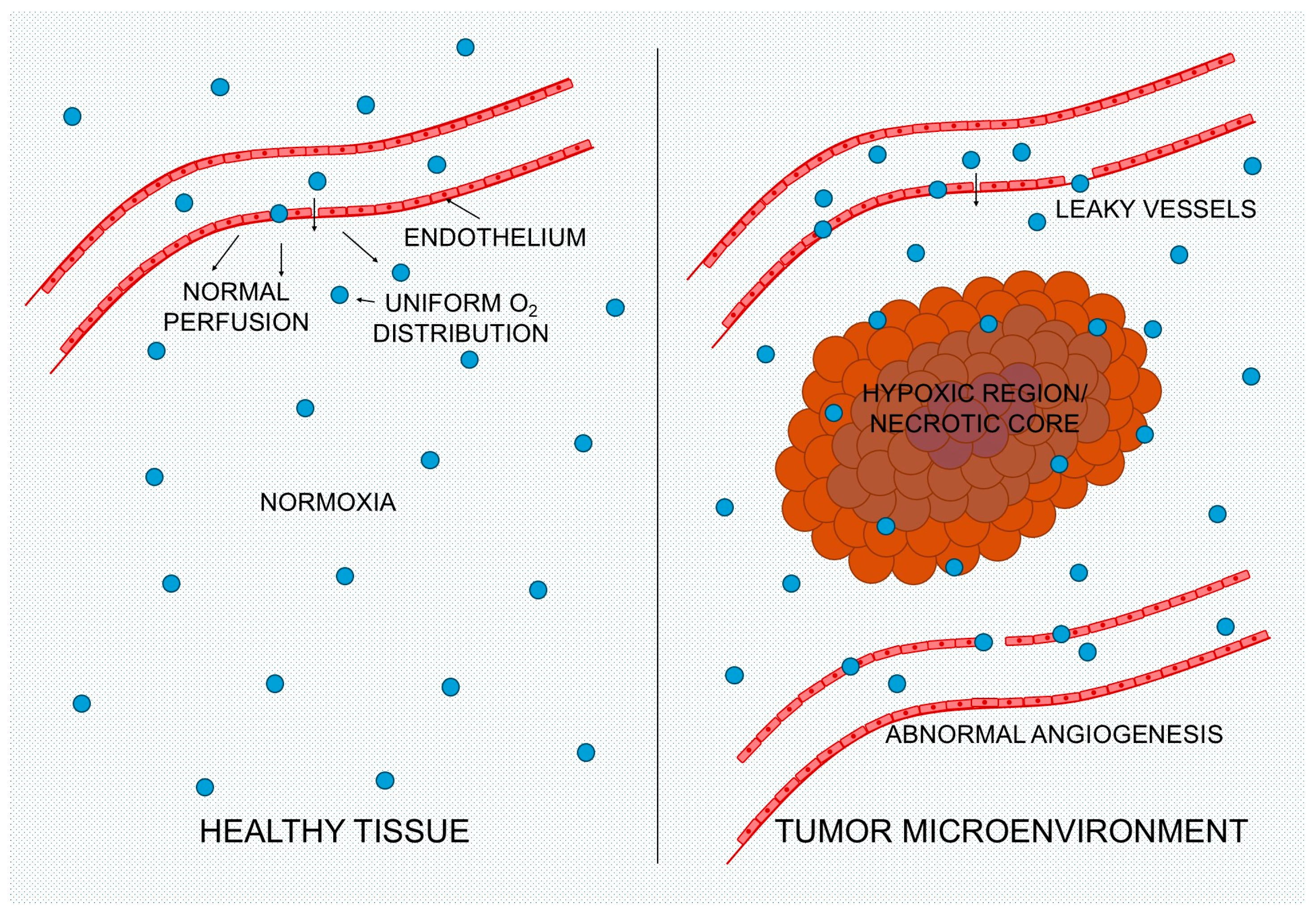
2.3. Disturbances of Angiogenesis and Perfusion
3. Strategies for Increasing Oxygen Availability in the Tumor
3.1. Strategies for Increasing Oxygen
3.2. Oxygen Carriers Based on Perfluorocarbons (PFCs)
3.2.1. PFC as a Theranostic Element
3.2.2. Stimuli-Activated Systems
3.3. Nanocarriers Simultaneously Delivering Oxygen and Photosensitizer
3.3.1. Examples
3.3.2. Biological Effects
3.4. “Self-Oxygen Supply” Strategies
4. Alternative Approach: Type I Photosensitizers
4.1. Differences Between Type I and Type II PDT
4.2. Mechanism of Action of Type I Photosensitizers
4.3. Design of Type I Photosensitizers
4.4. Photosensitizers Activating the Immune System
5. Combined Therapies Using Hypoxia
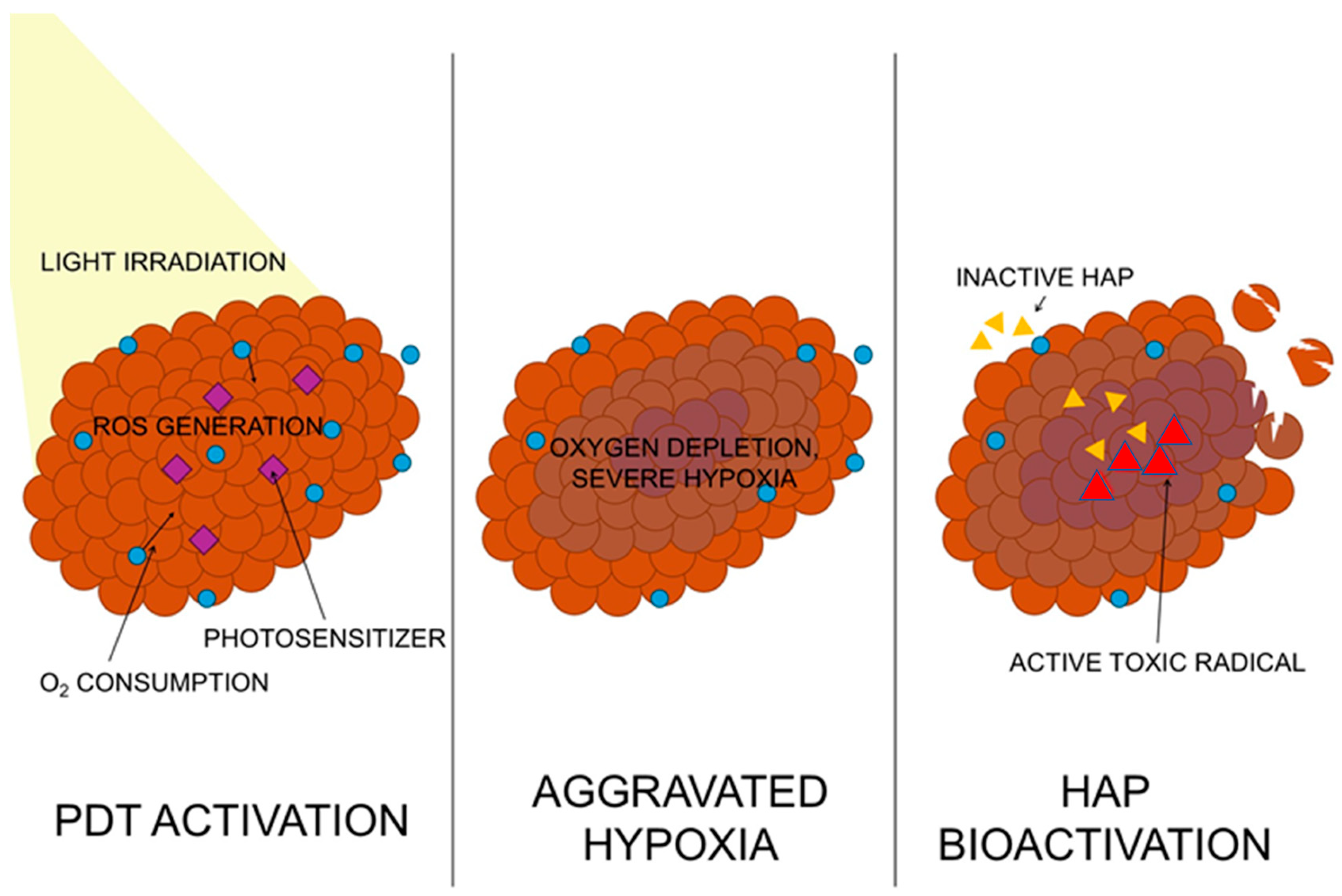
5.1. PDT + Hypoxia-Activated Prodrugs
5.2. PDT + Chemotherapy
5.3. PDT + Immunotherapy
6. Comparison of Strategies
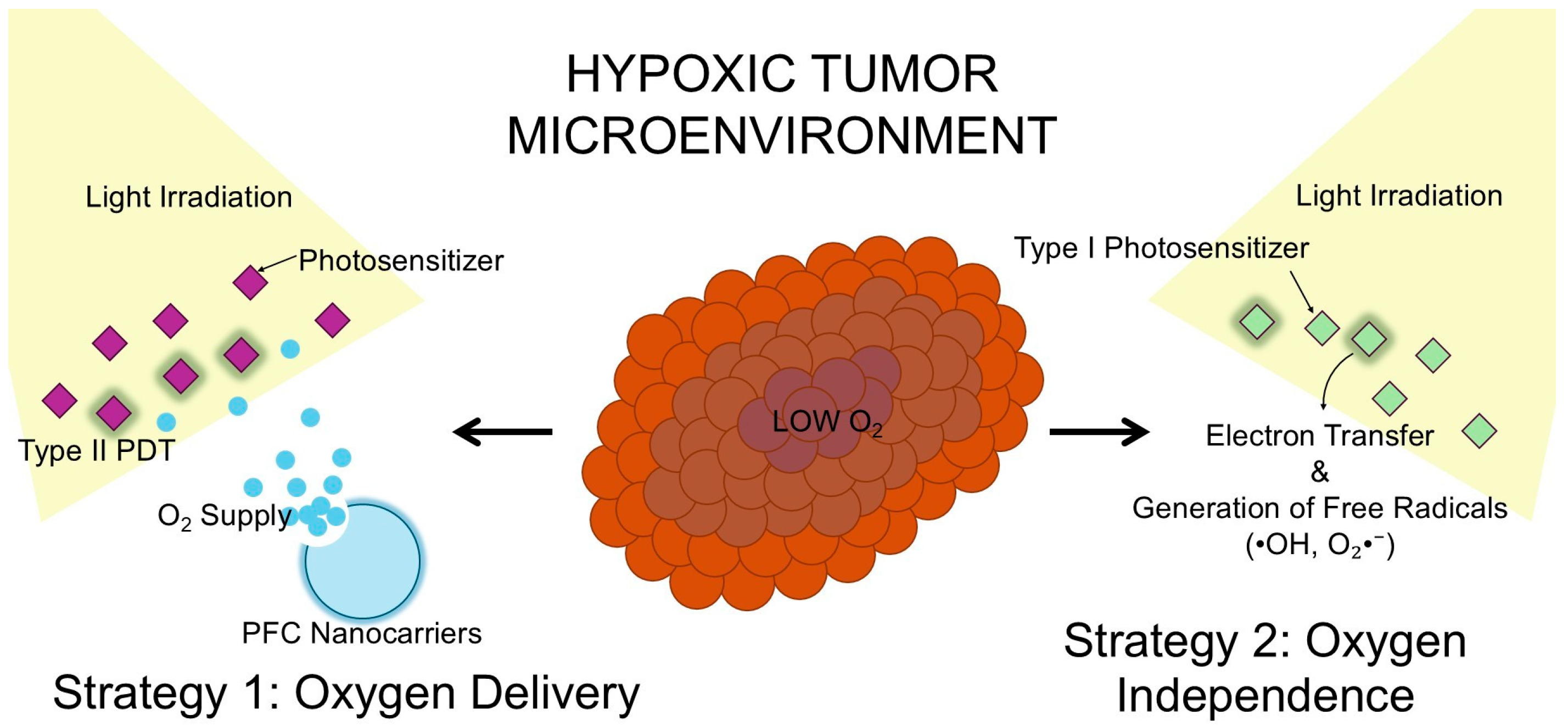
6.1. Oxygen Delivery vs. Oxygen Independence
6.2. Advantages and Limitations
7. Challenges and Limitations
8. Prospects for Future Research
9. Conclusions
Author Contributions
Funding
Data Availability Statement
Acknowledgments
Conflicts of Interest
References
- Challapalli, A.; Carroll, L.; Aboagye, E.O. Molecular mechanisms of hypoxia in cancer. Clin. Transl. Imaging 2017, 5, 225–253. [Google Scholar] [CrossRef] [Scilit]
- Chen, Z.; Han, F.; Du, Y.; Shi, H.; Zhou, W. Hypoxic microenvironment in cancer: Molecular mechanisms and therapeutic interventions. Sig Transduct. Target. Ther. 2023, 8, 70. [Google Scholar] [CrossRef] [Scilit]
- Baronzio, G.F.; Gramaglia, A.; Baronzio, A.; Freitas, I. Influence of Tumor Microenvironment on Thermoresponse: Biologic and Clinical Implications. In Madame Curie Bioscience Database; Landes Bioscience: Austin, TX, USA, 2000–2013. [Google Scholar]
- Paardekooper, L.M.; Vos, W.; van den Bogaart, G. Oxygen in the tumor microenvironment: Effects on dendritic cell function. Oncotarget 2019, 10, 883–896. [Google Scholar] [CrossRef] [Scilit] [PubMed]
- Shen, Z.; Ma, Q.; Zhou, X.; Zhang, G.; Hao, G.; Sun, Y.; Cao, J. Strategies to improve photodynamic therapy efficacy by relieving the tumor hypoxia environment. NPG Asia Mater. 2021, 13, 39. [Google Scholar] [CrossRef] [Scilit]
- Zhang, Y.; Zhu, J.; Sun, H.; Li, J. Modulation of tumor hypoxia and redox microenvironment using nanomedicines for enhanced cancer photodynamic therapy. Appl. Mater. Today 2022, 29, 101687. [Google Scholar] [CrossRef] [Scilit]
- Infantino, V.; Santarsiero, A.; Convertini, P.; Todisco, S.; Iacobazzi, V. Cancer Cell Metabolism in Hypoxia: Role of HIF-1 as Key Regulator and Therapeutic Target. Int. J. Mol. Sci. 2021, 22, 5703. [Google Scholar] [CrossRef] [Scilit] [PubMed]
- Zhang, L.; Ke, J.; Min, S.; Wu, N.; Liu, F.; Qu, Z.; Li, W.; Wang, H.; Qian, Z.; Wang, X. Hyperbaric Oxygen Therapy Represses the Warburg Effect and Epithelial-Mesenchymal Transition in Hypoxic NSCLC Cells via the HIF-1α/PFKP Axis. Front. Oncol. 2021, 11, 691762. [Google Scholar] [CrossRef] [Scilit]
- Liao, M.; Yao, D.; Wu, L.; Luo, C.; Wang, Z.; Zhang, J.; Liu, B. Targeting the Warburg effect: A revisited perspective from molecular mechanisms to traditional and innovative therapeutic strategies in cancer. Acta Pharm. Sin. B 2024, 14, 953–1008. [Google Scholar] [CrossRef] [Scilit]
- Radandish, M.; Mashhadi, N.; Aghayan, A.H.; Taghizadeh, M.; Salehianfard, S.; Yahyazadeh, S.; Vakili, O.; Igder, S. In-depth insight into tumor-infiltrating stromal cells linked to tertiary lymphoid structures and their prospective function in cancer immunotherapy. Exp. Hematol. Oncol. 2025, 14, 105. [Google Scholar] [CrossRef] [Scilit]
- Wang, J.; He, Y.; Hu, F.; Hu, C.; Sun, Y.; Yang, K.; Yang, S. Metabolic Reprogramming of Immune Cells in the Tumor Microenvironment. Int. J. Mol. Sci. 2024, 25, 12223. [Google Scholar] [CrossRef] [Scilit]
- Xiang, Y.; Bernards, N.; Hoang, B.; Zheng, J.; Matsuura, N. Perfluorocarbon nanodroplets can reoxygenate hypoxic tumors in vivo without carbogen breathing. Nanotheranostics 2019, 3, 135–144. [Google Scholar] [CrossRef] [Scilit]
- Siemann, D.W.; Horsman, M.R. Modulation of the tumor vasculature and oxygenation to improve therapy. Pharmacol. Ther. 2015, 153, 107–124. [Google Scholar] [CrossRef] [Scilit]
- Matuszewska, K.; Pereira, M.; Petrik, D.; Lawler, J.; Petrik, J. Normalizing Tumor Vasculature to Reduce Hypoxia, Enhance Perfusion, and Optimize Therapy Uptake. Cancers 2021, 13, 4444. [Google Scholar] [CrossRef] [Scilit] [PubMed]
- Roy, S.; Kumaravel, S.; Sharma, A.; Duran, C.L.; Bayless, K.J.; Chakraborty, S. Hypoxic tumor microenvironment: Implications for cancer therapy. Exp. Biol. Med. 2020, 245, 1073–1086. [Google Scholar] [CrossRef] [Scilit]
- Cheng, Y.; Cheng, H.; Jiang, C.; Qiu, X.; Wang, K.; Huan, W.; Yuan, A.; Wu, J.; Hu, Y. Perfluorocarbon nanoparticles enhance reactive oxygen levels and tumour growth inhibition in photodynamic therapy. Nat. Commun. 2015, 6, 8785. [Google Scholar] [CrossRef] [Scilit]
- Liang, J.; Lai, X.; Mei, Y.; Liu, X.; Wen, S.; Zhou, Y.; Liu, F. Oxygenation: Nanotechnological Strategies for Conquering Tumor Hypoxia in Photodynamic Therapy. Int. J. Nanomed. 2026, 21, 569340. [Google Scholar] [CrossRef] [Scilit] [PubMed]
- Zuo, T.; Li, X.; Ma, X.; Zhang, Y.; Li, X.; Fan, X.; Gao, M.; Xia, D.; Cheng, H. Engineering tumor-oxygenated nanomaterials: Advancing photodynamic therapy for cancer treatment. Front. Bioeng. Biotechnol. 2024, 12, 1383930. [Google Scholar] [CrossRef] [Scilit]
- Day, R.A.; Sletten, E.M. Perfluorocarbon nanomaterials for photodynamic therapy. Curr. Opin. Colloid Interface Sci. 2021, 54, 101454. [Google Scholar] [CrossRef] [Scilit]
- Li, N.; Xu, F.; Cheng, J.; Zhang, Y.; Huang, G.; Zhu, J.; Shen, X.; He, D. Perfluorocarbon Nanocapsules Improve Hypoxic Microenvironment for the Tumor Ultrasound Diagnosis and Photodynamic Therapy. J. Biomed. Nanotechnol. 2018, 14, 2162–2171. [Google Scholar] [CrossRef] [Scilit] [PubMed]
- Xavierselvan, M.; Cook, J.; Duong, J.; Diaz, N.; Homan, K.; Mallidi, S. Photoacoustic nanodroplets for oxygen enhanced photodynamic therapy of cancer. Photoacoustics 2021, 25, 100306. [Google Scholar] [CrossRef] [Scilit]
- Hester, S.C.; Kuriakose, M.; Nguyen, C.D.; Mallidi, S. Role of Ultrasound and Photoacoustic Imaging in Photodynamic Therapy for Cancer. Photochem. Photobiol. 2020, 96, 260–279. [Google Scholar] [CrossRef] [Scilit]
- Xu, Y.; Liu, R.; Yang, H.; Qu, S.; Qian, L.; Dai, Z. Enhancing Photodynamic Therapy Efficacy Against Cancer Metastasis by Ultrasound-Mediated Oxygen Microbubble Destruction to Boost Tumor-Targeted Delivery of Oxygen and Renal-Clearable Photosensitizer Micelles. ACS Appl. Mater. Interfaces 2022, 14, 25197–25208. [Google Scholar] [CrossRef] [Scilit]
- Yang, R.; Huang, J.; Liao, M.; Huang, J.; Gao, B.; Zhang, H.; Zhou, J.; Xu, J.; Lu, Q. An Oxygen-Sufficient Nanoplatform for Enhanced Imaging-Guided Microwave Dynamic Therapy Against Hypoxic Tumors. Int. J. Nanomed. 2022, 17, 5525–5545. [Google Scholar] [CrossRef] [Scilit]
- Zhang, M.; Zhou, Y.; Wu, B.; Lu, C.; Quan, G.; Huang, Z.; Wu, C.; Pan, X. An oxygen-generating metal organic framework nanoplatform as a ‘‘synergy motor’’ for extricating dilemma over photodynamic therapy. Mater. Adv. 2023, 4, 5420. [Google Scholar] [CrossRef] [Scilit]
- Yang, Z.; Wang, J.; Ai, S.; Sun, J.; Mai, X.; Guan, W. Self-generating oxygen enhanced mitochondrion-targeted photodynamic therapy for tumor treatment with hypoxia scavenging. Theranostics 2019, 9, 6809–6823. [Google Scholar] [CrossRef] [Scilit]
- Huang, J.; Leng, X.; Jiang, T.; Xu, L.; Zheng, J.; Fang, M.; Wang, J.; Wang, Z.; Zhang, L. Oxygen-carrying nanoplatform to reprogram tumor immunosuppressive microenvironment and enhance photothermal-immunotherapy. Mater. Today Bio 2023, 19, 100555. [Google Scholar] [CrossRef] [Scilit] [PubMed]
- Liu, Z.; Xue, Y.; Wu, M.; Yang, G.; Lan, M.; Zhang, W. Sensitization of Hypoxic Tumor to Photodynamic Therapy via Oxygen Self-Supply of Fluorinated Photosensitizers. Biomacromolecules 2019, 20, 4563–4573. [Google Scholar] [CrossRef] [Scilit]
- Wang, H.; Qin, T.; Wang, W.; Zhou, X.; Lin, F.; Liang, G.; Yang, Z.; Chi, Z.; Tang, B.Z. Selenium-Containing Type-I Organic Photosensitizers with Dual Reactive Oxygen Species of Superoxide and Hydroxyl Radicals as Switch-Hitter for Photodynamic Therapy. Adv. Sci. 2023, 10, e2301902. [Google Scholar] [CrossRef] [Scilit] [PubMed]
- Cui, S.; Guo, X.; Wang, S.; Wei, Z.; Huang, D.; Zhang, X.; Zhu, T.C.; Huang, Z. Singlet Oxygen in Photodynamic Therapy. Pharmaceuticals 2024, 17, 1274. [Google Scholar] [CrossRef] [Scilit] [PubMed]
- Zhuang, J.; Qi, G.; Feng, Y.; Wu, M.; Zhang, H.; Wang, D.; Zhang, X.; Chong, K.C.; Li, B.; Liu, S.; et al. Thymoquinone as an electron transfer mediator to convert Type II photosensitizers to Type I photosensitizers. Nat. Commun. 2024, 15, 4943. [Google Scholar] [CrossRef] [Scilit]
- Garcia-Diaz, M.; Huang, Y.Y.; Hamblin, M.R. Use of fluorescent probes for ROS to tease apart Type I and Type II photochemical pathways in photodynamic therapy. Methods 2016, 109, 158–166. [Google Scholar] [CrossRef] [Scilit]
- Przygoda, M.; Bartusik-Aebisher, D.; Dynarowicz, K.; Cieślar, G.; Kawczyk-Krupka, A.; Aebisher, D. Cellular Mechanisms of Singlet Oxygen in Photodynamic Therapy. Int. J. Mol. Sci. 2023, 24, 16890. [Google Scholar] [CrossRef] [Scilit]
- Huang, L.; Xuan, Y.; Koide, Y.; Zhiyentayev, T.; Tanaka, M.; Hamblin, M.R. Type I and Type II mechanisms of antimicrobial photodynamic therapy: An in vitro study on gram-negative and gram-positive bacteria. Lasers Surg. Med. 2012, 44, 490–499. [Google Scholar] [CrossRef] [Scilit]
- Sun, H.; Guo, R.; Guo, Y.; Song, J.; Li, Z.; Song, F. Boosting Type-I and Type-II ROS Production of Water-Soluble Porphyrin for Efficient Hypoxic Tumor Therapy. Mol. Pharm. 2023, 20, 606–615. [Google Scholar] [CrossRef] [Scilit]
- Zhang, L.; He, M.; Xia, X.; Ma, Z.; Lv, C.; Wang, R.; Liu, W.; Fan, J.; Peng, X.; Sun, W. Ferroptosis-inducing photosensitizers alleviate hypoxia tumor microenvironment for enhanced fluorescence imaging-guided photodynamic therapy. Chem. Commun. 2024, 60, 8248–8251. [Google Scholar] [CrossRef] [Scilit] [PubMed]
- Yang, G.; Lu, S.B.; Li, C.; Chen, F.; Ni, J.S.; Zha, M.; Li, Y.; Gao, J.; Kang, T.; Liu, C.; et al. Type I macrophage activator photosensitizer against hypoxic tumors. Chem. Sci. 2021, 12, 14773–14780. [Google Scholar] [CrossRef] [Scilit]
- Hong, L.; Li, J.; Luo, Y.; Guo, T.; Zhang, C.; Ou, S.; Long, Y.; Hu, Z. Recent Advances in Strategies for Addressing Hypoxia in Tumor Photodynamic Therapy. Biomolecules 2022, 12, 81. [Google Scholar] [CrossRef] [Scilit] [PubMed]
- Li, Y.; Zhao, L.; Li, X.F. Targeting Hypoxia: Hypoxia-Activated Prodrugs in Cancer Therapy. Front. Oncol. 2021, 11, 700407. [Google Scholar] [CrossRef] [Scilit]
- Wang, Q.; Suo, Y.; Shi, R.; Wang, Y. Studies related to the enhanced the effect of 5-aminolevulinic acid-based photodynamic therapy combined with tirapazamine. Photodiagn. Photodyn. Ther. 2024, 49, 104287. [Google Scholar] [CrossRef] [Scilit]
- Wang, Q.; Suo, Y.; Tian, X. 5-Aminolaevulinic Acid-Mediated Photodynamic Therapy Combined with Tirapazamine Enhances Efficacy in Ovarian Cancer. Biomedicines 2025, 13, 724. [Google Scholar] [CrossRef] [Scilit] [PubMed]
- Wang, H.; Zhang, C.; Zhang, Y.; Tian, R.; Cheng, G.; Pan, H.; Cui, M.; Chang, J. An efficient delivery of photosensitizers and hypoxic prodrugs for a tumor combination therapy by membrane camouflage nanoparticles. J. Mater. Chem. B 2020, 8, 2876–2886. [Google Scholar] [CrossRef] [Scilit]
- Zhong, Y.; Huang, S.; Zheng, C.; Huang, J.; Li, B.; Han, S.; Xiao, H.; Wang, Y.; Shuai, X. A light and hypoxia-activated nanodrug for cascade photodynamic-chemo cancer therapy. Biomater. Sci. 2021, 9, 5218–5226. [Google Scholar] [CrossRef] [Scilit]
- Sun, W.; Cheng, Y.; Ma, X.; Jin, Z.; Zhang, Q.; Wang, G. Photodynamic therapy upregulates expression of HIF-1α and PD-L1 in related pathways and its clinical relevance in non-small-cell lung cancer. Eur. J. Med. Res. 2024, 29, 230. [Google Scholar] [CrossRef] [Scilit]
- Krafft, M.P. Alleviating tumor hypoxia with perfluorocarbon-based oxygen carriers. Curr. Opin. Pharmacol. 2020, 53, 117–125. [Google Scholar] [CrossRef] [Scilit]
- Jägers, J.; Wrobeln, A.; Ferenz, K.B. Perfluorocarbon-based oxygen carriers: From physics to physiology. Pflugers Arch. 2021, 473, 139–150. [Google Scholar] [CrossRef] [Scilit]
- Charbe, N.B.; Castillo, F.; Tambuwala, M.M.; Prasher, P.; Chellappan, D.K.; Carreño, A.; Satija, S.; Singh, S.K.; Gulati, M.; Dua, K.; et al. A new era in oxygen therapeutics? From perfluorocarbon systems to haemoglobin-based oxygen carriers. Blood Rev. 2022, 54, 100927. [Google Scholar] [CrossRef] [Scilit]
- Yuan, L.; Chen, Q.; Riviere, J.E.; Lin, Z. Pharmacokinetics and tumor delivery of nanoparticles. J. Drug Deliv. Sci. Technol. 2023, 83, 104404. [Google Scholar] [CrossRef] [Scilit]
- Arami, H.; Khandhar, A.; Liggitt, D.; Krishnan, K.M. In vivo delivery, pharmacokinetics, biodistribution and toxicity of iron oxide nanoparticles. Chem. Soc. Rev. 2015, 44, 8576–8607. [Google Scholar] [CrossRef] [Scilit]
- Skorzynski, M.; Krol, M.; Braniewska, A. Hepatotoxicity of Nanoparticle-Based Anti-Cancer Drugs: Insights into Toxicity and Mitigation Strategies. Int. J. Nanomed. 2025, 20, 11697–11715. [Google Scholar] [CrossRef] [Scilit]
- Drozdov, A.S.; Nikitin, P.I.; Rozenberg, J.M. Systematic Review of Cancer Targeting by Nanoparticles Revealed a Global Association between Accumulation in Tumors and Spleen. Int. J. Mol. Sci. 2021, 22, 13011. [Google Scholar] [CrossRef] [Scilit]
- Cheng, Y.H.; He, C.; Riviere, J.E.; Monteiro-Riviere, N.A.; Lin, Z. Meta-Analysis of Nanoparticle Delivery to Tumors Using a Physiologically Based Pharmacokinetic Modeling and Simulation Approach. ACS Nano 2020, 14, 3075–3095. [Google Scholar] [CrossRef] [Scilit]
- Niculescu, A.G.; Grumezescu, A.M. Novel Tumor-Targeting Nanoparticles for Cancer Treatment—A Review. Int. J. Mol. Sci. 2022, 23, 5253. [Google Scholar] [CrossRef] [Scilit]
- Liu, K.; Yao, Y.; Xue, S.; Zhang, M.; Li, D.; Xu, T.; Zhi, F.; Liu, Y.; Ding, D. Recent Advances of Tumor Microenvironment-Responsive Nanomedicines-Energized Combined Phototherapy of Cancers. Pharmaceutics 2023, 15, 2480. [Google Scholar] [CrossRef] [Scilit]
- Thomas, R.G.; Surendran, S.P.; Jeong, Y.Y. Tumor Microenvironment-Stimuli Responsive Nanoparticles for Anticancer Therapy. Front. Mol. Biosci. 2020, 7, 610533, Erratum in Front. Mol. Biosci. 2021, 8, 693909. https://doi.org/10.3389/fmolb.2021.693909. [Google Scholar] [CrossRef] [Scilit]
- Wang, T.; Wu, C.; Hu, Y.; Zhang, Y.; Ma, J. Stimuli-responsive nanocarrier delivery systems for Pt-based antitumor complexes: A review. RSC Adv. 2023, 13, 16488–16511. [Google Scholar] [CrossRef] [Scilit]
- Kang, W.; Liu, Y.; Wang, W. Light-responsive nanomedicine for cancer immunotherapy. Acta Pharm. Sin. B 2023, 13, 2346–2368. [Google Scholar] [CrossRef] [Scilit]
- Peng, N.; Du, Y.; Yu, G.; Zhang, C.; Cai, Q.; Tang, H.; Liu, Y. Light-Activated Reactive Oxygen Species-Responsive Nanocarriers for Enhanced Photodynamic Immunotherapy of Cancer. Langmuir 2022, 38, 13139–13149. [Google Scholar] [CrossRef] [Scilit]
- Mi, P. Stimuli-responsive nanocarriers for drug delivery, tumor imaging, therapy and theranostics. Theranostics 2020, 10, 4557–4588. [Google Scholar] [CrossRef] [Scilit]
- Jin, W.; Dong, C.; Yang, D.; Zhang, R.; Jiang, T.; Wu, D. Nano-Carriers of Combination Tumor Physical Stimuli-Responsive Therapies. Curr. Drug Deliv. 2020, 17, 577–587. [Google Scholar] [CrossRef] [Scilit]
- Hu, H.; Yan, X.; Wang, H.; Tanaka, J.; Wang, M.; You, W.; Li, Z. Perfluorocarbon-based O2 nanocarrier for efficient photodynamic therapy. J. Mater. Chem. B 2019, 7, 1116–1123. [Google Scholar] [CrossRef] [Scilit]
- Zhang, L.; Liu, J.; Xiong, Y.; Liao, G.; Lv, Y. Multi-Energy Integrated Photocatalysis for Antitumor Therapy. Exploration 2025, 5, 20240188. [Google Scholar] [CrossRef] [Scilit] [PubMed]
- Fan, Y.; Zhang, R.; Shi, J.; Tian, F.; Zhang, Y.; Zhang, L.; Liao, G.; Yang, M. Mild near-infrared laser-triggered photo-immunotherapy potentiates immune checkpoint blockade via an all-in-one theranostic nanoplatform. J. Colloid Interface Sci. 2025, 678, 1088–1103. [Google Scholar] [CrossRef] [Scilit]
- Zhang, L.; Yang, Z.; He, W.; Ren, J.; Wong, C.Y. One-pot synthesis of a self-reinforcing cascade bioreactor for combined photodynamic/chemodynamic/starvation therapy. J. Colloid Interface Sci. 2021, 599, 543–555. [Google Scholar] [CrossRef] [Scilit] [PubMed]
- Lv, Y.; Pu, L.; Ran, B.; Xiang, B. Targeting tumor angiogenesis and metabolism with photodynamic nanomedicine. Front. Cell Dev. Biol. 2025, 13, 1558393. [Google Scholar] [CrossRef] [Scilit] [PubMed]
- Guo, X.; Qu, J.; Zhu, C.; Li, W.; Luo, L.; Yang, J.; Yin, X.; Li, Q.; Du, Y.; Chen, D.; et al. Synchronous delivery of oxygen and photosensitizer for alleviation of hypoxia tumor microenvironment and dramatically enhanced photodynamic therapy. Drug Deliv. 2018, 25, 585–599. [Google Scholar] [CrossRef] [Scilit]
- Li, X.; Wang, H.; Li, Z.; Li, D.; Lu, X.; Ai, S.; Dong, Y.; Liu, S.; Wu, J.; Guan, W. Oxygen tank for synergistic hypoxia relief to enhance mitochondria-targeted photodynamic therapy. Biomater. Res. 2022, 26, 47. [Google Scholar] [CrossRef] [Scilit]



| Feature/Criteria | Physical Oxygen-Delivery Carriers (O2-Transport) | Chemical Type I Photosensitizers (O2-Independent PDT) |
|---|---|---|
| Primary Mechanism | Physically transport and release molecular oxygen O2 directly into the hypoxic tumor core. | Generate toxic free radicals (via electron transfer) utilizing ambient substrates instead of O2. |
| Common Nanoparticle Platforms | Liposomes and Polymeric Micelles (encapsulating PFCs/Hb) Metal–Organic Frameworks (MOFs) (with high gas-storage capacity) Mesoporous Silica Nanoparticles (MSNs) Albumin Nanoparticles (e.g., HSA-stabilized Hb) | Aggregation-Induced Emission (AIE) Dots Semiconductor Quantum Dots (e.g., CdSe, ZnS) Carbon Dots and Graphene Oxide Upconversion Nanoparticles (UCNPs) (coupled with type I dyes) Polymer Nanoparticles (encapsulating hypoxia-tolerant dyes) |
| Reactive Species Generated | Singlet oxygen 1O2 via standard type II photochemical pathways. | Hydroxyl radicals, superoxide anions O2−, and hydrogen peroxide H2O2. |
| Dependence on Tissue O2 | High (Relies on successful oxygen loading, transport, and local release). | Low to None (Functions effectively in deeply hypoxic or near-anoxic environments). |
| Key Materials & Examples | Perfluorocarbons (PFCs), hemoglobin-based oxygen carriers (HBOCs), hyperbaric O2 microbubbles. | Modified porphyrins, titanium dioxide (TiO2) nanoparticles, organic radical precursors (e.g., iodinated dyes). |
| Major Advantages | • Replenishes local O2 levels • Reverses hypoxia-mediated radiation resistance • Normalizes tumor microenvironment | • No external O2 source required • Highly efficient in severe hypoxia • Less prone to oxygen consumption depletion |
| Key Limitations | • Limited payload capacity • Risk of premature O2 leakage during circulation • High dependency on local blood flow | • Complex chemical synthesis • Potential dark toxicity of free radical precursors • Lower quantum yield compared to classical type II |
| Biocompatibility Concerns | Potential reticuloendothelial system (RES) accumulation and long-term tissue retention. | Potential off-target cellular toxicity due to highly reactive free radical generation. |
| Future Clinical Outlook | Ideal for combination with radiotherapy or traditional type II PDT to maximize oxygenation. | Ideal for treating deeply buried, necrotic, or severely hypoxic solid tumor cores. |
Disclaimer/Publisher’s Note: The statements, opinions and data contained in all publications are solely those of the individual author(s) and contributor(s) and not of MDPI and/or the editor(s). MDPI and/or the editor(s) disclaim responsibility for any injury to people or property resulting from any ideas, methods, instructions or products referred to in the content. |
© 2026 by the authors. Licensee MDPI, Basel, Switzerland. This article is an open access article distributed under the terms and conditions of the Creative Commons Attribution (CC BY) license.
Share and Cite
Bartusik-Aebisher, D.; Rudy, I.; Rogóż, K.; Szpara, J.; Kawczyk-Krupka, A.; Aebisher, D. Overcoming Tumor Hypoxia in Photodynamic Therapy: A Comprehensive Review of Oxygen-Delivery Carriers and Type I Photosensitizers. Int. J. Mol. Sci. 2026, 27, 4748. https://doi.org/10.3390/ijms27114748
Bartusik-Aebisher D, Rudy I, Rogóż K, Szpara J, Kawczyk-Krupka A, Aebisher D. Overcoming Tumor Hypoxia in Photodynamic Therapy: A Comprehensive Review of Oxygen-Delivery Carriers and Type I Photosensitizers. International Journal of Molecular Sciences. 2026; 27(11):4748. https://doi.org/10.3390/ijms27114748
Chicago/Turabian StyleBartusik-Aebisher, Dorota, Izabela Rudy, Kacper Rogóż, Jakub Szpara, Aleksandra Kawczyk-Krupka, and David Aebisher. 2026. "Overcoming Tumor Hypoxia in Photodynamic Therapy: A Comprehensive Review of Oxygen-Delivery Carriers and Type I Photosensitizers" International Journal of Molecular Sciences 27, no. 11: 4748. https://doi.org/10.3390/ijms27114748
APA StyleBartusik-Aebisher, D., Rudy, I., Rogóż, K., Szpara, J., Kawczyk-Krupka, A., & Aebisher, D. (2026). Overcoming Tumor Hypoxia in Photodynamic Therapy: A Comprehensive Review of Oxygen-Delivery Carriers and Type I Photosensitizers. International Journal of Molecular Sciences, 27(11), 4748. https://doi.org/10.3390/ijms27114748