Caffeic Acid and Human Health: Evidence-Based Roles in Disease Prevention and Treatment


Abstract
1. Introduction
2. Methodology
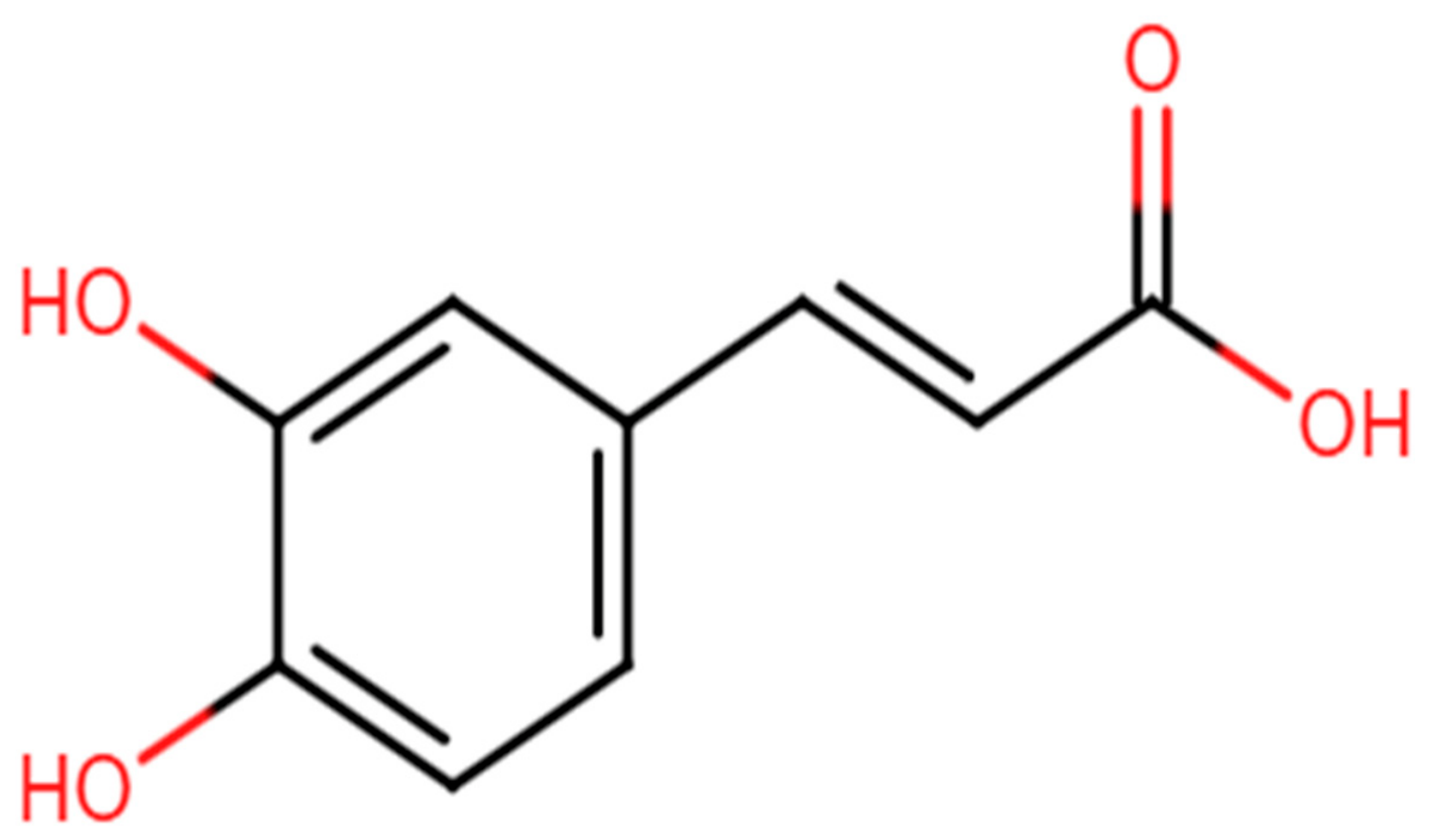
3. Structure, Sources, Pharmacokinetics, and Bioavailability
4. Experimental Evidence of the Impact of Caffeic Acid in Human Health and Disease Processes
4.1. Antioxidant Activity
4.2. Anti-Inflammatory Activity
4.3. Anti-Diabetic Activity

| Study Model | Dose | Outcomes | Refs. |
|---|---|---|---|
| STZ-induced diabetic rat model | 3 mg/kg | ° Plasma glucose levels decreased by CA | [55] |
| Streptozotocin-nicotinamide induced diabetes rat model | 40 mg/kg | ° The liver and kidney function tests decreased by CA ° Antioxidants status increased and lipid peroxidation decreased by CA | [56] |
| Fructose-streptozotocin-induced diabetic rat model | 150, 300 mg/kg | ° Blood glucose level reduced by CA | [57] |
| STZ-induced DM rat model | 40 mg/kg | ° Fasting blood glucose and MDA decreased by CA ° Insulin and antioxidant enzymes increased by CA | [58] |
| STZ-induced diabetic rat model | 25, 35 mg/kg | ° Blood glucose decreased and insulin level improved by CA | [59] |
| STZ-induced diabetes hyperlipidemic rat model | 50 mg/kg | ° CA groups decreased miR-122 expression ° CA increased p-AMPK activity ° CA reduced histopathological changes | [60] |
| Alloxan-induced diabetic rat model | 50 mg/kg | ° Serum blood glucose and lipid profile decreased by CA | [61] |
| Alloxan-induced diabetes rat model | 50 mg/kg | ° CA protects kidney and liver | [62] |
4.4. Neuroprotective Effect
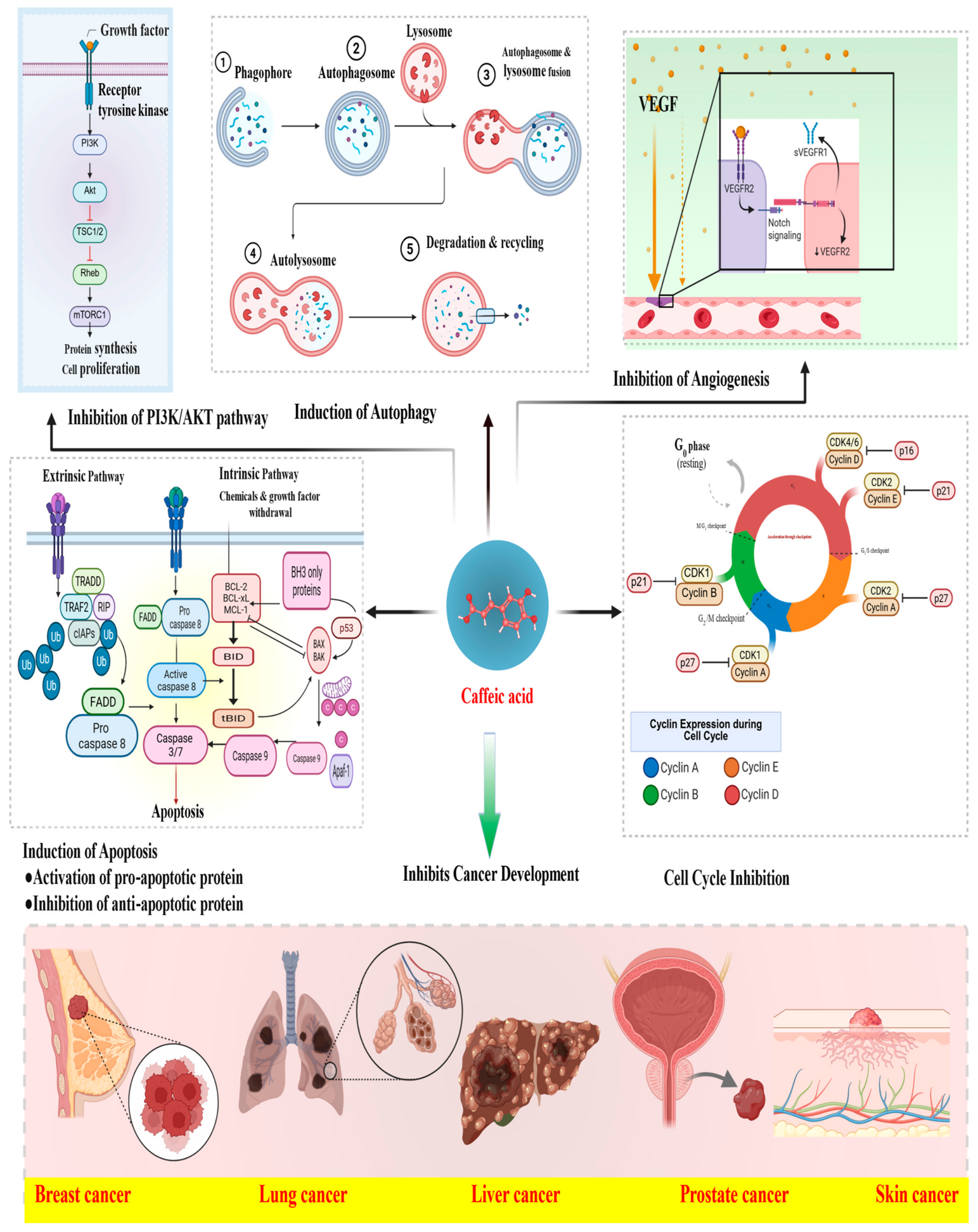
4.5. Anti-Cancer Activity
4.5.1. Lung Cancer
4.5.2. Breast Cancer
4.5.3. Cervix Cancer
4.5.4. Liver Cancer
4.5.5. Gastric Cancer
4.5.6. Renal Cancer
4.5.7. Oral Cancer
4.5.8. Osteosarcoma
4.5.9. Leukemia
4.5.10. Prostate Cancer
4.5.11. Skin Cancer
| Cancer | Study Types | Model/Cell Line | Key Findings | Refs. |
|---|---|---|---|---|
| Lung cancer | In vitro | H1299 cells | ° CA induces apoptosis and sub-G1 cell cycle arrest ° CA activate caspase-3 and caspase-9 | [74] |
| In vivo | H1299 xenografts in nude mice | ° CA treatment retarded the growth | [74] | |
| In vitro | A549 cells | ° CA rescues the PTX-induced anti-proliferation | [75] | |
| Breast cancer | In vitro | MDA-MB-231 and MDA-MB-468 cells | ° CA-induced apoptosis and block in the G2/M phase | [81] |
| In vivo | TNBC xenografts in mice | ° CA inhibits growth and improves the tumor microenvironment | [81] | |
| In vitro | MCF-7 and MDA-MB-468 cells | ° CA reduced cancer cell viability | [82] | |
| Cervix cancer | In vitro | HeLa cells | ° CA induces apoptosis | [86] |
| In vitro | HeLa, CaSki, SiHa and C33A cells | ° Growth of cancer cells prevented by CA | [87] | |
| Liver cancer | In vitro | HepG2 cells | ° CA decreases MMP-9 enzyme activity and MMP-9 expression | [92] |
| In vivo | HepG2 tumor xenografts in nude mice | ° Reduction of tumor size CA-treated group ° Decreased metastatic foci number in the liver | [92] | |
| Gastric cancer | In vitro | SCM1 cells | ° CA inhibited cell viability and induced apoptosis | [96] |
| Kidney cancer | In vitro | Caki-I cells | ° CA is inhibitors of STAT3 ° CA suppresses tumor angiogenesis | [97] |
| In vivo | Caki-I carcinomas in nude mice | ° CA retarded tumor growth | [97] | |
| Head and neck cancer | In vitro | Detroit 562 cells | ° CA decreases the viability of cancer cells ° CA induced apoptosis | [103] |
| Bone cancer | In vitro | MG63 cells | ° Apoptosis induced by CA | [104] |
| In vitro | MG 63 cells | ° CA promotes the release of Cyt c by activating Bid | [105] | |
| In vitro | MG63 cells | ° CA triggers apoptosis | [106] | |
| Leukemia | In vitro | K562 cells | ° CA induced apoptosis and caused anti-proliferative effect ° Administration of IM and CA showed a synergy of action | [108] |
| Prostate cancer | In vitro | PC-3 and LNCaP cells | ° CA inhibits cancer cells proliferation, cell cycle arrest | [110] |
| In vitro | DU-145 cells | ° CA decreased cell proliferation and inhibited cell migration | [111] | |
| Skin cancer | In vitro | G361 and SK-MEL-24 cells | ° CA exposure decreased cell viability, triggered apoptosis | [113] |
4.6. Cardioprotective Effects
4.7. Role of Caffeic Acid in Liver-Associated Pathological Conditions
4.8. Anti-Colitis Effects
4.9. Role of Caffeic Acid in Reproductive System
4.10. Anti-Obesity Effects
| Activity | Study Model | Dose | Key Findings | Refs. |
|---|---|---|---|---|
| Cardioprotective effect | Cyclosporine induced hypertensive rats | 10 and 15 mg/kg | ° CA lowered blood pressure. ° CA reduced the activities of important enzymes involved in the development of hypertension | [114] |
| ISO-induced myocardial-infarcted rats | 15 mg/kg | ° CA ameliorates cardiac damage | [116] | |
| Doxorubicin induced cardiotoxicity rats | 40 mg/kg | ° CA reduced cytokine expression, decreased myocardial marker injury | [117] | |
| Hepatoprotective effect | Oxidative stress-induced liver damage | 100 mg/kg | ° CA ameliorated the elevated plasma biomarkers ° CA improved antioxidant levels | [123] |
| Anti-colitis effect | DSS-induced colitis mice | 50 mg/kg | ° CA attenuates the mucosal inflammation | [126] |
| Colitis caused by DSS in mice | 251 mg/kg | ° CA treatment recovered colon length ° Histopathology changes in colon tissue reduced by CA | [49] | |
| Role in reproductive system | Acrylamide-induced male reproductive dysfunction rats | 10, 20, 30, 40 mg/kg | ° Histological and biochemical changes improved after CA | [130] |
| Arsenic-induced testicular injury in mice | 60 mg/kg body | ° CA plus As attenuated histopathological alterations | [18] | |
| Aflatoxin B1-mediated toxicity in the rat reproductive system | 20 or 40 mg/kg | ° CA improved functional characteristics of spermatozoa | [132] | |
| Role in digestive system | High fat diet induced obese mice model | 50 mg/kg | ° CA ameliorated obesity and fat accumulation | [137] |
| Anti-arthritis effect | Adjuvant-induced arthritis in rats | 50 mg/kg/day | ° Caffeic acid attenuated the severity of arthritis ° It mitigated paw edema and protected the joint tissues | [140] |
| Adjuvant-induced arthritis rats | 5, 25, 125 mg | ° Caffeic acid decreased swelling in ankle joint | [141] |
4.11. Anti-Arthritis Effects
4.12. Wound Healing Activity
4.13. Anti-Microbial Activity
- i.
- Antibacterial activity
- ii.
- Anti-viral activity
- iii.
- Antifungal activity
| Activity | Study Type | Findings | Refs. |
|---|---|---|---|
| Antibacterial | In vitro | ° CA inhibited the MrsA pumps in the RN-4220 strain and the NorA strain 1199B | [143] |
| In vitro | ° CA alone proves antibacterial action and has the ability to enhance the antimicrobial effect when combined with antibiotics. | [145] | |
| In vitro | ° CA was found to disrupt the biofilm formation of E. coli B1 | [146] | |
| In vivo | ° CA lessened the histological changes induced by E. coli. | [146] | |
| Antiviral | In vitro | ° Caffeic acid was virucidal against Ilhéus virus (ILHV) | [24] |
| In vitro | ° Caffeic acid effectively inhibits the multiplication of influenza A virus | [148] | |
| In vitro | ° Caffeic acid inhibited HBV-DNA replication as well as HBsAg production. | [149] | |
| In vitro | ° It reduced serum DHBV level in DHBV-infected duckling model | [149] | |
| In vitro | ° Caffeic acid effectively inhibited CDV infection | [150] | |
| In vitro | ° Caffeic acid inhibited the multiplication of HSV-1 | [151] | |
| Antifungal | In vitro | ° Caffeic acid, nano-caffeic acid, carrier, fluconazole, and nystatin had the lowest to highest antifungal activity | [152] |
5. Synergistic Effect of Caffeic Acid with Other Compounds
| Compounds | Activity | Study Type | Outcomes | Refs. |
|---|---|---|---|---|
| Caffein | Improvement in male reproductive function | In vivo | ° Combination treatment increased activity of testicular steroidogenic enzymes It reduced testicular cholesterol | [127] |
| Quercetin | Antioxidant | In vitro | ° CA as well as quercetin pretreatments prevent the toxic effects of Lambda-cyhalothrin | [153] |
| Fosfomycin | Anti-microbial | In vitro | ° The combined effect of CA with fosfomycin caused the inhibition of growth | [163] |
| Curcumin | Lung protective effect | In vivo | ° Lung-protective activity was determined by combination of CA as well as curcumin | [164] |
| Ferulic acids | Metabolic syndrome prevention | In vivo | ° The treatment with CA well as ferulic acids improved hyperglycemia, hypertriglyceridemia, and hypercholesterolemia | [155] |
| Cisplatin | Augment anticancer activity | In vitro | ° Met as well as CA augmented cisplatin action against quiescent tumor cells | [88] |
| Apigenin, chlorogenic acid, | Hepaprotective effect | In vivo | ° Chlorogenic acid, apigenin, and caffeic acid reduced hepatotoxicity | [157] |
| Paclitaxel | Anticancer effect | In vitro | ° Co-administration of CA and PTX resulted in reduced cancer cell growth | [74] |
| Paclitaxel | Anticancer effect | In vivo | ° Combination of CA and PTX caused better effective suppressive effect on tumor growth | [74] |
| Cisplatin | Anticancer effect | In vitro | ° Cisplatin-caffeic acid inhibited cell growth of cervical cancer cells | [87] |
| Benzyl isothiocyanate | Anticancer effect | In vitro | ° Study described synergistic potential of CA as well as BITC to modulate the MAPK pathway and apoptosis induction, highlighting their capacity for combination cancer therapy | [159] |
| All-trans retinoic acid | Anticancer effect | In vitro | ° CA synergistic effect on ATRA in medulloblastoma cell lines was noticed | [160] |
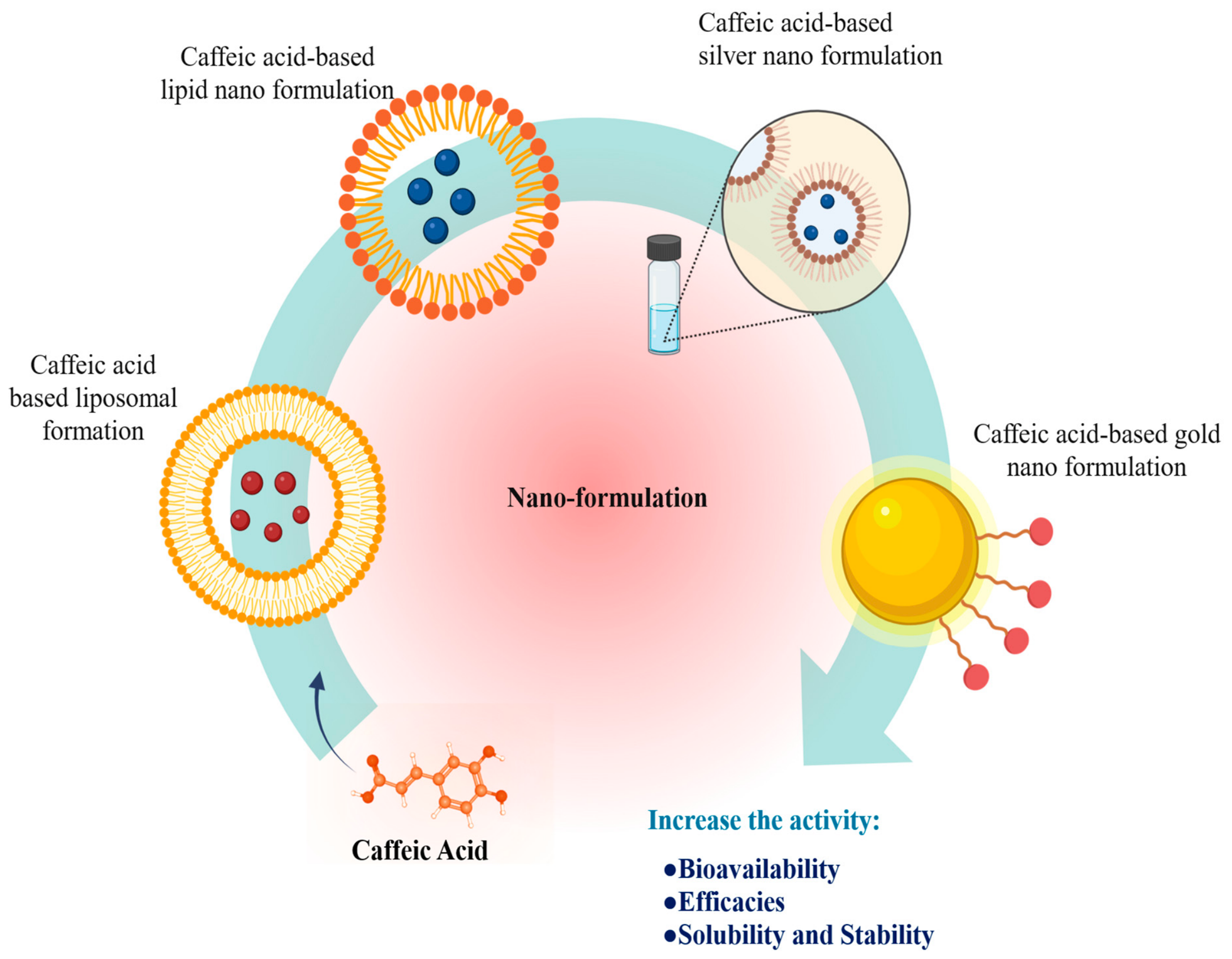
6. Role of Nano-Formulations of Caffeic Acid in Preclinical Studies and Translational Challenges
7. Clinical Trials Based on Caffeic Acid
8. Conclusions, Limitations, and Future Prospectives
Author Contributions
Funding
Data Availability Statement
Acknowledgments
Conflicts of Interest
Abbreviations
| AChE | Acetylcholinesterase |
| AD | Alzheimer’s disease |
| BCHE | Butyrylcholinesterase |
| CAPE | Caffeic acid phenethyl ester |
| CA | Caffeic acid |
| CAT | Catalase |
| CDH2 | Cadherin-2 |
| CHA | Chlorogenic acid |
| COX-2 | Cyclooxygenase-2 |
| CDDP | Cisplatin |
| CYT C | Cytochrome c |
| DSS | Dextran sulfate sodium |
| DEXA | Dexamethasone |
| DIO | Diet-induced obesity |
| IM | Imatinib |
| INOS | Inducible nitric oxide synthase |
| MDA | Malondialdehyde |
| MRT | Mean residence time |
| MTF | Metformin |
| NO | Nitric oxide |
| PC | Prostate cancer |
| PCOS | Polycystic ovary syndrome |
| PGE2 | Prostaglandin E2 |
| PTX | Paclitaxel |
| ROS | Reactive oxygen species |
| STZ | Streptozotocin |
| VEGF | Vascular endothelial growth factor |
References
- Okigbo, R.N.; Anuagasi, C.L.; Amadi, J.E. Advances in selected medicinal and aromatic plants indigenous to Africa. J. Med. Plants Res. 2009, 3, 86–95. [Google Scholar]
- Chaachouay, N.; Azeroual, A.; Ansari, M.K.; Zidane, L. Use of plants as medicines and aromatics by indigenous communities of Morocco: Pharmacognosy, ecology and conservation. In Plants as Medicine and Aromatics; CRC Press: Boca Raton, FL, USA, 2023; pp. 33–44. [Google Scholar]
- Ansari, M.K.; Iqbal, M.; Chaachouay, N.; Ansari, A.A.; Owens, G. The concept and status of medicinal and aromatic plants: History, pharmacognosy, ecology, and conservation. In Plants as Medicine and Aromatics; CRC Press: Boca Raton, FL, USA, 2023; pp. 129–144. [Google Scholar]
- Moges, A.; Moges, Y. Ethiopian common medicinal plants: Their parts and uses in traditional medicine-ecology and quality control; Intech Open: London, UK, 2019. [Google Scholar]
- Ullah, A.; Munir, S.; Badshah, S.L.; Khan, N.; Ghani, L.; Poulson, B.G.; Emwas, A.H.; Jaremko, M. Important flavonoids and their role as a therapeutic agent. Molecules 2020, 25, 5243. [Google Scholar] [CrossRef]
- García-Lafuente, A.; Guillamón, E.; Villares, A.; Rostagno, M.A.; Martínez, J.A. Flavonoids as anti-inflammatory agents: Implications in cancer and cardiovascular disease. Inflamm. Res. 2009, 58, 537–552. [Google Scholar] [CrossRef]
- Alharbi, H.O.; Sarwar, T.; Rahmani, A.H. Unveiling the Therapeutic Potential of Gallic Acid: Mechanistic Insights into the Management of Pathogenesis: A Narrative Review. Int. J. Mol. Sci. 2026, 27, 1536. [Google Scholar] [CrossRef] [PubMed]
- Rahmani, A.H.; Babiker, A.Y. Review on role of honey in disease prevention and treatment through modulation of biological activities. Open Life Sci. 2025, 20, 20251069. [Google Scholar] [CrossRef]
- Rahmani, A.H.; Khan, A.A. Chrysin as a Multifunctional Therapeutic Flavonoid: Emerging Insights in Pathogenesis Management: A Narrative Review. Int. J. Mol. Sci. 2025, 27, 72. [Google Scholar] [CrossRef] [PubMed]
- Almatroodi, S.A.; Syed, M.A.; Rahmani, A.H. Potential therapeutic targets of Curcumin, most abundant active compound of turmeric spice: Role in the management of various types of cancer. Recent Pat. Anti-Cancer Drug Discov. 2021, 16, 3–29. [Google Scholar]
- Verma, R.P.; Hansch, C. An approach towards the quantitative structure–activity relationships of caffeic acid and its derivatives. ChemBioChem 2004, 5, 1188–1195. [Google Scholar] [CrossRef]
- Huang, Q.; Lin, Y.; Yan, Y. Caffeic acid production enhancement by engineering a phenylalanine over-producing Escherichia coli strain. Biotechnol. Bioeng. 2013, 110, 3188–3196. [Google Scholar] [PubMed]
- Silva, T.; Oliveira, C.; Borges, F. Caffeic acid derivatives, analogs and applications: A patent review (2009–2013). Expert Opin. Ther. Pat. 2014, 24, 1257–1270. [Google Scholar]
- Genaro-Mattos, T.C.; Maurício, Â.Q.; Rettori, D.; Alonso, A.; Hermes-Lima, M. Antioxidant activity of caffeic acid against iron-induced free radical generation—A chemical approach. PLoS ONE 2015, 10, e0129963. [Google Scholar]
- Tošović, J. Spectroscopic features of caffeic acid: Theoretical study. Kragujev. J. Sci. 2017, 39, 99–108. [Google Scholar] [CrossRef]
- Saenno, R.; Suwannakot, K.; Prajit, R.; Sirichoat, A.; Aranarochana, A.; Sritawan, N.; Pannangrong, W.; Wigmore, P.; Welbat, J.U. Caffeic acid attenuates neuronal apoptosis, oxidative stress, and memory deficits via antioxidant properties in aging rats induced by D-galactose. Mol. Neurobiol. 2025, 62, 5143–5155. [Google Scholar] [CrossRef] [PubMed]
- Wang, Y.; Kaur, G.; Kumar, M.; Kushwah, A.S.; Kabra, A.; Kainth, R. Caffeic acid prevents vascular oxidative stress and atherosclerosis against atherosclerogenic diet in rats. Evid.-Based Complement. Altern. Med. 2022, 2022, 8913926. [Google Scholar] [CrossRef]
- Maryam, D.M.; Hasan, B.; Hamideh, G.A.; Zahra, M. Ameliorative effects of caffeic acid against arsenic-induced testicular injury in mice. Biol. Trace Elem. Res. 2021, 199, 3772–3780. [Google Scholar]
- Pavlikova, N. Caffeic acid and diseases—Mechanisms of action. Int. J. Mol. Sci. 2022, 24, 588. [Google Scholar] [CrossRef]
- Sidoryk, K.; Jaromin, A.; Filipczak, N.; Cmoch, P.; Cybulski, M. Synthesis and antioxidant activity of caffeic acid derivatives. Molecules 2018, 23, 2199. [Google Scholar] [CrossRef]
- Jiang, R.W.; Lau, K.M.; Hon, P.M.; Mak, T.C.; Woo, K.S.; Fung, K.P. Chemistry and biological activities of caffeic acid derivatives from Salvia miltiorrhiza. Curr. Med. Chem. 2005, 12, 237–246. [Google Scholar] [CrossRef]
- Tchekalarova, J.; Pechlivanova, D.; Rangelov, M.; Todorova, N.; Stoyanova, T.; Assenov, B.; Todorov, P. A novel cinnamic and caffeic acid-conjugated peptide analogs with anticonvulsant and analgesic potency: Comparative analyses of trans/cis isomers. Drug Dev. Res. 2024, 85, e22236. [Google Scholar] [CrossRef] [PubMed]
- Zhang, Y.; Deng, Q.; Hong, H.; Qian, Z.; Wan, B.; Xia, M. Caffeic acid phenethyl ester inhibits neuro-inflammation and oxidative stress following spinal cord injury by mitigating mitochondrial dysfunction via the SIRT1/PGC1α/DRP1 signaling pathway. J. Transl. Med. 2024, 22, 304. [Google Scholar] [CrossRef]
- Saivish, M.V.; Pacca, C.C.; da Costa, V.G.; de Lima Menezes, G.; da Silva, R.A.; Nebo, L.; da Silva, G.C.; de Aguiar Milhim, B.H.; da Silva Teixeira, I.; Henrique, T.; et al. Caffeic acid has antiviral activity against Ilheus virus in vitro. Viruses 2023, 15, 494. [Google Scholar] [CrossRef] [PubMed]
- Sun, R.; Wu, T.; Xing, S.; Wei, S.; Bielicki, J.K.; Pan, X.; Zhou, M.; Chen, J. Caffeic acid protects against atherosclerotic lesions and cognitive decline in ApoE−/− mice. J. Pharmacol. Sci. 2023, 151, 110–118. [Google Scholar]
- Bastidas, H.; Araya-Valdés, G.; Cortés, G.; Jara, J.A.; Catalán, M. Pharmacological Effects of Caffeic Acid and Its Derivatives in Cancer: New Targeted Compounds for the Mitochondria. Adv. Exp. Med. Biol. 2022, 1401, 213–225. [Google Scholar]
- Kostić, S.; Vilotić, A.; Pirković, A.; Dekanski, D.; Borozan, S.; Nacka-Aleksić, M.; Vrzić-Petronijević, S.; Krivokuća, M.J. Caffeic acid protects human trophoblast HTR-8/SVneo cells from H2O2-induced oxidative stress and genotoxicity. Food Chem. Toxicol. 2022, 163, 112993. [Google Scholar] [CrossRef]
- Mattila, P.; Hellstrom, J. Phenolic acids in potatoes, vegetables, and some of their products. J. Food Compos. Anal. 2007, 20, 152–160. [Google Scholar] [CrossRef]
- Mattila, P.; Hellstrom, J.; Torronen, R. Phenolic Acids in Berries, Fruits, and Beverages. J. Agric. Food Chem. 2006, 54, 7193–7199. [Google Scholar] [CrossRef] [PubMed]
- Mattila, P.; Pihlava, J.M.; Hellström, J. Contents of phenolic acids, alkyl-and alkenylresorcinols, and avenanthramides in commercial grain products. J. Agric. Food Chem. 2005, 53, 8290–8295. [Google Scholar]
- Espíndola, K.M.; Ferreira, R.G.; Narvaez, L.E.; Silva Rosario, A.C.; Da Silva, A.H.; Silva, A.G.; Vieira, A.P.; Monteiro, M.C. Chemical and pharmacological aspects of caffeic acid and its activity in hepatocarcinoma. Front. Oncol. 2019, 9, 541. [Google Scholar] [CrossRef]
- Olthof, M.R.; Katan, M.B.; Hollman, P.C. Chlorogenic acid and caffeic acid are absorbed in humans. J. Nutr. 2001, 131, 66–71. [Google Scholar] [CrossRef]
- Chiang, P.C.; Liu, J.; Fan, P.; Wong, H. Exploring a kinetic model approach in biopharmaceutics: Estimating the fraction absorbed of orally administered drugs in humans. J. Pharm. Sci. 2018, 107, 1798–1805. [Google Scholar] [CrossRef] [PubMed]
- Lafay, S.; Morand, C.; Manach, C.; Besson, C.; Scalbert, A. Absorption and metabolism of caffeic acid and chlorogenic acid in the small intestine of rats. Br. J. Nutr. 2006, 96, 39–46. [Google Scholar] [CrossRef]
- Zeng, J.; Wang, S.J.; Yang, B.K.; Zhong, Y.M.; Zang, L.Q.; Wang, L.L. Absolute bioavailability of caffeic acid in rats and its intestinal absorption properties. China J. Chin. Mater. Medica 2013, 38, 4152–4156. (In Chinese) [Google Scholar]
- Uang, Y.S.; Hsu, K.Y. A dose-dependent pharmacokinetic study on caffeic acid in rabbits after intravenous administration. Biopharm. Drug Dispos. 1997, 18, 727–736. [Google Scholar] [CrossRef]
- Wang, S.J.; Zeng, J.; Yang, B.K.; Zhong, Y.M. Bioavailability of caffeic acid in rats and its absorption properties in the Caco-2 cell model. Pharm. Biol. 2014, 52, 1150–1157. [Google Scholar] [CrossRef] [PubMed]
- Caccetta, R.A.; Croft, K.D.; Beilin, L.J.; Puddey, I.B. Ingestion of red wine significantly increases plasma phenolic acid concentrations but does not acutely affect ex vivo lipoprotein oxidizability. Am. J. Clin. Nutr. 2000, 71, 67–74. [Google Scholar] [CrossRef] [PubMed]
- Cartron, E.; Carbonneau, M.A.; Fouret, G.; Descomps, B.; Léger, C.L. Specific antioxidant activity of caffeoyl derivatives and other natural phenolic compounds: LDL protection against oxidation and decrease in the proinflammatory lysophosphatidylcholine production. J. Nat. Prod. 2001, 64, 480–486. [Google Scholar] [CrossRef]
- Simonetti, P.; Gardana, C.; Pietta, P. Plasma levels of caffeic acid and antioxidant status after red wine intake. J. Agric. Food Chem. 2001, 49, 5964–5968. [Google Scholar] [CrossRef]
- Islam, M.; Shehzadi, N.; Salman, M.; Zahid, F.; Khan, H.M.; Amjad, S.; Khan, M.T.; Danish, M.Z.; Bukhari, N.I.; Hussain, K. Pharmacokinetics of caffeic acid from methanol seed extract of Syzygium cumini L. in rats. Trop. J. Pharm. Res. 2016, 15, 363–369. [Google Scholar] [CrossRef]
- Yao, J.; Liu, Y.; Lin, H.; Shao, C.; Jin, X.; Peng, T.; Liu, Y. Caffeic acid activates Nrf2 enzymes, providing protection against oxidative damage induced by ionizing radiation. Brain Res. Bull. 2025, 224, 111325. [Google Scholar] [CrossRef]
- Gülçin, İ. Antioxidant activity of caffeic acid (3,4-dihydroxycinnamic acid). Toxicology 2006, 217, 213–220. [Google Scholar] [CrossRef]
- Spagnol, C.M.; Assis, R.P.; Brunetti, I.L.; Isaac, V.L.; Salgado, H.R.; Corrêa, M.A. In vitro methods to determine the antioxidant activity of caffeic acid. Spectrochim. Acta Part A Mol. Biomol. Spectrosc. 2019, 219, 358–366. [Google Scholar] [CrossRef]
- Sato, Y.; Itagaki, S.; Kurokawa, T.; Ogura, J.; Kobayashi, M.; Hirano, T.; Sugawara, M.; Iseki, K. In vitro and in vivo antioxidant properties of chlorogenic acid and caffeic acid. Int. J. Pharm. 2011, 403, 136–138. [Google Scholar] [CrossRef]
- Devipriya, N.; Sudheer, A.R.; Menon, V.P. Caffeic acid protects human peripheral blood lymphocytes against gamma radiation-induced cellular damage. J. Biochem. Mol. Toxicol. 2008, 22, 175–186. [Google Scholar] [CrossRef] [PubMed]
- Wang, W.; Sun, W.; Jin, L. Caffeic acid alleviates inflammatory response in rheumatoid arthritis fibroblast-like synoviocytes by inhibiting phosphorylation of IκB kinase α/β and IκBα. Int. Immunopharmacol. 2017, 48, 61–66. [Google Scholar] [CrossRef]
- Zielińska, D.; Zieliński, H.; Laparra-Llopis, J.M.; Szawara-Nowak, D.; Honke, J.; Giménez-Bastida, J.A. Caffeic acid modulates processes associated with intestinal inflammation. Nutrients 2021, 13, 554. [Google Scholar] [CrossRef]
- Wan, F.; Zhong, R.; Wang, M.; Zhou, Y.; Chen, Y.; Yi, B.; Hou, F.; Liu, L.; Zhao, Y.; Chen, L.; et al. Caffeic acid supplement alleviates colonic inflammation and oxidative stress potentially through improved gut microbiota community in mice. Front. Microbiol. 2021, 12, 784211. [Google Scholar] [CrossRef] [PubMed]
- Yang, W.S.; Jeong, D.; Yi, Y.S.; Park, J.G.; Seo, H.; Moh, S.H.; Hong, S.; Cho, J.Y. IRAK1/4-targeted anti-inflammatory action of caffeic acid. Mediat. Inflamm. 2013, 2013, 518183. [Google Scholar] [CrossRef] [PubMed]
- Alsulaim, A.K.; Almutaz, T.H.; Albati, A.A.; Rahmani, A.H. Therapeutic potential of curcumin, a bioactive compound of turmeric, in prevention of streptozotocin-induced diabetes through the modulation of oxidative stress and inflammation. Molecules 2024, 29, 128. [Google Scholar] [CrossRef]
- Rahmani, A.H.; Alsahli, M.A.; Khan, A.A.; Almatroodi, S.A. Quercetin, a plant flavonol attenuates diabetic complications, renal tissue damage, renal oxidative stress and inflammation in streptozotocin-induced diabetic rats. Metabolites 2023, 13, 130. [Google Scholar] [CrossRef]
- Almatroodi, S.A.; Alnuqaydan, A.M.; Alsahli, M.A.; Khan, A.A.; Rahmani, A.H. Thymoquinone, the most prominent constituent of Nigella sativa, attenuates liver damage in streptozotocin-induced diabetic rats via regulation of oxidative stress, inflammation and cyclooxygenase-2 protein expression. Appl. Sci. 2021, 11, 3223. [Google Scholar] [CrossRef]
- Jung, U.J.; Lee, M.K.; Park, Y.B.; Jeon, S.M.; Choi, M.S. Antihyperglycemic and antioxidant properties of caffeic acid in db/db mice. J. Pharmacol. Exp. Ther. 2006, 318, 476–483. [Google Scholar] [CrossRef]
- Cheng, J.T.; Liu, I.M.; Tzeng, T.F.; Chen, W.C.; Hayakawa, S.; Yamamoto, T. Release of β-endorphin by caffeic acid to lower plasma glucose in streptozotocin-induced diabetic rats. Horm. Metab. Res. 2003, 35, 251–258. [Google Scholar]
- Zahran, F.M.; Al-Hussaini, A.S.; El-shehabi, M.E. Protective effect of caffeic acid and 18 β-glycyrrhetinic acid against streptozotocin–nicotinamide induced diabetes. Int. J. Biol. Pharm. Res. 2015, 6, 189–200. [Google Scholar]
- Salau, V.F.; Erukainure, O.L.; Ijomone, O.M.; Islam, M.S. Caffeic acid regulates glucose homeostasis and inhibits purinergic and cholinergic activities while abating oxidative stress and dyslipidaemia in fructose-streptozotocin-induced diabetic rats. J. Pharm. Pharmacol. 2022, 74, 973–984. [Google Scholar] [CrossRef] [PubMed]
- Mohammed, F.Z.; El-Shehabi, M. Antidiabetic activity of caffeic acid and 18β-glycyrrhetinic acid and its relationship with the antioxidant property. Asian J. Pharm. Clin. Res. 2015, 8, 255–260. [Google Scholar]
- Xu, W.; Luo, Q.; Wen, X.; Xiao, M.; Mei, Q. Antioxidant and anti-diabetic effects of caffeic acid in a rat model of diabetes. Trop. J. Pharm. Res. 2020, 19, 1227–1232. [Google Scholar] [CrossRef]
- Elseweidy, M.M.; Elawady, A.S.; Sobh, M.S.; Alqhtani, A.H.; Al-Gabri, N.A.; Elnagar, G.M. Potential of caffeic acid and 10-dehydrogingerdione as lipid regulators relevant to their inhibitory effect on miR-122 and ATP citrate lyase activity in diabetic hyperlipidemic rats. Biomedicines 2023, 11, 726. [Google Scholar] [CrossRef]
- Ahmadvand, H.; Davoodi, T.; Babaeenezhad, E. Effects of caffeic acid on serum lipid profile and atherogenic index in alloxan-induced diabetic rats. Herb. Med. J. 2017, 2, 3–8. [Google Scholar]
- Oršolić, N.; Sirovina, D.; Odeh, D.; Gajski, G.; Balta, V.; Šver, L.; Jazvinšćak Jembrek, M. Efficacy of caffeic acid on diabetes and its complications in the mouse. Molecules 2021, 26, 3262. [Google Scholar] [CrossRef] [PubMed]
- Khan, A.; Park, J.S.; Kang, M.H.; Lee, H.J.; Ali, J.; Tahir, M.; Choe, K.; Kim, M.O. Caffeic acid, a polyphenolic micronutrient rescues mice brains against Aβ-induced neurodegeneration and memory impairment. Antioxidants 2023, 12, 1284. [Google Scholar] [CrossRef]
- Kumari, P.; Chaturvedi, S.; Shrivastav, S.; Maratha, S.; Walia, V. Caffeic acid differentially modulates behavior and neurochemicals in chronic unpredictable mild stress and dexamethasone induced models of depression. Pharmacol. Biochem. Behav. 2025, 247, 173930. [Google Scholar]
- Sirichoat, A.; Dornlakorn, O.; Saenno, R.; Aranarochana, A.; Sritawan, N.; Pannangrong, W.; Wigmore, P.; Welbat, J.U. Caffeic acid protects against l-methionine induced reduction in neurogenesis and cognitive impairment in a rat model. Heliyon 2024, 10, e26919. [Google Scholar] [CrossRef] [PubMed]
- Adedayo, B.C.; Agunloye, O.M.; Obawarrah, R.Y.; Oboh, G. Caffeic acid attenuates memory dysfunction and restores the altered activity of cholinergic, monoaminergic and purinergic in brain of cadmium chloride exposure rats. J. Complement. Integr. Med. 2024, 21, 230–238. [Google Scholar] [CrossRef]
- Dornlakorn, O.; Saenno, A.; Anosri, T.; Kaewngam, S.; Suwannakot, K. The neuroprotective effect of caffeic acid against L-methionine induced memory deficits in adult rats. Srinagarind Med. J. 2021, 36, 591–596. [Google Scholar]
- Wang, Y.; Wang, Y.; Li, J.; Hua, L.; Han, B.; Zhang, Y.; Yang, X.; Zeng, Z.; Bai, H.; Yin, H.; et al. Effects of caffeic acid on learning deficits in a model of Alzheimer’s disease. Int. J. Mol. Med. 2016, 38, 869–875. [Google Scholar] [CrossRef] [PubMed]
- Khan, K.A.; Kumar, N.; Nayak, P.G.; Nampoothiri, M.; Shenoy, R.R.; Krishnadas, N.; Rao, C.M.; Mudgal, J. Impact of caffeic acid on aluminium chloride-induced dementia in rats. J. Pharm. Pharmacol. 2013, 65, 1745–1752. [Google Scholar] [CrossRef]
- Deshmukh, R.; Kaundal, M.; Bansal, V. Caffeic acid attenuates oxidative stress, learning and memory deficit in intra-cerebroventricular streptozotocin induced experimental dementia in rats. Biomed. Pharmacother. 2016, 81, 56–62. [Google Scholar] [CrossRef]
- Miyazaki, I.; Isooka, N.; Wada, K.; Kikuoka, R.; Kitamura, Y.; Asanuma, M. Effects of Enteric Environmental Modification by Coffee Components on Neurodegeneration in Rotenone-Treated Mice. Cells 2019, 8, 221. [Google Scholar] [CrossRef] [PubMed]
- dos Santos Sales, Í.M.; do Nascimento, K.G.; Feitosa, C.M.; Saldanha, G.B.; Feng, D.; de Freitas, R.M. Caffeic acid effects on oxidative stress in rat hippocampus after pilocarpine-induced seizures. Neurol. Sci. 2011, 32, 375–380. [Google Scholar] [CrossRef]
- Bai, X.; Li, S.; Liu, X.; An, H.; Kang, X.; Guo, S. Caffeic acid, an active ingredient in coffee, combines with DOX for multitarget combination therapy of lung cancer. J. Agric. Food Chem. 2022, 70, 8326–8337. [Google Scholar] [CrossRef]
- Min, J.; Shen, H.; Xi, W.; Wang, Q.; Yin, L.; Zhang, Y.; Yu, Y.; Yang, Q.; Wang, Z.N. Synergistic anticancer activity of combined use of caffeic acid with paclitaxel enhances apoptosis of non-small-cell lung cancer H1299 cells in vivo and in vitro. Cell. Physiol. Biochem. 2018, 48, 1433–1442. [Google Scholar] [CrossRef]
- Lin, C.L.; Chen, R.F.; Chen, J.Y.; Chu, Y.C.; Wang, H.M.; Chou, H.L.; Chang, W.C.; Fong, Y.; Chang, W.T.; Wu, C.Y.; et al. Protective effect of caffeic acid on paclitaxel induced anti-proliferation and apoptosis of lung cancer cells involves NF-κB pathway. Int. J. Mol. Sci. 2012, 13, 6236–6245. [Google Scholar] [CrossRef]
- Arnold, M.; Morgan, E.; Rumgay, H.; Mafra, A.; Singh, D.; Laversanne, M.; Vignat, J.; Gralow, J.R.; Cardoso, F.; Siesling, S.; et al. Current and future burden of breast cancer: Global statistics for 2020 and 2040. Breast 2022, 66, 15–23. [Google Scholar] [CrossRef]
- Feng, Y.; Spezia, M.; Huang, S.; Yuan, C.; Zeng, Z.; Zhang, L.; Ji, X.; Liu, W.; Huang, B.; Luo, W.; et al. Breast cancer development and progression: Risk factors, cancer stem cells, signaling pathways, genomics, and molecular pathogenesis. Genes Dis. 2018, 5, 77–106. [Google Scholar] [CrossRef]
- Wilkinson, L.; Gathani, T. Understanding breast cancer as a global health concern. Br. J. Radiol. 2022, 95, 20211033. [Google Scholar] [CrossRef] [PubMed]
- Wilkerson, A.D.; Gentle, C.K.; Ortega, C.; Al-Hilli, Z. Disparities in breast cancer care—How factors related to prevention, diagnosis, and treatment drive inequity. Healthcare 2024, 12, 462. [Google Scholar] [CrossRef]
- Rezaei-Seresht, H.; Cheshomi, H.; Falanji, F.; Movahedi-Motlagh, F.; Hashemian, M.; Mireskandari, E. Cytotoxic activity of caffeic acid and gallic acid against MCF-7 human breast cancer cells: An in silico and in vitro study. Avicenna J. Phytomed. 2019, 9, 574. [Google Scholar] [PubMed]
- Xie, C.; Chan, L.; Pang, Y.; Shang, Y.; Cao, W.; Tuohan, M.; Deng, Q.; Wang, Y.; Zhao, L.; Wang, W. Caffeic acid inhibits the tumorigenicity of triple-negative breast cancer cells through the FOXO1/FIS pathway. Biomed. Pharmacother. 2024, 178, 117158. [Google Scholar] [CrossRef]
- Robati, A.K.; Shahsavari, Z.; Vaezi, M.A.; Safizadeh, B.; Shirian, F.I.; Tavakoli-Yaraki, M. Caffeic acid stimulates breast cancer death through Reactive oxygen species (ROS) formation, Caspase activation and mitochondrial membrane potential depletion. Acta Biochim. Iran. 2024, 1, 176–182. [Google Scholar] [CrossRef]
- Yavuz, H.; Tülüce, Y.; Karakuş, F.; Köstekci, S.; Tunçyürekli, M.; Keleş, A.Y. Investigation of potential anti-metastatic effect of metformin and caffeic acid combination therapy in breast cancer cell line in in-vitro culture model: Metformin and Caffeic Acid Combination Therapy in Breast Cancer Cell Line. Med. Oncol. 2025, 42, 38. [Google Scholar] [CrossRef] [PubMed]
- Arbyn, M.; Weiderpass, E.; Bruni, L.; de Sanjosé, S.; Saraiya, M.; Ferlay, J.; Bray, F. Estimates of incidence and mortality of cervical cancer in 2018: A worldwide analysis. Lancet Glob. Health 2020, 8, e191–e203. [Google Scholar] [CrossRef] [PubMed]
- Shrestha, A.D.; Neupane, D.; Vedsted, P.; Kallestrup, P. Cervical cancer prevalence, incidence and mortality in low and middle income countries: A systematic review. Asian Pac. J. Cancer Prev. APJCP 2018, 19, 319. [Google Scholar] [PubMed]
- Chang, W.C.; Hsieh, C.H.; Hsiao, M.W.; Lin, W.C.; Hung, Y.C.; Ye, J.C. Caffeic acid induces apoptosis in human cervical cancer cells through the mitochondrial pathway. Taiwan. J. Obstet. Gynecol. 2010, 49, 419–424. [Google Scholar] [CrossRef]
- Koraneekit, A.; Limpaiboon, T.; Sangka, A.; Boonsiri, P.; Daduang, S.; Daduang, J. Synergistic effects of cisplatin-caffeic acid induces apoptosis in human cervical cancer cells via the mitochondrial pathways. Oncol. Lett. 2018, 15, 7397–7402. [Google Scholar] [CrossRef]
- Tyszka-Czochara, M.; Bukowska-Strakova, K.; Majka, M. Metformin and caffeic acid regulate metabolic reprogramming in human cervical carcinoma SiHa/HTB-35 cells and augment anticancer activity of Cisplatin via cell cycle regulation. Food Chem. Toxicol. 2017, 106, 260–272. [Google Scholar] [CrossRef] [PubMed]
- Sällberg, M.; Pasetto, A. Liver, tumor and viral hepatitis: Key players in the complex balance between tolerance and immune activation. Front. Immunol. 2020, 11, 552. [Google Scholar] [CrossRef]
- Man, S.; Luo, C.; Yan, M.; Zhao, G.; Ma, L.; Gao, W. Treatment for liver cancer: From sorafenib to natural products. Eur. J. Med. Chem. 2021, 224, 113690. [Google Scholar] [CrossRef]
- Brautigan, D.L.; Gielata, M.; Heo, J.; Kubicka, E.; Wilkins, L.R. Selective toxicity of caffeic acid in hepatocellular carcinoma cells. Biochem. Biophys. Res. Commun. 2018, 505, 612–617. [Google Scholar] [CrossRef]
- Chung, T.W.; Moon, S.K.; Chang, Y.C.; Ko, J.H.; Lee, Y.C.; Cho, G.; Kim, S.H.; Kim, J.G.; Kim, C.H. Novel and therapeutic effect of caffeic acid and caffeic acid phenyl ester on hepatocarcinoma cells: Complete regression of hepatoma growth and metastasis by dual mechanism. FASEB J. 2004, 18, 1670–1681. [Google Scholar] [CrossRef]
- Rawla, P.; Barsouk, A. Epidemiology of gastric cancer: Global trends, risk factors and prevention. Gastroenterol. Rev. 2019, 14, 26–38. (In Czech) [Google Scholar] [CrossRef]
- Sung, H.; Ferlay, J.; Siegel, R.L.; Laversanne, M.; Soerjomataram, I.; Jemal, A.; Bray, F. Global cancer statistics 2020: GLOBOCAN estimates of incidence and mortality worldwide for 36 cancers in 185 countries. CA A Cancer J. Clin. 2021, 71, 209–249. [Google Scholar] [CrossRef]
- Dong, E.; Duan, L.; Wu, B.U. Racial and ethnic minorities at increased risk for gastric cancer in a regional US population study. Clin. Gastroenterol. Hepatol. 2017, 15, 511–517. [Google Scholar] [CrossRef] [PubMed]
- Chang, H.T.; Chen, I.L.; Chou, C.T.; Liang, W.Z.; Kuo, D.H.; Shieh, P.; Jan, C.R. Effect of caffeic acid on Ca2+ homeostasis and apoptosis in SCM1 human gastric cancer cells. Arch. Toxicol. 2013, 87, 2141–2150. [Google Scholar] [CrossRef]
- Jung, J.E.; Kim, H.S.; Lee, C.S.; Park, D.H.; Kim, Y.N.; Lee, M.J.; Lee, J.W.; Park, J.W.; Kim, M.S.; Ye, S.K.; et al. Caffeic acid and its synthetic derivative CADPE suppress tumor angiogenesis by blocking STAT3-mediated VEGF expression in human renal carcinoma cells. Carcinogenesis 2007, 28, 1780–1787. [Google Scholar] [CrossRef]
- Bray, F.; Laversanne, M.; Sung, H.; Ferlay, J.; Siegel, R.L.; Soerjomataram, I.; Jemal, A. Global Cancer Statistics 2022: GLOBOCAN Estimates of Incidence and Mortality Worldwide for 36 Cancers in 185 Countries. CA Cancer J. Clin. 2024, 74, 229–263. [Google Scholar] [CrossRef]
- Nocini, R.; Lippi, G.; Mattiuzzi, C. Biological and epidemiologic updates on lip and oral cavity cancers. Ann. Cancer Epidemiol. 2020, 4, 1–6. [Google Scholar] [CrossRef]
- Chamoli, A.; Gosavi, A.S.; Shirwadkar, U.P.; Wangdale, K.V.; Behera, S.K.; Kurrey, N.K.; Kalia, K.; Mandoli, A. Overview of oral cavity squamous cell carcinoma: Risk factors, mechanisms, and diagnostics. Oral. Oncol. 2021, 121, 105451. [Google Scholar] [CrossRef]
- Dziedzic, A.; Kubina, R.; Kabała-Dzik, A.; Wojtyczka, R.D.; Morawiec, T.; Bułdak, R.J. Caffeic acid reduces the viability and migration rate of oral carcinoma cells (SCC-25) exposed to low concentrations of ethanol. Int. J. Mol. Sci. 2014, 15, 18725–18741. [Google Scholar] [CrossRef]
- Celińska-Janowicz, K.; Zaręba, I.; Lazarek, U.; Teul, J.; Tomczyk, M.; Pałka, J.; Miltyk, W. Constituents of propolis: Chrysin, caffeic acid, p-coumaric acid, and ferulic acid induce PRODH/POX-dependent apoptosis in human tongue squamous cell carcinoma cell (CAL-27). Front. Pharmacol. 2018, 9, 336. [Google Scholar] [CrossRef] [PubMed]
- Dziedzic, A.; Kubina, R.; Kabala-Dzik, A.; Tanasiewicz, M. Induction of Cell Cycle Arrest and Apoptotic Response of Head and Neck Squamous Carcinoma Cells (Detroit 562) by Caffeic Acid and Caffeic Acid Phenethyl Ester Derivative. Evid.-Based Complement. Altern. Med. 2017, 2017, 6793456. [Google Scholar] [CrossRef] [PubMed]
- Sandra, F.; Hudono, K.F.; Putri, A.A.; Putri, C.A. Caspase inhibitor diminishes caffeic acid-induced apoptosis in osteosarcoma cells. Indones. Biomed. J. 2017, 9, 160–164. [Google Scholar] [CrossRef]
- Sandra, F.; Rizal, M.I.; Wahid, A.H.; Andajana, M.; Celinna, M. Caffeic acid induces intrinsic apoptotic pathway in mg-63 osteosarcoma cells through bid truncation and cytochrome c release. Indones. Biomed. J. 2022, 14, 323–328. [Google Scholar] [CrossRef]
- Sandra, F.; Rizal, M.I.; Aliwarga, C.C.; Hadimartana, J.C.; Celinna, M. Caffeic acid induces apoptosis in MG-63 osteosarcoma cells via protein kinase C delta (PKCδ) translocation and mitochondrial membrane potential reduction. Indones. Biomed. J. 2022, 14, 358–364. [Google Scholar] [CrossRef]
- Sandra, F.; Ranggaini, D.; Hendarmin, L.A.; Dewi, N.M.; Djamil, M.S. Caffeic acid inhibits tumour mass formation in MG-63 cells-induced nude mice. Indones. Biomed. J. 2022, 14, 416–420. [Google Scholar] [CrossRef]
- Feriotto, G.; Tagliati, F.; Giriolo, R.; Casciano, F.; Tabolacci, C.; Beninati, S.; Khan, M.T.; Mischiati, C. Caffeic acid enhances the anti-leukemic effect of imatinib on chronic myeloid leukemia cells and triggers apoptosis in cells sensitive and resistant to imatinib. Int. J. Mol. Sci. 2021, 22, 1644. [Google Scholar] [CrossRef]
- Mattiuzzi, C.; Lippi, G. Current Cancer Epidemiology. J. Epidemiol. Glob. Health 2019, 9, 217. [Google Scholar] [CrossRef]
- Yin, Y.; Wang, Z.; Hu, Y.; Wang, J.; Wang, Y.I.; Lu, Q. Caffeic acid hinders the proliferation and migration through inhibition of IL-6 mediated JAK-STAT-3 signaling axis in human prostate cancer. Oncol. Res. 2024, 32, 1881–1890. [Google Scholar] [CrossRef]
- Aikins, A.R.; Birikorang, P.A.; Sabah, S.B.; Baffoe, S.M.; Tetteh, J.K.; Quarshie, J.T.; Quaye, O. Caffeic Acid Inhibits Proliferation, Migration, and Stemness of DU-145 Prostate Cancer Cells. Nat. Prod. Commun. 2023, 18, 1934578X231193848. [Google Scholar] [CrossRef]
- Balupillai, A.; Prasad, R.N.; Ramasamy, K.; Muthusamy, G.; Shanmugham, M.; Govindasamy, K.; Gunaseelan, S. Caffeic Acid Inhibits UVB-induced Inflammation and Photocarcinogenesis Through Activation of Peroxisome Proliferator-activated Receptor-γ in Mouse Skin. Photochem. Photobiol. 2015, 91, 1458–1468. [Google Scholar] [CrossRef]
- Lee, Y.J.; Kim, K.D.; Choi, M.H.; Park, S.Q.; Choi, Y.S.; Bae, Y.; Nam, H.S.; Lee, S.H.; Cho, M.K. Apoptosis, Cell Growth, and Glycogen Synthase Kinase 3β Phosphorylation in Caffeic Acid-Treated Human Malignant Melanoma Cells. Biomedicines 2025, 13, 2389. [Google Scholar] [CrossRef]
- Agunloye, O.M.; Oboh, G.; Ademiluyi, A.O.; Ademosun, A.O.; Akindahunsi, A.A.; Oyagbemi, A.A.; Omobowale, T.O.; Ajibade, T.O.; Adedapo, A.A. Cardio-protective and antioxidant properties of caffeic acid and chlorogenic acid: Mechanistic role of angiotensin converting enzyme, cholinesterase and arginase activities in cyclosporine induced hypertensive rats. Biomed. Pharmacother. 2019, 109, 450–458. [Google Scholar] [CrossRef]
- Jiang, W.; Deng, B.; Xie, M.; Feng, Y.; Jiang, X.; Yang, B.; Tan, Z.; Ou, H.; Tan, Y.; Liu, S.; et al. Caffeic acid mitigates myocardial fibrosis and improves heart function in post-myocardial infarction by inhibiting transforming growth factor-β receptor 1 signaling pathways. Biomed. Pharmacother. 2024, 177, 117012. [Google Scholar] [CrossRef]
- Kumaran, K.S.; Prince, P.S. Protective effect of caffeic acid on cardiac markers and lipid peroxide metabolism in cardiotoxic rats: An in vivo and in vitro study. Metabolism 2010, 59, 1172–1180. [Google Scholar] [CrossRef]
- Mohammad, B.I.; Aharis, N.R.; Yousif, M.G.; Alkefae, Z.; Hadi, N.R. Effect of caffeic acid on doxorubicin induced cardiotoxicity in rats. Am. J. Biomed. 2013, 2, 23–27. [Google Scholar] [CrossRef]
- Zhang, J.; Ouyang, H.; Gu, X.; Dong, S.; Lu, B.; Huang, Z.; Li, J.; Ji, L. Caffeic acid ameliorates metabolic dysfunction-associated steatotic liver disease via alleviating oxidative damage and lipid accumulation in hepatocytes through activating Nrf2 via targeting Keap1. Free. Radic. Biol. Med. 2024, 224, 352–365. [Google Scholar] [CrossRef]
- Mu, H.N.; Zhou, Q.; Yang, R.Y.; Tang, W.Q.; Li, H.X.; Wang, S.M.; Li, J.; Chen, W.X.; Dong, J. Caffeic acid prevents non-alcoholic fatty liver disease induced by a high-fat diet through gut microbiota modulation in mice. Food Res. Int. 2021, 143, 110240. [Google Scholar] [CrossRef]
- Kim, H.M.; Kim, Y.; Lee, E.S.; Huh, J.H.; Chung, C.H. Caffeic acid ameliorates hepatic steatosis and reduces ER stress in high fat diet-induced obese mice by regulating autophagy. Nutrition 2018, 55–56, 63–70. [Google Scholar] [CrossRef]
- Yang, S.Y.; Hong, C.O.; Lee, G.P.; Kim, C.T.; Lee, K.W. The hepatoprotection of caffeic acid and rosmarinic acid, major compounds of Perilla frutescens, against t-BHP-induced oxidative liver damage. Food Chem. Toxicol. 2013, 55, 92–99. [Google Scholar] [CrossRef]
- Olayinka, E.T.; Ola, O.S.; Ore, A.; Adeyemo, O.A. Ameliorative effect of caffeic acid on capecitabine-induced hepatic and renal dysfunction: Involvement of the antioxidant defence system. Medicines 2017, 4, 78. [Google Scholar] [CrossRef]
- Chekneh, F.; Azadi, H.G.; Baghshani, H.; Moosavi, Z. The Hepatorenal Protective Potential of Caffeic Acid Consumption on the Arsenic-Exposed Syrian Mice. Biol. Trace Elem. Res. 2024, 202, 4547–4553. [Google Scholar] [CrossRef]
- Xiu, M.; Li, B.; He, L.; Shi, Y.; Zhang, Y.; Zhou, S.; Liu, Y.; Wang, N.; He, J. Caffeic Acid Protects Against Ulcerative Colitis via Inhibiting Mitochondrial Apoptosis and Immune Overactivation in Drosophila. Drug Des. Dev. Ther. 2025, 19, 2157–2172. [Google Scholar] [CrossRef]
- Zhang, Z.; Wu, X.; Cao, S.; Wang, L.; Wang, D.; Yang, H.; Feng, Y.; Wang, S.; Li, L. Caffeic acid ameliorates colitis in association with increased Akkermansia population in the gut microbiota of mice. Oncotarget 2016, 7, 31790–31799. [Google Scholar] [CrossRef]
- Xiang, C.; Liu, M.; Lu, Q.; Fan, C.; Lu, H.; Feng, C.; Yang, X.; Li, H.; Tang, W. Blockade of TLRs-triggered macrophage activation by caffeic acid exerted protective effects on experimental ulcerative colitis. Cell. Immunol. 2021, 365, 104364. [Google Scholar] [CrossRef]
- Akomolafe, S.F.; Akinyemi, A.J.; Oboh, G.; Oyeleye, S.I.; Ajayi, O.B.; Omonisi, A.E.; Owolabi, F.L.; Atoyebi, D.A.; Ige, F.O.; Atoki, V.A. Co-administration of caffeine and caffeic acid alters some key enzymes linked with reproductive function in male rats. Andrologia 2018, 50, e12839. [Google Scholar] [CrossRef] [PubMed]
- Liguori, L.; Signorini, C.; Collodel, G.; Marcucci, C.; Moretti, E. Effects of Caffeic Acid Supplementation on Human Sperm Against In Vitro-Induced Oxidative Stress: Nrf2 Molecular Pathway. Antioxidants 2026, 15, 133. [Google Scholar] [CrossRef]
- Chiang, Y.F.; Lin, I.C.; Huang, K.C.; Chen, H.Y.; Ali, M.; Huang, Y.J.; Hsia, S.M. Caffeic acid’s role in mitigating polycystic ovary syndrome by countering apoptosis and ER stress triggered by oxidative stress. Biomed. Pharmacother. 2023, 166, 115327. [Google Scholar] [CrossRef] [PubMed]
- Gupta, D.; Shrivastava, S.; Shukla, S. Dose-Dependent Improvement of Caffeic Acid Against Acrylamide-Induced Male Reproductive Dysfunction. Drug Dev. Res. 2025, 86, e70103. [Google Scholar] [CrossRef] [PubMed]
- Jamali, N.; Mostafavi-Pour, Z.; Zal, F.; Kasraeian, M.; Poordast, T.; Nejabat, N. Antioxidant ameliorative effect of caffeic acid on the ectopic endometrial cells separated from patients with endometriosis. Taiwan. J. Obstet. Gynecol. 2021, 60, 216–220. [Google Scholar] [CrossRef]
- Owumi, S.E.; Irozuru, C.E.; Arunsi, U.O.; Faleke, H.O.; Oyelere, A.K. Caffeic acid mitigates aflatoxin B1-mediated toxicity in the male rat reproductive system by modulating inflammatory and apoptotic responses, testicular function, and the redox-regulatory systems. J. Food Biochem. 2022, 46, e14090. [Google Scholar] [CrossRef]
- Vasileva, L.V.; Savova, M.S.; Amirova, K.M.; Balcheva-Sivenova, Z.; Ferrante, C.; Orlando, G.; Wabitsch, M.; Georgiev, M.I. Caffeic and Chlorogenic Acids Synergistically Activate Browning Program in Human Adipocytes: Implications of AMPK- and PPAR-Mediated Pathways. Int. J. Mol. Sci. 2020, 21, 9740. [Google Scholar] [CrossRef]
- Mariana, B.D.; Tiago, L.S.; Ramon, R.P.P.B.d.M.; Jamile, M.F.; Tiago, S.M.; Richard, R.C.M.; Hector, G.R.; Dânya, B.L.; Alice, M.C.M.; Maria, G.R.d.Q. Caffeic acid reduces lipid accumulation and reactive oxygen species production in adipocytes. Afr. J. Pharm. Pharmacol. 2018, 12, 263–268. [Google Scholar] [CrossRef]
- Lutfi, E.; Babin, P.J.; Gutiérrez, J.; Capilla, E.; Navarro, I. Caffeic acid and hydroxytyrosol have anti-obesogenic properties in zebrafish and rainbow trout models. PLoS ONE 2017, 12, e0178833. [Google Scholar] [CrossRef]
- Fang, W.; Jin, M.; Qi, W.; Kong, C.; Song, G.; Peng, W.; Wang, Y. Caffeic acid combined with arabinoxylan or β-glucan attenuates diet-induced obesity in mice via modulation of gut microbiota and metabolites. Int. J. Biol. Macromol. 2024, 268, 131683. [Google Scholar] [CrossRef]
- Xu, J.; Ge, J.; He, X.; Sheng, Y.; Zheng, S.; Zhang, C.; Xu, W.; Huang, K. Caffeic acid reduces body weight by regulating gut microbiota in diet-induced-obese mice. J. Funct. Foods 2020, 74, 104061. [Google Scholar] [CrossRef]
- Liao, C.C.; Ou, T.T.; Wu, C.H.; Wang, C.J. Prevention of diet-induced hyperlipidemia and obesity by caffeic acid in C57BL/6 mice through regulation of hepatic lipogenesis gene expression. J. Agric. Food Chem. 2013, 61, 11082–11088. [Google Scholar] [CrossRef] [PubMed]
- Elseweidy, M.M.; Hagraous, D.G.; Ali, A.A.; Elrashidy, R.A. Resveratrol and caffeic acid attenuate diet-induced obesity by inhibiting the SREBP-1/ACLY lipogenic axis in adipose tissue of rats. DARU J. Pharm. Sci. 2025, 34, 4. [Google Scholar] [CrossRef] [PubMed]
- Fikry, E.M.; Gad, A.M.; Eid, A.H.; Arab, H.H. Caffeic acid and ellagic acid ameliorate adjuvant-induced arthritis in rats via targeting inflammatory signals, chitinase-3-like protein-1 and angiogenesis. Biomed. Pharmacother. 2019, 110, 878–886. [Google Scholar] [CrossRef]
- Sandra, F.; Rizal, M.I.; Dewi, N.M.; Kukita, T. Caffeic Acid Inhibits Swelling, Bone Loss, and Osteoclastogenesis in Adjuvant-induced Arthritis Rats. Indones. Biomed. J. 2022, 14, 276–281. [Google Scholar] [CrossRef]
- Song, H.S.; Park, T.W.; Sohn, U.D.; Shin, Y.K.; Choi, B.C.; Kim, C.J.; Sim, S.S. The effect of caffeic acid on wound healing in skin-incised mice. Korean J. Physiol. Pharmacol. 2008, 12, 343. [Google Scholar] [CrossRef]
- Dos Santos, J.F.; Tintino, S.R.; de Freitas, T.S.; Campina, F.F.; Menezes, I.R.; Siqueira-Júnior, J.P.; Coutinho, H.D.; Cunha, F.A. In vitro e in silico evaluation of the inhibition of Staphylococcus aureus efflux pumps by caffeic and gallic acid. Comp. Immunol. Microbiol. Infect. Dis. 2018, 57, 22–28. [Google Scholar] [CrossRef]
- Sivakumar, S.; Girija, A.S.; Priyadharsini, J.V. Evaluation of the inhibitory effect of caffeic acid and gallic acid on tetR and tetM efflux pumps mediating tetracycline resistance in Streptococcus sp., using computational approach. J. King Saud. Univ. Sci. 2020, 32, 904–909. [Google Scholar] [CrossRef]
- Kępa, M.; Miklasińska-Majdanik, M.; Wojtyczka, R.D.; Idzik, D.; Korzeniowski, K.; Smoleń-Dzirba, J.; Wąsik, T.J. Antimicrobial potential of caffeic acid against Staphylococcus aureus clinical strains. BioMed Res. Int. 2018, 2018, 7413504. [Google Scholar] [CrossRef]
- Xu, T.; Zhu, H.; Liu, R.; Wu, X.; Chang, G.; Yang, Y.; Yang, Z. The protective role of caffeic acid on bovine mammary epithelial cells and the inhibition of growth and biofilm formation of Gram-negative bacteria isolated from clinical mastitis milk. Front. Immunol. 2022, 13, 1005430. [Google Scholar] [CrossRef]
- Kępa, M.; Miklasińska-Majdanik, M.; Haczyk, A.; Matuła, A.; Wojtyczka, R.D. Caffeic Acid and Erythromycin: Antibacterial and Synergistic Effects on Staphylococci. Pharmaceuticals 2025, 18, 964. [Google Scholar] [CrossRef] [PubMed]
- Utsunomiya, H.; Ichinose, M.; Ikeda, K.; Uozaki, M.; Morishita, J.; Kuwahara, T.; Koyama, A.H.; Yamasaki, H. Inhibition by caffeic acid of the influenza A virus multiplication in vitro. Int. J. Mol. Med. 2014, 34, 1020–1024. [Google Scholar] [CrossRef]
- Wang, G.F.; Shi, L.P.; Ren, Y.D.; Liu, Q.F.; Liu, H.F.; Zhang, R.J.; Li, Z.; Zhu, F.H.; He, P.L.; Tang, W.; et al. Anti-hepatitis B virus activity of chlorogenic acid, quinic acid and caffeic acid in vivo and in vitro. Antivir. Res. 2009, 83, 186–190. [Google Scholar] [CrossRef]
- Wu, Z.M.; Yu, Z.J.; Cui, Z.Q.; Peng, L.Y.; Li, H.R.; Zhang, C.L.; Shen, H.Q.; Yi, P.F.; Fu, B.D. In vitro antiviral efficacy of caffeic acid against canine distemper virus. Microb. Pathog. 2017, 110, 240–244. [Google Scholar] [CrossRef]
- Ikeda, K.; Tsujimoto, K.; Uozaki, M.; Nishide, M.; Suzuki, Y.; Koyama, A.H.; Yamasaki, H. Inhibition of multiplication of herpes simplex virus by caffeic acid. Int. J. Mol. Med. 2011, 28, 595–598. [Google Scholar] [CrossRef] [PubMed]
- Salehi, M.; Haghani, I.; Saeedi, M.; Morteza-Semnani, K.; Negarandeh, R.; Hosseinnataj, A.; Jafari, A.; Lotfizadeh, A.; Rafiei, A.; Molania, T. Antifungal efficacy of caffeic acid and nano-caffeic acid particles against candidiasis: An in vitro study. J. Oral. Microbiol. 2025, 17, 2564690. [Google Scholar] [CrossRef]
- Abdallah, F.B.; Fetoui, H.; Fakhfakh, F.; Keskes, L. Caffeic acid and quercetin protect erythrocytes against the oxidative stress and the genotoxic effects of lambda-cyhalothrin in vitro. Hum. Exp. Toxicol. 2012, 31, 92–100. [Google Scholar] [CrossRef]
- Kalonia, H.; Kumar, P.; Kumar, A.; Nehru, B. Effect of caffeic acid and rofecoxib and their combination against intrastriatal quinolinic acid induced oxidative damage, mitochondrial and histological alterations in rats. Inflammopharmacology 2009, 17, 211–219. [Google Scholar] [CrossRef] [PubMed]
- Bocco, B.M.; Fernandes, G.W.; Lorena, F.B.; Cysneiros, R.M.; Christoffolete, M.A.; Grecco, S.S.; Lancellotti, C.L.; Romoff, P.; Lago, J.H.G.; Bianco, A.C.; et al. Combined treatment with caffeic and ferulic acid from Baccharis uncinella C. DC. (Asteraceae) protects against metabolic syndrome in mice. Braz. J. Med. Biol. Res. 2016, 49, 3–9. [Google Scholar] [CrossRef]
- Veselska, R.; Chlapek, P.; Krzyzankova, M.; Chovanova, S.; Neradil, J.; Zitterbart, K.; Sterba, J. The power of natural phenolic compounds: Caffeic acid is able to enhance the retinoid-induced differentiation of tumor cells. Cancer Metab. 2014, 2, P81. [Google Scholar] [CrossRef]
- Zhao, J.; Zhang, Z.; Dai, J.; Zhang, C.; Ye, Y.; Li, L. Synergistic protective effect of chlorogenic acid, apigenin and caffeic acid against carbon tetrachloride-induced hepatotoxicity in male mice. RSC Adv. 2014, 4, 43057–43063. [Google Scholar] [CrossRef]
- Zhang, D.; Gao, W.; Cui, X.; Qiao, R.; Li, C. Caffeic acid and cyclen-based hydrogel for synergistic antibacterial therapy. ACS Appl. Mater. Interfaces 2024, 16, 44493–44503. [Google Scholar] [CrossRef] [PubMed]
- Rahaman, M.H.A.; Azlan, N.A.A.; Alam, M.; Kadir, N.H.A. Synergistic targeting of cancer-related proteins by benzyl isothiocyanate and caffeic acid: MLSD and cytotoxic mechanisms in MCF-7 cells. 3 Biotech. 2025, 15, 291. [Google Scholar] [CrossRef] [PubMed]
- Chlapek, P.; Neradil, J.; Redova, M.; Zitterbart, K.; Sterba, J.; Veselska, R. The ATRA-induced differentiation of medulloblastoma cells is enhanced with LOX/COX inhibitors: An analysis of gene expression. Cancer Cell Int. 2014, 13, 51. [Google Scholar] [CrossRef]
- Sirota, R.; Gibson, D.; Kohen, R. The timing of caffeic acid treatment with cisplatin determines sensitization or resistance of ovarian carcinoma cell lines. Redox Biol. 2017, 11, 170–175. [Google Scholar] [CrossRef]
- Kumar, A.; Vashist, A.; Kumar, P. Potential role of pioglitazone, caffeic acid and their combination against fatigue syndrome-induced behavioural, biochemical and mitochondrial alterations in mice. Inflammopharmacology 2010, 18, 241–251. [Google Scholar] [CrossRef]
- Zhang, F.; Zhai, T.; Haider, S.; Liu, Y.; Huang, Z.J. Synergistic effect of chlorogenic acid and caffeic acid with fosfomycin on growth inhibition of a resistant Listeria monocytogenes strain. ACS Omega 2020, 5, 7537–7544. [Google Scholar] [CrossRef]
- Boshra, S.A. The protective effects of curcumin and caffeic acid alone or in combination on nicotine-induced lung injury in rats. Int. J. Phytomed 2016, 8, 238–248. [Google Scholar]
- Taghipour, Y.D.; Hajialyani, M.; Naseri, R.; Hesari, M.; Mohammadi, P.; Stefanucci, A.; Mollica, A.; Farzaei, M.H.; Abdollahi, M. Nanoformulations of natural products for management of metabolic syndrome. Int. J. Nanomed. 2019, 14, 5303–5321. [Google Scholar] [CrossRef]
- Andrade, S.; Pereira, M.C.; Loureiro, J.A. Caffeic acid loaded into engineered lipid nanoparticles for Alzheimer’s disease therapy. Colloids Surf. B Biointerfaces 2023, 225, 113270. [Google Scholar] [CrossRef]
- Dikmen, G.; Guney, G.; Genc, L. Characterization of solid lipid nanoparticles containing caffeic acid and determination of its effects on MCF-7 cells. Recent Pat. Anti-Cancer Drug Discov. 2015, 10, 224–232. [Google Scholar] [CrossRef]
- Abdelwahab, T.S.; Abdelhamed, R.E.; Ali, E.N.; Mansour, N.A.; Abdalla, M.S. Evaluation of silver nanoparticles caffeic acid complex compound as new potential therapeutic agent against cancer incidence in mice. Asian Pac. J. Cancer Prev. APJCP 2021, 22, 3189. [Google Scholar] [CrossRef]
- Colpan, R.D.; Erdemir, A. Co-delivery of quercetin and caffeic-acid phenethyl ester by polymeric nanoparticles for improved antitumor efficacy in colon cancer cells. J. Microencapsul. 2021, 38, 381–393. [Google Scholar] [CrossRef]
- Kurt, A.H.; Olutas, E.B.; Avcioglu, F.; Karakuş, H.; Sungur, M.A.; Oztabag, C.K.; Yıldırım, M. Quercetin-and caffeic acid-functionalized chitosan-capped colloidal silver nanoparticles: One-pot synthesis, characterization, and anticancer and antibacterial activities. Beilstein J. Nanotechnol. 2023, 14, 362–376. [Google Scholar] [CrossRef]
- Xin, J.; Song, M.; Liu, X.; Zou, H.; Wang, J.; Xiao, L.; Jia, Y.; Zhang, G.; Jiang, W.; Lei, M.; et al. A new strategy of using low-dose caffeic acid carbon nanodots for high resistance to poorly differentiated human papillary thyroid cancer. J. Nanobiotechnology 2024, 22, 571. [Google Scholar] [CrossRef] [PubMed]
- Seo, Y.S.; Cha, S.H.; Cho, S.; Yoon, H.R.; Kang, Y.H.; Park, Y. Caffeic acid: Potential applications in nanotechnology as a green reducing agent for sustainable synthesis of gold nanoparticles. Nat. Prod. Commun. 2015, 10, 1934578X1501000424. [Google Scholar] [CrossRef]
- Rostinawati, T.; Muhaimin, M.; Chaerunisaa, A.Y.; Hazrina, A. Development of casticin-loaded ethyl cellulose microparticles by solvent evaporation method with single emulsion system. Int. J. Appl. Pharm. 2023, 15, 235–240. [Google Scholar] [CrossRef]
- Mohammadpour, R.; Dobrovolskaia, M.A.; Cheney, D.L.; Greish, K.F.; Ghandehari, H. Subchronic and chronic toxicity evaluation of inorganic nanoparticles for delivery applications. Adv. Drug Deliv. Rev. 2019, 144, 112–132. [Google Scholar] [CrossRef]
- Das, J.; Choi, Y.J.; Song, H.; Kim, J.H. Potential toxicity of engineered nanoparticles in mammalian germ cells and developing embryos: Treatment strategies and anticipated applications of nanoparticles in gene delivery. Hum. Reprod. Update 2016, 22, 588–619. [Google Scholar] [CrossRef]
- Ali, S.; Bahadur, A.; Hassan, A.; Ahmad, S.; Shah, W.; Iqbal, S. Optimized Silver Nanostructures for Enhanced Antibacterial Potential: Recent Trends and Challenges in the Development of Metallo-Antimicrobials. Chem. Eng. J. 2025, 507, 160470. [Google Scholar] [CrossRef]
- Ivask, A.; Kurvet, I.; Kasemets, K.; Blinova, I.; Aruoja, V.; Suppi, S.; Vija, H.; Käkinen, A.; Titma, T.; Heinlaan, M.; et al. Size-Dependent Toxicity of Silver Nanoparticles to Bacteria, Yeast, Algae, Crustaceans and Mammalian Cells In Vitro. PLoS ONE 2014, 9, e102108. [Google Scholar] [CrossRef]
- Huh, D.; Matthews, B.D.; Mammoto, A.; Montoya-Zavala, M.; Hsin, H.Y.; Ingber, D.E. Reconstituting organ-level lung functions on a chip. Science 2010, 328, 1662–1668. [Google Scholar] [CrossRef]
- Morimoto, Y.; Horie, M.; Kobayashi, N.; Shinohara, N.; Shimada, M. Inhalation toxicity assessment of carbon-based nanoparticles. Acc. Chem. Res. 2013, 46, 770–781. [Google Scholar] [CrossRef]
- Liu, H.; Yang, D.; Yang, H.; Zhang, H.; Zhang, W.; Fang, Y.; Lin, Z.; Tian, L.; Lin, B.; Yan, J.; et al. Comparative study of respiratory tract immune toxicity induced by three sterilisation nanoparticles: Silver, zinc oxide and titanium dioxide. J. Hazard. Mater. 2013, 248–249, 478–486. [Google Scholar] [CrossRef]
- Qin, P.; Wei, Y.; Hou, M.; Zhao, C.; Shen, Z. A multicenter clinical trial of caffeic acid tablet in treatment of 103 primary immune thrombocytopenia patients. Chin. J. Hematol. 2015, 36, 103–106. (In Chinese) [Google Scholar]
- Yu, H.; Chen, R.; Zhou, Z.; Liu, R.; Wen, J. Efficacy and safety of caffeic acid tablets in the treatment of thrombocytopenia: A systematic review and meta-analysis. Medicine 2023, 102, e35353. [Google Scholar] [CrossRef]




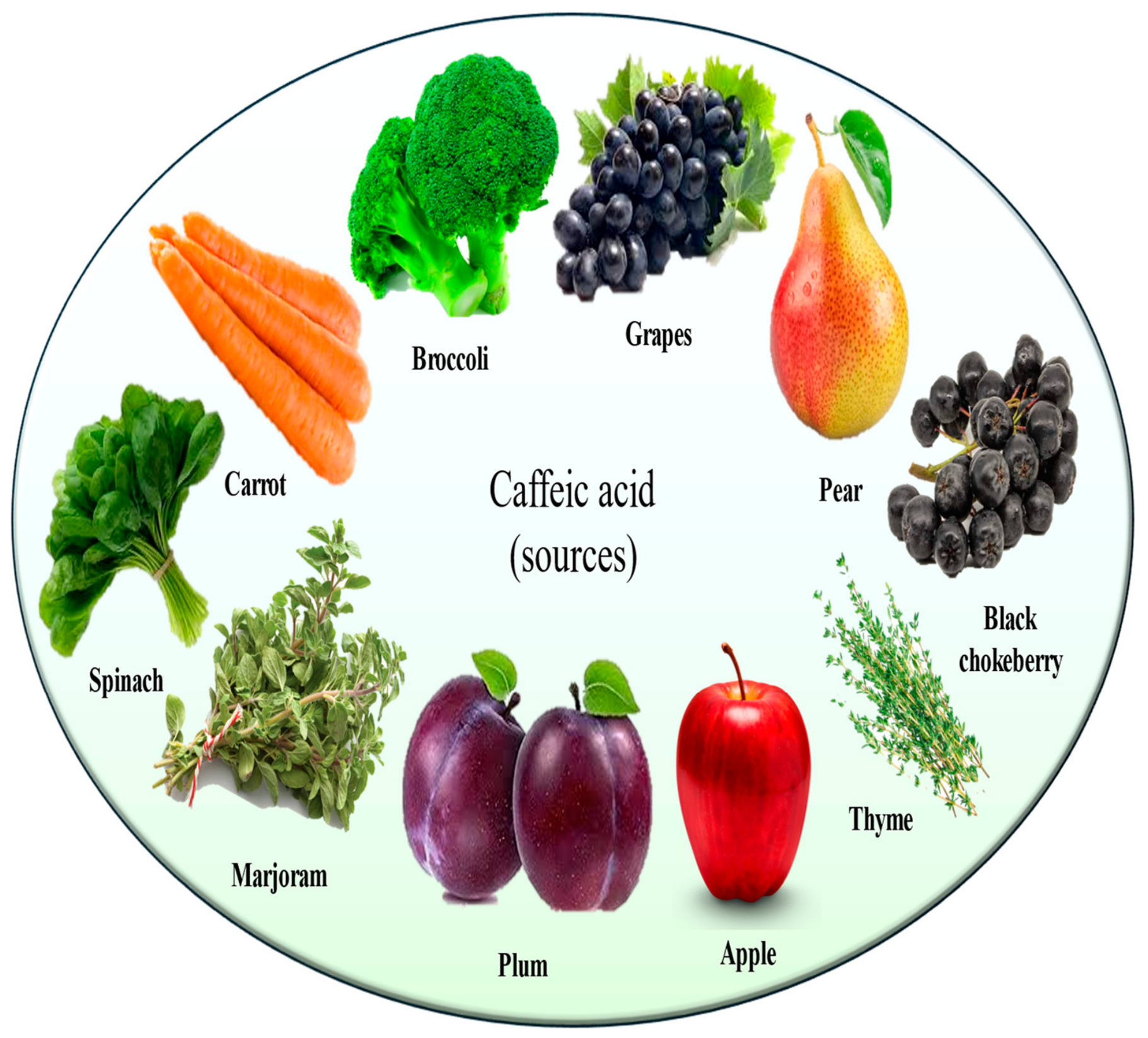
| Food Items/Sources | CA mg/100 g | References. |
|---|---|---|
| Potato cooked with peel | 40 | [28] |
| Carrot | 26 | [28] |
| Pot-grown basil | 21 | [28] |
| Jerusalem artichokes | 21 | [28] |
| Radish | 1 | [28] |
| Coffee | 87 | [29] |
| Black tea | 1.48 | [29] |
| Apple juice | ~3.6 | [29] |
| Orange juice | ~2.5 | [29] |
| Plum (dark) | ~23.5 | [29] |
| Cherry | 17 | [29] |
| Grapefruit | 5.5 | [29] |
| Buckwheat grits | 8.5 | [30] |
| Rye bran | 7.7 | [30] |
| Study Model | Dose | Findings | Refs |
|---|---|---|---|
| Aβ-induced AD mice model | 50 g/kg | ° Spatial learning, cognitive abilities and memory improved upon CA administration ° CA enhanced synaptic markers | [63] |
| Dexamethasone induced depression in mice model | 50 mg/kg | ° CA showed antidepressant-like effect by reducing the hippocampal glutamate level | [64] |
| Neurogenesis and cognitive impairment in a rat model | 20, 40 mg/kg | ° Deficits in spatial memory prevented by CA | [65] |
| CdCl2-induced neurotoxicity rat model | 10, 20 mg/kg | ° CA administration improved cognitive function | [66] |
| L-methionine induced memory deficits in rats | 20, 40 mg/kg | ° CA protects memory deficits | [67] |
| Alzheimer’s disease rat model | 100 mg/kg | ° CA improved learning deficits and enhanced cognitive function ° It reduces acetylcholinesterase activity | [68] |
| Aluminium chloride-induced dementia rat model | 100 mg/kg | ° CA improved cognitive function | [69] |
| Streptozotocin-mediated dementia rat model | 10, 20, 40 mg/kg | ° CA treatment attenuated behavioral and biochemical abnormalities | [70] |
| Rotenone-induced neurodegeneration mice model | 30 mg/kg | ° Dopaminergic neurodegeneration prevented by CA | [71] |
| Pilocarpine-induced seizures rat model | 4 mg/kg | ° CA treatment decreases in lipid peroxidation and nitrite content | [72] |
Disclaimer/Publisher’s Note: The statements, opinions and data contained in all publications are solely those of the individual author(s) and contributor(s) and not of MDPI and/or the editor(s). MDPI and/or the editor(s) disclaim responsibility for any injury to people or property resulting from any ideas, methods, instructions or products referred to in the content. |
© 2026 by the authors. Licensee MDPI, Basel, Switzerland. This article is an open access article distributed under the terms and conditions of the Creative Commons Attribution (CC BY) license.
Share and Cite
Almatroodi, S.A.; Rahmani, A.H. Caffeic Acid and Human Health: Evidence-Based Roles in Disease Prevention and Treatment. Int. J. Mol. Sci. 2026, 27, 4719. https://doi.org/10.3390/ijms27114719
Almatroodi SA, Rahmani AH. Caffeic Acid and Human Health: Evidence-Based Roles in Disease Prevention and Treatment. International Journal of Molecular Sciences. 2026; 27(11):4719. https://doi.org/10.3390/ijms27114719
Chicago/Turabian StyleAlmatroodi, Saleh A., and Arshad Husain Rahmani. 2026. "Caffeic Acid and Human Health: Evidence-Based Roles in Disease Prevention and Treatment" International Journal of Molecular Sciences 27, no. 11: 4719. https://doi.org/10.3390/ijms27114719
APA StyleAlmatroodi, S. A., & Rahmani, A. H. (2026). Caffeic Acid and Human Health: Evidence-Based Roles in Disease Prevention and Treatment. International Journal of Molecular Sciences, 27(11), 4719. https://doi.org/10.3390/ijms27114719