Risk Factors for Hepatocellular Carcinoma in Latino Populations in Texas: A Scoping Review

 ,
,
Abstract
1. Introduction
1.1. Etiology and Risk Factors
1.2. Rationale for Scoping Review
1.3. Objectives of the Review
2. Materials and Methods
2.1. Research Team
2.2. Procedures
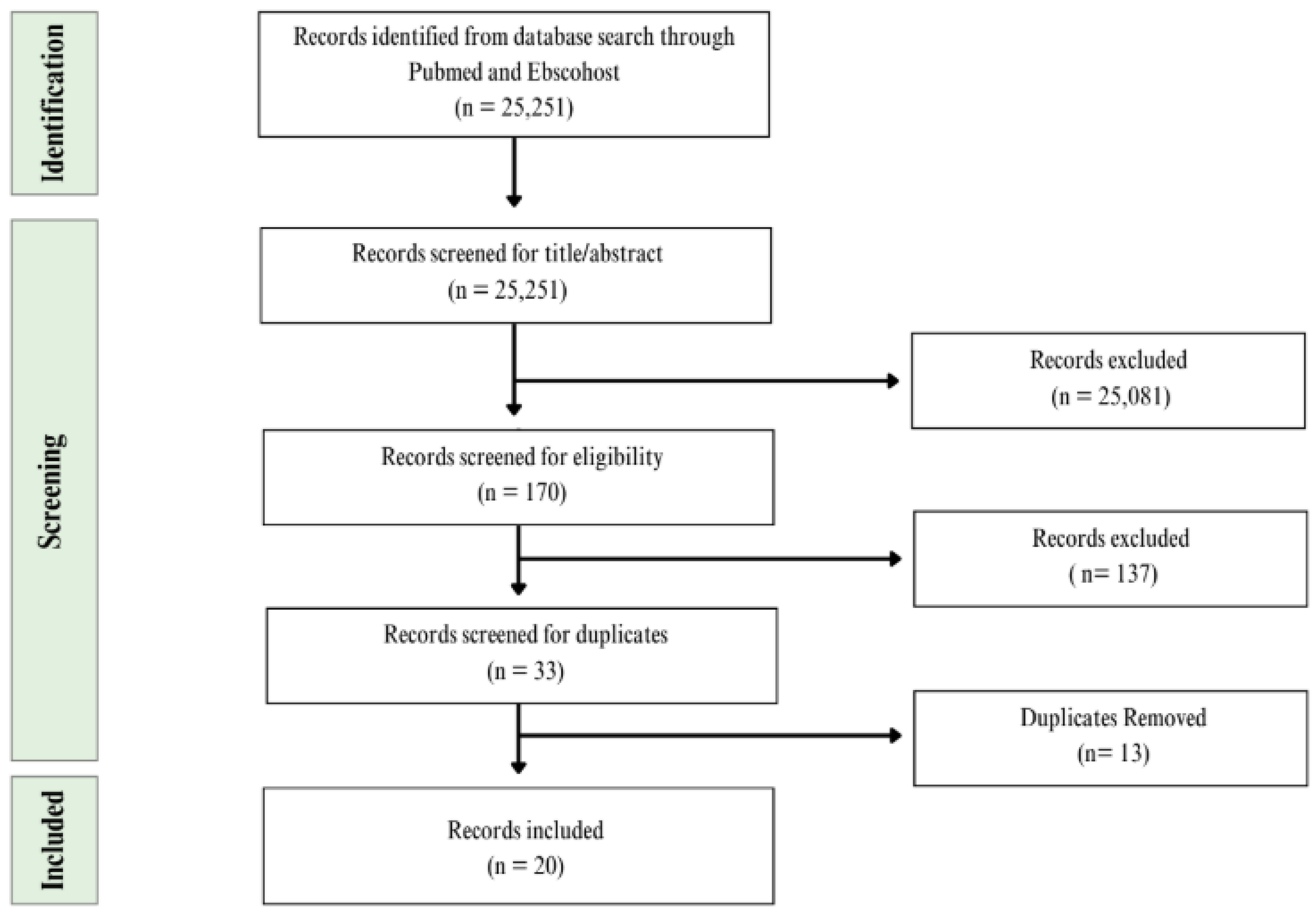
2.3. Study Selection
2.4. Data Extraction of Included Studies
3. Results
3.1. Overview
3.2. Study Design and Intervention Foci
3.3. Participant Characteristics
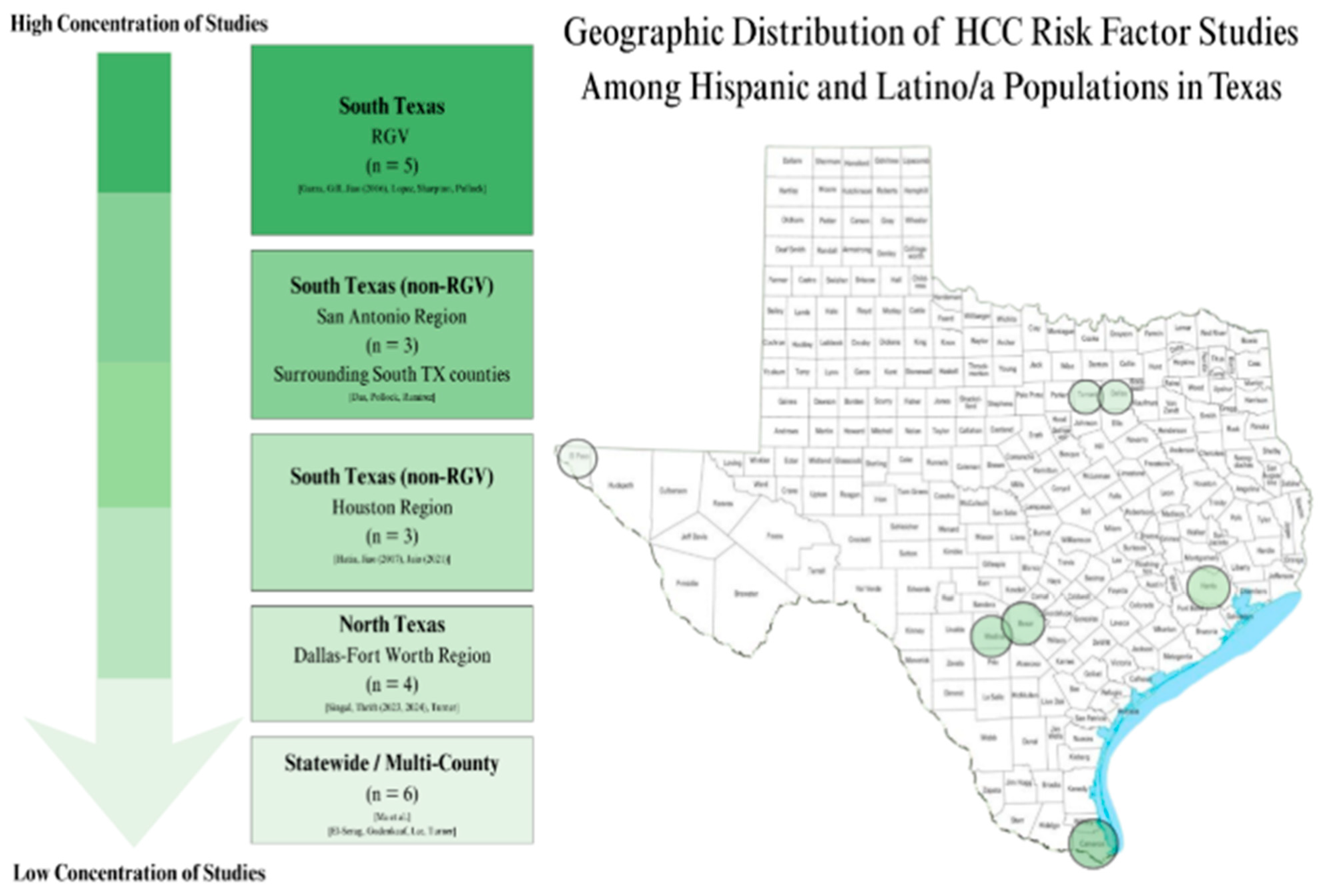
3.4. Setting
3.5. Outcomes Related to T2D, MetS, and Obesity
3.5.1. Population Burden
3.5.2. Early Markers/Liver Disease
3.5.3. Progression of Liver Disease (Fibrosis and Cirrhosis)
3.5.4. Metabolic Dysfunction Risk Factors Influence HCC Risk and Outcomes
3.5.5. Targeted Care/Intervention
3.6. Outcomes Related to Aflatoxin and Alcohol
3.6.1. Alcohol Consumption and HCC Burden
3.6.2. Aflatoxin Exposure and Molecular Evidence of Exposure
3.6.3. Intervention to Reduce Aflatoxin Bioavailability
3.6.4. Synthesis of Environmental Exposures and HCC Risk
3.7. Outcomes Related to Hepatitis B and Hepatitis C
3.7.1. Hepatitis C Screening and Infection Burden at Early Stages of Liver Disease
3.7.2. HCC Surveillance Implementation Among Patients with Advanced Liver Disease
3.8. Outcomes Related to Genetics
3.8.1. HCC Tumor Multiomics Characterization in South Texas Cohort
3.8.2. cfDNA Somatic Mutation Profiling for HCC Risk and Prognosis
3.8.3. Serologic Autoantibody Biomarkers for HCC Detection in Hispanic Cohort
3.8.4. Germline Polygenic Risk Stratification for HCC Among Cirrhosis Patients
4. Discussion
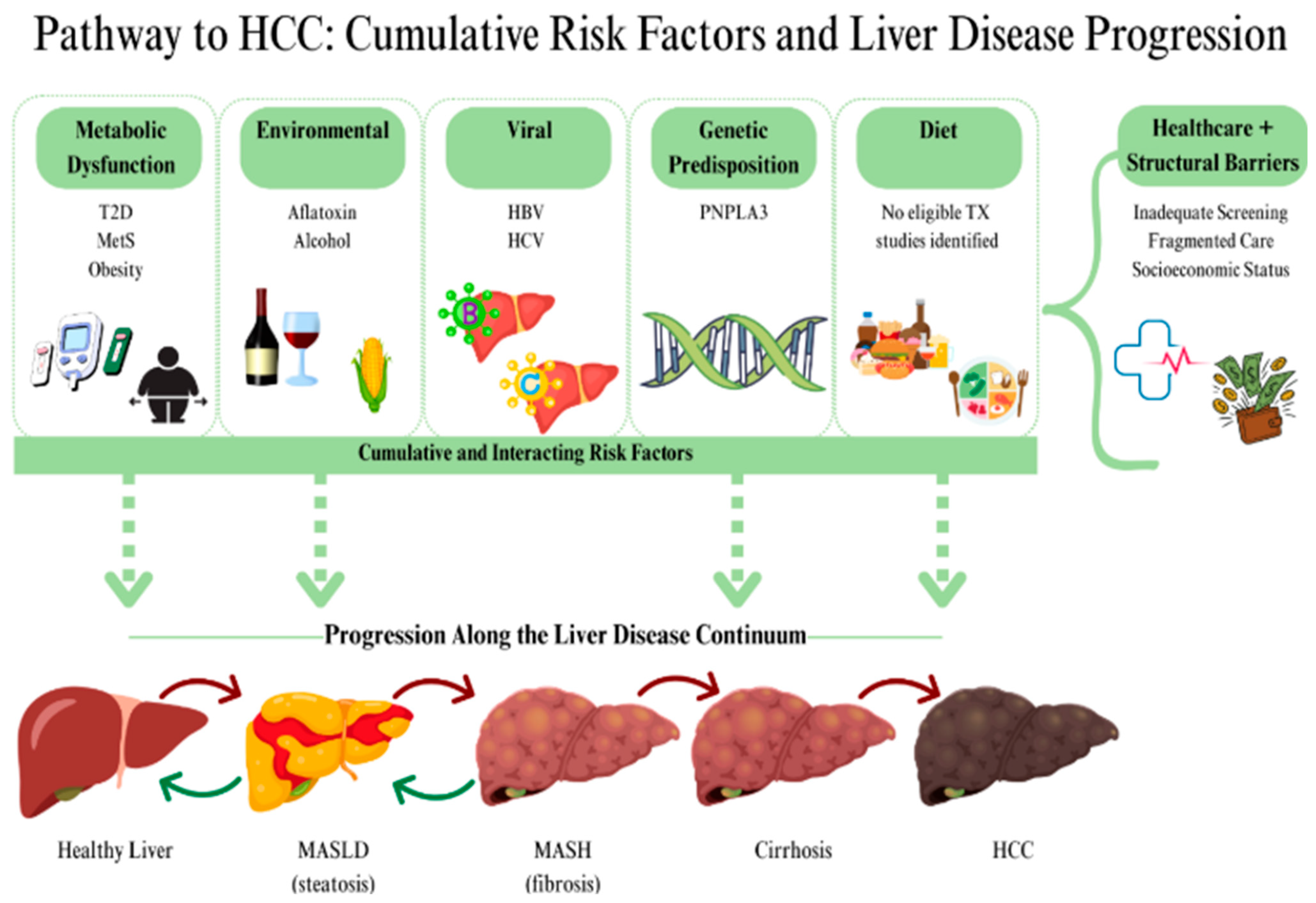
4.1. Metabolic Dysfunction and Risk Factor Interactions Across Liver Disease Stages
4.2. Environmental, Dietary, and Gene–Environment Contributions to HCC Risk
4.3. Intervention Evidence Across the HCC Care Continuum
4.4. Future Directions and Translational Implications
4.5. Limitations and Strengths
5. Conclusions
Supplementary Materials
Author Contributions
Funding
Institutional Review Board Statement
Informed Consent Statement
Data Availability Statement
Conflicts of Interest
Abbreviations
| HCC | Hepatocellular carcinoma |
| MASLD | Metabolic-dysfunction-associated steatotic liver disease |
| ALD | Alcohol-associated liver disease |
| IHBD | Intrahepatic bile duct |
| T2D | Type 2 diabetes mellitus |
| HCV | Hepatitis C virus |
| HBV | Hepatitis B virus |
| MetS | Metabolic syndrome |
| TCR | Texas Cancer Registry |
| CCHC | Cameron County Hispanic Cohort |
| HLCC | Hispanic Liver Cancer Cohort |
| THCCC | Texas Hepatocellular Carcinoma Consortium Cohort |
| HVASC | Houston Veterans Administration Cirrhosis Surveillance Cohort |
| RGV | Rio Grande Valley |
| RCT | Randomized controlled trial |
| PRISMA-ScR | Preferred Reporting Items for Systematic Reviews and Meta-Analyses Extension for Scoping Reviews |
| PNPLA3 | Patatin-like phospholipase domain-containing protein 3 |
References
- Llovet, J.M.; Kelley, R.K.; Villanueva, A.; Singal, A.G.; Pikarsky, E.; Roayaie, S.; Lencioni, R.; Koike, K.; Zucman-Rossi, J.; Finn, R.S. Hepatocellular carcinoma. Nat. Rev. Dis. Primers 2021, 7, 6. [Google Scholar] [CrossRef]
- Singal, A.G.; Llovet, J.M.; Yarchoan, M.; Mehta, N.; Heimbach, J.K.; Dawson, L.A.; Jou, J.H.; Kulik, L.M.; Agopian, V.G.; Marrero, J.A.; et al. AASLD Practice Guidance on prevention, diagnosis, and treatment of hepatocellular carcinoma. Hepatology 2023, 78, 1922–1965, Erratum in Hepatology 2023, 78, E105. [Google Scholar] [CrossRef]
- USCS Data Visualizations. Available online: https://statecancerprofiles.cancer.gov/incidencerates/index.php?statefips=48&areatype=county&cancer=035&race=00&sex=0&age=001&ruralurban=0&type=incd#results (accessed on 12 January 2026).
- Lee, Y.; Wang, J.J.; Luu, M.; Tseng, H.; Rich, N.E.; Lu, S.C.; Nissen, N.N.; Noureddin, M.; Singal, A.G.; Yang, J.D. State-Level HCC Incidence and Association with Obesity and Physical Activity in the United States. Hepatology 2021, 74, 1384–1394. [Google Scholar] [CrossRef]
- Das, D.; Wang, X.; Chiu, Y.-C.; Bouamar, H.; Sharkey, F.E.; Lopera, J.E.; Lai, Z.; Weintraub, S.T.; Han, X.; Zou, Y.; et al. Integrative multi-omics characterization of hepatocellular carcinoma in Hispanic patients. JNCI J. Natl. Cancer Inst. 2024, 116, 1961–1978. [Google Scholar] [CrossRef]
- El-Serag, H.B.; Sardell, R.; Thrift, A.P.; Kanwal, F.; Miller, P. Texas Has the Highest Hepatocellular Carcinoma Incidence Rates in the USA. Dig. Dis. Sci. 2021, 66, 912–916. [Google Scholar] [CrossRef] [PubMed]
- Jiao, J.; Niu, W.; Wang, Y.; Baggerly, K.; Ye, Y.; Wu, X.; Davenport, D.; Almeda, J.L.; Betancourt-Garcia, M.M.; Forse, R.A.; et al. Prevalence of Aflatoxin-Associated TP53R249S Mutation in Hepatocellular Carcinoma in Hispanics in South Texas. Cancer Prev. Res. 2018, 11, 103–112. [Google Scholar] [CrossRef] [PubMed]
- Sokale, I.O.; Rosales, O.; Thrift, A.P.; El-Serag, H.B.; Burgess, E.; Oluyomi, A.O. Differences in Hepatocellular Carcinoma Incidence Trends Across US Census Divisions, 2001 to 2021. Cancers 2025, 17, 1431. [Google Scholar] [CrossRef] [PubMed]
- Yao, Z.; Dai, C.; Yang, J.; Xu, M.; Meng, H.; Hu, X.; Lin, N. Time-trends in liver cancer incidence and mortality rates in the U.S. from 1975 to 2017: A study based on the Surveillance, Epidemiology, and End Results database. J. Gastrointest. Oncol. 2023, 14, 312–324. [Google Scholar] [CrossRef]
- Galle, P.R.; Forner, A.; Llovet, J.M.; Mazzaferro, V.; Piscaglia, F.; Raoul, J.-L.; Schirmacher, P.; Vilgrain, V. EASL Clinical Practice Guidelines: Management of hepatocellular carcinoma. J. Hepatol. 2018, 69, 182–236, Erratum in J. Hepatol. 2019, 70, 817. [Google Scholar] [CrossRef]
- Singal, A.G.; El-Serag, H.B. Hepatocellular Carcinoma from Epidemiology to Prevention: Translating Knowledge into Practice. Clin. Gastroenterol. Hepatol. 2015, 13, 2140–2151. [Google Scholar] [CrossRef]
- Kim, H.S.; El-Serag, H.B. The Epidemiology of Hepatocellular Carcinoma in the USA. Curr. Gastroenterol. Rep. 2019, 21, 17. [Google Scholar] [CrossRef] [PubMed]
- Streba, L.A.M. Nonalcoholic fatty liver disease, metabolic risk factors, and hepatocellular carcinoma: An open question. World J. Gastroenterol. 2015, 21, 4103. [Google Scholar] [CrossRef]
- Lange, N.F.; Radu, P.; Dufour, J.-F. Prevention of NAFLD-associated HCC: Role of lifestyle and chemoprevention. J. Hepatol. 2021, 75, 1217–1227. [Google Scholar] [CrossRef]
- Singal, A.G.; Manjunath, H.; Yopp, A.C.; Beg, M.S.; Marrero, J.A.; Gopal, P.; Waljee, A.K. The Effect of PNPLA3 on Fibrosis Progression and Development of Hepatocellular Carcinoma: A Meta-analysis. Am. J. Gastroenterol. 2014, 109, 325–334. [Google Scholar] [CrossRef]
- Turner, B.J.; Wang, C.P.; Melhado, T.V.; Bobadilla, R.; Jain, M.K.; Singal, A.G. Significant Increase in Risk of Fibrosis or Cirrhosis at Time of HCV Diagnosis for Hispanics with Diabetes and Obesity Compared with Other Ethnic Groups. Clin. Gastroenterol. Hepatol. 2019, 17, 1356–1363. [Google Scholar] [CrossRef]
- George, E.S.; Sood, S.; Broughton, A.; Cogan, G.; Hickey, M.; Chan, W.S.; Sudan, S.; Nicoll, A.J. The Association between Diet and Hepatocellular Carcinoma: A Systematic Review. Nutrients 2021, 13, 172. [Google Scholar] [CrossRef] [PubMed]
- Schulze, K.; Imbeaud, S.; Letouzé, E.; Alexandrov, L.B.; Calderaro, J.; Rebouissou, S.; Couchy, G.; Meiller, C.; Shinde, J.; Soysouvanh, F.; et al. Exome sequencing of hepatocellular carcinomas identifies new mutational signatures and potential therapeutic targets. Nat. Genet. 2015, 47, 505–511. [Google Scholar] [CrossRef]
- Gan, L.; Liu, Z.; Sun, C. Obesity linking to hepatocellular carcinoma: A global view. Biochim. Biophys. Acta BBA-Rev. Cancer 2018, 1869, 97–102. [Google Scholar] [CrossRef] [PubMed]
- Marengo, A.; Rosso, C.; Bugianesi, E. Liver Cancer: Connections with Obesity, Fatty Liver, and Cirrhosis. Annu. Rev. Med. 2016, 67, 103–117. [Google Scholar] [CrossRef]
- Zhang, C.; Liu, S.; Yang, M. Hepatocellular Carcinoma and Obesity, Type 2 Diabetes Mellitus, Cardiovascular Disease: Causing Factors, Molecular Links, and Treatment Options. Front. Endocrinol. 2021, 12, 808526. [Google Scholar] [CrossRef]
- Venugopal, S.; Dhanoa, R.K.; Selvamani, T.Y.; Shoukrie, S.I.; Zahra, A.; Malla, J.; Selvaraj, R.; Hamouda, R.K.; Mohammed, L. Does Type 2 Diabetes Increase the Risk of Hepatocellular Carcinoma in Nonalcoholic Fatty Liver Disease Patients: A Systematic Review. Cureus 2023, 15, e36079. [Google Scholar] [CrossRef]
- Jinjuvadia, R.; Patel, S.; Liangpunsakul, S. The Association Between Metabolic Syndrome and Hepatocellular Carcinoma: Systemic Review and Meta-analysis. J. Clin. Gastroenterol. 2014, 48, 172–177. [Google Scholar] [CrossRef]
- Koumbi, L. Dietary factors can protect against liver cancer development. World J. Hepatol. 2017, 9, 119. [Google Scholar] [CrossRef] [PubMed]
- Testino, G.; Leone, S.; Borro, P. Alcohol and hepatocellular carcinoma: A review and a point of view. World J. Gastroenterol. 2014, 20, 15943. [Google Scholar] [CrossRef]
- Ganne-Carrié, N.; Nahon, P. Hepatocellular carcinoma in the setting of alcohol-related liver disease. J. Hepatol. 2019, 70, 284–293. [Google Scholar] [CrossRef] [PubMed]
- Cai, P.; Zheng, H.; She, J.; Feng, N.; Zou, H.; Gu, J.; Yuan, Y.; Liu, X.; Liu, Z.; Bian, J. Molecular Mechanism of Aflatoxin-Induced Hepatocellular Carcinoma Derived from a Bioinformatics Analysis. Toxins 2020, 12, 203. [Google Scholar] [CrossRef] [PubMed]
- Hassan, M.M.; Kaseb, A.; Etzel, C.J.; El-Serag, H.; Spitz, M.R.; Chang, P.; Hale, K.S.; Liu, M.; Rashid, A.; Shama, M.; et al. Genetic variation in the PNPLA3 gene and hepatocellular carcinoma in USA: Risk and prognosis prediction. Mol. Carcinog. 2013, 52, 139–147. [Google Scholar] [CrossRef]
- Campani, C.; Zucman-Rossi, J.; Nault, J.-C. Genetics of Hepatocellular Carcinoma: From Tumor to Circulating DNA. Cancers 2023, 15, 817. [Google Scholar] [CrossRef]
- Toh, M.R.; Wong, E.Y.T.; Wong, S.H.; Ng, A.W.T.; Loo, L.-H.; Chow, P.K.-H.; Ngeow, J. Global Epidemiology and Genetics of Hepatocellular Carcinoma. Gastroenterology 2023, 164, 766–782. [Google Scholar] [CrossRef]
- Hatia, R.I.; Hwang, L.-Y.; Li, R.; Troisi, C.; Jalal, P.K.; Amos, C.I.; Gomez, H.F.; Chun, Y.S.; Rashid, A.; Kaseb, A.O.; et al. Risk and Prognosis of Hepatocellular Carcinoma in Mexican Americans with Type 2 Diabetes Mellitus. J. Hepatocell. Carcinoma 2025, 12, 93–106. [Google Scholar] [CrossRef] [PubMed] [PubMed Central]
- Tricco, A.C.; Lillie, E.; Zarin, W.; O’Brien, K.K.; Colquhoun, H.; Levac, D.; Moher, D.; Peters, M.D.; Horsley, T.; Weeks, L.; et al. PRISMA Extension for Scoping Reviews (PRISMAScR): Checklist and Explanation. Ann. Intern. Med. 2018, 169, 467–473. [Google Scholar] [CrossRef] [PubMed]
- Garza, A.L.; Vatcheva, K.P.; Pan, J.-J.; Rahbar, M.H.; Fallon, M.B.; McCormick, J.B.; Fisher-Hoch, S.P. Liver and Other Gastrointestinal Cancers Are Frequent in Mexican Americans. J. Racial Ethn. Health Disparities 2016, 3, 1–10. [Google Scholar] [CrossRef]
- Jiao, J.; Watt, G.P.; Lee, M.; Rahbar, M.H.; Vatcheva, K.P.; Pan, J.-J.; McCormick, J.B.; Fisher-Hoch, S.P.; Fallon, M.B.; Beretta, L. Cirrhosis and Advanced Fibrosis in Hispanics in Texas: The Dominant Contribution of Central Obesity. PLoS ONE 2016, 11, e0150978. [Google Scholar] [CrossRef] [PubMed]
- Gudenkauf, F.J.; Thrift, A.P. Preventable causes of cancer in Texas by race/ethnicity: Alcohol consumption. Alcohol 2020, 85, 21–26. [Google Scholar] [CrossRef]
- Thrift, A.P.; Kanwal, F.; Lim, H.; Duong, H.; Liu, Y.; Singal, A.G.; Khaderi, S.; Asrani, S.K.; Amos, C.I.; El-Serag, H.B. PNPLA3, Obesity, and Heavy Alcohol Use in Cirrhosis Patients May Exert a Synergistic Increase Hepatocellular Carcinoma Risk. Clin. Gastroenterol. Hepatol. 2024, 22, 1858–1866.e4. [Google Scholar] [CrossRef] [PubMed]
- Singal, A.G.; Tiro, J.A.; Marrero, J.A.; McCallister, K.; Mejias, C.; Adamson, B.; Bishop, W.P.; Santini, N.O.; Halm, E.A. Mailed Outreach Program Increases Ultrasound Screening of Patients With Cirrhosis for Hepatocellular Carcinoma. Gastroenterology 2017, 152, 608–615.e4. [Google Scholar] [CrossRef]
- Gill, C.; Vatcheva, K.P.; Pan, J.-J.; Smulevitz, B.; McPherson, D.D.; Fallon, M.; McCormick, J.B.; Fish-er-Hoch, S.P.; Laing, S.T. Frequency of Nonalcoholic Fatty Liver Disease and Subclinical Atherosclerosis Among Young Mexican Americans. Am. J. Cardiol. 2017, 119, 1717–1722. [Google Scholar] [CrossRef]
- Lopez, J.Z.; Lee, M.; Park, S.K.; Zolezzi, M.E.; Mitchell-Bennett, L.A.; Yeh, P.G.; Perez, L.; Heredia, N.I.; McPherson, D.D.; McCormick, J.B.; et al. An expanded chronic care management approach to multiple chronic conditions in Hispanics using community health workers as community extenders in the Rio Grande Valley of Texas. Prev. Med. 2024, 184, 107975. [Google Scholar] [CrossRef]
- Taylor, B.S.; Hanson, J.T.; Veerapaneni, P.; Villarreal, R.; Fiebelkorn, K.; Turner, B.J. Hospital-Based Hepatitis C Screening of Baby Boomers in a Majority Hispanic South Texas Cohort: Successes and Barriers to Implementation. Public Health Rep. 2016, 131, 74–83. [Google Scholar] [CrossRef]
- Jiao, J.; Sanchez, J.I.; Thompson, E.J.; Mao, X.; McCormick, J.B.; Fisher-Hoch, S.P.; Futreal, P.A.; Zhang, J.; Beretta, L. Somatic Mutations in Circulating Cell-Free DNA and Risk for Hepatocellular Carcinoma in Hispanics. Int. J. Mol. Sci. 2021, 22, 7411. [Google Scholar] [CrossRef]
- Pollock, B.H.; Elmore, S.; Romoser, A.; Tang, L.; Kang, M.; Xue, K.; Rodriguez, M.; Dierschke, N.A.; Hayes, H.G.; Hansen, H.A.; et al. Intervention trial with calcium montmorillonite clay in a south Texas population exposed to aflatoxin. Food Addit. Contam. Part A 2016, 28, 1–9. [Google Scholar] [CrossRef]
- Thrift, A.P.; Kanwal, F.; Liu, Y.; Khaderi, S.; Singal, A.G.; Marrero, J.A.; Loo, N.; Asrani, S.K.; Luster, M.; Al-Sarraj, A.; et al. Risk stratification for hepatocellular cancer among patients with cirrhosis using a hepatic fat polygenic risk score. PLoS ONE 2023, 18, e0282309. [Google Scholar] [CrossRef]
- Sharpton, S.; Shan, K.; Bettencourt, R.; Lee, M.; McCormick, J.B.; Fisher-Hoch, S.P.; Loomba, R. Prevalence and factors associated with liver fibrosis among first-degree relatives of Mexican Americans with hepatocellular carcinoma. Aliment. Pharmacol. Ther. 2023, 57, 378–386. [Google Scholar] [CrossRef] [PubMed]
- Ramirez, A.G.; Muñoz, E.; Parma, D.L.; Michalek, J.E.; Holden, A.E.C.; Phillips, T.D.; Pollock, B.H. Lifestyle and Clinical Correlates of Hepatocellular Carcinoma in South Texas: A Matched Case-control Study. Clin. Gastroenterol. Hepatol. 2017, 15, 1311–1312. [Google Scholar] [CrossRef]
- Ma, Y.; Qiu, C.; Wang, B.; Zhang, X.; Wang, X.; Aguilera, R.J.; Zhang, J.-Y. Autoantibody against Tumor-Associated Antigens as Diagnostic Biomarkers in Hispanic Patients with Hepatocellular Carcinoma. Cells 2022, 11, 3227. [Google Scholar] [CrossRef]
- Heiss, G.; Snyder, M.L.; Teng, Y.; Schneiderman, N.; Llabre, M.M.; Cowie, C.; Carnethon, M.; Kaplan, R.; Giachello, A.; Gallo, L.; et al. Prevalence of Metabolic Syndrome Among Hispanics/Latinos of Diverse Background: The Hispanic Community Health Study/Study of Latinos. Diabetes Care 2014, 37, 2391–2399. [Google Scholar] [CrossRef]
- Tadokoro, T.; Oura, K.; Nakahara, M.; Fujita, K.; Tani, J.; Morishita, A.; Kobara, H. Genetic Polymorphisms of ALDH2 and ADH1B in Alcohol-Induced Liver Injury: Molecular Mechanisms of Inflammation and Disease Progression in East Asian Populations. Int. J. Mol. Sci. 2025, 26, 8328. [Google Scholar] [CrossRef] [PubMed]
- Rich, N.E.; Hester, C.; Odewole, M.; Murphy, C.C.; Parikh, N.D.; Marrero, J.A.; Yopp, A.C.; Singal, A.G. Racial and Ethnic Differences in Presentation and Outcomes of Hepatocellular Carcinoma. Clin. Gastroenterol. Hepatol. 2019, 17, 551–559.e1. [Google Scholar] [CrossRef] [PubMed]
- Jiang, J.; Shiels, M.S.; Rivera, D.; Ghany, M.G.; Engels, E.A.; O’Brien, T.R. Trends in hepatocellular carcinoma and viral hepatitis treatment in older Americans. PLoS ONE 2024, 19, e0307746. [Google Scholar] [CrossRef]
- Tesfai, K.; Pace, J.; El-Newihi, N.; Martinez, M.E.; Tincopa, M.A.; Loomba, R. Disparities for Hispanic Adults with Metabolic Dysfunction-associated Steatotic Liver Disease in the United States: A Systematic Review and Meta-analysis. Clin. Gastroenterol. Hepatol. 2025, 23, 236–249. [Google Scholar] [CrossRef]
- Pinheiro, P.S.; Jones, P.D.; Medina, H.; Cranford, H.M.; Koru-Sengul, T.; Bungum, T.; Wong, R.; Kobetz, E.N.; McGlynn, K.A. Incidence of Etiology-specific Hepatocellular Carcinoma: Diverging Trends and Significant Heterogeneity by Race and Ethnicity. Clin. Gastroenterol. Hepatol. 2024, 22, 562–571.e8. [Google Scholar] [CrossRef]



| Inclusion Criteria | Exclusion Criteria | |
|---|---|---|
| Population (P) | Hispanic/Latino adults (≥18 years) and with liver cancer. | Children and teenagers with cancer, non-Hispanic adults, other subgroups with no hx of liver cancer. |
| Intervention (I) or Exposure (E) | Aflatoxin Alcohol Diabetes Diet Genetics Hepatitis B/C Virus Metabolic Syndrome Obesity | No mention of aflatoxin. No mention of alcohol. No mention of diabetes. No mention of diet. No mention of Genetics. No mention of Hepatitis B/C Virus. No mention of Metabolic Syndrome. No mention of obesity. |
| Control (C) | N/A | N/A |
| Outcome (O) | Association with liver cancer, worse prognosis | No HCC or progression |
| Study Design (S) | Primary and secondary research; varied quantitative study designs, including experimental studies and observational studies with human participants. | Non-research reports (e.g., letters to the editor or editorials, commentaries, perspectives, protocols); qualitative studies. |
| Author, Year | Article Title | Risk Factor | Location | Study Design | Age [yo] | Mean Age [yo] | Population [N] | Sexes | Race/Ethnicity | City/County | Intervention | Intervention Type/Dosing | |
|---|---|---|---|---|---|---|---|---|---|---|---|---|---|
| Das et al., 2024 [5] | Integrative Multi-omics Characterization of HCC in Hispanic patients | Genetics | South TX | Observational | Adults ≥ 40 | NR | 109 a | F M | 42 a 67 a | 100% Hispanic | San Antonio | No | NA |
| El-Serag et al., 2021 [6] | TX has the Highest HCC Rates in the US | DM MetS Obesity | TX and US | Observational (2001–2015) TCR and NPCR-SEER | Adults ≥ 25 | NR | 2481 | F M | 612 1869 | Mex. American: 39.5% Hispanic (n = 981) | 32 counties w/in 100 miles of the US/Mex. border | No | NA |
| Garza et al., 2016 [33] | Liver and Other GI Cancers are Frequent in Mex. Americans | DM MetS Obesity | RGV | Cross-Section Observational (2004–2014) CCHC | Adults ≥ 18 | 45.2 | 2554 | F M | 1692 862 | Mex. American: 100% Hispanic | Brownsville Cameron County | No | NA |
| Gill et al., 2017 [38] | Frequency of NAFLD and Subclinical Atherosclerosis Among Young Mex. Americans | DM MetS Obesity | RGV | Cross-Section Observational CCHC | Adults ≥ 18 | 50.4 | 407 | F M | 237 a (58.3%) 170 a (41.7%) | Mex. American: 100% Hispanic | Brownsville Cameron County | No | NA |
| Gudenkauf et al., 2020 [35] | Preventable causes of cancer in TX by race/ethnicity: Alcohol consumption | Alcohol | TX | Observational TCR-SEER | Adults ≥ 25 | NR | 103,408 b | F M | NR NR | (NR) Hispanic | Statewide | No | NA |
| Hatia et al., 2025 [31] | Risk and Prognosis of HCC in Mex. Americans with T2D | Alcohol HBV/HCV DM | South TX | Case–Control Observational (2000–2020) Mano y Mano | Adults ≥ 18 | 61.4 a | 741 | F M | 226 a 515 a | Mex. American: 100% Hispanic | Houston Harris County | No | NA |
| Jiao et al., 2016 [34] | Cirrhosis and Advanced Fibrosis in Hispanics in TX: the Dominant Contribution of Central Obesity | Alcohol DM Genetics HCV Obesity | RGV | Observational (2004–2015) CCHC | Adults ≥ 25 | 46 a | 2466 | F M | 1393 a (56.5%) 1073 a (43.5%) | Mex. American: 100% Hispanic | Brownsville Harlingen Cameron County | No | NA |
| Jiao et al., 2018 [7] | Prevalence of Aflatoxin-associated TP53R249S Mutation in HCC in Hispanics in South TX | Aflatoxin Genetics | South TX | Cross-Sectional, Mutation Detection (2002–2010) c CCHC | Adults ≥ 30–88 d | 63 a | 314 a | F M | 58 a (18.4%) 256 a (81.6%) | Mex. American: 100% Hispanic | Houston (Multiple Counties) | No | NA |
| Jiao et al., 2021 [41] | Somatic Mutations in Circulating Cell-Free DNA and Risk for HCC in Hispanics | Genetics | South TX | Observational CCHC | Adults ≥ 50.4 | 56.4 a | 119 a | F M | 62 a 57 a | 100% Hispanic | NR | No | NA |
| Lee et al., 2021 [4] | State-Level HCC Incidence and Association with Obesity and PA in the US | Obesity PA | US | Observational (2001–2017) BRFSS (2011–2017) | NR | NR | 299,116 | F M | NR NR | Mex. American: 15.6% Hispanic | State Level | No | NA |
| Lopez et al., 2024 [39] | An Expanded Chronic Care Management Approach to Multiple Chronic Conditions in Hispanics Using Community Health Workers as Community Extenders in the RGV of TX | T2D | RGV | Multivariate Longitudinal Intervention Salud y Vida Program (2013–2020) | Adults ≥ 18 | 52.89 | 3806 | F M | 2702 a (71%) 1104 a (29%) | Mex. American: 100% Hispanic | Brownsville Cameron County | Yes | CHW + DSME |
| Ma et al., 2022 [46] | Autoantibody Against Tumor-Associated Antigens as Diagnostic Biomarkers in Hispanic Patients with HCC | Genetics | TX | Translational (Case–Control and In Vitro Approach) | NR | NR | 227 | F M | NR NR | 48.5% Hispanic | El Paso | No | NA |
| Pollock et al., 2016 [42] | Intervention Trial with Calcium Montmorillonite Clay in a South TX Population Exposed to Aflatoxin | Aflatoxin | South TX | Double-Blind Placebo-RCT | Adults 18–77 | NR | 234 | F M | 180 54 | Predominantly Latino/Hispanic | Bexar and Medina Counties | Yes | ACCS100: Placebo, LD (1.5 g/d), HD (3 g/d) for 3 m |
| Ramirez et al., 2017 [45] | Lifestyle and Clinical Correlates of HCC in South TX: A Matched Case-Control Study | Aflatoxin Alcohol Lifestyle | South TX | Matched Case–Control | Adults ≥ 18 | NR | 155 a | F M | NR NR | 67% Latino | Bexar County and 7 Surrounding Counties | No | NA |
| Sharpton et al., 2023 [44] | Prevalence and Factors Associated with Liver Fibrosis Among First-Degree Relatives of Mex. Americans with HCC | T2D Obesity | RGV | Cross-Sectional Prospective HLCC-CCHC | Adults ≥ 18 | 50.3 | 182 | F M | 106 a (58%) 76 a (42%) | Mex. American: 100% Hispanic | Brownsville Cameron County | No | NA |
| Singal et al., 2017 [37] | Mailed Outreach Program Increases Ultrasound Screening of Patients with Cirrhosis for HCC | HBV | TX | Prospective/Intervention (Mailed Outreach) | Adults ≥ 21.2 | 55.3 | 1800 | F M | 731 a (40.6%) 1069 a (59.4%) | 37.8% Hispanic | Dallas County | No | NA |
| Taylor et al., 2016 [40] | Hospital-Based HCV Screening of Baby Boomers in a Majority Hispanic South TX Cohort: Successes and Barriers to Implementation | HCV | TX | Intervention (Baby Boomer Screening Program) | Adults ≥ 55.5 | 58 | 2327 | F M | 1021 (44%) 1306 (56%) | 59% Hispanic | San Antonio | No | NA |
| Thrift et al., 2023 [43] | Risk Stratification for HCC Among Patients with Cirrhosis Using a Hepatic Fat Polygenic Risk Score | Genetics | TX | Observational THCCC, HVASC | Adults ≥ 55–65 | 59.8 | 1644 | F M | 517 1127 | 27.2% Hispanic | Dallas Fort Worth Houston McAllen San Antonio | No | NA |
| Thrift et al., 2024 [36] | PNPLA3, Obesity, and Heavy Alcohol Use in Cirrhosis Patients May Exert a Synergistic Increase in HCC Risk | Alcohol Genetic Obesity | TX | Prospective Cohort THCCC | Adults ≥ 49.5 | 59.6 | 1911 | F M | 682 a (35.7%) 1229 a (64.3%) | 28.7% Hispanic | Dallas Galveston Houston San Antonio | No | NA |
| Turner et al., 2019 [16] | Significant Increase in Risk of Fibrosis or Cirrhosis at Time of HCV Diagnosis for Hispanics with DM and Obesity Compared with Other Ethnic Groups | Alcohol T2D Obesity | TX | Cross-Section Observational (2015–2017) | Adults born from 1945–1965 | 58 | 748 | F M | 255 (34.1%) 493 (65.9%) | Mex. American: 21.8% Hispanic | North and South (6 Health Systems) | No | NA |
| Author, Year | Article Title | Location | Registry | Years Analyzed | Objective/Exposure | Measurable Outcomes | Key Findings |
|---|---|---|---|---|---|---|---|
| El-Serag et al., 2021 [6] | TX has the Highest HCC Rates in the US | TX US | TCR NPCR + SEER | 2001–2015 | To determine whether HCC incidence in TX differs from U.S. trends and varies by sex, race, ethnicity, age, or region of TX. | HCC incidence rate (age adjusted, per 100,000 population). | TX had the highest HCC incidence rate in the U.S. in 2015 (13.2 per 100,000); 45% higher than the national average. HCC incidence increased over time from 2001 to 2015 in both TX and the U.S. at ~4% per year. Rates were consistently higher in TX than nationally across sex, race ethnicity, and age groups. M had ~3× higher incidence than F, but both sexes showed increasing trends. Hispanics in TX had the highest HCC incidence, higher than Hispanics in all other U.S. states. Middle aged and older adults (55–74 years) had the highest incidence rates, with the largest increases over time. South TX and U.S.–Mexico border regions had higher HCC incidence than the rest of TX. |
| Garza et al., 2016 [33] | Liver and Other GI Cancers are Frequent in Mex. Americans | RGV | CCHC | Recruitment began 2004 | To determine the frequency of GI cancers in Mex. Americans and assess associations with metabolic risk factors including DM, obesity, and MetS. | Self-reported cancer occurrence in participants and first- and second-degree relatives. | Among 9249 individuals, 1184 cancer cases were reported across participants and their first- and second-degree relatives. DM was the strongest risk factor for cancer among cohort participants under age 70 (OR 3.57, 95% CI: 1.32–9.62). MetS was associated with higher likelihood of cancer in relatives, including increased odds when one or more parents or siblings had cancer. GI cancers ranked unusually high among Mex. Americans, particularly liver and stomach cancers, in both mothers and fathers. The ranking of gastrointestinal cancers in this cohort resembled patterns seen in Mexico more than those seen in other U.S. populations. Local age adjusted cancer registry data confirmed higher incidence of liver and stomach cancers in CCHC compared with non-Hispanic populations. |
| Gill et al., 2017 [38] | Frequency of NAFLD and Subclinical Atherosclerosis Among Young Mex. Americans | RGV | CCHC | NR | To determine the prevalence of NAFLD and its association with subclinical atherosclerosis in Mex. Americans. | NAFLD prevalence by liver ultrasound; subclinical atherosclerosis measured by carotid intima media thickness (cIMT) and carotid plaque. | NAFLD was highly prevalent in Mex. American cohort (~49%). Participants with NAFLD had higher BMI, central obesity, fasting glucose, dyslipidemia, and were more likely to have MetS. Nearly one third of participants with NAFLD had evidence of subclinical atherosclerosis. After adjustment, NAFLD was independently associated with increased cIMT in younger participants <45 years, but not in older adults. Participants with both abnormal liver and carotid ultrasound findings tended to be obese, diabetic, and have MetS. |
| Hatia et al., 2025 [31] | Risk and Prognosis of HCC in Mex. Americans with T2D | South TX | MD Anderson study population; Mano a Mano Mex. American Cohort (controls) | January 2000–December 2020 | To determine the risk and prognosis of HCC in Mex. Americans with T2D, including effects of DM duration, treatment, and interactions with alcohol use and viral hepatitis. | HCC risk (adjusted odds ratios); overall survival (hazard ratios). | T2D independently associated with increased HCC risk (OR 2.74, p < 0.01). Longer duration of DM showed a dose response, with ≥20 years associated with markedly higher HCC risk (OR 4.60). T2D interacted synergistically with viral hepatitis infection and heavy alcohol consumption to further increase HCC risk. Metformin use was associated with improved survival among HCC patients with T2D (HR 0.72, p = 0.01). |
| Jiao et al., 2016 [34] | Cirrhosis and Advanced Fibrosis in Hispanics in TX: the Dominant Contribution of Central Obesity | RGV | CCHC | 2004–2015 | To determine prevalence and associated risk factors for cirrhosis in Hispanic populations of south TX. | Clinical and demographic variables, AST to platelet ratio index (APRI) as predictor for cirrhosis (APRI ≥ 2; APRI ≥ 1). | Prevalence of cirrhosis (APRI ≥ 2) was 0.94%, nearly 4× higher than national estimates; prevalence of cirrhosis/advanced fibrosis (APRI ≥ 1) was 3.54%. Highest prevalence was observed in M, particularly ages 25–34 years. Independent risk factors for cirrhosis and/or advanced fibrosis include hepatitis C, DM, and central obesity. Central obesity accounted for the largest population attributable fraction (52.5% of cirrhosis; 65.3% of cirrhosis/advanced fibrosis). Excess alcohol consumption was independently associated with cirrhosis and contributed to earlier disease onset in males when combined with central obesity. PNPLA3 risk alleles were associated with higher APRI scores and increased odds of cirrhosis/advanced fibrosis, particularly in participants >50 years old. |
| Lee et al., 2021 [4] | State-Level HCC Incidence and Association with Obesity and PA in the US | US | NR | NR | Characterize state-level racial/ethnic disparity in HCC incidence, state-level temporal changes in HCC incidence, and ecological correlation between HCC incidence and obesity/physical activity levels in the U.S. | Sex, age, race/ethnicity (non-Hispanic White, Black, American Indian/Alaska Native (AI/AN), Asian/Pacific Islander (API), and Hispanic), and state. Obesity was defined as individuals with body mass index ≥30 kg/m2. PA was defined as individuals who achieve ≥150 min per week of moderate-intensity aerobic physical activity or ≥75 min per week of vigorous-intensity aerobic activity. | HCC incidence trends had a moderate correlation with state-level obesity and a moderate-inverse correlation with state-level physical activity. Incidence rates were highest in APIs (10.8/100,000 PY) followed by Hispanics (9.6/100,000 PY), AIs/ANs (8.5/100,000 PY), and Blacks (7.3/100,000 PY) and lowest in Whites (4.0/100,000 PY). State-level incidence rate ratio (IRR) between Hispanics and Whites is 2.6 in TX. The IRRs for Hispanics were highest in Minnesota (IRR 3.8) and lowest in Alabama (IRR 0.9). Variation in incidence rates between states continued to decrease through 2017, with an IRR of only 2.6 between states with the highest (TX at 8.8 per 100,000 PY) and lowest (New Hampshire at 3.4 per 100,000 PY) incidence. |
| Lopez et al., 2024 [39] | An Expanded Chronic Care Management Approach to Multiple Chronic Conditions in Hispanics Using Community Health Workers as Community Extenders in the RGV of TX | RGV | Salud y Vida Cohort | 2013–2020 | To determine the effect of a CHW-integrated expanded chronic care management intervention on BP outcomes among Hispanics with poorly controlled T2D and HTN. | Changes in systolic and diastolic blood pressure over time (mmHg). | Among 3806 Hispanic adults with poorly controlled T2D and hypertension, mean SBP and DBP decreased significantly from baseline to 3 months (SBP − 6.49 mmHg; DBP − 3.97 mmHg; both p < 0.001) and were sustained up to 24 months. Participants with higher program engagement had greater reductions in SBP at 3 months (−1.8 mmHg) and 15 months (−2.3 mmHg) compared with lower engagement. Both higher and lower engagement groups showed significant early BP improvement, but greater and more sustained SBP reduction was observed in the higher engagement group. Hispanics in the south TX region with co-occurring T2D and HTN experience fragmented care and require support navigating healthcare systems. |
| Sharpton et al., 2023 [44] | Prevalence and Factors Associated with Liver Fibrosis Among First-Degree Relatives of Mex. Americans with HCC | RGV | HLCC; ancillary to CCHC | NR | To determine the prevalence of significant hepatic fibrosis and steatosis in first-degree relatives of Mex. Americans with HCC and identify associated clinical factors. | Prevalence of significant hepatic fibrosis (LSM ≥ 7.0 kPa by VCTE); definite hepatic steatosis (CAP ≥ 288 dB/m); suspected cirrhosis. | Among 112 first-degree relatives, 17% had significant hepatic fibrosis and 42% had definite hepatic steatosis. Prevalence of fibrosis increased to 20% among first-degree relatives ≥ 40 years; 5% met criteria for suspected cirrhosis. T2D (OR 3.2) and AST ≥ 30 IU/L (OR 4.0) were independent predictors of hepatic fibrosis. Obesity, elevated ALT, and higher TG were strongly associated with hepatic steatosis. Findings suggest a high burden of clinically significant liver disease in first-degree relatives of Mex. Americans with HCC, supporting consideration of targeted screening. |
| Turner et al., 2019 [16] | Significant Increase in Risk of Fibrosis or Cirrhosis at Time of HCV Diagnosis for Hispanics with DM and Obesity Compared with Other Ethnic Groups | TX | EMR data from 6 healthcare systems and FQHCs | 2015–2017 | To determine whether metabolic risk factors (DM and obesity) contribute to racial ethnic disparities in advanced liver disease at time of HCV diagnosis and assess interactions with heavy alcohol use. | Advanced liver disease defined by FIB 4 > 3.25 at time of HCV diagnosis. a | Advanced liver disease was present in 22.9% of patients at HCV diagnosis. Hispanics had higher odds of advanced liver disease than NHBs (OR 2.60) and NHWs (OR 1.94). Among patients with obesity and DM, Hispanics had markedly higher odds of advanced liver disease compared with NHBs (OR 7.89) and NHWs (OR 12.49). Heavy alcohol use and older age were independently associated with advanced liver disease. Findings indicate synergistic effects of Hispanic ethnicity, T2D, and obesity on advanced liver disease risk at HCV diagnosis. |
| Author, Year | Article Title | Location | Data Source | Years Analyzed | Objectives/Exposure | Measurable Outcomes | Key Findings |
|---|---|---|---|---|---|---|---|
| Gudenkauf et al., 2020 [35] | Preventable Causes of Cancer in TX by Race/Ethnicity: Alcohol Consumption | TX | TCR | 2015 | To estimate the percentage and number of cancer cases diagnosed in TX in 2015 that are attributable to alcohol consumption. To examine differences in estimates across major population racial/ethnic subgroups. | Weighted prevalence estimates of alcohol consumption; PAFs; RR calculated for alcohol consumption according to WCRF/AICR standards. | Alcohol consumption caused 2.9% of all cancers in TX [2974 cases] in 2015. Hispanic populations showed 3.0% attributable cases compared to 2.7% in non-Hispanic Whites and 2.2% in non-Hispanic Blacks. Men had higher attributable fractions [3.6%] than women [2.2%]. Alcohol consumption reported RR = 1.04 of developing liver cancer. |
| Jiao et al., 2018 [7] | Prevalence of Aflatoxin-associated TP53R249S Mutation in HCC in Hispanics in South TX | South TX (Cameron, Webb, Harris counties, Galveston) | CCHC | 2002–2010 | To examine the effect of aflatoxin exposure on development of HCC-related TP53R249S mutation in Hispanic populations and assess associations with other baseline risk factors including HCV. | Primary: TP53R249S mutation prevalence in HCC tumors and plasma cell-free DNA analyzed using droplet digital PCR and restriction fragment length polymorphism. Secondary: Association with survival outcomes and age at diagnosis. | TP53R249S mutation detected in 7.3% [3/41] of Hispanic HCC tumors and 5.7% of plasma cfDNA samples from Hispanic HCC patients. Patients with this mutation were significantly younger and had shorter overall survival [p < 0.05]. The mutation was detected only in Hispanic and Asian patients, never in non-Hispanic populations. Mutation associated with earlier onset and worse prognosis. |
| Pollock et al., 2016 [42] | Intervention Trial with Calcium Montmorillonite Clay in a South TX Population Exposed to Aflatoxin | Bexar and Medina Counties, TX | Primary data collection | 2016 (3 m intervention) | To evaluate the effects of ACCS100 on reducing serum AFB1-lysine adduct levels and assess safety parameters in predominantly Hispanic, aflatoxin-exposed populations. | Primary: Serum AFB1-lysine adduct levels at baseline, 1, 3, and 4 m of intervention. Secondary: Safety parameters including serum biochemistry and hematology. Detection and quantification of serum AFB1-lysine adducts using laboratory analysis. | Low-dose ACCS100 [1.5 g/day] showed significant reduction in AFB1-lysine adduct levels by m 3 [p = 0.0005]. Among 234 participants [100% Hispanic; 180 females, 54 males; age range 18–77 years], Mexican Americans in the study region consumed corn tortillas significantly more frequently than the national average [56% vs. 20% consuming daily]. Use of ACCS100 demonstrated as viable strategy to reduce dietary AFB1 bioavailability during aflatoxin outbreaks and in chronically exposed populations. |
| Ramirez et al., 2017 [45] | Lifestyle and Clinical Correlates of HCC in South TX: A Matched Case-Control Study | South TX | Primary data collection | 2000–2020 | To determine relative etiologic contributions of lifestyle-related and clinical risk factors for HCC in south TX, including aflatoxin exposure, alcohol/tobacco use, healthcare access, and viral infections. | Primary: Comparison between HCC cases and matched controls among Latino (67%) participants. Clinical and lifestyle factors: health insurance status, income, education level, lifetime alcohol and tobacco use, past medical history (hypercholesterolemia, HCV, cirrhosis, blood transfusion), medication use (aspirin, statins, omega-3/fish oil), detection of HCV antibodies, and presence of aflatoxin biomarkers in blood and urine. | Cases showed higher rates of lifetime alcohol and tobacco use. HCC cases were significantly more likely to have Medicare or Medicaid, lower income, and less education than controls. Medical History Findings: Cases were less likely to have hypercholesterolemia [OR 0.11, 95% CI: 0.02–0.51]. Markedly more likely to report hepatitis C infection [OR: 183.74, 95% CI: 27.37–∞], cirrhosis [OR: 2.17, 95% CI: 33.3–∞], and history of blood transfusions [OR: 4.35, 95% CI: 1.60–11.84]. Medication and Supplement Use Findings: Cases were less likely to be taking aspirin [OR: 0.31, 95% CI: 0.11–0.85], statins [OR: 0.03, 95% CI: 0–0.20], or omega-3/fish oil supplements [OR: 0.10, 95% CI: 0.01–0.78]. No significant difference in reported consumption of corn products. Laboratory Findings: Cases were far more likely than controls to have HCV antibodies [OR 174.3, 95% CI: 26.2–∞]. Cases had higher odds of detectable aflatoxin biomarkers in blood [OR 6.09, 95% CI: 1.10–33.71] and urine [OR 3.42, 95% CI: 1.07–10.91]. |
| Thrift et al., 2024 [36] | PNPLA3, Obesity, and Heavy Alcohol Use in Cirrhosis Patients May Exert a Synergistic Increase in HCC Risk | TX | THCCC + HVASC | 2022 | To examine whether germline susceptibility variants (PNPLA3 I148M) independently predispose to HCC and act synergistically with metabolic and behavioral risk factors (obesity, heavy alcohol use) in cirrhosis patients. | Primary: HCC development using Cox regression with competing risks. Classification by: alcohol consumption status (current heavy vs. not), BMI (≥30 vs. >30), and PNPLA3 I148M variant status (carrier of at least one G risk allele vs. non-carrier). Stratified analysis by genetic variant status, obesity, and alcohol consumption patterns. | PNPLA3 variant demonstrated synergistic effects: Carriers with heavy alcohol consumption had 2.65-fold higher HCC risk [HR 2.65, 95% CI: 1.20–5.86] compared to non-carriers without heavy drinking. Carriers with obesity had 2.40-fold higher risk (HR 2.40, 95% CI: 1.33–4.31, p < 0.05). Among 1911 cirrhosis patients (n = 1229 males, n = 682 females; 28.7% Hispanic; mean age 59.6 yo), synergistic effects were particularly pronounced in patients with concurrent viral hepatitis. PNPLA3 variant may help refine HCC risk stratification for patients with cirrhosis requiring specific preventive measures. |
| Author, Year | Article Title | Location | Registry | Years Analyzed | Objective/Exposure | Measurable Outcomes | Key Findings |
|---|---|---|---|---|---|---|---|
| Taylor et al., 2016 [40] | Hospital-Based Hepatitis C Screening of Baby Boomers in a Majority Hispanic South TX Cohort: Successes and Barriers to Implementation | San Antonio, TX | HCHS/SOL NHANES | 2013–2014 | To determine outcomes of implementing hepatitis C screening methods in Baby Boomer (1945–1965) patients in a south TX safety-net hospital (University Hospital, SA, TX). | Anti-HCV-positive status confirming proof of infection exposure. Current active HCV infection. | Eight-percent anti-HCV prevalence found in Hispanic people of this cohort, nearly four times the prevalence seen in Hispanics of Mexican descent reported in NHANES or HCHS/SOL. |
| Singal et al., 2017 [37] | Mailed Outreach Program Increases Ultrasound Screening of Patients with Cirrhosis for HCC | Dallas, TX | AASLD | December 2014–March 2016 | To determine effectiveness of outreach strategies and patient support in increasing HCC screening participation in cirrhosis cohort within a large safety-net system (PHHS, Dallas, TX). | Increased one-time HCC screening participation. Decreased time-to-response to outreach invitations. | Hispanics were 1.56× more likely vs. NHW to participate in screening services (OR 1.56, 95% CI: 1.20–2.02). M sex was less likely to participate in screening, despite being target demographic for HCC (OR 0.80, 95% CI: 0.65–0.99). Increased age correlated with modest increase in participation in screening (OR 1.52, 95% CI: 1.20–1.93). Primary care contact (AOR 1.05, 95% CI: 1.03–1.08) and GE care (AOR 0.74, 95% CI: 1.35–2.21) were associated with increased screening rates. |
| Author, Year | Article Title | Location | Database/Registry | Years Analyzed | Objectives/Exposure | Measurable Outcomes | Key Findings |
|---|---|---|---|---|---|---|---|
| Das et al., 2024 [5] | Integrative Multi-Omics Characterization of HCC in Hispanic Patients | South TX | 100 Genome Project CSMC ICGC PCWGC TCGA-LIHC | NR | To determine molecular alterations specific to HCC among Hispanic populations using a multiomics approach. | Whole-exome sequencing, TERT promoter sequencing, RNA sequencing, mass spectrometry analysis of proteomic data, metabolomic analysis, serum lipidomic analysis. | Higher rates of Wnt gene mutations in Hispanic cohort: AXIN2 mutation frequency was significantly higher in south TX Hispanic HCC than NHW (11.1% vs. 0.6%; p = 0.00912). South TX Hispanic cohort had lower TP53 mutation frequency and a higher CTNNB1 mutation frequency than African American patients from TCGA-LIHC (p = 0.00032). Significantly higher rate of TERT promoter mutation (primarily C228T) in the south TX Hispanic HCC cohort than in TCGA-LIHC White (77.8% vs. 47.8%; p = 0.00535) and Asian (77.8% vs. 31.5%; p = 0.00012) patients. |
| Jiao et al., 2021 [41] | Somatic Mutations in Circulating Cell-Free DNA and Risk for HCC in Hispanics | South TX | MDA T200.1 | NR | To identify somatic mutations in cfDNA of Hispanics with HCC vs. Hispanics with advanced liver fibrosis but no HCC. | APRI scores to determine liver fibrosis/cirrhosis, family and medical history for HCC incidence, T2D and alcohol consumption, blood samples for targeted gene sequencing. | TP53 identified as most commonly mutated gene within this cohort (27%) followed by NFE2L2 and CTNNB1 (14%), KMT2D, KMT2C, AXIN1, AR, and BIVM-ERCC5 (9%). Somatic mutations in these genes of interest tested for recruited study participants; KMT2D correlated (17.6%) with advanced liver fibrosis/cirrhosis. |
| Ma et al., 2022 [46] | Autoantibody Against Tumor-Associated Antigens as Diagnostic Biomarkers in Hispanic Patients with HCC | South TX | CARL-UTEP | NR | To investigate novel TAA autoantibodies as diagnostic biomarkers for Hispanic HCC patients. | TAA targets were identified by SERPA and from differentially expressed HCC driver genes via bioinformatics. ELISA used for validation. | p16, SETDB1, RNA helicase A, BRG1, GNAS, Merlin, DNMT3A, NRAS, GMPS, and ERK2 identified as potential TAAs related to HCC driver genes in Hispanic HCC cohort. DNMT3A (45.8%), p16 (41.7%), HSP60 (37.5%), and HSPA5 (33.3%) identified as significant TAAs in Hispanic cohort compared to NHS; suggested as potential diagnostic biomarkers for Hispanic HCC patients. |
| Thrift et al., 2023 [43] | Risk Stratification for HCC Among Patients with Cirrhosis Using a Hepatic Fat Polygenic Risk Score | South TX | AASLD HVASC THCCC | 2016–2021 | To evaluate the performance of a PRS, including variants in PNPLA3, MBOAT7, TM6SF2, and GCKR, for predicting risk of developing HCC in two contemporary U.S.-based multiethnic cohorts of patients with cirrhosis. | Development of HCC incidence after enrollment of cirrhotic patients, and genotyping of patients from multicenter cohorts using germline DNA. Documented anthropometric data along with sociodemographic and clinical risk factors (DM, DLD, HTN). | Frequency of G allele mutations in PNPLA3 was highest among Hispanics (65%). |
Disclaimer/Publisher’s Note: The statements, opinions and data contained in all publications are solely those of the individual author(s) and contributor(s) and not of MDPI and/or the editor(s). MDPI and/or the editor(s) disclaim responsibility for any injury to people or property resulting from any ideas, methods, instructions or products referred to in the content. |
© 2026 by the authors. Licensee MDPI, Basel, Switzerland. This article is an open access article distributed under the terms and conditions of the Creative Commons Attribution (CC BY) license.
Share and Cite
Tuzino Kamia, L.Y.; Gonzalez, E.; Swanson, C.M.; Gomez, S.L.; Canales, A.M.; Price, R.S. Risk Factors for Hepatocellular Carcinoma in Latino Populations in Texas: A Scoping Review. Int. J. Mol. Sci. 2026, 27, 4648. https://doi.org/10.3390/ijms27104648
Tuzino Kamia LY, Gonzalez E, Swanson CM, Gomez SL, Canales AM, Price RS. Risk Factors for Hepatocellular Carcinoma in Latino Populations in Texas: A Scoping Review. International Journal of Molecular Sciences. 2026; 27(10):4648. https://doi.org/10.3390/ijms27104648
Chicago/Turabian StyleTuzino Kamia, Lais Yuki, Emily Gonzalez, Cassandra M. Swanson, Stephanie L. Gomez, Ariann M. Canales, and Ramona Salcedo Price. 2026. "Risk Factors for Hepatocellular Carcinoma in Latino Populations in Texas: A Scoping Review" International Journal of Molecular Sciences 27, no. 10: 4648. https://doi.org/10.3390/ijms27104648
APA StyleTuzino Kamia, L. Y., Gonzalez, E., Swanson, C. M., Gomez, S. L., Canales, A. M., & Price, R. S. (2026). Risk Factors for Hepatocellular Carcinoma in Latino Populations in Texas: A Scoping Review. International Journal of Molecular Sciences, 27(10), 4648. https://doi.org/10.3390/ijms27104648