Review

Bioactive-Supplemented Infant Formulas and Early Gut-Immune-Endocrine Development: A Narrative Review


by
Salvatore Scirè Calabrisotto
1,†,
Roberta Leonardi
1,2,*,†,
Marco Guercio
1,‡,
Martina Barbato
1,‡,
Caterina Carpinato
2,
Carmine Mattia
2,
Nunzia Decembrino
2,
Grazia Maria Palano
2,
Martino Ruggieri
3,* and
Pasqua Betta
2
1
Postgraduate Residency Program in Pediatrics, Department of Clinical and Experimental Medicine, University of Catania, 95123 Catania, Italy
2
Neonatal Intensive Care Unit (NICU), A.O.U. Policlinico “G. Rodolico-San Marco”, P.O. “G. Rodolico”-University of Catania, 95123 Catania, Italy
3
Unit of Pediatric Clinic, A.O.U. Policlinico “G. Rodolico-San Marco”, P.O. “G. Rodolico”-University of Catania, 95123 Catania, Italy
*
Authors to whom correspondence should be addressed.
These authors contributed equally to this work.
These authors also contributed equally to this work.
Int. J. Mol. Sci. 2026, 27(10), 4613; https://doi.org/10.3390/ijms27104613
Submission received: 7 March 2026 / Revised: 10 May 2026 / Accepted: 19 May 2026 / Published: 21 May 2026

Abstract

Nutrition in the early years of life plays a fundamental role in newborn growth, immune maturation, metabolic regulation, endocrine signaling, and neurological development, specifically through its interaction with the developing gut microbiota. Breast milk is the biological gold standard for infant nutrition; however, when breastfeeding is not possible, the development of formulations supplemented with bioactive substances can improve functional outcomes in comparison to standard milk formula. This narrative review discusses current evidence on formulas enriched with prebiotics, probiotics, postbiotics, synbiotics, human milk oligosaccharides, and other bioactive molecules. The review focuses on gut microbiota modulation, gastrointestinal function, growth and nutritional adequacy, immune development, infection-related outcomes, safety and tolerability, endocrine signaling, intestinal stem-cell regulation, obesity-related metabolic pathways, and emerging gut–brain axis interactions. Overall, available data indicate that bioactive-supplemented formulas are generally safe, well tolerated, and able to support normal growth, including in selected infants with specific clinical conditions. The most consistent effects are observed in the gastrointestinal tract, where supplementation promotes a more bifidogenic microbial profile, improves stool characteristics, supports intestinal barrier function, and influences microbial metabolic activity. By contrast, evidence regarding systemic immune effects, endocrine modulation, obesity prevention, and neurodevelopmental outcomes remains promising but heterogeneous and is still largely derived from preliminary human studies and experimental models. Therefore, these formulas may be considered a useful option when breastfeeding is not feasible, provided that their use is clinically appropriate and evidence based. Further studies are needed to clarify their long-term functional and clinical implications.

1. Introduction

“You are what you eat”, a well-known and straightforward phrase that effectively reflects the importance of nutrition for our health. Since 2008, starting from the Lancet Series on Maternal and Child Undernutrition, scientific literature has begun stressing the importance of the first 1000 days of life as a critical window for adult well-being [1]. In fact, it is reported a major impact of nutrition during the first 1000 days of life, namely on non-communicable diseases [2], neurocognitive development [3], allergies [4], immune disorders, even if non-consistent data are available [5,6], and also in adult economic and social status [7]. Breastfeeding represents the cornerstone of infant nutrition. Scientific literature recommends exclusive breastfeeding for at least the first six months, supporting also the extension up to the first two years [8,9], due to the known positive human milk impact on growth rate, neurocognitive outcomes, and in reducing infectious morbidity [3,10,11].
Human milk, beyond a balanced macro and micronutrient composition, contains a wide array of bioactive components, namely secretory immunoglobulins, immune cells, cytokines, growth factors, hormones, and a variety of human milk oligosaccharides (HMOs), which, altogether, influence positively immune and metabolic maturation [12,13,14,15].
Unfortunately, breastfeeding happens to be not feasible or not indicated in some mother or baby-related issues. Therefore, infant formula, enriched with bioactive molecules, such as HMOS, galactooligosaccharide (GOS), fructooligosaccharide (FOS), probiotics, prebiotics, or postbiotics might be an appealing alternative, being capable of reproducing breastfeeding positive effects and positively modulating gut resident microbiota.
In recent years, HMOs’ active biological components received increased attention, due to their relevance in many biochemical pathways. HMOs represent the third most present solid fraction of human milk; they resist gastric acids and reach intact the colon, where they selectively influence composition, as well as the function, of the infant gut microbiota. This is obtained by the expansion of beneficial microbial taxa, such as Bifidobacterium, capable of positively modulating barrier integrity and regulating systemic inflammation. Such beneficial effects expand beyond intestinal apparatus, as HMOs’ metabolites act as key actors in neurocognitive development, linking early nutrition selective microbial colonization to long-term neurodevelopmental benefits given by breastfeeding [16].
Specifically, in recent years, increasing attention has focused on HMOs as some of the most biologically active components of human milk, with their relevance extending beyond immune protection to neurodevelopmental programming. HMOs, the third most abundant solid fraction in human milk, are resistant to digestion in the upper gastrointestinal tract and reach the colon intact, where they selectively modulate the composition and function of the infant gut microbiota. Through this selective prebiotic action, HMOs promote the expansion of beneficial bacterial taxa, particularly the Bifidobacterium species, supporting intestinal barrier integrity and limiting systemic inflammation. Emerging evidence indicates that HMO-driven microbial metabolism produces bioactive compounds, including short-chain fatty acids (SCFAs) and other neuroactive metabolites, which can influence brain development via the gut–brain axis. In this context, HMOs appear to act as key mediators linking early nutrition, microbial colonization, and neurocognitive development, providing a biological explanation for some of the long-term neurodevelopmental benefits associated with breastfeeding [16].
With this narrative review, we aimed to explore the possible beneficial factors and relationships between microbiota, immunity, and the psycho–neuro–endocrine system of bioactive-supplemented infant formulas.

2. From Breast Milk to Bioactive Infant Formulas

Human milk, as previously stated, thanks to its components, represents the biologic and molecular gold standard for neonatal nutrition. Among other factors, the presence of HMOs, along with lactoferrin, cytokines, and live microbes belonging to genera as Bifidobacterium and Lactobacillus transferred from breastmilk [15,17], contributes to generate a favorable ambient to a selected microbiota, improves intestine barrier function, and prevents pathogen adhesion and enhance immune functions [18]. A poorer quality in terms of microbiota composition, and, as a consequence, lesser beneficial effects, can be observed, in neonates using milk formula products [19]. However, human milk, as it could be expected, should not be considered static, both in content and quality. In fact, its component may depend on maternal phenotype and epigenetic, stage of lactation, environmental exposures, and interpersonal variability, making it a dynamic nutrient difficult to reproduce exogenously [15]. Nevertheless, industries produced milk formulas enriched with bioactive components such as prebiotics, probiotics, and postbiotics, in order to mime breastmilk benefits that are not usually elicited by standard infant formulated milk [20]. As a definition we should consider a prebiotic as “a substrate that is selectively utilized by host microorganisms conferring a health benefit” [21], a probiotic as “live microorganisms which when administered in adequate amounts confer a health benefit on the host” [22] and a postbiotic as a “preparation of inanimate microorganisms and/or their components that confers a health benefit on the host” [23]. HMOs, FOS, and GOS fall into the prebiotic category, whereas a wide variety of microorganisms, such as Lactobacillus, Bifidobacterium, Saccharomyces, and Enterococcus, represent probiotics. Moreover, the postbiotics category includes: cell-free supernatants substances, taxa-specific proteins solutions capable of modulating inflammatory pathways and controlling microbes proliferation, enzymes, such as bacterial glutathione or peroxidase, peroxide dismutase, adding antioxidant activity, cell wall fragments, including lipoteichoic acid with immunogenic proprieties, bacteriocins, acting as an antimicrobial agent, and SCFAs, which will be further discussed as they are responsible for complex and intricated activities both regarding the host and microbiota itself [24,25]. Other substances, such as α-lactalbumin, the prevalent whey protein in human milk, may not fall exactly in the pre- or post-biotic category, but can exert similar effects [26] and be a relevant and beneficial addition to baby’s milk formula, supporting growth [27] and maintaining good tolerance profiles [28]. This could apply also for long chain polyunsaturated fatty acids (PUFAs), namely docosahexaenoic and arachidonic acids, precursors of, respectively, the essential fatty acid omega-3 and omega-6. Due to their key structural role in neural and retinal tissue [29], and their limited endogenous synthesis in the early life [30], PUFA assumption brings solid outcomes on vision and in long term neuro-development [31]. The European Academy of Paediatrics recommends integration in milk formula of docosahexaenoic and arachidonic acids, in which concentration of the latter should be equal to the former [32]. Consequently, biotics and other molecules, even if not strictly belonging to the biotics category, should be actively considered in the development of infant milk formula, as to emulate breastmilk benefits while providing a safe and rich alternative.

3. Molecular Mechanisms of Action

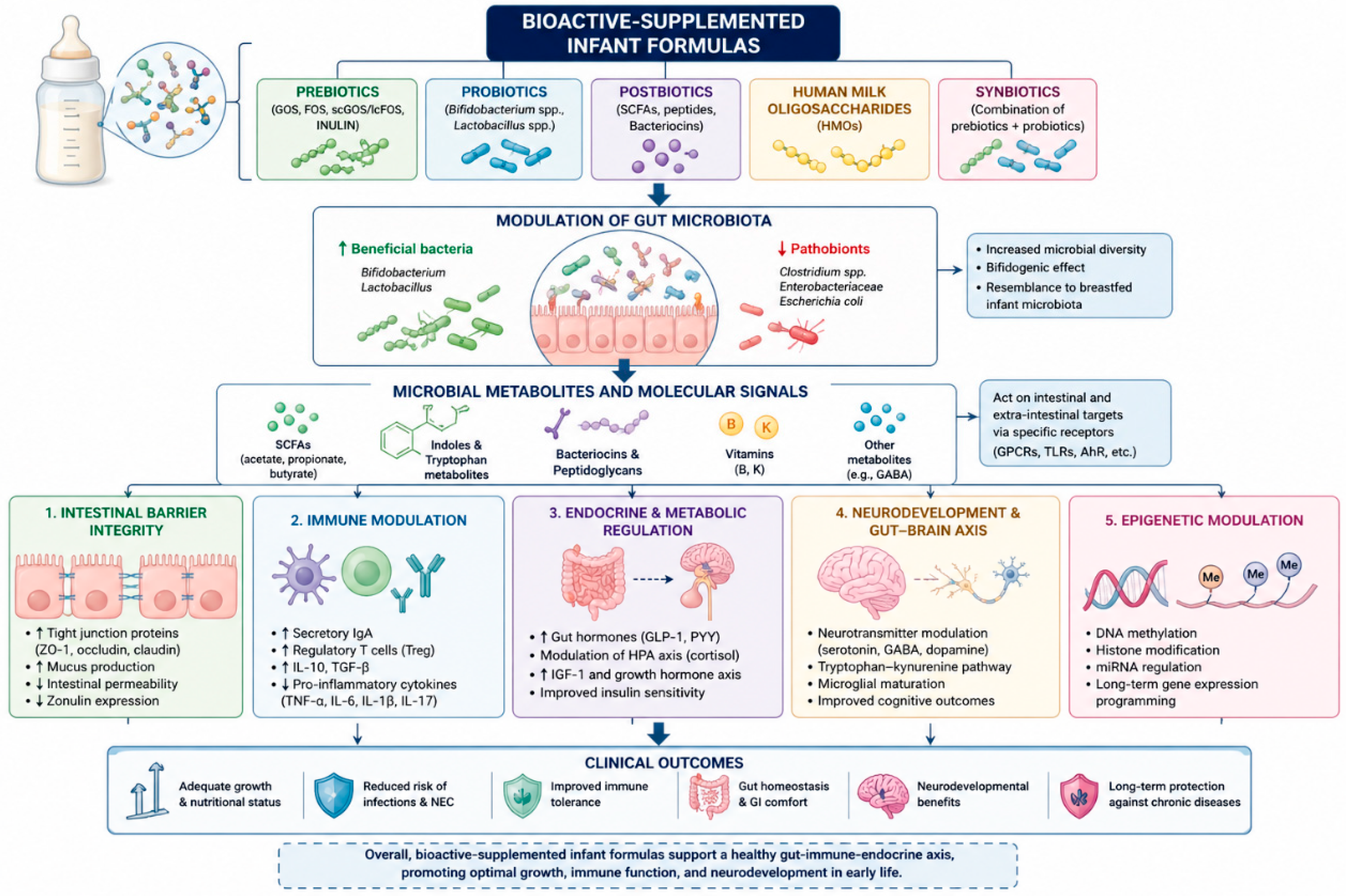
Nowadays, a new understanding of the relationship between the gut microbiota and the human organism brought the spotlight on modulating health implications attributed to microbiota-related products, namely prebiotics, probiotics, and postbiotics. Said substances are capable, even with different mechanisms, of contributing to intestinal, immune, and metabolic functions, earning themselves a more central role in nutritional and therapeutic alternatives. A schematic overview of the principal molecular pathways linking bioactive-supplemented infant formulas, gut microbiota modulation, and host developmental outcomes is summarized in Figure 1.
Prebiotics, being non-digestible substances, are actively utilized as substrates by intestinal microbiota. In fact, they undergo a fermentation process, mediated by gut bacteria, which produces SCFAs, a wide group of volatile fatty acids, mostly represented by acetate, propionate and butyrate. These substances are produced from the metabolism of amino acids, such as glutamate, succinate, or lysin, through CoA transferase-linked pathways (for example acrylate and succinate), the Wood–Ljungdahl pathway, or saccharides metabolism, via propanediol from fuculose and rhamnulose [33,34]. SCFAs do not represent end-products at all; in fact, they represent active molecules involved in both biological signaling and microbiota crosstalk. SCFAs’ quality and quantity depends on the prebiotic chemical and physical properties (e.g., resistant starch, pectin, β-glucans), and the involvement of different microorganisms [33]. Moreover, SCFA regulates numerous metabolic pathways, acting on specific cellular receptors through G-protein coupled receptors (e.g., GRP41/FFAR3) and influencing endocrine and immune modulation, epithelial integrity, and reduction of the risk of chronic diseases [27,34]. Epigenetics changes are also a part of SCFAs’ metabolic actions; butyrate has been reported to be a potential inhibitor of histone deacetylase and a promoter for Foxo3, resulting in a reduced proliferation in intestinal stem cells [35]. In addition, through cross feeding, prebiotics contributes to maintaining ecological resilience and stability of microbiota community and intestinal homeostasis [27].
Probiotics bring in various health benefits to the host, acting through multiple strain- specific mechanisms [36]. The intestinal barrier represents an example, thanks to probiotic’s capacity to favor secretions of mucins and defensins as well as immune response and thigh junctions’ enhancement [36]. It is reported, moreover, that bacteria strains belonging to the Lactobacillus genera (e.g., L. rhamnosus, L. plantarum) as well as Bifidobacterium (e.g., B. breve, B. animalis) play a central role in stimulating toll-like receptors and IgA production, contributing also to the regulation between pro and anti-inflammatory cytokines [37]. The same substances can control replication of pathogens, through SCFAs and bacteriocins production, maintaining immune tolerance for selected microorganisms. In pre-clinical studies, involving animal colitis models, a restored barrier function and ion transport are reported, as well as reduced epithelial inflammation, which is secondary to probiotics supplementations [38,39]. Probiotics could also be beneficial in neonates facing surgery in the first days of life, even if the scientific literature does not bring definitive results on the topic [40].
Postbiotics and their derived metabolites represent a new approach in microbiota-related therapeutics. Differing from probiotics, postbiotics are capable of exerting beneficial effects independently to microbial intermediaries. Postbiotic-related substances include SCFAs, lipopolysaccharides, muropeptides, secondary bile acids, and peptidoglycans. They, similarly to probiotics, interact with a variety of cell receptors, influencing many processes including immunity, glucose metabolism, epithelial remodeling, and even gut–brain communication (Table 1). The scientific literature, for instance, reports improved insulin sensibility, while other publications flag a possible involvement in metabolic functions, further explained in this review, suggesting a specific context and dose-dependent response profile, worthy of deeper investigations. With no surprise, postbiotic therapeutic potential has been highlighted in complex diseases, including metabolic, neurodegenerative, and oncological ones, allowing clinicians to further choose tailored therapies with additional benefits to the patients [41,42,43].
Synbiotics, as a combination of pro- and prebiotics and being functionally complementary, aim to synergically obtain favorable effects on the host [44,45]. In fact, said complementarity expresses itself by the prebiotic taxa-specific growth support to the probiotic co-administered, as to create a favorable environment allowing probiotic colonization and persistence and therefore enhance the combined pre and probiotics effects, taking also in consideration pre-existing microbiota.

4. Effects on Growth and Nutritional Adequacy

Amongst other variables, growth remains one of the key elements evaluated in the matter of infant formula safety and nutritional adequacy, expressed as body weight, length, head circumference, and growth velocity. However, as reported by recent meta-analyses and systematic reviews, supplementation of pre-, post-, or synbiotics does not necessarily result in statistically significant differences in growth when compared to infants using standard infant formulas [46,47]. A meta-analysis, which collected 55 randomized controlled trials and over 8800 infants, did not report any relevant effects on weight, length, or head circumference gain, in the absence of any minor or severe adverse events [48]. A different systematic review, similarly, reports comparable effects of such supplementations on growth in term infants, reporting only a significant softer feces and increased stool frequency in treated patients [47].
However, other studies showed evidence that specific prebiotic FOS and GOS combinations or polydextrose/GOS/lactulose one may be responsible for better weight gain, while others, namely inulin-enriched FOS, appeared to be involved in slight reduction in growth variables [49]. This may rely on composition and duration of said supplements, highlighting even more how biological supplements need to be used with a tailored approach to exert their maximum efficacy. Apart from nutritional equivalence, while comparing infants during their first 12-months of life, synbiotic- and prebiotic-enriched formulas did not show anthropometric differences or safety concerns [50].
Some evidence, however, suggests that specific prebiotic combinations of FOS and GOS or the mixture of polydextrose/GOS/lactulose may promote better weight gain, while others, such as inulin-enriched fructo-oligosaccharides, appear to be associated with a slight reduction in growth indices [49]. This indicates that prebiotic efficacy may depend on the composition and duration of supplementation, highlighting the need for tailored approaches in formula design. Further clinical studies comparing prebiotic- and synbiotic-enriched formulas have reported comparable anthropometric outcomes during the first 12 months of life, confirming their safety and nutritional equivalence [50].
Interestingly, other substances, not considered strictly prebiotic, such as dietary nucleotides, may be responsible for increased anthropometric measures, head circumference, and body weight, in infants consuming a nucleotide-supplemented formula against others using standard formula [51].
Other studies support similar evidences: in specific clinical contexts amino acid-based formulas supplemented with synbiotics have been shown to support normal growth, Burks et al. conducted a prospective, randomized, double-blind controlled trial in which full-term infants with documented cow’s milk allergy received an amino acid-based formula, either alone or supplemented with a specific synbiotic blend containing oligofructose, long-chain inulin, acidic oligosaccharides, and Bifidobacterium breve M-16V. Normal growth was observed during the 16-week intervention for both formulas; there was no significant difference between groups in weight, length, or head circumference Z-scores when assessed according to WHO growth standards. This firmly confirms that nutritional adequacy, as well as growth velocity, have not been compromised by the addition of synbiotics in such an at-risk population [52]. The two formulas were well tolerated with reduced allergic symptoms and safety parameters within physical reference ranges during the period of study. From these results, synbiotic-supplemented amino acid-based formulas emerge as a valid and safe alternative to cow’s milk, as they efficiently sustain growth, which is a critical requirement for biological-enriched formulas in the absence of breastfeeding, even if complete replication of the complex human milk is not reached.

5. Gut Health and Microbiota Modulation

As previously stated, enriched infant formulas elicit a variety of favorable effects on intestinal health thanks to their action in modulating gastrointestinal function, microbial composition, and production of functional metabolites. Several clinical studies report associations between prebiotic mixtures assumption, such as GOS/FOS (with 9:1 ratio) and improved stool frequency, and reduced fecal pH and softer stool consistency, as active fermentation and good tolerance expression [53,54,55].
Prebiotics and synbiotic assumption reduce potential dysbiosis and its relative markers, promoting selective bacterial taxa growth, mainly Bifidobacterium and Lactobacillus, and consequently modulating metabolic function of gut microbiota [55,56,57]. Recent metagenomic studies indicate a microbial profile of enriched formula-fed infants closer to the breastfed ones, characterized by a higher prevalence of saccharolytic taxa and reduced presence of Enterobacteriaceae [55,56,58]. A recent multi-center double blinded- trial, comparing fecal biomarkers as well as Bifidobacterium and Clostridium abundance in patients consuming enriched HMOs infant formula versus the ones consuming standard cow milk-based formulas, reported a shift towards a more human-milk-like fecal biomarker profile, in secretory IgA, alpha-1-antitrypsin, and calprotectin, along an improved Bifidobacterium proliferation in the former group [58]. Such a microbial shift correlates with an improved intestinal barrier and a minor risk of gastrointestinal disturbances and suggests that enriched infant formulas can have a notable impact on newborns health and should be actively considered in the matter of infant nutrition. A prospective study comparing stool Candida fungal colonization in preterm newborn receiving either Lactobacillus reuteri, Lactobacillus rhamnosus, or no probiotic supplementation, reported a lower Candida stool colonization, along with fewer gastrointestinal symptoms, days of antibiotic treatment, and less days spent in the neonatal intensive care unit compared to the control group (with generally better outcome in reuteri-supplemented patients than rhamnosus ones). This supports the proliferation-inhibiting pressure of the probiotic-favored microorganisms, preventing also fungal proliferation [59].
The early-life gut colonization also contributes to long- and short-term host health: a recent metagenomic and metabolomic study indicates how human milk microbiota positively influence infant neurodevelopment. In particular, microbiota-derived metabolites, especially SCFAs, appear to be the central mediator enabling enhanced intestinal integrity as well as developing the gut–brain axis [60]. A similar mechanism of action can be seen in pre, post and probiotics. For instance, upregulation of genes coding for proteins including zonula occludens-1 claudin, in response to exopolysaccharides, is reported to activate the STAT3 pathway and therefore promote thigh junctions’ gene transcription and improve the intestinal barrier [61]. In addition, other microbial-derived metabolites, such as tryptophan, indoles, and derivates, alongside SCFAs derived by pro, pre, and postbiotics, have been linked to better regulation of intestinal inflammation and immune responsiveness, via aryl-hydrocarbon receptor activation, promoting favorable gut microbiota proliferation and, in vivo, a reduction in incidence of necrotizing enterocolitis in neonates [62].
How different feeding strategies, and in particular, supplemented formulas may influence gut metabolomic profile? Regarding this, a recent prospective observational cohort study from Bernardo et al., provided interesting results, comparing for the first time the faecal metabolomic characteristics of late preterm infants fed breast milk, standard formula, or formula supplemented with a postbiotic preparation containing vitamin D3 and fermented fructo-oligosaccharides derived from Lactobacillus paracasei [63]. In particular, an overlap between the faecal metabolome of breastfed and formula-fed infants was observed, supporting the idea that modern formulas can at least partially replicate the metabolic imprinting of human milk. Notably, the metabolomic profile of infants receiving postbiotic-enriched formula tended, over time, to cluster more closely with that of breastfed infants than with those receiving standard formula, suggesting that the addition of specific bioactive components may promote a more “breast milk-like” functional adaptation of the gut ecosystem. Notably, breastfed and postbiotic-fed infants shared several metabolites useful for intestinal health: azelaic acid, a marker of healthier inflammatory profiles, was consistently higher in both breast milk and postbiotic groups, while N-acetylglucosamine-6-sulfate, a substrate that supports Bifidobacterium growth and mucosal integrity, was also common to these two groups [63]; reduced glutathione, a key indicator of antioxidant activity, instead, was lower in stools from breastfed and postbiotic-fed infants, reflecting greater biological utilization rather than deficit. To summarize, this study concluded that a closer microbiota environment can be obtained in infants using postbiotic-enriched formula, compared to the ones using standard formula, supporting the role of postbiotics in intestinal homeostasis modulation.
However, in the present day, there is no homogeneity in dosage and strain adopted in therapeutic settings. This results in an added difficulty grade in establishing definitive causal relationships between products used and host well-being, and multi-omics studies are needed to confirm and establish clinical impact of bioactive supplements in infants [56,57,60].

6. Microbiota- and Probiotic-Mediated Regulation of Intestinal Stem Cells

The gut microbiota plays an important role in maintaining gastrointestinal homeostasis by influencing epithelial integrity, immunity, and metabolism.
Recent studies have begun to uncover how microbiota-derived metabolites, such as short-chain fatty acids (SCFAs), tryptophan metabolites, and secondary bile acids, interact with stem cells in various segments of the GI tract. These interactions affect stem cell quiescence, proliferation, and differentiation, ultimately affecting tissue integrity and disease susceptibility. Dysbiosis, a disruption of the normal microbial community, has been implicated in the pathogenesis of GI disorders, including inflammatory diseases and cancers, many of which involve alterations in stem cell function.
Stem cells are characterized by the ability to self-renew without losing their developmental potential and to differentiate into multiple specialized cell types. Actively proliferating stem cells, such as Lgr5 + stem cells, may transiently enter a quiescent state under certain conditions. However, their contributions to regeneration following injury remain unclear. Alternatively, unreserved stem cells are defined by their ability to remain quiescent during homeostasis and become activated upon injury or stress to self-renew and differentiate. Therefore, quiescent stem cells can only be classified as reserve stem cells if they have been functionally validated to contribute to tissue regeneration in response to injury [64].
The balance of stem cells is maintained by the niche. The intestinal epithelial stem cell (IESC) niche constitutes a network of cell types expanding well beyond the epithelial layer to help govern the balance between IESC self-renewal and differentiation. The mammalian IESC is composed of epithelial cells including IESCs, Paneth cells, and enteroendocrine cells, as well as stromal, neural, and immune cell types. It is evident that gut microbiota has an important influence on intestinal epithelial physiology and stem-cell function. However, the underlying mechanisms remain poorly understood and are still under active investigation. The development of probiotics or engineered bacteria, as well as molecular strategies represent exciting possibilities for modulating the gut microbiome and the IESC stem cell niche and thereby modify intestinal physiology. Such efforts could, in the long-term, provide benefit to patients with a wide range of gastrointestinal diseases [65].
A recent study has identified specific microbial mechanisms that directly promote epithelial regeneration. This study identifies Blautia coccoides as a key commensal bacterium that promotes intestinal epithelial stem cells (ISCs) regeneration by activating HOPX+ reserve intestinal stem cells (rISCs) to restore the LGR5+ ISC compartment, a process enhanced through metabolic cooperation with indole-3-propionic acid (IPA)-producing bacteria. Inflammatory bowel disease (IBD) is associated with microbial dysbiosis and a consistent depletion of B. coccoides, and experimental models demonstrate that BC attenuates colitis severity and enhances mucosal barrier function. B. coccoides enhances β-hydroxybutyrate production in intestinal epithelial cells, leading to activation of HOPX+ rISCs, which regenerate the LGR5+ ISC pool and play a critical role in epithelial repair. These findings support the plasticity and heterogeneity of rISCs populations during injury, highlighting a HOPX+-dependent regenerative mechanism. Furthermore, B. coccoides generates indole-3-propionic acid and synergizes with other bacteria to produce IPA, emphasizing the importance of microbial co-metabolism in shaping host-active metabolites. This study demonstrates the therapeutic potential of targeting microbial metabolic networks to stimulate endogenous repair mechanisms. In conclusion, B. coccoides promotes intestinal epithelial regeneration through a β-hydroxybutyrate–HOPX+ rISC axis, amplified by metabolic interactions, highlighting its relevance for epithelial homeostasis and repair in IBD and related conditions [66]. In the continuous regeneration of intestinal epithelium of intestinal stem cells, Lactobacillus reuteri D8 has been shown to protect intestinal mucosa integrity both in organoid models and in vivo. A study found that only live L. reuteri D8 was effective in protecting the morphology of intestinal organoids and normal proliferation of epithelial stained with 5-ethynyl-2′-deoxyuridine under tumor necrosis factor-α treatment, which was also further verified in mice experiments. L. reuteri protects intestinal barrier and activates intestinal epithelial proliferation, which sheds light on treatment approaches for intestinal inflammation based on ISCs with Lactobacillus probiotics and daily probiotic consumption in healthy foods [67]. Another study utilized in vivo broilers plus an ex vivo organoids model to thoroughly examine the effectiveness of L. reuteri in protecting the integrity of the intestinal mucosa during lipopolysaccharide-induced (LPS-induced) enteritis in broilers. This research revealed that L. reuteri promoted the expansion of ISCs and intestinal epithelial cell renewal by regulating the Wnt/β-catenin signaling pathway, thereby maintaining the integrity of the intestinal mucosal barrier. This finding provided theoretical support for lactobacillus as a probiotic additive in livestock feed to improve intestinal inflammation and treat intestinal diseases [68].
Mesenchymal stem cells are influenced by biotic factors too: a recent study, conducted by Goudarzi F. and colleagues, highlights the effect of Lactobacillus delbrueckii on human adipose-derived mesenchymal stem cells, suggesting L. delbrueckii subsp. lactis KUMS-Y33 can redirect the differentiation potential of mesenchymal stem cells away from adipogenesis and promotes osteogenesis in human adipose-derived mesenchymal stem cells, suggesting a positive role in the prevention and treatment of osteoporosis and opening a new aspect for future in vivo study [69].

7. Immune Development and Clinical Outcomes

New scientific evidence reports positive immune modulation and development associated with better clinical outcomes regarding infectious diseases in infants consuming supplemented milk formulas with probiotics, prebiotics, or postbiotics during early life. In fact, in randomized controlled trials, probiotic-supplemented formulas, in particular, the ones containing Bifidobacterium infantis, Bifidobacterium bifidum, and Lactobacillus helveticus, showed sustained fecal secretory IgA levels, comparable to breastfed infants. This does support mucosal immune maturation and improve gut barrier function [70,71]. Incidence, duration of respiratory tract infection, and its morbidities can also be influenced positively by enriched infant formula, suggesting an immune system improved activity and reactiveness, especially during the first days of life [72]. In addition, as shown by a systematic review with network meta-analysis, use of said formulations appears to be safe, tolerated, and potentially capable of lowering antibiotics use and incidence of febrile episodes [73]. Probiotic acts on the immunoregulatory side too: in particular, some clinical studies report that propionate promotes the development or regulatory T-cells, and, simultaneously, reducing levels of TNF-α, rising IL-10 production an enhancing dendric cell survival and maturation [25]. These findings correlate to the early-life microbial colonization and proliferation through biotic supplementations, which manifests itself via the more robust mucosal immune defense and the consequent reduced risk of pathogens infections, although the magnitude of said benefits may vary depending on strain, dosage, and duration of administrations. In addition, likely through microbes’ proliferation control and preservation of mesenteric perfusion, HMOs and a specific isomer of disialyllacto-N-tetraose, in neonatal necrotizing enterocolitis rat models, improved survival rates, even if GOS did not sort the same effects [74]; similar effects have been observed with 2′-fucosyllactose′-induced expression of endothelial nitric oxide synthase [75]. Additionally, integration of bovine lactoferrin, synergically with L. rhamnosus GG probiotics can reduce necrotizing enterocolitis incidence very-low-birth-weight neonates [26]. This underlines the notable impact of human milk microbiota-favoring substances on newborns, especially in pathological scenarios such as necrotizing enterocolitis [26,75,76,77,78], and the metabolite-specific interactions that postbiotics can express. However, these findings should be further studied through shared and standardized criteria, as to obtain evidence on a large population, since contradictory evidence on lactoferrin actually scale down the benefits found by other studies [79]. Immunomodulatory postbiotics effects are involved in autoimmune regulations too. In fact, links between inflammatory bowel syndromes, and postbiotic-induced changes in epithelial barrier function, as well as antioxidant activity and butyrate-producing bacteria proliferation, are widely described in the scientific literature [71]. Studies involving long-term clinical follow-up, integrated with immunological biomarkers, may unravel more on the impact of biotic-supplemented formulas and the induction of immune programming and tolerance.
Regarding clinical outcomes, the analysis conducted by Cool and Vandenplas links several studies demonstrating a significant reduction in total infections, particularly respiratory and gastrointestinal infections, during the first months of life [80]. Furthermore, research such as that of Arslanoglu et al. on HMOs demonstrates a reduction in infections of up to 46% and a favorable immune modulation similar to breastfeeding [81].

8. Obesity and the Gut–Brain Axis

The gut microbiota plays a major role in human health and disease—a dysbiotic composition evident in obese and aged individuals. The bidirectional communication system between the gut and the central nervous system, known as the gut–brain axis, may link obesity to unhealthy aging.
For this reason, a growing interest has developed into the role of microbiome-based interventions, including probiotics, prebiotics, and synbiotics, in modulating metabolic outcomes such as obesity via the gut–brain axis, a bidirectional system through which the gut microbiota influences physiology, including appetite regulation, energy balance, and metabolic homeostasis [82]. As highlighted in the literature, gut microbiota plays a central role in nutrient metabolism, immunomodulation, and maintenance of intestinal barrier integrity, and is strongly influenced by dietary habits. Alterations to this microbial ecosystem, known as dysbiosis, are associated with obesity and are characterized by reduced bacterial diversity, shifts in microbial composition, and functional impairments such as altered production of SCFAs and other metabolites [83]. These changes can promote increased gut permeability, allowing bacterial components such as lipopolysaccharides (LPS) to enter systemic circulation and cause chronic low-grade inflammation, which contributes to metabolic dysregulation and adipocyte dysfunction [84]. In this context pre-, post- and synbiotics can restore microbial homeostasis. Evidence suggests that they can reduce inflammation, improve lipid and glucose metabolism, and positively influence energy homeostasis, although their effects are often strain-specific and influenced by external factors such as diet, geography, and lifestyle [85]. This topic is particularly relevant in early life, when the gut microbiota is still developing and is highly susceptible to environmental influences, including infant feeding practices. The gut microbiota changes throughout the lifespan and reaches relative stability in adulthood; however, early-life alterations may have long-lasting effects on metabolic health [86]. Notably, microbiota alterations may impair gut eubiosis and influence the development of the gut–brain axis, potentially predisposing individuals to dysregulated appetite control, increased energy harvest, and a higher risk of childhood obesity [87]. Established that diet is a major determinant of microbiota composition, early nutrition enriched with prebiotics, probiotics, or synbiotics are being explored as strategies to shape a healthier microbial profile from infancy [88].
Moreover, a study, from Lee K and colleagues pays particular attention to the browning of white adipose tissue (WAT). This is a process where WAT develops characteristics of brown adipose tissue (BAT), including thermogenic capability. This process has emerged as a promising therapeutic target, as it induces loss of body mass and improves blood glucose control. In this context, probiotics, particularly Lactobacillus strains, have attracted attention due to their worthwhile effects on human health, including anti-inflammatory, anti-diabetic, and anti-hypercholesterolemic properties. Lactobacillus strains are known to exert inhibitory effects on obesity through the reduction of fat accumulation and may enhance heat generation through the browning of WAT. Experimental evidence demonstrates that supplementation with a mixture of Lactobacillus curvatus HY7601 and Lactobacillus plantarum KY1032 significantly ameliorates high-fat diet-induced increases in body weight and adipose tissue mass, while decreasing lipid droplet size and improving metabolic parameters such as fasting blood glucose levels. These effects are associated with increased thermogenesis, as indicated by elevated core temperature and upregulation of key thermogenic markers, including UCP1, PGC1α, and SIRT1, which promote fatty acid oxidation and the differentiation of white adipocytes into beige adipocytes. This probiotic mixture improves lipid metabolism by reducing serum triglycerides, total cholesterol, and LDL-cholesterol, while increasing HDL-cholesterol and adiponectin levels. It also enhances cholesterol disposal by increasing fecal excretion of cholesterol and bile acids and upregulating genes involved in cholesterol transport and metabolism, such as Abcg5, Abcg8, Lxra, and Lxrb. These findings suggest that probiotics may promote energy expenditure through fatty acid β-oxidation and thermogenesis, while simultaneously regulating cholesterol homeostasis. Overall, this evidence supports the concept that specific probiotic strains can modulate energy metabolism, adipose tissue function, and lipid balance, highlighting their potential as microbiome-based therapeutic strategies for obesity [89].

9. Psycho–Neuro–Immuno–Endocrinological Microbiota Involvement

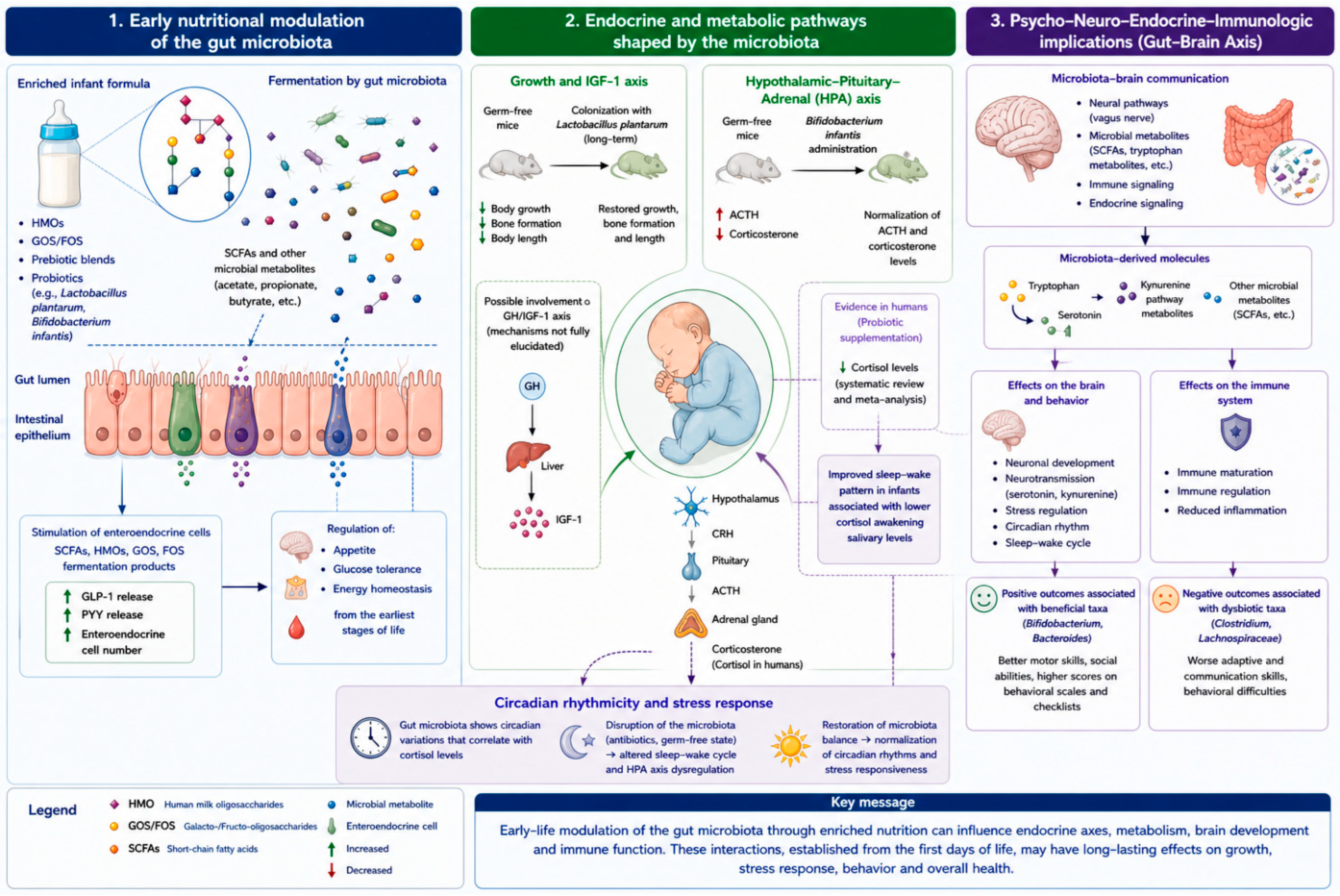
Data on endocrine-related effects on enriched baby milk formula are scarce. It is reported an improved sleep–wake pattern in infants receiving a prebiotic blend with cow milk-based formula, linked to cortisol awakening saliva levels [90]. However, evidence on singular microbiota-associated substances can provide some insights and a potential hypothesis that could relate to an in vivo setting: HMOs as well as GOS and FOS fermentation products, and SCFAs, among other metabolites, are capable to stimulate, through L-cell and entero-endocrine cells, GLP-1 and PYY release, as well as, interestingly, increased entero-endocrine cells numbers [91], which could have a role into regulating appetite and glucose tolerance since the first days of life. Additional insights can be drawn from animal-model experiments with possible correlations valid for humans too; in fact, in a series of experiments on germ-free mice characterized by microbiota absence, researchers found slower body growth, worse bone formation and length when compared to wild-type ones. Interestingly, this could be reversed after a long-term colonization of Lactobacillus plantarum [92] suggesting a possible involvement of the GH/IGF-1 axis, even if no clear pathway has been yet described [93]. Another curious finding regards the hypothalamus–pituitary–adrenal axis, which can also be affected by microbiota. Similarly, in the germ-free mice model, plasma ACTH and corticosterone levels has been found higher when compared to gnotobiotic mice and this reverted after Bifidobacterium infantis administration [93]. Accordingly, a recent systematic review and metanalysis reported lowered cortisol levels after supplementation with probiotics, though a higher evidence level is needed, due to variability in used probiotic strain and population sample heterogeneity [94]. Furthermore, it is reported that microbiota circadian variability correlates with cortisol levels, involving sleep–wake cycle, disrupted in animals with a microbiota depleted through antibiotic treatment [95] suggesting an even deeper connection between gut microbes and human organisms.
With no surprise this could represent a fraction of a more complex psycho–neuro–endocrine–immunologic implications elicited by brain and gut cross-communication. In fact, many studies have been published regarding microbiota-produced substances, such as kynurenine, tryptophan, and serotonin, and their role on modulating neuronal development and immune regulation [96,97,98] fully capable to program neuronal organization and possibly impacting a variety of psychiatric/neurological diseases [90] as well as imposing positive effects on development of motor skills, social abilities, better scores on checklist and behavioral scales associated with Bifidobacterium and Bacterioides taxa, and worse adaptive and communication skills for Clostridium and some Lachnospiraceae.
A scheme of the complex interaction between microbiota and its derived molecules, with neurological, immune and endocrine system can be consulted in Figure 2.

10. Safety and Tolerability

Current evidence indicates that the supplementation of infant formulas with probiotics, prebiotics, synbiotics, and postbiotics generally exhibits a favorable safety profile and good gastrointestinal tolerability. Multiple randomized clinical trials and systematic reviews have demonstrated that such supplementation does not negatively affect growth, body composition, or key clinical parameters compared with standard formulas [73,99,100,101]. Supplementation of GOS and FOS, as well as probiotics consumption containing Bifidobacterium breve and Lactobacillus reuteri has been associated with incidence reduction of infantile colic, constipation, and diarrhea with an overall improved and regular intestinal function [54,73,100]. Additionally, several studies report a reduced feeding intolerance, and risk of necrotizing enterocolitis in the preterm population [26,78,102], exposing the preventive role of a regulated microbiota induced by probiotic consumption.
However, along with other products used for human consumption, environmental contaminants and endocrine-disrupting substances, originating form packaging and industrial processes, have been an element of concern. Estrogen-like substances, phthalates, and bisphenols have been found in certain infant formula batches and human milk itself, rising the concern about monitoring and integrating toxicological assessment for such products [102,103]. Some of these substances, used in manufacturing processes, can influence shelf life and stability of bioactive products and therefore could have a role in preservation of biological proprieties and microbial viability [104].
Safety assessments conducted by EFSA (2014) and ESPGHAN (2011) concluded that there is no evidence of safety concerns or clinically significant benefits related to the addition of probiotics to infant formula [99]. More recent analyses, including 17 systematic reviews and meta-analyses, confirm the absence of major safety concerns in both healthy and high-risk infants, while emphasizing that many studies exhibit methodological limitations and are not specifically designed to monitor adverse events systematically.
Current evidence supports a cautious and well-monitored use of biotics in infant formulas, as they appear to be well tolerated and safe in most cases. However, methodological heterogeneity and the lack of long-term longitudinal studies warrant further investigation to elucidate potential endocrine and immunological effects, as well as to strengthen the regulatory and manufacturing foundations of these innovative nutritional approaches.

11. Research Gaps and Future Directions

Research about relationships between human milk, enriched formulas, and microbiomes flourished in the recent years and has advanced considerably; however, knowledge gaps persist, limiting the clinical potentialities of the actual findings. Newer “omics” technologies, including proteomics, metabolomics, lipidomics, and glycomics contributed to revealing the biochemical complexities of human milk and its multiple links between maternal and infant health implications [105].
Nevertheless, it should be noted that most of the currently available evidence has been obtained from heterogeneous studies, with different methodologies, population, duration, and outcomes measures. Said diversity makes drawing robust and objective conclusions difficult, in the matter of probiotic, prebiotic, or postbiotic impact on infant health, immunity, and growth [46,105]. From this perspective, enabling the scientific community to provide complete, stratified, and standardized evidence, including and integrating multi-omics, endocrine, and immunological variables might be a key strategy to deeply explore co-influence of early nutrition and microbiota and its objective effects on infant population and their development [105,106].
Pediatric nutrition, especially when infant and preterm newborns are taken into account, should be considered a cornerstone in long-term well-being and part of precision and personalized medicine. Integrating microbiome and -omics data could enable health-workers and caregivers to develop personalized strategies tailored to the individual biological profiles of the newborn and the mother. Maternal diet, feeding practices, and quality and timing of food introduction, as recent studies suggests, can modulate significantly the microbiome, and therefore reflect on immunity and the newborn development [46,106,107]. Advances in the supplementation of infant formulas represent a valid opportunity to mimic human milk benefits, through their bioactive components [107].
A relatively novel and emerging frontier in microbiota-related research includes endocrine and immune systems; during breastfeeding, many hormones, such as IGF-1 and leptin are transferred to the newborn, with implications on energy metabolism, growth, bone mineralization, and neurological and immunological development [106]. A deep knowledge of the interplay between regulatory hormones, gut–brain axis, and gut microbiome could bring in new pathways, biomarkers, or novel insights on nutritional alternatives with remarkable roles on next generation artificial milk [106,107,108].
Such wide and intricated influences of microbiota in human biological and biochemical physiology justifies the studied outcomes, used substances, population analyzed, and chosen study protocols fragmentation in the recent studies on the matter. As previously stated, this undermines and hampers cross-study comparisons analysis and interferes with the development of consensus and international guidelines. Evidence-based formulation of infant-destined products needs validated biological endpoints, safety measures, and standardized protocols [105,108]. We hope that integrating precision nutrition, metabolomics, and microbiota may clarify the intricated interactions among the maternal/artificial diet and the infant well-being, but also provide solid evidence on the infant psycho–neuro–immuno–endocrinological axis implications that easily extend on the whole newborn organism [107].
However, significant progress is being made, while at the same time attempting to overcome the ethical limitations of experimental studies in newborns, using intestinal organoid systems, which represent a highly reliable model for studying the effects of prebiotics and probiotics on intestinal stem-cell function, epithelial differentiation, and intestinal–endocrine signaling in early life. In particular, the use of intestinal organoid cultures is proving to be a valuable tool for studying the effects of prebiotics and postbiotics on intestinal cell growth and differentiation in early life [109].
Another interesting study field regards interpersonal microbial transmission. Recent studies show that microbial transmission between individuals occurs at the single-strain level, with high specificity and persistence capacity over time, significantly influencing microbiota composition since the first months of life. Microbiota transmission, between relatives, siblings and other children heavily modulates the composition of the newborn, and the older children also, creating a sort of shared microbiota [110,111]. This adds to the importance of the microbial seeding happening throughout vaginal birth, without downscaling it, manifesting the high transmissibility of bacterial strains.

12. Conclusions

Nutrition in the early stages of life, the developing gut microbiota, and the immune, metabolic, and neuroendocrine systems in newborns communicate and interact with each other to create a balance that is crucial in determining long-term health. Clearly, breast milk remains the gold standard for feeding newborns, as it is able to provide nutrients, immune mediators, hormones, and complex oligosaccharides that can influence early microbial colonization. However, breastfeeding is sometimes not possible, so a scientifically based strategy was needed to partially reproduce the fundamental functional aspects of breast milk: formula milk enriched with prebiotics, probiotics, postbiotics, or synbiotics. Current clinical evidence, as demonstrated by our review, has shown that these formulas supplemented with bioactive substances are nutritionally adequate, safe and well tolerated, promoting normal growth even in premature infants. It is precisely at the gastrointestinal level that these enriched milks demonstrate the most evident effects: in fact, they modulate stool characteristics, promote a bifidogenic microbial profile and improve microbial metabolic activity, often modifying the intestinal ecosystem towards models more similar to those of breastfed infants. In addition to its already-known benefits for gut health, recent studies suggest potential benefits for mucosal immunity and the risk of early infections, although these effects appear to depend largely on the strain, dose, and formulation. Furthermore, enriched formulas could have a positive effect on the endocrine and metabolic systems and on the psychoneuroimmunological axis; this effect has a biological explanation, although the mechanisms are still being explored and require confirmation in well-designed longitudinal studies in humans. Results from animal models and preliminary human studies have indicated possible influences on enteroendocrine signaling, the GH/IGF-1 axis, stress responsiveness, and gut–brain communication mediated by microbial metabolites such as short-chain fatty acids and tryptophan-derived compounds. Despite significant progress, major challenges remain. Methodological heterogeneity, limited follow-up duration, lack of standardized biomarkers, and variability in bioactive components hinder the translation of mechanistic knowledge into definitive clinical recommendations. Additionally, issues relating to production processes, bioactive stability and exposure to environmental contaminants require constant regulatory vigilance. In conclusion, formulas enriched with bioactive substances come close to reproducing the biological complexity of breast milk, providing a valuable alternative when breastfeeding is not possible. Future research integrating multi-omic approaches, longitudinal endocrine and immune profiles, and precision nutrition principles will be essential to refine formulae and better support optimal growth, immune competence, metabolic resilience, and neurological development throughout life.

Author Contributions

Conceptualization, S.S.C., R.L., M.R. and P.B.; methodology, S.S.C. and R.L.; software, S.S.C. and R.L.; validation, S.S.C. and R.L.; formal analysis, S.S.C. and R.L.; investigation, C.C., C.M., G.M.P. and N.D.; resources, C.C., C.M., N.D. and G.M.P.; data curation, C.C., C.M., G.M.P. and N.D.; writing—original draft preparation, S.S.C., R.L., M.G. and M.B.; writing—review and editing, S.S.C., R.L., M.R. and P.B.; visualization, M.R. and P.B.; supervision, M.R. and P.B.; project administration, R.L., M.R. and P.B.; funding acquisition, M.R. All authors have read and agreed to the published version of the manuscript.

Funding

This research received no external funding.

Institutional Review Board Statement

Not applicable.

Informed Consent Statement

Not applicable.

Data Availability Statement

No new data were created or analyzed in this study. Data sharing is not applicable to this article.

Conflicts of Interest

The authors declare no conflicts of interest.

Abbreviations

The following abbreviations are used in this manuscript:
ACTHAdrenocorticotropic hormone
EFSAEuropean Food Safety Authority
ESPGHANEuropean Society for Paediatric Gastroenterology, Hepatology and Nutrition
FFAR3Free fatty acid receptor 3
FOSFructo-oligosaccharides
GHGrowth hormone
GLP-1Glucagon-like peptide-1
GOSGalacto-oligosaccharides
GRP41G protein-coupled receptor 41
HMOsHuman milk oligosaccharides
HMOHuman milk oligosaccharide
HPA axisHypothalamic–pituitary–adrenal axis
IgAImmunoglobulin A
IGF-1Insulin-like growth factor 1
ILInterleukin
ISAPPInternational Scientific Association for Probiotics and Prebiotics
NECNecrotizing enterocolitis
NICUNeonatal intensive care unit
PYYPeptide YY
SCFAsShort-chain fatty acids
STAT3Signal transducer and activator of transcription 3
TNF-αTumor necrosis factor alpha
WHOWorld Health Organization

References

  1. Victora, C.G.; Adair, L.; Fall, C.; Hallal, P.C.; Martorell, R.; Richter, L.; Sachdev, H.S.; Maternal and Child Undernutrition Study Group. Maternal and Child Undernutrition: Consequences for Adult Health and Human Capital. Lancet 2008, 371, 340–357. [Google Scholar] [CrossRef] [PubMed]
  2. Alves, J.G.B.; Alves, L.V. Early-Life Nutrition and Adult-Life Outcomes. J. Pediatr. 2024, 100, S4–S9. [Google Scholar] [CrossRef]
  3. Zhang, R.; Ying, E.; Wu, X.; Qin, H.; Guo, Y.; Guo, X.; Yu, Z.; Chen, J. A Systematic Review and Meta-Analysis of Breastfeeding and Neurodevelopmental Outcomes in Preterm Infant. Front. Public Health 2024, 12, 1401250. [Google Scholar] [CrossRef]
  4. Scarpone, R.; Kimkool, P.; Ierodiakonou, D.; Leonardi-Bee, J.; Garcia-Larsen, V.; Perkin, M.R.; Boyle, R.J. Timing of Allergenic Food Introduction and Risk of Immunoglobulin E-Mediated Food Allergy: A Systematic Review and Meta-Analysis. JAMA Pediatr. 2023, 177, 489–497. [Google Scholar] [CrossRef] [PubMed]
  5. Hummel, S.; Weiß, A.; Bonifacio, E.; Agardh, D.; Akolkar, B.; Aronsson, C.A.; Hagopian, W.A.; Koletzko, S.; Krischer, J.P.; Lernmark, Å.; et al. Associations of Breastfeeding with Childhood Autoimmunity, Allergies, and Overweight: The Environmental Determinants of Diabetes in the Young (TEDDY) Study. Am. J. Clin. Nutr. 2021, 114, 134–142. [Google Scholar] [CrossRef]
  6. Garcia-Larsen, V.; Ierodiakonou, D.; Jarrold, K.; Cunha, S.; Chivinge, J.; Robinson, Z.; Geoghegan, N.; Ruparelia, A.; Devani, P.; Trivella, M.; et al. Diet during Pregnancy and Infancy and Risk of Allergic or Autoimmune Disease: A Systematic Review and Meta-Analysis. PLoS Med. 2018, 15, e1002507. [Google Scholar] [CrossRef]
  7. Martorell, R. Improved Nutrition in the First 1000 Days and Adult Human Capital and Health. Am. J. Hum. Biol. 2017, 29, e22952. [Google Scholar] [CrossRef] [PubMed]
  8. Meek, J.Y.; Noble, L. Section on Breastfeeding. Policy Statement: Breastfeeding and the Use of Human Milk. Pediatrics 2022, 150, e2022057988. [Google Scholar] [CrossRef]
  9. Fewtrell, M.; Bronsky, J.; Campoy, C.; Domellöf, M.; Embleton, N.; Mis, N.F.; Hojsak, I.; Hulst, J.M.; Indrio, F.; Lapillonne, A.; et al. Complementary Feeding. A Position Paper by the European Society for Paediatric Gastroenterology, Hepatology, and Nutrition (ESPGHAN) Committee on Nutrition. J. Pediatr. Gastroenterol. Nutr. 2017, 64, 119–132. [Google Scholar] [CrossRef]
  10. Lucas, A.; Fewtrell, M.S.; Davies, P.; Bishop, N.; Clough, H.; Cole, T. Breastfeeding and Catch-up Growth in Infants Born Small for Gestational Age. Acta Paediatr. 1997, 86, 564–569. [Google Scholar] [CrossRef]
  11. Victora, C.G.; Bahl, R.; Barros, A.J.D.; França, G.V.A.; Horton, S.; Krasevec, J.; Murch, S.; Sankar, M.J.; Walker, N.; Rollins, N.C.; et al. Breastfeeding in the 21st Century: Epidemiology, Mechanisms, and Lifelong Effect. Lancet 2016, 387, 475–490. [Google Scholar] [CrossRef] [PubMed]
  12. Rio-Aige, K.; Azagra-Boronat, I.; Castell, M.; Selma-Royo, M.; Collado, M.C.; Rodríguez-Lagunas, M.J.; Pérez-Cano, F.J. The Breast Milk Immunoglobulinome. Nutrients 2021, 13, 1810. [Google Scholar] [CrossRef]
  13. Sinkiewicz-Darol, E.; Adamczyk, I.; Łubiech, K.; Pilarska, G.; Twarużek, M. Leptin in Human Milk—One of the Key Regulators of Nutritional Programming. Molecules 2022, 27, 3581. [Google Scholar] [CrossRef] [PubMed]
  14. Mazzocchi, A.; Giannì, M.L.; Morniroli, D.; Leone, L.; Roggero, P.; Agostoni, C.; De Cosmi, V.; Mosca, F. Hormones in Breast Milk and Effect on Infants’ Growth: A Systematic Review. Nutrients 2019, 11, 1845. [Google Scholar] [CrossRef] [PubMed]
  15. Kenney, A.D.; Sabag-Daigle, A.; Stoecklein, M.-M.; Buck, R.H.; Reverri, E.J. A Review of Human Milk Oligosaccharide Concentrations of Breast Milk for Infants and Young Children through 24 Months of Age. Front. Pediatr. 2025, 13, 1649609. [Google Scholar] [CrossRef]
  16. Falsaperla, R.; Sortino, V.; Gambilonghi, F.; Vitaliti, G.; Striano, P. Human Milk Oligosaccharides and Their Pivotal Role in Gut–Brain Axis Modulation and Neurologic Development: A Narrative Review to Decipher the Multifaceted Interplay. Nutrients 2024, 16, 3009. [Google Scholar] [CrossRef]
  17. Hess, D.; Momo Cabrera, P.; Kurth, S.; Bokulich, N.A.; Zimmermann, P. Transfer of Bacteria from Mothers to Infants Through Breast Milk: A Systematic Review. Pediatr. Infect. Dis. J. 2025, 44, 804–812. [Google Scholar] [CrossRef]
  18. Yao, Q.; Gao, Y.; Zheng, N.; Delcenserie, V.; Wang, J. Unlocking the Mysteries of Milk Oligosaccharides: Structure, Metabolism, and Function. Carbohydr. Polym. 2024, 332, 121911. [Google Scholar] [CrossRef]
  19. Inchingolo, F.; Inchingolo, A.M.; Latini, G.; Ferrante, L.; de Ruvo, E.; Campanelli, M.; Longo, M.; Palermo, A.; Inchingolo, A.D.; Dipalma, G. Difference in the Intestinal Microbiota between Breastfeed Infants and Infants Fed with Artificial Milk: A Systematic Review. Pathogens 2024, 13, 533. [Google Scholar] [CrossRef]
  20. Wiciński, M.; Sawicka, E.; Gębalski, J.; Kubiak, K.; Malinowski, B. Human Milk Oligosaccharides: Health Benefits, Potential Applications in Infant Formulas, and Pharmacology. Nutrients 2020, 12, 266. [Google Scholar] [CrossRef]
  21. Gibson, G.R.; Hutkins, R.; Sanders, M.E.; Prescott, S.L.; Reimer, R.A.; Salminen, S.J.; Scott, K.; Stanton, C.; Swanson, K.S.; Cani, P.D.; et al. Expert Consensus Document: The International Scientific Association for Probiotics and Prebiotics (ISAPP) Consensus Statement on the Definition and Scope of Prebiotics. Nat. Rev. Gastroenterol. Hepatol. 2017, 14, 491–502. [Google Scholar] [CrossRef]
  22. Hill, C.; Guarner, F.; Reid, G.; Gibson, G.R.; Merenstein, D.J.; Pot, B.; Morelli, L.; Canani, R.B.; Flint, H.J.; Salminen, S.; et al. The International Scientific Association for Probiotics and Prebiotics Consensus Statement on the Scope and Appropriate Use of the Term Probiotic. Nat. Rev. Gastroenterol. Hepatol. 2014, 11, 506–514. [Google Scholar] [CrossRef]
  23. Salminen, S.; Collado, M.C.; Endo, A.; Hill, C.; Lebeer, S.; Quigley, E.M.M.; Sanders, M.E.; Shamir, R.; Swann, J.R.; Szajewska, H.; et al. Author Correction: The International Scientific Association of Probiotics and Prebiotics (ISAPP) Consensus Statement on the Definition and Scope of Postbiotics. Nat. Rev. Gastroenterol. Hepatol. 2022, 19, 551. [Google Scholar] [CrossRef]
  24. Żółkiewicz, J.; Marzec, A.; Ruszczyński, M.; Feleszko, W. Postbiotics—A Step Beyond Pre- and Probiotics. Nutrients 2020, 12, 2189. [Google Scholar] [CrossRef]
  25. Prajapati, N.; Patel, J.; Singh, S.; Yadav, V.K.; Joshi, C.; Patani, A.; Prajapati, D.; Sahoo, D.K.; Patel, A. Postbiotic Production: Harnessing the Power of Microbial Metabolites for Health Applications. Front. Microbiol. 2023, 14, 1306192. [Google Scholar] [CrossRef] [PubMed]
  26. Manzoni, P.; Meyer, M.; Stolfi, I.; Rinaldi, M.; Cattani, S.; Pugni, L.; Romeo, M.G.; Messner, H.; Decembrino, L.; Laforgia, N.; et al. Bovine Lactoferrin Supplementation for Prevention of Necrotizing Enterocolitis in Very-Low-Birth-Weight Neonates: A Randomized Clinical Trial. Early Hum. Dev. 2014, 90, S60–S65. [Google Scholar] [CrossRef]
  27. Peterson, C.T.; Perez Santiago, J.; Iablokov, S.N.; Chopra, D.; Rodionov, D.A.; Peterson, S.N. Short-Chain Fatty Acids Modulate Healthy Gut Microbiota Composition and Functional Potential. Curr. Microbiol. 2022, 79, 128. [Google Scholar] [CrossRef] [PubMed]
  28. Davis, A.M.; Harris, B.J.; Lien, E.L.; Pramuk, K.; Trabulsi, J. α-Lactalbumin-Rich Infant Formula Fed to Healthy Term Infants in a Multicenter Study: Plasma Essential Amino Acids and Gastrointestinal Tolerance. Eur. J. Clin. Nutr. 2008, 62, 1294–1301. [Google Scholar] [CrossRef] [PubMed]
  29. Bazinet, R.P.; Layé, S. Polyunsaturated Fatty Acids and Their Metabolites in Brain Function and Disease. Nat. Rev. Neurosci. 2014, 15, 771–785. [Google Scholar] [CrossRef] [PubMed]
  30. Kasim, H.H.; Olga, L.; Snowden, S.; Cropp, E.; Koulman, A.; Beardsall, K. A Comparative Analyses of Lipid Ratios Representing Desaturase Enzyme Activity between Preterm and Term Infants within the First Ten Weeks of Life. Lipids Health Dis. 2023, 22, 133. [Google Scholar] [CrossRef]
  31. Ni, X.; Zhang, Z.; Deng, Z.; Li, J. Optimizing ARA and DHA in Infant Formula: A Systematic Review of Global Trends, Regional Disparities, and Considerations for Precision Nutrition. Food Res. Int. 2024, 182, 114049. [Google Scholar] [CrossRef] [PubMed]
  32. Koletzko, B.; Bergmann, K.; Brenna, J.T.; Calder, P.C.; Campoy, C.; Clandinin, M.T.; Colombo, J.; Daly, M.; Decsi, T.; Demmelmair, H.; et al. Should Formula for Infants Provide Arachidonic Acid along with DHA? A Position Paper of the European Academy of Paediatrics and the Child Health Foundation. Am. J. Clin. Nutr. 2020, 111, 10–16. [Google Scholar] [CrossRef]
  33. Ashaolu, T.J.; Ashaolu, J.O.; Adeyeye, S.A.O. Fermentation of Prebiotics by Human Colonic Microbiota in Vitro and Short-chain Fatty Acids Production: A Critical Review. J. Appl. Microbiol. 2021, 130, 677–687. [Google Scholar] [CrossRef] [PubMed]
  34. Koh, A.; De Vadder, F.; Kovatcheva-Datchary, P.; Bäckhed, F. From Dietary Fiber to Host Physiology: Short-Chain Fatty Acids as Key Bacterial Metabolites. Cell 2016, 165, 1332–1345. [Google Scholar] [CrossRef] [PubMed]
  35. Kaiko, G.E.; Ryu, S.H.; Koues, O.I.; Collins, P.L.; Solnica-Krezel, L.; Pearce, E.J.; Pearce, E.L.; Oltz, E.M.; Stappenbeck, T.S. The Colonic Crypt Protects Stem Cells from Microbiota-Derived Metabolites. Cell 2016, 165, 1708–1720. [Google Scholar] [CrossRef]
  36. Wan, L.Y.M.; Chen, Z.J.; Shah, N.P.; El-Nezami, H. Modulation of Intestinal Epithelial Defense Responses by Probiotic Bacteria. Crit. Rev. Food Sci. Nutr. 2016, 56, 2628–2641. [Google Scholar] [CrossRef]
  37. Mercado-Monroy, J.; Falfán-Cortés, R.N.; Muñóz-Pérez, V.M.; Gómez-Aldapa, C.A.; Castro-Rosas, J. Probiotics as Modulators of Intestinal Barrier Integrity and Immune Homeostasis: A Comprehensive Review. J. Sci. Food Agric. 2025, 106, 2578–2590. [Google Scholar] [CrossRef]
  38. Resta-Lenert, S.C.; Barrett, K.E. Modulation of Intestinal Barrier Properties by Probiotics: Role in Reversing Colitis. Ann. N. Y. Acad. Sci. 2009, 1165, 175–182. [Google Scholar] [CrossRef]
  39. Sivri, D.; Şeref, B.; Şare Bulut, M.; Gezmen Karadağ, M. Evaluation of the Effect of Probiotic Supplementation on Intestinal Barrier Integrity and Epithelial Damage in Colitis Disease: A Systematic Review. Nutr. Rev. 2025, 83, e1782–e1797. [Google Scholar] [CrossRef]
  40. Decembrino, N.; Scuderi, M.G.; Betta, P.M.; Leonardi, R.; Bartolone, A.; Marsiglia, R.; Marangelo, C.; Pane, S.; De Rose, D.U.; Salvatori, G.; et al. Microbiota-Modulating Strategies in Neonates Undergoing Surgery for Congenital Gastrointestinal Conditions: A Narrative Review. Nutrients 2025, 17, 2234. [Google Scholar] [CrossRef]
  41. Jastrząb, R.; Graczyk, D.; Siedlecki, P. Molecular and Cellular Mechanisms Influenced by Postbiotics. Int. J. Mol. Sci. 2021, 22, 13475. [Google Scholar] [CrossRef]
  42. Ozma, M.A.; Abbasi, A.; Akrami, S.; Lahouty, M.; Shahbazi, N.; Ganbarov, K.; Pagliano, P.; Sabahi, S.; Köse, Ş.; Yousefi, M.; et al. Postbiotics as the Key Mediators of the Gut Microbiota-Host Interactions. Infez. Med. 2022, 30, 180–193. [Google Scholar] [CrossRef]
  43. Fang, H.; Rodrigues e-Lacerda, R.; Barra, N.G.; Kukje Zada, D.; Robin, N.; Mehra, A.; Schertzer, J.D. Postbiotic Impact on Host Metabolism and Immunity Provides Therapeutic Potential in Metabolic Disease. Endocr. Rev. 2025, 46, 60–79. [Google Scholar] [CrossRef]
  44. Krumbeck, J.A.; Walter, J.; Hutkins, R.W. Synbiotics for Improved Human Health: Recent Developments, Challenges, and Opportunities. Annu. Rev. Food Sci. Technol. 2018, 9, 451–479. [Google Scholar] [CrossRef]
  45. Li, Z.; Luo, X. Probiotics, Prebiotics, Synbiotics, Postbiotics, and Paraprobiotics—New Perspectives on Functional Foods and Nutraceuticals. Foods 2025, 14, 2613. [Google Scholar] [CrossRef]
  46. Herrera-Quintana, L.; Vázquez-Lorente, H.; Hinojosa-Nogueira, D.; Plaza-Diaz, J. Relationship between Infant Feeding and the Microbiome: Implications for Allergies and Food Intolerances. Children 2024, 11, 1030. [Google Scholar] [CrossRef]
  47. Mugambi, M.N.; Musekiwa, A.; Lombard, M.; Young, T.; Blaauw, R. Synbiotics, Probiotics or Prebiotics in Infant Formula for Full Term Infants: A Systematic Review. Nutr. J. 2012, 11, 81. [Google Scholar] [CrossRef]
  48. Qian, J.; Fang, Z.; Chang, S.; Zeng, Z.; Zhang, J. Effectiveness and Safety Study of Formula Containing Probiotics, Prebiotics, Synbiotics on Fullterm Infants’ Growth—A Systematic Review and Meta-Analysis of Randomized Controlled Study. Eur. J. Clin. Nutr. 2025, 79, 504–511. [Google Scholar] [CrossRef]
  49. Mirzohreh, S.-T.; Sohrabnavi, A.; Panahi, P.; Nikniaz, Z.; Farhangi, M.A.; Daneghian, S.; Nikniaz, L. Effect of Prebiotics on Growth Metrics in Infants: A GRADE Approach Systematic Review and Meta-Analysis of Randomized Clinical Trials. Nutr. Res. 2025, 137, 22–46. [Google Scholar] [CrossRef]
  50. Szajewska, H.; Ruszczyński, M.; Szymański, H.; Sadowska-Krawczenko, I.; Piwowarczyk, A.; Rasmussen, P.B.; Kristensen, M.B.; West, C.E.; Hernell, O. Effects of Infant Formula Supplemented with Prebiotics Compared with Synbiotics on Growth up to the Age of 12 Mo: A Randomized Controlled Trial. Pediatr. Res. 2017, 81, 752–758. [Google Scholar] [CrossRef]
  51. Singhal, A.; Kennedy, K.; Lanigan, J.; Clough, H.; Jenkins, W.; Elias-Jones, A.; Stephenson, T.; Dudek, P.; Lucas, A. Dietary Nucleotides and Early Growth in Formula-Fed Infants: A Randomized Controlled Trial. Pediatrics 2010, 126, e946–e953. [Google Scholar] [CrossRef]
  52. Burks, A.W.; Harthoorn, L.F.; Van Ampting, M.T.J.; Oude Nijhuis, M.M.; Langford, J.E.; Wopereis, H.; Goldberg, S.B.; Ong, P.Y.; Essink, B.J.; Scott, R.B.; et al. Synbiotics-supplemented Amino Acid-based Formula Supports Adequate Growth in Cow’s Milk Allergic Infants. Pediatr. Allergy Immunol. 2015, 26, 316–322. [Google Scholar] [CrossRef]
  53. Ferro, L.E.; Crowley, L.N.; Bittinger, K.; Friedman, E.S.; Decker, J.E.; Russel, K.; Katz, S.; Kim, J.K.; Trabulsi, J.C. Effects of Prebiotics, Probiotics, and Synbiotics on the Infant Gut Microbiota and Other Health Outcomes: A Systematic Review. Crit. Rev. Food Sci. Nutr. 2023, 63, 5620–5642. [Google Scholar] [CrossRef]
  54. Kadim, M.; Darma, A.; Kartjito, M.S.; Dilantika, C.; Basrowi, R.W.; Sungono, V.; Jo, J. Gastrointestinal Health and Immunity of Milk Formula Supplemented with a Prebiotic Mixture of Short-Chain Galacto-Oligosaccharides and Long-Chain Fructo-Oligosaccharides (9:1) in Healthy Infants and Toddlers: A Systematic Review with Meta-Analysis. Pediatr. Gastroenterol. Hepatol. Nutr. 2025, 28, 1–18. [Google Scholar] [CrossRef]
  55. Fabiano, V.; Indrio, F.; Verduci, E.; Calcaterra, V.; Pop, T.L.; Mari, A.; Zuccotti, G.V.; Cullu Cokugras, F.; Pettoello-Mantovani, M.; Goulet, O. Term Infant Formulas Influencing Gut Microbiota: An Overview. Nutrients 2021, 13, 4200. [Google Scholar] [CrossRef]
  56. Roager, H.M.; Stanton, C.; Hall, L.J. Microbial Metabolites as Modulators of the Infant Gut Microbiome and Host-Microbial Interactions in Early Life. Gut Microbes 2023, 15, 2192151. [Google Scholar] [CrossRef]
  57. Markowiak-Kopeć, P.; Śliżewska, K. The Effect of Probiotics on the Production of Short-Chain Fatty Acids by Human Intestinal Microbiome. Nutrients 2020, 12, 1107. [Google Scholar] [CrossRef]
  58. Bosheva, M.; Tokodi, I.; Krasnow, A.; Pedersen, H.K.; Lukjancenko, O.; Eklund, A.C.; Grathwohl, D.; Sprenger, N.; Berger, B.; Cercamondi, C.I. Infant Formula with a Specific Blend of Five Human Milk Oligosaccharides Drives the Gut Microbiota Development and Improves Gut Maturation Markers: A Randomized Controlled Trial. Front. Nutr. 2022, 9, 920362. [Google Scholar] [CrossRef]
  59. Romeo, M.G.; Romeo, D.M.; Trovato, L.; Oliveri, S.; Palermo, F.; Cota, F.; Betta, P. Role of Probiotics in the Prevention of the Enteric Colonization by Candida in Preterm Newborns: Incidence of Late-Onset Sepsis and Neurological Outcome. J. Perinatol. 2011, 31, 63–69. [Google Scholar] [CrossRef]
  60. Wu, S.; Jia, W.; Li, J.; Luo, Y.; Chen, F.; Yang, T.; Jiang, X.; He, F.; Cheng, R. Infant Gut Microbiota and SCFAs Mediate the Association between Early-Life Human Milk Microbiota and Neurodevelopment. npj Biofilms Microbiomes 2025, 11, 149. [Google Scholar] [CrossRef]
  61. Zhou, X.; Qi, W.; Hong, T.; Xiong, T.; Gong, D.; Xie, M.; Nie, S. Exopolysaccharides from Lactobacillus plantarum NCU116 Regulate Intestinal Barrier Function via STAT3 Signaling Pathway. J. Agric. Food Chem. 2018, 66, 9719–9727. [Google Scholar] [CrossRef]
  62. Provitera, L.; Tomaselli, A.; Algieri, F.; Tripodi, M.; Raffaeli, G.; Amodeo, I.; Raymo, L.; Bronzoni, C.V.; Fumagalli, M.; Garrido, F.; et al. Gut Microbiota-Derived Metabolites and Their Role in the Pathogenesis of Necrotizing Enterocolitis in Preterm Infants: A Narrative Review. Metabolites 2024, 14, 570. [Google Scholar] [CrossRef]
  63. De Bernardo, G.; D’Urso, G.; Spadarella, S.; Giordano, M.; Leone, G.; Casapullo, A. Analysis of the Fecal Metabolomic Profile in Breast vs. Different Formula Milk Feeding in Late Preterm Infants. Metabolites 2024, 14, 72. [Google Scholar] [CrossRef]
  64. Jeong, H.; Lee, Y.; Nam, K.T. Impact of Gut Microbiota on Host Stem Cells across the Gastrointestinal Tract. Gut Microbes 2026, 18, 2606477. [Google Scholar] [CrossRef]
  65. Peck, B.C.E.; Shanahan, M.T.; Singh, A.P.; Sethupathy, P. Gut Microbial Influences on the Mammalian Intestinal Stem Cell Niche. Stem Cells Int. 2017, 2017, 5604727. [Google Scholar] [CrossRef]
  66. Zhang, Y.; Meng, J.; Tu, S.; Ma, L.; Zhao, X.; Gao, J.; Wu, J.; Xu, W.; Chen, S.; Cheng, H.; et al. A Microbiota-IPA Axis Facilitates Intestinal Stem Cell-Mediated Regeneration in Colitis through a Hopx-Associated Program. Nat. Commun. 2026, 17, 3196. [Google Scholar] [CrossRef]
  67. Hou, Q.; Ye, L.; Liu, H.; Huang, L.; Yang, Q.; Turner, J.; Yu, Q. Lactobacillus Accelerates ISCs Regeneration to Protect the Integrity of Intestinal Mucosa through Activation of STAT3 Signaling Pathway Induced by LPLs Secretion of IL-22. Cell Death Differ. 2018, 25, 1657–1670. [Google Scholar] [CrossRef]
  68. Ding, X.; Tang, R.; Zhao, J.; Xu, Y.; Fu, A.; Zhan, X. Lactobacillus Reuteri Alleviates LPS-Induced Intestinal Mucosal Damage by Stimulating the Expansion of Intestinal Stem Cells via Activation of the Wnt/β-Catenin Signaling Pathway in Broilers. Poult. Sci. 2024, 103, 104072. [Google Scholar] [CrossRef]
  69. Goudarzi, F.; Kiani, A.; Nami, Y.; Shahmohammadi, A.; Mohammadalipour, A.; Karami, A.; Haghshenas, B. Potential Probiotic Lactobacillus Delbrueckii Subsp. Lactis KUMS-Y33 Suppresses Adipogenesis and Promotes Osteogenesis in Human Adipose-Derived Mesenchymal Stem Cell. Sci. Rep. 2024, 14, 9689. [Google Scholar] [CrossRef]
  70. Xiao, L.; Gong, C.; Ding, Y.; Ding, G.; Xu, X.; Deng, C.; Ze, X.; Malard, P.; Ben, X. Probiotics Maintain Intestinal Secretory Immunoglobulin A Levels in Healthy Formula-Fed Infants: A Randomised, Double-Blind, Placebo-Controlled Study. Benef. Microbes 2019, 10, 729–740. [Google Scholar] [CrossRef]
  71. Scott, E.; De Paepe, K.; Van de Wiele, T. Postbiotics and Their Health Modulatory Biomolecules. Biomolecules 2022, 12, 1640. [Google Scholar] [CrossRef]
  72. Rashidi, K.; Darand, M.; Garousi, N.; Dehghani, A.; Alizadeh, S. Effect of Infant Formula Supplemented with Prebiotics and Probiotics on Incidence of Respiratory Tract Infections: A Systematic Review and Meta-Analysis of Randomized Clinical Trials. Complement. Ther. Med. 2021, 63, 102795. [Google Scholar] [CrossRef]
  73. Indrio, F.; Gutierrez Castrellon, P.; Vandenplas, Y.; Cagri Dinleyici, E.; Francavilla, R.; Mantovani, M.P.; Grillo, A.; Beghetti, I.; Corvaglia, L.; Aceti, A. Health Effects of Infant Formula Supplemented with Probiotics or Synbiotics in Infants and Toddlers: Systematic Review with Network Meta-Analysis. Nutrients 2022, 14, 5175. [Google Scholar] [CrossRef]
  74. Jantscher-Krenn, E.; Zherebtsov, M.; Nissan, C.; Goth, K.; Guner, Y.S.; Naidu, N.; Choudhury, B.; Grishin, A.V.; Ford, H.R.; Bode, L. The Human Milk Oligosaccharide Disialyllacto-N-Tetraose Prevents Necrotising Enterocolitis in Neonatal Rats. Gut 2012, 61, 1417–1425. [Google Scholar] [CrossRef]
  75. Good, M.; Sodhi, C.P.; Yamaguchi, Y.; Jia, H.; Lu, P.; Fulton, W.B.; Martin, L.Y.; Prindle, T.; Nino, D.F.; Zhou, Q.; et al. The Human Milk Oligosaccharide 2′-Fucosyllactose Attenuates the Severity of Experimental Necrotising Enterocolitis by Enhancing Mesenteric Perfusion in the Neonatal Intestine. Br. J. Nutr. 2016, 116, 1175–1187. [Google Scholar] [CrossRef]
  76. Nolan, L.S.; Parks, O.B.; Good, M. A Review of the Immunomodulating Components of Maternal Breast Milk and Protection Against Necrotizing Enterocolitis. Nutrients 2019, 12, 14. [Google Scholar] [CrossRef]
  77. Vongbhavit, K.; Underwood, M.A. Prevention of Necrotizing Enterocolitis Through Manipulation of the Intestinal Microbiota of the Premature Infant. Clin. Ther. 2016, 38, 716–732. [Google Scholar] [CrossRef]
  78. Kaplina, A.; Kononova, S.; Zaikova, E.; Pervunina, T.; Petrova, N.; Sitkin, S. Necrotizing Enterocolitis: The Role of Hypoxia, Gut Microbiome, and Microbial Metabolites. Int. J. Mol. Sci. 2023, 24, 2471. [Google Scholar] [CrossRef]
  79. Griffiths, J.; Jenkins, P.; Vargova, M.; Bowler, U.; Juszczak, E.; King, A.; Linsell, L.; Murray, D.; Partlett, C.; Patel, M.; et al. Enteral Lactoferrin Supplementation for Very Preterm Infants: A Randomised Placebo-Controlled Trial. Lancet 2019, 393, 423–433. [Google Scholar] [CrossRef]
  80. Cool, R.; Vandenplas, Y. The Link between Different Types of Prebiotics in Infant Formula and Infection Rates: A Review. Nutrients 2023, 15, 1942. [Google Scholar] [CrossRef]
  81. Arslanoglu, S.; Moro, G.E.; Boehm, G. Early Supplementation of Prebiotic Oligosaccharides Protects Formula-Fed Infants against Infections during the First 6 Months of Life. J. Nutr. 2007, 137, 2420–2424. [Google Scholar] [CrossRef]
  82. Boulangé, C.L.; Neves, A.L.; Chilloux, J.; Nicholson, J.K.; Dumas, M.-E. Impact of the Gut Microbiota on Inflammation, Obesity, and Metabolic Disease. Genome Med. 2016, 8, 42. [Google Scholar] [CrossRef]
  83. Portincasa, P.; Bonfrate, L.; Khalil, M.; De Angelis, M.; Calabrese, F.M.; D’Amato, M.; Wang, D.Q.-H.; Di Ciaula, A. Intestinal Barrier and Permeability in Health, Obesity and NAFLD. Biomedicines 2021, 10, 83. [Google Scholar] [CrossRef] [PubMed]
  84. Cani, P.D.; Van Hul, M. Gut Microbiota in Overweight and Obesity: Crosstalk with Adipose Tissue. Nat. Rev. Gastroenterol. Hepatol. 2024, 21, 164–183. [Google Scholar] [CrossRef]
  85. Sanders, M.E.; Merenstein, D.J.; Reid, G.; Gibson, G.R.; Rastall, R.A. Probiotics and Prebiotics in Intestinal Health and Disease: From Biology to the Clinic. Nat. Rev. Gastroenterol. Hepatol. 2019, 16, 605–616. [Google Scholar] [CrossRef] [PubMed]
  86. Milani, C.; Duranti, S.; Bottacini, F.; Casey, E.; Turroni, F.; Mahony, J.; Belzer, C.; Delgado Palacio, S.; Arboleya Montes, S.; Mancabelli, L.; et al. The First Microbial Colonizers of the Human Gut: Composition, Activities, and Health Implications of the Infant Gut Microbiota. Microbiol. Mol. Biol. Rev. 2017, 81, e00036-17. [Google Scholar] [CrossRef]
  87. Turnbaugh, P.J.; Ley, R.E.; Mahowald, M.A.; Magrini, V.; Mardis, E.R.; Gordon, J.I. An Obesity-Associated Gut Microbiome with Increased Capacity for Energy Harvest. Nature 2006, 444, 1027–1031. [Google Scholar] [CrossRef] [PubMed]
  88. Boyajian, J.L.; Islam, P.; Abosalha, A.; Schaly, S.; Thareja, R.; Kassab, A.; Arora, K.; Santos, M.; Shum-Tim, C.; Prakash, S. Probiotics, Prebiotics, Synbiotics and Other Microbiome-Based Innovative Therapeutics to Mitigate Obesity and Enhance Longevity via the Gut-Brain Axis. Microbiome Res. Rep. 2024, 3, 29. [Google Scholar] [CrossRef]
  89. Lee, K.; Kim, H.-J.; Kim, J.-Y.; Shim, J.-J.; Lee, J.-H. A Mixture of Lactobacillus HY7601 and KY1032 Regulates Energy Metabolism in Adipose Tissue and Improves Cholesterol Disposal in High-Fat-Diet-Fed Mice. Nutrients 2024, 16, 2570. [Google Scholar] [CrossRef]
  90. Marano, G.; Mazza, M.; Lisci, F.M.; Ciliberto, M.; Traversi, G.; Kotzalidis, G.D.; De Berardis, D.; Laterza, L.; Sani, G.; Gasbarrini, A.; et al. The Microbiota–Gut–Brain Axis: Psychoneuroimmunological Insights. Nutrients 2023, 15, 1496. [Google Scholar] [CrossRef]
  91. Larraufie, P.; Martin-Gallausiaux, C.; Lapaque, N.; Dore, J.; Gribble, F.M.; Reimann, F.; Blottiere, H.M. SCFAs Strongly Stimulate PYY Production in Human Enteroendocrine Cells. Sci. Rep. 2018, 8, 74. [Google Scholar] [CrossRef] [PubMed]
  92. Schwarzer, M.; Makki, K.; Storelli, G.; Machuca-Gayet, I.; Srutkova, D.; Hermanova, P.; Martino, M.E.; Balmand, S.; Hudcovic, T.; Heddi, A.; et al. Lactobacillus plantarum Strain Maintains Growth of Infant Mice during Chronic Undernutrition. Science 2016, 351, 854–857. [Google Scholar] [CrossRef]
  93. Sudo, N.; Chida, Y.; Aiba, Y.; Sonoda, J.; Oyama, N.; Yu, X.; Kubo, C.; Koga, Y. Postnatal Microbial Colonization Programs the Hypothalamic–Pituitary–Adrenal System for Stress Response in Mice. J. Physiol. 2004, 558, 263–275. [Google Scholar] [CrossRef]
  94. Jain, M.; Anand, A.; Sharma, N.; Shamim, M.; Enioutina, E. Effect of Probiotics Supplementation on Cortisol Levels: A Systematic Review and Meta-Analysis. Nutrients 2024, 16, 3564. [Google Scholar] [CrossRef]
  95. Tofani, G.S.S.; Leigh, S.-J.; Gheorghe, C.E.; Bastiaanssen, T.F.S.; Wilmes, L.; Sen, P.; Clarke, G.; Cryan, J.F. Gut Microbiota Regulates Stress Responsivity via the Circadian System. Cell Metab. 2025, 37, 138–153.e5. [Google Scholar] [CrossRef] [PubMed]
  96. O’Riordan, K.J.; Moloney, G.M.; Keane, L.; Clarke, G.; Cryan, J.F. The Gut Microbiota-Immune-Brain Axis: Therapeutic Implications. Cell Rep. Med. 2025, 6, 101982. [Google Scholar] [CrossRef]
  97. Clarke, G.; Stone, T.W.; Schwarcz, R. The Kynurenine Pathway: Towards Metabolic Equilibrium. Neuropharmacology 2017, 112, 235–236. [Google Scholar] [CrossRef][Green Version]
  98. Lyte, J.M.; Gheorghe, C.E.; Goodson, M.S.; Kelley-Loughnane, N.; Dinan, T.G.; Cryan, J.F.; Clarke, G. Gut-brain Axis Serotonergic Responses to Acute Stress Exposure Are Microbiome-dependent. Neurogastroenterol. Motil. 2020, 32, e13881. [Google Scholar] [CrossRef]
  99. Braegger, C.; Chmielewska, A.; Decsi, T.; Kolacek, S.; Mihatsch, W.; Moreno, L.; Pieścik, M.; Puntis, J.; Shamir, R.; Szajewska, H.; et al. Supplementation of Infant Formula with Probiotics and/or Prebiotics: A Systematic Review and Comment by the ESPGHAN Committee on Nutrition. J. Pediatr. Gastroenterol. Nutr. 2011, 52, 238–250. [Google Scholar] [CrossRef]
  100. Chouraqui, J.P.; Grathwohl, D.; Labaune, J.M.; Hascoet, J.M.; de Montgolfier, I.; Leclaire, M.; Giarre, M.; Steenhout, P. Assessment of the Safety, Tolerance, and Protective Effect against Diarrhea of Infant Formulas Containing Mixtures of Probiotics or Probiotics and Prebiotics in a Randomized Controlled Trial. Am. J. Clin. Nutr. 2008, 87, 1365–1373. [Google Scholar] [CrossRef] [PubMed]
  101. Delcourt, H.; Verbrugghe, L.; Vandenplas, Y.; Huysentruyt, K. Systematic Review and Meta-Analysis of Randomized Controlled Trials on Pre-, pro-, Post- and Synbiotic Supplementation in Follow-on Formula. Clin. Nutr. 2025, 51, 101–114. [Google Scholar] [CrossRef]
  102. Nuti, F.; Fernández, F.R.; Severi, M.; Traversi, R.; Fanos, V.; Street, M.E.; Palanza, P.; Rovero, P.; Papini, A.M. Study of Endocrine-Disrupting Chemicals in Infant Formulas and Baby Bottles: Data from the European LIFE-MILCH PROJECT. Molecules 2024, 29, 5434. [Google Scholar] [CrossRef] [PubMed]
  103. Brambilla, M.M.; Perrone, S.; Shulhai, A.-M.; Ponzi, D.; Paterlini, S.; Pisani, F.; Rollo, D.; Pelosi, A.; Street, M.E.; Palanza, P. Systematic Review on Endocrine Disrupting Chemicals in Breastmilk and Neuro-Behavioral Development: Insight into the Early Ages of Life. Neurosci. Biobehav. Rev. 2025, 169, 106028. [Google Scholar] [CrossRef]
  104. Abe, F.; Miyauchi, H.; Uchijima, A.; Yaeshima, T.; Iwatsuki, K. Stability of Bifidobacteria in Powdered Formula. Int. J. Food Sci. Technol. 2009, 44, 718–724. [Google Scholar] [CrossRef]
  105. Espitia Angel, J.M.; Agudelo-Pérez, S.; Olarte Bermúdez, L.M.; Chaparro Rojas, D.D.P.; Bonilla Herrera, S.D.; Gómez Merchán, M. Characterization of Omics Components in Human Milk: A Systematic Review. J. Mother. Child. 2025, 29, 126–142. [Google Scholar] [CrossRef]
  106. Farella, I.; D’Amato, G.; Orellana-Manzano, A.; Segura, Y.; Vitale, R.; Clodoveo, M.L.; Corbo, F.; Faienza, M.F. “OMICS” in Human Milk: Focus on Biological Effects on Bone Homeostasis. Nutrients 2024, 16, 3921. [Google Scholar] [CrossRef]
  107. Catassi, G.; Aloi, M.; Giorgio, V.; Gasbarrini, A.; Cammarota, G.; Ianiro, G. The Role of Diet and Nutritional Interventions for the Infant Gut Microbiome. Nutrients 2024, 16, 400. [Google Scholar] [CrossRef]
  108. Biruete, A.; Buobu, P.S.; Considine, R.V.; Met Hoxha, E.; Eicher-Miller, H.A.; Kinzig, K.P.; Panjwani, A.A.; Running, C.A.; Rutigliani, G.; Savaiano, D.A.; et al. Ingestive Behavior and Precision Nutrition: Part of the Puzzle. Adv. Nutr. 2025, 16, 100531. [Google Scholar] [CrossRef] [PubMed]
  109. Smith, L.; Santiago, E.G.; Eke, C.; Gu, W.; Wang, W.; Llivichuzhca-Loja, D.; Kehoe, T.; Denis, K.S.; Strine, M.; Taylor, S.; et al. Human Milk Supports Robust Intestinal Organoid Growth, Differentiation, and Homeostatic Cytokine Production. Gastro Hep Adv. 2024, 3, 1030–1042. [Google Scholar] [CrossRef]
  110. Valles-Colomer, M.; Blanco-Míguez, A.; Manghi, P.; Asnicar, F.; Dubois, L.; Golzato, D.; Armanini, F.; Cumbo, F.; Huang, K.D.; Manara, S.; et al. The Person-to-Person Transmission Landscape of the Gut and Oral Microbiomes. Nature 2023, 614, 125–135. [Google Scholar] [CrossRef] [PubMed]
  111. Ricci, L.; Heidrich, V.; Punčochář, M.; Armanini, F.; Ciciani, M.; Nabinejad, A.; Fazaeli, F.; Piperni, E.; Servais, C.; Pinto, F.; et al. Baby-to-Baby Strain Transmission Shapes the Developing Gut Microbiome. Nature 2026, 651, 191–200. [Google Scholar] [CrossRef]
Figure 1. The complex interplay between bioactive compounds, gut microbiota, and host signaling pathways highlights the multidimensional biological effects of enriched infant formulas, extending beyond gastrointestinal modulation toward systemic immune, endocrine, metabolic, and neurodevelopmental regulation.
Ijms 27 04613 g001
Figure 2. Effects of microbiota and its derived molecules in the early-life nutrition and long-term consequences in metabolic, endocrine, neuro-developmental, and immune system.
Ijms 27 04613 g002
Table 1. Principal mechanisms of action of biotics and bioactive molecules.
Mechanism PathwayBiological Impact and Functional Outcome
SCFA ProductionFermentation of prebiotics produces short-chain fatty acids (acetate, propionate, butyrate) in biological signaling and microbiota crosstalk
Cellular SignalingSCFAs act on specific G-protein coupled receptors (e.g., GRP41/FFAR3) to influence endocrine and immune modulation [27,28].
Epigenetic ModulationButyrate acts as a histone deacetylase inhibitor and Foxo3 promoter, regulating the proliferation of intestinal stem cells [29].
Barrier EnhancementProbiotics stimulate mucin and defensin secretion and enhance tight junctions to maintain intestinal barrier integrity [30,31,32,33].
Postbiotic SignalingPostbiotic metabolites interact with cell receptors to influence glucose metabolism, epithelial remodeling, and gut–brain communication [35,36,37].
Synbiotic SynergyComplementary action where prebiotics provide strain-specific growth support for co-administered probiotics [38,39].
Disclaimer/Publisher’s Note: The statements, opinions and data contained in all publications are solely those of the individual author(s) and contributor(s) and not of MDPI and/or the editor(s). MDPI and/or the editor(s) disclaim responsibility for any injury to people or property resulting from any ideas, methods, instructions or products referred to in the content.