Communication

Extracellular ssDNA from Pittosporum tobira Exerts Strong Insecticidal Activity on Coccus hesperidum: A Natural Parallel to ‘Genetic Zipper’ Technology


1
Department of General Biology and Genetics, Institute of Biochemical Technologies, Ecology and Pharmacy, V.I. Vernadsky Crimean Federal University, Simferopol 295007, Russia
2
College of Plant Protection, Jilin Agricultural University, Changchun 130118, China
3
Laboratory of Entomology and Phytopathology, Dendrology and Landscape Architecture, Nikita Botanical Gardens—National Scientific Centre of the Russian Academy of Sciences, Yalta 298648, Russia
4
Department of Molecular Biology and Genetics, Bilkent University, Ankara 06800, Turkey
*
Author to whom correspondence should be addressed.
Int. J. Mol. Sci. 2026, 27(10), 4576; https://doi.org/10.3390/ijms27104576
Submission received: 26 February 2026 / Revised: 30 April 2026 / Accepted: 14 May 2026 / Published: 20 May 2026
(This article belongs to the Special Issue The Transcendental World of Plant Toxic Compounds)

Abstract

Beyond its function as a carrier of hereditary information, recent research has uncovered novel properties of extracellular DNA, including its role in the adaptation to the environment when released from plants. The secreted DNA has been shown to exert insecticidal effects against insect pests, which play an adaptive role in plant-insect interactions, particularly in regulating populations of economically important sap-feeding insects. The molecular mechanisms underlying this insecticidal effect are underinvestigated and remain largely unknown. Therefore, there is a need for more efforts to uncover these mechanisms to better understand plant–pest interactions, which would provide new insights into natural pest control strategies and inspire biotechnological applications. In the current study, we show that Pittosporum tobira (P. tobira) secretes single-stranded DNA (ssDNA) that exerts an insecticidal effect on Coccus hesperidum (C. hesperidum). We collected extracellular DNA from P. tobira leaves and tested its potential insecticidal effect by applying it to C. hesperidum, which is a well-known pest that causes damage to P. tobira. Our results revealed that the outermost layer of the leaf cuticle of P. tobira predominantly contains ssDNA of approximately 100 nt in length, originating from both chloroplast and nuclear genomes. This DNA exhibited pronounced insecticidal activity against C. hesperidum, with chloroplast-derived sequences significantly enriched compared to the total DNA in intact plant cells. These findings suggest that the microevolution of the P. tobira nucleome and plastome contributed to the formation of extracellular DNA with insecticidal properties (eci-DNA), which is part of its defense strategy against insect pests. Moreover, in this article, for the first time, we show that antisense DNA (illustrated with oligonucleotide insecticide Coccus-11) is capable of activating insect retrotransposons and upregulating their RT-RNase H, a crucial enzyme for the DNA containment mechanism and successful action of oligonucleotide insecticides. Notably, the laboratory-developed ssDNA-based ‘genetic zipper’ technology, designed for sustainable pest management, possesses characteristics similar to eci-DNA found in nature, highlighting a potential natural parallel to this biotechnological approach for sustainable pest management.

1. Introduction

Recent advancements in molecular biology techniques have shed light on the structure and functions of biomolecules such as DNA, RNA, and proteins. DNA has recently been shown to be an active tool for communication and interaction between cells and different organisms, including plants and insects. We are gradually beginning to understand the importance of DNA as a programmable molecule for the interactions of organisms with each other, the functioning of distinct ecosystems, and the maintenance of the balance of the biosphere as a whole. Plants, as the primary producers, use their extracellular DNA (ecDNA) as a versatile protective macromolecule to counteract environmental factors. Although it is not entirely clear how exactly ecDNA is formed in cells, its secretion mainly results from either cell lysis or active release. Secreted ecDNA exists in more or less fragmented forms and can be found in both single-stranded DNA (ssDNA) and double-stranded DNA (dsDNA) forms. Current knowledge suggests that the formation of a nanolayer of ecDNA by plants on the surface of their leaves, stems, and roots could be a vital adaptation developed during evolution to increase the general fitness of particular species [1].
Naked ecDNA, most of which is released as a result of cell death, is ubiquitous in the environment. Its concentration can reach up to 2 μg/L in soil, and up to 88 μg/L in natural aquatic environments [2], where it plays multiple intracellular and extracellular roles. At the intracellular level, it has been shown to be involved in functions including transferring horizontal genes [3], providing nutrients [4], and acting as a buffer to recruit or titrate ions or antibiotics [5]. At the extracellular level, ecDNA has been shown to be a component of the biofilms of several bacterial species, where it plays different roles, such as regulating the attachment and dispersal of specific cell types in the biofilm [6], contributing to biofilm formation, and providing physical strength and resistance to biological stress [7,8]. More recently, ecDNA has been documented to be associated with damage-associated molecular patterns (DAMPs) that can cause species-specific plant damage self-recognition [9,10].
In 2008, our laboratory discovered the insecticidal potential of contact unmodified antisense DNA (CUAD), opening a novel dimension for DNA-based plant protection research. CUAD biotechnology (CUADb or ‘genetic zipper’ technology) has emerged as an efficient and environmentally friendly platform for targeting hemipterans, thrips, and mites. This approach leverages pest rRNA as a molecular target, significantly enhancing efficiency and selectivity. Ribosomal RNA constitutes approximately 80–85% of the total cellular RNA, whereas mRNA accounts for only 5% [11]. Targeting mature rRNA and/or pre-rRNA increases the signal-to-noise ratio (~105:1; rRNA vs. random mRNA), improving specificity while reducing the likelihood of off-target effects. CUADb-based oligonucleotide insecticides, designed with species-specific sequences, exhibit selective efficacy and resistance avoidance by targeting conserved rRNA regions. On average, pest mortality rates range between 80 and 90% within 3–14 days following a single treatment with a 100 ng/μL solution, resulting in the application of 1 mg of DNA per m2 of plant leaves [12]. This study underscores the potential of CUADb as an innovative and sustainable pest control strategy and highlights its parallels with naturally occurring extracellular DNA with insecticidal properties (eci-DNA), further supporting the role of extracellular DNA in plant defense mechanisms.
Oligonucleotide insecticides function through a conserved DNA containment (DNAc) mechanism, which can be triggered by exogenously applied antisense DNAs in insects. The DNAc mechanism operates in two steps: (1) arrest of the target rRNA, followed by its hypercompensation via rDNA transcription, and (2) target rRNA degradation by RNase H. The interaction between target rRNA and an oligonucleotide insecticide in the presence of DNA-guided rRNase, such as DNA-RNA hybrid-guided RNase H1, mimics a zipper-like mechanism facilitated by a DNA-RNA duplex (genetic zipper’ technology) [13]. This ‘genetic zipper’ mechanism induces significant (in comparison with water-treated control) metabolic shifts toward lipid-based energy synthesis, enhancing ribosome biogenesis and ATP production. Ultimately, widespread downregulation of kinases, including mTOR, which is a master regulator of ribosome biogenesis via mTORC1, causes a ‘kinase disaster’ (ca. 80% of kinases are downregulated) due to ATP insufficiency, while significant RNase H1 upregulation occurs during DNAc in comparison with the water-treated control [13].
The primary objective of oligonucleotide insecticides in agriculture is to produce crops that are free of organic xenobiotics. Although these insecticides may not serve as a universal solution at the moment, they could still be highly effective in controlling several dozen economically important insect pest species, representing a major advancement in sustainable plant protection. Current estimates suggest that CUADb-based ‘genetic zipper’ technology has the potential to effectively manage up to 50% of the most serious insecticide-resistant pests on the planet using a simple and adaptable algorithm.
Recently, our group documented a naturally occurring insecticidal mechanism relying on unmodified DNA fragments [1,14]. However, whether RNA could have a similar effect is not yet known. Notably, RNA interference has limited success in insect pest control, largely due to the poor understanding of its role in natural pest regulation mechanisms [15]. In our previous studies [1,13], we investigated the effects of eci-DNA fragments from the evergreen shrub Pittosporum tobira on the pest Coccus hesperidum, revealing a pronounced insecticidal effect. Under natural conditions, eci-DNA concentrations in P. tobira leaves were measured at 24.37 ± 0.97 ng per cm2 [1]. Unexpectedly, we later found that eci-DNA is not exclusively composed of double-stranded fragments but also contains single-stranded DNA in the outermost layer of the leaf cuticle and is substantially enriched with chloroplast DNA. This study aims to address this critical knowledge gap, highlighting a natural parallel to CUADb-based oligonucleotide insecticides and ‘genetic zipper’ technology in general.

2. Results

2.1. Eci-DNA Released from P. tobira Consists of Short DNA Fragments

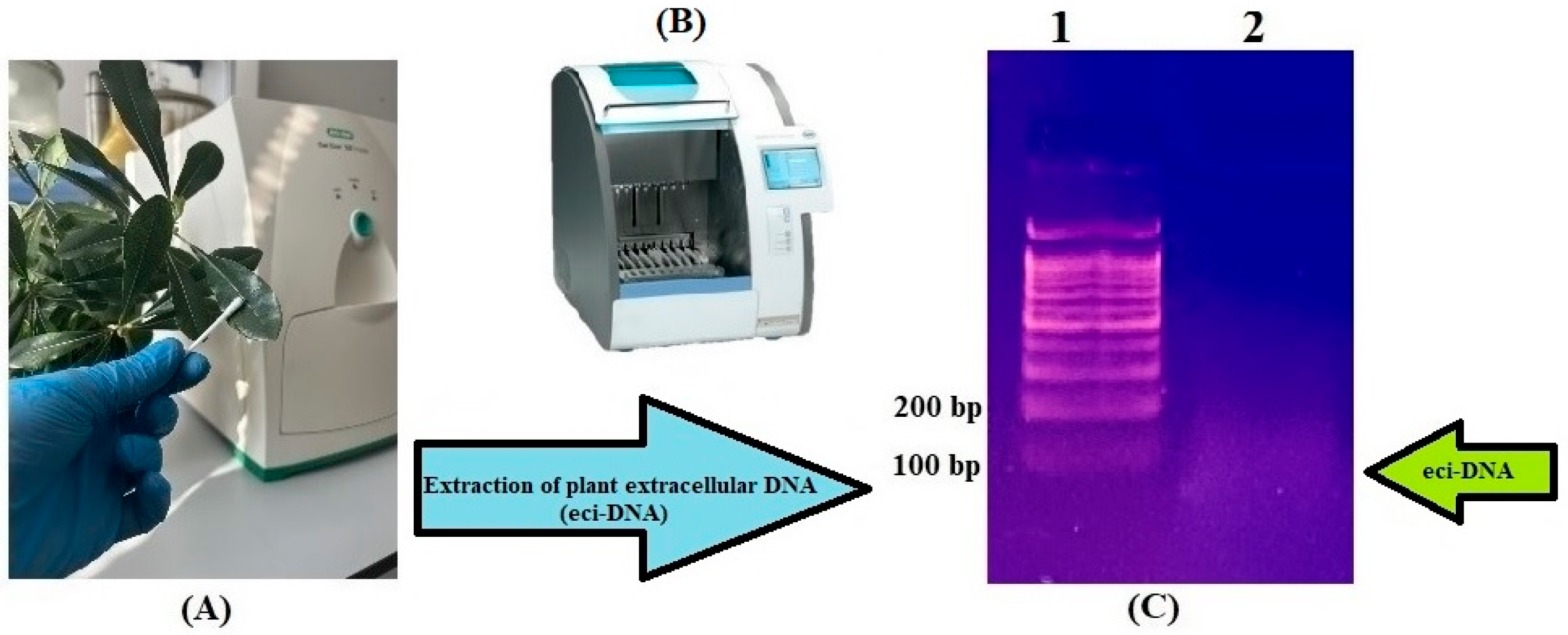
Before testing the insecticidal activity of the released DNA, we isolated and purified eci-DNA from the leaf surfaces of P. tobira. Next, we loaded the sample onto a 1.8% agarose gel to check the size distribution. Unexpectedly, the eci-DNA fragments were small and homogeneous, with the majority of fragments being under 100 bp of the DNA ladder (Figure 1).
This suggests that eci-DNA is a result of active fragmentation rather than being derived from dead and damaged cells, which would result in a DNA smear with different lengths, ranging from a few base pairs to mega-base pairs.

2.2. Eci-DNA Shows Pronounced Insecticidal Effect After Topical Application

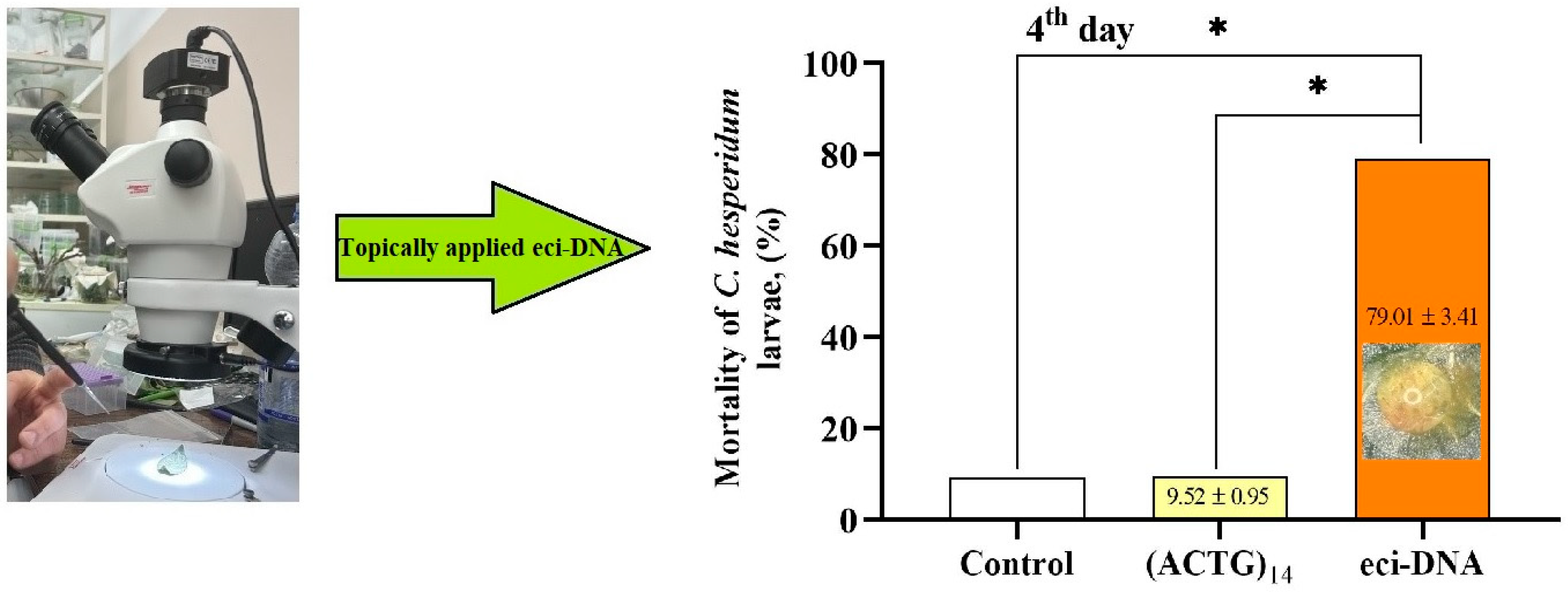
Next, to check whether this uniformly secreted DNA could exhibit an insecticidal effect, we topically applied it to C. hesperidum larvae (1.2 ng of eci-DNA per larva, with a body size of 2–2.2 mm2). Four days post-treatment, we assessed the mortality rate and found that eci-DNA killed approximately 80% of the larvae, while the scrambled control with a random 56-mer single-stranded oligonucleotide (ACTG)14 did not show any significant toxicity when compared with the water-treated control group; both showed ca. 10% mortality (Figure 2).

2.3. Comparison with Synthetic Technologies (‘Genetic Zipper’ Technology)

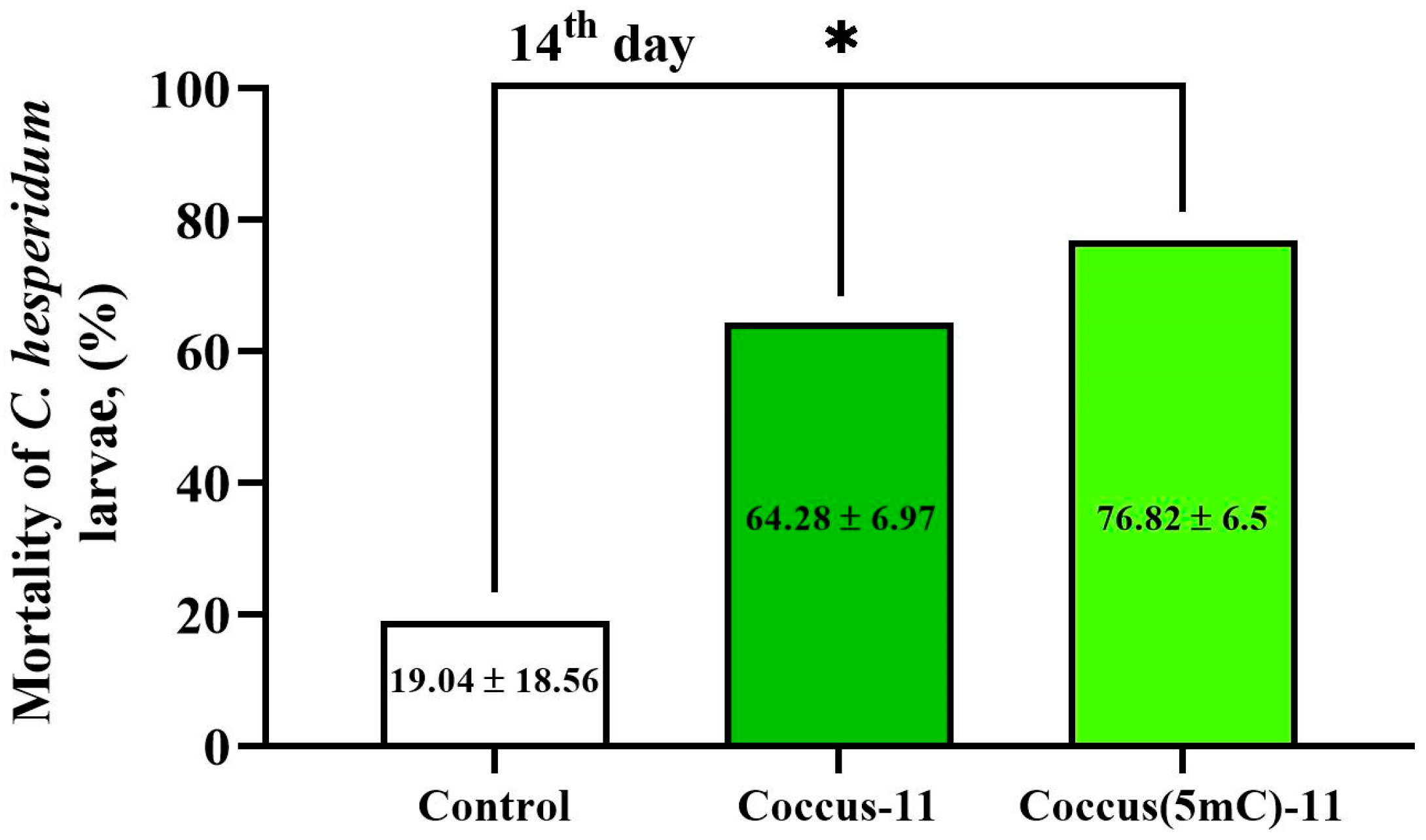
The genomic DNA of insects is predominantly methylated [16,17]. Methyl groups make DNA less immunogenic to the organism itself [18] and also more resistant to DNA nucleases [19,20,21]. We studied the insecticidal activity of the methylated oligonucleotide insecticide Coccus(5mC)-11 (1 mg of DNA per m2 of leaves) and found it to have higher insecticidal potential (76.82%) compared to unmethylated Coccus-11 (64.28%) on the 14th day (Figure 3).
The oligonucleotide insecticide Coccus-11, well characterized in our earlier studies [1], has high insecticidal potential and serves as reliable reference for oligonucleotide insecticides. The results indicate that DNA methylation increases insecticidal potential (or at least does not reduce it) and that methylated eci-DNA is also capable of possessing insecticidal effects on pests.

2.4. Eci-DNA Mainly Contains Nuclear DNA

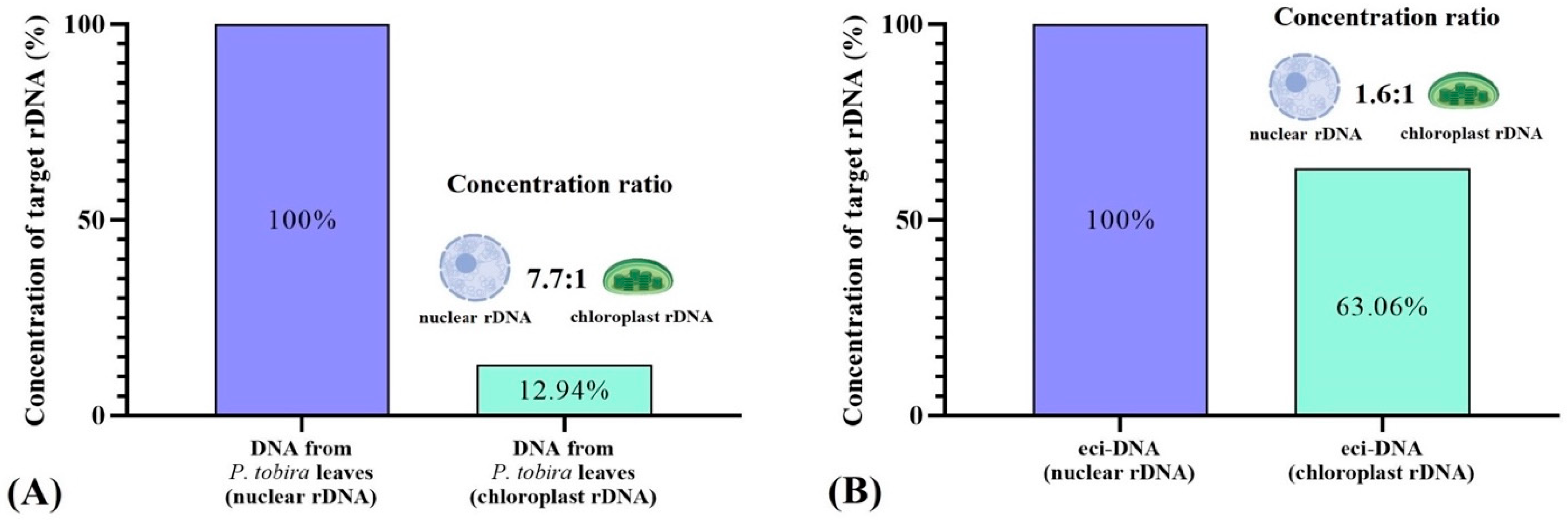
To understand the origin of eci-DNA and whether it is derived from nuclear or chloroplast DNA, we amplified both 5.8S rDNA (nuclear) and 23S rDNA (chloroplast) genes using specific primers. As a negative control, we measured the concentrations of nuclear rDNA and chloroplast rDNA in intact P. tobira leaves. Quantitative PCR results showed that the concentration ratio between nuclear rDNA and chloroplast rDNA was 7.7 to 1 in intact P. tobira leaves. Surprisingly, in the eci-DNA samples, the ratio between nuclear rDNA and chloroplast rDNA was 1.6 to 1, which represents approximately a five-fold increase in chloroplast rDNA (Figure 4). This suggests that eci-DNA is substantially enriched by the chloroplast DNA.

2.5. Eci-DNA Is Predominantly Single-Stranded

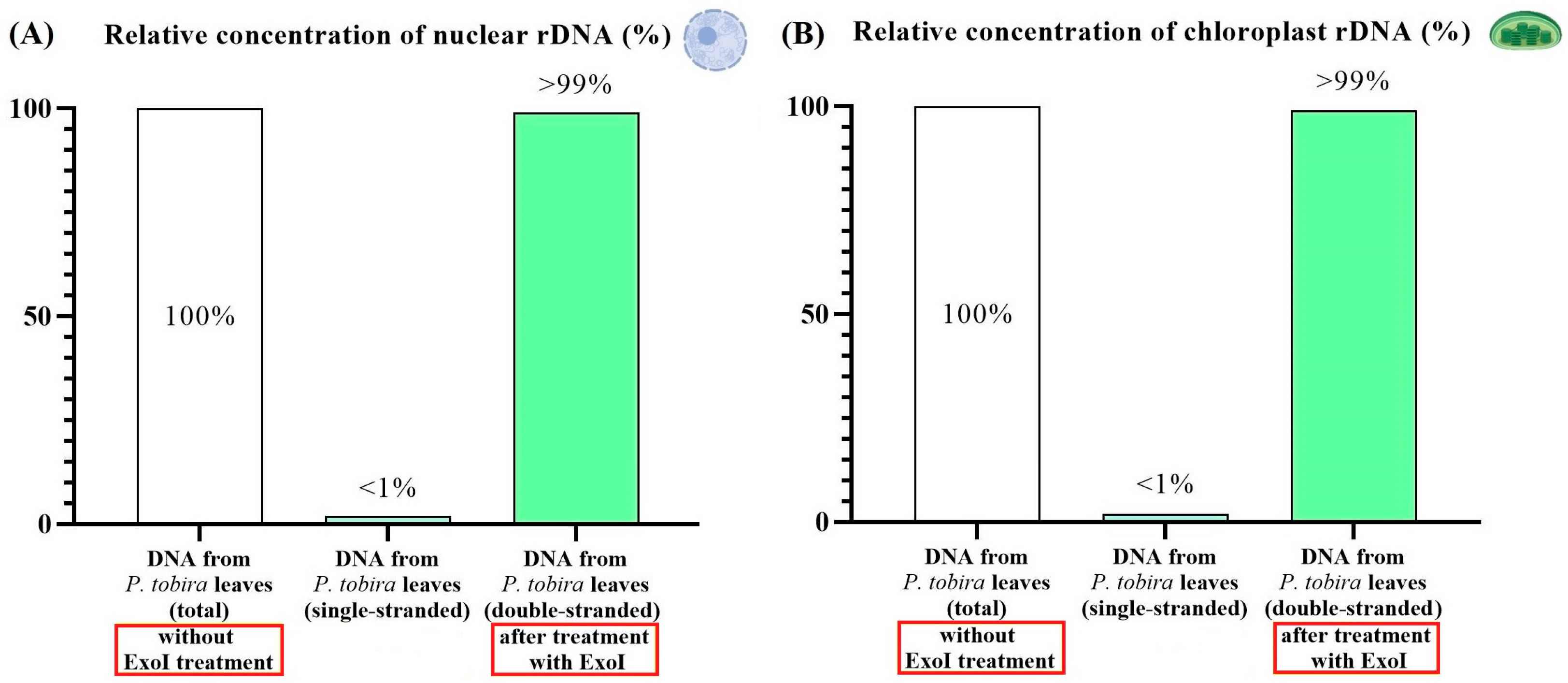
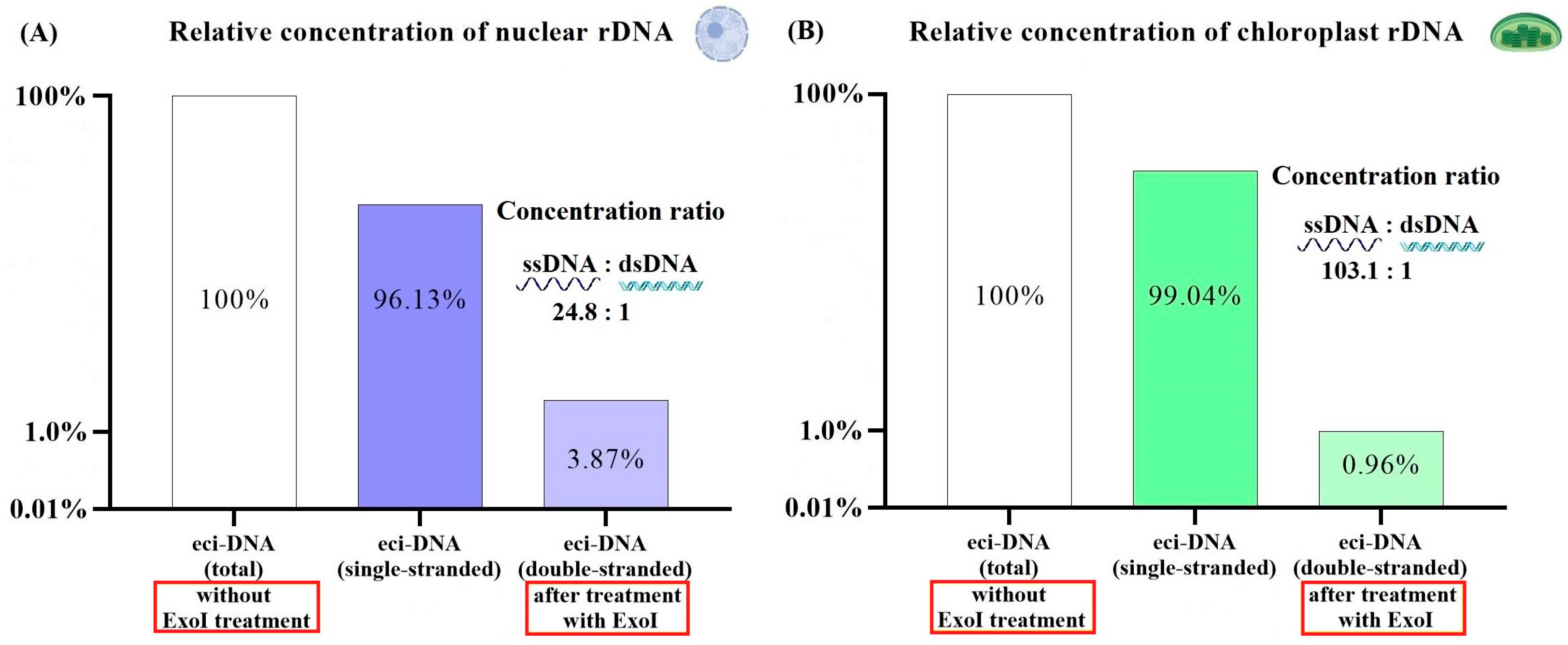
Next, we investigated the nature of the DNA fragments in eci-DNA, specifically whether they were predominantly ssDNA or dsDNA. To this end, we first treated DNA extracted from intact P. tobira leaves with ExoI nuclease, which specifically cleaves ssDNA, followed by qPCR quantification. We found that approximately 99% of the DNA was double-stranded in both the nuclear and chloroplast fractions (Figure 5).
Surprisingly, eci-DNA treatment with ExoI nuclease completely reversed the previous profile and showed that it was mainly composed of single-stranded DNA: 24.8:1 for nuclear DNA and 103.1:1 for chloroplast DNA (Figure 6).

2.6. Pittosporum Tobira Leaves Show a Positive Staining for Eci-DNA

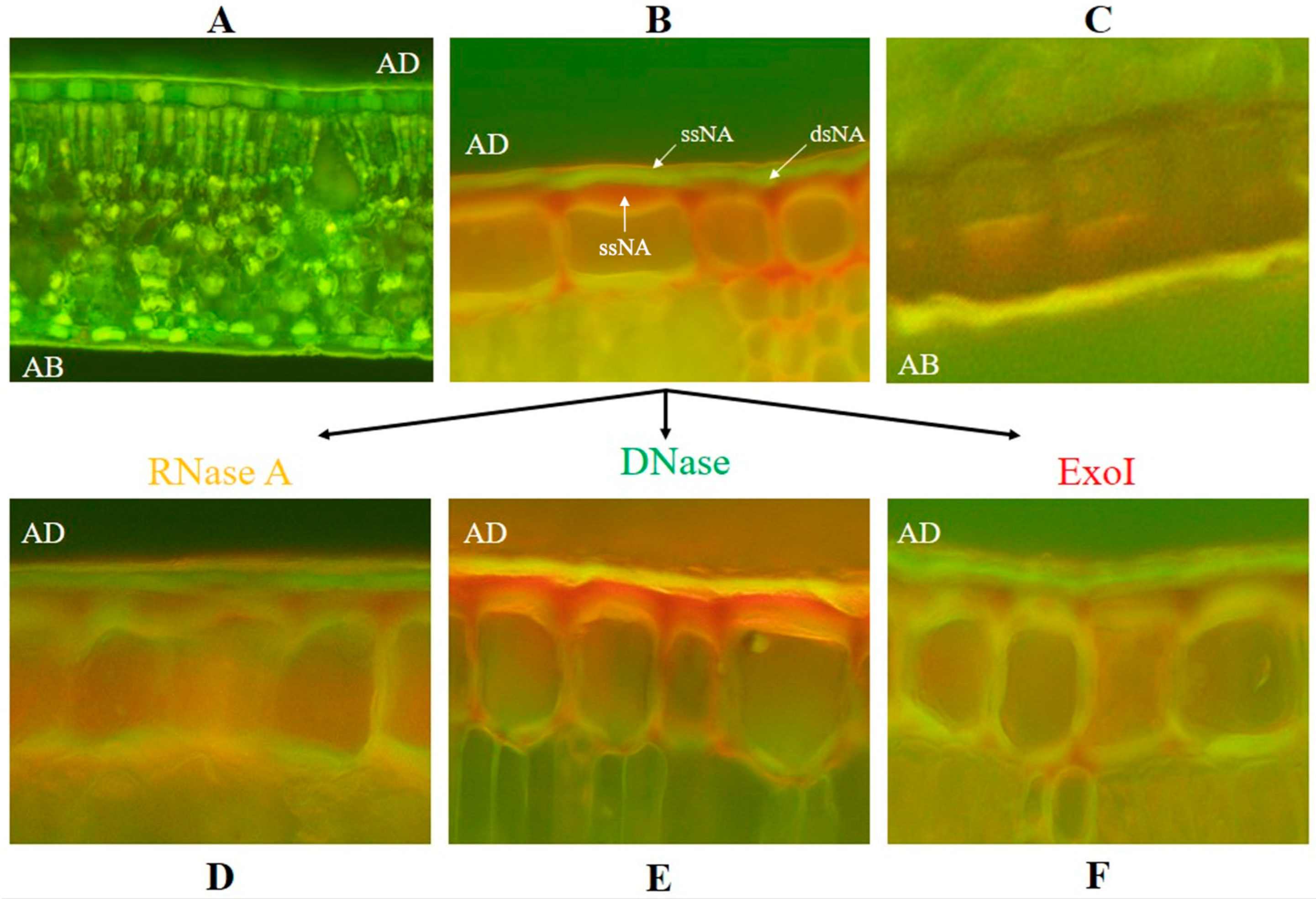
To confirm the presence of eci-DNA on P. tobira leaves, we also performed histological analyses in which we stained both ssDNA and dsDNA in different parts of the leaves. In the control section (without staining), several structures of the anatomical preparation of the leaf exhibited autofluorescence (Figure 7A).
However, after staining with fluorochrome acridine orange, we found that the cuticle on the adaxial part of the leaf fluoresced predominantly in green, indicating the presence of double-stranded nucleic acid. A thin layer of the peripheral part of the cuticle fluoresced clearly in red-orange, confirming the presence of single-stranded nucleic acid in this layer (Figure 7B). Interestingly, the C. hesperidum pest predominantly settled on the abaxial part of P. tobira leaves, where the nucleic acid layer was less pronounced (Figure 7C) and was mainly yellow. Further studies were conducted to determine which nucleic acid (DNA or RNA) was present and fluoresced on the leaf surface in the green- and red-orange-fluorescing layers. For this purpose, before staining with fluorochrome, P. tobira leaves were pre-treated for 20 min with RNase A (Figure 7D), DNase (Figure 7E), and ExoI (Figure 7F) nucleases and then washed out with water.
The results revealed that treatment of the adaxial side of leaves with RNase A (which degrades ssRNA and dsRNA) did not induce noticeable differences from the control group, indicating the absence of both ssRNA and dsRNA on the surface of P. tobira leaves. The green and red-orange cuticle layers remained unchanged (Figure 7D). In contrast, under DNase treatment (which degrades ssDNA and dsDNA), the green fluorescence of the cuticle on the adaxial side of the leaf changed to yellow (similar in color to the abaxial surface (AB) of leaves, where the visible nucleic acid layer on the cuticle was not detected), confirming that the double-stranded nucleic acid found on the leaves was dsDNA. The clearly structured red-orange layer of the single-stranded nucleic acid also disappeared, indicating that it was formed by ssDNA. These effects led to the formation of a loose layer characteristic of unstructured and partially degraded ssDNA (Figure 7E). Upon ExoI treatment (which degrades ssDNA), the red-orange layer of the single-stranded nucleic acid became noticeably thinner, confirming the presence of single-stranded DNA in the outermost layer of the leaf surface (Figure 7F). As expected, the green layer of double-stranded nucleic acid remained unchanged under the action of ExoI. The results obtained were consistent with those from real-time PCR and confirmed the presence of single-stranded DNA in the outermost layer of the cuticle of P. tobira leaves. It should be noted that ssNA is present in great quantities in the epidermal layer of cells (Figure 7B; red color around epidermal cells). Clearly, epidermal cells actively participate in the formation of ssNA and ssDNA, in particular, which then penetrate the cell surface.

2.7. Differential Gene Expression (DGE) Analysis of C. hesperidum Reveals Activation of Retrotransposons Caused by Coccus-11 Oligonucleotide Insecticide

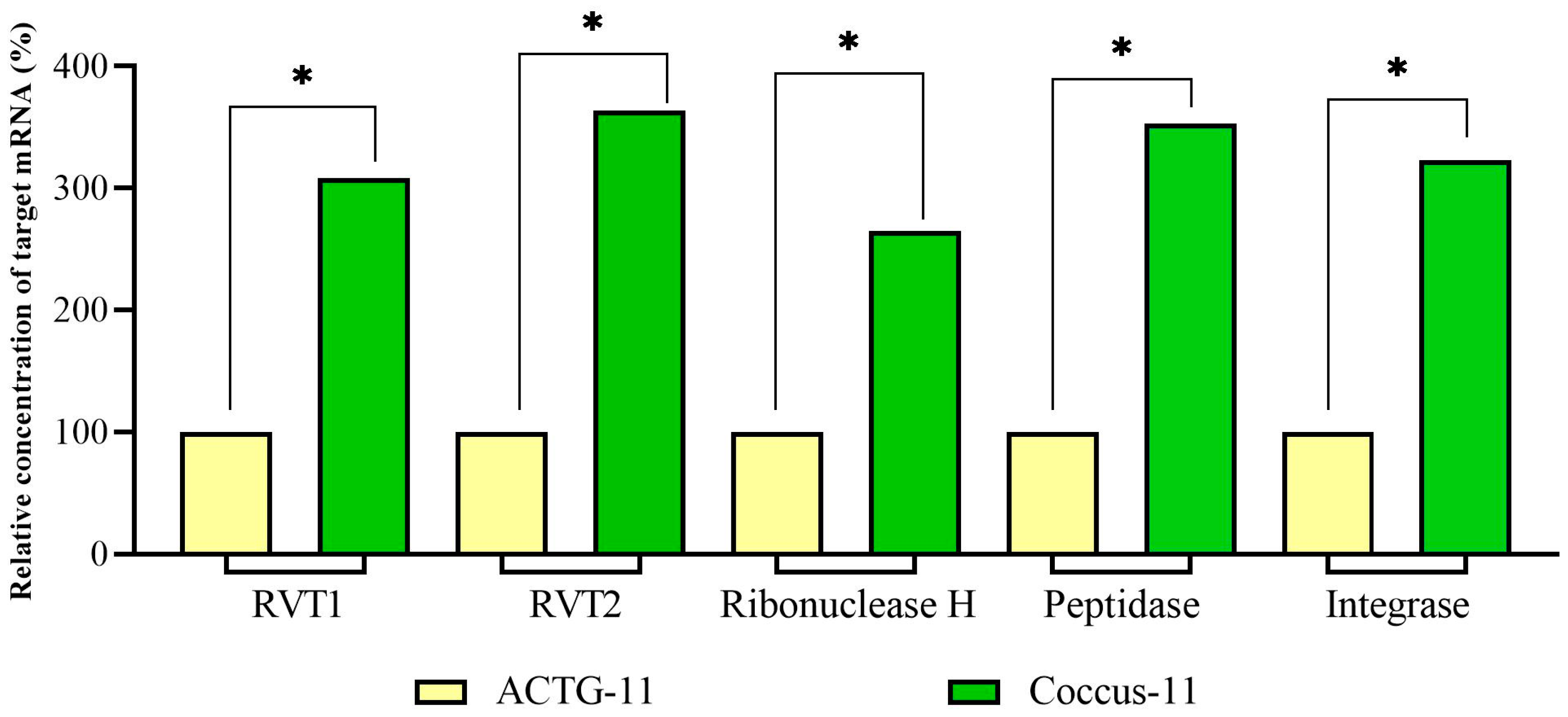
For our studies with antisense DNA (‘genetic zipper’ technology-based oligonucleotide insecticides and eci-DNA), it was very important to investigate the possible contribution of RT-RNAse H of retrotransposons in target RNA degradation and in DNA containment mechanism in general, as retrotransposons constitute a significant portion of insect genomes, including Hemiptera representatives. If retrotransposons are activated by antisense DNA fragments, this could significantly enhance the insecticidal potential of oligonucleotide insecticides and eci-DNA. For this purpose, we chose the well-characterized oligonucleotide insecticide Coccus-11 [1,13]. The data obtained from the DGE analysis indicated significant activation of retrotransposons (‘retrotransposon carnival’) in C. hesperidum cells under the influence of the oligonucleotide insecticide Coccus-11. The expression of the reverse transcriptase domains (RVT1 and RVT2), ribonuclease H domain, along with integrase and peptidase, of retrotransposons (mainly Pao and Tf2), significantly increased (Figure 8). Pao retrotransposons potentially act as molecular machinery for antiviral defense [22,23], whereas Tf2 retrotransposons impact rapid adaptive stress responses in insects (such as insecticide application or host-plant resistance) [24].
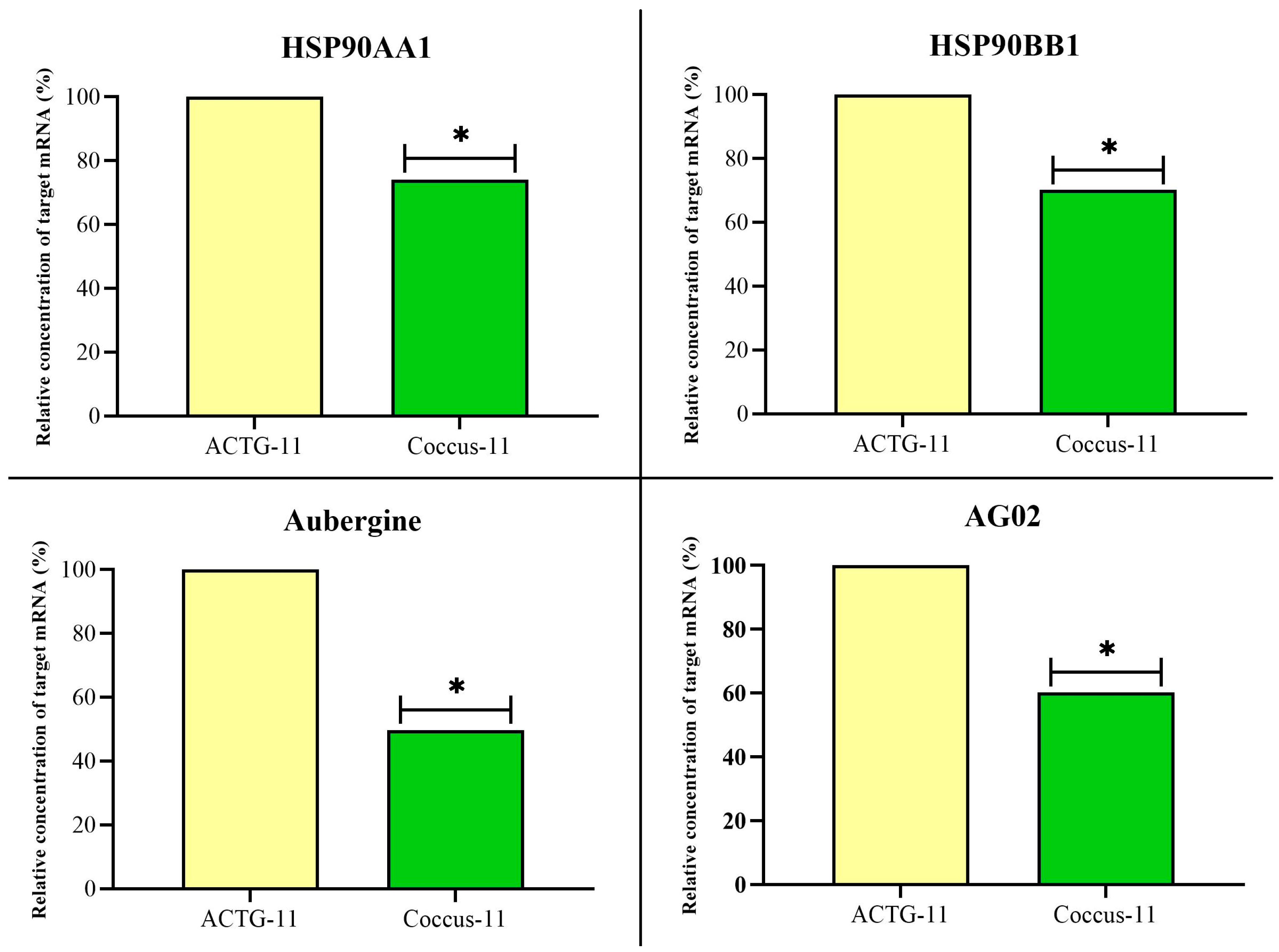
Accordingly, the expression of key inhibitors of retrotransposon replication: HSP90AA1, HSP90BB1, Aubergine, and AGO2 significantly decreased (Figure 9).
These inhibiting proteins act as part of the host defense system, specifically within the PIWI/piRNA pathway [25,26,27], while the latter, AGO2, plays a critical role in inhibiting retrotransposon replication, primarily collaborating with the PIWI/piRNA pathway to silence retrotransposons [28,29,30]. While PIWI proteins are central to germline expression, AGO2 is often involved in both somatic and germline tissues by utilizing endogenous siRNAs to target and cleave retrotransposon transcripts [31,32,33].
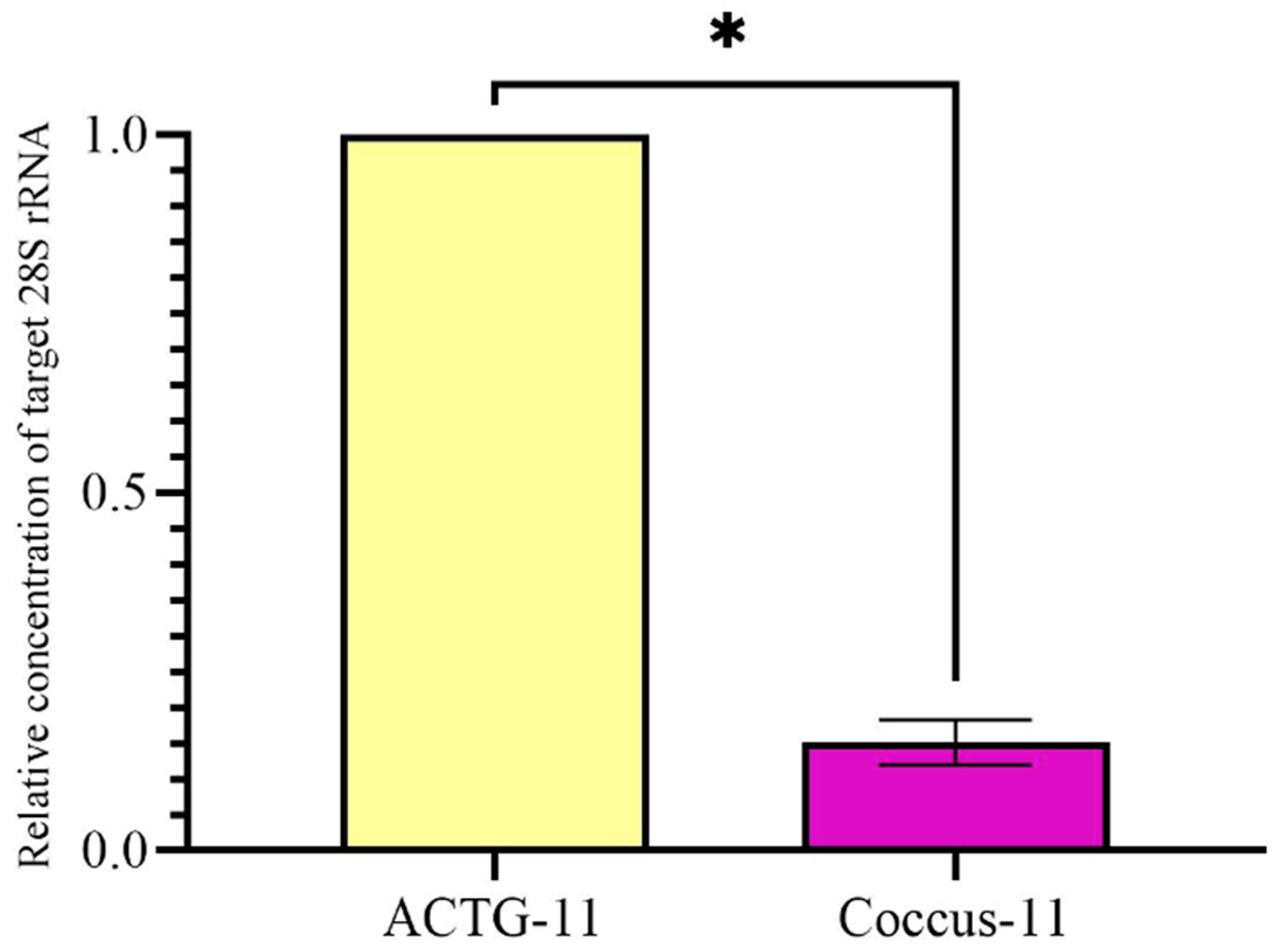
On the contrary, on the 4th day, RNase H1 and RNase H2 were not significantly up-regulated in the Coccus-11 group in comparison with random primer ACTG-11 (p > 0.05). After that, it was important to evaluate the contribution of increased expression of RT-RNase H in the Coccus-11 group (Figure 8) to target degradation of 28S rRNA and insect mortality. We evaluated 28S rRNA expression and found a 7.5-fold lower concentration of target rRNA in the Coccus-11 group in comparison with the ACTG-11 group (Figure 10).
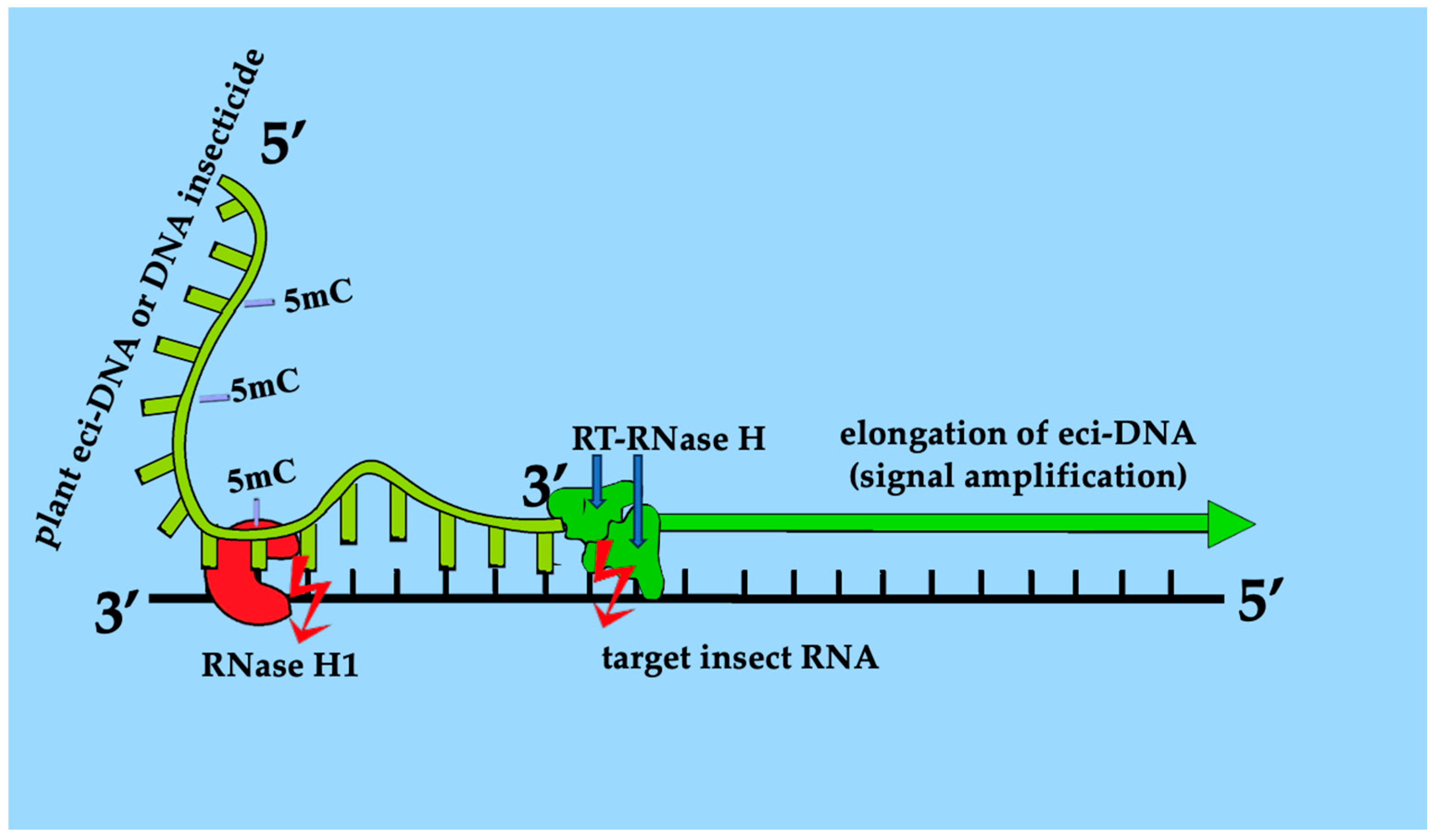
These results are consistent with the previously observed difference in 28S rRNA expression in the Coccus-11 group compared with random 11-mer oligonucleotides [13]. Thus, upregulated retrotransposon RNase H modules were responsible for the decrease in the concentration of 28S rRNA strands in the Coccus-11 group, by cleaving RNA in the RNA (28S rRNA)-DNA (Coccus-11) duplex. Obviously, if the RNase H module in RT-RNase H cleaves rRNA in this RNA-DNA duplex, the OT module can also elongate the Coccus-11 fragment and amplify the insecticidal signal (Figure 11).

3. Discussion

The results obtained in this study suggest that P. tobira cells possess a mechanism for fragmenting genomic DNA into smaller fragments and converting them into single-stranded DNA (ssDNA). Similar to purpose-driven ‘genetic zipper’ technology-based oligonucleotide insecticides, eci-DNA likely functions via evolution-driven targeted gene silencing (Table 1).
The observed phenomenon is particularly intriguing in the context of eci-DNA, which appears to modulate gene expression in C. hesperidum larvae through sequence complementarity to their mRNAs and non-coding RNAs, including rRNAs, causing pest death. This is supported by the discovery of two 11-nucleotide (nt) sequences in the plastome of P. tobira that exhibit perfect complementarity to C. hesperidum rRNA (28S rRNA, MF594311.1; 18S rRNA, MF594274.1), suggesting a potential mechanism for DNA containment-mediated insecticidal effects [13]. Given that the rDNA of C. hesperidum is only partially sequenced, additional complementary sequences may exist, further supporting this hypothesis. Thus, eci-DNA can also act by targeting pest rRNAs in a manner similar to that of CUADb-based oligonucleotide pesticides [12]. It should be noted that eci-DNA isolated in agarose gel was purified from impurities twice, using specialized nucleic acid purification kits: (1) ColGen kit (Syntol, Moscow, Russia)—denaturation of proteins in DNA-protein complexes using a chaotrope, followed by adsorption of DNA on a silica column membrane, and (2) Isolation DNA kit (Roche Diagnostics GmbH, Mannheim, Germany)—denaturation of proteins in DNA-protein complexes using a chaotrope, followed by DNA purification on magnetic particles. It is most unlikely that any other substance (such as proteins) besides nucleic acids could have an insecticidal effect after eci-DNA purification.
In our opinion, plant single-stranded methylated (5mC) eci-DNA can also serve as a primer complex for chain extension on complementary mRNA and rRNA templates within insect cells. For this reason, the most critical role will be played by the 3′-end of the DNA sequence, which, based on literature data, should be complementary to the RNA target by at least 6 nt to trigger chain elongation [34]. Moreover, the results indicate that DNA methylation increases insecticidal potential (or at least does not reduce it), and methylated eci-DNA is also capable of possessing insecticidal effects on pests. We assume that, during the DNA containment mechanism, DNA elongation (signal amplification) based on eci-DNA can be complemented in some insects, e.g., C. hesperidum, by RT-RNase H of retrotransposons [35]. Such a response of the cells could be explained by their pursuit to strengthen (amplify) the signal and obtain a longer DNA strand that can find more parts of the target RNAs for their degradation by RNase H (obviously existing also as a defense against DNA viruses). This is probably the reason behind the importance of the complementarity of the oligonucleotide insecticides’ 3′-end in the insecticidal effect in scale insects, because the 3′-end is important for further DNA synthesis in the 5′-3′ direction [36]. To further investigate this idea, we found that under the influence of antisense oligonucleotide Coccus-11, retrotransposons (Pao and Tf2) were activated with the formation of a significant number of reverse transcriptase (RT)-ribonuclease H (RNase H) enzyme units. RT and RNase H are among the most ancient and most abundant protein folds [37] and are crucial for retrotransposition, often acting as a multifunctional enzyme where RNase H degrades RNA within DNA/RNA hybrids during DNA synthesis by RT [37,38,39]. Retrotransposons constitute a massive portion of insect genomes, acting as major drivers of genome evolution and adaptation, and shaping genome size and structure [40]. Retrotransposition regulates gene expression, aids stress responses, and facilitates pathogen resistance. Although often suppressed by the host PIWI/piRNA pathway to prevent excessive damage, these elements are frequently ‘rehabilitated’ by the genome to serve different functional roles [41,42]. Moreover, retrotransposons are known to insert into the ribosomal DNA (rDNA) of insects, targeting a highly conserved site within the 28S rRNA genes [43]. While commonly viewed as genomic parasites that disrupt rRNA function, recent research indicates that in the germline, retrotransposons can act as a ‘mutualistic’ element by creating double-stranded DNA breaks that stimulate the expansion of rDNA copy numbers, which is crucial for maintaining fertility across generations [44].
The obtained results indicate that retrotransposon RT-RNase H is an ‘accomplice’ of oligonucleotide insecticides in the cell, which not only cleaves the target 28S rRNA [13], but is also capable of increasing the length of the oligonucleotide insecticide Coccus-11 (thereby strengthening the insecticidal signal) with the help of the RT domain on the rRNA template and its subsequent degradation by the RNase H domain. Thus, not only RNase H1 [13], but also RT-RNase H of retrotransposons is capable of contributing to the degradation of target rRNA under the action of oligonucleotide insecticides, such as Coccus-11. In the second step of the DNA containment mechanism [13,36] (target RNA degradation), the key enzymes are DNA-guided rRNases, such as DNA-RNA hybrid-guided RNase H1 [13]. This study shows that DNA-guided RT-RNase H of retrotransposons can significantly contribute to the degradation of the target rRNA under the influence of an oligonucleotide insecticide. Moreover, RT-RNase H was the key enzyme that was significantly upregulated (while RNase H1 and RNase H2 were not) in C. hesperidum cells compared to the random primer ACTG-11 (5′–ACT–GAC–TGA–CT–3′). Therefore, it is apparently due to the impact of RT-RNase H, not RNase H1 or RNase H2, that we observed, in most cases a more rapid decrease in the concentration of target rRNA under the influence of oligonucleotide insecticides compared to random oligonucleotides [13] and oligonucleotide insecticides with single nucleotide substitutions [36,45]. Most of our studies using oligonucleotide insecticides were conducted on representatives of the order Hemiptera, whose genomes have, on average, a higher absolute retrotransposon content per cell than those of other insect orders [40,46]. In other words, oligonucleotide insecticides (DNA insecticides) and eci-DNA can be considered as ‘primers’ for large-scale reverse transcription in cells of hemipterans and the subsequent degradation of the target RNA by ubiquitous RT-RNase H (Figure 11).
In this study, we established, for the first time, a link between the use of the unmodified antisense DNA oligonucleotide Coccus-11 and the activation of retrotransposons (deemed to be a ‘retrotransposon carnival’), which has both practical and fundamental significance. From a practical standpoint, this discovery will help improve oligonucleotide insecticides and ‘genetic zipper’ technology in general, expanding the capabilities of this approach to insect groups whose genomes contain more copies of retrotransposons per insect cell. From a fundamental standpoint, this finding brings us closer to understanding the phenomenon of horizontal gene transfer, for example, between insects and plants [47]. Extracellular DNA from various organisms is present in significant quantities in nature, which can be absorbed by them [48] and cause various effects [49,50,51,52], including insecticidal effects [1]. The ‘retrotransposon carnival’ demonstrated in this study can facilitate horizontal gene transfer using antisense rDNA in germline cells. The activity of RT-RNase H culminates in the formation of dsDNA, which is capable of homologous recombination [37,53]. Thus, if a single-stranded DNA fragment of any plant gene from eci-DNA enters an insect cell and initiates reverse transcription via RT-RNase H on any insect RNA using eci-DNA’s 3′-end, the resulting dsDNA can integrate into the region of the insect genome with the highest homology. Subsequently, for any plant gene, due to the overlap of single-stranded DNA fragments in eci-DNA (because in each cell, during formation of eci-DNA, cuts in the plant genomic DNA will occur primarily at different sites), the next newly formed dsDNAs will integrate into the same region of the insect genome where fragments of the given plant gene are already embedded. Thus, step by step, a new plant gene is formed within the insect genome, which, over time, after refinement by intrachromosomal rearrangements and point mutations, can become a functionally active plant gene within the insect genome. Organisms whose extracellular DNA frequently contacts each other (for example, a plant and its insect pest) have a greater chance of horizontal gene transfer than a random pair of organisms in any given ecosystem.
The obtained results indicate that DNA containment (DNAc) [13,36] is a unique mechanism of action of oligonucleotide insecticides (Table 1). In the first step, the target rRNA is functionally ‘arrested,’ leading to its hypercompensation. In the second step, the target rRNA undergoes degradation mediated by DNA-guided rRNases such as RT-RNase H and RNase H1 [13]. Generally, all oligonucleotide insecticides and random DNA oligonucleotides initiate hypercompensation of rRNA [13], but subsequent substantial rRNA degradation and insect mortality occur only when an oligonucleotide perfectly matches the target rRNA [12,13,36,54]. Obviously, RT-RNase H plays a key role in DNAc and the insecticidal effect of antisense oligonucleotides, along with ATP depletion and ‘kinase disaster’. Many experimental data suggest that imperfectly complementary (random) oligonucleotides do not efficiently recruit DNA-guided rRNases, such as RT-RNase H and RNase H1, and insect cells ultimately restore homeostasis by degrading random oligonucleotides [13].
A striking observation in our study was the shift in the ratio of nuclear to chloroplast rDNA in eci-DNA compared to intact leaf DNA. While intact P. tobira leaves exhibited a nuclear-to-chloroplast rDNA ratio of 7.7:1, this ratio shifted to 1.6:1 in eci-DNA, indicating a substantial enrichment of chloroplast-derived DNA. This finding suggests that P. tobira may selectively incorporate chloroplast DNA into eci-DNA. One plausible explanation is that chloroplasts, which are essential for photosynthesis, may become less vital in cells covered by sedentary insect pests due to the accumulation of honeydew [55,56]. Deprived of direct sunlight, these cells may repurpose chloroplast DNA to produce eci-DNA as a defensive adaptation. This would be a novel adaptation, allowing plants to utilize existing cellular components for pest defense without significant metabolic trade-offs. This hypothesis aligns with previous reports on chloroplast degradation in senescing or stressed plant cells [57], suggesting a broader role for plastid dynamics in plant-insect interactions. Additionally, our results indicate that the outermost layer of eci-DNA predominantly consists of ssDNA, as confirmed by nuclease treatment followed by histological studies and real-time PCR analysis. The conversion of plant-derived DNA into ssDNA with insecticidal properties (eci-DNA) may enhance its stability or facilitate its interaction with pest nucleic acids, thus increasing its effectiveness as an insecticidal agent [58]. It remains unclear whether this ssDNA formation is solely an active regulatory process by the plant or is also a consequence of enzymatic degradation by microbial nucleases. Further research is needed to determine whether different environmental or biotic factors influence this ssDNA predominance.
The ecological implications of eci-DNA extend beyond P. tobira and C. hesperidum. Given the widespread occurrence of sternorrhynchans (including scale insects, mealybugs, and psyllids) in tropical and subtropical regions, it is conceivable that eci-DNA-mediated pest control is a common strategy in evergreen plants. This study provides new insights into a naturally occurring defense mechanism that parallels synthetic ‘genetic zipper’ technology. Of note, similar to our findings on the insecticidal role of ssDNA, particularly plastidic ssDNA in eci-DNA, represented by our team in a preprint in 2025 (https://doi.org/10.1101/2025.11.18.689116, accessed on 26 February 2026) and in this article, were also found by researchers studying dsRNA. They identified a plastidic dsRNA (dsNode343) in oilseed rape, which contributes to defense against the cabbage stem flea beetle, and published their results in a preprint in 2026 [59]. Future investigations should explore whether eci-DNA production varies among plant species, whether different pests elicit distinct DNA fragment compositions, and whether environmental conditions influence eci-DNA efficacy. Overall, our findings suggest that eci-DNA represents a previously unrecognized form of plant defense, where selective DNA fragmentation and chloroplast DNA enrichment play a role in mitigating herbivory by sedentary insect pests. Understanding the molecular underpinnings of this process could pave the way for novel bioinsecticidal applications, leveraging natural plant defense mechanisms for sustainable pest management similar to ‘genetic zipper’ technology.
It is important to note that this study examined the outermost layer of eci-DNA of the plant itself on the leaf cuticle. We found that plant eci-DNA is single-stranded and enriched in chloroplast DNA compared to genomic DNA in intact P. tobira cells. However, we understand that microbial and insect DNA may also contribute to the formation of eci-DNA. The form in which their DNA may be present in eci-DNA is still unknown and will be the subject of further research.

4. Materials and Methods

4.1. Origin of P. tobira and C. hesperidum

We identified P. tobira Thunb. (Apiales: Pittosporaceae) with C. hesperidum L. larvae (Hemiptera: Coccidae) on its leaves at the Nikita Botanical Garden (Yalta, Republic of Crimea, Russia).

4.2. Collection of Eci-DNA from P. tobira Leaves

Eci-DNA was collected during summer from the adaxial (AD) and abaxial (AB) surfaces of around 2400 P. tobira leaves, gently using wet cotton swabs and filtered through a 0.2-micron syringe filter (Whatman, Maidstone, UK) (Figure 1). The total 10 mL filtrate was concentrated to 400 μL under vacuum (Heidolph, Schwabach, Germany) and used for subsequent experiments.

4.3. Gel Electrophoresis

To assess the quality and consistency of extracted eci-DNA, 25 µL of filtrate was loaded per well onto a 1.8% agarose gel, stained with 1% ethidium bromide, and subjected to electrophoresis in Tris-borate-EDTA (TBE) buffer at 10 V/cm for 45 min. The primary eci-DNA fraction was approximately 100 bp in length, as determined using a 100 bp+ DNA ladder (marker) (Figure 1).

4.4. Purification of Eci-DNA from Agarose Gel

Eci-DNA was extracted from agarose gel using the ColGen kit (Syntol, Moscow, Russia). Gel fragments containing DNA were excised using a sterile scalpel and transferred to 1.5 mL Eppendorf tubes. The gel mass was determined, and a 3:1 volume of binding buffer was added (e.g., 600 μL for 200 mg of gel). The mixture was incubated at 55 °C for 10 min, until complete dissolution. Purification was performed using the Isolation DNA kit (Roche Diagnostics GmbH, Mannheim, Germany) and MagNA Pure Compact Instrument (Roche Diagnostics GmbH, Mannheim, Germany). The purified DNA was concentrated to 30 μL under vacuum (Heidolph, Schwabach, Germany) (Figure 1).

4.5. Nuclease Treatment

For confirmation of the presence of eci-DNA on P. tobira leaves, the RNase A (Vazyme Biotech, Nanjing, China), DNase (Roche, Mannheim, Germany), and exonuclease I (ExoI) (GenTerra, Moscow, Russia) were used according to the manufacturer’s instructions. RNase A, DNase, and ExoI were topically applied to P. tobira leaves by placing a 20 µL droplet on the adaxial side of the leaf and gently distributing it with a pipette tip.
For investigation of the nature of the DNA fragments in eci-DNA, 10 μL of eci-DNA was mixed with 3 μL of DNase in the buffer. For ExoI treatment, 10 μL of eci-DNA was mixed with 1 μL of ExoI and 2 μL of 1× ExoI buffer. ExoI nuclease treatment was used to calculate the percentage of single-stranded DNA in eci-DNA during real-time PCR. Both reactions were incubated at 37 °C for 15 min, followed by enzyme inactivation at 80 °C for 15 min.

4.6. PCR Analysis of P. tobira Eci-DNA

Pittosporum tobira eci-DNA was analyzed using real-time PCR with the fluorescent dye SYBR Green I. The reaction mixture contained 3 μL of DNA, 5× qPCRmix-HS SYBR master mix (Evrogen, Moscow, Russia), and specific primers (Table 2). PCR amplification was performed on a LightCycler® 96 instrument (Roche, Basel, Switzerland) using the following thermal cycling conditions: an initial denaturation at 95 °C for 10 min, followed by 45 cycles of denaturation at 95 °C for 10 s, annealing at 54 °C for 15 s, and elongation at 72 °C for 10 s. Each reaction was performed in triplicate. Melt curve analysis was conducted to confirm amplification specificity and detect potential non-specific products.

4.7. Application of Eci-DNA as a Contact Insecticide in Lab Conditions

Eci-DNA (1.2 ng/μL in nuclease-free water) was topically applied to C. hesperidum larvae by placing a 1 µL droplet on the dorsal surface of each larva (average body size: 2–2.2 mm2) using a pipette. As a scrambled control of the ssDNA fragment, we used a 56-nucleotide long random primer (containing 14 consecutive ACTG sequences, (ACTG)14) at the same concentration. The control group received nuclease-free water. Experiments were conducted in triplicate, with ca. 100 larvae per treatment group, which were included in the statistical sample to assess the survival rate. Mortality was calculated as the percentage of dead larvae relative to the total number of individuals treated. Insects were counted using a Nikon SMZ745 microscope (Nikon Inst., Gyoda, Japan) and images were captured with a Toupcam-UCMOS-05100KPA camera (Asmetec, Kirchheimbolanden, Germany).

4.8. Application of Oligonucleotide Insecticides (Coccus-11 and Coccus(5mC)-11) in Field Conditions

Oligonucleotide insecticide sequences were designed based on the 28S rRNA sequence of Coccus hesperidum (isolate S6A395) retrieved from the GenBank database (https://www.ncbi.nlm.nih.gov/nuccore/MT317022.1, accessed on 30 March 2025). Two short oligonucleotides, Coccus-11 (5′–CCA–TCT–TTC–GG–3′) and Coccus(5mC)-11 with methylated cytosines (5′-(5mC)(5mC)A-T(5mC)T-TT(5mC)-GG-3′), were synthesized by Syntol (Moscow, Russia) and were used for the experiments. All oligonucleotides were dissolved in nuclease-free water at a concentration of 100 ng/µL. A control group treated with water was included for comparison. The application rate was 1 mg of DNA in 10 mL of solution per m2 of foliage infested with the pest. Oligonucleotide insecticides were directly applied to first- and second-instar larvae. To ensure full coverage, the sprayer angle was adjusted so that the oligonucleotides reached the entire leaf surface harboring the pests. During the treatment, the daytime air temperature was 17 °C, and the humidity was 84%. Over the two-week experimental period (in November 2025), the average daytime temperature was 16.27 ± 2.11 °C, whereas the nighttime temperature was 13.07 ± 2.41 °C, and the humidity was 76.94 ± 7.12%. Mortality was calculated by dividing the number of dead individuals by the total number of individuals per leaf and multiplying by 100 to express the result as a percentage. Insects were counted using a Nikon SMZ745 microscope (Nikon Inst., Gyoda, Japan) and images were captured with a Toupcam-UCMOS-05100KPA camera (Asmetec, Kirchheimbolanden, Germany).

4.9. Microscopy of Leaf Surfaces for Nucleic Acid Detection

The studies were performed on temporary anatomical preparations of P. tobira (Thunb.) Aiton leaves. For staining nucleic acids, the method of R. Riegler was modified using acridine orange fluorochrome [60].
Microscopy was performed using a MIKMED-2var.26 fluorescence microscope (LOMO-Microsystems, Saint Petersburg, Russia) and objectives: PLAN F 10×/0.30 and PLAN F 20×/0.50. A block of filters “B” (BP460-490/DM500/BA520) was used, which corresponded to an excitation illumination spectrum of 460–490 nm. A 500-nm barrier filter was used; the recorded fluorescence spectrum was 520–700 nm. Photographic recording was performed using a digital camera “MC-6.3” (LOMO-Microsystems, Saint Petersburg, Russia), integrated with the software “ToupView” (https://www.touptekphotonics.com/download/?category=Windows) (accessed on 30 March 2026) (ToupTek Photonics, Hangzhou, China).

4.10. Differential Gene Expression (DGE) Analysis

RNA quality and quantity were assessed using a BioAnalyser and the RNA 6000 Nano Kit (Agilent Technologies, Santa Clara, CA, USA). PolyA RNA was isolated using the Dynabeads® mRNA Purification Kit (Thermo Fisher Scientific, Waltham, MA, USA). Libraries were prepared using the NEBNext® Ultra™ II RNA Library Prep Kit (New England Biolabs, Beverly, MA, USA). Library concentrations and fragment size were assessed using a Qubit fluorometer (Thermo Fisher Scientific, Waltham, MA, USA) and the High-Sensitivity DNA Kit (Agilent Technologies, Santa Clara, CA, USA). Sequencing was performed on an Illumina HiSeq1500 (Illumina, San Diego, CA, USA), generating at least 10 million 50 nt reads per sample. Reads were aligned to the genome using STAR, and differential expression was analyzed using DESeq2 (Bioconductor, Seattle, DC, USA). Reference genome: Coccus hesperidum, whole genome shotgun sequencing project (https://www.ncbi.nlm.nih.gov/nuccore/CAXVDF000000000.1) (accessed on 30 March 2026). DGE was performed in two biological replicates for both the Coccus-11-treated and ACTG-11-treated (5′–ACT–GAC–TGA–CT–3′) control groups, with 100 larvae per replicate.

4.11. Evaluation of 28S rRNA Expression of C. hesperidum

Larvae were homogenized in 1.5 mL tubes using a pestle, and RNA was extracted using the ExtractRNA kit (Evrogen, Moscow, Russia) per the manufacturer’s protocol. Three independent biological replicates were prepared, each using 100 larvae per treatment group. RNA concentration and quality were measured with a NanoDrop spectrophotometer (Thermo Fisher Scientific, Waltham, MA, USA). Electrophoresis was performed in 1.5% agarose gel with TBE buffer (10 V/cm for 30 min), loading 5 μL of RNA per lane. Reverse transcription was performed using 2.5 μg of total RNA with the reverse primer (5′–ACG–TCA–GAA–TCG–CTG–C–3′) and the MMLV RT kit (Evrogen, Moscow, Russia) at 40 °C for 60 min in a DTprime 4 (DNA Technology, Moscow, Russia). The qPCR reaction used 2 μL of cDNA with forward (5′–ACC–GTC–GAC–GAA–CTG–G–3′) and reverse (5′–ACG–TCA–GAA–TCG–CTG–C–3′) primers and 5× qPCRmix-HS SYBR (Evrogen, Moscow, Russia). The PCR conditions were as follows: 10 min initial denaturation at 95 °C; 30 cycles of 10 s at 95 °C, 15 s at 62 °C; and 14 s at 72 °C in a DTprime 4. Reactions were run in triplicate. Melt curve analysis confirmed the specificity of amplification.

4.12. Statistical Analyses

The non-parametric Mann–Whitney U test was used to evaluate the significance of the difference in gene expression. The non-parametric Pearson’s chi-squared test (χ2) with Yates’s correction was performed to evaluate the significance of the difference in mortality between control and experimental groups; p < 0.01 and p < 0.05 were considered significant. All calculations were performed using Prism 9 software (GraphPad Software Inc., Boston, MA, USA). All experiments were conducted in triplicate.

5. Conclusions

This study demonstrates that the outermost layer of eci-DNA of P. tobira leaves is predominantly single-stranded and exhibits a significant insecticidal effect on the pest C. hesperidum. Under natural conditions, plant DNA is unwound, partially degraded, and forms a previously unrecognized nanolayer of ssDNA on the leaf surface. This adaptation may serve as a natural defense mechanism against sap-feeding insects. Notably, chloroplast DNA is disproportionately enriched in eci-DNA compared to total cellular DNA, suggesting an active release mechanism for chloroplast-derived sequences in eci-DNA formation. The insecticidal activity of natural DNA appears to function through a DNA containment mechanism, wherein eci-DNA interferes with the expression of plant non-coding RNAs (including rRNAs) and mRNAs that share full or partial sequence complementarity. Moreover, using oligonucleotide insecticide Coccus-11 as an example, it was shown that antisense DNA is capable of activating insect retrotransposons and upregulating RT-RNase H, a crucial enzyme for the DNA containment mechanism, and causing insecticidal effects. And it is very important that these effects are caused by unmodified antisense oligonucleotides, which were once considered of little hope in applied biology, but are now a promising area of plant protection. Intriguingly, the ‘genetic zipper’ technology, developed in the laboratory for pest control, has a strikingly similar analog in nature, underscoring the evolutionary convergence of DNA-based defense strategies. The findings of this study support the conclusion that CUAD biotechnology (‘genetic zipper’ technology) is a nature-based pest control solution, reinforcing its safety and potential for agricultural applications. CUADb-based oligonucleotide pesticides hold promise as standalone treatments or as components of integrated bioformulations for the selective management of a wide range of insect pests, ushering in a new era of DNA-programmable plant protection.

Author Contributions

Conceptualization, V.O.; methodology, V.O., N.G., N.P. and Y.Y.; software, V.O., N.G. and N.P.; validation, V.O. and N.G.; formal analysis, V.O., N.G., N.P. and Y.Y.; investigation, V.O., N.G., N.P. and Y.Y.; resources, V.O.; data curation, V.O., N.G., N.P. and Y.Y.; writing—original draft preparation, V.O., K.L., N.G., J.A., N.P., Y.Y. and I.C.; writing—review and editing, V.O., K.L., N.G., J.A., N.P., Y.Y. and I.C.; visualization, V.O., N.G. and N.P.; supervision, V.O.; project administration, V.O.; funding acquisition, V.O. All authors have read and agreed to the published version of the manuscript.

Funding

The research obtained funding from the Russian Science Foundation No. 25-16-20070, https://rscf.ru/project/25-16-20070/ (accessed on 30 March 2026) (Section 1, Section 2, Section 3, Section 4 and Section 5; Section 2.1, Section 2.2, Section 2.3, Section 2.4, Section 2.5 and Section 2.7; Section 4.1, Section 4.2, Section 4.3, Section 4.4, Section 4.5, Section 4.6, Section 4.7, Section 4.8, Section 4.10, Section 4.11 and Section 4.12), and obtained funding within the framework of a state assignment V.I. Vernadsky Crimean Federal University for 2026 with the planning period of 2024–2026 No. FZEG-2024–0001 (Section 2, Section 3, Section 4 and Section 5; Section 2.6; Section 4.9).

Data Availability Statement

The original contributions presented in this study are included in the article. Further inquiries can be directed to the corresponding author.

Acknowledgments

We thank our many colleagues, too numerous to name, for the technical advances and lively discussions that have prompted us to write this article. We apologize to the many colleagues whose work has not been cited. We are very much indebted to all anonymous reviewers and our colleagues from the Lab on DNA technologies, PCR analysis, and creation of DNA insecticides (V.I. Vernadsky Crimean Federal University, Institute of Biochemical Technologies, Ecology and Pharmacy, Department of General Biology and Genetics), and OLINSCIDE BIOTECH LLC. for valuable comments on our manuscript.

Conflicts of Interest

The authors declare no conflicts of interest.

References

  1. Oberemok, V.V.; Useinov, R.Z.; Skorokhod, O.A.; Gal’chinsky, N.V.; Novikov, I.A.; Makalish, T.P.; Yatskova, E.V.; Sharmagiy, A.K.; Golovkin, I.O.; Gninenko, Y.V.; et al. Oligonucleotide Insecticides for Green Agriculture: Regulatory Role of Contact DNA in Plant-Insect Interactions. Int. J. Mol. Sci. 2022, 23, 15681. [Google Scholar] [CrossRef]
  2. Tani, K.; Nasu, M. Roles of Extracellular DNA in Bacterial Ecosystems. In Extracellular Nucleic Acids. Nucleic Acids and Molecular Biology; Kikuchi, Y., Rykova, E.Y., Eds.; Springer: Berlin/Heidelberg, Germany, 2010; Volume 25, pp. 25–38. [Google Scholar]
  3. Vlassov, V.V.; Laktionov, P.P.; Rykova, E.Y. Extracellular nucleic acids. BioEssays 2007, 29, 654–667. [Google Scholar] [CrossRef]
  4. Finkel, S.E.; Kolter, R. DNA as a nutrient: Novel role for bacterial competence gene homologs. J. Bacteriol. 2001, 183, 6288–6293. [Google Scholar] [CrossRef] [PubMed]
  5. Mulcahy, H.; Charron-Mazenod, L.; Lewenza, S. Extracellular DNA chelates cations and induces antibiotic resistance in Pseudomonas aeruginosa biofilms. PLoS Pathog. 2008, 4, e1000213. [Google Scholar] [CrossRef] [PubMed]
  6. Berne, C.; Kysela, D.T.; Brun, Y.V. A bacterial extracellular DNA inhibits settling of motile progeny cells within a biofilm. Mol. Microbiol. 2010, 77, 815–829. [Google Scholar] [CrossRef] [PubMed]
  7. Whitchurch, C.B.; Tolker-Nielsen, T.; Ragas, P.C.; Mattick, J.S. Extracellular DNA required for bacterial biofilm formation. Science 2002, 295, 1487. [Google Scholar] [CrossRef]
  8. Hu, W.; Li, L.; Sharma, S.; Wang, J.; McHardy, I.; Lux, R.; Yang, Z.; He, X.; Gimzewski, J.K.; Li, Y.; et al. DNA Builds and Strengthens the Extracellular Matrix in Myxococcus xanthus Biofilms by Interacting with Exopolysaccharides. PLoS ONE 2012, 7, e51905. [Google Scholar] [CrossRef]
  9. Zhou, X.; Gao, H.; Zhang, X.; Khashi U Rahman, M.; Mazzoleni, S.; Du, M.; Wu, F. Plant extracellular self-DNA inhibits growth and induces immunity via the jasmonate signaling pathway. Plant Physiol. 2023, 192, 2475–2491. [Google Scholar] [CrossRef]
  10. Duran-Flores, D.; Heil, M. Extracellular self-DNA as a damage-associated molecular pattern (DAMP) that triggers self-specific immunity induction in plants. Brain Behav. Immun. 2018, 72, 78–88. [Google Scholar] [CrossRef]
  11. Palazzo, A.F.; Lee, E.S. Non-coding RNA: What is functional and what is junk? Front Genet. 2015, 6, 2. [Google Scholar] [CrossRef]
  12. Kumar, H.; Gal’chinsky, N.; Sweta, V.; Negi, N.; Filatov, R.; Chandel, A.; Ali, J.; Oberemok, V.; Laikova, K. Perspectives of RNAi, CUADb and CRISPR/Cas as Innovative Antisense Technologies for Insect Pest Control: From Discovery to Practice. Insects 2025, 16, 746. [Google Scholar] [CrossRef]
  13. Oberemok, V.; Gal’chinsky, N.; Novikov, I.; Sharmagiy, A.; Yatskova, E.; Laikova, E.; Plugatar, Y. Ribosomal RNA-Specific Antisense DNA and Double-Stranded DNA Trigger rRNA Biogenesis and Insecticidal Effects on the Insect Pest Coccus hesperidum. Int. J. Mol. Sci. 2025, 26, 7530. [Google Scholar] [CrossRef]
  14. Oberemok, V.V. ‘Genetic Zipper’ Technology: Modern Approach for Insect Pest Control; Generis: Chișinău, Republic of Moldova, 2026; p. 136. ISBN 979-8-89966-393-2. [Google Scholar]
  15. Cedden, D.; Bucher, G. The quest for the best target genes for RNAi-mediated pest control. Insect Mol. Biol. 2024, 34, 505–517. [Google Scholar] [CrossRef]
  16. Glastad, K.M.; Hunt, B.G.; Goodisman, M.A. Evolutionary insights into DNA methylation in insects. Curr. Opin. Insect Sci. 2014, 1, 25–30. [Google Scholar] [CrossRef]
  17. Li, B.; Hu, P.; Zhu, L.B.; You, L.L.; Cao, H.H.; Wang, J.; Zhang, S.Z.; Liu, M.H.; Toufeeq, S.; Huang, S.J.; et al. DNA Methylation Is Correlated with Gene Expression during Diapause Termination of Early Embryonic Development in the Silkworm (Bombyx mori). Int. J. Mol. Sci. 2020, 21, 671. [Google Scholar] [CrossRef]
  18. Li, J.; Li, L.; Wang, Y.; Huang, G.; Li, X.; Xie, Z.; Zhou, Z. Insights into the Role of DNA Methylation in Immune Cell Development and Autoimmune Disease. Front. Cell Dev. Biol. 2021, 9, 757318. [Google Scholar] [CrossRef]
  19. Tate, P.H.; Bird, A.P. Effects of DNA methylation on DNA-binding proteins and gene expression. Curr. Opin. Genet. Dev. 1993, 3, 226–231. [Google Scholar] [CrossRef] [PubMed]
  20. Campoy, F.J.; Meehan, R.R.; McKay, S.; Nixon, J.; Bird, A. Binding of histone H1 to DNA is indifferent to methylation at CpG sequences. J. Biol. Chem. 1995, 270, 26473–26481. [Google Scholar] [CrossRef]
  21. Diede, S.J.; Guenthoer, J.; Geng, L.N.; Mahoney, S.E.; Marotta, M.; Olson, J.M.; Tanaka, H.; Tapscott, S.J. DNA methylation of developmental genes in pediatric medulloblastomas identified by denaturation analysis of methylation differences. Proc. Natl. Acad. Sci. USA 2010, 107, 234–239. [Google Scholar] [CrossRef]
  22. Wang, L.; Tracy, L.; Su, W.; Yang, F.; Feng, Y.; Silverman, N.; Zhang, Z.Z. Retrotransposon activation during Drosophila metamorphosis conditions adult antiviral responses. Nat. Genet. 2022, 54, 1933–1945. [Google Scholar] [CrossRef] [PubMed]
  23. Morozov, S.Y.; Lezzhov, A.A.; Lazareva, E.A.; Erokhina, T.N.; Solovyev, A.G. Potential Role of Accessory Domains in Polyproteins Encoded by Retrotransposons in Anti-viral Defense of Host Cells. Front. Microbiol. 2019, 9, 3193. [Google Scholar] [CrossRef]
  24. Gupta, A.; Nair, S. Methylation patterns of Tf2 retrotransposons linked to rapid adaptive stress response in the brown planthopper (Nilaparvata lugens). Genomics 2021, 113, 4214–4226. [Google Scholar] [CrossRef]
  25. Petit, M.; Mongelli, V.; Frangeul, L.; Blanc, H.; Jiggins, F.; Saleh, M.C. piRNA pathway is not required for antiviral defense in Drosophila melanogaster. Proc. Natl. Acad. Sci. USA 2016, 113, E4218–E4227. [Google Scholar] [CrossRef]
  26. Zhu, K.Y.; Palli, S.R. Mechanisms, Applications, and Challenges of Insect RNA Interference. Annu. Rev. Entomol. 2020, 65, 293–311. [Google Scholar] [CrossRef]
  27. Karam, J.A.; Parikh, R.Y.; Nayak, D.; Rosenkranz, D.; Gangaraju, V.K. Co-chaperoneHsp70/Hsp90-organizing protein (Hop) is required for transposon silencing and Piwi-interacting RNA (piRNA) biogenesis. J. Biol. Chem. 2017, 292, 6039–6046. [Google Scholar] [CrossRef]
  28. Moshkovich, N.; Lei, E.P. HP1 recruitment in the absence of argonaute proteins in Drosophila. PLoS Genet. 2010, 6, e1000880. [Google Scholar] [CrossRef]
  29. Tóth, K.F.; Pezic, D.; Stuwe, E.; Webster, A. The piRNA Pathway Guards the Germline Genome Against Transposable Elements. Adv. Exp. Med. Biol. 2016, 886, 51–77. [Google Scholar] [CrossRef] [PubMed]
  30. Wu, Y.; Imai, R.; Kosako, H.; Nakahara, T.; Solberg, T.; Siomi, H.; Murano, K. The Piwi-piRNA complex initiates transposon silencing via transcription termination factors PNUTS and Senataxin. Mol. Cell. 2025, 85, 3999–4015.e8. [Google Scholar] [CrossRef] [PubMed]
  31. Juliano, C.; Wang, J.; Lin, H. Uniting germline and stem cells: The function of Piwi proteins and the piRNA pathway in diverse organisms. Annu. Rev. Genet. 2011, 45, 447–469. [Google Scholar] [CrossRef] [PubMed]
  32. Claro-Linares, F.; Rojas-Ríos, P. PIWI proteins and piRNAs: Key regulators of stem cell biology. Front. Cell Dev. Biol. 2025, 13, 1540313. [Google Scholar] [CrossRef]
  33. Sala, L.; Kumar, M.; Prajapat, M.; Chandrasekhar, S.; Cosby, R.L.; La Rocca, G.; Macfarlan, T.S.; Awasthi, P.; Chari, R.; Kruhlak, M.; et al. AGO2 silences mobile transposons in the nucleus of quiescent cells. Nat. Struct. Mol. Biol. 2023, 30, 1985–1995. [Google Scholar] [CrossRef]
  34. Ryu, K.H.; Choi, S.H.; Lee, J.S. Restriction primers as short as 6-mers for PCR amplification of bacterial and plant genomic DNA and plant viral RNA. Mol. Biotechnol. 2000, 14, 1–3. [Google Scholar] [CrossRef]
  35. Gong, Z.; Han, G.Z. Insect Retroelements Provide Novel Insights into the Origin of Hepatitis B Viruses. Mol. Biol. Evol. 2018, 35, 2254–2259. [Google Scholar] [CrossRef] [PubMed]
  36. Gal’chinsky, N.V.; Yatskova, E.V.; Novikov, I.A.; Sharmagiy, A.K.; Plugatar, Y.V.; Oberemok, V.V. Mixed insect pest populations of Diaspididae species under control of oligonucleotide insecticides: 3′-end nucleotide matters. Pestic. Biochem. Physiol. 2024, 200, 105838. [Google Scholar] [CrossRef]
  37. Moelling, K.; Broecker, F.; Russo, G.; Sunagawa, S. RNase H as gene modifier, driver of evolution and antiviral defense. Front. Microbiol. 2017, 8, 1745. [Google Scholar] [CrossRef]
  38. Ilina, T.V.; Brosenitsch, T.; Sluis-Cremer, N.; Ishima, R. Retroviral RNase H: Structure, mechanism, and inhibition. Enzymes 2021, 50, 227–247. [Google Scholar] [CrossRef]
  39. Menéndez-Arias, L.; Sebastián-Martín, A.; Álvarez, M. Viral reverse transcriptases. Virus Res. 2017, 234, 153–176. [Google Scholar] [CrossRef] [PubMed]
  40. Petersen, M.; Armisén, D.; Gibbs, R.A.; Hering, L.; Khila, A.; Mayer, G.; Richards, S.; Niehuis, O.; Misof, B. Diversity and evolution of the transposable element repertoire in arthropods with particular reference to insects. BMC Evol. Biol. 2019, 19, 11. [Google Scholar] [CrossRef] [PubMed]
  41. Mani, S.R.; Juliano, C.E. Untangling the web: The diverse functions of the PIWI/piRNA pathway. Mol. Reprod. Dev. 2013, 80, 632–664. [Google Scholar] [CrossRef]
  42. Wahba, L.; Hansen, L.; Fire, A.Z. An essential role for the piRNA pathway in regulating the ribosomal RNA pool in C. elegans. Dev. Cell. 2021, 56, 2295–2312.e6. [Google Scholar] [CrossRef]
  43. Ye, J.; Yang, Z.; Hayes, J.J.; Eickbush, T.H. R2 retrotransposition on assembled nucleosomes depends on the translational position of the target site. EMBO J. 2002, 21, 6853–6864. [Google Scholar] [CrossRef]
  44. Nelson, J.O.; Slicko, A.; Yamashita, Y.M. The retrotransposon R2 maintains Drosophila ribosomal DNA repeats. Proc. Natl. Acad. Sci. USA 2023, 120, e2221613120. [Google Scholar] [CrossRef]
  45. Puzanova, Y.V.; Novikov, I.A.; Bilyk, A.I.; Sharmagiy, A.K.; Plugatar, Y.V.; Oberemok, V.V. Perfect Complementarity Mechanism for Aphid Control: Oligonucleotide Insecticide Macsan-11 Selectively Causes High Mortality Rate for Macrosiphoniella sanborni Gillette. Int. J. Mol. Sci. 2023, 24, 11690. [Google Scholar] [CrossRef] [PubMed]
  46. Huang, C.; Ji, B.; Shi, Z.; Wang, J.; Yuan, J.; Yang, P.; Xu, X.; Jing, H.; Xu, L.; Fu, J.; et al. A comparative genomic analysis at the chromosomal-level reveals evolutionary patterns of aphid chromosomes. Commun. Biol. 2025, 8, 427. [Google Scholar] [CrossRef]
  47. Gilbert, C.; Maumus, F. Sidestepping Darwin: Horizontal gene transfer from plants to insects. Curr. Opin. Insect Sci. 2023, 57, 101035. [Google Scholar] [CrossRef]
  48. Nagler, M.; Insam, H.; Pietramellara, G.; Ascher-Jenull, J. Extracellular DNA in natural environments: Features, relevance and applications. Appl. Microbiol. Biotechnol. 2018, 102, 6343–6356. [Google Scholar] [CrossRef]
  49. Barbero, F.; Guglielmotto, M.; Capuzzo, A.; Maffei, M.E. Extracellular Self-DNA (esDNA), but Not Heterologous Plant or Insect DNA (etDNA), Induces Plasma Membrane Depolarization and Calcium Signaling in Lima Bean (Phaseolus lunatus) and Maize (Zea mays). Int. J. Mol. Sci. 2016, 17, 1659. [Google Scholar] [CrossRef]
  50. Ibáñez de Aldecoa, A.L.; Zafra, O.; González-Pastor, J.E. Mechanisms and Regulation of Extracellular DNA Release and Its Biological Roles in Microbial Communities. Front. Microbiol. 2017, 8, 1390. [Google Scholar] [CrossRef]
  51. Rassizadeh, L.; Cañadas, E.; Cervero, R.; Flors, V.; Gamir, J. Extracellular DNA induces resistance against Frankliniella occidentalis through callose accumulation. J. Pest. Sci. 2024, 97, 2035–2046. [Google Scholar] [CrossRef]
  52. Fernández-Domínguez, I.J.; Manzo-Merino, J.; Taja-Chayeb, L.; Dueñas-González, A.; Pérez-Cárdenas, E.; Trejo-Becerril, C. The role of extracellular DNA (exDNA) in cellular processes. Cancer Biol. Ther. 2021, 22, 267–278. [Google Scholar] [CrossRef] [PubMed]
  53. Nowotny, M.; Figiel, M. The RNase H Domain: Structure, Function and Mechanism. In Human Immunodeficiency Virus Reverse Transcriptase; LeGrice, S., Gotte, M., Eds.; Springer: New York, NY, USA, 2013. [Google Scholar] [CrossRef]
  54. Oberemok, V.; Laikova, K.; Ali, J.; Chachoua, I.; Gal’chinsky, N. Contact Unmodified Antisense DNA Biotechnology (CUADb)-Based Oligonucleotide Insecticides and RNA Biocontrols: Molecular Bases and Potential in Plant Protection. Curr. Issues Mol. Biol. 2026, 48, 235. [Google Scholar] [CrossRef]
  55. Douglas, A.E. Honeydew. In Encyclopedia of Insects, 2nd ed.; Resh, V.H., Cardé, R.T., Eds.; Academic Press: Cambridge, MA, USA, 2009; pp. 461–463. [Google Scholar]
  56. Ali, J.; Abbas, A.; Abbas, S.; Ji, Y.; Khan, K.A.; Ghramh, H.A.; Mahamood, M.; Chen, R. Honeydew: A keystone in insect–plant interactions, current insights and future perspectives. J. Appl. Entomol. 2024, 148, 727–733. [Google Scholar] [CrossRef]
  57. Woodson, J.D. Control of chloroplast degradation and cell death in response to stress. Trends Biochem. Sci. 2022, 47, 851–864. [Google Scholar] [CrossRef] [PubMed]
  58. Kumar, S.; Nehra, M.; Dilbaghi, N.; Marrazza, G.; Tuteja, S.K.; Kim, K.H. Nanovehicles for Plant Modifications towards Pest- and Disease-Resistance Traits. Trends Plant Sci. 2020, 25, 198–212. [Google Scholar] [CrossRef] [PubMed]
  59. Cedden, D.; Güney, G.; Lyu, Y.; Ju, D.; Seifert, F.; Kawachi, M.; Toprak, U.; Vilcinskas, A.; Rostás, M.; Scholten, S. Natural double-stranded RNA mediates plant defence against insect herbivores. Res. Sq. 2026. [Google Scholar] [CrossRef]
  60. Rigler, R. Microfluorimetric characterization of intracellular nucleic acids and nucleoproteins by acridine orange. Acta Physiol. Scandinavica. Suppl. 1996, 67, 1–122. [Google Scholar]
Figure 1. General scheme of collection and extraction of eci-DNA from the leaf surfaces of P. tobira (A) eci-DNA was collected from the leaf surfaces with wet cotton balls; (B) MagNA Pure Compact Instrument was used for the extraction of DNA; (C) Electropherogram (1.8% agarose gel): 1—DNA ladder 100 bp+; 2—eci-DNA of P. tobira leaves.
Ijms 27 04576 g001
Figure 2. Insecticidal effect of eci-DNA on C. hesperidum larvae. Mortality of C. hesperidum larvae after topical treatment with eci-DNA (ACTG)14 and water-treated control. The significance of the difference in the eci-DNA group compared to the (ACTG)14 and water-treated control is indicated by * at p < 0.01; C. hesperidum larva with drop of eci-DNA solution is represented inside orange column of the graph.
Ijms 27 04576 g002
Figure 3. Insecticidal effect of unmethylated Coccus-11 (5′–CCATCTTTCGG–3′) and methylated Coccus(5mC)-11 (5′–(5mC)-(5mC)-AT-(5mC)-TTT-(5mC)-GG–3′) on C. hesperidum larvae. Mortality of C. hesperidum larvae after topical treatment with Coccus-11, Coccus(5mC)-11, and water-treated control. The significance of difference in the Coccus-11 and Coccus(5mC)-11 groups compared to the water-treated control is indicated by * at p < 0.01; experiments were carried out in the field, the average daytime temperature during the experiment was 16.27 ± 2.11 °C, at night—13.07 ± 2.41 °C, and humidity was 76.94 ± 7.12%.
Ijms 27 04576 g003
Figure 4. Relative concentration of nuclear rDNA and chloroplast rDNA in total DNA from intact P. tobira leaves (A) and eci-DNA (B). Nuclear rDNA was taken as 1 (100%).
Ijms 27 04576 g004
Figure 5. Relative concentrations of nuclear rDNA (A) and chloroplast rDNA (B) in intact P. tobira leaves after ExoI nuclease treatment. Total DNA from intact plant leaves (non-treated with ExoI nuclease) was set to 1 (100%).
Ijms 27 04576 g005
Figure 6. Relative concentrations of nuclear rDNA (A) and chloroplast rDNA (B) from eci-DNA after treatment with ExoI nuclease. Eci-DNA (non-treated with ExoI nuclease) was set to 1 (100%).
Ijms 27 04576 g006
Figure 7. Anatomical preparations of P. tobira leaf cross-sections stained with acridine orange fluorochrome: (A) temporary preparation in native state, non-treated; (B) preparation stained with fluorochrome (adaxial surface, AD): ssNA (red color)—single-stranded nucleic acid, dsNA (green color)— double-stranded nucleic acid (explanation is in the text); (C) preparation stained with fluorochrome (abaxial surface, AB); (D) treated with RNase A before staining with fluorochrome; (E) treated with DNase before staining with fluorochrome; (F) treated with ExoI before staining with fluorochrome. Magnification of all subfigures is 20×, except subfigure A which has 10× magnification.
Ijms 27 04576 g007
Figure 8. Relative expression of the reverse transcriptase domains (RVT1 and RVT2), ribonuclease H domain, peptidase, and integrase of retrotransposons. The significance of the difference in the Coccus-11 group compared to the ACTG-11 is indicated by * at p < 0.05; expression in the ACTG-11 group was set to 100%.
Ijms 27 04576 g008
Figure 9. Relative expression of key inhibitors of retrotransposon replication on the 4th day after contact application of oligonucleotides: HSP90AA1, HSP90BB1, Aubergine, and AGO2. The significance of the difference in the Coccus-11 group compared to the ACTG-11 is indicated by * at p < 0.05; expression in the ACTG-11 group is taken as 100%.
Ijms 27 04576 g009
Figure 10. Relative concentration of 28S rRNA on the 4th day after contact application of oligonucleotides. The significance of the difference in the Coccus-11 group compared to the ACTG-11 is indicated by * at p < 0.05; expression in the ACTG-11 group is taken as 1.
Ijms 27 04576 g010
Figure 11. Proposed mechanism of target RNA degradation by eci-DNA or DNA insecticide in insect cells: RT-RNase H elongates plant eci-DNA or DNA insecticide (signal amplification) and enhances the degradation of target insect RNA by the RNase H module of RT-RNase H and RNase H1; red arrows mean cleavage of target RNA in DNA-RNA duplex by RNase H1 and RNase H module of RT-RNase H.
Ijms 27 04576 g011
Table 1. Comparative overview of ‘genetic zipper’ technology and extracellular DNA with insecticidal properties (eci-DNA).
Key FeaturesEci-DNA‘Genetic Zipper’ Technology
EffectordsDNA << ssDNAssDNA
Length50–100 nt11–20 nt
Target siteWhole pool of cell RNA Pre-rRNA and rRNA
Mechanism of actionDNA containmentDNA containment
ProductionLeavesSynthetic
Target pestBroad spectrumSpecies-specific
DevelopmentEvolution-drivenPurpose-driven
Table 2. Primer sequences for real-time PCR using the SYBR Green I system.
GenePrimerPrimer Sequence (5′-3′)TmPCR ProductGenBank
Sequence ID
23S rRNA, plastomePittoplast-F
Pittoplast-R
CAGGAATATTCACCTGTTG
TAAGATCAGGCCGAAAG
54 °C50 bpMN968282.1
5.8S rRNA,
nucleome
Pittonucleus-F
Pittonucleus-R
ACTTGGTGTGAATTGCAG
CGTTCAAAGACTCGATGG
54 °C47 bpLC545472.1
Disclaimer/Publisher’s Note: The statements, opinions and data contained in all publications are solely those of the individual author(s) and contributor(s) and not of MDPI and/or the editor(s). MDPI and/or the editor(s) disclaim responsibility for any injury to people or property resulting from any ideas, methods, instructions or products referred to in the content.