Searching for New Pharmacological Treatments of Alcohol Use Disorder (AUD): Focus on GLP–1 Receptor Agonists

Abstract
1. Introduction
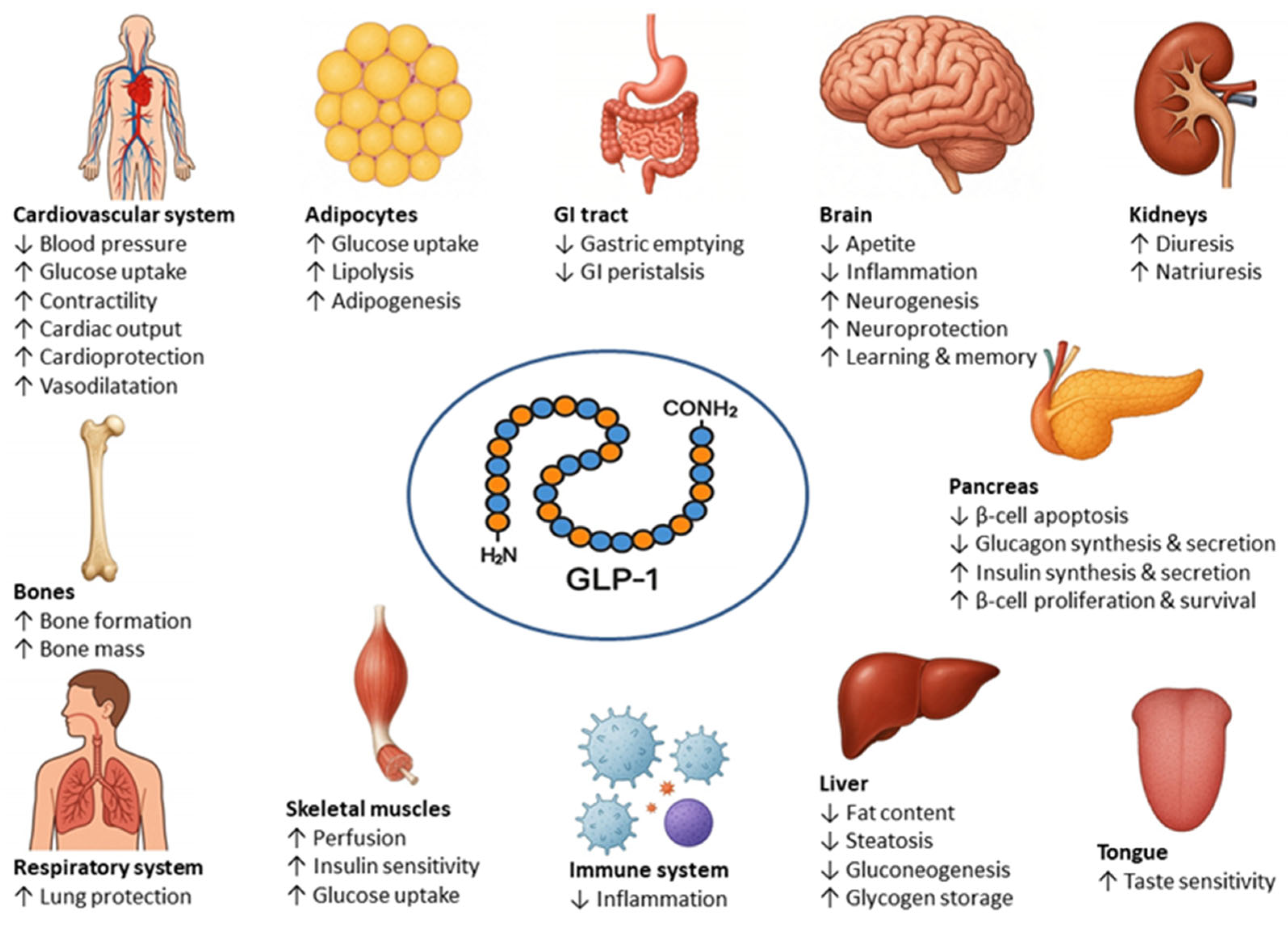
1.1. Glucagon–like Peptide–1 (GLP–1)
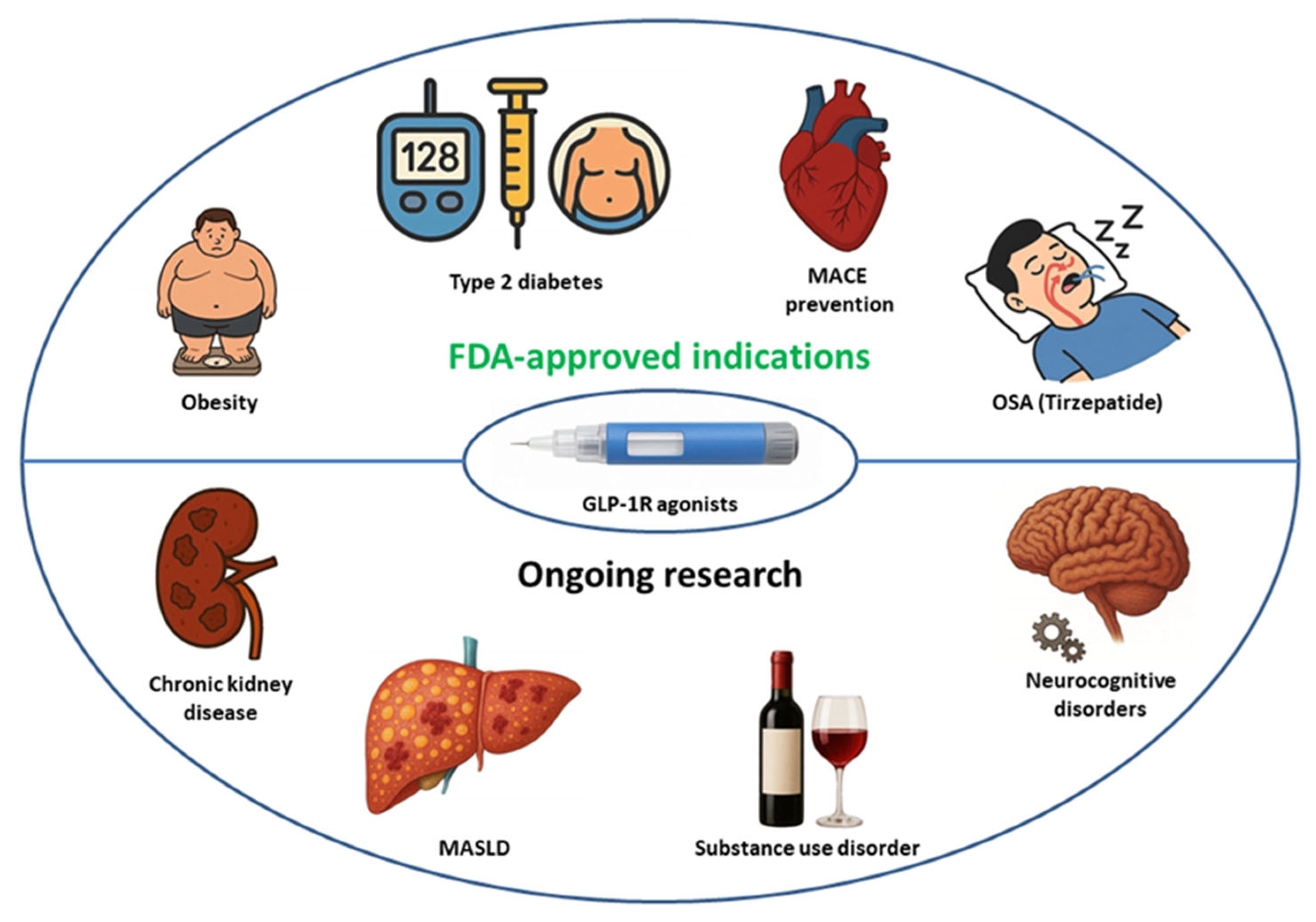
1.2. Agonists of GLP–1 Receptor (GLP–1RAs)
1.3. Current Pharmacological Treatments for Alcohol and Other Substance Use Disorders (ASUDs)
2. GLP–1RAs and Alcohol
2.1. Preclinical Studies
2.2. Human Data
2.2.1. GLP1R Gene and Alcohol Use
2.2.2. Effects of GLP–1RAs on Alcohol Use by Humans
Randomized Clinical Trials
Clinical Evidence
Real–World Evidence
Analysis of Social Media Posts
3. GLP–1RAs and Alcohol–Associated Liver Disease (ALD)
3.1. Preclinical Studies
3.2. Human Data
4. Conclusions
Author Contributions
Funding
Institutional Review Board Statement
Informed Consent Statement
Data Availability Statement
Acknowledgments
Conflicts of Interest
Abbreviations
| ALD | alcohol–associated liver disease |
| ALT | alanine aminotransferase |
| ASUDs | alcohol and other substance use disorders |
| AUD | alcohol use disorder |
| AUDIT–C | Alcohol Use Disorders Identification Test–Consumption |
| BBB | blood–brain barrier |
| BMI | body mass index |
| COMT | catechol–O–methyl transferase |
| CPP | conditioned place preference |
| DOPAC | 3,4–dihydroxyphenylacetic acid |
| DPP–4 | dipeptidyl peptidase IV |
| EMA | European Medicines Agency |
| Ex–4 | exendin–4 |
| Ex–9 | exendin–3(9–39) |
| FDA | Food and Drug Administration |
| fMRI | functional magnetic resonance imaging |
| GI | gastrointestinal |
| GCG | preproglucagon gene |
| GIP | glucose–dependent insulinotropic polypeptide |
| GIP–R | glucose–dependent insulinotropic polypeptide receptor |
| GLP–1 | glucagon–like peptide–1 |
| GLP–1R | glucagon like peptide–1 receptor |
| GLP–1RAs | agonists of glucagon like peptide–1 receptor |
| GPCR | G–protein–coupled receptors |
| GTT | plasma γ–glutamyl transferase |
| HVA | homovanillic acid |
| LDTg | laterodorsal tegmental area |
| LS | lateral septum |
| MAO | monoaminoxidase |
| MACE | major adverse cardiovascular events |
| MASLD | metabolic dysfunction–associated steatotic liver disease |
| MetD | metabolic dysfunction |
| NAc | nucleus accumbens |
| NASH | nonalcoholic steatohepatitis |
| NTS | nucleus tractus solitaries |
| OSA | obstructive sleep apnea |
| OUD | opioid use disorder |
| RCTs | randomized clinical trials |
| SNPs | single nucleotide polymorphisms |
| SPECT | single–photon emission computed tomography |
| SUD | substance use disorder |
| T2DM | type 2 diabetes |
| VTA | ventral tegmental area |
References
- Müller, T.D.; Finan, B.; Bloom, S.R.; D’Alessio, D.; Drucker, D.J.; Flatt, P.R.; Fritsche, A.; Gribble, F.; Grill, H.J.; Habener, J.F.; et al. Glucagon–like peptide 1 (GLP–1). Mol. Metab. 2019, 30, 72–130. [Google Scholar] [CrossRef]
- Zheng, Z.; Zong, Y.; Ma, Y.; Tian, Y.; Pang, Y.; Zhang, C.; Gao, J. Glucagon–like peptide–1 receptor: Mechanisms and advances in therapy. Signal Transduct. Target Ther. 2024, 9, 234. [Google Scholar] [CrossRef]
- Graham, D.L.; Durai, H.H.; Trammell, T.S.; Noble, B.L.; Mortlock, D.P.; Galli, A.; Stanwood, G.D. A novel mouse model of glucagon–like peptide–1 receptor expression: A look at the brain. J. Comp. Neurol. 2020, 528, 2445–2470. [Google Scholar] [CrossRef] [PubMed]
- Gupta, T.; Kaur, M.; Shekhawat, D.; Aggarwal, R.; Nanda, N.; Sahni, D. Investigating the Glucagon–like Peptide–1 and Its Receptor in Human Brain: Distribution of Expression, Functional Implications, Age–related Changes and Species Specific Characteristics. Basic Clin. Neurosci. 2023, 14, 341–353. [Google Scholar] [CrossRef] [PubMed]
- Peri, R.V.; Anchan, H.; Jonnalagadda, K.; Varghese, R.; Gupta, P. Designing GLP–1 delivery: Structural perspectives and formulation approaches for optimized therapy. Nutr. Diabetes 2025, 15, 53. [Google Scholar] [CrossRef]
- Liu, Q.K. Mechanisms of action and therapeutic applications of GLP–1 and dual GIP/GLP–1 receptor agonists. Front. Endocrinol. 2024, 15, 1431292. [Google Scholar] [CrossRef] [PubMed]
- Chrysavgis, L.; Mourelatou, N.G.; Cholongitas, E. Glucagon–like Peptide–1 Receptor Agonists (GLP–1 RAs): A Pan–Steatotic Liver Disease Treatment? Biomedicines 2025, 13, 1516. [Google Scholar] [CrossRef]
- De Giorgi, R.; Ghenciulescu, A.; Yotter, C.; Taquet, M.; Koychev, I. Glucagon–like peptide–1 receptor agonists for major neurocognitive disorders. J. Neurol. Neurosurg. Psychiatry 2025, 96, 870–883. [Google Scholar] [CrossRef]
- McIntyre, R.S.; Rasgon, N.; Goldberg, J.; Wong, S.; Le, G.H.; Mansur, R.B.; Rosenblat, J.D.; Teopiz, K.M.; Stahl, S.M. The effect of glucagon–like peptide–1 and glucose dependent insulinotropic polypeptide receptor agonists on neurogenesis, differentiation, and plasticity (Neuro–GDP): Potential mechanistically informed therapeutics in the treatment and prevention of mental disorders. CNS Spectr. 2025, 30, e23. [Google Scholar] [CrossRef]
- Moaket, O.S.; Obaid, S.E.; Obaid, F.E.; Shakeeb, Y.A.; Elsharief, S.M.; Tania, A.; Darwish, R.; Butler, A.E.; Moin, A.S.M. GLP–1 and the Degenerating Brain: Exploring Mechanistic Insights and Therapeutic Potential. Int. J. Mol. Sci. 2025, 26, 10743. [Google Scholar] [CrossRef]
- Zarei, M.; Sabetkasaei, M.; Mozafari, M.; Zaeri, S. The expanding role of semaglutide: Beyond glycemic control. J. Diabetes Metab. Disord. 2025, 24, 160. [Google Scholar] [CrossRef]
- Klausen, M.K.; Thomsen, M.; Wortwein, G.; Fink–Jensen, A. The role of glucagon–like peptide 1 (GLP–1) in addictive disorders. Br. J. Pharmacol. 2022, 179, 625–641. [Google Scholar] [CrossRef]
- Wackernah, R.C.; Minnick, M.J.; Clapp, P. Alcohol use disorder: Pathophysiology, effects, and pharmacologic options for treatment. Subst. Abus. Rehabil. 2014, 5, 1–12. [Google Scholar] [CrossRef]
- WHO. Global Status Report on Alcohol and Health and Treatment of Substance Use Disorders. Available online: https://www.who.int/publications/i/item/9789240096745 (accessed on 10 February 2026).
- Danpanichkul, P.; Duangsonk, K.; Díaz, L.A.; Chen, V.L.; Rangan, P.; Sukphutanan, B.; Dutta, P.; Wanichthanaolan, O.; Ramadoss, V.; Sim, B.; et al. The burden of alcohol and substance use disorders in adolescents and young adults. Drug Alcohol Depend. 2025, 266, 112495. [Google Scholar] [CrossRef]
- Heilig, M.; Witkiewitz, K.; Ray, L.A.; Leggio, L. Novel medications for problematic alcohol use. J. Clin. Investig. 2024, 134, e172889. [Google Scholar] [CrossRef]
- Bruns, N., VI; Tressler, E.H.; Vendruscolo, L.F.; Leggio, L.; Farokhnia, M. IUPHAR review—Glucagon–like peptide–1 (GLP–1) and substance use disorders: An emerging pharmacotherapeutic target. Pharmacol. Res. 2024, 207, 107312. [Google Scholar] [CrossRef] [PubMed]
- Jerlhag, E. GLP–1 Receptor Agonists: Promising Therapeutic Targets for Alcohol Use Disorder. Endocrinology 2025, 166, bqaf028. [Google Scholar] [CrossRef] [PubMed]
- Egecioglu, E.; Steensland, P.; Fredriksson, I.; Feltmann, K.; Engel, J.A.; Jerlhag, E. The glucagon–like peptide 1 analogue Exendin–4 attenuates alcohol mediated behaviors in rodents. Psychoneuroendocrinology 2013, 38, 1259–1270. [Google Scholar] [CrossRef] [PubMed]
- Shirazi, R.H.; Dickson, S.L.; Skibicka, K.P. Gut peptide GLP–1 and its analogue, Exendin–4, decrease alcohol intake and reward. PLoS ONE 2013, 28, e61965. [Google Scholar] [CrossRef]
- Sørensen, G.; Caine, S.B.; Thomsen, M. Effects of the GLP–1 Agonist Exendin–4 on Intravenous Ethanol Self–Administration in Mice. Alcohol Clin. Exp. Res. 2016, 40, 2247–2252. [Google Scholar] [CrossRef]
- Thomsen, M.; Dencker, D.; Wörtwein, G.; Weikop, P.; Egecioglu, E.; Jerlhag, E.; Fink–Jensen, A.; Molander, A. The glucagon–like peptide 1 receptor agonist Exendin–4 decreases relapse–like drinking in socially housed mice. Pharmacol. Biochem. Behav. 2017, 160, 14–20. [Google Scholar] [CrossRef]
- Bornebusch, A.B.; Fink–Jensen, A.; Wörtwein, G.; Seeley, R.J.; Thomsen, M. Glucagon–Like Peptide–1 Receptor Agonist Treatment Does Not Reduce Abuse–Related Effects of Opioid Drugs. eNeuro 2019, 6, ENEURO.0443-18.2019. [Google Scholar] [CrossRef]
- Díaz–Megido, C.; Thomsen, M. Sex–dependent divergence in the effects of GLP–1 agonist exendin–4 on alcohol reinforcement and reinstatement in C57BL/6J mice. Psychopharmacology 2023, 240, 1287–1298. [Google Scholar] [CrossRef]
- Vallöf, D.; Maccioni, P.; Colombo, G.; Mandrapa, M.; Jörnulf, J.W.; Egecioglu, E.; Engel, J.A.; Jerlhag, E. The glucagon–like peptide 1 receptor agonist liraglutide attenuates the reinforcing properties of alcohol in rodents. Addict. Biol. 2016, 21, 422–437. [Google Scholar] [CrossRef] [PubMed]
- Marty, V.N.; Farokhnia, M.; Munier, J.J.; Mulpuri, Y.; Leggio, L.; Spigelman, I. Long–Acting Glucagon–Like Peptide–1 Receptor Agonists Suppress Voluntary Alcohol Intake in Male Wistar Rats. Front. Neurosci. 2020, 14, 599646. [Google Scholar] [CrossRef] [PubMed]
- Vallöf, D.; Kalafateli, A.L.; Jerlhag, E. Long–term treatment with a glucagon–like peptide–1 receptor agonist reduces ethanol intake in male and female rats. Transl. Psychiatry 2020, 10, 238. [Google Scholar] [CrossRef] [PubMed]
- Aranäs, C.; Blid Sköldheden, S.; Jerlhag, E. Antismoking agents do not contribute synergistically to semaglutide’s ability to reduce alcohol intake in rats. Front. Pharmacol. 2023, 14, 1180512. [Google Scholar] [CrossRef]
- Chuong, V.; Farokhnia, M.; Khom, S.; Pince, C.L.; Elvig, S.K.; Vlkolinsky, R.; Marchette, R.C.; Koob, G.F.; Roberto, M.; Vendruscolo, L.F.; et al. The glucagon–like peptide–1 (GLP–1) analogue semaglutide reduces alcohol drinking and modulates central GABA neurotransmission. JCI Insight 2023, 8, e170671. [Google Scholar] [CrossRef] [PubMed]
- Thomsen, M.; Holst, J.J.; Molander, A.; Linnet, K.; Ptito, M.; Fink–Jensen, A. Effects of glucagon–like peptide 1 analogs on alcohol intake in alcohol–preferring vervet monkeys. Psychopharmacology 2019, 236, 603–611, Correction in Psychopharmacology 2020, 237, 287. [Google Scholar] [CrossRef]
- Fink–Jensen, A.; Wörtwein, G.; Klausen, M.K.; Holst, J.J.; Hartmann, B.; Thomsen, M.; Ptito, M.; Beierschmitt, A.; Palmour, R.M. Effect of the glucagon–like peptide–1 (GLP–1) receptor agonist semaglutide on alcohol consumption in alcohol–preferring male vervet monkeys. Psychopharmacology 2025, 242, 63–70. [Google Scholar] [CrossRef]
- Liu, W.; Wang, Z.; Wang, W.; Wang, Z.; Xing, Y.; Hölscher, C. Liraglutide Reduces Alcohol Consumption, Anxiety, Memory Impairment, and Synapse Loss in Alcohol Dependent Mice. Neurochem. Res. 2024, 49, 1061–1075. [Google Scholar] [CrossRef]
- Aranäs, C.; Edvardsson, C.E.; Shevchouk, O.T.; Zhang, Q.; Witley, S.; Blid Sköldheden, S.; Zentveld, L.; Vallöf, D.; Tufvesson–Alm, M.; Jerlhag, E. Semaglutide reduces alcohol intake and relapse–like drinking in male and female rats. EBioMedicine 2023, 93, 104642. [Google Scholar] [CrossRef]
- Salameh, T.S.; Rhea, E.M.; Talbot, K.; Banks, W.A. Brain uptake pharmacokinetics of incretin receptor agonists showing promise as Alzheimer’s and Parkinson’s disease therapeutics. Biochem. Pharmacol. 2020, 180, 114187, Corrigendum in Biochem. Pharmacol. 2023, 210, 115474. [Google Scholar] [CrossRef]
- Colvin, K.J.; Killen, H.S.; Kanter, M.J.; Halperin, M.C.; Engel, L.; Currie, P.J. Brain Site–Specific Inhibitory Effects of the GLP–1 Analogue Exendin–4 on Alcohol Intake and Operant Responding for Palatable Food. Int. J. Mol. Sci. 2020, 21, 9710. [Google Scholar] [CrossRef] [PubMed]
- Dixon, T.N.; McNally, G.P.; Ong, Z.Y. Glucagon–Like Peptide–1 Receptor Signaling in the Ventral Tegmental Area Reduces Alcohol Self–Administration in Male Rats. Alcohol Clin. Exp. Res. 2020, 44, 2118–2129. [Google Scholar] [CrossRef]
- Vallöf, D.; Vestlund, J.; Jerlhag, E. Glucagon–like peptide–1 receptors within the nucleus of the solitary tract regulate alcohol–mediated behaviors in rodents. Neuropharmacology 2019, 149, 124–132. [Google Scholar] [CrossRef]
- Allingbjerg, M.L.; Hansen, S.N.; Secher, A.; Thomsen, M. Glucagon–like peptide–1 receptors in nucleus accumbens, ventral hippocampus, and lateral septum reduce alcohol reinforcement in mice. Exp. Clin. Psychopharmacol. 2023, 31, 612–620. [Google Scholar] [CrossRef] [PubMed]
- Skibicka, K.P. The central GLP–1: Implications for food and drug reward. Front. Neurosci. 2013, 7, 181. [Google Scholar] [CrossRef] [PubMed]
- Xiao, Y.; Yap, J.A.; Ong, Z.Y. Effects of glucagon–like peptide 1 receptor signaling in the dorsolateral septum on ethanol operant self–administration and relapse behaviors. Neuropharmacology 2025, 279, 110640. [Google Scholar] [CrossRef]
- Vallöf, D.; Kalafateli, A.L.; Jerlhag, E. Brain region specific glucagon–like peptide–1 receptors regulate alcohol–induced behaviors in rodents. Psychoneuroendocrinology 2019, 103, 284–295. [Google Scholar] [CrossRef]
- Edvardsson, C.E.; Cadeddu, D.; Ericson, M.; Adermark, L.; Jerlhag, E. An inhibitory GLP–1 circuit in the lateral septum modulates reward processing and alcohol intake in rodents. EBioMedicine 2025, 115, 105684. [Google Scholar] [CrossRef] [PubMed]
- Edvardsson, C.E.; Adermark, L.; Gottlieb, S.; Alfreji, S.; Emous, T.A.; Gouda, Y.; Thorsell, A.; Vujičić, M.; Aranäs, C.; Benrick, A.; et al. Tirzepatide reduces alcohol drinking and relapse–like behaviours in rodents. EBioMedicine 2026, 124, 106119. [Google Scholar] [CrossRef]
- Farokhnia, M.; Browning, B.D.; Crozier, M.E.; Sun, H.; Akhlaghi, F.; Leggio, L. The glucagon–like peptide–1 system is modulated by acute and chronic alcohol exposure: Findings from human laboratory experiments and a post–mortem brain study. Addict. Biol. 2022, 27, e13211. [Google Scholar] [CrossRef]
- Suchankova, P.; Yan, J.; Schwandt, M.L.; Stangl, B.L.; Caparelli, E.C.; Momenan, R.; Jerlhag, E.; Engel, J.A.; Hodgkinson, C.A.; Egli, M.; et al. The glucagon–like peptide–1 receptor as a potential treatment target in alcohol use disorder: Evidence from human genetic association studies and a mouse model of alcohol dependence. Transl. Psychiatry 2015, 5, e583. [Google Scholar] [CrossRef]
- Klausen, M.K.; Jensen, M.E.; Møller, M.; Le Dous, N.; Jensen, A.Ø.; Zeeman, V.A.; Johannsen, C.F.; Lee, A.; Thomsen, G.K.; Macoveanu, J.; et al. Exenatide once weekly for alcohol use disorder investigated in a randomized, placebo–controlled clinical trial. JCI Insight 2022, 7, e159863. [Google Scholar] [CrossRef]
- Hendershot, C.S.; Bremmer, M.P.; Paladino, M.B.; Kostantinis, G.; Gilmore, T.A.; Sullivan, N.R.; Tow, A.C.; Dermody, S.S.; Prince, M.A.; Jordan, R.; et al. Once–Weekly Semaglutide in Adults With Alcohol Use Disorder: A Randomized Clinical Trial. JAMA Psychiatry 2025, 82, 395–405. [Google Scholar] [CrossRef] [PubMed]
- Probst, L.; Monnerat, S.; Vogt, D.R.; Lengsfeld, S.; Burkard, T.; Meienberg, A.; Bathelt, C.; Christ–Crain, M.; Winzeler, B. Effects of dulaglutide on alcohol consumption during smoking cessation. JCI Insight 2023, 8, e170419. [Google Scholar] [CrossRef] [PubMed]
- Patil, S.; Jha, N.; Jha, M.K. Glucagon–like peptide 1 receptor agonists in substance use disorders: A systematic review of ClinicalTrials. Gov. Addict. Behav. Rep. 2026, 23, 100671. [Google Scholar] [CrossRef] [PubMed]
- Klausen, M.K.; Justesen, S.K.; Pedersen, J.N.; Rasmussen, L.; Jensen, A.; Jensen, M.E.; Knorr, U.B.; Bergmann, M.L.; Holstm, J.J.; Hartmann, B.; et al. Once–weekly semaglutide versus placebo in patients with alcohol use disorder and comorbid obesity: A randomised, double–blind, placebo–controlled trial. Lancet 2026, 407, 1687–1698. [Google Scholar] [CrossRef]
- King, A.C.; Wellendorf, C.; Atkinson, E.A.; de Carvalho, M.E.A.; Fridberg, D.J.; Pannain, S. GLP–1 RA Medication Associations With Hazardous Alcohol Drinking Reductions in Patients With Overweight or Obesity: A Prospective Observational Study. J. Addict. Med. 2025. [Google Scholar] [CrossRef]
- Richards, J.R.; Dorand, M.F.; Royal, K.; Mnajjed, L.; Paszkowiak, M.; Simmons, W.K. Significant Decrease in Alcohol Use Disorder Symptoms Secondary to Semaglutide Therapy for Weight Loss: A Case Series. J. Clin. Psychiatry 2023, 85, 23m15068. [Google Scholar] [CrossRef]
- Lähteenvuo, M.; Tiihonen, J.; Solismaa, A.; Tanskanen, A.; Mittendorfer–Rutz, E.; Taipale, H. Repurposing Semaglutide and Liraglutide for Alcohol Use Disorder. JAMA Psychiatry 2025, 82, 94–98. [Google Scholar] [CrossRef]
- Wium–Andersen, I.K.; Wium–Andersen, M.K.; Fink–Jensen, A.; Rungby, J.; Jørgensen, M.B.; Osler, M. Use of GLP–1 receptor agonists and subsequent risk of alcohol–related events. A nationwide register–based cohort and self–controlled case series study. Basic Clin. Pharmacol. Toxicol. 2022, 131, 372–379. [Google Scholar] [CrossRef]
- O’Farrell, M.; Almohaileb, F.I.; le Roux, C.W. Glucagon–like peptide–1 analogues reduce alcohol intake. Diabetes Obes. Metab. 2025, 27, 1601–1604. [Google Scholar] [CrossRef]
- Gougol, A.; Kwo, P.; Pike, W.; Farokhnia, M.; Hui, G.; Gombar, S.; Mirminachi, B. Real–World Alcohol Use Disorder Outcomes in Patients With Concurrent Metabolic Dysfunction: GLP–1 Receptor Agonists Versus FDA–Approved AUD Medications. Aliment. Pharmacol. Ther. 2026, 63, 1507–1516. [Google Scholar] [CrossRef]
- Qeadan, F.; McCunn, A.; Tingey, B. The association between glucose–dependent insulinotropic polypeptide and/or glucagon–like peptide–1 receptor agonist prescriptions and substance–related outcomes in patients with opioid and alcohol use disorders: A real–world data analysis. Addiction 2024, 120, 236–250. [Google Scholar] [CrossRef]
- Wang, W.; Volkow, N.D.; Berger, N.A.; Davis, P.B.; Kaelber, D.C.; Xu, R. Associations of semaglutide with incidence and recurrence of alcohol use disorder in real–world population. Nat. Commun. 2024, 15, 4548, Correction in Nat. Commun. 2024, 15, 5177. [Google Scholar] [CrossRef]
- Farokhnia, M.; Tazare, J.; Pince, C.L.; Bruns, N., 6th; Gray, J.C.; Lo Re, V., 3rd; Fiellin, D.A.; Kranzler, H.R.; Koob, G.F.; Justice, A.C.; et al. Glucagon–like peptide–1 receptor agonists, but not dipeptidyl peptidase–4 inhibitors, reduce alcohol intake. J. Clin. Investig. 2025, 135, e188314. [Google Scholar] [CrossRef]
- Abegaz, T.M.; Ahmed, M.; Bhagavathula, A.S.; Frietzem, G. Association between GLP–1 receptor agonist use and substance use disorders among individuals with type 2 diabetes or obesity: A nested case–control study in the All of Us research program. Front. Psychiatry 2026, 17, 1766770. [Google Scholar] [CrossRef]
- Quddos, F.; Hubshman, Z.; Tegge, A.; Sane, D.; Marti, E.; Kablinger, A.S.; Gatchalian, K.M.; Kelly, A.L.; DiFeliceantonio, A.G.; Bickel, W.K. Semaglutide and Tirzepatide reduce alcohol consumption in individuals with obesity. Sci. Rep. 2023, 13, 20998. [Google Scholar] [CrossRef]
- Bremmer, M.P.; Hendershot, C.S. Social Media as Pharmacovigilance: The Potential for Patient Reports to Inform Clinical Research on Glucagon–Like Peptide 1 (GLP–1) Receptor Agonists for Substance Use Disorders. J. Stud. Alcohol Drugs 2024, 85, 5–11. [Google Scholar] [CrossRef]
- Arillotta, D.; Floresta, G.; Papanti Pelletier, G.D.; Guirguis, A.; Corkery, J.M.; Martinotti, G.; Schifano, F. Exploring the Potential Impact of GLP–1 Receptor Agonists on Substance Use, Compulsive Behavior, and Libido: Insights from Social Media Using a Mixed–Methods Approach. Brain Sci. 2024, 14, 617. [Google Scholar] [CrossRef]
- Axley, P.D.; Richardson, C.T.; Singal, A.K. Epidemiology of Alcohol Consumption and Societal Burden of Alcoholism and Alcoholic Liver Disease. Clin. Liver Dis. 2019, 23, 39–50. [Google Scholar] [CrossRef] [PubMed]
- Singal, A.K.; Mathurin, P. Diagnosis and Treatment of Alcohol–Associated Liver Disease: A Review. JAMA 2021, 326, 165–176. [Google Scholar] [CrossRef]
- Saran, A.; Raisinghani, R.; Paliwal, S.; Sharma, S. GLP–1R agonists: Recent advances, current gaps, and future challenges. Mol. Divers. 2026, 30, 101–112. [Google Scholar] [CrossRef]
- Mahalingam, S.; Bellamkonda, R.; Arumugam, M.K.; Perumal, S.K.; Yoon, J.; Casey, C.; Kharbanda, K.; Rasineni, K. Glucagon–like peptide 1 receptor agonist, exendin–4, reduces alcohol–associated fatty liver disease. Biochem. Pharmacol. 2023, 213, 115613. [Google Scholar] [CrossRef]
- Zahrawi, F.; Suyavaran, A.; Banini, B.A.; Mehal, W.Z. GLP–1 receptor agonism results in reduction in hepatic ethanol metabolism. npj Metab. Health Dis. 2025, 3, 36. [Google Scholar] [CrossRef]
- Rashid, Z.; Woldesenbet, S.; Khalil, M.; Iyer, S.; Khan, M.M.M.; Altaf, A.; Munir, M.M.; Catalano, G.; Mumtaz, K.; Pawlik, T.M. Impact of GLP–1RA on the Risk of Adverse Liver Outcomes Among Patients With Alcohol–Associated Liver Disease and Type 2 Diabetes. Liver Int. 2025, 45, e16132. [Google Scholar] [CrossRef] [PubMed]
- Kuo, C.C.; Li, C.H.; Chuang, M.H.; Huang, P.Y.; Kuo, H.T.; Lai, C.C. Impact of GLP–1 Receptor Agonists on Alcohol–Related Liver Disease Development and Progression in Alcohol Use Disorder. Aliment. Pharmacol. Ther. 2025, 61, 1343–1356. [Google Scholar] [CrossRef] [PubMed]
- Sirohi, S.; Schurdak, J.D.; Seeley, R.J.; Benoit, S.C.; Davis, J.F. Central & peripheral glucagon–like peptide–1 receptor signaling differentially regulate addictive behaviors. Physiol. Behav. 2016, 161, 140–144. [Google Scholar] [CrossRef]
- Haass–Koffler, C.L. Glucagon–like peptide–1 receptor agonists in alcohol use disorder: Multi–system effects, early clinical promise and uncertain long–term use. Addiction 2026, 121, 1033–1035. [Google Scholar] [CrossRef] [PubMed]



| Agent (Trade Name) | Half–Life Time | T2DM (Year of Approval) | Obesity (Year of Approval) | Cardiovascular Risk Reduction (Year of Approval) |
|---|---|---|---|---|
| Exenatide IR (Byetta®) | 2–3 h | Yes # (2005) | No | No |
| Exenatide ER (Bydureon®) | 2 weeks | Yes (2012) | No | No |
| Lixisenatide (Adlyxin®) | 2–4 h | Yes (2016) | No | No |
| Dulaglutide (Trulicity®) | 5 days | Yes (2014) | No | Yes * (2020) |
| Liraglutide (Victoza®, Saxenda®) | 11–15 h | Yes (2010) | Yes (2014) | Yes ** (2017) |
| Semaglutide (Ozempic®, Wegovy®) | 160 h | Yes (2017) | Yes (2021) | Yes ** (2020) |
| Oral semaglutide (Rybelsus®) | 165–184 h | Yes (2019) | No | No |
| Tirzepatide (Mounjaro®, Zepbound®) | 19–25 h | Yes (2022) | Yes (2023) | No |
Disclaimer/Publisher’s Note: The statements, opinions and data contained in all publications are solely those of the individual author(s) and contributor(s) and not of MDPI and/or the editor(s). MDPI and/or the editor(s) disclaim responsibility for any injury to people or property resulting from any ideas, methods, instructions or products referred to in the content. |
© 2026 by the authors. Licensee MDPI, Basel, Switzerland. This article is an open access article distributed under the terms and conditions of the Creative Commons Attribution (CC BY) license.
Share and Cite
Zawilska, J.B.; Zwierzyńska, E.; Wojcieszak, J. Searching for New Pharmacological Treatments of Alcohol Use Disorder (AUD): Focus on GLP–1 Receptor Agonists. Int. J. Mol. Sci. 2026, 27, 4502. https://doi.org/10.3390/ijms27104502
Zawilska JB, Zwierzyńska E, Wojcieszak J. Searching for New Pharmacological Treatments of Alcohol Use Disorder (AUD): Focus on GLP–1 Receptor Agonists. International Journal of Molecular Sciences. 2026; 27(10):4502. https://doi.org/10.3390/ijms27104502
Chicago/Turabian StyleZawilska, Jolanta B., Ewa Zwierzyńska, and Jakub Wojcieszak. 2026. "Searching for New Pharmacological Treatments of Alcohol Use Disorder (AUD): Focus on GLP–1 Receptor Agonists" International Journal of Molecular Sciences 27, no. 10: 4502. https://doi.org/10.3390/ijms27104502
APA StyleZawilska, J. B., Zwierzyńska, E., & Wojcieszak, J. (2026). Searching for New Pharmacological Treatments of Alcohol Use Disorder (AUD): Focus on GLP–1 Receptor Agonists. International Journal of Molecular Sciences, 27(10), 4502. https://doi.org/10.3390/ijms27104502